
Betty Mahmoody
Author of Not Without My Daughter
About the Author
Works by Betty Mahmoody
1988 1 copy
Net sûnder myn famke 1 copy
Tylko z moją córką 1 copy
Sequestrada no irão 1 copy
Ne dam svojega otroka 1 copy
Associated Works
Reader's Digest Condensed Books 1988 v01: Mrs. Pollifax and the Golden Triangle / Not Without My Daughter / The Seizing of Yankee Green Mall / O Come Ye Back to Ireland (1988) — Contributor — 19 copies
Reader's Digest Auswahlbücher 176 : Diamantenfieber. Mit Leib und Seele. Nicht ohne meine Tochter. Jäger in der Nacht (1988) — Contributor — 6 copies
Tagged
Common Knowledge
- Canonical name
- Mahmoody, Betty
- Birthdate
- 1945-06-09
- Gender
- female
- Occupations
- memoirist
public speaker - Relationships
- Mahmoody, Mahtob (daughter)
- Short biography
- In 1984, Betty Mahmoody left the USA for Iran with her husband and daughter for what she was told would be a two-week visit to his family in Teheran. Once the visit was over, however, her husband refused to leave, and insisted that Betty and her daughter remain in Iran with him. She wrote about her experiences plotting her escape and fleeing to freedom in Not Without My Daughter (1991). It was adapted into a film starring Sally Field. Her second book, For the Love of a Child (1992), answered questions presented by readers from the first book, and discussed the issue of international parental child abduction. She became the co-founder and president of a foundation called One World: For Children.
- Nationality
- USA
- Birthplace
- Alma, Michigan, USA
- Places of residence
- Michigan, USA
- Associated Place (for map)
- Michigan, USA
Members
Reviews
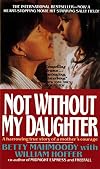
I saw the film version with Sally Field before I bought the book, but I find that both works can stand on their own feet. This was an exciting, heartbreaking read, which held my interest from beginning to end. One can't help but admire Betty Mahmoody's tenacity and determination to keep Mahtob with her, as well as her refusal to give up on returning to the United States. For all of the book's complications (which I will address soon), it is obvious that Betty loves her daughter very much. show more The book is heavy on details; she spends a great deal of time describing Iranian customs and providing background information on their family situation. I found the flashback sections especially interesting, as they foreshadowed many of the events in Iran. The book also does a great job of drawing the reader into the action and into her mindset. Like (I assume) most readers, I was shocked by the behavior of her husband, Moody. He's the poster child for instability, irrationality, and deception.
That being said, there are some elements in this book that are problematic. It's written purely from Betty's point of view, and she does tend to self-aggrandize, even when evaluating bad decisions on her part. There were glaring clues throughout her and Moody's courtship and early married life that they were not going to work well together, where she should have divorced him. I don't understand how any woman could stay married to a man who wasn't getting along well with her children, or who wasn't willing to see her as an equal partner in the marriage. Moreover, her justification for bringing Mahtob to Iran didn't make sense, no matter how much she tried to rationalize it. I'm not trying to blame the victim, but much of this could have been prevented had Betty listened to her intuition and not shrugged it off.
Perhaps the most problematic nature of the book is its attitude towards Iranians and Middle Easterners in general. It is by no means a neutral or balanced text. Her descriptions of her Iranian extended family and their customs bear a striking resemblance to travelogue pictures and their method of describing the "native populations". The physical characteristics that she ascribes to people such as Ameh Bozorg are generally negative, highlighting their "sneering" and "pointed" features, as well as their lack of hygienic practices. Betty also comes off as believing that American customs and morality are on a higher plane than these people. Although she does highlight some helpful Iranians, they tended to have some Westernized aspect of their character which appealed to her, whether it be in their speech, interests, etc. Conversely, the Westerners that she met in Iran who weren't helpful to her had absorbed some aspect of Iranian and/or Islamic culture, which she feels was responsible for their insensitivity to her plight. At the same time, her feelings are somewhat understandable (although not excusable). She had little knowledge of Iranian culture beforehand, and then her major exposure to it was extremely negative.
All this being said, one cannot say that her experiences were not true, that she and her daughter didn't feel pain, or that her husband committed a heinous act. I've heard a number of people asking for proof that the events she described actually happened (from individual witnesses, the U.S. State Department, or the various embassies), that the conditions she described were actually subpar, or that it was really so difficult to leave the country if she wanted to. A counter-documentary called "Without My Daughter" was even released in 2002, where Mr. Mahmoody claimed that Betty kept Mahtob away from his intentionally, even though they wanted to remain in contact with each other. Does Betty have a bias? Absolutely. Could she have made better decisions? Yes. Are all Muslims fanatical extremists? Absolutely not. But that doesn't take away from the fact that she and her daughter went though a harrowing experience that no one should have to, or that her husband was in the wrong. There was no justification for what he did to his family, no matter how he was feeling.
In spite of its issues, this remains one of my favorite recent discoveries. Everyone who reads this book is sure to take away something different from it, be it positive, negative, or in between. For what it's worth, I highly recommend it. show less
That being said, there are some elements in this book that are problematic. It's written purely from Betty's point of view, and she does tend to self-aggrandize, even when evaluating bad decisions on her part. There were glaring clues throughout her and Moody's courtship and early married life that they were not going to work well together, where she should have divorced him. I don't understand how any woman could stay married to a man who wasn't getting along well with her children, or who wasn't willing to see her as an equal partner in the marriage. Moreover, her justification for bringing Mahtob to Iran didn't make sense, no matter how much she tried to rationalize it. I'm not trying to blame the victim, but much of this could have been prevented had Betty listened to her intuition and not shrugged it off.
Perhaps the most problematic nature of the book is its attitude towards Iranians and Middle Easterners in general. It is by no means a neutral or balanced text. Her descriptions of her Iranian extended family and their customs bear a striking resemblance to travelogue pictures and their method of describing the "native populations". The physical characteristics that she ascribes to people such as Ameh Bozorg are generally negative, highlighting their "sneering" and "pointed" features, as well as their lack of hygienic practices. Betty also comes off as believing that American customs and morality are on a higher plane than these people. Although she does highlight some helpful Iranians, they tended to have some Westernized aspect of their character which appealed to her, whether it be in their speech, interests, etc. Conversely, the Westerners that she met in Iran who weren't helpful to her had absorbed some aspect of Iranian and/or Islamic culture, which she feels was responsible for their insensitivity to her plight. At the same time, her feelings are somewhat understandable (although not excusable). She had little knowledge of Iranian culture beforehand, and then her major exposure to it was extremely negative.
All this being said, one cannot say that her experiences were not true, that she and her daughter didn't feel pain, or that her husband committed a heinous act. I've heard a number of people asking for proof that the events she described actually happened (from individual witnesses, the U.S. State Department, or the various embassies), that the conditions she described were actually subpar, or that it was really so difficult to leave the country if she wanted to. A counter-documentary called "Without My Daughter" was even released in 2002, where Mr. Mahmoody claimed that Betty kept Mahtob away from his intentionally, even though they wanted to remain in contact with each other. Does Betty have a bias? Absolutely. Could she have made better decisions? Yes. Are all Muslims fanatical extremists? Absolutely not. But that doesn't take away from the fact that she and her daughter went though a harrowing experience that no one should have to, or that her husband was in the wrong. There was no justification for what he did to his family, no matter how he was feeling.
In spite of its issues, this remains one of my favorite recent discoveries. Everyone who reads this book is sure to take away something different from it, be it positive, negative, or in between. For what it's worth, I highly recommend it. show less

her first book allowed her to write this one, because she became a spokesperson and someone people could trust with their stories. this is largely not a followup to not without my daughter, although we do get updates on her and her family since returning back to michigan from iran, but more a platform where she talks about stories like hers. she gives examples of a number of left-behind parents and the abductions of their children, and the fights they were in to get their kids back. she used show more examples from different religions so it wasn't just islam that was being focused on, and examples of mothers who kidnapped their kids so it wasn't just the men who were being demonized. this was really eye opening, to see how common this really is and to see how it's happening all over the world. and just how hard it is to have to work with another country, who has no interest in following u.s. law, to bring children back home. often the country they were abducted to believes the view of the kidnapper, that they're better there because they'll be raised with their religion, etc. so this was a good book to bring eyes to the issue and get momentum behind doing something for these kids and their families.
still kind of blows my mind how much they can talk about god and faith and not see that this kind of thinking (albeit to a different extreme) is part of what led to most of these abductions in the first place. show less
still kind of blows my mind how much they can talk about god and faith and not see that this kind of thinking (albeit to a different extreme) is part of what led to most of these abductions in the first place. show less

***SPOILERS HIDDEN***
This is a gripping, little-known follow-up to Betty Mahmoody's superb Not Without My Daughter. For those wondering what happened to Mahmoody and her daughterfollowing their harrowing escape , the answers are here. Mahmoody described in great detail how they had to drastically change virtually every aspect of their lives after returning to the United States to ensure their future safety. Only those in a witness protection program may be able to truly relate.
For the Love show more of a Child isn't all about them, though. A sizable chunk of the book is on the general topic of international child abduction. Such a transition sounds like it would be jarring and the topic itself dull, but the story never loses its furious page-turning momentum. This is likely because Mahmoody put a human face on this highly disturbing, remarkably difficult-to-solve issue (one that's more common than many realize) by spotlighting a few different families struggling daily with having had a child abducted across international lines. Their persistent emotional suffering comes through. These are tales similar to Mahmoody's in that they are spouse versus spouse, but each is unique, replete with fascinating details, and each has its own high drama that will shock at the same time that it rends the heart. show less
This is a gripping, little-known follow-up to Betty Mahmoody's superb Not Without My Daughter. For those wondering what happened to Mahmoody and her daughter
For the Love show more of a Child isn't all about them, though. A sizable chunk of the book is on the general topic of international child abduction. Such a transition sounds like it would be jarring and the topic itself dull, but the story never loses its furious page-turning momentum. This is likely because Mahmoody put a human face on this highly disturbing, remarkably difficult-to-solve issue (one that's more common than many realize) by spotlighting a few different families struggling daily with having had a child abducted across international lines. Their persistent emotional suffering comes through. These are tales similar to Mahmoody's in that they are spouse versus spouse, but each is unique, replete with fascinating details, and each has its own high drama that will shock at the same time that it rends the heart. show less
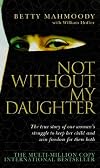
I was moved by the racism, sexism and nationalism portrayed in Betty Mahmoody's book. I had to wonder, given the timing of the publication, if there weren't hidden motives in the extremism of the anti Islamic "behavior" towards the United States. Certainly, any situation where a mother and daughter automatically lose their human rights just by crossing a border is extremely worrisome. I was left with much research to do about the actual data of Americans in Middle Eastern countries. A well show more written book. show less
Lists
Awards


You May Also Like


Associated Authors
Statistics
- Works
- 16
- Also by
- 4
- Members
- 2,405
- Popularity
- #10,663
- Rating
- 3.7
- Reviews
- 41
- ISBNs
- 131
- Languages
- 19
- Favorited
- 4