
Rick Atkinson
Author of An Army at Dawn: The War in North Africa, 1942–1943
About the Author
Rick Atkinson holds a master of arts degree in English literature from the University of Chicago and is a Pulitzer-Prize winning author and military historian Atkinson is the author of the highly-acclaimed Liberation Trilogy, The Long Gray Line, In the Company of Soldiers and Crusade. Atkinson show more received the Pulitzer Prize for the first volume of the Liberation Trilogy, An Army at Dawn: The War in North Africa, 1942-1943. The second volume, The Day of Battle: The War in Sicily and Italy, 1943-1944, drew praise as well. Atkinson also received the 1982 Pulitzer Prize for national reporting; and the 1999 Pulitzer Prize for public service, awarded to the Washington Post for a series of investigative articles directed and edited by Atkinson on shootings by the District of Columbia police department. He is winner of the 1989 George Polk Award for national reporting, the 2003 Society for Military History Distinguished Book Award, the 2007 Gerald R. Ford Award for Distinguished Reporting on National Defense, and the 2010 Pritzker Military Library Literature Award for Lifetime Achievement in Military Writing. Atkinson has served as the Gen. Omar N. Bradley Chair of Strategic Leadership at the U.S. Army War College. In 2014 his title The Guns at Last Light made The New York Times Best Seller List. (Bowker Author Biography) show less
Image credit: Rick Atkinson speaks on the HIstory and Biography Stage at the National Book Festival, August 31, 2019. Photo by Shawn Miller/Library of Congress.
Series
Works by Rick Atkinson
The British Are Coming: The War for America, Lexington to Princeton, 1775-1777 (2019) 1,533 copies, 43 reviews
The Long Gray Line: The American Journey of West Point's Class of 1966 (1989) 746 copies, 10 reviews
The Fate of the Day: The War for America, Fort Ticonderoga to Charleston, 1777-1780 (2025) 539 copies, 11 reviews
Associated Works
My Bookstore: Writers Celebrate Their Favorite Places to Browse, Read, and Shop (2012) — Contributor — 622 copies, 16 reviews
Reader's Digest Today's Best Nonfiction 08 1990: The Long Gray Line / My Turn / A Place for Us / Funny Business (1990) 21 copies
MHQ: The Quarterly Journal of Military History — Autumn 2007 (2007) — Author "The Archangel Michael, Here and Everywhere" — 11 copies
MHQ: The Quarterly Journal of Military History — Summer 2013 (2013) — Author "The Worst Place of Any — 3 copies
A Bridge Too Far, The Longest Day, and Other World War II Writings — Editor — 1 copy
Tagged
Common Knowledge
- Canonical name
- Atkinson, Rick
- Legal name
- Atkinson, Lawrence Rush, IV
- Birthdate
- 1952-11-16
- Gender
- male
- Education
- East Carolina University (BA|1974)
University of Chicago (MA|1976) - Occupations
- reporter
editor
writer - Organizations
- Kansas City Times
The Washington Post
American Academy in Berlin
Barsanti Military History Center
Society of American Historians
American Antiquarian Society - Awards and honors
- Pulitzer Prize (1982, 1999, 2003)
Gerald R. Ford Award for Distinguished Reporting on National Defense (2007)
Pritzker Literature Award (2010)
George Polk Award (1989)
Society for Military History Distinguished Book Award (2003)
New York Military Affairs Symposium award for lifetime achievement (2013) (show all 12)
Samuel Eliot Morison Prize for lifetime achievement from the Society for Military History (2014)
Peggy V. Helmerich Distinguished Author Award (2015)
George Washington Prize (2020)
Barbara and David Zalaznick Book Prize (2020)
“Excellence in American History Book Award” of the Daughters of the American Revolution (2020)
Fraunces Tavern Museum Book Award (2020) - Nationality
- USA (born in Germany to American parents)
- Birthplace
- Munich, Germany
- Places of residence
- Washington, D.C., USA
Berlin, Germany - Associated Place (for map)
- Germany
Members
Reviews
The Fate of the Day: The War for America, Fort Ticonderoga to Charleston, 1777-1780 (Revolution Trilogy, 2) by Rick Atkinson
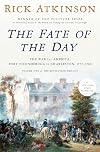
George Washington inspired a Continental Army on the verge of collapse to a ten-day campaign that saved the hope for independence, but the empire was ready strike back again. The Fate of the Day: The War for America, Fort Ticonderoga to Charleston, 1777-1780 is the second volume in Rick Atkinson’s The Revolution trilogy following the course of the military, political, and everyday factors that played into course of the American Revolution from the battlefields in America to the palaces of show more Versailles and Queen’s House leading to battles across the globe.
Navigating through a myriad of locations and through various narrative threads that need to be explored while revealing how each reflects on the other, Atkinson does a stellar job at bringing the complexity of the American Revolution to the reader. The important historical characters are covered, but lesser-known individuals, especially those foreign-born officers that are often unsung, get highlighted when in battle or making a difference for the Continental Army. What is most important throughout the book is how the colonial rebellion on the edge of the war sparked political machinations in the backroom of European palaces to get revenge on Britain or simply put it in its place. While the American Revolution is mostly seen as a land war, the naval aspect is not forgotten though as the book goes on it starts to become a Britain-French centric narrative through John Paul Jones’ cruises around Britain and attacks mainly in Scotland brought the war home to Britain in a way that shocked them almost as much as the thought of a French invasion. Given the numerous decades old books of the American Revolution I’ve read in recent years, this volume covers the same North American material through adding a broader brush to look at everyday life which included the economic realities for both the Continental army and the average citizen no matter their political loyalty. The difference is the thoroughness of Atkinson looking to the British domestic political scene as well as bringing in other European powers’ political and diplomatic moves during these years which resulted in the American Revolution becoming a conflict fought across the global. Honestly, it’s hard to find something important to critique.
The Fate of the Day reveals how events turn a colonial rebellion into a global conflict in an engaging way by Rick Atkinson and being the middle volume of a planned trilogy on American Revolution it makes you look forward to see all the various factors that bring it to a conclusion in the final when it is written. show less
Navigating through a myriad of locations and through various narrative threads that need to be explored while revealing how each reflects on the other, Atkinson does a stellar job at bringing the complexity of the American Revolution to the reader. The important historical characters are covered, but lesser-known individuals, especially those foreign-born officers that are often unsung, get highlighted when in battle or making a difference for the Continental Army. What is most important throughout the book is how the colonial rebellion on the edge of the war sparked political machinations in the backroom of European palaces to get revenge on Britain or simply put it in its place. While the American Revolution is mostly seen as a land war, the naval aspect is not forgotten though as the book goes on it starts to become a Britain-French centric narrative through John Paul Jones’ cruises around Britain and attacks mainly in Scotland brought the war home to Britain in a way that shocked them almost as much as the thought of a French invasion. Given the numerous decades old books of the American Revolution I’ve read in recent years, this volume covers the same North American material through adding a broader brush to look at everyday life which included the economic realities for both the Continental army and the average citizen no matter their political loyalty. The difference is the thoroughness of Atkinson looking to the British domestic political scene as well as bringing in other European powers’ political and diplomatic moves during these years which resulted in the American Revolution becoming a conflict fought across the global. Honestly, it’s hard to find something important to critique.
The Fate of the Day reveals how events turn a colonial rebellion into a global conflict in an engaging way by Rick Atkinson and being the middle volume of a planned trilogy on American Revolution it makes you look forward to see all the various factors that bring it to a conclusion in the final when it is written. show less
Even as a lad, I wondered why the Revolutionary War had never found its Shelby Foote, its Bruce Catton. Well, cometh the hour, cometh the man: Rick Atkinson is here. This is great popular narrative history, told in masterful prose with liberal helpings of period narratives and faultless documentation. I especially appreciated his emphasis on the all-important, and usually downplayed, importance of logistics to the military art. And, yes, he made it fairly interesting. It must be said that show more this doorstop is a project, though. It took me six weeks to get through, and, as a pensioner, I figure that I have more reading time than most, and it's difficult not to wonder at times just how important what type of tree they unlimbered a cannon under is. But, of course, when reading a great popular history, one happily enjoys all the small digressions, and this book is not to be missed if you've got the interest and the weeks. show less
The British Are Coming: The War for America, Lexington to Princeton, 1775-1777 (The Revolution Trilogy) by Rick Atkinson
The poem "Concord Hymn" by Ralph Waldo Emerson paid tribute to the famous Battles of Lexington and Concord, the first official military engagements between Britain and the colonies in the American Revolutionary War (1775-83). Tensions had been building for many years between residents of the thirteen American colonies and the British authorities, particularly in Massachusetts. Emerson's poem describes "the shot heard round the world" fired by Patriots at the North Bridge in what is now show more Charlestown, in northwestern Boston, Massachusetts.
Rick Atkinson, in The War for America, Lexington to Princeton, 1775-1777, his first magisterial volume of the planned “Revolution” trilogy, describes just how those tensions developed and the early years of the war. In his Prologue, while summarizing the events that led to the Revolution, Atkinson writes:
“The odds were heavily stacked against the Americans: no colonial rebellion had ever succeeded in casting off imperial shackles. But, as Voltaire had observed, history is filled with the sound of silken slippers going downstairs and wooden shoes coming up.”
The results of the 3,059 days of the American Revolution were “tectonic,” Atkinson avers. The first was the reduction of the British Empire by about one-third. [Ironically, one rationale for the British wanting to suppress the American rebellion was preservation of the empire, fearing it would encourage insurrections in other British colonies.] The second was “epochal and enduring: the creation of the American republic.” Unlike the creation myths about America, the war, Atkinson argues, was “both grander and more nuanced, a tale of heroes and knaves, of sacrifice and blunder, of redemption and profound suffering.”
He then goes into a great deal of detail about the early years of the Revolution, especially about the personalities involved in the conflict.
He describes the patriots as “disputatious and litigious, given to violence on the frontier and in the street: a gentle people they were not.” Furthermore, they were accustomed to tending to their own affairs, and resented the arrival of the British in Massachusetts who intended, per orders of the king, to enforce obedience to the laws. As Atkinson notes however, all the talk of freedom by whites in America and outrage over what they viewed as an encroachment on freedom was accompanied by a robust slave trade in blacks and Native Americans.
Much like current times, Americans in the 1770s were anxious about the future, nostalgic for the past, and angry about the present. The leadership in Britain had many misconceptions about these colonists. Most portentously, Britain was convinced resistance was largely confined to Boston, with the American colonies too scattered and diverse for effective collaboration. Therefore, it was assumed, the Regulars would make short work of the problem, and respect for British authority would be reestablished.
Britain’s military commander in chief in America, Lieutenant General Thomas Gage, sent warnings to London about the “wild and ungovernable” Americans, and pleaded for conciliatory measures, but he was derided as an “old woman.” The Americans, meanwhile, knew nothing of Gage’s attempts to improve their situation. On the contrary, he was seen as the face of Britain, and Gage effigies were burned in bonfires, while effigies of British soldiers were hung by nooses from roadside trees.
Although some of the British army and navy regulars were eager to wreak “chastisement” on the “villainous” Americans, most were bored, apt to be continually drunk on the cheap and plentiful rum, and inclined to desertion. In fact, the navy desertion rate was so high, particularly in Boston, that ships started to remain at anchor rather than risk mass defections on land.
There was also a good deal of friction between Patriots and Loyalists, or Tories. (Recent scholarship has estimated that roughly 20 percent of the 2 million white Americans in the Colonies during the Revolution remained loyal to the Crown.) The antagonism became so intense that the Tories felt need for protection, for good reason. The Patriots terrorized the Loyalists, with Anglican churches and clergymen singled out for even more abuse, because they prayed for the British king. Churches were smashed and priests tarred and feathered or covered with excrement. Extralegal Patriot “committees of safety” policed members of their own towns, encouraging neighbor to turn against neighbor, and not discouraging vigilante and/or mob violence.
Separate colonial governments made preparations for a possible war, even as the authorities did back in London. The Provincial Congress also took measures in anticipation of armed conflict, including the establishment of a courier system.
When the fighting finally began, Atkinson describes it poetically:
“Now the Lexington bell began to clang in the wooden tower, hard by the meetinghouse. More gallopers rode off to rouse half a hundred villages. Warning gunshots echoed from farm to farm. Bonfires flared. Drums beat. Across the colony, in an image that would endure for centuries, solemn men grabbed their firelocks and stalked off in search of danger, leaving the plow in the furrow, the hoe in the garden, the hammer on the anvil, the bucket at the well sweep. This day would be famous before it dawned.”
Atkinson brought me to tears with that passage. Not only is it one of many beautifully written and evocative descriptions of the founding of the country, but it reminds the reader of all that was at stake, with the fight to establish a democracy rather than an autocracy, a fight that may yet be lost some 240 years later.
The rest of the story proceeds in a similar vein. Atkinson has done meticulous research, and he is a consummate storyteller. I sat on the edge of my chair during many of the battle descriptions, even though I knew their outcomes quite well.
And as for that "shot heard round the world"? Atkinson tells us that scholars have calculated that at least seventy-five thousand American rounds were fired in the opening battles, but only one bullet in almost three hundred found its mark. As he wryly notes: "The shot heard round the world likely missed." show less
Rick Atkinson, in The War for America, Lexington to Princeton, 1775-1777, his first magisterial volume of the planned “Revolution” trilogy, describes just how those tensions developed and the early years of the war. In his Prologue, while summarizing the events that led to the Revolution, Atkinson writes:
“The odds were heavily stacked against the Americans: no colonial rebellion had ever succeeded in casting off imperial shackles. But, as Voltaire had observed, history is filled with the sound of silken slippers going downstairs and wooden shoes coming up.”
The results of the 3,059 days of the American Revolution were “tectonic,” Atkinson avers. The first was the reduction of the British Empire by about one-third. [Ironically, one rationale for the British wanting to suppress the American rebellion was preservation of the empire, fearing it would encourage insurrections in other British colonies.] The second was “epochal and enduring: the creation of the American republic.” Unlike the creation myths about America, the war, Atkinson argues, was “both grander and more nuanced, a tale of heroes and knaves, of sacrifice and blunder, of redemption and profound suffering.”
He then goes into a great deal of detail about the early years of the Revolution, especially about the personalities involved in the conflict.
He describes the patriots as “disputatious and litigious, given to violence on the frontier and in the street: a gentle people they were not.” Furthermore, they were accustomed to tending to their own affairs, and resented the arrival of the British in Massachusetts who intended, per orders of the king, to enforce obedience to the laws. As Atkinson notes however, all the talk of freedom by whites in America and outrage over what they viewed as an encroachment on freedom was accompanied by a robust slave trade in blacks and Native Americans.
Much like current times, Americans in the 1770s were anxious about the future, nostalgic for the past, and angry about the present. The leadership in Britain had many misconceptions about these colonists. Most portentously, Britain was convinced resistance was largely confined to Boston, with the American colonies too scattered and diverse for effective collaboration. Therefore, it was assumed, the Regulars would make short work of the problem, and respect for British authority would be reestablished.
Britain’s military commander in chief in America, Lieutenant General Thomas Gage, sent warnings to London about the “wild and ungovernable” Americans, and pleaded for conciliatory measures, but he was derided as an “old woman.” The Americans, meanwhile, knew nothing of Gage’s attempts to improve their situation. On the contrary, he was seen as the face of Britain, and Gage effigies were burned in bonfires, while effigies of British soldiers were hung by nooses from roadside trees.
Although some of the British army and navy regulars were eager to wreak “chastisement” on the “villainous” Americans, most were bored, apt to be continually drunk on the cheap and plentiful rum, and inclined to desertion. In fact, the navy desertion rate was so high, particularly in Boston, that ships started to remain at anchor rather than risk mass defections on land.
There was also a good deal of friction between Patriots and Loyalists, or Tories. (Recent scholarship has estimated that roughly 20 percent of the 2 million white Americans in the Colonies during the Revolution remained loyal to the Crown.) The antagonism became so intense that the Tories felt need for protection, for good reason. The Patriots terrorized the Loyalists, with Anglican churches and clergymen singled out for even more abuse, because they prayed for the British king. Churches were smashed and priests tarred and feathered or covered with excrement. Extralegal Patriot “committees of safety” policed members of their own towns, encouraging neighbor to turn against neighbor, and not discouraging vigilante and/or mob violence.
Separate colonial governments made preparations for a possible war, even as the authorities did back in London. The Provincial Congress also took measures in anticipation of armed conflict, including the establishment of a courier system.
When the fighting finally began, Atkinson describes it poetically:
“Now the Lexington bell began to clang in the wooden tower, hard by the meetinghouse. More gallopers rode off to rouse half a hundred villages. Warning gunshots echoed from farm to farm. Bonfires flared. Drums beat. Across the colony, in an image that would endure for centuries, solemn men grabbed their firelocks and stalked off in search of danger, leaving the plow in the furrow, the hoe in the garden, the hammer on the anvil, the bucket at the well sweep. This day would be famous before it dawned.”
Atkinson brought me to tears with that passage. Not only is it one of many beautifully written and evocative descriptions of the founding of the country, but it reminds the reader of all that was at stake, with the fight to establish a democracy rather than an autocracy, a fight that may yet be lost some 240 years later.
The rest of the story proceeds in a similar vein. Atkinson has done meticulous research, and he is a consummate storyteller. I sat on the edge of my chair during many of the battle descriptions, even though I knew their outcomes quite well.
And as for that "shot heard round the world"? Atkinson tells us that scholars have calculated that at least seventy-five thousand American rounds were fired in the opening battles, but only one bullet in almost three hundred found its mark. As he wryly notes: "The shot heard round the world likely missed." show less
 This review was written for LibraryThing Early Reviewers.
The British Are Coming: The War for America, Lexington to Princeton, 1775-1777 (The Revolution Trilogy) by Rick Atkinson
If you're going to insist on laser focus, it really helps to focus on the right thing.
Rick Atkinson has clearly set out to supply one of the most detailed overviews of the American Revolution yet available; this book is more than 550 pages long, not counting notes and index (not supplied in my advance reader's edition), yet it covers less than the first two years of the war. Presumably the goal is to write a three volume set covering the entire war.
Or rather, all the battles of the war. Want show more to understand the war? I'm not sure you will learn much here. That's because there is absolutely no discussion of politics. For practical purposes, the only mention of the Continental Congress is when they flee from Philadelphia. We have no insight into their deliberations; we don't know how many representatives were there; we don't know what laws they passed. We hear a little about British politics, mostly focused on George III himself, but not enough to realize that there was a major faction in parliament which didn't like what was going on. You can't tell the history of a war without telling the background!
Also, you never really feel that, in this vast, sprawling war, which involved areas from Florida to Quebec plus the British Isles themselves, more than one thing could happen at one time. The war opens in Boston. There is a brief side excursion toward Canada in upstate New York (with a short side look at Maine and another at the southern states). The fight shifts to New York, then New Jersey. And that's it. It's like someone took a chronology in multiple columns and cut up the columns and pasted them in another book one column after another.
And why waste all the time talking about Benjamin Franklin when he never actually does anything in this period? We don't need to know how he got to Paris; his real activity came later, and could be covered when it mattered. In this book, it's a pure dead end.
Also, although this book is clearly intended for the American market rather than the British, I think it a little too pro-American. It talks a lot about how ill-kept the American troops were, but doesn't really bring home the depth of this preventable disaster. It once calls General Howe "able," even though it makes it clear that, had Howe had any initiative at all, he would have stamped out Washington's army in 1776 and won the war. And it gives a clear impression that Trenton and Princeton were war-turning events. They really weren't; they just burned British fingers a little, encouraging General Howe to maintain the inertia he surely would have maintained anyway. The turning point came the following year, at Saratoga (which finally gave Franklin something to talk about in Paris).
That said, the result is readable, and mostly accurate except for some slips that I would hope will be corrected by a copy editor, plus some mistakes about disease (smallpox variolation is not immunization, and malaria is not a "winter malady" in areas where there is frost to kill off mosquitoes!). This truly feels like part of a really good book -- the other part being, of course, the politics. But, without its other half, you really can't understand the Revolution. I know everyone hates politics right now; I know I'm disgusted by all the people in the Federal Government who put political party ahead of nation! But one of the big purposes of politics is to prevent war. Leave it out, and... this is what is left. show less
Rick Atkinson has clearly set out to supply one of the most detailed overviews of the American Revolution yet available; this book is more than 550 pages long, not counting notes and index (not supplied in my advance reader's edition), yet it covers less than the first two years of the war. Presumably the goal is to write a three volume set covering the entire war.
Or rather, all the battles of the war. Want show more to understand the war? I'm not sure you will learn much here. That's because there is absolutely no discussion of politics. For practical purposes, the only mention of the Continental Congress is when they flee from Philadelphia. We have no insight into their deliberations; we don't know how many representatives were there; we don't know what laws they passed. We hear a little about British politics, mostly focused on George III himself, but not enough to realize that there was a major faction in parliament which didn't like what was going on. You can't tell the history of a war without telling the background!
Also, you never really feel that, in this vast, sprawling war, which involved areas from Florida to Quebec plus the British Isles themselves, more than one thing could happen at one time. The war opens in Boston. There is a brief side excursion toward Canada in upstate New York (with a short side look at Maine and another at the southern states). The fight shifts to New York, then New Jersey. And that's it. It's like someone took a chronology in multiple columns and cut up the columns and pasted them in another book one column after another.
And why waste all the time talking about Benjamin Franklin when he never actually does anything in this period? We don't need to know how he got to Paris; his real activity came later, and could be covered when it mattered. In this book, it's a pure dead end.
Also, although this book is clearly intended for the American market rather than the British, I think it a little too pro-American. It talks a lot about how ill-kept the American troops were, but doesn't really bring home the depth of this preventable disaster. It once calls General Howe "able," even though it makes it clear that, had Howe had any initiative at all, he would have stamped out Washington's army in 1776 and won the war. And it gives a clear impression that Trenton and Princeton were war-turning events. They really weren't; they just burned British fingers a little, encouraging General Howe to maintain the inertia he surely would have maintained anyway. The turning point came the following year, at Saratoga (which finally gave Franklin something to talk about in Paris).
That said, the result is readable, and mostly accurate except for some slips that I would hope will be corrected by a copy editor, plus some mistakes about disease (smallpox variolation is not immunization, and malaria is not a "winter malady" in areas where there is frost to kill off mosquitoes!). This truly feels like part of a really good book -- the other part being, of course, the politics. But, without its other half, you really can't understand the Revolution. I know everyone hates politics right now; I know I'm disgusted by all the people in the Federal Government who put political party ahead of nation! But one of the big purposes of politics is to prevent war. Leave it out, and... this is what is left. show less
This review was written for LibraryThing Early Reviewers.Lists
THE WAR ROOM (4)
Wishlist (1)
Awards


You May Also Like


Associated Authors
Statistics
- Works
- 23
- Also by
- 6
- Members
- 11,609
- Popularity
- #2,025
- Rating
- 4.3
- Reviews
- 264
- ISBNs
- 178
- Languages
- 6
- Favorited
- 23


