
John Barth (1930–2024)
Author of The Sot-Weed Factor
About the Author
John Barth taught for many years in the writing program at Johns Hopkins University, and he lives in Chestertown, Maryland. (Publisher Provided) John Simmons Barth was born on May 27, 1930 in Cambridge, Maryland. He is considered to be one of the American writers who introduced a U.S. audience to show more experimental fiction. Barth began as a conventional novelist, exploring existential themes of suicide in The Floating Opera (1956) and the complexity of love in The End of the Road (1958). By the end of the 1950s, however, he was exploring less realistic techniques to keep the reader from being pulled into the story, and thus to make larger points. Those techniques include parody, which Barth first used in The Sot-Weed Factor (1960), to mock the style of the eighteenth-century picaresque novel, and Giles Goat-Boy (1966), which depicts the world as a giant university. In Chimera (1972), for which he won the National Book Award, Barth applied his method to retell classical myths. His later works include Letters (1979), in which Barth himself appears as a character, and Sabbatical (1982), the story of a woman college professor and her novelist husband, both of whom address the reader and author. Barth's other novels include The Tidewater Tales (1987) and The Last Voyage of Somebody the Sailor (1991). For most of his career as a writer, he has also been a professor of English, teaching at Pennsylvania State University, the State University of New York at Buffalo, and The Johns Hopkins University. (Bowker Author Biography) show less
Works by John Barth
Associated Works
The Story and Its Writer: An Introduction to Short Fiction (1976) — Contributor — 1,216 copies, 3 reviews
The Scribner Anthology of Contemporary Short Fiction: Fifty North American American Stories Since 1970 (1999) — Contributor — 585 copies, 4 reviews
For the Love of Books: 115 Celebrated Writers on the Books They Love Most (1999) — Contributor — 479 copies, 4 reviews
The Moral Life: An Introductory Reader in Ethics and Literature (1999) — Contributor — 202 copies, 2 reviews
The Norton Anthology of American Literature, Volume 2: 1865 to Present (1979) — Contributor, some editions — 137 copies
The Worst Years of Your Life: Stories for the Geeked-Out, Angst-Ridden, Lust-Addled, and Deeply Misunderstood Adolescent in All of Us (2007) — Contributor — 94 copies, 1 review
The Heath Anthology of American Literature, Concise Edition (2003) — Contributor — 73 copies, 1 review
Fifty Years of the American Short Story from the O. Henry Awards 1919-1970 (1970) — Contributor — 17 copies, 1 review
Fifty Years of the American Short Story from the O. Henry Awards 1919-1970, Volume 1 (1970) — Contributor — 3 copies
Antaeus No. 35, Autumn 1979 — Contributor — 1 copy
Tagged
Common Knowledge
- Canonical name
- Barth, John
- Legal name
- Barth, John Simmons
- Other names
- Barth, Jack
- Birthdate
- 1930-05-27
- Date of death
- 2024-04-02
- Gender
- male
- Education
- Johns Hopkins University (BA|1951)
Johns Hopkins University (MA|1952)
The Juilliard School, New York - Occupations
- academic
novelist
musician (drummer)
professor - Organizations
- American Academy of Arts and Letters (Literature ∙ 1974)
American Academy of Arts and Sciences (1974)
Pennsylvania State University
State University of New York, Buffalo
Johns Hopkins University - Awards and honors
- National Institute of Arts and Letters grant in literature (1966)
The Brandeis University creative arts award in fiction (1965)
F. Scott Fitzgerald Award for Outstanding Achievement in American Fiction (1997)
The Rockefeller Foundation grant in fiction (1965-66)
Lannan Literary Award (Lifetime Achievement, 1998)
Enoch Pratt Society Lifetime Achievement in Letters (1999) (show all 9)
PEN/Malamud Award (1998)
American Academy of Arts and Letters Academy Award (Literature, 1966)
National Book Award (1973) - Relationships
- Barth, John, Jr. (son)
- Nationality
- USA
- Birthplace
- Cambridge, Maryland, USA
- Places of residence
- Cambridge, Maryland, USA (birth)
State College, Pennsylvania, USA
Chestertown, Maryland, USA - Place of death
- Chestertown, Maryland, USA
- Associated Place (for map)
- Maryland, USA
Members
Reviews
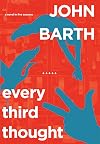
can't remember who it was who described Barth's writing as "self-consuming meta-fiction", but it definitely fits. But in a good way. This book, like some others before it (e.g., Once Upon a Time), narrates the fictional story of the writing of the book itself. The narrator, George I. Newett, is writing the book to complete the work of his lost friend, Ned Prosper, who may or may not have existed (within the story). You can't tell whether the story is being drawn from real life or real life show more is being drawn from the story. At one point in the book, Newett's wife and fellow writer, Amanda, jabs the theme in deep, saying, "So, then: Are we fictitious too . . . ?"
It's not all postmodern styling. There's a very good story here, and it grows on you. "Every Third Thought" refers to the reconsiderations after "on second thought", and the subtitle, "A Novel in Five Seasons", refers to the seasons of George Newett's (and Barth's) life, and his marriage with Amanda. He is in his second "Fall" (the first centered on an actual fall on a vacation -- hence a "trip and fall" -- with Amanda, visiting Stratford, home of Shakespeare).
Newett's second Fall parallels Barth's own, both author and character approaching their eightieth years as Barth was writing the book. I won't spoil the ending. The one thing I'll say about it is that it is sadly honest.
Barth has always played at this disappearing boundary between living a life and writing a story. I know it can be tedious at times, especially to un-indoctrinated readers, and it's coupled with a lot of alliterative stylings, puns, and the like. In the end though, Barth is living and telling a compelling story. show less
It's not all postmodern styling. There's a very good story here, and it grows on you. "Every Third Thought" refers to the reconsiderations after "on second thought", and the subtitle, "A Novel in Five Seasons", refers to the seasons of George Newett's (and Barth's) life, and his marriage with Amanda. He is in his second "Fall" (the first centered on an actual fall on a vacation -- hence a "trip and fall" -- with Amanda, visiting Stratford, home of Shakespeare).
Newett's second Fall parallels Barth's own, both author and character approaching their eightieth years as Barth was writing the book. I won't spoil the ending. The one thing I'll say about it is that it is sadly honest.
Barth has always played at this disappearing boundary between living a life and writing a story. I know it can be tedious at times, especially to un-indoctrinated readers, and it's coupled with a lot of alliterative stylings, puns, and the like. In the end though, Barth is living and telling a compelling story. show less
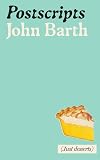
I really thought we’d heard John Barth’s last with Every Third Thought. So I was surprised (and glad) to see this. He must have thought the same, since he called it Postscripts.
Barth is now in his nineties but, at least through the writing of this book, he’s keeping to his daily discipline of morning writing, with Fridays dedicated to reflection and rumination of the sort gathered here. This belongs with the probably unplanned trilogy: The Friday Book, Further Fridays, and Final show more Fridays. Like any good trilogy, it had to have a part four.
It reads like a selective memoir, with often very short essays on whatever occurred to Barth to write about. Some are memories, some are flights of attention deficit, some are accounts of events or of talks given by Barth throughout his life. There is even his recall of a dream.
All in all, you’re going to enjoy this if you’re a Barth fan. I certainly wouldn’t recommend it to anyone who is new to his writing — nothing would seem significant, and much self-parody and so on would be lost to the wind.
Barth names his four main influences, or “navigation-stars”: Homer’s Odysseus, the Arabian Night’s heroine Scheherazade, Cervantes’ Don Quixote, and Mark Twain’s Huckleberry Finn. It’s interesting that he picks out not just authors or even particular works, but characters in those works. Scheherazade especially stands out as such a major influence on Barth’s own style — where the telling of the story is part of the story itself, something repeated and pushed close to if not over the limit in some of Barth’s writings. Scheherazade is woven throughout the essays here, just because her character is so woven into Barth himself.
And we get Barth’s views on some of his contemporaries, including Robert Coover and Donald Barthelme (both held in high regard as friends as well as fellow writers).
There is also the irresistible Barthian compulsion to make fun of language, like talking of his WWII veteran brother Bill (“G.I. Bill”) taking advantage of the G.I. Bill to attend college, or fashioning a sort-of-story called “This is Not a Story,” inspired by Magritte’s “Ceci n'est pas une pipe.”
Barth is nothing if not self-conscious, and this at times is his self-consciousness running completely free.
He makes fun of himself, for example, as the author of the notorious möbius strip “short story” in Lost in the Funhouse, “Once Upon a Time There Was a Story That Began.” If you follow Barth’s directions, to cut the title out and connect its corners as he says, you get an actual möbius strip that bends the title into a self-referential infinite loop.
That kind of stuff had its day, and Barth, despite his insistence that he is just a story-teller, has always been an experimentalist. Some of it worked and some of it, at least to me, was just freakin’ tedious.
As he says here, “Nobody in her/his right mind will put up with this meta-crap much longer, so let’s give it one last try . . . “ So he does.
I’m not going to give the book 5 stars, just because I just couldn’t recommend it as a stand-alone work, especially to someone not that familiar with Barth’s writing. For readers who have followed Barth since The Floating Opera and the other early novels, it’s kind of weirdly indispensable. show less
Barth is now in his nineties but, at least through the writing of this book, he’s keeping to his daily discipline of morning writing, with Fridays dedicated to reflection and rumination of the sort gathered here. This belongs with the probably unplanned trilogy: The Friday Book, Further Fridays, and Final show more Fridays. Like any good trilogy, it had to have a part four.
It reads like a selective memoir, with often very short essays on whatever occurred to Barth to write about. Some are memories, some are flights of attention deficit, some are accounts of events or of talks given by Barth throughout his life. There is even his recall of a dream.
All in all, you’re going to enjoy this if you’re a Barth fan. I certainly wouldn’t recommend it to anyone who is new to his writing — nothing would seem significant, and much self-parody and so on would be lost to the wind.
Barth names his four main influences, or “navigation-stars”: Homer’s Odysseus, the Arabian Night’s heroine Scheherazade, Cervantes’ Don Quixote, and Mark Twain’s Huckleberry Finn. It’s interesting that he picks out not just authors or even particular works, but characters in those works. Scheherazade especially stands out as such a major influence on Barth’s own style — where the telling of the story is part of the story itself, something repeated and pushed close to if not over the limit in some of Barth’s writings. Scheherazade is woven throughout the essays here, just because her character is so woven into Barth himself.
And we get Barth’s views on some of his contemporaries, including Robert Coover and Donald Barthelme (both held in high regard as friends as well as fellow writers).
There is also the irresistible Barthian compulsion to make fun of language, like talking of his WWII veteran brother Bill (“G.I. Bill”) taking advantage of the G.I. Bill to attend college, or fashioning a sort-of-story called “This is Not a Story,” inspired by Magritte’s “Ceci n'est pas une pipe.”
Barth is nothing if not self-conscious, and this at times is his self-consciousness running completely free.
He makes fun of himself, for example, as the author of the notorious möbius strip “short story” in Lost in the Funhouse, “Once Upon a Time There Was a Story That Began.” If you follow Barth’s directions, to cut the title out and connect its corners as he says, you get an actual möbius strip that bends the title into a self-referential infinite loop.
That kind of stuff had its day, and Barth, despite his insistence that he is just a story-teller, has always been an experimentalist. Some of it worked and some of it, at least to me, was just freakin’ tedious.
As he says here, “Nobody in her/his right mind will put up with this meta-crap much longer, so let’s give it one last try . . . “ So he does.
I’m not going to give the book 5 stars, just because I just couldn’t recommend it as a stand-alone work, especially to someone not that familiar with Barth’s writing. For readers who have followed Barth since The Floating Opera and the other early novels, it’s kind of weirdly indispensable. show less
Well-loved books from my past
Rating: 5 golden stars of five, with a rapturous yodel cluster
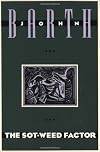
The Book Description: Considered by critics to be Barth's most distinguished masterpiece, The Sot-Weed Factor has acquired the status of a modern classic. Set in the late 1600s, it recounts the wildly chaotic odyssey of hapless, ungainly Ebenezer Cooke, sent to the New World to look after his father's tobacco business and to record the struggles of the Maryland colony in an epic poem. On his mission, show more Cooke experiences capture by pirates and Indians; the loss of his father's estate to roguish impostors; love for a farmer prostitute; stealthy efforts to rob him of his virginity, which he is (almost) determined to protect; and an extraordinary gallery of treacherous characters who continually switch identities. A hilarious, bawdy tribute to all the most insidious human vices, The Sot-Weed Factor has lasting relevance for readers of all times.
My Review: The book description is a bit weak-kneed, but I can't find a better one, and I detest writing the book reports with a passion.
A couple months ago, I started a re-read of this book that did not go well. I sighed. I snorted. I rolled my eyes, and cut up rough whenever we got into the book's faux-antique Englysshe. I was responding to it like it was a phauntaiysee nawvelle with majgickq and other such borderline-criminal goins-on. I put it aside, and I forgot it, except to renew it online from the Port Washington liberry.
Damn me anyway! Why can't I listen to my REAL self?! John Barth, my Real Self murmured, John Barth of The Floating Opera and this book which you adored thirty years ago, he deserves better than this, to which Angry Self replied, “Shut up you! Seven hundred plus pages of this phauntaaahsticall-ness will make us homicidal! Why not encourage me to read Dickens or Tolkien if all you want to is encourage me to massacre random strangers? Silence! Begone!”
Damn me! What an ass! I read the first six chapters and tossed the book aside! But...I did keep renewing it....
And today, today with two days left on my final renewal, to-goddam-day I pick the book up again. And I read the first paragraph/line. And oh damn me! Damn me! How beautiful, how simply and completely perfect it is, and how I wish I could boil Angry Me in oil!
Oh. Oh oh oh oh. I just had a crisis.
Now I *could* just power through the seven hundred-plus remaining pages in the next two days, ignoring all other beings and duties...to the detriment of our carpets, as the dog would be on her own re: eliminatory functions, and the complete bumfuzzlement of my houseys as I would not be showing up at the station to fetch them...but it's not on. It's just not. This isn't a book to be got through, it is a book to be appreciated, savored, delighted in.
I will await the tides of fortune washing a copy of my own back up on the shores of my private liberry. It is worth the wait. The rapturous narcosis of my first immersion has returned. Thirty years are as but a moment. John Barth is still there, his words as gorgeously deployed as ever they were.
Delightful. Delightful.
Damn me anyway! show less
Rating: 5 golden stars of five, with a rapturous yodel cluster
The Book Description: Considered by critics to be Barth's most distinguished masterpiece, The Sot-Weed Factor has acquired the status of a modern classic. Set in the late 1600s, it recounts the wildly chaotic odyssey of hapless, ungainly Ebenezer Cooke, sent to the New World to look after his father's tobacco business and to record the struggles of the Maryland colony in an epic poem. On his mission, show more Cooke experiences capture by pirates and Indians; the loss of his father's estate to roguish impostors; love for a farmer prostitute; stealthy efforts to rob him of his virginity, which he is (almost) determined to protect; and an extraordinary gallery of treacherous characters who continually switch identities. A hilarious, bawdy tribute to all the most insidious human vices, The Sot-Weed Factor has lasting relevance for readers of all times.
My Review: The book description is a bit weak-kneed, but I can't find a better one, and I detest writing the book reports with a passion.
A couple months ago, I started a re-read of this book that did not go well. I sighed. I snorted. I rolled my eyes, and cut up rough whenever we got into the book's faux-antique Englysshe. I was responding to it like it was a phauntaiysee nawvelle with majgickq and other such borderline-criminal goins-on. I put it aside, and I forgot it, except to renew it online from the Port Washington liberry.
Damn me anyway! Why can't I listen to my REAL self?! John Barth, my Real Self murmured, John Barth of The Floating Opera and this book which you adored thirty years ago, he deserves better than this, to which Angry Self replied, “Shut up you! Seven hundred plus pages of this phauntaaahsticall-ness will make us homicidal! Why not encourage me to read Dickens or Tolkien if all you want to is encourage me to massacre random strangers? Silence! Begone!”
Damn me! What an ass! I read the first six chapters and tossed the book aside! But...I did keep renewing it....
And today, today with two days left on my final renewal, to-goddam-day I pick the book up again. And I read the first paragraph/line. And oh damn me! Damn me! How beautiful, how simply and completely perfect it is, and how I wish I could boil Angry Me in oil!
In the last years of the seventeenth century there was to be found among the fops and fools of the London coffee-houses one rangy, gangling flitch called Ebenezer Cooke, more ambitious than talented, and yet more talented than prudent, who, like his friends-in-folly, all of whom were supposed to be educating at Oxford or Cambridge, had found the sound of Mother English more fun to game with than her sense to labor over, and so rather than applying himself to the pains of scholarship, had learned the knack of versifying, and ground out quires of couplets after the fashion of the day, afroth with Joves and Jupiters, aclang with jarring rhymes, and string-taut with similes stretched to the snapping-point.
Oh. Oh oh oh oh. I just had a crisis.
Now I *could* just power through the seven hundred-plus remaining pages in the next two days, ignoring all other beings and duties...to the detriment of our carpets, as the dog would be on her own re: eliminatory functions, and the complete bumfuzzlement of my houseys as I would not be showing up at the station to fetch them...but it's not on. It's just not. This isn't a book to be got through, it is a book to be appreciated, savored, delighted in.
I will await the tides of fortune washing a copy of my own back up on the shores of my private liberry. It is worth the wait. The rapturous narcosis of my first immersion has returned. Thirty years are as but a moment. John Barth is still there, his words as gorgeously deployed as ever they were.
Delightful. Delightful.
Damn me anyway! show less

"Those rituals of getting ready to write produce a kind of trance state."- John Barth, America author born 1930
What’s the sound of one writer screaming? Well, what’s the sound of one reviewer screaming? Reviewing John Barth’s fourteen-page short story, Life-Story, is like playing a game of three-dimensional chess, since, I mean, what dimensions are we really dealing with here? As soon as I write down something about this story there appears to be another dimension of the story show more undercutting my words, pulling the metaphysical wool over my eyes at the same time as pulling the linguistic rug out from under my already not-so-steady feet.
Hey, John! What the heck are you doing? Sure, Life-Story is one story in your collection Lost in the Funhouse where you acknowledge right up front in your introduction how you were moved by Jorge Luis Borges, but do you truly expect a reviewer capable of getting their brain around a story when your brain was on Borges while walking through a hall of mirrors? And do you expect your reader to make it out of this funhouse?
Things are a bit wobbly right from the very first paragraph, as when we read: “He being by vocation an author of novels and stories it was perhaps inevitable that one afternoon the possibility would occur to the writer of these lines that his own life might be a fiction, in which he was the leading or an accessory character.” Ah, John, you weren’t joking, Jorge Luis Borges did make an impact, as in the tale Borges and I with all sorts of provocative ideas about the intertwining identity of author and character.
Perhaps we should ask: How is a fiction writer’s sense of self expanded or contracted when writing a work of fiction? In the act of writing, is an author’s identity less of a fiction than the characters created? Do these question make you feel dizzy? If so, recall how with Life-Story we are joining John Barth in his hall of mirrors funhouse.
More specifically, when Barth writes “the writer of these lines,” we may also ask: Who exactly is writing these lines? Is it John Barth himself or it is his character, the writer in his story, or perhaps both? And the plot thickens: John Barth writes about how his main character is writing about the writer C, who, in turn, is writing a short story about his main character D writing a story about character E. And that’s just for starters. We then have G (Barth’s main character?) who complains about being a fictional character concerned about J’s reaction and how he will get K through his story. And other characters make their entrées, in order of appearance: X, Y, U, T, V, L, K & M together, N and, lastly, M & O together. My guess is if Mr. Barth didn’t possess a keen sense of humor, at this point in his story he would have dropped his pen and run out of the room where he was penning Life-Story.
To pour a bit more metafictional fuel on this literary fire, the main character (along with Barth?) reflects on his story in progress: “Self-conscious, vertiginously arch, fashionably solipsistic, unoriginal – in fact a convention of twentieth-century literature. Another story about a writer writing a story! Another regressus in infinitum! Who doesn’t prefer art that at least overtly imitates something other than its own processes?” Actually, reflecting on John Barth’s Life-Story, John Gardner, author of On Moral Fiction, complained about such artistic self-consciousness and how current writers call noisy attention to themselves. Oh, lighten up, John Gardner!
More funhouse mirrors, anyone? The main character really doesn’t like overly metaphysical literature written by such as Samuel Becket’s, Marian Cutler’s, Jorge Borges’s; rather his favorite contemporary authors are John Updike, Georges Simenon and Nicole Riboud. Marian Cutler? Nicole Riboud? No such authors in our world but in this fictional world of Barth’s main character – why not? Further on: “If his life was a fictional narrative it consisted of three terms – teller, tale, told – each dependent on the other two but not in the same ways.” Goodness, I might need my textbook on logic as things are really getting complex.
And then toward the end of Life-Story, as if in exasperation, the spotlight is cast on the real culprit: “The reader! You, dogged, uninsultable, print-oriented bastard, it’s you I’m addressing, who else, from inside this monstrous fiction.” What’s the sound of one writer screaming? Well, what’s the sound of one reviewer screaming? Reviewing John Barth’s fourteen-page short story, Life Story, is like playing a game of three-dimensional chess since, I mean, what dimension are we really dealing with here? As soon as I write down something about this story there appears to be another dimension of the story undercutting my words, pulling the metaphysical wool over my eyes at the same time as pulling the linguistic rug out from my already not-to-steady feet . . . . show less
Lists
Awards


You May Also Like


Associated Authors
Statistics
- Works
- 39
- Also by
- 32
- Members
- 12,263
- Popularity
- #1,910
- Rating
- 3.8
- Reviews
- 158
- ISBNs
- 217
- Languages
- 14
- Favorited
- 60
