
Jonathan Bastable
Author of Voices from Stalingrad
About the Author
Works by Jonathan Bastable
To the Ends of the Earth, Visions of a Changing World: 175 Years of Exploration and Photography (The Royal Geographical Society) (2005) — Contributor — 18 copies
Tagged
Common Knowledge
- Legal name
- Bastabloe, Jonathan Henry
- Birthdate
- 1962-07-22
- Gender
- male
- Nationality
- England
- Birthplace
- London, England
- Associated Place (for map)
- London, England
Members
Reviews
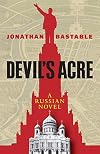
The historical details of this story are grounded in fact but the characters and their storyline are distinctly fictitious. If you don't like novels that switch between time periods then you're not going to be a big fan of this book. I don't mind a bit of time jumping but I like the time periods to be easily distinguishable which wasn't always the case with this novel. I think it would have flowed better if the chapters flip flopped back and forth rather than within the chapters themselves. show more Also, the author utilized a writing technique that further confused things: he injected himself into the novel as a type of narrator about a quarter of the way through. Again, I don't mind this technique if it's unmistakable to the rest of the narrative. There was so much jumping around that I didn't really feel comfortable until about halfway through. Now as to the story itself, I found the plot interesting (I'm always interested in a bit of history/mystery) but I finished somewhat dissatisfied with the state of affairs. I was hoping for a bit more character resolution and it just never materialized. If you want to delve into the history of the Cathedral of Christ the Saviour then this book is for you. If you want a story that sweeps you away on a cloud that you never want to emerge from well...I don't make any guarantees. show less

This is the story of Vadim, a young Leningrader, who is obsessed with learning the truth about Russia’s Cathedral of Christ the Savior, which is built near the Kremlin as a memorial to Russia’s victory over Napoleon. The church was demolished to make way for an immense Palace of Soviets. The Palace was intended to be the largest building in the world, a beacon of communism. However, it never materialized. The lost church became a taboo subject, and the mere mention of the Cathedral of show more Christ was an act of anti-Soviet propaganda. Nevertheless, Vadim pursues his research of the church with the help of Rachel, an American exchange student. Their pursuit of these answers draws them into an intricate web of mystery, history and politics. Remember, this is Russia in 1982, when fear of the ever-watching “Big Brother” were everywhere and definitely impacted everything citizens, well-intentioned or not, did. The story progressed along well, until the author chose to intersperse his “notes” into the story, which sort of threw me off for a bit. The story resumes and is again periodically interspersed with notes. I am not sure whether I like this or not, and it did somewhat interrupt the story for me. The story does provide an excellent overview of the Russia of the times, along with a history of the Communist era and all its trappings. In addition, the background of Russian architecture and of the politics of the time was indicative of the author’s interest in and pursuit or accuracy in researching and writing the novel. Anyone interested in reading a historical novel of Russia during this era and of reading a good story intermixed with this would find this novel fascinating. Unlike so many other novels, this one is true to history and yet written in such an engaging manner that the reader does not really realize just how much history and how many facts about Russia he/she is picking up un until the end. I received this from Library Thing to read and review. show less
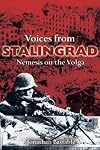
This is one of several new books on the Eastern Front of WWII prompted by the availability of new Russian sources. The author focuses on the “grunt” level of the battle with only a nod to the operational levels. If you are unfamiliar with the battle, this isn’t a good place to start, there are several excellent books that serve for that. The book, arranged chronologically, is mostly a series of vignettes that depict the day to day struggle of individual soldiers.
Most of these stories show more show a life even more brutal and full of deprivation that we might have expected. We know it got cold, we know the German army, despite it’s experiences of the winter of 1941, was not prepared for a long struggle. Also, Stalingrad is billed as a huge, epic struggle with 100s of thousands of soldiers on both sides taking part. While that’s all true, the actual battle was 1000s of small fights involving no more than a handful of terrified but resolved soldiers shooting it out in the ruins, skulking through the sewers, swimming the Volga, etc.
The book includes dozens of photos, mostly new (to Western readers at least). And, one of my harping points for military history books, a sufficiency of maps.
Overall, I would give this about a 3.5 out of 5. It’s got new material and it’s competently written without too many egregious errors, but it’s not that compelling and I found I had to struggle to finish it. show less
Most of these stories show more show a life even more brutal and full of deprivation that we might have expected. We know it got cold, we know the German army, despite it’s experiences of the winter of 1941, was not prepared for a long struggle. Also, Stalingrad is billed as a huge, epic struggle with 100s of thousands of soldiers on both sides taking part. While that’s all true, the actual battle was 1000s of small fights involving no more than a handful of terrified but resolved soldiers shooting it out in the ruins, skulking through the sewers, swimming the Volga, etc.
The book includes dozens of photos, mostly new (to Western readers at least). And, one of my harping points for military history books, a sufficiency of maps.
Overall, I would give this about a 3.5 out of 5. It’s got new material and it’s competently written without too many egregious errors, but it’s not that compelling and I found I had to struggle to finish it. show less
See my review dated 1 Dec 2013 published on the Amazon website. This book has serious shortcomings - no wonder I found the book remaindered!
You May Also Like


Associated Authors
Statistics
- Works
- 20
- Members
- 283
- Popularity
- #82,294
- Rating
- 3.8
- Reviews
- 5
- ISBNs
- 41
- Languages
- 6
