
Daniel Beaty
Author of Knock Knock: My Dad's Dream for Me
About the Author
Image credit: penguinrandomhouse.com
Works by Daniel Beaty
Tagged
Common Knowledge
There is no Common Knowledge data for this author yet. You can help.
Members
Reviews
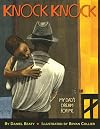
Gorgeous. Definitely not limited to the experience of black boys whose fathers are incarcerated; in fact it's only from the notes that we know that he's in prison (rather than banished, dying in an institution, whatever). Do not miss the symbolism of flight & freedom with the paper airplanes, and of 'the elephant in the room' of those (too subtle for some) silhouettes. Highly recommended to any child or teen who is growing up without one of their role models... and to everyone else who is show more open to empathizing with someone in that situation.
It does seem odd to me that this wonderful father is in prison and for so long... but then, that's true to the extremely racist 'justice' system we have here in the US. show less
It does seem odd to me that this wonderful father is in prison and for so long... but then, that's true to the extremely racist 'justice' system we have here in the US. show less

Every morning, a young boy waits for his father to go KNOCK KNOCK on his bedroom door. The boy pretends to be asleep and then jumps into his father’s arms when the dad comes up to his bed. But one day Papa stops coming, “and morning after morning he never comes.”
The boy misses his father terribly, and writes him a letter telling him all the things he misses. He is especially worried that his father won’t be there to teach him what he needs to know to be a man. “Papa,” he says, show more “come home, ‘cause I want to be just like you, but I’m forgetting who you are.’”
One day the boy comes home from school to find a tie from his father and a letter. His dad says he is sorry he will not be coming home, but leaves him some lessons:
"No longer will I be there to knock on your door,
so you must learn to knock for yourself.
KNOCK KNOCK down the doors that I could not.
KNOCK KNOCK to open new doors to your dreams.
KNOCK KNOCK for me,
for as long as you become your best,
the best of me still lives in you.”
By the end of the book, the boy is grown, and we can see that his father is still with him, on the inside.
Sobbing yet?
Illustrator Bryan Collier is outstanding as usual in depicting emotions in his faces and in his ability to confer a sense of place. I loved his use of the dad’s tie throughout the book to show graphically the way in which the dad stayed with the boy throughout his life. Using watercolor and collage, Collier brings Harlem to life, and conveys love in every one of his panels. Particularly effective is the picture that shows the smaller versions of the boy inside the grown-up man, putting on his tie.
Discussion: At the end of the book, an Author’s Note explains that Beaty’s father was originally his principal caregiver, and they played the Knock Knock game every morning. But his dad was incarcerated when the author was three. As he grew up and became an educator, he decided he wanted to address the pain created by the separation from the child’s point of view. He also performs this story as a monologue.
Evaluation: This book loses some of its punch because of the ambiguity of what happens to the father. It seems as if the author wanted to account for any type of loss, whether through divorce, death, or incarceration, but in so doing, added a bit of confusion to the story. Nevertheless, it is memorable, heartbreaking, and uplifting all at once. Each time I read through it, I cried again. I think children, however, will find it reassuring and comforting. Nevertheless, for you adults who read along with the kids, stock up on kleenex. show less
The boy misses his father terribly, and writes him a letter telling him all the things he misses. He is especially worried that his father won’t be there to teach him what he needs to know to be a man. “Papa,” he says, show more “come home, ‘cause I want to be just like you, but I’m forgetting who you are.’”
One day the boy comes home from school to find a tie from his father and a letter. His dad says he is sorry he will not be coming home, but leaves him some lessons:
"No longer will I be there to knock on your door,
so you must learn to knock for yourself.
KNOCK KNOCK down the doors that I could not.
KNOCK KNOCK to open new doors to your dreams.
KNOCK KNOCK for me,
for as long as you become your best,
the best of me still lives in you.”
By the end of the book, the boy is grown, and we can see that his father is still with him, on the inside.
Sobbing yet?
Illustrator Bryan Collier is outstanding as usual in depicting emotions in his faces and in his ability to confer a sense of place. I loved his use of the dad’s tie throughout the book to show graphically the way in which the dad stayed with the boy throughout his life. Using watercolor and collage, Collier brings Harlem to life, and conveys love in every one of his panels. Particularly effective is the picture that shows the smaller versions of the boy inside the grown-up man, putting on his tie.
Discussion: At the end of the book, an Author’s Note explains that Beaty’s father was originally his principal caregiver, and they played the Knock Knock game every morning. But his dad was incarcerated when the author was three. As he grew up and became an educator, he decided he wanted to address the pain created by the separation from the child’s point of view. He also performs this story as a monologue.
Evaluation: This book loses some of its punch because of the ambiguity of what happens to the father. It seems as if the author wanted to account for any type of loss, whether through divorce, death, or incarceration, but in so doing, added a bit of confusion to the story. Nevertheless, it is memorable, heartbreaking, and uplifting all at once. Each time I read through it, I cried again. I think children, however, will find it reassuring and comforting. Nevertheless, for you adults who read along with the kids, stock up on kleenex. show less
The strengths of this book lie in the message and the artwork. The art was a mix of water color and collage and it played into the confusion that the child in the story felt without his father. I have actually heard Beatty perform this poem live when he came to my high school several years ago so I know the power of the message and I got goose bumps when I was reading it today. The one weakness, if it really is a weakness, is that it seems like the poem is really intended for an adult show more audience. Still, the artwork and how the pages were broken up made it applicable to children, particularly those who are fatherless. show less
Knock, Knock. Dad is there and then he isn't. This book follows a little boy on his journey growing up with an absent parent - who still wanted to be there. It is powerful and loving and so much more that I want to say but can not. I have an absent parent but I do not know if he loves me or my sister. I love this book because it is poetic in the way it voices how a child feels when a parent leaves them, especially a father-figure. And in a way, the poem- monologue answers itself; from the show more child looking into the void, to hearing back from the abyss. show less
Lists
Awards


You May Also Like


Associated Authors
Statistics
- Works
- 4
- Members
- 411
- Popularity
- #59,240
- Rating
- 4.4
- Reviews
- 87
- ISBNs
- 15
- Languages
- 1