
John Berger (1926–2017)
Author of Ways of Seeing
About the Author
John Peter Berger was born in London, England on November 5, 1926. After serving in the British Army from 1944 to 1946, he enrolled in the Chelsea School of Art. He began his career as a painter and exhibited work at a number of London galleries in the late 1940s. He then worked as an art critic show more for The New Statesman for a decade. He wrote fiction and nonfiction including several volumes of art criticism. His novels include A Painter of Our Time, From A to X, and G., which won both the James Tait Black Memorial Prize and the Booker Prize in 1972. His other works include an essay collection entitled Permanent Red, Into Their Labors, and a book and television series entitled Ways of Seeing. In the 1970s, he collaborated with the director Alain Tanner on three films. He wrote or co-wrote La Salamandre, The Middle of the World, and Jonah Who Will Be 25 in the Year 2000. He died on January 1, 2017 at the age of 90. (Bowker Author Biography) show less
Series
Works by John Berger
I Send You This Cadmium Red: A Correspondence Between John Berger and John Christie (2000) 71 copies, 4 reviews
Here Is Where We Meet John Berger- A Season in London: Culture Collaboration Commitment (2005) 4 copies
La mia Russia 4 copies
Rays of the Rising Sun: Armed Forces of Japan's Asian Allies 1931-45 Volume 1: China and Manchukuo (2024) 2 copies
Selected Essays and Articles 2 copies
Як ми бачимо 1 copy
Cada vez decimos adis̤ 1 copy
O toldo vermelho de Bolonha 1 copy
Modi di vivere 1 copy
Media And Society 1 copy
Para entender la fotografía 1 copy
Mientras tanto 1 copy
Swimming Pool 1 copy
La valle lunga 1 copy
NHE gift box number one 1 copy
Şiirin Saati 1 copy
Renato Guttuso 1 copy
Associated Works
Between the Eyes: Essays on Photography and Politics (2005) — Introduction, some editions — 101 copies, 1 review
Complicite Plays: Street of Crocodiles, The Three Lives of Lucie Cabrol, and Mnemonic (2003) — Contributor — 16 copies
De mooiste verhalen van James Baldwin, John Berger, Jorge Luis Borges, Jane Bowles, Joseph Brodsky, Charles Bukowski, Wi (1990) — Contributor — 6 copies
The Seasons In Quincy: Four Portraits Of John Berger [2016 film] — Himself — 3 copies
Verso 2015 Mixtape — Contributor — 2 copies
Surviving visions : the art of Iri Maruki and Toshi Maruki : an exhibition at the Massachusetts College of Art, March 30 -April 28, 1988 — Contributor — 1 copy, 1 review
Drawing texts — Contributor — 1 copy
Tagged
Common Knowledge
- Canonical name
- Berger, John
- Legal name
- Berger, John Peter
- Birthdate
- 1926-11-05
- Date of death
- 2017-01-02
- Gender
- male
- Education
- Central School of Arts and Crafts
Chelsea School of Art
St Edward's School, Oxford - Occupations
- painter
novelist
essayist
art critic
teacher (drawing)
artist - Organizations
- British Army (1944-46)
The New Statesman - Awards and honors
- Lannan Literary Award (Lifetime Achievement ∙ 2002)
Lannan Literary Award (Fiction ∙ 1989)
Petrarca-Preis (1991)
Golden PEN Award (2009) - Relationships
- Berger, Jacob (son)
Marriott, Pat (spouse | divorced)
Andreadakis, Katya Berger (child)
Berger, Yves-2 (child)
Bielski, Nella (co-author) - Nationality
- UK
- Birthplace
- Highams Park, London, Middlesex, England, UK
- Places of residence
- Quincy, Centre-Val de Loire, France
Haute-Savoie, France
London, Middlesex, England, UK
Antony, Hauts-de-Seine, France - Place of death
- Antony, Hauts-de-Seine, France
- Map Location
- England, UK
Members
Reviews

After making a false start with this work, I tried again. This time I was determined to be open and not resist its non-linear story, its mystical narration. And this time it was easy.
Well, not easy, but by reading more attentively I could make clear sense of it. The novel is anything but an easy experience. From the beginning, we know that Ninon (we don't know her name yet) will die of AIDS, yet there is talk of a wedding. The book title says even To the Wedding. How will that fit? And why show more is it that a blind man tells us what can be seen?
God, I could just cry again.
Berger takes us on several journeys through the heights of living with its ecstatic joys to the gulping gasps of drowning rage. Peopled by characters who lived through the oppressive struggles of Eastern Europe and now in 1995 have dreams for their children, like Ninon, that won't be realized even after the fall of the USSR. We travel through Europe, through Time, and meet strangers that are sometimes poison, some are a part of Chorus that offer solace through understanding, and some souls that rebel against the unfamiliar changes of Time.
Yes, Berger does take us to the wedding. And it is the most beautiful wedding ever, a magnum opus of humanity joining to rejoice for love! Pages and pages of music, dancing, rich food, intoxicating drink, sweet wedding cake, little gate-crasher boys, tears, cheers, and of course, the most beautiful bride and the most loving groom. All thanks to the blind Greek (Berger) who, beyond the little tin tamata of a heart, offers the glorious visions he sees.
It's a story with a theme that encompasses time as a prism of past, present, and future, and all the vast things we can't predict, and the simple things we can, usually, take for granted. It gives voice to desperation's accompanying prayer/wish/hope that we could bend even just a small fraction of the prism to our will for those we love.
But early in the story, there's this
"My new sandals-look!...Maybe I bought them for my wedding, the one that didn't happen."
and this, the last comment by the blind Greek,
"The tama of a heart in tin was not sufficient. ...Another tama was needed, made this time not in tin but with voices."
Those lines changed the sad but wonderful story into a sad story wrapped in a bitterly sadder truth.
From the beginning I wondered why Berger elected to tell this story as a blind man's visions, rejecting any other narrator he could have chose. Berger himself was a lifetime thinker of the "black mountains" that blocked "the world from light." He was a philosophical realist who dedicated his life (and money and reputation) to effecting changes for humanity, a realist who knew his vision for a more just world was always against all odds.
I don't believe Ninon got her wedding. I don't believe the story was meant to be more than a creative vision of a how a wedding might take place for Ninon under those insurmountable circumstances but in a more humane world. It was a prayer to go along with the tama bought by her father. It was an empathetic response of a blind man's brief and profoundly sad conversation with Ninon's father and another snippet he overheard from Ninon herself. The extra prayer, no matter how vivid and earnestly desired, would have been as effective against AIDS as the tin tama, which is to say not at all.
The power of "To the Wedding" for me wasn't as some kind of overcome-all-odds romance that ends tragically, which many read that way. Instead, I found it was a shouting (throat tama) into humanity's ears, hearts, eyes, torso, and for the children (we are all children) about the suffering by those among us who made an ordinary miscalculation during a particular time of an unforgiving virus and when humanity at large wasn't known for its compassion (if it ever has been) to them.
And I could cry all over again. show less
Well, not easy, but by reading more attentively I could make clear sense of it. The novel is anything but an easy experience. From the beginning, we know that Ninon (we don't know her name yet) will die of AIDS, yet there is talk of a wedding. The book title says even To the Wedding. How will that fit? And why show more is it that a blind man tells us what can be seen?
God, I could just cry again.
Berger takes us on several journeys through the heights of living with its ecstatic joys to the gulping gasps of drowning rage. Peopled by characters who lived through the oppressive struggles of Eastern Europe and now in 1995 have dreams for their children, like Ninon, that won't be realized even after the fall of the USSR. We travel through Europe, through Time, and meet strangers that are sometimes poison, some are a part of Chorus that offer solace through understanding, and some souls that rebel against the unfamiliar changes of Time.
Yes, Berger does take us to the wedding. And it is the most beautiful wedding ever, a magnum opus of humanity joining to rejoice for love! Pages and pages of music, dancing, rich food, intoxicating drink, sweet wedding cake, little gate-crasher boys, tears, cheers, and of course, the most beautiful bride and the most loving groom. All thanks to the blind Greek (Berger) who, beyond the little tin tamata of a heart, offers the glorious visions he sees.
It's a story with a theme that encompasses time as a prism of past, present, and future, and all the vast things we can't predict, and the simple things we can, usually, take for granted. It gives voice to desperation's accompanying prayer/wish/hope that we could bend even just a small fraction of the prism to our will for those we love.
"My new sandals-look!...Maybe I bought them for my wedding, the one that didn't happen."
and this, the last comment by the blind Greek,
"The tama of a heart in tin was not sufficient. ...Another tama was needed, made this time not in tin but with voices."
Those lines changed the sad but wonderful story into a sad story wrapped in a bitterly sadder truth.
From the beginning I wondered why Berger elected to tell this story as a blind man's visions, rejecting any other narrator he could have chose. Berger himself was a lifetime thinker of the "black mountains" that blocked "the world from light." He was a philosophical realist who dedicated his life (and money and reputation) to effecting changes for humanity, a realist who knew his vision for a more just world was always against all odds.
I don't believe Ninon got her wedding. I don't believe the story was meant to be more than a creative vision of a how a wedding might take place for Ninon under those insurmountable circumstances but in a more humane world. It was a prayer to go along with the tama bought by her father. It was an empathetic response of a blind man's brief and profoundly sad conversation with Ninon's father and another snippet he overheard from Ninon herself. The extra prayer, no matter how vivid and earnestly desired, would have been as effective against AIDS as the tin tama, which is to say not at all.
The power of "To the Wedding" for me wasn't as some kind of overcome-all-odds romance that ends tragically, which many read that way. Instead, I found it was a shouting (throat tama) into humanity's ears, hearts, eyes, torso, and for the children (we are all children) about the suffering by those among us who made an ordinary miscalculation during a particular time of an unforgiving virus and when humanity at large wasn't known for its compassion (if it ever has been) to them.
And I could cry all over again. show less
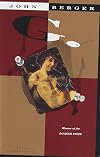
Finally, a book that meets my personal requirements for a prizewinner! G., by John Berger, is original and thought-provoking. It weaves together the personal and political, seamlessly zooming in to sensual moments, then zooming out to international crises and national overviews. It is a meta-fictional tour de force, and I am keeping this one.
You see, I wasn’t planning on keeping all the Booker books that I took such pains to accumulate. For the first four, I marked passages with sticky show more notes, so that I could resell the books later. But I gave up on sticky notes on page 74 of G.
G. is the unnamed protagonist, a boy who grows up in limbo as the child of an affair, not knowing his father, rarely seeing his mother. This state, Berger argues, is what primes him for falling in love precociously and repeatedly. He becomes a sort of Don Juan; his first sexual experience is with his mother’s female cousin who raised him. (This is not her first incest: she lives like a wife with her male cousin, G.’s sole paternal figure until he is reunited with his absentee father.)
I love the close-up scenes of a boy discovering his body and others’ bodies, pondering what is inside and what is outside. I am reminded of the sensuality of Anais Nin and Henry Miller, and David Foster Wallace’s “Backbone,” about a lonely boy who sets himself the goal of kissing every inch of his own flesh.
I love how the story oscillates in a series of luminous vignettes from concrete to abstract, with meta-fictional author’s asides that don’t seem contrived. Berger makes observations on the role of hunting in the evolution of British socio-economic class, then writes gorgeously about one evening’s hunt as lived by G. and his male cousin.
I may not agree with all his abstract generalizations, but I am fascinated with them. His view of women, for example: that we are always surveying ourselves, seeing ourselves through others’ eyes. I think Berger explains this better than certain French feminists I studied, though I am not convinced that all women feel this way, or that no men do.
The episodes of seduction become more and more political until they spiral tightly into one evening at a ball in Trieste, with not one but two women, just days before World War I is declared. I did not feel the need to look up as much historical information as I did in the previous Booker prize winners about politics and colonization, and yet I did not feel lectured to, either.
Like I said, G. is a keeper. I’ll be looking up other books by John Berger when this project is complete. show less
You see, I wasn’t planning on keeping all the Booker books that I took such pains to accumulate. For the first four, I marked passages with sticky show more notes, so that I could resell the books later. But I gave up on sticky notes on page 74 of G.
G. is the unnamed protagonist, a boy who grows up in limbo as the child of an affair, not knowing his father, rarely seeing his mother. This state, Berger argues, is what primes him for falling in love precociously and repeatedly. He becomes a sort of Don Juan; his first sexual experience is with his mother’s female cousin who raised him. (This is not her first incest: she lives like a wife with her male cousin, G.’s sole paternal figure until he is reunited with his absentee father.)
I love the close-up scenes of a boy discovering his body and others’ bodies, pondering what is inside and what is outside. I am reminded of the sensuality of Anais Nin and Henry Miller, and David Foster Wallace’s “Backbone,” about a lonely boy who sets himself the goal of kissing every inch of his own flesh.
I love how the story oscillates in a series of luminous vignettes from concrete to abstract, with meta-fictional author’s asides that don’t seem contrived. Berger makes observations on the role of hunting in the evolution of British socio-economic class, then writes gorgeously about one evening’s hunt as lived by G. and his male cousin.
I may not agree with all his abstract generalizations, but I am fascinated with them. His view of women, for example: that we are always surveying ourselves, seeing ourselves through others’ eyes. I think Berger explains this better than certain French feminists I studied, though I am not convinced that all women feel this way, or that no men do.
The episodes of seduction become more and more political until they spiral tightly into one evening at a ball in Trieste, with not one but two women, just days before World War I is declared. I did not feel the need to look up as much historical information as I did in the previous Booker prize winners about politics and colonization, and yet I did not feel lectured to, either.
Like I said, G. is a keeper. I’ll be looking up other books by John Berger when this project is complete. show less
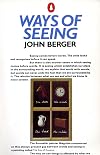
This book, inspired by a BBC television series, offers a satisfying handful of “essays” (more properly termed, lectures) centering on the history of image in art, specifically from the development of oil painting through the modern supremacy of photography. Although published in the early 1970s, commentary on the relationship between Western images and attitudes toward materialism, capital, women, and non-European cultures still commands relevance. I found the discussion accessible, show more thought provoking, and informative despite bringing to the text an underdeveloped knowledge of art history. Several of the essays are image-only, and the entire book interweaves image and illustration with the text, allowing the reader to immediately participate in the examination of the images and works addressed. From a distance of four decades, the final-page admonition “To be continued by the reader…” at least anticipates the ongoing, evolving relationship between image, meaning, and culture, prompting one in 2015 to reflect upon these lectures in the LCD light of today’s technologically image-saturated, selfie-conscious domain. show less
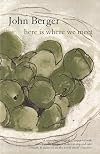
This is a beautiful piece of writing, a sort of psychogeography crossed with memoir, in which John Berger explores places that are important to him at the same time as he engages with memories of people who were important to him. Here the dead are as active in Berger’s life and thoughts as the living. The opening encounter set in Lisbon wonderfully captures the tone that Berger wants to set. He is surprised to find his mother in this city that he loves. She too loved it and has chosen it show more as the place in which she and he can meet. His interactions with her are sensitive and instructive — she often chides him or reminds him not to be fanciful but always tell the truth in his writing. Which immediately has us wondering what truth he is conveying through this particular writing. Note: he is certainly not telling us that the dead walk the earth. Rather, it is the influence on us of people who may have died that remains operative.
The result is a fascinating, lyrical, and very human approach to memoir. So readable and yet almost uncomfortably intimate. Filled with history and esoteric facts, yet what will stay with you is his mother laughing as she must have when she was 17.
Warmly recommended. show less
The result is a fascinating, lyrical, and very human approach to memoir. So readable and yet almost uncomfortably intimate. Filled with history and esoteric facts, yet what will stay with you is his mother laughing as she must have when she was 17.
Warmly recommended. show less
Lists
culture (2)
1980 great books (1)
Art Books (1)
One Letter Books (1)
My TBR (1)
Awards


You May Also Like


Associated Authors
Statistics
- Works
- 150
- Also by
- 37
- Members
- 17,230
- Popularity
- #1,289
- Rating
- 3.9
- Reviews
- 224
- ISBNs
- 761
- Languages
- 22
- Favorited
- 31