
Anne Michaels
Author of Fugitive Pieces
About the Author
Anne Michaels was born in 1958 in Toronto, Canada. Her poetry and fiction has earned her several awards. "The Weight of Oranges," a collection of poetry, won the Commonwealth Prize for the Americas. Another collection of poetry, "Miner's Pond," won the Canadian Authors Association Award and was she show more shortlisted for the Governor General's Award and the Trillium Award. "Fugitive Pieces," her first work of fiction won her the Canadian Booksellers Association Author of the Year Award, the Trillium Prize, the Chapters/Books in Canada First Novel Award, The Beatrice and Martin Fischer Award and the Orange Prize. She was also shortlisted for the Giller Prize. She is also a recipient of the National Magazine Award, for poetry, gold medal. (Bowker Author Biography) show less
Image credit: (c) Caroline J McElwee
Series
Works by Anne Michaels
Tagged
Common Knowledge
- Canonical name
- Michaels, Anne
- Birthdate
- 1958-04-15
- Gender
- female
- Education
- University of Toronto (B.A. English)
- Occupations
- academic
poet - Organizations
- Lannan Literary Award (Fiction, 1997)
- Short biography
- Anne Michaels, (b at Toronto 1958) the daughter of a Jewish-Polish immigrant, grew up in Toronto, and earned a BA in Honours English at the University of Toronto. Michaels's first novel, FUGITIVE PIECES (1996), brought her national recognition and awards, including the Trillium Prize and the Chapters/Books in Canada First Novel Award. The novel also garnered international acclaim, winning Britain's Orange Prize for Fiction and America's Lannan Literary Award for Fiction. Robert FULFORD observed that Fugitive Pieces "attracted more international praise than any first novel by a serious writer in Canadian history." A film version of Fugitive Pieces, directed by Jeremy Podeswa, was produced in 2006.
Like Fugitive Pieces' protagonist Jakob Beer, Anne Michaels is also a poet. Her first collection, The Weight of Oranges, won the 1986 Commonwealth Prize for the Americas. Miner's Pond (1991) was short-listed for a GOVERNOR GENERAL'S AWARD and won a Canadian Authors Association Award. Skin Divers was published in 1991. The poems from these three collections were published together, under the title Poems, in 2001. - Nationality
- Canada
- Birthplace
- Toronto, Ontario, Canada
- Places of residence
- Toronto, Ontario, Canada
- Associated Place (for map)
- Toronto, Ontario, Canada
Members
Discussions
Group Read, December 2017: Fugitive Pieces in 1001 Books to read before you die (December 2017)
Fugitive Pieces, Anne Michaels in World Reading Circle (January 2014)
Reviews
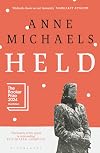
It’s 1917 and John is lying in the mud of a WW1 battlefield staring into the eyes of a dead young soldier, fully expecting to die himself. It’s 1920 and John is living above his photography shop in North Yorkshire with his wife Helena. It’s 1951 and Helena is in London.
It’s 1984 … it’s 1964 … it’s 1984 again. The book goes forwards and back in time, from France to England to Estonia and back, and each time we have vignettes of the lives of people confronted by trauma and show more grief, each connected to a greater or lesser extent. The dead do not stay firmly in the grave in this book:
I have mixed feelings about this book. The writing is beautiful, poetical and I enjoyed the backwards and forwards movements in time. (Although I do think that this is overdone at times - do we need Marie Curie as a character - I would argue not). But the voices of the characters didn’t ring true to me - they might have been poetical but they didn’t sound ‘real’. The voice of a youngish man in 1984 sounds the same as that of someone who must have been in his nineties. Elements of people’s life just didn’t seem to add up to make a whole real person.
Several reviewers have said that this is a book to reread, and I can understand why they say that. But I don’t think I enjoyed my first reading enough to want to read again. show less
It’s 1984 … it’s 1964 … it’s 1984 again. The book goes forwards and back in time, from France to England to Estonia and back, and each time we have vignettes of the lives of people confronted by trauma and show more grief, each connected to a greater or lesser extent. The dead do not stay firmly in the grave in this book:
He placed the negative in the developer and then into the fixer. The image in the fluid, like mist slowly parting the closer one approaches, began to emerge: the young man, beautifully clear and evocatively lit, handsome and whole in body: behind him, the luxurious drapery, the nap of velvet and details of brocade, sharp and precise; and in his hand, a book, Matthew Arnold's 'Stanzas', even the shadows of the letters embossed on the cover. And beside him, semi-opaque but perfectly distinct, an older woman, well-dressed, pearl buttons, her fine head and lustrous hair, and her expression of intolerable longing.
I have mixed feelings about this book. The writing is beautiful, poetical and I enjoyed the backwards and forwards movements in time. (Although I do think that this is overdone at times - do we need Marie Curie as a character - I would argue not). But the voices of the characters didn’t ring true to me - they might have been poetical but they didn’t sound ‘real’. The voice of a youngish man in 1984 sounds the same as that of someone who must have been in his nineties. Elements of people’s life just didn’t seem to add up to make a whole real person.
Several reviewers have said that this is a book to reread, and I can understand why they say that. But I don’t think I enjoyed my first reading enough to want to read again. show less
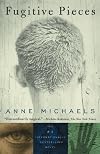
Fugitive Pieces is a tour de force that must be consumed slowly and savored, like a good wine or a piece of New York cheesecake. It is the story of Jakob Beer, a Jewish child saved from the holocaust by a Greek stranger. In a style that is beautiful and stark at the same moment, Michaels ferrys us through Jakob’s life as he deals with his loss and its impact on his future.
When Jakob’s story is complete, and you feel the book has reached its logical end, Michaels pulls a rabbit out of show more the hat and introduces some new magic in the guise of Ben, the child of holocaust survivors who is touched in a profound way by Jakob. Ben is proof that the influence of an individual can outlast his life, that a life can mean more than we know, that our own grief can assuage someone else’s.
The night you and I met, Jakob, I heard you tell my wife that there's a moment when love makes us believe in death for the first time. You recognize the one whose loss, even contemplated, you'll carry forever, like a sleeping child. All grief, anyone's grief, you said, is the weight of a sleeping child.
For grief is so often memory, and memory is what extends us beyond the limits of our corporeal bodies. No one would protest the burden of carrying a sleeping child.
I marked numerous passages in my reading. I stopped and reread paragraphs because the beauty they expressed was too profound to be satisfied by only a single reading.
As for your brother's unhappiness, I'm naive enough to think that love is always good, no matter how long ago, no matter the circumstances. I'm not old enough yet to imagine the instances where this isn't true and where regret outweighs everything.
and
She knows as well as I that history only goes into remission, while it continues to grow in you until you're silted up and can't move. And you disappear into a piece of music, a chest of drawers, perhaps a hospital record or two, and you slip away, forsaken even by those who claimed to love you the most.
There are myriad holocaust stories, but the best are the ones that remind us of our humanity, what we share, and that, as Donne told us, “any man's death diminishes me, because I am involved in mankind, and therefore never send to know for whom the bells tolls; it tolls for thee."
This is an excellent holocaust tale. show less
When Jakob’s story is complete, and you feel the book has reached its logical end, Michaels pulls a rabbit out of show more the hat and introduces some new magic in the guise of Ben, the child of holocaust survivors who is touched in a profound way by Jakob. Ben is proof that the influence of an individual can outlast his life, that a life can mean more than we know, that our own grief can assuage someone else’s.
The night you and I met, Jakob, I heard you tell my wife that there's a moment when love makes us believe in death for the first time. You recognize the one whose loss, even contemplated, you'll carry forever, like a sleeping child. All grief, anyone's grief, you said, is the weight of a sleeping child.
For grief is so often memory, and memory is what extends us beyond the limits of our corporeal bodies. No one would protest the burden of carrying a sleeping child.
I marked numerous passages in my reading. I stopped and reread paragraphs because the beauty they expressed was too profound to be satisfied by only a single reading.
As for your brother's unhappiness, I'm naive enough to think that love is always good, no matter how long ago, no matter the circumstances. I'm not old enough yet to imagine the instances where this isn't true and where regret outweighs everything.
and
She knows as well as I that history only goes into remission, while it continues to grow in you until you're silted up and can't move. And you disappear into a piece of music, a chest of drawers, perhaps a hospital record or two, and you slip away, forsaken even by those who claimed to love you the most.
There are myriad holocaust stories, but the best are the ones that remind us of our humanity, what we share, and that, as Donne told us, “any man's death diminishes me, because I am involved in mankind, and therefore never send to know for whom the bells tolls; it tolls for thee."
This is an excellent holocaust tale. show less

Photographic Memories
Narrated by: Anne Michaels
Length: 4 hrs and 29 mins
Held is an intelligent novel of held memories. It covers four generations spanning different countries, held together tenuously and driven by women.
Time slips forward and back, but there’s no thread of singular continuity. We are not told directly whose child is the one who becomes a doctor in war zones, or who will wear the cap made by the Italian emigré in an chapter later in the book that was set in an earlier show more generation.
It’s as if the memories of the many characters that the writer deftly touches upon are thrown together, held by knitting stitches that the reader must navigate.
Reading Held, I was constantly reminded Magda Szabó’s opening paragraph in Katalin Street.
“Time had shrunk to specific moments, important events to single episodes, familiar places to mere backdrops to individual scenes. Only a few moments and places really mattered; everything else was so much wadding - wood-shavings stuffed into a trunk to protect the contents on the long journey to come.”
Held is not a book that lends itself to a synopsis. More poetry than narrative, it examines the meaning of being, lapsing into physics and photography, chemistry and consciousness. It is what isn’t there as much as what is that’s important. In Quantum Physics as I understand it, there are single particles that move position from here to there in the smallest unit of time. The meaning is in what is not there.
“Perhaps meaning lies in the change of state.That the purpose of synapses is the space between them?” the writer asks the reader.
Like a mime Michaels brings our attention to phenomena by their absence. Like the imaginary tennis ball in Antonioni’s film Blowup, objects are every bit as "real" as the evidential photograph is "illusory."
We are constantly asked to look at opposites.
“Is meaning at the heart of behaviors or is behavior at the heart of the meaning?”
The blending of the poetic presentation of science and philosophy is challenging at times, but the challenge is worth it.
What connects the narratives are themes and motifs. As different characters slide into to chapters there’s not always an explicit connection. At times it feels like a riddle, and at first character “jump”, I wondered should I take notes. But of course that would ruin the flow and is unnecessary. If it is important we will know.
Themes of memory, war, love, death and the lives of women are tied together seamlessly. There are places such as the French café that pop up unexpectedly, causing the reader to be drawn back to other chapters and characters, thus retrospectively plugging in gaps that hadn’t even been noticed. This is a subtle read.
I will undoubtedly be reading this book again, as it’s so densely packed with both concepts and stories that I’m sure I missed a lot.
Held is a book to be read leisurely with pleasure. show less
Narrated by: Anne Michaels
Length: 4 hrs and 29 mins
Held is an intelligent novel of held memories. It covers four generations spanning different countries, held together tenuously and driven by women.
Time slips forward and back, but there’s no thread of singular continuity. We are not told directly whose child is the one who becomes a doctor in war zones, or who will wear the cap made by the Italian emigré in an chapter later in the book that was set in an earlier show more generation.
It’s as if the memories of the many characters that the writer deftly touches upon are thrown together, held by knitting stitches that the reader must navigate.
Reading Held, I was constantly reminded Magda Szabó’s opening paragraph in Katalin Street.
“Time had shrunk to specific moments, important events to single episodes, familiar places to mere backdrops to individual scenes. Only a few moments and places really mattered; everything else was so much wadding - wood-shavings stuffed into a trunk to protect the contents on the long journey to come.”
Held is not a book that lends itself to a synopsis. More poetry than narrative, it examines the meaning of being, lapsing into physics and photography, chemistry and consciousness. It is what isn’t there as much as what is that’s important. In Quantum Physics as I understand it, there are single particles that move position from here to there in the smallest unit of time. The meaning is in what is not there.
“Perhaps meaning lies in the change of state.That the purpose of synapses is the space between them?” the writer asks the reader.
Like a mime Michaels brings our attention to phenomena by their absence. Like the imaginary tennis ball in Antonioni’s film Blowup, objects are every bit as "real" as the evidential photograph is "illusory."
We are constantly asked to look at opposites.
“Is meaning at the heart of behaviors or is behavior at the heart of the meaning?”
The blending of the poetic presentation of science and philosophy is challenging at times, but the challenge is worth it.
What connects the narratives are themes and motifs. As different characters slide into to chapters there’s not always an explicit connection. At times it feels like a riddle, and at first character “jump”, I wondered should I take notes. But of course that would ruin the flow and is unnecessary. If it is important we will know.
Themes of memory, war, love, death and the lives of women are tied together seamlessly. There are places such as the French café that pop up unexpectedly, causing the reader to be drawn back to other chapters and characters, thus retrospectively plugging in gaps that hadn’t even been noticed. This is a subtle read.
I will undoubtedly be reading this book again, as it’s so densely packed with both concepts and stories that I’m sure I missed a lot.
Held is a book to be read leisurely with pleasure. show less
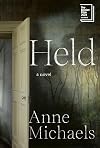
The Canadian author Anne Michaels likes to put her readers to the test. That was already evident in her Fugitive Pieces (1996), and it is even more the case here. Actually, what is this: a series of vignettes, jumping through time, sometimes with connected protagonists, sometimes not, no plot, … so indeed, what actually is this?
I notice that many people are charmed by the dreamy, poetic character of the text. I can see what they mean, but I have to admit that in my case this was not show more appealing enough, as the author pays quite some attention to the description of actions and settings for that. And while reading you get the vague suspicion that there is a big message behind this labyrinth of vignettes, but that the author wants us to find it ourselves. To that end, she offers some vague clues. For example, she surprisingly often plays a game with boundaries that turn out not to be boundaries. The maxims at the very beginning already refer to this: “Desire permeates everything; nothing human can be cleansed of it. We can only think about the unknown in terms of the known. The speed of light cannot reference time. The past exists as a present moment. Perhaps the most important things we know cannot be proven.” In other words: there are no delineated things, no boundaries, no certainties. And that keeps coming back in one way or another.
Interesting, certainly, but what I personally dislike are the references to quantum theory. Even Rutherford himself appears as a character. There have been other writers who introduce or use vague notions of quantum mechanics, usually deliberately to establish unsuspected connections between times and people. You know, the message is then: “everything is connected, independent of time and space”, or “two things can be present at the same time in different forms, in different places and at different times”, etc. I can’t stand that vaguely esoteric stuff. And I have the impression that Michaels is also tapping into this barrel. Her final sentence also suggests that: “who can say what happens when we are remembered?”.
No, it clearly didn’t work for me. Her focus on the love bond between people, as the only certainty, of course is something that appeals. But I’m not sure if that is enough to make this concrete novel successful. show less
I notice that many people are charmed by the dreamy, poetic character of the text. I can see what they mean, but I have to admit that in my case this was not show more appealing enough, as the author pays quite some attention to the description of actions and settings for that. And while reading you get the vague suspicion that there is a big message behind this labyrinth of vignettes, but that the author wants us to find it ourselves. To that end, she offers some vague clues. For example, she surprisingly often plays a game with boundaries that turn out not to be boundaries. The maxims at the very beginning already refer to this: “Desire permeates everything; nothing human can be cleansed of it. We can only think about the unknown in terms of the known. The speed of light cannot reference time. The past exists as a present moment. Perhaps the most important things we know cannot be proven.” In other words: there are no delineated things, no boundaries, no certainties. And that keeps coming back in one way or another.
Interesting, certainly, but what I personally dislike are the references to quantum theory. Even Rutherford himself appears as a character. There have been other writers who introduce or use vague notions of quantum mechanics, usually deliberately to establish unsuspected connections between times and people. You know, the message is then: “everything is connected, independent of time and space”, or “two things can be present at the same time in different forms, in different places and at different times”, etc. I can’t stand that vaguely esoteric stuff. And I have the impression that Michaels is also tapping into this barrel. Her final sentence also suggests that: “who can say what happens when we are remembered?”.
No, it clearly didn’t work for me. Her focus on the love bond between people, as the only certainty, of course is something that appeals. But I’m not sure if that is enough to make this concrete novel successful. show less
Lists
Awards


You May Also Like


Associated Authors
Statistics
- Works
- 15
- Members
- 5,215
- Popularity
- #4,779
- Rating
- 3.7
- Reviews
- 205
- ISBNs
- 173
- Languages
- 12
- Favorited
- 21


