
Kai Bird
Author of American Prometheus: The Triumph and Tragedy of J. Robert Oppenheimer
About the Author
Kai Bird is the Executive Director of the Leon Levy Center for Biography and an award-winning historian and journalist. His work includes critical writings on the Vietnam War, Hiroshima, nuclear weapons, the Cold War, the Arab-Israeli conflict, and the CIA.
Image credit: Columbia University
(Kai Bird is at center)
Works by Kai Bird
American Prometheus: The Triumph and Tragedy of J. Robert Oppenheimer (2005) 3,617 copies, 65 reviews
Crossing Mandelbaum Gate: Coming of Age Between the Arabs and Israelis, 1956-1978 (2010) 150 copies, 4 reviews
Associated Works
Oppenheimer And The Manhattan Project: Insights Into J Robert Oppenheimer, "Father Of The Atomic Bomb" (2005) — Contributor — 8 copies, 1 review
Tagged
Common Knowledge
- Canonical name
- Bird, Kai
- Birthdate
- 1951-09-02
- Gender
- male
- Education
- Carleton College (BA|1973)
Northwestern University (MA|Journalism|1975)
Kodaikanal International School - Occupations
- journalist
author
biographer - Organizations
- The Nation
- Awards and honors
- Guggenheim Fellowship
Thomas J. Watson Fellowship
Alicia Patterson Journalism Fellowship
John D. & Catherine T. MacArthur Grant
Woodrow Wilson International Center for Scholars Fellowship - Nationality
- USA
- Birthplace
- Eugene, Oregon, USA
- Places of residence
- Kathmandu, Nepal
Lima, Peru - Associated Place (for map)
- USA
Members
Reviews
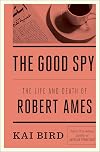
A fascinating, well-written and thoroughly researched book about the life of CIA officer Robert Ames. Ames was a Middle East expert who made his by establishing contact with the PLO as an operational officer. He later moved onto the analytical side, excelled there, and continued his contacts with not only the PLO, but with many players in the region. Kai Bird does an excellent job of bringing Ames to life within the context of his profession and the events that surrounded him.
Ames was an show more Arabist, and was accused by some within the agency of being too sympathetic to the Palestinian cause. He learned Arabic in the army and continued to improve his language skills throughout his life.
Though most of the events in the book happened over thirty years ago, it feels relevant to today. That’s in part because the Middle East continues to be one of the world’s most volatile and newsworthy political hot spots and in part due to the immediacy of Bird’s writing.
The book shows how the CIA often tried to do the right thing – such as during events leading up to the Iran Hostage Crisis – but were often thwarted by events beyond control. As Bird describes the practice of intelligence gathering, it is often “a wilderness of mirrors.”
An added dimension to the story is that Bird knew Robert Ames and his family as a child, when they lived in the same compound at the U.S. Consulate in Dhahran, Saudi Arabia.
Somewhat ironically, Ames death in the bombing of the U.S. Embassy in Beirut on April 18, 1983 was the result of the terrorism he was trying to control. But it was a case of being in the wrong place at the wrong time, rather than as a specific target. show less
Ames was an show more Arabist, and was accused by some within the agency of being too sympathetic to the Palestinian cause. He learned Arabic in the army and continued to improve his language skills throughout his life.
Though most of the events in the book happened over thirty years ago, it feels relevant to today. That’s in part because the Middle East continues to be one of the world’s most volatile and newsworthy political hot spots and in part due to the immediacy of Bird’s writing.
The book shows how the CIA often tried to do the right thing – such as during events leading up to the Iran Hostage Crisis – but were often thwarted by events beyond control. As Bird describes the practice of intelligence gathering, it is often “a wilderness of mirrors.”
An added dimension to the story is that Bird knew Robert Ames and his family as a child, when they lived in the same compound at the U.S. Consulate in Dhahran, Saudi Arabia.
Somewhat ironically, Ames death in the bombing of the U.S. Embassy in Beirut on April 18, 1983 was the result of the terrorism he was trying to control. But it was a case of being in the wrong place at the wrong time, rather than as a specific target. show less
 This review was written for LibraryThing Early Reviewers.
A true work of art. Bird and Sherwin take on the monumental task of understanding the life and times of easily the most important man in his century. Not one character who enters the fray here is overlooked, not in their own personal history or how theirs affected the man's.
The book is not overly scientific and still manages to educate on the topic of quantum theory. It's also quite a history of the lurches in scientific understanding over time, and the men behind them.
But the most wildly show more interesting component of the narrative is the politics: Oppenheimer's, the country's, and the world's. Not many of us will have our individual ethics challenged so severely as did Oppenheimer. But the cautionary tale still rings loudly for personal ethics as a driving force in life, and the consequences for making a stand; or the consequences for not making a stand when necessary. Oppenheimer falls on both ends of that spectrum, as a testament to the complexity of his character.
The book is deeply personal, and doesn't read at all like a cold, dry history. This should be mandatory reading for everyone in school. Sadly, this is a story not everyone wants told. Forget Barbie - case the time to start reading this book.
Highly Recommended!!!!!
5 bones!!!!! show less
The book is not overly scientific and still manages to educate on the topic of quantum theory. It's also quite a history of the lurches in scientific understanding over time, and the men behind them.
But the most wildly show more interesting component of the narrative is the politics: Oppenheimer's, the country's, and the world's. Not many of us will have our individual ethics challenged so severely as did Oppenheimer. But the cautionary tale still rings loudly for personal ethics as a driving force in life, and the consequences for making a stand; or the consequences for not making a stand when necessary. Oppenheimer falls on both ends of that spectrum, as a testament to the complexity of his character.
The book is deeply personal, and doesn't read at all like a cold, dry history. This should be mandatory reading for everyone in school. Sadly, this is a story not everyone wants told. Forget Barbie - case the time to start reading this book.
Highly Recommended!!!!!
5 bones!!!!! show less
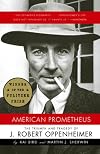
https://fromtheheartofeurope.eu/oppenheimer-and-american-prometheus-the-triumph-...
This is an excellent top-to-toe biography, starting with Oppenheimer’s immigrant parents who moved to New York and became rich and finishing with his comfortable exile in Princeton, with refuge in the Caribbean, and the subsequent deaths of his wife and daughter. There were two particular points about his background that helped the whole story make sense for me. The fact that his family was rich meant that show more Oppenheimer never really had to worry about money, and that perhaps encouraged a lack of responsibility in some ways. But the philosophical foundation that he learned at an early age from his parents’ adherence to the Society for Ethical Culture pushed him in the opposite direction, to be aware of the moral consequences of his actions, especially when they affected the lives and even more so the deaths of many.
His fascination with the desert is brought out in the film, but less so his fascination with riding, which seems to have been an obsession from an early age. The ins and outs of his relationship, and Lewis Strauss’s, with the Institute for Advanced Studies in Princeton are also a very important element of the story, taking it beyond the question of national security to in-fighting in the academic world, where Oppenheimer usually defeated the less gifted Strauss – but not always.
The book also gives a much more rounded picture of Kitty Oppenheimer, who had been married three times before ending up with Robert, and was actually German by birth. She claimed to be related to the Belgian royal family, which sent me on a genealogical wild-goose-chase (in short: I don’t think she was). She was also a serious professional botanist in her own right; and an alcoholic. The film hints at some of this but the book reveals much more.
At 900 pages, it has the leisure to examine the accusations levelled against Oppenheimer in detail, and also to look at the motivations of his accusers from a distance of decades. One of the best lines in the book comes from, of all people, Albert Einstein, who when told of Oppenheimer’s security clearance problems said, “The trouble with Oppenheimer is that he loves a woman who doesn’t love him—the United States government.”
It took me quite a while to get through – helped by two overnight flights to and from China last month, and two three-hour internal flights while I was there – but unlike with the film, I felt that my efforts were justified. show less
This is an excellent top-to-toe biography, starting with Oppenheimer’s immigrant parents who moved to New York and became rich and finishing with his comfortable exile in Princeton, with refuge in the Caribbean, and the subsequent deaths of his wife and daughter. There were two particular points about his background that helped the whole story make sense for me. The fact that his family was rich meant that show more Oppenheimer never really had to worry about money, and that perhaps encouraged a lack of responsibility in some ways. But the philosophical foundation that he learned at an early age from his parents’ adherence to the Society for Ethical Culture pushed him in the opposite direction, to be aware of the moral consequences of his actions, especially when they affected the lives and even more so the deaths of many.
His fascination with the desert is brought out in the film, but less so his fascination with riding, which seems to have been an obsession from an early age. The ins and outs of his relationship, and Lewis Strauss’s, with the Institute for Advanced Studies in Princeton are also a very important element of the story, taking it beyond the question of national security to in-fighting in the academic world, where Oppenheimer usually defeated the less gifted Strauss – but not always.
The book also gives a much more rounded picture of Kitty Oppenheimer, who had been married three times before ending up with Robert, and was actually German by birth. She claimed to be related to the Belgian royal family, which sent me on a genealogical wild-goose-chase (in short: I don’t think she was). She was also a serious professional botanist in her own right; and an alcoholic. The film hints at some of this but the book reveals much more.
At 900 pages, it has the leisure to examine the accusations levelled against Oppenheimer in detail, and also to look at the motivations of his accusers from a distance of decades. One of the best lines in the book comes from, of all people, Albert Einstein, who when told of Oppenheimer’s security clearance problems said, “The trouble with Oppenheimer is that he loves a woman who doesn’t love him—the United States government.”
It took me quite a while to get through – helped by two overnight flights to and from China last month, and two three-hour internal flights while I was there – but unlike with the film, I felt that my efforts were justified. show less
Books about Israeli-Palestinian strife are way down on my list of interests. However, this was a book about a CIA agent who, while unknown to the world, was a major player in Middle Eastern politics for a while, so I was mildly interested.
It’s possible this book may incite some strong feelings for those who dear care about those politics.
For the record, my own biases are that Israel has way too much influence in American affairs. It is not the 51st state. It has not been a staunch ally. It show more is capable of taking care of itself. On the other hand, I really don’t care what Israel does with their Palestinian or Arab neighbors. The necessity for America to insert itself in this conflict is non-existent in a post-Cold War era where America produces so much of its own oil.
Robert Ames, a CIA employee from 1960 to his violent death on April 18, 1983 when the United States embassy in Lebanon was bombed, was not a neutral in that conflict. He sympathized with the Palestinians. He was a romantic Arabist, a lover of the Arab street though, in his later days, he did empathize with Israeli concerns too.
The book starts on September 13, 1993 with Ames’ CIA colleagues going to his grave as a peace accord is about to be signed by Yitzhak Rabin and Yasir Arafat at the White House. They privately tell some CIA young recruits that Ames made that moment possible. But, as the book notes, that, like every other attempt at settling the Israeli-Palestinian question, came to naught.
Bird seems to think the effort was worthwhile. Yet, it has still come to nothing. It’s hard to think that this book is not the story of an unusually talented agent who devoted his career to a futile cause. Bird acknowledges that possibility by quoting others.
I must say that, especially for someone who is not very interested in the background to this story, Bird makes Ames’ story compelling. Bird received absolutely no help from the CIA with this biography, but Ames’ former colleagues (many on record but a few hiding behind italicized pseudonyms) as well as Mossad agents, Palestinians, and Lebanese were happy to co-operate with Bird. And Bird doesn’t just quote those who agreed with Ames but those critical of him too. An amazing amount of detail was put together to provide a picture of Ames on and off duty.
Additionally, there is an unusual connection between Bird and Ames. Bird, as a young boy, met Ames when he posted to Saudi Arabia where Bird’s father served as a Foreign Service officer. To Bird, he was a handsome, affable man always happy to play basketball with the American kids, and Ames’ wife was friends with Bird’s mother. (Bird, of course, did not know until years later that Ames was not a Foreign Service officer but a CIA agent under diplomatic cover).
Ames career eventually took him from an agent in the CIA’s Directorate of Operations to a senior analyst to a man who had input in President Reagan’s speeches on the Palestinian-Israeli conflict and U.S. attempts at a peace process. He became an intelligence agent who self-consciously tried to influence policy, generally considered bad practice. Director of Central Intelligence, Stansfield Turner, did not think highly of CIA field agents – in fact he fired many, but he regarded Ames highly and helped in his promotion.
Ames interest in Arab matters started with his posting, in 1951 as an Army serviceman to the highlands of Ethiopia at a CIA listening post. He started to teach himself the language. After he joined the CIA, he loved to drive around and talk with Bedouin and street Arabs. It sharpened his language skills and knowledge of Arab history and cultures. He genuinely sympathized with what he considered the Arab world’s struggle against colonialism, and he considered Israel as a colonizer. An example of what that attitude and knowledge is shown when he quashed a rumor that Russian pilots were flying planes over North Yemen planes in a civil war. After all, a body recovered from a crash had red hair according to report. Ames bluntly pointed out the pilot was an Arab returned from the haj, his hair colored with henna, a frequent occurrence in returning pilgrims.
Ames never really recruited many agents – many CIA case officers never recruit foreign agents. Ames had sources, many sources, whom he genuinely liked, but they weren’t formal agents.
The most significant of these in Lebanon was Ali Hassan Salameh. Salameh was a high ranking member of the PLO, closely tied to Arafat, and Ames knew he was involved in several acts of international terrorism though there is some dispute whether he was involved in the Black September terrorist operation at the 1972 Munich Olympics. Essentially, Salameh was an unacknowledged diplomatic channel from the U.S. government, starting with the Nixon administration, to the PLO. The CIA tried to recruit Salameh who always refused. He was willing to pass information and frank statements about PLO policies and goals, but he would not be bought off.
The Mossad operation to kill Salameh for his alleged part in the Munich Olympics incident resulted in the death of an innocent waiter in Norway and ended the revenge operation by Israel. However, after the CIA failed to explicitly list him as a US asset, the Mossad did get Salameh – and his driver, two bodyguards, a British secretary, a German nun, and two Lebanese bystanders – on November 22, 1979 with a car bomb. (Detonated by Erika Chambers, a British citizen, who was chosen because she didn’t delay – due to moral or psychological reasons or simply better reaction times isn’t clear– pushing the button unlike the men the Mossad tested.)
The book is full of violence: kidnappings, public executions, assassinations, suicide bombers, massacres in refugee camps, and good old-fashioned conventional warfare. However, Bird doesn’t dwell too much on the gory details except a detailed accounting of the bombing that killed Ames and 62 other people. It is clear is Bird is interested in memorializing the career of a man he knew briefly and providing some comfort to the Ames family.
Personally, I was interested for the background to news stories I heard in my youth.
While he doesn’t overstress it, Bird points out the moral and personal ambiguities of espionage. Did Ames become too friendly to those who supplied him information? Did he empathize too much with men he knew to be terrorists and with the Arabs in general?
Espionage involves dealing with bad people. Ames wasn’t under illusions about who he was dealing with in the PLO – though he probably was too incredulous in believing the PLO’s claim they would recognize Israel’s right to exist as anything more than a temporary concession.
Epitomizing that truth is that Ali Reza Asgari, the Iranian intelligence agent that planned the bombing that killed Ames, ended up coming to America, the guest of the CIA. show less
It’s possible this book may incite some strong feelings for those who dear care about those politics.
For the record, my own biases are that Israel has way too much influence in American affairs. It is not the 51st state. It has not been a staunch ally. It show more is capable of taking care of itself. On the other hand, I really don’t care what Israel does with their Palestinian or Arab neighbors. The necessity for America to insert itself in this conflict is non-existent in a post-Cold War era where America produces so much of its own oil.
Robert Ames, a CIA employee from 1960 to his violent death on April 18, 1983 when the United States embassy in Lebanon was bombed, was not a neutral in that conflict. He sympathized with the Palestinians. He was a romantic Arabist, a lover of the Arab street though, in his later days, he did empathize with Israeli concerns too.
The book starts on September 13, 1993 with Ames’ CIA colleagues going to his grave as a peace accord is about to be signed by Yitzhak Rabin and Yasir Arafat at the White House. They privately tell some CIA young recruits that Ames made that moment possible. But, as the book notes, that, like every other attempt at settling the Israeli-Palestinian question, came to naught.
Bird seems to think the effort was worthwhile. Yet, it has still come to nothing. It’s hard to think that this book is not the story of an unusually talented agent who devoted his career to a futile cause. Bird acknowledges that possibility by quoting others.
I must say that, especially for someone who is not very interested in the background to this story, Bird makes Ames’ story compelling. Bird received absolutely no help from the CIA with this biography, but Ames’ former colleagues (many on record but a few hiding behind italicized pseudonyms) as well as Mossad agents, Palestinians, and Lebanese were happy to co-operate with Bird. And Bird doesn’t just quote those who agreed with Ames but those critical of him too. An amazing amount of detail was put together to provide a picture of Ames on and off duty.
Additionally, there is an unusual connection between Bird and Ames. Bird, as a young boy, met Ames when he posted to Saudi Arabia where Bird’s father served as a Foreign Service officer. To Bird, he was a handsome, affable man always happy to play basketball with the American kids, and Ames’ wife was friends with Bird’s mother. (Bird, of course, did not know until years later that Ames was not a Foreign Service officer but a CIA agent under diplomatic cover).
Ames career eventually took him from an agent in the CIA’s Directorate of Operations to a senior analyst to a man who had input in President Reagan’s speeches on the Palestinian-Israeli conflict and U.S. attempts at a peace process. He became an intelligence agent who self-consciously tried to influence policy, generally considered bad practice. Director of Central Intelligence, Stansfield Turner, did not think highly of CIA field agents – in fact he fired many, but he regarded Ames highly and helped in his promotion.
Ames interest in Arab matters started with his posting, in 1951 as an Army serviceman to the highlands of Ethiopia at a CIA listening post. He started to teach himself the language. After he joined the CIA, he loved to drive around and talk with Bedouin and street Arabs. It sharpened his language skills and knowledge of Arab history and cultures. He genuinely sympathized with what he considered the Arab world’s struggle against colonialism, and he considered Israel as a colonizer. An example of what that attitude and knowledge is shown when he quashed a rumor that Russian pilots were flying planes over North Yemen planes in a civil war. After all, a body recovered from a crash had red hair according to report. Ames bluntly pointed out the pilot was an Arab returned from the haj, his hair colored with henna, a frequent occurrence in returning pilgrims.
Ames never really recruited many agents – many CIA case officers never recruit foreign agents. Ames had sources, many sources, whom he genuinely liked, but they weren’t formal agents.
The most significant of these in Lebanon was Ali Hassan Salameh. Salameh was a high ranking member of the PLO, closely tied to Arafat, and Ames knew he was involved in several acts of international terrorism though there is some dispute whether he was involved in the Black September terrorist operation at the 1972 Munich Olympics. Essentially, Salameh was an unacknowledged diplomatic channel from the U.S. government, starting with the Nixon administration, to the PLO. The CIA tried to recruit Salameh who always refused. He was willing to pass information and frank statements about PLO policies and goals, but he would not be bought off.
The Mossad operation to kill Salameh for his alleged part in the Munich Olympics incident resulted in the death of an innocent waiter in Norway and ended the revenge operation by Israel. However, after the CIA failed to explicitly list him as a US asset, the Mossad did get Salameh – and his driver, two bodyguards, a British secretary, a German nun, and two Lebanese bystanders – on November 22, 1979 with a car bomb. (Detonated by Erika Chambers, a British citizen, who was chosen because she didn’t delay – due to moral or psychological reasons or simply better reaction times isn’t clear– pushing the button unlike the men the Mossad tested.)
The book is full of violence: kidnappings, public executions, assassinations, suicide bombers, massacres in refugee camps, and good old-fashioned conventional warfare. However, Bird doesn’t dwell too much on the gory details except a detailed accounting of the bombing that killed Ames and 62 other people. It is clear is Bird is interested in memorializing the career of a man he knew briefly and providing some comfort to the Ames family.
Personally, I was interested for the background to news stories I heard in my youth.
While he doesn’t overstress it, Bird points out the moral and personal ambiguities of espionage. Did Ames become too friendly to those who supplied him information? Did he empathize too much with men he knew to be terrorists and with the Arabs in general?
Espionage involves dealing with bad people. Ames wasn’t under illusions about who he was dealing with in the PLO – though he probably was too incredulous in believing the PLO’s claim they would recognize Israel’s right to exist as anything more than a temporary concession.
Epitomizing that truth is that Ali Reza Asgari, the Iranian intelligence agent that planned the bombing that killed Ames, ended up coming to America, the guest of the CIA. show less
This review was written for LibraryThing Early Reviewers.Lists
Awards


You May Also Like


Associated Authors
Statistics
- Works
- 8
- Also by
- 2
- Members
- 4,684
- Popularity
- #5,386
- Rating
- 4.2
- Reviews
- 107
- ISBNs
- 71
- Languages
- 12
- Favorited
- 2
