

R. D. Blackmore (1825–1900)
Author of Lorna Doone
About the Author
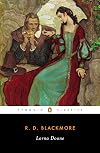
Image credit: Frontispiece Portrait from Lorna Doone, 1900 edition.
Series
Works by R. D. Blackmore
Romance Classics: Jane Eyre / Mansfield Park / Lorna Doone / Far from the Madding Crowd / Middlemarch / Agnes Grey (2001) — Author — 5 copies
George Bowring - A Tale Of Cader Idris From "Slain By The Doones" By R. D. Blackmore (2015) 3 copies
Lorna Doone TV Tie (BBC) 2 copies
Lorna Doone 2 copies
Lorna Doone: A Romance of Exmoor (Macmillan ELT Stories to Remember Readers Series) by R.D. Blackmore (1955-12-05) (1681) 1 copy
Lorna Doone 1 copy
Cristowell 1 copy
The Remarkable History of Sir Thomas Upmore, Bart., M.P., Formerly Known as "Tommy Upmore" Volume 1 (2015) 1 copy
Politics and Poetics 1 copy
Associated Works
Tagged
Common Knowledge
- Legal name
- Blackmore, Richard Doddridge
- Birthdate
- 1825-06-07
- Date of death
- 1900-01-20
- Gender
- male
- Education
- Exeter College, Oxford
Hugh Squier's School, South Molton, Devonshire, UK
Kings School, Bruton, Somerset, UK
Blundell's School - Occupations
- novelist
teacher
private tutor
barrister
schoolmaster
market gardener - Short biography
- Richard Doddridge Blackmore (7 June 1825 – 20 January 1900), known as R. D. Blackmore, was one of the most famous English novelists of the second half of the nineteenth century. He won acclaim for vivid descriptions and personification of the countryside, sharing with Thomas Hardy a Western England background and a strong sense of regional setting in his works.
Blackmore, often referred to as the "Last Victorian", was a pioneer of the movement in fiction that continued with Robert Louis Stevenson and others. He has been described as "proud, shy, reticent, strong-willed, sweet-tempered, and self-centred." Apart from his novel Lorna Doone, which has enjoyed continuing popularity, his work has gone out of print. - Nationality
- England
- Birthplace
- Longworth, Berkshire, England, UK
- Places of residence
- Longworth, Oxfordshire, England, UK (then Berkshire)
Glamorganshire, Wales, UK
Teddington, London, Middlesex, England, UK - Place of death
- London, Middlesex, England, UK
- Burial location
- Teddington Cemetery, London, Middlesex, England, UK
- Map Location
- England, UK
Members
Discussions
Lorna Doone in Easton Press Collectors (September 2025)
Reviews

All right, all right—I confess!
After years of eating the shortbread cookies, and then recently watching the 2000 TV miniseries, I wanted to finally read this classic Romance of Exmoor. ("Romance" not in the sense of John and Lorna's love story but in the sense that Blackmore wrote the book with a romantic approach to history, rather than penning a novel strictly concerned with historical fact.)
However, I've been only a third of the way through an unabridged copy of Les Misérables for show more years now—yet planning on finishing it sometime, once I've cleared out enough "cushion space" for it. (As much as I've thoroughly enjoyed that work of Victor Hugo's so far, even its tangents, I've still 1000 more Misérables pages to go, and I'm not the naturally fastest reader around. Here in the more recent seasons of my writing/publishing and book blogging schedule, I've been sticking to reading books that will only take me a certain number of hours to finish and review.)
So, I've spent some years successfully resisting the temptation to start any more epic-length classics, while my completion of Les Mis is pending. Yet, for months, I've kept hearing the theme music from that Lorna Doone miniseries in my head, against the backdrop of bracing winds from a waterfall up in Exmoor's hills…
("Romantic" sigh)
So, to the meat of my first confession, here: I made a compromise that I usually don't make for novels, not even for really long ones.
I decided to read (*gasp!*) an abridged edition of Lorna Doone. The one from Puffin Classics, 1976. Which, at 340 pages, is edited down to about a third of the length of the original 1869 novel.
(I mean, I once read a somewhat reworded and whittled-down version of Ben-Hur: A Tale of the Christ. But only because I'd already read the original Ben-Hur years before—and because the author of the updated version I read is the original author's great-great-granddaughter.)
And, while my old-fashioned, book-nerdy, and maybe a tad book-snobbish self is in confession mode, I'm going ahead to admit this. Even the abridged Lorna felt, um…long and slow to me.
It isn't because I always need fiction to be fast-paced. Again, even tangents like Hugo's lengthy ones in Les Mis can keep me interested. But those social and philosophical tangents give me substantive food for thought.
In contrast, my interest wanes in books where stretches of more mundane or technical descriptions are what keep delaying a story from getting to the next real action. For instance, I don't need a scene to take more than one paragraph (certainly not a whole page or two) just to describe how John Ridd (or anyone in any novel) goes over the river and through the wood. Up the hill, down the slope, and around the rock.
If a character, or the plot itself, is merely moving from Point A to Point B, without philosophical morsels along the way—then just arrive at Point B already, please.
Granted, I realize that some of this sentiment comes from the precious time it takes me to finish a novel. (And, no, for both personal and professional reasons, I don't want to become a faster reader.) Hence, if I'm going to spend X-number of hours with a slow-paced book, I need it to give my brain or soul more in the midst of its slowness. I also realize that what counts as "more" varies from one person to the next. Or it can vary from one day to the next for one person, depending on one's mood or mindset.
Besides, I know I can't fully judge literary Lorna Doone because, hey, it's possible that however many of those 600-ish omitted pages might have contained the kind of morsels my mind would've liked for contemplative chewing.
Don't know.
In any case, as a further confession: This is one of the rare times when this book nerd actually enjoyed a screen adaptation more than the novel it's related to—rather than my liking the book more. Or rather than my liking the visual version and literary version differently but equally.
Yet, three reasons why I stuck it out with this novel anyway:
1) Given that I did like the overall story I watched, I wanted to see if certain parts from the screen match the book, which they mostly do,
2) an unplanned delay in the publishing process for my own next book gave me some extra reading time, and
3) I'd already made a fan art book cover for my blog and wanted a reason to post it.
So! I'll likely watch that miniseries again, and maybe at least one more screen adaptation sometime. And I'll go on eating the cookies.
Note, Puffin Classics edition:
• murder and war-level violence; non-detailed harm to a few children
• language kept to a "PG" level
• no explicit sexual content show less
After years of eating the shortbread cookies, and then recently watching the 2000 TV miniseries, I wanted to finally read this classic Romance of Exmoor. ("Romance" not in the sense of John and Lorna's love story but in the sense that Blackmore wrote the book with a romantic approach to history, rather than penning a novel strictly concerned with historical fact.)
However, I've been only a third of the way through an unabridged copy of Les Misérables for show more years now—yet planning on finishing it sometime, once I've cleared out enough "cushion space" for it. (As much as I've thoroughly enjoyed that work of Victor Hugo's so far, even its tangents, I've still 1000 more Misérables pages to go, and I'm not the naturally fastest reader around. Here in the more recent seasons of my writing/publishing and book blogging schedule, I've been sticking to reading books that will only take me a certain number of hours to finish and review.)
So, I've spent some years successfully resisting the temptation to start any more epic-length classics, while my completion of Les Mis is pending. Yet, for months, I've kept hearing the theme music from that Lorna Doone miniseries in my head, against the backdrop of bracing winds from a waterfall up in Exmoor's hills…
("Romantic" sigh)
So, to the meat of my first confession, here: I made a compromise that I usually don't make for novels, not even for really long ones.
I decided to read (*gasp!*) an abridged edition of Lorna Doone. The one from Puffin Classics, 1976. Which, at 340 pages, is edited down to about a third of the length of the original 1869 novel.
(I mean, I once read a somewhat reworded and whittled-down version of Ben-Hur: A Tale of the Christ. But only because I'd already read the original Ben-Hur years before—and because the author of the updated version I read is the original author's great-great-granddaughter.)
And, while my old-fashioned, book-nerdy, and maybe a tad book-snobbish self is in confession mode, I'm going ahead to admit this. Even the abridged Lorna felt, um…long and slow to me.
It isn't because I always need fiction to be fast-paced. Again, even tangents like Hugo's lengthy ones in Les Mis can keep me interested. But those social and philosophical tangents give me substantive food for thought.
In contrast, my interest wanes in books where stretches of more mundane or technical descriptions are what keep delaying a story from getting to the next real action. For instance, I don't need a scene to take more than one paragraph (certainly not a whole page or two) just to describe how John Ridd (or anyone in any novel) goes over the river and through the wood. Up the hill, down the slope, and around the rock.
If a character, or the plot itself, is merely moving from Point A to Point B, without philosophical morsels along the way—then just arrive at Point B already, please.
Granted, I realize that some of this sentiment comes from the precious time it takes me to finish a novel. (And, no, for both personal and professional reasons, I don't want to become a faster reader.) Hence, if I'm going to spend X-number of hours with a slow-paced book, I need it to give my brain or soul more in the midst of its slowness. I also realize that what counts as "more" varies from one person to the next. Or it can vary from one day to the next for one person, depending on one's mood or mindset.
Besides, I know I can't fully judge literary Lorna Doone because, hey, it's possible that however many of those 600-ish omitted pages might have contained the kind of morsels my mind would've liked for contemplative chewing.
Don't know.
In any case, as a further confession: This is one of the rare times when this book nerd actually enjoyed a screen adaptation more than the novel it's related to—rather than my liking the book more. Or rather than my liking the visual version and literary version differently but equally.
Yet, three reasons why I stuck it out with this novel anyway:
1) Given that I did like the overall story I watched, I wanted to see if certain parts from the screen match the book, which they mostly do,
2) an unplanned delay in the publishing process for my own next book gave me some extra reading time, and
3) I'd already made a fan art book cover for my blog and wanted a reason to post it.
So! I'll likely watch that miniseries again, and maybe at least one more screen adaptation sometime. And I'll go on eating the cookies.
Note, Puffin Classics edition:
• murder and war-level violence; non-detailed harm to a few children
• language kept to a "PG" level
• no explicit sexual content show less

John Ridd’s life as he narrates his story is as large as he is. The Hercules of Exmoor, as his author describes his strength, is as gigantic as the near seven-foot yeoman himself. He has been the sole male support of his family since he was schoolboy when his father’s death at the hands of the Doones, the aristocratic outlaws of his region of southwest England, placed him in this position. A champion wrestler at county fairs, he must, as an adult, tackle the wiles of the lawyers and show more court of King James II, as well as the outlaws of Bagworthy Forest, and the labors of the harvest and fields. Ironically, his only true love, Lorna Doone, is a member of the clan of his enemies.
Blackmore’s romance, a he terms his most popular book, is more than a seventeenth century Romeo and Juliet. In addition to John’s striving for a match above his station in life, there are Blackmore’s expert characterizations of John, his family, friends and rivals. The countryside and its seasons are described so vividly and actively that it’s more an active character than background or setting. There are also episodes of court intrigue, religious contention between Catholics and Protestants, several pitched assaults and battles, secret business deals, open rebellion, multiple near escapes, and even hints of supernatural doings. It’s a bit of something for every reader formula that still works for best sellers today as it did in 1869 when Lorna Doone was first published. show less
Blackmore’s romance, a he terms his most popular book, is more than a seventeenth century Romeo and Juliet. In addition to John’s striving for a match above his station in life, there are Blackmore’s expert characterizations of John, his family, friends and rivals. The countryside and its seasons are described so vividly and actively that it’s more an active character than background or setting. There are also episodes of court intrigue, religious contention between Catholics and Protestants, several pitched assaults and battles, secret business deals, open rebellion, multiple near escapes, and even hints of supernatural doings. It’s a bit of something for every reader formula that still works for best sellers today as it did in 1869 when Lorna Doone was first published. show less
When I realized that this was a nineteenth-century work set in the seventeenth century, I thought, "Well, this is either going to be grueling or delightful." It turned out to be just the right blend of delights to win my heart. The beautiful descriptions of Devonshire and Somerset, the homely likeability of John Ridd, the charmingly anthropomorphized descriptions of animals (!), an ample dash of political and religious history adding texture to the setting, with a good balance of dry humor show more and melancholy that wasn't too heavy-handed. It's too soon to tell if this is the sort of novel I'd reread more than once a decade, but I'm certainly glad I didn't wait longer to pull it out of the to-read queue. show less

Whilst I enjoyed this historical fiction romance, I felt at times that I was reading two separate books that had been merged into one - the romance and the depiction of a farmer's life in the late 1600s. I think that both halves would make a good book one their own (and of a shorter length!), but the romance in particular would be an exciting tale on its own. However, abridging this novel would be like cutting the Mona Lisa out of her background - sure, the famous portrait of the woman is show more still there but it has lost some of its power by being taken out of its proper context. John Ridd, despite his love story and adventures, is fundamentally a yeoman farmer and delights in the land and the beauties of nature. If you cut all of that away, he would become unconvincing as the hero (especially as a hero who takes such a long time to "get the girl"!).
By using Ridd as the narrator, Blackmore manages to immerse the reader in the late seventeenth century. John, with his wealthy shop owner uncle and his freehold farm, is in the middle of society - not a nobleman nor a peasant or labourer, but able to mix with both. This allows Blackmore to show us a wider range of life than many historical fiction novels manage to do, and the introduction of Jeremy Stickles brings the political picture into the story as well. I was a little disappointed that the Monmouth Rebellion played such a small part in the plot, but upon reflection, it was consistent with John's character.
I had some difficulties with reading some of the characters' dialect - this is a problem I have encountered before in other books (both British and American). I am coming to believe that the way of speech being depicted may not be worth preserving in this manner... A decent audiobook edition might be the way to go - unfortunately, the Librivox recording is one of the collaborative recordings. As with all of the collaborative efforts I have listened to from Librivox, the quality of the narrators and the recordings is uneven. I found some of them excellent, but for some chapters I preferred to read rather than listen to the narration. show less
By using Ridd as the narrator, Blackmore manages to immerse the reader in the late seventeenth century. John, with his wealthy shop owner uncle and his freehold farm, is in the middle of society - not a nobleman nor a peasant or labourer, but able to mix with both. This allows Blackmore to show us a wider range of life than many historical fiction novels manage to do, and the introduction of Jeremy Stickles brings the political picture into the story as well. I was a little disappointed that the Monmouth Rebellion played such a small part in the plot, but upon reflection, it was consistent with John's character.
I had some difficulties with reading some of the characters' dialect - this is a problem I have encountered before in other books (both British and American). I am coming to believe that the way of speech being depicted may not be worth preserving in this manner... A decent audiobook edition might be the way to go - unfortunately, the Librivox recording is one of the collaborative recordings. As with all of the collaborative efforts I have listened to from Librivox, the quality of the narrators and the recordings is uneven. I found some of them excellent, but for some chapters I preferred to read rather than listen to the narration. show less
Lists
Awards


You May Also Like


Associated Authors
Statistics
- Works
- 62
- Also by
- 7
- Members
- 4,143
- Popularity
- #6,077
- Rating
- 3.8
- Reviews
- 66
- ISBNs
- 314
- Languages
- 6
- Favorited
- 3
