
David Blixt
Author of The Master of Verona
About the Author
Image credit: Brian McConkey
Series
Works by David Blixt
Tagged
Common Knowledge
- Birthdate
- 1973-12-07
- Gender
- male
- Education
- The College of Wooster (Wooster, Ohio, USA)
Eastern Michigan University
University of Detroit-Mercy
University of Michigan, Ann Arbor - Occupations
- actor
director
instructor (drama)
playwright
choreographer (fight)
research assistant (library) (show all 7)
producer - Organizations
- A Crew Of Patches Theatre Company
- Agent
- Michael Denneny
- Nationality
- USA
- Places of residence
- Chicago, Illinois, USA
Ann Arbor, Michigan, USA - Associated Place (for map)
- USA
Members
Reviews

For someone who dislikes the use of real people as characters in fiction, I do seem to keep reading it. I admit it: I see the name "Shakespeare" associated with something, it's going to attract my attention, and it's probably going to be something I'm going to take a shot on. It's also going to be something I'm going to be very hard on – not because I have Shakespeare up on a pedestal, so much, but because I know just about enough of the period and about him, and I take it seriously show more enough, for warning bells to go off all over the place when it's screwed up.
To me, messing with the history is screwing up. I'm looking at you, Roland Emmerich.
That being said, there are certainly exceptions that are the reason I keep trying despite all the miserable failures. I'm happy to excuse any number of liberties if the writing and characterization makes it worthwhile. If that Oxfordian movie which appropriately shall remain nameless had been well done, I would have forgiven some (not all) of the liberties it took. (Shakespeare killing Marlowe, though? Unforgivable.)
Her Majesty's Will is very much one of the exceptions. It takes liberties – and the writing and characterization and spirit behind the book make it utterly worthwhile. The writing was a delight – Shakespearian allusions and phrasing and inside jokes scattered all throughout -
"The rest, as they say, is a mystery."
- and all dealt with a skill and dexterity that I loved just about every moment of the romp. (In my mind the Dark Lady will never be the same again.)
And romp it was. There's no agenda. There's no attempt to put this forward as anything more than a fond and playful and knowledgeable tale which fills in some of the blanks in Shakespeare's biography. The author himself unapologetically – well, sort of apologetically – states fore and aft that that's what this is: a "what-if" pursued for pure fun. And fun it was.
We first meet a young Will… er, Falstaff trying to drill a group of his students through a performance of a play he's written, and right there is a sign that this will work: if Falstaff wasn't a play on "Shakespeare", now it feels like it should have been. Which is kind of how I came to see all of it: if it's not factual, it possibly could have been, and maybe should have been. A commotion outside Will's classroom brings him to the rescue of a woman of such beauty he is instantly, utterly smitten. This lady of the raven-dark hair and eyes (yes, this Dark Lady) is not, shall we say, what she seems, and before he can catch his breath Will is off on unforeseen adventure, on a quest to safeguard the Queen at the side of the mercurial Kit Marlowe.
That's how the whole book runs. Rather than something like Doctor Who's "The Shakespeare Code", in which the Doctor keeps tossing out quotes which Shakespeare catches and files away for future use verbatim, here the seeds for many a scene, many a line, many a character and plot device are planted. (I don't think anyone's ever put forward that idea for the identity of the Dark Lady. Ever.) Even the birth of Will's determination to write is here, and it's plausible, both for the character and the historical figure. And, dammit, it makes a hash out of the basis for the Oxfordian theory, which is pure cake.
The relationship between Will and Kit is a tangled and complicated and, for me, absolutely enjoyable one which takes in Marlowe's historic infamy and Shakespeare's possible infamy. Kit is brilliant, funny, competitive, self-centered, and not to be trusted very far in much of any circumstance. He is a boon companion and dazzling conversationalist, unquestioningly confident in his own abilities and attractions, aware that there are people who hate him with as great a passion as he loves himself and apparently amused by it. He's Puck; he's Feste; he's Mercutio. He's exactly as he exists in my imagination.
And Will? He's young, and bitter; he's brilliant and underemployed; he's eager and filled with dreams of London and – necessarily – quick to get his feet under him in any situation. He's well aware of Marlowe's interest in him, and while he shies away from it, he can't shake that initial impression Kit had on him. His life is changing, in ways he never dreamed of. I have to say, this is possibly my favorite fictional version of any person, taking into account every scant aspect of the historical Shakespeare I could think of and a few more, and fabricating a character who … works. He lives and breathes and laughs and loves, and he is utterly believable.
Is this a serious attempt at filling in the blanks of the historical record? I don't think so. The author is self-deprecating in his notes, and strikes me as someone who would not presume (or bother) to put forward yet another "biography". What it is is a knowledgeable, confident, obviously loving tapestry woven out of shreds and patches and actual history into a fantasy, a what-if. Did Will Shakespeare and Kit Marlowe really foil the Babington Plot? No, almost certainly not. But history is written by the victors, and in this case one of the victors was also one of the most devious men who ever lived, who had every resource to shape the writing exactly as he wanted it. And he would not want those two upstart inconvenient young men to receive any particle of credit. It's lovely to imagine Walsingham thinking "Darn those meddling kids!" and ensuring that neither of them was ever mentioned in the historical record.
It's fun. It's accurate in spirit if nothing else. I loved it. I'd love more. Does Kit actually face the reckoning in the small room? Or is that all a tissue of lies to cover his continued espionage (and debauchery)? *waits hopefully* show less
To me, messing with the history is screwing up. I'm looking at you, Roland Emmerich.
That being said, there are certainly exceptions that are the reason I keep trying despite all the miserable failures. I'm happy to excuse any number of liberties if the writing and characterization makes it worthwhile. If that Oxfordian movie which appropriately shall remain nameless had been well done, I would have forgiven some (not all) of the liberties it took. (Shakespeare killing Marlowe, though? Unforgivable.)
Her Majesty's Will is very much one of the exceptions. It takes liberties – and the writing and characterization and spirit behind the book make it utterly worthwhile. The writing was a delight – Shakespearian allusions and phrasing and inside jokes scattered all throughout -
"The rest, as they say, is a mystery."
- and all dealt with a skill and dexterity that I loved just about every moment of the romp. (In my mind the Dark Lady will never be the same again.)
And romp it was. There's no agenda. There's no attempt to put this forward as anything more than a fond and playful and knowledgeable tale which fills in some of the blanks in Shakespeare's biography. The author himself unapologetically – well, sort of apologetically – states fore and aft that that's what this is: a "what-if" pursued for pure fun. And fun it was.
We first meet a young Will… er, Falstaff trying to drill a group of his students through a performance of a play he's written, and right there is a sign that this will work: if Falstaff wasn't a play on "Shakespeare", now it feels like it should have been. Which is kind of how I came to see all of it: if it's not factual, it possibly could have been, and maybe should have been. A commotion outside Will's classroom brings him to the rescue of a woman of such beauty he is instantly, utterly smitten. This lady of the raven-dark hair and eyes (yes, this Dark Lady) is not, shall we say, what she seems, and before he can catch his breath Will is off on unforeseen adventure, on a quest to safeguard the Queen at the side of the mercurial Kit Marlowe.
That's how the whole book runs. Rather than something like Doctor Who's "The Shakespeare Code", in which the Doctor keeps tossing out quotes which Shakespeare catches and files away for future use verbatim, here the seeds for many a scene, many a line, many a character and plot device are planted. (I don't think anyone's ever put forward that idea for the identity of the Dark Lady. Ever.) Even the birth of Will's determination to write is here, and it's plausible, both for the character and the historical figure. And, dammit, it makes a hash out of the basis for the Oxfordian theory, which is pure cake.
The relationship between Will and Kit is a tangled and complicated and, for me, absolutely enjoyable one which takes in Marlowe's historic infamy and Shakespeare's possible infamy. Kit is brilliant, funny, competitive, self-centered, and not to be trusted very far in much of any circumstance. He is a boon companion and dazzling conversationalist, unquestioningly confident in his own abilities and attractions, aware that there are people who hate him with as great a passion as he loves himself and apparently amused by it. He's Puck; he's Feste; he's Mercutio. He's exactly as he exists in my imagination.
And Will? He's young, and bitter; he's brilliant and underemployed; he's eager and filled with dreams of London and – necessarily – quick to get his feet under him in any situation. He's well aware of Marlowe's interest in him, and while he shies away from it, he can't shake that initial impression Kit had on him. His life is changing, in ways he never dreamed of. I have to say, this is possibly my favorite fictional version of any person, taking into account every scant aspect of the historical Shakespeare I could think of and a few more, and fabricating a character who … works. He lives and breathes and laughs and loves, and he is utterly believable.
Is this a serious attempt at filling in the blanks of the historical record? I don't think so. The author is self-deprecating in his notes, and strikes me as someone who would not presume (or bother) to put forward yet another "biography". What it is is a knowledgeable, confident, obviously loving tapestry woven out of shreds and patches and actual history into a fantasy, a what-if. Did Will Shakespeare and Kit Marlowe really foil the Babington Plot? No, almost certainly not. But history is written by the victors, and in this case one of the victors was also one of the most devious men who ever lived, who had every resource to shape the writing exactly as he wanted it. And he would not want those two upstart inconvenient young men to receive any particle of credit. It's lovely to imagine Walsingham thinking "Darn those meddling kids!" and ensuring that neither of them was ever mentioned in the historical record.
It's fun. It's accurate in spirit if nothing else. I loved it. I'd love more. Does Kit actually face the reckoning in the small room? Or is that all a tissue of lies to cover his continued espionage (and debauchery)? *waits hopefully* show less
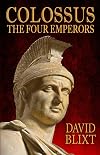
This novel was absolutely enthralling! Once you pick it up, it's hard to put down! Not really a sequel to Book 1 in the series, this was more a telling the progression of events from the Roman side except for our following a mother and daughter, both Jewish slaves in a wealthy household in Rome. The novel follows events in Rome and the progress of the Jewish War from the Roman perspective [mainly those soon-to-be emperor Vespasian and son Titus]. First phase of the war is going well for show more them, especially with the help of the turncoat Jewish general, Josephus. Nero is becoming more and more demented. I could accept the graphic nature of the sexual orgy at a lake near his Golden House, in the context in which it was presented here. Upon Nero's suicide the country enters a period of chaos and civil war. The main character is a very sympathetic Titus Flavius Sabinus, nephew to Vespasian, the decent, upright Stoic. Upset after a prophecy of the Oracle at Delphi to which he had been summoned personally, he ruminates on the meaning of her cryptic words as pertaining to the whole situation and to he himself. That year plays itself out in horror and blood, with Vespasian left standing. Ironically, he has not advanced himself for supreme power.
I liked all the Flavians, even Domitian. Author speculated very logically why he turned out as horrible as he did: childhood neglect and a year as hostage to Nero in Greece that gave the final evil twist to his personality. Other more minor characters were well drawn, especially Spiros, Nero's boy-wife. His meeting with Clemens brought out Clemens's selfless side. I also liked Sabinus's rumination on what is a good death: one that you sacrifice yourself for something higher than yourself. His son, Clemens, will never forget that conversation. I wouldn't be surprised if the young man will use it as a guiding star for his own life. A small, poignant episode made an impression on me: a son kills his father by mistake in night battle; one is for Vetellius, one for Vespasian. The final horrific stand at the Temple of Jupiter between Vetellian and Flavian forces and civilian sympathizers was outstanding. Blixt put us right in the middle of that tumultuous period with his vivid writing style.
I can hardly wait for the continuation of the story!! Highly recommended. show less
I liked all the Flavians, even Domitian. Author speculated very logically why he turned out as horrible as he did: childhood neglect and a year as hostage to Nero in Greece that gave the final evil twist to his personality. Other more minor characters were well drawn, especially Spiros, Nero's boy-wife. His meeting with Clemens brought out Clemens's selfless side. I also liked Sabinus's rumination on what is a good death: one that you sacrifice yourself for something higher than yourself. His son, Clemens, will never forget that conversation. I wouldn't be surprised if the young man will use it as a guiding star for his own life. A small, poignant episode made an impression on me: a son kills his father by mistake in night battle; one is for Vetellius, one for Vespasian. The final horrific stand at the Temple of Jupiter between Vetellian and Flavian forces and civilian sympathizers was outstanding. Blixt put us right in the middle of that tumultuous period with his vivid writing style.
I can hardly wait for the continuation of the story!! Highly recommended. show less
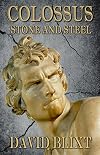
I almost didn't read this novel because of the cover--evil expression on the statue's face--foolish reason. I am very glad I did read it though. Well written and very informative, it's the story of the Jewish War of the mid-first century AD from the beginnings, a successful Jewish revolt against Florus, the venal Roman procurator of Judea, up to and including the siege of Jotapata by three Roman legions bent on brutal reprisal, under Vespasian and Titus, his son. We follow a Jewish show more stonemason, Judah, and his twin brother, the scholar-stonemason Asher, and the Jewish general, Yosef [aka Josephus] and the Jewish formation of an army on the Roman model, with preparations for battle. We also follow the Roman army in alternating sections.
I liked the two brothers but Josephus left me cold, knowing what the latter did and was, historically. Here in the novel the author tried to soften his actions. The author conveyed the time and place to me perfectly. I learned a lot about Jewish customs of that time period and about that War. This was an excellent portrayal of Vespasian, a favorite historical figure. Of the action, the siege and Jewish defense were very well told. Especially I admired the actions of Eleazar, nicknamed Atlas, a giant of a man, who gave his life in bold defensive action. Both armies respected him for his bravery and quick-thinking exploit. This is the first volume of a projected tetralogy. I am eager to read the upcoming volumes. Highly recommended! show less
I liked the two brothers but Josephus left me cold, knowing what the latter did and was, historically. Here in the novel the author tried to soften his actions. The author conveyed the time and place to me perfectly. I learned a lot about Jewish customs of that time period and about that War. This was an excellent portrayal of Vespasian, a favorite historical figure. Of the action, the siege and Jewish defense were very well told. Especially I admired the actions of Eleazar, nicknamed Atlas, a giant of a man, who gave his life in bold defensive action. Both armies respected him for his bravery and quick-thinking exploit. This is the first volume of a projected tetralogy. I am eager to read the upcoming volumes. Highly recommended! show less

A few pages into Master of Verona one of the two characters who opens the book jumps out of the path of an oncoming horde, off a bridge and feet first into a river. That's pretty much how that first chapter runs for the reader, as well - straight into it, and swept off with the current.
And the action never really lets up. Before long, the main point of view settles firmly behind the eyes of Pietro, eldest son (eldest surviving, that is) of Dante Alaghieri. (Alaghieri, the poet insists, not show more Alighieri: the pronunciation has a point to it.) Seventeen-year-old Pietro, his little brother Jacopo (Poco), and their illustrious father have just arrived in Verona, and almost immediately Pietro is swept from a wedding celebration into a wild ride straight into battle – his first – at the heels of Cangrande, the Scaliger, the Greyhound.
Or is he? There is a prophecy about the Greyhound, which Cangrande has grown up believing applies to him ... but ... there is another candidate. This adds a whole new layer to the story: a man's life is shaped by his belief in what his destiny is supposed to be. Change the destiny, mute it down from the phenomenal to the merely great, and there will be repercussions.
As another reviewer somewhere in there pointed out, there are a number of typos in the Kindle edition (stray apostrophes, "laying" instead of "lying") (how ironic is it that I initially misspelled "typos"?), but not so very many – not, I think, enough to turn me away from any but an otherwise very bad book. In an otherwise very good book, they are mere blips.
My familiarity with Dante is, I regret to say, mainly through second- and third-hand sources. I will certainly need to address that. It was wonderful fun reading David Blixt's version of the working poet.
It was around the time of the first battle against Padua that this began to remind me – in all good ways – of Guy Gavriel Kay's Tigana. There is something about Pietro being swept off his feet so by the charismatic and irresistible Cangrande that chimed in harmony with Devin's similar sweeping away by Alessan. Just a boy, if a rather extraordinary boy, caught up in the powerful wake of one of those men around whom history reshapes itself, a man who attracts the sort of loyalty it's hard to maintain in this age of jaded cynicism.
That's huge. Cangrande is magnificent, a man born at exactly the right time. Today … there is no one to follow with the sort of fierce devotion Cangrande inspires. Today he might begin a meteoric rise in politics, only to be brought down by an illegitimate child or a temper too fully expressed; the standards are more stringent today. But give the man a sword and a horse (or a bottle and a mule) and stand back: something spectacular is going to happen. The Scaliger in his own time and place is something glorious – a leader, the embodiment of a Cause, someone and something to fight for – and fight beside, to sacrifice for and sacrifice to, unto one's own life.
The book as a whole has a general feel which is reminiscent of Tigana. The setting of Master of Verona is, of course, Italy, in the 14th century, but there is for me a strong flavor of fantasy – it feels like as much a fantasy Italy as the Hand in Tigana. This Italy is a feral place where a poet is revered as a rock star. It is a setting of feuds and battles, swords and, if not sorcery, then soothsayers, and astrology and fate and destiny taken very, very seriously – and it's all seen largely through this young man's fresh eyes, with excitement and wonder.
There is a battle near the end of Tigana which, the first time I read it, might as well have been happening around me. My heart pounded, my breathing was short and fast, and internally I was ducking and dodging and parrying. I've never had an experience like it while reading … till now. Blixt hasn't stressed my blood pressure to quite the same levels, but the duel … Whoof.
It's clear from the flurry of words surrounding this book that it has something to do with the tale of Romeo and Juliet. This idea is a minefield, I think; like any delving into Shakespearean topics it could go drastically badly or beautifully well. Blixt already proved to me that he knows Shakespeare; I loved Her Majesty's Will as much as anything I read this year. I was inclined to trust him on this one.
I was right.
By the time a friend of Pietro reveals that his actual Christian name is Romeo (threatening his friends with death if they ever use it), the setup had seen to it that I cared about these characters and the announcement gave me a sinking feeling. No, I thought, dammit, not these guys.
And I just realized: that feeling is what I read for. That level of investment in the story and its people - that is the goal. There are lots (and lots) of bad books out there; there are plenty of mediocre books and even good books that are fun to read without engaging the emotions to any great extent. There are even quite a few books which do cause laughter and tears and all that. But this - this is near the pinnacle of the reading experience in my book (so to speak). This is being made to care, very very much indeed, about what happens to the people who live and breathe through the words - made, without ever feeling manipulated. At this level, this is pretty rare. show less
And the action never really lets up. Before long, the main point of view settles firmly behind the eyes of Pietro, eldest son (eldest surviving, that is) of Dante Alaghieri. (Alaghieri, the poet insists, not show more Alighieri: the pronunciation has a point to it.) Seventeen-year-old Pietro, his little brother Jacopo (Poco), and their illustrious father have just arrived in Verona, and almost immediately Pietro is swept from a wedding celebration into a wild ride straight into battle – his first – at the heels of Cangrande, the Scaliger, the Greyhound.
Or is he? There is a prophecy about the Greyhound, which Cangrande has grown up believing applies to him ... but ... there is another candidate. This adds a whole new layer to the story: a man's life is shaped by his belief in what his destiny is supposed to be. Change the destiny, mute it down from the phenomenal to the merely great, and there will be repercussions.
As another reviewer somewhere in there pointed out, there are a number of typos in the Kindle edition (stray apostrophes, "laying" instead of "lying") (how ironic is it that I initially misspelled "typos"?), but not so very many – not, I think, enough to turn me away from any but an otherwise very bad book. In an otherwise very good book, they are mere blips.
My familiarity with Dante is, I regret to say, mainly through second- and third-hand sources. I will certainly need to address that. It was wonderful fun reading David Blixt's version of the working poet.
It was around the time of the first battle against Padua that this began to remind me – in all good ways – of Guy Gavriel Kay's Tigana. There is something about Pietro being swept off his feet so by the charismatic and irresistible Cangrande that chimed in harmony with Devin's similar sweeping away by Alessan. Just a boy, if a rather extraordinary boy, caught up in the powerful wake of one of those men around whom history reshapes itself, a man who attracts the sort of loyalty it's hard to maintain in this age of jaded cynicism.
That's huge. Cangrande is magnificent, a man born at exactly the right time. Today … there is no one to follow with the sort of fierce devotion Cangrande inspires. Today he might begin a meteoric rise in politics, only to be brought down by an illegitimate child or a temper too fully expressed; the standards are more stringent today. But give the man a sword and a horse (or a bottle and a mule) and stand back: something spectacular is going to happen. The Scaliger in his own time and place is something glorious – a leader, the embodiment of a Cause, someone and something to fight for – and fight beside, to sacrifice for and sacrifice to, unto one's own life.
The book as a whole has a general feel which is reminiscent of Tigana. The setting of Master of Verona is, of course, Italy, in the 14th century, but there is for me a strong flavor of fantasy – it feels like as much a fantasy Italy as the Hand in Tigana. This Italy is a feral place where a poet is revered as a rock star. It is a setting of feuds and battles, swords and, if not sorcery, then soothsayers, and astrology and fate and destiny taken very, very seriously – and it's all seen largely through this young man's fresh eyes, with excitement and wonder.
There is a battle near the end of Tigana which, the first time I read it, might as well have been happening around me. My heart pounded, my breathing was short and fast, and internally I was ducking and dodging and parrying. I've never had an experience like it while reading … till now. Blixt hasn't stressed my blood pressure to quite the same levels, but the duel … Whoof.
It's clear from the flurry of words surrounding this book that it has something to do with the tale of Romeo and Juliet. This idea is a minefield, I think; like any delving into Shakespearean topics it could go drastically badly or beautifully well. Blixt already proved to me that he knows Shakespeare; I loved Her Majesty's Will as much as anything I read this year. I was inclined to trust him on this one.
I was right.
By the time a friend of Pietro reveals that his actual Christian name is Romeo (threatening his friends with death if they ever use it), the setup had seen to it that I cared about these characters and the announcement gave me a sinking feeling. No, I thought, dammit, not these guys.
And I just realized: that feeling is what I read for. That level of investment in the story and its people - that is the goal. There are lots (and lots) of bad books out there; there are plenty of mediocre books and even good books that are fun to read without engaging the emotions to any great extent. There are even quite a few books which do cause laughter and tears and all that. But this - this is near the pinnacle of the reading experience in my book (so to speak). This is being made to care, very very much indeed, about what happens to the people who live and breathe through the words - made, without ever feeling manipulated. At this level, this is pretty rare. show less
Lists
Awards


You May Also Like


Associated Authors
Statistics
- Works
- 20
- Members
- 487
- Popularity
- #50,714
- Rating
- 3.9
- Reviews
- 44
- ISBNs
- 50
- Languages
- 2
- Favorited
- 2


