
Eleanor Catton
Author of The Luminaries
About the Author
Eleanor Catton was born in Canada on September 24, 1985. She moved to New Zealand with her family when she was six years old. She studied English at the University of Canterbury and received a master's in creative writing at The Institute of Modern Letters, Victoria University of Wellington. Her show more debut novel, The Rehearsal, was published in 2008. Her second novel, The Luminaries, won the 2013 Man Booker Prize. In 2015 she ws made an Honorary Literary Fellows in the New Zealand Society of Authors' annual Waitangi Day Honours. In 2016, she was named as one of six, Arts New Zealand's Laureate Award winners. (Bowker Author Biography) show less
Works by Eleanor Catton
Associated Works
Tagged
Common Knowledge
- Canonical name
- Catton, Eleanor
- Legal name
- Catton, Eleanor Frances
- Other names
- Catton, Eleanor
- Birthdate
- 1985-09-24
- Gender
- female
- Education
- Victoria University of Wellington (BA|2009|MA|2008)
University of Canterbury (BA)
Iowa Writers' Workshop, University of Iowa (MFA|2010)
Burnside High School, Christchurch, New Zealand
Lawnswood School, Leeds, England, UK - Occupations
- creative writing teacher
novelist
screenwriter - Organizations
- Manukau Institute of Technology
- Awards and honors
- New Zealand Order of Merit (Member, 2014)
Honorary Doctor of Literature, Victoria University of Wellington (2014)
Adam Foundation Prize in Creative Writing (2007)
Canadian Governor General's Literary Award for fiction (2013)
New Zealand Post Book Award (2014) - Relationships
- Toussaint, Steven (spouse)
Catton, Philip (father) - Nationality
- New Zealand
- Birthplace
- London, Ontario, Canada
- Places of residence
- London, Ontario, Canada
Auckland, New Zealand
Cambridge, Cambridgeshire, England, UK
Leeds, Yorkshire, England, UK
Members
Discussions
2013 Booker longlist: The Luminaries by Eleanor Catton in Booker Prize (February 2016)
Reviews
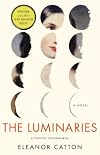
Ahhhh. Now that was a good read. A ripping yarn, as they say; I hardly noticed it was more than 800 pages long. The Luminaries is set in New Zealand in 1865-66, when a gold rush brought prospectors to Hokitika in the country's West Coast region. Shops, churches, bars, hotels, newspapers, a jail, and "houses of ill repute" rose up to satisfy the many requirements of a booming economy. And everyone, prospector and merchant alike, was out for themselves.
Into this environment comes Walter Moody, show more arrived in Hokitika via the ship Godspeed. He unwittingly walks into a secret conference of twelve men in the Crown Hotel, and becomes privy to a narrative of recent events involving Frank Carver, captain of the Godspeed; Crosbie Wells, a hermit; Alastair Louderback, a local politician; Lydia Greenway, a madame; the prostitute Anna Wetherell; Emery Staines, a young man who has gone missing; and, of course, a fortune in pure gold. In Part I, which represents nearly half the novel, Eleanor Catton spins the tale through the eyes of these twelve men. None of them know the full story, but each has a perspective based on their interactions with the principals.
Catton then proceeds to flesh out the story, always from an angle slightly askew from that in Part I. The reader picks up details here and there, like filling in a 1000-piece jigsaw puzzle after someone else has completed the edge. The principal characters take on greater depth as their back stories unfold. I found myself hissing at the bad guys and cheering for the good guys, and then looking quizzically a the page when a good guy suddenly showed signs of being a bad guy, or vice versa. The plot is complex and circular, but really the conflict resolution hardly matters. This is a fun book to read for its characters, and the intricacies and pace. I'm usually happy when I finish a book this long, but this time I'm actually tempted to re-read it straight away. show less
Into this environment comes Walter Moody, show more arrived in Hokitika via the ship Godspeed. He unwittingly walks into a secret conference of twelve men in the Crown Hotel, and becomes privy to a narrative of recent events involving Frank Carver, captain of the Godspeed; Crosbie Wells, a hermit; Alastair Louderback, a local politician; Lydia Greenway, a madame; the prostitute Anna Wetherell; Emery Staines, a young man who has gone missing; and, of course, a fortune in pure gold. In Part I, which represents nearly half the novel, Eleanor Catton spins the tale through the eyes of these twelve men. None of them know the full story, but each has a perspective based on their interactions with the principals.
Catton then proceeds to flesh out the story, always from an angle slightly askew from that in Part I. The reader picks up details here and there, like filling in a 1000-piece jigsaw puzzle after someone else has completed the edge. The principal characters take on greater depth as their back stories unfold. I found myself hissing at the bad guys and cheering for the good guys, and then looking quizzically a the page when a good guy suddenly showed signs of being a bad guy, or vice versa. The plot is complex and circular, but really the conflict resolution hardly matters. This is a fun book to read for its characters, and the intricacies and pace. I'm usually happy when I finish a book this long, but this time I'm actually tempted to re-read it straight away. show less
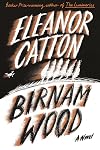
I didn't manage to finish reading Catton's last book The Luminaries but this book is sold as a thriller and I love thrillers and I like eco-lit, which this is, and so thought it might be more readable/accessible. It was.
I can't quite make up my mind if Catton was parodying thrillers or eco-lit because we have all the characters here that you might expect. A billionaire that is a baddie right from the start, an older man who has just been awarded a Knighthood for services to conservation when show more he owns a pest control company (she is having a laugh here), a wanna-be journalist who has a rant at the last meeting and leaves the group, and Shelley who is always second, does all the work and gets none of the praise for it.
Birnam Wood is an eco group that grows fruit and vegetables on parcels of land they do not own - guerilla gardening on a slightly larger scale, in New Zealand. Mira, the leader of the group, spots a plot of land that seems to be abandonned, private and ripe for developing only when she gets there she meets the billionaire Lemoine. He has mining works going on that are illegal and needs to protect his investments at all costs.
I have tried to work out why Catton chose the name Birnam Wood and this article is helpful. If everyone can be a villain, then everyone can be a Macbeth with ambitions or be tempted and in this book they are. The journalist is tempted by the thought of getting an expose based on the mining that Lemoine's company is undertaking, Owen Darvish the owner of the land is tempted by the Knighthood, Shelley by being the leader of the group and so on. In fact just like in Macbeth, Birnam Wood does move because it is the name of the group and they move about a five hour drive from Christchurch to get to the tract of land they will grow on as trespassers.
The thriller part really gets going about two thirds of the way into the book. I found myself reading faster and faster to find out how things ended and it is pretty explosive.
The whole book reads as if it is a last gasp at trying to get people to take notice of what is happening around us and tries to explain why it feels like nothing is changing or being done about it. No one comes out of this well. We have landslides, fires and floods and yet people sit around arguing about whether 'intersectionality is bullshit'. (I don't even know what that really means!) The book is fun way of letting us know that we are marching towards the end, wondering if anyone will move against the 'Kings' of today or whether extinction is the next step.
Catton's writing is very good, particularly her sentences. I always marvel at those who can control long sentences and there are many in this book.
This business about the radiometric survey, for instance: Sir Owen should have been relieved to learn that this so-called journalist - a blogger and a nobody, for goodness' sake - had plainly begun his investigations well before they'd hosted the Mulloys, which meant that they couldn't possibly bear any responsibility for whatever it was that he might or might not have found out about their agreement with Lemoine.
p215
One of the big themes in Macbeth is betrayal, alongside loyalty, and there is a fair amount of it in show less
I can't quite make up my mind if Catton was parodying thrillers or eco-lit because we have all the characters here that you might expect. A billionaire that is a baddie right from the start, an older man who has just been awarded a Knighthood for services to conservation when show more he owns a pest control company (she is having a laugh here), a wanna-be journalist who has a rant at the last meeting and leaves the group, and Shelley who is always second, does all the work and gets none of the praise for it.
Birnam Wood is an eco group that grows fruit and vegetables on parcels of land they do not own - guerilla gardening on a slightly larger scale, in New Zealand. Mira, the leader of the group, spots a plot of land that seems to be abandonned, private and ripe for developing only when she gets there she meets the billionaire Lemoine. He has mining works going on that are illegal and needs to protect his investments at all costs.
I have tried to work out why Catton chose the name Birnam Wood and this article is helpful. If everyone can be a villain, then everyone can be a Macbeth with ambitions or be tempted and in this book they are. The journalist is tempted by the thought of getting an expose based on the mining that Lemoine's company is undertaking, Owen Darvish the owner of the land is tempted by the Knighthood, Shelley by being the leader of the group and so on. In fact just like in Macbeth, Birnam Wood does move because it is the name of the group and they move about a five hour drive from Christchurch to get to the tract of land they will grow on as trespassers.
The thriller part really gets going about two thirds of the way into the book. I found myself reading faster and faster to find out how things ended and it is pretty explosive.
The whole book reads as if it is a last gasp at trying to get people to take notice of what is happening around us and tries to explain why it feels like nothing is changing or being done about it. No one comes out of this well. We have landslides, fires and floods and yet people sit around arguing about whether 'intersectionality is bullshit'. (I don't even know what that really means!) The book is fun way of letting us know that we are marching towards the end, wondering if anyone will move against the 'Kings' of today or whether extinction is the next step.
Catton's writing is very good, particularly her sentences. I always marvel at those who can control long sentences and there are many in this book.
This business about the radiometric survey, for instance: Sir Owen should have been relieved to learn that this so-called journalist - a blogger and a nobody, for goodness' sake - had plainly begun his investigations well before they'd hosted the Mulloys, which meant that they couldn't possibly bear any responsibility for whatever it was that he might or might not have found out about their agreement with Lemoine.
p215
One of the big themes in Macbeth is betrayal, alongside loyalty, and there is a fair amount of it in show less

This book, for me, starts out better than it ends. The first sections are engrossing, detailed and mysterious. I didn’t know what was happening, but it unfolded small piece by small piece, slowly creating a picture of some unexplained events experienced by 12 men in an isolated setting on the west coast of New Zealand. Like a long 19th century novel by Wilkie Colllins, it builds a mystery from the fragments that each participant sees, while a listener tries to puzzle it out and understand show more how it relates to the mystery in his own life.
In the sections that follow, the characters find more pieces of information, and intriguingly end up in a big courtroom scene in which they conspire to present a false story to the judge. But in more and more brief snippets of the story, the villain dies mysteriously, the conspirators continue to live frustrated lives and the hero and heroine seem drawn together by unknown forces. The last sections are so brief that it felt as if the author got so tired of writing out the first part that she was no longer interested in finishing the novel. Or perhaps she is telling us that her novel is not an entertainment, but it is a highly wrought literary creation and ought to be appreciated as such.
In part, this reflects one theme of the novel, that everyone has their own piece of the story, and it can never come together in a complete and satisfactory way. But here, it seems as if Catton’s objective is to deliberately alienate her readers and tell them that the interesting story she began with isn’t worth her time, or theirs, and they should just deal with it. Or instead, appreciate the artful way she has structured the story, like the phases of the moon or the spiral of a fern. There is a great deal of artistry that I admire in the novel, but the structure feels more like clever trickery than artfulness.
What I do admire particularly, in addition to the intricate plotting, is the detailed picture Catton creates of a small 19th century frontier town. Reading her description of Hokitika gives me a parallel to the goldrush towns of British Columbia, which I’ve grown up with but not seen portrayed so well. Catton has researched the language and lifestyles so thoroughly that I can visualize the settings and how the characters fit into them. Even the details of claims registration, banking and shipping insurance fit plausibly into the narrative in a way that seems accurate and precise. Many writers describing details of contemporary society are not as successful. The characters are also plausible and varied. I assume they fit the astrological structure that Catton imposes on the book, although whether they do or not seems to have no bearing on the story and I was not interested enough in that aspect to try to work it out.
Perhaps because of the frontier setting, the range of characters is limited. The women characters are largely overshadowed by the men, with only two women showing any kind of agency even though the story revolves around them. Two Chinese laborers play small roles but both have the depth of a backstory. The Maori character has the least development of the central characters. He comes and goes at his will and is portrayed with sympathy, but we know nothing of his background and little of his motivation. If Catton is trying to avoid appropriation of an indigenous character, she ends up coming close to stereotyping him as the silent unknowable native. Perhaps this is how her 19th century characters saw him, but her readers see all the other characters through 21st century eyes, and it seems inconsistent to let him remain a shadow.
In spite of my criticism, I enjoyed reading the book. It filled up my Christmas hours pleasureably even if I didn’t fully appreciate the literary construction that it seems to be. show less
In the sections that follow, the characters find more pieces of information, and intriguingly end up in a big courtroom scene in which they conspire to present a false story to the judge. But in more and more brief snippets of the story, the villain dies mysteriously, the conspirators continue to live frustrated lives and the hero and heroine seem drawn together by unknown forces. The last sections are so brief that it felt as if the author got so tired of writing out the first part that she was no longer interested in finishing the novel. Or perhaps she is telling us that her novel is not an entertainment, but it is a highly wrought literary creation and ought to be appreciated as such.
In part, this reflects one theme of the novel, that everyone has their own piece of the story, and it can never come together in a complete and satisfactory way. But here, it seems as if Catton’s objective is to deliberately alienate her readers and tell them that the interesting story she began with isn’t worth her time, or theirs, and they should just deal with it. Or instead, appreciate the artful way she has structured the story, like the phases of the moon or the spiral of a fern. There is a great deal of artistry that I admire in the novel, but the structure feels more like clever trickery than artfulness.
What I do admire particularly, in addition to the intricate plotting, is the detailed picture Catton creates of a small 19th century frontier town. Reading her description of Hokitika gives me a parallel to the goldrush towns of British Columbia, which I’ve grown up with but not seen portrayed so well. Catton has researched the language and lifestyles so thoroughly that I can visualize the settings and how the characters fit into them. Even the details of claims registration, banking and shipping insurance fit plausibly into the narrative in a way that seems accurate and precise. Many writers describing details of contemporary society are not as successful. The characters are also plausible and varied. I assume they fit the astrological structure that Catton imposes on the book, although whether they do or not seems to have no bearing on the story and I was not interested enough in that aspect to try to work it out.
Perhaps because of the frontier setting, the range of characters is limited. The women characters are largely overshadowed by the men, with only two women showing any kind of agency even though the story revolves around them. Two Chinese laborers play small roles but both have the depth of a backstory. The Maori character has the least development of the central characters. He comes and goes at his will and is portrayed with sympathy, but we know nothing of his background and little of his motivation. If Catton is trying to avoid appropriation of an indigenous character, she ends up coming close to stereotyping him as the silent unknowable native. Perhaps this is how her 19th century characters saw him, but her readers see all the other characters through 21st century eyes, and it seems inconsistent to let him remain a shadow.
In spite of my criticism, I enjoyed reading the book. It filled up my Christmas hours pleasureably even if I didn’t fully appreciate the literary construction that it seems to be. show less
This is a complicated novel that rewards the reader who can stay the course. You know that a novel is going to have some complications when it begins with, not only a "Note to the Reader" about the use of "stellar and planetary positions" in the story, but there follows a "Character Chart" on the subsequent page. With twenty listed characters, twelve of whom are the "luminaries" mentioned in the first sentence of the opening chapter and one of whom is dead, you quickly perceive both the show more value of this chart and its importance for your sanity as a reader.
Needless to say, due to the complications of the plot I will not be able to recount all of the events that occur in the twelve parts into which the story is divided. No risk of any plot spoilers here. However some of the highlights of the story that were impressed on my memory include: Five dresses filled with gold, more gold discovered in a dead hermit’s cottage, a lovely young prostitute who nearly overdosed on opium, questions about the ownership of a boat named the Godspeed, and the motivations of the dozen “luminaries” who have gathered together in the smoking room of a second-rate New Zealand hotel when the novel opens to discuss a few of these curiosities.
Catton's prose style is engaging, which helps when the first part is a mere 360 pages (and even this number is significant). The narration starts with one of the twelve, Thomas Balfour, but an omniscient narrator takes over to "impose a regimental order upon the impatient chronicle of the shipping agent’s roving mind". Thank goodness. Otherwise the novel might have run on for another 800 pages. The first part ends with a neat little summary of some of the high points so far and the remaining eleven parts gradually shorten so much that the final four parts average less than three pages each.
The various story lines do come together (I believe) and there are more notable events including an evil ship’s captain with a C-shaped scar, a brothel madam who conducts a seance, a blackmailed politician and a riveting courtroom scene, and a phantom aboard the Godspeed, “the dead man rising, his bloody throat, his cry,” that greets Walter Moody (whom we also met back on the first page) on his way to New Zealand. It is the New Zealand of 1865 and 1866 that is the setting for this novel that proves you do not have to cover a great many years to produce a long (830 pp) novel. It reminded me of Vikram Seth's skill in portraying about two years of Indian history over a span of more than 1400 pages in his delightful novel, A Suitable Boy.
Eleanor Catton succeeds in creating an historical mystery(s) with a byzantine plot that manages to entertain on almost every page. She was so successful that she was awarded the 2013 Mann Booker Prize; a prize that usually goes to short, dense, self-consciously literary novels. The entertainment was sufficient for this reader to recommend the book to all who enjoy big novels that are both complicated and satisfying. show less
Needless to say, due to the complications of the plot I will not be able to recount all of the events that occur in the twelve parts into which the story is divided. No risk of any plot spoilers here. However some of the highlights of the story that were impressed on my memory include: Five dresses filled with gold, more gold discovered in a dead hermit’s cottage, a lovely young prostitute who nearly overdosed on opium, questions about the ownership of a boat named the Godspeed, and the motivations of the dozen “luminaries” who have gathered together in the smoking room of a second-rate New Zealand hotel when the novel opens to discuss a few of these curiosities.
Catton's prose style is engaging, which helps when the first part is a mere 360 pages (and even this number is significant). The narration starts with one of the twelve, Thomas Balfour, but an omniscient narrator takes over to "impose a regimental order upon the impatient chronicle of the shipping agent’s roving mind". Thank goodness. Otherwise the novel might have run on for another 800 pages. The first part ends with a neat little summary of some of the high points so far and the remaining eleven parts gradually shorten so much that the final four parts average less than three pages each.
The various story lines do come together (I believe) and there are more notable events including an evil ship’s captain with a C-shaped scar, a brothel madam who conducts a seance, a blackmailed politician and a riveting courtroom scene, and a phantom aboard the Godspeed, “the dead man rising, his bloody throat, his cry,” that greets Walter Moody (whom we also met back on the first page) on his way to New Zealand. It is the New Zealand of 1865 and 1866 that is the setting for this novel that proves you do not have to cover a great many years to produce a long (830 pp) novel. It reminded me of Vikram Seth's skill in portraying about two years of Indian history over a span of more than 1400 pages in his delightful novel, A Suitable Boy.
Eleanor Catton succeeds in creating an historical mystery(s) with a byzantine plot that manages to entertain on almost every page. She was so successful that she was awarded the 2013 Mann Booker Prize; a prize that usually goes to short, dense, self-consciously literary novels. The entertainment was sufficient for this reader to recommend the book to all who enjoy big novels that are both complicated and satisfying. show less
Lists
Female Author (2)
Big Jubilee List (1)
SFF Down Under (1)
Awards


You May Also Like


Associated Authors
Statistics
- Works
- 9
- Also by
- 1
- Members
- 8,585
- Popularity
- #2,803
- Rating
- 3.7
- Reviews
- 399
- ISBNs
- 151
- Languages
- 15
- Favorited
- 11

