
Library of Congress
Author of The Card Catalog: Books, Cards, and Literary Treasures
About the Author
Image credit: Library of Congress Reading Room, Jefferson Building (photo by Mark Pellegrini)
Series
Works by Library of Congress
Walker Evans: A Catalog of Photographic Prints Available from the Farm Security Administration Collection 1935-1938 (Da Capo Paperback) (1973) — Editor — 108 copies, 2 reviews
Railroad Maps of the United States: Selected Annotated Bibliography of Original 19th Century Maps in the Geography and Map Division of the Library of (1975) 35 copies
Papermaking: art and craft; an account derived from the exhibition presented in the Library of Congress, Washington, D.C., and opened on April 21, 1968 (1968) 26 copies
The African-American mosaic: A Library of Congress resource guide for the study of Black history and culture (1993) 24 copies
Frank Lloyd Wright: Residences for America: Drawings from the Wasmuth (1910) and American System-Built (1915-1917) Folios (1994) 24 copies
The Development of a Revolutionary Mentality: Papers Presented at the First Library of Congress Symposium on the American Revolution, May 5 and 6, 1972 (1972) 23 copies
Manuscript sources in the Library of Congress for research on the American Revolution (1975) 18 copies
Civil War maps; an annotated list of maps and atlases in map collections of the Library of Congress (1979) 17 copies
The impact of the American Revolution abroad : papers presented at the fourth symposium, May 8 and 9, 1975 (1976) — Compiled and edited — 15 copies
A guide to the study of the United States of America; representative books reflecting the development of American life and thought (1976) 13 copies
Maps showing explorers' routes, trails & early roads in the United States; an annotated list 12 copies
Edward S. Curtis: Portraits of Native Americans: A Book of Postcards (Postcard Books) (1999) 12 copies
The American Revolution in drawings and prints: A checklist of 1765-1790 graphics in the Library of Congress (1975) 11 copies
Civil War Manuscripts: A Guide to Collections in the Manuscript Division of the Library of Congress (1986) 11 copies
Maps and charts of North America and the West Indies, 1750-1789 : a guide to the collections in the Library of Congress (1981) 7 copies
Washingtoniana: Photographs : collections in the Prints and Photographs Division of the Library of Congress (1989) 7 copies
Guide to the cataloguing of the serial publications of societies and institutions 6 copies, 1 review
Panoramic maps of Anglo-American cities; a checklist of maps in the collections of the Library of Congress, Geography and Map Division (1974) 6 copies
Tennessee's sesquicentennial exhibition, held at the Library of Congress, Washington, D. C., June 1, 1946-October 21, 1946 (1946) 5 copies
Handbook of card distribution 5 copies
The Lessing J. Rosenwald collection : a catalog of the gifts of Lessing J. Rosenwald to the Library of Congress, 1943 to 1975 (1977) 4 copies
Bibliographic description of rare books : rules formulated under AACR 2 and ISBD(A) for the descriptive cataloging of ra (1981) 4 copies
Fire insurance maps in the Library of Congress: Plans of North American cities and towns produced by the Sanborn Map Company : a checklist (1981) 4 copies
The Dance of Death Printed at Paris in 1490-a Reproduction Made From the Copy in the Lessing J. Rosenwald Collection (1946) 4 copies
Library of Congress Classification. DS-DX. History of Asia, Africa, Australia, New Zealand, etc. (1998) 4 copies
Library of Congress classification. BL-BQ. Religion (general). Hinduism. Judaism. Islam. Buddhism (2001) 4 copies
A list of geographical atlases in the Library of Congress : with bibliographical notes (1909) 4 copies
3 decades of television: A catalog of television programs acquired by the Library of Congress, 1949-1979 (1989) 4 copies
California: The Centennial of the Gold Rush and the First State Constitution. An Exhibit in the Library of Congress (1949) 4 copies
American and English Genealogies in the Library of Congress Preliminary Catalogue (1910) 3 copies, 1 review
Library of Congress classification. Z. Bibliography. Library science. Information resources (2002) 3 copies
Musical instruments in the Dayton C. Miller flute collection at the Library of Congress: A catalog (1982) 3 copies
Library of Congress classification. K. Law in general. Comparative and uniform law. Jurisprudence (1999) 3 copies
Maine: the sesquicentennial of statehood; an exhibition in the Library of Congress, Washington, D.C., December 21, 1970 to September 6, 1971. (1971) 3 copies
The canon law collection of the Library of Congress: a general bibliography with selective annotations (1981) 3 copies
The circle of knowledge: An exhibition in the Great Hall of the Library of Congress, December 7, 1979-March 16, 1980 (1979) 3 copies
Library of Congress Classification. PR-PZ. English and American literature. Juvenile belles lettres (1999) 3 copies
Classification. Class P. Subclasses PN, PR, PS, PZ. General literature, English and American literature, fiction in (1978) 3 copies
Library of Congress Classification PL-PM, Languages of Eastern Asia, Africa, Oceania. Hyperborean, Indian, and Artificia (2006) 3 copies
Genealogies in the Library of Congress : a bibliography. Second supplement, 1976-1986 (1987) 3 copies
Supplementary Vocabularies: Free-Floating Subdivisions, Genre/Form Headings, Children's Subject Headings (2009) 2 copies
The Publication of poetry and fiction: A conference held at the Library of Congress, October 20 and 21, 1975 (1977) 2 copies
Specifications for the microfilming of books and pamphlets in the Library of Congress (1982) 2 copies
Collecting Memories: Treasures from the Library of Congress (Exhibit Companion Series) (2024) 2 copies
Anglo-American legal bibliographies 2 copies
List of manuscript collections in the Library of Congress to July, 1931, by Curtis Wiswell Garrison 2 copies
On Broadway! Theater Posters: A Book of Postcards (On Broadway! Theater Posters: A Book of Postcards) (2009) 2 copies
French posters from World War I: A checklist (Library of Congress collections on CD-ROM) (1996) 2 copies
Library of Congress motion pictures, broadcasting, recorded sound: An illustrated guide (2002) 2 copies
Butterflies 2016 Boxed Posters Calendar: Prints from the Icones Insectorum Rariorum by Carl Alexander Clerck (2015) 2 copies
The powers of the President as Commander in Chief of the Army and Navy of the United States 2 copies
Literary Recordings: A Checklist of the Archive of Recorded Poetry and Literature in the Library of Congress (1966) 2 copies
Members of Congress: A checklist of their papers in the Manuscript Division, Library of Congress (1980) 2 copies
Paganiniana 2 copies
Russian imperial government serials on microfilm in the Library of Congress a guide to the uncataloged collection (SuDoc (1985) 2 copies
Subject Headings: A-K 2 copies
Ohio. The Sesquicentennial of Statehood, 1803-1953. An Exhibition in the Library of Congress ... 2 copies
Library of Congress Classification. PJ-PK. Oriental philology and literature. Indo-Iranian philology and literature (2008) 2 copies
Indiana. The Sesquicentennial of the Establishment of the Territorial Government, An Exhibit in the Library of Congress ... (1950) 2 copies
The Harkness Collection in the Library of Congress;: Manuscripts concerning Mexico: a guide (1974) 2 copies
The second coming of Christ 1 copy
LC Science Tracer Bullet 1 copy
Outline of the Library of Congress Classification Revised and Enlarged Edition of Outline Scheme of Classes (1942) 1 copy
American Civil War 1 copy
Library of Congress Subject Headings Module 5.1 Principles of Heading Assignment, Part 1, Module 5.2 Part 2 1 copy, 1 review
Civilization, April/May 2000 1 copy
China-U.S. Relations 1 copy
Germany: A Country Study 1 copy
Catalog of Copyright Entries; Third Series, Part 5, Number 2, Vol. 17: Music; July-December 1963 (Classic Reprint) (2017) 1 copy
Women who Dare: 2005, 2006 1 copy
Classification Web Subject Search Examples: LC Class Number, Cataloger's Desktop G 302, Cutter, MARC Display, LC Authorities 1 copy, 1 review
Aspects of Indian policy. 1 copy
Laws Relating to Guns 1 copy
Report on Legal Protection for Databases: A Report of the Register of Copyrights, August 1997 (1997) 1 copy
Classification. Class S: Agriculture, plant and animal industry, fish culture and fisheries, hunting sports (Volume 2) (1948) 1 copy
Copyright law revision. 1 copy
Congress.Gov 1 copy
Library of Congress Round Table ON Preservation Research and Development September 28-29, 1992 1 copy
Abraham Lincoln and the Law Part II: Habeas Corpus and the War Powers of the President (2018) 1 copy
Geographic cutters 1 copy
West Virginia, An Exhibition 1 copy
The Library of Congress : 25 questions most frequently asked by visitors (SuDoc LC 1.2:Q 3) (1996) 1 copy
Midnight pleasures 1 copy
Colonial printing in Mexico 1 copy
Chinese scientific and technical serial publications in the collections of the Library of Congress 1 copy
Southeast Asia: an annotated bibliography of selected reference sources in Western languages (1968) 1 copy
Catalogue of the Library of Congress, in the Capitol of the United States of America, December, 1839 1 copy
Japanese children's books at the Library of Congress : a bibliography of books from the postwar years, 1946-1985 (1987) 1 copy
pre·serve pre´zərv 1 copy
Contemporary photographs from Sweden;: An exhibition of the work of the TIO Photographers (1971) 1 copy
Library of Congress: Religion: Christianity, Bible: Classification. Class B. Subclasses BR-BV. Religion--Christianity, Bible (1987) 1 copy
LC ...and you 1 copy
Pictorial Americana 1 copy
Jordan: Country Profile 1 copy
Indic Scripts 1 copy
Cataloging Directorate Strategic Plan Goal 4, Group 2 : Processing Rule Analysis Group Report 1 copy
Copyright liability of states and the Eleventh Amendment, June 1988 : a report of the Register of Copyrights (1988) 1 copy
Life of Daniel Boone 1 copy
Annual Report of the Librarian of Congress, for the Fiscal Year Ended June 30, 1939 (Classic Reprint) (2017) 1 copy
Books in Braille: Placed in the Distributing Libraries; July 1940-June 1941 (Classic Reprint) (2017) 1 copy
Bibliographical procedures and style : a manual for bibliographers in the Library of Congress 1 copy
Kennedy Assassination and the Warren Report Selected References — Publisher — 1 copy
Index to the Woodrow Wilson Papers — Composer — 1 copy
Meeting of Frontiers. 1 copy
Color and the graphic arts : selections from an exhibition at the Library of Congress, October 1974 through March 1975 (1975) 1 copy
Accessions list, Middle East 1 copy
Library of Congress classification. KBR, KBU. History of canon law. Law of the Roman Catholic Church, the Holy See (2001) 1 copy
Library of Congress magazine 1 copy
Associated Works
Copyright Issues Relevant to Digital Preservation and Dissemination of Pre-1972 Commercial Sound Recordings by Libraries and Archives (2005) — Publisher, some editions — 7 copies
Building a National Strategy for Digital Preservation : Issues in Digital Media Archiving (2002) — Publisher, some editions — 6 copies
The State of Recorded Sound Preservation in the United States : A National Legacy at Risk in the Digital Age (2010) — Publisher, some editions — 5 copies
Protection for Pre-1972 Sound Recordings under State Law and Its Impact on Use by Nonprofit Institutions : A 10-State Analysis (2009) — Publisher, some editions — 4 copies
Copyright Issues Relevant to the Creation of a Digital Archive : A Preliminary Assessment (2003) — Publisher, some editions — 3 copies
Capturing Analog Sound for Digital Preservation : Report of a Roundtable Discussion of Best Practices for Transferring Analog Discs and Tapes (2006) — Publisher, some editions — 3 copies
National Digital Preservation Initiatives : An Overview of Developments in Australia, France, the Netherlands, and the United Kingdom and of Related International Activity (2003) — Publisher, some editions — 1 copy
Dialogue: A Journal of Mormon Thought - Volume 12, Number 3 (Autumn 1979) (1979) — Photographer — 1 copy
Tagged
Common Knowledge
- Canonical name
- Library of Congress
- Gender
- n/a
- Nationality
- USA
- Associated Place (for map)
- USA
Members
Discussions
Republicans introduce LCSH bill in Librarians who LibraryThing (April 2016)
Reviews
The Card Catalog: Books, Cards, and Literary Treasures (Gifts for Book Lovers, Gifts for Librarians, Book Club Gift) by Library of Congress
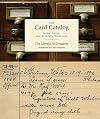
It's odd to think of libraries without rigorous systems of classification, but cataloging was a surprisingly recent addition to libraries. Well, perhaps not so surprising when a few hundred books in the same place was a substantial collection, and a few thousand an unprecedented hoard of wisdom. The Card Catalog is a light history of the Library of Congress, and the effort involves in filing and cataloging everything the right way.
I was familiar with the basic outlines, the core of the show more collection based around a donation from Thomas Jefferson, but I did not realize that the the Library of Congress was such a laggard in organization. Cards cataloging was basically formed during the French Revolution, with playing cards (cheap and universally accessible) used as a standard, but the Library of Congress didn't get its first cards until 1899. For much of the 19th century, the Library of Congress was opposed to Melvil Dewey and the emerging field of library science, but once it stepped in, it threw immense weight. With copyright registration allowing the library to hold copies of nearly every work published in the United States, the library embarked on a massive effort of making its catalog accessible to the public and smaller libraries. Finally, in 1980 the card catalog was 'frozen', in preparation for replacement by computer.
The cards themselves are surprising beautiful objects, especially the ones in elaborate 'library hand' script. And this book has lots of photos. It's not the deepest, but it's a fun read for any bibliophile. show less
I was familiar with the basic outlines, the core of the show more collection based around a donation from Thomas Jefferson, but I did not realize that the the Library of Congress was such a laggard in organization. Cards cataloging was basically formed during the French Revolution, with playing cards (cheap and universally accessible) used as a standard, but the Library of Congress didn't get its first cards until 1899. For much of the 19th century, the Library of Congress was opposed to Melvil Dewey and the emerging field of library science, but once it stepped in, it threw immense weight. With copyright registration allowing the library to hold copies of nearly every work published in the United States, the library embarked on a massive effort of making its catalog accessible to the public and smaller libraries. Finally, in 1980 the card catalog was 'frozen', in preparation for replacement by computer.
The cards themselves are surprising beautiful objects, especially the ones in elaborate 'library hand' script. And this book has lots of photos. It's not the deepest, but it's a fun read for any bibliophile. show less

I am old enough to have used a card catalog during the whole of my education. We actually had classes when I was young on how to use the library, the catalog and the microfiche. Even though digital catalogs are easier, more up-to-date and faster, there’s something wonderful about a physical card catalog. It’s the tactile quality of actually discovering something. Reading the tracks left by another person for you to find a book you might love or at least learn something from.
The history show more of the catalog is a reasonably interesting one and fraught with humans fighting over really dumb stuff. The very fact that bound catalogs were de rigeur for so long speaks to this. The instant the thing is bound it is obsolete. The very nature of a growing collection of objects renders it so and while the idea itself of using something small, portable and most of all sortable, isn’t French, the French were the first to exploit the medium. And they did it with playing cards! Suits and all. Fabulous.
Interspersed with the story of the card catalog (and the Dewey decimal system, which if you think about it is brilliant) are photos of actual cards in all their quirky glory. I had no idea that so many were handwritten and in Library Hand no less. Library Hand is a writing style strictly defined as to letter size, shape and even the slant. It’s really beautiful to look at and remarkably easy to read. If you’ve been taught how that is. If you’re a kid these days it might as well be hieroglyphs.
Along with the cards are the books or artifacts that go with them such as a collection of Emily Dickinson poetry with a cover featuring Indian Pipe, my favorite wildflower. And speaking of covers, what’s with The Legend of Sleepy Hollow? Now that’s deceptive advertising. I had a little sizzle of personal connection among the treasures of the Library of Congress - they have a folio by Pierre-Joseph Redoute who made the most amazing botanical prints in the 1800s. I have a set of reproductions that I frame and hang on my walls.
Alas I don’t actually have a card catalog - the physical piece of furniture. There are a few scattered among the shelves at one of my local libraries and I so want to buy it or steal it and bring it home. Many of these oak cabinets were sold off in the 1990s as the electronic catalog (and the MARC record, invented by a woman) gained popularity. People often think librarians are staid and stodgy, but they embraced the electronic catalog very quickly because it was more fluid and easier to update and find information.
But there are treasures there in the cards. Funny notes and bits of information that individual catalogers and librarians thought important enough to include. Some cards were actually multiples and extend to a dozen or more! It helped bring the Library of Congress to the people instead of being a private collection for Senators. As a matter of fact, it seems to have been progressive for its time - there’s a photo from the 1940s near the beginning of a bunch of people at a long table doing research and in the crowd is a black man and many women. All learning and discovering together, the way it should be. show less
The history show more of the catalog is a reasonably interesting one and fraught with humans fighting over really dumb stuff. The very fact that bound catalogs were de rigeur for so long speaks to this. The instant the thing is bound it is obsolete. The very nature of a growing collection of objects renders it so and while the idea itself of using something small, portable and most of all sortable, isn’t French, the French were the first to exploit the medium. And they did it with playing cards! Suits and all. Fabulous.
Interspersed with the story of the card catalog (and the Dewey decimal system, which if you think about it is brilliant) are photos of actual cards in all their quirky glory. I had no idea that so many were handwritten and in Library Hand no less. Library Hand is a writing style strictly defined as to letter size, shape and even the slant. It’s really beautiful to look at and remarkably easy to read. If you’ve been taught how that is. If you’re a kid these days it might as well be hieroglyphs.
Along with the cards are the books or artifacts that go with them such as a collection of Emily Dickinson poetry with a cover featuring Indian Pipe, my favorite wildflower. And speaking of covers, what’s with The Legend of Sleepy Hollow? Now that’s deceptive advertising. I had a little sizzle of personal connection among the treasures of the Library of Congress - they have a folio by Pierre-Joseph Redoute who made the most amazing botanical prints in the 1800s. I have a set of reproductions that I frame and hang on my walls.
Alas I don’t actually have a card catalog - the physical piece of furniture. There are a few scattered among the shelves at one of my local libraries and I so want to buy it or steal it and bring it home. Many of these oak cabinets were sold off in the 1990s as the electronic catalog (and the MARC record, invented by a woman) gained popularity. People often think librarians are staid and stodgy, but they embraced the electronic catalog very quickly because it was more fluid and easier to update and find information.
But there are treasures there in the cards. Funny notes and bits of information that individual catalogers and librarians thought important enough to include. Some cards were actually multiples and extend to a dozen or more! It helped bring the Library of Congress to the people instead of being a private collection for Senators. As a matter of fact, it seems to have been progressive for its time - there’s a photo from the 1940s near the beginning of a bunch of people at a long table doing research and in the crowd is a black man and many women. All learning and discovering together, the way it should be. show less
 This review was written for LibraryThing Early Reviewers.
Well, here's a book that made me feel old. Knowing that most people under the age of 30 have never used a card catalog makes me sad for some reason. It's not the world's most glamorous or sophisticated technology, but this book highlights its charm quite vividly. I was still using card catalogs at the Harry Ransom Humanities Research Center in Austin as recently as 1995, and I remember how thrilling it was to find their provenance catalog and the discoveries that led to. I catalog my own show more library with the online database of LibraryThing, although as a teenager I did build a card catalog to manage my then-growing considerable comic book collection.
This materially-beautiful volume The Card Catalog supplies a fairly full history of the Library of Congress itself (at least for its first century or so), in support of its more particular study of the library's card catalog, and the library's eventual mission to support cataloging at local libraries across the US. As the text explains, the Library of Congress was actually one of the last major collections in the US to adopt the card cataloging system, but when they did so, it transformed library cataloging nationwide.
I was fascinated by trivia such as the French origin of library catalog cards in the repurposing of playing cards, and the features of the "library hand" in which American catalogers were trained for creating cards in manuscript. I was also gratified to find out that the physical card catalog of the Library of Congress, while retired, has been retained. As explained and amply demonstrated in this book, there is valuable information in the cards that did not make it into the MARC records created by a private vendor from the card catalog in the 1980s. The visible emendations to a card show change in the status of a given book (promotion from second to "official" copy, for example), details of changes between editions, and developments in metadata such as the addition of an author's date of death.
There are many full color reproductions from catalogs that preceded the card catalog, and over half of the book consists of pictures of cards from the catalog, accompanied by photos of the actual books (or other media objects) and often portraits of the authors. The fact that The Card Catalog is thus itself a secondary product of the catalogers who worked in the Library of Congress is evidently why writer and editor Peter Devereaux gave the book's byline to the institution itself, crediting on the cover Librarian of Congress Carla Hayden with the foreword, and effacing his own role--showing it only in his subscription to the introduction.
I enjoyed reading this book far more than I expected to. I recommend it to both the curious and the nostalgic, and I'm glad that it exists to help document this increasingly ghostly element of information science. show less
This materially-beautiful volume The Card Catalog supplies a fairly full history of the Library of Congress itself (at least for its first century or so), in support of its more particular study of the library's card catalog, and the library's eventual mission to support cataloging at local libraries across the US. As the text explains, the Library of Congress was actually one of the last major collections in the US to adopt the card cataloging system, but when they did so, it transformed library cataloging nationwide.
I was fascinated by trivia such as the French origin of library catalog cards in the repurposing of playing cards, and the features of the "library hand" in which American catalogers were trained for creating cards in manuscript. I was also gratified to find out that the physical card catalog of the Library of Congress, while retired, has been retained. As explained and amply demonstrated in this book, there is valuable information in the cards that did not make it into the MARC records created by a private vendor from the card catalog in the 1980s. The visible emendations to a card show change in the status of a given book (promotion from second to "official" copy, for example), details of changes between editions, and developments in metadata such as the addition of an author's date of death.
There are many full color reproductions from catalogs that preceded the card catalog, and over half of the book consists of pictures of cards from the catalog, accompanied by photos of the actual books (or other media objects) and often portraits of the authors. The fact that The Card Catalog is thus itself a secondary product of the catalogers who worked in the Library of Congress is evidently why writer and editor Peter Devereaux gave the book's byline to the institution itself, crediting on the cover Librarian of Congress Carla Hayden with the foreword, and effacing his own role--showing it only in his subscription to the introduction.
I enjoyed reading this book far more than I expected to. I recommend it to both the curious and the nostalgic, and I'm glad that it exists to help document this increasingly ghostly element of information science. show less
This review was written for LibraryThing Early Reviewers.
This is probably the most pleasant, and by extension, interesting, history of something as mundane as a card catalog as I'm likely to ever run across. From the first example of a book catalog, pressed into clay in cuneiform, to the modern day usage of MARC records, the text flows in a tight, succinct narrative that is neither chatty nor dry (and I'm sure nowhere near comprehensive).
Where the book truly shines is in its photographs and illustrations. The author and publisher were generous show more with the photographs and they fill at least 1/3 of the pages. Most of them are photos of the old cards and the books they belong to, but there are many old pictures of the Library of Congress and other related images. The number of cards the Library of Congress had to deal with daily in the mid-50's is staggering. I can't even imagine the logistics.
Did you know that the Library of Congress still has their old card catalog and it's still in use? (Most of it.) I think that's wonderful and the perfect example of how old and new methodologies can complement each other instead of competing.
This isn't the kind of book that's going to have wide appeal, but for those that find the subject interesting, it's a beautiful book, thoughtfully put together. show less
Where the book truly shines is in its photographs and illustrations. The author and publisher were generous show more with the photographs and they fill at least 1/3 of the pages. Most of them are photos of the old cards and the books they belong to, but there are many old pictures of the Library of Congress and other related images. The number of cards the Library of Congress had to deal with daily in the mid-50's is staggering. I can't even imagine the logistics.
Did you know that the Library of Congress still has their old card catalog and it's still in use? (Most of it.) I think that's wonderful and the perfect example of how old and new methodologies can complement each other instead of competing.
This isn't the kind of book that's going to have wide appeal, but for those that find the subject interesting, it's a beautiful book, thoughtfully put together. show less
Lists
Awards

Washingtoniana: Photographs : collections in the Prints and Photographs Division of the Library of Congress (Federal Documents – 1990)
The African-American mosaic: A Library of Congress resource guide for the study of Black history and culture (1994)
3 decades of television: A catalog of television programs acquired by the Library of Congress, 1949-1979 (Federal Documents – 1990)


You May Also Like


Associated Authors
Statistics
- Works
- 620
- Also by
- 15
- Members
- 2,854
- Popularity
- #8,986
- Rating
- 4.0
- Reviews
- 58
- ISBNs
- 423
- Languages
- 4
- Favorited
- 4


