

Debra Dean
Author of The Madonnas of Leningrad: A Novel
About the Author
Debra Dean is the best-selling author of a short-story collection and two novels, The Mirrored World and The Madonnas of Leningrad-the latter a New York. Times Editors' Choice and #1 BookSense Pick. She lives in Miami and teaches at Florida International University.
Image credit: reading at 2018 Gaithersburg Book Festival By Slowking4 - Own work, GFDL 1.2, https://commons.wikimedia.org/w/index.php?curid=69292462
Works by Debra Dean
Hidden Tapestry: Jan Yoors, His Two Wives, and the War That Made Them One (2018) 10 copies, 1 review
Tagged
Common Knowledge
- Canonical name
- Dean, Debra
- Birthdate
- 1957-11-19
- Gender
- female
- Education
- Whitman College
The Neighborhood Playhouse
University of Oregon - Occupations
- creative writing teacher
actor
novelist - Nationality
- USA
- Birthplace
- Seattle, Washington, USA
- Places of residence
- Seattle, Washington, USA
Miami, Florida, USA
New York, New York, USA - Associated Place (for map)
- USA
Members
Reviews
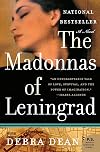
The Madonnas of Leningrad was another impulse loan from the library: the title struck me as incongruous (Religious iconography/Soviet name for St Petersburg), so although the blurb on the back was just the sort of generic praise you expect from an American ‘national bestseller’ I was intrigued enough to read the inside blurb:
I borrowed the book, half-expecting to be disappointed. I opened it late last night, to see if I should include it with books for return to the library today – and kept reading, finishing it just before lunch this morning. The book succeeds on three levels: it is an authentic portrayal of a family coming to terms with a parent ageing with Alzheimer’s; it brings to life the spirit of the people during the 1941-44 (872 days) German Siege of Leningrad during WWII, and it is a magical evocation of the Hermitage artwork which was stored for safety during the bombardment.
The book begins with a very short scene with an unforgettable image. Visitors to the Spanish Skylight Hall in the Hermitage are standing before this painting. It is The Luncheon (Tres hombres a la mesa) by Diego Velasquez, easily located via Google. (https://commons.wikimedia.org/w/index.php?curid=159931) The guide’s description focusses on what they are eating:
The text then switches to the thoughts of an elderly woman in America. Marina is in her own kitchen but she doesn’t know why. She can’t remember if she’s had breakfast but she starts to poach some eggs anyway. Her husband Dmitri comes in with dirty dishes, sees her confusion and gently steers her out of the kitchen. They need to get ready for a wedding…
And so the story progresses. In the present the narrators extend to include Dmitri, struggling with the gradual loss of his beloved wife, and their daughter Helena who hasn’t seen her mother for a while and is shocked by her deterioration. Marina cannot make new memories any more, and lives increasingly in her traumatic past.
To read the rest of my review and see (most of the paintings referenced in this wonderful novel), please visit https://anzlitlovers.com/2019/01/20/the-madonnas-of-leningrad-by-debra-dean/ show less
Bit by bit, the ravages of age are eroding Marina’s grip on the everyday. And while the elderly Russian woman cannot hold on to fresh memories—the details of hershow more
grown children’s lives, the approaching wedding of her grandchild—her distant past is preserved: vivid images that rise unbidden of her youth in war-torn Leningrad.
In the fall of 1941, the German army approached the outskirts of Leningrad, signalling the beginning of what would become a long and torturous siege. During the ensuing months, the city’s inhabitants would brave starvation and the bitter cold, all while fending off the constant German onslaught. Marina, then a tour guide at the Hermitage Museum, along with other staff members, was instructed to take down the museum’s priceless masterpieces for safekeeping, yet leave the frames hanging empty on the walls—a symbol of the artworks’ eventual return. To hold on to sanity when the Luftwaffe’s bombs began to fall, she burned to memory, brushstroke by brushstroke, these exquisite artworks: the nude figures of women, the angels, the serene Madonnas that had so shortly before gazed down upon her. She used them to furnish a “memory palace,” a personal Hermitage in her mind to which she retreated to escape terror, hunger, and encroaching death. A refuge that would stay buried deep within her, until she needed it once more. . .
I borrowed the book, half-expecting to be disappointed. I opened it late last night, to see if I should include it with books for return to the library today – and kept reading, finishing it just before lunch this morning. The book succeeds on three levels: it is an authentic portrayal of a family coming to terms with a parent ageing with Alzheimer’s; it brings to life the spirit of the people during the 1941-44 (872 days) German Siege of Leningrad during WWII, and it is a magical evocation of the Hermitage artwork which was stored for safety during the bombardment.
The book begins with a very short scene with an unforgettable image. Visitors to the Spanish Skylight Hall in the Hermitage are standing before this painting. It is The Luncheon (Tres hombres a la mesa) by Diego Velasquez, easily located via Google. (https://commons.wikimedia.org/w/index.php?curid=159931) The guide’s description focusses on what they are eating:
Over here, to our left, is a table with a heavy white cloth. Three Spanish peasants are eating lunch. The fellow in the centre is raising the decanter of wine and offering us a drink. Clearly, they are enjoying themselves. Their luncheon is light—a dish of sardines, a pomegranate, and a loaf of bread—but it is more than enough. A whole loaf of bread, and white bread at that, not the blockade bread that is mostly wood shavings.
The other residents of the museum are allotted only three small chunks of bread each day. Bread the size and colour of pebbles. And sometimes frozen potatoes, potatoes dug from a garden at the edge of the city. Before the siege, Director Orbeli ordered great quantities of linseed oil to repaint the walls of the museum. We fry bits of potato in the linseed oil. Later, when the potatoes and oil are gone, we make a jelly out of the glue used to bind frames and eat that. (p.1-2)
The text then switches to the thoughts of an elderly woman in America. Marina is in her own kitchen but she doesn’t know why. She can’t remember if she’s had breakfast but she starts to poach some eggs anyway. Her husband Dmitri comes in with dirty dishes, sees her confusion and gently steers her out of the kitchen. They need to get ready for a wedding…
And so the story progresses. In the present the narrators extend to include Dmitri, struggling with the gradual loss of his beloved wife, and their daughter Helena who hasn’t seen her mother for a while and is shocked by her deterioration. Marina cannot make new memories any more, and lives increasingly in her traumatic past.
To read the rest of my review and see (most of the paintings referenced in this wonderful novel), please visit https://anzlitlovers.com/2019/01/20/the-madonnas-of-leningrad-by-debra-dean/ show less
The Madonnas of Leningrad – Debra Dean
4 stars
(some spoilers ahead)
“Whatever is eating her brain consumes only the fresher memories, the unripe moments”
Initially, I thought this book would be about famous works of art, and it is to some degree. But it is really about the power and pitfalls of memory. Marina is an elderly Russian immigrant living in America. She and her family are experiencing the distressing effects of Alzheimer’s disease. As her memory of recent events decreases, show more Marina is drawn to her past and memories of the siege of Leningrad.
As a young person, Marina was a docent at the Hermitage Museum. When the Germans invade, she helps to remove the works of art for safe keeping. Along with other museum workers, she and her family evacuate to the cellars of the museum during the bombings and throughout the siege. With the encouragement of an elderly museum attendant, she constructs a detailed, “virtual” memory museum of the missing pictures as a distraction from fear and starvation. At the end of her life, it is not so much the paintings themselves that she remembers, but the act of remembering minute details.
“More distressing than the loss of words is the way that time contracts and fractures and drops her in unexpected places”
Debra Dean reveals Marina’s story in a fragmented way that evokes the mental dysfunction suffered by an individual with Alzheimer’s. Adding to the confusion, it is clear that due to stress and starvation, Marina’s mental health was unstable during the period of WW2 that remains most prominently in her deteriorating brain. All of this combines for a tale with a strong sense of unreality, almost magical realism, in the telling. It was very compelling story.
This book was fascinating and frustrating. I wanted it to be longer. I wanted to know more about how Marina not only managed to survive the siege, but to survive it with a healthy infant. (She was, in fact, one of the Madonnas of Leningrad, and I don’t think Dean worked hard enough to make that relationship to the art work clear.) There is very little development of the contemporary characters in her family. I wanted to know more about her children and her husband. It was a fascinating premise with great historical content. I felt it deserved a bit more depth in its treatment. show less
In Leningrad as a young woman, memories kept Marina alive during the siege and now a memory-eating disease is taking her away. The author paints vivid pictures of the cold, the fright, the hunger of WWII Russia and the cold and frightening illness that is taking her mind now.
This book appealed to me personally, on so many levels.
-My parents born in Ukraine(at that time Russia)and survived the WWII seige of the nazis.
-Art-which I love, (and I also visited the Hermitage museum website, as show more some other reviewer's here did.) The author’s descriptions were magnificent.
-Alzheimer's-I've been caring for my mom who has it. The author gives such an amazing impression of what the inner life of an Alzheimer's patient might be.
My favorite passage, “The slow erosion of self has its compensations. Having forgotten whatever associations might dull her vision, she can look at a leaf and see it for the first time. Though reason suggests it otherwise, she has never seen this green before. It is wondrous. Each day the world is made fresh again, holy and she takes it in, in all its intensity, like a young child.”
One can only hope.
show less
This book appealed to me personally, on so many levels.
-My parents born in Ukraine(at that time Russia)and survived the WWII seige of the nazis.
-Art-which I love, (and I also visited the Hermitage museum website, as show more some other reviewer's here did.) The author’s descriptions were magnificent.
-Alzheimer's-I've been caring for my mom who has it. The author gives such an amazing impression of what the inner life of an Alzheimer's patient might be.
My favorite passage, “The slow erosion of self has its compensations. Having forgotten whatever associations might dull her vision, she can look at a leaf and see it for the first time. Though reason suggests it otherwise, she has never seen this green before. It is wondrous. Each day the world is made fresh again, holy and she takes it in, in all its intensity, like a young child.”
One can only hope.
show less
Confessional: I inhaled this book. I could not get enough of the tender and tragic story of Marina. Dean takes her readers through Marina's life, seamlessly weaving Marina's coming of age in wartime Leningrad during the 900-day siege with Marina at eighty-two years old, living in Seattle, Washington, and suffering from Alzheimer's disease. In current day, Marina travels to Drake Island with her husband of nearly sixty-five years to attend the wedding of their granddaughter. The journey is show more fraught with confusion and heartbreak. In the 1940s, Marina was a docent at the famed Hermitage. Just before the siege started she lost her virginity to future husband, Dmitri, just before he heads to war. This time of her life is full of expectations and uncertainty.
The most beautiful part of Madonnas of Leningrad occurs when elderly Marina walks her "memory palace" of the Hermitage and lovingly recalls every detail of her favorite paintings. Her recollections are sad but beautiful; it is as if the reader is standing in front of each piece of art, experiencing it for themselves. The ending of Madonnas of Leningrad is quite abrupt but also exquisite. show less
The most beautiful part of Madonnas of Leningrad occurs when elderly Marina walks her "memory palace" of the Hermitage and lovingly recalls every detail of her favorite paintings. Her recollections are sad but beautiful; it is as if the reader is standing in front of each piece of art, experiencing it for themselves. The ending of Madonnas of Leningrad is quite abrupt but also exquisite. show less
Lists
Awards


You May Also Like


Associated Authors
Statistics
- Works
- 4
- Members
- 2,126
- Popularity
- #12,106
- Rating
- 3.8
- Reviews
- 144
- ISBNs
- 47
- Languages
- 9
- Favorited
- 1
