
Ernst Jünger (1895–1998)
Author of Storm of Steel
About the Author
Image credit: Ernst Jünger, circa 1920, photographer unknown. historymatters.sites.sheffield.ac.uk / Wikimedia Commons
Series
Works by Ernst Jünger
Sobre El Dolor Seguido De La Movilizacion Total Y Fuego Y Movimiento (Spanish Edition) (2003) 16 copies
De arbeider heerschappij en gestalte, gevolgd door Minima en maxima : aantekeningen bij De arbeider (1981) 12 copies
Radiaciones Ic / Ernst Jünger 5 copies
Viaggi in Sicilia 3 copies
Interwar Articles 3 copies
Sprache und Körperbau 2 copies
Schriften : Eine Auswahl 2 copies
Glasbin 2 copies
Jahre der Okkupation. 2 copies
Maxima-Minima 1 copy
Deutschland, Glückwunsch! Am 29. März wird Ernst Jünger hundert Jahre alt. Sieben Gründe für seinen krisenfesten Ruhm (Die Zeit, 24. März 1995) — Contributor — 1 copy
ユンガー政治評論選 1 copy
Strahlungen. 1 copy
Antaios ; Bd. 6. 1965, No 5/6. März Ernst Jünger zum 70. Geburtstag : 29. März 1965 (1965) — Editor — 1 copy
Ernst August Freiherr von Mandelsloh, 1886-1962 : ein vergessener österr. Maler : mit Illustrationen zum Werk Ernst Jüngers — Letter writer and inspriation for paintings — 1 copy
Sämtliche Werke, 18 Bde. u. 4 Supplement-Bde., Bd.20: Strahlungen V (Erste Abteilung - Tagebücher VII) (2000) 1 copy
Sämtliche Werke, 18 Bde. u. 4 Supplement-Bde., Bd.21: Strahlungen VI (Erste Abteilung - Tagebücher VIII) (2001) 1 copy
Καταιγίδα από ατσάλι 1 copy
Ein Jahrhundertleben 1 copy
Παιχνίδια της Αφρικής 1 copy
Zeitungsartikel-Konglomerat 1 copy
Ad hoc 1 copy
Dalmatinski boravak 1 copy
Sämtliche Werke, 18 Bde. u. 4 Supplement-Bde., Bd.2: Strahlungen I (Erste Abteilung - Tagebücher II) (1998) 1 copy
Ernst Jünger / Rudolf Schlichter - Briefwechsel 1935-1955 — Author — 1 copy
Alfred Kubin : Vingt dessins 1 copy
Το πέρασμα στο δάσος 1 copy
Gärten und Straßen, 1 copy
The Tree 1 copy
Sobre as falésias de mármore 1 copy
Sämtliche Werke Bd. 1: In Stahlgewittern - Das Wäldchen 125 - Feuer und Blut - Kriegsausbruch 1914 1 copy
Sämtliche Werke, 18 Bde. u. 4 Supplement-Bde., Bd.22: Späte Arbeiten. Verstreutes. Aus dem Nachlaß 1 copy
ドイツ保守革命 I 無法者たち/内的体験としての戦闘 1 copy
Associated Works
Philosophy and Technology: Readings in the Philosophical Problems of Technology (1972) — Contributor, some editions — 38 copies
The Details of Time: Conversations With Ernst Junger (Eridanos Library (New York, N.Y.)) (1986) 34 copies
The intellectual tradition of modern Germany : A collection of writings from the eighteenth to the twentieth century (1973) — Contributor — 3 copies
The intellectual tradition of modern Germany : A collection of writings from the eighteenth to the twentieth century : Volume 2 : History and Society (1973) — Contributor — 3 copies
Alfred Kubin: Weltgeflecht : ein Kubin-Kompendium : Schriften u. Bilder zu Leben u. Werk (German Edition) (1978) — Contributor — 2 copies
Lebensgut — Ein deutsches Lesebuch für Mädchen — 5. Teil (9. Schuljahr) — Contributor — 1 copy
Tagged
Common Knowledge
- Canonical name
- Jünger, Ernst
- Legal name
- Jünger, Ernst
- Birthdate
- 1895-03-29
- Date of death
- 1998-02-17
- Gender
- male
- Occupations
- novelist
essayist
entomologist - Organizations
- French Foreign Legion (1913)
Imperial German Army, Füsilier-Regiment „General-Feldmarschall Prinz Albrecht von Preußen“ (Hannoversches) Nr. 73 (WWI)
Infanterieregiment 16 (Weimar Republic)
German Army (WWII) - Awards and honors
- Iron Cross (1914) II. and I. Class (1916)
Prussian House Order of Hohenzollern Knight's Cross with Swords (1917)
Wound Badge (1918) in Gold (1918)
Pour le Mérite ( military class) (1918)
Clasp to the Iron Cross Second Class (1939)
Literature Prize of the city of Bremen ( for Am Saracen ); Culture Prize of the city of Goslar (1956) (show all 26)
Grand Merit Cross (1959)
Honorary Citizen of the Municipality Wilflingen ; honorary gift of the Cultural Committee of the Federation of German Industry (1960)
Honorary Citizen of Rehburg ; Immermann Prize of the city of Düsseldorf (1965)
Freiherr vom Stein Gold Medal of the Alfred Toepfer Foundation (1970)
Literature Prize of the Academy Amriswil ( Organizer: Dino Larese; Laudations: Alfred Andersch, François Bondy, Friedrich Georg Jünger) (1973)
Schiller Memorial Prize of Baden-Württemberg (1974)
Aigle d'Or the city of Nice, Great Federal Cross of Merit with Star (1977)
Médaille de la Paix (Peace Medal) of the city of Verdun (1979)
Medal of Merit of the State of Baden -Württemberg (1980)
Prix Europa Littérature the Fondation Internationale pour le Rayonnement des Arts et des Lettres ; Prix Mondial Cino the Fondation Simone et del Duca (Paris ), Gold Medal of the Humboldt Society (1981)
Goethe Prize of Frankfurt (1982)
Honorary Citizen of the city of Montpellier ; Premio Circeo the Associazione Italo – Germanica Amicizia ( Association of Italian – German friendship) (1983)
Grand Merit Cross with Star and Sash (1985)
Bavarian Maximilian Order for Science and Art (1986)
Premio di Tevere (awarded by Francesco Cossiga in Rome) (1987)
honorary doctorate from the University of the Basque Country in Bilbao (1989)
Upper Swabian Art Prize (1990)
Grand Prize of the Jury of the Venice Biennale (1993)
Robert Schuman Prize (Alfred Toepfer Foundation) (1993)
honorary doctorate from the Faculty of Arts of the Complutense University of Madrid (1995) - Relationships
- Jünger, Friedrich Georg (brother)
Jeinsen, Gretha von (wife)
Lohrer, Liselotte (wife) - Nationality
- Germany
- Birthplace
- Heidelberg, Germany
- Places of residence
- Heidelberg, Germany
Hanover, Germany
Schwarzenberg in the Erzgebirge, Saxony, Germany
Rehburg, Lower Saxony, Germany
Berlin, Germany
Wilflingen, Germany (show all 7)
Ravensburg - Place of death
- Wilflingen, Germany
- Burial location
- Wilflingen Cemetery, Langenenslingen, Baden-Württemberg, Germany
- Map Location
- Germany
Members
Discussions
Ernst Jünger in The Chapel of the Abyss (September 2023)
Reviews

A condensed elucidation of the philosophy of one of the most affable fascist writers around, if that isn’t a too unpalatable turn of phrase, here espousing a gentlemanly Heraclitean ‘war is the father of all things’ mentality concerning WWI where one is able to lap up the horror and bloodlust of battle. Walter Benjamin’s distanced enjoyment of his own alienation is here twisted into an exhilaration before the spectacle of one’s own utter annihilation in a far more brutal setting show more than just your old stereotypical plain Jane petit-bourgeois concrete jungle. This work is the account of a true heir of Nietzsche, with all the warts and chancres and tasteless asides that entails. Definite must-read for fans of Mishima’s Sun and Steel and, like some kind of acrid Europa-endorsing fine wine, I’d pair this book with the discography of Death in June - my go to would be ‘Oh How we Laughed’ but ‘But, What Ends when the Symbols Shatter?’ would probably do just as well. show less
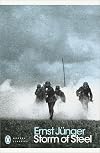
Ernst Jünger describes The Great War in small words, without much fanfare. He does not dwell on the emotions, nor dramatize the horrors, he merely describes them.
And I am truly grateful for that, since the experiences of World War One must be some of the most horrific ever to be lived through by humans. Somehow, Jünger's humble prose makes them more approachable than other first hand accounts.
A great book. So much of our modern western values are defined by the scars of the two Wars, and show more you can see this transition happening between the lines of this book; how pre-war idealism turns into cynicism and pragmatism. How the world is hurled into our mechanized, objectivist present. show less
And I am truly grateful for that, since the experiences of World War One must be some of the most horrific ever to be lived through by humans. Somehow, Jünger's humble prose makes them more approachable than other first hand accounts.
A great book. So much of our modern western values are defined by the scars of the two Wars, and show more you can see this transition happening between the lines of this book; how pre-war idealism turns into cynicism and pragmatism. How the world is hurled into our mechanized, objectivist present. show less
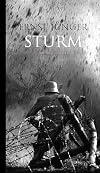
A forgotten antecedent to Storm of Steel, this serialized novella deals with Jünger's stand-in Sturm, mostly hunkered down in a bunker on the trench line, keeping company with his squad and engaging in some story-within-the-story storytelling, both of prior adventures and a fictionalized bit of prose from another soldier's POV. There's a lot of "slice of life" in the trenches, little portraits of characters and events that give some real verisimilitude, noting how they would hammer in show more fixtures in the wall above a fire to be able to cook or boil water. One soldier taking the time after being shelled to swig the last drops of his flask, because "it'd be a shame to waste it". And of course the looming shadow of instant brutal death, even in the recounting of earlier stratagems like synchronizing a gas attack in a mining tunnel with an above ground bombardment.
As with its bigger brother (Storm of Steel) there's not much sentimentality and maudlin reflection of the "war is hell" variety, the atrocities are very matter of fact, and while there's plenty of meaningless deaths, we mostly see a stoic soldier's soldier response to these threats. Nor is there a lot of reflecting on the cheap tricks used to get the better of The Other, or the man in the other trench being just another poor sap fighting a war for his betters (all of which ring more true for something like All Quiet on the Western Front). Instead the break from the war comes mostly in the form of desires and dreams, for the future, from times on leave, seeking women, pursuing art. There's very much a life beyond the trench that waits for them, no mindless grunts here. show less
As with its bigger brother (Storm of Steel) there's not much sentimentality and maudlin reflection of the "war is hell" variety, the atrocities are very matter of fact, and while there's plenty of meaningless deaths, we mostly see a stoic soldier's soldier response to these threats. Nor is there a lot of reflecting on the cheap tricks used to get the better of The Other, or the man in the other trench being just another poor sap fighting a war for his betters (all of which ring more true for something like All Quiet on the Western Front). Instead the break from the war comes mostly in the form of desires and dreams, for the future, from times on leave, seeking women, pursuing art. There's very much a life beyond the trench that waits for them, no mindless grunts here. show less
I think this one is going back on the shelves largely unread from sheer tedium. This is not because it is not worthy of consideration but almost certainly it is now interesting only to scholars of the ferment of political thought that took place in interwar Germany.
This ferment is not entirely irrelevant today because, despite the crushing defeat of Rightist ideology at the hands of the 'democracies' and Red Army in 1945, some of these ideas never died but lurked in the undergrowth of Europe show more to re-emerge in the twentieth century as a new traditionalist revolution.
However, in this case, Junger, in 1932, just before the Nazi 'gleichshaltung' which focused all published thought on official Nazi ideology, was offering a very distinctive view of ideology that tried to account for 'new' political and technological forms.
junger is interesting precisely because he was not a Nazi but a radical thinker with a view of the heroic worker-warrior-thinker closer to the romantic idealism of what would later emerge in the mind and work of Yukio Mishima. This was, of course, long before the bureaucratic extermination camp.
Nothing could be more different from, say, Fritz Stangl, ambitious camp commandant of Treblinka, than Junger but there were aspects that both shared - a certain Germanic belief in the virtue of a system in which a role might be played to its ultimate fulfilment.
The book is notable because it triggered a dialogue with Heidegger who praised it as rescuing Nietzsche from some of the nonsense being presented by Nazi appropriators of the philosopher, not that we can assume that Heidegger fully understood Nietzsche either.
The book was, it seems, very important to Heidegger. He returned to it repeatedly in his private notes and lectures in a critical manner. His critique was that Junger had merely extended Nietzsche's nihilism and not actually done what was necessary - engage with Being.
Nietzsche is critical here because his dynamic and mostly warranted attack on the tradition of Western philosophy was subjected to systematic strategies of appropriation by almost anyone who wanted something radical to change in the human condition that was not derived from Marx.
'Jewish' thinking to many of these thinkers (recalling that Nietzsche was not antisemitic) was really the whole Judaeo-Christian tradition in Western philosophy which Nietzsche had indeed eviscerated even in its deist and apparently atheist versions. Marxism was the final variant of that tradition.
The Radical Right was not entirely wrong in this assessment of Marxism as Christianity 'detourned' or of a strong element of 'ressentiment' within it but its anarcho-romantic paradoxical search for some kind of heroic totality might equally be a throw-back to Robespierre the mad Deist.
Heidegger has a point here. Junger's invented heroic worker is still a form in the Platonic sense as if Junger is still trying to rescue us from nihilism by inventing a substitute for the lost God in a human type. This really is not what Nietzsche was getting at and Heidegger understood this.
Or rather Nietzsche left the door open for a newly invented 'God' and there is no reason why it should not be an invented form of man but we should be under no illusions that such an invention would be as fraudulent as the God-thing. Inventing heroism in place of ressentiment is not good enough.
Junger is not pandering to national socialism here but he is trying to apply Nietzschean critique to social and political reality as it applied to German culture in the wake of the Depression and in competition with liberal democracy and Marxism-Leninism (which is not dismissed too lightly).
The common denominator with Marxism-Leninism is the negation of 'bourgeois' culture but here in favour of individual action in the service of the collective. The will to serve, create and 'be' the collective is very different from being an agent of historical inevitability and social forces.
The new type of the worker overcomes nihilism (the overcoming of which was Neizsche's primary concern) through collective mobilisation where participation in the collective is cast as 'heroic'. Doing is what matters. This is uncannily like the emergent Stalinist variant of Bolshevism.
The technological is fundamental to Junger's analysis although he sees technology as a positive shaping of man, transforming the Marxist critique well away from any theory of alienation. Heidegger may have respected Junger's approach to Nietzsche and nihilism but not accepted this analysis.
It may be too much of a stretch but Junger might appear closer to Russian Cosmism, Transhumanism, Robert Heinlein and Peter Thiel than to Heidegger's emerging ideas about technology being a danger to Being, eventually making the latter closer to the organicists, greens and mystics.
This seems to have become one of the great splits in thinking against the world as it is and against Marxism in our century. Transhumanism, militarism, libertarianism in the national good against planetary survival, tradition and being-in-the-world but we may be going too far here.
Junger is thus of his period in centring attention on the 'typus' of the 'worker', a category plausible under high industrialism but almost defunct today as individuals 'choose' (they think) to move between social roles and exploited states in a totally atomised way.
As we write even Communist China is getting ready to eliminate the collective working class with huge automated factories in favour of a far more controllable and exploitable mass of individuals for whom we do not yet have a clear term.
To be fair, the writing was so dense and obscure that I cannot in good faith critique Junger's argument well in this particular book. I can merely explore the framing of whatever ideas he may have had. I accept I may have misinterpreted from what I could plough through.
Certainly the interest in technology indicates a Rightist seeking to contest imaginatively one of the strengths of Marxist thinking - the relationship between politics and production and the importance of technology in shaping social forms.
Nevertheless Junger's attempt to be taken seriously as a Heideggerian-type obscure German philosopher has simply created something almost unreadable to anyone not emotionally engaged in his arguments or committed to the academic study of the man, his period and his associations.
Hence I can neither recommend or not recommend because I simply gave up after a while on the fundamental principle that 'life is too short' while reserving the right to return to the text when my passion for obscure interwar German ideology had returned. show less
This ferment is not entirely irrelevant today because, despite the crushing defeat of Rightist ideology at the hands of the 'democracies' and Red Army in 1945, some of these ideas never died but lurked in the undergrowth of Europe show more to re-emerge in the twentieth century as a new traditionalist revolution.
However, in this case, Junger, in 1932, just before the Nazi 'gleichshaltung' which focused all published thought on official Nazi ideology, was offering a very distinctive view of ideology that tried to account for 'new' political and technological forms.
junger is interesting precisely because he was not a Nazi but a radical thinker with a view of the heroic worker-warrior-thinker closer to the romantic idealism of what would later emerge in the mind and work of Yukio Mishima. This was, of course, long before the bureaucratic extermination camp.
Nothing could be more different from, say, Fritz Stangl, ambitious camp commandant of Treblinka, than Junger but there were aspects that both shared - a certain Germanic belief in the virtue of a system in which a role might be played to its ultimate fulfilment.
The book is notable because it triggered a dialogue with Heidegger who praised it as rescuing Nietzsche from some of the nonsense being presented by Nazi appropriators of the philosopher, not that we can assume that Heidegger fully understood Nietzsche either.
The book was, it seems, very important to Heidegger. He returned to it repeatedly in his private notes and lectures in a critical manner. His critique was that Junger had merely extended Nietzsche's nihilism and not actually done what was necessary - engage with Being.
Nietzsche is critical here because his dynamic and mostly warranted attack on the tradition of Western philosophy was subjected to systematic strategies of appropriation by almost anyone who wanted something radical to change in the human condition that was not derived from Marx.
'Jewish' thinking to many of these thinkers (recalling that Nietzsche was not antisemitic) was really the whole Judaeo-Christian tradition in Western philosophy which Nietzsche had indeed eviscerated even in its deist and apparently atheist versions. Marxism was the final variant of that tradition.
The Radical Right was not entirely wrong in this assessment of Marxism as Christianity 'detourned' or of a strong element of 'ressentiment' within it but its anarcho-romantic paradoxical search for some kind of heroic totality might equally be a throw-back to Robespierre the mad Deist.
Heidegger has a point here. Junger's invented heroic worker is still a form in the Platonic sense as if Junger is still trying to rescue us from nihilism by inventing a substitute for the lost God in a human type. This really is not what Nietzsche was getting at and Heidegger understood this.
Or rather Nietzsche left the door open for a newly invented 'God' and there is no reason why it should not be an invented form of man but we should be under no illusions that such an invention would be as fraudulent as the God-thing. Inventing heroism in place of ressentiment is not good enough.
Junger is not pandering to national socialism here but he is trying to apply Nietzschean critique to social and political reality as it applied to German culture in the wake of the Depression and in competition with liberal democracy and Marxism-Leninism (which is not dismissed too lightly).
The common denominator with Marxism-Leninism is the negation of 'bourgeois' culture but here in favour of individual action in the service of the collective. The will to serve, create and 'be' the collective is very different from being an agent of historical inevitability and social forces.
The new type of the worker overcomes nihilism (the overcoming of which was Neizsche's primary concern) through collective mobilisation where participation in the collective is cast as 'heroic'. Doing is what matters. This is uncannily like the emergent Stalinist variant of Bolshevism.
The technological is fundamental to Junger's analysis although he sees technology as a positive shaping of man, transforming the Marxist critique well away from any theory of alienation. Heidegger may have respected Junger's approach to Nietzsche and nihilism but not accepted this analysis.
It may be too much of a stretch but Junger might appear closer to Russian Cosmism, Transhumanism, Robert Heinlein and Peter Thiel than to Heidegger's emerging ideas about technology being a danger to Being, eventually making the latter closer to the organicists, greens and mystics.
This seems to have become one of the great splits in thinking against the world as it is and against Marxism in our century. Transhumanism, militarism, libertarianism in the national good against planetary survival, tradition and being-in-the-world but we may be going too far here.
Junger is thus of his period in centring attention on the 'typus' of the 'worker', a category plausible under high industrialism but almost defunct today as individuals 'choose' (they think) to move between social roles and exploited states in a totally atomised way.
As we write even Communist China is getting ready to eliminate the collective working class with huge automated factories in favour of a far more controllable and exploitable mass of individuals for whom we do not yet have a clear term.
To be fair, the writing was so dense and obscure that I cannot in good faith critique Junger's argument well in this particular book. I can merely explore the framing of whatever ideas he may have had. I accept I may have misinterpreted from what I could plough through.
Certainly the interest in technology indicates a Rightist seeking to contest imaginatively one of the strengths of Marxist thinking - the relationship between politics and production and the importance of technology in shaping social forms.
Nevertheless Junger's attempt to be taken seriously as a Heideggerian-type obscure German philosopher has simply created something almost unreadable to anyone not emotionally engaged in his arguments or committed to the academic study of the man, his period and his associations.
Hence I can neither recommend or not recommend because I simply gave up after a while on the fundamental principle that 'life is too short' while reserving the right to return to the text when my passion for obscure interwar German ideology had returned. show less
Lists
Awards


You May Also Like


Associated Authors
Statistics
- Works
- 227
- Also by
- 11
- Members
- 7,328
- Popularity
- #3,339
- Rating
- 3.9
- Reviews
- 146
- ISBNs
- 681
- Languages
- 23
- Favorited
- 42


