

David Kamp
Author of The United States of Arugula: How We Became a Gourmet Nation
About the Author
David Kamp is an author, journalist, humorist, lyricist, and charter member of the Sesame Street-viewing audience. A longtime contributor to Vanity Fair, he has profiled such cultural icons as Johnny Cash, Sly Stone, Lucian Freud, Bruce Springsteen, and Phoebe Waller-Bridge. Among his books is the show more national bestseller The United States of Arugula. He lives with his family in New York City and rural Connecticut. show less
Series
Works by David Kamp
The Rock Snob's Dictionary: An Essential Lexicon of Rockological Knowledge (2005) 209 copies, 4 reviews
The Film Snob's Dictionary: An Essential Lexicon of Filmological Knowledge (2006) 159 copies, 1 review
The Food Snob's Dictionary: An Essential Lexicon of Gastronomical Knowledge (2007) 83 copies, 1 review
Associated Works
A Fork in the Road: Tales of Food, Pleasure, and Discovery on the Road (2013) — Contributor — 115 copies, 2 reviews
And It Don't Stop: The Best American Hip-Hop Journalism of the Last 25 Years (2004) — Contributor — 55 copies
Tagged
Common Knowledge
- Canonical name
- Kamp, David
- Birthdate
- 1966
- Gender
- male
- Occupations
- writer
lyricist
journalist
humorist - Organizations
- Vanity Fair
GQ
Spy - Nationality
- USA
- Places of residence
- New York, New York, USA
- Associated Place (for map)
- New York, USA
Members
Reviews
The United States of Arugula: The Sun Dried, Cold Pressed, Dark Roasted, Extra Virgin Story of the American Food Revolut by David Kamp
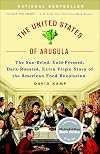
The United States of Arugula tells the tale of how Americans went from vending machine coffee to Starbucks venti lattes, from ketchup to salsa, from Spam to Kobe beef, from regarding eating as mere fuel consumption to seeing it as an art and a lifestyle statement.
Author David Kemp focuses on the so-called Big Three of American cuisine -- Julia Child, James Beard and New York Times food writer Craig Claiborne -- and the food professionals who followed in their wake, right up to Emeril and show more Rachel Ray and (va-voom) Giada DiLaurentiis. He notes that Americans, for a very long time, thought of cuisine as too feminine, too faggy, too French to be taken seriously. Thus the frequent calls for an American cuisine. Is there any such thing?
Sure, but it's a hodgepodge -- salsa and sushi and pizza and spring rolls and mesclun and whatnot...the most American thing about our cuisine is the fact that it has remained open to influences and flavors from all over the world. Our politicians make speeches about closing the borders, then go out to campaign events where they eat tacos and calzones. Our cuisine is more of a melting pot than our society-at-large.
I am grateful to Kemp for 1) giving Alice Waters her due, noting that she has helped a nation to learn that it makes sense to eat locally and think globally, and 2) also noting that she is an insufferable, manipulative scold who sets herself up as the high priestess of holy culinary purity.
Kemp is also wise to mention that, in dietary terms, we have two classes in America -- the one that eats processed garbage (because the government helps keep it artificially cheap), and the one that shops at Whole Foods (often while feeling morally superior about it). So when McDonalds begins to sell salads, and when Wal-Mart makes a move into organic groceries, should we cheer or be disheartened? Is the organic-crunchy-sustainable-SlowFood-gourmet movement being sold out, or taking root in mass culture?
There's a lot to think about in this book, which starts out strong, sags in the middle (too many stories about chefs changing jobs) and closes on a high, optimistic note. Kemp thinks this is a very good time to be alive and eating. I think he's right. Now if only I could afford a bit more of this wonderful food he writes about... show less
Author David Kemp focuses on the so-called Big Three of American cuisine -- Julia Child, James Beard and New York Times food writer Craig Claiborne -- and the food professionals who followed in their wake, right up to Emeril and show more Rachel Ray and (va-voom) Giada DiLaurentiis. He notes that Americans, for a very long time, thought of cuisine as too feminine, too faggy, too French to be taken seriously. Thus the frequent calls for an American cuisine. Is there any such thing?
Sure, but it's a hodgepodge -- salsa and sushi and pizza and spring rolls and mesclun and whatnot...the most American thing about our cuisine is the fact that it has remained open to influences and flavors from all over the world. Our politicians make speeches about closing the borders, then go out to campaign events where they eat tacos and calzones. Our cuisine is more of a melting pot than our society-at-large.
I am grateful to Kemp for 1) giving Alice Waters her due, noting that she has helped a nation to learn that it makes sense to eat locally and think globally, and 2) also noting that she is an insufferable, manipulative scold who sets herself up as the high priestess of holy culinary purity.
Kemp is also wise to mention that, in dietary terms, we have two classes in America -- the one that eats processed garbage (because the government helps keep it artificially cheap), and the one that shops at Whole Foods (often while feeling morally superior about it). So when McDonalds begins to sell salads, and when Wal-Mart makes a move into organic groceries, should we cheer or be disheartened? Is the organic-crunchy-sustainable-SlowFood-gourmet movement being sold out, or taking root in mass culture?
There's a lot to think about in this book, which starts out strong, sags in the middle (too many stories about chefs changing jobs) and closes on a high, optimistic note. Kemp thinks this is a very good time to be alive and eating. I think he's right. Now if only I could afford a bit more of this wonderful food he writes about... show less
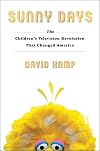
I bought this book without even doing my usual sampling preview, once I discovered it was not only about all of my favorite childhood TV shows, but was also written by the same author of THE UNITED STATED OF ARUGULA, one of my favorite metafood books.
It's about the wild creative atmosphere around educational children's programming in the late 60s and early 70s. Sesame Street, of course... Roosevelt Franklin... some Mr. Rogers... but I really liked all the coverage of the lesser-known local show more favorite, Magic Garden. And the shout-out to Joya's Fun School! I really liked Joya.
This book really pushed a lot of my memory buttons, but I think the weirdest trigger memory of all was when they covered "Berna-dette's" Zoom intro. Honestly whenever I hear the name "Bernadette" I tend to flash back to that intro; all I remembered was she did something with her arms while they played a kind of celeste-sounding musical bit. I didn't remember her being Chinese, or that the arm thing was supposed to give the illusion that she had no elbow joints or something. But they really spent a lot of time on it in the book, and now I know ALL about it. And it sent me back to watch some of the original Zoom show intro numbers, and OMG were they bad.
Speaking of bad, then there was the New Zoo Revue. I was very, very little when I used to watch and enjoy this show; and while probably none of the kiddie shows that I watched were true favorites with the parents and older brother in the house, I remember everyone PARTICULARLY hating on the New Zoo Revue. "They can't even sing," my mother protested, and I was little enough that this puzzled me. "They CAN sing," I argued. They were right there on the TV singing. But even in my memory I remember some really awful singing, something along the lines of "With Doug, and Emmy Jo, every day's a different shooooooow!" half-shouted and half-sung in a monotone.
Good times! Oh wait, I guess GOOD TIMES will be a different book altogether. show less
It's about the wild creative atmosphere around educational children's programming in the late 60s and early 70s. Sesame Street, of course... Roosevelt Franklin... some Mr. Rogers... but I really liked all the coverage of the lesser-known local show more favorite, Magic Garden. And the shout-out to Joya's Fun School! I really liked Joya.
This book really pushed a lot of my memory buttons, but I think the weirdest trigger memory of all was when they covered "Berna-dette's" Zoom intro. Honestly whenever I hear the name "Bernadette" I tend to flash back to that intro; all I remembered was she did something with her arms while they played a kind of celeste-sounding musical bit. I didn't remember her being Chinese, or that the arm thing was supposed to give the illusion that she had no elbow joints or something. But they really spent a lot of time on it in the book, and now I know ALL about it. And it sent me back to watch some of the original Zoom show intro numbers, and OMG were they bad.
Speaking of bad, then there was the New Zoo Revue. I was very, very little when I used to watch and enjoy this show; and while probably none of the kiddie shows that I watched were true favorites with the parents and older brother in the house, I remember everyone PARTICULARLY hating on the New Zoo Revue. "They can't even sing," my mother protested, and I was little enough that this puzzled me. "They CAN sing," I argued. They were right there on the TV singing. But even in my memory I remember some really awful singing, something along the lines of "With Doug, and Emmy Jo, every day's a different shooooooow!" half-shouted and half-sung in a monotone.
Good times! Oh wait, I guess GOOD TIMES will be a different book altogether. show less
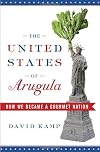
Great books on food are few and far between, but this is absolutely at the top of the class. The text follows the last 60 years of food in America, but it's not your average non-fiction work. Kamp has a gift for writing about facts in an incredibly dishy, gossipy way. It feels like you're really getting the inside scoop. He's quite persuasive - I actually went out and bought grass-fed steaks while I was reading it.
Sunny Days: The Children’s Television Revolution that changed America by David Kamp is a 2020 Simon & Schuster publication.
What a fun and informative look back at a special time for children’s television. Because I was right at the perfect age for this creative, and educational explosion of children’s programming, I can’t say I was aware of the behind-the-scenes history of these programs or how they were received by children and their parents.
This book takes us through the early show more days of children’s educational programming, introducing us to beloved people like Fred Rodgers and Jim Henson before they were household names. The politics, the funding, the complaints and praises- the staples of these programs, how they came into existence and the impressive impact they had on children and our society, is a fascinating journey to take.
I will confess that some portions of the book, especially in the beginning, was a little dry, but it became more and more interesting as it went along.
Because Big Bird appears on the cover of this book, one might presume the book is hyper-focused on Sesame Street, but it isn’t. The book covers many other educational programs- including Schoolhouse rock- which I LOVED- I still know all the words, if that tells you anything.
Personally, Captain Kangaroo was the program I was able to watch most often due to our inability to pick up more than one or two TV stations in the rural area I lived in. Occasionally, I could get ‘Electric Company’ to come in, but I don’t recall being able to watch Sesame Street until later- when I was probably too old for it- but still watched it on occasion, anyway.
Mr. Rodgers was also difficult for me to see very often- but later in life- younger cousins and my own children, who adored Fred Rodgers, gave me a second chance to fully enjoy his lovely, gentle way of teaching children.
Despite being aware of these programs -some of which I sampled growing up- and then fully enjoyed later with my own children, I never fully grasped the impact these shows had on our nation overall. Children were not the only ones who benefited from these programs- adults learned to read because of them, as well!!
Yes, these shows opened an entirely new world for children. It was healthier than watching blatant advertising geared towards kids or watching silly shows with no valuable content. These shows dared to introduce diversity and realism, appealing to kids from all walks of life and for the most part, these progressive steps were embraced by parents from all political stripes, while teaching children important lessons and preparing them for school and for success, no matter their personal backgrounds.
While I don’t always agree with everything these shows teach and have questioned some issues addressed from time to time-especially considering the age of the viewing audience, I have to look back now and think- What a great achievement!!
Sadly, times have changed, politics has affected federal funding, which has waxed and waned since the late seventies, but the effects these shows had on our country has been a long lasting one and continues to impact future generations, even though the formats have changed and we’ve lost so many of the important figures that helped create positive, educational options for children.
This is a wonderful bit of history to explore, it’s full of nostalgia and feel-good inspiration, I wish we could have bottled it up back then! It’s a spirit lifter, but it also shows we have some key elements missing today that need to make a comeback…
4 stars show less
What a fun and informative look back at a special time for children’s television. Because I was right at the perfect age for this creative, and educational explosion of children’s programming, I can’t say I was aware of the behind-the-scenes history of these programs or how they were received by children and their parents.
This book takes us through the early show more days of children’s educational programming, introducing us to beloved people like Fred Rodgers and Jim Henson before they were household names. The politics, the funding, the complaints and praises- the staples of these programs, how they came into existence and the impressive impact they had on children and our society, is a fascinating journey to take.
I will confess that some portions of the book, especially in the beginning, was a little dry, but it became more and more interesting as it went along.
Because Big Bird appears on the cover of this book, one might presume the book is hyper-focused on Sesame Street, but it isn’t. The book covers many other educational programs- including Schoolhouse rock- which I LOVED- I still know all the words, if that tells you anything.
Personally, Captain Kangaroo was the program I was able to watch most often due to our inability to pick up more than one or two TV stations in the rural area I lived in. Occasionally, I could get ‘Electric Company’ to come in, but I don’t recall being able to watch Sesame Street until later- when I was probably too old for it- but still watched it on occasion, anyway.
Mr. Rodgers was also difficult for me to see very often- but later in life- younger cousins and my own children, who adored Fred Rodgers, gave me a second chance to fully enjoy his lovely, gentle way of teaching children.
Despite being aware of these programs -some of which I sampled growing up- and then fully enjoyed later with my own children, I never fully grasped the impact these shows had on our nation overall. Children were not the only ones who benefited from these programs- adults learned to read because of them, as well!!
Yes, these shows opened an entirely new world for children. It was healthier than watching blatant advertising geared towards kids or watching silly shows with no valuable content. These shows dared to introduce diversity and realism, appealing to kids from all walks of life and for the most part, these progressive steps were embraced by parents from all political stripes, while teaching children important lessons and preparing them for school and for success, no matter their personal backgrounds.
While I don’t always agree with everything these shows teach and have questioned some issues addressed from time to time-especially considering the age of the viewing audience, I have to look back now and think- What a great achievement!!
Sadly, times have changed, politics has affected federal funding, which has waxed and waned since the late seventies, but the effects these shows had on our country has been a long lasting one and continues to impact future generations, even though the formats have changed and we’ve lost so many of the important figures that helped create positive, educational options for children.
This is a wonderful bit of history to explore, it’s full of nostalgia and feel-good inspiration, I wish we could have bottled it up back then! It’s a spirit lifter, but it also shows we have some key elements missing today that need to make a comeback…
4 stars show less
Lists
Awards


You May Also Like


Associated Authors
Statistics
- Works
- 8
- Also by
- 4
- Members
- 1,483
- Popularity
- #17,315
- Rating
- 3.7
- Reviews
- 39
- ISBNs
- 23
- Languages
- 4