
Robert Kanigel
Author of The Man Who Knew Infinity: A Life of the Genius Ramanujan
About the Author
Robert Kanigel teaches at MIT and lives in Cambridge, Massachusetts.
Image credit: Credit, Michael Lionstar
Works by Robert Kanigel
Vintage Reading : From Plato to Bradbury : A Personal Tour of Some of the World's Best Books (1998) 117 copies, 4 reviews
High Season: How One French Riviera Town Has Seduced Travelers for Two Thousand Years (2002) 49 copies
Eyes on the Street 1 copy
TheManWhoKnewInfinity 1 copy
Tagged
Common Knowledge
- Birthdate
- 1946
- Gender
- male
- Education
- Stuyvesant High School (1962)
Rensselaer Polytechnic Institute (1966) - Occupations
- professor of science writing (1999-2012)
mechanical engineer (1966-1969)
writer (1970-) - Organizations
- Massachusetts Institute of Technology
Authors Guild
Society for the History of Technology
American Conference for Irish Studies - Awards and honors
- Guggenheim Fellowship (2008)
National Book Critics Circle Award finalist (1992)
Los Angeles Times Book Prize finalist (1991)
New York Public Library "Books to Remember" (1992)
Alfred P. Sloan Foundation grants ( [1992] ∙ 2005 ∙ [2013])
Grady-Stack award for science writing, American Chemical Society [1989] (show all 7)
Michael J. Durkan Prize (2012) - Agent
- Michael Carlisle
Vicky Bijur - Nationality
- USA
- Birthplace
- Brooklyn, New York, USA
- Places of residence
- Baltimore, Maryland, USA ( [1966-1971, 1975-1999, 2011-])
Cambridge, Massachusetts, USA (1999-2011)
San Francisco, California, USA (1971-1975)
Brooklyn, New York, USA (1946-1962) - Associated Place (for map)
- USA
Members
Reviews
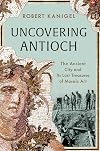
The 1920s and 30s saw a flurry of archeological digs in the Middle East. The discovery of the tomb of Tutankhamen in 1922 is famous. Yet the 1932 expedition to Antioch was called “The Dig of the Century”. Antioch had been one of the four largest cities in the ancient world. Expectations were high.
Old Antioch was invisible, inaccessible, all but lost. from Uncovering Antioch by Robert Kanigel
Prof. Rufus Morey of Princeton was elected to head the project. He was born in Hastings, MI in a show more county of just over 20,000 people. At its zenith, Antioch was huge, but by 1932 there were about thirty-five thousand people, most living in abject poverty. The city had suffered disaster after disaster and showed little of it’s formal glory. When they discovered the hippodrome they realized it would have held 80,000 people! (Even Michigan Stadium holds only 72,000!) They found drainage systems and cisterns “exactly like that used in modern drain tiles.” How far the city had fallen.
They didn’t find the exquisite statuary they had hoped for. Instead, they came upon hundreds of mosaic tile floors of great complexity and skill. They featured images from Roman mythology, animals and hunts, and drinking parties and feasts. There were borders of elaborate decorative designs. It was a rare find of art from the time period between the Roman and Christian worlds. Descriptions and photographs impress with the skill and beauty of the mosaics.
The eight-year project contended with the Depression and the tensions leading up to WWII. Antioch passed from French to Turkish control.
We learn about how the mosaics were constructed, their extraction, and preservation. The book explores the line between art and craft, ownership of antiquities, and traces scholars understanding of the works.
It’s a great adventure story with a cast of interesting characters that gave me a deep appreciation of an art form I knew little of.
Thanks to Simon & Schuster for a free book through NetGalley. show less
Old Antioch was invisible, inaccessible, all but lost. from Uncovering Antioch by Robert Kanigel
Prof. Rufus Morey of Princeton was elected to head the project. He was born in Hastings, MI in a show more county of just over 20,000 people. At its zenith, Antioch was huge, but by 1932 there were about thirty-five thousand people, most living in abject poverty. The city had suffered disaster after disaster and showed little of it’s formal glory. When they discovered the hippodrome they realized it would have held 80,000 people! (Even Michigan Stadium holds only 72,000!) They found drainage systems and cisterns “exactly like that used in modern drain tiles.” How far the city had fallen.
They didn’t find the exquisite statuary they had hoped for. Instead, they came upon hundreds of mosaic tile floors of great complexity and skill. They featured images from Roman mythology, animals and hunts, and drinking parties and feasts. There were borders of elaborate decorative designs. It was a rare find of art from the time period between the Roman and Christian worlds. Descriptions and photographs impress with the skill and beauty of the mosaics.
The eight-year project contended with the Depression and the tensions leading up to WWII. Antioch passed from French to Turkish control.
We learn about how the mosaics were constructed, their extraction, and preservation. The book explores the line between art and craft, ownership of antiquities, and traces scholars understanding of the works.
It’s a great adventure story with a cast of interesting characters that gave me a deep appreciation of an art form I knew little of.
Thanks to Simon & Schuster for a free book through NetGalley. show less
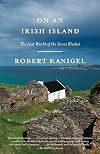
A stunning piece of nonfiction embodied by a sense of melancholy and loss, much appropriate for a story so intrinsically Irish. A century ago, scholars began to visit the isle of Great Blasket just off Ireland's west coast. Much of Ireland no longer spoke Irish, thanks to the heavy hand of English dominion, and isolated Great Blasket was one of the few places where the old language and stories were still known and available for study.
This book isn't simply about these scholars acting as show more 'noble saviors' for the peasantry. These men and women were deeply changed by their experiences on the island, yes, but even more they didn't simply take from the island citizens, but gave them a chance for their voices to be heard, literally. This was an early, unusual instance of an #OwnVoices movement encouraged by ardent allies. Storytellers on Great Blasket published books on their lives, to great international acclaim. More scholars and tourists came. This attention was not enough to save the island, though. Since earlier in the 19th century, its residents (young women in particular) had departed for America or the Irish mainland. Really, these visiting scholars came in time to help the citizens preserve what was known of the 'old ways' before the island itself was fully vacated.
This is a fast, fascinating read. I came to really care about these people. This books provides incredible insights into a pivotal time in Irish history, and into a place that sounds stunning in its beauty and isolation. In this year when travel is near impossible, this was the type of read that felt like it moved me in time and place for a brief while. show less
This book isn't simply about these scholars acting as show more 'noble saviors' for the peasantry. These men and women were deeply changed by their experiences on the island, yes, but even more they didn't simply take from the island citizens, but gave them a chance for their voices to be heard, literally. This was an early, unusual instance of an #OwnVoices movement encouraged by ardent allies. Storytellers on Great Blasket published books on their lives, to great international acclaim. More scholars and tourists came. This attention was not enough to save the island, though. Since earlier in the 19th century, its residents (young women in particular) had departed for America or the Irish mainland. Really, these visiting scholars came in time to help the citizens preserve what was known of the 'old ways' before the island itself was fully vacated.
This is a fast, fascinating read. I came to really care about these people. This books provides incredible insights into a pivotal time in Irish history, and into a place that sounds stunning in its beauty and isolation. In this year when travel is near impossible, this was the type of read that felt like it moved me in time and place for a brief while. show less
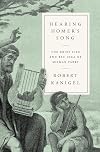
Such a great biography. I've never read Homer before, heard of Milman Parry, nor am I a Classicist, yet this book is wonderful. Learned so much. No fears, this is not a dry book on an academic topic wrapped in the veneer of a "big idea". It's difficult to explain why this book is so good because it started a bit boring/confusing, but the elements begin to pile on and it just works: the biography, adventure travel in 1920s Balkans, mysterious death, a big revolutionary idea that has changed show more the field of literary studies, a brilliant young man and his untimely death who becomes a sort of heroic figure mirroring his subject. And Kanigel is an excellent writer, he has a knack for picking the precise word, it feels carefully done. Richard Poe is the right narrator, the text compliments him to an extent I had not noticed in earlier readings, there is a synergy here.
Why should you care about this topic? Well,we tend to have a bias towards written cultures and view oral as something less. This is why Bob Dylan was reviled for winning the Nobel (even though it is technically written) he was merely a bard, a song writer, is that really literature? Another reason is that Parry showed how self-learning, conviction and hard work can cause an academic revolution. He did nothing but learn Ancient Greek, read Homer, and write down a thesis - in his early 20s. Now he is immortal, there is BP (Before Parry) and AP (After Parry) - even if you disagree he can not be avoided, like a literary Darwin who discovered the key to understanding ancient epic literature. show less
Why should you care about this topic? Well,we tend to have a bias towards written cultures and view oral as something less. This is why Bob Dylan was reviled for winning the Nobel (even though it is technically written) he was merely a bard, a song writer, is that really literature? Another reason is that Parry showed how self-learning, conviction and hard work can cause an academic revolution. He did nothing but learn Ancient Greek, read Homer, and write down a thesis - in his early 20s. Now he is immortal, there is BP (Before Parry) and AP (After Parry) - even if you disagree he can not be avoided, like a literary Darwin who discovered the key to understanding ancient epic literature. show less
Informative piece of literary history. I appreciated learning about the wealth of scholarship inspired by the Great Blasket and the linguistics of the region, however I would have liked to read more about the island itself and/or the inhabitants who didn't later become published writers. The historical photographs are captivating. Overall a unique look into a little known piece of Ireland and well worth the read.
Lists
Awards


You May Also Like


Statistics
- Works
- 15
- Members
- 1,954
- Popularity
- #13,155
- Rating
- 3.8
- Reviews
- 34
- ISBNs
- 63
- Languages
- 4
- Favorited
- 2

