
Nick Laird
Author of Utterly Monkey
About the Author
Nick Laird's work has garnered multiple awards, including the Eric Gregory Prize, the Somerset Maugham Award, and a Guggenheim fellowship. Feel Free was shortlisted for the T. S. Eliot Prize. Laird is a writer-in-residence at NYU and chair of Creative Writing (poetry) at Queen's University, show more Belfast. He lives in New York and Ireland. show less
Image credit: Mark Pringle
Works by Nick Laird
The Zoo of the New: A Book of Exceptional Poems from Sappho to Paul Muldoon (2017) — Editor — 46 copies, 1 review
Associated Works
Know the Past, Find the Future: The New York Public Library at 100 (2011) — Contributor — 133 copies, 4 reviews
Tagged
Common Knowledge
- Birthdate
- 1975
- Gender
- male
- Education
- University of Cambridge (Sidney Sussex College)
- Occupations
- poet
novelist - Relationships
- Smith, Zadie (wife)
- Nationality
- UK
- Birthplace
- Cookstown, Northern Ireland, UK
- Places of residence
- London, England, UK
New York, New York, USA - Associated Place (for map)
- UK
Members
Reviews
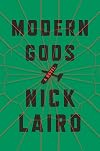
Nick Laird's third novel, and the first of his I've read, is the story of the Donnelly sisters, Liz and Alison. Liz is an academic who lives in New York but whose romantic life has stalled; she is returning home to Ballyglass in Northern Ireland for Alison's second wedding, to Stephen McLean, an apparently mild-mannered, stable, helpful sort (a relief, after her first, alcoholic husband). Stephen has told Alison he has a past, but she did not want to know details. The day after their show more wedding, the details come out on the front page of the Sunday Life: Stephen was one of the "Trick or Treat" killers, two masked men who went into a pub called the Day's End and killed five people during the Troubles - he was an early-release prisoner as a beneficiary of the Good Friday Agreement. At this point, the intertwined stories diverge: Alison goes on honeymoon with Stephen, still trying to sort out her feelings, and Liz flies off to New Ulster in Papua New Guinea with a tiny crew from the BBC to film a segment on a "cargo cult" led by a woman called Belef.
This is almost two books in one, the stories become so separate for much of the second half of the book. Both of the women are at crossroads in their lives, and also dealing with the aftereffects of their father Kenneth's stroke and the news that their mother Judith's cancer has returned. (Also, their little brother Spencer has been having an affair with his best friend's wife, who is also the assistant at their family real estate business.) Stephen and Alison's story is the morally thorny and therefore more interesting one, but Liz is the more compelling, curious character; I can imagine a book taking place entirely in Northern Ireland, with Liz, not Alison, married to Stephen - though Liz would have listened when he first wanted to tell her about his history.
Guardian review: https://www.theguardian.com/books/2017/jul/08/modern-gods-nick-laird-fiction-rev...
Quotes
She wanted to sift her life through her fingers, to weigh the thing and not find it wanting. To find that everything was worth it in the end. (Judith, 26)
Home was like climbing into a suit that was made of your own body, and it looked like you, and it smelled like you, and it moved its hand when you told it to, but it wasn't you, not now. (Liz, 46)
Maybe everything led back to this exchange. Some small initial tilt in direction will cause, over time, a great distance to arise between the intended destination and the actual one. (Stephen, 48)
For how could you live here and not be sad? It was absurd: You didn't "believe" in something if you were born into it. You accepted it, you acquiesced, you submitted, you lost - and you gave up the chance to become yourself, to come to conclusions of your own. (Liz, 51)
What was wrong with her? Why did she always have to be right? (Liz, 126)
Of course he regretted it. His life, his whole life...But how could you draw a line between what he regretted for himself and what he regretted for others? (Stephen, 183)
"I don't see what the point is," he said eventually.
"I want to talk about it," Judith said quickly. "That's the point. Don't I get to talk about it if I want to?"
...
She had the sudden sense that in all their years together she had failed to get a single point across. If they dovetailed together, if they fitted, it was only because she had deformed and shaped herself out of all recognition. (Judith, 203)
Belef defied the surface of things. She resisted the men of the world....Belef offered her some clarification, some reply, some understanding of the world system as it really was beneath the sheen of its accepted and inequitable surface. (Liz, 208)
Writing quickly in a notebook is like whispering furiously into someone's ear; anyone else in the room assumes you're talking about them. (215)
Since then pain had come and done what pain does to a face. (232)
She was tired of being on her own. She didn't want to have to stop herself from walking into oblivion. Where was her partner? Why was she always alone? (Liz, 243)
Cities dealt exclusively in human time: working hours, last minute, the final call. But out here one encountered other kinds: insect time, bird time, grass time, fern time, the time it took a river to erode a hole in a rock so it looked like the seat of a tractor, the time it took a cloud to pass across the blue roof of a clearing... (259)
"And wanting something badly enough makes you see it everywhere. Religions involve mapping our desires onto objects." (Liz, 261)
Lying is work but righteous fury is so easy, can be slipped on like a coat. (Ian Hutchinson, 267)
She was there and here. Carrying the wounds of there and the weight of here. How small the body felt for what it had to hold; memory and experience and pain. How continually one must fold and trim the soul. (Liz, 298)
What divides us is nothing to what joins us. (Liz, 299) show less
This is almost two books in one, the stories become so separate for much of the second half of the book. Both of the women are at crossroads in their lives, and also dealing with the aftereffects of their father Kenneth's stroke and the news that their mother Judith's cancer has returned. (Also, their little brother Spencer has been having an affair with his best friend's wife, who is also the assistant at their family real estate business.) Stephen and Alison's story is the morally thorny and therefore more interesting one, but Liz is the more compelling, curious character; I can imagine a book taking place entirely in Northern Ireland, with Liz, not Alison, married to Stephen - though Liz would have listened when he first wanted to tell her about his history.
Guardian review: https://www.theguardian.com/books/2017/jul/08/modern-gods-nick-laird-fiction-rev...
Quotes
She wanted to sift her life through her fingers, to weigh the thing and not find it wanting. To find that everything was worth it in the end. (Judith, 26)
Home was like climbing into a suit that was made of your own body, and it looked like you, and it smelled like you, and it moved its hand when you told it to, but it wasn't you, not now. (Liz, 46)
Maybe everything led back to this exchange. Some small initial tilt in direction will cause, over time, a great distance to arise between the intended destination and the actual one. (Stephen, 48)
For how could you live here and not be sad? It was absurd: You didn't "believe" in something if you were born into it. You accepted it, you acquiesced, you submitted, you lost - and you gave up the chance to become yourself, to come to conclusions of your own. (Liz, 51)
What was wrong with her? Why did she always have to be right? (Liz, 126)
Of course he regretted it. His life, his whole life...But how could you draw a line between what he regretted for himself and what he regretted for others? (Stephen, 183)
"I don't see what the point is," he said eventually.
"I want to talk about it," Judith said quickly. "That's the point. Don't I get to talk about it if I want to?"
...
She had the sudden sense that in all their years together she had failed to get a single point across. If they dovetailed together, if they fitted, it was only because she had deformed and shaped herself out of all recognition. (Judith, 203)
Belef defied the surface of things. She resisted the men of the world....Belef offered her some clarification, some reply, some understanding of the world system as it really was beneath the sheen of its accepted and inequitable surface. (Liz, 208)
Writing quickly in a notebook is like whispering furiously into someone's ear; anyone else in the room assumes you're talking about them. (215)
Since then pain had come and done what pain does to a face. (232)
She was tired of being on her own. She didn't want to have to stop herself from walking into oblivion. Where was her partner? Why was she always alone? (Liz, 243)
Cities dealt exclusively in human time: working hours, last minute, the final call. But out here one encountered other kinds: insect time, bird time, grass time, fern time, the time it took a river to erode a hole in a rock so it looked like the seat of a tractor, the time it took a cloud to pass across the blue roof of a clearing... (259)
"And wanting something badly enough makes you see it everywhere. Religions involve mapping our desires onto objects." (Liz, 261)
Lying is work but righteous fury is so easy, can be slipped on like a coat. (Ian Hutchinson, 267)
She was there and here. Carrying the wounds of there and the weight of here. How small the body felt for what it had to hold; memory and experience and pain. How continually one must fold and trim the soul. (Liz, 298)
What divides us is nothing to what joins us. (Liz, 299) show less
This book was a real struggle for me to read. The writing was bland and the plot was predictable. The only really descriptive writing was about the bodies of young or beautiful people fetishized by David Pinner, the main character, which just goes to show what an uncompelling character he is. He has no engagement with the world except through the rating of things, and it seems that to him other people are just things, bodies to be rated just like books and movies. This might be a good method show more of making his true character very clear to the reader, but it is terribly off-putting. I'm sure that there exist interesting, engaging novels about despicable people, who are despicable from the start, but for me this was not one of them. With every page, I longed to put the book down. Seeing the world from the perspective of David Pinner made the world an ugly place. The character inspires aversion and the writing inspires boredom.
The story is about a man who introduces his old teacher, Ruth, to his flatmate, Glover, and then becomes more and more obsessed with the both of them and with ending their budding romance. He wants Ruth, though in his inner thoughts he is often derisive of her abilities and seems to suddenly and unequivocally despise her whenever she does something he finds unattractive, and he wants to BE Glover, who is young, attractive, likeable, and does not suffer from either the impotence of social inability that David suffers from. For most of the book I was simply waiting for the unavoidable end. Overall, I think it could have been a lot shorter. show less
The story is about a man who introduces his old teacher, Ruth, to his flatmate, Glover, and then becomes more and more obsessed with the both of them and with ending their budding romance. He wants Ruth, though in his inner thoughts he is often derisive of her abilities and seems to suddenly and unequivocally despise her whenever she does something he finds unattractive, and he wants to BE Glover, who is young, attractive, likeable, and does not suffer from either the impotence of social inability that David suffers from. For most of the book I was simply waiting for the unavoidable end. Overall, I think it could have been a lot shorter. show less
 This review was written for LibraryThing Early Reviewers.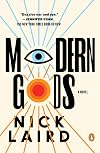
This is not a book to read for entertainment, it’s one to read for education, for philosophical reasons.
If you have an emotional attachment to Ireland and its history, it’s a bloody painful one to get through.
The novel opens violent and bloody so the first impression you’re given is one of monsters especially with the Halloween theme placed over the scene and no explanation given for the massacre. Interspersed throughout the story you’ll suddenly come across a small story snuck in show more about one of the people who was part of that massacre then the main story picks up again so faces are put with the bodies from that horrific opening. Eventually an explanation is given late in the book as to who was involved and why.
One of the best lines is when a supporting character is trying to comfort another and tells her “I wish someone would explain Northern Ireland to me,” and the main character replied, “Me too.” That pretty much sums up the history and turbulence in which this story is set; no one, not even those who live there, can ever fully wrap their hearts and minds around it.
At its heart this is a story about the messiness of families, relationships and trying to navigate a world where boundaries don’t exist or move as fluid as water. Thrown in early, the author highlights the generational issue when it comes to dating that it seems increasingly newer generations of people are deciding at an exponential level that the ‘norms’ of dating mean to have sex with whoever is available regardless of gender and monogamous relationships exist only in history books; that could just be a thing in the States and not the rest of the world. The rules of motherhood were one of his better introspections on human behavior because any parent being honest with themselves would agree they made perfect sense.
At times he used the “f-word” so often I wondered if he had quota or if he was trying to create a drinking game – take a shot every time it appears. Since a good chunk of the story is set in Ireland he did at least use phrase and terminology appropriate for the country and people which is appreciated though I’m sure if Americans read this they’ll need to keep google open to understand what he means or we’ll be having reviewers claim Laird’s homophobic for using the word “fag” because they didn’t know that means “cigarette” in the UK. You shake your head but I’ve seen it.
The reader needs some kind of familiarity with what has happened, and on a smaller level continues to happen, in the North of Ireland to truly appreciate the story. Even small things will lose their humor if they don’t understand passages like when he describes his characters leaving County Derry and the context as to why the sign showing they’re leaving the area has been defaced. Or how another sign sums up so accurately the convoluted politics of the area and times: “In Texas murder gets you the electric chair. In Magherafelt you get chair of the council.”
For me the hardest part to read was when one of the characters tries to justify what he did by saying, “They were killing us for being Protestant, just for existing. We had to strike back.” I’m an Irish Catholic who lost family at the hands of Protestants simply because my family is Catholic. Our whole country was being run for hundreds of years by people who wanted to kill us, exterminate us, just for being Catholic; it was a genocide that England has never been punished for. Laws were created and enforced making everything about us illegal even into the late 1900s; so we began to fight back. It’s always been hard that for years, even now, they justified what they did and called us terrorists for fighting for our right to exist. All they had to do was let us live and treat us as equals and none of this would have happened.
As an Irish Catholic it was interesting reading the dynamics in an Irish Protestant family because if you didn’t know their religious leanings they very well could have been from the other side. Their struggles, their faith, their chaos and confusion with the politics of the area as well as how they feel regarding their own who use violence is exactly the same as us. When one of the characters is being interviewed for his part in killing innocent people just because they were Catholic he sounds so justified, even thrilled, I felt my soul break from the pain then fill with rage; it may be a fictional story but these kind of people and these events really happen and that’s where the emotional attachment hits thanks to Laird’s descriptive writing. It would have been easy to fall into old genetic patterns and just hold onto that hatred if Laird hadn’t shown that just as with Catholics there were Protestants who were truly good people who wanted nothing to do with the violence and maybe we needed to remember we can’t continue to judge and punish them for their religious beliefs if we want the same.
I only had two issues overall with the book. One was with the Part 2 of the story where one of the characters goes off to New Ulster to research a cult like group where Christians are painted as invaders destroying indigenous cultures (which they have) and are willing to cause death to spread their faith (something I’m not even going to touch). I didn’t really get why the author included this storyline as it didn’t seem to have anything to do with the bulk of the book unless it was just because the place she went to was called “New Ulster” like it was some kind of tie in to the Ulster in Ireland. Apparently the author just made that place up as I can’t find anywhere in Papua New Guinea called “New Ulster”. I guess you could stretch and say it was like a mirror to the Catholic-Protestant multi-centuries war in Ireland as you have an invading Christian faith bent on wiping out the existing people but whatever it still felt like it was 2 separate books meshed together and imperfectly at that.
The other issue I had was the bias towards Protestants being the innocent victims who were wrongly being murdered by Catholics. Although Laird did paint nearly all but one of his Protestant characters as having some humanity and not being pro-murder towards Catholics there was still never anyone pointing out WHY the violence and issues even existed; it’s not like Catholics just woke up one day and decided “Hey we’re bored let’s set off some bombs or shoot up people!” It’s a verifiable truth the history is a convoluted mess but you can’t explain anything or tell a story properly without showing both sides. show less
If you have an emotional attachment to Ireland and its history, it’s a bloody painful one to get through.
The novel opens violent and bloody so the first impression you’re given is one of monsters especially with the Halloween theme placed over the scene and no explanation given for the massacre. Interspersed throughout the story you’ll suddenly come across a small story snuck in show more about one of the people who was part of that massacre then the main story picks up again so faces are put with the bodies from that horrific opening. Eventually an explanation is given late in the book as to who was involved and why.
One of the best lines is when a supporting character is trying to comfort another and tells her “I wish someone would explain Northern Ireland to me,” and the main character replied, “Me too.” That pretty much sums up the history and turbulence in which this story is set; no one, not even those who live there, can ever fully wrap their hearts and minds around it.
At its heart this is a story about the messiness of families, relationships and trying to navigate a world where boundaries don’t exist or move as fluid as water. Thrown in early, the author highlights the generational issue when it comes to dating that it seems increasingly newer generations of people are deciding at an exponential level that the ‘norms’ of dating mean to have sex with whoever is available regardless of gender and monogamous relationships exist only in history books; that could just be a thing in the States and not the rest of the world. The rules of motherhood were one of his better introspections on human behavior because any parent being honest with themselves would agree they made perfect sense.
At times he used the “f-word” so often I wondered if he had quota or if he was trying to create a drinking game – take a shot every time it appears. Since a good chunk of the story is set in Ireland he did at least use phrase and terminology appropriate for the country and people which is appreciated though I’m sure if Americans read this they’ll need to keep google open to understand what he means or we’ll be having reviewers claim Laird’s homophobic for using the word “fag” because they didn’t know that means “cigarette” in the UK. You shake your head but I’ve seen it.
The reader needs some kind of familiarity with what has happened, and on a smaller level continues to happen, in the North of Ireland to truly appreciate the story. Even small things will lose their humor if they don’t understand passages like when he describes his characters leaving County Derry and the context as to why the sign showing they’re leaving the area has been defaced. Or how another sign sums up so accurately the convoluted politics of the area and times: “In Texas murder gets you the electric chair. In Magherafelt you get chair of the council.”
For me the hardest part to read was when one of the characters tries to justify what he did by saying, “They were killing us for being Protestant, just for existing. We had to strike back.” I’m an Irish Catholic who lost family at the hands of Protestants simply because my family is Catholic. Our whole country was being run for hundreds of years by people who wanted to kill us, exterminate us, just for being Catholic; it was a genocide that England has never been punished for. Laws were created and enforced making everything about us illegal even into the late 1900s; so we began to fight back. It’s always been hard that for years, even now, they justified what they did and called us terrorists for fighting for our right to exist. All they had to do was let us live and treat us as equals and none of this would have happened.
As an Irish Catholic it was interesting reading the dynamics in an Irish Protestant family because if you didn’t know their religious leanings they very well could have been from the other side. Their struggles, their faith, their chaos and confusion with the politics of the area as well as how they feel regarding their own who use violence is exactly the same as us. When one of the characters is being interviewed for his part in killing innocent people just because they were Catholic he sounds so justified, even thrilled, I felt my soul break from the pain then fill with rage; it may be a fictional story but these kind of people and these events really happen and that’s where the emotional attachment hits thanks to Laird’s descriptive writing. It would have been easy to fall into old genetic patterns and just hold onto that hatred if Laird hadn’t shown that just as with Catholics there were Protestants who were truly good people who wanted nothing to do with the violence and maybe we needed to remember we can’t continue to judge and punish them for their religious beliefs if we want the same.
I only had two issues overall with the book. One was with the Part 2 of the story where one of the characters goes off to New Ulster to research a cult like group where Christians are painted as invaders destroying indigenous cultures (which they have) and are willing to cause death to spread their faith (something I’m not even going to touch). I didn’t really get why the author included this storyline as it didn’t seem to have anything to do with the bulk of the book unless it was just because the place she went to was called “New Ulster” like it was some kind of tie in to the Ulster in Ireland. Apparently the author just made that place up as I can’t find anywhere in Papua New Guinea called “New Ulster”. I guess you could stretch and say it was like a mirror to the Catholic-Protestant multi-centuries war in Ireland as you have an invading Christian faith bent on wiping out the existing people but whatever it still felt like it was 2 separate books meshed together and imperfectly at that.
The other issue I had was the bias towards Protestants being the innocent victims who were wrongly being murdered by Catholics. Although Laird did paint nearly all but one of his Protestant characters as having some humanity and not being pro-murder towards Catholics there was still never anyone pointing out WHY the violence and issues even existed; it’s not like Catholics just woke up one day and decided “Hey we’re bored let’s set off some bombs or shoot up people!” It’s a verifiable truth the history is a convoluted mess but you can’t explain anything or tell a story properly without showing both sides. show less
With the sheer number of stories that have been built upon the love triangle premise, it's a testament to Nick Laird's talent that Glover's Mistake manages to avoid any sense of staleness and pack such a strong thematic and emotional punch. Much of its success stems from the use of well-drawn characters. Ruth Marks is more than your average cougar; this thirty-seven-year old modern artist (and sometimes lesbian) combines a world-weariness with a latent romanticism in a package that's show more convincingly attractive to men of all ages. This cougar's prey is James Glover, a hunky bartender whose religious devotion and youthful weight problem allow us to believe his virginity has entered the relationship intact. And caught in the middle is Glover's flatmate David Pinner, a thirty-five-year-old English teacher whose romantic intentions toward Ruth are hampered by his balding, overweight appearance.
As David comes to realize that Ruth has eyes only for young Glover, he turns toward all manner of devious tricks to drive the two apart. Witnessing David's metamorphosis from a hapless Charlie Brown into a full-blown Iago, and the rationalizations he employs to convince himself that his actions are somehow less evil than they appear, really get under your skin and allow the author to tease out some powerful themes about the demise of love, religion, and morality in the modern world.
In a sense, Glover's Mistake is the complete inverse of the ever-present romantic comedy. But that's not a bad thing at all, as this romantic tragedy will linger with you long after you put it back on the shelf. show less
As David comes to realize that Ruth has eyes only for young Glover, he turns toward all manner of devious tricks to drive the two apart. Witnessing David's metamorphosis from a hapless Charlie Brown into a full-blown Iago, and the rationalizations he employs to convince himself that his actions are somehow less evil than they appear, really get under your skin and allow the author to tease out some powerful themes about the demise of love, religion, and morality in the modern world.
In a sense, Glover's Mistake is the complete inverse of the ever-present romantic comedy. But that's not a bad thing at all, as this romantic tragedy will linger with you long after you put it back on the shelf. show less
Awards


You May Also Like


Associated Authors
Statistics
- Works
- 14
- Also by
- 7
- Members
- 840
- Popularity
- #30,424
- Rating
- 3.9
- Reviews
- 41
- ISBNs
- 59
- Languages
- 3
