
Albert Marrin
Author of The Yanks are Coming: The United States in the First World War
About the Author
Albert Marrin, professor emeritus of history at Yeshiva University in New York City
Image credit: Albert Marrin (right) at the 2008 National Humanities Medal award ceremony. White House photo by Chris Greenberg
Works by Albert Marrin
Dr. Jenner and the Speckled Monster: The Discovery of the Smallpox Vaccine (2002) 253 copies, 3 reviews
Thomas Paine: Crusader for Liberty: How One Man's Ideas Helped Form a New Nation (2014) 64 copies, 4 reviews
Cowboys, Indians, and Gunfighters 2 copies
Associated Works
Tagged
Common Knowledge
- Birthdate
- 1936-07-24
- Gender
- male
- Education
- Yeshiva University
Columbia University
City College of New York - Occupations
- historian
professor - Organizations
- Yeshiva University (Chairman of History Department)
- Awards and honors
- National Humanities Medal (2008)
Washington Children's Book Guild and Washington Post Non-Fiction Award (Lifetime contribution) - Agent
- Wendy Schmalz
- Short biography
- From Prof. Marrin's website: Years ago, I taught social studies for nine years in a junior high school in the East Bronx in New York City. On some days, when the class was restless, I would declare "story time," and tell adventure stories from history, such as Custer’s "last stand" and Sir Henry Morgan the buccaneer.
After graduate school, I became a college teacher. Professors are supposed to "publish or perish," write books and articles to gain promotion and tenure. I had no intention of perishing. I wrote four scholarly books, all well received in the profession. That was nice, and I was pleased. But I was not thrilled. I wanted to reach a larger audience, not as a scholar but as a storyteller. Actually, I wanted connect what I knew as a teacher with how I felt as a storyteller. So I began to write history for younger readers. I tried to write in the most interesting way I could, all the while remaining true to the facts. It worked. So far I have written more than forty books for young readers. Though now retired from teaching, I spend much of my time reading, listening to music – and especially writing more books. - Nationality
- USA
- Places of residence
- New York, New York, USA
Riverdale, New York, USA - Associated Place (for map)
- New York, USA
Members
Reviews
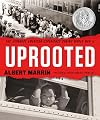
This is an excellent, horrible look at a tremendously ugly time in US history. As he tells about the imprisonment of Japanese Americans during World War II, Marrin addresses the history of white supremacy in the US and especially in my current home state of California. I can't figure out why my country can mobilize within months of the attack at Pearl Harbor to imprison more than 100,000 citizens in concentration camps but we can't seem to distribute vaccines or masks in a fair and show more coordinated manner. show less
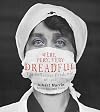
This was a good short history of the 1918 pandemic.
I wanted it to be more relevant to COVID, but there are a lot of important differences between the two. The 1918 flu was much worse, killing over 0.6% of the US population over about 2 years compared to COVID killing 0.2% over a slightly shorter period. Things were also much worse in the rest of the world with India losing almost 6% of its population. It was also killing younger, healthier people which was probably more alarming (generally, show more I am sure that the old and sick are currently quite alarmed). It also killed people very suddenly and rather grotesquely. COVID seems to be slower and with more hospital capacity people aren't dropping in the streets.
Marrin makes it seem like masking was widely embraced in 1918, even thought the gauze masks in use at the time were probably ineffective against the virus. That might be due to the rather scarier nature of that pandemic. However, there were protests against closing bars. There were anti-vaxers then too, though no one produced a vaccine effective against that flu.
It was interesting that the 1918 pandemic had a precursor that was milder. Could COVID be followed by something more deadly or virulent? Instead of wasting time speculating about future bio-terror, Marrin could have delved into the possibility that a mild, but widespread flu could turn into a raging epidemic. show less
I wanted it to be more relevant to COVID, but there are a lot of important differences between the two. The 1918 flu was much worse, killing over 0.6% of the US population over about 2 years compared to COVID killing 0.2% over a slightly shorter period. Things were also much worse in the rest of the world with India losing almost 6% of its population. It was also killing younger, healthier people which was probably more alarming (generally, show more I am sure that the old and sick are currently quite alarmed). It also killed people very suddenly and rather grotesquely. COVID seems to be slower and with more hospital capacity people aren't dropping in the streets.
Marrin makes it seem like masking was widely embraced in 1918, even thought the gauze masks in use at the time were probably ineffective against the virus. That might be due to the rather scarier nature of that pandemic. However, there were protests against closing bars. There were anti-vaxers then too, though no one produced a vaccine effective against that flu.
It was interesting that the 1918 pandemic had a precursor that was milder. Could COVID be followed by something more deadly or virulent? Instead of wasting time speculating about future bio-terror, Marrin could have delved into the possibility that a mild, but widespread flu could turn into a raging epidemic. show less
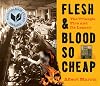
Five stars. This hit differently as I read it in 2021. I had to set it down twice because I was crying. The book starts out guiding readers through Jewish and Italian immigrant experiences to New York in the turn of the twentieth century: those who would go on to work in garment factories. Four chapter in the beginning of this book pave this path and humanize the workers. The forces, social and economic, around the events leading up to the fire, are detailed. The fifth chapter is dedicated show more to the fire. The sixth chapter onward examines the societal changes, or lack thereof in terms of working conditions, that took place. Gangsters who were hired to beat up and even murder strikers in 1911 infiltrated unions in 1926. This book helped me figure out also why Teamsters Union is code for mafia. The book also examines modern-day sweatshops and disasters similar to the Triangle Shirtwaist fire. I'm so glad this book was published and I got to read it. show less
from Lee:
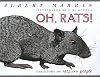
Over the years, the cover of Oh, Rats! has attracted my attention. I finally picked it up and was pleased to discovered that it was a pretty quick and enjoyable read even though I am neither drawn to rats nor a particularly voracious reader of nonfiction.
Marrin opens his book anecdotally with a boyhood surprise encounter with a rat a construction site. The author, at seven, was viscerally terrified and ran faster than he had “ever done before or since,” and ends up in tears, show more covered in cement, in his father’s arms.
'Pa told me not to be afraid. Rats were always around construction jobs… “Take it easy, kid,” he said in that calm way of his. “Learn about them; you'll feel better.”
And I did.’
The author shares many interesting ways these tenacious and omnipresent creatures interact with each other and humans. Do you know what a rat king is? Do you know where rats are considered a delicacy and where their hair and feces are considered an unavoidable “ingredient” in common foods? Do you know which useful jobs they do for humans? The tone, while largely level and conversational, seems at times to suggest that the author might still secretly retain a squeamish bias from childhood. I enjoyed his polymath approach (pulling from scientific, literary, etymological, historical, and cultural sources) to what quickly became a fascinating subject.
C.B. Mordan's black, white, and red illustrations are themselves reason enough to turn the page. show less
Over the years, the cover of Oh, Rats! has attracted my attention. I finally picked it up and was pleased to discovered that it was a pretty quick and enjoyable read even though I am neither drawn to rats nor a particularly voracious reader of nonfiction.
Marrin opens his book anecdotally with a boyhood surprise encounter with a rat a construction site. The author, at seven, was viscerally terrified and ran faster than he had “ever done before or since,” and ends up in tears, show more covered in cement, in his father’s arms.
'Pa told me not to be afraid. Rats were always around construction jobs… “Take it easy, kid,” he said in that calm way of his. “Learn about them; you'll feel better.”
And I did.’
The author shares many interesting ways these tenacious and omnipresent creatures interact with each other and humans. Do you know what a rat king is? Do you know where rats are considered a delicacy and where their hair and feces are considered an unavoidable “ingredient” in common foods? Do you know which useful jobs they do for humans? The tone, while largely level and conversational, seems at times to suggest that the author might still secretly retain a squeamish bias from childhood. I enjoyed his polymath approach (pulling from scientific, literary, etymological, historical, and cultural sources) to what quickly became a fascinating subject.
C.B. Mordan's black, white, and red illustrations are themselves reason enough to turn the page. show less
Lists
Awards


Flesh and Blood So Cheap: The Triangle Fire and Its Legacy (Informational Books for Older Readers – 2011)
Very, Very, Very Dreadful: The Influenza Pandemic of 1918 (Informational Books for Older Readers – 2018)
You May Also Like


Associated Authors
Statistics
- Works
- 56
- Also by
- 1
- Members
- 5,258
- Popularity
- #4,744
- Rating
- 4.0
- Reviews
- 120
- ISBNs
- 162
- Languages
- 3
- Favorited
- 2