
Ramez Naam
Author of Nexus
About the Author
Series
Works by Ramez Naam
Associated Works
Loosed upon the World: The Saga Anthology of Climate Fiction (2015) — Afterword — 132 copies, 4 reviews
The Best Science Fiction and Fantasy of the Year, Volume 8 (2014) — Contributor — 116 copies, 6 reviews
Sunspot Jungle: The Ever Expanding Universe of Fantasy and Science Fiction (2018) — Contributor — 39 copies, 1 review
Visions, Ventures, Escape Velocities: A Collection of Space Futures (2017) — Contributor — 22 copies, 1 review
Tagged
Common Knowledge
- Birthdate
- 19??
- Gender
- male
- Agent
- Lucienne Diver
- Nationality
- USA
- Birthplace
- Cairo, Egypt
- Places of residence
- Seattle, Washington, USA
- Associated Place (for map)
- USA
Members
Reviews
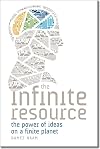
Ramez Naam calls himself an optimist, and his book's simple thesis -- through innovation we can extract all the resources and wealth we could ever need from our planet -- is nothing if not optimistic. He deploys a modicum of history, economics, popular science, and conventional political wisdom to convince the reader that, time and again, unforeseen technological advances have made possible more efficient production and distribution of goods and resources and allowed both the population and show more the average worldwide standard of living to climb. This is, so far, not terribly controversial, and his brisk, journalistic style makes the book accessible to a wide audience.
I am no expert on politics as the art of the possible, so I cannot fairly evaluate his specific proposals regarding, for example, carbon taxes. His matter-of-fact tone and common-sense posture, however, mask some deeply partisan ideas. I point to his unqualified endorsement of genetically-modified food products and his quick dismissal of European Union requirements for transparent labeling and restrictions on their development and sale. Because Naam is so optimistic about the human capacity for innovation, he does not dwell at length on the potential for disastrous unintended consequences of the deployment of technology. Human history is littered with examples. For Naam, they are but further opportunities for innovation.
Underlying his untroubled belief in "innovation" as a progressive, positive force in history is an acceptance of Richard Dawkins' broader social application of Darwinian natural selection. Naam writes that "memes" engage in "idea sex," leading to the creation of new ideas. If they propagate further, these "sexually" reproduced ideas will, he believes, pass on the best of their parent ideas. Space does not allow here a full exploration of the ways this proposition fails to take into account the range of influences on human behavior that might shape the creation and application of ideas. It becomes easier to see, though, how Naam believes that at the level of the planet and the species, human existence on Earth can proceed unproblematically if we just keep thinking.
Naam does not limit his predictions to the macrocosm, however. He predicts wealth and prosperity for individuals and societies in ways that move beyond optimism to utopianism. The book's presentation of the challenges facing the world today is clear, but its embrace of technological change as a means to perpetual growth does not dwell on the many political, economic, and ethical problems involved in applying scientific development on such a massive scale. show less
I am no expert on politics as the art of the possible, so I cannot fairly evaluate his specific proposals regarding, for example, carbon taxes. His matter-of-fact tone and common-sense posture, however, mask some deeply partisan ideas. I point to his unqualified endorsement of genetically-modified food products and his quick dismissal of European Union requirements for transparent labeling and restrictions on their development and sale. Because Naam is so optimistic about the human capacity for innovation, he does not dwell at length on the potential for disastrous unintended consequences of the deployment of technology. Human history is littered with examples. For Naam, they are but further opportunities for innovation.
Underlying his untroubled belief in "innovation" as a progressive, positive force in history is an acceptance of Richard Dawkins' broader social application of Darwinian natural selection. Naam writes that "memes" engage in "idea sex," leading to the creation of new ideas. If they propagate further, these "sexually" reproduced ideas will, he believes, pass on the best of their parent ideas. Space does not allow here a full exploration of the ways this proposition fails to take into account the range of influences on human behavior that might shape the creation and application of ideas. It becomes easier to see, though, how Naam believes that at the level of the planet and the species, human existence on Earth can proceed unproblematically if we just keep thinking.
Naam does not limit his predictions to the macrocosm, however. He predicts wealth and prosperity for individuals and societies in ways that move beyond optimism to utopianism. The book's presentation of the challenges facing the world today is clear, but its embrace of technological change as a means to perpetual growth does not dwell on the many political, economic, and ethical problems involved in applying scientific development on such a massive scale. show less
 This review was written for LibraryThing Early Reviewers.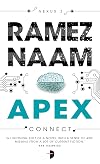
I finished this book awhile ago. Between then and now I've been letting it settle into my bones, this surprising and satisfying third in the Nexus Trilogy. I am not sure I have ever read any tale this complex in which the ending was so thick with surprise, loss, and, despite that, also happiness.
The series is a wildly complex world-spanning, mind-expanding multi-roller-coaster ride and count yourself lucky that now all three are there for you. I had to WAIT!
The series is a wildly complex world-spanning, mind-expanding multi-roller-coaster ride and count yourself lucky that now all three are there for you. I had to WAIT!
The world right now is facing some pretty serious problems. We're running out of the fossil fuels that power our civilization, our planet is warming up at an alarming rate, we're rapidly depleting the edible fish from our oceans, and in many places fresh water is becoming an increasingly scarce resource. Ramez Naam paints a starkly realistic view of all these problems, but he believes that technological innovation provides the key to solving them. He discusses -- in great detail and with show more almost too many examples -- the point that technological progress has significantly and steadily increased our standard of living and, in general, made the world a better and healthier place. Past decades' dire projections of imminent worldwide famine, he points out, have not come to pass, thanks to the fact that new agricultural developments have more than kept pace with the the growing global population. And we've already managed to solve some fairly significant environmental problems, such as ozone depletion. So the best way to survive and thrive as a species, in his view, is to harness the power of human ingenuity.
His recipes for doing that are mostly not anything terribly surprising or new, largely focusing on developing renewable energy technologies and increasing the efficiency and cleanness of existing fossil fuel technology through a combination of free-market enterprise and some simple, sensible government regulations designed to encourage things in the right direction. Although he does also make a few more controversial suggestions, such as completely revamping our educational system and being willing to give a second chance to some currently unpopular technologies. (In particular, he contends that nuclear power is less dangerous than coal and could provide a useful stopgap during the transition to greener energy sources, and argues that genetically modified crops are potentially a great boon to both humanity and the environment.)
Although Naam doesn't pull any punches when it comes to describing the severity of our current difficulties, the overall tone of the book is extremely optimistic. Possibly a little too much so, since, after all, there are limits to how confident we should be when projecting past trends into the future, including the trend of technological progress. It is entirely possible that we've now reached a sort of tipping point where our technological advancements have begun to cause problems larger than technology can solve, or faster than it can solve them, and, to his credit, Naam does acknowledge this as a possibility.
It's interesting to compare this book with Bill McKibben's Eaarth: Making a Life on a Tough New Planet, which I read a couple of years ago (and which, coincidentally, I also got through LibraryThing's Early Reviewers program). McKibben believes that we've pretty much already crossed a point of no return when it comes to global warming and that our only hope as a civilization is to pare back, to give up our expectations of constant growth, and to adopt a simpler, less energy-intensive, more locally oriented lifestyle. He makes a pretty good, if very depressing, case for his point of view. But Naam has some very good points, as well. I truly don't know which of them is right, but I'm certainly hoping that it's Naam. Even putting aside the question of which world we'd rather live in, I honestly don't see any practical way of getting to the future McKibben envisions without a major social and economic collapse. Whereas Naam is basically suggesting that we just need to keep doing more or less the same things we have been doing, only smarter. Only time will tell. show less
His recipes for doing that are mostly not anything terribly surprising or new, largely focusing on developing renewable energy technologies and increasing the efficiency and cleanness of existing fossil fuel technology through a combination of free-market enterprise and some simple, sensible government regulations designed to encourage things in the right direction. Although he does also make a few more controversial suggestions, such as completely revamping our educational system and being willing to give a second chance to some currently unpopular technologies. (In particular, he contends that nuclear power is less dangerous than coal and could provide a useful stopgap during the transition to greener energy sources, and argues that genetically modified crops are potentially a great boon to both humanity and the environment.)
Although Naam doesn't pull any punches when it comes to describing the severity of our current difficulties, the overall tone of the book is extremely optimistic. Possibly a little too much so, since, after all, there are limits to how confident we should be when projecting past trends into the future, including the trend of technological progress. It is entirely possible that we've now reached a sort of tipping point where our technological advancements have begun to cause problems larger than technology can solve, or faster than it can solve them, and, to his credit, Naam does acknowledge this as a possibility.
It's interesting to compare this book with Bill McKibben's Eaarth: Making a Life on a Tough New Planet, which I read a couple of years ago (and which, coincidentally, I also got through LibraryThing's Early Reviewers program). McKibben believes that we've pretty much already crossed a point of no return when it comes to global warming and that our only hope as a civilization is to pare back, to give up our expectations of constant growth, and to adopt a simpler, less energy-intensive, more locally oriented lifestyle. He makes a pretty good, if very depressing, case for his point of view. But Naam has some very good points, as well. I truly don't know which of them is right, but I'm certainly hoping that it's Naam. Even putting aside the question of which world we'd rather live in, I honestly don't see any practical way of getting to the future McKibben envisions without a major social and economic collapse. Whereas Naam is basically suggesting that we just need to keep doing more or less the same things we have been doing, only smarter. Only time will tell. show less
This review was written for LibraryThing Early Reviewers.
I have nothing bad to say about this novel. I was forced to stay up very late to read this, and I ducked out of other entertainments just to finish it. Did I get sucked into the idea of a transhumanism emergence? I think so.
At least with Nexus, it's definitely my favorite Linux distro. I've got about a dozen ideas for apps that I'd like to write. If I can't find it in open source, of course.
I want my new OS!
As for possible complaints about evil governments... Come on...
Anyone read history? show more Ideas and backlash through coercion abound everywhere. It always has.
Now, I don't really know if this might spark a resurgence of telepathy in SFF lit, but I hope so. People might have gotten burned out on stories like that, but this novel feels fresh. Ignore 30 years of SF that has resurfaced these ideas across the board, of course. That doesn't matter. When a novel reads well, has excellent rounded characters, absolutely fucking-fantastic pacing, I'm not only willing to run with the novel; I'm willing to shout it from the rooftops.
The story is Damn Good.
The respect for Taiwan cultures propelled the undercurrent of themes so well as to make it inevitable. The expressed deep heart made me stare at the corner of my desk for half an hour and made me cry, especially when everything came to fruition.
You know, now that I think about it, the many fight scenes actually continued to develop the characters. The undercurrent of themes, as well. They were memorable and emotional. I can't often say that about fight scenes in writing. Maybe just a handful of books. I'm very impressed.
Absolutely nothing was wasted.
I'm putting this in my fanboy collection. Seriously. I'm shocked. show less
At least with Nexus, it's definitely my favorite Linux distro. I've got about a dozen ideas for apps that I'd like to write. If I can't find it in open source, of course.
I want my new OS!
As for possible complaints about evil governments... Come on...
Anyone read history? show more Ideas and backlash through coercion abound everywhere. It always has.
Now, I don't really know if this might spark a resurgence of telepathy in SFF lit, but I hope so. People might have gotten burned out on stories like that, but this novel feels fresh. Ignore 30 years of SF that has resurfaced these ideas across the board, of course. That doesn't matter. When a novel reads well, has excellent rounded characters, absolutely fucking-fantastic pacing, I'm not only willing to run with the novel; I'm willing to shout it from the rooftops.
The story is Damn Good.
The respect for Taiwan cultures propelled the undercurrent of themes so well as to make it inevitable. The expressed deep heart made me stare at the corner of my desk for half an hour and made me cry, especially when everything came to fruition.
You know, now that I think about it, the many fight scenes actually continued to develop the characters. The undercurrent of themes, as well. They were memorable and emotional. I can't often say that about fight scenes in writing. Maybe just a handful of books. I'm very impressed.
Absolutely nothing was wasted.
I'm putting this in my fanboy collection. Seriously. I'm shocked. show less
Lists
Rethinking Money (1)
Read in 2014 (1)
Awards


You May Also Like


Associated Authors
Statistics
- Works
- 7
- Also by
- 13
- Members
- 2,572
- Popularity
- #9,987
- Rating
- 3.9
- Reviews
- 135
- ISBNs
- 50
- Languages
- 5
- Favorited
- 1
