
Cees Nooteboom (1933–2026)
Author of Rituals
About the Author
Image credit: Cees Nooteboom at the 8th Harbour Front Literature Festival in Hamburg, Germany, 14 September 2016
Series
Works by Cees Nooteboom
Een avond in Isfahan : reisverhalen uit Perzië, Gambia, Duitsland, Japan, Engeland, Madeira, en Maleisië (1978) 56 copies, 1 review
Gesloten gedichten 7 copies
Voltooid vergeten tijd 6 copies
Literatuur uit Midden-Europa : schrijvers bij Van Gennep : proza, portretten en documentatie (1990) 5 copies, 1 review
Ibiza 4 copies
De koning is dood 3 copies
Het zwarte gedicht 3 copies
El desvío a Santiago 2 copies
koude gedichten 2 copies
4 van Cees Nooteboom en anderen 2 copies
El azar y el destino. Viajes por Latinoa mérica (El Ojo del Tiempo) (Spanish Edition) (2016) 2 copies
Paula (in Le volpi vengono di notte) 2 copies
De doden zoeken een huis 2 copies
Honderd miljoen zielen 1 copy
Über das japanische Kloster Kozan-ji und die Zeichnungen der "Lustigen Tiere" (2020) — Author — 1 copy
Cees Nooteboom - Kontimemte 1 copy
Terugkeer naar Santiago 1 copy
De halve wereld 1 copy
Agali Kahani 1 copy
De dichter en de dingen 1 copy
Een avontuur in St. Tropez 1 copy
Europa 1 copy
Avenue februari 1987 1 copy
Het leven gezien van beneden 1 copy
Op zoek naar een paradijs 1 copy
De wereld van Nooteboom — Author — 1 copy
Toon Michiels : reisfoto's 1 copy
De slapende goden 1 copy
Rollende Stenen Getijde 1 copy
Verhalen 1 copy
Ritualuri Cavalerul e mort 1 copy
Associated Works
De uitvreter ; Titaantjes ; Dichtertje ; Mene tekel (1911) — Afterword, some editions — 236 copies, 4 reviews
De Nederlandse poëzie van de negentiende en twintigste eeuw in duizend en enige gedichten (1979) — Contributor, some editions — 209 copies, 1 review
De Nederlandse en Vlaamse literatuur vanaf 1880 in 250 verhalen (2005) — Contributor — 79 copies, 2 reviews
De Nederlandse en Vlaamse literatuur vanaf 1880 in 60 lange verhalen (2006) — Contributor — 43 copies, 2 reviews
Die Frage nach Milton Sills - Wirkliche und erfundene Gespräche mit Hugo Claus, Cees Nooteboom, Jorge Luis Borges und Ernesto Sabato (2009) — Contributor — 4 copies
Je leest het zó : een boekje propvol proza en poëzie, gelardeerd met puzzels en citaten, geïllustreerd met prenten en cartoons — Contributor — 1 copy
Indo-Aziatische Sculpturen : Collectie Gedon (München) — Foreword — 1 copy
Vakantieverhalen — Contributor — 1 copy
Tagged
Common Knowledge
- Canonical name
- Nooteboom, Cees
- Legal name
- Nooteboom, Cornelis Johannes Jacobus Maria
- Birthdate
- 1933-07-31
- Date of death
- 2026-02-11
- Gender
- male
- Education
- Sint Odulphus Lyceum, Tilburg
Gymnasium Immaculatae Conceptionis van de paters Franciscanen, Venray
R.K. Lyceum voor het Gooi, Hilversum
Augustinianum, Eindhoven
Avondgymnasium te Utrecht
Katholieke Universiteit Brussel (Eredoctoraat, 1998) (show all 8)
Radboud Universiteit, Nijmegen (Eredoctoraat, 2006)
Freie Universität Berlin (Eredoctoraat, 2008) - Occupations
- playwright
poet
novelist
travel writer
essayist
journalist - Organizations
- Bayrische Akademie der schönen Künste, Abteilung Literatur, korrespondierendes Mitglied
- Awards and honors
- Austrian State Prize for European Literature (2003)
Constantijn Huygensprijs Prijs (1992)
P.C. Hooft-prijs (2004)
Honorary Doctorate (Freie Universitat Berlin ∙ 2008)
Prijs der Nederlandse Letteren (2009) - Relationships
- Sassen, Simone (wife)
- Nationality
- Netherlands
- Birthplace
- Netherlands
- Places of residence
- The Hague, Netherlands
Berlin, Germany - Place of death
- Menorca
- Burial location
- Nieuwe Ooster, Amsterdam
- Map Location
- Netherlands
- Associated Place (for map)
- The Netherlands
Members
Reviews
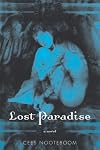
Like an angel, this book flew right over my head.
It's a svelte little thing, just 150 pages, and the prologue got my hopes up, all metatextual and clever. But the real meat of the story, what little there is, falls flat to me. Neither character is particularly vivid, their inner conflicts are vague and confused—which is realistic, true to life, but not very interesting to read about.
Nooteboom's prose is that fine stuff you'll find in literary fiction which, in its most concentrated show more moments, reaches either utter genius or insane pretension.
Take this passage:
Sparse but beautifully constructed, there's no fat. Using simple action sentences, we perfectly understand the sense of both modern ignorance and ancient, natural menace. It's great.
Now let's take a look at this one.
By contrast, this passage is unclear, ridiculous, and eyeroll-inducing. These are supposed to be the thoughts of a woman in her twenties, and yet I feel for all the world as though I'm lying in bed after an ill-advised fling with my English professor and enduring a navel-gazing soliloquy on "pornography of the mind." I mean, good god.
This dovetails with the whiffs I got of "men writing women syndrome," as when Nooteboom took a moment to describe the pert breasts of a passenger on an airplane and then in the next chapter wrote about a woman being raped in a Brazilian slum; it's hard to put your finger on why these things are so jarring sometimes, but the only explanation I can give is that his treatment of women feels uniquely short-sighted, as though they are not real people or, if they are, their inner lives are surely dominated by thoughts and feelings about men.
I like some of the ideas Nooteboom plays with but frankly I think they're done much better elsewhere, like Angels in America or Revolt of the Angels, which also take them much further.
____________________
Global Challenge: Netherlands show less
It's a svelte little thing, just 150 pages, and the prologue got my hopes up, all metatextual and clever. But the real meat of the story, what little there is, falls flat to me. Neither character is particularly vivid, their inner conflicts are vague and confused—which is realistic, true to life, but not very interesting to read about.
Nooteboom's prose is that fine stuff you'll find in literary fiction which, in its most concentrated show more moments, reaches either utter genius or insane pretension.
Take this passage:
No lowlander can sleep with impunity in the mountains. The window, which has been left slightly ajar, lets in the cold night air. The man in the bed works his way through a series of dreams, none of which he will remember. In the silence, which he does not notice, an owl hunts its prey and a startled deer plunges into the black syntax of the forest, where Erik Zondag will take a walk tomorrow without identifying the deer's track's. When he wakes, he will see a snowy mountain range lit by the first rays of the sun—a row of sharp, gleaming-white teeth, daubed here and there with blood.
Sparse but beautifully constructed, there's no fat. Using simple action sentences, we perfectly understand the sense of both modern ignorance and ancient, natural menace. It's great.
Now let's take a look at this one.
Is there such a thing as pornography without the porn? Simply an idea in your head, without a graphic image? Pure pornography of the mind, or of a situation, in which a lie changes every move, kiss, caress and climax into something else, something obscene and perverse? I think about this, and yet at the same time I lie here and wait for him to utter one of his infrequent words, for him to touch me again and make me forget my thoughts.
By contrast, this passage is unclear, ridiculous, and eyeroll-inducing. These are supposed to be the thoughts of a woman in her twenties, and yet I feel for all the world as though I'm lying in bed after an ill-advised fling with my English professor and enduring a navel-gazing soliloquy on "pornography of the mind." I mean, good god.
This dovetails with the whiffs I got of "men writing women syndrome," as when Nooteboom took a moment to describe the pert breasts of a passenger on an airplane and then in the next chapter wrote about a woman being raped in a Brazilian slum; it's hard to put your finger on why these things are so jarring sometimes, but the only explanation I can give is that his treatment of women feels uniquely short-sighted, as though they are not real people or, if they are, their inner lives are surely dominated by thoughts and feelings about men.
I like some of the ideas Nooteboom plays with but frankly I think they're done much better elsewhere, like Angels in America or Revolt of the Angels, which also take them much further.
____________________
Global Challenge: Netherlands show less
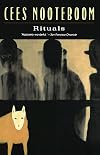
Man is a sad mammal that combs its hair….
Recently in a lit forum, a poster started a thread bemoaning the lack of “Existential Novelists” in contemporary world literature. “Where are the new Sartres and Camus?” he asked…
The Dutch Novelist Cees Nooteboom (pronounced Case Note-bom) won the Pegasus Prize for his 1973 novel Rituelen (Rituals in the English version wonderfully rendered by Adrienne Dixon). While I am willing to wager that Nooteboom would not be comfortable in going so show more far as to call this an ‘existential novel’, it most definitely takes the Big Absence question head on, even having one of the major characters quote the crusty (largely now absent) author of Nausea repeatedly.
Viscera (aka Good Faith/Bad Faith)
Inni Wintrop our hero wanders Amsterdam in the book’s three sections, taking place in the 60’s, 50’s and 70’s. We meet him after his wife Zita has left him for an Italian, and he botches a suicide attempt. The novel’s second section looks back at a younger Inni and his fateful encounter with the first of the two characters (or ‘Others’) that will give the narrative its hinge points: Arnold Taads, one of the more intriguing characters in contemporary literary fiction. The last section’s narrative jumps to the 70’s and is centered around the enigmatic Philip Taads, (unacknowledged) son of Arnold.
Bones (aka Despair and Nausea)
This section was originally intended to be left blank by way of illustration, but I decided that like Inni Wintrop, amusement and distraction is helpful while floating detached above the void that is our existence. The 145 page novel is a condensed three movement work. Nooteboom places the named section Intermezzo first. The third person narrator, though unnamed, relates the story while drawing conclusions and observations in a wry understated voice as a self conscious teller of this tale. The tale teller distances the reader as an observer, which conducts the reader to experience Inni’s story with the same detachment as Inni’s experiences his world;
"He refused to allow them in, that’s what it boiled down to. He might be sitting in the audience following the action attentively, certainly if the actors were as fascinating as this one, but really to be a part of it was impossible. He remained, even if he felt sympathy for the actor, an onlooker. If you kept silent, the stories would come all by themselves."
After his wife abandons him and his failure to cease existing, inertia is overcome only by gravity, and Inni’s life somewhat reluctantly rolls along. We are not yet to judge Inni’s unwillingness to be an ‘actor’, to define himself (in the existentialist sense) since it is hinted that one has to allow that Inni is a most willing ‘experiencer’, open to the flux that is the possible. A friend comments to him that he does not so much live, as “allow himself to be distracted”. Time IS a major problem for Inni, more specifically, how he experiences it. As an unengaged reactant, he has little control over the tempo at which he is amused. Since he is open to the whims of chaos and uncertainty, (floating after all, does have its consequences) his attitude to the future is not so much dread as a helpless boredom. In an absurd version of ‘becoming’, Inni’s single ‘ambition’ is to interact, to connect with the sexual feminine. The unnamed narrator associates Inni’s act of climax as a twist on transformation in the spiritual sense. Since this carefully crafted novel explores rituals as a symbol of how three main characters relate to their idea of the world, physically and metaphysically, Inni’s conquests, of his tortured feminine construct is HIS ritual.
The Two Taads: (or East does not meet West)
Meeting Inni as a young man, the Sartre quoting Arnold Taads first trigger’s in our hero the idea of ‘Becoming’, that even the notion that one’s self could change, could transform, was a possibility. Arnold Taads leads a time afflicted monastic existence. He was raised a Catholic but estranged himself from the church after a sojourn into Sartre’s writings.
He has ritualized the basic functions of his existence, his eating sleeping and reading take place to the minute in his self imposed prison of time. Through Arnold Taads, Inni and the reader get a first hand penetrating exploration of one individuals grappling with the question of belief in a Godless universe. In a wonderful scene of dinner conversation between Taads and the Clergyman Monsignor Terrue , the exchange is acutely poignant overcoming its lighthearted tone. Inni distills from this the sense of utter isolation and loneliness of Arnold Taads:
"He had discovered from this that a distance can exist between people which expresses such a terrible otherness that anyone witnessing it will almost die of melancholy. Everyone knows these things, but no one has always known them-upright walking creatures of the same species, who moreover use the same language to make it clear to each other that there is an unbridgeable chasm between them."
The last ‘Other’ that Inni’s self is reflected against is Phillip Taads, the estranged son of Arnold Taads who Inni meets by sheer chance when Inni is now a balding 40something dilettante art trader.
Like the father, the son is similarly isolate and lonely, literally a monk in an apartment. Nooteboom works in symbolism of the trinity and transubstantiation, examining the rituals of both Eastern ceremony, and orthodox mysticism in counterpointing the two Taads. Philip is a Japanese student who is a practicing Taoist. Ironically like his father, he embraces the suffering aspect of the self’s coping with the aridity of nonexistence (or existence in a Godless void). The Japanese Ceremony of Tea is compared to the ritual of the Catholic Eucharist. The rituals are an expression of each individual’s belief . They share the idea of transformation. Wine into Blood is compared with the mixing of the tea in the sacred bowl in the eastern thought. This is ironically compared to Inni’s own ritual of transcendence, his epiphany of memory when he first drank malt whisky with Arnold Taads. For Nooteboom, this will to transform, or transcend as exemplified by the trinity of the Taads and the Monsignor are all in essence an expression of escape. Even to the extent of equating it with the absurd escape of this world by suicide. Notably Nooteboom’s Rituals refuses to release Inni into the atmosphere of despair and alienation untethered. The loneliness of Father and Son Taads, itself is absurd:
"The universe could do quite well without this world, and the world could do quite well without people, things and Inni Wintrop for a while. But unlike Arnold and Philip Taads, he did not mind waiting for events to take their course. After all, it might take another thousand years. He had a first class seat in the auditorium, and the play was by turns horrific, lyrical, comic, tender, cruel and obscene."
What I Took Away (to the background music of Float On by Modest Mouse)
This novel has been I think rightly referred to as a fable. This maybe be the most thought-provoked-per-page of fiction I have read in recent memory. It contains enough quotable sentences to provide forum signatures for years. The remarkable part is that it manages be profound and penetrating while being accessible and eminently interesting. A lot of this has to do with creating characters as captivating as the protagonist and two major players as potent as the Taads. Certain swedes could do much worse than awarding Cees Nooteboom the holy grail of literary prizes. show less
Recently in a lit forum, a poster started a thread bemoaning the lack of “Existential Novelists” in contemporary world literature. “Where are the new Sartres and Camus?” he asked…
The Dutch Novelist Cees Nooteboom (pronounced Case Note-bom) won the Pegasus Prize for his 1973 novel Rituelen (Rituals in the English version wonderfully rendered by Adrienne Dixon). While I am willing to wager that Nooteboom would not be comfortable in going so show more far as to call this an ‘existential novel’, it most definitely takes the Big Absence question head on, even having one of the major characters quote the crusty (largely now absent) author of Nausea repeatedly.
Viscera (aka Good Faith/Bad Faith)
Inni Wintrop our hero wanders Amsterdam in the book’s three sections, taking place in the 60’s, 50’s and 70’s. We meet him after his wife Zita has left him for an Italian, and he botches a suicide attempt. The novel’s second section looks back at a younger Inni and his fateful encounter with the first of the two characters (or ‘Others’) that will give the narrative its hinge points: Arnold Taads, one of the more intriguing characters in contemporary literary fiction. The last section’s narrative jumps to the 70’s and is centered around the enigmatic Philip Taads, (unacknowledged) son of Arnold.
Bones (aka Despair and Nausea)
This section was originally intended to be left blank by way of illustration, but I decided that like Inni Wintrop, amusement and distraction is helpful while floating detached above the void that is our existence. The 145 page novel is a condensed three movement work. Nooteboom places the named section Intermezzo first. The third person narrator, though unnamed, relates the story while drawing conclusions and observations in a wry understated voice as a self conscious teller of this tale. The tale teller distances the reader as an observer, which conducts the reader to experience Inni’s story with the same detachment as Inni’s experiences his world;
"He refused to allow them in, that’s what it boiled down to. He might be sitting in the audience following the action attentively, certainly if the actors were as fascinating as this one, but really to be a part of it was impossible. He remained, even if he felt sympathy for the actor, an onlooker. If you kept silent, the stories would come all by themselves."
After his wife abandons him and his failure to cease existing, inertia is overcome only by gravity, and Inni’s life somewhat reluctantly rolls along. We are not yet to judge Inni’s unwillingness to be an ‘actor’, to define himself (in the existentialist sense) since it is hinted that one has to allow that Inni is a most willing ‘experiencer’, open to the flux that is the possible. A friend comments to him that he does not so much live, as “allow himself to be distracted”. Time IS a major problem for Inni, more specifically, how he experiences it. As an unengaged reactant, he has little control over the tempo at which he is amused. Since he is open to the whims of chaos and uncertainty, (floating after all, does have its consequences) his attitude to the future is not so much dread as a helpless boredom. In an absurd version of ‘becoming’, Inni’s single ‘ambition’ is to interact, to connect with the sexual feminine. The unnamed narrator associates Inni’s act of climax as a twist on transformation in the spiritual sense. Since this carefully crafted novel explores rituals as a symbol of how three main characters relate to their idea of the world, physically and metaphysically, Inni’s conquests, of his tortured feminine construct is HIS ritual.
The Two Taads: (or East does not meet West)
Meeting Inni as a young man, the Sartre quoting Arnold Taads first trigger’s in our hero the idea of ‘Becoming’, that even the notion that one’s self could change, could transform, was a possibility. Arnold Taads leads a time afflicted monastic existence. He was raised a Catholic but estranged himself from the church after a sojourn into Sartre’s writings.
He has ritualized the basic functions of his existence, his eating sleeping and reading take place to the minute in his self imposed prison of time. Through Arnold Taads, Inni and the reader get a first hand penetrating exploration of one individuals grappling with the question of belief in a Godless universe. In a wonderful scene of dinner conversation between Taads and the Clergyman Monsignor Terrue , the exchange is acutely poignant overcoming its lighthearted tone. Inni distills from this the sense of utter isolation and loneliness of Arnold Taads:
"He had discovered from this that a distance can exist between people which expresses such a terrible otherness that anyone witnessing it will almost die of melancholy. Everyone knows these things, but no one has always known them-upright walking creatures of the same species, who moreover use the same language to make it clear to each other that there is an unbridgeable chasm between them."
The last ‘Other’ that Inni’s self is reflected against is Phillip Taads, the estranged son of Arnold Taads who Inni meets by sheer chance when Inni is now a balding 40something dilettante art trader.
Like the father, the son is similarly isolate and lonely, literally a monk in an apartment. Nooteboom works in symbolism of the trinity and transubstantiation, examining the rituals of both Eastern ceremony, and orthodox mysticism in counterpointing the two Taads. Philip is a Japanese student who is a practicing Taoist. Ironically like his father, he embraces the suffering aspect of the self’s coping with the aridity of nonexistence (or existence in a Godless void). The Japanese Ceremony of Tea is compared to the ritual of the Catholic Eucharist. The rituals are an expression of each individual’s belief . They share the idea of transformation. Wine into Blood is compared with the mixing of the tea in the sacred bowl in the eastern thought. This is ironically compared to Inni’s own ritual of transcendence, his epiphany of memory when he first drank malt whisky with Arnold Taads. For Nooteboom, this will to transform, or transcend as exemplified by the trinity of the Taads and the Monsignor are all in essence an expression of escape. Even to the extent of equating it with the absurd escape of this world by suicide. Notably Nooteboom’s Rituals refuses to release Inni into the atmosphere of despair and alienation untethered. The loneliness of Father and Son Taads, itself is absurd:
"The universe could do quite well without this world, and the world could do quite well without people, things and Inni Wintrop for a while. But unlike Arnold and Philip Taads, he did not mind waiting for events to take their course. After all, it might take another thousand years. He had a first class seat in the auditorium, and the play was by turns horrific, lyrical, comic, tender, cruel and obscene."
What I Took Away (to the background music of Float On by Modest Mouse)
This novel has been I think rightly referred to as a fable. This maybe be the most thought-provoked-per-page of fiction I have read in recent memory. It contains enough quotable sentences to provide forum signatures for years. The remarkable part is that it manages be profound and penetrating while being accessible and eminently interesting. A lot of this has to do with creating characters as captivating as the protagonist and two major players as potent as the Taads. Certain swedes could do much worse than awarding Cees Nooteboom the holy grail of literary prizes. show less
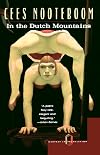
This is a cold little fairy tale, narrated by Alfonso Tiburon de Mendoza, a 'morose provincial inspector of roads, in the ancient Kingdom of Aragon'. (I quote from the cover blurb.) The tale begins and ends with the conventional fairy tale, ''Once upon a time....happily ever after'. It is characteristic of the dry wit of the book, and his intrusive part in the tale, that it is the narrator, Tiburon, who solemnly announces at the end of the tale that he sat at his writing desk, 'happily ever show more after'. His protagonists, the lovers Kai and Lucia, are circus illusionists 'of unearthly beauty (and innocence)', who suffer separation before finding each other again. Their separation is told without pathos and their reconciliation is told without joy. Tiburon quite deliberately refrains from providing them with the conventional happy thereafter: the conventions of the fairy tale are deconstructed and subverted.
'In the Dutch Mountains' is a short novel, best read quickly so that one can enjoy the cold, dry crackle of Nooteboom's wit. As the neatly turned oxymoron of the title indicates, Nooteboom has much to say, through the persona of his Spanish narrator, of the condition of being Dutch. show less
'In the Dutch Mountains' is a short novel, best read quickly so that one can enjoy the cold, dry crackle of Nooteboom's wit. As the neatly turned oxymoron of the title indicates, Nooteboom has much to say, through the persona of his Spanish narrator, of the condition of being Dutch. show less
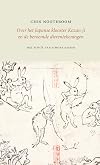
"En tegelijkertijd weet ik dat ik in dit land ook het tegendeel heb ondergaan, haast, lawaai, vulgariteit, openbare dronkenschap, stampvolle perrons, en toch, de hoeveelste reis naar en in Japan dit is weet ik allang niet meer, maar ineens heb ik het gevoel dat dit is wat ik al die tijd gezocht heb, en ook dat is weer niet waar, er zijn ervaringen geweest die me diep getroffen hebben, ik heb oneindig veel geleerd, ik staar naar de bomen en planten tegenover me, een metalen ketting van show more glanzende schakels uit een metalen balk die uit het gebouw naar voren steekt, en waarlangs het regenwater omlaag sijpelt naar het mos op de stenen beneden, de kleur van het water in de kleine vijver, de gebogen vorm van een verweerde stenen lantaarn, en tegelijkertijd niet één van die beelden afzonderlijk, hier is in het vroege licht iets samengebald wat met tijdloosheid te maken heeft, met een gesloten wereld die zichzelf op dit ogenblik aanbiedt en je duidelijk maakt dat hij ook zonder jou bestaat, dat hij oneindig oud is, dat hij je vreemd is maar dat je welkom bent alsof je in een vreemd verhaal bent binnengelopen en niets anders moet doen dan kijken tot de rotsen, de schaduwen, de zo ongelofelijk verschillende vormen van de over elkaar heen hangende bladeren en het licht dat daar doorheen schemert, de waterlelies, de lage donkere struiken, de bergen in de verte je iets willen vertellen, iets over tijd, over stilte, iemand of niemand heeft ooit een compositie gemaakt, bedoeld om je stil te laten staan, en te proberen niet meer te denken en onzichtbaar te worden als een onderdeel van dit alles, en dat zo lang mogelijk te laten duren" (14-18). show less
Lists
Awards


You May Also Like


Associated Authors
Statistics
- Works
- 194
- Also by
- 26
- Members
- 7,617
- Popularity
- #3,207
- Rating
- 3.6
- Reviews
- 187
- ISBNs
- 686
- Languages
- 29
- Favorited
- 24

