
Eça de Queirós (1845–1900)
Author of The Maias
About the Author
Image credit: Eça de Queirós (CarlAnFoto)
Series
Works by Eça de Queirós
EL PRIMO BASILIO (TOMO II) 8 copies
EL PRIMO BASILIO (TOMO I) 7 copies
Uma campanha alegre - Volume I 7 copies
A emigração como força civilizadora 5 copies
CRÓNICAS E CARTAS 4 copies
Uma campanha alegre - Volume II 3 copies
Philidor 3 copies
Perfection 3 copies
A Catástrofe e Outros Contos 2 copies
literatura comentada: eça de queiroz 2 copies
Contos Seleccionados 2 copies
Obras completas I 2 copies
Revista De Portugal 2 copies
Il colle degli impiccati 2 copies
Eça de Queiroz entre os seus 2 copies
Contos do Diabo 2 copies
El crimen del padre Amaro; El primo Basilio; La reliquia; Los Maias; El mandarín (1991) — Author — 2 copies
A Camponesa da Casa de Pedra 1 copy
Primeiro de Maio 1 copy
Sweet miracle; a drama 1 copy
Uma campanha feliz 1 copy
Irecê 1 copy
Philidor 1 copy
Revista de Portugal 1 copy
Leyendas de Santos 1 copy
O Miantonomah 1 copy
Novas cartas ineditas 1 copy
Las más bellas páginas 1 copy
O tesouro 1 copy
Zbrodnia księdza Amaro 1 copy
Los Maia 1 copy
Il cugino Basilio 1 copy
Amaro atya bűne 1 copy
Saudade — Author — 1 copy
Der Mandarin. Der Gehenkte. 1 copy
Fradique Mendes 1 copy
Cartas 1 copy
Cronicas de Londres 1 copy
Alves & C. IA 1 copy
A Aia 1 copy
As Brasileiras 1 copy
Obra Completa : Volume I 1 copy
La colpa del prete amaro 1 copy
The City and the Mountain 1 copy
Eça's English Letters 1 copy
Revista de Portugal Vol.IV 1 copy
Livro do Centenário 1 copy
O primo Brasílio 1 copy
No moinho o tesouro A aia 1 copy
Os melhores contos 1 copy
Últimas páginas dispersas 1 copy
Obra Completa : Volume II 1 copy
Últimos ensayos 1 copy
Júlio Pomar 1 copy
O conde D'Abranhos III 1 copy
Zločin oca Amara 1 copy
No moinho o tesouro a aia 1 copy
Obras selectas: [La correspondencia de Fradique Mendes, La ilustre casa Ramires, La ciudad y las sierras] (2001) 1 copy
Obras Completas Vol.I 1 copy
Obras Completas Vol.II 1 copy
Os Imortais 1 copy
O primo Brasílio 1 copy
O prima Babsílio 1 copy
O PRIMO BABASÍLIO 1 copy
Os imortais 1 copy
Maias, Os - Vol. 1 1 copy
De Alexandria ao Cairo 1 copy
a relíquia núcleo 1 copy
alves & c.a e outras ficções 1 copy
Orasul si muntele 1 copy
Obras Completas - II 1 copy
O Elogio do Almanaque 1 copy
Contos do nascer da terra 1 copy
La dida 1 copy
S. Frei Gil 1 copy
Obras de Eça de Queiroz IV 1 copy
Associated Works
The Dedalus Book of Portuguese Fantasy (European Literary Fantasy Anthologies) (1994) — Contributor — 53 copies, 1 review
The Masterpiece Library of Short Stories Vol. XVIII: Spanish & Portuguese (1900) — Contributor — 5 copies
Tagged
Common Knowledge
- Canonical name
- Queirós, Eça de
- Legal name
- Eça de Queirós, José Maria de
- Other names
- Eça de Queiroz, José M.
Queirós, José Maria Eça de
Eça de Queirós, José Maria
Mendes, Carlos Fradique - Birthdate
- 1845-11-25
- Date of death
- 1900-08-16
- Gender
- male
- Education
- University of Coimbra (Law)
- Occupations
- novelist
politician
consul
diplomat - Relationships
- Eça de Queirós, Maria Emília (wife)
- Cause of death
- tuberculosis
- Nationality
- Portugal
- Birthplace
- Póvoa de Varzim, Portugal
- Places of residence
- Póvoa de Varzim, Portugal
Coimbra, Portugal
Évora, Portugal
Lisbon, Portugal
Egypt
Leiria, Portugal (show all 11)
Havana, Cuba
Newcastle upon Tyne, England, UK
Bristol, Gloucestershire, England, UK
Paris, France
Neuilly-sur-Seine, Hauts-de-Seine, France - Place of death
- Paris, France
- Burial location
- Santa Cruz do Douro Cemetery, Baião, Porto, Portugal
- Associated Place (for map)
- Portugal
Members
Reviews

“Porque não se deixaria o preto sossegado, na calma posse dos seus manipansos? Que mal fazia à ordem das coisas que houvesse selvagens? Pelo contrário, davam ao universo uma deliciosa quantidade de pitoresco”.
(My loose translation: “Why couldn't the Black be left alone, in the calm possession of his charms? What harm did it do to the order of things that there were savages? On the contrary, they gave the universe a delicious amount of the picturesque”)
In “Os Maias” by Eça de show more Queiroz
I’ve just re-read “Os Maias” because I read somewhere in the Portuguese press it had racist “undertones”.
Let me get this out of the way first: I have a personal moral obligation to not be racist, as well as a personal inclination. I do not have a moral obligation to erase history because someone says that they find it offensive. I'm not arguing that just because it happened a long time ago it is harmless or that I approve, just that history is there to be learned from and you cannot do that if you sanitize it into oblivion. I just believe that history and fiction in particular is a "warts and all" thing, you have to show the nasty stuff and doing so does not in any way imply that you agree with the opinions and mores of the time under study. Having said that, overreaction effectively gives genuine racists a get out, painting any one who complains about racism as hysterically oversensitive and prone to grandstanding. Moreover, free speech only needs to be defended when someone says something that is controversial, or offensive, or utterly disgusting. The fact that you personally find something offensive is not reason enough to ban it. And banning things has nothing to do with free speech. The principle of free speech is the bedrock of democracy, allowing criticism and new ideas to flourish in society, and it is far more important than any individual's sensibilities.
If you start to declare all literature depicting racism as racist, then you immediately include all anti-racist literature in that category- it's virtually impossible to condemn racism without depicting it. “To Kill a Mockingbird” depicts racism. Toni Morrison's Beloved depicts racism. Primo Levi's “If This Is a Man” depicts racism. Are these anti-racist works to be derided as racist for simply depicting the horrors they condemn?
Bottom-line: No, “Os Maias” is not a racist novel ffs! It's fiction, you stupid tossers! show less
(My loose translation: “Why couldn't the Black be left alone, in the calm possession of his charms? What harm did it do to the order of things that there were savages? On the contrary, they gave the universe a delicious amount of the picturesque”)
In “Os Maias” by Eça de show more Queiroz
I’ve just re-read “Os Maias” because I read somewhere in the Portuguese press it had racist “undertones”.
Let me get this out of the way first: I have a personal moral obligation to not be racist, as well as a personal inclination. I do not have a moral obligation to erase history because someone says that they find it offensive. I'm not arguing that just because it happened a long time ago it is harmless or that I approve, just that history is there to be learned from and you cannot do that if you sanitize it into oblivion. I just believe that history and fiction in particular is a "warts and all" thing, you have to show the nasty stuff and doing so does not in any way imply that you agree with the opinions and mores of the time under study. Having said that, overreaction effectively gives genuine racists a get out, painting any one who complains about racism as hysterically oversensitive and prone to grandstanding. Moreover, free speech only needs to be defended when someone says something that is controversial, or offensive, or utterly disgusting. The fact that you personally find something offensive is not reason enough to ban it. And banning things has nothing to do with free speech. The principle of free speech is the bedrock of democracy, allowing criticism and new ideas to flourish in society, and it is far more important than any individual's sensibilities.
If you start to declare all literature depicting racism as racist, then you immediately include all anti-racist literature in that category- it's virtually impossible to condemn racism without depicting it. “To Kill a Mockingbird” depicts racism. Toni Morrison's Beloved depicts racism. Primo Levi's “If This Is a Man” depicts racism. Are these anti-racist works to be derided as racist for simply depicting the horrors they condemn?
Bottom-line: No, “Os Maias” is not a racist novel ffs! It's fiction, you stupid tossers! show less

First published in Portuguese in 1897 but just recently translated into English, Eça de Queiros’s book does what I think should be done with fables and Bible stories. He reinterprets the story and retells it, using the accepted version as his launchpad.
The story of Adam and Eve in Genesis is a story of the blessings of Paradise for humanity and our fall from grace. God has created a Paradise for humanity and it’s up to us to preserve and keep it.
By contrast, Eça de Queiros tells a show more story of Adam descending (or “falling”) from a more nature-bound state of grace and having to earn his way to humanity.
Adam begins the tale with his descent from the trees. He’s leaving a life of peace and relative security to strike out on his own, and on an evolutionary journey away from the other animals of the forest and trees. By the latter half of the nineteenth century, Darwinian evolution was well-known and some fossils suggesting human evolution had begun to be discovered. Eça de Queiros entwines an evolutionary story with the Biblical story, so that Adam must earn his way to humanity.
He is not born into Eden, he must find his way there after leaving the trees. Neither the journey to Eden nor his arrival there are blessed with peace and plenty. Surrounded by new predators and needing to find new sources of food and shelter, he is “always trembling, always whimpering, always fleeing!”
With his descent from the trees, he is estranged from the life of other animals, with no obvious place, and separated by his exceptionality, his “intelligence.” Being human is being an “other” to the animals of Eden.
It is Eve, once she arrives in Eden, who takes the steps that begin to establish the place of humanity, even its supremacy over nature. It was Eve who tamed fire, and with it, changed their lives, giving them safety, warmth, a home, and igniting the possibilities of technology. Eça de Queiros writes, “It was Eve who laid the foundation stones on which Humanity is built.”
I won’t go on to tell the whole tale here. But I think, from what I’ve said, you’ll get the idea. Humanity is a struggle, not a gift. And the struggle will not end — our place in the world is never guaranteed, it must be continuously earned. We have in a strong sense left nature, left a state of grace.
You can’t help but wonder, as Adam himself does, about the wisdom of leaving the trees. The Orangutan (in Eça de Queiros’s time, believed to be our closest relative in nature), left behind in the trees, is untroubled by plans and needs, fears and hopes, and the challenge of making its own place in the world. Was the true Eden left behind back in the trees?
This is more than Genesis plus Darwin. Eça de Queiros’s retelling of the story opens up all sorts of questions about how we think about our relationship to nature and to other animals, our estrangement and our “dominion” over nature, how nature (and the voice we give it) sees us and maybe judges us. show less
The story of Adam and Eve in Genesis is a story of the blessings of Paradise for humanity and our fall from grace. God has created a Paradise for humanity and it’s up to us to preserve and keep it.
By contrast, Eça de Queiros tells a show more story of Adam descending (or “falling”) from a more nature-bound state of grace and having to earn his way to humanity.
Adam begins the tale with his descent from the trees. He’s leaving a life of peace and relative security to strike out on his own, and on an evolutionary journey away from the other animals of the forest and trees. By the latter half of the nineteenth century, Darwinian evolution was well-known and some fossils suggesting human evolution had begun to be discovered. Eça de Queiros entwines an evolutionary story with the Biblical story, so that Adam must earn his way to humanity.
He is not born into Eden, he must find his way there after leaving the trees. Neither the journey to Eden nor his arrival there are blessed with peace and plenty. Surrounded by new predators and needing to find new sources of food and shelter, he is “always trembling, always whimpering, always fleeing!”
With his descent from the trees, he is estranged from the life of other animals, with no obvious place, and separated by his exceptionality, his “intelligence.” Being human is being an “other” to the animals of Eden.
It is Eve, once she arrives in Eden, who takes the steps that begin to establish the place of humanity, even its supremacy over nature. It was Eve who tamed fire, and with it, changed their lives, giving them safety, warmth, a home, and igniting the possibilities of technology. Eça de Queiros writes, “It was Eve who laid the foundation stones on which Humanity is built.”
I won’t go on to tell the whole tale here. But I think, from what I’ve said, you’ll get the idea. Humanity is a struggle, not a gift. And the struggle will not end — our place in the world is never guaranteed, it must be continuously earned. We have in a strong sense left nature, left a state of grace.
You can’t help but wonder, as Adam himself does, about the wisdom of leaving the trees. The Orangutan (in Eça de Queiros’s time, believed to be our closest relative in nature), left behind in the trees, is untroubled by plans and needs, fears and hopes, and the challenge of making its own place in the world. Was the true Eden left behind back in the trees?
This is more than Genesis plus Darwin. Eça de Queiros’s retelling of the story opens up all sorts of questions about how we think about our relationship to nature and to other animals, our estrangement and our “dominion” over nature, how nature (and the voice we give it) sees us and maybe judges us. show less
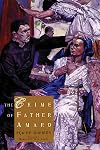
Not everyone who enters the priesthood comes to it with a true vocation. Father Amaro was a perfect example. The orphaned child of servants to the Marquesa de Alegros, he was brought up by her in her household with the goal of entering the Church. Then the Marquesa died in turn and the young boy went to live with his surly uncle, the grocer.
While Amaro had never chosen the monastic life, he "began to think of the seminary as a liberation" from his relatives, and so, at the age of fifteen, he show more entered the seminary. However, by this stage, he knew it was not the life for him, absorbed as he was in discovering women. Unfortunately for him, there were no other alternatives.
The idea of women pursued Amaro even into the seminary. The images of the Virgin did not depict the pure Mother of God to him, but rather a pretty blonde girl. Then there was the kind of woman the priests warned of, the woman who personified the Path to Iniquity.
By the time Amaro was ordained and made his vows of poverty, chastity and obedience, it was obvious that at least one would be broken.
Amaro's second parish was in the town of Leiria, a comfortable provincial town, run by the usual suspects and full of devout elderly ladies. Both factions were "narrow minded, credulous bigots". The priest he was to replace, the "glutton of all gluttons", had died of apoplexy bought on by overeating on Easter Sunday. He had never been popular, so the handsome youthful Amaro was a welcome addition to the town.
Amaro's new superior would be Canon Dias. Dias decided Amaro would be lodged at São Joaneira's house, as it was clean, full of good food, and well located. What Amaro did not realize at the time, was that his new landlady was the Canon's mistress. The coadjutor of the town suggested mildly that this might not be the best situation for the young priest, since Joaneira had a lovely young daughter, Amélia, and tongues might wag. The coadjutor was overruled.
Matters between the two young people took the very course any town gossip starved for fodder would predict. But while breaking religious vows is a sin, it is not a crime. Father Amaro had a long way to go before he crossed that Rubicon.
The Catholic Church teaches that there are not only sins of commission, there are also sins of omission. As Father Amaro tried to deal with the inevitable consequences of his sins of commission, he was led just as inevitably into sins of omission. While he himself did not commit legal crimes, the omissions were contributing factors to crimes by others. Amaro did not sin like Ambrosio in [The Monk], or Schedoni in [The Italian]. What then were his crimes?
Eça has written a classic nineteenth century novel of social realism and for him, Amaro's crimes were moral crimes against the society he should have served. The translator, Margaret Jull Costa, calls the novel "an attack on provincialism, on the power of a Church that allies itself with the rich and powerful, tolerates superstition and supports a deeply unfair and unChristian society.. It is also... a critique of the position of both men and women in Portuguese society of the time." It is also an attack on institutional celibacy.
There are two moral standard bearers in the novel. One is the doctor, the rationalist and nonbeliever. One is the elderly Father Ferrão, the man who represents all that the Church should be. The Church and the small town politicians and all who support them are the hypocrites. Lust, gluttony, greed, sloth, wrath, envy and pride; all the seven deadly sins are committed by the town's leaders. It is their corruption, which Amaro is a part of, which is the crime against the ordinary people of the town: the poor, the unemployed, those without connections. People like João Eduardo, Amélia's would be suitor, don't stand a chance, and so turn to ideas considered dangerous, like those of the Paris Commune.
Amaro's crimes were in the moral realm, against society. This may sound like a heavy read, but Eça de Queirós has the sly touches of Dickens, the social eye found in Zola and Balzac, and the social conscience of Hardy, making this a rewarding read. show less
While Amaro had never chosen the monastic life, he "began to think of the seminary as a liberation" from his relatives, and so, at the age of fifteen, he show more entered the seminary. However, by this stage, he knew it was not the life for him, absorbed as he was in discovering women. Unfortunately for him, there were no other alternatives.
The idea of women pursued Amaro even into the seminary. The images of the Virgin did not depict the pure Mother of God to him, but rather a pretty blonde girl. Then there was the kind of woman the priests warned of, the woman who personified the Path to Iniquity.
What kind of creature was this, then, who, in theology, was either placed on the altar as the Queen of Grace or had barbarous curses heaped upon her? What power did she have, that this legion of saints should one minute rush to meet her, passionate and ecstatic, unanimously handing over to her the Kingdom of Heaven, and at the next, uttering terrified sobs and cries of loathing, flee from her as if she were the Universal Enemy, hiding themselves in wildernesses and in cloisters so as not to see her and to die there from the disease of having loved her? Unable precisely to define these troubling feelings, he nevertheless experienced them. They would constantly resurface, demoralizing him, so that before he had even made his vows, he was already longing to break them.
By the time Amaro was ordained and made his vows of poverty, chastity and obedience, it was obvious that at least one would be broken.
Amaro's second parish was in the town of Leiria, a comfortable provincial town, run by the usual suspects and full of devout elderly ladies. Both factions were "narrow minded, credulous bigots". The priest he was to replace, the "glutton of all gluttons", had died of apoplexy bought on by overeating on Easter Sunday. He had never been popular, so the handsome youthful Amaro was a welcome addition to the town.
Amaro's new superior would be Canon Dias. Dias decided Amaro would be lodged at São Joaneira's house, as it was clean, full of good food, and well located. What Amaro did not realize at the time, was that his new landlady was the Canon's mistress. The coadjutor of the town suggested mildly that this might not be the best situation for the young priest, since Joaneira had a lovely young daughter, Amélia, and tongues might wag. The coadjutor was overruled.
Matters between the two young people took the very course any town gossip starved for fodder would predict. But while breaking religious vows is a sin, it is not a crime. Father Amaro had a long way to go before he crossed that Rubicon.
The Catholic Church teaches that there are not only sins of commission, there are also sins of omission. As Father Amaro tried to deal with the inevitable consequences of his sins of commission, he was led just as inevitably into sins of omission. While he himself did not commit legal crimes, the omissions were contributing factors to crimes by others. Amaro did not sin like Ambrosio in [The Monk], or Schedoni in [The Italian]. What then were his crimes?
Eça has written a classic nineteenth century novel of social realism and for him, Amaro's crimes were moral crimes against the society he should have served. The translator, Margaret Jull Costa, calls the novel "an attack on provincialism, on the power of a Church that allies itself with the rich and powerful, tolerates superstition and supports a deeply unfair and unChristian society.. It is also... a critique of the position of both men and women in Portuguese society of the time." It is also an attack on institutional celibacy.
There are two moral standard bearers in the novel. One is the doctor, the rationalist and nonbeliever. One is the elderly Father Ferrão, the man who represents all that the Church should be. The Church and the small town politicians and all who support them are the hypocrites. Lust, gluttony, greed, sloth, wrath, envy and pride; all the seven deadly sins are committed by the town's leaders. It is their corruption, which Amaro is a part of, which is the crime against the ordinary people of the town: the poor, the unemployed, those without connections. People like João Eduardo, Amélia's would be suitor, don't stand a chance, and so turn to ideas considered dangerous, like those of the Paris Commune.
Amaro's crimes were in the moral realm, against society. This may sound like a heavy read, but Eça de Queirós has the sly touches of Dickens, the social eye found in Zola and Balzac, and the social conscience of Hardy, making this a rewarding read. show less
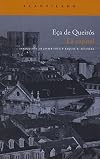
Cuando terminas de leer 'La capital', cierras el libro con un susupiro. La nostalgia te invade. Es una sensación de tristeza y añoranza por los personajes que dejas atrás, con los que hubieses querido seguir y seguir, sabiendo de sus vidas y circunstancias, éxitos y fracasos. Nunca te cansarías de continuar leyendo.
Y eso que la historia no tiene los típicos ingredientes para mantenerte pegado a las páginas, es decir, enigmas, asesinatos, intriga, aventuras. Se trata de los sucesos que show more le van acaeciendo a un joven, Artur Corvelo, apasionado de la literatura, la poesía, la política. Su mayor ambición es pertenecer a un círculo de estas características y dejarse absorber en los tiempos que le han tocado vivir, de una manera inteligente y civilizada. Sueña con una vida en la que se ha convertido en famoso escritor y poeta, admirado por los líderes políticos, por sus iguales, periodistas, escritores; amado por las mujeres.
Pero hay un inconveniente, que por cosas del destino ha de vivir en una pequeña localidad, Oliveira de Azeméis, con sus tías. En un lugar con tan poca vida artística, no puede dar rienda suelta a sus sueños. Se conforma con ir componiendo sus versos y un drama, 'Amores de poeta'. Hasta que un buen día, el destino viene en su auxilio: un pariente le ha dejado su herencia. ¡Ya puede viajar a Lisboa, la capital! En Lisboa pasará por múltiples peripecias y conocerá a los personajes más variopintos.
Algunos momentos memorables: la vida de Artur en Oliveira, la gran cena en el Universal (¡canallas!), la soirée de doña Joana Coutinho, la vida en el Espanhol, las reuniones con los republicanos... Pero sobre todo, los personajes, unos magníficos, otros despreciables, engreídos y desagradecidos, pero todos ellos geniales. show less
Y eso que la historia no tiene los típicos ingredientes para mantenerte pegado a las páginas, es decir, enigmas, asesinatos, intriga, aventuras. Se trata de los sucesos que show more le van acaeciendo a un joven, Artur Corvelo, apasionado de la literatura, la poesía, la política. Su mayor ambición es pertenecer a un círculo de estas características y dejarse absorber en los tiempos que le han tocado vivir, de una manera inteligente y civilizada. Sueña con una vida en la que se ha convertido en famoso escritor y poeta, admirado por los líderes políticos, por sus iguales, periodistas, escritores; amado por las mujeres.
Pero hay un inconveniente, que por cosas del destino ha de vivir en una pequeña localidad, Oliveira de Azeméis, con sus tías. En un lugar con tan poca vida artística, no puede dar rienda suelta a sus sueños. Se conforma con ir componiendo sus versos y un drama, 'Amores de poeta'. Hasta que un buen día, el destino viene en su auxilio: un pariente le ha dejado su herencia. ¡Ya puede viajar a Lisboa, la capital! En Lisboa pasará por múltiples peripecias y conocerá a los personajes más variopintos.
Algunos momentos memorables: la vida de Artur en Oliveira, la gran cena en el Universal (¡canallas!), la soirée de doña Joana Coutinho, la vida en el Espanhol, las reuniones con los republicanos... Pero sobre todo, los personajes, unos magníficos, otros despreciables, engreídos y desagradecidos, pero todos ellos geniales. show less
Lists
Awards


You May Also Like


Associated Authors
Statistics
- Works
- 321
- Also by
- 3
- Members
- 6,876
- Popularity
- #3,557
- Rating
- 3.8
- Reviews
- 156
- ISBNs
- 879
- Languages
- 19
- Favorited
- 27


