
Rius
Author of Marx for Beginners
About the Author
Eduardo Humberto del Río García was born in Zamora, Mexico on June 20, 1934. After graduating from secondary school, he worked as a messenger and a cashier, sold soap and finally landed a job answering phones in a funeral home. He was recruited by Ja Ja, a humor magazine, after his doodles were show more noticed by a mourner who was familiar with the magazine's editor. He adopted the pen name Rius. He wrote more than 100 graphic nonfiction books including Marx for Beginners, The Dictionary of Human Stupidity, The True History of Uncle Sam, 100 Proposals to Save What Is Left of Mexico, Hitler for Masochists, The Stomach Is First, The Manual of the Perfect Atheist, The Pitiful Presidents, and Would Jesus Christ Have Been Catholic? He also wrote the comic books Los Supermachos and Los Agachados. He founded the Mexican Workers Party's magazine Popular Insurgency. He died from complications of prostate cancer on August 8, 2017 at the age of 83. (Bowker Author Biography) show less
Disambiguation Notice:
Do not combine this page with any of the various authors who share this surname.
Works by Rius
La trukulenta historia del kapitalismo / The Cruel History of Capitalism (Spanish Edition) (1994) 20 copies
La panza es primero / The belly is First: La Triste Realidad de la Comida Mexicana / The Sad Reality of Mexican Food (Spanish Edition) (2003) 14 copies
Manifiesto comunista : ilustrado y explicado al alcance de todos, cultos e incultos, vivos y tontos (1977) 6 copies
Herejes, ateos y mal pensados/heretics, atheists and dirty minds: Lista incompleta de los que se han atrevido a no creer (2002) 4 copies
Recetarius / Recipes: 100 Propuestas Para Salvar Mexico/100 Propositions To Save Mexico (2004) 4 copies
Números agotados de Los Agachados 4 copies
Comics de Rius: las glorias del tal Rius: Comics of Rius: Glories of the Rius/ Spanish Edition (2006) 4 copies
Votas y te vas. La inesperada traicion de Fox a nuestra pobre democracia (Spanish Edition) (2006) 4 copies
Mis supermachos 2. Violencia, sexo, agruras, corrupcion, conspiracion y colitis (de pilon). 12 episodios sin censura (Spanish Edition) (2009) 3 copies
The Chicanos 2 copies
Palestina: del judío errante al judío errado! [Palestine: of the nomadic Jew to the missed Jew!] (1983) 2 copies
Numeros Agotados de los Agachados 11 2 copies
La historia (oficial) me absolverá 2 copies
Museo de Rius 2 copies
No consulte a su medico. Como curarse sin ayuda medica con metodos naturales y baratos (Spanish Edition) (1975) 2 copies
El Yerberito Ilustrado 2 copies
La Joven Alemania 1 copy
Conheca Marx 1 copy
Cada quién su dios 1 copy
Horoscopos, tarot y otras tomadas de pelo/ Horoscopes, Tarot and Other Jokes (Spanish Edition) (2007) 1 copy
Atlas para niñas y niños 1 copy
Cómo dejar de comer : mal 1 copy
El museo de Rius 1 copy
Santoral de la Caricatura 1 copy
MANIFIESTO COMUNISTA ILUSTRADO Y EXPLICADO AL ALCANCE DE TODOS, CULTOS E INCULTOS, VIVOS Y TONTOS 1 copy
ABCHÉ 1 copy
La Iglesia y otros cuentos 1 copy
La Joven Alemania 1 copy
La Deuda (y cómo no pagarla) 1 copy
Su Majestad El PRI 1 copy
Los Agachados tomo 9 1 copy
Carlos para todos 1 copy
El pan y otros males 1 copy
Los Agachados Tomo 10 1 copy
Los agachados 1 copy
Ya te vimos, Pinochet! 1 copy
La Revolución Mexicana 1 copy
Lexikón Econímico 1 copy
Los judíos (Colección Rius): 2000 años perseguidos, 50 años perseguidores (Spanish Edition) (2016) 1 copy
Palestina : del judío errante al judío errado! [Palestine: of the nomadic Jew to the missed Jew!] 1 copy
Yeni başlayanlar için Marks 1 copy
La Iglesia y otros cuentos 1 copy
Juicio a Walt Disney 1 copy
Tagged
Common Knowledge
- Canonical name
- Rius
- Legal name
- Río, Eduardo del
- Other names
- Eduardo Humberto del Rio Garcia
- Birthdate
- 1934-06-20
- Gender
- male
- Occupations
- political cartoonist
writer
public intellectual - Short biography
- Eduardo del Río (born June 20, 1934 and better known by his pen name Rius) is a Mexican intellectual, political cartoonist, and writer born in Zamora, Michoacán.
From Wikipedia - Nationality
- Mexico
- Birthplace
- Zamora, Michoacán, México
- Places of residence
- Cuernavaca, Mexico
- Disambiguation notice
- Do not combine this page with any of the various authors who share this surname.
- Associated Place (for map)
- Mexico
Members
Reviews
Cuba for beginners; an illustrated guide for Americans (and their government) to socialist Cuba by Rius
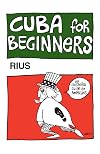
Thank goodness my father has not picked up this book off my shelf! Of course he wouldn't. He doesn't go upstairs in my house, I suspect because at his age (86), he wants to conserve his energy. But if he had, I would have had a major melt-down on my hands. My father, mother, brother and I left Cuba only a few years after the revolution. I was somewhere between 2 and 3 years old, and my brother a year younger. I've heard all the stories, I've even taped my parents talking about their life show more there, and I've collected a number of books about Cuban history which I keep meaning to get to... I picked up "Cuba for Beginners" at a library bookstore, and happened to be looking for something relatively easy and short to read yesterday, and there it was on my shelf. It is a 'comic history'-type book, not my favorite way to read about history, in fact, not my favorite way to read at all. Not that I'm against that type of book, it's just that I find it distracting to read about history while looking at idea and conversation bubbles, and drawings that for the most part are not very good. Also because of the format of this type of book, everything is simplified and abbreviated to such a degree that I feel somewhat skeptical of any information presented in this way.
This book also has the highly (to a Cuban emigre) irritating factor of being extremely pro-Castro and anti-US. I'm not naive about the US exploitation of Cuba pre-Castro, and the wholly selfish designs the US has had towards Cuba, but some of the excuses/explanations given in this book are just ludicrous. So all Cuban citizens 'voluntarily' work for free to help their country? (Not according to my cousins, forced on these 'voluntary' work sabbaticals, usually hard labor in the fields). The Castro government confiscated 'superfluous' houses from people with more than one home to house those without houses, but offered to pay the owners the value of the house? (My grandfather didn't get paid, neither did my father's family--not only were the houses taken from them, but they weren't allowed to remove any of the furniture either.) All the people shot by firing squad in the wake of the revolution were murderers and got a trial? (When dozens of people were being executed in a day, I hardly think there was much time for a trial). Anyway, I could go on and on. About the only positive thing I can say about this book is that it makes me more interested in learning more about Cuba's history and what happened during the sixties. show less
This book also has the highly (to a Cuban emigre) irritating factor of being extremely pro-Castro and anti-US. I'm not naive about the US exploitation of Cuba pre-Castro, and the wholly selfish designs the US has had towards Cuba, but some of the excuses/explanations given in this book are just ludicrous. So all Cuban citizens 'voluntarily' work for free to help their country? (Not according to my cousins, forced on these 'voluntary' work sabbaticals, usually hard labor in the fields). The Castro government confiscated 'superfluous' houses from people with more than one home to house those without houses, but offered to pay the owners the value of the house? (My grandfather didn't get paid, neither did my father's family--not only were the houses taken from them, but they weren't allowed to remove any of the furniture either.) All the people shot by firing squad in the wake of the revolution were murderers and got a trial? (When dozens of people were being executed in a day, I hardly think there was much time for a trial). Anyway, I could go on and on. About the only positive thing I can say about this book is that it makes me more interested in learning more about Cuba's history and what happened during the sixties. show less
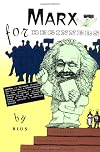
Although a legendary figure in his native Mexico, Rius, the pen name for the writer, political cartoonist and communist intellectual Eduardo del Río García, is not well known in the United States (or probably Europe, either).
Despite the title, at least a little political savvy is necessary to fully understand Marx for Beginners. However, Rius provides a beautifully enjoyable (and quite funny) journey detailing the beginnings of the many threads of political theory that eventually show more influenced Karl Marx and/or his sidekick Frederich Engels. But the best part of the slender book has to be Rius’ cartoons and vintage illustrations. So highly recommended!
Marx for Beginners is the first of Rius’ book that I’ve read, but it won’t be the last. I’ve bought Diccionario de la estupidez humana (The Dictionary of Human Stupidity), Hitler Para Masoquistas (no translation needed) and Los Agachados (The Submissive), all of them in Spanish. So I’ll be entertained and improve my Spanish! A win-win! show less
Despite the title, at least a little political savvy is necessary to fully understand Marx for Beginners. However, Rius provides a beautifully enjoyable (and quite funny) journey detailing the beginnings of the many threads of political theory that eventually show more influenced Karl Marx and/or his sidekick Frederich Engels. But the best part of the slender book has to be Rius’ cartoons and vintage illustrations. So highly recommended!
Marx for Beginners is the first of Rius’ book that I’ve read, but it won’t be the last. I’ve bought Diccionario de la estupidez humana (The Dictionary of Human Stupidity), Hitler Para Masoquistas (no translation needed) and Los Agachados (The Submissive), all of them in Spanish. So I’ll be entertained and improve my Spanish! A win-win! show less

Marx is a significant figure and it is as well to have a grasp of his philosophy. Surely, I hear you say, the best way to do that is to read Marx's writings. Have you tried reading Karl's oeuvre, without help?
Rius has produced a comic book style offering which contains a surprising amount of serious information. Topics which I have read in Marx's books suddenly make more sense. The book does use humour and is unashamedly pro Marx but, neither of these facts should, in any way, deter your show more reading of same. The text goes surprisingly deep but somehow remains comprehensible.
This is the first of the 'For Beginners' series that I have read, I shall certainly look out for other examples. show less
Rius has produced a comic book style offering which contains a surprising amount of serious information. Topics which I have read in Marx's books suddenly make more sense. The book does use humour and is unashamedly pro Marx but, neither of these facts should, in any way, deter your show more reading of same. The text goes surprisingly deep but somehow remains comprehensible.
This is the first of the 'For Beginners' series that I have read, I shall certainly look out for other examples. show less

It's difficult to know how to rate a book like this, that's so transparently propaganda. But, if you want a summary from the perspective of a leftist Soviet-block sympathizer who is sympathetic to Mao, this will serve. Just know that you will be learning less than half the truth.
Lists
You May Also Like


Associated Authors
Statistics
- Works
- 216
- Members
- 2,196
- Popularity
- #11,682
- Rating
- 3.7
- Reviews
- 30
- ISBNs
- 258
- Languages
- 9
- Favorited
- 2
