
Michael Shea (1) (1946–2014)
Author of Nifft the Lean
For other authors named Michael Shea, see the disambiguation page.
About the Author
Image credit: Michael Shea (2008)
Photo: F.R.R. Mallory
Photo: F.R.R. Mallory
Series
Works by Michael Shea
The Recruiter — Author — 6 copies
The Growlimb 4 copies
Dapple Hew The Tint Master 3 copies
The Rebuke 1 copy
Nemo Me Impune Lacessit 1 copy
Occultation 1 copy
Dagoniad 1 copy
The Battery 1 copy
The Pool 1 copy
The Angel Of Death 1 copy
The Fishing Of The Demon-sea 1 copy
The Goddess In Glass 1 copy
Associated Works
The Year's Best Fantasy and Horror: First Annual Collection (1986) — Contributor — 333 copies, 6 reviews
The Agonizing Resurrection of Victor Frankenstein: And Other Gothic Tales (1994) — Introduction, some editions — 149 copies, 1 review
The Best Horror Stories from The Magazine of Fantasy & Science Fiction (1988) — Contributor — 52 copies, 1 review
The Best Horror Stories from the Magazine of Fantasy & Science Fiction, Vol. II (1990) — Contributor — 20 copies
The Magazine of Fantasy and Science Fiction August 1982, Vol. 63, No. 2 (1982) — Contributor; Contributor — 15 copies
The Magazine of Fantasy and Science Fiction December 1980, Vol. 59, No. 6 (1980) — Author — 14 copies
The Magazine of Fantasy and Science Fiction 68. Mythen der nahen Zukunft. (1984) — Contributor — 7 copies
The Autopsy [2022 Guillermo del Toro's Cabinet of Curiosities TV episode] — Original story — 1 copy
Tagged
Common Knowledge
- Legal name
- Shea, Michael
- Birthdate
- 1946-07-03
- Date of death
- 2014-02-16
- Gender
- male
- Occupations
- carpenter
house painter
English teacher
writer
poet - Agent
- Spectrum Literary
- Relationships
- Cesar, Lynn (spouse)
- Nationality
- USA
- Birthplace
- Los Angeles, California, USA
- Places of residence
- California, USA
- Place of death
- San Francisco, California, USA
- Associated Place (for map)
- California, USA
Members
Discussions
THE DEEP ONES: "The Horror on the #33" by Michael Shea in The Weird Tradition (December 2021)
Reviews

For the record, I've not read any of the actual Dying Earth books, or even any Vance for that matter, despite pretty extensive familiarity with the material and concepts thanks to a lifetime of ttrpgs. I'm sure that influences how I felt about this one to some degree, maybe if I'd read Vance's stuff first I wouldn't care for this as much as I do. Because I loved this.
Shea's Lovecraft sequel, per a review way back, fell pretty flat for me. Which left me a little apprehensive about this sequel show more written in someone else's world, though less so due to its reputation (including amongst such notable as Patton Oswalt). This was such a pleasantly surprising experience though.
It certainly has some of the sword and sorcery tropes, though it never feels like its really embracing that subgenre. It reminds me a little bit of some of Moorcock's work in that regard.
I think what really made the book was that it was funny, which was something I wasn't expecting. Its not poking fun at the genre, or Vance's setting, but it also never feels like its taking itself too seriously. The series of misadventures experienced by the characters along their titular quest seem so random, beyond their power, and the characters themselves make such amusingly silly choices at times. This is really working in someone else's world, in a genre that maybe has aged past its prime, at its absolute best. show less
Shea's Lovecraft sequel, per a review way back, fell pretty flat for me. Which left me a little apprehensive about this sequel show more written in someone else's world, though less so due to its reputation (including amongst such notable as Patton Oswalt). This was such a pleasantly surprising experience though.
It certainly has some of the sword and sorcery tropes, though it never feels like its really embracing that subgenre. It reminds me a little bit of some of Moorcock's work in that regard.
I think what really made the book was that it was funny, which was something I wasn't expecting. Its not poking fun at the genre, or Vance's setting, but it also never feels like its taking itself too seriously. The series of misadventures experienced by the characters along their titular quest seem so random, beyond their power, and the characters themselves make such amusingly silly choices at times. This is really working in someone else's world, in a genre that maybe has aged past its prime, at its absolute best. show less
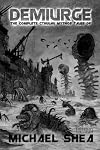
This is going to feel more like a review of the collection itself, rather than of the individual stories. Why? Because I already really enjoy Michael Shea. He's capable of really humanizing more esoteric horror and fantasy by grounding it in believable, identifiable, and realistic characters. He can do action that feels like a more believable Howard. At least, when he's at his best. And the initial half to two-thirds of this collection is some of his best.
Demiurge is as close to a complete show more collection of every cthulhu mythos related tale that Michael Shea wrote as you're likely to get (there's an outlandishly expensive Centipede Press collection that's probably more complete). I do not necessarily know if that is a good thing.
You see, its essentially the Perilous Press edition of Copping Squid, with a few other stories tacked on to the end. And I mean tacked on. Its clear to see why several of these entries may have been omitted from that collection, as they just don't hold up by comparison. Some of them don't even feel related to the cthulhu mythos besides stylistic similarities to Lovecraft. Taken on their individual merits, there are a couple of fun additional stories though.
Momma Durtt was fantastic, creative, original story about gangsters, truckers, poor small town folk, and maybe some sort of cthonic entity (or something else entirely?). For me, it had echoes of Ambrose Bierce's "Damned Thing."
Under the Shelf fooled me. Its opening with characters preparing to explore the ocean below the ice shelf had me prepped for a Jules Verne, Jacque Cousteau, Abyss, but-with-some-more-horror style adventure. It quickly and surprisingly morphs into one of the most action packed (and to some degree sci-fi channel movie goofy/campy) Shea short stories I've read.
Ultimately, though, none of the individual stories added on to this collection are good enough that you really need to read this in addition to Copping Squid. Barring being a completionist. show less
Demiurge is as close to a complete show more collection of every cthulhu mythos related tale that Michael Shea wrote as you're likely to get (there's an outlandishly expensive Centipede Press collection that's probably more complete). I do not necessarily know if that is a good thing.
You see, its essentially the Perilous Press edition of Copping Squid, with a few other stories tacked on to the end. And I mean tacked on. Its clear to see why several of these entries may have been omitted from that collection, as they just don't hold up by comparison. Some of them don't even feel related to the cthulhu mythos besides stylistic similarities to Lovecraft. Taken on their individual merits, there are a couple of fun additional stories though.
Momma Durtt was fantastic, creative, original story about gangsters, truckers, poor small town folk, and maybe some sort of cthonic entity (or something else entirely?). For me, it had echoes of Ambrose Bierce's "Damned Thing."
Under the Shelf fooled me. Its opening with characters preparing to explore the ocean below the ice shelf had me prepped for a Jules Verne, Jacque Cousteau, Abyss, but-with-some-more-horror style adventure. It quickly and surprisingly morphs into one of the most action packed (and to some degree sci-fi channel movie goofy/campy) Shea short stories I've read.
Ultimately, though, none of the individual stories added on to this collection are good enough that you really need to read this in addition to Copping Squid. Barring being a completionist. show less

I likely never would have picked up Michael Shea, let alone such a nice edition, if Chris Lackey and Chad Fifer of the H.P. Lovecraft Literary Podcast (at hppodcraft.com) hadn't invited the utterly delightful Patton Oswalt on the show to talk about several of these stories. And my life would have been the poorer for it.
This is a fantastic introduction to Shea's lovecraftian influenced work, for those (like myself) without the resources to pick up the extremely limited run and extremely show more expensive omnibus of all his work.
I know I frequently break down these collections with at least a little blurb about every or almost every story in the collection. However, I can't do them nearly the justice in terms of enthusiasm or depth of knowledge that Patton does on those episodes of Chris and Chad's podcast, so I'm going to recommend everyone go listen to those for more detailed information (really, just listen to every episode Chris and Chad have done).
There is not a single story that disappoints here, though many are present in several other collections or chapbooks, so completionists may find some repition. Themetically, these are all lovecraftian stories set in San Francisco. S.T. Joshi deserves some credit for selection and order here. Shea's deep knowledge and experience of the city rivals that of Lovecraft's knowledge of the New England states, and really helps these stories come alive with a vibrant, living, time and place. People, not stuff rarified intellectuals, receive similar treatment as entirely believable everymen (and women) who feel like believable portraits appropriate to the setting. More of O. Henry perhaps than Lovecraft in the skillful depictions of this cast of characters.
These definitely have the feel of world building, a 60s-80s weird san francisco perhaps, but don't expect some longterm payoff in terms of an over-arching plot.
There's enough here to please everyone from Lovecraft traditionalists to those looking for a more modern feel to their horror, with a lot of respectful portrayals of groups (sex workers, the homeless, addicts, and the poor) that don't normally receive such humane treatment in fiction. show less
This is a fantastic introduction to Shea's lovecraftian influenced work, for those (like myself) without the resources to pick up the extremely limited run and extremely show more expensive omnibus of all his work.
I know I frequently break down these collections with at least a little blurb about every or almost every story in the collection. However, I can't do them nearly the justice in terms of enthusiasm or depth of knowledge that Patton does on those episodes of Chris and Chad's podcast, so I'm going to recommend everyone go listen to those for more detailed information (really, just listen to every episode Chris and Chad have done).
There is not a single story that disappoints here, though many are present in several other collections or chapbooks, so completionists may find some repition. Themetically, these are all lovecraftian stories set in San Francisco. S.T. Joshi deserves some credit for selection and order here. Shea's deep knowledge and experience of the city rivals that of Lovecraft's knowledge of the New England states, and really helps these stories come alive with a vibrant, living, time and place. People, not stuff rarified intellectuals, receive similar treatment as entirely believable everymen (and women) who feel like believable portraits appropriate to the setting. More of O. Henry perhaps than Lovecraft in the skillful depictions of this cast of characters.
These definitely have the feel of world building, a 60s-80s weird san francisco perhaps, but don't expect some longterm payoff in terms of an over-arching plot.
There's enough here to please everyone from Lovecraft traditionalists to those looking for a more modern feel to their horror, with a lot of respectful portrayals of groups (sex workers, the homeless, addicts, and the poor) that don't normally receive such humane treatment in fiction. show less
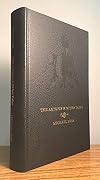
"The Autopsy" (1980) follows the exploits of a pathologist who attempts to determine what killed a group of miners in an isolated Colorado hamlet. It's one of the most beloved horror/sci-fi stories in the history of both genres, having received nominations for the Hugo Award and the Nebula Award. Readers are smitten with it; aficionados can't wait to recommend it to newbies.
So there must be some reason I didn't like it. Maybe I'm just an old grouch, right? I've wrestled sincerely with the show more question and, yes, there is a reason that I emphatically disliked "The Autopsy": it takes a pretty good pulp horror premise and ruins it with ludicrous overwriting. Slathers it with ten-dollar words that weigh down the story's momentum like a huge rusty anchor. Sometimes a beautifully clear, evocative sentence lights up the page ("In the freezing half-light all movement felt like defiance"); more often than not, Shea's pompous wordiness is self-defeating. In a story of mechanical horror such as this ("mechanical" in the sense that it pertains to physical forces rather than to matters of the spirit), a sense of steady movement isn't just important: it's everything. The story is supposed to sweep me up and carry me along. I don't want to stop in the middle of one gudgy run-on sentence after another to look up forensic terminology.
Two stars for the premise, which is interesting despite the needlessly byzantine execution. I really wanted this one to be more fun than it was. show less
So there must be some reason I didn't like it. Maybe I'm just an old grouch, right? I've wrestled sincerely with the show more question and, yes, there is a reason that I emphatically disliked "The Autopsy": it takes a pretty good pulp horror premise and ruins it with ludicrous overwriting. Slathers it with ten-dollar words that weigh down the story's momentum like a huge rusty anchor. Sometimes a beautifully clear, evocative sentence lights up the page ("In the freezing half-light all movement felt like defiance"); more often than not, Shea's pompous wordiness is self-defeating. In a story of mechanical horror such as this ("mechanical" in the sense that it pertains to physical forces rather than to matters of the spirit), a sense of steady movement isn't just important: it's everything. The story is supposed to sweep me up and carry me along. I don't want to stop in the middle of one gudgy run-on sentence after another to look up forensic terminology.
Two stars for the premise, which is interesting despite the needlessly byzantine execution. I really wanted this one to be more fun than it was. show less
Lists
Awards


You May Also Like


Associated Authors
Statistics
- Works
- 40
- Also by
- 41
- Members
- 1,581
- Popularity
- #16,322
- Rating
- 3.8
- Reviews
- 30
- ISBNs
- 112
- Languages
- 5
- Favorited
- 4