
David Shields
Author of Reality Hunger: A Manifesto
About the Author
David Shields was born in Los Angeles, California on July 22, 1956. He received a bachelor's degree in English literature from Brown University in 1978 and an MFA in fiction from the University of Iowa Writers' Workshop in 1980. He writes both fiction and nonfiction books. His first novel, Heroes, show more was published in 1984. His other works include Black Planet: Facing Race during an NBA Season, The Thing About Life Is That One Day You'll Be Dead, Reality Hunger: A Manifesto, How Literature Saved My Life, and Other People: Takes & Mistakes. Remote: Reflections on Life in the Shadow of Celebrity won the PEN/Revson Award and Dead Languages won the PEN Syndicated Fiction Award. He is the Milliman Distinguished Writer-in-Residence at the University of Washington. (Bowker Author Biography) show less
Image credit: Tom Collicott
Works by David Shields
Fakes: An Anthology of Pseudo-Interviews, Faux-Lectures, Quasi-Letters, "Found" Texts, and Other Fraudulent Artifacts (2012) — Editor/Contributor — 85 copies, 4 reviews
That Thing You Do With Your Mouth: The Sexual Autobiography of Samantha Matthews as Told to David Shields (2015) 36 copies
War Is Beautiful: The New York Times Pictorial Guide to the Glamour of Armed Conflict* (2015) 21 copies
The Rob Roy Kelly American Wood Type Collection: A History and Catalog (2022) — Designer — 18 copies
The Trouble with Men: Reflections on Sex, Love, Marriage, Porn, and Power (2019) 15 copies, 1 review
How We Got Here: Melville Plus Nietzsche Divided by the Square Root of (Allan) Bloom Times Žižek 4 copies
The Private War of J. D. Salinger 3 copies
Associated Works
Writers on Writing, 2: More Collected Essays from the New York Times (2003) — Contributor — 201 copies, 3 reviews
Significant Objects: 100 Extraordinary Stories about Ordinary Things (2012) — Contributor — 64 copies, 1 review
Family Resemblance: An Anthology and Exploration of 8 Hybrid Literary Genres (2015) — Contributor — 25 copies
Conjunctions: 46, Selected Subversions: Essays on the World at Large (2006) — Contributor — 10 copies
Tagged
Common Knowledge
- Birthdate
- 1956-07-22
- Gender
- male
- Education
- Brown University
University of Iowa (Iowa Writers' Workshop) - Occupations
- professor
- Organizations
- University of Washington
Conjunctions - Nationality
- USA
- Places of residence
- Seattle, Washington, USA
- Associated Place (for map)
- Washington, USA
Members
Reviews
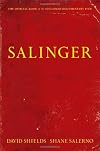
The goose that laid golden eggs can never die in peace.
While I am not now and I never was a J. D. Salinger fan, I don't like it when someone's kicking a person when they're down or digging up corpses for display in order to promote their film on Salinger. And one can't help but be disappointed there's really nothing new or groundbreaking in this Salinger biography that hasn't been covered elsewhere in better written biographies. Fortunately, I've never lost any sleep about this book because show more it is ultimately a book that failed to live up to the hype and commits a disservice to Salinger, to biographers, and to serious readers everywhere. But don't just take my word for it.
Look up your city's paper for their book reviews and see how the critics saw it.
Also, the dependence of this work on (select) oral histories, despite what little that Salinger himself has said or written about himself, implies laziness on the part of the authors to do their job. This being so, the named contributors to this book, such as Joyce Maynard, who contributed far more than the biographers themselves, should be given part authorship credit. Also, there's no index and that would've really helped a lot.
The muddied thesis of this work, that the aspiring-writer Salinger was traumatized by the War, and implicitly by an imperfect childhood that he sought to repeat later in his life, cannot be fully substantiated with the evidence presented in his work. In fact, it could only (begin) to be substantiated if we largely disregard everything in Salinger's childhood, which in this book was reduced to under a dozen pages, and just start from Salinger's WW2 service—which it does.
On the issue of his imperfect childhood that impelled Salinger to date and seek young girls, the biographers, here, focused on Oona O’Neill, as many others have done before. Their story was that when the twenty something Salinger was rejected by O’Neill in favour of Charlie Chaplin, he lost the will to live and was forever traumatized. However, the authors forgot some basic psychology: an individual’s childhood experiences are the things that shape and determine their adult behaviour.
I find it a weak argument and weak claim that a 22-year-old man could be so cripplingly traumatized by a break up, even his first at 22, given the evidence Shields and Salerno have given us. Their argument implies circumstances in a young adult’s childhood, which is beyond what the authors of this biography have given the reader.
A lot happens in the first 22 years of human life, even in the first 18 and 16. Your first fistfight. Your first kiss. Stealing the family car. Losing your virginity. It seems that the basic elements of Salinger’s formative childhood were simply neglected by the biographers to fit their thesis. Instead, we are shown a 22-year-old man with no career, no horizons, and who is desperate to marry a chubby-faced 16-year-old teenager with a world famous writer as her dad. That strikes me of a case of ephebophilia, caused by something that happened earlier in Salinger’s life. That is, it wasn't Oona's singular rejection that traumatized Salinger, which he only found out about in the papers, rather than the usual connections a true boyfriend would've had access to, but the trauma of being him rejected, (again), being stirred. "Again," by what? I dunno, perhaps antisemistism?
Also, this emphasis on O’Neill, like all the other biographers and journalists have done before, repeats an arguably undue burden on O’Neill as the woman who inadvertently destroyed Salinger’s life. The biographers made a big call when they essentially claim or played into the myth that O'Neill was Salinger's Daisy Fay, that Salinger, like Jay Gatsby, left America to die gloriously on the battlefields of Europe, and... quite unexpectedly met the Holocaust. It's such a huge claim that we have to wonder whether it's true. Did the biographers at any time consider that O’Neill and Salinger were just flirting or that O’Neill would never have married Salinger because he was creepy? Nope. Did they consider that she might have deliberately dumped him to destroy him as a writer— the possibly of her free agency in their deterministic dialectic? Nope.
No, the biographers just laid the blame essentially on O’Neill, who was emotionally neglected by her writer father, Noble-prize winner Eugene O’Neill, and her desire to be with the world-famous Charlie Chaplin—who by chance had a very happy marriage with him. Oona O’Neill would never speak about J. D. Salinger, stopping reporters from doing so, as if he was a creep—indeed, had always been a weirdo.
If we must do a biography about an individual, we must start from the beginning. Then we must look at the evidence from then and onwards, and next, through psychoanalysis, form our theses about an individual. This was not accomplished in this biography to their detriment.
Likewise, certain important questions were not asked by the biographers with regards to Salinger's life. Why didn't the biographers examine Salinger's life with respect to antisemitism in his youth? Did antisemitism play a role when Oona O'Neil dumped him? Did Salinger try to pass off as a WASP through life, like calling himself Jerry? What were his thoughts on his socioeconomic class origins? Also, why didn't the biographers elaborate on why Salinger, who was half-Jewish and 1/6 German, married Sylvia Welter, so soon after the war when he was among the first American soldiers to encounter the Holocaust. Sadly, these were unimportant questions for our biographers, as were many others.
While the authors did emphasize with care the need, even socially beneficial need, to protect Salinger's privacy, they too failed in that endeavour. What was accomplished in "Salinger" was a strange sadomasochistic elevation of Salinger the war hero in the first 26 pages and then his tragic, drawn-out destruction into an empty shell of a human in the next 538 pages. Thus, instead of some emotional equilibrium that a dizzying array of conflicting evidence about a person’s life would give us, we are left to pity Salinger.
J. D. Salinger was a great writer, but through this biography, we are left to look at Salinger in bewilderment as a tragic figure, just as we are reminded that his unpublished works will be put on sale in the near future for the commercial vultures that preyed on his life and with his death.
No Rating. (But for LT mechanics, Half.)
P.S. I have deliberately mentioned nothing about something that apparently pervades this book: Shields and Salerno's obsession with Salinger's reluctant testicle. (Sigh! All life was torturous for Salinger—it wounded him so, but no more than the most grievious wound of all: a missing or distended testicle.) In my book, anyone who considers testicular distention as a psychological cause for anything is a crazy loon who desperately clamours for attention. show less
While I am not now and I never was a J. D. Salinger fan, I don't like it when someone's kicking a person when they're down or digging up corpses for display in order to promote their film on Salinger. And one can't help but be disappointed there's really nothing new or groundbreaking in this Salinger biography that hasn't been covered elsewhere in better written biographies. Fortunately, I've never lost any sleep about this book because show more it is ultimately a book that failed to live up to the hype and commits a disservice to Salinger, to biographers, and to serious readers everywhere. But don't just take my word for it.
Look up your city's paper for their book reviews and see how the critics saw it.
Also, the dependence of this work on (select) oral histories, despite what little that Salinger himself has said or written about himself, implies laziness on the part of the authors to do their job. This being so, the named contributors to this book, such as Joyce Maynard, who contributed far more than the biographers themselves, should be given part authorship credit. Also, there's no index and that would've really helped a lot.
The muddied thesis of this work, that the aspiring-writer Salinger was traumatized by the War, and implicitly by an imperfect childhood that he sought to repeat later in his life, cannot be fully substantiated with the evidence presented in his work. In fact, it could only (begin) to be substantiated if we largely disregard everything in Salinger's childhood, which in this book was reduced to under a dozen pages, and just start from Salinger's WW2 service—which it does.
On the issue of his imperfect childhood that impelled Salinger to date and seek young girls, the biographers, here, focused on Oona O’Neill, as many others have done before. Their story was that when the twenty something Salinger was rejected by O’Neill in favour of Charlie Chaplin, he lost the will to live and was forever traumatized. However, the authors forgot some basic psychology: an individual’s childhood experiences are the things that shape and determine their adult behaviour.
I find it a weak argument and weak claim that a 22-year-old man could be so cripplingly traumatized by a break up, even his first at 22, given the evidence Shields and Salerno have given us. Their argument implies circumstances in a young adult’s childhood, which is beyond what the authors of this biography have given the reader.
A lot happens in the first 22 years of human life, even in the first 18 and 16. Your first fistfight. Your first kiss. Stealing the family car. Losing your virginity. It seems that the basic elements of Salinger’s formative childhood were simply neglected by the biographers to fit their thesis. Instead, we are shown a 22-year-old man with no career, no horizons, and who is desperate to marry a chubby-faced 16-year-old teenager with a world famous writer as her dad. That strikes me of a case of ephebophilia, caused by something that happened earlier in Salinger’s life. That is, it wasn't Oona's singular rejection that traumatized Salinger, which he only found out about in the papers, rather than the usual connections a true boyfriend would've had access to, but the trauma of being him rejected, (again), being stirred. "Again," by what? I dunno, perhaps antisemistism?
Also, this emphasis on O’Neill, like all the other biographers and journalists have done before, repeats an arguably undue burden on O’Neill as the woman who inadvertently destroyed Salinger’s life. The biographers made a big call when they essentially claim or played into the myth that O'Neill was Salinger's Daisy Fay, that Salinger, like Jay Gatsby, left America to die gloriously on the battlefields of Europe, and... quite unexpectedly met the Holocaust. It's such a huge claim that we have to wonder whether it's true. Did the biographers at any time consider that O’Neill and Salinger were just flirting or that O’Neill would never have married Salinger because he was creepy? Nope. Did they consider that she might have deliberately dumped him to destroy him as a writer— the possibly of her free agency in their deterministic dialectic? Nope.
No, the biographers just laid the blame essentially on O’Neill, who was emotionally neglected by her writer father, Noble-prize winner Eugene O’Neill, and her desire to be with the world-famous Charlie Chaplin—who by chance had a very happy marriage with him. Oona O’Neill would never speak about J. D. Salinger, stopping reporters from doing so, as if he was a creep—indeed, had always been a weirdo.
If we must do a biography about an individual, we must start from the beginning. Then we must look at the evidence from then and onwards, and next, through psychoanalysis, form our theses about an individual. This was not accomplished in this biography to their detriment.
Likewise, certain important questions were not asked by the biographers with regards to Salinger's life. Why didn't the biographers examine Salinger's life with respect to antisemitism in his youth? Did antisemitism play a role when Oona O'Neil dumped him? Did Salinger try to pass off as a WASP through life, like calling himself Jerry? What were his thoughts on his socioeconomic class origins? Also, why didn't the biographers elaborate on why Salinger, who was half-Jewish and 1/6 German, married Sylvia Welter, so soon after the war when he was among the first American soldiers to encounter the Holocaust. Sadly, these were unimportant questions for our biographers, as were many others.
While the authors did emphasize with care the need, even socially beneficial need, to protect Salinger's privacy, they too failed in that endeavour. What was accomplished in "Salinger" was a strange sadomasochistic elevation of Salinger the war hero in the first 26 pages and then his tragic, drawn-out destruction into an empty shell of a human in the next 538 pages. Thus, instead of some emotional equilibrium that a dizzying array of conflicting evidence about a person’s life would give us, we are left to pity Salinger.
J. D. Salinger was a great writer, but through this biography, we are left to look at Salinger in bewilderment as a tragic figure, just as we are reminded that his unpublished works will be put on sale in the near future for the commercial vultures that preyed on his life and with his death.
No Rating. (But for LT mechanics, Half.)
P.S. I have deliberately mentioned nothing about something that apparently pervades this book: Shields and Salerno's obsession with Salinger's reluctant testicle. (Sigh! All life was torturous for Salinger—it wounded him so, but no more than the most grievious wound of all: a missing or distended testicle.) In my book, anyone who considers testicular distention as a psychological cause for anything is a crazy loon who desperately clamours for attention. show less
Gerçeklik Açlığı insanı düşünmeye itmekten fazlasını yapıyor. Uzun zamandır okuduğum en iyi kitaplardan biri.” JONATHAN SAFRAN FOER
Gerçeklik Açlığı, Nietzsche’den Beckett’a, Godard’dan von Trier’e birçok önemli figürü ve Eminem, Larry David, Beastie Boys gibi popüler kültür ikonlarını, tam da artık onu deneyimleyemediği için “gerçeklik” konusunda takıntılı hale gelmiş Facebook ve Google nesliyle buluşturuyor.
David Shields hararetli show more tartışmalara yol açan kitabında, çağdaş sanat ve edebiyatın merkezindeki meselelere çığır açan bir bakış açısıyla yaklaşarak, kurgu-dışı ile kurgu, anlatı ile deneme arasındaki sınırlardan kurtulmayı öneriyor. Shields’a göre, başka şarkılardan alınmış parçalardan oluşan şarkılar, kolajlar, serbestçe alıntılanan metinler ve dijital teknolojiyle üretilmiş sonsuz kopyalar çağında artık bir yapıtın ya da fikrin sahibi olmanın tanımı; gerçekliğin, özgünlüğün anlamı değişiyor, telif hakkı talebi neredeyse bir kutsal kitap ya da efsane üzerinde hak iddia etmeye dönüşüyor. Devir paylaşımların, kendine mal etmenin, hatta “aşırma”nın devri.
Gerçeklik Açlığı, sınırlara meydan okuyarak başka yazarlara ait alıntılardan, aforizmalardan, anekdotlardan serbestçe “faydalanan”, okurları hakikilik, özgünlük ve yaratıcılığa dair geleneksel fikirler üzerine yeniden düşünmeleri için kışkırtan çarpıcı bir manifesto, kendi gerçekliğine sahip yeni bir çağa özgü yeni edebiyat ve sanat formları icat etmek için açık bir davet.
“Gerçeklik Açlığı’nı yeni bitirdim ve beni şaşırttı, mest etti, bozguna uğrattı. Kısacası, aydınlandım. Gerçekten de, önemli ve ileriyi gören bir kitap: Kendi kendini yaratan bir sanat eseri, görkemli, heyecan verici ve acımasız.” show less
Gerçeklik Açlığı, Nietzsche’den Beckett’a, Godard’dan von Trier’e birçok önemli figürü ve Eminem, Larry David, Beastie Boys gibi popüler kültür ikonlarını, tam da artık onu deneyimleyemediği için “gerçeklik” konusunda takıntılı hale gelmiş Facebook ve Google nesliyle buluşturuyor.
David Shields hararetli show more tartışmalara yol açan kitabında, çağdaş sanat ve edebiyatın merkezindeki meselelere çığır açan bir bakış açısıyla yaklaşarak, kurgu-dışı ile kurgu, anlatı ile deneme arasındaki sınırlardan kurtulmayı öneriyor. Shields’a göre, başka şarkılardan alınmış parçalardan oluşan şarkılar, kolajlar, serbestçe alıntılanan metinler ve dijital teknolojiyle üretilmiş sonsuz kopyalar çağında artık bir yapıtın ya da fikrin sahibi olmanın tanımı; gerçekliğin, özgünlüğün anlamı değişiyor, telif hakkı talebi neredeyse bir kutsal kitap ya da efsane üzerinde hak iddia etmeye dönüşüyor. Devir paylaşımların, kendine mal etmenin, hatta “aşırma”nın devri.
Gerçeklik Açlığı, sınırlara meydan okuyarak başka yazarlara ait alıntılardan, aforizmalardan, anekdotlardan serbestçe “faydalanan”, okurları hakikilik, özgünlük ve yaratıcılığa dair geleneksel fikirler üzerine yeniden düşünmeleri için kışkırtan çarpıcı bir manifesto, kendi gerçekliğine sahip yeni bir çağa özgü yeni edebiyat ve sanat formları icat etmek için açık bir davet.
“Gerçeklik Açlığı’nı yeni bitirdim ve beni şaşırttı, mest etti, bozguna uğrattı. Kısacası, aydınlandım. Gerçekten de, önemli ve ileriyi gören bir kitap: Kendi kendini yaratan bir sanat eseri, görkemli, heyecan verici ve acımasız.” show less
There is a kind of portentous playfulness that is in vogue these days. It is not the disingenuous false modesty of the calculatedly ironic. It is not the light-hearted comic jape, satisfied perhaps to be merely play. It is not the tangential take, the oblique angle that reveals much. It is not the one or two-fingered salute to the powers that be. No. It is full of regard, if only self regard. It is grand in its ambitions, or at least its statement of its ambitions. It is deathly serious, show more though burdened by a great fear of seriousness. And it loves more than anything to appropriate, unearned, the portentous pronouncements of others, bouncing from one to another like a log driver delicately stepping across his charges safe so long as he moves on before the log rolls.
Autobiography is all, in the new vogue. Criticism, we’re told, is a form of autobiography. Fiction is really just autobiography. Biography? Right again, it’s also autobiography. And non-fiction – that vast bloomy everything that isn’t just a chronicle of one damn fictional thing after another – non-fiction is autobiography too. Presumably so is this brief review. It’s all about me. Or so, I suppose, David Shields might say.
Undoubtedly there is a spirited freshness about such writing. It can seem electric, if not electrifying. But its energy feels chemical, like the buzz after a short hit of some illicit drug, rather than grounded and substantial. And it quickly, for me at least, becomes tired, and all too quickly tiresome. It is, in the end, a perfect form for the Internet. But its pleasures may not extend to even a book as brief as this one.
That said, there were bits of this book that I enjoyed – a clever phrase, a wry observation here or there. Just not enough to sustain my interest, and certainly not enough either to save my life or end it. show less
Autobiography is all, in the new vogue. Criticism, we’re told, is a form of autobiography. Fiction is really just autobiography. Biography? Right again, it’s also autobiography. And non-fiction – that vast bloomy everything that isn’t just a chronicle of one damn fictional thing after another – non-fiction is autobiography too. Presumably so is this brief review. It’s all about me. Or so, I suppose, David Shields might say.
Undoubtedly there is a spirited freshness about such writing. It can seem electric, if not electrifying. But its energy feels chemical, like the buzz after a short hit of some illicit drug, rather than grounded and substantial. And it quickly, for me at least, becomes tired, and all too quickly tiresome. It is, in the end, a perfect form for the Internet. But its pleasures may not extend to even a book as brief as this one.
That said, there were bits of this book that I enjoyed – a clever phrase, a wry observation here or there. Just not enough to sustain my interest, and certainly not enough either to save my life or end it. show less
[Salinger] by [[David Shields]] and [[Shane Salerno]]
This audiobook was chock full of information on the author's life. I found myself going back often to listen again to much of the information. The authors offered up the information in the form of commentary from many people who knew Salinger personally and also writers and others who benefited from the scholarship that has made up much of what is known of Salinger, who was a most private man. In addition to facts about him, there is show more included speculation about his legacy. The rumors that he spent the 45 years of his self-imposed seclusion writing has been pondered by many writers and scholars on the subject. According to Shields and Salerno, it is a documented fact that Salinger's writing will begin to be released in 2015 and will continue to be released irregularly until 2020, by his son Matthew and his wife at the time of his death Colleen Salinger, the executors of his literary estate. The writings will consist of mainly the continuation of his writings of the Caulfield family and the Glass family.
I found the re-telling of the years that Salinger spent during the war particularly poignant as he was involved in five bloody battles that he survived while many others did not, and that proved both his undoing and probably the basis of much of his writing. Not surprisingly, he experienced PTSD and much of his young life was effectively tainted by the suffering this caused him. His withdrawal from society, and his relationships with the women in his life were tainted by his need to control the circumstances he found himself in rather than adjusting to the situations. If those around him could not adjust themselves to his needs he retreated from any kind of interaction with them. He was a deeply troubled person, but was sought after and cared for by those who did manage to find a way into his cloistered life.
I found it deeply disturbing that [Catcher In the Rye] was connected to so many twisted personalities, such as Mark David Chapman, who shot John Lennon, the young man who shot Rebecca Schaeffer, and Jody Foster's stalker, who eventually attempted to shoot Ronald Regan. They were each discovered to have a copy of Catcher, as though it was their Bible, the handbook they somehow connected to their alienation from society, and the meaning behind the sordid actions they took. I think it was the appeal of the alienated youth, who could not find his niche in the world he found himself in, rather than any subliminal message the story held. Salinger could write perfectly about how it felt to hold one's self apart, to belong nowhere, and to resent the phoniness in others, while sensing that it may be your own inability to be true to yourself that makes you sensitive to the same thing in others. To a man already psychologically wounded by the ravages of war, this would have been a death blow. Given the painful publicity, the survivor's guilt would have been intensified for Salinger. This audiobook chronicles Salinger's life, speculates and validates what is known of his constant seeking for something to anchor him, which would turn out to be the Vedantic religion, which he studied and followed for much of his life. It delivers on all fronts, based as it is on the opinions and observations of so many different people who knew Salinger, or knew either the life of a writer or experienced the war years themselves. It was long, but worth the effort , and I feel I know a great deal about Salinger, the man and the writer, something I knew next to nothing about before listening to the audiobook. I highly recommend it. show less
This audiobook was chock full of information on the author's life. I found myself going back often to listen again to much of the information. The authors offered up the information in the form of commentary from many people who knew Salinger personally and also writers and others who benefited from the scholarship that has made up much of what is known of Salinger, who was a most private man. In addition to facts about him, there is show more included speculation about his legacy. The rumors that he spent the 45 years of his self-imposed seclusion writing has been pondered by many writers and scholars on the subject. According to Shields and Salerno, it is a documented fact that Salinger's writing will begin to be released in 2015 and will continue to be released irregularly until 2020, by his son Matthew and his wife at the time of his death Colleen Salinger, the executors of his literary estate. The writings will consist of mainly the continuation of his writings of the Caulfield family and the Glass family.
I found the re-telling of the years that Salinger spent during the war particularly poignant as he was involved in five bloody battles that he survived while many others did not, and that proved both his undoing and probably the basis of much of his writing. Not surprisingly, he experienced PTSD and much of his young life was effectively tainted by the suffering this caused him. His withdrawal from society, and his relationships with the women in his life were tainted by his need to control the circumstances he found himself in rather than adjusting to the situations. If those around him could not adjust themselves to his needs he retreated from any kind of interaction with them. He was a deeply troubled person, but was sought after and cared for by those who did manage to find a way into his cloistered life.
I found it deeply disturbing that [Catcher In the Rye] was connected to so many twisted personalities, such as Mark David Chapman, who shot John Lennon, the young man who shot Rebecca Schaeffer, and Jody Foster's stalker, who eventually attempted to shoot Ronald Regan. They were each discovered to have a copy of Catcher, as though it was their Bible, the handbook they somehow connected to their alienation from society, and the meaning behind the sordid actions they took. I think it was the appeal of the alienated youth, who could not find his niche in the world he found himself in, rather than any subliminal message the story held. Salinger could write perfectly about how it felt to hold one's self apart, to belong nowhere, and to resent the phoniness in others, while sensing that it may be your own inability to be true to yourself that makes you sensitive to the same thing in others. To a man already psychologically wounded by the ravages of war, this would have been a death blow. Given the painful publicity, the survivor's guilt would have been intensified for Salinger. This audiobook chronicles Salinger's life, speculates and validates what is known of his constant seeking for something to anchor him, which would turn out to be the Vedantic religion, which he studied and followed for much of his life. It delivers on all fronts, based as it is on the opinions and observations of so many different people who knew Salinger, or knew either the life of a writer or experienced the war years themselves. It was long, but worth the effort , and I feel I know a great deal about Salinger, the man and the writer, something I knew next to nothing about before listening to the audiobook. I highly recommend it. show less
Lists
Deathreads (1)
Awards


You May Also Like


Associated Authors
Statistics
- Works
- 33
- Also by
- 10
- Members
- 2,513
- Popularity
- #10,210
- Rating
- 3.4
- Reviews
- 83
- ISBNs
- 131
- Languages
- 7