
Harry Sidebottom
Author of Fire in the East
About the Author
Series
Works by Harry Sidebottom
The Burning Road: The scorching new historical thriller from the Sunday Times bestseller (2021) 32 copies
Il guerriero di Roma: Fuoco a Oriente-Il re dei re-Sole bianco-Il silenzio della spada (2014) 4 copies
The Wolves of the North 1 copy
Lion of the Sun 1 copy
Il ritorno del centurione 1 copy
The Mark of Death 1 copy
Strijder voor Rome 1 copy
King of Kings 1 copy
Associated Works
War and Society in the Roman World (Leicester-Nottingham Studies in Ancient Society) (1993) — Contributor — 53 copies
Tagged
Common Knowledge
- Canonical name
- Sidebottom, Harry
- Gender
- male
- Education
- Corpus Christi College, University of Oxford (D.Phil)
University of Manchester (M.Phil|1982) - Occupations
- historian
professor
author - Organizations
- Merton College, University of Oxford
Lincoln College, University of Oxford (Lecturer in Ancient History) - Agent
- Felicity Bryan Associates Literary Agency
- Short biography
- Cf. http://www.harrysidebottom.co.uk/Biog...
- Nationality
- UK
- Birthplace
- Newmarket, Suffolk, England, UK
- Associated Place (for map)
- England, UK
Members
Reviews
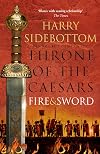
From a speech in the Senate to rouse its members in April 238: "Make no mistake. Open your eyes. Maximinus is on his way. In battle-order, with camps pitched everywhere, he is coming with fire and sword. He is at Aquileia already. His hired killers are already in this very chamber. They are intent on massacre."
This is an enthralling sweep of the tumultuous events from March-June 238 AD and the third exciting installment of Sidebottoms's tetralogy: Throne of the Caesars. It begins with the show more deaths of the Gordians [both father and son], election of the senators Pupienus and Balbinus as co-Emperors; their spurious reasoning: one can take care of military matters and the other control the city. The centerpiece and most of the book is taken up with the Siege of Aquileia, from each antagonist's standpoint--both defenders and attackers. Riots ensue in Rome from the start; the sybaritic Balbinus is unable to put them down. There are more minor subplots involving battles against the Persians and encroaching Goths and one involving an abused wife fleeing from her cruel husband, the son of Maximinus. After murders of Maximinus and the two rebels, the youngster Gordian III is proclaimed emperor.
All through I was confused, not by the names per se, but by who identified with each faction. The List of Characters in the back was a big help! This was perhaps our first introduction to Ballista, the young barbarian about whom the author has written a whole different series. There was not much to admire in any of these venal and ghastly characters. The wily and ambitious Greek Timesithius and his even more ambitious wife were especially repulsive. She pushes him to become the power behind the throne. The only ones I had any sympathy for were the prostitute Caenis [no, the name does not mean "bitch" but is that of a mythological figure] and the die-cutter--both denizens of the Subura. Style was often dry but I could easily picture the scenes and the violence. I liked that sometimes the same scene was told from different viewpoints.
Highly recommended. show less
This is an enthralling sweep of the tumultuous events from March-June 238 AD and the third exciting installment of Sidebottoms's tetralogy: Throne of the Caesars. It begins with the show more deaths of the Gordians [both father and son], election of the senators Pupienus and Balbinus as co-Emperors; their spurious reasoning: one can take care of military matters and the other control the city. The centerpiece and most of the book is taken up with the Siege of Aquileia, from each antagonist's standpoint--both defenders and attackers. Riots ensue in Rome from the start; the sybaritic Balbinus is unable to put them down. There are more minor subplots involving battles against the Persians and encroaching Goths and one involving an abused wife fleeing from her cruel husband, the son of Maximinus. After murders of Maximinus and the two rebels, the youngster Gordian III is proclaimed emperor.
All through I was confused, not by the names per se, but by who identified with each faction. The List of Characters in the back was a big help! This was perhaps our first introduction to Ballista, the young barbarian about whom the author has written a whole different series. There was not much to admire in any of these venal and ghastly characters. The wily and ambitious Greek Timesithius and his even more ambitious wife were especially repulsive. She pushes him to become the power behind the throne. The only ones I had any sympathy for were the prostitute Caenis [no, the name does not mean "bitch" but is that of a mythological figure] and the die-cutter--both denizens of the Subura. Style was often dry but I could easily picture the scenes and the violence. I liked that sometimes the same scene was told from different viewpoints.
Highly recommended. show less
Presenting a millennium of warfare on less than 120 pages is a daunting task. It can be done - if an author establishes a framework and concentrates on key messages. Unfortunately, this author does neither. This book is a poor choice for a reader seeking a fast, general introduction to the topic as the book is badly structured and misses its topic. He shows a vexing tendency of not naming his references in the text (p. 85), "some scholars see hoplite battle in a different way". He lists show more these scholars in the (quite good if biased) further reading section (and a knowledgeable but not the general reader will identify them easily). Read Keegan's History of Warfare for an entertaining primer or Azar Gat's heavier War in Human Civilization for a serious discussion of Ancient warfare.
For a book about Ancient warfare, the author is surprisingly ignorant about the basics of soldiering and military history. It shows right at the start with his obsession with the film Gladiator. Ancient warfare through the eyes of an art history student. His method consists of a free interpretation of single works of art: "This lack (ie a missing beard) of male secondary sexual characteristics juxtaposed with the carefully illustrated male genitals of both opponent and horse creates an impression of femininity." Well, it's all in the eyes of the beholder. Exposing a horseman's "package" is a challenge for a Picasso. But in today's post-modern anything goes, all opinions are equally valid.
The book is filled with other deep insights (p.16): "For example, when inhabitants of the Roman empire looked to the east, unsurprisingly they saw ‘eastern’ cultures." Chapter 2 expands on Roman foreigner and gender stereotypes (relevance?). Chapter 3 titled "war and society" is a cursory look at hoplite warfare, the Roman imperial machine and the "barbarization" of the Late Roman army. The author wonders how the Greek soldiers achieved to get into a phalanx formation. Well, two approaches could have solved this question. Either witness how current soldiers perform a roll call. Or examine the source texts. It all boils down to self-organization based on simple rules (front rank as a position of honor, the right as the most important place, veterans to the front, youngsters in the middle, steady old men at the rear).
Chapter 4 starts with "after 9/11 ..." and offers a cursory overview of some historians' and philosopher's thoughts about war (again without rigor or framework). Chapter 5 "strategy" argues that some of the Ancient commanders' world conquest plans were more than figments. A little familiarity with recent dictator's ideas (such as Napoleon's plans to conquer India) might have led to a more realistic assessment. He then presents a potted version of Luttwak's Roman grand strategy as well as logistics - with plenty of howlers, eg "one type of expense incurred in modern wars was not always present in the ancient world: paying the troops" (p.74). Chapter 6 "fighting" is a Keeganesque attempt which rapidly breaks down in a hyperventilating presentation of a hoplite and Macedonian phalanx, the Roman legionary, cavalry, motivation, siege and naval warfare. It reads like a student paper relying on a limited set of sources. Chapter 7 returns to the Western Way of War and Gladiator. Presenting first the author's interpretation of some illustrations from Marc Aurel's column, it ends in rambling thoughts about the Western Way of War (p. 128): "It is much better, and safer, to see the ‘Western Way of War’ for what it is: a long-lived, highly adaptable, and powerful ideology. The Western Way of War is constantly reinvented, as, of course, it has been in this book." I concur with Sidebottom that the Western Way of War is a historically doubtful concept. Ideology has little to do with science, as does reinvention and facts. So Sidebottom's critique of Hanson applies to him too. Too much interpretation based on too little data. Read at your own peril. show less
For a book about Ancient warfare, the author is surprisingly ignorant about the basics of soldiering and military history. It shows right at the start with his obsession with the film Gladiator. Ancient warfare through the eyes of an art history student. His method consists of a free interpretation of single works of art: "This lack (ie a missing beard) of male secondary sexual characteristics juxtaposed with the carefully illustrated male genitals of both opponent and horse creates an impression of femininity." Well, it's all in the eyes of the beholder. Exposing a horseman's "package" is a challenge for a Picasso. But in today's post-modern anything goes, all opinions are equally valid.
The book is filled with other deep insights (p.16): "For example, when inhabitants of the Roman empire looked to the east, unsurprisingly they saw ‘eastern’ cultures." Chapter 2 expands on Roman foreigner and gender stereotypes (relevance?). Chapter 3 titled "war and society" is a cursory look at hoplite warfare, the Roman imperial machine and the "barbarization" of the Late Roman army. The author wonders how the Greek soldiers achieved to get into a phalanx formation. Well, two approaches could have solved this question. Either witness how current soldiers perform a roll call. Or examine the source texts. It all boils down to self-organization based on simple rules (front rank as a position of honor, the right as the most important place, veterans to the front, youngsters in the middle, steady old men at the rear).
Chapter 4 starts with "after 9/11 ..." and offers a cursory overview of some historians' and philosopher's thoughts about war (again without rigor or framework). Chapter 5 "strategy" argues that some of the Ancient commanders' world conquest plans were more than figments. A little familiarity with recent dictator's ideas (such as Napoleon's plans to conquer India) might have led to a more realistic assessment. He then presents a potted version of Luttwak's Roman grand strategy as well as logistics - with plenty of howlers, eg "one type of expense incurred in modern wars was not always present in the ancient world: paying the troops" (p.74). Chapter 6 "fighting" is a Keeganesque attempt which rapidly breaks down in a hyperventilating presentation of a hoplite and Macedonian phalanx, the Roman legionary, cavalry, motivation, siege and naval warfare. It reads like a student paper relying on a limited set of sources. Chapter 7 returns to the Western Way of War and Gladiator. Presenting first the author's interpretation of some illustrations from Marc Aurel's column, it ends in rambling thoughts about the Western Way of War (p. 128): "It is much better, and safer, to see the ‘Western Way of War’ for what it is: a long-lived, highly adaptable, and powerful ideology. The Western Way of War is constantly reinvented, as, of course, it has been in this book." I concur with Sidebottom that the Western Way of War is a historically doubtful concept. Ideology has little to do with science, as does reinvention and facts. So Sidebottom's critique of Hanson applies to him too. Too much interpretation based on too little data. Read at your own peril. show less
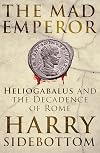
This arrived as a Christmas present. I am not sure I would have acquired for myself, but enjoyed it a lot. It inspired me to go back to the Historia Augusta.
Sidebottom is both an Oxford don in ancient history and a historical novelist; both show in The Mad Emperor. He tells a good story about a truly crazy character, but also manages to discuss the ancient sources and a good many historical problems in reconstructing the life of Heliobabalus and his family. The third century is not really my show more period, but I know enough to judge the quality of Sidebottom's book and it is quite high. I especially enjoy his snarky and spot on comments about what scholars commonly believe, as he demonstrates that they aren't looking very carefully at the data that has survived. My only complaint is that I had to go to the publisher's website to download the endnotes and bibliography. O tempora, o mores! show less
Sidebottom is both an Oxford don in ancient history and a historical novelist; both show in The Mad Emperor. He tells a good story about a truly crazy character, but also manages to discuss the ancient sources and a good many historical problems in reconstructing the life of Heliobabalus and his family. The third century is not really my show more period, but I know enough to judge the quality of Sidebottom's book and it is quite high. I especially enjoy his snarky and spot on comments about what scholars commonly believe, as he demonstrates that they aren't looking very carefully at the data that has survived. My only complaint is that I had to go to the publisher's website to download the endnotes and bibliography. O tempora, o mores! show less
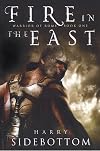
I came to this from the author's excellent Throne of the Caesars series. As a first book in this series, a lot of it was introduction to the characters, time and place, although we've met Ballista before. Years have passed since the death of Maximinus Thrax and Aquileia; this story places us in the reign of Valerian, years later. Ballista strikes me as an "outsider" who struggles to fit in, much as the characters of Gillian Bradshaw. Perusing the list of characters and recognizing some names show more from Throne of the Caesars, I wondered: are these the same people, but a few years on? Not much originality in the cover: the same ubiquitous Roman soldier. Can't any publisher come up with something more striking for Roman military novels?
I've seen other people's reviews and many complaints about how slowly the book begins, with many details of excruciating [to them] detail. Sometimes I enjoy a slow-burner--pun, based on the title :) -- with all the asides and tidbits of details. I didn't read the novel for the siege only, but enjoyed the journey to get to Arete and of course the final siege and conflagration. Arete lay very close to the Roman/Persian border. Ballista has been given orders by the emperor to prepare defenses and finally to defend the city from the Sassanid Persians. He can ask for extra troops from other cities and levy citizens. The emperor promises to send reinforcements. There were many exciting incidents: a storm at sea, fight with Gothic pirates, then various skirmishes, extramural missions and the final siege and its aftermath. Someone is a traitor. Near the end Ballista muses: Is [the outcome] my fault? Did I concentrate so much on the Sassanid siege works that I did not pay enough attention to the possibility of treachery? ... would clues have been there? Would I have seen them?
The first time through I read it solely for the adventure but when I reread I concentrated more on some of the loose ends, motivations I feel the author didn't explain. Who killed Scribonius Mucianus and why? One culprit or two? What was the blackmail surrounding Turpio, which he didn't explain and Ballista never pushed? Who sabotaged the armory? What was Acilius Glabrio's motivation in giving the perfume for Ballista's bath since the two hated each other? I feel there were genuine but subtle clues, also red herrings. I do have my suspicions, but....
I felt like the city of Arete was a thinly-disguised Dura-Europos: http://dura-europos.com/
put into a fictional context. In the author's notes, he states he DID base his fictional city on it. I felt like this novel was several cuts above any Roman potboilers flooding the market, due to the construction of the story and the author's impeccable historicity. The Ballista name was silly, but there WAS a historical Ballista.
Most highly recommended. (less) show less
I've seen other people's reviews and many complaints about how slowly the book begins, with many details of excruciating [to them] detail. Sometimes I enjoy a slow-burner--pun, based on the title :) -- with all the asides and tidbits of details. I didn't read the novel for the siege only, but enjoyed the journey to get to Arete and of course the final siege and conflagration. Arete lay very close to the Roman/Persian border. Ballista has been given orders by the emperor to prepare defenses and finally to defend the city from the Sassanid Persians. He can ask for extra troops from other cities and levy citizens. The emperor promises to send reinforcements. There were many exciting incidents: a storm at sea, fight with Gothic pirates, then various skirmishes, extramural missions and the final siege and its aftermath. Someone is a traitor. Near the end Ballista muses: Is [the outcome] my fault? Did I concentrate so much on the Sassanid siege works that I did not pay enough attention to the possibility of treachery? ... would clues have been there? Would I have seen them?
The first time through I read it solely for the adventure but when I reread I concentrated more on some of the loose ends, motivations I feel the author didn't explain. Who killed Scribonius Mucianus and why? One culprit or two? What was the blackmail surrounding Turpio, which he didn't explain and Ballista never pushed? Who sabotaged the armory? What was Acilius Glabrio's motivation in giving the perfume for Ballista's bath since the two hated each other? I feel there were genuine but subtle clues, also red herrings. I do have my suspicions, but....
I felt like the city of Arete was a thinly-disguised Dura-Europos: http://dura-europos.com/
put into a fictional context. In the author's notes, he states he DID base his fictional city on it. I felt like this novel was several cuts above any Roman potboilers flooding the market, due to the construction of the story and the author's impeccable historicity. The Ballista name was silly, but there WAS a historical Ballista.
Most highly recommended. (less) show less
Lists
Awards


You May Also Like


Associated Authors
Statistics
- Works
- 42
- Also by
- 4
- Members
- 2,153
- Popularity
- #11,941
- Rating
- 3.7
- Reviews
- 51
- ISBNs
- 265
- Languages
- 9