
Daniel Sugerman (1954–2005)
Author of No One Here Gets Out Alive
About the Author
Image credit: Danny Sugerman
Works by Daniel Sugerman
Tagged
Common Knowledge
- Canonical name
- Sugerman, Daniel
- Legal name
- Sugerman, Daniel Stephen
- Birthdate
- 1954-10-11
- Date of death
- 2005-01-05
- Gender
- male
- Occupations
- journalist
biographer
band manager
music producer
lyricist - Organizations
- Rolling Stone
- Relationships
- Hall, Fawn (spouse)
Pop, Iggy (client)
The Doors (clients) - Nationality
- USA
- Birthplace
- Los Angeles, California, USA
- Places of residence
- Los Angeles, California, USA
- Burial location
- Westwood Village Memorial Park Cemetery, Los Angeles, California, USA
- Associated Place (for map)
- Los Angeles, California, USA
Members
Reviews

I read this as a young man during a short-lived, coming-of-age, drug experimenting, collegiate-Doors phase in my life, and found this rock and roll biography of lust and loss to be quite the scintillating page turner—even juicier, I'd say, than freshly squeezed navel oranges. Next to No One Here Gets Out Alive, also co-authored by Danny Sugerman, I can't think of a better insider's glimpse into the sordidness orbiting Jim Morrision and his psychedelic entourage in the late Sixties and show more early Seventies. Danny Sugerman was there, allowed inside the inner Door's circle, and recorded some of the funniest, sublimest moments in rock history...and some of its saddest.
Sugerman's autobiographical tale of teenage success and excess moves beyond Morrison's mythical death in Paris and follows the sad fate of his long-time girlfriend, Pamela Courson, as well, into the mid-Seventies, culminating in Courson's similar—if significantly less mythical—junky's demise. Sugerman was an excellent writer for one so young: an unblinking reporter unafraid to tell the truth even though the truth would cost him. He took advantage of the opportunity afforded him that most young would-be writers could never dream of—becoming friends with the Lizard King, Mr. Mojo Risin' and The Doors—without succumbing to the temptation to exploit for titillation's sake his insider's access to the band. The band came to like Sugerman so much that he became their manager.
Unfortunately, easy access to Morrison meant easy access to hard drugs, and Danny Sugerman was deep inside a harrowing heroin addiction by the time most of his peers were in college or dodging the Draft.
After Morrison's death in Paris on July 3, 1971, the three remaining Doors—Ray Manzarek, Robbie Krieger, John Densmore—decided to make a go of it as a band without a replacement lead singer, just the three of them, and Sugerman did a yeoman's job managing and championing them as best he could. Under Sugerman's helm, the band recorded two more albums, 1971s Other Voices and 1972s Full Circle, the former was released a mere six months after L.A. Woman and charted in the Top 40 in both the United States and Canada, while the latter peaked at #68 in the States and #26 in Canada the following year.
The Doors' breakup in 1973 was like a second death of the band for Sugerman, a second loss after Morrison's overdose. With no band to manage, Sugerman had no sense of purpose or self worth, and spiraled into a self-destructive drug binge that rivaled his friend and idol's, Morrison's, plunge toward an early death. But Sugerman found sobriety and Buddhism a few years later. Glad he did. Read how he did it in Wonderland Avenue: Tales of Glamour and Excess.
Despite all that early excess, Danny Sugerman ended up living 23 years longer than Jim Morrison did. He died from lung cancer at the age of 50, on January 5th, 2005. show less
Sugerman's autobiographical tale of teenage success and excess moves beyond Morrison's mythical death in Paris and follows the sad fate of his long-time girlfriend, Pamela Courson, as well, into the mid-Seventies, culminating in Courson's similar—if significantly less mythical—junky's demise. Sugerman was an excellent writer for one so young: an unblinking reporter unafraid to tell the truth even though the truth would cost him. He took advantage of the opportunity afforded him that most young would-be writers could never dream of—becoming friends with the Lizard King, Mr. Mojo Risin' and The Doors—without succumbing to the temptation to exploit for titillation's sake his insider's access to the band. The band came to like Sugerman so much that he became their manager.
Unfortunately, easy access to Morrison meant easy access to hard drugs, and Danny Sugerman was deep inside a harrowing heroin addiction by the time most of his peers were in college or dodging the Draft.
After Morrison's death in Paris on July 3, 1971, the three remaining Doors—Ray Manzarek, Robbie Krieger, John Densmore—decided to make a go of it as a band without a replacement lead singer, just the three of them, and Sugerman did a yeoman's job managing and championing them as best he could. Under Sugerman's helm, the band recorded two more albums, 1971s Other Voices and 1972s Full Circle, the former was released a mere six months after L.A. Woman and charted in the Top 40 in both the United States and Canada, while the latter peaked at #68 in the States and #26 in Canada the following year.
The Doors' breakup in 1973 was like a second death of the band for Sugerman, a second loss after Morrison's overdose. With no band to manage, Sugerman had no sense of purpose or self worth, and spiraled into a self-destructive drug binge that rivaled his friend and idol's, Morrison's, plunge toward an early death. But Sugerman found sobriety and Buddhism a few years later. Glad he did. Read how he did it in Wonderland Avenue: Tales of Glamour and Excess.
Despite all that early excess, Danny Sugerman ended up living 23 years longer than Jim Morrison did. He died from lung cancer at the age of 50, on January 5th, 2005. show less
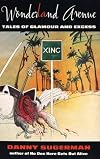
Realizing that I know a lot of what I think I know about addiction from first reading this book decades ago. Kid brother type to Jim Morrison, after Morrison's death, manager to Iggy Pop and Ray Manzarek, Sugerman's memoir is as vivid, detailed, enthusiastic and harrowing as I remember.
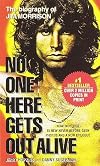
Rock biographies can be wonderful things - Guralnick's two volume life of the king Last Train to Memphis: The Rise of Elvis Presley and Careless Love: The Unmaking of Elvis Presley; the Gillmans' Alias David Bowie; and anything by Lester Bangs rank amongst the best biographies written about anyone - but despite having an undoubtedly fascinating subject in Jim Morrison and good pedigree in the Rolling Stone credentials of its authors, No One Gets Out Of Here Alive fails to impress on any show more level.
For me a decent biography has to have a thesis: A (perhaps controversial) view of its subject that the authors, having immersed themselves in research, can present, backed by evidence, to put a new perspective or shed some new light on a familiar subject: to tell a new story for a casual reader. Hopkins and Sugarman make no such effort: Morrison is portrayed as a clever, well-read alcoholic with an authority problem and a pretty apparent (but entirely unexplored) general social unease. The events of his life are thus trotted out is a somewhat patchy fashion, without the attempt to stitch together some overlying narrative or explanation where it feels one is called for: after all this phenomenon still occupies some (diminishing) part of the collective consciousness nearly forty years later. Yet James Morrison comes across as no more worthwhile or interesting a figure than Robbie Williams or Amy Winehouse, and while that may be true, I doubt it, and it doesn't explain the eerie and evocative content of nearly all the Doors' records. I can't imagine a Robbie Williams over the opening credits of Apocalypse Now, nor coming up with an album closer like Maggie McGill or Riders on the Storm.
This book doesn't even pretend to be a story about the rest of the band, and therefore leaves this fascinating artifact we still know as The Doors pretty much uninvestigated, let alone unexplained. Ray Manzarek is, at least, a peripheral figure: poor Robby Krieger and particularly John Densmore are barely mentioned, and the relationships, dynamics and creative processes of the band - which led to some undeniably memorable and haunting music, after all - are wholly unexplored. In any case Jim Morrison, even in his own right, can't be understood properly except through that prism, so this feels to me to be a dramatic failing.
Lastly, Hopkins and Sugarman indulge in absurd speculation about Morrison's demise - or more accurately the lack of evidence for it. Yet all of Morrison's behaviour before his, er "disappearance" - as patiently documented in this volume - points to exactly the sort of early death he apparently suffered, and the idea that such a publicity seeking (and utterly recognisable) drunkard could suddenly, miraculously, vanish without trace from the entire planet's conscience simply beggars belief.
There must be more rewarding accounts of The Doors than this. show less
For me a decent biography has to have a thesis: A (perhaps controversial) view of its subject that the authors, having immersed themselves in research, can present, backed by evidence, to put a new perspective or shed some new light on a familiar subject: to tell a new story for a casual reader. Hopkins and Sugarman make no such effort: Morrison is portrayed as a clever, well-read alcoholic with an authority problem and a pretty apparent (but entirely unexplored) general social unease. The events of his life are thus trotted out is a somewhat patchy fashion, without the attempt to stitch together some overlying narrative or explanation where it feels one is called for: after all this phenomenon still occupies some (diminishing) part of the collective consciousness nearly forty years later. Yet James Morrison comes across as no more worthwhile or interesting a figure than Robbie Williams or Amy Winehouse, and while that may be true, I doubt it, and it doesn't explain the eerie and evocative content of nearly all the Doors' records. I can't imagine a Robbie Williams over the opening credits of Apocalypse Now, nor coming up with an album closer like Maggie McGill or Riders on the Storm.
This book doesn't even pretend to be a story about the rest of the band, and therefore leaves this fascinating artifact we still know as The Doors pretty much uninvestigated, let alone unexplained. Ray Manzarek is, at least, a peripheral figure: poor Robby Krieger and particularly John Densmore are barely mentioned, and the relationships, dynamics and creative processes of the band - which led to some undeniably memorable and haunting music, after all - are wholly unexplored. In any case Jim Morrison, even in his own right, can't be understood properly except through that prism, so this feels to me to be a dramatic failing.
Lastly, Hopkins and Sugarman indulge in absurd speculation about Morrison's demise - or more accurately the lack of evidence for it. Yet all of Morrison's behaviour before his, er "disappearance" - as patiently documented in this volume - points to exactly the sort of early death he apparently suffered, and the idea that such a publicity seeking (and utterly recognisable) drunkard could suddenly, miraculously, vanish without trace from the entire planet's conscience simply beggars belief.
There must be more rewarding accounts of The Doors than this. show less

I like to think about what Jim Morrison might have done with the rest of his life if it’s true he faked his death to escape. Painter? Poet? Philosophy teacher?
I’d like his disapproving Dad to know that I’m almost 60 and I can remember so many Doors songs because of the deep and weird lyrics delivered in that soulful voice. There was plenty of talent there, Admiral. Too bad you cared about hair length more than you did your son.
I’d like his disapproving Dad to know that I’m almost 60 and I can remember so many Doors songs because of the deep and weird lyrics delivered in that soulful voice. There was plenty of talent there, Admiral. Too bad you cared about hair length more than you did your son.
Lists
You May Also Like


Associated Authors
Statistics
- Works
- 6
- Members
- 2,555
- Popularity
- #10,048
- Rating
- 3.7
- Reviews
- 30
- ISBNs
- 78
- Languages
- 11
- Favorited
- 1