
Evan Thomas
Author of The Wise Men: Six Friends and the World They Made
About the Author
Evan Thomas is the author of several bestselling works of history and biography, including Sea of Thunder. He was a writer and editor at Time and Newsweek for more than thirty years, and he is frequently a commentator on television and radio. He teaches at Princeton University and lives in show more Washington, D.C. www.evanthomasbooks.com show less
Image credit: reading at Annapolis Book Festival By Slowking4 - Own work, GFDL 1.2, https://commons.wikimedia.org/w/index.php?curid=68633867
Series
Works by Evan Thomas
Sea of Thunder: Four Commanders and the Last Great Naval Campaign, 1941-1945 (2006) 729 copies, 12 reviews
The War Lovers: Roosevelt, Lodge, Hearst, and the Rush to Empire, 1898 (2010) 503 copies, 12 reviews
Road to Surrender: Three Men and the Countdown to the End of World War II (2023) 188 copies, 7 reviews
The Man to See: Edward Bennett Williams: Ultimate Insider; Legendary Trial Lawyer (1991) 98 copies, 1 review
"A long time coming" : the inspiring, combative 2008 campaign and the historic election of Barack Obama (2009) 79 copies, 3 reviews
Playbook 2012: The Right Fights Back (Politico Inside Election 2012) (Kindle Single) (2011) 20 copies, 2 reviews
Truman's War 1 copy
Ambulance in Africa 1 copy
Associated Works
Booknotes: America's Finest Authors on Reading, Writing, and the Power of Ideas (1997) — Contributor — 458 copies, 5 reviews
The Battle for Leyte Gulf: The Incredible Story of World War II's Largest Naval Battle (1947) — Foreword, some editions — 178 copies
Tagged
Common Knowledge
- Legal name
- Thomas, Evan Welling, III
- Birthdate
- 1951-04-25
- Gender
- male
- Education
- University of Virginia (JD)
Harvard College (AB) - Occupations
- journalist
editor
writer - Organizations
- Newsweek
Time magazine - Agent
- Amanda Urban
- Relationships
- Thomas, Norman (grandfather)
Thomas, Osceola (spouse)
Thomas, Louisa (daughter) - Nationality
- USA
- Birthplace
- Huntington, New York, USA
- Places of residence
- Huntington, New York, USA
Washington, D.C., USA
Cambridge, Massachusetts, USA
Charlottesville, Virginia, USA
Cold Spring Harbor, New York, USA - Associated Place (for map)
- USA
Members
Reviews
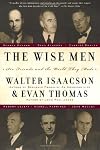
The Wise Men, while an enlightening history of US foreign policy is a frustrating read.
It is the history of the creation of the US foreign policy establishment, its heyday, and its dissolution in the Reagan years. It is told through the biographies of six friends who formed the core of the establishment.
Each were remarkable men. Perhaps the most famous of them were Secretary of State Dean Acheson and the roving millionaire diplomat and once Governor of New York, Averell Harriman, son of the show more the 19th century railroad robber baron, E.H. Harriman.
Its biggest flaw is the absence of context for major events.
We enter the innermost conversations of US presidents, their military and diplomatic advisors.
The book’s high point is really the debate amongst war planners on what to do about the advancing Soviet armies in WWII. Despite wartime agreements Franklin Roosevelt never really pinned Stalin down on what he planned to do once Germany was defeated.
It’s one of the great turning points in history and was fun to read. What Stalin is doing, what Stalin might do, but there is no supporting research here about what the other side was actually thinking.
This book was first published in 1986 and we know so much more about the nascent Soviet Union than we did back then. This book really could stand some updating. For one thing we certainly know that Stalin was about self-preservation first.
American policy makers were scratching their heads over the intentions of the Communists, or were they Russians first and Communists second. Wait a minute, Stalin was Georgian, not Russian. Or perhaps more troubling, was the Soviet Union being being run by a criminal conspiracy that neither well-meaning Communists nor ordinary Russians approved of.
Any or all of these conclusions could have influenced American behaviour.
American policy makers certainly had some reason to believe the Soviet Union wouldn’t stop at Berlin. They had brutally butchered 22,000 Polish officers and intelligentsia in the Katyn Forest in April and May of 1940.
They were avowedly opponents of capitalism.
The extent of Stalin’s paranoia wasn’t fully known at the time, but the Western Allies gave him good reason to be paranoid if he wasn’t before:
1. They secretly developed first the A-Bomb then the Hydrogen bomb behind his back. (They didn’t realize a spy had given the Russians a heads up.)
2. No sooner had they defeated Germany than they were talking about re-arming Germany in the war’s aftermath.
3. They invented NATO to unite Western European nations against the Soviet Union and its satellites.
4. In the Truman years the Americans anointed themselves defenders of freedom around the world...even though knew they didn’t have the resources nor the commitment of Congress to make it happen.
5. The Marshall Plan helped rebuild Western Europe but left Eastern Europe a smoldering dump.
6. They were leaving thousands of troops in Western Europe even though the war was over.
7. They were actively recruiting German rocket experts, most notably Werner von Braun.
8. They were also recruiting German spies, incl. senior spies who had worked for the Nazis.
That was the Truman Doctrine. Self-appointed defenders of freedom.
Then they drew a line somewhere in the Pacific as their security perimeter. Unfortunately, that perimeter didn’t include South Korea and that blunder gave the Soviets and their North Korean clients reason to believe America would not come to South Korea’s defence. Thus the Korean War.
But the authors say nothing about what the Russians were thinking about Korea. Or about Laos. Or what Ho Chi Minh thought about the Chinese Communists north of the border.
And there was only fleeting discussion of CIA-hatched plots to keep countries out of the hands of the Soviets. Italy. Guatemala. Iran. Chile. Bay of Pigs. Funny how the decision to invade Cuba was left out of the book. It was on the Republican’s watch so what the hey. So much for the defenders of freedom.
The authors of this book would probably agree that the western allies time and time again overestimated the Soviet leadership. Stalin ruled his empire with fear. He emerged from the 1930’s having decimated the population of Ukraine with starvation and having slaughtered known and imagined political opponents.
In fact, Stalin’s team were lousy at feeding the population, at preparing for Nazi aggression, and building their foreign reserves. In their march westward they tore up Eastern European railways and industrial plants and left the Warsaw resistors to their fate as the German regiments tore them to pieces with Stalin’s divisions waiting for the dust to settle.
It was a terrible system and the disaster at Chernobyl sealed its fate.
The authors were happy to bury Lyndon Johnson under the debacle of Vietnam. Yes, it was self-inflicted. But the foreign-policy establishment really let him down. We’ll have to wait for Robert Caro’s next volume of The Years of Lyndon Johnson to get a better telling.
There is yet one more part of the story which seems little editorialized by the authors, and that is the distain for which the establishment bureaucrats hold the elected members of Congress.
Now given the hours some of them spent testifying in Congress in front of the red-baiting Sen. Joe McCarthy in the 1950’s, the distain and outright hatred for some of them is completely understandable. But on another level, it is reprehensible if you believe in the idea of self-government by the people.
It is nothing for the authors to praise or blame the Executive Branch for action on foreign policy. They assume it is perfectly ok for the President to make policies which have monumental impact on the budget of the Federal Government and the commitment of its soldiers.
In their minds it is no usurpation of authority for the Executive Branch to take these steps, and go cap in hand to Congress afterward for the spending authority. But as we see in this book, there is never any open discussion of ends and means on these issues.
The authors obscure the background of the Cuban Missile Crisis, an important part of which was the placing of Jupiter missiles in Turkey and they ignore much of the backchannel negotiations possibly because it wasn’t done by the heroes of the book.
The American electorate, somewhat intoxicated by the victory of WWII, followed somewhat blindly into the wars that followed. The authors blithely blame the isolationists for keeping America from taking its rightly place at the head of the community of nations.
Donald Trump is unilaterally ending that place of leadership to the horror of the modern day establishment. But his motivations for doing so are probably more destructive than anything tried before.
Books like this also make you wonder about the limits of sovereignty. Foreign policy is if nothing else, a means with which to project one sovereignty abroad. How helpful was that exercise if today we see the true limits of sovereignty? No obvious way to contain a pandemic. No obvious way to contain international crime. No obvious way to attack climate warming in a concerted global effort.
The allies fighting Nazism gave up a sterling chance to create global cooperation. Instead of competing to build nuclear arsenals NATO and the Soviet Union could have used that cooperation to build lasting institutions far more effective than the United Nations.
They tried it with nuclear test bans and non-proliferation treaties. They should have taken it much further.
All it required was giving up a modicum of sovereignty for the collective good. These “wise men” really could have done more. And they could have used a few wise women.
A new era began with the fall of the Soviet Union in 1989 and, once again, a brief period when Americans were intoxicated with the smell of success. They won the Cold War.
And maybe the seeds the Wise Men had planted flowered after all.
But Putin? Really? show less
It is the history of the creation of the US foreign policy establishment, its heyday, and its dissolution in the Reagan years. It is told through the biographies of six friends who formed the core of the establishment.
Each were remarkable men. Perhaps the most famous of them were Secretary of State Dean Acheson and the roving millionaire diplomat and once Governor of New York, Averell Harriman, son of the show more the 19th century railroad robber baron, E.H. Harriman.
Its biggest flaw is the absence of context for major events.
We enter the innermost conversations of US presidents, their military and diplomatic advisors.
The book’s high point is really the debate amongst war planners on what to do about the advancing Soviet armies in WWII. Despite wartime agreements Franklin Roosevelt never really pinned Stalin down on what he planned to do once Germany was defeated.
It’s one of the great turning points in history and was fun to read. What Stalin is doing, what Stalin might do, but there is no supporting research here about what the other side was actually thinking.
This book was first published in 1986 and we know so much more about the nascent Soviet Union than we did back then. This book really could stand some updating. For one thing we certainly know that Stalin was about self-preservation first.
American policy makers were scratching their heads over the intentions of the Communists, or were they Russians first and Communists second. Wait a minute, Stalin was Georgian, not Russian. Or perhaps more troubling, was the Soviet Union being being run by a criminal conspiracy that neither well-meaning Communists nor ordinary Russians approved of.
Any or all of these conclusions could have influenced American behaviour.
American policy makers certainly had some reason to believe the Soviet Union wouldn’t stop at Berlin. They had brutally butchered 22,000 Polish officers and intelligentsia in the Katyn Forest in April and May of 1940.
They were avowedly opponents of capitalism.
The extent of Stalin’s paranoia wasn’t fully known at the time, but the Western Allies gave him good reason to be paranoid if he wasn’t before:
1. They secretly developed first the A-Bomb then the Hydrogen bomb behind his back. (They didn’t realize a spy had given the Russians a heads up.)
2. No sooner had they defeated Germany than they were talking about re-arming Germany in the war’s aftermath.
3. They invented NATO to unite Western European nations against the Soviet Union and its satellites.
4. In the Truman years the Americans anointed themselves defenders of freedom around the world...even though knew they didn’t have the resources nor the commitment of Congress to make it happen.
5. The Marshall Plan helped rebuild Western Europe but left Eastern Europe a smoldering dump.
6. They were leaving thousands of troops in Western Europe even though the war was over.
7. They were actively recruiting German rocket experts, most notably Werner von Braun.
8. They were also recruiting German spies, incl. senior spies who had worked for the Nazis.
That was the Truman Doctrine. Self-appointed defenders of freedom.
Then they drew a line somewhere in the Pacific as their security perimeter. Unfortunately, that perimeter didn’t include South Korea and that blunder gave the Soviets and their North Korean clients reason to believe America would not come to South Korea’s defence. Thus the Korean War.
But the authors say nothing about what the Russians were thinking about Korea. Or about Laos. Or what Ho Chi Minh thought about the Chinese Communists north of the border.
And there was only fleeting discussion of CIA-hatched plots to keep countries out of the hands of the Soviets. Italy. Guatemala. Iran. Chile. Bay of Pigs. Funny how the decision to invade Cuba was left out of the book. It was on the Republican’s watch so what the hey. So much for the defenders of freedom.
The authors of this book would probably agree that the western allies time and time again overestimated the Soviet leadership. Stalin ruled his empire with fear. He emerged from the 1930’s having decimated the population of Ukraine with starvation and having slaughtered known and imagined political opponents.
In fact, Stalin’s team were lousy at feeding the population, at preparing for Nazi aggression, and building their foreign reserves. In their march westward they tore up Eastern European railways and industrial plants and left the Warsaw resistors to their fate as the German regiments tore them to pieces with Stalin’s divisions waiting for the dust to settle.
It was a terrible system and the disaster at Chernobyl sealed its fate.
The authors were happy to bury Lyndon Johnson under the debacle of Vietnam. Yes, it was self-inflicted. But the foreign-policy establishment really let him down. We’ll have to wait for Robert Caro’s next volume of The Years of Lyndon Johnson to get a better telling.
There is yet one more part of the story which seems little editorialized by the authors, and that is the distain for which the establishment bureaucrats hold the elected members of Congress.
Now given the hours some of them spent testifying in Congress in front of the red-baiting Sen. Joe McCarthy in the 1950’s, the distain and outright hatred for some of them is completely understandable. But on another level, it is reprehensible if you believe in the idea of self-government by the people.
It is nothing for the authors to praise or blame the Executive Branch for action on foreign policy. They assume it is perfectly ok for the President to make policies which have monumental impact on the budget of the Federal Government and the commitment of its soldiers.
In their minds it is no usurpation of authority for the Executive Branch to take these steps, and go cap in hand to Congress afterward for the spending authority. But as we see in this book, there is never any open discussion of ends and means on these issues.
The authors obscure the background of the Cuban Missile Crisis, an important part of which was the placing of Jupiter missiles in Turkey and they ignore much of the backchannel negotiations possibly because it wasn’t done by the heroes of the book.
The American electorate, somewhat intoxicated by the victory of WWII, followed somewhat blindly into the wars that followed. The authors blithely blame the isolationists for keeping America from taking its rightly place at the head of the community of nations.
Donald Trump is unilaterally ending that place of leadership to the horror of the modern day establishment. But his motivations for doing so are probably more destructive than anything tried before.
Books like this also make you wonder about the limits of sovereignty. Foreign policy is if nothing else, a means with which to project one sovereignty abroad. How helpful was that exercise if today we see the true limits of sovereignty? No obvious way to contain a pandemic. No obvious way to contain international crime. No obvious way to attack climate warming in a concerted global effort.
The allies fighting Nazism gave up a sterling chance to create global cooperation. Instead of competing to build nuclear arsenals NATO and the Soviet Union could have used that cooperation to build lasting institutions far more effective than the United Nations.
They tried it with nuclear test bans and non-proliferation treaties. They should have taken it much further.
All it required was giving up a modicum of sovereignty for the collective good. These “wise men” really could have done more. And they could have used a few wise women.
A new era began with the fall of the Soviet Union in 1989 and, once again, a brief period when Americans were intoxicated with the smell of success. They won the Cold War.
And maybe the seeds the Wise Men had planted flowered after all.
But Putin? Really? show less
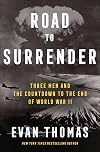
During the summer of 1945, US military leaders saw only two alternatives for ending the war in the Pacific: either mount a costly and bloody invasion of Japan, or deploy recently-developed atomic bombs to force the Japanese to surrender.
Author Evan Thomas reads the diaries and personal writings of three wartime decision-makers (US Secretary of War Henry Stimson, US Head of Strategic Bombing Carl "Tooey" Spaatz, and Japanese foreign minister Shigenori Togo) and concludes that they all did show more the best they could under extraordinarily difficult circumstances to save the maximum number of American and Japanese lives. In Thomas’s estimation, if the US hadn't dropped “the bomb” on Hiroshima and Nagasaki, the military hardliners lurking behind the Japanese emperor’s Chrysanthemum Throne would have fought on until chaos, civil war, and even more deaths ensued.
Still, what horrible decisions to have to live with. Stimson and Spaatz were haunted by the destruction of Hiroshima and Nagasaki for the rest of their lives. Togo was sentenced to prison after a war-crimes trial, but he died, as Thomas stated in an interview with NPR, "satisfied that he had done all he could to bring peace."
I appreciated this thoughtful examination of the human cost of war. show less
Author Evan Thomas reads the diaries and personal writings of three wartime decision-makers (US Secretary of War Henry Stimson, US Head of Strategic Bombing Carl "Tooey" Spaatz, and Japanese foreign minister Shigenori Togo) and concludes that they all did show more the best they could under extraordinarily difficult circumstances to save the maximum number of American and Japanese lives. In Thomas’s estimation, if the US hadn't dropped “the bomb” on Hiroshima and Nagasaki, the military hardliners lurking behind the Japanese emperor’s Chrysanthemum Throne would have fought on until chaos, civil war, and even more deaths ensued.
Still, what horrible decisions to have to live with. Stimson and Spaatz were haunted by the destruction of Hiroshima and Nagasaki for the rest of their lives. Togo was sentenced to prison after a war-crimes trial, but he died, as Thomas stated in an interview with NPR, "satisfied that he had done all he could to bring peace."
I appreciated this thoughtful examination of the human cost of war. show less
When I encountered the title of The Road to Surrender, I suppose that I was drawn to it by the desire to better understand the end of World War II in the Pacific Theater, my previous readings having dealt primarily with the European Theater. For me, with my admittedly scant knowledge of Japan (before, during, and after the war), Evan Thomas' book did not disappoint, and it filled in some gaps in my knowledge that I did not even know existed.
I did find the subtitle somewhat misleading, but show more I'm pleased that it was. Three Men and the Countdown to the End of World War II comes nowhere near to describing the coverage of the book. While Thomas purports to focus on the U.S. Secretary of State Henry Stimson, Japan's Foreign Minister Shigenori Togo, and U.S. Army General Carl “Tooey” Spaatz as the “three men” of the subtitle, the reader learns quite a bit about numerous other significant players in this drama, from President Harry Truman to General Korechika Anami to General Leslie Groves, and more. This is certainly an instance where the subtitle understates the coverage of a book.
The Road to Surrender is filled with revelations that I, for one, did not recall having learned from other histories though of course they may be well known to other readers. To cite only a very few examples, I learned that President Truman did not even know that a second atomic bomb had been dropped on Nagasaki until after the fact, the controls and authorizations that supposedly guard against deployment of nuclear weapons today being nonexistent. From other sources, I had previously read that the U.S. possessed only the two atomic bombs it had used on Hiroshima and Nagasaki, having “shot its wad” so to speak and posing no additional nuclear threat to Japan; according to Thomas, however, while this was technically true for a period of a few weeks, the U.S. had more plutonium available and could assemble additional thermonuclear bombs, a third one, in fact, being actively planned. The U.S. General Leslie Groves was eager to see many such additional bombs deployed, not just against Japan but also against Russia in a first strike to take down Stalin. I had known something of the opposition of Japan's own hard line militarists to the surrender declared by Emperor Hirohito, but I had no idea just how close they came to grasping command of the country until I read Thomas' account of the commencement of a coup, including Major Hatanaka's shooting of Lt. General Mori, commander of the emperor's imperial guards. But enough. A review should not be a summary of a book's entire contents. I trust these examples are sufficient to suggest the sorts of historical revelations to be found in Thomas' book.
I do have two nits to pick with The Road to Surrender. The first has to do with a most annoying practice that has become de rigueur in the publishing trade, i.e., grouping what we once called footnotes all together in the back of the book rather than at the bottom of the page to which they pertain. Many of Thomas' notes go well beyond source citations, adding pertinent and interesting information to the topic. To find them, however, the reader must keep the book open in two places at once, the first on the page being read and the other way back in the Notes section. There is, by the way, no way for the reader to know that a note on a particular topic even exists because not a single superscript note identifier is ever used! The reader is forced to glance back and forth between the text and the Notes section at the back of the book to be sure that a valuable comment is not being overlooked. Obviously, this is awkward in the extreme.
My second nit is that Thomas makes clear in several different places throughout the book that he agrees with the decision to use nuclear bombs against Japan—though he does recognize the existence of opposing views. At one point during a reference to John Hersey's book Hiroshima, Thomas implies that Hersey's is an emotional argument against using nuclear bombs as contrasted with objective and rational arguments with which he has already expressed his agreement. In mentioning viewpoints that are contrary to his own, Thomas uses the term “revisionist” more than once; is he implying that historians who are not in agreement with him are deluded by rewritten history? Such wording strikes me as unworthy of an objective and professional historian.
Despite the nits I have just identified, I did find much of value in The Road to Surrender, and the book has given me a better understanding of events and many of the personages involved in concluding World War II in the Pacific Theater. In the final analysis, I judge the value of a book by whether or not it is worth the hours from the reader's finite lifetime that were expended in its reading. The Road to Surrender is worth those hours. However, if one must choose between Thomas' Road to Surrender and Hersey's Hiroshima, I recommend Hersey. show less
I did find the subtitle somewhat misleading, but show more I'm pleased that it was. Three Men and the Countdown to the End of World War II comes nowhere near to describing the coverage of the book. While Thomas purports to focus on the U.S. Secretary of State Henry Stimson, Japan's Foreign Minister Shigenori Togo, and U.S. Army General Carl “Tooey” Spaatz as the “three men” of the subtitle, the reader learns quite a bit about numerous other significant players in this drama, from President Harry Truman to General Korechika Anami to General Leslie Groves, and more. This is certainly an instance where the subtitle understates the coverage of a book.
The Road to Surrender is filled with revelations that I, for one, did not recall having learned from other histories though of course they may be well known to other readers. To cite only a very few examples, I learned that President Truman did not even know that a second atomic bomb had been dropped on Nagasaki until after the fact, the controls and authorizations that supposedly guard against deployment of nuclear weapons today being nonexistent. From other sources, I had previously read that the U.S. possessed only the two atomic bombs it had used on Hiroshima and Nagasaki, having “shot its wad” so to speak and posing no additional nuclear threat to Japan; according to Thomas, however, while this was technically true for a period of a few weeks, the U.S. had more plutonium available and could assemble additional thermonuclear bombs, a third one, in fact, being actively planned. The U.S. General Leslie Groves was eager to see many such additional bombs deployed, not just against Japan but also against Russia in a first strike to take down Stalin. I had known something of the opposition of Japan's own hard line militarists to the surrender declared by Emperor Hirohito, but I had no idea just how close they came to grasping command of the country until I read Thomas' account of the commencement of a coup, including Major Hatanaka's shooting of Lt. General Mori, commander of the emperor's imperial guards. But enough. A review should not be a summary of a book's entire contents. I trust these examples are sufficient to suggest the sorts of historical revelations to be found in Thomas' book.
I do have two nits to pick with The Road to Surrender. The first has to do with a most annoying practice that has become de rigueur in the publishing trade, i.e., grouping what we once called footnotes all together in the back of the book rather than at the bottom of the page to which they pertain. Many of Thomas' notes go well beyond source citations, adding pertinent and interesting information to the topic. To find them, however, the reader must keep the book open in two places at once, the first on the page being read and the other way back in the Notes section. There is, by the way, no way for the reader to know that a note on a particular topic even exists because not a single superscript note identifier is ever used! The reader is forced to glance back and forth between the text and the Notes section at the back of the book to be sure that a valuable comment is not being overlooked. Obviously, this is awkward in the extreme.
My second nit is that Thomas makes clear in several different places throughout the book that he agrees with the decision to use nuclear bombs against Japan—though he does recognize the existence of opposing views. At one point during a reference to John Hersey's book Hiroshima, Thomas implies that Hersey's is an emotional argument against using nuclear bombs as contrasted with objective and rational arguments with which he has already expressed his agreement. In mentioning viewpoints that are contrary to his own, Thomas uses the term “revisionist” more than once; is he implying that historians who are not in agreement with him are deluded by rewritten history? Such wording strikes me as unworthy of an objective and professional historian.
Despite the nits I have just identified, I did find much of value in The Road to Surrender, and the book has given me a better understanding of events and many of the personages involved in concluding World War II in the Pacific Theater. In the final analysis, I judge the value of a book by whether or not it is worth the hours from the reader's finite lifetime that were expended in its reading. The Road to Surrender is worth those hours. However, if one must choose between Thomas' Road to Surrender and Hersey's Hiroshima, I recommend Hersey. show less
Who Are the Wise of Our Day?
Every once in a while you get a chance to read a book or watch a movie that you just never seemed to get around to. Some thirty plus years since it was first published in 1986, I’ve finally gotten around to reading The Wise Men: Six Friends and the World They Made by Walter Isaacson and Evan Thomas. It is as good a read today as the day it first came off the press, and is instructive in the similarities and contrasts of their time to this time. Averell Harriman, show more Dean Acheson, Robert Lovett, George Kennan, John McCloy, and Charles Bohlen played pivotal roles at a pivotal time in modern history. Most were born to Ivy League privilege, some came from more humble backgrounds. Dean Acheson’s memoir is titled “Present at the Creation,” an appropriate tag for each of these giants who helped guide America through WWII and who, in various ways and not always in agreement, were the architects of the post-war period. Harriman was the consummate diplomat, Kennan saw into the Soviet psyche with prescience, and McCloy was the “fixer” of the bunch. One managed the Berlin airlift and another the Marshall Plan that put Europe back on its feet. They were bankers, lawyers, industrialists and such who believed that their privilege and position carried a responsibility of service.
When one considers the depth of these men against the times and trials they lived it is inspiring and sobering. Inspiring because of their commitment to the nation and world, sobering when one compares them against the likes of today’s political operators. This is not to say they were perfect or without ambition. One was known for his condescending arrogance, another for his insecurity, they were on occasion rivals, sometimes quarreled, and could be petty; but they always answered the call when it came. Together they comprised a team of statesmen, operators, policy wonks, and technocrats who were exactly what we needed when we needed them. They had entrée to presidents, prime ministers, and even Joseph Stalin based simply on their character, integrity, and wisdom. They helped usher the west through the war and its aftermath, securing the opportunity for unparalleled growth of freedom in a time fraught with geopolitical tension and uncertainties, even as freedom’s opposite grew more menacing by the day. Did they get it right every time? No. But the world is a better place than it could have been because they were true to their passion and calling.
This is a thoroughly enjoyable read. Typical of most Walter Isaacson projects it is not a short book, which one would not expect given the subjects and their import. It is full of rich detail of the geopolitical times they lived in, which the reader will come to understand as not so different from our own, and the relationships that were so important. They were not homogenous in personality or politics, but this they did have in common – love of country and a willingness to put its needs before their own. They also had the benefit of not living in an era of 24-hour news cycles and social media, which allowed them to do the serious work of understanding the most complex and critical issues of their day and exercising diplomacy in a quiet, deliberate, and respectful manner. Imagine that.
For more, check out my blog at https://kburkhalter.com/blog/ show less
Lists
Awards


You May Also Like


Associated Authors
Statistics
- Works
- 21
- Also by
- 5
- Members
- 5,102
- Popularity
- #4,899
- Rating
- 4.0
- Reviews
- 96
- ISBNs
- 107
- Languages
- 3
- Favorited
- 1
