
Birgit Vanderbeke (1956–2021)
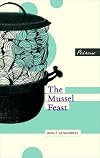
Author of The Mussel Feast
About the Author
Image credit: Ingeborg-Bachmann-Preis
Works by Birgit Vanderbeke
Associated Works
Tagged
Common Knowledge
- Birthdate
- 1956-08-08
- Date of death
- 2021-12-24
- Gender
- female
- Occupations
- author
- Awards and honors
- Ingeborg-Bachmann-Preis (1990)
Kranichsteiner Literaturpreis (1997)
Solothurner Literaturpreis (1999)
Roswitha-Preis (1999)
Hans Fallada Prize (2002)
Brüder-Grimm-Professur an der Universität Kassel (2007) - Nationality
- Germany
- Birthplace
- Dahme, Brandenburg, Germany
- Places of residence
- France
Frankfurt am Main, Germany - Associated Place (for map)
- Germany
Members
Reviews
"Suddenly I no longer wanted him to come home"
By sally tarbox on 12 December 2016
Format: Kindle Edition
A mother and her teenage daughter (the narrator) and son are gathered round the table, on tenterhooks, waiting for Father's return from a business trip. And very quickly the reader sees that this is no normal family dynamic: the happy, easy-going life of the last few days is dissipating as they await the heavy presence of the head of the house.... And as his return is delayed, the show more conversation and memories start to reveal the truth.
The author wrote this just before the fall of The Berlin Wall in 1989: "I wanted to understand how revolutions start. It seemed logical to use the figure of a tyrannical father and turn the story into a German family saga."
And the analogies between the two situations are there throughout: the constant fear that he can hear their rebellious thoughts; the way that they are encouraged to inform on one another, to garner his praise, causing them to distrust each other, and not join forces against him...
A short (105p) but powerful work which I read in one sitting show less
By sally tarbox on 12 December 2016
Format: Kindle Edition
A mother and her teenage daughter (the narrator) and son are gathered round the table, on tenterhooks, waiting for Father's return from a business trip. And very quickly the reader sees that this is no normal family dynamic: the happy, easy-going life of the last few days is dissipating as they await the heavy presence of the head of the house.... And as his return is delayed, the show more conversation and memories start to reveal the truth.
The author wrote this just before the fall of The Berlin Wall in 1989: "I wanted to understand how revolutions start. It seemed logical to use the figure of a tyrannical father and turn the story into a German family saga."
And the analogies between the two situations are there throughout: the constant fear that he can hear their rebellious thoughts; the way that they are encouraged to inform on one another, to garner his praise, causing them to distrust each other, and not join forces against him...
A short (105p) but powerful work which I read in one sitting show less

In this slender novel by German author Birgit Vanderbeke, a son, daughter and their mother wait for the man of the house to return from a business trip. For this reunion dinner, the mother has prepared mussels. As they prepare the mussel feast and then wait for his arrival, they begin to talk to each other. Narrated by the daughter, the book begins by giving a picture of a household that relaxes a bit when the father is out of town, with informal mealtimes and an easier routine, but there show more are soon ominous hints that life with this man is maybe harsher than is usual. As they wait at the table around the bowl of mussels, the three unhappy family members finally begin to speak honestly with one another and as the hour grows later and later, and it becomes evident that something has happened, the mood grows more convivial as what life is like for them with their father and husband is slowly revealed to be worse and worse.
The Mussel Feast reminds me of Herman Koch's The Dinner in its slowly rising level of unpleasantness. It's not over-blown, however, and the narrator is all too reliable. The story is told in one, breathless segment, with few paragraph breaks and enormous run-on sentences. This is a masterful work, with the sense of growing dread perfectly controlled right through the book's final sentences.
The Mussel Feast was shortlisted for the Independent Foreign Fiction Prize, the winner of which will be announced later this month. show less
The Mussel Feast reminds me of Herman Koch's The Dinner in its slowly rising level of unpleasantness. It's not over-blown, however, and the narrator is all too reliable. The story is told in one, breathless segment, with few paragraph breaks and enormous run-on sentences. This is a masterful work, with the sense of growing dread perfectly controlled right through the book's final sentences.
The Mussel Feast was shortlisted for the Independent Foreign Fiction Prize, the winner of which will be announced later this month. show less
One evening at dinnertime a family sit around the kitchen table waiting for Father to come home from work. The food on the table is a pot of mussels: it’s not something they particularly care for, but Father does, and so they accommodate him. But this time he’s late, and the family realizes they are waiting to eat food only Father likes, listen to music only he likes, obey rules only he thinks are important. The absurdity of the situation dawns on them.
It turns out Father is a show more full-blown narcissist, who rules his family with an endless parade of double standards that without fail end up in his favour. While the children are allowed to practice the piano (even though art and music are inferior to proper skills like engineering), they can only do so between the end of school and when Father comes home, for he wants peace and quiet. Father won’t visit his mother back in East Germany, for Father is a successful businessman and cannot be asked to put up with his poor Ossi mother and her sub-par living conditions. Father wants his children to get good marks at school -- that reflects well on him -- but when they do it’s not good enough: today’s subjects are watered-down versions of the ones Father had in his day, and so a good mark today really only translates to a middling-to-bad mark from his own schooldays, and approval is withheld.
Father excuses everything with the mantras of “this is how things should be in a proper family” and “appearances must be kept up”, and obedience is obtained on pain of punishment and violence. And because the family have been overaccommodating for so long, they don’t even realise how crooked they’ve grown placating someone who’ll never be satisfied. Until the night when they sit by themselves around the cooling mussels, increasingly less willing to slide into their role as Proper Family Members.
After finishing the book, I read that it was written as an almost allegorical tale of life in East Germany just before the Berlin Wall fell. Sure, why not? I didn’t spot that, and I actually think I would have found that a fairly cumbersome reading of the book. What I saw, and what I really liked, was the expert breakdown of a raging narcissist’s behavioral patterns, a dismantling of his power structures. I saw an excellent psychological portrait of abuse victims finally recalibrating their normal meters and recognizing their victimhood. And that, I thought, was very well done. show less
It turns out Father is a show more full-blown narcissist, who rules his family with an endless parade of double standards that without fail end up in his favour. While the children are allowed to practice the piano (even though art and music are inferior to proper skills like engineering), they can only do so between the end of school and when Father comes home, for he wants peace and quiet. Father won’t visit his mother back in East Germany, for Father is a successful businessman and cannot be asked to put up with his poor Ossi mother and her sub-par living conditions. Father wants his children to get good marks at school -- that reflects well on him -- but when they do it’s not good enough: today’s subjects are watered-down versions of the ones Father had in his day, and so a good mark today really only translates to a middling-to-bad mark from his own schooldays, and approval is withheld.
Father excuses everything with the mantras of “this is how things should be in a proper family” and “appearances must be kept up”, and obedience is obtained on pain of punishment and violence. And because the family have been overaccommodating for so long, they don’t even realise how crooked they’ve grown placating someone who’ll never be satisfied. Until the night when they sit by themselves around the cooling mussels, increasingly less willing to slide into their role as Proper Family Members.
After finishing the book, I read that it was written as an almost allegorical tale of life in East Germany just before the Berlin Wall fell. Sure, why not? I didn’t spot that, and I actually think I would have found that a fairly cumbersome reading of the book. What I saw, and what I really liked, was the expert breakdown of a raging narcissist’s behavioral patterns, a dismantling of his power structures. I saw an excellent psychological portrait of abuse victims finally recalibrating their normal meters and recognizing their victimhood. And that, I thought, was very well done. show less
It's a very short book — you can easily read it in two or three hours — but quite absorbing. It's written in a sort of Thomas Bernhard looping narrative style, with long run-on sentences and characters who don't have names, but are just identified by their relationship to the narrator ("mein Vater", "meine Mutter", "mein Bruder"). If you could imagine Thomas Bernhard as a teenage girl born in the fifties (scary thought!), this is how he might write. It's a pretty angry book too: probably show more only "mildly irritated" by Bernhard's demanding standards, but measured on any normal scale there's a serious quantity of anger built in to the narrator's slow dissection of what's wrong with the family she lives in.
Given the time and the place, it's fairly clear that we are supposed to read it more broadly than as a simple attack on selfish and abusive fathers/husbands. It's very hard to find stories that can survive the weight of a load of political symbolism shovelled on top of them without either the story or the politics seeming crude and bolted-on, but Vanderbeke handles it very subtly and leaves us to do most of the work. We have to draw our own parallels to what was going on in Germany at the end of the eighties without any direct help from the author, and we're free to ignore the symbolism altogether if we want to.
Very nicely done. And more than a slight echo of one or two German fathers I've met... show less
Given the time and the place, it's fairly clear that we are supposed to read it more broadly than as a simple attack on selfish and abusive fathers/husbands. It's very hard to find stories that can survive the weight of a load of political symbolism shovelled on top of them without either the story or the politics seeming crude and bolted-on, but Vanderbeke handles it very subtly and leaves us to do most of the work. We have to draw our own parallels to what was going on in Germany at the end of the eighties without any direct help from the author, and we're free to ignore the symbolism altogether if we want to.
Very nicely done. And more than a slight echo of one or two German fathers I've met... show less
Lists
Awards


You May Also Like


Associated Authors
Statistics
- Works
- 25
- Also by
- 1
- Members
- 858
- Popularity
- #29,813
- Rating
- 3.7
- Reviews
- 43
- ISBNs
- 119
- Languages
- 12
- Favorited
- 1