
Tom Vanderbilt
Author of Traffic: Why We Drive the Way We Do (and What It Says About Us)
About the Author
Tom Vanderbilt is a writer based in Brooklyn, New York. His work has appeared in Wired, Nest, the New York Times Magazine, & The Nation. He is author of The Sneaker Book: An Anatomy of an Industry & An Icon. (Bowker Author Biography)
Image credit: © Kate Burton
Works by Tom Vanderbilt
Traffic (Unabridged) Part 2 1 copy
Traffic (Unabridged) Part 1 1 copy
Associated Works
Supercade: A Visual History of the Videogame Age 1971-1984 (2001) — Contributor — 177 copies, 2 reviews
Boob Jubilee: The Mad Cultural Politics of the New Economy: Salvos from the Baffler (2003) — Contributor — 86 copies
Significant Objects: 100 Extraordinary Stories about Ordinary Things (2012) — Contributor — 65 copies, 1 review
Tagged
Common Knowledge
- Birthdate
- 1968
- Gender
- male
- Occupations
- journalist
- Organizations
- I.D.
Print - Agent
- Zoe Pagnamenta (PFD New York)
- Relationships
- Dunn, Jancee (wife)
- Nationality
- USA
- Birthplace
- Oak Forest, Illinois, USA
- Places of residence
- Wisconsin, USA
New York, New York, USA
Brooklyn, New York, USA - Associated Place (for map)
- USA
Members
Reviews

Fascinating, hard-hitting, and often terrifying, this in-depth study of how and why we drive will blow your friggin' mind. What is it that makes a road "safe" or "dangerous"? The answers may surprise you. Is it true that every safety feature that has been introduced to cars from the seat belt to anti-lock brakes has actually cost more lives? This author thinks so, and his arguments are air tight. Travel with him around the world to see how other countries have overhauled their transit show more systems with astonishingly unorthodox methods. This book will forever change how you drive, how you think about driving, and how you look at the road. show less
Traffic
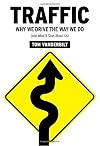
I have often been accused of being both an aggressive and an unsafe driver, much to my chagrin. I know I am aggressive, but unsafe? That I take exception to. It is true however that your own perception of how you drive is much out of whack with your passenger's perspective. Traffic - Why We Drive The Way We Do (and What It Says About Us) by Tom Vanderbilt seeks to explore this most mundane of everyday activities. Driving and Traffic are technically separate but closely related show more subjects and Mr. Vanderbilt provides a fascinating discussion of both.
Traffic begins with Mr. Vanderbilt's admission of being a 'late-merger', someone who waits till the last moment before exiting a closed lane and merging into a parallel one. There are some drivers who choose to merge early, as soon as they see a sign indicating their lane is closed ahead (or is exit only etc.), others wait right up to the last second and then indiginantly try to merge into the freer flowing traffic of the next lane. The first few chapters of the book focus on driving, taking into account factors like cognition, culture, human psychology (and psyche), self perception of who you are and who you want to be, reflex times and the meaning of gestures and signals. Chapter Five is provocatively titled 'Why Women Cause More Congestion Than Men (and Other Secrets of Traffic)' - but don't get offended yet, the author goes on to explain why that is so. Women continue to handle a lot of 'non-work' trips, taking kids to school and soccer practice for example. Women also tend to be engaged in what Vanderbilt calls "serve-passenger" trips, where they are taking passengers to places they don't have to be themselves and they tend to make several stops thus 'chaining' multiple trips. Women also tend to leave later for work than men and therefore drive right into already congested freeways. Hence, 'women cause more congestion than men'.
About half way through the book Vanderbilt shifts gears (I couldn't resist that pun) and focuses on traffic engineering and management. Chaper Six talks about the confounding observation that as more roads are built, traffic only seems to get worse. The author explores the idea and travels around the US talking to traffic engineers and looks into the externalities of America's obsession with driving. Chapter Seven was my favorite, presenting the most interesting ideas in the book. The author talks approvingly of the work of Dutch traffic engineer Hans Monderman who supposedly hated traffic signs. The author argues, by citing examples and urging the reader to analyze his own experiences, that roads deemed to be unsafe tend have a lesser proportion of fatal crashes precisely because drivers are a lot more careful when using them. A smooth flowing freeway tends to induce boredom and distraction, and distraction at 70mph can be fatal. Chapter Eight is a quick romp through two of the worlds' most congested cities Delhi and Beijing. Both culture and corruption seem to affect accident rates and fatalities on the roads of these dense and, for a western driver, terrifying cities.
Traffic could easily have been a work of pop psychology, filled with platitudinal wisdom. The appeal of the book is that it resists that temptation. This is a well researched book with a 110 pages of notes to satisfy the obsessive reader. The writing itself is engaging and enjoyable. Highly recommended. show less
I have often been accused of being both an aggressive and an unsafe driver, much to my chagrin. I know I am aggressive, but unsafe? That I take exception to. It is true however that your own perception of how you drive is much out of whack with your passenger's perspective. Traffic - Why We Drive The Way We Do (and What It Says About Us) by Tom Vanderbilt seeks to explore this most mundane of everyday activities. Driving and Traffic are technically separate but closely related show more subjects and Mr. Vanderbilt provides a fascinating discussion of both.
Traffic begins with Mr. Vanderbilt's admission of being a 'late-merger', someone who waits till the last moment before exiting a closed lane and merging into a parallel one. There are some drivers who choose to merge early, as soon as they see a sign indicating their lane is closed ahead (or is exit only etc.), others wait right up to the last second and then indiginantly try to merge into the freer flowing traffic of the next lane. The first few chapters of the book focus on driving, taking into account factors like cognition, culture, human psychology (and psyche), self perception of who you are and who you want to be, reflex times and the meaning of gestures and signals. Chapter Five is provocatively titled 'Why Women Cause More Congestion Than Men (and Other Secrets of Traffic)' - but don't get offended yet, the author goes on to explain why that is so. Women continue to handle a lot of 'non-work' trips, taking kids to school and soccer practice for example. Women also tend to be engaged in what Vanderbilt calls "serve-passenger" trips, where they are taking passengers to places they don't have to be themselves and they tend to make several stops thus 'chaining' multiple trips. Women also tend to leave later for work than men and therefore drive right into already congested freeways. Hence, 'women cause more congestion than men'.
About half way through the book Vanderbilt shifts gears (I couldn't resist that pun) and focuses on traffic engineering and management. Chaper Six talks about the confounding observation that as more roads are built, traffic only seems to get worse. The author explores the idea and travels around the US talking to traffic engineers and looks into the externalities of America's obsession with driving. Chapter Seven was my favorite, presenting the most interesting ideas in the book. The author talks approvingly of the work of Dutch traffic engineer Hans Monderman who supposedly hated traffic signs. The author argues, by citing examples and urging the reader to analyze his own experiences, that roads deemed to be unsafe tend have a lesser proportion of fatal crashes precisely because drivers are a lot more careful when using them. A smooth flowing freeway tends to induce boredom and distraction, and distraction at 70mph can be fatal. Chapter Eight is a quick romp through two of the worlds' most congested cities Delhi and Beijing. Both culture and corruption seem to affect accident rates and fatalities on the roads of these dense and, for a western driver, terrifying cities.
Traffic could easily have been a work of pop psychology, filled with platitudinal wisdom. The appeal of the book is that it resists that temptation. This is a well researched book with a 110 pages of notes to satisfy the obsessive reader. The writing itself is engaging and enjoyable. Highly recommended. show less
This book came along at just the right time for me; I'm easing my way back into driving after more than fifteen largely car-free years, and I've been thinking a lot about cars and people and how they interact. It was a fascinating read in parts and I wish I could give copies of it (or at least substantial excerpts) to every person in Seattle who is involved with traffic systems. Some very interesting ideas and phenomena are discussed and documented, ranging from the obvious (speed kills; show more drinking and driving don't mix) to the counter-intuitive yet demonstrably true (more roads create more traffic, not less; roundabouts are safer than intersections; fewer, not more, crashes happen on roads where there's foot, bike or other traffic in addition to cars) to the undeniable-yet-unlikely-to-be-welcome (it really is dangerous to talk on a cell phone while driving, even with a hands-free headset--it's about attention, not hands; near misses are a more accurate gauge of driving skill than accidents; even though we complain about the traffic, we *are* the traffic).
Vanderbilt did extensive research and reports it perhaps a touch too exhaustively (three-quarters of the way in all the studies cited started to blur together for me; there's also a fair amount of jargon that isn't clarified for the reader), but there's a lot of food for thought here about how people behave when they're in cars, and I will no doubt be irritating my friends with fascinating facts gleaned from the book for months to come.
A minor quibble (and not the author's fault): the fact that there are extensive notes to the text isn't apparent unless you flip to the back of the book. Oh, and full disclosure: the author and I were once co-workers, almost twenty years ago, but haven't been in touch since then. show less
Vanderbilt did extensive research and reports it perhaps a touch too exhaustively (three-quarters of the way in all the studies cited started to blur together for me; there's also a fair amount of jargon that isn't clarified for the reader), but there's a lot of food for thought here about how people behave when they're in cars, and I will no doubt be irritating my friends with fascinating facts gleaned from the book for months to come.
A minor quibble (and not the author's fault): the fact that there are extensive notes to the text isn't apparent unless you flip to the back of the book. Oh, and full disclosure: the author and I were once co-workers, almost twenty years ago, but haven't been in touch since then. show less
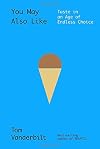
I've been fascinated with taste for a long time, and Vanderbilt, whose previous work Traffic is a must-read for anyone with a commute, collected in this book almost everything I've ever wanted to say about it. He discusses what taste is, where it comes from, how it works, and how it relates to status - plus plenty of other aspects I hadn't thought of, all over such varied domains as food, wine, beer, music, art, film, architecture, pet breeds, and baby names. As you would expect for such a show more complicated, circular, and subjective topic, his analysis is somewhat digressive, but in a good way, with plenty of specific and well-chosen examples. He's careful to build upon the works of famous philosophers of taste like Pierre Bourdieu, Immanuel Kant, and David Hume, updating their thoughts about objectivity, social determination, and personal identity for the modern era. He investigates the act of judgment while being reasonably non-judgmental himself. Best of all, his conclusions are lots of fun to discuss: is our sense of taste a carefully curated expression of our innermost selves, or the circumstantial accumulation of stochastically-determined signaling indicators that are essentially meaningless in and of themselves? Both!
To cut to the chase, there's really nothing wrong with simply saying "there's no accounting for taste", when it comes to something like music preferences, and leaving it at that (book over, thanks for playing!). When you really confront the idea of taste as an aggregation of preferences or the value of an individual preference, any rigorous analysis is rather deflating from the traditional perspective of human personality. On the one hand, many things are preferred over others for essentially random reasons - you might like a particular song because it's associated with pleasant memories unique to yourself. On the other hand, many favorites follow predictable statistical patterns - lots of people might like that song too, and similar people like similar things, which is how they're defined as similar to begin with. It's not very emotionally satisfying to learn that you like something either because it was the first thing you saw, or just because everyone else likes something. Tom the Dancing Bug had a perfect satire in the June 16, 2007 comic: "Everything Was Better When You Were Twelve". And taste can especially seem arbitrary when you hear people disagree: "The closer people are to each other socially, the more pronounced taste disputes become;" similarly, "the less a choice serves some utilitarian function, the more it implies about identity."
Yet there's obviously not nothing to the idea of taste, because it has real effects in the world. Taste plays a huge role in meeting friends, selecting romantic partners, creating and defining social groups, and broadcasting information about yourself to other people. In 1979 Pierre Bourdieu wrote the still-fascinating Distinction: A Social Critique of the Judgement of Taste, where he attempted to quantify who liked what and why, and as Vanderbilt says, we can move far beyond Bourdieu's data and conclusions. "Almost every aspect of human taste that Bourdieu was interested in is, every day, being cataloged online, in numbers beyond any sociologist's dream. What music do you like? (Spotify, Pandora). What is your ideal human face? (OkCupid, Match.com). What is the ideal subject of a photograph? (Flickr, Instagram)." With all of this data, can we finally untangle the role that feedback loops and circularity problems play in determining taste? What does it mean to be a data point? How do some people get to be so influential?
Again, those kinds of philosophical questions are not really answerable with data; the most data can do is give you a skeleton to hang a narrative on. Christian Bauckhage wrote an interesting paper, unfortunately not cited here, titled "Mathematical Models of Fads Explain the Temporal Dynamics of Internet Memes" that fit the popularity of various memes to various graphs as a function of time, but "explain" is a strong word - it's hard to say why one meme fits one exponential decay function and not another. "Taste is a space on a graph" might be a perfectly true sentence about the mathematical relationship between the set of things you like, but we're more interested in our relationships with those things, and with each other. Tastes are "categorical, contextual, constructed, comparative, and uncongenital". Take the question of food, and whether we should limit ourselves to pleasures within the confined of our established taste, as opposed to taking the risk on something new (assuming it turns out to be good):
"Are you better off ordering your favorite food off a menu or something you have never had? Rozin had suggested to me it might depend on where you want your pleasure to occur: before, during, or after the meal. 'The anticipated pleasure is greater if it's your favorite food. You've had it, you're familiar with it, you know what it's like. The experienced pleasure is probably going to be higher for your favorite,' he says. 'On the other hand, for remembered pleasures, you're much better off ordering a new food. If you order your favorite food, it's not going to be a memory - you've had it already.'"
That issue of how different your enjoyment can be depending on when it occurs reminds me of how mood affects pleasure as well. I've always been interested in how most people's "top 10" lists are high-brow things they've seen once, instead of the low-brow comedies they watch over and over again, and how that odd distance from the genre is reflected in how most lists of "greatest films ever" are mysteriously free of comedies (is comedy somehow more subjective than drama?). One reason is that movie taste is performative: "Think of the moment in Play It Again, Sam where Woody Allen's character is scrambling, ahead of a date, to array his coffee table with respectable books ('You can't leave books lying around if you're not reading them,' his friend complains, to which he replies, 'It creates an image')." You create a serious image by telling people you like serious films, even if the majority of the time you're not really in the mood for something serious. This affects ratings:
"As one expert says, 'Who's likely to rate The Sopranos? Not someone who watched five minutes and didn't like it because it wasn't really part of their life. It's the person who committed to it and spent a hundred hours of their life watching it.' On the other hand, 'who will rate Paul Blart: Mall Cop? It might not be a very good movie, but it's ninety minutes long. Your bar or criteria might be different.'"
There are all kinds of things I know that I'd probably like, but I just don't have the time to get to them. Even things that I do get to experiencing, I often don't give a fair chance (as in the chapter on how little time people spend in art galleries really looking and appreciating paintings). But how are those things made known to me? To that point about ratings and what gets rated, how should we interpret online reviews? There's a distinction between an "experience good (like a book or a movie) or a search good (a camera or replacement windshield wipers)", and experience goods are notoriously difficult to rate objectively. Is there such a thing as an expert? Vanderbilt drops his normally even-handed tone to offer one of his own strategies for "reviewing the reviewers":
"For as important as the question of whether they liked it is, Are they like us? One looks for signals of authority and a shared outlook. A red flag for me, for example, is the word 'awesome.' It is not simply that I think the word has lost most of its connotation. It is that I place less trust in the opinion of someone who uses it (for example, 'awesome margaritas' - and you may trust me less for not trusting it). The word 'anniversary' or 'honeymoon' in a review portends people with inflated expectations for their special night. Their complaint with any perceived failure by the restaurant or hotel to rise to this solemn occasion is not necessarily ours. I reflexively downgrade reviewers writing with syrupy dross picked up from hotel brochures ('It was a vision of perfection') or employing such trite abominations as 'sinfully delicious!'"
It's just inherently difficult to use impartial and "fair" language to describe subjective experiences, even for experts. Part of that has to do with what you're discussing: "As Garrett Oliver, the brewmaster of Brooklyn Brewery, had told me, beer people tend to talk like scientists - 'here's our EBV, here's our IBU, our final gravity' - while the 'wine guy is talking about rolling hills.'" Craft beer, which became popular fairly recently, is still dominated by nerds who talk like nerds, whereas wine has been prestige for a long time and there's a well-established, somewhat allegorical vocabulary of description (if you visit parody sites like vicioustasting.com you will see what craft beer fans think of overly flowery tasting notes). Instead of describing what it's like though, what about describing how it's used? Something like Pabst Blue Ribbon, "at least judged by the thousands of people who have weighed in on RateBeer.com, is described in grudging, almost apologetic terms: 'a decent lawn mower beer'; good 'for standing in the crowd at a concert'; the 'perfect college student brew, to drink while cranking out an essay.'" How do you describe what you like? As one brewery owner says, "People often ask me, 'What's your favorite beer?' I don't have A favorite beer. I usually say it's the one in my hand. It's what sounded good to me."
But come on, no one would ever say that their favorite song is "whatever's playing", especially to someone they cared about. Music is probably the single most common and important way, short of actual interaction, for two people to figure out if they're socially (not to mention romantically!) compatible. "Music is an exemplar of what the anthropologist Mary Douglas called the 'fences or bridges' quality of goods (or taste), unifying people even as it separates them." This is despite, or maybe even because of, the fact that most people have no idea what a chord is: "The way we talk about music is, it turns out, fairly predictable. 'We see people talking about its context related to everything else they know,' he said. 'That's exactly the kind of text you want.' Musicological detail is relatively unimportant; knowing the key or pitch of a song does not help guide listeners to the next song, Whitman suggested. You want to know where a band is from, what its influences are." More than almost anything else, your musical taste is a statement of personal identity; I wish Vanderbilt had gone into a little more detail on the "intimate" relationship between music and love, but for a romantic comedy take on this idea, just read/watch High Fidelity.
I use Spotify all the time, not only to serve me things that I know I like, but also show me new things I might like. Vanderbilt discusses how Spotify's acquisition of Echo Nest, whose technology powers their excellent Discover Weekly feature, has given them insight into who likes what, using my favorite band as an example: "Pink Floyd, it turns out, is one of the bands most liked primarily by Republicans (even if the band's members seem to be rather liberal in outlook). Whitman speculated this was mostly about the changing demographics of an aging fan base. But Pink Floyd itself changed with age, musically, and so Whitman was able to identify a split in which fans of the earlier, more psychedelic, Syd Barrett–helmed Pink Floyd tilted more Democratic." (To be clear, the Roger Waters period of the band is best and if you disagree You Are Wrong). But technology has changed how people navigate the unlistenably vast universe of music. As the scope of people's choices expands beyond the point of comfort, the power of curating rises, with predictable effects on bands. He cites the research of Duncan Watts (whose superb book Everything Is Obvious complements this one well) on how popular things get more popular as people consciously listen to what's popular. This obviously has vast ramifications for the music industry.
However, that increasing "long tail" inequality also holds true for all forms of art in a world of online feedback. Vanderbilt raises the question of the power of feedback in the context of the power of reviews: "There is a rather gloomy endgame looming here, though: the artist only producing art that people he likes will like, people only drawn to artists they think they will like. Does the world of online taste open us to new experience or simply channel us more efficiently into our little pods of predisposition?" Well, first of all, I think most artists have always aimed at some form of popularity. Secondly, people have always preferred things that are familiar. Third, the answer to the question has to be that it can do both: I wouldn't have even found this book itself without the internet, but then again I already knew who Vanderbilt was, but then, even more again, I found his book Traffic online. At some point I took a chance on this author and his work, and no matter how many self-reinforcing algorithmic processes are at work, there will be some element of serendipity at play.
I haven't even touched on many of the other great discussions of taste in this book: the issue of ironic art appreciation via the Museum of Bad Art; the social dynamics at play in Jonathan Touboul's "The hipster effect: When anticonformists all look the same"; fashions in baby names as taste markers (with appropriate citations to Baby Name Wizard); how aesthetic whims can change entire pet breeds over time; how artificial the entire idea of an impartial review is ("Judges drink in a way that no one else does: anonymously, in relatively small amounts, paying attention only to what is being consumed, not for pleasure but with a purpose."); the limitless ontological anxiety that some people express over simple acts of taste ("What did it mean when I thumbed a "like" on an Instagram post? That I liked the content of the image, the way it was shot, or the person posting it? Did my liking depend on how many others had or had not liked it? Was not "liking" it saying that I actually did not like it?"); or the 11th person game as a metaphor for your romantic history ("The next time you are in a public place, point to a random doorway and ask a friend to choose one of the next ten people who walk through the door as a potential romantic partner. There are two rules: You cannot return to any previous person you passed up, and if, when the tenth person comes through the door, you have not chosen anyone, the eleventh becomes your de facto choice."); and more.
So overall I thought it was fantastic. Vanderbilt explores how we come to express preferences, how those preferences change over time, how our preferences interact with those of friends and strangers, and how we use our preferences to appear certain ways to others. This is a superbly evenhanded book, anthropological without being polemical, seeking to understand why people make lists rather than impose them. Frequently I was reminded of what Berlioz wrote about Beethoven's symphonies: "Everybody is right. What to someone seems beautiful is not so for someone else, simply because one person was moved and the other remained indifferent, and the former experienced profound delight while the latter acute boredom. What can be done about this?… nothing… but it is dreadful; I would rather be mad and believe in absolute beauty." I think you can tolerate others' taste while still believing in the superiority of your own, but this book will make you a lot more fun at parties (neatly proving its own point about the social utility of taste) once you absorb its lessons.
He concludes with a useful "field guide to liking":
- You will know what you like or do not like before you know why
- Get beyond "like" and "dislike"
- Do you know why you like what you like?
- Talk about why you like something
- We like things more when they can be categorized
- Do not trust the easy like
- You may like what you see, but you also see what you like
- Liking is learning
- We like what we expect to like; we like what we remember
- Novelty versus familiarity, conformity versus distinction, simplicity versus complexity
- Dislikes are harder to spot but more powerful show less
To cut to the chase, there's really nothing wrong with simply saying "there's no accounting for taste", when it comes to something like music preferences, and leaving it at that (book over, thanks for playing!). When you really confront the idea of taste as an aggregation of preferences or the value of an individual preference, any rigorous analysis is rather deflating from the traditional perspective of human personality. On the one hand, many things are preferred over others for essentially random reasons - you might like a particular song because it's associated with pleasant memories unique to yourself. On the other hand, many favorites follow predictable statistical patterns - lots of people might like that song too, and similar people like similar things, which is how they're defined as similar to begin with. It's not very emotionally satisfying to learn that you like something either because it was the first thing you saw, or just because everyone else likes something. Tom the Dancing Bug had a perfect satire in the June 16, 2007 comic: "Everything Was Better When You Were Twelve". And taste can especially seem arbitrary when you hear people disagree: "The closer people are to each other socially, the more pronounced taste disputes become;" similarly, "the less a choice serves some utilitarian function, the more it implies about identity."
Yet there's obviously not nothing to the idea of taste, because it has real effects in the world. Taste plays a huge role in meeting friends, selecting romantic partners, creating and defining social groups, and broadcasting information about yourself to other people. In 1979 Pierre Bourdieu wrote the still-fascinating Distinction: A Social Critique of the Judgement of Taste, where he attempted to quantify who liked what and why, and as Vanderbilt says, we can move far beyond Bourdieu's data and conclusions. "Almost every aspect of human taste that Bourdieu was interested in is, every day, being cataloged online, in numbers beyond any sociologist's dream. What music do you like? (Spotify, Pandora). What is your ideal human face? (OkCupid, Match.com). What is the ideal subject of a photograph? (Flickr, Instagram)." With all of this data, can we finally untangle the role that feedback loops and circularity problems play in determining taste? What does it mean to be a data point? How do some people get to be so influential?
Again, those kinds of philosophical questions are not really answerable with data; the most data can do is give you a skeleton to hang a narrative on. Christian Bauckhage wrote an interesting paper, unfortunately not cited here, titled "Mathematical Models of Fads Explain the Temporal Dynamics of Internet Memes" that fit the popularity of various memes to various graphs as a function of time, but "explain" is a strong word - it's hard to say why one meme fits one exponential decay function and not another. "Taste is a space on a graph" might be a perfectly true sentence about the mathematical relationship between the set of things you like, but we're more interested in our relationships with those things, and with each other. Tastes are "categorical, contextual, constructed, comparative, and uncongenital". Take the question of food, and whether we should limit ourselves to pleasures within the confined of our established taste, as opposed to taking the risk on something new (assuming it turns out to be good):
"Are you better off ordering your favorite food off a menu or something you have never had? Rozin had suggested to me it might depend on where you want your pleasure to occur: before, during, or after the meal. 'The anticipated pleasure is greater if it's your favorite food. You've had it, you're familiar with it, you know what it's like. The experienced pleasure is probably going to be higher for your favorite,' he says. 'On the other hand, for remembered pleasures, you're much better off ordering a new food. If you order your favorite food, it's not going to be a memory - you've had it already.'"
That issue of how different your enjoyment can be depending on when it occurs reminds me of how mood affects pleasure as well. I've always been interested in how most people's "top 10" lists are high-brow things they've seen once, instead of the low-brow comedies they watch over and over again, and how that odd distance from the genre is reflected in how most lists of "greatest films ever" are mysteriously free of comedies (is comedy somehow more subjective than drama?). One reason is that movie taste is performative: "Think of the moment in Play It Again, Sam where Woody Allen's character is scrambling, ahead of a date, to array his coffee table with respectable books ('You can't leave books lying around if you're not reading them,' his friend complains, to which he replies, 'It creates an image')." You create a serious image by telling people you like serious films, even if the majority of the time you're not really in the mood for something serious. This affects ratings:
"As one expert says, 'Who's likely to rate The Sopranos? Not someone who watched five minutes and didn't like it because it wasn't really part of their life. It's the person who committed to it and spent a hundred hours of their life watching it.' On the other hand, 'who will rate Paul Blart: Mall Cop? It might not be a very good movie, but it's ninety minutes long. Your bar or criteria might be different.'"
There are all kinds of things I know that I'd probably like, but I just don't have the time to get to them. Even things that I do get to experiencing, I often don't give a fair chance (as in the chapter on how little time people spend in art galleries really looking and appreciating paintings). But how are those things made known to me? To that point about ratings and what gets rated, how should we interpret online reviews? There's a distinction between an "experience good (like a book or a movie) or a search good (a camera or replacement windshield wipers)", and experience goods are notoriously difficult to rate objectively. Is there such a thing as an expert? Vanderbilt drops his normally even-handed tone to offer one of his own strategies for "reviewing the reviewers":
"For as important as the question of whether they liked it is, Are they like us? One looks for signals of authority and a shared outlook. A red flag for me, for example, is the word 'awesome.' It is not simply that I think the word has lost most of its connotation. It is that I place less trust in the opinion of someone who uses it (for example, 'awesome margaritas' - and you may trust me less for not trusting it). The word 'anniversary' or 'honeymoon' in a review portends people with inflated expectations for their special night. Their complaint with any perceived failure by the restaurant or hotel to rise to this solemn occasion is not necessarily ours. I reflexively downgrade reviewers writing with syrupy dross picked up from hotel brochures ('It was a vision of perfection') or employing such trite abominations as 'sinfully delicious!'"
It's just inherently difficult to use impartial and "fair" language to describe subjective experiences, even for experts. Part of that has to do with what you're discussing: "As Garrett Oliver, the brewmaster of Brooklyn Brewery, had told me, beer people tend to talk like scientists - 'here's our EBV, here's our IBU, our final gravity' - while the 'wine guy is talking about rolling hills.'" Craft beer, which became popular fairly recently, is still dominated by nerds who talk like nerds, whereas wine has been prestige for a long time and there's a well-established, somewhat allegorical vocabulary of description (if you visit parody sites like vicioustasting.com you will see what craft beer fans think of overly flowery tasting notes). Instead of describing what it's like though, what about describing how it's used? Something like Pabst Blue Ribbon, "at least judged by the thousands of people who have weighed in on RateBeer.com, is described in grudging, almost apologetic terms: 'a decent lawn mower beer'; good 'for standing in the crowd at a concert'; the 'perfect college student brew, to drink while cranking out an essay.'" How do you describe what you like? As one brewery owner says, "People often ask me, 'What's your favorite beer?' I don't have A favorite beer. I usually say it's the one in my hand. It's what sounded good to me."
But come on, no one would ever say that their favorite song is "whatever's playing", especially to someone they cared about. Music is probably the single most common and important way, short of actual interaction, for two people to figure out if they're socially (not to mention romantically!) compatible. "Music is an exemplar of what the anthropologist Mary Douglas called the 'fences or bridges' quality of goods (or taste), unifying people even as it separates them." This is despite, or maybe even because of, the fact that most people have no idea what a chord is: "The way we talk about music is, it turns out, fairly predictable. 'We see people talking about its context related to everything else they know,' he said. 'That's exactly the kind of text you want.' Musicological detail is relatively unimportant; knowing the key or pitch of a song does not help guide listeners to the next song, Whitman suggested. You want to know where a band is from, what its influences are." More than almost anything else, your musical taste is a statement of personal identity; I wish Vanderbilt had gone into a little more detail on the "intimate" relationship between music and love, but for a romantic comedy take on this idea, just read/watch High Fidelity.
I use Spotify all the time, not only to serve me things that I know I like, but also show me new things I might like. Vanderbilt discusses how Spotify's acquisition of Echo Nest, whose technology powers their excellent Discover Weekly feature, has given them insight into who likes what, using my favorite band as an example: "Pink Floyd, it turns out, is one of the bands most liked primarily by Republicans (even if the band's members seem to be rather liberal in outlook). Whitman speculated this was mostly about the changing demographics of an aging fan base. But Pink Floyd itself changed with age, musically, and so Whitman was able to identify a split in which fans of the earlier, more psychedelic, Syd Barrett–helmed Pink Floyd tilted more Democratic." (To be clear, the Roger Waters period of the band is best and if you disagree You Are Wrong). But technology has changed how people navigate the unlistenably vast universe of music. As the scope of people's choices expands beyond the point of comfort, the power of curating rises, with predictable effects on bands. He cites the research of Duncan Watts (whose superb book Everything Is Obvious complements this one well) on how popular things get more popular as people consciously listen to what's popular. This obviously has vast ramifications for the music industry.
However, that increasing "long tail" inequality also holds true for all forms of art in a world of online feedback. Vanderbilt raises the question of the power of feedback in the context of the power of reviews: "There is a rather gloomy endgame looming here, though: the artist only producing art that people he likes will like, people only drawn to artists they think they will like. Does the world of online taste open us to new experience or simply channel us more efficiently into our little pods of predisposition?" Well, first of all, I think most artists have always aimed at some form of popularity. Secondly, people have always preferred things that are familiar. Third, the answer to the question has to be that it can do both: I wouldn't have even found this book itself without the internet, but then again I already knew who Vanderbilt was, but then, even more again, I found his book Traffic online. At some point I took a chance on this author and his work, and no matter how many self-reinforcing algorithmic processes are at work, there will be some element of serendipity at play.
I haven't even touched on many of the other great discussions of taste in this book: the issue of ironic art appreciation via the Museum of Bad Art; the social dynamics at play in Jonathan Touboul's "The hipster effect: When anticonformists all look the same"; fashions in baby names as taste markers (with appropriate citations to Baby Name Wizard); how aesthetic whims can change entire pet breeds over time; how artificial the entire idea of an impartial review is ("Judges drink in a way that no one else does: anonymously, in relatively small amounts, paying attention only to what is being consumed, not for pleasure but with a purpose."); the limitless ontological anxiety that some people express over simple acts of taste ("What did it mean when I thumbed a "like" on an Instagram post? That I liked the content of the image, the way it was shot, or the person posting it? Did my liking depend on how many others had or had not liked it? Was not "liking" it saying that I actually did not like it?"); or the 11th person game as a metaphor for your romantic history ("The next time you are in a public place, point to a random doorway and ask a friend to choose one of the next ten people who walk through the door as a potential romantic partner. There are two rules: You cannot return to any previous person you passed up, and if, when the tenth person comes through the door, you have not chosen anyone, the eleventh becomes your de facto choice."); and more.
So overall I thought it was fantastic. Vanderbilt explores how we come to express preferences, how those preferences change over time, how our preferences interact with those of friends and strangers, and how we use our preferences to appear certain ways to others. This is a superbly evenhanded book, anthropological without being polemical, seeking to understand why people make lists rather than impose them. Frequently I was reminded of what Berlioz wrote about Beethoven's symphonies: "Everybody is right. What to someone seems beautiful is not so for someone else, simply because one person was moved and the other remained indifferent, and the former experienced profound delight while the latter acute boredom. What can be done about this?… nothing… but it is dreadful; I would rather be mad and believe in absolute beauty." I think you can tolerate others' taste while still believing in the superiority of your own, but this book will make you a lot more fun at parties (neatly proving its own point about the social utility of taste) once you absorb its lessons.
He concludes with a useful "field guide to liking":
- You will know what you like or do not like before you know why
- Get beyond "like" and "dislike"
- Do you know why you like what you like?
- Talk about why you like something
- We like things more when they can be categorized
- Do not trust the easy like
- You may like what you see, but you also see what you like
- Liking is learning
- We like what we expect to like; we like what we remember
- Novelty versus familiarity, conformity versus distinction, simplicity versus complexity
- Dislikes are harder to spot but more powerful show less
Lists
Awards


You May Also Like


Associated Authors
Statistics
- Works
- 7
- Also by
- 4
- Members
- 2,556
- Popularity
- #10,045
- Rating
- 3.7
- Reviews
- 91
- ISBNs
- 62
- Languages
- 8
- Favorited
- 1