
Taras Grescoe
Author of The Devil's Picnic: Around the World in Pursuit of Forbidden Fruit
About the Author
Taras Grescoe is the author of Sacre Blues: An Unsentimental Journey Through Quebec, which won the Mavis Gallant Prize for Non-Fiction and was a national bestseller in Canada
Image credit: Courtesy of Serpent's Tail Press
Works by Taras Grescoe
Tagged
Common Knowledge
- Birthdate
- 1966
- Gender
- male
- Nationality
- Canada (birth)
- Birthplace
- Toronto, Ontario, Canada
- Places of residence
- Montreal, Quebec, Canada
- Associated Place (for map)
- Canada
Members
Reviews

I was amazed at how interesting and readable I found this book about public transport. It's as much a social history as one focused on transport technology, and the author elegantly demonstrates how deeply enmeshed urban planning is (and has always been) with commercial interests, often to a city's detriment. He adopts a compare-and-contrast approach, examining the public and private transport systems of a variety of cities around the world (such as New York, Moscow, Copenhagen, Tokyo, etc), show more while at the same time conveying a real feel for the character of each city and its people. While he makes no bones about being a proponent of public transport, he attempts to be even-handed and present many sides to the argument, and maintains a moderate, wry tone throughout.
Straphanger was of particular interest to me because I live in a city with almost unregulated sprawl and horribly congested motorways; now that the city is finally attempting to address this properly and give more attention to public transportation, this book has given me a lot to think about, and I suspect it will be the yardstick by which I measure my hometown's future. show less
Straphanger was of particular interest to me because I live in a city with almost unregulated sprawl and horribly congested motorways; now that the city is finally attempting to address this properly and give more attention to public transportation, this book has given me a lot to think about, and I suspect it will be the yardstick by which I measure my hometown's future. show less
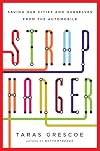
Taras Grescoe's Straphanger: Saving Our Cities and Ourselves from the Automobile (forthcoming from Times Books in April) is a masterful argument in favor of affordable, efficient, ubiquitous public transportation both within and between the world's cities. Grescoe travels the world exploring the theories of public transit, the histories of different cities' systems, and the best (and worst) examples of public transit implementation and practice.
Full disclosure: I've never owned a car, I show more don't drive, and I would be delighted if I could get through life without ever having to do either. But in today's America, it's a tricky way to live. As Grescoe notes, inter-city public transit in the United States and most of Canada is generally either overly time-consuming, unpleasant, or both - and that's when it exists at all (the Northeast Corridor's Acela train and Amtrak's Downeaster from Boston to Portland are notable exceptions, and thankfully they're what I get to use most often).
Grescoe goes deep beneath the streets of New York to witness construction on a new subway line there; he ventures onto the freeways of Los Angeles, and into the far reaches of car-required Phoenix (a city he describes as "his nightmare"). "This book," he writes, "is, in part, the story of a bad idea: the notion that our metropolises should be shaped by the needs of cars, rather than people" (p. 17). But it's also a showpiece for how good networks of public transit can rejuvenate cities, decrease pollution, improve the quality of life for billions of people.
I particularly liked one of his analogies, in which he compared a healthy city growing like an avocado, "nurtured by a solid pit of culture and commerce," to Phoenix, growing more like an onion: "remove the successive layers of subdivisions, and there is nothing - apart from an overpriced stadium, some car dealerships, and a few half-vacant office buildings - at its core" (p. 86).
As Grescoe argues, there's no one simple recipe for creating a viable public transit system: what works (extremely well, apparently) in Copenhagen wouldn't fly in Atlanta, and Philadelphia's model probably wouldn't do for Moscow. But, Grescoe maintains, by having a convenient, regionally-based network (of rail, bus and subway systems, or some combination thereof) combined with dedicated transit lanes within cities and, where possible, widespread pedestrian areas, it's possible to bring cities back from automobile-based hell. By changing rules which make construction and city planning to focus on automobiles (with rules about required off-street parking and things like that) and by shifting the priorities to favor mass transit to the extent possible, the reign of gridlock might someday be brought to an end.
It's not just intra-city transportation but also inter-city travel that needs a helping hand; the fact that most rail track in America is owned by freight companies means that inter-city passenger trains are generally at the mercy of freight, which has meant that the kinds of improvements which would allow faster trains (like those currently being built in Europe and especially China) haven't gotten off the ground in America. It will take a major investment, Grescoe admits, but in the long run, with train travel as by far the most sustainable method of long-distance travel, isn't it worth it?
I'll be interested to hear what others think of this book. I'm sure that my own personal views on the subject affect my opinion of it. Obviously in many areas of the country there's no question but that the private car must remain the transportation method of choice for the forseeable future, but I think Grescoe's point, that we can and should make cities and near-suburbs easily accessible by a fast, reliable, affordable and comfortable mass transit system, is not only a good idea, but an entirely necessary one. Not easy, of course, but necessary.
Highly recommended for anyone at all interested in mass transit systems around the world, or frustrated about how long they have to sit in traffic every day, or sick of standing out in the cold waiting for an old, clunky bus which might or might not show up when it's supposed to. By profiling the bad and the good, Grescoe offers both a cautionary tale and a call to action, and it's one I hope will resonate with many readers.
http://philobiblos.blogspot.com/2012/02/book-review-straphanger.html show less
Full disclosure: I've never owned a car, I show more don't drive, and I would be delighted if I could get through life without ever having to do either. But in today's America, it's a tricky way to live. As Grescoe notes, inter-city public transit in the United States and most of Canada is generally either overly time-consuming, unpleasant, or both - and that's when it exists at all (the Northeast Corridor's Acela train and Amtrak's Downeaster from Boston to Portland are notable exceptions, and thankfully they're what I get to use most often).
Grescoe goes deep beneath the streets of New York to witness construction on a new subway line there; he ventures onto the freeways of Los Angeles, and into the far reaches of car-required Phoenix (a city he describes as "his nightmare"). "This book," he writes, "is, in part, the story of a bad idea: the notion that our metropolises should be shaped by the needs of cars, rather than people" (p. 17). But it's also a showpiece for how good networks of public transit can rejuvenate cities, decrease pollution, improve the quality of life for billions of people.
I particularly liked one of his analogies, in which he compared a healthy city growing like an avocado, "nurtured by a solid pit of culture and commerce," to Phoenix, growing more like an onion: "remove the successive layers of subdivisions, and there is nothing - apart from an overpriced stadium, some car dealerships, and a few half-vacant office buildings - at its core" (p. 86).
As Grescoe argues, there's no one simple recipe for creating a viable public transit system: what works (extremely well, apparently) in Copenhagen wouldn't fly in Atlanta, and Philadelphia's model probably wouldn't do for Moscow. But, Grescoe maintains, by having a convenient, regionally-based network (of rail, bus and subway systems, or some combination thereof) combined with dedicated transit lanes within cities and, where possible, widespread pedestrian areas, it's possible to bring cities back from automobile-based hell. By changing rules which make construction and city planning to focus on automobiles (with rules about required off-street parking and things like that) and by shifting the priorities to favor mass transit to the extent possible, the reign of gridlock might someday be brought to an end.
It's not just intra-city transportation but also inter-city travel that needs a helping hand; the fact that most rail track in America is owned by freight companies means that inter-city passenger trains are generally at the mercy of freight, which has meant that the kinds of improvements which would allow faster trains (like those currently being built in Europe and especially China) haven't gotten off the ground in America. It will take a major investment, Grescoe admits, but in the long run, with train travel as by far the most sustainable method of long-distance travel, isn't it worth it?
I'll be interested to hear what others think of this book. I'm sure that my own personal views on the subject affect my opinion of it. Obviously in many areas of the country there's no question but that the private car must remain the transportation method of choice for the forseeable future, but I think Grescoe's point, that we can and should make cities and near-suburbs easily accessible by a fast, reliable, affordable and comfortable mass transit system, is not only a good idea, but an entirely necessary one. Not easy, of course, but necessary.
Highly recommended for anyone at all interested in mass transit systems around the world, or frustrated about how long they have to sit in traffic every day, or sick of standing out in the cold waiting for an old, clunky bus which might or might not show up when it's supposed to. By profiling the bad and the good, Grescoe offers both a cautionary tale and a call to action, and it's one I hope will resonate with many readers.
http://philobiblos.blogspot.com/2012/02/book-review-straphanger.html show less

This is a highly relevant book for the 21st century. As the population of cities increases and transportation systems start to buckle under the strain of these additional people, it is important to find ways to move them around more effectively and reduce dependence on the automobile. Taras Grescoe, a resident of Montreal, travels around the world to study examples of effective public transit and show multiple solutions: bus rapid transit, subways, light rail, and so on. From Paris to show more Moscow, from Philadelphia to Montreal, from Tokyo to Toronto, we see cities that have done it right from the start, some that have suffered damage from the automobile craze and have started to repair it, and some that are almost a lost cause or that have lost their way.
On a personal level, I greatly enjoyed this book and its validation of the public-transit culture. Not everyone has the ability or inclination to drive, and it's important to provide them with an efficient means of getting around. This book emphasizes the importance of managing transit at a regional level, with a long-term focus, and duplicating the "anywhere to anywhere" mobility provided by cars. It's all very well to have an efficient service bringing people from the suburbs to downtown and back again during peak times, but riders should also be able to get from one suburb to another easily.
In addition to public transit, Grescoe also discusses cycling infrastructure. Copenhagen is one city where cycling is safe, easy and very widely practised, because the infrastructure is in place to get cyclists where they want to go, instead of funnelling them off into parks and quiet areas (what's the use of a bike path in the middle of nowhere if you're trying to bike to work downtown?) It also helps that, in the winter, the snowplows tend the bike paths first.
Grescoe's writing style is smooth and efficient like a high-speed train. The book clacks along merrily, whisking you to various destinations and through a variety of interviews and statistics. Each chapter discusses a particular city, so it can be read easily in chunks, although I found it very hard to put down once I got started. I would definitely recommend this for anyone who is interested in urban planning, public transit, or those who live in and love the city. show less
On a personal level, I greatly enjoyed this book and its validation of the public-transit culture. Not everyone has the ability or inclination to drive, and it's important to provide them with an efficient means of getting around. This book emphasizes the importance of managing transit at a regional level, with a long-term focus, and duplicating the "anywhere to anywhere" mobility provided by cars. It's all very well to have an efficient service bringing people from the suburbs to downtown and back again during peak times, but riders should also be able to get from one suburb to another easily.
In addition to public transit, Grescoe also discusses cycling infrastructure. Copenhagen is one city where cycling is safe, easy and very widely practised, because the infrastructure is in place to get cyclists where they want to go, instead of funnelling them off into parks and quiet areas (what's the use of a bike path in the middle of nowhere if you're trying to bike to work downtown?) It also helps that, in the winter, the snowplows tend the bike paths first.
Grescoe's writing style is smooth and efficient like a high-speed train. The book clacks along merrily, whisking you to various destinations and through a variety of interviews and statistics. Each chapter discusses a particular city, so it can be read easily in chunks, although I found it very hard to put down once I got started. I would definitely recommend this for anyone who is interested in urban planning, public transit, or those who live in and love the city. show less

In Grescoe's travel books he seeks out a specific theme for his travels. In The End of Elsewhere he deliberately sought ought the most touristed spots across the Eurasian landmass and in Straphanger he rode the world's best metro systems seeking solutions for cities. In The Devil's Picnic, the theme is prohibition and Grescoe travels the world to make a meal of food, drink and other consumables that have been banned or severely restricted in different parts of the world. The menu includes show more moonshine in Norway, poppy seed crackers and chewing gum in Singapore, bull's testicles in Spain, smoking in San Francisco, absinthe in Switzerland, mate de coca in Bolivia, and assisted suicide in Switzerland (the one thing the author does not sample). Many of these items are banned out of concerns of morality and health, but Grescoe notes the arbitrary nature of prohibition and the damages on society and individuals that arise when resources are dedicated to legal enforcement rather than treatment, and forbidden fruits are only available through criminal organizations. Similarily, there's the hypocrisy of some substances such as caffeine being considered "harmless" and commonplace, something Grescoe attributes to it being a productivity drug that benefits a capitalist system. At times Grescoe comes off as a jerk, like when he deliberately chews gum in Singapore trying to provoke a reaction, knowing that a white Westerner will not be punished like a local. But largely this is a thoughtful book on where the lines should be drawn between self-determination and societal protection. show less
Lists
Awards


You May Also Like


Statistics
- Works
- 9
- Members
- 1,028
- Popularity
- #25,050
- Rating
- 4.0
- Reviews
- 56
- ISBNs
- 57
- Languages
- 2
- Favorited
- 1
