
About the Author
Derek Wall is the author of numerous books including Economics After Capitalism (2015) and The Rise of the Green Left (2010). He teaches Political Economy at Goldsmith College, University of London and is joint international Coordinator of the Green Party of England and Wales.
Works by Derek Wall
Elinor Ostrom's Rules for Radicals: Cooperative Alternatives Beyond Markets and States (2017) 37 copies, 1 review
Babylon and Beyond: The Economics of Anti-Capitalist, Anti-Globalist and Radical Green Movements (2005) 32 copies
Green History: A Reader in Environmental Literature, Philosophy and Politics (1993) 25 copies, 1 review
Economics After Capitalism: A Guide to the Ruins and a Road to the Future (2015) 16 copies, 1 review
Tagged
Common Knowledge
- Gender
- male
Members
Reviews
Elinor Ostrom's Rules for Radicals: Cooperative Alternatives beyond Markets and States by Derek Wall

Pleasingly this book has a section pointing out that the tradegy of the commons was always a lie, told by imperialist Hardin. Rather than just argue like a pub bore (it was just that one time), Ostrom has the data to refute it.
Wall summarises her work as a set of rules:
1. Think about institutions
2. Pose social change as problem solving
3. Embrace diversity
4. Be specific
5. Listen to the people
6. Self-government is possible
7. Everything changes
8. Map power
9. Collective ownership can work
10. show more Human beings are part of nature too
11. All institutions are constructed, so can be constructed differently
12. No panaceas
13. Complexity does not mean chaos.
Wall does a good job of boiling a life's work into thematic chapters, rounded off with a bit of Marxist critique. The ideas are front-loaded, so I felt I got more out of the earlier chapters. On review I've highlighted at least one section in every chapter. show less
Wall summarises her work as a set of rules:
1. Think about institutions
2. Pose social change as problem solving
3. Embrace diversity
4. Be specific
5. Listen to the people
6. Self-government is possible
7. Everything changes
8. Map power
9. Collective ownership can work
10. show more Human beings are part of nature too
11. All institutions are constructed, so can be constructed differently
12. No panaceas
13. Complexity does not mean chaos.
Wall does a good job of boiling a life's work into thematic chapters, rounded off with a bit of Marxist critique. The ideas are front-loaded, so I felt I got more out of the earlier chapters. On review I've highlighted at least one section in every chapter. show less

An examination of various anti-capitalist strands: reformist, ant-corporatist, green, monetary reform, Marxist, autonomist, anarchist, ecosocialist, feminist. Interesting on ecosocialism as the author regards it as not being a green tinge on top of socialism. His own prescriptions are vague: emphasis on the concept of the commons, which seems a bit marginal to changing the whole system.
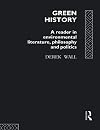
Green History: A Reader in Environmental Literature, Philosophy and Politics, edited by Derek Wall (1994), is a comprehensive anthology tracing the development of ecological thought through history. It explores the roots of environmentalism, covering literature, philosophy, and politics, including animal rights, ecofeminism, and grassroots activism, to encourage environmental action.
Key Aspects of the Reader:
Historical Coverage: Traces ecological ideas from ancient times to show more industrialization.
Diverse Themes: Covers ecology as science, feminism, green politics (socialism/anarchism), and spirituality.
Key Authors/Thinkers: Includes contributions from figures such as Aldous Huxley, John Muir, Henry David Thoreau, and Hildegard of Bingen, among others.
Objective: To demonstrate the long history of environmental concern and to provide a foundation for contemporary environmental activism.
Wall’s introduction to each chapter helps bridge the gap between historical literature and modern environmental politics show less
Key Aspects of the Reader:
Historical Coverage: Traces ecological ideas from ancient times to show more industrialization.
Diverse Themes: Covers ecology as science, feminism, green politics (socialism/anarchism), and spirituality.
Key Authors/Thinkers: Includes contributions from figures such as Aldous Huxley, John Muir, Henry David Thoreau, and Hildegard of Bingen, among others.
Objective: To demonstrate the long history of environmental concern and to provide a foundation for contemporary environmental activism.
Wall’s introduction to each chapter helps bridge the gap between historical literature and modern environmental politics show less

Book Review from the September 1990 issue of the Socialist Standard:
http://socialiststandardmyspace.blogspot.com/2017/07/green-scenario-1990.html
http://socialiststandardmyspace.blogspot.com/2017/07/green-scenario-1990.html
Lists
Read in 2011 (1)
You May Also Like


Statistics
- Works
- 13
- Members
- 220
- Popularity
- #101,714
- Rating
- 3.6
- Reviews
- 4
- ISBNs
- 51
- Languages
- 1