
Howard Weinstein
Author of The Covenant of the Crown
About the Author
Series
Works by Howard Weinstein
Star Trek Annual #3 - Homeworld 2 copies
Star Trek, No. 44 1 copy
V - crise na Costa Oriental 1 copy
Associated Works
Boarding the Enterprise: Transporters, Tribbles, and the Vulcan Death Grip in Gene Roddenberry's Star Trek (2006) — Contributor — 91 copies, 5 reviews
Tagged
Common Knowledge
- Birthdate
- 1954
- Gender
- male
- Occupations
- author
scriptwriter - Nationality
- USA
- Birthplace
- New York, New York, USA
- Associated Place (for map)
- New York, USA
Members
Reviews

Access a version of the below that includes illustrations on my blog.
As always, I have a beef with IDW's entire collecting strategy. Once again, the Star Trek Archives decided to focus their energy on what had been reprinted before, when so many Star Trek comics have never been reprinted at all. The first story arc here had been reprinted in DC's Revisitations, which you can track down for about $10 on the secondary market; the second story was reprinted just two years earlier by Titan in show more their Star Trek Comics Classics line! Like, why bother?
And as always, the books themselves are shoddy. The title of this according to the title page is "The Gary Seven Collection"; all of the other Star Trek Archives have titles that begin "Best of...", and this one's cover thus calls it "Best of The Gary Seven Collection," I think because someone forgot to take "Best of" off. Ouch. The credits opposite the copyright page contain multiple errors, giving inkers credits on issues they did not work on, Howard Weinstein an unwarranted plot credit, and misnumbering an issue. And the indicia gets the issues wrong, claiming the included comics are reprinted from Star Trek: The Peacekeeper #49-50, Star Trek: Convergence #6, and Star Trek: The Next Generation: Convergence #6, when in fact they are reprinted from Star Trek vol. 2 #49-50, Star Trek Annual vol. 2 #6, and Star Trek: The Next Generation Annual #6.
But what of the actual stories? I have a fondness for Gary Seven; I think he's the kind of fun whimsy that can exist at the fringes of the Star Trek universe. John Byrne did a good job capturing this in his Assignment: Earth miniseries a few years back, with adventures plugged into the colorful highlights of the 1960s and 1970s.
These stories, though, don't really lean into that aspect of the character. The first story collected here, "The Peacekeeper," is a decent technological thriller about a superweapon, but a bigger part of the focus is the "Aegis" Gary works for, and few of his fellow agents who have gone rogue and are trying to strike back against their masters. I enjoyed the story, but wanted more Gary and more color.
The second, "Convergence," is utterly tedious. It has a great premise: someone is kidnapping people who are important to Federation/Romulan history from out of time: a Romulan general, Spock, Captain Harriman of the Enterprise-B, Data,* and Chancellor Gowron. This changes the timeline, and the crews of the Enterprise-A and Enterprise-D end up working at the same time to fix it, unknown to each other.
But nothing happens, even though both issues are double-length. The Romulan, Harriman, Spock, and Data just talk and talk and talk, even though such a collaboration could be awesome. The two Enterprise crews just wander around a foggy planet. History has changed in the Next Generation era thanks to the removal of Spock and Harriman from history, but even though we see Ambassador Sybok, he promptly vanishes from the story before anything can be done with him. I'm sure this story had some limitations, but the novel Federation came out around the same time and managed to make the two Enterprise crews not meeting into an epic event regardless. This is a damp squib, and again, barely makes use of what makes Gary Seven a fun character.
(And the whole collection has no Roberta Lincoln at all! At least Isis turns up.)
I read these where they take place, between the comics adaptations of Final Frontier and Undiscovered Country. What I hadn't realized before reading is that they were written later. Admiral Cartwright shows up in "The Peacekeeper," with a slightly sinister agenda, and Harriman's appearance in "Convergence" was a total surprise. Two bits of nice retro-foreshadowing. I also liked that Saavik was brought back as the Enterprise-A's helm officer following the departure of Sulu for his own command on Excelsior.
* Of course, these comics were written fifteen years before, but you could take this as foreshadowing Nemesis if you wanted. show less
As always, I have a beef with IDW's entire collecting strategy. Once again, the Star Trek Archives decided to focus their energy on what had been reprinted before, when so many Star Trek comics have never been reprinted at all. The first story arc here had been reprinted in DC's Revisitations, which you can track down for about $10 on the secondary market; the second story was reprinted just two years earlier by Titan in show more their Star Trek Comics Classics line! Like, why bother?
And as always, the books themselves are shoddy. The title of this according to the title page is "The Gary Seven Collection"; all of the other Star Trek Archives have titles that begin "Best of...", and this one's cover thus calls it "Best of The Gary Seven Collection," I think because someone forgot to take "Best of" off. Ouch. The credits opposite the copyright page contain multiple errors, giving inkers credits on issues they did not work on, Howard Weinstein an unwarranted plot credit, and misnumbering an issue. And the indicia gets the issues wrong, claiming the included comics are reprinted from Star Trek: The Peacekeeper #49-50, Star Trek: Convergence #6, and Star Trek: The Next Generation: Convergence #6, when in fact they are reprinted from Star Trek vol. 2 #49-50, Star Trek Annual vol. 2 #6, and Star Trek: The Next Generation Annual #6.
But what of the actual stories? I have a fondness for Gary Seven; I think he's the kind of fun whimsy that can exist at the fringes of the Star Trek universe. John Byrne did a good job capturing this in his Assignment: Earth miniseries a few years back, with adventures plugged into the colorful highlights of the 1960s and 1970s.
These stories, though, don't really lean into that aspect of the character. The first story collected here, "The Peacekeeper," is a decent technological thriller about a superweapon, but a bigger part of the focus is the "Aegis" Gary works for, and few of his fellow agents who have gone rogue and are trying to strike back against their masters. I enjoyed the story, but wanted more Gary and more color.
The second, "Convergence," is utterly tedious. It has a great premise: someone is kidnapping people who are important to Federation/Romulan history from out of time: a Romulan general, Spock, Captain Harriman of the Enterprise-B, Data,* and Chancellor Gowron. This changes the timeline, and the crews of the Enterprise-A and Enterprise-D end up working at the same time to fix it, unknown to each other.
But nothing happens, even though both issues are double-length. The Romulan, Harriman, Spock, and Data just talk and talk and talk, even though such a collaboration could be awesome. The two Enterprise crews just wander around a foggy planet. History has changed in the Next Generation era thanks to the removal of Spock and Harriman from history, but even though we see Ambassador Sybok, he promptly vanishes from the story before anything can be done with him. I'm sure this story had some limitations, but the novel Federation came out around the same time and managed to make the two Enterprise crews not meeting into an epic event regardless. This is a damp squib, and again, barely makes use of what makes Gary Seven a fun character.
(And the whole collection has no Roberta Lincoln at all! At least Isis turns up.)
I read these where they take place, between the comics adaptations of Final Frontier and Undiscovered Country. What I hadn't realized before reading is that they were written later. Admiral Cartwright shows up in "The Peacekeeper," with a slightly sinister agenda, and Harriman's appearance in "Convergence" was a total surprise. Two bits of nice retro-foreshadowing. I also liked that Saavik was brought back as the Enterprise-A's helm officer following the departure of Sulu for his own command on Excelsior.
* Of course, these comics were written fifteen years before, but you could take this as foreshadowing Nemesis if you wanted. show less

The best ST I've read recently... though I have to admit that's not saying much. ?áOk, it's gracefully written. ?áThe focus is on our known characters, who are portrayed plausibly, accurately, imo. ?áThe other characters and the adventure are complex enough to be interesting but not in such a manner that frustrates a reader looking for a genre read rather than *L*iterature. ?áThe environmentalism message is a bit heavy but not detracting from the story. ?á
And the writing style is show more graceful, sprinkled with bits of not-quite-purple prose: So she painted her natural shyness with a heavy coat of sociable resolve and went looking for him." ?á(Oh, I see that implies romance. ?áNope. ?áWhat it is, is, that females are really truly as interesting, powerful, valued, as males, if not more so, in Weinstein's creation. ?áShe and he of the quote are truly friends and colleagues, nothing more.)
Recommended to any and all ST fans. ?áNot so much to those uninterested, though, I have to admit." show less
And the writing style is show more graceful, sprinkled with bits of not-quite-purple prose: So she painted her natural shyness with a heavy coat of sociable resolve and went looking for him." ?á(Oh, I see that implies romance. ?áNope. ?áWhat it is, is, that females are really truly as interesting, powerful, valued, as males, if not more so, in Weinstein's creation. ?áShe and he of the quote are truly friends and colleagues, nothing more.)
Recommended to any and all ST fans. ?áNot so much to those uninterested, though, I have to admit." show less

Howard Weinstein is a prolific author of Star Trek franchise novels, and if his first one is any guide it's easy to see why. In it he provides an efficient tale of a planet whose Klingon-sparked civil war is winding down and who needs their exiled king to return to cement the peace. Due to his personal connection with the king James Kirk is ordered to transport him to his homeworld, only to arrive to find the monarch near death. To salvage the mission, Kirk must retrieve the all-important show more crown and convince the king's reluctant daughter that she has the strength necessary to assume the throne — all while dealing with a Klingon battlecruiser and Klingon intelligence operatives who are determined to do everything within their power to stop the Enterprise crew form fulfilling their mission.
The plot of Weinstein's book is not that different from that of an episode of the original series, which often had the Enterprise crew intervening in the planetary politics of strategically important worlds. What Weinstein does is put Leonard McCoy at the center of events and expand the scale beyond what was ever possible in the series by making it a truly interstellar tale, with journeys to multiple planets, spaceship pursuits, and struggles with alien fauna. While Weinstein does not draw any great moral from the tale, he does nonetheless provide readers with an engaging adventure, one that is fresher for its scope and its concentration on a previously under-utilized character. show less
The plot of Weinstein's book is not that different from that of an episode of the original series, which often had the Enterprise crew intervening in the planetary politics of strategically important worlds. What Weinstein does is put Leonard McCoy at the center of events and expand the scale beyond what was ever possible in the series by making it a truly interstellar tale, with journeys to multiple planets, spaceship pursuits, and struggles with alien fauna. While Weinstein does not draw any great moral from the tale, he does nonetheless provide readers with an engaging adventure, one that is fresher for its scope and its concentration on a previously under-utilized character. show less
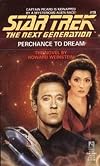
We got two pages in, and already I felt like I was in an alternate universe. Dr Crusher "pouts" and Picard "scolds" (OK, Picard DOES scold) and she calls him maternal (!!!!) and he gives her parenting advice (!!!!!!!) Fortunately it gets better, although I don't think it ever quite nails Picard's relationship to kids. There's notably a moment where Kenny (a teenager) says that he got into writing poetry because he made a computer program to analyze rhyme schemes - shades of NM, heh.
You May Also Like


Associated Authors
Statistics
- Works
- 81
- Also by
- 5
- Members
- 4,342
- Popularity
- #5,775
- Rating
- 3.2
- Reviews
- 29
- ISBNs
- 75
- Languages
- 8
- Favorited
- 1