This topic is currently marked as "dormant"—the last message is more than 90 days old. You can revive it by posting a reply.
1QuentinTom
By gracious permission of Our Leader, and following Porius's inimitable lead with his wonderful Readers' Diary, I humbly request the indulgence of my fellow salonistas to log my 2011 reading in Le Salon.
This is not a desertion of Club Read, but rather an attempt to reduce the amount of time I spend on LT by putting everything under one roof. Less time on different LT groups, more time reading actual books, si?
This is not a desertion of Club Read, but rather an attempt to reduce the amount of time I spend on LT by putting everything under one roof. Less time on different LT groups, more time reading actual books, si?
3absurdeist
More time for reading is very good. So, since Schiller has, unfortunately, escaped acquisition, what shall tomcatMurr read first in 2011?
(besides the end of Dusty's oeuvre, of course)?
Predictions?
Anybody?
(besides the end of Dusty's oeuvre, of course)?
Predictions?
Anybody?
4Macumbeira
Are there any 19th century Russians left ?
5QuentinTom
oh yes,
HERZEN!!!!!!!
6 volumes of autobiography, called by Isiah Berlin one of the greatest masterpieces of Russian 19 C literature.
but don't worry, I'm not reading that this year. :(
no.
I am going to prove to myself that there is life after Dostoevsky. My mission for this year, or at least for the forseeable future, until, my next big project rears its head, will be to tackle some of the Still Unread books in my library. There are 203. Of course there's no way I can read them all in one year, but I am going try to reduce this number WITHOUT ACQUIRING NEW BOOKS!!!! I am salivating at the thought.
I reading now The Coast of Utopia a trilogy of plays by the great Tom Stoppard all set in Russia from 1830 to 1860. Dialogues between Bakunin, Belinksy and Herzen. I am heaven.
The cover on this book is a detail of Ayvazovsky's great painting: Storm on Cape Aya.

In The Icon and the Axe Billington writes of the enduring image of the sea in Russian 19th century culture, surprising given that Russia is a huge landlocked country. Herzen's most famous collection of essays, for example, was called From the Other Shore. The titles of of the plays that make up this trilogy reference this topos.
The last play I saw before leaving London for good to come to this green and pleasant isle was Stoppard's The invention of love, about one of my great heroes, A.E. Houseman. It was incredible.
And I bumped into the playwright himself in the washroom in the middle of the second act, when I could no longer hold myself and simply had to go.
Stoppard is a huge figure, in all senses of the word, with great personal charm.
http://www.youtube.com/watch?v=gIS6BnL0_us
The book he is talking about is Russian Thinkers.
Tom Stoppard
The Oprah of the intelligentsia.
HERZEN!!!!!!!
6 volumes of autobiography, called by Isiah Berlin one of the greatest masterpieces of Russian 19 C literature.
but don't worry, I'm not reading that this year. :(
no.
I am going to prove to myself that there is life after Dostoevsky. My mission for this year, or at least for the forseeable future, until, my next big project rears its head, will be to tackle some of the Still Unread books in my library. There are 203. Of course there's no way I can read them all in one year, but I am going try to reduce this number WITHOUT ACQUIRING NEW BOOKS!!!! I am salivating at the thought.
I reading now The Coast of Utopia a trilogy of plays by the great Tom Stoppard all set in Russia from 1830 to 1860. Dialogues between Bakunin, Belinksy and Herzen. I am heaven.
The cover on this book is a detail of Ayvazovsky's great painting: Storm on Cape Aya.

In The Icon and the Axe Billington writes of the enduring image of the sea in Russian 19th century culture, surprising given that Russia is a huge landlocked country. Herzen's most famous collection of essays, for example, was called From the Other Shore. The titles of of the plays that make up this trilogy reference this topos.
The last play I saw before leaving London for good to come to this green and pleasant isle was Stoppard's The invention of love, about one of my great heroes, A.E. Houseman. It was incredible.
And I bumped into the playwright himself in the washroom in the middle of the second act, when I could no longer hold myself and simply had to go.
Stoppard is a huge figure, in all senses of the word, with great personal charm.
http://www.youtube.com/watch?v=gIS6BnL0_us
The book he is talking about is Russian Thinkers.
Tom Stoppard
The Oprah of the intelligentsia.
6QuentinTom
Mind precedes all mental states. Mind is their chief; they are all mind-wrought. If with an impure mind a person speaks or acts suffering follows him like the wheel that follows the foot of the ox.
Dhp 1
Dhp 1
7theaelizabet
Lerve Tom Stoppard, I do. Way back when, Rosencrantz & Guildenstern Are Dead provided one of those "aha" moments for me about what was possible in onstage. Unfortunately, I never made it to Coast of Utopia when it played in NY, but friends who saw it thought it was terrific. I should grab a copy of the script for a look.
8tonikat
Aha, you're here, I wondered what had become of you. I use the LT home page for my home page and follow threads I have starred from it - which means I often don't go the groups home pages - doh, big mistake, miss things, but another strategy for managing the amount of time on LT I understand that. Anyway, maybe you don't need to know all that. But tell me, what is Dhp 1 -- am I being slow? I love the quote -- made me think of how minds might become impure, perhaps in pretending to be what society sees as pure. Who knows. Happy New year to you and look forward to reading of your reading.
btw -- is Russia really landlocked? Murmansk? Vladivostok? (ok maybe that came with a bit of expansion)
btw -- is Russia really landlocked? Murmansk? Vladivostok? (ok maybe that came with a bit of expansion)
9Macumbeira
great painting
10LolaWalser
Hmmmm, a personal reading thread in the Salon... HMMMM. Freeque, am I allowed to copycat the cat and make one too? I'm thinking a regular dose of public shaming & ridicule might be good for my reading habit(s).
SORRY TO PUT THIS IN YOUR THREAD MURR
{this space reserved for future on-topic edit}
SORRY TO PUT THIS IN YOUR THREAD MURR
{this space reserved for future on-topic edit}
11absurdeist
copycats welcome
12Mr.Durick
Cat, The Icon and the Axe mentioned here and elsewhere is tempting. BN.COM says it starts in Kievan times and runs into the post-Khrushchev era. I would prefer something slanted more towards Kievan Russia than towards communist Russia. Which way does this book lean?
Robert
Robert
13QuentinTom
Robert,
Billington covers the whole of Russian history, including the Kievan period in detail. He sees Russian history and culture as an interaction between three forces: the Petersburg, force, the Moscow force, and the Kievan force, while Figes concentrates only on the first two. I highly recommend Billington. It's a superb book.
Lola,
oh please do! I would follow your reading thread eagerly!
Tony,
It's the Dhammapada. One of my goals this year to to try to further my understanding of Buddhism and my knowledge of the Pali canon, starting with the Dhammapada. I'll be posting a sutta every now and then.
You're right, of course about Russia not really being landlocked, but due to the size of the place perhaps we can say spiritually landlocked. Millions of Russians up until the late 19th century (perhaps even today) never saw the sea, a fact which is inconceivable to someone from an island.
Thea, Stoppard is great isn't he?
Here is Herzen from the middle trilogy (I believe this is a direct quote from one of Herzen's essays):
"Because children grow up, we think a child's purpose is to grow up. But a child's purpose is to be a child. Nature doesn't disdain what lives for a day. It pours the whole of itself into each moment. We don't value the lilly less for not being made of flint and built to last. Life's bounty is in its flow -later is too late. Where is the song when it's been sung? The dance when it's been danced? It's only we humans who want to own the future, too. ..The death of a child has no more meaning than the death of armies, of nations. Was the child happy while he lived? That is a proper question, the only question. If we can't arrange our own happiness, it's a conceit beyond vulgarity to arrange the happiness of those who come after us..."
Credo.
Billington covers the whole of Russian history, including the Kievan period in detail. He sees Russian history and culture as an interaction between three forces: the Petersburg, force, the Moscow force, and the Kievan force, while Figes concentrates only on the first two. I highly recommend Billington. It's a superb book.
Lola,
oh please do! I would follow your reading thread eagerly!
Tony,
It's the Dhammapada. One of my goals this year to to try to further my understanding of Buddhism and my knowledge of the Pali canon, starting with the Dhammapada. I'll be posting a sutta every now and then.
You're right, of course about Russia not really being landlocked, but due to the size of the place perhaps we can say spiritually landlocked. Millions of Russians up until the late 19th century (perhaps even today) never saw the sea, a fact which is inconceivable to someone from an island.
Thea, Stoppard is great isn't he?
Here is Herzen from the middle trilogy (I believe this is a direct quote from one of Herzen's essays):
"Because children grow up, we think a child's purpose is to grow up. But a child's purpose is to be a child. Nature doesn't disdain what lives for a day. It pours the whole of itself into each moment. We don't value the lilly less for not being made of flint and built to last. Life's bounty is in its flow -later is too late. Where is the song when it's been sung? The dance when it's been danced? It's only we humans who want to own the future, too. ..The death of a child has no more meaning than the death of armies, of nations. Was the child happy while he lived? That is a proper question, the only question. If we can't arrange our own happiness, it's a conceit beyond vulgarity to arrange the happiness of those who come after us..."
Credo.
15PimPhilipse
>13 QuentinTom:: Many Russians never saw the sea, but they certainly knew it from folklore. There, it is usually something that divides 'us' from 'them': the trice-tenth empire, the underworld, Tsar Saltan and his banished son...
16QuentinTom
true, but it was hardly a maritime nation, in the sense that the Netherlands/Belgium, England were.
17PimPhilipse
So for Dutch/English/Spanish/... people the sea was part of their infrastructure, but for Russian people it was something where you had no business (unless you were a hero or a foreigner).
18QuentinTom
Absolutely. Nicely put.
19Macumbeira
Tomcat, I would prefer you would use Flanders instead of Belgium. Flemish and Dutch Sailors were the basis of the Polish and Russian Marine. When sailing with my Polish friends, I don't need a translator when we use technical sailing terms. It is just dutch.
20QuentinTom
Then so I shall, Mac.
"Our meaning is in how we live in an imperfect world in our time. We have no other."
Herzen.
"Our meaning is in how we live in an imperfect world in our time. We have no other."
Herzen.
21QuentinTom
Mind precedes all mental states. Mind is their chief; they are all mind-wrought. If with a pure mind a person speaks or acts happiness follows him like his never-departing shadow.
Dhp 2
Dhp 2
22PimPhilipse
I'm afraid I'll have to order the Stoppard.
I remember seeing Rosencrantz and Guildenstern are dead in Dutch around 1975. At that time, interest in the play was so low that the actors had sent a bunch of free tickets to our teacher, and he more or less ordered us to watch it. I was impressed.
I remember seeing Rosencrantz and Guildenstern are dead in Dutch around 1975. At that time, interest in the play was so low that the actors had sent a bunch of free tickets to our teacher, and he more or less ordered us to watch it. I was impressed.
23QuentinTom
Pim, for us sufferers of Slavophilia, Stoppard's trilogy is a joy to read.
24QuentinTom
I am now reading Mozart's Women.
I'm going to be very busy over the next few days putting together a new course for my students. I'm going to read some history and biography next, a kind of relaxation for me, so I can focus on the course I'm writing.
Here is Constanze, Mozart's wife:
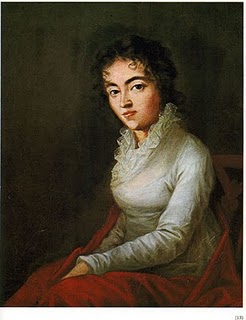
and here is Dame Kiri singing Dove Sono from Figaro:
http://www.youtube.com/watch?v=BTWBieDvZb8
I'm going to be very busy over the next few days putting together a new course for my students. I'm going to read some history and biography next, a kind of relaxation for me, so I can focus on the course I'm writing.
Here is Constanze, Mozart's wife:
and here is Dame Kiri singing Dove Sono from Figaro:
http://www.youtube.com/watch?v=BTWBieDvZb8
25Porius
http://www.youtube.com/watch?v=ntSsshyMH6M&feature=related
http://www.youtube.com/watch?v=PGSzeHKgHfI&feature=related
The 'Radical Chic' man can at times be too much of a muchness though this 3 part thing is excellent:
http://www.youtube.com/watch?v=g0ZE38BQmvQ&feature=related
http://www.youtube.com/watch?v=PGSzeHKgHfI&feature=related
The 'Radical Chic' man can at times be too much of a muchness though this 3 part thing is excellent:
http://www.youtube.com/watch?v=g0ZE38BQmvQ&feature=related
26QuentinTom
One of the best movies of all time. Great music, great acting, great script.
Thanks Por.
Thanks Por.
27Macumbeira
Mozart and Salieri (Russian: Моцарт и Сальери , Motsart i Sal'yeri) is a one-act opera in two scenes by Nikolai Rimsky-Korsakov, to a Russian libretto taken almost verbatim from Alexander Pushkin's 1830 verse drama of the same name.
We knwo where Shaffer and foreman got their idea for Amadeus
We knwo where Shaffer and foreman got their idea for Amadeus
28absurdeist
I don't know classical music at all ... Pathetic really ... but I know that movie! One of my favorites for sure. I'm tempted to link "Rock Me Amadeus" in response. But I've restrained myself, wanting to maintain a spirit of decorum and good taste upon this thread.
29QuentinTom
And in fact, Pushkin based his one act play on rumours which were current around Vienna of the time. All good stuff.
Wasn't Bernstein a genius at communicating music?
Wasn't Bernstein a genius at communicating music?
30Makifat
I just wanted to put a marker down on this thread and wish my good friend Tomcat a Happy New Year! Can't wait to see what goodies you reference in the thread...
Now I'm off to see if Lola has started her thread...
Now I'm off to see if Lola has started her thread...
31Macumbeira
Henri, there is nothing wrong with the Falco song "rock me amadeus".
You can mention it; you will not be stoned
Saw the movie Agora with Rachel Weisz yesterday. Quite interesting.
Christian fundamentalists tearing down the library of Alexandria !
I always taught it was the Muslims...or was it the Romans ? The Jews ?
The communists ? Ah no that cannot be, there were no communists in 391
Poor Hypatia...
You can mention it; you will not be stoned
Saw the movie Agora with Rachel Weisz yesterday. Quite interesting.
Christian fundamentalists tearing down the library of Alexandria !
I always taught it was the Muslims...or was it the Romans ? The Jews ?
The communists ? Ah no that cannot be, there were no communists in 391
Poor Hypatia...
33QuentinTom
Maki! how nice to see you here! Happy New year to you too!
There are some who say that the library of Alexandria was set on fire accidentally, by a cat. I, of course, know nothing about this.
Urania, I think my recent pregnancy scare must have addled my brains. What do you mean in 32?
There are some who say that the library of Alexandria was set on fire accidentally, by a cat. I, of course, know nothing about this.
Urania, I think my recent pregnancy scare must have addled my brains. What do you mean in 32?
34QuentinTom
"He abused me, he struck me, he overpowered me, he robbed me." Those who harbor such thoughts do not still their hatred.
"He abused me, he struck me, he overpowered me, he robbed me." Those who do not harbor such thoughts still their hatred.
Dhp 3 & 4
"He abused me, he struck me, he overpowered me, he robbed me." Those who do not harbor such thoughts still their hatred.
Dhp 3 & 4
35slickdpdx
24: http://www.keane-eyes.com/
31: If Wikipedia can be believed, in 391 the Bishop of Alexandria ordered the destruction of Serapeum which was the "daughter" library of the great library of Alexandria (which was destroyed prior to the Common Era). The source for this is said to be Gibbon, but really, shouldn't Gibbon's source be the source?
31: If Wikipedia can be believed, in 391 the Bishop of Alexandria ordered the destruction of Serapeum which was the "daughter" library of the great library of Alexandria (which was destroyed prior to the Common Era). The source for this is said to be Gibbon, but really, shouldn't Gibbon's source be the source?
36Makifat
34
Gotta love that Dhammapada!
31
Anytime you get some repository of knowledge, some oasis of culture, you'll get a crowd of zealots and true believers of various stripes lining up to tear it up and shit on the remnants. Because, really, once you have the answers, the rest is just so much toilet paper.
Gotta love that Dhammapada!
31
Anytime you get some repository of knowledge, some oasis of culture, you'll get a crowd of zealots and true believers of various stripes lining up to tear it up and shit on the remnants. Because, really, once you have the answers, the rest is just so much toilet paper.
37Macumbeira
35 That is the thing, Wikipedia can not be believed !
38QuentinTom
well said, Maki.
What struck me about that movie was the way all the Christian zealots looked exactly like current day Muslim fundamentalists: all hair and sweat. Yuck!
There was one very memorable shot, Mac, do you remember, when the camera pans away from the religious riots and keeps on panning out to space, until you can see the earth, blue and beautiful, floating in the darkness, while the soundtrack continues all the screams and cries of the riots. That was powerful.
What struck me about that movie was the way all the Christian zealots looked exactly like current day Muslim fundamentalists: all hair and sweat. Yuck!
There was one very memorable shot, Mac, do you remember, when the camera pans away from the religious riots and keeps on panning out to space, until you can see the earth, blue and beautiful, floating in the darkness, while the soundtrack continues all the screams and cries of the riots. That was powerful.
39Macumbeira
Indeed !
The total ( and so beautiful ) globe comes into view two or three times. To show the futility of our being, the rediculness ( is this english ? ) of the different religious worldviews and the fantastic endeavour of the human mind to comprehend it all.
Mehr Licht whispered Goethe when he died.
Damn right !
The total ( and so beautiful ) globe comes into view two or three times. To show the futility of our being, the rediculness ( is this english ? ) of the different religious worldviews and the fantastic endeavour of the human mind to comprehend it all.
Mehr Licht whispered Goethe when he died.
Damn right !
41QuentinTom
What reading? Is this a group read? what? wot? wat?
43QuentinTom
Sob, heavy world
Sob as you spin,
Mantled in mist
Remote from the happy.
Auden
Sob as you spin,
Mantled in mist
Remote from the happy.
Auden
44anna_in_pdx
43: We have a crepe restaurant here in Portland called "Le Happy".
I guess Auden lived in a location remote from Portland.
I guess Auden lived in a location remote from Portland.
45urania1
>41 QuentinTom:--Your reading silly cat.
46QuentinTom
well, I am about half way through 'Mozart's Women'. Poor Mozart had the most dreadful father, what an arsehole that man was!
Jane Glover does an excellent job of incorporating the letters the family wrote to each other. Leopold's letters to his son were HUGE: 3,000 words he wrote on a regular basis, full of unwanted advice and heavy-handed emotional blackmail.
Mozart's letters are wonderful. Although we need a new edition
in English. The touchstoned edition is sadly out of date, and heavily edited.
http://thelectern.blogspot.com/2007/01/mozart-to-god.html
Here is the Kyrie from the C Minor mass. The soprano solo 'Christe Eleison' (2.32) was written for his wife Constanze, and she sang it at the first performance in Salzburg in October 1783. She must have had the most astonishing vocal range. Her sister Aloysia was the foremost soprano of the age, internationally famous, and a frequent collaborator with Mozart in concert and composition. Mozart had originally been in love with Aloysia, but she had spurned him. Mozart then married the younger sister Constanza, a much better choice for all concerned, it would seem.
http://www.youtube.com/watch?v=S_-qWfgu_Rw
Jane Glover does an excellent job of incorporating the letters the family wrote to each other. Leopold's letters to his son were HUGE: 3,000 words he wrote on a regular basis, full of unwanted advice and heavy-handed emotional blackmail.
Mozart's letters are wonderful. Although we need a new edition
in English. The touchstoned edition is sadly out of date, and heavily edited.
http://thelectern.blogspot.com/2007/01/mozart-to-god.html
Here is the Kyrie from the C Minor mass. The soprano solo 'Christe Eleison' (2.32) was written for his wife Constanze, and she sang it at the first performance in Salzburg in October 1783. She must have had the most astonishing vocal range. Her sister Aloysia was the foremost soprano of the age, internationally famous, and a frequent collaborator with Mozart in concert and composition. Mozart had originally been in love with Aloysia, but she had spurned him. Mozart then married the younger sister Constanza, a much better choice for all concerned, it would seem.
http://www.youtube.com/watch?v=S_-qWfgu_Rw
47Porius
That bit from the CMinor Mass transformed me into a pile of gooseflesh. Back to my childhood. Domeenoosvobiwoomekwoowspeitwotwooh. I loved the Mass and Tuesday night Benediction when they trotted out the Monstrance, etc. I was an acute observer of every liturgical detail. The vestments, the accoutrement, the prayers, the music, the everything. I didn't for one moment believe, but I sure did love the ritual. I to this day drop in churches of all denominations to luxuriate in that milieux.
48QuentinTom
the theatricality of high mass......
49QuentinTom
The central chapter of this book is a discussion of how the music is always tailored to fit the voices of the people singing it, and mirrors the relationships Mozart had with the people who were performing it. Glover focuses on Mozart's relationship with his sopranos, his women.
Here is Glover writing about the aria from Idomineo: 'se il padre perdei', written for Mozart's friend, Dorotea Wendling, the first soprano who performed it.
M wrote not only for Dorotea's glorious sustained singing, but for her husband, Johan Babtist Wendling and his other friends in the orchestra too, the solo instrumental lines for flute (Wendling), oboe (Friedrich Ramm), horn (Franz Lang) and bassoon (Georg Ritter).
You can hear all these instruments prominently in the orchestral accompaniments to the voice:
http://www.youtube.com/watch?v=i_9qx1sQEcc
M was the centre of a large extended musical family in Vienna, all friends, all passionate about music, and all underpaid by their employers. He wrote his music for them, as well as for posterity.
A fascinating insight.
Here is Glover writing about the aria from Idomineo: 'se il padre perdei', written for Mozart's friend, Dorotea Wendling, the first soprano who performed it.
M wrote not only for Dorotea's glorious sustained singing, but for her husband, Johan Babtist Wendling and his other friends in the orchestra too, the solo instrumental lines for flute (Wendling), oboe (Friedrich Ramm), horn (Franz Lang) and bassoon (Georg Ritter).
You can hear all these instruments prominently in the orchestral accompaniments to the voice:
http://www.youtube.com/watch?v=i_9qx1sQEcc
M was the centre of a large extended musical family in Vienna, all friends, all passionate about music, and all underpaid by their employers. He wrote his music for them, as well as for posterity.
A fascinating insight.
50PimPhilipse
I participated (as a choral singer) in a concert featuring the C minor mass last December. No visual theatricality there, but plenty of musical theatrality. Some parts could easily be transported to an opera. In fact
- M. (with help of Da Ponte) transformed the C minor mass into an oratorio: Davidde penitente (KV469).
- I had sung this mass once before, about 25 years ago, and a few years later I saw a televised performance of Don Giovanni directed by Gardiner which included an aria that I was sure I recognized from the mass. As we had sung a reconstruction, it may have been a borrowing by the mass editor, but it was certainly a weird experience.
>the music is always tailored to fit the voices of the people singing it
This is also known of the music of J.S. Bach, and I assume pretty much every composer who lived close to his musicians instead of at the top of an ivory tower from which he throws down his abstract compositions (no, I am not referring to specific composers).
- M. (with help of Da Ponte) transformed the C minor mass into an oratorio: Davidde penitente (KV469).
- I had sung this mass once before, about 25 years ago, and a few years later I saw a televised performance of Don Giovanni directed by Gardiner which included an aria that I was sure I recognized from the mass. As we had sung a reconstruction, it may have been a borrowing by the mass editor, but it was certainly a weird experience.
>the music is always tailored to fit the voices of the people singing it
This is also known of the music of J.S. Bach, and I assume pretty much every composer who lived close to his musicians instead of at the top of an ivory tower from which he throws down his abstract compositions (no, I am not referring to specific composers).
51QuentinTom
Mozart often borrowed phrases from one work and put them in the next. How lucky you are to have sung that!
one of my favourite Mozart bits:
http://www.youtube.com/watch?v=6Wi7UsXW1As
one of my favourite Mozart bits:
http://www.youtube.com/watch?v=6Wi7UsXW1As
52QuentinTom
Hatred is never appeased by hatred in this world. By non-hatred alone is hatred appeased. This is a law eternal.
Dhp 5
Dhp 5
53QuentinTom
I am now reading Lucrezia Borgia by Maria Bellonci, winner of the Viareggio prize in 1939.
A fantastic book. I'm only two chapters in but the text is delicious blend of salacious gossip, jaw dropping scandal, political intrigue and high history, with ravishing descriptions of 15th Century Rome and a sly wit at all the shenanigans from the author.
Here is a portrait of Lucrezia by Bartolomeo Da Venezia:

Her nipples were the envy of Voltaire.
A fantastic book. I'm only two chapters in but the text is delicious blend of salacious gossip, jaw dropping scandal, political intrigue and high history, with ravishing descriptions of 15th Century Rome and a sly wit at all the shenanigans from the author.
Here is a portrait of Lucrezia by Bartolomeo Da Venezia:

Her nipples were the envy of Voltaire.
56absurdeist
"Nipples" and "bare breasts" are three of the most beautiful words in the English language. Thank you for the pic! Woo hoo!
57citygirl
I am looking forward to your review of this book, if you write one. She is a fascinating figure, and I usually avoid history books like the plague because they tend to be so dry. (I prefer to get my history from fiction, think of that what you will.) But I may branch out for a straight history book that is truly engaging.
"Nipple" is kind of a silly word. I wish there were a prettier term.
"Nipple" is kind of a silly word. I wish there were a prettier term.
58MeditationesMartini
>54 urania1: here we go! I'm pleased with how prominent the nipples are.
http://www.google.com/imgres?imgurl=http://www.whitman.edu/VSA/letters/pigalle.j...
>57 citygirl: according to Etymonline, it's from an Old English word neb "beak, bill, snout", although I always wonder about stuff like that--were we really talking about snouts before nipples? It makes you wonder about former nipplewords, now lost forever. Surprisingly, it's not connected with nub, which is a variant of knob.
http://www.google.com/imgres?imgurl=http://www.whitman.edu/VSA/letters/pigalle.j...
>57 citygirl: according to Etymonline, it's from an Old English word neb "beak, bill, snout", although I always wonder about stuff like that--were we really talking about snouts before nipples? It makes you wonder about former nipplewords, now lost forever. Surprisingly, it's not connected with nub, which is a variant of knob.
59QuentinTom
>57 citygirl: Citygirl, the book is less about Lucrezia, I'm finding, and more about all the Borgias. I'm not complaining, they were all a fascinating bunch. The only problem with the book, is that there is no scholarly apparatus, such as family tree, map, chronology, sourced references etc. Pheonix have done a lazy job of brining Belonci's book to an English readership. Thank god for Wikipedia!
What historical fiction do you enjoy? I"m a huge fan of historical fiction, when it's done well, it's excellent.
Martin, perhaps it's origin was slang?
I learn from Belonci that Pope Alexander VI wrote a kind of macaroni of Latin, Italian and Spanish. She gives this example:
Adriana (one of the Pope's women) declarant nos expressament que ella no vuol menar aci a Guiloa contro la voluntat de Ursino.....
('she has declared to us that she is not willing to bring Guilia here against Orsino's will....' Guilia being one of the Pope's mistresses, Orsino her husband.)
Here is a picture of the old runt:

What historical fiction do you enjoy? I"m a huge fan of historical fiction, when it's done well, it's excellent.
Martin, perhaps it's origin was slang?
I learn from Belonci that Pope Alexander VI wrote a kind of macaroni of Latin, Italian and Spanish. She gives this example:
Adriana (one of the Pope's women) declarant nos expressament que ella no vuol menar aci a Guiloa contro la voluntat de Ursino.....
('she has declared to us that she is not willing to bring Guilia here against Orsino's will....' Guilia being one of the Pope's mistresses, Orsino her husband.)
Here is a picture of the old runt:

60QuentinTom
In other news, on a trip to the university bookstore here, I found they were having a promotion of Tuttle books, an imprint specialising in books from Japan. I bought Lafcadio Hearn's book Glimpses of Unfamilar Japan from 1894, and a wonderful collection of stories about same sex Samurai love from the 17th century. This last is a gem, as it also includes 90 traditional Geisha songs, translated by Mathers. Here is a sample:
50: Plum Tree Under Snow
The Plum tree still lives
Even still blossoms
Under the snow; my heart,
My most unfortunate heart
Also.
66: Flower of the Cherry
It is because they fall
That they are admirable.
What is the good of clinging
Without hope?
Clinging violently to the branches,
Withered on all the branches,
Soiled by the birds.
I sing the praises of Tuttle Publishing.
https://peripluspublishinggroup.com/tuttle/shopping/catalog.php?id=12&pag=0
50: Plum Tree Under Snow
The Plum tree still lives
Even still blossoms
Under the snow; my heart,
My most unfortunate heart
Also.
66: Flower of the Cherry
It is because they fall
That they are admirable.
What is the good of clinging
Without hope?
Clinging violently to the branches,
Withered on all the branches,
Soiled by the birds.
I sing the praises of Tuttle Publishing.
https://peripluspublishinggroup.com/tuttle/shopping/catalog.php?id=12&pag=0
61PandorasRequiem
"Here is a picture of the old runt".
ROFL! I am so glad I found this group. Tom, you are a witty wonder. Love the captions and pics! :)
~Pandora~
ROFL! I am so glad I found this group. Tom, you are a witty wonder. Love the captions and pics! :)
~Pandora~
62MeditationesMartini
>59 QuentinTom:, oh, I think it must have been. But it's interesting the power of euphemism, yeah? Like, we call nipples after snouts and our genitals after a whole inexhaustible rainbow of things--but never the other way around. The only way words get reused once they've been applied to salacious bits is as insults.
63absurdeist
59> yes, I'd like to second your question of city girl, what historical fiction does she like?
Murr, you state, I'm a huge fan of historical fiction, when it's done well, it's excellent.
Besides a usual suspect like a Gore Vidal (not that I'm taking his art for granted, may it never be!), what rocks your boat historical fiction-wise? We've so rarely even mentioned it in passing in the salon. I'm curious. And I'm curious too as to what differentiates historical fiction that, as you say, "is done well and is excellent," from that that is hackneyed and mediocre? Who would the writers be in your mind on each side of the divide?
I'd put William T. Vollmann among your Gore Vidals, in his Seven Dreams sequence of novels, and probably a James A. Michener -- readable, enjoyable and prolific as he is -- on the other side of the fence from Gore and Vollmann. Where does a Mary Renault fit in, for instance, in your opinion?
Murr, you state, I'm a huge fan of historical fiction, when it's done well, it's excellent.
Besides a usual suspect like a Gore Vidal (not that I'm taking his art for granted, may it never be!), what rocks your boat historical fiction-wise? We've so rarely even mentioned it in passing in the salon. I'm curious. And I'm curious too as to what differentiates historical fiction that, as you say, "is done well and is excellent," from that that is hackneyed and mediocre? Who would the writers be in your mind on each side of the divide?
I'd put William T. Vollmann among your Gore Vidals, in his Seven Dreams sequence of novels, and probably a James A. Michener -- readable, enjoyable and prolific as he is -- on the other side of the fence from Gore and Vollmann. Where does a Mary Renault fit in, for instance, in your opinion?
64ChocolateMuse
Ah! I've long wanted to find some place that distinguishes mediocre historical fiction from the stuff worth reading.
I know without having to look that Murr has Quo Vadis on his Best of Best books, and I think I, Claudius as well. Murr, I too look forward to your answer. Would you put Hilary Mantel on the 'wrong' side?
I know without having to look that Murr has Quo Vadis on his Best of Best books, and I think I, Claudius as well. Murr, I too look forward to your answer. Would you put Hilary Mantel on the 'wrong' side?
65QuentinTom
Love Mary Renault! Michener does not have a historical imagination, in my view. He's basically a journalist.
"Historical fiction" is of course a loose term. I mean, on one level, Middlemarch and War and Peace are historical fiction, as is Tale of Two Cities and The Death of Virgil.
Good historical fiction, as a genre, should put you in the mind of the personages, so that you see the world as they did. It's hard to avoid anachronism in historical fiction, anachronism of language, worldview and hindsight. Gore Vidal is a master, Yourcenar is another. I still have yet to read Mantel. Dumas is a master. I have still to read Patrick O'Brien, but I believe he is a master too, judging by the movie they made of Master and Commander, which is a superb recreation of the Napoleonic Wars and one of the greatest movies made EVER. I was also a big fan of Jean Plaidy and Anya Seton when I was young, but I'm not sure if their work would stand up to repeated readings.
But the Queen of historical fiction is Dorothy Dunnett. Incomparable. Brilliant.
http://thelectern.blogspot.com/2008/09/house-of-niccolo-dorothy-dunnett.html
"Historical fiction" is of course a loose term. I mean, on one level, Middlemarch and War and Peace are historical fiction, as is Tale of Two Cities and The Death of Virgil.
Good historical fiction, as a genre, should put you in the mind of the personages, so that you see the world as they did. It's hard to avoid anachronism in historical fiction, anachronism of language, worldview and hindsight. Gore Vidal is a master, Yourcenar is another. I still have yet to read Mantel. Dumas is a master. I have still to read Patrick O'Brien, but I believe he is a master too, judging by the movie they made of Master and Commander, which is a superb recreation of the Napoleonic Wars and one of the greatest movies made EVER. I was also a big fan of Jean Plaidy and Anya Seton when I was young, but I'm not sure if their work would stand up to repeated readings.
But the Queen of historical fiction is Dorothy Dunnett. Incomparable. Brilliant.
http://thelectern.blogspot.com/2008/09/house-of-niccolo-dorothy-dunnett.html
66ChocolateMuse
Murr, delicious Lectern reading about Dunnett. I'd never heard of her before.
You say, "Her novelistic method is to eschew internal psychological narration (of the kind that Eliot and Tolstoy employ), and to focus on the events and actions of the characters, the external view".
I'm curious as to how this can escape being purely plot-driven - from what you say about character insights, clearly she does escape it, I'm just wondering how.
My library has The Game of Kings - I have reserved it.
You say, "Her novelistic method is to eschew internal psychological narration (of the kind that Eliot and Tolstoy employ), and to focus on the events and actions of the characters, the external view".
I'm curious as to how this can escape being purely plot-driven - from what you say about character insights, clearly she does escape it, I'm just wondering how.
My library has The Game of Kings - I have reserved it.
67theaelizabet
Interesting, 'Murr. I've had Dunnett recommended to me before and recently picked up The Game of Kings (Part one of the Lymond Chronicles) at the local library sale for 50 cents. Sounds like I'm going to have to get to it this year.
Lately, I've been forcing myself to read more contemporary fiction, but my heart belongs to the past.
Off to read more at The Lectern...
Lately, I've been forcing myself to read more contemporary fiction, but my heart belongs to the past.
Off to read more at The Lectern...
68QuentinTom
She's not everyone's cup of tea. My mother cannot get into her, for example, and we usually enjoy the same kind of reading. But I find her totally addictive. I read the whole house of Niccolo series -7 thick novels- in one go when I was recovering from a tonsilectomy about four years ago. I read the Lymond saga about 20 years ago. I fear to start reading it again, as I know everything else in my life will simply be discarded until I finish it. Lymond is an incredible character.
http://www.dorothydunnett.co.uk/
http://www.dorothydunnett.co.uk/
69QuentinTom
>66 ChocolateMuse: Lately, I've been forcing myself to read more contemporary fiction, but my heart belongs to the past.
I hear you, sister.
I hear you, sister.
70QuentinTom
And a special welcome to PandorasRequiem! Awesome library you have there, PR!
71Porius
George Garrett's DEATH OF THE FOX is excellent. So is Phillip Burton's YOU, MY BROTHER, about the Shakespeare's, he was Richard Burton's mentor, originally Richard Jenkins. Grave's and Burgess (originally Wilson) aren't bad, either.
72MeditationesMartini
Burgess's Little Wilson and Big God is fantastic! All the stuff about feuding between English Catholic convert writers and those raised in the Church; his complicated relationship with his first wife, who died quite young; being a cop (or some kind of official responsible for peacekeeping) in Malaya in the fifties; his development not only as a writer but as a composer (which a lot of people don't know he is--he's also a rather eccentric autodidact linguist).
73Porius
Yes A.B. is an all around man. How could I forget to mention Robert Nye. I've gobbled up all of his Shakespeare novels, etc. A little plug for Cothburn O'Neal.
74absurdeist
67> Do tell! Why hast thou been forcing thyself to read contemporary fiction, rather than the classics?
75urania1
I love the poetry. I want your books!!! I may send Comrade UnderCover to "liberate" them. Please send us more poetry.
76citygirl
59 etc. tomcat & EF. I'm sorry not to respond sooner.
I second your admiration of Dorothy Dunnett. I read Game of Kings a few years ago, and picked up the next, Queens' Play, but hadn't yet gotten around to it. So both it and the first Niccolo book are sitting on my bookshelf dedicated to books I must read by the end of 2012 or the apocalypse, whichever occurs first.
I am a fan of two books by Margaret George in particular, The Autobiography of Henry VIII and The Memoirs of Cleopatra. I find that the more material she has to work with the better the book is. I hated her book on Mary Magdalene, for example.
I just discovered Anya Seton, and lurved Katherine which I read in 2010.
When I was a teenager I fell in love with a book called Through a Glass Darkly by Karleen Koen, and that may have been what got me started. I still love it.
I'd be thrilled to get more recommendations.
Oh, and Wolf Hall is also on that dedicated bookshelf.
I second your admiration of Dorothy Dunnett. I read Game of Kings a few years ago, and picked up the next, Queens' Play, but hadn't yet gotten around to it. So both it and the first Niccolo book are sitting on my bookshelf dedicated to books I must read by the end of 2012 or the apocalypse, whichever occurs first.
I am a fan of two books by Margaret George in particular, The Autobiography of Henry VIII and The Memoirs of Cleopatra. I find that the more material she has to work with the better the book is. I hated her book on Mary Magdalene, for example.
I just discovered Anya Seton, and lurved Katherine which I read in 2010.
When I was a teenager I fell in love with a book called Through a Glass Darkly by Karleen Koen, and that may have been what got me started. I still love it.
I'd be thrilled to get more recommendations.
Oh, and Wolf Hall is also on that dedicated bookshelf.
77anna_in_pdx
60: My partner has the Lafcadio Hearn stories - they are beautifully written. I read them sometimes before bed because they get me in a peaceful mood.
78zenomax
I read Patrick O'Brien's Aubrey Maturin novels as relaxation. 20 novels, each of which I have read at least twice. However I would not place him against a Broch or Yourcenar (both of which I know only a little of - but enough to understand their importance).
O'Brien writes in the seafaring novel tradition of dashing about the high seas doing battle with one's enemies. Anyone expecting deeper historical truths (not sure what that means exactly, but it sounds impressive) will not be sated here.
What O'Brien does do is provide depth of character, even characters who are mentioned only once appear to have an interior life and idiosyncracies which you can almost grasp. And the Aubrey & Maturin characters give such ongoing delight in their differences, misunderstandings, and mutual respect for each other.
The women characters are less well drawn and this is a downside.
O'Brien writes in the seafaring novel tradition of dashing about the high seas doing battle with one's enemies. Anyone expecting deeper historical truths (not sure what that means exactly, but it sounds impressive) will not be sated here.
What O'Brien does do is provide depth of character, even characters who are mentioned only once appear to have an interior life and idiosyncracies which you can almost grasp. And the Aubrey & Maturin characters give such ongoing delight in their differences, misunderstandings, and mutual respect for each other.
The women characters are less well drawn and this is a downside.
79anna_in_pdx
65 and 78: The O'Brian stories are very fun. I have read, I think, 18 of them. The tone of the narrative is authentically nineteenth-century - sounds like Austen to me except that it's about the high seas rather than the drawing room. I agree with everything in 78 particularly that the male characters are better drawn than the female.
80theaelizabet
>74 absurdeist: "Why hast thou been forcing thyself to read contemporary fiction, rather than the classics?
Well, there's the "classics" and then there's "historical fiction," which may or may not be written by a contemporary author, and I primarily read from these categories, which I much prefer. Sometimes, however, I feel as though I need to check-in with this world, to be aware of the zeitgeist (not the pop culture, by the way), so I read contemporary fiction, especially short stories. It may come from wanting to stay in touch with the world my teenage daughter is navigating and living into. Does that make sense? More than you wanted to know? :-)
Well, there's the "classics" and then there's "historical fiction," which may or may not be written by a contemporary author, and I primarily read from these categories, which I much prefer. Sometimes, however, I feel as though I need to check-in with this world, to be aware of the zeitgeist (not the pop culture, by the way), so I read contemporary fiction, especially short stories. It may come from wanting to stay in touch with the world my teenage daughter is navigating and living into. Does that make sense? More than you wanted to know? :-)
81Talbin
tcM - I'll be interested to discover your thoughts on Hilary Mantel's Wolf Hall, when/if you ever read it. I just finished it, and found that it at once captures much of the flavor (or what I might imagine it might be) of 1530's society, but at the same time Mantel's Cromwell was quite a modern gent. It was as if everything about the novel was "of" the time except the main character. (Here's my review.)
As for Patrick O'Brian - I read the entire series last spring and summer, and I think the whole (series) is better than each part (book). Throughout the series O'Brian builds/recreates an entire world, and each book builds upon the previous one. The relationship between Aubrey and Maturin is wonderfully drawn.
As for Patrick O'Brian - I read the entire series last spring and summer, and I think the whole (series) is better than each part (book). Throughout the series O'Brian builds/recreates an entire world, and each book builds upon the previous one. The relationship between Aubrey and Maturin is wonderfully drawn.
82QuentinTom
>71 Porius: & 72 Burgess is a brilliant writer. I have only read Clockwork Orange, Earthly Powers, the Enderby books, and The Malayan trilogy. Oh, and his study of Joyce. All are fantastic. If anyone has not yet read any of these, get to it. You will not be disappointed. (where is slick? He read Earthly Powers recently and didn't review it. We will have to invent some forfeits for him, I think.)
I must look out for Burgess's Marlowe and Shakespeare books.
Por, are the books you mentioned readily available? I would love get my hands on some Robert Nye.
>78 zenomax: & 79 & 81
Zeno, don't get me wrong, I am not putting Yourcenar and Broch into the same class as Dunnet. The former are real, profound artists, who write about deep eternal questions while using history as a backdrop, stretching the resources of the language and the form. Dunnett and other historical fiction writers don't set out to offer anything profound about the human being, about history, or indeed about literature or the genre in any way. They just set out to tell a cracking good yarn and to recreate the mentalite of the period.
But that's fine by me. Sometimes, a prolonged inversion in an epoch through memorable characters and a well driven story line is perfect. It sounds like O'Brien would be just my cup of tea. Oh dear oh dear oh dear, how many of them are there?
>76 citygirl: Citygirl, Katherine was a huge influence on me. I read it about 5 times in my early teens. That was probably the book that got me interested in history and awakened my historical imagination. Plus it included the beguiling presence of Chaucer. I'll look out for Margaret George. Another writer who has often been recommended to me by readers I trust, is Colleen McCullough and her series of books on Rome. Oh, and another is Alfred Duggan.
For those interested in more recommendations, LT member Margad is an authority on the genre, with her own website, here:
http://www.librarything.com/profile/margad
http://www.HistoricalNovels.info/
I must look out for Burgess's Marlowe and Shakespeare books.
Por, are the books you mentioned readily available? I would love get my hands on some Robert Nye.
>78 zenomax: & 79 & 81
Zeno, don't get me wrong, I am not putting Yourcenar and Broch into the same class as Dunnet. The former are real, profound artists, who write about deep eternal questions while using history as a backdrop, stretching the resources of the language and the form. Dunnett and other historical fiction writers don't set out to offer anything profound about the human being, about history, or indeed about literature or the genre in any way. They just set out to tell a cracking good yarn and to recreate the mentalite of the period.
But that's fine by me. Sometimes, a prolonged inversion in an epoch through memorable characters and a well driven story line is perfect. It sounds like O'Brien would be just my cup of tea. Oh dear oh dear oh dear, how many of them are there?
>76 citygirl: Citygirl, Katherine was a huge influence on me. I read it about 5 times in my early teens. That was probably the book that got me interested in history and awakened my historical imagination. Plus it included the beguiling presence of Chaucer. I'll look out for Margaret George. Another writer who has often been recommended to me by readers I trust, is Colleen McCullough and her series of books on Rome. Oh, and another is Alfred Duggan.
For those interested in more recommendations, LT member Margad is an authority on the genre, with her own website, here:
http://www.librarything.com/profile/margad
http://www.HistoricalNovels.info/
83QuentinTom
An excellent review of Wolf HAll by Talbin there. Thanks Talbin!
Some more geisha poetry for Urania:
18: Intimacy
Two in the little room
Far from other people and from life
The silence of boiling water,
And she says: "Listen to the wind
In the pine tops."
19: Small hours
Midnight has passed and she wakes
and looks to left and right
There is no one.
She sees only the long sleeve of her nightgown
To left and right.
Some more geisha poetry for Urania:
18: Intimacy
Two in the little room
Far from other people and from life
The silence of boiling water,
And she says: "Listen to the wind
In the pine tops."
19: Small hours
Midnight has passed and she wakes
and looks to left and right
There is no one.
She sees only the long sleeve of her nightgown
To left and right.
84slickdpdx
Love that stuff. Recalls - at least for me - that line in BK I liked so much:
It was already quite late (and how long is a November day?) when Alyosha rang at the prison gate.
I have picked up Nye on Porius' recommendation. Was not expensive and looks interesting, although I will say he (not necessarily Porius) is quite naughty.
It was already quite late (and how long is a November day?) when Alyosha rang at the prison gate.
I have picked up Nye on Porius' recommendation. Was not expensive and looks interesting, although I will say he (not necessarily Porius) is quite naughty.
85Porius
Amazon should have the books TC. Nye's FALSTAFF is a brilliant work.
Cothburn O'Neal's DARK LADY novel is also first rate.
Cothburn O'Neal's DARK LADY novel is also first rate.
87absurdeist
80> makes sense totally. I listen to some of the stupidest and irritatingly grating music imaginable that I may relate better with my fourteen yr. old. I even tried reading the first Harry Potter book too for the same reason. But I failed. Has Harry Potter ever been mentioned on a tomcatMurr thread before?
82> your distinction between strictly historical fiction authors and literary writers who delved deep into history is quite helpful. Thanks!
82> your distinction between strictly historical fiction authors and literary writers who delved deep into history is quite helpful. Thanks!
88MeditationesMartini
>82 QuentinTom: the shakespeare book is good and the marlowe book is great. Also check Any Old Iron, which is about King Arthur and classical musicians and being a gentile married to a Jew, and 1985, which is a cryptoracist but fascinating dystopia written in the late '70s basically about a Britain where Thatcher never happened, although Burgess couldn't have known that's what he was writing about. It's a critique of the hypocrite left from the curmudgeonly right, and one of the only books with that political orientation that I've found compelling. Oh, and The End of the World News, which is exactly what it sounds like but also a musical about Trotsky.
God I love Burgess.
God I love Burgess.
89Porius
His essays are also fine. URGENT COPY for one.
90citygirl
Aargh! I saw on this month's ER list that Margaret George has done Elizabeth I, but it's not available to US LTers!. Aargh, I say, AAARGH!!!
I'd like to try O'Brian, but no time 'til the apocalypse. Oh, man, does Alfred Duggan look fun. And McCullough's Masters of Rome series...yummy. I guess it's time to start building the 2013 TBR, but I'll probably sneak in a few goodies before then, like Elizabeth I (have you any idea how many touchstones pop up for that? Maddening.), whenever it's available.
I'd like to try O'Brian, but no time 'til the apocalypse. Oh, man, does Alfred Duggan look fun. And McCullough's Masters of Rome series...yummy. I guess it's time to start building the 2013 TBR, but I'll probably sneak in a few goodies before then, like Elizabeth I (have you any idea how many touchstones pop up for that? Maddening.), whenever it's available.
91anna_in_pdx
90: I loved the Henry the VIII one and also enjoyed the Mary Queen of Scots one. I noticed that too... Bummer.
92citygirl
I haven't tried the Mary...Scots one yet. I think I wanted to wait to read about Eliz, not that I was expecting one from George, altho it did seem kind of inevitable that she would write one. I'm partial to Elizabeth. Maybe it's the Cate Blanchett thing.
93QuentinTom
Hatred is never appeased by hatred in this world. By non-hatred alone is hatred appeased. This is a law eternal.
There are those who do not realize that one day we all must die. But those who do realize this settle their quarrels.
Dhp 5 & 6
There are those who do not realize that one day we all must die. But those who do realize this settle their quarrels.
Dhp 5 & 6
94QuentinTom
To complement my reading of Lucrezia Borgia, I am also reading Burkhardt's Civilisation of the Renaissance in Italy, first published in 1860. I wonder if Dostoevsky read this book.
I will be somewhat inactive for a while, as I have to get on with writing my course for work. I need to complete by Chinese New Year. Focus. Focus. Beam.
More from the Dhammapada:
Just as a storm throws down a weak tree, so does Mara overpower the man who lives for the pursuit of pleasures, who is uncontrolled in his senses, immoderate in eating, indolent, and dissipated.
Just as a storm cannot prevail against a rocky mountain, so Mara can never overpower the man who lives meditating on the impurities, who is controlled in his senses, moderate in eating, and filled with faith and earnest effort.
Dhp 7 & 8
Mara is the Buddhist devil, the Tempter:

I will be somewhat inactive for a while, as I have to get on with writing my course for work. I need to complete by Chinese New Year. Focus. Focus. Beam.
More from the Dhammapada:
Just as a storm throws down a weak tree, so does Mara overpower the man who lives for the pursuit of pleasures, who is uncontrolled in his senses, immoderate in eating, indolent, and dissipated.
Just as a storm cannot prevail against a rocky mountain, so Mara can never overpower the man who lives meditating on the impurities, who is controlled in his senses, moderate in eating, and filled with faith and earnest effort.
Dhp 7 & 8
Mara is the Buddhist devil, the Tempter:
95slickdpdx
What is that thing on his head that looks to have a leg made out of demon nose?
I am only moderately immoderate.
I am only moderately immoderate.
96Mr.Durick
Moderate immoderation is Taoist not Buddhist.
Does anybody know where I left any of my Dhammapadas. I think I need counsel, and the Bhagavad Gita won't do it for me in this case.
Robert
Does anybody know where I left any of my Dhammapadas. I think I need counsel, and the Bhagavad Gita won't do it for me in this case.
Robert
97QuentinTom
Today is an Uposatha Observance Day. No drugs, no alcohol, no improper sexual activity, and increased meditation, renewed commitment to the Dhamma. Oh heck.
98QuentinTom
Robert, just out of interest, can you post an equivalent sutta from your edition? I'm interested in comparing translations. Thank ee kindly.
99Mr.Durick
Sadly, I was serious and really don't know where mine are. I have approached them but that doesn't make me familiar with them. I think the last time I actually had one in hand was when my minister did an adult religious education class on it. From then I also had one in writing and one aural on my last laptop. The minister retired; the laptop died; the book went into a pile.
I can come up with a Tao te Ching I think.
Robert
I can come up with a Tao te Ching I think.
Robert
100Macumbeira
The Burkhardt is indeed a super book !
101urania1
The Burkhardt book was required reading for me in grad school . . . back in the midst of antiquity.
102Porius
Studied it with a world class scholar Fr. John O'Malley S.J. It was the deep end as I was the only voter in the class not toiling to become a Jebbie. Talk about the mists of time, it was in the early 70's. The faculty had some real heavyweights. It was valuable experience in many ways, I learned early on that I was but a lightweight. But I did learn how to think, and also learned where I might go to learn a thing or two.
103Macumbeira
I understand now why both of you are so intelligent readers ! You started young...
I read it only four years ago....
I read it only four years ago....
104PandorasRequiem
-wanders in nonchalantly with a glass of vodka and a plate of herrings-
Oh hai there! :)
#70:
Thanks, Tom! You do so remind me of Behemoth from The Master and Margarita sometimes. Another of my favorite literary felines.
Speaking of favorite felines, I just posted a great picture of the one that lives in my Library on my Profile Page. :)
Here is a quick link to see him:
http://www.librarything.com/pic/223963
#76:
citygirl, I LOVED Through A Glass Darkly ! Such an absorbing and entrancing read. Historical Fiction at it's best; I couldn't put it down! Also the kind of book where the characters live on in your mind after the story ends.
I actually cared about the characters, which is a key essential ingredient to an addicting read like this one.
I heard there is a sequel to it, but I haven't yet read it. Did you? If so, I'd be interested in hearing your thoughts on it. :)
edited to post link for picture and to then cross fingers and hope that the link to the pic actually works
Oh hai there! :)
#70:
Thanks, Tom! You do so remind me of Behemoth from The Master and Margarita sometimes. Another of my favorite literary felines.
Speaking of favorite felines, I just posted a great picture of the one that lives in my Library on my Profile Page. :)
Here is a quick link to see him:
http://www.librarything.com/pic/223963
#76:
citygirl, I LOVED Through A Glass Darkly ! Such an absorbing and entrancing read. Historical Fiction at it's best; I couldn't put it down! Also the kind of book where the characters live on in your mind after the story ends.
I actually cared about the characters, which is a key essential ingredient to an addicting read like this one.
I heard there is a sequel to it, but I haven't yet read it. Did you? If so, I'd be interested in hearing your thoughts on it. :)
edited to post link for picture and to then cross fingers and hope that the link to the pic actually works
105citygirl
Yes. Pandora, I read Now Face to Face many years ago. It didn't live up to TAGD, probably b/c a lot of it took place in America, but as I say it was long ago, and I may have a different experience now, but TAGD is so wonderful that it would be hard for Koen to match it. But a few months ago I bought the prequel Dark Angels, which is the story of Barbara's grandmother, Alice, the duchess. And now I think I'm going to add it to my already overloaded pre-2013 reading list. This discussion reminded me that I had it and reeeeelly wanted to read it.
Pass the wodka.
Pass the wodka.
106zenomax
Murr may I remind you that you also need to read Zamyatin (assuming you haven't quietly picked him up recently) ...... not saying it is a dead cert that you will like him, but you do need to read him.
107PimPhilipse
>94 QuentinTom:: Bibliographically, Dostoevsky appears to have been unaware of anything that was written between Pliny the younger and Cervantes.
He did spend some time in Florence (1862 and 1868-1869) and he owned a "Guide de Florence". My newly acquired bibliography, Библиотека Ф.М. Достоевского, suggests a number of editions, among which:
Guide de Florence et ses environs avec la description de la Galérie des offices, du palais Pitti et de celle des beaux-arts etc. Orné du plan de la ville et de gravures par M. Alexandre Bulgarini.
So he must have some awareness of the Renaissance, but not enough go wild.
I own a copy of Die Kultur der Renaissance in Italien, in which I start reading every time we're going south, but every time I quit after a couple of pages...
He did spend some time in Florence (1862 and 1868-1869) and he owned a "Guide de Florence". My newly acquired bibliography, Библиотека Ф.М. Достоевского, suggests a number of editions, among which:
Guide de Florence et ses environs avec la description de la Galérie des offices, du palais Pitti et de celle des beaux-arts etc. Orné du plan de la ville et de gravures par M. Alexandre Bulgarini.
So he must have some awareness of the Renaissance, but not enough go wild.
I own a copy of Die Kultur der Renaissance in Italien, in which I start reading every time we're going south, but every time I quit after a couple of pages...
109MeditationesMartini
>106 zenomax: I have been meaning to read We forever! dystopian rebel read?
111geneg
I read it once. I know it was one of the first dystopias, but it set the norm for dystopic cliche's. Sometimes it reads like Logan's Run (the movie, I've never read the book), other times it reads like Farenheit 451 (the movie, I've never read the book), and yet at other times it reminds me of 1984 (the book, I've never seen the movie). There's even a little Atlas Shrugged feeling to it, or Anthem. although Zamyatin could teach Rand a thing or six about writing and making points in a non-didactic fashion.
I don't know. Maybe had I read it back in 1923 or whenever it was published I might have thought differently. I'm not much on science fiction or dystopias, anyway.
Of course, outside the walls live the irrational numbers. OOOOOOOhhhhhhhhhhhhh!!!!!!
I don't know. Maybe had I read it back in 1923 or whenever it was published I might have thought differently. I'm not much on science fiction or dystopias, anyway.
Of course, outside the walls live the irrational numbers. OOOOOOOhhhhhhhhhhhhh!!!!!!
113anna_in_pdx
I would love to read We as well. I read Brave New World and 1984 and consider it part of the trifecta.
114absurdeist
Oui, of the three, I prefer We.
115solla
Definitely, We is my favorite of the three. I have read it a few time. Once I started reading it intending to read slowly so as to see how it was constructed. But I couldn't. I got so caught up with it that I read it straight through again.
116QuentinTom
I'm back!
I've almost finished writing this course, so I have more time. Thanks for keeping the thread going everyone.
huge heap of herring and crate of the best Finnish wodka here.
>107 PimPhilipse: Pim, the reason I asked, is that Burkhardt seems also to develop the idea that the catholic church succumbed to statism, in rather the same way that D does.
Regarding We, it has been in my library for ever. At some point this year, I am going to do a soviet read, i have a pile of books on soviet Russia, many of which I have not read yet. After all your comments, I am looking forward to getting to it.
I finished Belonci's book, but I have not had much time for reading this last two weeks, so I am still only about halfway through Burkhardt. It is not easy. If you're expecting something like a history of the Renaissance, this is not it. It's really more like a meditation, a long essay, like one of Lamb's or Hazlitt's, on the nature of the Italian Renaissance; the reflections of an expert on his topic. It presupposes a rather large knowledge on the part of the reader to begin with. I am being thoroughly stretched to remember all my history.
One things that strikes me is the wisdom that shines through everywhere. Historians nowadays have no sense of wisdom, but Burckhardt's shines through all the time:
The Venetians in fact were not free from the mistake of those over--clever people who will credit their opponents with no irrational and inconsiderate conduct.
Wit could not be an independent element in life until its appropriate victim, the developed individual with personal pretensions, had appeared.
You would never get this kind of thing in Figges, for example. Modern historians perhaps have access to more and better information, but they pay the price for this in less wisdom.
I've almost finished writing this course, so I have more time. Thanks for keeping the thread going everyone.
huge heap of herring and crate of the best Finnish wodka here.
>107 PimPhilipse: Pim, the reason I asked, is that Burkhardt seems also to develop the idea that the catholic church succumbed to statism, in rather the same way that D does.
Regarding We, it has been in my library for ever. At some point this year, I am going to do a soviet read, i have a pile of books on soviet Russia, many of which I have not read yet. After all your comments, I am looking forward to getting to it.
I finished Belonci's book, but I have not had much time for reading this last two weeks, so I am still only about halfway through Burkhardt. It is not easy. If you're expecting something like a history of the Renaissance, this is not it. It's really more like a meditation, a long essay, like one of Lamb's or Hazlitt's, on the nature of the Italian Renaissance; the reflections of an expert on his topic. It presupposes a rather large knowledge on the part of the reader to begin with. I am being thoroughly stretched to remember all my history.
One things that strikes me is the wisdom that shines through everywhere. Historians nowadays have no sense of wisdom, but Burckhardt's shines through all the time:
The Venetians in fact were not free from the mistake of those over--clever people who will credit their opponents with no irrational and inconsiderate conduct.
Wit could not be an independent element in life until its appropriate victim, the developed individual with personal pretensions, had appeared.
You would never get this kind of thing in Figges, for example. Modern historians perhaps have access to more and better information, but they pay the price for this in less wisdom.
117QuentinTom
I also have been reading Derek Walcott. It's my practice to try to read at least one anthology of poetry right through from beginning to end every year (of course I dip in and out of other poetry anthologies all the time). Last year was Russian Poets I reviewed here. This year is going to be Derek Walcott Collected Poems.
I am bowled over. Walcott is utterly fantastic, elevated to the same status as Auden, Keats, Dylan Thomas, Brodsky et all in my personal pantheon of poetic gods.
The Polish Rider
The grey Horse, Death, in profile bears the young Titus
To dark woods by the dying coal of day;
The father with worn vision portrays the son
Like Durer's knight astride a Rosinante;
The horse disturbs more than the youth delights us.
The warrior turn his sure gaze for a second,
Assurance looks its father in the eye,
The inherited, bony hack heads accurately
Torwads the symbolic forests that have beckoned
Such knights, squired by the scyther, where to lie.
But skill dispassionately praises the rider,
Despair details the grey, cadaverous steed,
The immortal image holds its murderer
In a clear gaze for the next age to read.

'The Polish Rider' by Rembrandt,
the model is the artist's son, Titus.
I am bowled over. Walcott is utterly fantastic, elevated to the same status as Auden, Keats, Dylan Thomas, Brodsky et all in my personal pantheon of poetic gods.
The Polish Rider
The grey Horse, Death, in profile bears the young Titus
To dark woods by the dying coal of day;
The father with worn vision portrays the son
Like Durer's knight astride a Rosinante;
The horse disturbs more than the youth delights us.
The warrior turn his sure gaze for a second,
Assurance looks its father in the eye,
The inherited, bony hack heads accurately
Torwads the symbolic forests that have beckoned
Such knights, squired by the scyther, where to lie.
But skill dispassionately praises the rider,
Despair details the grey, cadaverous steed,
The immortal image holds its murderer
In a clear gaze for the next age to read.

'The Polish Rider' by Rembrandt,
the model is the artist's son, Titus.
118Porius
Ranke, Mommsen, and Burkhardt were giants. It's difficult to find their like today, though I would put John Lukacs among their illustrious number.
http://www.youtube.com/watch?v=_99ZCeO7wfU
http://www.youtube.com/watch?v=pMJqr9M0mmY&NR=1
http://www.youtube.com/watch?v=_99ZCeO7wfU
http://www.youtube.com/watch?v=pMJqr9M0mmY&NR=1
120theaelizabet
'Murr, I agree with your assessment of Walcott. I discovered him last year with White Egrets and The Prodigal. Eleanor Wachtel, who hosts CBC's "Writer's and Company," ran a terrific interview with him. It ran last summer and was available as a podcast.
121wrmjr66
Another Derek Walcott fan here. I had the pleasure of being at a reading he gave on the day his Nobel Prize was announced. It would have been a good reading on any day, but the timing added a certain amount of additional fun.
122QuentinTom
>120 theaelizabet:, 121
I missed the chance to hear Walcott read. He was booked for a literature festival here in Taiwan about 5 years ago, and actually arrived in the country. However, an enormous typhoon arived at the same time, and the event was cancelled. I imagine he spent the weekend holed up in his hotel room.
I have not read egrets or the prodigal, but I read Omeros when it first came out, and Tiepolo's Hound. My copy of Midsummer is old and battered and stained: it has been with me on my travels for years.
Unlike most contemporay poets, who wouldn't know a sestina if it hit them round the head, Walcott writes real poetry: with structure, rhyme and rhythm, not the self-conscious advertising copy that passes for poetry nowadays, wouldn't you agree? I think he's the greatest living poet in the language. I'll post more examples, I think.
I missed the chance to hear Walcott read. He was booked for a literature festival here in Taiwan about 5 years ago, and actually arrived in the country. However, an enormous typhoon arived at the same time, and the event was cancelled. I imagine he spent the weekend holed up in his hotel room.
I have not read egrets or the prodigal, but I read Omeros when it first came out, and Tiepolo's Hound. My copy of Midsummer is old and battered and stained: it has been with me on my travels for years.
Unlike most contemporay poets, who wouldn't know a sestina if it hit them round the head, Walcott writes real poetry: with structure, rhyme and rhythm, not the self-conscious advertising copy that passes for poetry nowadays, wouldn't you agree? I think he's the greatest living poet in the language. I'll post more examples, I think.
123janeajones
I too think Walcott is wonderful, and Omeros is brilliant.
124absurdeist
He's brand new to me. I love "Codicil," which I just posted over in Piero's thread. Here's some of his collected poems in case, like me, you don't have one of his books: http://www.poemhunter.com/poem/codicil/
Good stuff tomcat, and everybody.
Good stuff tomcat, and everybody.
125QuentinTom
>118 Porius:
Por, to that list I would add:
Macauley
Gibbon
Michelet
Karamzin
Braudel
Prescott
Wedgewood
Billington
and possibly also Winston Churchill.
it seems to me those historians produced literature as much as historiography, something modern day historians don't seem to be able to achieve, or to be interested in achieving.
I admire people like Tuchman, Beevor, Keegan, Service and so on as sterling communicators, but I would not call their prose literature.
Some esteemed historians cannot write at all. I tried A.J.P. Taylor's book about the Hapsburgs: it was unreadable, as is most of Hobsbawm.
just muttering away here.
Por, to that list I would add:
Macauley
Gibbon
Michelet
Karamzin
Braudel
Prescott
Wedgewood
Billington
and possibly also Winston Churchill.
it seems to me those historians produced literature as much as historiography, something modern day historians don't seem to be able to achieve, or to be interested in achieving.
I admire people like Tuchman, Beevor, Keegan, Service and so on as sterling communicators, but I would not call their prose literature.
Some esteemed historians cannot write at all. I tried A.J.P. Taylor's book about the Hapsburgs: it was unreadable, as is most of Hobsbawm.
just muttering away here.
126QuentinTom
>123 janeajones:, 124
I read the first two chapter of Omeros again last night, Jane, I think it's time for a complete reread. Perhaps as a spontaneous salon read?
Thanks for 'codicil', EF! you know Walcott was a great friend of Brodsky?
I saw a documentary years ago of the two of them sitting in a shed, making a fire, getting drunk and discoursing at length about Auden, whom they both revere(d).
or maybe I imagined it.....
I read the first two chapter of Omeros again last night, Jane, I think it's time for a complete reread. Perhaps as a spontaneous salon read?
Thanks for 'codicil', EF! you know Walcott was a great friend of Brodsky?
I saw a documentary years ago of the two of them sitting in a shed, making a fire, getting drunk and discoursing at length about Auden, whom they both revere(d).
or maybe I imagined it.....
127Porius
A.J.P.T's Memoir was very good. I saw Howard Zinn in person and was greatly impressed. Hume, Smollett, and Dickens wrote histories. Carlyle makes great reading. Churchill, my God the man was prolific. Of course Gibbon and Macaulay are stylists of the first magnitude, aren't they?
Nothing at all wrong with muttering, especially in Mutter Courage's case. The Breton Jean Markale is a marvelous historian, his thing on K. Arthur is excellent.
Nothing at all wrong with muttering, especially in Mutter Courage's case. The Breton Jean Markale is a marvelous historian, his thing on K. Arthur is excellent.
128A_musing
Haven't checking in in ages out of guilt for having fallen behind in BK (now back into it, and will return to those threads, belatedly, soon).
Jane was responsible for pushing Omeros a couple years ago on another thread, leading to a complete Walcott crush on my part. Jane, I could hug you for that one. Omeros is astonishingly good, really absolutely incredible. I couldn't handle a spontaneous re-read right now, but would follow along if you did it.
I have two poetry collections in my office that I dive into frequently: Walcott and Melville. Keep 'em coming, Murr cat, and I'll read along. I've acquired all his plays as well, and they're on this year's to be read list for me.
Jane was responsible for pushing Omeros a couple years ago on another thread, leading to a complete Walcott crush on my part. Jane, I could hug you for that one. Omeros is astonishingly good, really absolutely incredible. I couldn't handle a spontaneous re-read right now, but would follow along if you did it.
I have two poetry collections in my office that I dive into frequently: Walcott and Melville. Keep 'em coming, Murr cat, and I'll read along. I've acquired all his plays as well, and they're on this year's to be read list for me.
129theaelizabet
Well, I'm obviously going to have to give Omeros a try and also take a look at Walcott's plays.
A_musing, I've finished BK, but have yet to get back on the threads, so I'm glad to hear I'm not going to be there alone.
'Murr, (or anyone) have you read any of Brecht's poetry?
A_musing, I've finished BK, but have yet to get back on the threads, so I'm glad to hear I'm not going to be there alone.
'Murr, (or anyone) have you read any of Brecht's poetry?
130A_musing
Murr, there is a treat for you on page 375 of the Collected Poems, a poem addressed to Joseph Brodsky, apparently part of a dialogue between them. Just a bit:
...
The inlaid copper laurel of an oak
shines through the brown-bricked glass above your head
as bright as whisky, while the wintry breath
of lines from Mandelstam, which you recite,
uncoils as visibly as cigarette smoke.
"The rustling of ruble notes by the lemon Neva."
Under your exile's tongue, crisp under heel,
the gutturals crackle like decaying leaves,
the phrase from Mandelstam circles with light
in a brown room, in barren Oklahoma.
...
Thea, we shall liven up those BK threads - I have not even peeked at them, they're like little presents waiting under the tree for the big occassion....
...
The inlaid copper laurel of an oak
shines through the brown-bricked glass above your head
as bright as whisky, while the wintry breath
of lines from Mandelstam, which you recite,
uncoils as visibly as cigarette smoke.
"The rustling of ruble notes by the lemon Neva."
Under your exile's tongue, crisp under heel,
the gutturals crackle like decaying leaves,
the phrase from Mandelstam circles with light
in a brown room, in barren Oklahoma.
...
Thea, we shall liven up those BK threads - I have not even peeked at them, they're like little presents waiting under the tree for the big occassion....
131ChocolateMuse
>125 QuentinTom: - I'm actually a little worried about the A World Undone group read - it's not literature, certainly.
132janeajones
I'd love to do a reread of Omeros but no chance right now -- I've not been able to finish a book all month between my mother visiting (endless games of Scrabble) and work -- I need some space and time.
133QuentinTom
>131 ChocolateMuse: Choco, don't be worried. Historiographyy doesn't have to be literature: it's just an added bonus when it is.
I won't be reading 'A world Undone', coz I haven't been able to find it here, but I'll be reading Keegan's The First World War, a classic in the field, also The Penguin Book of First World War Poetry and David Jones's long narrative poem In Parenthesis and following along the threads. Looking forward to that!
Let's quash the Omeros idea, brought up in a fit of enthusiasm. We already have too much going on in the salon as it is. I'll excerpt bits and pieces as I read.
Thea, yes I have read Brecht's poetry (in German). Recommended.
I won't be reading 'A world Undone', coz I haven't been able to find it here, but I'll be reading Keegan's The First World War, a classic in the field, also The Penguin Book of First World War Poetry and David Jones's long narrative poem In Parenthesis and following along the threads. Looking forward to that!
Let's quash the Omeros idea, brought up in a fit of enthusiasm. We already have too much going on in the salon as it is. I'll excerpt bits and pieces as I read.
Thea, yes I have read Brecht's poetry (in German). Recommended.
134ChocolateMuse
Pity you can't find it, Murr, but the things you're reading will be awesome.
I started looking through World Undone and found it's unabashedly popular history - it makes it easier to read, but doesn't feel scholarly. It's broad and detailed though, from what I can see.
I hope to read Forgotten Voices of the Great War and the First World War Poems collected by Andrew Motion as well.
It will be fun, or at least as fun as such grim reading can be.
I started looking through World Undone and found it's unabashedly popular history - it makes it easier to read, but doesn't feel scholarly. It's broad and detailed though, from what I can see.
I hope to read Forgotten Voices of the Great War and the First World War Poems collected by Andrew Motion as well.
It will be fun, or at least as fun as such grim reading can be.
135theaelizabet
133> I should have known you would have done so. I'm reading Bertolt Brecht: Poems 1913-1956 in English (unfortunately. I do read a bit of German, but doubt my level of comprehension would suffice.) Anyway, they're a revelation. He's one of my favorite playwrights, but I somehow missed the poetry.
136QuentinTom
yes, I love Brecht's plays too! I have never been disappointed with a performance; even high school performances of Brecht are a knockout. I think I've seen all of his plays at some point, and of course, Die Dreigroschen Oper is fabulous.
I have his short stories, but not had a chance to read them yet. Have you read any of his writings on theatre, Thea?
http://www.youtube.com/watch?v=3TcYt9m0pQs&feature=related
Das ist die sexuelle Hoerigkiet! The Ballad of Sexual Dependency.
http://www.youtube.com/watch?v=I8xdx6qK_zo&feature=related
Jenny's lied sing (in English) by Ute Lemper:
http://www.youtube.com/watch?v=n9BNMbGfBZU&feature=related
Someone should make a high budget movie of this opera.
Weill was a genius as well. Together they made some incredible music theatre and wrote some brilliant songs.
Thea, feel free to post some Brecht. I cannot find my copy of his poems. :(
I have his short stories, but not had a chance to read them yet. Have you read any of his writings on theatre, Thea?
http://www.youtube.com/watch?v=3TcYt9m0pQs&feature=related
Das ist die sexuelle Hoerigkiet! The Ballad of Sexual Dependency.
http://www.youtube.com/watch?v=I8xdx6qK_zo&feature=related
Jenny's lied sing (in English) by Ute Lemper:
http://www.youtube.com/watch?v=n9BNMbGfBZU&feature=related
Someone should make a high budget movie of this opera.
Weill was a genius as well. Together they made some incredible music theatre and wrote some brilliant songs.
Thea, feel free to post some Brecht. I cannot find my copy of his poems. :(
137QuentinTom
Here's some more Weill/Brecht:
http://www.youtube.com/watch?v=2Ho7K0SkNiM&feature=related
lovely sad but mordant sound.
http://www.youtube.com/watch?v=2Ho7K0SkNiM&feature=related
lovely sad but mordant sound.
139QuentinTom
Great, thanks Geneg!
Walcott wins T.S. Eliot poetry prize:
http://www.guardian.co.uk/books/2011/jan/24/ts-eliot-prize-derek-walcott
Walcott wins T.S. Eliot poetry prize:
http://www.guardian.co.uk/books/2011/jan/24/ts-eliot-prize-derek-walcott
140QuentinTom
Finally, I am on vacation and I have finished my project! yay! Reading time!
Wednesday night is Chinese New Year Eve, the major annual holiday in Taiwan. We shall be celebrating with a huge feast at my partner's mother's place, firecrackers, fireworks, the whole bit. The whole city has shut down for a week. It's perishing cold.
I finished Burckhardt, a struggle, but I managed it. the whole central section of the book was a long description of Italian literature, in which, I realise, I am woefully unread. Apart from Boccaccio, and some of the sonnets of Michelangelo and Petrarch, I have read almost nothing, not even Dante. My interest is picqued especially in Machiavelli, who apart from the ubiquitous Prince, has also written, it seems, an excellent history of Florence, highly regarded by Burckhardt. I am also on the look out now for Vassari and Cellini.
I seem to be stuck in a history loop. I am now reading Saints and Sinners: A History of the Popes by Eamon Duffy, to flesh out some of the things I have read from Burckhardt, who dropped juicy bits of gossip on the popes in passing, tantalising me for the whole story.
Eamon Duffy is no Burckhardt, incapable of producing historiography as literature, as we discussed earlier in the thread. Moreover, his loyalty to Catholicism not only clouds his historical and human judgement but leads him to some ludicrously oxymoronic statements like this one:
For all its recurring commitment to the repression of 'error', the papacy does seem to me to have been on balance a force for human freedom and largeness of spirit.
I'm sure the hundred of thousands of victims of the Inquisition and religious wars of Europe would agree.
Meanwhile I continue with Derek Walcott.

新年快樂!!!!!!!!!
Wednesday night is Chinese New Year Eve, the major annual holiday in Taiwan. We shall be celebrating with a huge feast at my partner's mother's place, firecrackers, fireworks, the whole bit. The whole city has shut down for a week. It's perishing cold.
I finished Burckhardt, a struggle, but I managed it. the whole central section of the book was a long description of Italian literature, in which, I realise, I am woefully unread. Apart from Boccaccio, and some of the sonnets of Michelangelo and Petrarch, I have read almost nothing, not even Dante. My interest is picqued especially in Machiavelli, who apart from the ubiquitous Prince, has also written, it seems, an excellent history of Florence, highly regarded by Burckhardt. I am also on the look out now for Vassari and Cellini.
I seem to be stuck in a history loop. I am now reading Saints and Sinners: A History of the Popes by Eamon Duffy, to flesh out some of the things I have read from Burckhardt, who dropped juicy bits of gossip on the popes in passing, tantalising me for the whole story.
Eamon Duffy is no Burckhardt, incapable of producing historiography as literature, as we discussed earlier in the thread. Moreover, his loyalty to Catholicism not only clouds his historical and human judgement but leads him to some ludicrously oxymoronic statements like this one:
For all its recurring commitment to the repression of 'error', the papacy does seem to me to have been on balance a force for human freedom and largeness of spirit.
I'm sure the hundred of thousands of victims of the Inquisition and religious wars of Europe would agree.
Meanwhile I continue with Derek Walcott.

新年快樂!!!!!!!!!
141absurdeist
Happy new Year to you Murr!
142janeajones
Happy New Year! Now go read The Commedia.
143Porius
The Cathars in southern France were butchered by the Pope and his minions. Also Jaques de Molay, though he cursed em and the curse was successful. When the Frecnch King and Queen's heads were separated from their shoulders someone heard, it is said: Jaques de Molay thou art revenged. In that little dust up they called The French Revolution, ie.
144theaelizabet
Gong Xi Fa Cai, my friend!
145Makifat
143
To clarify, Jacques de Molay was the Templar Grand Master. He was absolved by Pope Clement V. This absolution was a secret one, and presumably did little to console de Molay as the faggots hit the fire.
To clarify, Jacques de Molay was the Templar Grand Master. He was absolved by Pope Clement V. This absolution was a secret one, and presumably did little to console de Molay as the faggots hit the fire.
146QuentinTom
>143 Porius:-5
The destruction of the Templars was only one of many ignominous episodes in the history of the church. Another was the murder of the Cathars and the Albigensians. I still cannot understand and get over how one group of human beings can decide what is correct for another group of human beings to think, and then kill those who disagree with them.
Duffy is a subtle apologist for the church in this book, and I have been moved to outrage several times by the equivocation over the descriptions of the Popes'/Church's iniquities. For example, in writing about the Templars, he says:
The knights were duly condemned and dissolved ...Clement did what he could to soften measures against the Templars, and to save their property for the Church, but many were burned at the stake on trumped up charges, a measure of the weakness of the papcy in the face of royal pressure...
...portraying Clement as an unwilling sidekick to King Phillip's attack on the Templars. In fact, the Church was just as keen to remove them as Phillip was. And I'm not sure what save their property for the church means. The church simply stole Templar possessions in full collusion with the King.
The destruction of the Templars was only one of many ignominous episodes in the history of the church. Another was the murder of the Cathars and the Albigensians. I still cannot understand and get over how one group of human beings can decide what is correct for another group of human beings to think, and then kill those who disagree with them.
Duffy is a subtle apologist for the church in this book, and I have been moved to outrage several times by the equivocation over the descriptions of the Popes'/Church's iniquities. For example, in writing about the Templars, he says:
The knights were duly condemned and dissolved ...Clement did what he could to soften measures against the Templars, and to save their property for the Church, but many were burned at the stake on trumped up charges, a measure of the weakness of the papcy in the face of royal pressure...
...portraying Clement as an unwilling sidekick to King Phillip's attack on the Templars. In fact, the Church was just as keen to remove them as Phillip was. And I'm not sure what save their property for the church means. The church simply stole Templar possessions in full collusion with the King.
147QuentinTom
Although I thought I was going to get a lot of reading done during this CNY week vacation, I have been busy. Yesterday I had the mad idea of organising my library. When I moved here a year ago, I just basically got the books out of boxes and bunged them up on the shelves any how.
Yesterday, I got them all down, dusted and wiped each one and then organised them. Here are before, during and after pics. Maki, note the Prousts are finally reunited. Top row is criticism and poetry, second row is music, philosophy, history, and then three rows of fiction, and my partner's Chinese books.
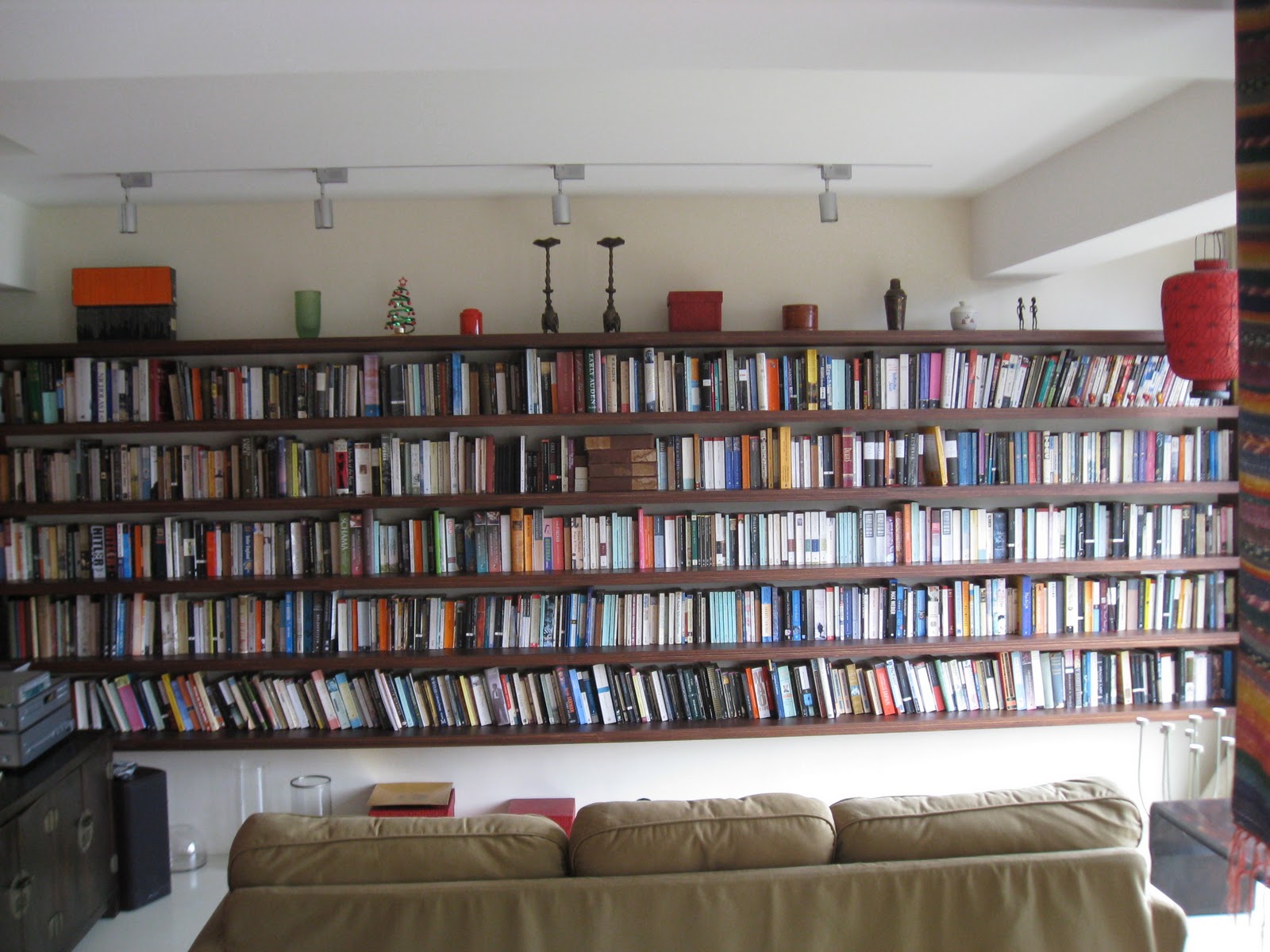
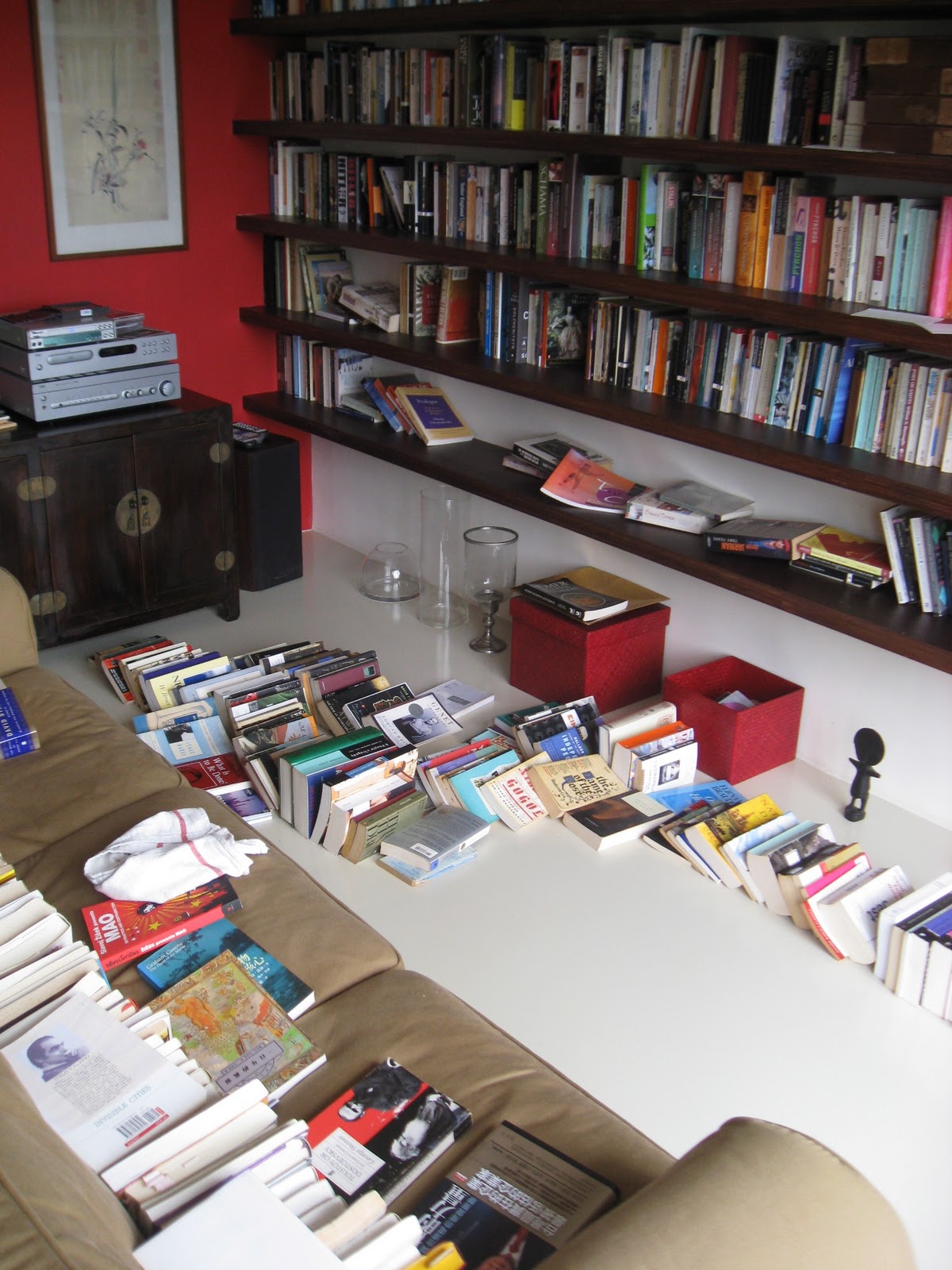
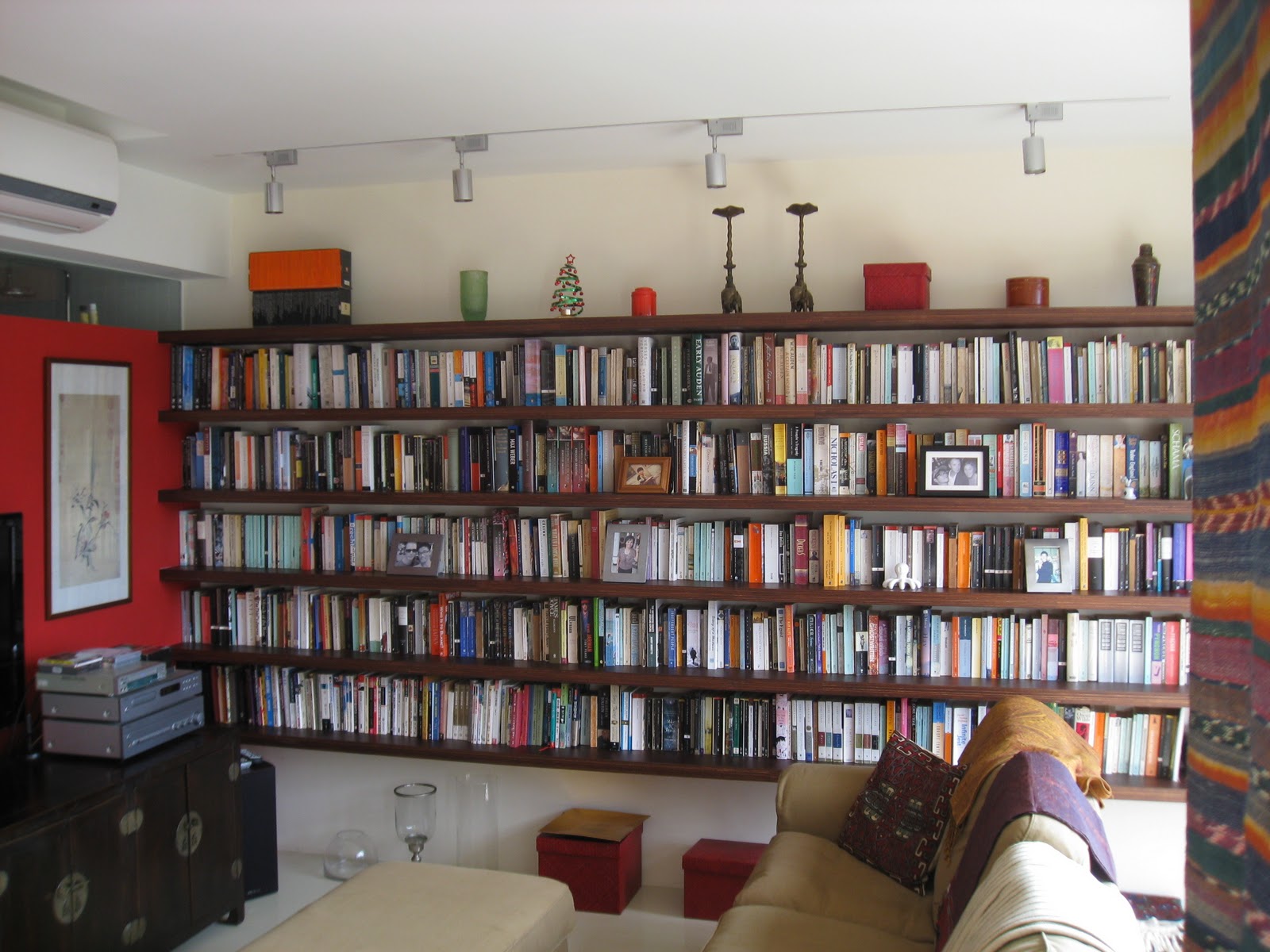
A job well done, I think.
Yesterday, I got them all down, dusted and wiped each one and then organised them. Here are before, during and after pics. Maki, note the Prousts are finally reunited. Top row is criticism and poetry, second row is music, philosophy, history, and then three rows of fiction, and my partner's Chinese books.
A job well done, I think.
148janeajones
very pretty...purrrrr.
149MeditationesMartini
Glorious.
151MeditationesMartini
"I think that you would have to conclude that this is a great wall."
152absurdeist
The Great Wall of Tomcat.
153Macumbeira
I am a bit dissapointed Tomcat.
In the before picture, the couch is directed at the library instead of at the television like in most houses.
On the after picture yoou have turned the couch and you have now a sideway look at your nice library.
Either you have assumed a new reading position, or you have started up filling the next wall or ( worst case )
your interest in your books has dropped with an angle of 45°...
In the before picture, the couch is directed at the library instead of at the television like in most houses.
On the after picture yoou have turned the couch and you have now a sideway look at your nice library.
Either you have assumed a new reading position, or you have started up filling the next wall or ( worst case )
your interest in your books has dropped with an angle of 45°...
155QuentinTom
oh sweet and lovely wall.... the great wall of Taiwan....
Mac, you have put your finger on a bone of contention (to use a canine image) in the Murr household. I like to have the sofa facing the library, or facing out of the window to the hills of Wulai. My partner likes to watch TV. Hence the sofa is always changing position. Either way, we are always complaining with each other that the other did not put the sofa back in the 'correct' position.
I am told a similar thing happens in human households with the toilet seat.
Mac, you have put your finger on a bone of contention (to use a canine image) in the Murr household. I like to have the sofa facing the library, or facing out of the window to the hills of Wulai. My partner likes to watch TV. Hence the sofa is always changing position. Either way, we are always complaining with each other that the other did not put the sofa back in the 'correct' position.
I am told a similar thing happens in human households with the toilet seat.
156ChocolateMuse
♥ Now that is a room in which one would always feel a compulsion to read.
I wish I could see your Great Wall closer up. We could always check out your LT library, but I like the physicality of this one. Do you find yourself staring at it for suprisingly long periods of time?
I wish I could see your Great Wall closer up. We could always check out your LT library, but I like the physicality of this one. Do you find yourself staring at it for suprisingly long periods of time?
158anna_in_pdx
A love spat seat?
159urania1
A TV?!!!??? I am shocked. Even in my poor benighted southern backwater, we categorically refuse to own TVs. We rent DVDs and watch them on our computers. Streaming video has not arrived here nor is it likely to despite what Obama promises. Last month an Act of God arrived ordering that high bandwidth cable be distributed amongst all the inhabitants of my benighted southern backwater. Verizon and ATT's answer: "God? Who does she think she is?"
160LolaWalser
Tomcat, wonderful before & after! I am beyond impressed by the civilised space between the floor and the bottom shelf (and no less that you weren't tempted to fill in the top all the way to the ceiling). Alas for us who must adopt sardine-can methods of interior decoration...
The ambulant sofa kills me.
Also reminds of...

(excuse my hotlinking, dear ampootozote!)
The ambulant sofa kills me.
Also reminds of...

(excuse my hotlinking, dear ampootozote!)
161janemarieprice
*sigh* To have so many shelves.
Impressive work there.
Impressive work there.
162slickdpdx
I don't know which I envy more, the books or the room. Oh, who am I kidding? The books!
163citygirl
Oh, how wonderful. So many pages to explore, study, revisit...
It is beautiful, Sir Murr.
It is beautiful, Sir Murr.
164urania1
I want that wall hanging cleverly and nearly hidden to the right of the picture. Just pack it up and send it on.
165QuentinTom
Thank you all for your kind comments: you are all welcome to drop in again for wodka and herring any time.
Urania, I will never part with it, never. It was given to me by my late Aunt Dolly, who was a dealer and an expert in antique textiles. (It's from Guatemala, circa 1920, raw silk, just to make you even more jealous.....hehehehe)
Only one thing brings me to orgasm faster than the thought of all my books, is the thought of all my textiles...ooooooooer! Perhaps I will photograph them and put them up here.
160> Lola, I'm very intrigued about this book. Who was Ogdred, and why was s/he weary?
I have finished the book about the popes, thank god, and I may get round to reviewing it this week, if the spirit moves me.
Now, I am reading Inherent Vice, just quickly before the WW1 read. This book has been recommended by many friends, and no doubt you guys have all read it already. I love Pynchon: he makes me weep with laughter. I nearly had a stroke last night.
Urania, I will never part with it, never. It was given to me by my late Aunt Dolly, who was a dealer and an expert in antique textiles. (It's from Guatemala, circa 1920, raw silk, just to make you even more jealous.....hehehehe)
Only one thing brings me to orgasm faster than the thought of all my books, is the thought of all my textiles...ooooooooer! Perhaps I will photograph them and put them up here.
160> Lola, I'm very intrigued about this book. Who was Ogdred, and why was s/he weary?
I have finished the book about the popes, thank god, and I may get round to reviewing it this week, if the spirit moves me.
Now, I am reading Inherent Vice, just quickly before the WW1 read. This book has been recommended by many friends, and no doubt you guys have all read it already. I love Pynchon: he makes me weep with laughter. I nearly had a stroke last night.
166urania1
>Will you leave it to me in your will? How come you got all the interesting ancestors and I got Southern Baptist horse thieves. It's just not fair. I want to belong to an artistic family.
167LolaWalser
#165
You are unfamiliar with the great, glorious Edward Gorey?! Ogdred Weary was one of his many anagrams, and that is one of his many brilliant picture-stories. There are four compilations of his work available cheaply (usually), Amphigorey, Amphigorey Too, Amphigorey Also and Amphigorey Again. STEAL THEM NOW (esp. the first three).
You are unfamiliar with the great, glorious Edward Gorey?! Ogdred Weary was one of his many anagrams, and that is one of his many brilliant picture-stories. There are four compilations of his work available cheaply (usually), Amphigorey, Amphigorey Too, Amphigorey Also and Amphigorey Again. STEAL THEM NOW (esp. the first three).
168QuentinTom
well, now I know, and also from Pandora's great review. I got my swag bag and my Mauser all ready.....
169LolaWalser
He loved ballet and cats.
170QuentinTom
obviously a vastly superior person.
171QuentinTom
oh dear I have fallen behind somewhat, haven't I?
I completed Inherent Vice last week. Pynchon combines a quest narrative with his baroque paranoia once again, as he did in the crying of Lot 49, but somehow this book is warmer and friendlier. The central character, Doc Sportello is one of Pynchon's warmest and funniest creations, a total stoner hippie who is a crack shot with a pistol and can fight his way out of a nasty situation. Ancient Lemuria rises from the waves, surfers find the mythical BIG ONE (I thought of you Enri) and Doc has a vision of love and ESP travel while on an acid trip. And in the background the men in suits ready to reclaim the hippie revolution through the forces of greed and fear.
It occurred to me to wonder while reading this that if one has never smoked pot, would the humour work? for regular users of catnip, part of the pleasure of reading Pynchon is the sheer silliness he captures, the mad food cravings, the memory lapses, the distortion of reality. What is reality?
Paris has Balzac, London has Dickens, St Petersburg has Gogol and Dostoevsky, L.A. has Pynchon. The L.A. sprawl is miraculously presented in this book, the endless driving and obsession with rides, the parking lots and freeways, the flat light. Pynchon's writing, as always, is exquisitely judged, a perfect balance of contemporary idiom and a timeless lyrical rhythm:
Doc had outrun souped up Rollses full of indignant smack dealers on the Pasadena Freeway, doing a hundred in the fog and trying to steer through all those crudely engineered curves, he'd walked up back alleys east of the L.A. river with nothing but a borrowed 'fro pick in his baggies for protection, been in and out of the Hall of Justice while holding a small fortune in Vietnamese weed, and these days had nearly convinced himself all that reckless era was over with, but now he was beginning to feel deeply nervous again...
Highly recommended.
I am on the fourth chapter of The First World War, and have paused just before the great retreat of Autumn 1914 to fill in some background reading. I searched through my library to see what I had that would be relevant to this period and found:
Effi Briest, which I also just completed. A German variation on the adultery/Bovary topos. Published in 1895, this novel gives an insight into the mores and ideals of the Prussian officer class, which had such an impact on the planning and execution in the first months of the war. THe book packs a quiet punch, and I have found myself thinking about it a lot after I finished it. Effi's end was very very moving. My first Fontane, and I am eager for more.
I am now reading Beware of Pity, my first Zweig, if you can believe that, and next up will be a reread of The Good Soldier Swejk.
And just to make Enri jealous, I had another loud-orgasm-in-a-bookstore moment yesterday when I stumbled across a long-sought-for An Age Ago, a selection of 19th century Russian Poetry, selected and introduced by Joseph Brodsky.
In the Introduction he writes:
The 19th century staunchly refuses to become our past, both by shaming our present attention span, and by forcing upon us an intensity of focus we are seldom capable of.
I thought that would resonate with Thea and Gene and other lovers of the 19th century.
I completed Inherent Vice last week. Pynchon combines a quest narrative with his baroque paranoia once again, as he did in the crying of Lot 49, but somehow this book is warmer and friendlier. The central character, Doc Sportello is one of Pynchon's warmest and funniest creations, a total stoner hippie who is a crack shot with a pistol and can fight his way out of a nasty situation. Ancient Lemuria rises from the waves, surfers find the mythical BIG ONE (I thought of you Enri) and Doc has a vision of love and ESP travel while on an acid trip. And in the background the men in suits ready to reclaim the hippie revolution through the forces of greed and fear.
It occurred to me to wonder while reading this that if one has never smoked pot, would the humour work? for regular users of catnip, part of the pleasure of reading Pynchon is the sheer silliness he captures, the mad food cravings, the memory lapses, the distortion of reality. What is reality?
Paris has Balzac, London has Dickens, St Petersburg has Gogol and Dostoevsky, L.A. has Pynchon. The L.A. sprawl is miraculously presented in this book, the endless driving and obsession with rides, the parking lots and freeways, the flat light. Pynchon's writing, as always, is exquisitely judged, a perfect balance of contemporary idiom and a timeless lyrical rhythm:
Doc had outrun souped up Rollses full of indignant smack dealers on the Pasadena Freeway, doing a hundred in the fog and trying to steer through all those crudely engineered curves, he'd walked up back alleys east of the L.A. river with nothing but a borrowed 'fro pick in his baggies for protection, been in and out of the Hall of Justice while holding a small fortune in Vietnamese weed, and these days had nearly convinced himself all that reckless era was over with, but now he was beginning to feel deeply nervous again...
Highly recommended.
I am on the fourth chapter of The First World War, and have paused just before the great retreat of Autumn 1914 to fill in some background reading. I searched through my library to see what I had that would be relevant to this period and found:
Effi Briest, which I also just completed. A German variation on the adultery/Bovary topos. Published in 1895, this novel gives an insight into the mores and ideals of the Prussian officer class, which had such an impact on the planning and execution in the first months of the war. THe book packs a quiet punch, and I have found myself thinking about it a lot after I finished it. Effi's end was very very moving. My first Fontane, and I am eager for more.
I am now reading Beware of Pity, my first Zweig, if you can believe that, and next up will be a reread of The Good Soldier Swejk.
And just to make Enri jealous, I had another loud-orgasm-in-a-bookstore moment yesterday when I stumbled across a long-sought-for An Age Ago, a selection of 19th century Russian Poetry, selected and introduced by Joseph Brodsky.
In the Introduction he writes:
The 19th century staunchly refuses to become our past, both by shaming our present attention span, and by forcing upon us an intensity of focus we are seldom capable of.
I thought that would resonate with Thea and Gene and other lovers of the 19th century.
172Makifat
by shaming our present attention span
An Age Ago is a terrific little anthology. Brodsky wrote that introduction in 1988 - he would weep to see the erosion of attention span that has occurred in the internet age.
If you don't know it, although I'm sure you do, Brodsky's On Grief and Reason is well worth seeking out.
another loud-orgasm-in-a-bookstore moment
I'm glad I'm not the only one. I've heard "sir, are you alright?" more times than I care to admit.
An Age Ago is a terrific little anthology. Brodsky wrote that introduction in 1988 - he would weep to see the erosion of attention span that has occurred in the internet age.
If you don't know it, although I'm sure you do, Brodsky's On Grief and Reason is well worth seeking out.
another loud-orgasm-in-a-bookstore moment
I'm glad I'm not the only one. I've heard "sir, are you alright?" more times than I care to admit.
173QuentinTom
LOL
I don't know it, but I will hunt it down. Thanks for the heads up, maki.
I don't know it, but I will hunt it down. Thanks for the heads up, maki.
174QuentinTom
Dear Salonistas
Tomorrow is the birthday of WH Auden: 21st February 1907. Auden more than any other writer, poet or thinker has been the key intellectual influence on my life since I stumbled across 'Lullaby' in my school library at the age of 17 (in one of my previous lives). I observe his birthday every year.
In honour of this great event this year I will be hosting an Auden festival on this thread. I invite everyone to post an Auden poem, an Auden anecdote, a quote, or any other kind of Audenania to celebrate his life and work.
Copious amounts of herring, caviar and blinis will be provided, wodka and champagne of course, and I have managed to procure a small pile of very choice duckling feathers for the really jaded.

Lullaby
Lay your sleeping head, my love,
Human on my faithless arm;
Time and fevers burn away
Individual beauty from
Thoughtful children, and the grave
Proves the child ephemeral:
But in my arms till break of day
Let the living creature lie,
Mortal, guilty, but to me
The entirely beautiful.
Soul and body have no bounds:
To lovers as they lie upon
Her tolerant enchanted slope
In their ordinary swoon,
Grave the vision Venus sends
Of supernatural sympathy,
Universal love and hope;
While an abstract insight wakes
Among the glaciers and the rocks
The hermit's carnal ecstasy.
Certainty, fidelity
On the stroke of midnight pass
Like vibrations of a bell,
And fashionable madmen raise
Their pedantic boring cry:
Every farthing of the cost,
All the dreaded cards foretell,
Shall be paid, but from this night
Not a whisper, not a thought,
Not a kiss nor look be lost.
Beauty, midnight, vision dies:
Let the winds of dawn that blow
Softly round your dreaming head
Such a day of welcome show
Eye and knocking heart may bless,
Find the mortal world enough;
Noons of dryness find you fed
By the involuntary powers,
Nights of insult let you pass
Watched by every human love.
http://danassays.files.wordpress.com/2009/05/w-h-auden.jpg?w=343
Tomorrow is the birthday of WH Auden: 21st February 1907. Auden more than any other writer, poet or thinker has been the key intellectual influence on my life since I stumbled across 'Lullaby' in my school library at the age of 17 (in one of my previous lives). I observe his birthday every year.
In honour of this great event this year I will be hosting an Auden festival on this thread. I invite everyone to post an Auden poem, an Auden anecdote, a quote, or any other kind of Audenania to celebrate his life and work.
Copious amounts of herring, caviar and blinis will be provided, wodka and champagne of course, and I have managed to procure a small pile of very choice duckling feathers for the really jaded.

Lullaby
Lay your sleeping head, my love,
Human on my faithless arm;
Time and fevers burn away
Individual beauty from
Thoughtful children, and the grave
Proves the child ephemeral:
But in my arms till break of day
Let the living creature lie,
Mortal, guilty, but to me
The entirely beautiful.
Soul and body have no bounds:
To lovers as they lie upon
Her tolerant enchanted slope
In their ordinary swoon,
Grave the vision Venus sends
Of supernatural sympathy,
Universal love and hope;
While an abstract insight wakes
Among the glaciers and the rocks
The hermit's carnal ecstasy.
Certainty, fidelity
On the stroke of midnight pass
Like vibrations of a bell,
And fashionable madmen raise
Their pedantic boring cry:
Every farthing of the cost,
All the dreaded cards foretell,
Shall be paid, but from this night
Not a whisper, not a thought,
Not a kiss nor look be lost.
Beauty, midnight, vision dies:
Let the winds of dawn that blow
Softly round your dreaming head
Such a day of welcome show
Eye and knocking heart may bless,
Find the mortal world enough;
Noons of dryness find you fed
By the involuntary powers,
Nights of insult let you pass
Watched by every human love.
http://danassays.files.wordpress.com/2009/05/w-h-auden.jpg?w=343
175Porius
As any occasional reader of my Reader's Diary knows I too admire Wystan Hugh Auden. It didn't hurt his case with me that WHA was an admirer of Robert Lee Frost. A close reader of their poetry will not fail to notice a connection between the two poets. They made similar music. They both believed in the 'momentary stay against confusion.' They were both weened on the writings of the Scottish mystic, George MacDonald. When you read their poems the hairs on the back of your neck cannot fail to stand up - Nabokov's & Robert Graves' test for real poetry. Graves was also an admirer of RF. So here's to WHA, may his poetry be read for generations to come.
http://www.youtube.com/watch?v=XyirYJNr4Vs
http://www.youtube.com/watch?v=XyirYJNr4Vs
176tonikat
hello tomcat -- I'll read some WHA in the next day and come back to revel in your festival.
January must have been a month for photos of the shelves (thats where I have picked you up from today) I know of one other and then there was myself who got the urge to take a photo of their shelves. Mine are not as big as yours of course (ooer).
January must have been a month for photos of the shelves (thats where I have picked you up from today) I know of one other and then there was myself who got the urge to take a photo of their shelves. Mine are not as big as yours of course (ooer).
177absurdeist
Ah yes, Porius' Reader's Diary and Auden ... a match like Gin and Tonic! Coming uppppppp ...
Porius on Auden, Part I: Personality & the Poet
Porius on Auden, Part II: Knowledge & Prejudice
Porius on Auden, Part III: The Mind of Auden
Porius on Auden, Part IV: Auden's "Medicinal" Aids
Porius on Auden, Part I: Personality & the Poet
Porius on Auden, Part II: Knowledge & Prejudice
Porius on Auden, Part III: The Mind of Auden
Porius on Auden, Part IV: Auden's "Medicinal" Aids
178Macumbeira
I need a drink
179LolaWalser
Anecdote:
When Samuel Delany and Marilyn Hacker were barely out of their teens and lived in a West Village bohemian apartment, Marilyn got up her courage and made a cold call to Auden, inviting him to dinner. He came, with Chester Kalman, both of them perfectly amiable to teenage hosts in a rat palace. Full story in The motion of light in water.
Little known fact:
Auden made several translations (or re-translations, since he didn't work from the original Croatian) of Nikola Šop's wondrous poetry--presumably because he liked it, and I've always thought this liking threw an interesting light on Auden. I could wish for a different poem to offer, having favourites and whatnot, but you takes what the interwebs gives.
When Samuel Delany and Marilyn Hacker were barely out of their teens and lived in a West Village bohemian apartment, Marilyn got up her courage and made a cold call to Auden, inviting him to dinner. He came, with Chester Kalman, both of them perfectly amiable to teenage hosts in a rat palace. Full story in The motion of light in water.
Little known fact:
Auden made several translations (or re-translations, since he didn't work from the original Croatian) of Nikola Šop's wondrous poetry--presumably because he liked it, and I've always thought this liking threw an interesting light on Auden. I could wish for a different poem to offer, having favourites and whatnot, but you takes what the interwebs gives.
Miracle, miracle.
We are leaning over and looking
At the night overturned.
What used to be above us, high up,
A soaring vault,
Is now flying, moving, swaying,
Deep below us.
Already we have forgotten clouds and winds and rains.
Here at the summit of overturned space,
Are we not ourselves--
Our own breath?


translated by W.H. Auden.
180A_musing
Porius, some wonderful stuff in there. I'll confess, Auden has often left me cold* and so I've been shy about approaching him too often - from Porius' reviews and digressions, I think I understand a bit more just why I get some coldness there. I'll stay tuned here to your Auden celebrations.
* Not so Frost.
* Not so Frost.
181MeditationesMartini
When I was a young gamine, I was a chorus member in a Pacific Opera Victoria production of Don Giovanni. I had just finished high school, and was harbouring thoughts of majoring in singing, and it was a very exciting time--youth ah youth etc. So anyway, I am sitting there at rehearsal reading The Rape of the Lock for English 100 or whatever it was, and the conductor comes in--his name is Timothy Vernon and he's sort of a tiny Falstaff or a non-creepy Harold Bloom + music--with a bunch of the leads and they're all roaring drunk, especially Vernon, and he zeroes in on the fresh face (also I was wearing the huge pants with stars down the side recently cited in my music thread) and he comes over and starts asking me all about myself and I am starstruck in the way of the artsy teen and trying to hide it because I feel that acknowledging it openly is beneath my dignity, and he asks me to read to him aloud from the Pope, and puts his head on my shoulder and shakes his mighty beard like he's settling in for the night, and I am not sure whether the smirks I see are for my haplessness faced with drunk old Tim or whether I should be thnking about protecting my virtue, and anyway I stumble over the word "termagants" and he corrects me and makes me say it again and then he cuts me off and starts telling me about how when he was young like me he was studying in Vienna, and one day he was invited to a dinner at Auden's residence, and this was exciting stuff to me--I was into-tho-ignorant-of Auden, but very very into, at that point, Christopher Isherwood, and had just finished reading Christopher and his Kind, the first volume of his autobiography, in which WH and hijinx feature prominently; then Tim says "read some Auden", and I turn (this was out of the Norton Anthology) to
In Memory of WB Yeats
I
He disappeared in the dead of winter:
The brooks were frozen, the airports almost deserted,
The snow disfigured the public statues;
The mercury sank in the mouth of the dying day.
What instruments we have agree
The day of his death was a dark cold day.
Far from his illness
The wolves ran on through the evergreen forests,
The peasant river was untempted by the fashionable quays;
By mourning tongues
The death of the poet was kept from his poems.
But for him it was his last afternoon as himself,
An afternoon of nurses and rumours;
The provinces of his body revolted,
The squares of his mind were empty,
Silence invaded the suburbs,
The current of his feeling failed; he became his admirers.
Now he is scattered among a hundred cities
And wholly given over to unfamiliar affections,
To find his happiness in another kind of wood
And be punished under a foreign code of conscience.
The words of a dead man
Are modified in the guts of the living.
But in the importance and noise of to-morrow
When the brokers are roaring like beasts on the floor of the Bourse,
And the poor have the sufferings to which they are fairly accustomed,
And each in the cell of himself is almost convinced of his freedom,
A few thousand will think of this day
As one thinks of a day when one did something slightly unusual.
What instruments we have agree
The day of his death was a dark cold day.
II
You were silly like us; your gift survived it all:
The parish of rich women, physical decay,
Yourself. Mad Ireland hurt you into poetry.
Now Ireland has her madness and her weather still,
For poetry makes nothing happen: it survives
In the valley of its making where executives
Would never want to tamper, flows on south
From ranches of isolation and the busy griefs,
Raw towns that we believe and die in; it survives,
A way of happening, a mouth.
III
Earth, receive an honoured guest:
William Yeats is laid to rest.
Let the Irish vessel lie
Emptied of its poetry.
Time that is intolerant
Of the brave and the innocent,
And indifferent in a week
To a beautiful physique,
Worships language and forgives
Everyone by whom it lives;
Pardons cowardice, conceit,
Lays its honours at their feet.
Time that with this strange excuse
Pardoned Kipling and his views,
And will pardon Paul Claudel,
Pardons him for writing well.
In the nightmare of the dark
All the dogs of Europe bark,
And the living nations wait,
Each sequestered in its hate;
Intellectual disgrace
Stares from every human face,
And the seas of pity lie
Locked and frozen in each eye.
Follow, poet, follow right
To the bottom of the night,
With your unconstraining voice
Still persuade us to rejoice.
With the farming of a verse
Make a vineyard of the curse,
Sing of human unsuccess
In a rapture of distress.
In the deserts of the heart
Let the healing fountains start,
In the prison of his days
Teach the free man how to praise.
and I don't get through it all when he interrupts again: "The last part is doggerel", says he, and goes back to his story, and this part is foggy but I remember Auden had Vernon sit beside him and be "presented" in court fashion, and told him what a handsome young man he was, and asked him for his opinion on some piece of music I hadn't heard of at the time and can't remember now, and Tim gave it and Auden said "that is delicious", and leaned in and--and here Vernon did the same to me--bit his ear, hard, and I gave this yell and the whole rehearsal ground to a halt and everybody frowned at me and back then I was all "what must they think?!?!!??!?!?!?" but in retrospect it seems like this kind of thing must have happened all the time and it was just good clean fun at my expense. So that's my courageous story. Whose ear will I bite in the September of my years?
In Memory of WB Yeats
I
He disappeared in the dead of winter:
The brooks were frozen, the airports almost deserted,
The snow disfigured the public statues;
The mercury sank in the mouth of the dying day.
What instruments we have agree
The day of his death was a dark cold day.
Far from his illness
The wolves ran on through the evergreen forests,
The peasant river was untempted by the fashionable quays;
By mourning tongues
The death of the poet was kept from his poems.
But for him it was his last afternoon as himself,
An afternoon of nurses and rumours;
The provinces of his body revolted,
The squares of his mind were empty,
Silence invaded the suburbs,
The current of his feeling failed; he became his admirers.
Now he is scattered among a hundred cities
And wholly given over to unfamiliar affections,
To find his happiness in another kind of wood
And be punished under a foreign code of conscience.
The words of a dead man
Are modified in the guts of the living.
But in the importance and noise of to-morrow
When the brokers are roaring like beasts on the floor of the Bourse,
And the poor have the sufferings to which they are fairly accustomed,
And each in the cell of himself is almost convinced of his freedom,
A few thousand will think of this day
As one thinks of a day when one did something slightly unusual.
What instruments we have agree
The day of his death was a dark cold day.
II
You were silly like us; your gift survived it all:
The parish of rich women, physical decay,
Yourself. Mad Ireland hurt you into poetry.
Now Ireland has her madness and her weather still,
For poetry makes nothing happen: it survives
In the valley of its making where executives
Would never want to tamper, flows on south
From ranches of isolation and the busy griefs,
Raw towns that we believe and die in; it survives,
A way of happening, a mouth.
III
Earth, receive an honoured guest:
William Yeats is laid to rest.
Let the Irish vessel lie
Emptied of its poetry.
Time that is intolerant
Of the brave and the innocent,
And indifferent in a week
To a beautiful physique,
Worships language and forgives
Everyone by whom it lives;
Pardons cowardice, conceit,
Lays its honours at their feet.
Time that with this strange excuse
Pardoned Kipling and his views,
And will pardon Paul Claudel,
Pardons him for writing well.
In the nightmare of the dark
All the dogs of Europe bark,
And the living nations wait,
Each sequestered in its hate;
Intellectual disgrace
Stares from every human face,
And the seas of pity lie
Locked and frozen in each eye.
Follow, poet, follow right
To the bottom of the night,
With your unconstraining voice
Still persuade us to rejoice.
With the farming of a verse
Make a vineyard of the curse,
Sing of human unsuccess
In a rapture of distress.
In the deserts of the heart
Let the healing fountains start,
In the prison of his days
Teach the free man how to praise.
and I don't get through it all when he interrupts again: "The last part is doggerel", says he, and goes back to his story, and this part is foggy but I remember Auden had Vernon sit beside him and be "presented" in court fashion, and told him what a handsome young man he was, and asked him for his opinion on some piece of music I hadn't heard of at the time and can't remember now, and Tim gave it and Auden said "that is delicious", and leaned in and--and here Vernon did the same to me--bit his ear, hard, and I gave this yell and the whole rehearsal ground to a halt and everybody frowned at me and back then I was all "what must they think?!?!!??!?!?!?" but in retrospect it seems like this kind of thing must have happened all the time and it was just good clean fun at my expense. So that's my courageous story. Whose ear will I bite in the September of my years?
182MeditationesMartini
>181 MeditationesMartini: also, let nobody think I'm trying to stereotype Auden as a campy old queen--it's just the way the story was told me, and I imagine he was having just as much fun with Tim Vernon as Tim Vernon was with me.
183janeajones
180> that's my favorite Auden poem. I'm not a huge Auden fan, but I am in love with Yeats, and Auden's gorgeous tribute raises him in my estimation.
184ChocolateMuse
>183 janeajones: My favourite too.
I also learned Funeral Blues by heart when I was a young romantic:
Stop all the clocks, cut off the telephone,
Prevent the dog from barking with a juicy bone,
Silence the pianos and with muffled drum
Bring out the coffin, let the mourners come.
Let aeroplanes circle moaning overhead
Scribbling on the sky the message He is Dead.
Put crepe bows round the white necks of the public doves,
Let the traffic policemen wear black cotton gloves.
He was my North, my South, my East and West,
My working week and my Sunday rest,
My noon, my midnight, my talk, my song;
I thought that love would last forever: I was wrong.
The stars are not wanted now; put out every one,
Pack up the moon and dismantle the sun,
Pour away the ocean and sweep up the woods;
For nothing now can ever come to any good.
I also learned Funeral Blues by heart when I was a young romantic:
Stop all the clocks, cut off the telephone,
Prevent the dog from barking with a juicy bone,
Silence the pianos and with muffled drum
Bring out the coffin, let the mourners come.
Let aeroplanes circle moaning overhead
Scribbling on the sky the message He is Dead.
Put crepe bows round the white necks of the public doves,
Let the traffic policemen wear black cotton gloves.
He was my North, my South, my East and West,
My working week and my Sunday rest,
My noon, my midnight, my talk, my song;
I thought that love would last forever: I was wrong.
The stars are not wanted now; put out every one,
Pack up the moon and dismantle the sun,
Pour away the ocean and sweep up the woods;
For nothing now can ever come to any good.
185QuentinTom
Thank you everyone for your delicious anecdotes and responses and poems. Someone give Mac a drink, I think he has fainted from all the excitement.
Here is some Academic Graffiti from Wystan:
Henry Adams
Was mortally afraid of Madams:
In a disorderly house
He sat quiet as a mouse.
Robert Browning
Immediately stopped frowning
And started to blush
When fawned on by Flush.
Charles Dickens
Could find nothing to say to chickens
but gossiping with rabbits
Became one of his habits.
Sir Rider Haggard
Was completely staggered
When his bride to be
Announced: "I Am SHE!"
and my favourite, which must be recited very slowly and sonorously:
John Milton
Never stayed in a Hilton
Hotel.
Which was just as well.
Here is some Academic Graffiti from Wystan:
Henry Adams
Was mortally afraid of Madams:
In a disorderly house
He sat quiet as a mouse.
Robert Browning
Immediately stopped frowning
And started to blush
When fawned on by Flush.
Charles Dickens
Could find nothing to say to chickens
but gossiping with rabbits
Became one of his habits.
Sir Rider Haggard
Was completely staggered
When his bride to be
Announced: "I Am SHE!"
and my favourite, which must be recited very slowly and sonorously:
John Milton
Never stayed in a Hilton
Hotel.
Which was just as well.
186absurdeist
What's in your mind, my dove, my coney;
Do thoughts grow like feathers, the dead end of life;
Is it making of love or counting of money,
Or raid on the jewels, the plans of a thief?
Open your eyes, my dearest dallier;
Let hunt with your hands for escaping me;
Go through the motions of exploring the familiar;
Stand on the brink of the warm white day.
Rise with the wind, my great big serpent;
Silence the birds and darken the air;
Change me with terror, alive in a moment;
Strike for the heart and have me there.
~ Auden, November 1930
Do thoughts grow like feathers, the dead end of life;
Is it making of love or counting of money,
Or raid on the jewels, the plans of a thief?
Open your eyes, my dearest dallier;
Let hunt with your hands for escaping me;
Go through the motions of exploring the familiar;
Stand on the brink of the warm white day.
Rise with the wind, my great big serpent;
Silence the birds and darken the air;
Change me with terror, alive in a moment;
Strike for the heart and have me there.
~ Auden, November 1930
187QuentinTom
super smashing great! Thanks everyone for your contributions! That was fun.
Now, on to more serious matters. I am now reading The Good Soldier Svejk, which is a masterpiece of the highest order. THe book depicts Svejk's adventures on the Eastern front of WW1. I will be reviewing it at length when I finish it. If there are any central Europeans around (Lola? Polu?) please share with us anything you can on Svejk or Hasek. this is a reread for me (I read it first in high school) and I am once again bowled over by this book.
Meanwhile, I am working on an essai of Sweig's Beware of Pity.

Now, on to more serious matters. I am now reading The Good Soldier Svejk, which is a masterpiece of the highest order. THe book depicts Svejk's adventures on the Eastern front of WW1. I will be reviewing it at length when I finish it. If there are any central Europeans around (Lola? Polu?) please share with us anything you can on Svejk or Hasek. this is a reread for me (I read it first in high school) and I am once again bowled over by this book.
Meanwhile, I am working on an essai of Sweig's Beware of Pity.

188QuentinTom
Thanks to all those who read and thumbed my Zweig review.
Still reading Svejk, which has had me stifling laughter on the train on the way to work. The locals stare: another going-mad-old-big-nose.
reading last night in the introduction The Penguin Book of First World War Poetry by jon Silkin. He writes:
Even compassion must now be circumspect, for if it doesn't try to do away, or limit, the war that causes the suffering, it's indulgent. At best, compassion like this walks behind the system.
Our humanity must never be outwitted by systems, and this is why we are at our most vital when our intelligence is in full and active cooperation with feeling. We shall never not be political again and the best way to be this, among other things, is to think and feel, and if this cooperative compulsion is permeated with values we can decently share, we stand a chance as a species as surviving. For that, I think, is what is at stake.
My first encounter with Silkin, but eager for more, on the strength of that. Anyone tell me something about him? Any recommendations?
This anthology is truly embracing.
Still reading Svejk, which has had me stifling laughter on the train on the way to work. The locals stare: another going-mad-old-big-nose.
reading last night in the introduction The Penguin Book of First World War Poetry by jon Silkin. He writes:
Even compassion must now be circumspect, for if it doesn't try to do away, or limit, the war that causes the suffering, it's indulgent. At best, compassion like this walks behind the system.
Our humanity must never be outwitted by systems, and this is why we are at our most vital when our intelligence is in full and active cooperation with feeling. We shall never not be political again and the best way to be this, among other things, is to think and feel, and if this cooperative compulsion is permeated with values we can decently share, we stand a chance as a species as surviving. For that, I think, is what is at stake.
My first encounter with Silkin, but eager for more, on the strength of that. Anyone tell me something about him? Any recommendations?
This anthology is truly embracing.
189ChocolateMuse
Murr that quote has been puzzling me. I don't think I quite understand it, is it saying that compassion is inappropriate? What does it mean by compassion walking behind the system?
Scuse my ignorance.
Scuse my ignorance.
190QuentinTom
I think he is talking about compassion that just stays as compassion, pity without the anger and sense of outrage that would make sure the events that gave rise to the poetry will never happen again.
If we simply wring our paws and say how terrible, how awful and indulge in our compassion, then we are just like funeral mourners, walking behind the system that caused the war in the first place, rather than challenging it, followers rather than confronters.
make sense? that's how I interpret it, anyway.
The rest of the essay examines the ethical problematics of a (purely) aesthetic response to war, which on one level, is what war poetry is, right?
If we simply wring our paws and say how terrible, how awful and indulge in our compassion, then we are just like funeral mourners, walking behind the system that caused the war in the first place, rather than challenging it, followers rather than confronters.
make sense? that's how I interpret it, anyway.
The rest of the essay examines the ethical problematics of a (purely) aesthetic response to war, which on one level, is what war poetry is, right?
191ChocolateMuse
Oh I see! Wow, that's great! Thanks Murr. I'll have to find the book, I'd like to read the whole essay.
192slickdpdx
i don't see compassion as = challenge or confrontation, though acting in accord with it may point you upstream, so to speak
193QuentinTom
It's a great anthology, Choco. Silkin has also written a full length study of poetry from the great war, which I would like to read.
194anna_in_pdx
The compassion story reminds me of the old folk tale about the two guys who were walking by the side of the river, they see a baby floating down the river, one of them dives in and rescues it, then they see another one, the same guy dives in and rescues it, while his companion turns around and heads back the way he came. The diver yells at the other guy "why aren't you helping me?" and the other guy says, "I am going to find out who is throwing babies in the river."
195QuentinTom
ha! exactly!
In Beware of Pity, the narrator quotes a story from the Arabian Nights, of a traveller who comes across an old man lying helpless on the road. He has been set upon by thieves and left to die. The old man begs the traveller to help him, and the traveller leans down to lift him up. Whereupon the old man turns into an evil jinni, whom the traveller is obliged to carry round on his back for ever.
In Beware of Pity, the narrator quotes a story from the Arabian Nights, of a traveller who comes across an old man lying helpless on the road. He has been set upon by thieves and left to die. The old man begs the traveller to help him, and the traveller leans down to lift him up. Whereupon the old man turns into an evil jinni, whom the traveller is obliged to carry round on his back for ever.
196LolaWalser
Sorry, Murr, I got nothing special on Hasek. Come to think of it, there's probably a story in the contrast between the Czech and the Croatian landmark (best known) fictions on WWI--Hasek the comedian vs. Krleza the tragedian--although both were, of course, richly satirical.
Have you read any of Zweig's non-fiction? It's dreadful, especially the biographical studies.
Have you read any of Zweig's non-fiction? It's dreadful, especially the biographical studies.
197absurdeist
Gee, thanks for raining on what I thought was, until now, a pretty decent hardcover find: Marie Antoinette: Portrait of an Average Woman. Certainly you didn't have that book in mind!
198LolaWalser
I don't remember that one. On the basis of the ones I did read, I expect they all stink. The passing of time hasn't been kind to Zweig the biographer/critic, his 19th-century approach was being superseded (laughed out of the intellectual arena, actually) already in his hour.
199slickdpdx
I really enjoyed Zweig's 12 historical miniatures.
200LolaWalser
A lot of people enjoy Zweig.
201absurdeist
199, 200> Have you two read any good Dalkey Archives of late?
;-)
;-)
202LolaWalser
Ha! Let sleeping dogs lie in cat's thread!
203QuentinTom
so where are we? Life has been a bit hectic of late, and I have not had much time for reading. Also, I had several books on the go, which is something I usually try to avoid.
But let me try to catch up.
I completed Svejk, which is a book I will read again. Actually, it's kind of book one pull of the shelf, open it at random and read a couple of paragraphs. so far, the best book I've read this year.
I have also finished David Jones's In Parenthesis, a long narrative poem about his experiences in the trenches. Brilliant in parts, but lacking HAsek's bite and anger. More on this later.
I also completed Keegan's book on the First World War. He mentions the graves of the war dead, especially the German graves at Langemark, which has sculptures by the German artist Kathe Kollowitz, one of my favourite artists.

This seems to me very powerful.
I also read the WW1 sections from Keegan's anthology of war writing The Book of War which contains some searing first hand accounts of assaults on the trenches, as well as a self-serving and obnoxious letter from a young Hemingway, wounded on the Italian front.
I am now finishing Jon Silkin's introduction to The Penguin Book of First World War Poetry, which I started earlier, but was not able to finish.
Next up: ee cummings: The Enormous Room, about his experiences in prison during WWI.
But let me try to catch up.
I completed Svejk, which is a book I will read again. Actually, it's kind of book one pull of the shelf, open it at random and read a couple of paragraphs. so far, the best book I've read this year.
I have also finished David Jones's In Parenthesis, a long narrative poem about his experiences in the trenches. Brilliant in parts, but lacking HAsek's bite and anger. More on this later.
I also completed Keegan's book on the First World War. He mentions the graves of the war dead, especially the German graves at Langemark, which has sculptures by the German artist Kathe Kollowitz, one of my favourite artists.

This seems to me very powerful.
I also read the WW1 sections from Keegan's anthology of war writing The Book of War which contains some searing first hand accounts of assaults on the trenches, as well as a self-serving and obnoxious letter from a young Hemingway, wounded on the Italian front.
I am now finishing Jon Silkin's introduction to The Penguin Book of First World War Poetry, which I started earlier, but was not able to finish.
Next up: ee cummings: The Enormous Room, about his experiences in prison during WWI.
204wrmjr66
Interesting reading around WWI! I just finished The Collected Poems of Wilfred Owen. It was interesting to read excerpts from his letters to get at his experiences in the war. I'll be interested to see more of your commentary on the reading you are doing.
206QuentinTom
wrmjr66 (how on earth does one pronounce that?) thank you for your comment. WO is the best of the bunch in my view. I can't really get into Rosenburg, and David Jones just doesn't have enough satirical bite for me, enough anger. Owen gets the balance just right. I'm on the look out now for a collected poems. I saw his letters in a second hand bookstore a few weeks ago and passed up on it. Dammit, big mistake.
Here are some excerpts from The Enormous Room:
describing the noise in the Room:
The din was perfectly terrible. It had a minutely large quality. Here and there, in a kind of sonal darkness, solid sincere unintelligible absurd wisps of profanity heavily flickered. Optically the phenomenon was equally remarkable: seated waggingly swaying corpse-like figures, swaggering, pounding with their little spoons, roaring, hoarse, unkempt.
Describing his answers to the commission overseeing his case:
I do not think the commission enjoyed me much. It told me that my friend was a criminal - and I told it with a great deal of well-chosen politeness that I disagreed. In telling how and why I disagreed I think I managed to shove my shovel-shaped imagination under the refuse of their intellects. At least once or twice.
A young man's book, angry, anarchistic, humane and extremely well written. Highly recommended.
Here are some excerpts from The Enormous Room:
describing the noise in the Room:
The din was perfectly terrible. It had a minutely large quality. Here and there, in a kind of sonal darkness, solid sincere unintelligible absurd wisps of profanity heavily flickered. Optically the phenomenon was equally remarkable: seated waggingly swaying corpse-like figures, swaggering, pounding with their little spoons, roaring, hoarse, unkempt.
Describing his answers to the commission overseeing his case:
I do not think the commission enjoyed me much. It told me that my friend was a criminal - and I told it with a great deal of well-chosen politeness that I disagreed. In telling how and why I disagreed I think I managed to shove my shovel-shaped imagination under the refuse of their intellects. At least once or twice.
A young man's book, angry, anarchistic, humane and extremely well written. Highly recommended.
207QuentinTom
I've been in a reading funk. I had a slight motorbike accident over the weekend. I was effectively squashed between two cars:

While no one was hurt, thank god, I was pretty shaken up, distracted and unwilling to commit myself to anything long or intellectually taxing.
I read Boris Akunin's The winter Queen, which was rather disappointing.
But I am now reading The Long Ships and am loving every minute of it. When I grow up I want to be a Viking raider.

While no one was hurt, thank god, I was pretty shaken up, distracted and unwilling to commit myself to anything long or intellectually taxing.
I read Boris Akunin's The winter Queen, which was rather disappointing.
But I am now reading The Long Ships and am loving every minute of it. When I grow up I want to be a Viking raider.
208absurdeist
Holy shit, Murr! Glad you're o-kay. I hope nobody found out you're not licensed to motorscoot!
209QuentinTom
oh but I am now, thank god. I did the test last summer after I was stopped by a cop and given a huge hefty fine for driving without one. Bastards.
210janeajones
Stay safe. Motorcycles, motorscooters deserve their own landes -- far away from cars and trucks!
211theaelizabet
Oh, geez, 'Murr. I'm so glad you're all right. The bike? Yikes.
212ChocolateMuse
Murr!! You mean you were on it at the time! That's terrifying. I am very thankful you have cat-lives, and hope you still have plenty more left.
I've never heard of The Long Ships, and I like the look of it.
I've never heard of The Long Ships, and I like the look of it.
213Porius
Glad to see that you got out of that sandwich unscathed. You are a cat after all.
To hear the berserkers from a distance must have been a real fright. Rolling down some No. European river with little but mayhem on their minds. Or making the trek across those frozen waters to the Gnu Wereld. I've always enjoyed books that have the Phoenicians or some such gaggle of opportunistic fellows in Northern Michigan or Southern Illinois (called Little Egypt) mucking about for tin, copper, or similar substances. The serpent mounds in So. Ohio; the Mandan Indians (Welsh?); and all the strange landforms (pyramids) in Wisconsin. I turn to this stuff when I need a little break from serious reading.
To hear the berserkers from a distance must have been a real fright. Rolling down some No. European river with little but mayhem on their minds. Or making the trek across those frozen waters to the Gnu Wereld. I've always enjoyed books that have the Phoenicians or some such gaggle of opportunistic fellows in Northern Michigan or Southern Illinois (called Little Egypt) mucking about for tin, copper, or similar substances. The serpent mounds in So. Ohio; the Mandan Indians (Welsh?); and all the strange landforms (pyramids) in Wisconsin. I turn to this stuff when I need a little break from serious reading.
214A_musing
I prefer a cat stirred, not shaken!
Have some valprotinis and relax for a while. The books will still be there.
Have some valprotinis and relax for a while. The books will still be there.
216LolaWalser
OMG!!! You DO have nine, er, eight lives! Goshdarnit, as we say politely! I hope you had insurance...
I loved The Long Ships too! Inhaled it!
I loved The Long Ships too! Inhaled it!
217urania1
As the nyrbs put it, The Long Ships contains lots of cheerful pillaging and raping.
219absurdeist
Is that you Murr, in the skirt (or are those shorts?) behind the scooter?
Nice thighs.
Nice thighs.
220QuentinTom
Thank you all for your good wishes. I now have a brand new scooter, courtesy of the maniac in the front car. I did have insurance, but the custom here in Taiwan if you are involved in a road accident is to screw as much cash as possible on the spot out of the person who caused the accident and to keep the insurance companies out of it. Needless to say, I was vociferous in getting her to pay. hahah Evil pussy that I am.
My new scooter is nothing like as groovy as the old one though.
My new scooter is nothing like as groovy as the old one though.
223QuentinTom
The Long Ships is a blast. I'm thoroughly enjoying the company of my viking friends. Bengtsson is a wonderful stylist. He manages to pull off the Homeric tone perfectly:
That spring many ships were timbered along the coasts of the northern countries, and keels were pitched which had long lain dry. Bays and sounds vomited forth navies, with kings and their wrath aboard; and when summer came, there was great unrest upon the seas.
Compare this:
And then went down to the ships
set keel to breakers, forth on the godly sea, and
we set up mast and sail on that swart ship,
Bore sheep aboard her, and on our bodies also
heavy with weeping, and winds from sternward
Bore us out onward with bellying canvass...
Opening of book 6 (I think) of the Odyssey, in Ezra Pound's fabulous translation.

That spring many ships were timbered along the coasts of the northern countries, and keels were pitched which had long lain dry. Bays and sounds vomited forth navies, with kings and their wrath aboard; and when summer came, there was great unrest upon the seas.
Compare this:
And then went down to the ships
set keel to breakers, forth on the godly sea, and
we set up mast and sail on that swart ship,
Bore sheep aboard her, and on our bodies also
heavy with weeping, and winds from sternward
Bore us out onward with bellying canvass...
Opening of book 6 (I think) of the Odyssey, in Ezra Pound's fabulous translation.

224RickHarsch
brilliant
225Macumbeira
Sounds like summer sailing activities are imminent
Woman ! Where is my gear ?!
Woman ! Where is my gear ?!
226LolaWalser
I won't tell you unless you promise to write. And stay away from those Irish hos!
227QuentinTom
Ha!
Mac, you would love this book, if you haven't already read it.
Mac, you would love this book, if you haven't already read it.
228Macumbeira
It is on my TBR list now!
I made a trip some years ago to all Viking locations in Scandinavia : Roskilde, Oseberg ship, Gokstad ship... museums like cathedrals...
When you see the 1000 year old Gokstad drakar for the first time, you are just... silenced, it has something religious.
I made a trip some years ago to all Viking locations in Scandinavia : Roskilde, Oseberg ship, Gokstad ship... museums like cathedrals...
When you see the 1000 year old Gokstad drakar for the first time, you are just... silenced, it has something religious.
229absurdeist
Love that painting Murr. I saw a travel documentary last night on Norway/Scandinavia that made me put the destination high on my TBV.
230wrmjr66
Sorry, I have been gone awhile, but you asked about the pronunciation of my member name. It sort of rhymes with injure, but with a nice guttural sound where the W and R merge. On my planet, it's a very common name.
231RickHarsch
my brother wrote to ask what kind of books to send my daughter--i replied the Long Ships, NYRB classics...I thought he'd get the joke. Instead he ordered the book for me.
233slickdpdx
232: You probably ought to include Dark Back of Time with that request.
234QuentinTom
230> ok, I shall roll that guttural.
Rick perhaps we could send your brother a salon wishlist?
I have been laid low by the flu, not a pretty sight for a cat, and I no longer even have the company of my vikings, as I finished it. :(
In May we are going to Europe: Paris, Amsterdam and the Hay Literature Festival. It's the first time I've been to Europe for about 15 years and I am getting quite excited about it. To prepare myself (and to improve my French) I am going to be reading in French literature over the next few weeks.
Currently, I am reading a bio of Baudelaire, a bi-lingual edition of his poems, and also a bi-lingual edition of Verlaine.
ooo lala.
Rick perhaps we could send your brother a salon wishlist?
I have been laid low by the flu, not a pretty sight for a cat, and I no longer even have the company of my vikings, as I finished it. :(
In May we are going to Europe: Paris, Amsterdam and the Hay Literature Festival. It's the first time I've been to Europe for about 15 years and I am getting quite excited about it. To prepare myself (and to improve my French) I am going to be reading in French literature over the next few weeks.
Currently, I am reading a bio of Baudelaire, a bi-lingual edition of his poems, and also a bi-lingual edition of Verlaine.
ooo lala.
235Macumbeira
mon dieu mon dieu
236RickHarsch
Happily--but of course I have to give him my address or he'll see through the whole scam.
237QuentinTom
*Murr gnashes his teeth*
238RickHarsch
methinks murr is aboard raiding ship headed this? way. NO one is safe.
239beelzebubba
Murr, here is a little Viking music to accompany you on your read.
240RickHarsch
be-ellza
nice, but any decent viking could grab that circling hair and fling thems up agin a wall.
nice, but any decent viking could grab that circling hair and fling thems up agin a wall.
241wrmjr66
234> How are you liking Verlaine? I have never really appreciated his work in English, and my French is way too poor to enjoy in the original.
243Macumbeira
From Paris to Amsterdam, then you should actually.... let me see... where is the map... ah ... well .... yes ... of course... you pass through Belgium !
244tonikat
tomcat, just catching up on your thread whilst off work with lurgy of some sort. So pleased to see you didn't have to use a life up in the scooter sandwich. My brother has extolled The Long Ships to me many times, I should listen to him better I see. I saw you added a Mandelstam selected recently and have done the same myself - he's new to me, I likee. Paris, Amsterdam and Hay sound a wonderful spring break.
245LolaWalser
Paris, Amsterdam, GENT and Hay.
246Macumbeira
I need a hairdo ....
247theaelizabet
'Murr, just stopping by. Am sorry to find you unwell. Sounds as though I must place The Long Ships on my wishlist, especially since I am now buckling much swash thanks to your recommendation of The Game of Kings. It's a perfect read for this maddening time 'twixt winter and spring. Take care.
248Makifat
TC, if you happen to swing by Arizona on your odyssey.....
Well, I'd recommend that you don't. Except for that big hole in the ground, it's a horrible place.
Well, I'd recommend that you don't. Except for that big hole in the ground, it's a horrible place.
249RickHarsch
No mention of gents that i saw, just vikings
250janeajones
248 -- oh, but that big hole in the ground is truly magnificent!
251janemarieprice
I had added The Long Ships to my wishlist on a recommendation recently, then saw it was being read in the book club of one of my favorite bookstores, now I pop over here and you're reading it. Looks like the universe is conspiring to make me get this one.
252QuentinTom
Get it jane, and read it! I picked it up from an LT recommendation as well. Thank god for NYRB classics!
Tony, great to see you here! let me know what you think of Mandelstam (another NYRB, I note. Thank god, again!) I swore to myself that this year I would not read anything Russian. This allows me to build up a nice little sub set of Russian stuff to read next year.
Thea, I am jumping up and down for joy that you are reading and enjoying The Game of Kings! Are you going to read the whole series? Yay!!!!! another Dunnett fan! I must resist the temptation to order the whole Lymond series from Amazon: just the thing to read when one is sick. By the time it arrives, I will be better, must remember.
Thanks for the music, Beelzy, and Anna, but in my current sorry state, headbanging is the last thing I need, but I appreciate the good wishes, from you both and everyone.
Tony, great to see you here! let me know what you think of Mandelstam (another NYRB, I note. Thank god, again!) I swore to myself that this year I would not read anything Russian. This allows me to build up a nice little sub set of Russian stuff to read next year.
Thea, I am jumping up and down for joy that you are reading and enjoying The Game of Kings! Are you going to read the whole series? Yay!!!!! another Dunnett fan! I must resist the temptation to order the whole Lymond series from Amazon: just the thing to read when one is sick. By the time it arrives, I will be better, must remember.
Thanks for the music, Beelzy, and Anna, but in my current sorry state, headbanging is the last thing I need, but I appreciate the good wishes, from you both and everyone.
253QuentinTom
wrmjr66
I think Verlaine must be the hardest of the three (Baudelaire Rimbaud and V) to translate. He has this kind of zen, haiku thing going in the French which simply doesn't work when transposed into English. Look at the mess Shapiro makes of this translation:
L'Ocean sonore
Palpite sous L'oeil
De la lune en deuil
Et palpite encore
Tandis qu'un eclair
Brutal et sinistre
fend le ciel de bistre
D'un long zigzag clair...
The moon, in mourning, eyes
The moaning, churning sea,
Churning up endlessly
While in the copper skies
A heaven splitting crash-
Like clashing strokes of doom-
Streaks, zigzags through the gloom
It's long, bright lightning flash;
I mean, it's just awful! Verlaine's musicality just doesn't work in English. Perhaps this is why he is not as well known in the Anglo world as the other two.
what do the other Francophiles say? Anna? Mac? Lola?
I think Verlaine must be the hardest of the three (Baudelaire Rimbaud and V) to translate. He has this kind of zen, haiku thing going in the French which simply doesn't work when transposed into English. Look at the mess Shapiro makes of this translation:
L'Ocean sonore
Palpite sous L'oeil
De la lune en deuil
Et palpite encore
Tandis qu'un eclair
Brutal et sinistre
fend le ciel de bistre
D'un long zigzag clair...
The moon, in mourning, eyes
The moaning, churning sea,
Churning up endlessly
While in the copper skies
A heaven splitting crash-
Like clashing strokes of doom-
Streaks, zigzags through the gloom
It's long, bright lightning flash;
I mean, it's just awful! Verlaine's musicality just doesn't work in English. Perhaps this is why he is not as well known in the Anglo world as the other two.
what do the other Francophiles say? Anna? Mac? Lola?
256Macumbeira
Verlaine has the best music
258LolaWalser
#253
Oh that's BAD. Goodness.
To translate or not to translate... damned if you do, damned if you don't...
Sonorous ocean/ trembles in motion/ under the eye/ of the widow moon
Mallarmé is possibly the toughest. Sometimes he reads like he needs retranslating into French.
Oh that's BAD. Goodness.
To translate or not to translate... damned if you do, damned if you don't...
Sonorous ocean/ trembles in motion/ under the eye/ of the widow moon
Mallarmé is possibly the toughest. Sometimes he reads like he needs retranslating into French.
259citygirl
I swear, I'm never reading a French poem in translation again. They're making the stuff up! I like Lola's much better.
"churning up endlessly"? Gah! Sounds horrible. "long, bright lightning flash"? Gah! I need a Valprotini.
"churning up endlessly"? Gah! Sounds horrible. "long, bright lightning flash"? Gah! I need a Valprotini.
260LolaWalser
Heh--I wasn't 100% serious, citygirl (the rhyme-rich English she seduces me fast into doggerel: pa-rang/ ba-rang), but yeah, that's about the skeleton of the IDEA of Verlaine's first stanza (I ignored that there is palpitation and then palpitation again). So you can see how much this Shapiro guy added... and sort of extended... like chewing gum...
261MeditationesMartini
I just found a bilingual Baudelaire on the take-a-book shelf at my local coffee stop and oh man, I always forget how much easier French is to read than speak. Anticipation!
262anna_in_pdx
I just started taking French conversation classes at the Alliance Francaise here in Portland. For christ's sake it was my major and now I am back in an intermediate class. (in my defense it has been 20 years since I graduated OMG I am old)
I love French poetry and don't think it is translateable. that Baudelaire site (fleursdumal.org) that has various translations of every poem just makes me appreciate the French more.
I don't even think Hugo is translateable, let alone Verlaine, Rimbaud, Baudelaire....
I love French poetry and don't think it is translateable. that Baudelaire site (fleursdumal.org) that has various translations of every poem just makes me appreciate the French more.
I don't even think Hugo is translateable, let alone Verlaine, Rimbaud, Baudelaire....
263MeditationesMartini
It's in the nature of poetry that it's untranslatable, right? But I have no problem throwing myself at the original and then taking shelter behind a wall of English when the French bites back.
264QuentinTom
Actually, Lola, that's bloody good. Much closer to the spirit of Verlaine IMO.
I'm reading Joanna Richardson's translations of Baudelaire, and on the whole, I think they are rather good. She manages to create a convincing poetic artifact in English which expresses the idea of the original quite well, giving one the illusion that one is at least reading it in French.
I might have to agree that poetry is untranslatable, but I would hate to think it was true. Think what we would miss.
I'm reading Joanna Richardson's translations of Baudelaire, and on the whole, I think they are rather good. She manages to create a convincing poetic artifact in English which expresses the idea of the original quite well, giving one the illusion that one is at least reading it in French.
I might have to agree that poetry is untranslatable, but I would hate to think it was true. Think what we would miss.
265citygirl
Citoyenne X says: I love French poetry and don't think it is translateable.
I think I have to agree. Murr, why are you reading Baudelaire in translation? Is it for work?
I think I have to agree. Murr, why are you reading Baudelaire in translation? Is it for work?
266QuentinTom
no dear, I'm trying to polish up my rusty French, so I'm reading in both F and E.
267QuentinTom
So my Baudelaire reading continues. I am now reading Le Spleen de Paris, strangely entitled The Parisian Prowler by the translator. This edition is illustrated with the most gorgeous engravings, lithographs and etchings by artists such as Whistler, Delacroix, Meryon and Guy, all artists who B revered or even worked with. Frequent visitors to The Lectern will know that I have a passion for B&W art, woodcuts, drawings, etchings, engravings, lithographs etc. The illustrations perfectly complement B's prose poems. I am in heaven.
I am also reading an apparently quite rare edition of Baudelaire in English, which gives several English versions of the same French poem. Incredibly interesting, with a very good introduction as well, outlining the history of Baudelaire translations in English.
Here is a very odd print by Meryon (who went mad, eventually):

I am also reading an apparently quite rare edition of Baudelaire in English, which gives several English versions of the same French poem. Incredibly interesting, with a very good introduction as well, outlining the history of Baudelaire translations in English.
Here is a very odd print by Meryon (who went mad, eventually):

268Macumbeira
What is that in the air ? Fish or horses ?
269QuentinTom
Both I think. Meryon was mad.
270ChocolateMuse
I love it. I don't get it, but I really really love it. Thanks for sharing, Murr.
271Macumbeira
The illustration is... euh ... awesome !!!
272Macumbeira
Just checked him on WIKI, died in an asylum, poor guy
273QuentinTom

yup. He went completely mad.
274zenomax
Murr - if you haven't read The Arcades Project by Walter Benjamin you really should. One of THE essential books to read in my opinion.
WB devotes much space to CB and mentions Meryon and his 'creatures' in the sky. As you say, CB thought highly of Meryon.
As always, your selection of visual images is tremendous.
WB devotes much space to CB and mentions Meryon and his 'creatures' in the sky. As you say, CB thought highly of Meryon.
As always, your selection of visual images is tremendous.
275zenomax
By the way, bought this book yesterday. A literal translation of the Spleen and Mal poems, written in prose (therefore negating the need to massage the french into a rhyming english form). This provides me with the opposite aesthetic to my McGowan translation which changes the original french in order to force the english into the 'correct' lyrical form.
Although some of the McGowan translations are quite powerful, even with my schoolboy french I can see they stray from the original. This new book creates a quite different feel to the McGowan.

Although some of the McGowan translations are quite powerful, even with my schoolboy french I can see they stray from the original. This new book creates a quite different feel to the McGowan.

276QuentinTom
Zeno, the Arcades project is one of the books I'm hoping to find at Hay, along with B's essays on hashish and wine, and the painter of modern life, where he writes about Constantin Guy.
You, my friend, would really like this edition of the spleen de paris. The illustrations are divine. The one in 273 is the endpiece of the book.
Apologies if the huge size is causing people download problems: it's essential to scrutinise the detail in these Meryon prints. I'll shrink it down in a few days to allow people time to click and drag.
McGowan is represented in my anthology by only one translation, of this poem:
Moesta et errabunda
Agatha, tell me, could your heart take flight
From this black city, from this filthy sea
Off to some other sea, where splendour might
Burst blue and clear - a new virginity?
Agatha, tell me, could your heart take flight?
The vast sea offers comfort in our pain!
What demon lets the ocean's raucous cry
Above the great wind-organ's grumbling strain
Perform the holy rite of lullaby?
The vast sea offers comfort in our pain!
Frigate or wagon, carry me away!
Away from where the mud is made of tears!
-Agatha, can your sad heart sometimes say:
Far from the crimes, remorse, the grief of years,
Frigate or wagon, carry me away!
How distant are you, perfumed paradise,
Where lovers play beneath the the blue above,
Where hearts may drown themselves in pure delights,
Where what one lives is worthy to be loved!
How distant are you, perfumed paradise,
But the green paradise of youthful loves
The games and sones, the kisses, the bouquets,
the violins that sing in hilly groves
The evening cups of wine in shady ways
But the green paradise of youthful loves
The sinless paradise of stolen joys,
Is it already far beyond the seas?
Can we recall it with our plaintive voice
And give it life with silver melodies?
The sinless paradise of stolen joys?
Here is the French:
Dis-moi ton coeur parfois s'envole-t-il, Agathe,
Loin du noir océan de l'immonde cité
Vers un autre océan où la splendeur éclate,
Bleu, clair, profond, ainsi que la virginité?
Dis-moi, ton coeur parfois s'envole-t-il, Agathe?
La mer la vaste mer, console nos labeurs!
Quel démon a doté la mer, rauque chanteuse
Qu'accompagne l'immense orgue des vents grondeurs,
De cette fonction sublime de berceuse?
La mer, la vaste mer, console nos labeurs!
Emporte-moi wagon! enlève-moi, frégate!
Loin! loin! ici la boue est faite de nos pleurs!
— Est-il vrai que parfois le triste coeur d'Agathe
Dise: Loin des remords, des crimes, des douleurs,
Emporte-moi, wagon, enlève-moi, frégate?
Comme vous êtes loin, paradis parfumé,
Où sous un clair azur tout n'est qu'amour et joie,
Où tout ce que l'on aime est digne d'être aimé,
Où dans la volupté pure le coeur se noie!
Comme vous êtes loin, paradis parfumé!
Mais le vert paradis des amours enfantines,
Les courses, les chansons, les baisers, les bouquets,
Les violons vibrant derrière les collines,
Avec les brocs de vin, le soir, dans les bosquets,
— Mais le vert paradis des amours enfantines,
L'innocent paradis, plein de plaisirs furtifs,
Est-il déjà plus loin que l'Inde et que la Chine?
Peut-on le rappeler avec des cris plaintifs,
Et l'animer encor d'une voix argentine,
L'innocent paradis plein de plaisirs furtifs?
There are more translations of this poem here:
http://fleursdumal.org/poem/154
I really like the McGowan version. But reading through all the different versions available and comparing them to the French I'm beginning to feel that this poem (and all poems in translation) can only exist in English in some ghostly fleeting way, a way compounded of all the different versions, greater than their sum and yet somehow also lesser when put together with the French. Perhaps this is the only way to read poetry in translation, is to immerse yourself in lots of different versions and to create your own mental image of the poem in your mother tongue, and to let this version and the original whisper to each other.
It's been raining non stop here, and I have been reading Baudelaire all afternoon. I am in danger of falling ill with the spleen.
You, my friend, would really like this edition of the spleen de paris. The illustrations are divine. The one in 273 is the endpiece of the book.
Apologies if the huge size is causing people download problems: it's essential to scrutinise the detail in these Meryon prints. I'll shrink it down in a few days to allow people time to click and drag.
McGowan is represented in my anthology by only one translation, of this poem:
Moesta et errabunda
Agatha, tell me, could your heart take flight
From this black city, from this filthy sea
Off to some other sea, where splendour might
Burst blue and clear - a new virginity?
Agatha, tell me, could your heart take flight?
The vast sea offers comfort in our pain!
What demon lets the ocean's raucous cry
Above the great wind-organ's grumbling strain
Perform the holy rite of lullaby?
The vast sea offers comfort in our pain!
Frigate or wagon, carry me away!
Away from where the mud is made of tears!
-Agatha, can your sad heart sometimes say:
Far from the crimes, remorse, the grief of years,
Frigate or wagon, carry me away!
How distant are you, perfumed paradise,
Where lovers play beneath the the blue above,
Where hearts may drown themselves in pure delights,
Where what one lives is worthy to be loved!
How distant are you, perfumed paradise,
But the green paradise of youthful loves
The games and sones, the kisses, the bouquets,
the violins that sing in hilly groves
The evening cups of wine in shady ways
But the green paradise of youthful loves
The sinless paradise of stolen joys,
Is it already far beyond the seas?
Can we recall it with our plaintive voice
And give it life with silver melodies?
The sinless paradise of stolen joys?
Here is the French:
Dis-moi ton coeur parfois s'envole-t-il, Agathe,
Loin du noir océan de l'immonde cité
Vers un autre océan où la splendeur éclate,
Bleu, clair, profond, ainsi que la virginité?
Dis-moi, ton coeur parfois s'envole-t-il, Agathe?
La mer la vaste mer, console nos labeurs!
Quel démon a doté la mer, rauque chanteuse
Qu'accompagne l'immense orgue des vents grondeurs,
De cette fonction sublime de berceuse?
La mer, la vaste mer, console nos labeurs!
Emporte-moi wagon! enlève-moi, frégate!
Loin! loin! ici la boue est faite de nos pleurs!
— Est-il vrai que parfois le triste coeur d'Agathe
Dise: Loin des remords, des crimes, des douleurs,
Emporte-moi, wagon, enlève-moi, frégate?
Comme vous êtes loin, paradis parfumé,
Où sous un clair azur tout n'est qu'amour et joie,
Où tout ce que l'on aime est digne d'être aimé,
Où dans la volupté pure le coeur se noie!
Comme vous êtes loin, paradis parfumé!
Mais le vert paradis des amours enfantines,
Les courses, les chansons, les baisers, les bouquets,
Les violons vibrant derrière les collines,
Avec les brocs de vin, le soir, dans les bosquets,
— Mais le vert paradis des amours enfantines,
L'innocent paradis, plein de plaisirs furtifs,
Est-il déjà plus loin que l'Inde et que la Chine?
Peut-on le rappeler avec des cris plaintifs,
Et l'animer encor d'une voix argentine,
L'innocent paradis plein de plaisirs furtifs?
There are more translations of this poem here:
http://fleursdumal.org/poem/154
I really like the McGowan version. But reading through all the different versions available and comparing them to the French I'm beginning to feel that this poem (and all poems in translation) can only exist in English in some ghostly fleeting way, a way compounded of all the different versions, greater than their sum and yet somehow also lesser when put together with the French. Perhaps this is the only way to read poetry in translation, is to immerse yourself in lots of different versions and to create your own mental image of the poem in your mother tongue, and to let this version and the original whisper to each other.
It's been raining non stop here, and I have been reading Baudelaire all afternoon. I am in danger of falling ill with the spleen.
277QuentinTom
More on Meryon:
B on M:
'I have rarely seen depicted more poetically the natural grandeur of an immense city...but a cruel demon has touched the mind of M. Meryon; a mysterious delirium has muddled those powers that seemed to be as sound as they were brilliant...After he left, I wondered how it was that I whose mind and nervous system have always had what it takes to go mad, never did so. Seriously, I gave thanks to heaven like the Pharisee.'
B, who was so partial to eccentricity (his own in particular), found it difficult to appreciate M's strangeness.... On one state of the Pont-au-change (see the print below) Meryon had replaced a small balloon with a flock of birds of prey. When B pointed out to him that this was somewhat unrealistic, M replied that : '"Those people (THEY) had often released eagles to study the omens according to the rite, and that had been printed in the newspapers." M spoke admiringly of Michelet's Joan of arc (Michelet's history of France was being brought out in the 1850s), but was convinced the book was not by Michelet...
From Baudelaire by Pichois
Pont-au-change First version:
http://www.wikigallery.org/paintings/318001-318500/318129/painting1.jpg
Pont-au-change Second version:

http://legacy.www.nypl.org/research/chss/spe/art/print/collections/avery/images/...
B on M:
'I have rarely seen depicted more poetically the natural grandeur of an immense city...but a cruel demon has touched the mind of M. Meryon; a mysterious delirium has muddled those powers that seemed to be as sound as they were brilliant...After he left, I wondered how it was that I whose mind and nervous system have always had what it takes to go mad, never did so. Seriously, I gave thanks to heaven like the Pharisee.'
B, who was so partial to eccentricity (his own in particular), found it difficult to appreciate M's strangeness.... On one state of the Pont-au-change (see the print below) Meryon had replaced a small balloon with a flock of birds of prey. When B pointed out to him that this was somewhat unrealistic, M replied that : '"Those people (THEY) had often released eagles to study the omens according to the rite, and that had been printed in the newspapers." M spoke admiringly of Michelet's Joan of arc (Michelet's history of France was being brought out in the 1850s), but was convinced the book was not by Michelet...
From Baudelaire by Pichois
Pont-au-change First version:
http://www.wikigallery.org/paintings/318001-318500/318129/painting1.jpg
Pont-au-change Second version:

http://legacy.www.nypl.org/research/chss/spe/art/print/collections/avery/images/...
278citygirl
Forgive me. It is my first attempt:
Mais le vert paradis des amours enfantines,
Les courses, les chansons, les baisers, les bouquets,
Les violons vibrant derrière les collines,
Avec les brocs de vin, le soir, dans les bosquets,
— Mais le vert paradis des amours enfantines,
Yet the green paradise of childish loves,
The games, the songs, the kisses, the offered flowers,
Violins thrum behind the hills,
With jugs of wine, evenings, in the walled gardens,
---Yet the green paradise of childish loves,
Mais le vert paradis des amours enfantines,
Les courses, les chansons, les baisers, les bouquets,
Les violons vibrant derrière les collines,
Avec les brocs de vin, le soir, dans les bosquets,
— Mais le vert paradis des amours enfantines,
Yet the green paradise of childish loves,
The games, the songs, the kisses, the offered flowers,
Violins thrum behind the hills,
With jugs of wine, evenings, in the walled gardens,
---Yet the green paradise of childish loves,
280Macumbeira
Yes super this Meryon pictures
281QuentinTom
thanks gents. Citygirl, that's pretty good, I'd say, but if you change 'flowers' in L2 to 'garlands', you'd get a kind of pararhyme with 'gardens' in L4, which would echo the rhyme in the French.
non?
non?
282ChocolateMuse
oh how clever!
283citygirl
Mais le vert paradis des amours enfantines,
Les courses, les chansons, les baisers, les bouquets,
Les violons vibrant derrière les collines,
Avec les brocs de vin, le soir, dans les bosquets,
— Mais le vert paradis des amours enfantines,
Yet the green paradise of childish loves,
The games, the songs, the kisses, the offered garlands,
Violins thrum behind the hills,
With jugs of wine, evenings, in the walled gardens,
---Yet the green paradise of childish loves,
Such a smartypuss.
Les courses, les chansons, les baisers, les bouquets,
Les violons vibrant derrière les collines,
Avec les brocs de vin, le soir, dans les bosquets,
— Mais le vert paradis des amours enfantines,
Yet the green paradise of childish loves,
The games, the songs, the kisses, the offered garlands,
Violins thrum behind the hills,
With jugs of wine, evenings, in the walled gardens,
---Yet the green paradise of childish loves,
Such a smartypuss.
285Porius
Chanson Francaise by James Taylor
http://www.mp3rocket.com/mp3/-1_00/James-Taylor-Chanson-Francaise.htm
http://www.mp3rocket.com/mp3/-1_00/James-Taylor-Chanson-Francaise.htm
286QuentinTom
oui. ooo lala!
I am now reading Les Miserables, having succumbed to an irresistible longing to immerse myself in a long 19th century novel, but still continuing my French theme. LM is one of the shameful gaps in my reading of the canon. I approach it with trepidation, as Hugo and I do not really see eye to eye on things.
So far, I have to report to the committee, so good.
I am now reading Les Miserables, having succumbed to an irresistible longing to immerse myself in a long 19th century novel, but still continuing my French theme. LM is one of the shameful gaps in my reading of the canon. I approach it with trepidation, as Hugo and I do not really see eye to eye on things.
So far, I have to report to the committee, so good.
287ChocolateMuse
This is unkind of me, but I can't help hoping you don't like it much, because then I would be in good company.
288QuentinTom
lol
choco, what didn't you like about it?
choco, what didn't you like about it?
289ChocolateMuse
Well, I thought Hugo's basically an opinionated old codger - one of those annoying old men who hold forth for ages for the mere enjoyment of hearing his own voice.
Here's my review: http://www.librarything.com/work/6755972/reviews/53262355
However, as I say there, I have a feeling it would be infinitely better in the original French.
Here's my review: http://www.librarything.com/work/6755972/reviews/53262355
However, as I say there, I have a feeling it would be infinitely better in the original French.
290Macumbeira
Chocolate, maybe you would apprciate Hugo more whe he really starts exagerating : The toilers of the sea and the man who laughs ?
291QuentinTom
oh dear oh dear Choco, that does not auger well for my read of Les Mis.
292ChocolateMuse
Perhaps not, but who on earth was I to say something is not a classic? Who do I think I am, JasonPettus?
Don't listen to me, Murrushka. I'm more than half ashamed of that old review, though I still don't like Les Mis.
Mac, we shall see. I'd like to try them. But methinks his exaggerations will still annoy me.
Don't listen to me, Murrushka. I'm more than half ashamed of that old review, though I still don't like Les Mis.
Mac, we shall see. I'd like to try them. But methinks his exaggerations will still annoy me.
293LolaWalser
Hugo is now a children's writer. Murr, you are reading classic YA.
#267
Horses, fish, I see upside-down newts in that there picture.
#267
Horses, fish, I see upside-down newts in that there picture.
294Macumbeira
Lola why you say Newts ? Have you access to my secret reading list ?
295LolaWalser
I says newts for I sees newts!
my secret reading list ?
Is it "decent"?
my secret reading list ?
Is it "decent"?
296Macumbeira
nope it is nude newts
297urania1
Read lots of Balzac, Gracq, Zola, Colette. They will see you through. But Hugo--long, tedious--says in 50 words what he could say poetically in 10 words. A moribund, second-rate, depressed Charles Dickens.
298QuentinTom
The comparison with Dickens is very apt, coz I keep thinking of how Dickens or Eliot or Trollope would handle the same material.
Choco, you are a much better reader than Jason Pettus, have no fear, and you put your finger on what it is about Hugo that I don't like. I don't mind the old-codger-holding-forth aspect - often that's what's most pleasant about reading: Dr Johnson for example is all about an old codger holding forth. No, what really annoys me about Hugo is his didacticism and lack of irony.
In part 1 book 2 after a long description of the depths of despair to which Jean Valjean has sunk in the galleys, contemplating the injustice of his fate, we get a metaphorical chapter called: The Waters and the Sahdow, in which JVJ's destiny is compared to a man overboard, while the ship of state sails blithely on not caring that someone has been tossed to the angry sea. The message is clear: it's a metaphor, but then Hugo tells us at the end of this chapter:
The sea is the inexorable night into which the penal law casts it's victims. The sea is the measureless misery. The soul drifting in the sea may become a corpse. Who shall restore it back to life?
He can't just let the metaphor rest, he has to bludgeon us around the head with it: he simply cannot resist pointing out the moral lesson. Every metaphor, every symbol is thus explained, marred by his didacticism. This is his great weakness.
Reading Hugo, I feel bludgeoned, I feel condescended to, I feel intimidated as a human being. He is not someone I would turn to for advice or help. Eliot, yes, she would understand my weakness and have compassion, Dickens, he would understand, Trollope too. Hugo would stand in front of the window so that the light would form a halo around his head, hold his finger aloft and thunder on about virtue, leaving me feeling small, like a newt.
Hugo's characters are not their own people. They exist merely as ciphers for his didactic sermons.
He always straddles the line between grandeur and grandiosity, between portentousness and pomposity, between high moral seriousness and mere sonority, more often achieving the latter while aiming for the former.
Choco, you are a much better reader than Jason Pettus, have no fear, and you put your finger on what it is about Hugo that I don't like. I don't mind the old-codger-holding-forth aspect - often that's what's most pleasant about reading: Dr Johnson for example is all about an old codger holding forth. No, what really annoys me about Hugo is his didacticism and lack of irony.
In part 1 book 2 after a long description of the depths of despair to which Jean Valjean has sunk in the galleys, contemplating the injustice of his fate, we get a metaphorical chapter called: The Waters and the Sahdow, in which JVJ's destiny is compared to a man overboard, while the ship of state sails blithely on not caring that someone has been tossed to the angry sea. The message is clear: it's a metaphor, but then Hugo tells us at the end of this chapter:
The sea is the inexorable night into which the penal law casts it's victims. The sea is the measureless misery. The soul drifting in the sea may become a corpse. Who shall restore it back to life?
He can't just let the metaphor rest, he has to bludgeon us around the head with it: he simply cannot resist pointing out the moral lesson. Every metaphor, every symbol is thus explained, marred by his didacticism. This is his great weakness.
Reading Hugo, I feel bludgeoned, I feel condescended to, I feel intimidated as a human being. He is not someone I would turn to for advice or help. Eliot, yes, she would understand my weakness and have compassion, Dickens, he would understand, Trollope too. Hugo would stand in front of the window so that the light would form a halo around his head, hold his finger aloft and thunder on about virtue, leaving me feeling small, like a newt.
Hugo's characters are not their own people. They exist merely as ciphers for his didactic sermons.
He always straddles the line between grandeur and grandiosity, between portentousness and pomposity, between high moral seriousness and mere sonority, more often achieving the latter while aiming for the former.
299theaelizabet
And hence that horribly overblown musical version of the book. Lack of irony. you pegged it.
300lilisin
I'm saddened by the harsh words against my precious Hugo! If it weren't for the copy of Les Miserables that my mother placed in my hands when I was but a mere 6th grader, I'd still be reading Terry Brooks! (Okay, maybe not, but the thought is there.)
With Hugo, he puts all his power into certain characters. With Les Mis, it's Javert and Jean Valjean; with Notre-Dame it's Frollo and the cathedral; with The Man who Laughs it's the Green-Box and Ursus and with The Condemned Man it's us, the reader who is ridiculed and manipulated.
So remember to make note of Hugo's humor. He's quite a manipulative SOB when you really think about it. In any case, he is one of my favorite authors and always will be. I hope you enjoy Les Mis. But if you don't, try his other works where it's less likely that you've had the whole LT world nip at you with their opinions.
With Hugo, he puts all his power into certain characters. With Les Mis, it's Javert and Jean Valjean; with Notre-Dame it's Frollo and the cathedral; with The Man who Laughs it's the Green-Box and Ursus and with The Condemned Man it's us, the reader who is ridiculed and manipulated.
So remember to make note of Hugo's humor. He's quite a manipulative SOB when you really think about it. In any case, he is one of my favorite authors and always will be. I hope you enjoy Les Mis. But if you don't, try his other works where it's less likely that you've had the whole LT world nip at you with their opinions.
301slickdpdx
Yes, just because the Freeque has left the building doesn't mean Hugo is without any defenders. I loved the book. Humor? He had one guy carry another through a river of sh^t and paused to give us a discourse on quicksand! Those excesses did not feel like excess to me. He is a guy who loves words and is always searching for a good line and, perhaps, has trouble throwing some of those lines away, I'll grant you.
302lilisin
Should I mention that I can't seem to find anything worth retaining when I read Dostoevsky or is this neither the time nor place? ;)
303QuentinTom
nah, I had the same problem with The Toilers of the Sea and Notre Dame de Paris, with all the Hugo I've read, in fact. I have a different sensibility, I fear. More Baudelaire than Hugo. I'd like more ambiguity, more irony, more humanity, and less thunder.
I don't mind the excesses, I don't mind the digressions, I love them. I love the verbosity. It's the tone that gets to me, the didacticism.
Humour? What humour? There is none in Les Mis. Unless you count Fantine's smile after she sells her incisors.
I don't mind the excesses, I don't mind the digressions, I love them. I love the verbosity. It's the tone that gets to me, the didacticism.
Humour? What humour? There is none in Les Mis. Unless you count Fantine's smile after she sells her incisors.
304slickdpdx
I did not like the kid at the ramparts and some of the other melodramatic stuff - Fantine's sacrifice would be another good example. But I would never run the fellow down!
305lilisin
Well I guess he's just not for you then. I haven't read any Baudelaire. 1600 books in a French home, and yet only one Baudelaire (Les fleurs du mal). Perhaps I should find it and read it to try and see what Baudelaire is all about.
307QuentinTom
what's an emo fan?
308MeditationesMartini
I got swept up in the soap opera and the punctilious (albeit pedantic) description/explanation, and it didn't bother me about the didacticism in the same way it doesn't with Tolkien. I also liked his principles, bourgeois though they may have been.
309theaelizabet
I thought "Waterloo" was quite wonderful, and I like a good aphorism as well as the next person, but overall Hugo is just too... well too earnest for me, and that probably says just as much about me as Hugo.
Oh, and hello lilisin! Good to see you here.
Oh, and hello lilisin! Good to see you here.
310ChocolateMuse
>307 QuentinTom:, a fan of emo music, as here: http://en.wikipedia.org/wiki/Emo
Though in Australia, emos are also the new goths - angsty teens with spikes, big boots and various versions of chainmail. 'Emo' short for 'emotional'.
Murr, I find I AM in good company. How exciting for me, I always felt as if my lack of love for Hugo was my fault. Now I am vindicated.
Though in Australia, emos are also the new goths - angsty teens with spikes, big boots and various versions of chainmail. 'Emo' short for 'emotional'.
Murr, I find I AM in good company. How exciting for me, I always felt as if my lack of love for Hugo was my fault. Now I am vindicated.
312QuentinTom
yes, lilisin, welcome!
:)
:)
313ChocolateMuse
Murr, I just got from my work library a beautiful book of the prints of Meryon, including some of Meryon's notes on his works. I haven't had a chance to look at it closely yet, but it looks good.
315zenomax
Baudelaire following a visit from Meryon:
"After he left me, I wondered how it was that I, who have always had the mind and the nerves to go mad, have never actually gone mad. In all seriousness, I gave heaven a Pharisee's thanks for this."
As quoted in The Arcades Project
"After he left me, I wondered how it was that I, who have always had the mind and the nerves to go mad, have never actually gone mad. In all seriousness, I gave heaven a Pharisee's thanks for this."
As quoted in The Arcades Project
316zenomax
And commenting on an etching, perhaps the very one in #273, B wrote to his mother:
"The hideous and colossal figure in the frontispiece is one of the figures decorating the exterior of Notre Dame. In the background is Paris, viewed from a height. How the devil this man manages to work so calmly over an abyss, I do not know."
One assumes B uses the term in a metaphorical more than literal sense here.
From The Arcades Project
"The hideous and colossal figure in the frontispiece is one of the figures decorating the exterior of Notre Dame. In the background is Paris, viewed from a height. How the devil this man manages to work so calmly over an abyss, I do not know."
One assumes B uses the term in a metaphorical more than literal sense here.
From The Arcades Project
317Macumbeira
A swarm of evil djinns flying over - the famous crescendo and decrescendo of Victor Hugo's Les djinns
Murs, ville
Et port,
Asile
De mort,
Mer grise
Où brise
La brise
Tout dort.
Dans la plaine
Naît un bruit.
C'est l'haleine
De la nuit.
Elle brame
Comme une âme
Qu'une flamme
Toujours suit.
La voix plus haute
Semble un grelot.
D'un nain qui saute
C'est le galop.
Il fuit, s'élance,
Puis en cadence
Sur un pied danse
Au bout d'un flot.
La rumeur approche,
L'écho la redit.
C'est comme la cloche
D'un couvent maudit,
Comme un bruit de foule
Qui tonne et qui roule
Et tantôt s'écroule
Et tantôt grandit.
Dieu! La voix sépulcrale
Des Djinns!... - Quel bruit ils font!
Fuyons sous la spirale
De l'escalier profond!
Déjà s'éteint ma lampe,
Et l'ombre de la rampe..
Qui le long du mur rampe,
Monte jusqu'au plafond.
C'est l'essaim des Djinns qui passe,
Et tourbillonne en sifflant.
Les ifs, que leur vol fracasse,
Craquent comme un pin brûlant.
Leur troupeau lourd et rapide,
Volant dans l'espace vide,
Semble un nuage livide
Qui porte un éclair au flanc.
Ils sont tout près! - Tenons fermée
Cette salle ou nous les narguons
Quel bruit dehors! Hideuse armée
De vampires et de dragons!
La poutre du toit descellée
Ploie ainsi qu'une herbe mouillée,
Et la vieille porte rouillée,
Tremble, à déraciner ses gonds.
Cris de l'enfer! voix qui hurle et qui pleure!
L'horrible essaim, poussé par l'aquillon,
Sans doute, o ciel! s'abat sur ma demeure.
Le mur fléchit sous le noir bataillon.
La maison crie et chancelle penchée,
Et l'on dirait que, du sol arrachée,
Ainsi qu'il chasse une feuille séchée,
Le vent la roule avec leur tourbillon!
Prophète! Si ta main me sauve
De ces impurs démons des soirs,
J'irai prosterner mon front chauve
Devant tes sacrés encensoirs!
Fais que sur ces portes fidèles
Meure leur souffle d'étincelles,
Et qu'en vain l'ongle de leurs ailes
Grince et crie à ces vitraux noirs!
Ils sont passés! - Leur cohorte
S'envole et fuit, et leurs pieds
Cessent de battre ma porte
De leurs coups multipliés.
L'air est plein d'un bruit de chaînes,
Et dans les forêts prochaines
Frissonnent tous les grands chênes,
Sous leur vol de feu pliés!
De leurs ailes lointaines
Le battement décroît.
Si confus dans les plaines,
Si faible, que l'on croit
Ouïr la sauterelle
Crier d'une voix grêle
Ou pétiller la grêle
Sur le plomb d'un vieux toit.
D'étranges syllabes
Nous viennent encor.
Ainsi, des Arabes
Quand sonne le cor,
Un chant sur la grève
Par instants s'élève,
Et l'enfant qui rêve
Fait des rêves d'or.
Les Djinns funèbres,
Fils du trépas,
Dans les ténèbres
Pressent leur pas;
Leur essaim gronde;
Ainsi, profonde,
Murmure une onde
Qu'on ne voit pas.
Ce bruit vague
Qui s'endort,
C'est la vague
Sur le bord;
C'est la plainte
Presque éteinte
D'une sainte
Pour un mort.
On doute
La nuit...
J'écoute: -
Tout fuit,
Tout passe;
L'espace
Efface
Le bruit...
Murs, ville
Et port,
Asile
De mort,
Mer grise
Où brise
La brise
Tout dort.
Dans la plaine
Naît un bruit.
C'est l'haleine
De la nuit.
Elle brame
Comme une âme
Qu'une flamme
Toujours suit.
La voix plus haute
Semble un grelot.
D'un nain qui saute
C'est le galop.
Il fuit, s'élance,
Puis en cadence
Sur un pied danse
Au bout d'un flot.
La rumeur approche,
L'écho la redit.
C'est comme la cloche
D'un couvent maudit,
Comme un bruit de foule
Qui tonne et qui roule
Et tantôt s'écroule
Et tantôt grandit.
Dieu! La voix sépulcrale
Des Djinns!... - Quel bruit ils font!
Fuyons sous la spirale
De l'escalier profond!
Déjà s'éteint ma lampe,
Et l'ombre de la rampe..
Qui le long du mur rampe,
Monte jusqu'au plafond.
C'est l'essaim des Djinns qui passe,
Et tourbillonne en sifflant.
Les ifs, que leur vol fracasse,
Craquent comme un pin brûlant.
Leur troupeau lourd et rapide,
Volant dans l'espace vide,
Semble un nuage livide
Qui porte un éclair au flanc.
Ils sont tout près! - Tenons fermée
Cette salle ou nous les narguons
Quel bruit dehors! Hideuse armée
De vampires et de dragons!
La poutre du toit descellée
Ploie ainsi qu'une herbe mouillée,
Et la vieille porte rouillée,
Tremble, à déraciner ses gonds.
Cris de l'enfer! voix qui hurle et qui pleure!
L'horrible essaim, poussé par l'aquillon,
Sans doute, o ciel! s'abat sur ma demeure.
Le mur fléchit sous le noir bataillon.
La maison crie et chancelle penchée,
Et l'on dirait que, du sol arrachée,
Ainsi qu'il chasse une feuille séchée,
Le vent la roule avec leur tourbillon!
Prophète! Si ta main me sauve
De ces impurs démons des soirs,
J'irai prosterner mon front chauve
Devant tes sacrés encensoirs!
Fais que sur ces portes fidèles
Meure leur souffle d'étincelles,
Et qu'en vain l'ongle de leurs ailes
Grince et crie à ces vitraux noirs!
Ils sont passés! - Leur cohorte
S'envole et fuit, et leurs pieds
Cessent de battre ma porte
De leurs coups multipliés.
L'air est plein d'un bruit de chaînes,
Et dans les forêts prochaines
Frissonnent tous les grands chênes,
Sous leur vol de feu pliés!
De leurs ailes lointaines
Le battement décroît.
Si confus dans les plaines,
Si faible, que l'on croit
Ouïr la sauterelle
Crier d'une voix grêle
Ou pétiller la grêle
Sur le plomb d'un vieux toit.
D'étranges syllabes
Nous viennent encor.
Ainsi, des Arabes
Quand sonne le cor,
Un chant sur la grève
Par instants s'élève,
Et l'enfant qui rêve
Fait des rêves d'or.
Les Djinns funèbres,
Fils du trépas,
Dans les ténèbres
Pressent leur pas;
Leur essaim gronde;
Ainsi, profonde,
Murmure une onde
Qu'on ne voit pas.
Ce bruit vague
Qui s'endort,
C'est la vague
Sur le bord;
C'est la plainte
Presque éteinte
D'une sainte
Pour un mort.
On doute
La nuit...
J'écoute: -
Tout fuit,
Tout passe;
L'espace
Efface
Le bruit...
318LolaWalser
I love the shape of that poem. Thin-fat-thin.
Hugo's poetry is often purty.
Hugo's poetry is often purty.
319Makifat
If you prefer your Hugo in small doses, I'd recommend The Essential Victor Hugo in the Oxford World's Classics series. I've dipped into it a few times, and have never had the overwhelming compulsion to hurl it at the cat.
My cat, that is. Not our esteemed host.
My cat, that is. Not our esteemed host.
320theaelizabet
In reading Edna St. Vincent Millay recently, I stumbled on her translation of the poem you posted today over in the birthday thread. Campbell's is much better, I think, though that may not necessarily mean it's closer to what Baudelaire wrote. My meagre French won't tell me that.
321QuentinTom
Thea: the introduction of my Baudelaire in English has this to say about Millay's translations of B:
She was the first translator to latch on to the celebratory and lyrical aspects of B's relationship with the city, and her translations from the Tableaux Parisien are notably successful. She ranges B's perfectionism and intellectual precision alongside his awareness of universal stupidity and his moods of impotent despair, and insists on an image of him very far removed from that of the decadents: not an intellectual flagellant of himself or humanity, but a humanist, a 'subtle and balanced mind' who hated 'all that debilitated, defeated, destroyed the majesty of the human mind', and 'who proposed to conquer ugliness by making beauty of it'.
The introduction quotes quite extensively from Millay's own preface to her translations of B, and the quotes they select seem to me to show someone who really understood what B was about.
Zeno, thanks for those quotes from the Arcades Project. The picture mentioned in the letter to his mother is absolutely the engraving shown in 273. This was made for Le Spleen de Paris, but was in the event not used.
Choco, any chance of seeing anything from your Meryon book? Pretty please?
and Mac, great Hugo poem! Kind of shaped like a bottle the djin might be living in, non?
She was the first translator to latch on to the celebratory and lyrical aspects of B's relationship with the city, and her translations from the Tableaux Parisien are notably successful. She ranges B's perfectionism and intellectual precision alongside his awareness of universal stupidity and his moods of impotent despair, and insists on an image of him very far removed from that of the decadents: not an intellectual flagellant of himself or humanity, but a humanist, a 'subtle and balanced mind' who hated 'all that debilitated, defeated, destroyed the majesty of the human mind', and 'who proposed to conquer ugliness by making beauty of it'.
The introduction quotes quite extensively from Millay's own preface to her translations of B, and the quotes they select seem to me to show someone who really understood what B was about.
Zeno, thanks for those quotes from the Arcades Project. The picture mentioned in the letter to his mother is absolutely the engraving shown in 273. This was made for Le Spleen de Paris, but was in the event not used.
Choco, any chance of seeing anything from your Meryon book? Pretty please?
and Mac, great Hugo poem! Kind of shaped like a bottle the djin might be living in, non?
322QuentinTom
Now, a word to those of you have mistaken me for a Hugo hater (you know who you all are!): I would like to make it clear that I am not, nor have I ever been, a member of the Hugo hating club. I have problems with some aspects of his style, and I stand by the things I said in post 298, but I recognise him for the genius he was. I am thoroughly enjoying Les Mis.
I am just starting Part 3, having read the Waterloo section (MAGNIFICENT!) and the convent section (bizarre) over the last week. The portrayal of Cosette and the Threnadiers was fabulously done, and Javert's chase of JVJ and Cosette through the dark streets of Paris was utterly gripping.
It's stuff like this that drives me nuts, however:
Alas! What are all these fates, driven on pell-mell? Whither are they going? Why are they thus?
He who knows that sees the whole of the shadow.
He is alone. His name is God.
and this:
The grandeur of democracy is to disown nothing and to deny nothing of humanity. Close to the right of the man, beside it, at the least, there exists the right of the soul.
Something about the epigrams just grates: I think it's the absence of paradox. Yes, that's what it is.
A good epigram must be paradoxical, otherwise it's just a banality.
Christ, I'm starting to sound like Hugo now.
I am just starting Part 3, having read the Waterloo section (MAGNIFICENT!) and the convent section (bizarre) over the last week. The portrayal of Cosette and the Threnadiers was fabulously done, and Javert's chase of JVJ and Cosette through the dark streets of Paris was utterly gripping.
It's stuff like this that drives me nuts, however:
Alas! What are all these fates, driven on pell-mell? Whither are they going? Why are they thus?
He who knows that sees the whole of the shadow.
He is alone. His name is God.
and this:
The grandeur of democracy is to disown nothing and to deny nothing of humanity. Close to the right of the man, beside it, at the least, there exists the right of the soul.
Something about the epigrams just grates: I think it's the absence of paradox. Yes, that's what it is.
A good epigram must be paradoxical, otherwise it's just a banality.
Christ, I'm starting to sound like Hugo now.
323Poquette
Tom -- I'm barging in here, late as usual -- thankfully at your invitation!
I just came from the Fleurs du Mal site you pointed me to. I am enthralled. Found a poem there that I've been looking for which doesn't appear in my edition, which I would have posted instead of "l'Enemie" on CB's birthday.
Can't think how I have missed your thread. Have barely skimmed it just now but will have to return. It's 1:30 am here and must tear myself away.
What can I say? You have created an epicurean delight here!
I just came from the Fleurs du Mal site you pointed me to. I am enthralled. Found a poem there that I've been looking for which doesn't appear in my edition, which I would have posted instead of "l'Enemie" on CB's birthday.
Can't think how I have missed your thread. Have barely skimmed it just now but will have to return. It's 1:30 am here and must tear myself away.
What can I say? You have created an epicurean delight here!
324QuentinTom
Poquette you welcome any time!
more on hugo. So it's been bugging me all afternoon.
He is alone. His name is God.
It's not the content so much as the air of certitude. La Certitude
more on hugo. So it's been bugging me all afternoon.
He is alone. His name is God.
It's not the content so much as the air of certitude. La Certitude
325QuentinTom
C'est une declamation d'une habitude de la certitude (qui devenir une tirade, peut etre...)
Enfin.
Enfin.
326Makifat
324
He is alone. His name is God.
It reeks of what, I think, Nietzsche would call "sickly sentimentality".
And definitely the grating certitude of a windbag. If I were having a drink with Hugo, here's where I would call for the check.
He is alone. His name is God.
It reeks of what, I think, Nietzsche would call "sickly sentimentality".
And definitely the grating certitude of a windbag. If I were having a drink with Hugo, here's where I would call for the check.
328Makifat
Maybe it's the sickly sentimentalist in me, but I've always loved the imagery of Quasimodo's bones falling into dust when they try to separate them from those of Esmerelda...
329slickdpdx
322: That's much better! I can accept your criticism. How many cracking-good storytellers are top-notch philosophers? That Waterloo section is amazing. Someone in the Salon said that it was inspired by Stendahl's account of the war in Charterhouse of Parma. I immediately picked up Charterhouse but have not yet read it...
330Poquette
Just before I barged in here, Tom, you were speaking in 322 of the narrator's interjections that bugged you. You called them "epigrams," but is it possible that misidentifies them? As you pointed out, there is no paradox, and also there is no irony. Irritating though they might be to our modern ear or eye, in the context of the story and the era in which Hugo was writing, is it possible they were written and read as mere literary flourishes? I'm sitting here picturing the ladies in their long gowns and corsets, reading breathlessly on their fainting couches and becoming all dewy-eyed at these pregnant pauses.
But my imagination runs away with me. What say you?
But my imagination runs away with me. What say you?
331Porius
Hugo was a Frenchman and Frenchmen love to gild the lily, don't they?
1802-1885
http://freethoughtalmanac.com/wp-content/uploads/2011/02/Victor-Hugo.jpg
1802-1885
http://freethoughtalmanac.com/wp-content/uploads/2011/02/Victor-Hugo.jpg
332anna_in_pdx
I enjoyed Les Miz and I also would get annoyed at his tone. You know how "omniscient" means a specific thing in fiction, it's about the voice, and the narrator being able to get inside everyone's heads? It seemed to me that H. was not only that kind of omniscient but the other kind, where he is just generally all-knowing and full of categorical pronouncements. The religious ideas did not really faze me, like Poquette I saw them as par for the course for the period, but the thing that really irritated me was digressions into ridiculous paens to national stereotypes. "The French bourgeois is like this, the French justice system is like this, the French attitude towards Napoleon is like this" all so categorical and so sure of itself that yes, it did remind me of sitting next to an opinionated guy in a bar who is explaining to me what it really means to be American, or from New Jersey, or something.
333anna_in_pdx
331: Boy no one will be able to top that. Ironic Hugo-ese criticism.
334geneg
But Anna, isn't that just part of the French nature. They have an official organization tasked with maintaining the purity of the language for God's sake. As I remember, very poorly, from a graduate lit class, the French, at least in terms of the intellectual, had (have?) a national institution set up to guide the intellectual development of France. I just think the French are poufy people. They honestly believe they are different, more refined, more structured in their thinking, and thus, more correct. I don't think it's so much Hugo as just the general French sensibility that makes them so beloved around the world.
335anna_in_pdx
geneg, in order to agree with you I'd have to agree with the very idea of cultural stereotyping that I am opposing. I feel so torn!
I just finished reading a really stupid thriller from the 1920s called Elusive Isabel. The action took place in the USA and there was this (American) character that said something like, "Given a piece of canvas, a Spanish boy will waste it, a French boy will paint a picture on it, an English boy will make a sail and an American boy will make a tent, and there you have the differences in the races." I thought OH GOD MAKE IT STOP why do these authors have to have people say such silly tripe and then I noticed the author's name and said to myself "figures, he's French." So I am guilty of stereotyping too. My stereotype is: French people tend to stereotype. :)
I just finished reading a really stupid thriller from the 1920s called Elusive Isabel. The action took place in the USA and there was this (American) character that said something like, "Given a piece of canvas, a Spanish boy will waste it, a French boy will paint a picture on it, an English boy will make a sail and an American boy will make a tent, and there you have the differences in the races." I thought OH GOD MAKE IT STOP why do these authors have to have people say such silly tripe and then I noticed the author's name and said to myself "figures, he's French." So I am guilty of stereotyping too. My stereotype is: French people tend to stereotype. :)
336geneg
Don't forget, Anna, at the bottom of every stereotype there is a bit of truth. Stereotyping is a type of shorthand. Don't disregard stereotypes altogether, examine each one for its truths and its flaws, accept the truths and ignore the flaws.
337theaelizabet
>321 QuentinTom:, Thanks for that 'Murr, very interesting and helpful. I found most of Millay's preface online. I think I still prefer Campbell's translation for this particular poem, but again, that's without being well-versed in Baudelaire's poetry or mindset.
"It is quite conceivable that William Wordsworth could have made an excellent translation of the poems of Victory Hugo; but one drop of the blood of Wordsworth in the veins of Baudelaire would have meant instant death."
"It is quite conceivable that William Wordsworth could have made an excellent translation of the poems of Victory Hugo; but one drop of the blood of Wordsworth in the veins of Baudelaire would have meant instant death."
338Poquette
Anna, was there no irony in that little vignette? No twinkle in the author's eye? Surely that wasn't delivered to be taken literally. It sounds like one of those lawyer jokes my brother is always telling me -- without the lawyers, of course.
EDIT - to add this blurb from amazon -- doesn't sound particularly French:
Jacques Heath Futrelle (1875 - 1912) was an American journalist and mystery writer. He is best known for writing short detective stories featuring Professor Augustus S. F. X. Van Dusen, also known as "The Thinking Machine" for his application of logic to any and all situations. Returning from Europe aboard the RMS Titanic, Futrelle, a first-cabin passenger, refused to board a lifeboat insisting his wife board instead. His wife remembered the last she saw of him... he was smoking a cigarette with John J. Astor. Written in 1909 Elusive Isabel is set in Washington, D.C. It is a spy novel about an international conspiracy of the "Latin" countries against the English-speaking world with the aim to take over world control. Isabel Thorne is a young woman, half British, half Italian, who works for the Italian secret service.
EDIT - to add this blurb from amazon -- doesn't sound particularly French:
Jacques Heath Futrelle (1875 - 1912) was an American journalist and mystery writer. He is best known for writing short detective stories featuring Professor Augustus S. F. X. Van Dusen, also known as "The Thinking Machine" for his application of logic to any and all situations. Returning from Europe aboard the RMS Titanic, Futrelle, a first-cabin passenger, refused to board a lifeboat insisting his wife board instead. His wife remembered the last she saw of him... he was smoking a cigarette with John J. Astor. Written in 1909 Elusive Isabel is set in Washington, D.C. It is a spy novel about an international conspiracy of the "Latin" countries against the English-speaking world with the aim to take over world control. Isabel Thorne is a young woman, half British, half Italian, who works for the Italian secret service.
339anna_in_pdx
Yup, that's the book I read. How interesting, he died on the Titanic. I didn't get any humor/irony intention from the passage, or the book in general, but it could have gone over my head, I suppose.
340slickdpdx
How interesting! I guess you would get some peace from knowing you were taking care of someone you cared about.
341ChocolateMuse
>331 Porius: that picture is EXACTLY how I imagined him. He writes exactly how he looks.
And Murr, yes, I will share some of that book later, I don't have it with me at the moment.
And Murr, yes, I will share some of that book later, I don't have it with me at the moment.
342urania1
Darling Murrushka,
Your thread is getting a bit hard to load for those of us on snail wifi. Would you possibly consider starting a Part II?
Hugs,
urania
Your thread is getting a bit hard to load for those of us on snail wifi. Would you possibly consider starting a Part II?
Hugs,
urania
343QuentinTom
I think there is a degree of truth in stereotypes, but more in what they reveal about the people making stereotypes. Stereotypes are mirrors. I am on the receiving end of stereotyping every day.
One thing I admire about the French is their total commitment to culture and the arts of civilisation. They have the best wine, cheese and pastries, and they take their culture seriously. The terrible cuts in arts funding and the total destruction of university education which the fucking Tories in the UK have just carried out would be inconceivable in France.
Poquette, interesting remarks about epigrams. Of course it's part of the general culture of the time, but compare Hugo with his great contemporaries: Balzac, Zola, Dumas: they don't grate half as much. It's the lack of irony that grates me.
I think one of the keys to Hugo is the image of the ship suspended between the two huge pinnacles of rock from Toilers of the Sea, forming what is in effect a giant monogram of Hugo's initial at the heart of the book. This seems to me the most monumental egoism, forestalling any possibility of an ironic interpretation. One can only marvel at the supreme vanity of the vision. Even an anglo saxon snigger is disarmed by this breathtaking display of a complete absence of doubt as to his own worth.
This is not to say that Hugo is not worth admiration: Les Mis in particular, I am beginning to realise, is as monumental, as natural, as geological an achievement, as an Alp. It's just that I wish Hugo didn't display his self-admiration, his self-certainty so openly. It intimidates me in the way that other 19th century giants do not.
Voila.
One thing I admire about the French is their total commitment to culture and the arts of civilisation. They have the best wine, cheese and pastries, and they take their culture seriously. The terrible cuts in arts funding and the total destruction of university education which the fucking Tories in the UK have just carried out would be inconceivable in France.
Poquette, interesting remarks about epigrams. Of course it's part of the general culture of the time, but compare Hugo with his great contemporaries: Balzac, Zola, Dumas: they don't grate half as much. It's the lack of irony that grates me.
I think one of the keys to Hugo is the image of the ship suspended between the two huge pinnacles of rock from Toilers of the Sea, forming what is in effect a giant monogram of Hugo's initial at the heart of the book. This seems to me the most monumental egoism, forestalling any possibility of an ironic interpretation. One can only marvel at the supreme vanity of the vision. Even an anglo saxon snigger is disarmed by this breathtaking display of a complete absence of doubt as to his own worth.
This is not to say that Hugo is not worth admiration: Les Mis in particular, I am beginning to realise, is as monumental, as natural, as geological an achievement, as an Alp. It's just that I wish Hugo didn't display his self-admiration, his self-certainty so openly. It intimidates me in the way that other 19th century giants do not.
Voila.
344Porius
Always so thoughtful TC. I say fuck them if they can't take a joke. Did you ever consider that Hugo was too wise to be hoist by his . . . . ? Maybe that was a tongue and not a french bun in his august cheek? Or maybe . . .
Calling K. Korzybski. Pay no attention to me, it was 85 yesterday and 45 today.
Calling K. Korzybski. Pay no attention to me, it was 85 yesterday and 45 today.
345QuentinTom
I'm with you Por. A sense of the ludicrous is after all the most profound response to life, something which Hoffman understood, and why he remains my touchstone.
Who is K Korzybski?
Who is K Korzybski?

