Baswood's books, music, films etc. Part 2
This is a continuation of the topic Baswood's books, music, films etc..
This topic was continued by Baswood's books, music, films etc. Part 3.
Talk Club Read 2013
Join LibraryThing to post.
This topic is currently marked as "dormant"—the last message is more than 90 days old. You can revive it by posting a reply.
1baswood
My old computer has died, it has been slowing up for the last year or so and I have finally decided to get another laptop I may be some time with getting to grips with the new one and with windows 8. Computer literacy is not my strong point.
2baswood
My planned reading for this thread is to:
1, Continue reading from the list of 50 essential science fiction novels
2, Read more Albert Camus
3, continue with works from and about the 15th century
4, Read some more novels by H G Wells
Then of course there is my unplanned reading...............................
1, Continue reading from the list of 50 essential science fiction novels
2, Read more Albert Camus
3, continue with works from and about the 15th century
4, Read some more novels by H G Wells
Then of course there is my unplanned reading...............................
5janeajones
Oh, the continual upgrade -- it does get tedious... good luck.
7baswood
Fortune is a River by Roger D Masters
Roger D Masters an academic has written a very readable book featuring a joint project undertaken by two of the most remarkable men living and working in early 16th century Florence. Leonardo Da Vinci and Niccolo Machiavelli planned to divert the River Arno away from Pisa in an effort to capture the town, however as was usual with Da Vinci, he didn't want to stop there, because he also had it in mind to create a direct access to the sea for the Florentines, so that they could function as a trading seaport with the opening up of the New World (The Americas). Nothing on such a scale had been attempted since classical times but this did not stop Niccolo and Leonardo embarking on what many of their contemporaries labelled a hare brained scheme.
The meeting of the two men and their project takes up just 60 pages of this 200 page book, but this book is aimed as much for the general public as it is for the student and so Masters spends much of the time giving a potted biography of them both. I think he has judged this rather well, because he brings out their characters and their environment, which helps the reader appreciate the risks they took and why they were ultimately unsuccessful. Leonardo and Niccolo were quick to try and shift the blame onto the hapless works manager Maestro Colombino and as usual there were disputes over the cost of labour and materials, but both men deemed it prudent to keep a low profile in the months following the collapse of the project. Taking on risky ventures in 16th century renaissance Florence could be fatal and Masters explains why this was so.
Leonardo was a notorious non finisher of projects, his brilliant mind always leading him on to other things and Niccolo according to Masters; learnt that "working with Leonardo was like a dream - a bad dream. They never worked together again Leonardo was intent on trying out new methods of fresco painting, but had to abandon these when paint started running on the ill-fated Battle of Anghiari, it was about this time also that his attempts to build a flying machine were unsuccessful. Niccolo turned towards setting up a Militia to defend his home town and although initially successful they were eventually overrun by Spanish veteran soldiers. Masters is on the whole sympathetic to both men admiring their individual genius and presenting them as men ahead of their times, who fought against the odds with some success and who both left lasting legacies.
Masters continues to map both men's lives after 1504 and so gives a rounded portrait of them and their achievements. I enjoyed this book very much and found plenty of facts and ideas to hold my interest. Masters does not let the project run away with him, avoiding much speculation. A good read 4 stars
Roger D Masters an academic has written a very readable book featuring a joint project undertaken by two of the most remarkable men living and working in early 16th century Florence. Leonardo Da Vinci and Niccolo Machiavelli planned to divert the River Arno away from Pisa in an effort to capture the town, however as was usual with Da Vinci, he didn't want to stop there, because he also had it in mind to create a direct access to the sea for the Florentines, so that they could function as a trading seaport with the opening up of the New World (The Americas). Nothing on such a scale had been attempted since classical times but this did not stop Niccolo and Leonardo embarking on what many of their contemporaries labelled a hare brained scheme.
The meeting of the two men and their project takes up just 60 pages of this 200 page book, but this book is aimed as much for the general public as it is for the student and so Masters spends much of the time giving a potted biography of them both. I think he has judged this rather well, because he brings out their characters and their environment, which helps the reader appreciate the risks they took and why they were ultimately unsuccessful. Leonardo and Niccolo were quick to try and shift the blame onto the hapless works manager Maestro Colombino and as usual there were disputes over the cost of labour and materials, but both men deemed it prudent to keep a low profile in the months following the collapse of the project. Taking on risky ventures in 16th century renaissance Florence could be fatal and Masters explains why this was so.
Leonardo was a notorious non finisher of projects, his brilliant mind always leading him on to other things and Niccolo according to Masters; learnt that "working with Leonardo was like a dream - a bad dream. They never worked together again Leonardo was intent on trying out new methods of fresco painting, but had to abandon these when paint started running on the ill-fated Battle of Anghiari, it was about this time also that his attempts to build a flying machine were unsuccessful. Niccolo turned towards setting up a Militia to defend his home town and although initially successful they were eventually overrun by Spanish veteran soldiers. Masters is on the whole sympathetic to both men admiring their individual genius and presenting them as men ahead of their times, who fought against the odds with some success and who both left lasting legacies.
Masters continues to map both men's lives after 1504 and so gives a rounded portrait of them and their achievements. I enjoyed this book very much and found plenty of facts and ideas to hold my interest. Masters does not let the project run away with him, avoiding much speculation. A good read 4 stars
9Nickelini
Glad to hear you enjoyed Fortune is a River
10rebeccanyc
That book sounds intriguing. I remember hearing about that project when I read a Leonard da Vinci by Charles Nicholl some years ago, and thinking how "modern" it sounded.
Good luck with the new laptop. I know people who hated Windows 8 so much they got a computer tech to come over to reset their computers so they could use it the old-fashioned way. I'm on the verge of getting a new Mac laptop and will have to learn a few new things, but I've been getting a little experience from my sweetie's new laptop, which he got at the end of last year (I converted him from Windows to Mac; his old laptop was nearly 7 years old and tottering on its last legs).
Good luck with the new laptop. I know people who hated Windows 8 so much they got a computer tech to come over to reset their computers so they could use it the old-fashioned way. I'm on the verge of getting a new Mac laptop and will have to learn a few new things, but I've been getting a little experience from my sweetie's new laptop, which he got at the end of last year (I converted him from Windows to Mac; his old laptop was nearly 7 years old and tottering on its last legs).
11NanaCC
I love my Mac. Before I retired, my work environment was all Windows. I hated when they made changes, but maybe the new version will surprise you.
12Linda92007
Very interesting review of Fortune is a River, Barry. I would never have associated Da Vinci and Machiavelli as working partners, much less in a project such as diverting a river. But a quick visit to Wikipedia shows me that there is much I did not know about the diversity of Da Vinci's scientific study. I am adding this to my wishlist.
13janeajones
Loved the review of Fortune is a River -- must check this one out.
14baswood
Frustrating afternoon with the new laptop. I could not get it to connect with my Wi-Fi and how frustrating is it to get messages saying that help is online when if you were online you wouldn't need the help. After much searching and the keying in of my WEP security code in as many different formats as possible I found that deep in the settings function that access to shared networks had been disabled. It was just a click to enable it and then it was plain sailing. This was probably not the fault of windows 8 but more a security issue that has resulted in the factory setting for this laptop disabling the shared network function.
16Mr.Durick
You can't even turn to the manual anymore, although I'm not sure the tech writers of the past would have foreseen such a problem.
Robert
Robert
17avidmom
Fortune is a River sounds like a great book. Interesting how Leonardo couldn't focus on one thing for too long.
18Midnight_Louie
Glad to hear you got it all working. That drives me nuts when you can't connect to the net and get refered to 'online help'.
19kidzdoc
I enjoyed your reviews of Brave New World and Fortune Is a River, Barry. I must ashamedly admit that I haven't read the Huxley, so I'll have to make it a priority to read it soon.

21rebeccanyc
Looking forward to the review, but delighted to see what red sorghum actually looks like! For some reason, I never googled it when I was reading the book!
22baswood
Red Sorghum by Mo Yan
Fields of Sorghum appears on nearly every page of Mo Yan's novel and it is no wonder because his characters; eat it, feed their animals with it, make wine from it, fight in it, die in it, take refuge in it, make love in it, keep warm from it, build houses from it and one bandit group actually live in it. I felt right at home with this aspect of the novel because where I live I am surrounded by Maize fields, which like sorghum grows incredibly quickly and produces dense fields of tall plants well above head height. In the summer it becomes home to the wild boar population, but I don't believe bandits live in it.
This description of Sorghum is taken from wiki:
One species, Sorghum bicolor, is an important world crop, used for food (as grain and in sorghum syrup or "sorghum molasses"), fodder, the production of alcoholic beverages, and biofuels. Most varieties are drought- and heat-tolerant, and are especially important in arid regions, where the grain is one of the staples for poor and rural people. These varieties form important components of pastures in many tropical regions. Sorghum bicolor is an important food crop in Africa, Central America, and South Asia and is the "fifth most important cereal crop grown in the world".
Although there is a variety of sorghum called red sorghum I am guessing that Yan's book is called Red Sorghum because of the amount of blood spilled. Be warned this is an extremely violent novel and the reader is not spared any of the horrific acts that take place. It is set in rural China and follows the fortunes of a family from the 1920's to the 1950's and a little beyond. It was a bloody time to be alive with continuing warring factions amongst the Chinese groups and the Japanese invaders, who seem to wish to outdo each other in atrocities. For the most part the book deals with poor rural peasants and the bandit groups that fight with the local administrators and the Japanese, although the family featured are relatively wealthy as they own the local distillery and produce the most sought after wine in the area.
The story is related by the grandson and there are frequent time shifts as he tells the story of his grandfather's generation and his father's generation. This could have been confusing however Mo Yan refers to his characters by their generic family tree name as they relate to the narrator and so the reader can easily discover where he is in the timeline. This insider view of the world of rural China is brilliantly handled. Mo Yan places the reader right in the zone of the book and his writing outdoes Zola in its earthy descriptions of rural conditions. The smells, the sights, the feel of the environment in which his characters fight for their survival comes alive in descriptions that are as poetic as they are visceral, but there are a couple of times when I felt it was Mo Yan speaking rather than the grandson, for example:
"I sometimes think that there is a link between the decline in humanity and the increase in prosperity and comfort. Prosperity and comfort are what people seek, but the costs are often terrifying"
My immediate thoughts were; give me comfort and prosperity any day rather than the violent world in which Yan's characters live. I have to keep on talking about the violence because it is the single most affecting thing in the book. I never became inured to it and almost dreaded turning the page to discover what would happened to a character whose fate was in the hands of the bandits or the Japanese, (I hardly recovered from a passage early on in the book when one of the characters was skinned alive), There is little doubt that the levels of violence portrayed in the book were not too far exaggerated, but when the reader is invited to witness the colours and odours of someone having their brains beaten out in language that leaves nothing to the imagination, then it is probably up to the individual to decide on how much reality they can take. I got to the end of the book because there is so much fine writing, so much fascinating detail about Chinese rural culture and a story that is enhanced by the shifts in time method of the telling (and not just because it had been my choice for our book club read). Some of the action sequences linger long in the memory: the fight with the Japanese platoon around the river bridge, the battles with the dog packs and the attack at the funeral. I also loved grandmothers journey to her wedding.
If you want a reading experience that takes you into another world, but a world that seems all too real, then I would recommend Red Sorghum. Mo Yan invites you to feel people and their natures in the raw and the sometimes shocking outcomes that result from people being particularly brutal towards each other, must be part of that reading experience. A four star read.
Fields of Sorghum appears on nearly every page of Mo Yan's novel and it is no wonder because his characters; eat it, feed their animals with it, make wine from it, fight in it, die in it, take refuge in it, make love in it, keep warm from it, build houses from it and one bandit group actually live in it. I felt right at home with this aspect of the novel because where I live I am surrounded by Maize fields, which like sorghum grows incredibly quickly and produces dense fields of tall plants well above head height. In the summer it becomes home to the wild boar population, but I don't believe bandits live in it.
This description of Sorghum is taken from wiki:
One species, Sorghum bicolor, is an important world crop, used for food (as grain and in sorghum syrup or "sorghum molasses"), fodder, the production of alcoholic beverages, and biofuels. Most varieties are drought- and heat-tolerant, and are especially important in arid regions, where the grain is one of the staples for poor and rural people. These varieties form important components of pastures in many tropical regions. Sorghum bicolor is an important food crop in Africa, Central America, and South Asia and is the "fifth most important cereal crop grown in the world".
Although there is a variety of sorghum called red sorghum I am guessing that Yan's book is called Red Sorghum because of the amount of blood spilled. Be warned this is an extremely violent novel and the reader is not spared any of the horrific acts that take place. It is set in rural China and follows the fortunes of a family from the 1920's to the 1950's and a little beyond. It was a bloody time to be alive with continuing warring factions amongst the Chinese groups and the Japanese invaders, who seem to wish to outdo each other in atrocities. For the most part the book deals with poor rural peasants and the bandit groups that fight with the local administrators and the Japanese, although the family featured are relatively wealthy as they own the local distillery and produce the most sought after wine in the area.
The story is related by the grandson and there are frequent time shifts as he tells the story of his grandfather's generation and his father's generation. This could have been confusing however Mo Yan refers to his characters by their generic family tree name as they relate to the narrator and so the reader can easily discover where he is in the timeline. This insider view of the world of rural China is brilliantly handled. Mo Yan places the reader right in the zone of the book and his writing outdoes Zola in its earthy descriptions of rural conditions. The smells, the sights, the feel of the environment in which his characters fight for their survival comes alive in descriptions that are as poetic as they are visceral, but there are a couple of times when I felt it was Mo Yan speaking rather than the grandson, for example:
"I sometimes think that there is a link between the decline in humanity and the increase in prosperity and comfort. Prosperity and comfort are what people seek, but the costs are often terrifying"
My immediate thoughts were; give me comfort and prosperity any day rather than the violent world in which Yan's characters live. I have to keep on talking about the violence because it is the single most affecting thing in the book. I never became inured to it and almost dreaded turning the page to discover what would happened to a character whose fate was in the hands of the bandits or the Japanese, (I hardly recovered from a passage early on in the book when one of the characters was skinned alive), There is little doubt that the levels of violence portrayed in the book were not too far exaggerated, but when the reader is invited to witness the colours and odours of someone having their brains beaten out in language that leaves nothing to the imagination, then it is probably up to the individual to decide on how much reality they can take. I got to the end of the book because there is so much fine writing, so much fascinating detail about Chinese rural culture and a story that is enhanced by the shifts in time method of the telling (and not just because it had been my choice for our book club read). Some of the action sequences linger long in the memory: the fight with the Japanese platoon around the river bridge, the battles with the dog packs and the attack at the funeral. I also loved grandmothers journey to her wedding.
If you want a reading experience that takes you into another world, but a world that seems all too real, then I would recommend Red Sorghum. Mo Yan invites you to feel people and their natures in the raw and the sometimes shocking outcomes that result from people being particularly brutal towards each other, must be part of that reading experience. A four star read.
23avidmom
Loved your review of Red Sorghum but it sounds way, way too violently intense for yours truly!
24RidgewayGirl
I hadn't been considering reading Mo Yan before now. I'll get a copy of Red Sorghum, but I don't know when I'll be in the mood to read it.
25rebeccanyc
Good review, Barry. I found it very violent too (after all, it recounts the Japanese occupation of China), but there was a lot mixed in with that: humor, sex, natural beauty, myth, animals, and more.
26Linda92007
Excellent review of Red Sorghum, Barry. I have had the book for some time and pulled it out when Mo Yan was awarded the Nobel Prize. I will read it, but admit that I am not looking forward to the level of violence you describe.
27SassyLassy
Great review of a powerful book. It has been at least ten years since I read it, but you have me thinking it should go on the reread list, especially in light of the Read Mo Yan thread.
Now you have to see the film, Zhang Yimou directing and starring the beautiful Gong Li. It's only part of the book, but it led me to the book and Mo Yan.
Now you have to see the film, Zhang Yimou directing and starring the beautiful Gong Li. It's only part of the book, but it led me to the book and Mo Yan.
28baswood
Thanks everybody, SassyLassy, I will certainly look to see the Zhang Ymou film, and you are so right about the beauty of Gong Li


30rebeccanyc
I see what you mean (beauty-wise, that is).
31baswood

When Worlds Collide by Philip Wylie and Edwin Balmer
Number 4 in the list of 50 essential science fiction books and the first American entry, which turns out to be a cracker. We are in the world of pulp fiction, where the story line carries all before it. It is co authored and I suspect that Edwin Balmer was the ideas man and if so he certainly came up with a good one here.
Two rogue planets: Bronson alpha and Bronson Beta are hurtling towards the solar system; they have been tracked by the scientific community, who have formed a league of the last days. When news is released to the public it is predicted that Bronson Alpha will collide with the earth, so causing it's destruction, however as a twist to this end of world scenario, 7 months before the collision the two planets will pass so close to the earth that there will be cataclysmic changes to the surface of our world and most of the population will not survive this first "passing." The League of the last days have formed their own community of brilliant scientists who under the leadership of Dr Hendron plan a daring venture to build a space ship to leave earth and settle on Bronson Beta. The community must first survive the initial passing of the planets, must get a nuclear powered spaceship built and fight of the marauding groups of fellow survivors before any attempt is made to land on Bronson Alpha. Many of the classic elements of sci-fi are here: scientific discoveries, space travel, dystopia, end of the world and a new beginning,
Written in 1932 this novel is very much of it's time; it is the scientists who will save humanity and they are all white Caucasian males, Some women will assist the scientists, but their main function is domestic arrangements and later breeding stock, A couple of alpha males are in respectful competition for the prettiest most intelligent woman and it is America who will lead the way. The prose can be a bit stilted at times and some of the conversations seem to come from 1930's Hollywood movies, but if you can read past the dated feel to the text then there is much to enjoy here. There is genuine suspense, there is also a brilliant description of a closed community fighting for survival. The dystopia after the first passing has a certain realism but also a sense of wonder that you find in the very best science fiction. The psychology of a group fighting to keep a civilization in the face of savagery is a key theme, as is thoughts on a new community and new beginnings.
For me the book had the feel of an exciting science fiction yarn, something that I would certainly have enjoyed as a teenager and reading it today it still had much to offer. At times it had the power to stir the imagination and it was certainly a page turner, although I had to be careful turning the pages of my 1975 paperback copy lest the book might disintegrate. I can understand why the book has it's classic (Sci-fi classic that is) status. I am tempted to dip into other books by Philip Wylie and I rate this novel at 4 stars.
32kidzdoc
Great review of Red Sorghum, Barry; I thought I owned it, but i was wrong. I'll read the four other books I own by him first, and hopefully I'll have time to get to this one before the end of the year.
Very nice review of When Worlds Collide. I may have read this as a preteen, as its story line seems familiar.
Very nice review of When Worlds Collide. I may have read this as a preteen, as its story line seems familiar.
33wildbill
Very good review of Red Sorghum. I have read some Chinese history from this era and this looks like a good book for my wish list.
When Worlds Collide is quite a switch. I love the movie poster.
When Worlds Collide is quite a switch. I love the movie poster.
34baswood
_-_dettaglio.jpg/640px-Ultima_Cena_(copia)_-_dettaglio.jpg)
Leonardo's Judas by Leo Perutz
An historical novel that is pitched perfectly. Leonardo Da Vinci is at the court of Duke Ludovico Maria Sforza in Milan in early spring 1498. He has been summoned to explain why he has not finished his painting of The Last Supper at the Dominican monastery of Santa Maria delle Grazie. Leonardo patiently explains that he is looking for the perfect Judas. He claims never to have the painting far from his thoughts as he continues his search high and low for the man whose features he can copy that will embody how he sees Judas at the last supper. Perutz has set the scene for a renaissance story of the man who will qualify for immortality as Judas in Leonardo's famous fresco. Leonardo Da Vinci fades from the scene as a tale unfolds that has all the feel of something written by Boccaccio.
From the very start of the novel at the court of Duke Sforza's court Perutz summons up an authentic picture of Renaissance life, Joachim Behrain a German merchant is visiting Milan to collect a debt, he sees a woman on the street and falls in love with her and although she drops her handkerchief for him she disappears. His search for the woman leads him to the The Lamb a hostelry that is patronised by artists and craftsmen scraping a living on the fringes of Milan Society. The characters are superbly drawn and take the reader effortlessly into the world of these working men; their fears, their humour, their crafts and their problems and just like Behrain I felt like a visitor to this slice of renaissance life. At the Lamb Behrain meets the mysterious Mancino a roustabout who has lost his memory after a blow to the head and who makes his living partly by composing verse:
I know the priest by his apparel
I know the master by the man
The wine by glancing at the barrel
The vanity of life's brief span.
I know praise and I know blame,
Stabs in the back, the lightning blow;
I know honour, vice and shame;
Only myself I do not know.
The identity of Mancino is revealed by Perutz in a postscript to the story and is just one of the lovely surprises that he conjured from this beautifully worked tale. Leonardo Da Vinci's presence is felt throughout the book and he reappears towards the climax of the novel when he finds his Judas.
Leo Perutz was a mathematician and a scholar and Leonardo's Judas was his last novel written in 1957 and published after his death. He was born in Prague and the novel was written in German and has been translated by Eric Mosbacher and it reads superbly well. I loved this little book which I read easily in a day, absolutely taken in by its charm. It appealed to me particularly because of my recent reading of the history of the period, but I think it would appeal to all lovers of historical fiction. A four star read
35rebeccanyc
That sounds like a lovely and fascinating book, and I just keep seeing Perutz's name all over LT. Guess that means I'll have to read him soon.
ETA Just ordered this from ABE Books.
ETA Just ordered this from ABE Books.
36Linda92007
Excellent review of Leonardo's Judas, Barry. Perutz seems like an author I would like to read.
37kidzdoc
Nice review of Leonardo's Judas, Barry.
38deebee1
Great review of Red Sorghum, barry, and I appreciate the background info on sorghum. Nice one on the Perutz.
39detailmuse
I've had a great time catching up here. Enjoyed the reviews/background on Camus toward the end of your previous thread and you compel me to reread Brave New World (everyone's comments showed me how little I remember plus of course 2013 + adult perspective is so different from my teenage read). You flipped me from no plans to read Mo Yan to now having some interest.
40SassyLassy
The Perutz book looks wonderful... like travelling to another place and time.
With regard to The Last Supper, I heard an art historian on the radio recently speaking about the damage to the work over the years and how it was so difficult to keep Leonardo on that commission as his interest was constantly moving on to the next project and the next and the next. It was a different take on him than the one you usually hear.
With regard to The Last Supper, I heard an art historian on the radio recently speaking about the damage to the work over the years and how it was so difficult to keep Leonardo on that commission as his interest was constantly moving on to the next project and the next and the next. It was a different take on him than the one you usually hear.
41janeajones
Just ordered the Perutz and Masters books -- look forward to reading them this summer when I have some time. Thanks for the reviews.
42janeajones
Barry -- you might enjoy Rushdie's The Enchantress of Florence which I read a while ago as an LTER. Here's my review:
In THE ENCHANTRESS OF FLORENCE, Rushdie continues his dialogue between the East and the West -- this time in the 15th-16th centuries during the Renaissance in Florence and at the court of the Mughal Emperor Akbal in Sikri. The novel has a six-page bibliography which hints at Rushdie's play with allusion -- historical figures and events, the interweaving of religion and magic and art, and the encounters of new worlds with old.
"In the beginning there were three friends, Antonino Argalia, Niccolo 'il Macchia' and Ago Vespucci." Argalia, the adventurous condittiore; Ago, the stay-at-home cousin of Amerigo; and Niccolo, the politician and writer, Machiavelli; all come under the spell of Angelica, the Enchantress of Florence, who in her first life was Qara Koz, the hidden princess of Mughals and great aunt to its Emperor Akbal. They are the progenitors of one Niccolo Vespucci, who calls himself Mogor dell' Amore, a magician and teller of tales, who makes his way across the world to Sikri, to the court of the great Akbar, descendant of Genghis Khan and Tamerlane.
The interplay of cultures in this novel reminded me of THE MOOR'S LAST SIGH, but THE ENCHANTRESS is not nearly as dark a vision as THE MOOR, nor as complex. Once again, Rushdie clearly delineates his distrust of religious fanaticism, be it the Christian Savanarola or the Muslim purists who would wipe out their Hindu brethren. While THE MOOR explores the revelatory aspects of visual art, there is a quality of 1001 ARABIAN NIGHTS about this novel with its exploration of the healing powers of storytelling.
The most fully realized character in the novel is Akbar -- the orphaned child who becomes the bloodthirsty conqueror and later the polymath Emperor, patron of the arts, who encourages religious debate among his various subjects: Muslim scholars, Sikhs, Hindus, athiests and even evangelical Jesuit priests. He so longs for love that he conjures up Jodhabai, his perfect wife, but it is not until the ghost of Qara Koz is brought forth by Niccolo, that he finds a soul mate.
THE ENCHANTRESS OF FLORENCE is an exuberant read that brings both Renaissance Florence and Mughal India alive. Rushdie himself reveled in the work: “I hesitate to say this. I haven’t felt the kind of liberation, the kind of joy in the making of it, since I wrote Midnight’s Children,”
In THE ENCHANTRESS OF FLORENCE, Rushdie continues his dialogue between the East and the West -- this time in the 15th-16th centuries during the Renaissance in Florence and at the court of the Mughal Emperor Akbal in Sikri. The novel has a six-page bibliography which hints at Rushdie's play with allusion -- historical figures and events, the interweaving of religion and magic and art, and the encounters of new worlds with old.
"In the beginning there were three friends, Antonino Argalia, Niccolo 'il Macchia' and Ago Vespucci." Argalia, the adventurous condittiore; Ago, the stay-at-home cousin of Amerigo; and Niccolo, the politician and writer, Machiavelli; all come under the spell of Angelica, the Enchantress of Florence, who in her first life was Qara Koz, the hidden princess of Mughals and great aunt to its Emperor Akbal. They are the progenitors of one Niccolo Vespucci, who calls himself Mogor dell' Amore, a magician and teller of tales, who makes his way across the world to Sikri, to the court of the great Akbar, descendant of Genghis Khan and Tamerlane.
The interplay of cultures in this novel reminded me of THE MOOR'S LAST SIGH, but THE ENCHANTRESS is not nearly as dark a vision as THE MOOR, nor as complex. Once again, Rushdie clearly delineates his distrust of religious fanaticism, be it the Christian Savanarola or the Muslim purists who would wipe out their Hindu brethren. While THE MOOR explores the revelatory aspects of visual art, there is a quality of 1001 ARABIAN NIGHTS about this novel with its exploration of the healing powers of storytelling.
The most fully realized character in the novel is Akbar -- the orphaned child who becomes the bloodthirsty conqueror and later the polymath Emperor, patron of the arts, who encourages religious debate among his various subjects: Muslim scholars, Sikhs, Hindus, athiests and even evangelical Jesuit priests. He so longs for love that he conjures up Jodhabai, his perfect wife, but it is not until the ghost of Qara Koz is brought forth by Niccolo, that he finds a soul mate.
THE ENCHANTRESS OF FLORENCE is an exuberant read that brings both Renaissance Florence and Mughal India alive. Rushdie himself reveled in the work: “I hesitate to say this. I haven’t felt the kind of liberation, the kind of joy in the making of it, since I wrote Midnight’s Children,”
43baswood
Jane, I am sure I will enjoy The Enchantress of Florence; I bought it last month and I hope to get to it soon.
Sassy the interesting thing about Leonardo is that he was so ahead of the game that getting patronage for his inventions was a problem and so it appeared that he was always moving on to the next thing. I can imagine him searching for perfection in his art works and the search for Judas in Leonardo's Judas might not be too far from the truth.
Thank you all for stopping by and a special thanks for Diefleidermaus whose review of Leonardo's Judas instigated my purchase of the book.
Sassy the interesting thing about Leonardo is that he was so ahead of the game that getting patronage for his inventions was a problem and so it appeared that he was always moving on to the next thing. I can imagine him searching for perfection in his art works and the search for Judas in Leonardo's Judas might not be too far from the truth.
Thank you all for stopping by and a special thanks for Diefleidermaus whose review of Leonardo's Judas instigated my purchase of the book.
44Midnight_Louie
Great review of Leonardo's Judas. It sounds like a lovely story and it's going on the wish list!
47baswood

Kenny Garrett quintet. Marciac 23 March 2013
A full house at L'Astrada in Marciac to see and hear one of the most exciting saxophone players on the concert circuit. His set featured a variety of music starting impressively with a Coltranesque number that had him building and building his solo lines for a twenty minute long solo on his alto saxophone, with Vernon Brown playing imaginative chords on piano and some exciting drumming from McClenty Hunter. He then played a song in the hard bop style cheekily quoting from Sonny Rollins's St Thomas and then dueting impressively with his drummer, there was more exciting solo work from Vernon Brown. The group also had Rudy Bird on percussion who rounded out the rhythm section for a couple of more funky songs, before the group cooled things down with a couple of ballads. Kenny then took up his soprano saxophone and produced a tone that sounded rich and warm on this instrument that can so easily be played out of tune. No problems for Kenny here.
He closed with an exciting number that had a simple riff which he played over and over again encouraging the audience to sing the refrain. We all did because we were enjoying ourselves so much. He came back on for encores encouraging the audience to applaud his group. It was Rudy Birds birthday and so the audience sang happy birthday (not too badly from a mainly French audience), which seemed to bring the group and the audience closer together. It was a great concert with some wonderful musicianship on show. The concert coincided with the St Mont wine festival and so there was plenty of wine to taste before the concert which put me in the right frame of mind.
48cabegley
Adding to the chorus--great reviews and additions to my wish list (particularly Leonardo's Judas).
I also enjoy hearing about your musical adventures!
I also enjoy hearing about your musical adventures!
49kidzdoc
Thanks for that description of the Kenny Garrett Quartet concert, Barry. I haven't seen him perform live, so I'll be on the lookout for him.
I also highly recommend The Enchantress of Florence. BTW, I attended a talk given by Salman Rushdie at the Jimmy Carter Presidential Center in Atlanta just after it was published; Rushdie is a distinguished professor at nearby Emory University and is in town for 1-2 or more months every year. He read several excerpts from the book, and the audience was completely enraptured, including former U.S. Senator Sam Nunn, who sat two seats away from me and audibly voiced his approval several times, similar to a Southern Baptist attending an inspiring church service.
I also highly recommend The Enchantress of Florence. BTW, I attended a talk given by Salman Rushdie at the Jimmy Carter Presidential Center in Atlanta just after it was published; Rushdie is a distinguished professor at nearby Emory University and is in town for 1-2 or more months every year. He read several excerpts from the book, and the audience was completely enraptured, including former U.S. Senator Sam Nunn, who sat two seats away from me and audibly voiced his approval several times, similar to a Southern Baptist attending an inspiring church service.
50dchaikin
Terrific review of Red Sorghum...although I'm worried about your PTSD.
A charming, wonderful review of Leonardo's Judas.
I don't think you will get me to read When Worlds Collide, but happy to have read your review...and now to know something about it.
which about catches me up, except to say I'm entertained by Sam Nunn's response to Rushdie, per Darryl.
A charming, wonderful review of Leonardo's Judas.
I don't think you will get me to read When Worlds Collide, but happy to have read your review...and now to know something about it.
which about catches me up, except to say I'm entertained by Sam Nunn's response to Rushdie, per Darryl.
51StevenTX
Catching up... Beautiful review of Red Sorghum. I need to get back to Mo Yan. Garlic Ballads will be next for me.
I well remember reading When Worlds Collide as a teenager. I stayed up most of the night reading it by flashlight. The sequel, After Worlds Collide, was quite good too, as is the film.
I well remember reading When Worlds Collide as a teenager. I stayed up most of the night reading it by flashlight. The sequel, After Worlds Collide, was quite good too, as is the film.
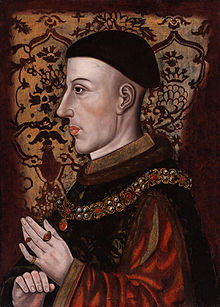

54rebeccanyc
Love the pictures -- waiting for the review!
55baswood
1415: Henry V's Year of Glory by Ian Mortimer
This is a blockbuster of a history book and one that is written with the general reader in mind. Mortimer continues his biographical series of England's late medieval kings, but with this instalment he tries something different. He takes a year in the life of Henry V and details the events of that year in chronological order in accordance with the calendar for that year and so we get an entry for most days and its length is dependent on the events of that day. Mortimer usually has an agenda for his biographies and this one is no different, as he sets out to debunk the myth that Henry V was "the greatest man that ever ruled England"
Henry's year of glory culminated in the famous victory at Agincourt on October 25, before that there had been his successful siege of Harfleur, which began on August 17th and in mid July a plot had been hatched to overthrow Henry and put Edmund Mortimer on the throne. The first six months of the year had been almost wholly taken up with the preparations for the war in France and so Mortimer's chronological calendrical approach to his history could have resulted in reader fatigue long before he gets to Agincourt in October. Mortimer solves this problem by relating the story of the events at the Council of Constance that unfolded during the early part of the year. At the Council delegates of the Catholic church under the leadership of Sigismund (the Holy Roman Emperor) were attempting to unify the church by forcing the abdication of the three schismatic Popes. The Council were also bent on stamping out heresy and Jan Hus was eventually burnt at the stake, which some historians believe kick started the reformist movement. Henry V took no part in the Council although English delegates formed a powerful faction there, however because of Henry's extreme religiosity it could be argued that events there were significant to his life and times. Mortimer also relates the events surrounding the French monarchy, where Charles VI was largely incapacitated due to mental illness and the Dauphin (Kings eldest son) was caught between the warring Bergundians and the Armagnacs.
So how does this book work? As an explanation I have taken a date taken at random, say 24 April 1415 where Mortimer tells us the following: he explains the significance of issues of Roll payments and then tells us what they were for that day; the Earl of Arundel who was his treasurer received an increase in salary of £300, gifts were made to Sir John Phelip who served with Henry in his Welsh campaign and would take a significant part in the French campaign, £60 was paid to Roger Selvayn for timber for the defence of Calais, Henry bought another ship the "St Nicholas of Guerande" for £500 from three Breton merchants and he paid Sir John Hall expenses for the upkeep of Mordach Earl of Fife; the heir to the Scottish throne imprisoned by Henry. These were all examples of Henry's preparations for his French campaign and his desire to secure stability in England while he was away. Mortimer argues that the Calendar structure makes a framework with which to see the past differently; everything is relevant and the reader is able (sometimes with Mortimer's help) to make their own observations of events. We can see Henry's relentless build up to a war that he was determined to wage. At the same time he was assuring his French cousins that he was working for peace between the two nations. Mortimer's structure also allows the reader to see just what Henry didn't do.
The structure allows us to make our own observations on the character of Henry V and what comes across most forcefully is his intense religious belief, which he connected with his own kingship. In an age of God fearing men Henry took this to the extreme and in Mortimer's view, today, we would see him as a religious fundamentalist. There are plenty of examples of his piety in his day to day actions, but what is disturbing is his increasing belief in himself as the hand of God. It would appear that he truly believed he was God's instrument and that God had chosen him to lead the fight against the immoral and heretical French. He styled himself as an absolute monarch and ruled his princes, captains and knights by fear of death. Of course he came down hard on heretics and there was a marked increase in live burnings during the year. There are striking examples of his cruelty that Mortimer believes have been glossed over by some historians in their clamour to make Henry the ultimate warrior king. Henry had been celibate since his coronation and there is hardly a mention of women in the history, he was facially disfigured from previous battles and held himself proud and aloof from almost everybody, Mortimer comes to the conclusion that he was an obsessive man, obsessed by religion. justice and war.
It is always dangerous to judge a medieval king by today's standards and on Henry's terms he was a successful King. He increased the power of the monarchy, he was largely successful in quelling revolts from the warring nobility, he achieved glory in his war in France, increasing England's prestige abroad, at home this success led to his popularity in England and his ability to raise more money for future campaigns. He set an example to all of his faith in the catholic church and what could be achieved, thereby. Today we might take a different view: he bankrupted the country to fight his wars, he mortgaged his own dynasty to his pride and desire to achieve glory, he did nothing to improve the lot of the common man and his determination to stamp out religious dissent looked backwards rather than forwards.
Mortimer is a fine teller of History and the siege of Harfleur and the battle of Agincourt is told in exciting detail, as are most other events of the year. It is the less significant details that emerge that continued to delight me. The number of feast days throughout the year, which goes to show that life for some people in the late Middle Ages, was not always nasty brutish and short. The comfort provided by the many religious services and the money poured into the church to provide those services. There are details of the desperate conditions of soldiers on campaign; the problems of finding fresh drinking water and unpleasant facts like the need to bring large cauldrons, so that bodies of slain noblemen could be boiled so that their clean bones could be shipped back to England for burial.
Mortimer provides an introduction to set the stage for his more detailed examination of the year 1415 and their is a fine long conclusion where he draws together many of the threads and provides arguments for and against the greatness of Henry V. He also attempts to explain the seeming inconsistences of some of Henry's actions and a fine section on Nature and Nurture gives pointers to his psychological make up. I am a fan of Ian Mortimer's histories and this book would appear to be a labour of love. It weighs in at nearly 650 pages, but nearly 100 pages are taken up with notes and references, a bibliography, index, appendices and maps. This is an excellent history book and a five star read.
This is a blockbuster of a history book and one that is written with the general reader in mind. Mortimer continues his biographical series of England's late medieval kings, but with this instalment he tries something different. He takes a year in the life of Henry V and details the events of that year in chronological order in accordance with the calendar for that year and so we get an entry for most days and its length is dependent on the events of that day. Mortimer usually has an agenda for his biographies and this one is no different, as he sets out to debunk the myth that Henry V was "the greatest man that ever ruled England"
Henry's year of glory culminated in the famous victory at Agincourt on October 25, before that there had been his successful siege of Harfleur, which began on August 17th and in mid July a plot had been hatched to overthrow Henry and put Edmund Mortimer on the throne. The first six months of the year had been almost wholly taken up with the preparations for the war in France and so Mortimer's chronological calendrical approach to his history could have resulted in reader fatigue long before he gets to Agincourt in October. Mortimer solves this problem by relating the story of the events at the Council of Constance that unfolded during the early part of the year. At the Council delegates of the Catholic church under the leadership of Sigismund (the Holy Roman Emperor) were attempting to unify the church by forcing the abdication of the three schismatic Popes. The Council were also bent on stamping out heresy and Jan Hus was eventually burnt at the stake, which some historians believe kick started the reformist movement. Henry V took no part in the Council although English delegates formed a powerful faction there, however because of Henry's extreme religiosity it could be argued that events there were significant to his life and times. Mortimer also relates the events surrounding the French monarchy, where Charles VI was largely incapacitated due to mental illness and the Dauphin (Kings eldest son) was caught between the warring Bergundians and the Armagnacs.
So how does this book work? As an explanation I have taken a date taken at random, say 24 April 1415 where Mortimer tells us the following: he explains the significance of issues of Roll payments and then tells us what they were for that day; the Earl of Arundel who was his treasurer received an increase in salary of £300, gifts were made to Sir John Phelip who served with Henry in his Welsh campaign and would take a significant part in the French campaign, £60 was paid to Roger Selvayn for timber for the defence of Calais, Henry bought another ship the "St Nicholas of Guerande" for £500 from three Breton merchants and he paid Sir John Hall expenses for the upkeep of Mordach Earl of Fife; the heir to the Scottish throne imprisoned by Henry. These were all examples of Henry's preparations for his French campaign and his desire to secure stability in England while he was away. Mortimer argues that the Calendar structure makes a framework with which to see the past differently; everything is relevant and the reader is able (sometimes with Mortimer's help) to make their own observations of events. We can see Henry's relentless build up to a war that he was determined to wage. At the same time he was assuring his French cousins that he was working for peace between the two nations. Mortimer's structure also allows the reader to see just what Henry didn't do.
The structure allows us to make our own observations on the character of Henry V and what comes across most forcefully is his intense religious belief, which he connected with his own kingship. In an age of God fearing men Henry took this to the extreme and in Mortimer's view, today, we would see him as a religious fundamentalist. There are plenty of examples of his piety in his day to day actions, but what is disturbing is his increasing belief in himself as the hand of God. It would appear that he truly believed he was God's instrument and that God had chosen him to lead the fight against the immoral and heretical French. He styled himself as an absolute monarch and ruled his princes, captains and knights by fear of death. Of course he came down hard on heretics and there was a marked increase in live burnings during the year. There are striking examples of his cruelty that Mortimer believes have been glossed over by some historians in their clamour to make Henry the ultimate warrior king. Henry had been celibate since his coronation and there is hardly a mention of women in the history, he was facially disfigured from previous battles and held himself proud and aloof from almost everybody, Mortimer comes to the conclusion that he was an obsessive man, obsessed by religion. justice and war.
It is always dangerous to judge a medieval king by today's standards and on Henry's terms he was a successful King. He increased the power of the monarchy, he was largely successful in quelling revolts from the warring nobility, he achieved glory in his war in France, increasing England's prestige abroad, at home this success led to his popularity in England and his ability to raise more money for future campaigns. He set an example to all of his faith in the catholic church and what could be achieved, thereby. Today we might take a different view: he bankrupted the country to fight his wars, he mortgaged his own dynasty to his pride and desire to achieve glory, he did nothing to improve the lot of the common man and his determination to stamp out religious dissent looked backwards rather than forwards.
Mortimer is a fine teller of History and the siege of Harfleur and the battle of Agincourt is told in exciting detail, as are most other events of the year. It is the less significant details that emerge that continued to delight me. The number of feast days throughout the year, which goes to show that life for some people in the late Middle Ages, was not always nasty brutish and short. The comfort provided by the many religious services and the money poured into the church to provide those services. There are details of the desperate conditions of soldiers on campaign; the problems of finding fresh drinking water and unpleasant facts like the need to bring large cauldrons, so that bodies of slain noblemen could be boiled so that their clean bones could be shipped back to England for burial.
Mortimer provides an introduction to set the stage for his more detailed examination of the year 1415 and their is a fine long conclusion where he draws together many of the threads and provides arguments for and against the greatness of Henry V. He also attempts to explain the seeming inconsistences of some of Henry's actions and a fine section on Nature and Nurture gives pointers to his psychological make up. I am a fan of Ian Mortimer's histories and this book would appear to be a labour of love. It weighs in at nearly 650 pages, but nearly 100 pages are taken up with notes and references, a bibliography, index, appendices and maps. This is an excellent history book and a five star read.
56rebeccanyc
That is a completely fascinating review of a book I am unlikely ever to read. You've provided insight into the book, the man, and the times, and it was also interesting to read how we would perceive Henry differently today. I for one appreciate the education!
57NanaCC
1415: Henry V's Year of Glory sounds wonderful. I am adding to my wish list.
59StevenTX
Unfortunately Mortimer's books haven't been published in the US, but I'm learning a lot just from your fine reviews.
60tonikat
You've sold Leonardo's Judas to me, thanks.
What Camus do you plan to read? Sisyphus is fine, The outsider I didn't really enjoy but The Adulterous Woman sparkles for me and makes me think of more (and of checking out which translations I should try).
What Camus do you plan to read? Sisyphus is fine, The outsider I didn't really enjoy but The Adulterous Woman sparkles for me and makes me think of more (and of checking out which translations I should try).
61baswood
Thank you Rebecca, Chris and Nana and steven.
TonyH I intend to read most of Camus in this his centenary year, hopefully in chronological order. Next one up is The Plague.
TonyH I intend to read most of Camus in this his centenary year, hopefully in chronological order. Next one up is The Plague.
62Linda92007
Great review of 1415: Henry V's Year of Glory, Barry. I'm disappointed to hear that most of Mortimer's books are not available here, but I did find a few that are.
63dchaikin
I could echo Rebecca in #56. Enjoyed your review...even if my only previous knowledge of Henry V is that he must existed or there wouldn't be a Henry VIII.
64rebeccanyc
Very funny, Dan! That was about my level of knowledge, but I never would have thought to put it so cleverly.
65janeajones
Great review, Barry -- like Rebecca, I don't plan to read this book, but your excellent details certainly add to my understanding of Shakespeare's plays and English history -- I really had no idea that Prince Hal was such a religious fanatic.
67dmsteyn
I've been catching up on your reviews, Barry. Great stuff, as always. 1415 sounds particularly interesting.

69baswood
The Wonderful Visit by H G Wells
"Truly this is no world for an Angel" surmises the Angel towards the end of H G Wells delightful second novel. The plot is a simple fantasy tale: An angel falls down to earth and is promptly shot at by a vicar, out looking to collect rare specimens; the wounded angel is nursed by the vicar who dares not reveal to anybody else the true nature of what he has collected. The angel is completely at a loss in the local village and within a week has managed to shock and incite such hatred from all the locals that he is effectively run out of town. Wells uses the story to satirise small town life in the late Victorian age and also peoples hatred of anything and anyone who appears an outsider.
This is a fantasy firmly grounded in the time of it's publication, people would have recognised the typical human attitudes that Wells depicts here and it is a winning combination with his descriptions of the beauty of the angel and the brief glimpses of the world that he inhabits. There are times however when the satire bites deep. This is Mr Hilyer the vicar describing his role at a burial service to the Angel (there is no pain or death in the angels world):
"And afterwards when they are falling to pieces, I try and persuade them of a strange world in which I scarcely believe in myself, where life is altogether different from what they have had - or desire. And in the end I bury them, and read out of my book to those who will presently follow into the unknown land. I stand at the beginning, and at the zenith, and at the setting of their lives. And on every seventh day, I who am a man myself, I who see no further than they do, talk to them of the Life to Come - the life of which we know nothing. If such a life there be. And slowly I drop to pieces amidst my prophesying."
"What a strange life!" said the Angel
Wells adds another dimension to the story by making his angel feel increasingly human during his first week on earth. He feels pain for the first time when he is shot by the vicar and as the week goes on more human emotions infiltrate his mind, until he begins to take very human actions which ultimately lead to the final twist in the tale. The angels wonder at what is happening to him is both funny and well drawn and holds the readers interest in what is a slight tale.
Well's occasionally interjects a little clumsily into his story, but his writing is generally full of wit and charm and is a pleasure to read. I thoroughly enjoyed it and would recommend it to anybody who is in the mood for a quaint little fantasy, that has a little bite to it. 3.5 stars
"Truly this is no world for an Angel" surmises the Angel towards the end of H G Wells delightful second novel. The plot is a simple fantasy tale: An angel falls down to earth and is promptly shot at by a vicar, out looking to collect rare specimens; the wounded angel is nursed by the vicar who dares not reveal to anybody else the true nature of what he has collected. The angel is completely at a loss in the local village and within a week has managed to shock and incite such hatred from all the locals that he is effectively run out of town. Wells uses the story to satirise small town life in the late Victorian age and also peoples hatred of anything and anyone who appears an outsider.
This is a fantasy firmly grounded in the time of it's publication, people would have recognised the typical human attitudes that Wells depicts here and it is a winning combination with his descriptions of the beauty of the angel and the brief glimpses of the world that he inhabits. There are times however when the satire bites deep. This is Mr Hilyer the vicar describing his role at a burial service to the Angel (there is no pain or death in the angels world):
"And afterwards when they are falling to pieces, I try and persuade them of a strange world in which I scarcely believe in myself, where life is altogether different from what they have had - or desire. And in the end I bury them, and read out of my book to those who will presently follow into the unknown land. I stand at the beginning, and at the zenith, and at the setting of their lives. And on every seventh day, I who am a man myself, I who see no further than they do, talk to them of the Life to Come - the life of which we know nothing. If such a life there be. And slowly I drop to pieces amidst my prophesying."
"What a strange life!" said the Angel
Wells adds another dimension to the story by making his angel feel increasingly human during his first week on earth. He feels pain for the first time when he is shot by the vicar and as the week goes on more human emotions infiltrate his mind, until he begins to take very human actions which ultimately lead to the final twist in the tale. The angels wonder at what is happening to him is both funny and well drawn and holds the readers interest in what is a slight tale.
Well's occasionally interjects a little clumsily into his story, but his writing is generally full of wit and charm and is a pleasure to read. I thoroughly enjoyed it and would recommend it to anybody who is in the mood for a quaint little fantasy, that has a little bite to it. 3.5 stars
71avidmom
>68 baswood: What a painting that is!
>69 baswood: Love the idea of this book. I second NanaCC, it sounds like fun.
>69 baswood: Love the idea of this book. I second NanaCC, it sounds like fun.
72mkboylan
68 oh my baswood, the painting led to wiki and then to youtube and right into my heart and then unfortunately to my head and gender symbols and stuff. Wow.
ETA: Thanks for posting that.
ETA: Thanks for posting that.
73janeajones
Incredible painting.
Your review reminded me of Gabriel Garcia Marquez's story, "A Very Old Man with Enormous Wings"
Your review reminded me of Gabriel Garcia Marquez's story, "A Very Old Man with Enormous Wings"
74kidzdoc
Great review of The Wonderful Visit, Barry. It sounds like an enjoyable read, so I've just downloaded the free e-book onto my Kindle.
75Mr.Durick
Before I stopped counting I found nine Nook Books of The Wonderful Visit priced between 99¢ and $2.99. I didn't know how to choose one.
But I want to.
Robert
But I want to.
Robert
76baswood
#68 The painting is by Hugo Simberg; a Finnish symbolist painter. The Wounded Angel is his most famous painting, but I used the image because it had been used as a front cover for an edition of H G Well's The Wonderful Visit
Nightwish the Heavy Rock symphonic group used the image for their CD Amarinth. Some nice images on this video if you can get past the music. http://www.youtube.com/watch?feature=player_detailpage&v=GdZn7k5rZLQ
Nightwish the Heavy Rock symphonic group used the image for their CD Amarinth. Some nice images on this video if you can get past the music. http://www.youtube.com/watch?feature=player_detailpage&v=GdZn7k5rZLQ
77dmsteyn
Oohh, The Wonderful Visit sounds fascinating! Thanks for the review, Barry.
78StevenTX
Enticing review of The Wonderful Visit. (And just two days ago I purchased The Works of H. G. Wells for my Kindle.)

80baswood
The Tigress of Forli by Elizabeth Lev
Subtitled Renaissance Italy's most courageous and notorious Countess, Caterina Riario Sforza De'Medici was more than an animal she was a monster. After the murder of her lover Giacomo Feo she took reprisals, 38 people were killed including many women and children related to suspected conspirators, many more were imprisoned and tortured. Pope Alexander VI commented "Unheard of bloodthirstiness to satisfy her passions." Earlier after escaping from the Orsis family who threatened to kill her children in order to wrest power from her, she is said to have shouted from the battlement of her castle "Do it you fools, I am already pregnant with another child and I have the means to make more." Finally when under siege by Cesare Borgia's army she was willing to sacrifice all her subjects in a bid to keep her castle and inheritance. It is little wonder that her two eldest children had little time for her when she was a prisoner of the Borgias.
Caterina the monster is a view we might take from the perspective of behavioural norms in the 21st century, but in renaissance Italy the lust for power and the pride in the family name was almost a pre-requisite for successful rulers of the city states. Machiavelli's treatise "The Prince" makes this abundantly clear and when we take note of Pope Alexander's comment about unheard of bloodthirstiness and realise that this is Roderigo Borgia speaking; a man who had far more blood on his hands, then Caterina's actions take on even more perspective. It is to Elizabeth Lev's credit that she does not gloss over the worst of Caterina's actions, but in continuously praising her courage and steadfastness, she is in danger of presenting us with an heroic figure, but finally it is up to the reader to come to their own conclusions as Lev has done an excellent job of presenting the evidence.
Caterina Riario Sforza's story is an extraordinary one, made even more extraordinary by the fact that Caterina was a woman in a man's world. In some respects she comes across as similar to Lucrezia Borgia. In Italy and in most other countries women of noble birth, were used as pawns in the game of marriage stakes, either as a reward to favourite men for services rendered or as a way of cementing ties with powerful families. Both women proved stronger than the men to whom they were married and survived their husbands to wield power in their own right. Both were expert in using their feminine charms to obtain what they wanted and both were torn to some extent between their lust for power and prestige, and concern with saving their souls. The big difference was in Caterina's martial prowess and her fortitude in adversity.
The strength of Lev's book is in the details that she manages to convey of life in renaissance times: in her introduction she says that she has used contemporary chronicles by two local men, Leone Cobelli and Andrea Bernadi, who eye-witnessed many of the events in Imola and Forli as well as other sources and so we find a paragraph like this:
Meanwhile, among the crowd stood the barber Andrea Bernadi, recording the conversation that ensued,
"My lady" Feo asked, "what do you want"
Caterina took a deep breath and in a rush of words, broken by tears and sobs, implored him to "give the fortress to these men, so they will free me and save my children" Slowly and respectfully, the loyal keeper shook his head. His duty he explained, was to hold the castle for the heir of Girolamo. Caterina, with mush handwringing, wailed that not only would she be killed, but all of her children would be brutally slaughtered by these criminals, who would stop at nothing to control Forli.
Lev has already explained that Feo and Caterina were involved in a stage managed charade to fool the onlookers, but I could not help wondering how much of Caterina's expressed emotions like "Caterina with much handwringing" or "in a rush of words broken by tears" have come from the chroniclers or have been made up by Lev to build drama into her story. In the final analysis I suppose it depends on how much the reader believes and whether or not Lev's interventions feel intrusive or inaccurate. Most of the time I was happy with her dramatization of the story, but occasionally I felt that her intrusions into Caterina's thoughts and emotions felt a little false, perhaps too much of a 21st century viewpoint, but this did not stop me from enjoying her book.
Elizabeth Lev is a scholar of renaissance art and culture and a professor of art history in Rome. Her book is well researched and has notes and sources as well as a very good index. It could easily be enjoyed by the general reader as her prose flows nicely and she seems to effortlessly transpose the reader into the Italian renaissance period. There will be some surprises and her story is packed with stirring events. This is a very good biography and a four star read.
I am pleased to say that not once in my review did I make reference to a feminist hero.
Subtitled Renaissance Italy's most courageous and notorious Countess, Caterina Riario Sforza De'Medici was more than an animal she was a monster. After the murder of her lover Giacomo Feo she took reprisals, 38 people were killed including many women and children related to suspected conspirators, many more were imprisoned and tortured. Pope Alexander VI commented "Unheard of bloodthirstiness to satisfy her passions." Earlier after escaping from the Orsis family who threatened to kill her children in order to wrest power from her, she is said to have shouted from the battlement of her castle "Do it you fools, I am already pregnant with another child and I have the means to make more." Finally when under siege by Cesare Borgia's army she was willing to sacrifice all her subjects in a bid to keep her castle and inheritance. It is little wonder that her two eldest children had little time for her when she was a prisoner of the Borgias.
Caterina the monster is a view we might take from the perspective of behavioural norms in the 21st century, but in renaissance Italy the lust for power and the pride in the family name was almost a pre-requisite for successful rulers of the city states. Machiavelli's treatise "The Prince" makes this abundantly clear and when we take note of Pope Alexander's comment about unheard of bloodthirstiness and realise that this is Roderigo Borgia speaking; a man who had far more blood on his hands, then Caterina's actions take on even more perspective. It is to Elizabeth Lev's credit that she does not gloss over the worst of Caterina's actions, but in continuously praising her courage and steadfastness, she is in danger of presenting us with an heroic figure, but finally it is up to the reader to come to their own conclusions as Lev has done an excellent job of presenting the evidence.
Caterina Riario Sforza's story is an extraordinary one, made even more extraordinary by the fact that Caterina was a woman in a man's world. In some respects she comes across as similar to Lucrezia Borgia. In Italy and in most other countries women of noble birth, were used as pawns in the game of marriage stakes, either as a reward to favourite men for services rendered or as a way of cementing ties with powerful families. Both women proved stronger than the men to whom they were married and survived their husbands to wield power in their own right. Both were expert in using their feminine charms to obtain what they wanted and both were torn to some extent between their lust for power and prestige, and concern with saving their souls. The big difference was in Caterina's martial prowess and her fortitude in adversity.
The strength of Lev's book is in the details that she manages to convey of life in renaissance times: in her introduction she says that she has used contemporary chronicles by two local men, Leone Cobelli and Andrea Bernadi, who eye-witnessed many of the events in Imola and Forli as well as other sources and so we find a paragraph like this:
Meanwhile, among the crowd stood the barber Andrea Bernadi, recording the conversation that ensued,
"My lady" Feo asked, "what do you want"
Caterina took a deep breath and in a rush of words, broken by tears and sobs, implored him to "give the fortress to these men, so they will free me and save my children" Slowly and respectfully, the loyal keeper shook his head. His duty he explained, was to hold the castle for the heir of Girolamo. Caterina, with mush handwringing, wailed that not only would she be killed, but all of her children would be brutally slaughtered by these criminals, who would stop at nothing to control Forli.
Lev has already explained that Feo and Caterina were involved in a stage managed charade to fool the onlookers, but I could not help wondering how much of Caterina's expressed emotions like "Caterina with much handwringing" or "in a rush of words broken by tears" have come from the chroniclers or have been made up by Lev to build drama into her story. In the final analysis I suppose it depends on how much the reader believes and whether or not Lev's interventions feel intrusive or inaccurate. Most of the time I was happy with her dramatization of the story, but occasionally I felt that her intrusions into Caterina's thoughts and emotions felt a little false, perhaps too much of a 21st century viewpoint, but this did not stop me from enjoying her book.
Elizabeth Lev is a scholar of renaissance art and culture and a professor of art history in Rome. Her book is well researched and has notes and sources as well as a very good index. It could easily be enjoyed by the general reader as her prose flows nicely and she seems to effortlessly transpose the reader into the Italian renaissance period. There will be some surprises and her story is packed with stirring events. This is a very good biography and a four star read.
I am pleased to say that not once in my review did I make reference to a feminist hero.
82dmsteyn
Interesting review of The Tigress of Forli, Barry. It makes me think of Percy Bysshe Shelley's play, The Cenci, which I recently read.
83rebeccanyc
What a fascinating woman, and what a great review!
84baswood
Next for me is Odd John by Olaf Stapledon. This is no 5 in Abe books essential science fiction books and was published in 1935.
85StevenTX
A fascinating story in The Tigress of Forli!
I'll be interested to see what you think of Odd John. The only experience I've had with Stapledon is Last and First Men, which is a projected history of the future showing the evolution of the human species through various new forms. It isn't really a novel--no plot or characters--but a work of highly speculative futurology.
I'll be interested to see what you think of Odd John. The only experience I've had with Stapledon is Last and First Men, which is a projected history of the future showing the evolution of the human species through various new forms. It isn't really a novel--no plot or characters--but a work of highly speculative futurology.
86JDHomrighausen
Really loved your review of the Wells book. I didn't know he ever wrote anything with such explicitly religious commentary!
87Linda92007
Excellent reviews of The Wonderful Visit and The Tigress of Forli, Barry.
88cabegley
You continue adding to my wish list, Barry. I followed in Darryl's footsteps and got the free kindle version of The Wonderful Visit, and The Tigress of Forli is on my wish list.
89SassyLassy
So glad you liked the Tigress! It will be interesting to see if she starts popping up in other biographies now.
Great review!
Great review!
90baswood
Thanks everybody and I think I may have read about The Tigress of Forli on your thread Sassylassy, so thank you for that.
steven, I have also read last and First Men way back when and remember being struck by it's original approach, nothing else quite like it in the Sci-fi genre.
Odd John has much more of a novel feel to it and even a bit of a story
steven, I have also read last and First Men way back when and remember being struck by it's original approach, nothing else quite like it in the Sci-fi genre.
Odd John has much more of a novel feel to it and even a bit of a story
91Murphy-Jacobs
I remember starting Odd John some years ago, but not quite getting caught up enough to read very far. I should hunt it up in my boxes and give it a second try -- but maybe I'll wait for your review to see how far up Mount TBR I'll shove it :)


94StevenTX
I'll take the one on the left--because of the price, of course. I can remember buying paperbacks for 35 cents, though by the time I came into big money (my first paper route) most books were 40 cents.
95baswood
Odd John by Olaf Stapledon
Cattle! Cattle! a whole world of cattle! My God how they stink is Odd johns view of the human race (homo sapiens.) Olaf Stapledon's novel published in 1935 has every right to be called a science fiction masterwork and it probably ranks with Aldous Huxley's Brave New World as literary science fiction.
The plot is a familiar one to science fiction readers, but the way it has been used by Stapledon would have seemed inventive and at times shocking, back then and it still has an impact today. John is an infant prodigy whose intelligence after a slow start easily outstrips those around him and his mind continues to develop at an alarming rate leaving his body struggling to keep up. At 8 years old John realises that he is very different from the rest of the human race and realises that he must keep his prodigious talents secret or he will be imprisoned or destroyed. His story is narrated by "Fido", Odd John's pet name for the adult friend of the family who becomes his willing helper. It is Fido's task to introduce the boy into the adult world so that he can learn things for himself. John studies politics, philosophy, religion, business and science and finds them all wanting. He embarks on his own course of study that takes him away from the family unit and into the natural world. It is his gradual realisation that there are others, perhaps only a handful, who are also super-normal that leads him to form the idea of setting up a colony, that will work in isolation from the human race. John discovers that he has telepathic powers and once these are harnessed he can communicate with and then track down the other super-normals, who are all gifted in different ways. If this is starting to sound like Salman Rushdie's Midnight's Children, then I would not be at all surprised if this book had not sown the seeds for Rushdie's novel.
This is an intelligent novel and Stapledon uses the premise to examine society and world affairs in the inter-war years. Fido relates his many conversations with Odd John who takes every opportunity to sound off about what is wrong with the world and the human race:
"The best minds!, he said, "One of your main troubles of your unhappy species is that the best minds can go even farther astray than the second best, much farther than the umpteenth best. That has what has been happening during the last few centuries. Swarms of the best minds have been leading the population down blind alley after blind alley, and doing it with tremendous courage and resource, Your trouble, as a species, is that you can't keep hold of everything at once......................Then what with this new crazy religion of nationalism that's beginning and the steady improvement of the technique of destruction, a huge disaster is simply inevitable, barring a miracle which of course may happen."
Having used Fido as a biographer of Odd John's life, Stapledon is able to elicit a certain amount of sympathy for the super-normals, They are in many respects the superior race as Odd John keeps reminding Fido and their very difference allows them to flout earthly conventions. Taboos of murder and incest are ignored when the occasion demands and yet Stapledon does not portray them as monsters, we are torn between wanting them to succeed, but at the same time are appalled by some of their methods. An underlying theme to this novel is that homo sapiens keep on making the same mistakes, their inability to learn from these will eventually single them out as a doomed species, a failed experiment. It is this thought along with the super-normals continuing search for a new kind of spirituality that creates much of the dichotomy.
Olaf Stapledon wrote books on philosophy, politics as well as his science fantasy's and was the only British delegate to the communist backed cultural and scientific conference to world peace held at New York's Waldorf Astoria Hotel. His academic credentials do not get in the way of his writing in this novel; while there are some pseudo-philosophical and political tracts to negotiate they are not without interest and the author never loses sight of his story. The search for other super-normals is exciting and inventive and the trials and tribulations of the super-colony are fascinating. There is a lack of suspense, because fairly early on we are informed of John's early death, but this does not purport to be an adventure story, it is a thoughtful intelligent novel whose biographical form firmly grounds it in the real world. Yes this is a literary novel and although you will not find flights of marvellous prose you will find a wealth of inventive ideas, interesting social commentary and that dichotomy at the very heart of the novel, which lifts this out of the pure science-fiction genre. 4.5 stars.
Cattle! Cattle! a whole world of cattle! My God how they stink is Odd johns view of the human race (homo sapiens.) Olaf Stapledon's novel published in 1935 has every right to be called a science fiction masterwork and it probably ranks with Aldous Huxley's Brave New World as literary science fiction.
The plot is a familiar one to science fiction readers, but the way it has been used by Stapledon would have seemed inventive and at times shocking, back then and it still has an impact today. John is an infant prodigy whose intelligence after a slow start easily outstrips those around him and his mind continues to develop at an alarming rate leaving his body struggling to keep up. At 8 years old John realises that he is very different from the rest of the human race and realises that he must keep his prodigious talents secret or he will be imprisoned or destroyed. His story is narrated by "Fido", Odd John's pet name for the adult friend of the family who becomes his willing helper. It is Fido's task to introduce the boy into the adult world so that he can learn things for himself. John studies politics, philosophy, religion, business and science and finds them all wanting. He embarks on his own course of study that takes him away from the family unit and into the natural world. It is his gradual realisation that there are others, perhaps only a handful, who are also super-normal that leads him to form the idea of setting up a colony, that will work in isolation from the human race. John discovers that he has telepathic powers and once these are harnessed he can communicate with and then track down the other super-normals, who are all gifted in different ways. If this is starting to sound like Salman Rushdie's Midnight's Children, then I would not be at all surprised if this book had not sown the seeds for Rushdie's novel.
This is an intelligent novel and Stapledon uses the premise to examine society and world affairs in the inter-war years. Fido relates his many conversations with Odd John who takes every opportunity to sound off about what is wrong with the world and the human race:
"The best minds!, he said, "One of your main troubles of your unhappy species is that the best minds can go even farther astray than the second best, much farther than the umpteenth best. That has what has been happening during the last few centuries. Swarms of the best minds have been leading the population down blind alley after blind alley, and doing it with tremendous courage and resource, Your trouble, as a species, is that you can't keep hold of everything at once......................Then what with this new crazy religion of nationalism that's beginning and the steady improvement of the technique of destruction, a huge disaster is simply inevitable, barring a miracle which of course may happen."
Having used Fido as a biographer of Odd John's life, Stapledon is able to elicit a certain amount of sympathy for the super-normals, They are in many respects the superior race as Odd John keeps reminding Fido and their very difference allows them to flout earthly conventions. Taboos of murder and incest are ignored when the occasion demands and yet Stapledon does not portray them as monsters, we are torn between wanting them to succeed, but at the same time are appalled by some of their methods. An underlying theme to this novel is that homo sapiens keep on making the same mistakes, their inability to learn from these will eventually single them out as a doomed species, a failed experiment. It is this thought along with the super-normals continuing search for a new kind of spirituality that creates much of the dichotomy.
Olaf Stapledon wrote books on philosophy, politics as well as his science fantasy's and was the only British delegate to the communist backed cultural and scientific conference to world peace held at New York's Waldorf Astoria Hotel. His academic credentials do not get in the way of his writing in this novel; while there are some pseudo-philosophical and political tracts to negotiate they are not without interest and the author never loses sight of his story. The search for other super-normals is exciting and inventive and the trials and tribulations of the super-colony are fascinating. There is a lack of suspense, because fairly early on we are informed of John's early death, but this does not purport to be an adventure story, it is a thoughtful intelligent novel whose biographical form firmly grounds it in the real world. Yes this is a literary novel and although you will not find flights of marvellous prose you will find a wealth of inventive ideas, interesting social commentary and that dichotomy at the very heart of the novel, which lifts this out of the pure science-fiction genre. 4.5 stars.
96baswood
#92 Joyce and steven, that is a wonderfully salacious cover, designed to pull in the punters, some of whom may have been a little disappointed when they got to reading the novel.
98Linda92007
I much prefer your masterful review to either of the covers, Barry. So much so that I have added it to my Kindle wishlist, for likely purchase later today.
99RidgewayGirl
The cover on the left is pure pulp fabulousness. Those are some eyes Odd John has.
100Murphy-Jacobs
I'm surprised that wasn't a cover analyzed in A New Species , which does a lot of analysis on the pulp SF covers of that time (from a feminist viewpoint, of course).
OK, I'm convinced, @baswood. I'll shove it up a bit in the listing. :)
OK, I'm convinced, @baswood. I'll shove it up a bit in the listing. :)
101rebeccanyc
Well, I never would have thought of reading this until I read your review. And I have to go for the cover on the left too.
102lilisin
97 -
The last few years have created a surge of acknowledgment that curvy women are "real" women. And people think this is progress. But all it does is recreate a stigma against the stick girls. I'm a stick and now I'm supposed to prove that I'm a "real" woman? How about we just realize that genetics are as such and that a woman on a book cover is just that: a woman on a book cover.
ETA: That's not supposed to sound attacking by the way. I just wanted to bring up what I find to be an interesting point.
The last few years have created a surge of acknowledgment that curvy women are "real" women. And people think this is progress. But all it does is recreate a stigma against the stick girls. I'm a stick and now I'm supposed to prove that I'm a "real" woman? How about we just realize that genetics are as such and that a woman on a book cover is just that: a woman on a book cover.
ETA: That's not supposed to sound attacking by the way. I just wanted to bring up what I find to be an interesting point.
103Mr.Durick
I read Star Maker admiringly several decades ago and have always meant to read more Stapledon. Your review of Odd John has led me to find and buy a Nook collection of six of his novels. Now, when will I read them?
Thanks,
Robert
Thanks,
Robert
104baswood
Sticks or curves have never bothered me overmuch, its the woman inside the cover that really counts.
Nice to see you here Murphy-Jacobs
The eyes have it Ridgeway Girl
Linda, hope you like the book
Robert I am also going to be searching out more Stapledon and Star Maker is high on my list
Nice to see you here Murphy-Jacobs
The eyes have it Ridgeway Girl
Linda, hope you like the book
Robert I am also going to be searching out more Stapledon and Star Maker is high on my list
106Murphy-Jacobs
Digression -- (you are warned).
I've read a lot in the last year or so about "fat acceptance" and body image, about "concern trolling", about the casualness with which the US public critique female bodies either for being too fat, too skinny, too flat chested, too busty, too hippy, too stick-like, too...something. It seems every culture has standards of feminine (and masculine) beauty, and sometimes I think that, being the cultural melting pot that we are, the US has a mass of conflicting standards and ideas of what classifies as beauty. Just cruise (if you have the stomach) through any celebrity or fashion site's comments. I don't think Helen of Troy could stand against that sort of schizophrenic critique. No matter what one looks like, there's someone who won't like it.
-- and, online at least, they will tell you about it in detail.
What's really interesting to me, however, is how those standards show up in representations of literature and the meaning behind them. The book I mentioned above goes into some detail about the symbolism of the female image when used to illustrate pulp SF stories. I think the same kind of analysis can be turned toward modern cover art as well as movies, TV, and other aspects of SF pop culture. What do those images mean, or what are they trying to tell us?
It's also one of the things that makes me wonder if e-Books will change our perceptions -- do the covers of eBooks have the same affect on our perceptions of a book as the covers of paperbacks? I have an ebook library, and I sort by covers, but I rarely think about the cover or really look at it. They are so tiny! I'm usually just trying to see the title (sort of like the devolvement of LP cover art as the MP3 has risen. Who spends hours staring at the art of an MP3?)
Ok, Digression ended.
I've read a lot in the last year or so about "fat acceptance" and body image, about "concern trolling", about the casualness with which the US public critique female bodies either for being too fat, too skinny, too flat chested, too busty, too hippy, too stick-like, too...something. It seems every culture has standards of feminine (and masculine) beauty, and sometimes I think that, being the cultural melting pot that we are, the US has a mass of conflicting standards and ideas of what classifies as beauty. Just cruise (if you have the stomach) through any celebrity or fashion site's comments. I don't think Helen of Troy could stand against that sort of schizophrenic critique. No matter what one looks like, there's someone who won't like it.
-- and, online at least, they will tell you about it in detail.
What's really interesting to me, however, is how those standards show up in representations of literature and the meaning behind them. The book I mentioned above goes into some detail about the symbolism of the female image when used to illustrate pulp SF stories. I think the same kind of analysis can be turned toward modern cover art as well as movies, TV, and other aspects of SF pop culture. What do those images mean, or what are they trying to tell us?
It's also one of the things that makes me wonder if e-Books will change our perceptions -- do the covers of eBooks have the same affect on our perceptions of a book as the covers of paperbacks? I have an ebook library, and I sort by covers, but I rarely think about the cover or really look at it. They are so tiny! I'm usually just trying to see the title (sort of like the devolvement of LP cover art as the MP3 has risen. Who spends hours staring at the art of an MP3?)
Ok, Digression ended.
107mkboylan
97 - and I'm old enough to remember thin people being made fun of - point well taken.
ETA: whoops that was in response to 102, not 97.
ETA: whoops that was in response to 102, not 97.
108baswood
Lincoln http://www.imdb.com/title/tt0443272/?ref_=sr_1
Realising that Lincoln was directed by Steven Spielberg led me to fear the worst. He is one of my least favourite American directors. His use of mawkish sentimentality in nearly all of his films makes me want to run screaming from the theatre. I feared for Lincoln especially with his reputation for home spun philosophy. (something that many American presidents seemed to have tried to replicate since). In the first part of the film this was in evidence and Spielberg almost ruined it for me, but as the film rolled on the central performance by Daniel Day Lewis dragged this film kicking and screaming into one of the best films I have recently seen. The period detail, the speech patterns, the look of the film were all entirely convincing and the political battles were enthralling. A very good movie indeed.
I saw the film at my local cinema which seats about 100 people and about 10 minutes before the start when the theatre was half full an army of school children came in to fill up the remaining seats. During that 10 minutes there was much changing of seats and hilarity from the kids, who were aged between 12-15 I think. I wondered if we would get to see the film let alone hear any of it. But as soon as the house lights went down everybody quietened down and throughout the whole of the movie you could have heard a pin drop. Considering that this was a long film screened in its original language (English) and most of the kids were French then their behaviour was impeccable. I struggled with some of the American/English spoken and so it must have been doubly difficult for the French kids, most of whom would have had to read the sub-titles.
Realising that Lincoln was directed by Steven Spielberg led me to fear the worst. He is one of my least favourite American directors. His use of mawkish sentimentality in nearly all of his films makes me want to run screaming from the theatre. I feared for Lincoln especially with his reputation for home spun philosophy. (something that many American presidents seemed to have tried to replicate since). In the first part of the film this was in evidence and Spielberg almost ruined it for me, but as the film rolled on the central performance by Daniel Day Lewis dragged this film kicking and screaming into one of the best films I have recently seen. The period detail, the speech patterns, the look of the film were all entirely convincing and the political battles were enthralling. A very good movie indeed.
I saw the film at my local cinema which seats about 100 people and about 10 minutes before the start when the theatre was half full an army of school children came in to fill up the remaining seats. During that 10 minutes there was much changing of seats and hilarity from the kids, who were aged between 12-15 I think. I wondered if we would get to see the film let alone hear any of it. But as soon as the house lights went down everybody quietened down and throughout the whole of the movie you could have heard a pin drop. Considering that this was a long film screened in its original language (English) and most of the kids were French then their behaviour was impeccable. I struggled with some of the American/English spoken and so it must have been doubly difficult for the French kids, most of whom would have had to read the sub-titles.
110StevenTX
I'm not likely to see the movie, but I do recall during a vacation to France more than once sharing a museum or an historic sight with a busload of teenage school children and being impressed each time by how well-behaved they were.
112rebeccanyc
I really liked Lincoln too, and I had qualms about it going in. Daniel Day-Lewis was superb.
113ChocolateMuse
What a beautiful thread, bas. Hoping I can make a late entrance. I love the pictures and the music.
114SassyLassy
>108 baswood: Realising that Lincoln was directed by Steven Spielberg led me to fear the worst. He is one of my least favourite American directors. His use of mawkish sentimentality in nearly all of his films makes me want to run screaming from the theatre. I feared for Lincoln especially with his reputation for home spun philosophy.
I have avoided seeing the movie for exactly this reason plus the fact that I have become weary of Daniel Day Lewis.
I would like to read Team of Rivals as I think Goodwin is an excellent writer and analyst, and every review I have seen of it has been positive, but for some reason I keep avoiding it and it is not even on the TBR.
All this makes me suspect that perhaps it is the mythological persona of Lincoln himself that is putting me off, which takes me right back to your comments on Spielberg.
Do you know the reaction of your French neighbours to the film?
I have avoided seeing the movie for exactly this reason plus the fact that I have become weary of Daniel Day Lewis.
I would like to read Team of Rivals as I think Goodwin is an excellent writer and analyst, and every review I have seen of it has been positive, but for some reason I keep avoiding it and it is not even on the TBR.
All this makes me suspect that perhaps it is the mythological persona of Lincoln himself that is putting me off, which takes me right back to your comments on Spielberg.
Do you know the reaction of your French neighbours to the film?
116baswood

Machiavelli's Virtue by Harvey C Mansfield.
Mansfield offers an interpretation of Machiavelli's political science in a book aimed at the scholar or student rather than the general reader. Some knowledge of Machiavelli's works is required and familiarity with The Prince and Discourses on Livy is a distinct advantage.
Much has been written about Machiavelli's use of the word virtue and Mansfield launches his book with a chapter on that very subject. Machiavelli seems to be saying that virtue is the ability to get things done, but it is used in so many contexts that is takes on other shades of meaning. Mansfield point out that Machiavelli believed that morality should be interpreted "according to the times" and so if the times are corrupt then one is compelled to live and behave corruptly and therefore morally excused from doing so. Therefore to be successful in a corrupt world calls for action that today we would not associate with being virtuous, but Machiavelli uses the word in the context of someone being successful in that corrupt world. There is much to be gained from a careful reading of this chapter as Mansfield then embarks on his interpretations of Machiavelli's political writing in the chapters that follow.
A key theme of this study is an examination of Machiavelli's place in the world of Political Science. This starts with a comparison with the principles of politics as set out by Edmund Burke in his "The Enlightenment and the Modern World" A chapter that Mansfield had written for another publication and this trend continues with other chapters and so there is a feeling of a series of essays rather than a cogent study. Much of this stuff has appeared in the American Political Science Review, however Mansfield's interpretations and thoughts are rarely at odds with each other and so although there is some repetition, it all reads fairly fluently.
The book amounts to a collection of articles and essays on Machiavelli's Political thoughts and writings and while much here is of value it is left to the reader to pick through the portions of the book that will be of interest. I read it from cover to cover and enjoyed much of it, especially issues surrounding the influences that Machiavelli has on current political thought, but at times felt I was in a rarefied atmosphere of Political Science and felt my attention wandering. For me a 3.5 star read.
117rebeccanyc
at times felt I was in a rarefied atmosphere of Political Science and felt my attention wandering
That would make my mind wander too, but I enjoyed your review.
That would make my mind wander too, but I enjoyed your review.
119StevenTX
Interesting thoughts on the idea of virtue. I think the way the word is chiefly used now is in the pragmatic sense as well, but we rarely apply it to a person as a whole. We might refer to "the virtues of being bilingual" or say "one of the virtues of this process is..." but would rarely say "she is a virtuous woman." If we were to do so, it would probably imply the absence of sin rather than any positive quality.
120dmsteyn
Very interesting review, Barry, but I'll try some of Machiavelli's own texts first. I am somewhat familiar with the Aristotelian concept of "virtue" in the Nicomachean Ethics, but Mansfield seems to bring a different understanding to this concept.
121baswood
Hi Nana and Rebecca it's a good thing that it's not compulsory to read Machiavelli's virtue
steven and Dewald: I suppose that if you are going to make your name in academia through studying Machiavelli like Harvey C Mansfield then you have got to have a sneaking admiration for your subject and so this is what he says about Machiavelli's virtue:
Machiavelli's virtue emerges from an historical analysis to reveal a prescription for the future, "new modes and orders", which also constitute a personal triumph of secure glory for himself. Having the power with his books to create a new sect replacing Christianity, the new prince makes it possible for the virtue of many new princes to flourish
Dewald: Mansfield spends some time comparing Machiavelli's concept of virtue with that of Aristotle.
.
steven and Dewald: I suppose that if you are going to make your name in academia through studying Machiavelli like Harvey C Mansfield then you have got to have a sneaking admiration for your subject and so this is what he says about Machiavelli's virtue:
Machiavelli's virtue emerges from an historical analysis to reveal a prescription for the future, "new modes and orders", which also constitute a personal triumph of secure glory for himself. Having the power with his books to create a new sect replacing Christianity, the new prince makes it possible for the virtue of many new princes to flourish
Dewald: Mansfield spends some time comparing Machiavelli's concept of virtue with that of Aristotle.
.
122wildbill
I enjoyed your review of Machiavelli's Virtue. I thank you for reading it so that I don't feel the need to. Machiavelli's disregard for abstract ideals in favor of what worked sounds like pragmatism. Did Mansfield have anything to say along those lines?
123baswood
Wildbill, I would not label Machiavelli as a pragmatist in the sense that practical outcomes were more important than theory. He had very definite theoretical ideas of how the political state should work and while he encouraged princes (politicians) to always take advantage of a new situation there was much more to it than that. I think of Machiavelli as an exponent of realpolitik, but Mansfield does not mention that either.

126baswood
The Island of Doctor Moreau by H G Wells
"What could it all mean?. A locked enclosure on a lonely island, a notorious vivisector and these crippled and distorted men These are the thoughts of Edward Prendick: Well's anti-hero who is in effect a castaway on the island of Doctor Moreau. Most readers would be able to tell Prendick exactly what it means, because there has been at least three film versions and the story has been widely imitated. This is a horror story and the horror is palpable: if vivisection is the stuff of your nightmares then this novel will not be easy reading. Doctor Moreau is obsessed with his theories of being able to create men from beasts and has set up his laboratory on an island in the Pacific ocean far from any shipping lanes. He spends his time slashing and cutting away at live animals in an attempt to create something recognisable in human form and Wells makes us feel the pain and the degradation of his cruelty. In the chapter "The crying Puma" Prendick is given a room on the other side of a locked door leading into the laboratory and Doctor Moreau is operating on the puma:
Suddenly the Puma howled again, this time more painfully. Montgomery swore under his breath. I had half a mind to attack him about the man on the beach. Then the poor brute within gave vent to a series of short, sharp cries.......I found myself that the cries were singularly irritating, and they grew in depth and intensity as the afternoon wore on. They were painful at first, but their constant resurgence at last altogether upset my balance. I flung aside a crib of Horace I had been reading, and began to clench my fists, to bite my lips, and to pace the room. Presently I got to stopping my ears with my fingers.
The emotional appeal of those yells grew upon me steadily, grew at last to such an exquisite expression of suffering that I could stand it in that confined room no longer. I stepped out of the door into the slumberous heat of the late afternoon, and walking past the main entrance - locked again, I noticed - turned the corner of the wall. The crying sounded even louder out of doors. It was as if all the pain in the world had found a voice. Yet had I known such pain was in the next room, and had it been dumb, I believe - I have thought since - I could have stood it well enough. It is when suffering finds a voice and sets our nerves quivering and this pity comes troubling us
There are over 100 of the man-beasts still alive on the island who have all undergone days of surgery in the house of pain. They live as best they can according to a ritual of law imposed by Doctor Moreau in an attempt to stop them reverting to mindless beasts.
It is an adventure story as well as a horror story but the sickness of the life on the island is never far away from our thoughts as we read on to discover what happens next. Wells has used the literary device of the story being discovered amongst Prendicks papers after his death and so it is told by him in the first person. This adds immediacy to the writing and we witness the fear, the degradation, and the pain at first hand, it also allows for a certain amount of tension and mystery especially in the first part of the novel. Prendick believes that he might be a subject for vivisection and his escape from the compound and headlong flight amongst the man-beasts on the tropical island is exciting and vividly told.
There is more to Well's novel than an adventure/horror story. At the time of the novel's publication 1896 there was a debate raging about the morality of vivisection and Wells story pitches right in with the horrors that medical science can and will inflict if it remains unchecked. Evolution through natural selection or Darwinism was also much in the minds of the late Victorians and Thomas Huxley was seen as a propagator of Darwin's theories. Prendick in the novel says that he spent some years studying under Huxley, whose views that morality is determined independently of the biological origins of humanity is another key theme explored by Wells. The man-beasts must be indoctrinated by a set of rules, chanted by them at frequent intervals to help arrest their degeneration back into wild animals.
Man as a social animal is another theme fully explored by Wells in his novel. The three characters that feature on the island are Prendick, Doctor Moreau and Montgomery, they are all in their way outcasts and it is typical of Wells to make his main character very much an anti-hero. Prendick finds himself sent to the island after an altercation with the ships captain, he is not welcome on the island despite his knowledge of biology, Montgomery calls him a prig, because of his standoffish behaviour and refusal to drink alcohol. Prendick himself although appalled by what is going on in the laboratory, has no thoughts of intervening, he would rather run away from the cruelty than challenge it. His practical knowledge is almost non-existent and when he is called upon to show courage or take action he always demurs. When he returns to civilisation he becomes again "the man alone," who would rather be with his books and papers than mix with other people. Doctor Moreau is an obsessional scientist whose moral code one might think is typical of such a man. Montgomery is a born follower, under the spell of the Doctor, but who has some sympathies with the beast-men, but takes solace in his alcoholism.
Other themes that might easily be read into the novel are colonialism and religion, but care should be taken not to read to much from our 21st century perspective. As is usual with H G Wells there is much going on; I sometimes get the feeling that so many questions about the human condition are raised that it would take a much longer novel than this to deal with them all, however all power to Well's elbow for raising them here in a novel that is both original and looks forward to realisable horrors that would take place in the century following the novels publication. Nothing should get in the way of the fact that this horror story is genuinely creepy, certainly horrible, superbly well paced and reads like an adventure story. A great read 4.5 stars.
"What could it all mean?. A locked enclosure on a lonely island, a notorious vivisector and these crippled and distorted men These are the thoughts of Edward Prendick: Well's anti-hero who is in effect a castaway on the island of Doctor Moreau. Most readers would be able to tell Prendick exactly what it means, because there has been at least three film versions and the story has been widely imitated. This is a horror story and the horror is palpable: if vivisection is the stuff of your nightmares then this novel will not be easy reading. Doctor Moreau is obsessed with his theories of being able to create men from beasts and has set up his laboratory on an island in the Pacific ocean far from any shipping lanes. He spends his time slashing and cutting away at live animals in an attempt to create something recognisable in human form and Wells makes us feel the pain and the degradation of his cruelty. In the chapter "The crying Puma" Prendick is given a room on the other side of a locked door leading into the laboratory and Doctor Moreau is operating on the puma:
Suddenly the Puma howled again, this time more painfully. Montgomery swore under his breath. I had half a mind to attack him about the man on the beach. Then the poor brute within gave vent to a series of short, sharp cries.......I found myself that the cries were singularly irritating, and they grew in depth and intensity as the afternoon wore on. They were painful at first, but their constant resurgence at last altogether upset my balance. I flung aside a crib of Horace I had been reading, and began to clench my fists, to bite my lips, and to pace the room. Presently I got to stopping my ears with my fingers.
The emotional appeal of those yells grew upon me steadily, grew at last to such an exquisite expression of suffering that I could stand it in that confined room no longer. I stepped out of the door into the slumberous heat of the late afternoon, and walking past the main entrance - locked again, I noticed - turned the corner of the wall. The crying sounded even louder out of doors. It was as if all the pain in the world had found a voice. Yet had I known such pain was in the next room, and had it been dumb, I believe - I have thought since - I could have stood it well enough. It is when suffering finds a voice and sets our nerves quivering and this pity comes troubling us
There are over 100 of the man-beasts still alive on the island who have all undergone days of surgery in the house of pain. They live as best they can according to a ritual of law imposed by Doctor Moreau in an attempt to stop them reverting to mindless beasts.
It is an adventure story as well as a horror story but the sickness of the life on the island is never far away from our thoughts as we read on to discover what happens next. Wells has used the literary device of the story being discovered amongst Prendicks papers after his death and so it is told by him in the first person. This adds immediacy to the writing and we witness the fear, the degradation, and the pain at first hand, it also allows for a certain amount of tension and mystery especially in the first part of the novel. Prendick believes that he might be a subject for vivisection and his escape from the compound and headlong flight amongst the man-beasts on the tropical island is exciting and vividly told.
There is more to Well's novel than an adventure/horror story. At the time of the novel's publication 1896 there was a debate raging about the morality of vivisection and Wells story pitches right in with the horrors that medical science can and will inflict if it remains unchecked. Evolution through natural selection or Darwinism was also much in the minds of the late Victorians and Thomas Huxley was seen as a propagator of Darwin's theories. Prendick in the novel says that he spent some years studying under Huxley, whose views that morality is determined independently of the biological origins of humanity is another key theme explored by Wells. The man-beasts must be indoctrinated by a set of rules, chanted by them at frequent intervals to help arrest their degeneration back into wild animals.
Man as a social animal is another theme fully explored by Wells in his novel. The three characters that feature on the island are Prendick, Doctor Moreau and Montgomery, they are all in their way outcasts and it is typical of Wells to make his main character very much an anti-hero. Prendick finds himself sent to the island after an altercation with the ships captain, he is not welcome on the island despite his knowledge of biology, Montgomery calls him a prig, because of his standoffish behaviour and refusal to drink alcohol. Prendick himself although appalled by what is going on in the laboratory, has no thoughts of intervening, he would rather run away from the cruelty than challenge it. His practical knowledge is almost non-existent and when he is called upon to show courage or take action he always demurs. When he returns to civilisation he becomes again "the man alone," who would rather be with his books and papers than mix with other people. Doctor Moreau is an obsessional scientist whose moral code one might think is typical of such a man. Montgomery is a born follower, under the spell of the Doctor, but who has some sympathies with the beast-men, but takes solace in his alcoholism.
Other themes that might easily be read into the novel are colonialism and religion, but care should be taken not to read to much from our 21st century perspective. As is usual with H G Wells there is much going on; I sometimes get the feeling that so many questions about the human condition are raised that it would take a much longer novel than this to deal with them all, however all power to Well's elbow for raising them here in a novel that is both original and looks forward to realisable horrors that would take place in the century following the novels publication. Nothing should get in the way of the fact that this horror story is genuinely creepy, certainly horrible, superbly well paced and reads like an adventure story. A great read 4.5 stars.
128ChocolateMuse
Eww.
But a great review.
But a great review.
129StevenTX
Another superb review.
There are obvious parallels between The Island of Doctor Moreau and Frankenstein. I wonder to what extent Wells may have had Shelley's novel in mind and have been purposefully creating a Darwinian version of Frankenstein?
There are obvious parallels between The Island of Doctor Moreau and Frankenstein. I wonder to what extent Wells may have had Shelley's novel in mind and have been purposefully creating a Darwinian version of Frankenstein?
131rebeccanyc
What ChocolateMuse said in 128!
132Linda92007
Great review of The Island of Dr. Moreau, Barry. I have of course seen the movie multiple times on tv re-runs (hasn't almost everyone?), but the book sounds much better.
134SassyLassy
How could anybody resist this book after reading your review?
I haven't read this since I was a kid, but all the concerns of the Victorian world wrapped up in one novel... I have to read it again.
I haven't read this since I was a kid, but all the concerns of the Victorian world wrapped up in one novel... I have to read it again.
135baswood
Thanks everybody
next months sci-fi reading arrived together in the post this morning they are:
Nineteen Eighty-four by George Orwell
Earth Abides by George R Stewart
Star Maker by Olaf Stapledon
Sirius by Olaf Stapledon
I, Robot by Isaac Asimov.
next months sci-fi reading arrived together in the post this morning they are:
Nineteen Eighty-four by George Orwell
Earth Abides by George R Stewart
Star Maker by Olaf Stapledon
Sirius by Olaf Stapledon
I, Robot by Isaac Asimov.
136SassyLassy
At the huge risk of revealing my encyclopedic lack of knowledge about sci-fi, Olaf Stapledon?
138SassyLassy
Thanks, I remembered the review because it sounded so intriguing and because of the Salman Rushdie reference and also because it made me think of the cow with the Plexiglass side in the Agriculture barns, but with all that swirling through, I completely forgot the author.
139baswood

Orlando di Lasso (Lassus) was a Flemish composer active in the second half of the 16th century. He composed a prodigious amount of music both secular and religious and featured on this Naxos disc are two of his parody masses. Lasso like many a composer could not resist repeating a good tune and these two masses both use tunes that were popular in the late 16th century. The first of these is from a song entitled "entre vous filles de quinze ans" which could be roughly translated as Oh you fifteen year old girls. Hardly a fitting subject from which to take a tune and set to the rigid mass formula. I wonder if anyone noticed. The second is from a popular song titled "Susanne un jour"
This is choral music and was written for five part harmony and it is a delight to listen to. It has hardly been off my CD player these last few weeks. The voices weave around each other a warm and sensuous fashion, with the soprano parts particularly strong. The words are those of a mass, but the feel of this disc is particularly un churchy. There are no instruments on this disc just beautiful singing that rolls out gloriously. Tempos are medium and slow and catching hold of the individual voices proves endlessly fascinating. A joy.
140RidgewayGirl
I'm looking forward to your review of Earth Abides.
141ChocolateMuse
>139 baswood: Fascinating. Secular masses at a time when the Flemish states were split between Catholicism and Calvinism and religious disputes were enflaming the cities. I wonder what they made of it.
142StevenTX
#139 - I'm listening to it right now. It is quite beautiful.
#135 - Depending on how my other reading goes, I might join you for Earth Abides. It has been high on my SF priority list. I've read the other four, but long ago.
#135 - Depending on how my other reading goes, I might join you for Earth Abides. It has been high on my SF priority list. I've read the other four, but long ago.
144baswood
Gladiatorby Philip Wylie
Hugo Danner - Superman!. Doesn't sound quite right does it, but there are claims that the character created by Philip Wylie in his novel Gladiator was the precursor to Superman. Written in 1926 and published in 1930 over a decade before the superman comics appeared there are some similarities, but Wylie was just as interested in finding out what it would be like to be a superman as he was in describing the incredible feats of a man that could run faster than a train, jump over houses and destroy a platoon of soldiers.
Abednego Danner is a scientist and he works alone in trying to create a serum that would give humans the same proportional strength of ants and the power to jump like a grasshopper. His trial on his pet cat produces amazing results and he injects his pregnant wife with the serum. His son Hugo is born and after a slow start it becomes evident that he is blest with super strength and agility. The Danner's decide that for Hugo's sake he must strive to keep his powers a secret and they work hard in instilling a moral code in their son that they hope will allow him to live a normal and good life. Hugo does not disappoint, but his problems arise whenever he is tempted to use his powers. He goes to college and becomes a football star, but never quite drawing unwarranted attention to his abilities. The accidental killing of an opponent on the football field brings home to him his difficulties. How can he live in a world where he is so much more powerful than everyone else: a superman compared to other men. Whatever he tries leads to more disillusionment, his superhuman feats in the First World War become the stuff of legend, that people are only too willing not to believe. He had seen the war as his chance to make a difference, but he realises he is not powerful enough to control the destinies of so many people. His love affairs are ruined whenever his girlfriends witness his powers, they are either frightened or feel so inferior that they must leave him. He begins to see humanity as not worthy of benefiting from his gifts. These are his thoughts when his sponsorship of an up and coming politician who promises to clean up politics does not measure up.
"Hugo realised that there was no place in the world for him. Tides and tempests, volcanoes and lightning all other majestic vehemences of the universe had a purpose, but he had none. Either because he was all those forces unnaturally locked in the body of a man, or because he was a giant compelled to stoop and pander to live at all among his feeble fellows, his anachronism was complete.
That much he perceived calmly..... great deeds were always imminent and none of them could be accomplished, because they involved humanity, humanity protecting its diseases, its pettiness, its miserable convictions and conventions, with the essence of itself-life. Life not misty and fecund for the future, but life clawing at the dollar in the hour, the security of platitudes, the relief of visible facts. the hope in rationalisation, the needs of skin belly and womb."
The world in the early part of the 20thy century was not yet ready to accept a superhero according to Philip Wylie and this in a way is the essential difference to the superman phenomena that would burst upon the younger generation in the 1940's. Gladiator has more in common with Odd John by Olaf Stapledon published in 1935. Another superman of sorts that could not gain acceptance in the world in which he lived, becoming a permanent outsider, even a threat to the rest of humanity. Hugo Danner never quite reaches that position but feels he is fast running out of options to find his place in the world.
Philip Wylie the author of When Worlds Collide was an accomplished journalist and while this, his first novel at times feels like pulp fiction, there is enough about it to bring it into the realms of literature. Characters are reasonably well drawn: their actions are in keeping with how they are portrayed and not just a mechanism for furthering the plot. Hugo Danner's exploits on the football field and in the war are relevant and although the book can feel episodic, there is a thoughtful thread linking it all together. As a science fiction novel I would rate it at 4 stars.
Hugo Danner - Superman!. Doesn't sound quite right does it, but there are claims that the character created by Philip Wylie in his novel Gladiator was the precursor to Superman. Written in 1926 and published in 1930 over a decade before the superman comics appeared there are some similarities, but Wylie was just as interested in finding out what it would be like to be a superman as he was in describing the incredible feats of a man that could run faster than a train, jump over houses and destroy a platoon of soldiers.
Abednego Danner is a scientist and he works alone in trying to create a serum that would give humans the same proportional strength of ants and the power to jump like a grasshopper. His trial on his pet cat produces amazing results and he injects his pregnant wife with the serum. His son Hugo is born and after a slow start it becomes evident that he is blest with super strength and agility. The Danner's decide that for Hugo's sake he must strive to keep his powers a secret and they work hard in instilling a moral code in their son that they hope will allow him to live a normal and good life. Hugo does not disappoint, but his problems arise whenever he is tempted to use his powers. He goes to college and becomes a football star, but never quite drawing unwarranted attention to his abilities. The accidental killing of an opponent on the football field brings home to him his difficulties. How can he live in a world where he is so much more powerful than everyone else: a superman compared to other men. Whatever he tries leads to more disillusionment, his superhuman feats in the First World War become the stuff of legend, that people are only too willing not to believe. He had seen the war as his chance to make a difference, but he realises he is not powerful enough to control the destinies of so many people. His love affairs are ruined whenever his girlfriends witness his powers, they are either frightened or feel so inferior that they must leave him. He begins to see humanity as not worthy of benefiting from his gifts. These are his thoughts when his sponsorship of an up and coming politician who promises to clean up politics does not measure up.
"Hugo realised that there was no place in the world for him. Tides and tempests, volcanoes and lightning all other majestic vehemences of the universe had a purpose, but he had none. Either because he was all those forces unnaturally locked in the body of a man, or because he was a giant compelled to stoop and pander to live at all among his feeble fellows, his anachronism was complete.
That much he perceived calmly..... great deeds were always imminent and none of them could be accomplished, because they involved humanity, humanity protecting its diseases, its pettiness, its miserable convictions and conventions, with the essence of itself-life. Life not misty and fecund for the future, but life clawing at the dollar in the hour, the security of platitudes, the relief of visible facts. the hope in rationalisation, the needs of skin belly and womb."
The world in the early part of the 20thy century was not yet ready to accept a superhero according to Philip Wylie and this in a way is the essential difference to the superman phenomena that would burst upon the younger generation in the 1940's. Gladiator has more in common with Odd John by Olaf Stapledon published in 1935. Another superman of sorts that could not gain acceptance in the world in which he lived, becoming a permanent outsider, even a threat to the rest of humanity. Hugo Danner never quite reaches that position but feels he is fast running out of options to find his place in the world.
Philip Wylie the author of When Worlds Collide was an accomplished journalist and while this, his first novel at times feels like pulp fiction, there is enough about it to bring it into the realms of literature. Characters are reasonably well drawn: their actions are in keeping with how they are portrayed and not just a mechanism for furthering the plot. Hugo Danner's exploits on the football field and in the war are relevant and although the book can feel episodic, there is a thoughtful thread linking it all together. As a science fiction novel I would rate it at 4 stars.
145NanaCC
Interesting review, Barry. Are those covers from the original book? If so, it is remarkable how much they look like some of the more current super heroes, or visa versa.
148StevenTX
...and he injects his pregnant wife with the serum. Wow, does that idea ever set off red flags these days! You don't suppose he used stem cells, do you?
The comparison with Odd John and Superman is interesting. I can see how Hugo Danner would be a more threatening and less compelling character than Superman because he is the result of deliberate manipulation (shades of Nazi eugenics) rather than an accident.
The idea of superpowers seems to be not only still with us but growing in popularity to judge from the number of superhero movies every summer and the number of TV shows about psychic cops. I've often wondered what is behind this desire to believe that there are among us people who are endowed with special powers. Is it a surrogate for religious expression? Or do we despair so much about the problems of our age that we think only a superhuman can save us?
The comparison with Odd John and Superman is interesting. I can see how Hugo Danner would be a more threatening and less compelling character than Superman because he is the result of deliberate manipulation (shades of Nazi eugenics) rather than an accident.
The idea of superpowers seems to be not only still with us but growing in popularity to judge from the number of superhero movies every summer and the number of TV shows about psychic cops. I've often wondered what is behind this desire to believe that there are among us people who are endowed with special powers. Is it a surrogate for religious expression? Or do we despair so much about the problems of our age that we think only a superhuman can save us?
149baswood
It seems then steven if Philip Wylie was the instigator of superman/supermen he has a lot to answer for.
Note the emphasis on men. Wylie was quite clear that it would be a disaster if a female had super powers: When Abednego Danner injected his wife with the serum Wylie says:
"There was another danger. If the child was female and became a woman like his wife, then the effect of such strength would be awful indeed. He envisioned a militant reformer, an iron bound Calvinist, remodelling the world single-handed. A Scotch Lilith, a matronly Gabriel, a she Hercules. He shuddered."
Note the emphasis on men. Wylie was quite clear that it would be a disaster if a female had super powers: When Abednego Danner injected his wife with the serum Wylie says:
"There was another danger. If the child was female and became a woman like his wife, then the effect of such strength would be awful indeed. He envisioned a militant reformer, an iron bound Calvinist, remodelling the world single-handed. A Scotch Lilith, a matronly Gabriel, a she Hercules. He shuddered."
150SassyLassy
...the effect of such strength would be awful indeed. He envisioned a militant reformer, an iron bound Calvinist, remodelling the world single-handed.
Margaret Thatcher?
He shuddered.
That was my first reading of >149 baswood::)
Margaret Thatcher?
He shuddered.
That was my first reading of >149 baswood::)
151detailmuse
Catching waaaaay up here and enjoying how you bring historical times, not just people (e.g. Henry V), to life in your reviews. And then your further reading of science fiction serves up even more world-building. Excellent.
154ChocolateMuse
149> I am with you bas.

156baswood
The Book of the Courtier (Norton Critical Edition) by Baldesar Castiglione
The English translation of this book made in 1561 was subtitled "Very necessary and profitable for young gentlemen and gentlewomen abiding in Court Palace or Place. A Courtier is a person who was in attendance at the Court of a King, Duke or other Royal personages. The Court would also serve as the centre of government and so the work of the Courtiers was usually a round the clock job, as their political and social life was inextricably mixed. Courtiers were not all nobles as the usual business of government would be undertaken by an army of clerks, soldiers, clergy and secretaries, however it was the inner circle of mostly nobles who were closest to the King or Duke and it was from this group that important and lucrative government positions were held. Promotion and advancement could be rapid and so there was a keen competitive edge amongst this group. Castiglione's Book of the Courtier was incredibly successful; during the first century of its publication in 1528 there were over 110 editions; 60 in Italian and 50 in other languages. It could be considered as a sort of 16th century "Courtiership for Dummies" manual, however the way that Castiglione has approached his subject has provided the modern reader with an intimate view of life and society at the sophisticated Court of the Duke of Urbino (Italy) in the early sixteenth century. It contains plenty of instruction, but also stories, snapshots of lives, anecdotes, philosophy, politics and jokes and finishes with a sublime discourse by Pietro Bembo on beauty and love and how the individual through a contemplative life can achieve a certain godlike perfection or fulfilment.
Castiglione was a Courtier to The Duke Guidobaldo of Urbino whose court was considered as one of the most elegant and refined of it's time, attracting artists and men of letters to its circle. Castiglione first started making notes for his book in 1508 but there was a twenty year gestation period before his tome was eventually published. It went through many drafts before it's final edition consisting of four books. During its gestation Castiglione had copied drafts sent to various writers and notables including those who were featured in his book, asking for their comments and observations and probably this has resulted in adding to the feel of authenticity that hangs around the whole project. Each of the four books is reputed to be a record of conversations of an inner circle of courtiers over a four night period who are discussing the requirements for the perfect courtier. It is proposed by the Duchess as a sort of game or amusement and she or her lady in waiting preside over the debate. The Duke who was in effect an invalid has retired to bed and so this group is at liberty to let rip with their views, but always aware that their prime occupation is to serve the Duke. Castiglione presents us with a dialogue that is usually carried by one main speaker, who is interrupted at times by others either in disagreement or asking for clarification on points raised, this rhetoric has the effect of putting both sides of the argument and it is Catiglione's skill in presenting to us a lively debate which has all the competitive edge that would be familiar to the participants; points are scored, reputations tarnished, the battle of the sexes is rehearsed and jokes are made, but the overall impression is of a delightful eloquence in the exposition of the points made.
Book one starts with the more traditional skills expected of the courtier, the necessity of being a master in the art of war, having excellent proficiency in weapons and be able to display skills in horsemanship at the highest level, it also propounds the necessity to be skilled in reading, writing and an appreciation of the arts as well as a certain ability as a musician. Amongst all this emerges the important concept of sprezzatura which all are in agreement as being absolutely essential for the courtier to possess. Sprezzatura is an art that hides art, the cultivated ability to perform any act or gesture with an insouciant or careless mastery, almost nonchalantly displaying a skill that promises hidden talents. This is the highest art of the courtier, which breeds confidence in others of ones innate abilities and which will impress the Duke, but almost as importantly provide you with an edge over other competitors. However this introduces a more shadowy aspect; that of being and seeming and leads to an idea of deceit, which emerges as just as important in the armoury of the courtier. Questions are raised about affectation and early in book 2 their emerges the more deceitful side to courtiership as when dealing with this question Frederico Fregosa who is holding the chair replies:
Then Frederico laughed and said: "If you will remember the Count wished the chief business of the Courtier to be arms, and spoke at length of the way in which he should apply himself to that, therefore we will not repeat this. Yet you may also take it to be implied in our rule that whenever the Courtier chances to be engaged in a skirmish or an action or a battle in the field, or the like, he should discreetly withdraw from the crowd, and do the outstanding and daring things that he has to do in as small a company as possible and in the sight of the most noble and respected men in the army and especially in the presence of and, if possible before the very eyes of the king or prince he serves,,,,,,,,,,,,,,,,,And I recall that in the past I have known men who, though very able, were stupid on this score, and would risk their lives as much to capture a flock of sheep as to be first to scale the walls of a besieged town - which is something our courtier will not do, if he will but keep in mind the motive that leads him to war, which is nothing except honor.
Book 2 carries on in the same vein as the first book, with issues arising out of youth verses age, but also the speakers become increasingly circumspect about the need to please their Prince. Their is a section on pleasantries and then the speakers attempt to outdo each other in telling the best jokes, some of which are amusing. Throughout this section a tension seems to be brewing around the worth of women at court until the "enfant terrible" of the group Gaspar Pallavicino bursts out with "women are beyond the pale of reason." This leads the group onto the next nights topic which is to discuss the qualities needed for a lady courtier. This soon develops into a battle between the misogynists on one side and the defenders of women on the other. It develops into a discussion and anecdotal history of famous women from the past. Amongst all this a sensible view prevails on the qualities needed for a woman to be successful at court, however this is mixed in with remnants of issues resulting from the still relevant ideas on courtly love.
Book 4 and the climax to the book does not disappoint, this seems to be the book that caused Castiglione the most problems. Here the courtiers come off the shovel and discuss the issues that are at the heart of their occupation. What they should or should not do to please their prince; in this case the Duke. Should they follow blindly his orders, even when they know them to be wrong, in error, or what is worse dishonourable. Should they commit murder on his behalf, what should happen if they were forced to serve an evil ruler. This leads them to see themselves as educators: they should be on hand to guide their Prince in the right direction. They then go on to discuss various forms of government and there are supporters of a republican type of government, however the whole tenor of the book has been built around how courtiers should serve a despotic prince, because that is the reality of their situation. The book ends with Pietro Bembo's ideas on Neo-Platonist idealism and platonic love, but that enfant terrible Gaspar Pallavicino cannot stop himself from interjecting and almost has the last word. At the end of Pietro's discourse signora Emilia says "Take care messer Pietro that with these thoughts your soul does not leave your body" Pietro has indeed taken the reader on a flight of fancy, but much here is relevant to Renaissance ideas on divine love. This is humanistic in thought, which is a feature throughout the book; the pagan thoughts of the ancients are almost an accepted fact; clergical Christianity hardly gets mentioned.
The Norton critical edition has an excellent introduction and I particularly enjoyed the essays of criticism that follows the text. They are all relevant and added to my thoughts and enjoyment immensely. James Hawkins essay on Renaissance philosophy was particularly enlightening and so was David Quits on Courtier, Prince, Lady, where he poses questions about the interrelations of male and female courtiers and asked whether these mirror relations with the prince. This book is essential reading for anyone interested in the Renaissance, it is an authentic slice of renaissance life albeit a rather rarefied one. I think it would appeal to most lovers of history and even the general reader. An important book and a five star read.
The English translation of this book made in 1561 was subtitled "Very necessary and profitable for young gentlemen and gentlewomen abiding in Court Palace or Place. A Courtier is a person who was in attendance at the Court of a King, Duke or other Royal personages. The Court would also serve as the centre of government and so the work of the Courtiers was usually a round the clock job, as their political and social life was inextricably mixed. Courtiers were not all nobles as the usual business of government would be undertaken by an army of clerks, soldiers, clergy and secretaries, however it was the inner circle of mostly nobles who were closest to the King or Duke and it was from this group that important and lucrative government positions were held. Promotion and advancement could be rapid and so there was a keen competitive edge amongst this group. Castiglione's Book of the Courtier was incredibly successful; during the first century of its publication in 1528 there were over 110 editions; 60 in Italian and 50 in other languages. It could be considered as a sort of 16th century "Courtiership for Dummies" manual, however the way that Castiglione has approached his subject has provided the modern reader with an intimate view of life and society at the sophisticated Court of the Duke of Urbino (Italy) in the early sixteenth century. It contains plenty of instruction, but also stories, snapshots of lives, anecdotes, philosophy, politics and jokes and finishes with a sublime discourse by Pietro Bembo on beauty and love and how the individual through a contemplative life can achieve a certain godlike perfection or fulfilment.
Castiglione was a Courtier to The Duke Guidobaldo of Urbino whose court was considered as one of the most elegant and refined of it's time, attracting artists and men of letters to its circle. Castiglione first started making notes for his book in 1508 but there was a twenty year gestation period before his tome was eventually published. It went through many drafts before it's final edition consisting of four books. During its gestation Castiglione had copied drafts sent to various writers and notables including those who were featured in his book, asking for their comments and observations and probably this has resulted in adding to the feel of authenticity that hangs around the whole project. Each of the four books is reputed to be a record of conversations of an inner circle of courtiers over a four night period who are discussing the requirements for the perfect courtier. It is proposed by the Duchess as a sort of game or amusement and she or her lady in waiting preside over the debate. The Duke who was in effect an invalid has retired to bed and so this group is at liberty to let rip with their views, but always aware that their prime occupation is to serve the Duke. Castiglione presents us with a dialogue that is usually carried by one main speaker, who is interrupted at times by others either in disagreement or asking for clarification on points raised, this rhetoric has the effect of putting both sides of the argument and it is Catiglione's skill in presenting to us a lively debate which has all the competitive edge that would be familiar to the participants; points are scored, reputations tarnished, the battle of the sexes is rehearsed and jokes are made, but the overall impression is of a delightful eloquence in the exposition of the points made.
Book one starts with the more traditional skills expected of the courtier, the necessity of being a master in the art of war, having excellent proficiency in weapons and be able to display skills in horsemanship at the highest level, it also propounds the necessity to be skilled in reading, writing and an appreciation of the arts as well as a certain ability as a musician. Amongst all this emerges the important concept of sprezzatura which all are in agreement as being absolutely essential for the courtier to possess. Sprezzatura is an art that hides art, the cultivated ability to perform any act or gesture with an insouciant or careless mastery, almost nonchalantly displaying a skill that promises hidden talents. This is the highest art of the courtier, which breeds confidence in others of ones innate abilities and which will impress the Duke, but almost as importantly provide you with an edge over other competitors. However this introduces a more shadowy aspect; that of being and seeming and leads to an idea of deceit, which emerges as just as important in the armoury of the courtier. Questions are raised about affectation and early in book 2 their emerges the more deceitful side to courtiership as when dealing with this question Frederico Fregosa who is holding the chair replies:
Then Frederico laughed and said: "If you will remember the Count wished the chief business of the Courtier to be arms, and spoke at length of the way in which he should apply himself to that, therefore we will not repeat this. Yet you may also take it to be implied in our rule that whenever the Courtier chances to be engaged in a skirmish or an action or a battle in the field, or the like, he should discreetly withdraw from the crowd, and do the outstanding and daring things that he has to do in as small a company as possible and in the sight of the most noble and respected men in the army and especially in the presence of and, if possible before the very eyes of the king or prince he serves,,,,,,,,,,,,,,,,,And I recall that in the past I have known men who, though very able, were stupid on this score, and would risk their lives as much to capture a flock of sheep as to be first to scale the walls of a besieged town - which is something our courtier will not do, if he will but keep in mind the motive that leads him to war, which is nothing except honor.
Book 2 carries on in the same vein as the first book, with issues arising out of youth verses age, but also the speakers become increasingly circumspect about the need to please their Prince. Their is a section on pleasantries and then the speakers attempt to outdo each other in telling the best jokes, some of which are amusing. Throughout this section a tension seems to be brewing around the worth of women at court until the "enfant terrible" of the group Gaspar Pallavicino bursts out with "women are beyond the pale of reason." This leads the group onto the next nights topic which is to discuss the qualities needed for a lady courtier. This soon develops into a battle between the misogynists on one side and the defenders of women on the other. It develops into a discussion and anecdotal history of famous women from the past. Amongst all this a sensible view prevails on the qualities needed for a woman to be successful at court, however this is mixed in with remnants of issues resulting from the still relevant ideas on courtly love.
Book 4 and the climax to the book does not disappoint, this seems to be the book that caused Castiglione the most problems. Here the courtiers come off the shovel and discuss the issues that are at the heart of their occupation. What they should or should not do to please their prince; in this case the Duke. Should they follow blindly his orders, even when they know them to be wrong, in error, or what is worse dishonourable. Should they commit murder on his behalf, what should happen if they were forced to serve an evil ruler. This leads them to see themselves as educators: they should be on hand to guide their Prince in the right direction. They then go on to discuss various forms of government and there are supporters of a republican type of government, however the whole tenor of the book has been built around how courtiers should serve a despotic prince, because that is the reality of their situation. The book ends with Pietro Bembo's ideas on Neo-Platonist idealism and platonic love, but that enfant terrible Gaspar Pallavicino cannot stop himself from interjecting and almost has the last word. At the end of Pietro's discourse signora Emilia says "Take care messer Pietro that with these thoughts your soul does not leave your body" Pietro has indeed taken the reader on a flight of fancy, but much here is relevant to Renaissance ideas on divine love. This is humanistic in thought, which is a feature throughout the book; the pagan thoughts of the ancients are almost an accepted fact; clergical Christianity hardly gets mentioned.
The Norton critical edition has an excellent introduction and I particularly enjoyed the essays of criticism that follows the text. They are all relevant and added to my thoughts and enjoyment immensely. James Hawkins essay on Renaissance philosophy was particularly enlightening and so was David Quits on Courtier, Prince, Lady, where he poses questions about the interrelations of male and female courtiers and asked whether these mirror relations with the prince. This book is essential reading for anyone interested in the Renaissance, it is an authentic slice of renaissance life albeit a rather rarefied one. I think it would appeal to most lovers of history and even the general reader. An important book and a five star read.
157Linda92007
The Book of the Courtier (Norton Critical Edition) sounds fascinating, Barry. I'm unlikely to read it, but your excellent review does make it very tempting.
158StevenTX
Fabulous review of The Book of the Courtier! The term "courtier" always brings to my mind a picture of a foppish sycophant. It's good to see that they prized more manly virtues.
Castiglione and Machiavelli were contemporaries--did they know or influence one another? From what you've written it seems that their thinking may have been quite similar.
Castiglione and Machiavelli were contemporaries--did they know or influence one another? From what you've written it seems that their thinking may have been quite similar.
159SassyLassy
Great review. Unfortunately when I read this book I didn't get to pay it the attention I would have liked (rushed summer session with full course load). Over the years I have thought of rereading it, along with The Autobiography of Benvenuto Cellini. Your various threads all make me think I should just jump in and do an immersion read in this era. Keep the reviews coming!
Wonderful cover (and price) in >155 baswood:. It makes it look like an adventure book in one of those old series.
Wonderful cover (and price) in >155 baswood:. It makes it look like an adventure book in one of those old series.
160NanaCC
I love the cover of The Book of the Courtier, and your review makes it sound good. I might be tempted.
161rebeccanyc
Seeing the cover you posted, which is obviously not the one from the Norton Critical Edition, brought back memories because that's the cover on my edition, which dates back to the early 1970s and a college course on the literature of the Renaissance (not quite the topic, but I also forget exactly what the title of the course was). Needless to say, I'd completely forgotten it, so I enjoyed your review very much.
162baswood
steven, it is unlikely that Castiglione and Machiavelli knew each other personally but Castiglione might have been aware and possibly could have had access to Machiavelli's The Prince, which was dedicated to the Duke of Urbino, in 1517, unfortunately this was not the Duke who Castiglione served, as the Medici's had re-gained power and Castiglione was in exile at this time. Machiavelli had been retired from effective public life by 1513 and was in effect in exile on his farm near Florence. Machiavelli died the year before Castiglione's Book of the Courtier was published.
After the wider publication of The Prince in 1532 I can just imagine an Italian despotic head of state with the Prince in one hand and the Book of the Courtier in the other, thinking that Machiavelli's advice to him would be to periodically screw the Courtiers just so that they know their place. Seriously though the Book of the Courtier is aimed at a different audience, although an audience that could be no less ruthless than a Prince.
After the wider publication of The Prince in 1532 I can just imagine an Italian despotic head of state with the Prince in one hand and the Book of the Courtier in the other, thinking that Machiavelli's advice to him would be to periodically screw the Courtiers just so that they know their place. Seriously though the Book of the Courtier is aimed at a different audience, although an audience that could be no less ruthless than a Prince.
163baswood
Thanks for stopping by everybody, SassyLassy; The Autobiography of Benvenuto Cellini is another superb document from the renaissance and I read it a good number of years ago. I am thinking I might re-read it this summer. That is if summer ever comes, cold and wet here in South West France at the moment.
Rebecca, I wish I could remember all the books I have read, but writing about them on club read helps.
Rebecca, I wish I could remember all the books I have read, but writing about them on club read helps.
164JDHomrighausen
> 126
Slightly belated, but I really liked your comments on the Island of Doctor Moreau. I read it for the sci-fi Coursera course last summer but never caught the overtones of debates on science!
Slightly belated, but I really liked your comments on the Island of Doctor Moreau. I read it for the sci-fi Coursera course last summer but never caught the overtones of debates on science!
165rebeccanyc
I forgot to mention that within a day of your review of The Island of Doctor Moreau I read references to it in the introduction to a book I was reading on a completely different subject!
And yes, a wonderful side benefit of LT is that writing reviews helps me remember books (and think about them a little more, which also helps memory) -- and of course, I can always go back and reread my review to refresh my memory!
And yes, a wonderful side benefit of LT is that writing reviews helps me remember books (and think about them a little more, which also helps memory) -- and of course, I can always go back and reread my review to refresh my memory!
166janeajones
Great review of The Book of the Courtier, Barry -- I've read bits and pieces of it from anthologies and texts over the years, but I don't think I've ingested the whole thing -- don't remember the 4th book at all. I think I must find a complete version. Thanks.
167baswood


Carless Benavent and Raynald Colom
Jazz + Flamenco. Concert L'Astrada Marciac
Raynald Colom is a jazz trumpet player now resident in Barcelona and for the last couple of years he has fronted a Jazz and Flamenco group, which he brought to Marciac last Saturday. Flamenco and jazz in some ways seem natural bed fellows, both styles of music feature improvisation as an essential part of the music and guitar and trumpet work well together in this fusion of styles. In addition to the mainly acoustic guitar work of Carles Benavent there was also Jaco Abel on electric guitar and Roger Blavia on percussion. There was a mixture of original numbers written for the band by Colom and more traditional flamenco tunes, but whatever was played the musicianship was outstanding. Benavent's guitar playing was an interesting mix of jazz guitar and flamenco and his thoughtful solos were listened to with rapt attention. Colom has a lovely trumpet sound which can be rich and dark and far away from the more brassy sound associated with Spanish street bands. Some glorious music was the result underpinned by some intelligent percussion/drumming by Roger Blavia.
Youtube link http://www.youtube.com/watch?v=IQIX_lbyWTA
There were two acts tonight at the Astrada, but because of the reception and encores for Colom and his band The Bernado Sandoval quartet did not get onstage until 11.30pm. Sandoval mixes flamenco style with more popular music with the emphasis on popular. His music is mostly penned by himself and his beautiful melodic tunes were given full range on the piano accompaniments and although I had not heard any of his music previously the tunes were a delight to pick up on. He plays acoustic guitar in a rhythmic flamenco style staying seated at all times and reaching up to the microphone with a voice that has trouble rising above a whisper. To be honest he does not have much of a voice at all, but his tunes are so good it hardly matters. There was no jazz here and the passion of acoustic flamenco music was hardly evident despite some enthusiastic strumming. It was all about the quality of the songs and they did not let Barnado down. The audience loved him. It was a late night when he finished his encores.
Youtube link http://www.youtube.com/watch?v=VToTr1_eQRQ
169Jargoneer
Just catching up. Great reviews and much more besides as usual.
I have a soft spot for the 1932 film of The Island of Doctor Moreau (with a great turn by Charles Laughton) but Wells hated it for playing up the horror and playing down the philosophy. What is interesting is that one the credited writers was Philip Wylie of Gladiator fame.
There was an article on the BBC recently about flamenco returning to its roots in wake of the Spanish economy collapsing - How Flash Mob Flamenco took on the banks. (Perhaps Highland and Morris dancing should do the same).
I have a soft spot for the 1932 film of The Island of Doctor Moreau (with a great turn by Charles Laughton) but Wells hated it for playing up the horror and playing down the philosophy. What is interesting is that one the credited writers was Philip Wylie of Gladiator fame.
There was an article on the BBC recently about flamenco returning to its roots in wake of the Spanish economy collapsing - How Flash Mob Flamenco took on the banks. (Perhaps Highland and Morris dancing should do the same).
170.Monkey.
I never saw the original Moreau film, or the one from the 70s; I've only seen the most recent, from the 90s. Which got horrible reception but I actually enjoyed. It could have been better, and I've not yet read the book (though I have a Wells 7-novel collection with it, I'll get there eventually!) so I don't know how close/far off from the proper text it is, but I thought it did a pretty good job at focusing on the horrors of what he's doing on the island.
171baswood
Hi Turner and Polymath. Thanks for that movie buff trivia, I had read that Philip Wylie had earned a crust as a script writer in Hollywood.
172dmsteyn
Also catching up a bit... great reviews of a few science fiction classics, Barry! I'm also very interested in The Book of the Courtier, which I mean to read for its historical relevance.

174baswood
Albert Camus: A study of his work by Philip Thody
"He wanted, as he said in 1949, to be able to write as Mozart composed music. This is an ambition which he still has, but one which he knows cannot be realized by turning his back upon the human tragedy. It is from Camus's awareness of this tragedy, coupled with his integrity both as a thinker and as an artist, that we can confidently expect many more admirable works of art from one of the greatest humanists of our day"
Philip Thody wrote this in 1957 as the conclusion to his review of Albert Camus published works. He did not of course realize that Camus would die in an automobile accident in 1960 without publishing anything else of significance. In effect Thody's A Study of his Work is a complete critical biography and one that has been written while Camus was still alive. Therefore this is a contemporaneous text written with a feel for the times in which Camus lived and which I think adds much to our understanding of Camus thoughts and reflections of that world and milieu.
Thody emphasises that the ideas and themes behind Camus works are as important as his artistry and literary techniques and therefore to really appreciate this writer the reader needs to understand both these aspects. Thody leads us through the works chronologically demonstrating how Camus thoughts/philosophy develops as his writing matured. Camus as we know was off to a great start with his first novel The Stranger and Thody explains just what Camus was getting at with his ideas on the "absurd world" in which he believe we all lived, pointing out the effects of the Second World War on the intellectual climate and on Camus writing his book in 1940-42. Thody also explains how important this novel was to intellectual thought in France at the time. He also discusses the plays and the essays in The Myth of Sisyphus pointing out how Camus ideas of "revolte" would lead to a difference of opinion with the leading existentialists. Thody's chapter on The Plague is excellent as he develops further his ideas on Camus answers to the absurd world and how humans can resist that plague. He also brings out themes of exile and separation and how people at the time of the novel's publication believed the plague was a metaphor for the Nazi's invasion of Paris. Thody continues to lead the reader by the hand as he attempts to come to terms with the ideas held in Camus difficult third novel: L'homme revolte (the Rebel). There are again excellent chapters on the short stories, essays and Camus final masterpiece The Fall
Throughout this book of literary criticism Thody takes a fair minded view of Camus achievements and his final chapter entitled "achievements and limitations" is a fine piece of writing summing up just how much Camus had accomplished. For me Thody pitches his analysis perfectly, his explanations are clear and fairly concise and he lets Camus speak for himself whenever it is appropriate, using passages form his books as examples. I gained much from this relatively short book of 120 odd pages which in addition has a postscript and plenty of notes which include passages from the works of Camus in their original language. It serves as a very good guide for the general reader and I would rate it at 4.5 stars
My second hand, hard back copy of the book is an eighth printing of the Evergreen 1959 edition. It comes from the Illinois Central College Learning Resource Centre in East Peoria. It is complete with Library ticket and plenty of date stamps for the period 1968-1984.
"He wanted, as he said in 1949, to be able to write as Mozart composed music. This is an ambition which he still has, but one which he knows cannot be realized by turning his back upon the human tragedy. It is from Camus's awareness of this tragedy, coupled with his integrity both as a thinker and as an artist, that we can confidently expect many more admirable works of art from one of the greatest humanists of our day"
Philip Thody wrote this in 1957 as the conclusion to his review of Albert Camus published works. He did not of course realize that Camus would die in an automobile accident in 1960 without publishing anything else of significance. In effect Thody's A Study of his Work is a complete critical biography and one that has been written while Camus was still alive. Therefore this is a contemporaneous text written with a feel for the times in which Camus lived and which I think adds much to our understanding of Camus thoughts and reflections of that world and milieu.
Thody emphasises that the ideas and themes behind Camus works are as important as his artistry and literary techniques and therefore to really appreciate this writer the reader needs to understand both these aspects. Thody leads us through the works chronologically demonstrating how Camus thoughts/philosophy develops as his writing matured. Camus as we know was off to a great start with his first novel The Stranger and Thody explains just what Camus was getting at with his ideas on the "absurd world" in which he believe we all lived, pointing out the effects of the Second World War on the intellectual climate and on Camus writing his book in 1940-42. Thody also explains how important this novel was to intellectual thought in France at the time. He also discusses the plays and the essays in The Myth of Sisyphus pointing out how Camus ideas of "revolte" would lead to a difference of opinion with the leading existentialists. Thody's chapter on The Plague is excellent as he develops further his ideas on Camus answers to the absurd world and how humans can resist that plague. He also brings out themes of exile and separation and how people at the time of the novel's publication believed the plague was a metaphor for the Nazi's invasion of Paris. Thody continues to lead the reader by the hand as he attempts to come to terms with the ideas held in Camus difficult third novel: L'homme revolte (the Rebel). There are again excellent chapters on the short stories, essays and Camus final masterpiece The Fall
Throughout this book of literary criticism Thody takes a fair minded view of Camus achievements and his final chapter entitled "achievements and limitations" is a fine piece of writing summing up just how much Camus had accomplished. For me Thody pitches his analysis perfectly, his explanations are clear and fairly concise and he lets Camus speak for himself whenever it is appropriate, using passages form his books as examples. I gained much from this relatively short book of 120 odd pages which in addition has a postscript and plenty of notes which include passages from the works of Camus in their original language. It serves as a very good guide for the general reader and I would rate it at 4.5 stars
My second hand, hard back copy of the book is an eighth printing of the Evergreen 1959 edition. It comes from the Illinois Central College Learning Resource Centre in East Peoria. It is complete with Library ticket and plenty of date stamps for the period 1968-1984.
175NanaCC
"My second hand, hard back copy of the book is an eighth printing of the Evergreen 1959 edition. It comes from the Illinois Central College Learning Resource Centre in East Peoria. It is complete with Library ticket and plenty of date stamps for the period 1968-1984."
Don't you just love when the copy of the book you are reading has a history all its own...
Don't you just love when the copy of the book you are reading has a history all its own...
176JDHomrighausen
> 175
I agree. The ex-library copies are always cheap on Amazon but I like them. Except once I lived in a city where all the library books smelled like tobacco. I don't think I'd want too many of those around my room!
I agree. The ex-library copies are always cheap on Amazon but I like them. Except once I lived in a city where all the library books smelled like tobacco. I don't think I'd want too many of those around my room!
177avidmom
I miss those little library tickets. When I worked at our college library (and in the Learning Resource Center too, oddly enough) I loved grabbing that little stamper. Hahaha! There you are baswood, an ocean away in France with a library book from Illinois, my home state. :)
178Linda92007
Excellent review of Thody's study of Camus, Barry. I will keep an eye out in used bookstores, but it seems unlikely that I will find it. I may instead purchase the collection of Camus' essays that Thody edited.
179StevenTX
Thody's work sounds very useful and of a tidy size that doesn't take too much time away from reading Camus himself.
I'm still plugging away on Herbert Lottman's biography of Camus. He mentions that when The Stranger was published, some of Camus's fellow writers congratulated him on being the first Frenchman to write an American novel. This was a surprising point of view, especially since most American novelists of the time had come to Paris in the 20s to learn to think and write like Frenchmen.
I'm still plugging away on Herbert Lottman's biography of Camus. He mentions that when The Stranger was published, some of Camus's fellow writers congratulated him on being the first Frenchman to write an American novel. This was a surprising point of view, especially since most American novelists of the time had come to Paris in the 20s to learn to think and write like Frenchmen.
180rebeccanyc
#173 Love it!
181baswood
steven, it's those short, terse sentences that feature in L'etranger that reminded Frenchmen of American crime novels, Philip Thody refers to it in his critical biography.
.jpg)

183baswood
The Stolen Bacillus and other Incidents by H G Wells
These short stories by H G Wells were collected and published in book form in 1895, they had previously appeared in The Pall Mall Budget and The Pall Mall Gazette (two of the many literary magazines in existence at the time) in 1893 and 1894. Wells proved himself to be a master of the short story format and these fifteen stories must have delighted his readers at the time. None of them are without interest and a few can still enthral readers in the 21 century. Many involve natural science of some kind, but it is not Well's intention to baffle his readers and he never lets the science get in the way of a good story.
My favourites were:
In the Avu Observatory An atmospheric tale of a lone astronomer in his pitch black observatory battling with a mysterious beast that intrudes into his working night
A Deal in Ostriches One of the five ostriches being exported on board a ship has swallowed a diamond, but which one was it and a bidding war develops with passengers trying to secure the bird of their choice.
Through a Window A man recovering from an incapacity views a chase along the riverbank from his window, he gets more than he bargained for when the action outside comes into his room.
Aepyornis Island A man alone on an island with an egg from an aepyornis: the largest of the extinct birds and then the egg begins to hatch........
The stolen Bacillus itself involves an exciting cab chase through London and The Diamond Maker leaves you puzzling over whether the hero is the subject of a con.
If many of these stories seem familiar it is because they have been reworked many times by authors since their original publication and of course Wells would have gained inspiration from stories that he had access to as well, nevertheless Well's straight forward approach to storytelling makes them all shine in some way or other. Tales full of mystery, adventure and imagination, with some amusing opening paragraphs where Wells sets the scene in his own inimitable way. A thoroughly enjoyable and quick read. 3.5 stars is a good average.
These short stories by H G Wells were collected and published in book form in 1895, they had previously appeared in The Pall Mall Budget and The Pall Mall Gazette (two of the many literary magazines in existence at the time) in 1893 and 1894. Wells proved himself to be a master of the short story format and these fifteen stories must have delighted his readers at the time. None of them are without interest and a few can still enthral readers in the 21 century. Many involve natural science of some kind, but it is not Well's intention to baffle his readers and he never lets the science get in the way of a good story.
My favourites were:
In the Avu Observatory An atmospheric tale of a lone astronomer in his pitch black observatory battling with a mysterious beast that intrudes into his working night
A Deal in Ostriches One of the five ostriches being exported on board a ship has swallowed a diamond, but which one was it and a bidding war develops with passengers trying to secure the bird of their choice.
Through a Window A man recovering from an incapacity views a chase along the riverbank from his window, he gets more than he bargained for when the action outside comes into his room.
Aepyornis Island A man alone on an island with an egg from an aepyornis: the largest of the extinct birds and then the egg begins to hatch........
The stolen Bacillus itself involves an exciting cab chase through London and The Diamond Maker leaves you puzzling over whether the hero is the subject of a con.
If many of these stories seem familiar it is because they have been reworked many times by authors since their original publication and of course Wells would have gained inspiration from stories that he had access to as well, nevertheless Well's straight forward approach to storytelling makes them all shine in some way or other. Tales full of mystery, adventure and imagination, with some amusing opening paragraphs where Wells sets the scene in his own inimitable way. A thoroughly enjoyable and quick read. 3.5 stars is a good average.
184mkboylan
Love that you put up the youtube links. that's so fun.
i also miss the library tickets - seeing who checked the book out before I did. grin
i also miss the library tickets - seeing who checked the book out before I did. grin
185Linda92007
Barry, your entertaining reviews motivated me to buy a Kindle edition of H.G. Wells' complete works.
186detailmuse
Enjoyed the Camus flowchart, your review of the study of his work, and the found history in your copy of the book. I'm freshly shocked, each time I encounter something about him, how recently he lived.
187stretch
That flow chart and the Study work has reminded me that I have both The Plaque and The Stranger somewhere in the TBR pile. I think I'll go with the Stranger first seems less bleak.
188baswood
Linda, H G Wells wrote an awful lot and so the complete works should keep you amused.
Kevin, MJ, The more I read about Camus the more I admire his honesty and integrity. I hope you don't find The Stranger too bleak Kevin, because I know I did when I first read it a long time ago.
Kevin, MJ, The more I read about Camus the more I admire his honesty and integrity. I hope you don't find The Stranger too bleak Kevin, because I know I did when I first read it a long time ago.
190avidmom
No post since last Thursday? Stopping by to say I've noticed your absence here and hope everything is OK.
191baswood
I'm fine thanks avidmom, in fact more than fine as I have just got back from a few days at the coast, no computers, no I-pad, but plenty of sunshine. I hope to catch up with everybody soon.
192avidmom
>191 baswood: That's the kind of answer I was hoping for! :)
193baswood
Mrs Dalloway by Virginia Woolf
Just a few thoughts on one of my all-time favourite novels that I re-read for my book club meeting today. Ever since I saw the film "The Hours" I just can't get Meryl Streep out of my head as the perfect Mrs Dalloway, even though in the film she was Clarissa Vaughn a well to-do American Woman based in modern New York. It is because Streep has that amazing facility to suggest that an awful lot more is going on in her head than would appear to be from the actions she is performing, like when she is on her way to buy some flowers.
One of the stars of Woolf's Mrs Dalloway is London itself, especially for me because I used to work in the Westminster district where Clarissa Dalloway set out to buy those flowers and I could so easily imagine the sights and sounds as she walked through St James' Park. The passage in the novel where Woolf flits inside the heads of her characters as they pass unknowingly by in the Park is a superb example of the stream of conscious technique. This is one of my all-time favourite sequences and it was a joy to read it again.
I have been reading H G Wells early novels and stories recently, written at the turn of the century and the difference in writing styles between them and Woolf's novel written in the 1920's is immense. Books that seem worlds apart.
Mrs Dalloway is a short novel it could almost be a novella and yet it can be a tricky read, because it is not always clear where or in whose head the story is taking place, however I think there is enough here to delight even the first time reader, not familiar with the modernist style (of which Woolf was one of the leading exponents). If ever a novel deserved five stars it is this one, I'm already looking forward to my next re-read.
Just a few thoughts on one of my all-time favourite novels that I re-read for my book club meeting today. Ever since I saw the film "The Hours" I just can't get Meryl Streep out of my head as the perfect Mrs Dalloway, even though in the film she was Clarissa Vaughn a well to-do American Woman based in modern New York. It is because Streep has that amazing facility to suggest that an awful lot more is going on in her head than would appear to be from the actions she is performing, like when she is on her way to buy some flowers.
One of the stars of Woolf's Mrs Dalloway is London itself, especially for me because I used to work in the Westminster district where Clarissa Dalloway set out to buy those flowers and I could so easily imagine the sights and sounds as she walked through St James' Park. The passage in the novel where Woolf flits inside the heads of her characters as they pass unknowingly by in the Park is a superb example of the stream of conscious technique. This is one of my all-time favourite sequences and it was a joy to read it again.
I have been reading H G Wells early novels and stories recently, written at the turn of the century and the difference in writing styles between them and Woolf's novel written in the 1920's is immense. Books that seem worlds apart.
Mrs Dalloway is a short novel it could almost be a novella and yet it can be a tricky read, because it is not always clear where or in whose head the story is taking place, however I think there is enough here to delight even the first time reader, not familiar with the modernist style (of which Woolf was one of the leading exponents). If ever a novel deserved five stars it is this one, I'm already looking forward to my next re-read.
194Linda92007
Nice review of Mrs. Dalloway, Barry. A friend gave me her copy and I really should bump it higher up the waiting list.
195StevenTX
Barry, have you read Woolf's first novel, The Voyage Out? Clarissa Dalloway makes an appearance there as well. It's a traditionally styled novel, and with its "where do we go from here?" theme you can definitely see a link with writers like Wells.
196zenomax
Interesting thought about the difference between HGW's world and VW's bas, was it the First World War that caused the rupture between the two?
197baswood
No steven I have not read The voyage out, it's interesting to hear that it is a more traditional novel.
198baswood
steven, I have not read The Voyage Out but it is interesting to hear that it is a more traditional novel. I note that it was published in 1915 and so would count as a pre-war novel, but I don't know whether it was the war that caused the rupture in style that led to the modernist movement, (which zeno has asked) but I would have thought it would have at least had a significant effect on the cultural psyche at the time. H G Wells of course went on publishing novels up to the second world war.
199avidmom
Mrs. Dalloway is one of those books my aunt is always trying to get me to read. Glad to hear you love it so much; I'll have to get to it sooner rather than later now.
200StevenTX
The modernist movement, I believe, started before the war, but certainly picked up steam afterwards. I think of writers like Wells, Zola, Woolf and others all responding to the ideas of Darwin and Freud, among others, that had pulled the religious and moral rug out from under western culture. The modernists just went a step further and decided if they weren't bound by the ideas of the past, neither would they be constrained by the styles of the past. So I would say that The Voyage Out is very much a modernist novel in theme, if not in style, because the whole idea behind it is the question of retaining the forms of the past in a world where they no longer apply. The voyage of the title is both a literal ocean voyage in the story and the figurative voyage into an uncertain future.
201Nickelini
I had always seen The Voyage Out referred to as a traditional novel, so I was surprised when I read it and found that it wasn't completely so . . . it definitely has Woolf's stamp on it. Great review of Mrs Dalloway. I feel a Woolf read coming on soon . . . .
202baswood
We discussed Mrs Dalloway first at our book club meeting, but I was dreading the discussion of the second book............... this was an unpublished novel, which one of our members (B) had asked us to read so that she could pass on any comments to the author. It was pretty obvious that the author was well known to B, but it was only after I had read the book that I found out it was her son who had written it.
A few days before our meeting I had bumped into another of our members in town and the first words she said to me were "Have you read that Novel" I confesses I had and then listened to a bit of a rant about how awful it was. I had not enjoyed the book or thought it very well written, but like my friend had been fairly surprised by the amount of graphic sex it contained. When I met someone else who also expressed their concerns I wondered what sort of meeting we were going to have especially as B had said she wanted to take notes of our discussion and pass them on to the author (it could have been worse, I suppose, as she could have suggested a video link). I then had this nightmare that the only person to turn up to the meeting would be me and I would be left to tell B what we thought of the novel.
As it happened one other person turned up and so at least we could share duties in giving our opinion of the book. The only dodgy moment came when B said she was disappointed that none of the other members had shown up and asked me if I had received any feedback from them.
A few days before our meeting I had bumped into another of our members in town and the first words she said to me were "Have you read that Novel" I confesses I had and then listened to a bit of a rant about how awful it was. I had not enjoyed the book or thought it very well written, but like my friend had been fairly surprised by the amount of graphic sex it contained. When I met someone else who also expressed their concerns I wondered what sort of meeting we were going to have especially as B had said she wanted to take notes of our discussion and pass them on to the author (it could have been worse, I suppose, as she could have suggested a video link). I then had this nightmare that the only person to turn up to the meeting would be me and I would be left to tell B what we thought of the novel.
As it happened one other person turned up and so at least we could share duties in giving our opinion of the book. The only dodgy moment came when B said she was disappointed that none of the other members had shown up and asked me if I had received any feedback from them.
203avidmom
As it happened one other person turned up..."
Cowards!
Kudos to you baswood, for showing up. I hope she took your criticisms gracefully.
Cowards!
Kudos to you baswood, for showing up. I hope she took your criticisms gracefully.
205avidmom
>204 zenomax: Yes, "The Cowardly Book Club." HA!
206NanaCC
I think it was very unfair of her to put any of you in that situation. You are very brave indeed.
208detailmuse
Cowardly AND unfair! B surely thinks the missing members would have raved positive. Kudos to you bas; I bet B pursues the rest of your group till she gets their feedback!!
I too feel a Mrs Dalloway read coming on -- for its own sake and in preparation for reading The Hours which I too loved as a film. I read halfway through and liked it but got interrupted enough that I knew even then I'd need to start over. Seems like one to read in as close to one continuous sitting as possible.
I too feel a Mrs Dalloway read coming on -- for its own sake and in preparation for reading The Hours which I too loved as a film. I read halfway through and liked it but got interrupted enough that I knew even then I'd need to start over. Seems like one to read in as close to one continuous sitting as possible.
209baswood

I have not read very much this month. We went to Collioure on the French Mediterranean coast just above Spain. It is one of my favourite places and we had three days of warm sunshine and I was able to spend loads of time relaxing in my favourite bar (Bar Ambiance) on the harbour beach. Not a book in sight as I was far too busy people watching.
210rebeccanyc
You look very relaxed!
I was in Collioure briefly more than 20 years ago; it was indeed a beautiful spot. I had just driven through the mountains from Perpignan visiting some of the Cathar castles; it was a wonderful trip.
I was in Collioure briefly more than 20 years ago; it was indeed a beautiful spot. I had just driven through the mountains from Perpignan visiting some of the Cathar castles; it was a wonderful trip.
211mkboylan
Well I've missed your comments. Glad you got to have such a great time in a favorite place! How wonderful!
213janeajones
Great to kick back and watch the surroundings now and then!
214ChocolateMuse
It's you!! Nice to meetcha.

219baswood
The Plague by Albert Camus
What would happen to a town turned in on itself: a town whose gates were locked to the outside world, a town that was a pariah to the rest of humanity, a town that must fight alone against a pestilence that threatened to consume all of it's citizens. This scenario was not an unusual occurrence in the fourteenth century at the time of the Black death, but Camus has transposed this idea to the twentieth century and asked the question how would modern man cope when his very existence was threatened on a daily basis. Camus answer was that humanity would fight back against a situation that was both absurd and terrifying. A band of hero's would emerge doing nothing more heroic than carrying out their tasks to the best of their ability, organising and working to the point of exhaustion to save the town and the lives of their fellow men. Camus overriding message in this remarkable novel is that the world (mans absurd human condition) cannot be transformed, but it can be resisted.
The setting for the novel is the town of Oran on the Algerian coast, a town that Camus knew well and a place that he did not like. In his novel the outbreak of plague is preceded by an inundation of rats, these rodents seem to erupt from the pavements, drains, and foundations of the houses to die in the public places, the authorities are at a loss to know what to do but the deaths of these rodents seem to solve the problem and the townsfolk can get on with what they do best: making money from their commercial enterprises. Soon the first cases of plague are reported, but again the authorities are loathe to introduce measures that will disrupt their commercial life: it is only when the daily death count reaches thirty that they decide to act and a state of siege is declared. Without warning the town gates are closed, nobody is allowed in or out and the army set up camp to impose these measures. The citizens of the town are trapped as are all visitors, there is no communication with the outside world apart from the telegram system. The town and its people are on their own. It is from this imposed isolation that the inhabitants suffer most, and Camus focuses on a group of men who suffer this isolation most keenly either because their loved ones are separated from them in the outside world or because they themselves were trapped alone in the town when the gates were closed. These men band together to revolt against the pestilence and they fight with all means at their disposal. Dr Bernard Rieux is central to all that takes place working to the point of exhaustion to alleviate the suffering of the plague victims and fighting an uphill battle against it's spread. It is Jean Tarrou an older man who had just recently come to settle in Oran who along with Dr Rieux's assistance organises the volunteer groups who will put themselves out amongst the victims in the firing line of the plague. They are helped eventually by Raymond Rambert who is working clandestinely to escape from the town, but when he eventually gets a chance to leave chooses to stay and fight and then they are joined by Father Paneloux a Jesuit who had preached a sermon at the start of the plague whose theme was that it was Gods vengeance on a community who were deserving of everything that they were suffering. Perhaps the real hero however is Joseph Grand a minor clerk in the City Hall, who is writing a novel in his spare time and is the epitome of a man quietly working for the common good.
The novel was published in 1947 and was greeted by the critics as an allegory of the Nazi's occupation of Paris in the second world war and while certain pointers in the novel lead the reader in this direction I think it is misleading to read The Plague in this way. The Plague is not the Nazi's but it could be an allegory for any dogma that entraps people and obstructs their ability to act as human beings. Camus message is that we must revolt against any such imposition and it is up to the individual to revolt, usually outside of official channels, but on no account should that revolt lead to the death of our fellow men. Many of the characters in the band of volunteers seem to be endorsing Camus philosophy and it is intriguing to wonder as to which of them Camus identified with most, perhaps all of them. It would be wrong however to paint this novel as some obscure allegory or philosophical tract, because there is a real feel for the characters and the town of Oran. Camus writes superbly and we care about the characters although in typical modernist fashion we feel just a step away from them, as emotions are kept in check and it is only on rare occasions we get an insight as to their inner thoughts. The descriptions of the town under siege are atmospheric as is the effect of the weather which again is a key feature of this novel. Camus also does not spare the reader the vicissitudes of the effects of the plague on individuals: the deaths of the Mayors young son and also of one of the leading characters is full of horror and poignancy. Again as in his first novel L'estranger the reader is left with a text in where hardly a word seems out of place and one which can be read on many levels.
Having read more of Camus recently I am struck by this authors love of his fellow man. It is love that must in the end lead us to a life that is fulfilling. Camus idea that we are all alone in an unfeeling universe and that the absurd (death) can strike us at any moment is almost too much too bear if we do not have the capacity for love.
"Tears were running in a steady stream down the old Civil Servant's face. And these tears were devastating to Rieux because he understood them and he also felt a lump in the back of his throat. He too recalled the unfortunate man's engagement, in front of a shop, at Christmastime, and Jeanne leaning towards him to say how happy she was. From the depths of years long past, in the very heart of this madness, Jeanne's fresh face was speaking to Grand, that was sure. Rieux knew what the old man was thinking at that moment as he wept and he thought the same: that this world without love was like a dead world and that there always comes a time when one becomes tired of prisons, work and courage, and yearns for the face of another human being and the wondering affectionate heart."
Camus manages to pull off these moments with real pathos when his characters exhausted by their work and their stoicism are able to reach out to each other. The moments are few but all the more effective for that.
This novel is a magnificent achievement and will lend itself to many re-reads. Themes of separation, exile, revolt and love are bound inextricably into a story that plays itself out in its own very modernist world. A five star read.
What would happen to a town turned in on itself: a town whose gates were locked to the outside world, a town that was a pariah to the rest of humanity, a town that must fight alone against a pestilence that threatened to consume all of it's citizens. This scenario was not an unusual occurrence in the fourteenth century at the time of the Black death, but Camus has transposed this idea to the twentieth century and asked the question how would modern man cope when his very existence was threatened on a daily basis. Camus answer was that humanity would fight back against a situation that was both absurd and terrifying. A band of hero's would emerge doing nothing more heroic than carrying out their tasks to the best of their ability, organising and working to the point of exhaustion to save the town and the lives of their fellow men. Camus overriding message in this remarkable novel is that the world (mans absurd human condition) cannot be transformed, but it can be resisted.
The setting for the novel is the town of Oran on the Algerian coast, a town that Camus knew well and a place that he did not like. In his novel the outbreak of plague is preceded by an inundation of rats, these rodents seem to erupt from the pavements, drains, and foundations of the houses to die in the public places, the authorities are at a loss to know what to do but the deaths of these rodents seem to solve the problem and the townsfolk can get on with what they do best: making money from their commercial enterprises. Soon the first cases of plague are reported, but again the authorities are loathe to introduce measures that will disrupt their commercial life: it is only when the daily death count reaches thirty that they decide to act and a state of siege is declared. Without warning the town gates are closed, nobody is allowed in or out and the army set up camp to impose these measures. The citizens of the town are trapped as are all visitors, there is no communication with the outside world apart from the telegram system. The town and its people are on their own. It is from this imposed isolation that the inhabitants suffer most, and Camus focuses on a group of men who suffer this isolation most keenly either because their loved ones are separated from them in the outside world or because they themselves were trapped alone in the town when the gates were closed. These men band together to revolt against the pestilence and they fight with all means at their disposal. Dr Bernard Rieux is central to all that takes place working to the point of exhaustion to alleviate the suffering of the plague victims and fighting an uphill battle against it's spread. It is Jean Tarrou an older man who had just recently come to settle in Oran who along with Dr Rieux's assistance organises the volunteer groups who will put themselves out amongst the victims in the firing line of the plague. They are helped eventually by Raymond Rambert who is working clandestinely to escape from the town, but when he eventually gets a chance to leave chooses to stay and fight and then they are joined by Father Paneloux a Jesuit who had preached a sermon at the start of the plague whose theme was that it was Gods vengeance on a community who were deserving of everything that they were suffering. Perhaps the real hero however is Joseph Grand a minor clerk in the City Hall, who is writing a novel in his spare time and is the epitome of a man quietly working for the common good.
The novel was published in 1947 and was greeted by the critics as an allegory of the Nazi's occupation of Paris in the second world war and while certain pointers in the novel lead the reader in this direction I think it is misleading to read The Plague in this way. The Plague is not the Nazi's but it could be an allegory for any dogma that entraps people and obstructs their ability to act as human beings. Camus message is that we must revolt against any such imposition and it is up to the individual to revolt, usually outside of official channels, but on no account should that revolt lead to the death of our fellow men. Many of the characters in the band of volunteers seem to be endorsing Camus philosophy and it is intriguing to wonder as to which of them Camus identified with most, perhaps all of them. It would be wrong however to paint this novel as some obscure allegory or philosophical tract, because there is a real feel for the characters and the town of Oran. Camus writes superbly and we care about the characters although in typical modernist fashion we feel just a step away from them, as emotions are kept in check and it is only on rare occasions we get an insight as to their inner thoughts. The descriptions of the town under siege are atmospheric as is the effect of the weather which again is a key feature of this novel. Camus also does not spare the reader the vicissitudes of the effects of the plague on individuals: the deaths of the Mayors young son and also of one of the leading characters is full of horror and poignancy. Again as in his first novel L'estranger the reader is left with a text in where hardly a word seems out of place and one which can be read on many levels.
Having read more of Camus recently I am struck by this authors love of his fellow man. It is love that must in the end lead us to a life that is fulfilling. Camus idea that we are all alone in an unfeeling universe and that the absurd (death) can strike us at any moment is almost too much too bear if we do not have the capacity for love.
"Tears were running in a steady stream down the old Civil Servant's face. And these tears were devastating to Rieux because he understood them and he also felt a lump in the back of his throat. He too recalled the unfortunate man's engagement, in front of a shop, at Christmastime, and Jeanne leaning towards him to say how happy she was. From the depths of years long past, in the very heart of this madness, Jeanne's fresh face was speaking to Grand, that was sure. Rieux knew what the old man was thinking at that moment as he wept and he thought the same: that this world without love was like a dead world and that there always comes a time when one becomes tired of prisons, work and courage, and yearns for the face of another human being and the wondering affectionate heart."
Camus manages to pull off these moments with real pathos when his characters exhausted by their work and their stoicism are able to reach out to each other. The moments are few but all the more effective for that.
This novel is a magnificent achievement and will lend itself to many re-reads. Themes of separation, exile, revolt and love are bound inextricably into a story that plays itself out in its own very modernist world. A five star read.
220Nickelini
Great review of The Plague!
221Linda92007
Fabulous review of The Plague, Barry. I feel a re-read in the offing!
222avidmom
Awesome review of The Plague! I'll definitely have to read Camus - especially this one.
223rebeccanyc
Great review! I read this a million years ago, and obviously remember very little of it. Sounds like I should read it again.
224SassyLassy
Superb, bas. Like the others, a reread is coming.
225NanaCC
The Plague sounds really good. Would it be a good introduction to Camus?
226Polaris-
Catching up! (I'm out of breath...) Have just finished your part one and am now about to embark at the top of this page... What an immensely enjoyable and varied read you're having!
I loved your Melville reviews and the Henry IV as well. But the Brave New World review was for me a particularly great read. I'm thinking that a re-read of it is really going to be in order. It seems to me that the book is perhaps more relevant now than ever before, and will probably become increasingly so as we advance towards 2046...
I loved your Melville reviews and the Henry IV as well. But the Brave New World review was for me a particularly great read. I'm thinking that a re-read of it is really going to be in order. It seems to me that the book is perhaps more relevant now than ever before, and will probably become increasingly so as we advance towards 2046...
227baswood
Thanks everybody,
Colleen, no problem with reading The Plague first. Camus only wrote four novels and The Plague and his first novel L'etranger are considered his greatest achievements and so either one will do.
Polaris, nice to see you here.
Colleen, no problem with reading The Plague first. Camus only wrote four novels and The Plague and his first novel L'etranger are considered his greatest achievements and so either one will do.
Polaris, nice to see you here.
228Polaris-
A wonderful thread that I will enjoy coming back to regularly!
>76 baswood:
Hugo Simberg's striking painting is also used as a cover image for the truly moving and memorable Diary of a Man in Despair by Reck-Malleczewen.
>124 baswood: & 126
I have a personal soft spot for the 1970s film adaptation of The Island of Doctor Moreau with Burt Lancaster and Michael York. I once had a very enjoyable hot summer's evening watching it in an only slightly inebriated state of mind, and proceeded with the company around me to royally take the piss out of the 'interesting' make-up/costume get ups of the various beasts, the hammy over-acting, and the hilariously bad fight sequences.... very silly I know, but the film has remained a favourite ever since!
I've been enjoying your science-fiction reviews and I'm very much looking forward to your (hopefully still planned?) reading of George R Stewart's Earth Abides.
>76 baswood:
Hugo Simberg's striking painting is also used as a cover image for the truly moving and memorable Diary of a Man in Despair by Reck-Malleczewen.
>124 baswood: & 126
I have a personal soft spot for the 1970s film adaptation of The Island of Doctor Moreau with Burt Lancaster and Michael York. I once had a very enjoyable hot summer's evening watching it in an only slightly inebriated state of mind, and proceeded with the company around me to royally take the piss out of the 'interesting' make-up/costume get ups of the various beasts, the hammy over-acting, and the hilariously bad fight sequences.... very silly I know, but the film has remained a favourite ever since!
I've been enjoying your science-fiction reviews and I'm very much looking forward to your (hopefully still planned?) reading of George R Stewart's Earth Abides.
229janeajones
Great review of The Plague, Barry -- haven't read since I was in college, but maybe should get back to it. Wonder how the citizens would react in this time of instant communication via the internet, cellphones and tweets??
230StevenTX
Wonderful review of The Plague. You are challenging the interpretation of my high school teacher who told us, in no uncertain terms, "The rats are Nazis." I had intended to have re-read it myself by now, but I'm falling steadily behind in my reading plans for the year.
231Jargoneer
>219 baswood: - I never understood the critical approach of it an allegory of Nazi occupation either - to me that seemed completely reductive. The copy I had, printed in the late 1990s seemed to take it as gospel though, even stating it on the back cover blurb. It is a truly wonderful novel - one of the problem with so many 'existential' (absurdist) texts is that they lack compassion. In the end I was quite moved by it. (Having said that I read it for an evening class on existential literature - I stated that I loved it and thought it was the best novel I had read for ages but the majority of the class were very lukewarm to it. Which just shows that for many readers you can take Dan Brown out of their hands but not their heads).
I notice in your excellent review you didn't mention the structure of the novel - for those who haven't read the narrator is a first person participant in the action but their identity isn't revealed until very near the end. I wondered what you (and/or anyone else) thought of it?
I notice in your excellent review you didn't mention the structure of the novel - for those who haven't read the narrator is a first person participant in the action but their identity isn't revealed until very near the end. I wondered what you (and/or anyone else) thought of it?
232baswood
Turner, The mystery of the narrator is something I had forgotten about since my earlier reading of the book and it threw me a bit of a curve when I first came across it very early in the novel. It is no surprise when the identity is revealed, but it an interesting device for Camus to have used, especially when there is so much of Camus in many of his characters.
for many readers you can take Dan Brown out of their hands but not their heads I like that. It is pertinent to register the fact that Camus writing is not for everybody.
for many readers you can take Dan Brown out of their hands but not their heads I like that. It is pertinent to register the fact that Camus writing is not for everybody.
233kidzdoc
Wow...amazing review of The Plague, Barry! Even though I just read it two years ago (or was it last year?), your comments about it make me eager to give it another go this year.
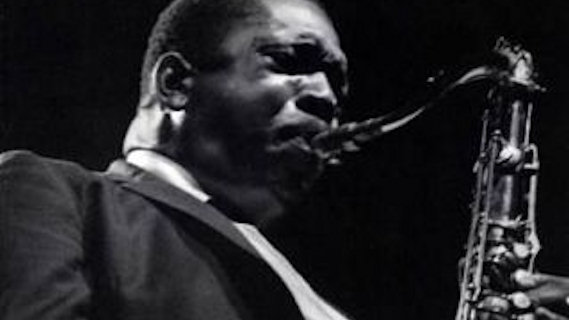
235baswood
John Coltrane: His Life and Music by Lewis Porter.
I first heard John Coltrane on my transistor radio hidden under the bedcovers when I was a teenager. It was a broadcast from the Voice of America and hosted by WIllis Connover. I was a regular listener to those nightly broadcasts mainly because reception was marginally better than Radio Luxembourg my other favourite radio station. How difficult it was to hear new music in those days. The Voice of America were playing Om. (it stretched overs both sides of the LP) and the sounds coming from my radio were electrifying; I had never heard such passionate playing, I had never heard such dissonance before. In fact I realise now that I hadn't caught the introduction to the music and was relieved that the radio reception held out long enough for the slow American drawl of Willis Connover to announce "that was the John Coltrane Group". No one I knew had ever heard of John Coltrane and it was a couple of weeks later that I managed to get to Dobell's record shop in Charring Cross Road where there were quite a few of his LPs, but they didn't have Om, so on the advice of the shop manager I came out clutching "A Love Supreme" (you could clutch LPs you cant really clutch CDs in the same way) and so started my love affair with the music of John Coltrane.
I had seen Porter's book in my local book store in a French Translation and a quick flip through it revealed that there seemed to be a whole lot of musical theory and I put it back down thinking it would be beyond my comprehension. Having it in the original English helps and I felt more confident that at least I would now be able to get to grips with some of the technical stuff. It must be the definitive biography because not only does it document his life and times on the jazz scene, but it also explains in some detail what Coltrane was trying to achieve in his music. In Coltrane's own words it was pretty significant:
"My music is the spiritual expression of what I am - my faith, my knowledge, my being.....When you begin to see the possibilities of music, you desire to do something really good for people, to help humanity free itself from its hangups. I think music can make the world better and, if I'm qualified, I want to do it. I'd like to point out to people the divine in a musical language that transcends words. I want to speak to their souls."
Well he did it for me, I had very little knowledge of jazz at that time, but "A Love Supreme" has remained my all-time favourite record, as it has with many people because it is one of the best selling jazz CDs of all time. Not many people would have understood what Coltrane was doing on that record, especially as three quarters of it is played at a furious tempo and Coltrane solos on tenor saxophone at length, playing music that has very little discernible melody, however the slow final track is one of great beauty and that would have pleased most of the customers. Porter says that it is the bluesy, earthy quality of Coltrane's sound that draws people in and he may be right, because at the time of it's release "A Love Supreme" was at the cutting edge of avante garde jazz. Porter explains at some length why the music is so significant by transcribing in musical notation some extracts from Coltrane's improvisations and so if you are not at home with scales, chords, modality and tonality, then much of this will pass you by.
John Coltrane was not a child prodigy he showed few signs in his early childhood of special musical talent, but he had an obsessive personality and that obsessiveness found it's way out through music. Once he had latched onto music he spent most of his waking hours practising. He did not come to national prominence until he was in his thirties when he became a member of Miles Davis's group. Davis himself was pushing at musical boundaries, but in the end was not going fast enough for Coltrane and after over three years he left to form his own group and one of the first records he made was the aptly titled "Giant Steps" which stood the jazz world on its head. Never before had such technical skill been married with the changes he introduced to playing the chords at such a fast tempo. The music was innovative, but Coltrane's restless searching for the perfect expression through music took him into the realms of free jazz where he abandoned chords altogether and then finally rhythmic structure. Porter charts expertly the musical development of the man who had made himself into a genius. It is no surprise that a Biography about a man obsessed by music should be about music, but Porter also manages to fill in the personal details. Like many musicians in the jazz world Coltrane fought a battle with drug addiction and this story is well told as is the workings of the record industry and the concert scene at the time. Porter intersperse his narrative with transcripts from interviews with Coltrane and from stories about him from colleagues and family. All of this is very well researched and nothing stands out as being anything else than true remembrances.
Within two years of my discovering John Coltrane he had died (1967), but as one of the most recorded artists in jazz there has been plenty of music to catch up on. Porter's book does not include a discography, because that is a subject for a whole book in itself and there is still plenty of his music to be released it would seem and so this is an on-going project. I loved this book even though I did not understand all the musical theory; I think there is enough here to hold the attention of anybody interested in Coltrane or in music. Five stars.
Here is John Coltrane's version of My Favourite Things(I would like to hear Julie Andrews sing this) http://www.youtube.com/results?search_query=john+coltrane+my+favorite+things&...
And here is Psalm from "A Love Supreme"
http://www.youtube.com/watch?v=8kOu61AtFVk
I first heard John Coltrane on my transistor radio hidden under the bedcovers when I was a teenager. It was a broadcast from the Voice of America and hosted by WIllis Connover. I was a regular listener to those nightly broadcasts mainly because reception was marginally better than Radio Luxembourg my other favourite radio station. How difficult it was to hear new music in those days. The Voice of America were playing Om. (it stretched overs both sides of the LP) and the sounds coming from my radio were electrifying; I had never heard such passionate playing, I had never heard such dissonance before. In fact I realise now that I hadn't caught the introduction to the music and was relieved that the radio reception held out long enough for the slow American drawl of Willis Connover to announce "that was the John Coltrane Group". No one I knew had ever heard of John Coltrane and it was a couple of weeks later that I managed to get to Dobell's record shop in Charring Cross Road where there were quite a few of his LPs, but they didn't have Om, so on the advice of the shop manager I came out clutching "A Love Supreme" (you could clutch LPs you cant really clutch CDs in the same way) and so started my love affair with the music of John Coltrane.
I had seen Porter's book in my local book store in a French Translation and a quick flip through it revealed that there seemed to be a whole lot of musical theory and I put it back down thinking it would be beyond my comprehension. Having it in the original English helps and I felt more confident that at least I would now be able to get to grips with some of the technical stuff. It must be the definitive biography because not only does it document his life and times on the jazz scene, but it also explains in some detail what Coltrane was trying to achieve in his music. In Coltrane's own words it was pretty significant:
"My music is the spiritual expression of what I am - my faith, my knowledge, my being.....When you begin to see the possibilities of music, you desire to do something really good for people, to help humanity free itself from its hangups. I think music can make the world better and, if I'm qualified, I want to do it. I'd like to point out to people the divine in a musical language that transcends words. I want to speak to their souls."
Well he did it for me, I had very little knowledge of jazz at that time, but "A Love Supreme" has remained my all-time favourite record, as it has with many people because it is one of the best selling jazz CDs of all time. Not many people would have understood what Coltrane was doing on that record, especially as three quarters of it is played at a furious tempo and Coltrane solos on tenor saxophone at length, playing music that has very little discernible melody, however the slow final track is one of great beauty and that would have pleased most of the customers. Porter says that it is the bluesy, earthy quality of Coltrane's sound that draws people in and he may be right, because at the time of it's release "A Love Supreme" was at the cutting edge of avante garde jazz. Porter explains at some length why the music is so significant by transcribing in musical notation some extracts from Coltrane's improvisations and so if you are not at home with scales, chords, modality and tonality, then much of this will pass you by.
John Coltrane was not a child prodigy he showed few signs in his early childhood of special musical talent, but he had an obsessive personality and that obsessiveness found it's way out through music. Once he had latched onto music he spent most of his waking hours practising. He did not come to national prominence until he was in his thirties when he became a member of Miles Davis's group. Davis himself was pushing at musical boundaries, but in the end was not going fast enough for Coltrane and after over three years he left to form his own group and one of the first records he made was the aptly titled "Giant Steps" which stood the jazz world on its head. Never before had such technical skill been married with the changes he introduced to playing the chords at such a fast tempo. The music was innovative, but Coltrane's restless searching for the perfect expression through music took him into the realms of free jazz where he abandoned chords altogether and then finally rhythmic structure. Porter charts expertly the musical development of the man who had made himself into a genius. It is no surprise that a Biography about a man obsessed by music should be about music, but Porter also manages to fill in the personal details. Like many musicians in the jazz world Coltrane fought a battle with drug addiction and this story is well told as is the workings of the record industry and the concert scene at the time. Porter intersperse his narrative with transcripts from interviews with Coltrane and from stories about him from colleagues and family. All of this is very well researched and nothing stands out as being anything else than true remembrances.
Within two years of my discovering John Coltrane he had died (1967), but as one of the most recorded artists in jazz there has been plenty of music to catch up on. Porter's book does not include a discography, because that is a subject for a whole book in itself and there is still plenty of his music to be released it would seem and so this is an on-going project. I loved this book even though I did not understand all the musical theory; I think there is enough here to hold the attention of anybody interested in Coltrane or in music. Five stars.
Here is John Coltrane's version of My Favourite Things(I would like to hear Julie Andrews sing this) http://www.youtube.com/results?search_query=john+coltrane+my+favorite+things&...
And here is Psalm from "A Love Supreme"
http://www.youtube.com/watch?v=8kOu61AtFVk
236avidmom
That was quite a lesson on Coltrane. The quote you included in the third paragraph is beautiful. Thanks for the links to the music. :)
237Jargoneer
For the last couple of Fridays BBC4 has shown a documentary called 50's Britannia - the first was on British rock'n'roll, the second on trad jazz. I raise because we forget just how controversial modern jazz was - there was a jazz festival cancelled due to riots breaking out over the argument trad or modern; even now a lot of the old trad jazz players who appeared on it still haven't reconciled themselves with modern jazz - it doesn't swing, it's just noise, etc.
It's interesting how Coltrane was seen in the cutting edge of avant garde jazz. I've never thought he was as difficult or challenging as Coleman or Ayler or Taylor - to me his music always seemed more approachable on some level, perhaps due to the spiritual aspect of it.
Great review.
It's interesting how Coltrane was seen in the cutting edge of avant garde jazz. I've never thought he was as difficult or challenging as Coleman or Ayler or Taylor - to me his music always seemed more approachable on some level, perhaps due to the spiritual aspect of it.
Great review.
238NanaCC
Loved your wonderful review Bas. And, thank you for the links. I really enjoyed listening.
239dmsteyn
Great reviews of both Camus and Porter's John Coltrane: His Life and Music, Barry. I found your very personal introduction to the Coltrane especially interesting - I can just imagine you listening, 'hidden under the bedcovers'!
240mkboylan
I'm stuck on transistor radio! Love the quote also. Thank for the very excellent review and youtube.
241zenomax
Nice review of the Coltrane book, bas.
I am not an afficionado of Jazz, but I love both Coltrane (everything) and Miles Davis (Kind of Blue, birth of cool period) almost beyond anything else in music.
I am not an afficionado of Jazz, but I love both Coltrane (everything) and Miles Davis (Kind of Blue, birth of cool period) almost beyond anything else in music.
242Polaris-
Thanks for the Coltrane review. Straight onto the wishlist with it. One of these days when I make it to California, I'm gonna have to say some prayers and give thanks at the Church of St John Coltrane. http://www.coltranechurch.org/ Have you been?
A few years back I read Ashley Kahn's very enjoyable book on the making of Kind of Blue, and I gather he's done a similar thing with A Love Supreme (which I also love very much). If it's anywhere near as good as the book on Miles' landmark album then I'm sure it will be a very good read.
A few years back I read Ashley Kahn's very enjoyable book on the making of Kind of Blue, and I gather he's done a similar thing with A Love Supreme (which I also love very much). If it's anywhere near as good as the book on Miles' landmark album then I'm sure it will be a very good read.
243baswood
Hi Polaris, no I have never been to the States, but if I ever do get to California I would be tempted to pay homage at the church of St John Coltrane. I am going to take a look at that Ashley Khan book on Kind of Blue.
Turner I think you are right in saying that Coltrane did not seem as challenging as Coleman, Ayler or Taylor at the time of A Love Supreme, but it was not very long (6 months) before he was in the studio with 12 or so other musicians to make Ascension, which put him way out there. http://www.youtube.com/watch?v=tgrQhBTDfhk&list=PLE8C92EC20CFE66E7 and there was of course OM.
Turner I think you are right in saying that Coltrane did not seem as challenging as Coleman, Ayler or Taylor at the time of A Love Supreme, but it was not very long (6 months) before he was in the studio with 12 or so other musicians to make Ascension, which put him way out there. http://www.youtube.com/watch?v=tgrQhBTDfhk&list=PLE8C92EC20CFE66E7 and there was of course OM.
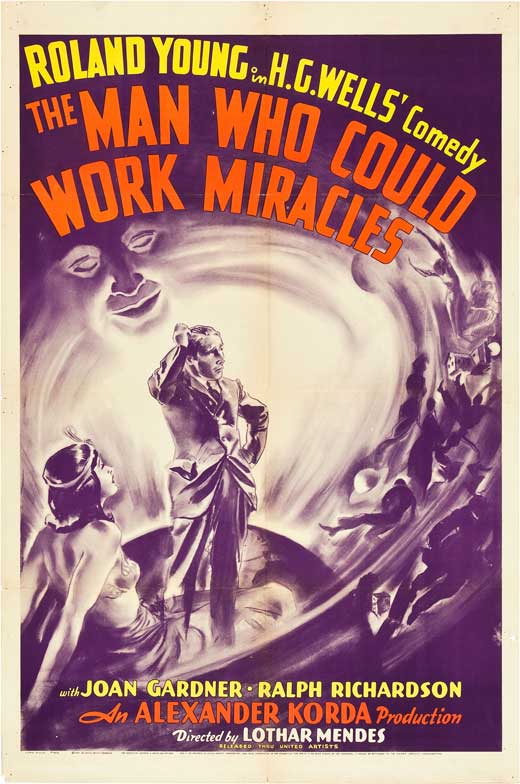

246baswood
The country of the blind and other stories H G Wells
This is a selection of Well's short stories, selected by the author himself. By 1911 he had written over 60 stories which had been published in various literary journals. In his introduction Wells explains that the era of the short story seems to have passed and he blames critics and publishers for this situation. Too many short stories had been dismissed as 'mere anecdotes' and this had resulted in a drying up of their publication. Wells laments the lively literary scene of the 1890's when the latest short story would be talked about, compared and ranked with others of the genre. Most of these short stories were written before the turn of the century and Wells says he has reread them all before paring down his 60 stories down to thirty three.
Wells has selected the best stories from The Stolen Bacillus which I read earlier and added some absolute gems to make this into a very fine collection. I rated each story from 1 to 5 and was left with nine stories getting a full five marks. with only a few falling down to three or below. Wells is famous for his science fiction writing and there are two here that rank with his very best stories:
The Star which could serve as a template for When Worlds Collide by Philip Wylie. Wells imagines the consequences of a rogue planet invading our solar system which crashes into Pluto on its way to being absorbed by the sun. The devastation on earth is immense.
A dream of Armageddon A man dreams he is 200 years in the future, but this dream is so vivid and recurring he starts to believe he is actually there. In the future he has to balance love with his duty as a politician. This story finds Wells at his dreamy, imaginative best and it ends powerfully.
Many of these tales would be described today as fantasy: A man and his son visit a magic shop, where there is genuine magic. In another story a man invents an accelerator where he moves so fast that everyone else is standing still, this reminded me of an advert for coffee which is doing the rounds in France at the moment. The crystal egg which in certain lights gives a view of life on another planet. But my absolute favourites are:
The man who could work miracles An ordinary man suddenly discovers that by the strength of his will power he can make anything happen, of course he ends up destroying the world. This was made into a film in 1936 and although I have not seen it for a long time (it always seemed to be on Sunday daytime TV) it had that magical quality that Wells often finds in his writing
The door in the Wall A bright intelligent child out walking sees a green door in a wall and goes through it to find a land of enchantment. As he completes his schooling he often thinks about this door which he has never been able to find again, but at significant periods of his life he does sees it again, but circumstances conspire to stop him going through it.
The Country of the Blind A mountain climber (Nunez) discovers a valley hidden from the world for 14 generations, but the people who live there are all totally blind. Nunez at once thinks that in the land of the blind a one eyed man would be king, but things do not go according to plan. Wells description of the blind society that has evolved is beautifully handled.
There are adventure stories, ghost stories and others that might be a subject for the "Twilight Zone", but also there are some excellent stories of love and manners:
Miss Winchelsea's Heart A romance where a young woman meets a man on a trip to Rome, she falls in love with him, but his surname is just too awful for her to contemplate, she loses him to her best friend.
The slip under the Microscope A scholarship boy inadvertently cheats during an exam, but his conscience won't let him rest.
This collection is still wonderfully entertaining. It's free to download and there really is something for everyone. 5 Stars
This is a selection of Well's short stories, selected by the author himself. By 1911 he had written over 60 stories which had been published in various literary journals. In his introduction Wells explains that the era of the short story seems to have passed and he blames critics and publishers for this situation. Too many short stories had been dismissed as 'mere anecdotes' and this had resulted in a drying up of their publication. Wells laments the lively literary scene of the 1890's when the latest short story would be talked about, compared and ranked with others of the genre. Most of these short stories were written before the turn of the century and Wells says he has reread them all before paring down his 60 stories down to thirty three.
Wells has selected the best stories from The Stolen Bacillus which I read earlier and added some absolute gems to make this into a very fine collection. I rated each story from 1 to 5 and was left with nine stories getting a full five marks. with only a few falling down to three or below. Wells is famous for his science fiction writing and there are two here that rank with his very best stories:
The Star which could serve as a template for When Worlds Collide by Philip Wylie. Wells imagines the consequences of a rogue planet invading our solar system which crashes into Pluto on its way to being absorbed by the sun. The devastation on earth is immense.
A dream of Armageddon A man dreams he is 200 years in the future, but this dream is so vivid and recurring he starts to believe he is actually there. In the future he has to balance love with his duty as a politician. This story finds Wells at his dreamy, imaginative best and it ends powerfully.
Many of these tales would be described today as fantasy: A man and his son visit a magic shop, where there is genuine magic. In another story a man invents an accelerator where he moves so fast that everyone else is standing still, this reminded me of an advert for coffee which is doing the rounds in France at the moment. The crystal egg which in certain lights gives a view of life on another planet. But my absolute favourites are:
The man who could work miracles An ordinary man suddenly discovers that by the strength of his will power he can make anything happen, of course he ends up destroying the world. This was made into a film in 1936 and although I have not seen it for a long time (it always seemed to be on Sunday daytime TV) it had that magical quality that Wells often finds in his writing
The door in the Wall A bright intelligent child out walking sees a green door in a wall and goes through it to find a land of enchantment. As he completes his schooling he often thinks about this door which he has never been able to find again, but at significant periods of his life he does sees it again, but circumstances conspire to stop him going through it.
The Country of the Blind A mountain climber (Nunez) discovers a valley hidden from the world for 14 generations, but the people who live there are all totally blind. Nunez at once thinks that in the land of the blind a one eyed man would be king, but things do not go according to plan. Wells description of the blind society that has evolved is beautifully handled.
There are adventure stories, ghost stories and others that might be a subject for the "Twilight Zone", but also there are some excellent stories of love and manners:
Miss Winchelsea's Heart A romance where a young woman meets a man on a trip to Rome, she falls in love with him, but his surname is just too awful for her to contemplate, she loses him to her best friend.
The slip under the Microscope A scholarship boy inadvertently cheats during an exam, but his conscience won't let him rest.
This collection is still wonderfully entertaining. It's free to download and there really is something for everyone. 5 Stars
247Linda92007
The Country of the Blind and Other Stories sounds wonderful, Barry. Thanks for your review!
248avidmom
You're tempting me to start digging into that newly acquired Wells book. Some of those short stories mentioned above are in it.
249Mr.Durick
Well, it was $1.99 for the lulu version of H.G. Wells from Barny Noble, but I went ahead and got it, on your recommendation and despite that I rarely read short stories (or this year, it seems, much of anything).
Robert
Robert
250ChocolateMuse
This is the first time I've been genuinely tempted to try Wells. It might be a good place to start, since his sci-fi, being so dated and all, is something I haven't felt I had the patience for (I'm not a sci-fi enthusiast anyway). I was just looking at my copy of War of the Worlds the other day, and it was like what Twain said about classics - something everyone wishes they had read, but don't want to read.
251edwinbcn
I am currently reading Wells' The Shape of Things to Come, but I am not sure whether you would like it. The story is based on the idea that for many years a scientist called Raven was able to read a history book which was published in the future, namely in 2106. Each night, Raven read a few pages in his dream. The novel poses as a scholarly edition of this history book "of the future", written from retrospective point of view. The style of the book is very academic, with a multitude of (fake) references, mixed with references to existing authors, some of whose dates of death are predicted some time into the future.
Wells' wrote The Shape of Things to Come in 1933. The first part of the book gives a very accurate historical description of the Great War (First World War), the Great Depression, with many references to that financial crisis which are topical today, and the rise of Hitler. A number of Wells predictions into the future are said to be accurate to some extent (I haven't got that far yet).
I never much liked The Time Machine or The First Men in the Moon, especially the latter seems kind of immature. I have always very much liked The Island of Doctor Moreau.
On the whole, I think Wells is an interesting author. I had never heard of the short story collections which you read and reviewed, and will look for them.
Wells' wrote The Shape of Things to Come in 1933. The first part of the book gives a very accurate historical description of the Great War (First World War), the Great Depression, with many references to that financial crisis which are topical today, and the rise of Hitler. A number of Wells predictions into the future are said to be accurate to some extent (I haven't got that far yet).
I never much liked The Time Machine or The First Men in the Moon, especially the latter seems kind of immature. I have always very much liked The Island of Doctor Moreau.
On the whole, I think Wells is an interesting author. I had never heard of the short story collections which you read and reviewed, and will look for them.
252StevenTX
That's fascinating that Wells complained of the demise of the short story right after the turn of the century. I'm sure it's had its ups and downs since then.
My next Wells work will probably be a re-read of The War of the Worlds later this year.
My next Wells work will probably be a re-read of The War of the Worlds later this year.
253Jargoneer
>252 StevenTX: - it is doubly fascinating when you take account that genre (SF) that he had effectively given shape to was primarily a short story medium up until the advert of cheap paperbacks in the 1950's. There is an argument that to truly understand the development of the genre you can ignore the novel and concentrate on what was going on in the magazines.
>246 baswood: - I remember getting taught In the Country of the Blind at school which was probably unusual. I then read a few years and thought that's not how it ends, only to find out there two versions of it - one from 1904, one from 1939.
>251 edwinbcn: -the basis of one of the first great SF films although the film poster has always struck me as vaguely fascist.

>246 baswood: - I remember getting taught In the Country of the Blind at school which was probably unusual. I then read a few years and thought that's not how it ends, only to find out there two versions of it - one from 1904, one from 1939.
>251 edwinbcn: -the basis of one of the first great SF films although the film poster has always struck me as vaguely fascist.

254rebeccanyc
Well, you just convinced me to add that to my wishlist! Not a mean feat, as I am not an SF reader.
255Jargoneer
I'd just like to add this H. G. Wells titbit gleamed from an introduction to a Sherlock Holmes anthology - Wells wrote the first rule-book for table-top gaming, making him not just the father of SF but also of modern gaming.
256StevenTX
Wells was almost the father of something else. I just read that he had an affair with the author I've been reading, Dorthy M. Richardson. She became pregnant by him, but had a miscarriage.
257Jargoneer
>256 StevenTX: - with Wells being the father of SF and Dorothy Richardson being the mother of British modernism that child could have been the father/mother of modernist SF - alien stream-of-consciousness novels is what the world, nay the universe, has been crying out for.
259rebeccanyc
Wells had affairs with lots of women, including Margaret Sanger and Rebecca West! He was a busy guy!
260NanaCC
>259 rebeccanyc: and yet he still found time to write. :)
261baswood
#259 I am about to read a Biography H G Wells: Another kind of life and so I will do a headcount to see just how busy he really was.
262rebeccanyc
Actually, I'm impressed that he chose such intelligent and accomplished women.
263Polaris-
Very nice review of the country of the blind and other stories. I haven't read it before but I'm sure I did somewhere read the title story - possibly at school as well, or probably in another short story anthology. Anyway, I'm adding this collection to my list now.


265baswood
Erasmus and the age of Reformation by Johan Huizinga
Erasmus loved books, he collected them, he wrote them, he printed them and he doodled in them. His interest and fascination with the early printing process enabled him to take control of the publication of his books to such an extent that for Latin readers (he wrote in Latin) he became influential in shaping intellectual opinions in Europe. Those opinions were in tune with the humanist movement and the Italian renaissance: Erasmus seemed to want to bring about a perfect fusion between antiquity and Christianity, he wanted to take the Christian church back to its roots. He believed that a wilful and at times ignorant misreading of the scriptures had resulted in a catholic church that relied on ceremony, fasting, indulgences, pilgrimages and a veneration of saints and their relics which was full of superstition and foolishness. He was attacked by conservative churchmen, but always managed to find favour with the Pope, however when Luther burst onto the scene heralding the Reformation, which challenged the church in the very areas that Erasmus had highlighted, Erasmus could not support the protestant movement and ended his life opposed to the new church. Huizinga's biography carefully explores the character and mind of one of the most eloquent writers of the renaissance, to present us with a study that explains and at times excuses Erasmus's actions.
The book is first and foremost a biography of Erasmus and only delves into the Reformation movement as it affected Erasmus himself and as he spent his latter years ducking and diving from the controversy it largely takes place in the background. The biography falls into four distinct parts. Firstly Huizinga examines Erasmus early life, his credentials as a humanist, his desire to be free of the monastery to which he was attached, his need to earn money to make himself independent so that he could devote more time to his studies and his writing. The Colloquies and In Praise of Folly were published at this time and Huizinga teases out their flavour and importance, giving a fine sketch of their content. Their follows three chapters on the character and mind of Erasmus and the man himself is brought vividly to life by some excellent and thoughtful writing. It is no surprise that this man who ranked peace and harmony above all other considerations and used these as guiding principles should be the man sitting on the fence when the storm of the Reformation broke around him.
Erasmus story is taken up again with his sojourn at Louvain where he again came under attack from the conservative's, this was at a time when Erasmus was hard at work correcting the misinterpretations he discovered in the New Testament, making his version which he believed was error free and which could be understood by all learned men ready for publication. He travelled to Basle to the printing works where he stayed to oversee the publication, he was in his element making corrections surrounded by printers and books. Now however the first waves of the reformation broke around him, he was badgered by both sides for his support and his letter to Luther is a typical example of Erasmus's position, begging him not to include him as one of his supporters, yet not condemning his stance. You can almost hear him saying "for goodness sake leave me alone to write my books" Huizinga also points to a more fundamental difference between the two men, saying that Erasmus did not understand the depth of Luther's faith he was unaware of the deeper mysteries that fuelled the movement. As he came towards the end of his life Erasmus finally lent his support to the catholic church, but by this time the world had moved on and he was yesterdays man. Huizinga concluded this section with a chapter on Erasmus's influence on the period of enlightenment in the 17th and 18th centuries.
The final section is a selection of letters written by Erasmus. These letters were written in the foreknowledge that they would be collected and published and in themselves are fine pieces of literature. There is a long panegyric on Erasmus's friend Sir Thomas Moore, there is his famous correspondence with Luther. There is a letter to the head of the monastery to which he was trying to extricate himself explaining just why he was not suited to monastic life. There is also a long letter explaining the vicissitudes of travelling in the early sixteenth century as Erasmus journeys from Basle to Louvain almost convinced that a sickness that develops is the plague. Everything that Erasmus writes seems wonderfully convincing, full of gentle humour and written by a man who cares for others as much as himself. The letters alone are more than enough to lead me to read In praise of Folly and The Colloquies.
Huizinga's biography published in English in 1924 does not have the advantage of modern scholarship, but that hardly seems to matter as his portrait of Erasmus is so convincing and well written that I do not feel the need to read another. A Five Star Read.
Erasmus loved books, he collected them, he wrote them, he printed them and he doodled in them. His interest and fascination with the early printing process enabled him to take control of the publication of his books to such an extent that for Latin readers (he wrote in Latin) he became influential in shaping intellectual opinions in Europe. Those opinions were in tune with the humanist movement and the Italian renaissance: Erasmus seemed to want to bring about a perfect fusion between antiquity and Christianity, he wanted to take the Christian church back to its roots. He believed that a wilful and at times ignorant misreading of the scriptures had resulted in a catholic church that relied on ceremony, fasting, indulgences, pilgrimages and a veneration of saints and their relics which was full of superstition and foolishness. He was attacked by conservative churchmen, but always managed to find favour with the Pope, however when Luther burst onto the scene heralding the Reformation, which challenged the church in the very areas that Erasmus had highlighted, Erasmus could not support the protestant movement and ended his life opposed to the new church. Huizinga's biography carefully explores the character and mind of one of the most eloquent writers of the renaissance, to present us with a study that explains and at times excuses Erasmus's actions.
The book is first and foremost a biography of Erasmus and only delves into the Reformation movement as it affected Erasmus himself and as he spent his latter years ducking and diving from the controversy it largely takes place in the background. The biography falls into four distinct parts. Firstly Huizinga examines Erasmus early life, his credentials as a humanist, his desire to be free of the monastery to which he was attached, his need to earn money to make himself independent so that he could devote more time to his studies and his writing. The Colloquies and In Praise of Folly were published at this time and Huizinga teases out their flavour and importance, giving a fine sketch of their content. Their follows three chapters on the character and mind of Erasmus and the man himself is brought vividly to life by some excellent and thoughtful writing. It is no surprise that this man who ranked peace and harmony above all other considerations and used these as guiding principles should be the man sitting on the fence when the storm of the Reformation broke around him.
Erasmus story is taken up again with his sojourn at Louvain where he again came under attack from the conservative's, this was at a time when Erasmus was hard at work correcting the misinterpretations he discovered in the New Testament, making his version which he believed was error free and which could be understood by all learned men ready for publication. He travelled to Basle to the printing works where he stayed to oversee the publication, he was in his element making corrections surrounded by printers and books. Now however the first waves of the reformation broke around him, he was badgered by both sides for his support and his letter to Luther is a typical example of Erasmus's position, begging him not to include him as one of his supporters, yet not condemning his stance. You can almost hear him saying "for goodness sake leave me alone to write my books" Huizinga also points to a more fundamental difference between the two men, saying that Erasmus did not understand the depth of Luther's faith he was unaware of the deeper mysteries that fuelled the movement. As he came towards the end of his life Erasmus finally lent his support to the catholic church, but by this time the world had moved on and he was yesterdays man. Huizinga concluded this section with a chapter on Erasmus's influence on the period of enlightenment in the 17th and 18th centuries.
The final section is a selection of letters written by Erasmus. These letters were written in the foreknowledge that they would be collected and published and in themselves are fine pieces of literature. There is a long panegyric on Erasmus's friend Sir Thomas Moore, there is his famous correspondence with Luther. There is a letter to the head of the monastery to which he was trying to extricate himself explaining just why he was not suited to monastic life. There is also a long letter explaining the vicissitudes of travelling in the early sixteenth century as Erasmus journeys from Basle to Louvain almost convinced that a sickness that develops is the plague. Everything that Erasmus writes seems wonderfully convincing, full of gentle humour and written by a man who cares for others as much as himself. The letters alone are more than enough to lead me to read In praise of Folly and The Colloquies.
Huizinga's biography published in English in 1924 does not have the advantage of modern scholarship, but that hardly seems to matter as his portrait of Erasmus is so convincing and well written that I do not feel the need to read another. A Five Star Read.
266janeajones
Fascinating review, Barry. Huizinga is such a good writer -- hard to surpass with modern scholarship. According to my LT list, I actually own this one -- I'll have to hunt it down!
267avidmom
>265 baswood: That whole entire story is fascinating. Thanks for the pics. too.
Erasmus loved books, he collected them, he wrote them, he printed them and he doodled in them.
I like this guy! :)
Erasmus loved books, he collected them, he wrote them, he printed them and he doodled in them.
I like this guy! :)
268JDHomrighausen
> 265
What a fascinating review. I like this part:
You can almost hear him saying "for goodness sake leave me alone to write my books"
Sounds like a lot of LT members can identify with that!
What a fascinating review. I like this part:
You can almost hear him saying "for goodness sake leave me alone to write my books"
Sounds like a lot of LT members can identify with that!
271Linda92007
Great review, Barry. I am intrigued by the way that the book seems to have brought out Erasmus's very human qualities.
272baswood
Thanks everybody, there is no doubt that Huizinga was almost a little in love with his subject and certainly very proud that he could claim him as a fellow Dutchman. The final paragraph that concludes his biography is:
Cultured humanity has cause to hold Erasmus's memory in esteem, for if no other reason than that he was the fervently sincere preacher of that general kindliness which the world so urgently needs
Edwin, I picked up this book from the review on your thread and so I am in debt to you.
Cultured humanity has cause to hold Erasmus's memory in esteem, for if no other reason than that he was the fervently sincere preacher of that general kindliness which the world so urgently needs
Edwin, I picked up this book from the review on your thread and so I am in debt to you.
273rebeccanyc
Fascinating, and it almost makes me want to go back to The Praise of Folly, which I read in college and still own. I also have a book by Huizinga that I've never read, The Autumn of the Middle Ages. It was especially interesting to read about such a human and open-minded Dutch person since I just finished, buthave yet to review, This Earth of Mankind, about the horrors of Dutch colonialism in Indonesia.
274NanaCC
I enjoyed your review of Erasmus and the Age of Reformation. And 5 stars makes it even more interesting.
276baswood
1984 by George Orwell
Orwell' dystopia famously titled 1984 was well wide of the mark when 1984 finally arrived and reading it today nearly thirty years later the horrors of Big Brother, Newspeak and Ingsoc seem further away than ever. It must have been very different for those readers picking up the book when it was published in 1949. The horrors of the Second World War were fresh in the mind, there was widespread rationing in much of Europe, cities were in ruins, and the totalitarian regime of the soviet Union was emerging with frightening force. War may well have seemed perpetual to a couple of generations who had lived through two world wars. It was a time when dictators were able to grasp power and mould society into their own crazy visions and so Orwell's book must have resonated all the more powerfully. Reading the book today that feeling of a post war European society reeling from the shock of war comes across very clearly and permeates much of the atmosphere of 1984.
Orwell's world is frightening: resulting in a complete loss of humanity. Initial impressions are of a claustrophobic shabby world of spies, informers and shortages with a population cowed into mindless work, but it soon becomes much more sinister. From Winston's first small act of rebellion (writing a diary hidden from view of the remote cameras) he realises he is signing his own death warrant. What sort of society is this we wonder? and Orwell reveals more and more horrors as the novel draws to its inevitable conclusion. Winston is told:
"Never again will you be capable of ordinary human feeling. Everything will be dead inside you. Never again will you be capable of love, or friendship, or joy of living, or laughter or curiosity, or courage, or integrity. You will be hollow. We shall squeeze you empty, and then we shall fill you with ourselves."
This is a society based on an elite's hunger for power, who have learnt from previous failures that to stay in power they must alter reality for those who they control. they must control thoughts as well as actions and the weapon that is used is the familiar one of fear. There is no hope in this world which contrasts so strikingly with Albert Camus The Plague published two years earlier. Phrases used by Orwell in the early part of his novel could have been lifted right out of Camus oeuvre. Orwell has Winston say "Now that he had recognised himself as a deadman he must stay alive as long as possible" and later "The sexual act successfully performed was rebellion" In Camus hands these thoughts would be signs of hope, a revolt against dogma that could be successful for the individual, but in Orwell's book, they are straws in the wind, the individual will be crushed along with any chance of revolt in the future.
I re-read 1984 in 1984, something that many readers probably did and so was fairly familiar with the book on this latest re-read. I was still horrified by the final third of the book, which describes Winston's incarceration, torture and brain washing. I was prepared for Orwell exposition of the politics and society of the government of Oceania, which runs for thirty pages and is considered by some readers to be a dry political tract. The doomed love affair between Winston and Julia is like an oasis in the gloom, but also has it's contradictions especially with the characterisation of Julia. Like many classics there is usually something to be gained from a re-read and this was once again a five star read.
Orwell' dystopia famously titled 1984 was well wide of the mark when 1984 finally arrived and reading it today nearly thirty years later the horrors of Big Brother, Newspeak and Ingsoc seem further away than ever. It must have been very different for those readers picking up the book when it was published in 1949. The horrors of the Second World War were fresh in the mind, there was widespread rationing in much of Europe, cities were in ruins, and the totalitarian regime of the soviet Union was emerging with frightening force. War may well have seemed perpetual to a couple of generations who had lived through two world wars. It was a time when dictators were able to grasp power and mould society into their own crazy visions and so Orwell's book must have resonated all the more powerfully. Reading the book today that feeling of a post war European society reeling from the shock of war comes across very clearly and permeates much of the atmosphere of 1984.
Orwell's world is frightening: resulting in a complete loss of humanity. Initial impressions are of a claustrophobic shabby world of spies, informers and shortages with a population cowed into mindless work, but it soon becomes much more sinister. From Winston's first small act of rebellion (writing a diary hidden from view of the remote cameras) he realises he is signing his own death warrant. What sort of society is this we wonder? and Orwell reveals more and more horrors as the novel draws to its inevitable conclusion. Winston is told:
"Never again will you be capable of ordinary human feeling. Everything will be dead inside you. Never again will you be capable of love, or friendship, or joy of living, or laughter or curiosity, or courage, or integrity. You will be hollow. We shall squeeze you empty, and then we shall fill you with ourselves."
This is a society based on an elite's hunger for power, who have learnt from previous failures that to stay in power they must alter reality for those who they control. they must control thoughts as well as actions and the weapon that is used is the familiar one of fear. There is no hope in this world which contrasts so strikingly with Albert Camus The Plague published two years earlier. Phrases used by Orwell in the early part of his novel could have been lifted right out of Camus oeuvre. Orwell has Winston say "Now that he had recognised himself as a deadman he must stay alive as long as possible" and later "The sexual act successfully performed was rebellion" In Camus hands these thoughts would be signs of hope, a revolt against dogma that could be successful for the individual, but in Orwell's book, they are straws in the wind, the individual will be crushed along with any chance of revolt in the future.
I re-read 1984 in 1984, something that many readers probably did and so was fairly familiar with the book on this latest re-read. I was still horrified by the final third of the book, which describes Winston's incarceration, torture and brain washing. I was prepared for Orwell exposition of the politics and society of the government of Oceania, which runs for thirty pages and is considered by some readers to be a dry political tract. The doomed love affair between Winston and Julia is like an oasis in the gloom, but also has it's contradictions especially with the characterisation of Julia. Like many classics there is usually something to be gained from a re-read and this was once again a five star read.
277avidmom
Great review of 1984. I read it once and figured that was enough, but it's definitely one of those books everybody should read, IMHO.
278Nickelini
Yes, great review. I think it is one book that everyone truly must read before they die (and yes, of course it's on the 1001 Books You Must Read Before You Die list). I don't care if a reader likes it or not---that's beside the point. But everyone needs to read it.
279zenomax
Another quality review, bas. I like the comparison with Camus. Two of the biggest influences on my thought, and as you say very different in their views of the world.
280rebeccanyc
I am one of the ones who reread 1984 in 1984 (and Animal Farm too, while I was at it). Since that is now almost 30 years ago, I was glad to have you refresh my memory about it. Maybe it's time for another reread, as we learn how much we're being spied on today!
ETA I also reread Brave New World that same year.
ETA I also reread Brave New World that same year.
281NanaCC
Bas, great review. I am one of those folks who read this in high school, and really didn't like it. I didn't re-read it 1984, but maybe I should do so now. Perhaps I just didn't get it back then.
282janeajones
Good refresher, Barry -- I can't help but conjure up comparisons with North Korea.
283Linda92007
Great review, Barry. 1984 is one of those books that you think you know something about, even if you haven't read it, and I'm not sure that I ever did.
284Rise
Didn't you know Big Bro was watching you while you're writing your review? And your IP address was well recorded; it has a chip inside it. A satellite hovers overhead, taking high resolution snapshots. Great review, btw.
285baswood
Thanks folks, I re-read 1984 because I am going through the list of Abe book's 50 essential science fiction novels.
286kidzdoc
Fabulous review of John Coltrane: His Life and Music, Barry. I think I might have this book in one of my boxes of older books, as it isn't in my LT library. My knowledge of music theory is much poorer than yours, but I'll plan to read it anyway.
I still haven't listened to much of Trane's post-1964 output, so I'll have to get to it. A Love Supreme is probably my second favorite album of his, after Crescent, which was recorded a few months earlier.
I'm ashamed to admit that I still haven't been to the St. John Coltrane African Orthodox Church. It's on Fillmore Street in San Francisco, about two blocks away from the barbershop I go to when I visit the city. I've passed by it dozens of times on my previous trips to the city, but somehow I never thought to go there. I'll probably go back to SF in August or September, so I'll remind myself to go there next time!
I still haven't listened to much of Trane's post-1964 output, so I'll have to get to it. A Love Supreme is probably my second favorite album of his, after Crescent, which was recorded a few months earlier.
I'm ashamed to admit that I still haven't been to the St. John Coltrane African Orthodox Church. It's on Fillmore Street in San Francisco, about two blocks away from the barbershop I go to when I visit the city. I've passed by it dozens of times on my previous trips to the city, but somehow I never thought to go there. I'll probably go back to SF in August or September, so I'll remind myself to go there next time!
287baswood
Darryl, If you get to the St John Coltrane African Orthodox church then full description please.
288baswood

Pharoah Sanders - Izipho Sam
Many jazz music critics never forgave Pharoah Sanders for the part he played in John Coltrane's final quintet. This was the group that sought to play totally free music abandoning chord structures and much harmony in favour of music that shouted to be heard. Sanders was the second saxophonist in that group and the screeches and wails he produced from his instrument seemed to spur Coltrane on to take even more risks with the very structure of his music. Izipho Sam released in 1969 was Sanders first release as leader after Coltrane's death in 1967 and it embodies much of what that last Coltrane group was all about, but Sanders gives it his own twist. He is more concerned with rhythm and if anything can be described as Afro-American music then this is it.
The first track is a gentle introduction to what will come next. "Prince of Peace" The rhythms are all here but Sanders takes a back seat as the extraordinary vocals of Leon Thomas repeat the three line lyrics
Prince of peace won't you here our pleas
Ring your bells of peace
Let loving never cease
There follows a melodic piano solo by Lonnie Liston Smith before the song ends on some bass notes. "Balance" is track no 2 and we are in more familiar Sanders territory, A brief theme on his tenor saxophone leads the 12 other musicians into a musical maelstrom, the depth of sound is amazing as saxophones wail and stutter and Sonny Sharrok's electric guitar helps to build climax of sounds. It is the title track running for over 28 minutes that is the masterpiece on this amazing album. It starts with African flute sounds, percussion and those bass notes giving an impression of bird and animal sounds: after four minutes piano chords start lending rhythm to the proceedings and a melody is vocalised by Leon Thomas, underneath a chordal riff on Sonny Sharrocks guitar slowly starts to dominate until it is driving the music. Saxophones take up the theme and then we are back in the realm of African drum music as that rhythm first introduced by Sonny Sharrock once again starts to influence everything, the guitar starts to fracture and their is a brief solo from Sanders and we are back again with those percussive sounds full of colour and rhythm, it feels like we are back in Africa especially now as Sharrocks guitar riffs have a certain highlife feel about them, Sanders now repeats the theme on his tenor saxophone and his solo soon starts to abandon all musical structures as he leads the group into the stratosphere. They soon come back to earth again as the theme emerges again on Sanders saxophone before piano chords re-introduce some structure before Sanders once again unleashes a searing solo and from now on their seems to be a battle between harmony and dissonance as both sides of this music are heard. This is exciting, passionate music; a wonderful synthesis of Afro-American music.
Here is Prince of Peace http://www.youtube.com/watch?v=_AAELC5Kzno
289Polaris-
Great stuff Bas.
I love Leon Thomas and Lonnie Liston Smith's work too. Pharaoh Sanders is one of my shameful large gaps in music. I like your review here, and I didn't know that this was where Prince of Peace came from!
ETA -
>287 baswood: - Yes Darryl, a report would be well appreciated from over here!
I love Leon Thomas and Lonnie Liston Smith's work too. Pharaoh Sanders is one of my shameful large gaps in music. I like your review here, and I didn't know that this was where Prince of Peace came from!
ETA -
>287 baswood: - Yes Darryl, a report would be well appreciated from over here!
291baswood
Nice to see another music fan here Polaris. Pharoah Sanders' "Karma" CD also features Leon Thomas and is generally a little more melodic and certainly better recorded.
292Jargoneer
I was listening to Radio 4's 'A Good Read' last week and one of the chosen books was G. K. Chesterton's The Napeleon of Notting Hill which it was suggested led to Orwell choosing the year 1984, Chesterton's novel also being set then. (This novel also allegedly inspired Michael Collins to lead a movement for Irish independence).
>288 baswood: - great review, now I'm really looking forward to seeing him at the end of July.
>288 baswood: - great review, now I'm really looking forward to seeing him at the end of July.
295Jargoneer
>294 baswood: - the problem for it is that it sits right next to the main festivals (International, Fringe and Book, etc) so it kind of gets overlooked as everyone is trying to decide what to actually see in August (to give a idea of how hard this is the Fringe programme is just under 400 pages this year). The time the Jazz Festival starts everyone is so tired reading programmes and trying to make decisions that they just stay at home with a nice bottle of wine.
296SassyLassy
Great work on Erasmus and so good to hear that Huizinga still rules.
I guess you have heard by now of the spike in sales of 1984, so even though you read it for completely different reasons, you're still ahead of the pack!
I guess you have heard by now of the spike in sales of 1984, so even though you read it for completely different reasons, you're still ahead of the pack!
297detailmuse
Bas I got hung up at your review of The Plague (thought I’d pause your thread while I read it) but time flies and I finally gave that up and will come back to it. You’ve posted a wonderful group of deep reviews and it felt luxurious to catch up listening to the Coltrane tracks (it took both). I didn’t enjoy Prince of Peace so closely after Coltrane; I also fear it’s become an earworm :O
298baswood


 Dorothy Richardson, Ella D'Arcy, Violet Hunt, Amber Reeves, Elizabeth Von Arnhim, Rebecca West, Margaret Sanger, Moura Budberg, Dorothy Petrie, Martha Gellhorn.
(Ethel Kingsmill, Catherine Robbbins, Rosamund Bland, Hedwig Gatternigg, Odette Keun, Constance Coolidge) no images

300rebeccanyc
I knew he was a busy man!
303baswood
H. G. Wells: Another kind of Life by Michael Sherborne.
H G Wells was prolific: from 1895 when his first novel The Time Machine was published until his death in 1946, he published over 110 books. Many novels, even more political tracts, an outline history of the world, social commentary, biographies, autobiographies and text books. He collaborated on film scripts, attempted to write plays, wrote many articles as a journalist and fired off letters to anybody and everybody. He was politically active nearly all his life; sitting on committees, writing articles for the Fabians, for the Labour party, standing for Parliament, visiting world leaders; Roosevelt, Churchill, Stalin and Lenin, in an attempt to get his ideas for a League of Nations off the ground. He became a celebrity and used his status as such to publicise his views on racism, contraception, socialism, human rights. Newspapers were always willing to give him a platform and what he had to say sounds progressive, largely fair minded and usually controversial for the times. His celebrity status made him a magnet for women and he indulged in many affairs of the heart, the most renowned of these often lasting for over a number of years, with many of his lovers still friendly with him when the passion had dissipated. He married twice and was on good terms with both his wife and his ex. He was a generous man looking after all his children both legitimate and illegitimate and was supportive of friends and colleagues, much of his wealth had been given away by the time he died.
Wells is a big subject for any biographer and Michael Sherborne gives a thoroughly readable account of his life and times. Sherborns says of Wells as a biographer:
"Like many biographers Wells adopted a slightly critical tone towards his subject" (Wells published a biography of Sanderson; the headmaster of Oundle school to raise money for the school), but Sherborne largely avoids this in his own biography of Wells. It is by no means a panegyric, but I got the feeling that Sherborne finds plenty to admire in Well's industry, courage, progressive views and artistry. He comments on most of Well's publications largely following the perceived opinion that most of Wells best fiction was published in his early career certainly up to The New Machiavelli in 1910, however where there is a return to form or a novel of interest during the later years then Sherborne highlights this for the reader. He has many good things to say about Wells' The Outline of History published in 1921 and Wells still had plenty to say that was relevant socially and politically after that. H G Wells long career as a writer straddled the Victorian novelists and the modernists, and he was genuinely friendly and admired by leading authors of both groups. His novels suffered in later years from too much message (or political ranting) and not enough character or plot development and so he started to become a bit of an anachronism, which was in stark contrast to his early years as the leading exponent of the new science fantasy genre. Sherborne provides enough analysis of Wells accomplishments as a writer to enable the reader to understand his place in the cannon and also to understand why he is now a writer "out of fashion".
In this well rounded portrait there is plenty of room for Sherborne to tell us about Well's love life. Christopher Priest says in an introduction that "Women were drawn to him - one said his body smelt irresistibly of honey" He seemed to have a fascination for and be fascinated by women of strong character particularly authors and I get the feeling that Wells liked to share, his talent and his artistry, he wanted to be stimulated mentally as well as physically. He also loved an audience.
Sherborne acknowledges his debt to previous biographers and has obviously read widely in these secondary sources, which are duly noted. I am not sure how much original research has been undertaken as there certainly does not seem to be any revelations. I think the book is all the better for this lack of sensationalism. What we have is an excellent biography of a man who lived much of his life in the limelight. but in addition there is much good stuff on his development as an artist and his place in literature and public life. A 4.5 star read for me.
H G Wells was prolific: from 1895 when his first novel The Time Machine was published until his death in 1946, he published over 110 books. Many novels, even more political tracts, an outline history of the world, social commentary, biographies, autobiographies and text books. He collaborated on film scripts, attempted to write plays, wrote many articles as a journalist and fired off letters to anybody and everybody. He was politically active nearly all his life; sitting on committees, writing articles for the Fabians, for the Labour party, standing for Parliament, visiting world leaders; Roosevelt, Churchill, Stalin and Lenin, in an attempt to get his ideas for a League of Nations off the ground. He became a celebrity and used his status as such to publicise his views on racism, contraception, socialism, human rights. Newspapers were always willing to give him a platform and what he had to say sounds progressive, largely fair minded and usually controversial for the times. His celebrity status made him a magnet for women and he indulged in many affairs of the heart, the most renowned of these often lasting for over a number of years, with many of his lovers still friendly with him when the passion had dissipated. He married twice and was on good terms with both his wife and his ex. He was a generous man looking after all his children both legitimate and illegitimate and was supportive of friends and colleagues, much of his wealth had been given away by the time he died.
Wells is a big subject for any biographer and Michael Sherborne gives a thoroughly readable account of his life and times. Sherborns says of Wells as a biographer:
"Like many biographers Wells adopted a slightly critical tone towards his subject" (Wells published a biography of Sanderson; the headmaster of Oundle school to raise money for the school), but Sherborne largely avoids this in his own biography of Wells. It is by no means a panegyric, but I got the feeling that Sherborne finds plenty to admire in Well's industry, courage, progressive views and artistry. He comments on most of Well's publications largely following the perceived opinion that most of Wells best fiction was published in his early career certainly up to The New Machiavelli in 1910, however where there is a return to form or a novel of interest during the later years then Sherborne highlights this for the reader. He has many good things to say about Wells' The Outline of History published in 1921 and Wells still had plenty to say that was relevant socially and politically after that. H G Wells long career as a writer straddled the Victorian novelists and the modernists, and he was genuinely friendly and admired by leading authors of both groups. His novels suffered in later years from too much message (or political ranting) and not enough character or plot development and so he started to become a bit of an anachronism, which was in stark contrast to his early years as the leading exponent of the new science fantasy genre. Sherborne provides enough analysis of Wells accomplishments as a writer to enable the reader to understand his place in the cannon and also to understand why he is now a writer "out of fashion".
In this well rounded portrait there is plenty of room for Sherborne to tell us about Well's love life. Christopher Priest says in an introduction that "Women were drawn to him - one said his body smelt irresistibly of honey" He seemed to have a fascination for and be fascinated by women of strong character particularly authors and I get the feeling that Wells liked to share, his talent and his artistry, he wanted to be stimulated mentally as well as physically. He also loved an audience.
Sherborne acknowledges his debt to previous biographers and has obviously read widely in these secondary sources, which are duly noted. I am not sure how much original research has been undertaken as there certainly does not seem to be any revelations. I think the book is all the better for this lack of sensationalism. What we have is an excellent biography of a man who lived much of his life in the limelight. but in addition there is much good stuff on his development as an artist and his place in literature and public life. A 4.5 star read for me.
This topic was continued by Baswood's books, music, films etc. Part 3.

