lyzard's list: going forward to the past - Part 5
This is a continuation of the topic lyzard's list: going forward to the past - Part 4.
This topic was continued by lyzard's list: going forward to the past - Part 6.
Talk 75 Books Challenge for 2015
Join LibraryThing to post.
This topic is currently marked as "dormant"—the last message is more than 90 days old. You can revive it by posting a reply.


2lyzard

********************************************************
Currently reading:

Phineas Redux by Anthony Trollope (1874)
3lyzard
Reading 2015:
January:
1. Raspberry Jam by Carolyn Wells (1920)
2. Legion by William Peter Blatty (1983)
3. Quintus Servinton: A Tale Founded Upon Incidents Of Real Occurrence by Henry Savery (1831)
4. The Victorian House: Domestic Life From Childbirth To Deathbed by Judith Flanders (2003)
5. The Mystery Of The Evil Eye by Anthony Wynne (Robert McNair Wilson) (1925)
6. The Social Gangster by Arthur B. Reeve (1916)
7. The Perfect Murder Case by Christopher Bush (1929)
8. Stupid Texas: Idiots In The Lone Star State by Leland Gregory (2010)
9. A Forger's Tale: The Extraordinary Story Of Henry Savery, Australia's First Novelist by Rod Howard (2011)
10. A Duchess And Her Daughter by Alfred Bishop Mason (1929)
11. The Hound Of Death And Other Stories by Agatha Christie (1933)
12. Beside The Bonnie Brier Bush by Ian Maclaren (John Watson) (1895)
13. Arabella by Georgette Heyer (1949)
February:
14. The Eustace Diamonds by Anthony Trollope (1873)
15. Death At Breakfast by John Rhode (Cecil J. Street) (1936)
16. La Tête d'un Homme by George Simenon (1931)
17. The Motor Rally Mystery by John Rhode (Cecil J. Street) (1933)
18. Diary Of A Provincial Lady by E. M. Delafield (1930)
19. Tom Grogan by Francis Hopkinson Smith (1895)
20. The Silver Wedding by Ethel M Dell (1931)
21. An Introduction To The Australian Novel, 1830-1930 by Barry Argyle (1972)
22. The Ice House by Minette Walters (1992)
23. The Fiend In You by Charles Beaumont (ed.) (1962)
24. Faulkner's Folly by Carolyn Wells (1917)
25. Darkness At Pemberley by T. H. White (1932)
26. Self-Made Woman by Faith Baldwin (1932)
March:
27. Mansfield Park by Jane Austen (1814)
28. The Saltmarsh Murders by Gladys Mitchell (1932)
29. The Language Of Meditation: Four Studies In Nineteenth-Century Fiction by John Halperin (1973)
30. Elsie's Girlhood by Martha Finley (1872)
31. Sydney St. Aubyn. In A Series Of Letters by John Robinson (1794)
32. Quo Vadis: A Narrative Of The Time Of Nero by Henryk Sienkiewicz (1896)
33. At The Blue Gates by Richard Keverne (Clifford Hosken) (1932)
34. That Was Yesterday by Storm Jameson (1932)
35. Murder On The Orient Express by Agatha Christie (1934)
36. The Grand Sophy by Georgette Heyer (1950)
January:
1. Raspberry Jam by Carolyn Wells (1920)
2. Legion by William Peter Blatty (1983)
3. Quintus Servinton: A Tale Founded Upon Incidents Of Real Occurrence by Henry Savery (1831)
4. The Victorian House: Domestic Life From Childbirth To Deathbed by Judith Flanders (2003)
5. The Mystery Of The Evil Eye by Anthony Wynne (Robert McNair Wilson) (1925)
6. The Social Gangster by Arthur B. Reeve (1916)
7. The Perfect Murder Case by Christopher Bush (1929)
8. Stupid Texas: Idiots In The Lone Star State by Leland Gregory (2010)
9. A Forger's Tale: The Extraordinary Story Of Henry Savery, Australia's First Novelist by Rod Howard (2011)
10. A Duchess And Her Daughter by Alfred Bishop Mason (1929)
11. The Hound Of Death And Other Stories by Agatha Christie (1933)
12. Beside The Bonnie Brier Bush by Ian Maclaren (John Watson) (1895)
13. Arabella by Georgette Heyer (1949)
February:
14. The Eustace Diamonds by Anthony Trollope (1873)
15. Death At Breakfast by John Rhode (Cecil J. Street) (1936)
16. La Tête d'un Homme by George Simenon (1931)
17. The Motor Rally Mystery by John Rhode (Cecil J. Street) (1933)
18. Diary Of A Provincial Lady by E. M. Delafield (1930)
19. Tom Grogan by Francis Hopkinson Smith (1895)
20. The Silver Wedding by Ethel M Dell (1931)
21. An Introduction To The Australian Novel, 1830-1930 by Barry Argyle (1972)
22. The Ice House by Minette Walters (1992)
23. The Fiend In You by Charles Beaumont (ed.) (1962)
24. Faulkner's Folly by Carolyn Wells (1917)
25. Darkness At Pemberley by T. H. White (1932)
26. Self-Made Woman by Faith Baldwin (1932)
March:
27. Mansfield Park by Jane Austen (1814)
28. The Saltmarsh Murders by Gladys Mitchell (1932)
29. The Language Of Meditation: Four Studies In Nineteenth-Century Fiction by John Halperin (1973)
30. Elsie's Girlhood by Martha Finley (1872)
31. Sydney St. Aubyn. In A Series Of Letters by John Robinson (1794)
32. Quo Vadis: A Narrative Of The Time Of Nero by Henryk Sienkiewicz (1896)
33. At The Blue Gates by Richard Keverne (Clifford Hosken) (1932)
34. That Was Yesterday by Storm Jameson (1932)
35. Murder On The Orient Express by Agatha Christie (1934)
36. The Grand Sophy by Georgette Heyer (1950)
4lyzard
Reading 2015:
April:
37. A Description Of Millenium Hall And The Country Adjacent by Sarah Scott (1762)
38. Ruth Fielding At Sunrise Farm; or, What Became Of The Raby Orphans by "Alice B. Emerson" (1915)
39. The Benson Murder Case by S. S. Van Dine (Willard Huntington Wright) (1926)
40. The Treasure Train: Adventures Of Craig Kennedy, Scientific Detective, Which Ultimately Take Him Abroad by Arthur B. Reeve (1917)
41. The History of Lady Barton, A Novel, In Letters by Elizabeth Griffith (1771)
42. Caleb West, Master Diver by Francis Hopkinson Smith (1898)
43. Dreadful Deeds And Awful Murders: Scotland Yard's First Detectives 1829-1878 by Joan Lock (1990)
44. Virtue In Distress: Studies In The Novel Of Sentiment From Richardson To Sade by R. F. Brissenden (1974)
45. The Provincial Lady Goes Further by E. M. Delafield (1932)
46. Week-End Marriage by Faith Baldwin (1932)
47. The Quiet Gentleman by Georgette Heyer (1951)
48. The Listerdale Mystery by Agatha Christie (1934)
49. Kate, Plus 10 by Edgar Wallace (1917)
May:
50. Death Lights A Candle by Phoebe Atwood Taylor (1932)
51. Castle Rackrent by Maria Edgeworth (1800)
52. The Age Of Agony: The Art Of Healing c. 1700-1800 by Guy R. Williams (1975)
53. They Wouldn't Be Chessmen by A. E. W. Mason (1935)
54. Boomerang by Helen Simpson (1932)
55. Greenbanks by Dorothy Whipple (1932)
56. David Harum: A Story Of American Life by Edward Noyes Westcott (1898)
57. Dusky Night by Victor Bridges (1940)
58. The Cipher by Kathe Koja (1991)
59. The Provincial Lady In America by E. M. Delafield (1934)
60. The Australian Novel, 1830-1980: A Thematic Introduction by John Scheckter (1998)
June:
61. Ashton-Kirk, Investigator by John T. McIntyre (1910)
62. Cleek's Greatest Riddles by Thomas W. Hanshew (1916)
63. The Fellowship Of The Frog by Edgar Wallace (1925)
64. The Maestro Murders by Frances Shelley Wees (1931)
65. Something Wrong At Chillery by R. Francis Foster (1931)
66. The Prison Wall by Ethel M. Dell (1932)
67. Missing From His Home by Clifford Hosken (1932)
68. The Man With The Clubfoot by Valentine Williams (1918)
69. The Beauty Of The British Alps by Mary Leman Grimstone (1825)
70. To Have And To Hold by Mary Johnston (1899)
71. Cotillion by Georgette Heyer (1953)
72. Why Didn't They Ask Evans? by Agatha Christie (1934)
73. The Fatal 5 Minutes by R. A. J. Walling (1932)
April:
37. A Description Of Millenium Hall And The Country Adjacent by Sarah Scott (1762)
38. Ruth Fielding At Sunrise Farm; or, What Became Of The Raby Orphans by "Alice B. Emerson" (1915)
39. The Benson Murder Case by S. S. Van Dine (Willard Huntington Wright) (1926)
40. The Treasure Train: Adventures Of Craig Kennedy, Scientific Detective, Which Ultimately Take Him Abroad by Arthur B. Reeve (1917)
41. The History of Lady Barton, A Novel, In Letters by Elizabeth Griffith (1771)
42. Caleb West, Master Diver by Francis Hopkinson Smith (1898)
43. Dreadful Deeds And Awful Murders: Scotland Yard's First Detectives 1829-1878 by Joan Lock (1990)
44. Virtue In Distress: Studies In The Novel Of Sentiment From Richardson To Sade by R. F. Brissenden (1974)
45. The Provincial Lady Goes Further by E. M. Delafield (1932)
46. Week-End Marriage by Faith Baldwin (1932)
47. The Quiet Gentleman by Georgette Heyer (1951)
48. The Listerdale Mystery by Agatha Christie (1934)
49. Kate, Plus 10 by Edgar Wallace (1917)
May:
50. Death Lights A Candle by Phoebe Atwood Taylor (1932)
51. Castle Rackrent by Maria Edgeworth (1800)
52. The Age Of Agony: The Art Of Healing c. 1700-1800 by Guy R. Williams (1975)
53. They Wouldn't Be Chessmen by A. E. W. Mason (1935)
54. Boomerang by Helen Simpson (1932)
55. Greenbanks by Dorothy Whipple (1932)
56. David Harum: A Story Of American Life by Edward Noyes Westcott (1898)
57. Dusky Night by Victor Bridges (1940)
58. The Cipher by Kathe Koja (1991)
59. The Provincial Lady In America by E. M. Delafield (1934)
60. The Australian Novel, 1830-1980: A Thematic Introduction by John Scheckter (1998)
June:
61. Ashton-Kirk, Investigator by John T. McIntyre (1910)
62. Cleek's Greatest Riddles by Thomas W. Hanshew (1916)
63. The Fellowship Of The Frog by Edgar Wallace (1925)
64. The Maestro Murders by Frances Shelley Wees (1931)
65. Something Wrong At Chillery by R. Francis Foster (1931)
66. The Prison Wall by Ethel M. Dell (1932)
67. Missing From His Home by Clifford Hosken (1932)
68. The Man With The Clubfoot by Valentine Williams (1918)
69. The Beauty Of The British Alps by Mary Leman Grimstone (1825)
70. To Have And To Hold by Mary Johnston (1899)
71. Cotillion by Georgette Heyer (1953)
72. Why Didn't They Ask Evans? by Agatha Christie (1934)
73. The Fatal 5 Minutes by R. A. J. Walling (1932)
5lyzard
Reading 2015:
July:
74. Evelina; or, The History Of A Young Lady's Entrance Into The World by Fanny Burney (1778)
75. Grasp Your Nettle by Eliza Lynn Linton (1865)
76. The Provincial Lady In Wartime by E. M. Delafield (1940)
77. Roger Sheringham And The Vane Mystery by Anthony Berkeley (1927)
78. The Six Proud Walkers by Francis Beeding (Hilary Saint George Saunders and John Palmer) (1928)
79. The Island Forbidden To Man by Muriel Hine (1946)
80. The Hunger And Other Stories: A Collection Of Violent Entertainments by Charles Beaumont (1958)
81. The Crisis by Winston Churchill (1901)
82. Nothing Venture by Patricia Wentworth (1932)
83. Parker Pyne Investigates by Agatha Christie (1934)
84. The Toll-Gate by Georgette Heyer (1954)
85. Red Pepper Burns by Grace S. Richmond (1910)
86. Bellamy by Elinor Mordaunt (1914)
87. The Magic Casket by R. Austin Freeman (1927)
88. The Hanging Of Constance Hillier by Sydney Fowler Wright (1931)
August:
89. The Tragedy At Freyne by Anthony Gilbert (Lucy Beatrice Malleson) (1927)
90. Printer's Devil by Clemence Dane and Helen Simpson (1930)
91. No. 17 by J. Jefferson Farjeon (1926)
92. Mystery In Kensington Gore by Martin Porlock (Philip MacDonald) (1932)
93. A Matter Of Millions by Anna Katharine Green (1890)
94. The Amateur Gentleman by Jeffery Farnol (1913)
95. The Mask Of Fu-Manchu by Sax Rohmer (Arthur Henry Sarsfield Ward) (1932)
96. Le Chien Jaune by Georges Simenon (1931)
97. The Virginian by Owen Wister (1902)
98. Mrs Tim Of The Regiment by D. E. Stevenson (1932)
99. Young Barbara by May Edginton (1948)
100. The Famous And Renowned History Of Sir Bevis Of Southampton by Anonymous (1689)
101. Three Act Tragedy by Agatha Christie (1934)
102. Bath Tangle by Georgette Heyer (1955)
103. Tish Plays The Game by Mary Roberts Rinehart (1926)
104. The Sinister Mark by Lee Thayer (1923)
July:
74. Evelina; or, The History Of A Young Lady's Entrance Into The World by Fanny Burney (1778)
75. Grasp Your Nettle by Eliza Lynn Linton (1865)
76. The Provincial Lady In Wartime by E. M. Delafield (1940)
77. Roger Sheringham And The Vane Mystery by Anthony Berkeley (1927)
78. The Six Proud Walkers by Francis Beeding (Hilary Saint George Saunders and John Palmer) (1928)
79. The Island Forbidden To Man by Muriel Hine (1946)
80. The Hunger And Other Stories: A Collection Of Violent Entertainments by Charles Beaumont (1958)
81. The Crisis by Winston Churchill (1901)
82. Nothing Venture by Patricia Wentworth (1932)
83. Parker Pyne Investigates by Agatha Christie (1934)
84. The Toll-Gate by Georgette Heyer (1954)
85. Red Pepper Burns by Grace S. Richmond (1910)
86. Bellamy by Elinor Mordaunt (1914)
87. The Magic Casket by R. Austin Freeman (1927)
88. The Hanging Of Constance Hillier by Sydney Fowler Wright (1931)
August:
89. The Tragedy At Freyne by Anthony Gilbert (Lucy Beatrice Malleson) (1927)
90. Printer's Devil by Clemence Dane and Helen Simpson (1930)
91. No. 17 by J. Jefferson Farjeon (1926)
92. Mystery In Kensington Gore by Martin Porlock (Philip MacDonald) (1932)
93. A Matter Of Millions by Anna Katharine Green (1890)
94. The Amateur Gentleman by Jeffery Farnol (1913)
95. The Mask Of Fu-Manchu by Sax Rohmer (Arthur Henry Sarsfield Ward) (1932)
96. Le Chien Jaune by Georges Simenon (1931)
97. The Virginian by Owen Wister (1902)
98. Mrs Tim Of The Regiment by D. E. Stevenson (1932)
99. Young Barbara by May Edginton (1948)
100. The Famous And Renowned History Of Sir Bevis Of Southampton by Anonymous (1689)
101. Three Act Tragedy by Agatha Christie (1934)
102. Bath Tangle by Georgette Heyer (1955)
103. Tish Plays The Game by Mary Roberts Rinehart (1926)
104. The Sinister Mark by Lee Thayer (1923)
6lyzard
Unwritten reviews (aka The Shame File):
Unwritten blog posts:
Grasp Your Nettle by Eliza Lynn Linton
Bellamy by Elinor Mordaunt
The Famous And Renowned History Of Sir Bevis Of Southampton by Anonymous
Unwritten book reviews:
Evelina by Fanny Burney
Parker Pyne Investigates by Agatha Christie
The Toll-Gate by Georgette Heyer
Red Pepper Burns by Grace S. Richmond
The Magic Casket by R. Austin Freeman
The Hanging Of Constance Hillier by Sydney Fowler Wright
The Tragedy At Freyne by Anthony Gilbert
Printer's Devil by Clemence Dane and Helen Simpson
No. 17 by J. Jefferson Farjeon
Mystery In Kensington Gore by Martin Porlock
A Matter Of Millions by Anna Katharine Green
The Amateur Gentleman by Jeffery Farnol
The Mask Of Fu-Manchu by Sax Rohmer
Le Chien Jaune by Georges Simenon
The Virginian by Owen Wister
Mrs Tim Of The Regiment by D. E. Stevenson
Young Barbara by May Edginton
Three Act Tragedy by Agatha Christie
Bath Tangle by Georgette Heyer
Tish Plays The Game by Mary Roberts Rinehart
The Sinister Mark by Lee Thayer
Unwritten blog posts:
Grasp Your Nettle by Eliza Lynn Linton
The Famous And Renowned History Of Sir Bevis Of Southampton by Anonymous
Unwritten book reviews:
Evelina by Fanny Burney
Bath Tangle by Georgette Heyer
Tish Plays The Game by Mary Roberts Rinehart
The Sinister Mark by Lee Thayer
7lyzard
Books in transit:
On interlibrary loan / branch transfer / storage request:
The Colonel's Daughter by Richard Aldington
Simpson by Edward Sackville-West
Purchased and shipped:
The Blatchington Tangle by G. D. H. and M. Cole
The Green Shadow by Herman Landon
Amos The Wanderer by W. B. Maxwell
Death Traps by Kay Cleaver Strahan
Murder In The House Of Commons by Mary Hamilton
Murder In A Haystack by Dorothy Aldis
My Particular Murder by David Sharp
Red Altars by John Gordon Brandon
The Clay Harrison Murder Omnibus by Clifton Robbins
Mystery Stories For Girls by Agnes Miller
On loan:
Golden Days by D. E. Stevenson (09/09/2015)
Lisa Vale by Olive Higgins Prouty (18/09/2015)
The Silver Star by Jackson Gregory (18/09/2015)
**Diary Of A Provincial Lady by E. M. Delafield (28/09/2015)
The Fortnight In September by R. C. Sherriff (28/09/2015)
**Printer's Devil by Clemence Dane and Helen Simpson (30/09/2015)
**The Amateur Gentleman by Jeffery Farnol (30/09/2015)
Amazing Grace by E. S. Turner (09/10/2015
Women And Marriage In Victorian Fiction by Jenni Calder (09/10/2015)
Love, Mystery And Misery by Coral Ann Howells (09/10/2015)
Track down:
Handfasted by Catherine Helen Spence {interlibrary loan}
The Final War by Louis Tracy {Internet Archive}
Guilty Bonds by William Le Queux {Project Gutenberg}
An Australian Heroine by Rosa Praed {Internet Archive}
The Last Lemurian by G. Firth Scott {Project Gutenberg Australia}
An Australian Girl by Catherine Martin {interlibrary loan}
The Medicine Lady by L. T. Meade {Book Depository}
Follow up:
The Holy Lover by Marie Conway Oemler {academic loan}
The Sign Of the Glove by Carlton Dawe {academic loan}
Daylight Murder by Paul McGuire {academic loan}
Hatter's Castle by A. J. Cronin (interlibrary loan}
Hunting Shirt by Mary Johnston {online}
One-Man Girl by Maysie Greig {interlibrary loan}
The Avenging Parrot by Anne Austin {rare, expensive}
On interlibrary loan / branch transfer / storage request:
The Colonel's Daughter by Richard Aldington
Simpson by Edward Sackville-West
Purchased and shipped:
The Blatchington Tangle by G. D. H. and M. Cole
The Green Shadow by Herman Landon
Amos The Wanderer by W. B. Maxwell
Death Traps by Kay Cleaver Strahan
Murder In The House Of Commons by Mary Hamilton
Murder In A Haystack by Dorothy Aldis
My Particular Murder by David Sharp
Red Altars by John Gordon Brandon
The Clay Harrison Murder Omnibus by Clifton Robbins
Mystery Stories For Girls by Agnes Miller
On loan:
Golden Days by D. E. Stevenson (09/09/2015)
Lisa Vale by Olive Higgins Prouty (18/09/2015)
The Silver Star by Jackson Gregory (18/09/2015)
**Diary Of A Provincial Lady by E. M. Delafield (28/09/2015)
The Fortnight In September by R. C. Sherriff (28/09/2015)
**Printer's Devil by Clemence Dane and Helen Simpson (30/09/2015)
**The Amateur Gentleman by Jeffery Farnol (30/09/2015)
Amazing Grace by E. S. Turner (09/10/2015
Women And Marriage In Victorian Fiction by Jenni Calder (09/10/2015)
Love, Mystery And Misery by Coral Ann Howells (09/10/2015)
Track down:
Handfasted by Catherine Helen Spence {interlibrary loan}
The Final War by Louis Tracy {Internet Archive}
Guilty Bonds by William Le Queux {Project Gutenberg}
An Australian Heroine by Rosa Praed {Internet Archive}
The Last Lemurian by G. Firth Scott {Project Gutenberg Australia}
An Australian Girl by Catherine Martin {interlibrary loan}
The Medicine Lady by L. T. Meade {Book Depository}
Follow up:
The Holy Lover by Marie Conway Oemler {academic loan}
The Sign Of the Glove by Carlton Dawe {academic loan}
Daylight Murder by Paul McGuire {academic loan}
Hatter's Castle by A. J. Cronin (interlibrary loan}
Hunting Shirt by Mary Johnston {online}
One-Man Girl by Maysie Greig {interlibrary loan}
The Avenging Parrot by Anne Austin {rare, expensive}
8lyzard
Ongoing series and sequels:
(1866 - 1876) **Emile Gaboriau - Monsieur Lecoq - The Widow Lerouge (1/6) {ManyBooks}
(1867 - 1905) **Martha Finley - Elsie Dinsmore - Elsie's Womanhood (4/28) {ManyBooks}
(1867 - 1872) **George MacDonald - The Seaboard Parish - Annals Of A Quiet Neighbourhood (1/3) {ManyBooks}
(1878 - 1917) **Anna Katharine Green - Ebenezer Gryce - The Doctor, His Wife And The Clock (7/12) {Project Gutenberg}
(1896 - 1909) **Melville Davisson Post - Randolph Mason - The Corrector Of Destinies (3/3) {Internet Archive}
(1894 - 1898) **Anthony Hope - Ruritania - Rupert Of Hentzau (3/3) {Project Gutenberg}
(1895 - 1901) **Guy Newell Boothby - Dr Nikola - Dr Nikola (2/5) {ManyBooks}
(1897 - 1900) **Anna Katharine Green - Amelia Butterworth - That Affair Next Door (1/3) {Fisher Library}
(1898 - 1915) **Kate Douglas Wiggins - Penelope - Penelope's Progress (1/4) {Project Gutenberg}
(1899 - 1909) **E. W. Hornung - Raffles - Raffles: The Amateur Cracksman (1/4) {ManyBooks}
(1899 - 1919) **Finley Peter Dunne - Mr Dooley - Mr Dooley In Peace And In War (1/8) {Internet Archive}
(1900 - 1974) *Ernest Bramah - Kai Lung - Kai Lung's Golden Hours (2/6) {ManyBooks}
(1901 - 1919) **Carolyn Wells - Patty Fairfield - Patty In Paris (5/17) {ManyBooks}
(1901 - 1927) George Barr McCutcheon - Graustark - Graustark (1/6) {Project Gutenberg}
(1903 - 1904) **Louis Tracy - Reginald Brett - A Fatal Legacy (aka The Stowmarket Mystery) (1/2) {ManyBooks}
(1904 - ????) *Louis Tracy - Winter and Furneaux - A Mysterious Disappearance (1/?) {ManyBooks}
(1905 - 1925) **Baroness Orczy - The Old Man In The Corner - Unravelled Knots (3/3) {Project Gutenberg Australia}}
(1905 - 1928) **Edgar Wallace - The Just Men - The Law Of The Four Just Men (4/6) {Project Gutenberg Australia}
(1906 - 1930) **John Galsworthy - The Forsyte Saga - Indian Summer Of A Forsyte (short story) (2/11) {Project Gutenberg}
(1907 - 1912) **Carolyn Wells - Marjorie - Marjorie's Vacation (1/6) {ManyBooks}
(1907 - 1942) *R. Austin Freeman - Dr John Thorndyke - A Certain Dr Thorndyke (15/26) {Roy Glashan's Library}
(1907 - 1941) *Maurice Leblanc - Arsene Lupin - Arsène Lupin contre Herlock Sholmès (2/21) {ManyBooks}
(1908 - 1924) **Margaret Penrose - Dorothy Dale - Dorothy Dale: A Girl Of Today (1/13) {ManyBooks}
(1909 - 1942) *Carolyn Wells - Fleming Stone - The Mystery Of The Sycamore (12/49) {ManyBooks}
(1910 - 1936) *Arthur B. Reeve - Craig Kennedy - The Treasure-Train (6/11) {ManyBooks}
(1910 - 1946) A. E. W. Mason - Inspector Hanaud - The Ginger King (short story) (5/6) {Roy Glashan's Library}
(1910 - ????) *Edgar Wallace - Inspector Smith - Kate Plus Ten (3/?) {Project Gutenberg Australia}
(1910 - 1930) **Edgar Wallace - Inspector Elk - The Joker (3/6?) {ManyBooks}
(1910 - ????) *Thomas Hanshew - Cleek - The Riddle Of The Night (3/?) {Internet Archive}
(1910 - 1918) *John McIntyre - Ashton-Kirk - Ashton-Kirk, Secret Agent (2/4) {Project Gutenberg}
(1910 - 1931) *Grace S. Richmond - Red Pepper Burns - Mrs Red Pepper (2/6) {Project Gutenberg}
(1910 - ????) *Jeffery Farnol - The Vibarts - The Way Beyond (3/?) {Project Gutenberg Canada}
(1911 - 1935) *G. K. Chesterton - Father Brown - The Scandal Of Father Brown (5/5) {branch transfer}
(1911 - 1937) *Mary Roberts Rinehart - Letitia Carberry - Tish Marches On (5/5) {Kindle}
(1911 - 1919) **Alfred Bishop Mason - Tom Strong - Tom Strong, Washington's Scout (1/5) {Internet Archive}
(1913 - 1934) *Alice B. Emerson - Ruth Fielding - Ruth Fielding And The Gypsies (8/30) {Project Gutenberg}
(1913 - 1973) Sax Rohmer - Fu-Manchu - The Bride Of Fu-Manchu (6/14) {interlibrary loan}
(1913 - 1952) *Jeffery Farnol - Jasper Shrig - Peregrine's Progress (2/9) {ManyBooks}
(1914 - 1950) Mary Roberts Rinehart - Hilda Adams - Episode Of The Wandering Knife (5/5) Better World Books}
(1914 - 1934) *Ernest Bramah - Max Carrados - The Eyes Of Max Carrados (2/4) {Roy Glashan's Library}
(1916 - 1941) John Buchan - Edward Leithen - Sick Heart River (5/5) {Fisher Library}
(1915 - 1936) *John Buchan - Richard Hannay - The Thirty-Nine Steps (1/5) {Fisher Library / Project Gutenberg}
(1916 - 1917) **Carolyn Wells - Alan Ford - Faulkner's Folly (2/2) {owned}
(1916 - 1927) **Natalie Sumner Lincoln - Inspector Mitchell - I Spy (1/10) {Project Gutenberg}
(1917 - 1929) **Henry Handel Richardson - Dr Richard Mahony - Australia Felix (1/3) {interlibrary loan}
(1918 - 1923) **Carolyn Wells - Pennington Wise - The Room With The Tassels (1/8) {Project Gutenberg}
(1918 - ????) *Valentine Williams - Okewood / Clubfoot - The Secret Hand (aka "Okewood Of The Secret Service") (2/?) {Kindle / Project Gutenberg}
(1919 - 1966) *Lee Thayer - Peter Clancy - The Key (6/60) {expensive}
(1920 - 1939) E. F. Benson - Mapp And Lucia - Lucia's Progress (5/6) {Fisher Library}
(1920 - 1948) *H. C. Bailey - Reggie Fortune - Mr Fortune, Please (4/23) {academic loan}
(1920 - 1949) William McFee - Spenlove - The Beachcomber - (3/6) {AbeBooks / Better World Books}
(1920 - 1932) *Alice B. Emerson - Betty Gordon - Betty Gordon At Bramble Farm (1/15) {ManyBooks}
(1920 - 1975) Agatha Christie - Hercule Poirot - Death In The Clouds (11/39) {owned}
(1920 - 1921) **Natalie Sumner Lincoln - Ferguson - The Red Seal (1/2) {Project Gutenberg}
(1921 - 1929) **Charles J. Dutton - John Bartley - The Second Bullet (5/9) {expensive}
(1921 - 1925) **Herman Landon - The Gray Phantom - The Gray Phantom's Return (aka "The Gray Phantom's Defense") (2/5) {Project Gutenberg}
(1922 - 1973) *Agatha Christie - Tommy and Tuppence - N. Or M.? (3/5) {owned}
(1922 - 1927) *Alice MacGowan and Perry Newberry - Jerry Boyne - The Mystery Woman (2/5) {Amazon, eBay?}
(1923 - 1937) Dorothy L. Sayers - Lord Peter Wimsey - Hangman's Holiday (9/15) {Fisher Library}
(1923 - 1924) **Carolyn Wells - Lorimer Lane - The Fourteenth Key (2/2) {eBay}
(1923 - 1931) *Agnes Miller - The Linger-Nots - The Linger-Nots And The Mystery House (1/5) {AbeBooks / Amazon}
(1923 - 1927) **Annie Haynes - Inspector Furnival - The Abbey Court Murder (1/3) {expensive}
(1924 - 1959) * / ***Philip MacDonald - Colonel Anthony Gethryn - Persons Unknown (aka "The Maze") (5/24) {academic loan}
(1924 - 1957) *Freeman Wills Crofts - Inspector French - The Cheyne Mystery (2/30) {Fisher Library}
(1924 - 1935) *Francis D. Grierson - Inspector Sims and Professor Wells - The Double Thumb (2/13) {rare, expensive}
(1924 - 1940) *Lynn Brock - Colonel Gore - Colonel Gore's Second Case (2/12) {AbeBooks}
(1924 - 1933) *Herbert Adams - Jimmie Haswell - The Crooked Lip (2/9) {rare, expensive}
(1924 - 1944) *A. Fielding - Inspector Pointer - The Charteris Mystery (2/23) {AbeBooks}
(1925 - 1961) ***John Rhode - Dr Priestley - Death In The Hopfields (25/72) {HathiTrust}
(1925 - 1953) *G. D. H. Cole / M. Cole - Superintendent Wilson - The Blatchington Tangle (3/?) {AbeBooks, expensive}
(1925 - 1937) *Hulbert Footner - Madame Storey - Madame Storey (2/10) {mobilereads / Project Gutenberg Canada}
(1925 - 1932) *Earl Derr Biggers - Charlie Chan - The Chinese Parrot (2/6) {feedbooks}
(1925 - 1944) *Agatha Christie - Superintendent Battle - Cards On The Table (3/5) {owned}
(1925 - 1934) *Anthony Berkeley - Roger Sheringham - The Silk Stocking Murders (4/10) {ordered}
(1925 - 1950) *Anthony Wynne (Robert McNair Wilson) - Dr Eustace Hailey - The Double-Thirteen Mystery (2/27) {AbeBooks}
(1925 - 1939) *Charles Barry (Charles Bryson) - Inspector Lawrence Gilmartin - The Smaller Penny (1/15) {AbeBooks}
(1925 - 1929) **Will Scott - Will Disher - Disher--Detective (1/3) {????}
(1926 - 1968) * / ***Christopher Bush - Ludovic Travers - Dead Man Twice (3/63) {AbeBooks}
(1926 - 1939) *S. S. Van Dine - Philo Vance - The Canary Murder Case (2/12) {owned}
(1926 - 1952) *J. Jefferson Farjeon - Ben the Tramp - The House Opposite (2/8) {Kindle, upcoming}
(1926 - ????) *G. D. H. Cole / M. Cole - Everard Blatchington - The Blatchington Tangle (1/?) {ordered}
(1927 - 1933) *Herman Landon - The Picaroon - The Green Shadow (1/7) {ordered}
(1927 - 1932) *Anthony Armstrong - Jimmie Rezaire - Jimmie Rezaire (aka "The Trail Of Fear") (1/5) {Kindle, owned}
(1927 - 1937) *Ronald Knox - Miles Bredon - The Three Taps (1/5) {AbeBooks / academic loan}
(1927 - 1958) *Brian Flynn - Anthony Bathurst - The Billiard-Room Mystery (1/54) {AbeBooks}
(1927 - 1947) *J. J. Connington - Sir Clinton Driffield - Murder In The Maze (1/17) {Kindle}
(1927 - 1935) *Anthony Gilbert (Lucy Malleson) - Scott Egerton - The Murder Of Mrs Davenport (2/10) {Rare Books}
(1928 - 1961) Patricia Wentworth - Miss Silver - The Case Is Closed (2/33) {branch transfer}
(1928 - 1936) ***Gavin Holt - Luther Bastion - The Garden Of Silent Beasts (5/17) {academic loan}
(1928 - ????) Trygve Lund - Weston of the Royal North-West Mounted Police - In The Snow: A Romance Of The Canadian Backwoods (4/?) {AbeBooks}
(1928 - 1936) *Kay Cleaver Strahan - Lynn MacDonald - Death Traps (3/7) {ordered}
(1928 - 1937) *John Alexander Ferguson - Francis McNab - Murder On The Marsh (2/5) {Internet Archive}
(1928 - 1960) *Cecil Freeman Gregg - Inspector Higgins - The Murdered Manservant (aka "The Body In The Safe") (1/35) {rare, expensive}
(1928 - 1959) *John Gordon Brandon - Inspector Patrick Aloysius McCarthy - Red Altars (aka "The Secret Brotherhood") (1/?) {ordered}
(1928 - 1935) *Roland Daniel - Inspector Saville - The Society Of The Spiders (1/?) {Unavailable}
(1928 - 1946) *Francis Beeding - Alistair Granby - The Five Flamboys (2/18) {academic loan}
(1928 - 1930) **Annie Haynes - Inspector Stoddart - The Man With The Dark Beard (1/4) {expensive, upcoming rerelease}
(1928 - 1932) *William Blair Morton Ferguson - Daniel "Biff" Corrigan - Masquerade (1/4) {rare}
(1928 - 1930) **Elsa Barker - Dexter Drake and Paul Howard - The Cobra Candlestick (1/3) {AbeBooks}
(1929 - 1947) Margery Allingham - Albert Campion - Sweet Danger (5/35) {Fisher Library}
(1929 - 1984) Gladys Mitchell - Mrs Bradley - Death At The Opera (5/67) {interlibrary loan}
(1929 - 1937) ***Patricia Wentworth - Benbow Smith - Walk With Care (3/4) {expensive}
(1929 - ????) Mignon Eberhart - Nurse Sarah Keate - Murder By An Aristocrat (5/8) {Better World Books}
(1929 - ????) Moray Dalton - Inspector Collier - ???? (3/?) - Death In The Cup {AbeBooks}, The Wife Of Baal {unavailable}
(1929 - ????) * / ***Charles Reed Jones - Leighton Swift - The King Murder (1/?) {Unavailable}
(1929 - 1931) Carolyn Wells - Kenneth Carlisle - Sleeping Dogs (1/3) {Amazon / eBay}
(1929 - 1967) *George Goodchild - Inspector McLean - McLean Of Scotland Yard (1/65) {AbeBooks}
(1929 - 1979) *Leonard Gribble - Anthony Slade - The Case Of The Marsden Rubies (1/33) {AbeBooks}
(1929 - 1932) *E. R. Punshon - Carter and Bell - The Unexpected Legacy (1/5) {expensive}
(1929 - 1971) *Ellery Queen - Ellery Queen - The Roman Hat Mystery (1/40) {interlibrary loan}
(1929 - 1966) *Arthur Upfield - Bony - The Barrakee Mystery (1/29) {Fisher Library}
(1929 - 1931) *Ernest Raymond - Once In England - A Family That Was (1/3) {AbeBooks}
(1929 - 1937) *Anthony Berkeley - Ambrose Chitterwick - The Poisoned Chocolates Case (1/3) {City of Sydney / Fisher Library}
(1929 - 1940) *Jean Lilly - DA Bruce Perkins - The Seven Sisters (1/3) {AbeBooks / expensive shipping}
(1929 - 1935) *N. A. Temple-Ellis (Nevile Holdaway) - Montrose Arbuthnot - The Inconsistent Villains (1/4) {AbeBooks / expensive shipping}
(1929 - 1943) *Gret Lane - Kate Clare Marsh and Inspector Barrin - The Cancelled Score Mystery (1/9) {unavailable?}
(1929 - 1961) *Henry Holt - Inspector Silver - The Mayfair Mystery (aka "The Mayfair Murder") (1/16) {AbeBooks}
(1929 - 1930) *J. J. Connington - Superintendent Ross - The Eye In The Museum (1/2) {AbeBooks}
(1929 - 1941) *H. Maynard Smith - Inspector Frost - Inspector Frost's Jigsaw (1/7) {AbeBooks}
(1929 - ????) *Armstrong Livingston - Jimmy Traynor - The Doublecross (1/?) {AbeBooks}
(1929 - 1932) Clemence Dane and Helen Simpson - Sir John Saumarez - Re-Enter Sir John (3/3) {Fisher Library storage}
(1929 - 1940) *Rufus King - Lieutenant Valcour - Murder By The Clock (1/11) {AbeBooks / omnibus}
(1929 - 1933) *Will Levinrew (Will Levine) - Professor Brierly - The Poison Plague (1/5) {rare, expensive}
(1929 - 1932) *Nancy Barr Mavity - Peter Piper - The Body On The Floor (1/5) {AbeBooks}
(1930 - ????) Moray Dalton - Hermann Glide - ???? (3/?) {see above}
(1930 - 1932) Hugh Walpole - The Herries Chronicles - The Fortress (3/4) {Fisher Library}
(1930 - 1932) Faith Baldwin - The Girls Of Divine Corners - Myra: A Story Of Divine Corners (4/4) {owned}
(1930 - 1960) ***Miles Burton - Desmond Merrion - The Milk-Churn Murder (10/61) {Munsey's}
(1930 - 1933) Roger Scarlett - Inspector Kane - Murder Among The Angells (4/5) {online shopping}
(1930 - 1941) *Harriette Ashbrook - Philip "Spike" Tracy - The Murder Of Sigurd Sharon (3/7) {AbeBooks}
(1930 - 1943) Anthony Abbot - Thatcher Colt - About The Murder Of The Night Club Lady (3/8) {AbeBooks}
(1930 - ????) * / ***David Sharp - Professor Henry Arthur Fielding - My Particular Murder (2/?) {AbeBooks}
(1930 - 1950) *H. C. Bailey - Josiah Clunk - Garstons aka The Garston Murder Case (1/11) {AbeBooks}
(1930 - 1968) *Francis Van Wyck Mason - Captain North - Seeds Of Murder (1/41) {rare, expensive}
(1930 - 1976) *Agatha Christie - Miss Jane Marple - The Body In The Library (3/12) {owned}
(1930 - ????) *Anne Austin - James "Bonnie" Dundee - The Avenging Parrot (1/?) - {AbeBooks, expensive shipping}
(1930 - 1950) *Leslie Ford (as David Frome) - Mr Pinkerton and Inspector Bull - The Hammersmith Murders (1/11) {AbeBooks}
(1930 - 1935) *"Diplomat" (John Franklin Carter) - Dennis Tyler - Murder In The State Department (1/7) {expensive}
(1930 - 1962) *Helen Reilly - Inspector Christopher McKee - The Diamond Feather (1/31) {AbeBooks / expensive shipping}
(1930 - 1933) *Mary Plum - John Smith - The Killing Of Judge MacFarlane (1/4) {AbeBooks}
(1930 - 1945) *Hulbert Footner - Amos Lee Mappin - The Mystery Of The Folded Paper (aka The Folded Paper Mystery (1/10) {mobilereads / omnibus}
(1930 - 1940) *E. M. Delafield - The Provincial Lady - The Provincial Lady In Wartime (4/4) {Fisher Library}
(1930 - 1933) *Monte Barrett - Peter Cardigan - The Pelham Murder Case (1/3) {Amazon}
(1931 - 1940) Bruce Graeme - Superintendent Stevens and Pierre Allain - The Imperfect Crime (2/8) {owned}
(1931 - 1951) Phoebe Atwood Taylor - Asey Mayo - The Mystery Of The Cape Cod Players (3/24) {AbeBooks}
(1931 - 1955) Stuart Palmer - Hildegarde Withers - Murder On Wheels (2/18) {Kindle?}
(1931 - 1951) Olive Higgins Prouty - The Vale Novels - Lisa Vale (2/5) {academic loan}
(1931 - 1933) Sydney Fowler - Inspector Cleveland - Arresting Delia (4/4) {Book Depository}
(1931 - 1934) J. H. Wallis - Inspector Wilton Jacks - Murder By Formula (1/6) {Amazon}
(1931 - ????) Paul McGuire - Inspector Cummings - Daylight Murder (3/5) {academic loan}
(1931 - 1937) Carlton Dawe - Leathermouth - The Sign Of The Glove (2/13) {academic loan}
(1931 - 1947) R. L. Goldman - Asaph Clume and Rufus Reed - The Murder Of Harvey Blake (1/6) {AbeBooks}
(1931 - 1959) E. C. R. Lorac (Edith Caroline Rivett) - Inspector Robert Macdonald - The Murder On The Burrows (1/46) {rare, expensive}
(1931 - ????) Clifton Robbins - Clay Harrison - Dusty Death (1/?) {ordered}
(1931 - 1972) Georges Simenon - Inspector Maigret - La Nuit du Carrefour (7/75) {branch transfer}
(1931 - 1934) T. S. Stribling - The Vaiden Trilogy - The Store (2/3) {academic loan}
(1931 - 1935) Pearl S. Buck - The House Of Earth - Sons (2/3) {Fisher Library}
(1931 - 1942) R. A. J. Walling - Garstang - The Stroke Of One (1/3) {Amazon}
(1931 - ????) Francis Bonnamy (Audrey Boyers Walz) - Peter Utley Shane - Death By Appointment (1/8){AbeBooks}
(1932 - 1954) Sydney Fowler - Inspector Cambridge and Mr Jellipot - The Bell Street Murders (1/11) {AbeBooks}
(1932 - 1935) Murray Thomas - Inspector Wilkins - Buzzards Pick The Bones (1/3) {AbeBooks / expensive}
(1932 - ????) R. A. J. Walling - Philip Tolefree - Follow The Blue Car (2/?) {expensive}
(1932 - 1962) T. Arthur Plummer - Detective-Inspector Andrew Frampton - Shadowed By The C. I. D. (1/50) {unavailable?}
(1932 - 1936) John Victor Turner - Amos Petrie - Death Must Have Laughed (1/7) {unavailable?}
(1932 - 1944) Nicholas Brady (John Victor Turner) - Ebenezer Buckle - The House Of Strange Guests (1/4) {unavailable?}
(1932 - 1932) Lizette M. Edholm - The Merriweather Girls - The Merriweather Girls On Campers' Trail (2/4) {AbeBooks}
(1932 - 1933) Barnaby Ross (aka Ellery Queen) - Drury Lane - The Tragedy Of Y (2/4) {Internet Archive}
(1932 - 1952) D. E. Stevenson - Mrs Tim - Golden Days (2/5) {branch}
(1933 - 1959) John Gordon Brandon - Arthur Stukeley Pennington - West End! (1/?) {AbeBooks}
(1933 - 1940) Lilian Garis - Carol Duncan - The Ghost Of Melody Lane (1/9) {AbeBooks}
(1933 - 1934) Peter Hunt (George Worthing Yates and Charles Hunt Marshall) - Allan Miller - Murders At Scandal House (1/3) {AbeBooks / Amazon}
(1933 - 1968) John Dickson Carr - Gideon Fell - Hag's Nook (1/23) {Better World Books}
(1933 - 1939) Gregory Dean - Deputy Commissioner Benjamin Simon - The Case Of Marie Corwin (1/3) {AbeBooks / Amazon}
(1933 - 1956) E. R. Punshon - Detective-Sergeant Bobby Owen - Information Received (1/35) {academic loan}
(1933 - 1970) Dennis Wheatley - Duke de Richlieu - The Forbidden Territory (1/11) {Fisher Library}
(1933 - 1934) Jackson Gregory - Paul Savoy - A Case For Mr Paul Savoy (1/3) {AbeBooks}
(1934 - 1936) Storm Jameson - The Mirror In Darkness - Company Parade (1/3) {Fisher Library}
(1934 - 1953) Leslie Ford (Zenith Jones Brown) - Colonel John Primrose and Grace Latham - The Clock Strikes Twelve (aka "The Supreme Court Murder") (NB: novella) {owned}
(1934 - 1949) Richard Goyne - Paul Templeton - Strange Motives (1/13) {unavailable?}
(1934 - 1941) N. A. Temple-Ellis (Nevile Holdaway) - Inspector Wren - Three Went In (1/3)
(1934 - 1953) Carter Dickson (John Dickson Carr) - Sir Henry Merivale - The Plague Court Murders (1/22) {Fisher Library}
(1934 - 1968) Dennis Wheatley - Gregory Sallust - Black August (1/11)
(1935 - 1939) Francis Beeding - Inspector George Martin - The Norwich Victims (1/3) {AbeBooks / Book Depository}
(1935 - 1976) Nigel Morland - Palmyra Pym - The Moon Murders (1/28) {unavailable?}
(1935 - 1941) Clyde Clason - Professor Theocritus Lucius Westborough - The Fifth Tumbler (1/10) {unavailable?}
(1935 - ????) G. D. H. Cole / M. Cole - Dr Tancred - Dr Tancred Begins (1/?) (AbeBooks, expensive}
(1935 - ????) George Harmon Coxe - Kent Murdock - Murder With Pictures (1/22) {AbeBooks}
(1935 - 1959) Kathleen Moore Knight - Elisha Macomber - Death Blew Out The Match (1/16) {AbeBooks, Amazon}
(1936 - 1974) Anthony Gilbert (Lucy Malleson) - Arthur Crook - Murder By Experts (1/51) {interlibrary loan}
(1947 - 1974) Dennis Wheatley - Roger Brook - The Launching Of Roger Brook (1/12) {Fisher Library storage}
(1953 - 1960) Dennis Wheatley - Molly Fountain and Colonel Verney - To The Devil A Daughter (1/2) {Fisher Library storage}
*** Incompletely available series
** Series complete pre-1931
* Present status pre-1931
(1866 - 1876) **Emile Gaboriau - Monsieur Lecoq - The Widow Lerouge (1/6) {ManyBooks}
(1867 - 1905) **Martha Finley - Elsie Dinsmore - Elsie's Womanhood (4/28) {ManyBooks}
(1867 - 1872) **George MacDonald - The Seaboard Parish - Annals Of A Quiet Neighbourhood (1/3) {ManyBooks}
(1878 - 1917) **Anna Katharine Green - Ebenezer Gryce - The Doctor, His Wife And The Clock (7/12) {Project Gutenberg}
(1894 - 1898) **Anthony Hope - Ruritania - Rupert Of Hentzau (3/3) {Project Gutenberg}
(1895 - 1901) **Guy Newell Boothby - Dr Nikola - Dr Nikola (2/5) {ManyBooks}
(1897 - 1900) **Anna Katharine Green - Amelia Butterworth - That Affair Next Door (1/3) {Fisher Library}
(1898 - 1915) **Kate Douglas Wiggins - Penelope - Penelope's Progress (1/4) {Project Gutenberg}
(1899 - 1909) **E. W. Hornung - Raffles - Raffles: The Amateur Cracksman (1/4) {ManyBooks}
(1899 - 1919) **Finley Peter Dunne - Mr Dooley - Mr Dooley In Peace And In War (1/8) {Internet Archive}
(1900 - 1974) *Ernest Bramah - Kai Lung - Kai Lung's Golden Hours (2/6) {ManyBooks}
(1901 - 1919) **Carolyn Wells - Patty Fairfield - Patty In Paris (5/17) {ManyBooks}
(1901 - 1927) George Barr McCutcheon - Graustark - Graustark (1/6) {Project Gutenberg}
(1903 - 1904) **Louis Tracy - Reginald Brett - A Fatal Legacy (aka The Stowmarket Mystery) (1/2) {ManyBooks}
(1904 - ????) *Louis Tracy - Winter and Furneaux - A Mysterious Disappearance (1/?) {ManyBooks}
(1905 - 1928) **Edgar Wallace - The Just Men - The Law Of The Four Just Men (4/6) {Project Gutenberg Australia}
(1906 - 1930) **John Galsworthy - The Forsyte Saga - Indian Summer Of A Forsyte (short story) (2/11) {Project Gutenberg}
(1907 - 1912) **Carolyn Wells - Marjorie - Marjorie's Vacation (1/6) {ManyBooks}
(1907 - 1942) *R. Austin Freeman - Dr John Thorndyke - A Certain Dr Thorndyke (15/26) {Roy Glashan's Library}
(1907 - 1941) *Maurice Leblanc - Arsene Lupin - Arsène Lupin contre Herlock Sholmès (2/21) {ManyBooks}
(1908 - 1924) **Margaret Penrose - Dorothy Dale - Dorothy Dale: A Girl Of Today (1/13) {ManyBooks}
(1909 - 1942) *Carolyn Wells - Fleming Stone - The Mystery Of The Sycamore (12/49) {ManyBooks}
(1910 - 1936) *Arthur B. Reeve - Craig Kennedy - The Treasure-Train (6/11) {ManyBooks}
(1910 - 1946) A. E. W. Mason - Inspector Hanaud - The Ginger King (short story) (5/6) {Roy Glashan's Library}
(1910 - ????) *Edgar Wallace - Inspector Smith - Kate Plus Ten (3/?) {Project Gutenberg Australia}
(1910 - 1930) **Edgar Wallace - Inspector Elk - The Joker (3/6?) {ManyBooks}
(1910 - ????) *Thomas Hanshew - Cleek - The Riddle Of The Night (3/?) {Internet Archive}
(1910 - 1918) *John McIntyre - Ashton-Kirk - Ashton-Kirk, Secret Agent (2/4) {Project Gutenberg}
(1910 - 1931) *Grace S. Richmond - Red Pepper Burns - Mrs Red Pepper (2/6) {Project Gutenberg}
(1910 - ????) *Jeffery Farnol - The Vibarts - The Way Beyond (3/?) {Project Gutenberg Canada}
(1911 - 1937) *Mary Roberts Rinehart - Letitia Carberry - Tish Marches On (5/5) {Kindle}
(1911 - 1919) **Alfred Bishop Mason - Tom Strong - Tom Strong, Washington's Scout (1/5) {Internet Archive}
(1913 - 1934) *Alice B. Emerson - Ruth Fielding - Ruth Fielding And The Gypsies (8/30) {Project Gutenberg}
(1913 - 1973) Sax Rohmer - Fu-Manchu - The Bride Of Fu-Manchu (6/14) {interlibrary loan}
(1913 - 1952) *Jeffery Farnol - Jasper Shrig - Peregrine's Progress (2/9) {ManyBooks}
(1914 - 1934) *Ernest Bramah - Max Carrados - The Eyes Of Max Carrados (2/4) {Roy Glashan's Library}
(1915 - 1936) *John Buchan - Richard Hannay - The Thirty-Nine Steps (1/5) {Fisher Library / Project Gutenberg}
(1916 - 1927) **Natalie Sumner Lincoln - Inspector Mitchell - I Spy (1/10) {Project Gutenberg}
(1917 - 1929) **Henry Handel Richardson - Dr Richard Mahony - Australia Felix (1/3) {interlibrary loan}
(1918 - 1923) **Carolyn Wells - Pennington Wise - The Room With The Tassels (1/8) {Project Gutenberg}
(1918 - ????) *Valentine Williams - Okewood / Clubfoot - The Secret Hand (aka "Okewood Of The Secret Service") (2/?) {Kindle / Project Gutenberg}
(1919 - 1966) *Lee Thayer - Peter Clancy - The Key (6/60) {expensive}
(1920 - 1939) E. F. Benson - Mapp And Lucia - Lucia's Progress (5/6) {Fisher Library}
(1920 - 1948) *H. C. Bailey - Reggie Fortune - Mr Fortune, Please (4/23) {academic loan}
(1920 - 1949) William McFee - Spenlove - The Beachcomber - (3/6) {AbeBooks / Better World Books}
(1920 - 1932) *Alice B. Emerson - Betty Gordon - Betty Gordon At Bramble Farm (1/15) {ManyBooks}
(1920 - 1975) Agatha Christie - Hercule Poirot - Death In The Clouds (11/39) {owned}
(1920 - 1921) **Natalie Sumner Lincoln - Ferguson - The Red Seal (1/2) {Project Gutenberg}
(1921 - 1929) **Charles J. Dutton - John Bartley - The Second Bullet (5/9) {expensive}
(1921 - 1925) **Herman Landon - The Gray Phantom - The Gray Phantom's Return (aka "The Gray Phantom's Defense") (2/5) {Project Gutenberg}
(1922 - 1973) *Agatha Christie - Tommy and Tuppence - N. Or M.? (3/5) {owned}
(1922 - 1927) *Alice MacGowan and Perry Newberry - Jerry Boyne - The Mystery Woman (2/5) {Amazon, eBay?}
(1923 - 1937) Dorothy L. Sayers - Lord Peter Wimsey - Hangman's Holiday (9/15) {Fisher Library}
(1923 - 1931) *Agnes Miller - The Linger-Nots - The Linger-Nots And The Mystery House (1/5) {AbeBooks / Amazon}
(1923 - 1927) **Annie Haynes - Inspector Furnival - The Abbey Court Murder (1/3) {expensive}
(1924 - 1959) * / ***Philip MacDonald - Colonel Anthony Gethryn - Persons Unknown (aka "The Maze") (5/24) {academic loan}
(1924 - 1957) *Freeman Wills Crofts - Inspector French - The Cheyne Mystery (2/30) {Fisher Library}
(1924 - 1935) *Francis D. Grierson - Inspector Sims and Professor Wells - The Double Thumb (2/13) {rare, expensive}
(1924 - 1940) *Lynn Brock - Colonel Gore - Colonel Gore's Second Case (2/12) {AbeBooks}
(1924 - 1933) *Herbert Adams - Jimmie Haswell - The Crooked Lip (2/9) {rare, expensive}
(1924 - 1944) *A. Fielding - Inspector Pointer - The Charteris Mystery (2/23) {AbeBooks}
(1925 - 1961) ***John Rhode - Dr Priestley - Death In The Hopfields (25/72) {HathiTrust}
(1925 - 1953) *G. D. H. Cole / M. Cole - Superintendent Wilson - The Blatchington Tangle (3/?) {AbeBooks, expensive}
(1925 - 1937) *Hulbert Footner - Madame Storey - Madame Storey (2/10) {mobilereads / Project Gutenberg Canada}
(1925 - 1932) *Earl Derr Biggers - Charlie Chan - The Chinese Parrot (2/6) {feedbooks}
(1925 - 1944) *Agatha Christie - Superintendent Battle - Cards On The Table (3/5) {owned}
(1925 - 1934) *Anthony Berkeley - Roger Sheringham - The Silk Stocking Murders (4/10) {ordered}
(1925 - 1950) *Anthony Wynne (Robert McNair Wilson) - Dr Eustace Hailey - The Double-Thirteen Mystery (2/27) {AbeBooks}
(1925 - 1939) *Charles Barry (Charles Bryson) - Inspector Lawrence Gilmartin - The Smaller Penny (1/15) {AbeBooks}
(1925 - 1929) **Will Scott - Will Disher - Disher--Detective (1/3) {????}
(1926 - 1968) * / ***Christopher Bush - Ludovic Travers - Dead Man Twice (3/63) {AbeBooks}
(1926 - 1939) *S. S. Van Dine - Philo Vance - The Canary Murder Case (2/12) {owned}
(1926 - 1952) *J. Jefferson Farjeon - Ben the Tramp - The House Opposite (2/8) {Kindle, upcoming}
(1926 - ????) *G. D. H. Cole / M. Cole - Everard Blatchington - The Blatchington Tangle (1/?) {ordered}
(1927 - 1933) *Herman Landon - The Picaroon - The Green Shadow (1/7) {ordered}
(1927 - 1932) *Anthony Armstrong - Jimmie Rezaire - Jimmie Rezaire (aka "The Trail Of Fear") (1/5) {Kindle, owned}
(1927 - 1937) *Ronald Knox - Miles Bredon - The Three Taps (1/5) {AbeBooks / academic loan}
(1927 - 1958) *Brian Flynn - Anthony Bathurst - The Billiard-Room Mystery (1/54) {AbeBooks}
(1927 - 1947) *J. J. Connington - Sir Clinton Driffield - Murder In The Maze (1/17) {Kindle}
(1927 - 1935) *Anthony Gilbert (Lucy Malleson) - Scott Egerton - The Murder Of Mrs Davenport (2/10) {Rare Books}
(1928 - 1961) Patricia Wentworth - Miss Silver - The Case Is Closed (2/33) {branch transfer}
(1928 - 1936) ***Gavin Holt - Luther Bastion - The Garden Of Silent Beasts (5/17) {academic loan}
(1928 - ????) Trygve Lund - Weston of the Royal North-West Mounted Police - In The Snow: A Romance Of The Canadian Backwoods (4/?) {AbeBooks}
(1928 - 1936) *Kay Cleaver Strahan - Lynn MacDonald - Death Traps (3/7) {ordered}
(1928 - 1937) *John Alexander Ferguson - Francis McNab - Murder On The Marsh (2/5) {Internet Archive}
(1928 - 1960) *Cecil Freeman Gregg - Inspector Higgins - The Murdered Manservant (aka "The Body In The Safe") (1/35) {rare, expensive}
(1928 - 1959) *John Gordon Brandon - Inspector Patrick Aloysius McCarthy - Red Altars (aka "The Secret Brotherhood") (1/?) {ordered}
(1928 - 1935) *Roland Daniel - Inspector Saville - The Society Of The Spiders (1/?) {Unavailable}
(1928 - 1946) *Francis Beeding - Alistair Granby - The Five Flamboys (2/18) {academic loan}
(1928 - 1930) **Annie Haynes - Inspector Stoddart - The Man With The Dark Beard (1/4) {expensive, upcoming rerelease}
(1928 - 1932) *William Blair Morton Ferguson - Daniel "Biff" Corrigan - Masquerade (1/4) {rare}
(1928 - 1930) **Elsa Barker - Dexter Drake and Paul Howard - The Cobra Candlestick (1/3) {AbeBooks}
(1929 - 1947) Margery Allingham - Albert Campion - Sweet Danger (5/35) {Fisher Library}
(1929 - 1984) Gladys Mitchell - Mrs Bradley - Death At The Opera (5/67) {interlibrary loan}
(1929 - 1937) ***Patricia Wentworth - Benbow Smith - Walk With Care (3/4) {expensive}
(1929 - ????) Mignon Eberhart - Nurse Sarah Keate - Murder By An Aristocrat (5/8) {Better World Books}
(1929 - ????) Moray Dalton - Inspector Collier - ???? (3/?) - Death In The Cup {AbeBooks}, The Wife Of Baal {unavailable}
(1929 - ????) * / ***Charles Reed Jones - Leighton Swift - The King Murder (1/?) {Unavailable}
(1929 - 1931) Carolyn Wells - Kenneth Carlisle - Sleeping Dogs (1/3) {Amazon / eBay}
(1929 - 1967) *George Goodchild - Inspector McLean - McLean Of Scotland Yard (1/65) {AbeBooks}
(1929 - 1979) *Leonard Gribble - Anthony Slade - The Case Of The Marsden Rubies (1/33) {AbeBooks}
(1929 - 1932) *E. R. Punshon - Carter and Bell - The Unexpected Legacy (1/5) {expensive}
(1929 - 1971) *Ellery Queen - Ellery Queen - The Roman Hat Mystery (1/40) {interlibrary loan}
(1929 - 1966) *Arthur Upfield - Bony - The Barrakee Mystery (1/29) {Fisher Library}
(1929 - 1931) *Ernest Raymond - Once In England - A Family That Was (1/3) {AbeBooks}
(1929 - 1937) *Anthony Berkeley - Ambrose Chitterwick - The Poisoned Chocolates Case (1/3) {City of Sydney / Fisher Library}
(1929 - 1940) *Jean Lilly - DA Bruce Perkins - The Seven Sisters (1/3) {AbeBooks / expensive shipping}
(1929 - 1935) *N. A. Temple-Ellis (Nevile Holdaway) - Montrose Arbuthnot - The Inconsistent Villains (1/4) {AbeBooks / expensive shipping}
(1929 - 1943) *Gret Lane - Kate Clare Marsh and Inspector Barrin - The Cancelled Score Mystery (1/9) {unavailable?}
(1929 - 1961) *Henry Holt - Inspector Silver - The Mayfair Mystery (aka "The Mayfair Murder") (1/16) {AbeBooks}
(1929 - 1930) *J. J. Connington - Superintendent Ross - The Eye In The Museum (1/2) {AbeBooks}
(1929 - 1941) *H. Maynard Smith - Inspector Frost - Inspector Frost's Jigsaw (1/7) {AbeBooks}
(1929 - ????) *Armstrong Livingston - Jimmy Traynor - The Doublecross (1/?) {AbeBooks}
(1929 - 1932) Clemence Dane and Helen Simpson - Sir John Saumarez - Re-Enter Sir John (3/3) {Fisher Library storage}
(1929 - 1940) *Rufus King - Lieutenant Valcour - Murder By The Clock (1/11) {AbeBooks / omnibus}
(1929 - 1933) *Will Levinrew (Will Levine) - Professor Brierly - The Poison Plague (1/5) {rare, expensive}
(1929 - 1932) *Nancy Barr Mavity - Peter Piper - The Body On The Floor (1/5) {AbeBooks}
(1930 - ????) Moray Dalton - Hermann Glide - ???? (3/?) {see above}
(1930 - 1932) Hugh Walpole - The Herries Chronicles - The Fortress (3/4) {Fisher Library}
(1930 - 1960) ***Miles Burton - Desmond Merrion - The Milk-Churn Murder (10/61) {Munsey's}
(1930 - 1933) Roger Scarlett - Inspector Kane - Murder Among The Angells (4/5) {online shopping}
(1930 - 1941) *Harriette Ashbrook - Philip "Spike" Tracy - The Murder Of Sigurd Sharon (3/7) {AbeBooks}
(1930 - 1943) Anthony Abbot - Thatcher Colt - About The Murder Of The Night Club Lady (3/8) {AbeBooks}
(1930 - ????) * / ***David Sharp - Professor Henry Arthur Fielding - My Particular Murder (2/?) {AbeBooks}
(1930 - 1950) *H. C. Bailey - Josiah Clunk - Garstons aka The Garston Murder Case (1/11) {AbeBooks}
(1930 - 1968) *Francis Van Wyck Mason - Captain North - Seeds Of Murder (1/41) {rare, expensive}
(1930 - 1976) *Agatha Christie - Miss Jane Marple - The Body In The Library (3/12) {owned}
(1930 - ????) *Anne Austin - James "Bonnie" Dundee - The Avenging Parrot (1/?) - {AbeBooks, expensive shipping}
(1930 - 1950) *Leslie Ford (as David Frome) - Mr Pinkerton and Inspector Bull - The Hammersmith Murders (1/11) {AbeBooks}
(1930 - 1935) *"Diplomat" (John Franklin Carter) - Dennis Tyler - Murder In The State Department (1/7) {expensive}
(1930 - 1962) *Helen Reilly - Inspector Christopher McKee - The Diamond Feather (1/31) {AbeBooks / expensive shipping}
(1930 - 1933) *Mary Plum - John Smith - The Killing Of Judge MacFarlane (1/4) {AbeBooks}
(1930 - 1945) *Hulbert Footner - Amos Lee Mappin - The Mystery Of The Folded Paper (aka The Folded Paper Mystery (1/10) {mobilereads / omnibus}
(1930 - 1933) *Monte Barrett - Peter Cardigan - The Pelham Murder Case (1/3) {Amazon}
(1931 - 1940) Bruce Graeme - Superintendent Stevens and Pierre Allain - The Imperfect Crime (2/8) {owned}
(1931 - 1951) Phoebe Atwood Taylor - Asey Mayo - The Mystery Of The Cape Cod Players (3/24) {AbeBooks}
(1931 - 1955) Stuart Palmer - Hildegarde Withers - Murder On Wheels (2/18) {Kindle?}
(1931 - 1951) Olive Higgins Prouty - The Vale Novels - Lisa Vale (2/5) {academic loan}
(1931 - 1933) Sydney Fowler - Inspector Cleveland - Arresting Delia (4/4) {Book Depository}
(1931 - 1934) J. H. Wallis - Inspector Wilton Jacks - Murder By Formula (1/6) {Amazon}
(1931 - ????) Paul McGuire - Inspector Cummings - Daylight Murder (3/5) {academic loan}
(1931 - 1937) Carlton Dawe - Leathermouth - The Sign Of The Glove (2/13) {academic loan}
(1931 - 1947) R. L. Goldman - Asaph Clume and Rufus Reed - The Murder Of Harvey Blake (1/6) {AbeBooks}
(1931 - 1959) E. C. R. Lorac (Edith Caroline Rivett) - Inspector Robert Macdonald - The Murder On The Burrows (1/46) {rare, expensive}
(1931 - ????) Clifton Robbins - Clay Harrison - Dusty Death (1/?) {ordered}
(1931 - 1972) Georges Simenon - Inspector Maigret - La Nuit du Carrefour (7/75) {branch transfer}
(1931 - 1934) T. S. Stribling - The Vaiden Trilogy - The Store (2/3) {academic loan}
(1931 - 1935) Pearl S. Buck - The House Of Earth - Sons (2/3) {Fisher Library}
(1931 - 1942) R. A. J. Walling - Garstang - The Stroke Of One (1/3) {Amazon}
(1931 - ????) Francis Bonnamy (Audrey Boyers Walz) - Peter Utley Shane - Death By Appointment (1/8){AbeBooks}
(1932 - 1954) Sydney Fowler - Inspector Cambridge and Mr Jellipot - The Bell Street Murders (1/11) {AbeBooks}
(1932 - 1935) Murray Thomas - Inspector Wilkins - Buzzards Pick The Bones (1/3) {AbeBooks / expensive}
(1932 - ????) R. A. J. Walling - Philip Tolefree - Follow The Blue Car (2/?) {expensive}
(1932 - 1962) T. Arthur Plummer - Detective-Inspector Andrew Frampton - Shadowed By The C. I. D. (1/50) {unavailable?}
(1932 - 1936) John Victor Turner - Amos Petrie - Death Must Have Laughed (1/7) {unavailable?}
(1932 - 1944) Nicholas Brady (John Victor Turner) - Ebenezer Buckle - The House Of Strange Guests (1/4) {unavailable?}
(1932 - 1932) Lizette M. Edholm - The Merriweather Girls - The Merriweather Girls On Campers' Trail (2/4) {AbeBooks}
(1932 - 1933) Barnaby Ross (aka Ellery Queen) - Drury Lane - The Tragedy Of Y (2/4) {Internet Archive}
(1932 - 1952) D. E. Stevenson - Mrs Tim - Golden Days (2/5) {branch}
(1933 - 1959) John Gordon Brandon - Arthur Stukeley Pennington - West End! (1/?) {AbeBooks}
(1933 - 1940) Lilian Garis - Carol Duncan - The Ghost Of Melody Lane (1/9) {AbeBooks}
(1933 - 1934) Peter Hunt (George Worthing Yates and Charles Hunt Marshall) - Allan Miller - Murders At Scandal House (1/3) {AbeBooks / Amazon}
(1933 - 1968) John Dickson Carr - Gideon Fell - Hag's Nook (1/23) {Better World Books}
(1933 - 1939) Gregory Dean - Deputy Commissioner Benjamin Simon - The Case Of Marie Corwin (1/3) {AbeBooks / Amazon}
(1933 - 1956) E. R. Punshon - Detective-Sergeant Bobby Owen - Information Received (1/35) {academic loan}
(1933 - 1970) Dennis Wheatley - Duke de Richlieu - The Forbidden Territory (1/11) {Fisher Library}
(1933 - 1934) Jackson Gregory - Paul Savoy - A Case For Mr Paul Savoy (1/3) {AbeBooks}
(1934 - 1936) Storm Jameson - The Mirror In Darkness - Company Parade (1/3) {Fisher Library}
(1934 - 1953) Leslie Ford (Zenith Jones Brown) - Colonel John Primrose and Grace Latham - The Clock Strikes Twelve (aka "The Supreme Court Murder") (NB: novella) {owned}
(1934 - 1949) Richard Goyne - Paul Templeton - Strange Motives (1/13) {unavailable?}
(1934 - 1941) N. A. Temple-Ellis (Nevile Holdaway) - Inspector Wren - Three Went In (1/3)
(1934 - 1953) Carter Dickson (John Dickson Carr) - Sir Henry Merivale - The Plague Court Murders (1/22) {Fisher Library}
(1934 - 1968) Dennis Wheatley - Gregory Sallust - Black August (1/11)
(1935 - 1939) Francis Beeding - Inspector George Martin - The Norwich Victims (1/3) {AbeBooks / Book Depository}
(1935 - 1976) Nigel Morland - Palmyra Pym - The Moon Murders (1/28) {unavailable?}
(1935 - 1941) Clyde Clason - Professor Theocritus Lucius Westborough - The Fifth Tumbler (1/10) {unavailable?}
(1935 - ????) G. D. H. Cole / M. Cole - Dr Tancred - Dr Tancred Begins (1/?) (AbeBooks, expensive}
(1935 - ????) George Harmon Coxe - Kent Murdock - Murder With Pictures (1/22) {AbeBooks}
(1935 - 1959) Kathleen Moore Knight - Elisha Macomber - Death Blew Out The Match (1/16) {AbeBooks, Amazon}
(1936 - 1974) Anthony Gilbert (Lucy Malleson) - Arthur Crook - Murder By Experts (1/51) {interlibrary loan}
(1947 - 1974) Dennis Wheatley - Roger Brook - The Launching Of Roger Brook (1/12) {Fisher Library storage}
(1953 - 1960) Dennis Wheatley - Molly Fountain and Colonel Verney - To The Devil A Daughter (1/2) {Fisher Library storage}
*** Incompletely available series
** Series complete pre-1931
* Present status pre-1931
9lyzard
Timeline of detective fiction:
Pre-history:
Things As They Are; or, The Adventures Of Caleb Williams by William Godwin (1794)
Mademoiselle de Scudéri by E.T.A. Hoffmann (1819)
Richmond: Scenes In The Life Of A Bow Street Officer by Anonymous (1827)
Memoirs Of Vidocq by Eugene Francois Vidocq (1828)
Le Pere Goriot by Honore de Balzac (1835)
Passages In The Secret History Of An Irish Countess by J. Sheridan Le Fanu (1838); The Purcell Papers (1880)
The Murders In The Rue Morgue: The Dupin Tales by Edgar Allan Poe (1841, 1842, 1845)
Serials:
The Mysteries Of Paris by Eugene Sue (1842 - 1843)
The Mysteries Of London - Paul Feval (1844) (Internet Archive, R. Stephenson)
The Mysteries Of London - George Reynolds (1844 - 1848)
The Mysteries Of The Court Of London - George Reynolds (1848 - 1856)
John Devil by Paul Feval (1861)
Early detective novels:
Recollections Of A Detective Police-Officer by "Waters" (William Russell) (1856)
The Widow Lerouge by Emile Gaboriau (1866)
Under Lock And Key by T. W. Speight (1869)
Checkmate by J. Sheridan LeFanu (1871)
Is He The Man? by William Clark Russell (1876)
Devlin The Barber by B. J. Farjeon (1888)
Mr Meeson's Will by H. Rider Haggard (1888)
The Mystery Of A Hansom Cab by Fergus Hume (1889)
The Queen Anne's Gate Mystery by Richard Arkwright (1889)
The Ivory Queen by Norman Hurst (1889) (Check Julius H. Hurst 1899)
The Big Bow Mystery by Israel Zangwill (1892)
Female detectives:
The Diary Of Anne Rodway by Wilkie Collins (1856)
The Female Detective by Andrew Forrester (1864)
Revelations Of A Lady Detective by William Stephens Hayward (1864)
The Law And The Lady by Wilkie Collins (1875)
Madeline Payne; or, The Detective's Daughter by Lawrence L. Lynch (Emma Murdoch Van Deventer) (1884)
Mr Bazalgette's Agent by Leonard Merrick (1888)
Moina; or, Against The Mighty by Lawrence L. Lynch (Emma Murdoch Van Deventer) (sequel to Madeline Payne?) (1891)
The Experiences Of Loveday Brooke, Lady Detective by Catherine Louisa Pirkis (1893)
Dorcas Dene, Detective by George Sims (1897)
- Amelia Butterworth series by Anna Katharine Grant (1897 - 1900)
Miss Cayley's Adventures by Grant Allan (1899)
Hilda Wade by Grant Allan (1900)
Dora Myrl, The Lady Detective by M. McDonnel Bodkin (1900)
The Investigators by J. S. Fletcher (1902)
Lady Molly Of Scotland Yard by Baroness Orczy (1910)
Constance Dunlap, Woman Detective by Arthur B. Reeve (1913)
Related mainstream works:
Adventures Of Susan Hopley by Catherine Crowe (1841)
Men And Women; or, Manorial Rights by Catherine Crowe (1843)
Hargrave by Frances Trollope (1843)
Clement Lorimer by Angus Reach (1849)
True crime:
Clues: or, Leaves from a Chief Constable's Note Book by Sir William Henderson (1889)
Dreadful Deeds And Awful Murders by Joan Lock
Pre-history:
Serials:
The Mysteries Of London - Paul Feval (1844) (Internet Archive, R. Stephenson)
The Mysteries Of London - George Reynolds (1844 - 1848)
The Mysteries Of The Court Of London - George Reynolds (1848 - 1856)
John Devil by Paul Feval (1861)
Early detective novels:
Recollections Of A Detective Police-Officer by "Waters" (William Russell) (1856)
The Widow Lerouge by Emile Gaboriau (1866)
Under Lock And Key by T. W. Speight (1869)
Checkmate by J. Sheridan LeFanu (1871)
Is He The Man? by William Clark Russell (1876)
Devlin The Barber by B. J. Farjeon (1888)
Mr Meeson's Will by H. Rider Haggard (1888)
The Mystery Of A Hansom Cab by Fergus Hume (1889)
The Queen Anne's Gate Mystery by Richard Arkwright (1889)
The Ivory Queen by Norman Hurst (1889) (Check Julius H. Hurst 1899)
The Big Bow Mystery by Israel Zangwill (1892)
Female detectives:
The Diary Of Anne Rodway by Wilkie Collins (1856)
The Female Detective by Andrew Forrester (1864)
Revelations Of A Lady Detective by William Stephens Hayward (1864)
Madeline Payne; or, The Detective's Daughter by Lawrence L. Lynch (Emma Murdoch Van Deventer) (1884)
Mr Bazalgette's Agent by Leonard Merrick (1888)
Moina; or, Against The Mighty by Lawrence L. Lynch (Emma Murdoch Van Deventer) (sequel to Madeline Payne?) (1891)
The Experiences Of Loveday Brooke, Lady Detective by Catherine Louisa Pirkis (1893)
Dorcas Dene, Detective by George Sims (1897)
- Amelia Butterworth series by Anna Katharine Grant (1897 - 1900)
Miss Cayley's Adventures by Grant Allan (1899)
Hilda Wade by Grant Allan (1900)
Dora Myrl, The Lady Detective by M. McDonnel Bodkin (1900)
The Investigators by J. S. Fletcher (1902)
Lady Molly Of Scotland Yard by Baroness Orczy (1910)
Constance Dunlap, Woman Detective by Arthur B. Reeve (1913)
Related mainstream works:
Men And Women; or, Manorial Rights by Catherine Crowe (1843)
Hargrave by Frances Trollope (1843)
Clement Lorimer by Angus Reach (1849)
True crime:
Clues: or, Leaves from a Chief Constable's Note Book by Sir William Henderson (1889)
10lyzard
Reading projects 2015:
Blog reads:
Chronobibliography: The Famous And Renowned History Of Sir Bevis Of Southampton / Lisarda; or, The Travels Of Love And Jealousy
Authors In Depth: The Mother-In-Law by E.D.E.N. Southworth
Reading Roulette: Grasp Your Nettle by Eliza Lynn Linton / The Holy Lover by Marie Conway Oemler
Australian fiction: The Hermit In Van Diemen's Land by Henry Savery
Gothic novel timeline: Miscellaneous Pieces, In Prose by John and Anna Laetitia Aikin
Group / tutored reads:
Completed: Italian Mysteries by Francis Lathom - thread here
Completed: The Eustace Diamonds by Anthony Trollope - thread here
Completed: Mansfield Park by Jane Austen - thread here
Completed: Millenium Hall by Sarah Scott - thread here
Completed: Castle Rackrent by Maria Edgeworth - thread here
Completed: Evelina by Fanny Burney - thread here
September: Phineas Redux by Anthony Trollope
October??: The Midnight Bell by Francis Lathom
November / December: Cecilia by Fanny Burney
The evolution of detective fiction:
Next up: Men And Women; or, Manorial Rights by Catherine Crowe
Virago chronological reading project:
Next up: Cecilia by Frances Burney
America's best-selling novels (1895 - ????):
Next up: Lady Rose's Daughter by Mary Augusta Ward
Agatha Christie mysteries in chronological order:
Next up: Death In The Clouds
Georgette Heyer historical romances in chronological order:
Next up: Sprig Muslin
Random reading 1940 - 1969:
Next up: Jenny Devlin by Sophie Kerr
Potential decommission:
Next up: The Howling Man by Charles Beaumont
Possible future reading projects:
- Nobel Prize winners who won for fiction
- Daily Telegraph's 100 Best Novels, 1899
- 1898 C.K. Shorter List of Best 100 Novels
- James Tait Black Memorial Prize
- Berkeley "Books Of The Century"
- Mystery League books (and their covers)
- Collins White Circle Crime Club / Green Penguins
Blog reads:
Chronobibliography: The Famous And Renowned History Of Sir Bevis Of Southampton / Lisarda; or, The Travels Of Love And Jealousy
Authors In Depth: The Mother-In-Law by E.D.E.N. Southworth
Reading Roulette: Grasp Your Nettle by Eliza Lynn Linton / The Holy Lover by Marie Conway Oemler
Australian fiction: The Hermit In Van Diemen's Land by Henry Savery
Gothic novel timeline: Miscellaneous Pieces, In Prose by John and Anna Laetitia Aikin
Group / tutored reads:
Completed: Italian Mysteries by Francis Lathom - thread here
Completed: The Eustace Diamonds by Anthony Trollope - thread here
Completed: Mansfield Park by Jane Austen - thread here
Completed: Millenium Hall by Sarah Scott - thread here
Completed: Castle Rackrent by Maria Edgeworth - thread here
Completed: Evelina by Fanny Burney - thread here
September: Phineas Redux by Anthony Trollope
October??: The Midnight Bell by Francis Lathom
November / December: Cecilia by Fanny Burney
The evolution of detective fiction:
Next up: Men And Women; or, Manorial Rights by Catherine Crowe
Virago chronological reading project:
Next up: Cecilia by Frances Burney
America's best-selling novels (1895 - ????):
Next up: Lady Rose's Daughter by Mary Augusta Ward
Agatha Christie mysteries in chronological order:
Next up: Death In The Clouds
Georgette Heyer historical romances in chronological order:
Next up: Sprig Muslin
Random reading 1940 - 1969:
Next up: Jenny Devlin by Sophie Kerr
Potential decommission:
Next up: The Howling Man by Charles Beaumont
Possible future reading projects:
- Nobel Prize winners who won for fiction
- Daily Telegraph's 100 Best Novels, 1899
- 1898 C.K. Shorter List of Best 100 Novels
- James Tait Black Memorial Prize
- Berkeley "Books Of The Century"
- Mystery League books (and their covers)
- Collins White Circle Crime Club / Green Penguins


15rosalita
Happy new thread, Liz. Those are some adorable little kitties up there in the thread topper. It would be an honor to be gnawed on by something so cute. :-)
16harrygbutler
I like the jaguars, Liz!
>11 lyzard: I finally read The Virginian in 2013 and found it a fine novel. I very much enjoyed it, and it got me fired up to read other early westerns and also to try other stuff by Wister -- so far just The Dragon of Wantley, which was amusing. Lin McLean is the most likely Wister book for me to pick up next.
I'll try to find my copy of The Mask of Fu Manchu and read along if I do.
And reverting to Anderson Crow, at least it's just a two-book series, so you could cross it off quickly! :-)
>11 lyzard: I finally read The Virginian in 2013 and found it a fine novel. I very much enjoyed it, and it got me fired up to read other early westerns and also to try other stuff by Wister -- so far just The Dragon of Wantley, which was amusing. Lin McLean is the most likely Wister book for me to pick up next.
I'll try to find my copy of The Mask of Fu Manchu and read along if I do.
And reverting to Anderson Crow, at least it's just a two-book series, so you could cross it off quickly! :-)
17lyzard
>15 rosalita:
Thanks, Julia! Aw, I think they'd just lick you to death. :)
>16 harrygbutler:
Hi, Harry - thanks!
The Virginian is next up for our challenge of reading through America's best-selling novels - it was #1 in 1902. Though I used to watch endless westerns with my father I have done very little reading of the genre, so I'm looking forward to it.
I would love to have you join me for The Mask Of Fu Manchu! (Does the marmoset make an appearance?? - I'll be devastated if it doesn't!)
at least it's just a two-book series
That's good to know! So are the "Elizabeth" books by Elinor Glyn. Perhaps I'll put them both on The List, tear through them, and then kid myself I'm getting more series finished. :)
Thanks, Julia! Aw, I think they'd just lick you to death. :)
>16 harrygbutler:
Hi, Harry - thanks!
The Virginian is next up for our challenge of reading through America's best-selling novels - it was #1 in 1902. Though I used to watch endless westerns with my father I have done very little reading of the genre, so I'm looking forward to it.
I would love to have you join me for The Mask Of Fu Manchu! (Does the marmoset make an appearance?? - I'll be devastated if it doesn't!)
at least it's just a two-book series
That's good to know! So are the "Elizabeth" books by Elinor Glyn. Perhaps I'll put them both on The List, tear through them, and then kid myself I'm getting more series finished. :)
18lyzard
So...I cracked and bought a Kindle...or at least, I'm in the process of buying one; hopefully it will be ready to collect this evening.
I already have an eReader, of course. I bought a Sony some years ago, choosing that make because I was then less interested in ebooks as such, and much more in having a device on which to read 17th and 18th century literature, downloaded in PDF form. Most of the other eReaders were a commercial venture, tied to a particular format of ebook; Sony was the only brand that specifically offered good PDF support. Sadly, however, the company's failure to enter the ebook wars in any significant way saw sales of the device drop off - even though, as always with Sony, the device itself was a superior model - and it has since pulled out of the market altogether.
The "exclusive format / exclusive territory" aspect of Kindle put me right off at the outset---and I resisted the temptation of doing the jiggery-pokery necessary to set up an account from a different country, even though I was repeatedly frustrated by thinking I'd found a book I wanted, and then discovering it was Kindle only. I also managed to ignore for quite some time the establishment of Amazon Australia, specifically to market eReaders and ebooks. But we have at last reached the point where to persist would simply be cutting off my nose to spite my face, given the Kindle availability of so many books not available from any other source, or available only as exorbitantly expensive second-hand books (plus shipping!).
So what specifically won me over?
The House By The Common by Thomas Cobb - Kindle version
Never heard of Thomas Cobb? Of course you haven't. My point exactly. :)
I already have an eReader, of course. I bought a Sony some years ago, choosing that make because I was then less interested in ebooks as such, and much more in having a device on which to read 17th and 18th century literature, downloaded in PDF form. Most of the other eReaders were a commercial venture, tied to a particular format of ebook; Sony was the only brand that specifically offered good PDF support. Sadly, however, the company's failure to enter the ebook wars in any significant way saw sales of the device drop off - even though, as always with Sony, the device itself was a superior model - and it has since pulled out of the market altogether.
The "exclusive format / exclusive territory" aspect of Kindle put me right off at the outset---and I resisted the temptation of doing the jiggery-pokery necessary to set up an account from a different country, even though I was repeatedly frustrated by thinking I'd found a book I wanted, and then discovering it was Kindle only. I also managed to ignore for quite some time the establishment of Amazon Australia, specifically to market eReaders and ebooks. But we have at last reached the point where to persist would simply be cutting off my nose to spite my face, given the Kindle availability of so many books not available from any other source, or available only as exorbitantly expensive second-hand books (plus shipping!).
So what specifically won me over?
The House By The Common by Thomas Cobb - Kindle version
Never heard of Thomas Cobb? Of course you haven't. My point exactly. :)
19DeltaQueen50
Hi Liz, I popped by to check out your mystery reading and I see a lot of familiar names of series that I am also working through. Also I notice that you are planning on reading The Virginian this month. I am currently reading it through Daily Lit. Daily Lit has divided the book up into 135 sections and send me one every couple of days by e-mail. I recently read King Solomon's Mines in this format and quite enjoyed it. So far I've read 25 installments and I am quite enjoying The Virginian. Of course I will be reading this book for some time yet!
20lyzard
Hi, Judy! Yes, The Virginian is next up in our best-seller challenge, which I mentioned to you re: Mary Johnston's To Have And To Hold. It will be lovely to have you join in - even if you didn't mean to! I will be listing it on TIOLI (I hope), if you care to really join in?
I've occasionally been tempted by Daily Lit but I really don't need anything else on my platter!
I'm hoping to pick up a few neglected series next month---I'll have to remember to pop over and see what mysteries you're reading. :)
I've occasionally been tempted by Daily Lit but I really don't need anything else on my platter!
I'm hoping to pick up a few neglected series next month---I'll have to remember to pop over and see what mysteries you're reading. :)
21DeltaQueen50
Will you have a dedicated thread for The Virginian? I would love to visit and take part in the discussion, but of course, I will be much farther behind in finishing the book as I expect my segments will be running into September if not October!
Next month is Agatha in August over at the Category Challenge so I plan on reading two or three of hers in my seemingly never ending quest to read her catalogue.
Next month is Agatha in August over at the Category Challenge so I plan on reading two or three of hers in my seemingly never ending quest to read her catalogue.
22lyzard
No, there won't be a thread for The Virginian - mostly it's just me and Steve plugging away at the best-sellers, though sometimes other people join in. I try to list each book for TIOLI but if you're anticipating an October finish, that won't be much use to you! :D
Heather and I should be reading Three Act Tragedy in August, if that's of interest to you?
Heather and I should be reading Three Act Tragedy in August, if that's of interest to you?
23SandDune
Going back to your previous thread about the 'Americanisation' of books here is an interesting article by Tim Parks (included in his book Where I'm reading From
http://www.nybooks.com/blogs/nyrblog/2012/dec/14/learning-speak-american/
http://www.nybooks.com/blogs/nyrblog/2012/dec/14/learning-speak-american/
24souloftherose
Happy new thread Liz!
>11 lyzard: Oh - J. Jefferson Farjeon. The British Library have started republishing his books and I enjoyed Mystery in White towards the end of last year. I think they're publishing some more of his books next year.
>18 lyzard: I hadn't realised Amazon Australia was specifically for ebooks. I hope the availablity of ebooks helps you resign yourself to kindle ownership! (Also, I'm happy to note The House by the Common is also available on Amazon UK).
>22 lyzard: Yep, will be reading along with Three Act Tragedy.
>23 SandDune: What an interesting article - thanks for posting that Rhian.
>11 lyzard: Oh - J. Jefferson Farjeon. The British Library have started republishing his books and I enjoyed Mystery in White towards the end of last year. I think they're publishing some more of his books next year.
>18 lyzard: I hadn't realised Amazon Australia was specifically for ebooks. I hope the availablity of ebooks helps you resign yourself to kindle ownership! (Also, I'm happy to note The House by the Common is also available on Amazon UK).
>22 lyzard: Yep, will be reading along with Three Act Tragedy.
>23 SandDune: What an interesting article - thanks for posting that Rhian.
27weird_O
>3 lyzard: thru >10 lyzard: I used to think I was obsessive about book lists until I found LT. I'm maintaining some lists, but not such extensive ones. Good on you. I guess. :-)
28lyzard
>23 SandDune:
Hi, Rhian. Thanks for that article. Without getting into the grammar aspects, the substitution of words drives me crazy---like the example cited, "coach" for "carriage". It's unbelievable that a book about another country could be altered in this way. The constant implication that Americans are incapable of understanding anything outside their own immediate experience is just...mind-boggling. (Although as we saw in the earlier discussion, it does happen in other directions, though seemingly not to the same extent.)
>24 souloftherose:
Hi, Heather!
I stumbled across an article the other day talking about success and popularity the recent reprintings of some of these old mysteries, and in particular shaking its head in bemusement over just how many copies of Mystery In White had been sold. :)
The Kindle has arrived---BUT---I'm having awful trouble getting a sufficient Wi-Fi signal to register the damn thing! Stay tuned...
>25 Helenliz:
Yes, that's how I feel about it too! :D
>27 weird_O:
Hi, Amber - thanks!
>28 lyzard:
Hi, Bill - thanks for visiting!
Aw, c'mon---around here I'm only an amateur list-maker! :)
Hi, Rhian. Thanks for that article. Without getting into the grammar aspects, the substitution of words drives me crazy---like the example cited, "coach" for "carriage". It's unbelievable that a book about another country could be altered in this way. The constant implication that Americans are incapable of understanding anything outside their own immediate experience is just...mind-boggling. (Although as we saw in the earlier discussion, it does happen in other directions, though seemingly not to the same extent.)
>24 souloftherose:
Hi, Heather!
I stumbled across an article the other day talking about success and popularity the recent reprintings of some of these old mysteries, and in particular shaking its head in bemusement over just how many copies of Mystery In White had been sold. :)
The Kindle has arrived---BUT---I'm having awful trouble getting a sufficient Wi-Fi signal to register the damn thing! Stay tuned...
>25 Helenliz:
Yes, that's how I feel about it too! :D
>27 weird_O:
Hi, Amber - thanks!
>28 lyzard:
Hi, Bill - thanks for visiting!
Aw, c'mon---around here I'm only an amateur list-maker! :)
29lyzard
Here's one to rock my OCD.
I'm trying to get back to the series featuring Inspector Cleveland by Sydney Fowler (aka S. Fowler Wright), which I had paused on due to confusion over series order.
I'm sure now that Crime & Co. is book #3; the question is the correct ordering of its predecessors, By Saturday and The Hanging Of Constance Hillier which, it now seems, were not just published in the same year, but during the same month...and were copyrighted the same day in the US...
Given that Inspector Cleveland has only a supporting role in By Saturday and a major role in The Hanging Of Constance Hillier, and that the events of the latter are mentioned in Crime & Co., I'm sticking with By Saturday as #1, The Hanging Of Constance Hillier as #2 and Crime & Co. as #3...but I'm still feeling a bit squirmy about it. :)
I'm trying to get back to the series featuring Inspector Cleveland by Sydney Fowler (aka S. Fowler Wright), which I had paused on due to confusion over series order.
I'm sure now that Crime & Co. is book #3; the question is the correct ordering of its predecessors, By Saturday and The Hanging Of Constance Hillier which, it now seems, were not just published in the same year, but during the same month...and were copyrighted the same day in the US...
Given that Inspector Cleveland has only a supporting role in By Saturday and a major role in The Hanging Of Constance Hillier, and that the events of the latter are mentioned in Crime & Co., I'm sticking with By Saturday as #1, The Hanging Of Constance Hillier as #2 and Crime & Co. as #3...but I'm still feeling a bit squirmy about it. :)
30lyzard
So, yeah---
Finished The Magic Casket for TIOLI #12.
Now reading The Hanging Of Constance Hillier by Sydney Fowler.
Finished The Magic Casket for TIOLI #12.
Now reading The Hanging Of Constance Hillier by Sydney Fowler.
31thornton37814
>1 lyzard: Love the kitties!
32casvelyn
>23 SandDune: The whole time I was reading that article, I was thinking "His American editor is an idiot." At least in my area, we talk about "train cars," not "coaches" or "carriages." Passenger rail travel is not common in my area, so we actually talk about boxcars, coal cars, and cow cars more frequently than anything in which people would be riding.
Then again, I think we established in the last thread that Hoosiers are not linguists. :)
Personally, the twenty-four hour clock actually makes me literally angry, mostly because "18:30" has about as much meaning as "zxvlgt o'clock." It's not that I can't do the math, but just that "military time" doesn't have the emotion or nuance that "normal time" has. Like 4:30 pm means "getting off work and going home and driving in traffic and eating dinner and being HOME" (I'm such a homebody.) 16:30 just doesn't convey any of that at all. 12:00 am means "the dark of night and the stillness you could cut with a knife as you're the only one awake in the silent house in the silent neighborhood while around you everyone sleeps as the cicadas drone on in the summer heat," which is something that 24:00/00:00 just doesn't capture.
What, doesn't everyone assign poetic values to the hours of the day?
Then again, I think we established in the last thread that Hoosiers are not linguists. :)
Personally, the twenty-four hour clock actually makes me literally angry, mostly because "18:30" has about as much meaning as "zxvlgt o'clock." It's not that I can't do the math, but just that "military time" doesn't have the emotion or nuance that "normal time" has. Like 4:30 pm means "getting off work and going home and driving in traffic and eating dinner and being HOME" (I'm such a homebody.) 16:30 just doesn't convey any of that at all. 12:00 am means "the dark of night and the stillness you could cut with a knife as you're the only one awake in the silent house in the silent neighborhood while around you everyone sleeps as the cicadas drone on in the summer heat," which is something that 24:00/00:00 just doesn't capture.
What, doesn't everyone assign poetic values to the hours of the day?
33lyzard
>31 thornton37814:
Hi, Lori - thanks!
>32 casvelyn:
It possibly gives away how often I set timers on recording devices in the course of an average week when I say that I have no trouble with 24 hour clocks even though they are not generally used here. And as it happens the main show I'm following starts at 18:30, so for me that's as meaningful as it gets. :)
Our public transport timetables are on a 24 hour timeframe and our bookings (planes, etc.) use that system too, to avoid confusion between am and pm. So I guess there's more use of it here than it seems at first glance. People don't tend to use it personally, though.
Hi, Lori - thanks!
>32 casvelyn:
It possibly gives away how often I set timers on recording devices in the course of an average week when I say that I have no trouble with 24 hour clocks even though they are not generally used here. And as it happens the main show I'm following starts at 18:30, so for me that's as meaningful as it gets. :)
Our public transport timetables are on a 24 hour timeframe and our bookings (planes, etc.) use that system too, to avoid confusion between am and pm. So I guess there's more use of it here than it seems at first glance. People don't tend to use it personally, though.
34DeltaQueen50
I've got Evil Under the Sun, 4:50 From Paddington and Death on the Nile planned for August and i've managed to fit them all into the TIOLI Challenges! I will be watching for your comments on The Virginian.
35lyzard
Nice work, Judy! :)
I haven't started slotting books in yet, though things look quite promising...
I haven't started slotting books in yet, though things look quite promising...
36SandDune
>32 casvelyn: I'd never heard the 24 hour clock referred to as 'military time' before this article. For me, it means travel and so I find the use of the 24 hour clock here much more evocative and appropriate. I suppose whether something has emotion or nuance for you as an individual depends on your experiences. After half a working life commuting into London catching the 17.30 train home rather than the 18.30 brings back a lot of favourable memories!
37casvelyn
>36 SandDune: We call it military time because it's used by the military and not too many other folks.
I don't mind using the 24 hour clock when in other countries, but I'd have quite the fit if the US ever tried to switch. (I feel the same about metric. It may be more logical, but it's just Not The Same.)
I don't mind using the 24 hour clock when in other countries, but I'd have quite the fit if the US ever tried to switch. (I feel the same about metric. It may be more logical, but it's just Not The Same.)
38Helenliz
>37 casvelyn: it's not something that happens overnight, it takes a generation or so. I was taught to cook etc by my mum in imperial, yet I was taught at school in metric. I can switch from one to the other fairly easily, but for me I work in metric but I still live in imperial. It comes down to where my more immediate response is. I can imagine my height in feet & inches, my weight in stone and can picture a pound of flour, whereas I don't have that instant image of 450 g of flour.
39lyzard
Oh dear, can't resist - must reproduce the map of "who doesn't use metric". :D

BUT---that's not the point. The point in the context of this conversation about altering books is that we all live in a mixture of measurement types and can surely understand one even if we typically use the other. If Italy uses a 24 hour clock, why a should a book about Italy be forced to changed? Surely readers can understand what a 17:25 train is, even they don't use that system themselves (or don't like it)? Why the perpetual tampering? Who does it really cater to, and what does it say about---well, either the readers themselves, if they do "need" it, or the attitude of publishers towards readers?

BUT---that's not the point. The point in the context of this conversation about altering books is that we all live in a mixture of measurement types and can surely understand one even if we typically use the other. If Italy uses a 24 hour clock, why a should a book about Italy be forced to changed? Surely readers can understand what a 17:25 train is, even they don't use that system themselves (or don't like it)? Why the perpetual tampering? Who does it really cater to, and what does it say about---well, either the readers themselves, if they do "need" it, or the attitude of publishers towards readers?
40lyzard

Parker Pyne Investigates (US title: Mr Parker Pyne, Detective) - There doesn't seem to be much love out there for these short stories, but I've always found them to be good fun. Perhaps the closest point of comparison among Agatha Christie's other works is the Tommy and Tuppence collection, Partners In Crime, which likewise keeps its tongue slightly in its check, and gets over its improbabilities via its sense of humour. However, it must be said that both titles of this 1934 publication are misleading, as J. Parker Pyne is not a detective, nor (for the most part) does he investigate. After a lifetime in what he calls "the compiling of statistics", presumably as an actuary, it is Parker Pyne's contention that unhappiness, like many things in life, can be divided into a few main types and cured by the appropriate treatment. The majority of his clients are bored, or lonely, or frustrated; in need of a shake-up, or some excitement, or perhaps a little romance: such things Parker Pyne can provide---for a price... The later stories in this volume do take on a more "traditional" Christie flavour, as Pyne's hard-earned holiday is several times interrupted by the commission of a crime - robbery, kidnapping and even murder - and his services called upon by those involved; although as always, his interest is less justice than the restoration of happiness to the innocent. Despite the relative obscurity of Parker Pyne Investigates in the Christie canon, it is a work of surprising importance to her future. For one thing, these stories mark the first appearance of both a certain Miss Lemon (here Pyne's secretary; we gather she later found an even better job), and of Christie's own alter-ego, the mystery novelist Ariadne Oliver, who acts as one of Pyne's consultants when he needs a plot devised for a client. Furthermore, one of the stories is titled Death On The Nile---and while it bears only a token resemblance to the later novel (unlike some of Agatha's short stories, which she used to work out plot details), it shows that her ideas were already in development.
"You are in trouble, Mr Roberts?"
"No---not in trouble, exactly."
"You are unhappy?"
"I shouldn't like to say that either. I've a great deal to be thankful for."
"We all have," said Mr Parker Pyne. "But when we have to reminds ourselves of the fact it is a bad sign."
41Helenliz
>39 lyzard: I would certainly agree, we might not use (insert unit here) but if that is the parlance in the country or time you're reading about I can't see why it would be necessary to change it.
I'm currently reading an interesting example of where usage does not represent the time the book is set. The Dove of Death is a Sister Fidelma book by Peter Tremayne. It is set in 6th century Ireland, yet all distances are in kilometers (as, in fact they are in all of this series). They grate on me for two reasons:
1) That's not my normal unit of measurement (so they stand out to me)
2) They were not in use in 6th Century Ireland (so they stand out as an oddity)
I don't know what distance as measured in in Ireland in the 6th Century, it may be that it is so archaic as to be incomprehensible, or not uniform across the country (in the way an acre was defined as the area of land a team of oxen could plough in 8 hours - that clearly varies depending on the soil and terrain), hence the decision to change into a modern unit. I believe the republic uses km, so that might be the driver for that unit being used. Maybe it's just me, but the modern usage just irks me. I'd probably not notice if it was in miles, even though point 2 would probably still apply.
I'm currently reading an interesting example of where usage does not represent the time the book is set. The Dove of Death is a Sister Fidelma book by Peter Tremayne. It is set in 6th century Ireland, yet all distances are in kilometers (as, in fact they are in all of this series). They grate on me for two reasons:
1) That's not my normal unit of measurement (so they stand out to me)
2) They were not in use in 6th Century Ireland (so they stand out as an oddity)
I don't know what distance as measured in in Ireland in the 6th Century, it may be that it is so archaic as to be incomprehensible, or not uniform across the country (in the way an acre was defined as the area of land a team of oxen could plough in 8 hours - that clearly varies depending on the soil and terrain), hence the decision to change into a modern unit. I believe the republic uses km, so that might be the driver for that unit being used. Maybe it's just me, but the modern usage just irks me. I'd probably not notice if it was in miles, even though point 2 would probably still apply.
42lyzard
Probably both miles and kilometres are equally anachronistic but the latter seem more so---either because they're not what you're used to, or because miles have more historical traction, if you know what I mean? And given that most modern measurements derived from the Roman mile, it would seem a more obvious choice to use in an historical fiction.
43tymfos
Happy new thread!
I'm agreeing with much that I'm seeing here about changes to editions for different countries or eras. To me, it makes no sense to have characters in countries that use metric measure speaking in imperial measure in the U.S. Editions, nor other such changes. It's just not authentic.
I'm agreeing with much that I'm seeing here about changes to editions for different countries or eras. To me, it makes no sense to have characters in countries that use metric measure speaking in imperial measure in the U.S. Editions, nor other such changes. It's just not authentic.
44lyzard
Hi, Terri - thank you!
We all seem pretty much in agreement here, which really begs the question of why this is done in the first place? But perhaps LTers aren't representative of the reading public at large?
We all seem pretty much in agreement here, which really begs the question of why this is done in the first place? But perhaps LTers aren't representative of the reading public at large?
45lyzard
Finished The Hanging Of Constance Hillier for TIOLI #12; that is July done with - 15 reads for the month, my highest total for quite some time and second highest ever!
Now reading The Tragedy At Freyne by Anthony Gilbert.
Now reading The Tragedy At Freyne by Anthony Gilbert.
46rosalita
>44 lyzard: perhaps LTers aren't representative of the reading public at large?
Well, obviously we are smarter, more sophisticated, and better looking than the average reader in {fill in the blank}!
Also, let me go on record that I for one dearly wish the U.S. would get with the program and convert to metric, Celsius and international standard paper sizes (A4, A5, etc). It would make my life SO much easier overall, even accounting for the temporary growing pains of adjusting to a new standard.
Well, obviously we are smarter, more sophisticated, and better looking than the average reader in {fill in the blank}!
Also, let me go on record that I for one dearly wish the U.S. would get with the program and convert to metric, Celsius and international standard paper sizes (A4, A5, etc). It would make my life SO much easier overall, even accounting for the temporary growing pains of adjusting to a new standard.
47lyzard

The Toll-Gate - Escaping from a family gathering, Captain John Staple, late of the 3rd Dragoon Guards, sets off on horseback to meet a friend at his hunting-lodge, but gets only so far as a lonely toll-gate in a remote corner of Derbyshire. Stopping to ask directions, he finds the gate under the care of a small boy, all alone and obviously frightened. Taking shelter in the toll-house, Jack discovers that the boy's father has been missing for more than a day, after going out on an errand. He also learns of a frequent but secret visitor to the toll-house, who he deduces must be a highwayman, and of another man who comes by night, of whom young Ben is clearly terrified. Scenting a mystery, Jack decides to stay... This 1954 publication by Georgette Heyer is one of a handful in which the romance takes a backseat to a story of adventure and crime. "Crazy Jack", as he is known to his Peninsula friends, is one of Heyer's large, deceptively quiet and almost frighteningly competent heroes. Always on the lookout for trouble, Jack's impulsive adoption of the life of a gatekeeper embroils him in the aftermath of a daring and deadly robbery: the theft of a shipment of new gold sovereigns (a detail which places the action in 1817). Though Jack gets the "leveller" he has always wished for when he meets Nell Stornaway, the granddaughter of the local squire, Sir Peter Stornaway, it is the unwelcome and inexplicable presence at the manor-house of two visitors that sets the main plot in motion. There is no obvious reason why Henry Stornaway, Nell's weak and untrustworthy cousin, and Nathaniel Coate, a crude yet dangerous individual who clearly Henry under his thumb, should have come to stay at the manor. Nell's concern is all for her grandfather, who is close to death, and whose peace is disturbed by the visitors' presence; while Jack, hearing both of the robbery and of the caves that lie hidden beneath the nearby hills, begins to put two-and-two together. Forming an uneasy partnership with Jerry Chirk, the highwayman, who dreams of going straight - if the price is right - and Gabriel Stogumber, a Bow Street Runner, Jack joins the hunt for the missing sovereigns and the men who stole them. Unbeknownst to his companions, however, Jack's only real interest in the matter is fulfilling his promise to Sir Peter, and keeping the Stornaway name clean---whatever it takes...
"Are you funning again?" Nell demanded. "I collect that you think it all incredible!"
"Not a bit of it! You will allow, however, that in this prosaic age it is certainly unusual to find oneself suddenly in the middle of what promises to be an excellent adventure! I have spent the better part of my life looking for adventure, so you may judge of my delight. The only thing is, I wonder if I was wise to turn myself into a gatekeeper? I can't but see that it is bound to restrict my movements."
"I must say, I can't conceive what should have induced you to do anything so whimsical!" she said frankly.
"Oh, it wasn't whimsical!" Jack replied. "After I had seen you, I had to provide myself with an excuse for remaining at Crowford, and there it was, ready to my hand!"
48lyzard
>46 rosalita:
{fill in the blank}
Nonreaderville?
I didn't know that paper sizes were also metric! What are the alternatives to A4 etc. called?
{fill in the blank}
Nonreaderville?
I didn't know that paper sizes were also metric! What are the alternatives to A4 etc. called?
49rosalita
In the U.S. the main paper sizes are:
* Letter (8.5 x 11 in, or 216 x 279 mm)
* Legal (8.5 x 14 in / 216 x 356 mm)
* Tabloid (11 x 17 in / 279 x 432 mm)
So you can see that the predominant U.S. size (letter) is slightly wider and slightly shorter than A4 size (which is 210 x 297 mm). I run into this problem often at work, as the grade reports we receive for students who have studied abroad are printed on A4 paper, which is too long to fit neatly into our letter-sized manila folders. Thankfully, we are transitioning to mostly electronic records, so I can scan those documents into the computer and never have to worry about stuffing them into folders.
* Letter (8.5 x 11 in, or 216 x 279 mm)
* Legal (8.5 x 14 in / 216 x 356 mm)
* Tabloid (11 x 17 in / 279 x 432 mm)
So you can see that the predominant U.S. size (letter) is slightly wider and slightly shorter than A4 size (which is 210 x 297 mm). I run into this problem often at work, as the grade reports we receive for students who have studied abroad are printed on A4 paper, which is too long to fit neatly into our letter-sized manila folders. Thankfully, we are transitioning to mostly electronic records, so I can scan those documents into the computer and never have to worry about stuffing them into folders.
50lyzard
Thanks for that - I have heard of Letter and Legal but I thought they were extra sizes for special purposes, not alternatives.
51rosalita
I would venture that probably 90 percent of Americans have no idea that the rest of the world uses paper sizes other than letter and legal, because they never encounter it. Those of us who do work with international documents feel the difference acutely! There just aren't enough of us, apparently, to provide any impetus for change.
52lyzard
Well, I can't fault them on that because I was equally unaware.
Yes, that must be a pain being caught between the two.
Yes, that must be a pain being caught between the two.
53rosalita
Just as soon as I am named World Empress, I plan to make a few changes around this joint, and now you know where I'll start! :-D
54harrygbutler
I would be saddened to see U.S. paper sizes or customary units go away, just as I would dislike it should South Asia abandon use of lakh and crore (even though those were a hassle when I was reporting on Indian trade for a worldwide audience). (It also pleases me that the imperial gallon and the U.S. gallon are different sizes.) There are few human touches left, and little regionalism, in aspects of life that hinder globalization. (As an aside, I'd note that even in the context of the International System of Units non-metric exceptions occur -- e.g., the nautical mile.) For most people, most of the time, there is little practical impact, as conversions across units aren't often all that necessary.
If anything, I'd like to see a reassertion of even more regional differences, given that the advances of technology should mean that cross-system conversions are simple and straightforward.
ETA - I don't particularly care to see books altered for a different audience, but the practice bothers me no more than title changes or translations or children's versions or abridgments. I suspect they have their place in making otherwise inaccessible works -- or works difficult of access -- more accessible.
If anything, I'd like to see a reassertion of even more regional differences, given that the advances of technology should mean that cross-system conversions are simple and straightforward.
ETA - I don't particularly care to see books altered for a different audience, but the practice bothers me no more than title changes or translations or children's versions or abridgments. I suspect they have their place in making otherwise inaccessible works -- or works difficult of access -- more accessible.
55lyzard
Although, isn't maintaining the original title / idiom of a book an example of exactly the "reassertion of regional differences" that you're otherwise looking for?
Book titles changed for no clear reason drive me crazy. I appreciate that there is sometimes a sound basis for this choice (e.g. The Book Of Negroes), but so many of them seem completely random, as if anything from another country Must! Be! Changed!...which leads back to the original question around the perceived need for this practice.
Book titles changed for no clear reason drive me crazy. I appreciate that there is sometimes a sound basis for this choice (e.g. The Book Of Negroes), but so many of them seem completely random, as if anything from another country Must! Be! Changed!...which leads back to the original question around the perceived need for this practice.
56harrygbutler
>55 lyzard: Sure. I'm not bothered by a changed title or an adaptation, though, because they aren't replacements, even if they in fact serve as replacements for some of the audience, as there are many ends in view in reading, or pursuing other forms of entertainment, and gaining an increased intimacy with something different is only one among those goals. Adaptation is a continuum: should a person who can't read Latin be denied the opportunity to read the Aeneid, or someone who can't read Chinese be denied the opportunity to read Journey to the West? Sticking within, say, English, modernizations of older works help them reach, albeit imperfectly, an audience they might otherwise miss. Do I want to read them myself? Probably not, at least not now, but I certainly devoured some of them when I was younger and lacked the knowledge and skills that I now possess.
I presume that those who change titles or alter details of works think they have sound reasons to do so to reach their target audience. Selling books is a business, and I doubt publishers (at least successful ones) go to the trouble of a title change merely for its own sake. That of course doesn't mean that the decision necessarily was a good one, or one that accomplished the aim of securing a larger audience. And it isn't just from country to country -- publishers routinely change authorial titles (or at least they did; I don't know about current circumstances) or edit what the author has submitted. We just usually don't see those details.
I presume that those who change titles or alter details of works think they have sound reasons to do so to reach their target audience. Selling books is a business, and I doubt publishers (at least successful ones) go to the trouble of a title change merely for its own sake. That of course doesn't mean that the decision necessarily was a good one, or one that accomplished the aim of securing a larger audience. And it isn't just from country to country -- publishers routinely change authorial titles (or at least they did; I don't know about current circumstances) or edit what the author has submitted. We just usually don't see those details.
57lyzard
Well, it's the reasoning behind "those who change titles or alter details of works think they have sound reasons to do so to reach their target audience" that we've been debating---specifically in the context of the "Americanisation" of works, and whether it is actually needed in order to reach a target audience---and with various members of that presumed target audience vociferously protesting the practice. :)
When someone is eating cookies when he ought to be eating biscuits, or drinking a soda instead of a soft drink, it stops being editing and starts being interference. Yes, it's a small thing: that's what makes it so unnecessary, and consequently so annoying. These things tend to jerk me out of the book I'm reading, and that's unforgiveable.
(Wholesale translation is another can of worms, and one I don't particularly want to open, except perhaps to note that the debates over "good translation" and "bad translation" reflect a macro version of we're here discussing in micro.)
As I've suggested, pointless title changes are a bugbear of mine---and since you read a lot of old mysteries too you would be aware how many British mysteries had their titles changes in America (and sometimes, the reverse). Those where an obvious British reference has been removed seem to be an obviously example of "catering to the target audience", but again one that presupposes the target audience to be unwilling or incapable of dealing with the unfamiliar. An example that makes me laugh even as I tear my hair is the switch from The Sittaford Mystery to Murder At Hazelmoor---did the latter really sell better than the former would have? Did American readers really need to be reassured that there was a murder in an Agatha Christie mystery?? :D
When someone is eating cookies when he ought to be eating biscuits, or drinking a soda instead of a soft drink, it stops being editing and starts being interference. Yes, it's a small thing: that's what makes it so unnecessary, and consequently so annoying. These things tend to jerk me out of the book I'm reading, and that's unforgiveable.
(Wholesale translation is another can of worms, and one I don't particularly want to open, except perhaps to note that the debates over "good translation" and "bad translation" reflect a macro version of we're here discussing in micro.)
As I've suggested, pointless title changes are a bugbear of mine---and since you read a lot of old mysteries too you would be aware how many British mysteries had their titles changes in America (and sometimes, the reverse). Those where an obvious British reference has been removed seem to be an obviously example of "catering to the target audience", but again one that presupposes the target audience to be unwilling or incapable of dealing with the unfamiliar. An example that makes me laugh even as I tear my hair is the switch from The Sittaford Mystery to Murder At Hazelmoor---did the latter really sell better than the former would have? Did American readers really need to be reassured that there was a murder in an Agatha Christie mystery?? :D
58harrygbutler
>57 lyzard: I have to say that Murder at Hazelmoor sounds much better to my ears than The Sittaford Mystery, so it's possible it was just an aesthetic choice. :)
I probably don't privilege the author and the author's words quite so much (maybe because I'm an editor myself :) ), but I certainly do understand that reaction. It's why I generally avoid historical novels set in the Middle Ages. I read a good deal of original works from that period, and the setting in modern works is too often undermined by modern terms or modern attitudes that don't ring true. Doubtless I overlook items that would be jarring in other books because my knowledge is thinner: I know a bit about the regional differences in generic terms for soft drinks in the U.S. and about other variations, but I doubt it would strike me as jarring for a Southern character to order a "soda" rather than a "coke," or for someone to drink from a "drinking fountain" instead of a "bubbler" even if the person were from one of the places where the latter is common.
I probably don't privilege the author and the author's words quite so much (maybe because I'm an editor myself :) ), but I certainly do understand that reaction. It's why I generally avoid historical novels set in the Middle Ages. I read a good deal of original works from that period, and the setting in modern works is too often undermined by modern terms or modern attitudes that don't ring true. Doubtless I overlook items that would be jarring in other books because my knowledge is thinner: I know a bit about the regional differences in generic terms for soft drinks in the U.S. and about other variations, but I doubt it would strike me as jarring for a Southern character to order a "soda" rather than a "coke," or for someone to drink from a "drinking fountain" instead of a "bubbler" even if the person were from one of the places where the latter is common.
59lyzard
To me it's not really about privileging---if an editor were to say, for instance, "I think you should say 'jeans' instead of 'slacks' because it better reflects your character", I wouldn't have any problem with it; but when it's "You should say 'soda' instead of 'soft drink' because we don't use the term 'soft drink' here", and the book isn't set here, all my alarms go off.
But yes, certainly there is no dispute with your point about anachronistic details and attitudes in historical fiction...or your point about knowing too much! :)
But yes, certainly there is no dispute with your point about anachronistic details and attitudes in historical fiction...or your point about knowing too much! :)
60lyzard
Finished The Tragedy At Freyne for TIOLI #6.
Now reading Printer's Devil by Clemence Dane and Helen Simpson.
Now reading Printer's Devil by Clemence Dane and Helen Simpson.
62lyzard
I suppose I should be grateful it isn't sexed up, but---
The longer I look at this one, the odder it seems. Is she running for her life in an inappropriately prissy manner, or levitating over a pond?

The longer I look at this one, the odder it seems. Is she running for her life in an inappropriately prissy manner, or levitating over a pond?

63lyzard
It's an epidemic. :)
I was over at Pretty Sinister Books, looking up a review or two, and came across this in reference to Paul Cleave's The Laughterhouse:
First off, the book has been stripped of all it's New Zealand color for an American audience. What is normally called the boot of a car has been changed to trunk, the bonnet of a car is now a hood. This kind of dumbing down irks me. The characters even refer to their money as bucks! I know the Kiwi currency is the dollar but do they really use American slang? There isn't anything in my edition that gives me a sense of Christchurch at all. The diner is even a ripoff of American culture as is the food. It was very strange. Was that part of Cleave's idea in this book. That New Zealand is no different than our crime ridden vulgar pop culture obsessed U S of A? No. Turns out there is another culprit. A quick email to Paul Cleave verified the changes were made at the insistence of his American publisher. Why am I not surprised?
I was over at Pretty Sinister Books, looking up a review or two, and came across this in reference to Paul Cleave's The Laughterhouse:
First off, the book has been stripped of all it's New Zealand color for an American audience. What is normally called the boot of a car has been changed to trunk, the bonnet of a car is now a hood. This kind of dumbing down irks me. The characters even refer to their money as bucks! I know the Kiwi currency is the dollar but do they really use American slang? There isn't anything in my edition that gives me a sense of Christchurch at all. The diner is even a ripoff of American culture as is the food. It was very strange. Was that part of Cleave's idea in this book. That New Zealand is no different than our crime ridden vulgar pop culture obsessed U S of A? No. Turns out there is another culprit. A quick email to Paul Cleave verified the changes were made at the insistence of his American publisher. Why am I not surprised?
64casvelyn
>62 lyzard: I love that the cover blurb says that the book "has pace." I've read some pretty slow books, but I have yet to find one with no pace whatsoever.
65lyzard
Yes, a bit of a backhanded compliment, isn't it??
And that in combination with a front-cover blurb, in pink writing on a blue background--- Sigh.
And that in combination with a front-cover blurb, in pink writing on a blue background--- Sigh.
66lyzard
Finished No. 17 for TIOLI #10.
Now reading Mystery In Kensington Gore by "Martin Porlock" (Philip MacDonald).
Now reading Mystery In Kensington Gore by "Martin Porlock" (Philip MacDonald).
67rosalita
>62 lyzard: Maybe the "on the beam" portion of the blurb was used as inspiration for the cover illustration? She does look like she is balancing on a balance beam, a bit.
>63 lyzard: That excerpt from Pretty Sinister Books has just reminded me of something that I had forgotten during our previous discussion of the editorial gutting of books in foreign markets — or rather, the earlier phase of our discussion, since it's not like it ever really stopped :-).
In junior high and high school (back in the — gulp! — late '70s/early '80s) I went through a phase of obsessively reading Harlequin Romances (don't judge!) and I distinctly remember making my first encounters with the British parts of a car — boot, bonnet, windscreen and all. In my memory all the heroines of those books drove Minis, and everyone had an Aga, another item that was wonderfully exotic to me.
So, if Harlequin could safely assume that the American audience for its romances could cope with such exoticisms, why can't more "upscale" publishers give us the same courtesy? I suppose at least part of the answer may be that Harlequin didn't care to spend the extra money to create a special edition, but whatever the reason I'm glad they let me learn those things for myself.
>63 lyzard: That excerpt from Pretty Sinister Books has just reminded me of something that I had forgotten during our previous discussion of the editorial gutting of books in foreign markets — or rather, the earlier phase of our discussion, since it's not like it ever really stopped :-).
In junior high and high school (back in the — gulp! — late '70s/early '80s) I went through a phase of obsessively reading Harlequin Romances (don't judge!) and I distinctly remember making my first encounters with the British parts of a car — boot, bonnet, windscreen and all. In my memory all the heroines of those books drove Minis, and everyone had an Aga, another item that was wonderfully exotic to me.
So, if Harlequin could safely assume that the American audience for its romances could cope with such exoticisms, why can't more "upscale" publishers give us the same courtesy? I suppose at least part of the answer may be that Harlequin didn't care to spend the extra money to create a special edition, but whatever the reason I'm glad they let me learn those things for myself.
68Whisper1
I imagine all the lists noted in the beginning of your thread took a long time to compile. You've read some great books thus far this year.
69lyzard

Red Pepper Burns - Published in 1910, this first entry in Grace S. Richmond's series about Dr Redfield Pepper Burns is a short work, really only a novella, but it serves as a good introduction her fiery haired and fiery natured but compassionate young doctor. Working both as a general physician in a country town and a surgeon in the city, Red must fight a difficult battle against himself, struggling with his hot temper, his impatience, and his tendency to take upon his own shoulders the emotional weight of his profession's inevitable tragedies. However, these personal shortcomings are more than compensated for - in the opinion of his friends and patients, anyway, if not necessarily in his own - by his single-minded devotion to his work and the people he serves, and his limitless generosity. Though so brief, Red Pepper Burns functions as a insightful overview of the medical profession some one hundred years ago---and it does so without pulling punches. There are a number of shocks in this short work, including a subplot that deals frankly with drug addiction, and a fascinating account of Red designing and building a new form of surgical instrument. The story of Red's professional activities is interwoven with a lightly sketched account of a hesitant but ever-deepening attraction between himself and Ellen Lessing, a young widow visiting relatives in town, who over the preceding several years suffered the double tragedy of losing her husband and her child, but who begins to find herself drawn to the volatile and unconventional medical man. One of the novel's nicest touches is Red's moment of revelation, when he discovers that in spite of Ellen's society lady façade she prefers spontaneous picnics and roughing it in the wild to formal gatherings, and realises he has found a "comrade" as well as love.
When he had said to her, speaking close to her ear: "Dear little girl, I'm going to ask you to go to sleep again for me," she had turned her head upon the pillow, that tortured young head---he would not have thought she could move it at all---and had smiled at him again...for the last time... He would remember that smile while he lived.
He got up from his chair as the intolerable memory smote him again, as it had been smiting him these three hours since the end had come. He began to pace the floor, back and forth, back and forth. There were those who said that R. P. Burns threw off his cases easily, did not worry about them, did not take it to heart when they went wrong. It is a thing often said of the men who must turn from one patient to another, and show to the second no hint of how the first may be faring. Those who say it do not know---can never know.
70lyzard
>67 rosalita:
I have no idea what "On the beam!" means, so I think I'll go with your interpretation!
Aw, I would never judge, Julia! :D
I can remember having the opposite experience reading American books---hearing about "trunks" and "hoods", and seeing "tyre" spelled "tire". You're probably right about Harlequin not wanting to spend the money, but we can still respect the result.
Hmm...I wonder if it would be worthwhile pointing out to the publishers today making these detail changes that we are comparing them unfavourably with Harlequin...?
>69 lyzard:
How lovely to have a visit from you, Linda! I've been so terribly sorry to hear of your ongoing difficulties, and so very impressed by your courage. I hope that life decides enough is enough, and starts treating you a lot more kindly.
Oh, my lists! They've been building up over literally years...and no matter how much I read, they never seem to get any shorter. Mysterious, isn't it?? :)
I have no idea what "On the beam!" means, so I think I'll go with your interpretation!
Aw, I would never judge, Julia! :D
I can remember having the opposite experience reading American books---hearing about "trunks" and "hoods", and seeing "tyre" spelled "tire". You're probably right about Harlequin not wanting to spend the money, but we can still respect the result.
Hmm...I wonder if it would be worthwhile pointing out to the publishers today making these detail changes that we are comparing them unfavourably with Harlequin...?
>69 lyzard:
How lovely to have a visit from you, Linda! I've been so terribly sorry to hear of your ongoing difficulties, and so very impressed by your courage. I hope that life decides enough is enough, and starts treating you a lot more kindly.
Oh, my lists! They've been building up over literally years...and no matter how much I read, they never seem to get any shorter. Mysterious, isn't it?? :)
73rosalita
>70 lyzard: Hmm...I wonder if it would be worthwhile pointing out to the publishers today making these detail changes that we are comparing them unfavourably with Harlequin...?
Great idea!
One of my bucket-list items is still to see an Aga in action up close and personal. A few years back I read a magazine article that said they were starting to become popular here in the U.S. amongst those into the gourmet kitchen remodel. Those people are not my people, sadly, so I've never meant anyone who actually had one. Some day!
Great idea!
One of my bucket-list items is still to see an Aga in action up close and personal. A few years back I read a magazine article that said they were starting to become popular here in the U.S. amongst those into the gourmet kitchen remodel. Those people are not my people, sadly, so I've never meant anyone who actually had one. Some day!
74lyzard

The Magic Casket - The 14th entry in R. Austin Freeman's Dr Thorndyke series is a collection of nine short stories which, as usual, offer an entertaining mixture of scientific detection and legal process. Also as usual, I found my interest most held by those stories based upon medicine, biology and chemistry, though we get a little physics here, too. The other thing this series routinely offers is a sense of time passing---in this case, we become aware of the changes that were happening in London in the 20s. There is more of a focus on working people, and on people of other nationalities. This isn't always a positive thing---the title story deals with Japanese gangsters; The Naturalist At Law features is a gathering of your standard British fiction "foreign anarchists"; while both The Trail Of Behemoth and The Pathologist To The Rescue have black characters who fall under suspicion chiefly because they are black, and who are presented in a very stereotypical way. On the other hand, the fact that both of the latter are innocent, and that Thorndyke makes it his business to clear and vindicate them, is rather refreshing. Meanwhile, The Stalking Horse finds a leader of the suffragette movement framed for murder, and we get a feeling for where such matters stood in the public eye. (The Magic Casket was published a year before the Equal Franchise Act was passed.) Along the way we learn about the optic properties of a "magic" mirror (The Magic Casket), the psychological effects of loud noises (Mr Ponting's Alibi), how to tell if a tattoo was done before or after death (Pandora's Box), the different British species of duck-weed and the geographic distribution of water snails (The Naturalist At Law), and what the hairs from an elephant's tail look like under the microscope (The Trail Of Behemoth); as well as following the attempt to identify the victim of an explosion (Gleanings From The Wreckage, a very gruesome story). The best of the lot, however, is The Contents Of A Mare's Nest, in which we find Freeman - yet again - setting loose the bee in his bonnet about cremation, still a fairly new and controversial thing at the time, and which features an attempt to fake a death so clever, you really do want the bad guys to get away with it...
"So you see that the theory of fictitious death agreed with all the known circumstances, whereas the alternative theories presented inexplicable discrepancies and contradictions. Logically, it was the only possible theory, and, as you have seen, experiment proved it to be the true one.
As Thorndyke concluded, Dr Hemming took his pipe from his mouth and laughed softly. "When I came down today," said he, "I had all the facts which you had communicated to the Home Office, and I was absolutely convinced that we were coming to examine a mare's nest. And yet, now I have heard your exposition, the whole thing looks perfectly obvious."
"That is usually the case with Thorndyke's conclusions," said I. "They are perfectly obvious---when you have heard the explanation."
75lyzard
>73 rosalita:
This seems to be the luxury version---I should think so, it's bigger than my whole kitchen! :D

This seems to be the luxury version---I should think so, it's bigger than my whole kitchen! :D

76SandDune
>73 rosalita: One of my bucket-list items is still to see an Aga in action up close and personal. I think Agas are one of those things that appear in fiction a lot more than in real life! Personally, I've never quite been able to see the attraction although they do look pretty. My sister has one, and it has the fundamental flaw that it must be left on all the time. Fine in winter, you've got a nice toasty kitchen, but on a hot summer's day it's not so good. So her Aga goes off about May and comes back on in the autumn and she uses an ordinary cooker. And the gas bills are supposed to be horrendously high!
77lyzard
You're ruining Julia's romance, Rhian! :)
(Been loving your holiday pictures, by the way---so jealous!)
(Been loving your holiday pictures, by the way---so jealous!)
78SandDune
>77 lyzard: Sorry!
79souloftherose
>40 lyzard: I agree the Parker Pyne stories are quite hard to classify as they're not really detective stories for the most part. But I enjoyed them and it was fun to spot Miss Lemon and Ariadne Oliver!
Speaking of Tommy and Tuppence, there's a new BBC TV adaptation of their books. I watched the first episode and wasn't really a fan. It wasn't that they'd call the series Partners in Crime when the story is actually taken from The Secret Adversary. Nor was it that they'd given the story a 1950s Cold War setting. But they'd made Tommy a nincompoop and Tuppence a shrew and I loved those characters! (It wasn't clear from the first episode whether Tuppence was a shrew because Tommy was such a nincompoop...)
>69 lyzard: 'her fiery haired and fiery natured'
Well, we know those characteristics always go together. Sigh.
>74 lyzard: Another reminder that I really must start the Dr Thorndyke series.
Speaking of Tommy and Tuppence, there's a new BBC TV adaptation of their books. I watched the first episode and wasn't really a fan. It wasn't that they'd call the series Partners in Crime when the story is actually taken from The Secret Adversary. Nor was it that they'd given the story a 1950s Cold War setting. But they'd made Tommy a nincompoop and Tuppence a shrew and I loved those characters! (It wasn't clear from the first episode whether Tuppence was a shrew because Tommy was such a nincompoop...)
>69 lyzard: 'her fiery haired and fiery natured'
Well, we know those characteristics always go together. Sigh.
>74 lyzard: Another reminder that I really must start the Dr Thorndyke series.
80rosalita
>75 lyzard: Whoa! Now that's a cooker. I do believe that kitchen is bigger than my whole apartment.
>76 SandDune: Isn't that always the way, Heather? Real life is never as interesting as books. :-) I did wonder how that "always on" would be in warm weather, but then I had gotten the impression (from books!) that it never got really warm in the UK. Or really cold, either. Which was just one more reason I was sure I was destined to live there someday, rain be damned. And yet here I live, in a place where last week the heat + humidity "feels like" temp was 116F / 47C, and come next January we'll have wind chill "feels like" temps of -30F / -34C. Sigh.
That Tommy & Tuppence adaptation does not sound good at all. Though to be fair, I did think Tommy was a tiny bit of a nincompoop when I read The Secret Adversary recently — a charming one, to be sure. But Tuppence was definitely not a shrew; she was a bright, capable woman. I guess that's too much to expect these days even from the BBC?
>76 SandDune: Isn't that always the way, Heather? Real life is never as interesting as books. :-) I did wonder how that "always on" would be in warm weather, but then I had gotten the impression (from books!) that it never got really warm in the UK. Or really cold, either. Which was just one more reason I was sure I was destined to live there someday, rain be damned. And yet here I live, in a place where last week the heat + humidity "feels like" temp was 116F / 47C, and come next January we'll have wind chill "feels like" temps of -30F / -34C. Sigh.
That Tommy & Tuppence adaptation does not sound good at all. Though to be fair, I did think Tommy was a tiny bit of a nincompoop when I read The Secret Adversary recently — a charming one, to be sure. But Tuppence was definitely not a shrew; she was a bright, capable woman. I guess that's too much to expect these days even from the BBC?
81souloftherose
>80 rosalita: I think the Aga comment was Rhian not me but you're right about the temperature in the UK - it is generally mild compared to most other places in the world (thank you Gulf Stream!). But that doesn't stop us believing that it's sometimes very cold (0C) and sometimes very warm (above 20C) even though neither of those temperature ranges come close to the temperature ranges you experience! And when we do get to a more extreme temperature (that one day last month when it was 35C) it's front page news on every paper.
And I agree with you that Tommy is a tiny bit of a nincompoop in the books - but not a complete and uncharming nincompoop as he is in the TV series. Maybe shrewish isn't quite the right word for Tuppence in the adaptation but she's definitely not bright and cheerful which is how I remember her. Anyway, I will stop complaining about this soon but I saw this rather wonderful comment on the Guardian review of the first episode and had to share:
'Two of the most unlikable actors murdering Agatha Christie's characters. Tuppence is now a pursed-lipped Mitford sister and Tommy is just the same old David Walliams/Frankie Howerd. Shocking casting.'
And I agree with you that Tommy is a tiny bit of a nincompoop in the books - but not a complete and uncharming nincompoop as he is in the TV series. Maybe shrewish isn't quite the right word for Tuppence in the adaptation but she's definitely not bright and cheerful which is how I remember her. Anyway, I will stop complaining about this soon but I saw this rather wonderful comment on the Guardian review of the first episode and had to share:
'Two of the most unlikable actors murdering Agatha Christie's characters. Tuppence is now a pursed-lipped Mitford sister and Tommy is just the same old David Walliams/Frankie Howerd. Shocking casting.'
82rosalita
Whoops, you're right! Sorry, Rhian — I got you and Heather tangled in my pea-sized brain. I accept that the Aga is quite likely not to be as fun and exciting as it seemed in books, but I still want to see one in action someday. :-)
>81 souloftherose: That is a good line from the Guardian review, even if I don't have the frame of reference to make the "same old David Williams/Frankie Howard" line as cutting as it is clearly intended to be.
>81 souloftherose: That is a good line from the Guardian review, even if I don't have the frame of reference to make the "same old David Williams/Frankie Howard" line as cutting as it is clearly intended to be.
83lyzard
I've just about given up on adaptations of anything, partly because of the insistence on updating EVERYTHING to the 50s no matter how inappropriate it is, or how much damage it does the original story (yes, yes, you've got the costumes and props, we get it), but also because of how disrespectful of their source the vast majority of them seem.
This is another case in point. I thought nothing could be worse than the "adaptation" of The Secret Of Chimneys - except maybe Murder Is Easy (because why settle for homicidal mania when you could have incestuous rape and abortion?) - but they seem to have managed it.
Who do they make these things for? Certainly not the fans of the books. Do they honestly think no-one reads Agatha Christie any more, that they can just use her for name recognition?
Tommy isn't a nincompoop - he's just unimaginative, but in a good way. That point is made explicitly in The Secret Adversary - he's hard to fool because his mind doesn't buy into elaborate plots, and he tends to identify and latch onto cogent details. Whereas Tuppence is quick to see the big picture and all the possible implications of a situation. That's what makes them a good team.
Tuppence is now a pursed-lipped Mitford sister and Tommy is just the same old David Walliams/Frankie Howerd.
Dear GOD!! :(
This is another case in point. I thought nothing could be worse than the "adaptation" of The Secret Of Chimneys - except maybe Murder Is Easy (because why settle for homicidal mania when you could have incestuous rape and abortion?) - but they seem to have managed it.
Who do they make these things for? Certainly not the fans of the books. Do they honestly think no-one reads Agatha Christie any more, that they can just use her for name recognition?
Tommy isn't a nincompoop - he's just unimaginative, but in a good way. That point is made explicitly in The Secret Adversary - he's hard to fool because his mind doesn't buy into elaborate plots, and he tends to identify and latch onto cogent details. Whereas Tuppence is quick to see the big picture and all the possible implications of a situation. That's what makes them a good team.
Tuppence is now a pursed-lipped Mitford sister and Tommy is just the same old David Walliams/Frankie Howerd.
Dear GOD!! :(
84lyzard
>76 SandDune:, >80 rosalita:
As far as the Aga goes, I wonder if it was a case of them seeming fun and romantic from a safe distance, but being something very different for the servants who had to use them and live with them?
>79 souloftherose:
My other favourite touch in the Pyne stories is the glimpse into the home life of "Madeleine de Sara".
Oh! I had another red-headed character recently who I meant to bring to your attention...must think where that was...
I guess if you have a hot-tempered character called "Red", not giving him the hair would seem perverse. :D
As far as the Aga goes, I wonder if it was a case of them seeming fun and romantic from a safe distance, but being something very different for the servants who had to use them and live with them?
>79 souloftherose:
My other favourite touch in the Pyne stories is the glimpse into the home life of "Madeleine de Sara".
Oh! I had another red-headed character recently who I meant to bring to your attention...must think where that was...
I guess if you have a hot-tempered character called "Red", not giving him the hair would seem perverse. :D
85lyzard

The Hanging Of Constance Hillier - When the death of Lady Catherine Middleditch is ruled murder, the use of a newly developed chemical as the poisoning agent, Thomas Mogson's access to that chemical and his secret relationship with Constance Hillier, and Constance's own stifling existence of financial dependence and close attendance upon her vindictive aunt, leave little for the co-defendants' counsels to work with. Little heed is paid to either Mogson's evasions or Constance's stubborn denials, and the two are convicted and condemned. Their barristers barely go through the motions of appealing, as all those concerned agree that they've rarely encountered such an open-and-shut case. There's just one problem... The previous entry in Sydney Fowler Wright's Inspector Cleveland series, By Saturday, is an overtly humorous tale of a naïve young man taking on some American gangsters in London; while its successor, Crime & Co., keeps its tongue just slightly in its cheek while siding with a charismatic criminal against the forces of law and order. Anything more profoundly different from those two facetious entertainments than the middle book in the series, The Hanging Of Constance Hillier, can hardly be conceived. This novel is nothing less than a deliberate slap in the face, with the first half of its narrative turning into a scathing criticism of the criminal justice system, trial by jury, capital punishment, lawyers, politicians, the media, and anyone else who wanders into its purview; all of it delivered in a tone of detached irony that makes it even more painful. (This work's general attitude, indeed, is much closer to that of Fowler Wright's dystopian fiction, in which most of mankind and all of civilisation is routinely destroyed.) During the second half of The Hanging Of Constance Hillier, the narrative opens up to become more akin to a conventional crime story, as Inspector Cleveland is tasked with the unwelcome duty of looking into what might really have happened in the case of Lady Catherine. The cynical attitude is still fully intact, however, as politicians hold self-serving debates over the difference between "justice" and "the public good", and the taciturn Cleveland interprets his orders in terms of his own cold-blooded agenda---with the action building to a climax that accelerates straight past the merely cynical and becomes genuinely shocking. Recommended, but be prepared for a rough ride.
The prison doctor had assured the Governor, and the Governor was able to assure the Home Secretary, that Constance Hillier was fit to hang. The doctor was accustomed to dealing with these final hours, and if bromides failed, he had many stronger drugs which could be administered in food or drink sufficient to control the more violent and exhausting paroxysms of terror or despair, and give such deadening sleep when the last night came as would ensure that she would wake with strength to walk the short distance to the waiting rope.
There was a period when you might see a cow slaughtered any day as you walked along the public street. That was stopped, which was better for us, though not for the cow. At a later date we ceased the public slaughter of our fellow-men. Recently, we have stopped the hoisting of a black flag, and when Constance Hillier was hanged it was nearly 9.15 a.m. before the notice of the execution was posted on the gaol-doors. We improve every year.
86rosalita
>84 lyzard: I admit, I was secretly hoping that there would be an Aga prominently featured in Longbourn, even though it would have ruined the romance just like everything in that book. :-)
87lyzard
July reading stats:
Works read: 15
TIOLI: 15, in 11 different challenges
Mystery / thriller: 6
Contemporary drama: 3
Historical romance: 2
Classic: 2
Humour: 1
Horror: 1
Series works: 6
Blog reads: 1
1932: 1
Virago / Persephone: 1
Potential decommission: 1
Owned: 8
Library: 3
Ebook: 4
Male : female authors: 7 : 9
Oldest work: Evelina; or, The History Of A Young Lady's Entrance Into The World by Fanny Burney (1778)
Newest work: The Hunger And Other Stories: A Collection Of Violent Entertainments by Charles Beaumont (1958)
Works read: 15
TIOLI: 15, in 11 different challenges
Mystery / thriller: 6
Contemporary drama: 3
Historical romance: 2
Classic: 2
Humour: 1
Horror: 1
Series works: 6
Blog reads: 1
1932: 1
Virago / Persephone: 1
Potential decommission: 1
Owned: 8
Library: 3
Ebook: 4
Male : female authors: 7 : 9
Oldest work: Evelina; or, The History Of A Young Lady's Entrance Into The World by Fanny Burney (1778)
Newest work: The Hunger And Other Stories: A Collection Of Violent Entertainments by Charles Beaumont (1958)

91rosalita
I'm here for the the fascinating reviews of books I've never heard of, horribly inappropriate period book covers, debates on the merits of cultural editing (conclusion: we're all agin it),
and
SLOTHS.
Not necessarily in that order, I admit. :-)
and
SLOTHS.
Not necessarily in that order, I admit. :-)
92lyzard
Well...
Okay, then---just for you: Agatha cops it again:

(Of course, I complained about the cover art for Why Didn't they ask Evans? even before I found this one; the more I look, the worse they're getting...)
Okay, then---just for you: Agatha cops it again:

(Of course, I complained about the cover art for Why Didn't they ask Evans? even before I found this one; the more I look, the worse they're getting...)

94Helenliz
Not having read any of the Tommy & Tuppence books I can't say if they're true to the books, but I thought the episode enough fun to want to watch some more. Who knows? I may even read one?!
95lkernagh
Delurking to say "SLOTH!" and to comment that the cover in >92 lyzard: is horrendous. Who knew they had double-sided tape to keep revealing outfits just barely in place. ;-)
96rosalita
>92 lyzard: Oh my. I've not read that particular Christie (is it a standalone?) but I find it hard to believe that scene appears anywhere except on the cover.
>93 lyzard: Not worse than >92 lyzard: but not good. Jane looks like she's having a neck spasm and Rochester looks like a vampire.
>93 lyzard: Not worse than >92 lyzard: but not good. Jane looks like she's having a neck spasm and Rochester looks like a vampire.
97lyzard
>94 Helenliz:
Hi, Helen! It sounds like that might be the best way to watch them; we're all prejudiced, of course. :)
>95 lkernagh:
SLOTH, indeed!
It's funny you should say that, Lori, because when I looked at that cover all I could think of were the stories of the shooting of Madonna's video for Vogue, and how there was a designated crew-member whose job was to wield the double-sided tape and make sure her boobs didn't fall out of her costume. :D
>96 rosalita:
Hi, Julia - The Boomerang Clue is the US title for Why Didn't They Ask Evans?, which I reviewed on the last thread, as well as highlighting some other terrible covers.
It is a standalone, yes; and while there is a scene in which the hero encounters a mysterious, distraught woman, (i) it takes place at night, and (ii) she is (duh!) not dressed like that!
Rochester looks like a vampire
Not wholly inappropriate, then. :)
I suppose "The Story Of A Woman Holding Hard To Her Religious Beliefs And Personal Integrity" wouldn't have sold so many copies...
Hi, Helen! It sounds like that might be the best way to watch them; we're all prejudiced, of course. :)
>95 lkernagh:
SLOTH, indeed!
It's funny you should say that, Lori, because when I looked at that cover all I could think of were the stories of the shooting of Madonna's video for Vogue, and how there was a designated crew-member whose job was to wield the double-sided tape and make sure her boobs didn't fall out of her costume. :D
>96 rosalita:
Hi, Julia - The Boomerang Clue is the US title for Why Didn't They Ask Evans?, which I reviewed on the last thread, as well as highlighting some other terrible covers.
It is a standalone, yes; and while there is a scene in which the hero encounters a mysterious, distraught woman, (i) it takes place at night, and (ii) she is (duh!) not dressed like that!
Rochester looks like a vampire
Not wholly inappropriate, then. :)
I suppose "The Story Of A Woman Holding Hard To Her Religious Beliefs And Personal Integrity" wouldn't have sold so many copies...
98lyzard
Finished Mystery In Kensington Gore for TIOLI #12.
Now reading A Matter Of Millions by Anna Katharine Green.
Now reading A Matter Of Millions by Anna Katharine Green.
99rosalita
>97 lyzard: Ah, I totally missed that the boomerang book is the same as the Evans book you reviewed earlier. I have a mind like a sieve sometimes. :-)
101lyzard
Dear LORD!!
As you know neither my reading tastes nor my interest in bad cover art usually take in contemporary fiction, but I couldn't let this one go.
Um...isn't this book about the Black Death, or something...?

As you know neither my reading tastes nor my interest in bad cover art usually take in contemporary fiction, but I couldn't let this one go.
Um...isn't this book about the Black Death, or something...?

102ronincats
>101 lyzard: Yep. Definitely not a romance, nor a beauty contest. Middle Ages Black Death plague. Much more appropriate--


103rosalita
>101 lyzard: Having read that book ... no. Just no. It is a time travel book about the plague in 1300s England. I don't think even in the "present" segments Kirvin looked that dewy and perfectly made up. So no.
>102 ronincats: Much better!
>102 ronincats: Much better!
105lyzard
>102 ronincats:, >103 rosalita:
I was pretty sure I was remembering that correctly but for a while there that cover was making me think I was mistaken! :)
I was pretty sure I was remembering that correctly but for a while there that cover was making me think I was mistaken! :)
107lyzard
Finished A Matter Of Millions for TIOLI #10.
Hmm, well. I was going to read The Way Beyond by Jeffery Farnol, and so wrap up his series about the Vibarts; but it turns out that that series overlaps with his other series, historical mysteries featuring Jasper Shrig, a Bow Street Runner.
So---now reading The Amateur Gentleman by Jeffery Farnol.
Hmm, well. I was going to read The Way Beyond by Jeffery Farnol, and so wrap up his series about the Vibarts; but it turns out that that series overlaps with his other series, historical mysteries featuring Jasper Shrig, a Bow Street Runner.
So---now reading The Amateur Gentleman by Jeffery Farnol.
108lyzard

The Tragedy At Freyne - Although she published both under her own name and as "Anne Meredith", it was not until she adopted a masculine pseudonym that Lucy Beatrice Malleson found real success as an author, first with a series featuring a young politician called Scott Egerton, and later (even more so) with another about a lawyer, Arthur Crook. Published in 1927, The Tragedy At Freyne was her first work as "Anthony Gilbert". It is narrated by Alan Ravenswood, the cousin of the unhappily married Catherine Chandos, whose husband, the artist Sir Simon Chandos, is found dead in his study the morning after the arrival of several guests at his country house, Freyne Court. Since the door is locked, it appears to be suicide---except that the pen held by the dead man is in the wrong hand. Suspicion falls upon Rupert Dacre, a neighbour, who is still suffering the after-effects of his war experiences, and who is rumoured to be Lady Chandos' lover. Dacre is arrested, but although the police are satisfied, the other guests are not so sure... The Tragedy At Freyne is an odd book in a number of ways in spite of its classic "murder at a country-house party" framework. Most obviously, for most of the novel Scott Egerton is treated like a minor and unimportant character---not least because, far from immediately acting as his "Watson" as we might anticipate, Alan Ravenswood takes an instant dislike to the self-contained young man and avoids him as much as he can. There is, as is obvious to the reader, an element of sexual jealousy in Ravenswood's attitude, since Egerton is unofficially engaged to Rosemary St Claire, Sir Simon's young ward and heiress; Ravenswood does not express this directly, but sides with Guy Bannister, a free-lance journalist and adventurer, who is also in love with Rosemary. However, Ravenswood is eventually forced to admit he was wrong about Egerton, when it is he who takes charge as the case begins to spiral out of control, in a scandalous mixture of blackmail, forgery and suicide...
By this time there had begun to spread among us all a feeling of intrusion, because we were disturbing the peace that Chandos had deliberately created for himself, the only peace he had known for many weeks. Rosemary, who had loved him, voiced our general opinion by saying urgently, "Come away now; we can't do anything, and he doesn't want us."
Dacre and Bannister and I went out quickly, but when I turned to shut the door I found Egerton still by the body. "Come on!" I bade him curtly.
"There's something here that puzzles me," he returned without moving. "I've only just noticed it."
It was his voice rather than the words that brought us back, apprehensive and startled, into the room...
109lyzard
Why, oh why...
...is the Asian librarian always on duty when I go to pick up a Fu-Manchu book??
...is the Asian librarian always on duty when I go to pick up a Fu-Manchu book??
110lyzard
So, yeah.
Finished The Amateur Gentleman for TIOLI #12.
Now reading The Mask Of Fu-Manchu by Sax Rohmer.
Finished The Amateur Gentleman for TIOLI #12.
Now reading The Mask Of Fu-Manchu by Sax Rohmer.
111cbl_tn
>109 lyzard: Is his/her name Murphy? ;-)
113lyzard

Printer's Devil (US title: Author Unknown) - This second collaboration between Clemence Dane and Helen Simpson is a difficult book to classify. Technically, this novel forms the middle work in their trilogy of mysteries featuring the actor-manager Sir John Suamarez. Though Sir John does put in an appearance here, it is only as the most minor supporting character; and while a suspicious death occurs about halfway through the narrative, the truth of which is eventually revealed, there is no conventional investigation. Predominantly, Printer's Devil is a satirical look at the publishing industry, at authors and authorship and "the artistic temperament", and the reading public; the tone of the narrative is generally humorous, but this is comedy shot through with tragedy. Horatia "Horrie" Pedler is the most successful female publisher in England, famous for having built up her own company from nothing. Risking it all in the early days, Horrie was set on her professional way through the publication of a novel by Marmion Poole, one of Edwardian society's most scandalous figures: so much so, he was eventually forced into exile; a state of affairs that suited his Byronic conception of himself perfectly. Now, many years later, Horrie is contemplating retirement. The actual running of her publishing house she intends to leave in the hands of her business manager, James Savory, her publicity manager, K. K. Fry, and her ward, Gilda Bedenham, Horrie wants Marmion Poole as a figurehead for the company and summons him back to England. Devouring the attention and adulation he receives, Marmion makes his first appearance at a luncheon-party hosted by Horrie and attended by her stable of authors and others prominent in the artistic world. Asked to make a speech, Marmion does more: he announces that with Horrie's backing, he intends to publish his memoirs---in which, he assures everyone, he has been perfectly frank... Word of the memoirs spreads like a shockwave: respectable wives suffer hysterical collapses; panicked husbands begin agitating for their suppression, or at least for the removal of certain passages. But someone, it seems, is not content to wait upon events, as a sudden death is accompanied by the disappearance of Marmion's manuscript...
"Sir Torquil," said Horrie grandly, "do you think that a firm of this kind is going to risk its reputation in a libel action?"
"No," said the general. "No! Naturally you wouldn't. Well, that's most satisfactory. I hope that'll calm my wife down. I told her no man would be such a cad; and she said I didn't know poets. Not true, you know. Had one on my staff for a bit. But he got all right after the Armistice"---and the general rose and held out his hand to Horrie.
"Good-bye, madam! I apologise. Fact is, I didn't know quite what to expect. My wife, you know---terrible things, nerves! Well---Miss Pedler, isn't it?---thank you, Miss Pedler. And if I come across any of your books---" The general, feeling that he had gone too far, withdrew the half-promise. "But I'm not a great reader..."
114lyzard

No. 17 - There are some misguided people out there who claim that the British Golden Age mystery was nothing but aristocratic amateur detectives and murder during weekend parties at country estates. Evidently those critics never encountered a certain series by the prolific J. Jefferson Farjeon in which the central detective, far from sporting a monocle and an affected upper-class accent, is an 'h'-dropping, grammar-challenged, former merchant seaman turned tramp. No. 17, the first novel to feature Ben - no last name - is a work with a curious history. It started life as a successful play by Farjeon, who then turned it into a novel, and was later adapted for the screen by Alfred Hitchcock as Number Seventeen; though the film deviates significantly from both its forebears. As he stumbles through the impenetrable yellow fog in which London is engulfed, Ben the tramp finds himself strangely haunted by the number 17; and when he stumbles across an empty house of that number, he takes it as a sign. Ben wants only shelter and a warm corner in which to sleep---but he is destined for a sleepless and terrifying night... As a thriller, No. 17 requires an uncritical attitude and a willingness to suspend disbelief on the part of the reader, as the seemingly deserted house attracts a surprising number of people and becomes the focus of one criminal enterprise after another. In addition, the narrative cannot disguise its stage origins, with most of the action confined to two rooms, events being conveyed chiefly through dialogue, and the characters constantly reacting to what they hear in another part of the house. Ben himself is presented rather oddly, functioning simultaneously as one of the book's heroes but also as the cowardly comedy relief, constantly trying to flee the scene but never quite succeeding. It is eventually revealed that the house's main purpose is to function as a relay-station for a gang that arranges secret passage out of England for wanted criminals, but it has also drawn in both a notorious jewel thief and the detective who has sworn to capture him. As the night wears on, it becomes clear that several of the people present are not who they appear to be; but who are they in reality, and which of them can be trusted..?
"It's orl very well fer you, guv'nor," mumbled Ben, as Fordyce turned away. "You've got beef an' greens in yer stummick. 'Oo could be a 'ero on a hempty stummick?"
But Fordyce did not hear him. He was out on the landing, and a clicking noise suddenly made Ben raise his eyes.
"Oi!" shouted Ben, and rushed to the door. It was closed, and he turned the knob fruitlessly. "Darn 'is eyes! 'E's locked me hin!"
He turned round slowly. The firelight flickered faintly on the huddled figure in the aperture. He backed against the wall. Was it his imagination---or had the corpse moved?
115lkernagh
Oh, I like the sounds of No. 17. Why the touchstone that pops up is for Terry Pratchett's Interesting Times is something I will probably never understand.... just another one of those LT mysteries. ;-)
116lyzard

Mystery In Kensington Gore (US title: Escape) - During the early 1930s, Philip MacDonald was writing and publishing so prolifically that his British publishers compelled him to take on a pseudonym for some of his novels. Three more books appeared quickly under the name "Martin Porlock", the second of which was 1932's Mystery In Kensington Gore. Peter Craven, who narrates, is literally down and out when he takes the drastic step of breaking into a house seeking food and warmth; though he has definite thoughts of robbery, too. He never gets the chance, however: he is found in an exhausted sleep before the kitchen fire by Frances Brandon, who he realises is terrified for reasons that have nothing to do with him. Peter soon learns why: upstairs is the dead body of Frances's stepfather, slumped in a chair; he has been stabbed in the back of the neck. Though she swears she did not do it - and Peter believes her - Frances knows she will be suspected, both because of the circumstances of the crime, and because she and Philip Armitage hated each other. Peter agrees that the body cannot be found in the house, and takes it upon himself to move it. Avoiding both police on the beat and casual observation, Peter manoeuvres the corpse to an obscure corner of London, before taking a careful and circuitous route back to the house, where Frances greets him with overwhelming relief. She insists upon paying him for his help, and the two go upstairs---where they find the body of Philip Armitage slumped in a chair... Mystery In Kensington Gore is a very Hitchcockian pursuit-thriller, with a man and a woman on the run from the police and trying to evade capture for long enough to prove their innocence in a case of murder. However, the main body of the narrative fails to live up to the novel's macabre opening, with its mysterious reappearing corpse; while the novel also suffers from the unlikeability of its two central characters, who spend most of their time together snapping and snarling at one another, apologising, and then starting all over again. Of course, they end up falling in love. Peter himself is always telling the reader that he's a pretty awful person - he is, too, but apparently saying so is supposed to make it all right - while Frances turns out to have a history of violent outbreaks that makes the reader, if not Peter, question her innocence. It is something of a relief when this two-person play opens up to include a third party. When Peter saves a little girl from an attacking dog, he and Frances are offered shelter by her father. Discovering that Mr Allwright has recognised Frances from her picture in the paper, Peter tells him the whole truth, hoping to find an ally...but uncertain in his heart of whether the taciturn, unreadable Allwright can really be trusted...
Up the stairs we went and stopped, as we'd stopped the night before, outside the right-hand door on the first landing. This time she didn't have to pull herself together to open the door. She put her fingers boldly on the handle and turned it, and pushed the door gently open. She stood aside and waved me in.
I crossed the threshold. I crossed the threshold and entered the room knowing that I was sane. I was no more than a couple of paces inside the room when I felt---believed---that I was mad.
The little bureau was still against the wall. The chair was still before it. And on the chair, with its arms and head upon the bureau exactly as they had been, was still the body which, seven hours ago, I had taken a good three miles across London and left...
117lyzard
>115 lkernagh:
I think the functioning of the touchstones is closer to "alchemy" than the "algorithm" they always insist is responsible. :)
No. 17 is not exactly high art, but it's good fun just the same. :)
I think the functioning of the touchstones is closer to "alchemy" than the "algorithm" they always insist is responsible. :)
No. 17 is not exactly high art, but it's good fun just the same. :)
118lyzard
Finished The Mask Of Fu-Manchu for TIOLI #21 (when I can catch the right spot!).
Now reading Le Chien Jaune by Georges Simenon.
Now reading Le Chien Jaune by Georges Simenon.
120kac522
You may enjoy this discussion of ugly covers over in the Geeks who love the Classics group:
http://www.librarything.com/topic/194351
http://www.librarything.com/topic/194351
121souloftherose
>108 lyzard: 'Although she published both under her own name and as "Anne Meredith", it was not until she adopted a masculine pseudonym that Lucy Beatrice Malleson found real success as an author'
Sadly, this still seems to be the case for some authors today:
Homme de Plume: What I Learned Sending My Novel Out Under a Male Name.
>114 lyzard: No. 17 sounds interesting (and sadly seems to be completely unavailable).
>115 lkernagh: 'Why the touchstone that pops up is for Terry Pratchett's Interesting Times is something I will probably never understand....'
I think that might be one of the few touchstone funnies I can actually understand - Interesting Times is the 17th book in the Discworld series and presumably a fair number of people have catalogued the book with the number 17 in the title.
>119 lyzard: I need to bump up The Yellow Dog then.
And on a completely unrelated note, my husband has started reading Anthony Trollope and has become a bit of a fan. So far he's raced through The Warden, Barchester Towers and is a good way into Dr Thorne. He's found the old tutored read/group read threads for these books helpful so thank you again for those!
Sadly, this still seems to be the case for some authors today:
Homme de Plume: What I Learned Sending My Novel Out Under a Male Name.
>114 lyzard: No. 17 sounds interesting (and sadly seems to be completely unavailable).
>115 lkernagh: 'Why the touchstone that pops up is for Terry Pratchett's Interesting Times is something I will probably never understand....'
I think that might be one of the few touchstone funnies I can actually understand - Interesting Times is the 17th book in the Discworld series and presumably a fair number of people have catalogued the book with the number 17 in the title.
>119 lyzard: I need to bump up The Yellow Dog then.
And on a completely unrelated note, my husband has started reading Anthony Trollope and has become a bit of a fan. So far he's raced through The Warden, Barchester Towers and is a good way into Dr Thorne. He's found the old tutored read/group read threads for these books helpful so thank you again for those!
122lkernagh
>121 souloftherose: - Aha. That would makes sense. Thanks!
123lyzard
>120 kac522:
Hi, Kathy - thanks for bringing that to my attention, I'd missed it.
>121 souloftherose:
Interestingly enough, I've seen it suggested that the reason "Anthony Gilbert" has dropped off the radar today is because of the masculine name---that there is a perception that all the leading Golden Age mystery writers were women and that the rest aren't worth bothering with. (A perception that goes hand in hand with "all Golden Age mysteries involve amateur detectives at country-house parties" that I mentioned re: No. 17.)
Speaking of which, I had a lucky score with No. 17 - found a rather battered copy via a second-hand bookstore in Western Australia that has a website but does not list in any of the obvious places.
That explanation of the touchstones makes more sense than most I've heard but I still find it exasperating that there is no arrangement to list exact matches first, before the more exotic interpretations start. I find it even more exasperating when they start offering authors before the title options are exhausted.
Ooh, please do bump The Yellow Dog! - be warned, though, it's a bit of a rough ride.
on a completely unrelated note, my husband has started reading Anthony Trollope
Whoo-hoo, another convert!! :D
Speaking of which, are we on for Phineas Redux next month?
Hi, Kathy - thanks for bringing that to my attention, I'd missed it.
>121 souloftherose:
Interestingly enough, I've seen it suggested that the reason "Anthony Gilbert" has dropped off the radar today is because of the masculine name---that there is a perception that all the leading Golden Age mystery writers were women and that the rest aren't worth bothering with. (A perception that goes hand in hand with "all Golden Age mysteries involve amateur detectives at country-house parties" that I mentioned re: No. 17.)
Speaking of which, I had a lucky score with No. 17 - found a rather battered copy via a second-hand bookstore in Western Australia that has a website but does not list in any of the obvious places.
That explanation of the touchstones makes more sense than most I've heard but I still find it exasperating that there is no arrangement to list exact matches first, before the more exotic interpretations start. I find it even more exasperating when they start offering authors before the title options are exhausted.
Ooh, please do bump The Yellow Dog! - be warned, though, it's a bit of a rough ride.
on a completely unrelated note, my husband has started reading Anthony Trollope
Whoo-hoo, another convert!! :D
Speaking of which, are we on for Phineas Redux next month?
124kac522
>123 lyzard: I'm in for Phineas Redux
125cbl_tn
I'm ready for Phineas Redux, too!
127lyzard

A Matter Of Millions - The sixth book in the series featuring New York police inspector Ebenezer Gryce displays a number of the peculiarities which are beginning to emerge as hallmarks of Anna Katharine Green's writing---most notably that it is more of a sensation novel than a detective story, with the mystery / police investigation aspect wrapped up about halfway through the narrative (or so it appears), while the plot in which the rest of the characters are involved continues on. It is also wildly melodramatic, with a premise so stuffed full of outrageous coincidences, it requires more than a little suspension of disbelief on the part of the reader. In New York, girls called "Jenny Rogers" are being targeted---some courted, and some killed. At length it emerges that a conspiracy is afoot to acquire the fortune bequeathed by the dying Michael Delancy, which is to be bestowed by his agent upon a girl called Jenny Rogers - the name of the girl he loved and lost in his youth - on the proviso that she be as good as she is beautiful. At length a triangle forms between one particular Jenny Rogers, the poor but rising young artist who loves her, and the man who has it in his power to make her wealthy beyond her dreams. But the secret conspirators are not giving up their plans to gain a fortune without a desperate fight... I was amusedly struck while reading A Matter Of Millions by how often American mysteries and sensation novels of this period (the late 19th century, and the early years of the 20th) are absolutely, unabashedly, all about the money: the characters may talk a lot about love and duty and honour, but the motivation behind the action is almost always cold hard cash. The other thing that struck me is that while, in essence, A Matter Of Millions is a treatise about the foolishness of falling in love with a pretty face, the novel itself hardly seems to realise that's what is about, and thus expects its readers to sympathise with the characters, whose troubles are all their own fault, a lot more than they actually do; or at least, more than this reader did...
"He felt your life to be valuable. It was worth three million dollars to him and his accomplices," observed Mr Gryce quietly... "Listen, Mr Degraw. In the course of our inquiries into this matter, we have lately come upon a woman living in a certain doubtful quarter of New York, whom, if you have not seen, I will characterise as possessing deviltry enough to make her somewhat waning beauty dangerously piquant. She is called Jenny Rogers also---Madame Jenny Rogers---and long before we knew what was the aim of the conspiracy against the other girls bearing her name, we were convinced that such a conspiracy existed, and that she was the centre of it, and that some unknown man, then believed to bear the name of Hamilton Degraw, was her agent and co-worker. Your story betrays what the object of the plot was. To gain your millions for this base woman, other girls of her name were to be suppressed..."
128lyzard

The Amateur Gentleman - Despite having the build and ability to follow in the footsteps of his father, a champion prize-fighter, Barnabas Barty harbours different ambitions; and when he unexpectedly inherits a fortune from his uncle, he decides to make his dreams a reality by turning himself into a gentleman. Adopting his mother's surname of "Beverley", both to disguise his background and as sounding more gently-bred, the young man sets out for London, seeking knowledge and experience along the way. He finds them: before he has been one full day on the road, Barnabas has made one bosom friend and two mortal enemies, bought, studied and discarded a book on etiquette, hired a valet, and fallen in love... Set during the Regency, The Amateur Gentleman is both a picaresque adventure tale and a melodramatic romance, as well as a lengthy rumination upon the difference between being a gentleman, and being a man. It is an entirely representative work by Jeffery Farnol who, as I have mentioned previously, essentially invented the modern historical romance; it is also one in which his influence on the early novels of Georgette Heyer is very evident. Furthermore, in this novel Farnol introduces Jasper Shrig, a Bow Street Runner, who would reappear in a series of later works by the author. (Not content with inventing the historical romance, Jeffery Farnol invented the historical mystery, too.) Here, however, Shrig is only a supporting character, one of the many idiosyncratic friends acquired by Barnabas as he pursues his ambitions. Through his attempts to establish himself in society, the reader is shown Regency London in all its splendour and squalor: the lavish and self-indulgent entertainments of the upper-classes, and the misery, filth and deprivation suffered by the poor. Barnabas' abilities with horses and his fists gives him a foot in the door with a crowd of young sporting gentleman, while he also has the good fortune to recommend himself to an eccentric duchess, who paves his way into society proper. But as he pursues his courtship of the beautiful Lady Cleone Meredith, Barnabas draws upon himself the violent enmity of two dangerous men, to whom his concealed background is a weapon to be wielded with destructive force...
Thus, beneath the protecting wing of a Duchess was Barnabas given his first taste of Quality and Blood. Which last, though blue beyond all shadow of doubt, yet manifested itself in divers quite ordinary ways as---in complexions of cream and roses; in skins sallow and wrinkled; in noses haughtily Roman or patricianly Greek, in noses mottled and unclassically uplifted; in black hair, white hair, yellow, brown, and red hair---such combinations as he had seen many and many a time on village-greens, and at country wakes and fairs. Yes, all was the same, and yet---how vastly different!... Barnabas was in a world of silks and satins and glittering gems, of broad-cloth and fine linen, where such things are paramount and must be lived up to; a world where the friendship of a Duchess may transform a nobody into a SOMEBODY to be bowed to by the most elaborate shirtfronts, courtseyed to by the haughtiest of turbans, and found worthy of the homage of bewitching eyes, seductive dimples, and entrancing profiles.
In a word, Barnabas had attained---even unto the World of Fashion...
129lyzard

The Mask Of Fu-Manchu - Alas, alas!---no marmoset, and only the briefest possible glimpse of Karamaneh---boo! This fifth book in the series picks up in the immediate wake of Daughter Of Fu-Manchu. It is again concerned with an archaeological expedition led by Sir Lionel Barton, who is accompanied by Rima, his niece and photographer, and his assistant, Shan Greville, who narrates. Through information received, Sir Lionel is able to locate the lost tomb of El Mokanna, the Masked Prophet, who more than a thousand years earlier led a Moslem uprising; in the tomb are his golden mask, his sword, and the gold leaf upon which is inscribed his revision of the Koran. To disguise his activities, Sir Lionel has the excavation site blown up once the relics have been removed: an action with disastrous consequences. Belief that El Mokanna has risen again spreads like wildfire, and there are those who will stop at nothing to acquire his relics; one person in particular... The Mask Of Fu-Manchu is a peculiar book; I get the impression that, at this point in the series, anyway, Sax Rohmer was a bit tired of his own creation. As Dr Fu-Manchu schemes and plots to acquire the relics - meaning, of course, to present himself as the new El Mokanna and thus draw a significant portion of the Moslem world into his power - there is a lot of talk about the magnitude of the threat, but in the end it is dissipated with disappointing ease. The book's attitude to its characters is also odd---and, frankly, refreshing. A lot of emphasis is put upon the absolute integrity of the doctor's word of honour; so much so that when it emerges that Sir Lionel has violated the spirit of an agreement made with Fu-Manchu, the others are shocked and embarrassed. Furthermore, no bones are made about Sir Lionel's responsibility for the potential uprising and for the death of his friend and colleague, with his conduct as an archaeologist described as "piracy" (that's putting it mildly); while Shan Greville is told to his face by Fah Lo Suee, as she ponders her inexplicable attraction to him, that he is "not very clever" (that's putting it mildly, too). The action moves from Iran to Egypt to England; and while there is always a sense that something is about to happen, not a lot actually does. Perhaps this book is best summed up by the fact that Fu-Manchu's last action is to...send Shan and Rima a wedding-present. All in all, you'd be much better off watching the film adaptation of The Mask Of Fu-Manchu, which is a lot more entertaining - as long as you can cope with Boris Karloff and Myrna Loy playing Chinese people - and outrageous as only pre-Code Hollywood could be.
I was fascinated but appalled---fascinated by the genius of the Chinese doctor; appalled by the fact that he employed that genius, not for good, but for evil.
"You are a very small cog, Mr Greville," he continued, "in that wheel which is turning against me. If I could use you, I would do so. But you have nothing to offer me. I bear you no ill-will, however, and I have given my word to my daughter---whom you know, I believe, as Fah Lo Suee---that no harm shall come to you at my hands. She is a woman of light loves, but you have pleased her---and I have given my word."
He spoke the last sentence as one who says, "I have set my royal seal to this." And indeed he spoke so with justice. For even Sir Denis, his most implacable enemy, had admitted that the word of Dr Fu-Manchu was inviolable. Volition left me. Facing this superhuman enemy of all that my traditions stood for, I found my mental attitude to be that of a pupil at the foot of a master!
130lyzard

Le Chien Jaune (translation / reissue titles: The Yellow Dog, Maigret And The Yellow Dog, A Face For A Clue, Maigret And The Concarneau Murders) - In the coastal town of Concarneau, a businessman is shot and seriously injured while trying to light a cigar in the shelter of an empty house; yet the gunman concealed inside could not have known he would step into that doorway... On assignment nearby, Inspector Maigret is sent to investigate. However, far from making things better, Maigret's arrival seems to trigger a new outbreak of violence, with several further incidents including one murder occurring in rapid succession---all of which apparently centre upon the habitués of a certain café, and involve a powerfully-built drifter who becomes the object of the residents' terrors. And then there is the ugly yellow dog, which seems to turn up at every crime scene... Though one of Georges Simenon's shorter works, Le Chien Jaune is an effective melding of tragedy and black humour. It also offers another intriguing sketch of provincial life, while displaying a pragmatic attitude towards the sexual behaviour of the characters that, particularly when compared to that of British and American works of the same period, is almost shocking. (Also, the weather is terrible - rain and sleet - but you knew that, right?) For most of the story, Maigret gives an impressive imitation of an immovable object, maintaining a stance of silent patience as his younger colleagues clamour for action and deploy the latest investigative techniques, the mayor harangues him with constant demands for an arrest - though he's not fussy who gets arrested - and the residents of Concarneau give way to panic in the face of a newspaper campaign calculated to feed their fears. But naturally, Maigret knows best---though his unravelling of the case has less to do with the letter of the law than with sorting the victims from the victimisers, and giving a second chance to those who, in his opinion, have suffered enough. Yet though the case is resolved, a sense of sadness remains...
"Now, don't ask me to arrest X. Because you'll agree, Monsieur Mayor, that anyone in town---especially someone who knows the principal characters involved in this business and, in particular, the regular customers at the Admiral Café---could be that X. Even you."
These last words were spoken casually as Mairget leaned back in his chair and stretched his legs towards the fire. The mayor gave the merest start. "I hope that's just a little retaliation..."
"Not at all! You wanted answers? Well, there you are. I just wanted to show you that a case like this is no simple little police operation that can be handled by making a few simple telephone calls from an armchair. And I will add, Monsieur Mayor, with all due respect, that when I take charge of an investigation, I insist above all, damn it, on being left alone!"
That came out with no premeditation. It had been incubating for days...
131souloftherose
>123 lyzard: 'all Golden Age mysteries involve amateur detectives at country-house parties'
I'm certainly not as well read in this area as you are but I read and enjoyed Ngaio Marsh's A Man Lay Dead last month which is a country house murder mystery but quite a knowing self-aware one and I realised I can't really think of that many Golden Age country house murder mysteries (which probably just shows that I need to expand my reading).
'Speaking of which, are we on for Phineas Redux next month?'
Definitely!
>127 lyzard: - >130 lyzard: A positive flurry of reviews! That's what I should have been doing this weekend.....
I'm certainly not as well read in this area as you are but I read and enjoyed Ngaio Marsh's A Man Lay Dead last month which is a country house murder mystery but quite a knowing self-aware one and I realised I can't really think of that many Golden Age country house murder mysteries (which probably just shows that I need to expand my reading).
'Speaking of which, are we on for Phineas Redux next month?'
Definitely!
>127 lyzard: - >130 lyzard: A positive flurry of reviews! That's what I should have been doing this weekend.....
132japaul22
I'd be in for Phineas Redux as well! I missed the other group reads, but I'm all caught up now - just finished The Eustace Diamonds last month.
133lyzard
>131 souloftherose:
Yes, quite a few later authors play with that perception in their novels - and Gladys Mitchell at the time, who on some level was always parodying the mystery genre - but when you look into the actual books released in the 20s and 30s, there are a lot less set at country estates - and less than that again using the "weekend party" set-up - and less than that again set amongst the upper classes - than certain analysts would have us believe. It's a sweeping generalisation that I'm finding more inaccurate, and more annoying, the more I read.
Definitely!
Yay! :)
I'll put a note on the group read thread, and perhaps you can mention it on yours? Quite a few people have already indicated they want to join in, so we should have a good group.
Speaking of which---
>132 japaul22:
Hi, Jennifer! I saw that you'd finished The Eustace Diamonds - it will be great to have you join us for Phineas Redux. :)
Yes, quite a few later authors play with that perception in their novels - and Gladys Mitchell at the time, who on some level was always parodying the mystery genre - but when you look into the actual books released in the 20s and 30s, there are a lot less set at country estates - and less than that again using the "weekend party" set-up - and less than that again set amongst the upper classes - than certain analysts would have us believe. It's a sweeping generalisation that I'm finding more inaccurate, and more annoying, the more I read.
Definitely!
Yay! :)
I'll put a note on the group read thread, and perhaps you can mention it on yours? Quite a few people have already indicated they want to join in, so we should have a good group.
Speaking of which---
>132 japaul22:
Hi, Jennifer! I saw that you'd finished The Eustace Diamonds - it will be great to have you join us for Phineas Redux. :)
135lyzard
Best-selling novels in the United States for 1902:
1. The Virginian by Owen Wister
2. Mrs. Wiggs of the Cabbage Patch by Alice Caldwell Hegan (Alice Hegan Rice)
3. Dorothy Vernon of Haddon Hall by Charles Major
4. The Mississippi Bubble by Emerson Hough
5. Audrey by Mary Johnston
6. The Right of Way by Gilbert Parker
7. The Hound of the Baskervilles by Arthur Conan Doyle
8. The Two Vanrevels by Booth Tarkington
9. The Blue Flower by Henry van Dyke
10. Sir Richard Calmady by Lucas Malet
Countering the obscurities of 1901, in 1902 we find two novels with continued fame and influence: The Virginian by Owen Wister, which has been filmed numerous times as well as being the major influence upon the development of the western genre; and of course The Hound of the Baskervilles. We also find a first appearance on the best-seller list by Booth Tarkington, in a lengthy career that included the Pulitzer Prize.
Otherwise, we find the historical romance still going strong, with Dorothy Vernon of Haddon Hall set in Elizabethan times, The Mississippi Bubble about 17th century Louisiana, Audrey, another of Mary Johnston's novels about colonial Virginia, and Sir Richard Calmady, set in mid-19th century England. The latter was also hugely controversial for its focus upon the disabled and its frank treatment of sex.
Conversely, Mrs Wiggs Of The Cabbage Patch is one of a number of contemporary dramas about working-class lives, while The Blue Flower is a collection of religious / philosophically-themed short stories. We also find Gilbert Parker on the best-seller list for the second year with The Right of Way.
1. The Virginian by Owen Wister
2. Mrs. Wiggs of the Cabbage Patch by Alice Caldwell Hegan (Alice Hegan Rice)
3. Dorothy Vernon of Haddon Hall by Charles Major
4. The Mississippi Bubble by Emerson Hough
5. Audrey by Mary Johnston
6. The Right of Way by Gilbert Parker
7. The Hound of the Baskervilles by Arthur Conan Doyle
8. The Two Vanrevels by Booth Tarkington
9. The Blue Flower by Henry van Dyke
10. Sir Richard Calmady by Lucas Malet
Countering the obscurities of 1901, in 1902 we find two novels with continued fame and influence: The Virginian by Owen Wister, which has been filmed numerous times as well as being the major influence upon the development of the western genre; and of course The Hound of the Baskervilles. We also find a first appearance on the best-seller list by Booth Tarkington, in a lengthy career that included the Pulitzer Prize.
Otherwise, we find the historical romance still going strong, with Dorothy Vernon of Haddon Hall set in Elizabethan times, The Mississippi Bubble about 17th century Louisiana, Audrey, another of Mary Johnston's novels about colonial Virginia, and Sir Richard Calmady, set in mid-19th century England. The latter was also hugely controversial for its focus upon the disabled and its frank treatment of sex.
Conversely, Mrs Wiggs Of The Cabbage Patch is one of a number of contemporary dramas about working-class lives, while The Blue Flower is a collection of religious / philosophically-themed short stories. We also find Gilbert Parker on the best-seller list for the second year with The Right of Way.
136lyzard

Owen Wister was born in Pennsylvania of Quaker stock, but grew up more resembling his brilliant, erratic mother than his stolid businessman father. Though he attended Harvard Law School and worked for a time in a law office, Wister's heart was never in it and rebellion came, first in the form of a time spent at the Paris Conservatory of Music, then in increasingly lengthy visits to Wyoming where Wister was first sent in search of "a rest cure". He began to write shortly after leaving Harvard and became a prolific publisher of short stories, essays, poetry and non-fiction, much of it with a politic theme. He was a supporter of Theodore Roosevelt, who he was invited to the White House to meet in 1903 after becoming a household name thanks to the publication of this most famous novel, The Virginian.
Although they form only a small proportion of his literary output, Wister is known today chiefly for his stories of the West. From his first visit to Wyoming he began to capture the local vernacular and conduct in his short stories, and progressed to writing a trilogy of novels set in the region. Published in 1902, The Virginian became not only the year's best-selling novel, but would go on to become one of the highest-selling novels of its era. With the author's input it was also adapted for the stage, and subsequently filmed some half a dozen times. Wister used his novel to express his personal philosophy of life, and there are further autobiographical elements in that the story is partially narrated by a tenderfoot from the East, clearly based on Wister himself, while the heroine is named after his own wife. Though others had written previously of the West, The Virginian is generally credited as initiating "the western" as we now understand it.
137lyzard

The Virginian: A Horseman Of The Plains - If it is ever possible for there to be such a thing as a single ur-work for a genre, when it comes to the western Owen Wister's 1902 best-seller may well be it. In fact, The Virginian is a difficult work to judge fairly these days, because so many of its scenes and situations so quickly became clichés: the tenderfoot learning the hard way; the communal dance; the schoolmarm; the frontier justice dispensed to cattle rustlers and horse thieves; the Indian skirmishes; the climactic gun-fight; the constant tension between the law of the East and the code of the West (with the latter supported by the narrative, both implicitly and explicitly). Above all, however, we have the iconic figure of "the horseman of the plains", the strong, silent man whose actions speak so much louder than his words, and whose life is shaped by an inviolable sense of duty and honour---"a man who is a man". The Virginian has a curious structure, being partially told by an omniscient narrator, and partly in the first-person through the eyes of a repeat visitor to Wyoming, who develops a rapid admiration of, and much slower friendship with, the tall, two-fisted, gentle-mannered but iron-willed Southerner who works for the visitor's friend, Judge Henry, an important rancher. (Also curiously, neither the narrator nor his subject is ever named; the latter is simply "the Virginian" throughout.) The novel is episodic, following the Virginian as he gains positions of greater responsibility in his professional life, through his various conflicts and friendships, and above all during his dogged three-year courtship of Molly Wood, who comes to Wyoming from Vermont, and who he makes up his mind will be his wife from the first moment he lays eyes on her. This is another instance (as we also saw in The Crisis) of a romance being coded: Mary, the woman, represents what are tacitly presented as the soft and unrealistic ways of Eastern "civilisation"; it is she who must give up her beliefs and adopt the ways of the West if she and the Virginian are to come together. The more dramatic interludes of this novel are loosely based upon the Johnson County War, and the narrative makes no bones about siding with the landowners, nor indeed does it ever admit that there might have been another side to the story. However, while the narrowness of this viewpoint is jarring, it is offset by Owen Wister's real feeling for Wyoming, with the land, plains and mountains alike, described with deep and abiding passion. Writing more than a decade after the events recorded, Wister had seen the end of an era, with the open pastureland superseded by the coming of the barbed-wire fence. It is in this sense of elegy that the enduring power of The Virginian resides.
It was now the Virginian's turn to bet, or leave the game, and he did not speak at once. Therefore Trampas spoke. "Your bet, you son-of-a -----"
The Virginian's pistol came out, and his hand lay on the table, holding it unaimed. And with a voice as gentle as ever, the voice that sounded almost like a caress, but drawling a very little more than usual, so that there was almost a space between each word, he issued his orders to the man Trampas:
"When you call me that, smile" And he looked at Trampas across the table.
Yes, the voice was gentle. But in my ears it seemed as if somewhere the bell of death was ringing; and silence, like a stroke, fell on the large room...
138lyzard
Oh, touchstones, touchstones...
I was updating some of my lists and seeing what I might need to chase up via interlibrary or academic loan, and added The Holy Lover by Marie Conway Oemler...which the touchstones rendered as The Bookseller Of Kabul by Åsne Seierstad.
Because that has so much in common with a historical romance about John Wesley, right?
Then I added Lisa Vale by Olive Higgins Prouty...which the touchstones rendered as The Bookseller Of Kabul by Åsne Seierstad.
Because that has so much in common with a domestic drama about a Bostonian family in the 1930s, right?
(Hey, Heather---you cracked the touchstone code for No. 17 / Interesting Times - what do you make of these??)
I was updating some of my lists and seeing what I might need to chase up via interlibrary or academic loan, and added The Holy Lover by Marie Conway Oemler...which the touchstones rendered as The Bookseller Of Kabul by Åsne Seierstad.
Because that has so much in common with a historical romance about John Wesley, right?
Then I added Lisa Vale by Olive Higgins Prouty...which the touchstones rendered as The Bookseller Of Kabul by Åsne Seierstad.
Because that has so much in common with a domestic drama about a Bostonian family in the 1930s, right?
(Hey, Heather---you cracked the touchstone code for No. 17 / Interesting Times - what do you make of these??)
139lyzard
Finished Mrs Tim Of The Regiment for TIOLI #2.
Now reading Young Barbara by May Edginton.
(...for which the touchstones offer me Romeo And Juliet by William Shakespeare, sigh...)
Now reading Young Barbara by May Edginton.
(...for which the touchstones offer me Romeo And Juliet by William Shakespeare, sigh...)
140souloftherose
>138 lyzard: I got nothing.... Perhaps LT is trying to tell you to read The Bookseller of Kabul?
142lyzard
Finished Young Barbara for TIOLI #1.
Now reading The Famous And Renowned History Of Sir Bevis Of Southampton, an anonymous work from 1689.
Now reading The Famous And Renowned History Of Sir Bevis Of Southampton, an anonymous work from 1689.
143swynn
>135 lyzard: Also the first appearance of Booth Tarkington, of whom I expect we will be seeing much more ...
>137 lyzard: I listened to this a couple of years on audiobook, with a mostly disappointed response. I had a strongly negative reaction to Wister's social hobbyhorses.
Whether it's the change in format or an adjustment in expectations, I'm enjoying it more this time around for its humor and local color. I haven't gotten to the politics yet, but I'm optimistic ...
>137 lyzard: I listened to this a couple of years on audiobook, with a mostly disappointed response. I had a strongly negative reaction to Wister's social hobbyhorses.
Whether it's the change in format or an adjustment in expectations, I'm enjoying it more this time around for its humor and local color. I haven't gotten to the politics yet, but I'm optimistic ...
144lyzard
I can imagine that the hobbyhorses might be very intrusive in audiobook. They have their moments in print, too, but I think it's easier in that format to just roll your eyes and mutter, "Yeah, yeah, get on with it". I don't do audiobooks, partly because of this exact situation, the sense of being button-holed with no escape. :)
145kac522
>144 lyzard: I don't do audiobooks, partly because of this exact situation, the sense of being button-holed with no escape.
Interesting comment; I've never thought much about it, but maybe that's why I only listen to audiobooks for books that I've already read and know that I enjoyed. Right now I'm listening to Juliet Stevenson read Middlemarch, which I've read several times, and it's wonderful--I feel like I'm hearing ideas and emphasis I missed the other times. And I'm slowly making my way through Dickens and Trollope's Pallisers this way--read a book; listen to it a few months later; read the next in the series. Which reminds me--time to listen to the Eustace Diamonds, as soon as I'm done with Middlemarch.
Interesting comment; I've never thought much about it, but maybe that's why I only listen to audiobooks for books that I've already read and know that I enjoyed. Right now I'm listening to Juliet Stevenson read Middlemarch, which I've read several times, and it's wonderful--I feel like I'm hearing ideas and emphasis I missed the other times. And I'm slowly making my way through Dickens and Trollope's Pallisers this way--read a book; listen to it a few months later; read the next in the series. Which reminds me--time to listen to the Eustace Diamonds, as soon as I'm done with Middlemarch.
146Helenliz
I listen to audiobooks in the car. But have found that I have to be quite selective about titles I choose. I can't get too engrossed, it needs to be something that I can not listen to a little bit and not have missed too much. I'm quite prepared to stop if it's not working for me in a way that I'm less prepared to do on paper. In some cases it's 2 minutes in and I know this isn't going to work.
147lyzard
>145 kac522:, >146 Helenliz:
Interesting comments. There seems to be such a wide range of responses to audiobooks out there, with some people using them only for non-fiction (or conversely, being unable to absorb non-fiction that way), or using them only for "re-reads". The latter seems to work well, as you suggest, Karen. I know that with our recent read of Evelina, it was a first encounter for both Ilana and Roberta, who did it by audiobook, and both commented that they felt they had to re-read it in print to take it in properly.
I'm too easily irritated for the format to work for me; I end up listening to the reader and not the book.
Interesting comments. There seems to be such a wide range of responses to audiobooks out there, with some people using them only for non-fiction (or conversely, being unable to absorb non-fiction that way), or using them only for "re-reads". The latter seems to work well, as you suggest, Karen. I know that with our recent read of Evelina, it was a first encounter for both Ilana and Roberta, who did it by audiobook, and both commented that they felt they had to re-read it in print to take it in properly.
I'm too easily irritated for the format to work for me; I end up listening to the reader and not the book.
148lyzard

Mrs Tim Of The Regiment: Leaves From The Diary Of An Officer's Wife - Though this popped up some time ago on the TBR, I put it aside thinking it might be overly similar to the "Provincial Lady" books of E. M. Delafield, which I was then reading. I was both right and wrong in that judgement. I do not think there is much doubt that D. E. Stevenson was inspired by Delafield's short, humorous novels, with her own 1932 publication beginning in very much the same manner, in the guise of a journal and with its diarist's thoughts and daily activities recorded in staccato style. However, as Mrs Tim Of The Regiment progresses, it develops more of its own voice and its own identity. Direct recording of conversations and fluent paragraphs of description begin to break up the shorthand reporting; and, while there is plenty of humour in this book, it has some emotional depth as well, particularly in its heroine's relationships with the bed-ridden Mrs Parsons and her new neighbour, the widowed Mrs Loudon, and in Hester's fears over her husband's possible posting to India, which will mean she must be separated either from him or their children. It is out of "Mrs Tim's" experiences as an army wife that the main thread of the narrative is built, with the Christies being uprooted and sent to Scotland when Tim is given a new posting; we follow the couple as they deal with the difficulties of being separated from the regiment and their friends and the need to adjust to their new surroundings and circumstances. Money is always tight, and the familiar middle-class tussles involving children, servants, governesses and schools continue unabated. Hester is both an optimist and a devoted wife, however, and has a fair talent for making the best of things. She is also a great reader, much given to dropping literary allusions into her remarks, and a firm believer in the philosophy that there are few things in life that cannot be made better with a course of "Jane". Her diary, meanwhile, provides a little meta-fictional humour, with Tim wondering why, if she must write, it can't be something profitable...
Pinelands---so called without arboreal justification---is a large square house surrounded by parks containing fat cows, and an enormous garden surrounded by laurels and rhododendrons. Two Rolls-Royces stand at the door and several other cars of an affluent and shiny appearance. Cassandra seems to shrink in their company, and Tim parks her as far away from them as circumstances will allow. We are conducted to the tennis courts by a footman, and here we find about a dozen people, all of whom have obviously just partaken of an enormous tea. Our hostess greets us in a dégagé manner...
I sit out the first set near a thin woman in black silk who says---after the usual conversational opener re weather---"I would have called for you, Mrs Christie, but I make it a point of never calling for army people---it's really not worth while when they're only here three years." My breath is taken away by this entirely new point of view, and I am "dumb with silence"...
149lyzard
Finished The Famous And Renowned History Of Sir Bevis Of Southampton for TIOLI #3...
...which is #100 for the year!
Now reading Three Act Tragedy by Agatha Christie.
...which is #100 for the year!
Now reading Three Act Tragedy by Agatha Christie.
151rosalita
>148 lyzard: Ooh, I think I've heard of that one before, though I can't think how — probably saw it mentioned in your thread. :-D
152lyzard
Hi, Julia! I'll take the credit for it, anyhow - I may have mentioned it when tossing up between this series and the Provincial Lady books. (Heather and I were recently thrashing out the series order on the Virago thread, too.)
153lyzard

Young Barbara - May Edginton is usually described as a writer of romances, but despite the relationship at its heart that's not how I would classify this novel from 1948---in fact, it is a difficult book to classify at all. Following on from Muriel Hine's The Island Forbidden To Man, published two years earlier, I am getting the impression that after six years of warfare, many authors saw no need to be mealy-mouthed or coy any longer: both novels deal frankly with controversial topics, to an extent that comes as a surprise. This is, for example, the earliest novel I have come across to treat having children and having sex as two quite distinct issues, tacitly treating both birth control and a satisfying sex life as positive things. Furthermore, when trying to capture the attention of an unethical psychiatrist, the innocent - or at least, virginal - Barbara knows enough to invent a lurid past for herself that includes drug abuse, lesbianism and abortion. However, despite its sometimes disturbing subject matter, and while it captures the austerity of post-war Britain, this is on the whole a hopeful novel, seeing growth and progress in the breaking down of various social and mental barriers. As far as it can be categorised, Young Barbara is a family drama. Its central characters are Barbara Master and William Hardy, an intelligent, healthy-minded young pair with firm ideas about love, marriage and sex. They intend to be married on Barbara's twenty-first birthday, in the teeth of her parents' opposition: deeply imbued with pre-war attitudes, Brigadier and Mrs Master are appalled at the thought of their daughter marrying the under-bailiff of a neighbouring estate. In an effort to break the young couple up, the Masters try several strategies including inviting eligible men to stay. One is Sir Giles Gillett, who to their delight is immediately drawn to Barbara. What they do not know, however, is that he is attracted by Barbara's resemblance to her aunt, to whom he was once engaged, and with whom he had a brief affair in the early days of her unhappy marriage... Dispatched to visit relatives, Barbara interferes to some purpose in the stagnant marriage of her sister and brother-in-law; but when she goes to stay with her aunt, Maria French, the wife of a successful actor, she finds herself out of her depth. Behind a public façade of domestic happiness, the French household is one of secrets and fear. In particular, Cobham French is a psychological sadist, taking pleasure in tormenting his wife and his young son, Basil. Terrified that her husband's cruelty to Basil will escalate to the physical, Maria goes passively along with whatever demands he makes upon her. To Barbara's frantic urging of divorce, she points out that if she leaves, she will lose custody of the children; and while Cobham is frequently unfaithful, he is careful to leave no evidence which may be used against him. Appalled by what she has learned, and profoundly worried over the welfare of her aunt and cousin, Barbara is finally driven to a desperate resolution: she will make sure that Maria has all the evidence she needs for a divorce, by seducing Cobham herself...
"I'm taking a hell of a lot on myself... It'll be worth it. What's a bit of seduction these days?" Ba asked herself.
But William?
It was if he came beside her into the high box; she saw and felt his dear face and his darling hands; she touched his tousled hair. What he would mind so much would be that he was not the first. They had talked of the first belonging; the first nuptial embrace; the first real loving; in their own house, built with their own hands---mostly William's; in the four-poster now being stored by William's aunt. Yes. They had their own ideal of honeymoon; not other people's ideal, but exclusively theirs. No strange place; no watchful hotel; no people privately---if kindly---smiling; no counting the pennies painfully saved and best spent at home. Surely the Cobham interlude would make no difference to this dream?
155souloftherose
>148 lyzard: I did enjoy Mrs Tim of the Regiment - more gentle than The Diary of a Provincial Lady but not too sweet. Mrs Tim Carries On is waiting for me at the library.
>149 lyzard: Congratulations on 100 books!
>149 lyzard: Congratulations on 100 books!
156lyzard
>154 lkernagh:
Hi, Lori - thanks!
>155 souloftherose:
Yes, it was interesting how the two ultimately diverged. I still have my omnibus on loan and should be reading Golden Days next month (after which, I might gird my loins and try to sort out the series page, sigh...)
Thanks, Heather!
Hi, Lori - thanks!
>155 souloftherose:
Yes, it was interesting how the two ultimately diverged. I still have my omnibus on loan and should be reading Golden Days next month (after which, I might gird my loins and try to sort out the series page, sigh...)
Thanks, Heather!
157lyzard
I have a confession to make...
One of the more perverse things about my reading habits is that much as I enjoy a good book, I am also drawn to the genuinely bad. Case in point---I have recently purchased two books largely because they came anti-recommended.
Note, though, that I don't mean merely "meh"; there is an infinite number of "meh" books out there, which interest me not at all; but a book that has somehow (presumably) made it through drafts and editing and publishing and is yet unmistakably bad holds a sick fascination for me.
One of my (infinite) ongoing series is that by Charles J. Dutton, featuring the arrogant private investigator, John Bartley, and his staggeringly stupid sidekick, Pelt---which I have been enjoying because it is so very bad. Each book worse than the last, in fact, and a definite sense that Charles Dutton had written himself into a corner of boredom and impatience.
So I am rather ridiculously depressed over the fact that I will be forced to skip over the next book in the Bartley series. As far as I can tell, there is only one second-hand copy of The Second Bullet out there, and they are asking $250 for it---not, I gather, because of any merit in the book, but because (as we have touched upon before) its dust jacket has survived.
Well---thanks, but no thanks. Fortunately the next books by Dutton seem more readily available. I wonder how that happens?
Here is thebook dust jacket in question. Note the mention of The Underwood Mystery: that's the first Bartley book. It's never a good sign when a publisher keeps going back to the first book in a series to promote the latest and ignores all the ones in between.

One of the more perverse things about my reading habits is that much as I enjoy a good book, I am also drawn to the genuinely bad. Case in point---I have recently purchased two books largely because they came anti-recommended.
Note, though, that I don't mean merely "meh"; there is an infinite number of "meh" books out there, which interest me not at all; but a book that has somehow (presumably) made it through drafts and editing and publishing and is yet unmistakably bad holds a sick fascination for me.
One of my (infinite) ongoing series is that by Charles J. Dutton, featuring the arrogant private investigator, John Bartley, and his staggeringly stupid sidekick, Pelt---which I have been enjoying because it is so very bad. Each book worse than the last, in fact, and a definite sense that Charles Dutton had written himself into a corner of boredom and impatience.
So I am rather ridiculously depressed over the fact that I will be forced to skip over the next book in the Bartley series. As far as I can tell, there is only one second-hand copy of The Second Bullet out there, and they are asking $250 for it---not, I gather, because of any merit in the book, but because (as we have touched upon before) its dust jacket has survived.
Well---thanks, but no thanks. Fortunately the next books by Dutton seem more readily available. I wonder how that happens?
Here is the

158lyzard

Three Act Tragedy - I have a particular affection for this 1934 publication by Agatha Christie because of my backwards relationship with it. When reading mysteries, I very often - not always - spot the murderer, but rarely manage to completely sort out the motive. With Three Act Tragedy, however, I had the rare experience of figuring out the motive - even ahead of Hercule Poirot! - but then hesitating over the identity of the killer. This is an entertaining mystery by Christie, with an amusing "meta" quality about it: it reintroduces that onlooker of life, Mr Satterthwaite, from The Mysterious Mr Quin; at various points, struggling amateur detectives exclaim over how much easier things are in novels; the narrative itself is broken into three "acts", with a murder committed in each; echoing this structure, we find amongst the characters an actor, an actress and a playwright, while a play is in rehearsal; and there is much consideration, overt and covert, of the roles that people choose to play. And while, overall, the story is certainly the tragedy that its title suggests, this novel delivers perhaps the funniest punch-line in the whole Christie canon. When the Reverend Stephen Babbington dies suddenly at a cocktail party hosted by the retired stage actor, Sir Charles Cartwright, natural causes are assigned due to the absence of any other reasonable theory. Sir Charles, however, is certain that Babbington was murdered, and takes it upon himself to investigate. He finds two willing collaborators in Mr Satterthwaite and Hermione Lytton-Gore, the former thrilled to find himself involved in crime once again, the latter using the situation as an excuse to pursue Sir Charles, with whom she has fallen in love despite the difference in their ages. Before the amateur detectives make much headway, however, a second death occurs: the nerve specialist Sir Bartholomew Strange, a life-long friend of Sir Charles who was also a guest at his cocktail party, dies under circumstances suspiciously similar to those of Mr Babbington's death. This time there is an autopsy, and poisoning by nicotine is discovered; consequently, an exhumation is ordered for Mr Babbington. This event brings back to the scene Hercule Poirot, another guest at the original party, who admits to Sir Charles that he was wrong to dismiss the Reverend's death and asks to join the investigation. Noting that seven people were present at both parties and that logically one must be guilty, the four set out to discover how the two deaths were connected and, in particular, what secret lay in the past of a seemingly harmless minister that made him the target of murder...
"My God," burst out Sir Charles. "It's a nightmare---the whole thing is utterly incomprehensible."
"No, no, it is sane and logical, on the contrary... You see, I have the orderly mind."
"What kind of mind have I?" demanded Sir Charles, slightly hurt.
"You have the actor's mind, Sir Charles, creative, original, seeing always dramatic values. Mr Satterthwaite here, he has the playgoer's mind, he observes the characters, he has the sense of atmosphere. But me, I have the prosaic mind. I see only the facts, without any dramatic trappings or footlights..."
159lyzard
Apart from its other merits, Three Act Tragedy contains what I consider to be one of the most interesting and important passages that Agatha Christie ever wrote with respect to her Belgian detective, when the observant Mr Satterthwaite picks up on a seeming inconsistency in Poirot's behaviour:
"You'll excuse me---" said Mr Satterthwaite.
"Yes, there is some point you want explained to you?"
"There is one thing I want to know."
"Ask then."
"Why do you sometimes speak perfectly good English and at other times not?"
Poirot laughed.
"Ah, I will explain. It is true that I can speak the exact, the idiomatic English. But, my friend, to speak the broken English is an enormous asset. It leads people to despise you. They say---a foreigner---he can't even speak English properly---instead I invite their gentle ridicule. Also I boast! An Englishman he says often, 'A fellow who thinks as much of himself as that cannot be worth much.' That is the English point of view. It is not at all true. And so, you see, I put people off their guard..."
Having read so many books from this period populated by Englishmen with sneering attitudes towards "foreigners" - a stance tacitly or openly supported by the narratives that contain them - this passage warms the cockles of my heart. Of course, the really intriguing thing is that Agatha herself was hardly guiltless in this respect---The Secret Of Chimneys, for example, contains some of the most offensive of its era's language and attitudes. My impression, however, is that the worst of this is confined to her earlier novels, and that over time her views broadened and softened---perhaps as a result of spending so much time living away from England and travelling with her archaeologist husband.
And the other point is that here, yet again, we get the sense that Agatha was already planning a later novel---one with a plot which turns upon the English attitude to "foreigners" in general, and to Hercule Poirot in particular...
"You'll excuse me---" said Mr Satterthwaite.
"Yes, there is some point you want explained to you?"
"There is one thing I want to know."
"Ask then."
"Why do you sometimes speak perfectly good English and at other times not?"
Poirot laughed.
"Ah, I will explain. It is true that I can speak the exact, the idiomatic English. But, my friend, to speak the broken English is an enormous asset. It leads people to despise you. They say---a foreigner---he can't even speak English properly---instead I invite their gentle ridicule. Also I boast! An Englishman he says often, 'A fellow who thinks as much of himself as that cannot be worth much.' That is the English point of view. It is not at all true. And so, you see, I put people off their guard..."
Having read so many books from this period populated by Englishmen with sneering attitudes towards "foreigners" - a stance tacitly or openly supported by the narratives that contain them - this passage warms the cockles of my heart. Of course, the really intriguing thing is that Agatha herself was hardly guiltless in this respect---The Secret Of Chimneys, for example, contains some of the most offensive of its era's language and attitudes. My impression, however, is that the worst of this is confined to her earlier novels, and that over time her views broadened and softened---perhaps as a result of spending so much time living away from England and travelling with her archaeologist husband.
And the other point is that here, yet again, we get the sense that Agatha was already planning a later novel---one with a plot which turns upon the English attitude to "foreigners" in general, and to Hercule Poirot in particular...
160lyzard
For the most part, the covers for Georgette Heyer's Bath Tangle aren't awful; they're just, well, wrong. This is perhaps the least conventionally "romantic" of all Heyer's romances, but you wouldn't know that from its cover images, which waver between misleadingly soppy and boringly generic.
Just...no:


(Blurb on the third one: A headstrong heiress, she jilted her beau - now she must choose her mate! No, I don't know what it means, either.)
So really, a shout-out to Pan for daring to capture the actual tone of the novel (and the heroine's red hair!):

Just...no:


(Blurb on the third one: A headstrong heiress, she jilted her beau - now she must choose her mate! No, I don't know what it means, either.)
So really, a shout-out to Pan for daring to capture the actual tone of the novel (and the heroine's red hair!):

162ronincats
This is my cover of Bath Tangle.

Excuse the poor quality but evidently my old scanned image is the only one extant on the site. That was many printer scanners ago and before LT was accepting high quality images.

Excuse the poor quality but evidently my old scanned image is the only one extant on the site. That was many printer scanners ago and before LT was accepting high quality images.
164lyzard
September is shaping up as a bit of an off-kilter reading month; a month of clearing the decks, rather than following the usual patterns; of finally getting to those library books that have been sitting around forever under multiple renewals.
I guess I can think of it as spring cleaning since (oh, thank you!) come September we should finally be moving out of a long and depressingly wet winter.
And of course there are the prior commitments...which this month extend to at least five books, yike! - what with the vintage best-sellers, the Christie and Heyer chronologies, the blog read (of which I am at least trying to do one a month), and the group read of Phineas Redux; while a couple of others have slipped off the table...
I'm not seeing too many open slots for my series and forgotten mysteries at the moment...though it seems a bit perverse to be putting those aside during "September Sequels & Series"! I guess I'll just have to draw a deep breath, knuckle down, and read even more than usual.
It's a tough job, but someone has to do it...
I guess I can think of it as spring cleaning since (oh, thank you!) come September we should finally be moving out of a long and depressingly wet winter.
And of course there are the prior commitments...which this month extend to at least five books, yike! - what with the vintage best-sellers, the Christie and Heyer chronologies, the blog read (of which I am at least trying to do one a month), and the group read of Phineas Redux; while a couple of others have slipped off the table...
I'm not seeing too many open slots for my series and forgotten mysteries at the moment...though it seems a bit perverse to be putting those aside during "September Sequels & Series"! I guess I'll just have to draw a deep breath, knuckle down, and read even more than usual.
It's a tough job, but someone has to do it...
165rosalita
Those Bath Tangle covers aren't bad enough to be delightful, just boringly bad. I do like the Pan one for capturing the spirit, though! Or as the blurb on the first one says, "A clashing of spirits or a meeting of hearts?"
I remember liking this one quite a bit. I do like my Heyer heroines to have some sass in their step. :-)
I remember liking this one quite a bit. I do like my Heyer heroines to have some sass in their step. :-)
166lyzard
No shortage of sass. In fact, it's a common complaint that there's a bit too much sass. :)
Yes, "boringly bad" is exactly right. I'm also disappointed that our retina-burning friends don't seem to have reissued this one - just think what they could have done with Serena's hair!
Yes, "boringly bad" is exactly right. I'm also disappointed that our retina-burning friends don't seem to have reissued this one - just think what they could have done with Serena's hair!
167lyzard
!!!!!!!!!!??????????
Announcement:
I have just accidentally discovered THE WORST GEORGETTE HEYER COVER EVER!!!!!!!!!!
We're not up to this book yet, but when we are, my friends, oh, when we are...
(I accidentally discovered the second-worst one, too, but really, it pales into insignificance...)
Announcement:
I have just accidentally discovered THE WORST GEORGETTE HEYER COVER EVER!!!!!!!!!!
We're not up to this book yet, but when we are, my friends, oh, when we are...
(I accidentally discovered the second-worst one, too, but really, it pales into insignificance...)
168rosalita
>167 lyzard: Cliffhanger!!
170lyzard
Aaaaaaaand, yes...the Asian librarian was on duty when I returned my Fu-Manchu book.
She is clearly psychic. And malicious.
She is clearly psychic. And malicious.
171ronincats
>167 lyzard: How can you leave us hanging like this!
>163 lyzard: Yes, I'd agree, but at least there is the hair and her dress is appropriate, and she does look like she might not be melting into his arms...actually this one, like Faro's Daughter, is not a favorite and for the same reason.
>163 lyzard: Yes, I'd agree, but at least there is the hair and her dress is appropriate, and she does look like she might not be melting into his arms...actually this one, like Faro's Daughter, is not a favorite and for the same reason.
172lyzard
How can you leave us hanging like this!
Well, mostly because I don't want you guys spoiling my fun by finding it yourselves if I tell you what book I mean! I promise it will show up here at the appropriate moment. :)
there is the hair and her dress is appropriate
Hair, yes, but she is in mourning. (Though I'm less fussed about that, I guess.)
Appreciate your reaction, Roni, and you're certainly not alone in that, though for me it's a matter of the right people ending up together and disastrous mistakes averted. And I must admit, I love the climactic confrontation scenes where it all gets, uh, untangled.
Well, mostly because I don't want you guys spoiling my fun by finding it yourselves if I tell you what book I mean! I promise it will show up here at the appropriate moment. :)
there is the hair and her dress is appropriate
Hair, yes, but she is in mourning. (Though I'm less fussed about that, I guess.)
Appreciate your reaction, Roni, and you're certainly not alone in that, though for me it's a matter of the right people ending up together and disastrous mistakes averted. And I must admit, I love the climactic confrontation scenes where it all gets, uh, untangled.
174Helenliz
my cover for Bath Tangle seems to bear little relation to the story as well.
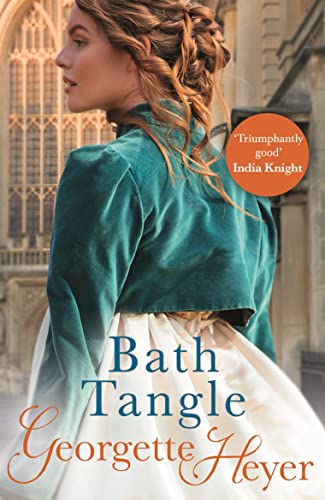
No men in my story, clearly, but listening behind curtains seems to feature heavily...
I'm looking forward to the worst cover ever. I think.
No men in my story, clearly, but listening behind curtains seems to feature heavily...
I'm looking forward to the worst cover ever. I think.
175lyzard
Hi, Helen! Is that the ebook cover? We had one of those for Cotillion, too - irrelevant, and so cutesy it sets my teeth on edge!
Thanks, I guess. :)
Thanks, I guess. :)
176Helenliz
Nope, its an actual book. I mean, I like the dresses, but it's a bit to sugary. I'm still a reading luddite and insist on paper to read from.
177lyzard
Interesting. This is the Cotillion one, which Julia (?) said was from her ebook version; "sugary" is putting it mildly:

I love my paper books too but I'm afraid that the second-hand prices + shipping + exchange rate situation makes an eReader a necessity.

I love my paper books too but I'm afraid that the second-hand prices + shipping + exchange rate situation makes an eReader a necessity.
178CDVicarage

This is my audiobook cover, not as bad as some, but not good. I didn't like the story as an audiobook either as I didn't like the reader, Sian Phillips
179lyzard
Hi, Kerry! Another of the generic covers, but at least that looks like it might be Bath. :)
I've given in on the eReader front but I continue to avoid audiobooks as having too wide a scope for irritation.
I've given in on the eReader front but I continue to avoid audiobooks as having too wide a scope for irritation.
180Matke
Oh, I remember Three Act Tragedy. I always thought it was one of Christie's saddest books. It remains on my second tier of Christie favorites, after the 13 (gasp!) that I bought in a silly but pretty hardcover reissue set.
Gee, I'm not sure about Phineas Redux. It's not calling to me...
Gee, I'm not sure about Phineas Redux. It's not calling to me...
181lyzard
Hi, Gail! I agree with you about Three Act Tragedy. It's a strange book that way---as I said, there's all this amusing extraneous stuff going on so it reads like a light entertainment, but when you stop and think about it, wow, that's one of Christie's coldest killers.
I'm not sure about Phineas Redux. It's not calling to me...
Awwww, pleeeeeeeeeeeease...
I'm not sure about Phineas Redux. It's not calling to me...
Awwww, pleeeeeeeeeeeease...
182rosalita
Ah yes, those ebook covers. Here's the one for Bath Tangle. You can see the series "look" in full force:
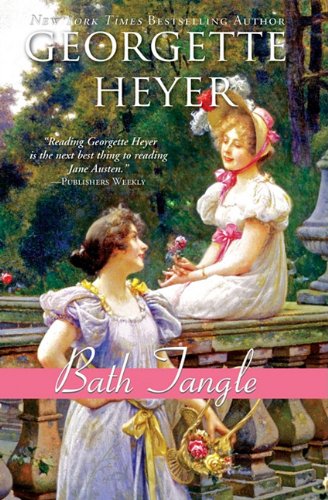
183lyzard
Groan. They're so boring. The most positive spin you can put on them - in fact, the most positive spin you can put on any of this - is that Heyer is so well-known and popular that it truly doesn't matter what you stick on her covers.
184lyzard
Finished The Sinister Mark for TIOLI #12
That is me done for August - 16 books, my equal best reading month ever, and all of them in TIOLI - whoo!!
Now reading Phineas Redux by Anthony Trollope, in preparation for the group read.
That is me done for August - 16 books, my equal best reading month ever, and all of them in TIOLI - whoo!!
Now reading Phineas Redux by Anthony Trollope, in preparation for the group read.
185souloftherose
>158 lyzard: I've skimmed your review of Three Act Tragedy for now as I've just started reading it. I think I'm in the opposite position in that I think I've remembered the identity of the killer but I can't recall the motive (or rather I can only recall part of the motive). Of course, even when I think I can remember the solution to Agatha Christie novels I'm often wrong!
>164 lyzard: If it helps I have no problem with you hitting pause on the Heyer and Christie chronologies if that helps you get caught up.
>166 lyzard: 'No shortage of sass. In fact, it's a common complaint that there's a bit too much sass. :)'
Well, what else could one expect from a heroine with red hair (we're all the same) :-) I'm looking forward to it and still relatively optimistic about squeezing it in before the end of the month.
>167 lyzard: Meanie! How unfair to make us wait.
I'm sure it's not up to the standard of the worst Heyer cover ever but I picked up Mrs Tim Carries On from the library yesterday and the bad cover of my edition is a beauty. I'll share when I've scanned it in as clearly no-one else has been able to bring themselves to upload such an appalling cover.
>174 Helenliz: - >177 lyzard: I think the UK publishers have gone for quite cutesy covers for the recent Heyer editions. The Cotillion cover in the UK is the mirror image of >177 lyzard:.
>184 lyzard: '16 books, my equal best reading month ever, and all of them in TIOLI - whoo!!'
Well done!
I'll probably start Phineas Redux sometime this week (I have 3 books to try and finish by tomorrow.....)
>164 lyzard: If it helps I have no problem with you hitting pause on the Heyer and Christie chronologies if that helps you get caught up.
>166 lyzard: 'No shortage of sass. In fact, it's a common complaint that there's a bit too much sass. :)'
Well, what else could one expect from a heroine with red hair (we're all the same) :-) I'm looking forward to it and still relatively optimistic about squeezing it in before the end of the month.
>167 lyzard: Meanie! How unfair to make us wait.
I'm sure it's not up to the standard of the worst Heyer cover ever but I picked up Mrs Tim Carries On from the library yesterday and the bad cover of my edition is a beauty. I'll share when I've scanned it in as clearly no-one else has been able to bring themselves to upload such an appalling cover.
>174 Helenliz: - >177 lyzard: I think the UK publishers have gone for quite cutesy covers for the recent Heyer editions. The Cotillion cover in the UK is the mirror image of >177 lyzard:.
>184 lyzard: '16 books, my equal best reading month ever, and all of them in TIOLI - whoo!!'
Well done!
I'll probably start Phineas Redux sometime this week (I have 3 books to try and finish by tomorrow.....)
186lyzard
Hi, Heather!
The thing about Three Act Tragedy is that I figured out the motive on a first read - that never happens! :)
Ha! It sounds like you're a bit reading swamped too! I haven't listed either Death In The Clouds or Sprig Muslin yet - maybe we should touch base again in a couple of weeks?
Speaking of red hair, I've picked up the Peter Clancy series by Lee Thayer again---the detective is a red-headed Irishman without a temper!! Just thought I should bring that to your attention...
Oh, wow, looking forward to your terrible cover! I will be reading Golden Days this month.
No hurry on starting Phineas Redux - since you're still trying to polish off your August reading, I will delay putting up the thread for a day or two.
The thing about Three Act Tragedy is that I figured out the motive on a first read - that never happens! :)
Ha! It sounds like you're a bit reading swamped too! I haven't listed either Death In The Clouds or Sprig Muslin yet - maybe we should touch base again in a couple of weeks?
Speaking of red hair, I've picked up the Peter Clancy series by Lee Thayer again---the detective is a red-headed Irishman without a temper!! Just thought I should bring that to your attention...
Oh, wow, looking forward to your terrible cover! I will be reading Golden Days this month.
No hurry on starting Phineas Redux - since you're still trying to polish off your August reading, I will delay putting up the thread for a day or two.
This topic was continued by lyzard's list: going forward to the past - Part 6.

