The 2016 Nonfiction Reading Challenge Part III: Travel in March
This is a continuation of the topic The 2016 Nonfiction Reading Challenge Part II: History in February.
This topic was continued by The 2016 Nonfiction Reading Challenge Part IV: Religion/Spirituality in April.
Talk 75 Books Challenge for 2016
Join LibraryThing to post.
This topic is currently marked as "dormant"—the last message is more than 90 days old. You can revive it by posting a reply.
1Chatterbox
Here we are, almost in March, and a change of seasons is (hopefully...) almost upon us. If you're like me, this gives you a case of itchy feet or wanderlust, even of the armchair variety, so I thought it would be a good time to settle down with some travel books!
Yet another reminder: the goal is to serve as a low/no pressure "challenge". Hopefully, this thread and the idea of having a theme, will guide us in our reading and give us a place to check in and chat about how we're doing, what we liked or didn't like about the non-fiction books we chose to read. Perhaps we'll inspire each other, and (of course) end up delivering some book bullets! Of course, as I type these words, February still isn't over. I just finished my last January biography a few days ago, at the end of February. So please, keep reading at your own individual pace, and don't feel that you have to drop your February history reads and move on to start reading travel books on March 1. Perhaps some of them will make the leap. If not, keep chatting away over on that thread. (I'll still be there, too.) Then join the March thread with your travel books when you want. Or sit it out, and come back in April, if that's your choice. Whatever works for you.
Travel... Ah yes. In this case, I'm thinking that travel guides (Lonely Planet, Fodor's) would not work for this challenge. But if you wanted to read MFK Fisher's books that combine food writing and histories about the places they were written in, well, that's a kind of travel writing too -- it's about the destination, not just the place. Patrick Leigh Fermor wrote a great travel book about a monastery: hardly a book about the process of traveling, or even a destination that most of us could ever get to, but for him, clearly, it was part of a journey, both physical and philosophical. (Besides, he was a travel writer...)
To start with, and to help the rest of us out as we try to come up with our own ideas, tell us why you chose to read what you did, and what intrigues you about it -- was it the author, the type of story, the location? Do you have a personal connection to something in the tale? Then come back and keep us up to date. Should we read it too? Should we add it to our TBR lists/mountains?
I'll put together a list of what people plan to read here:






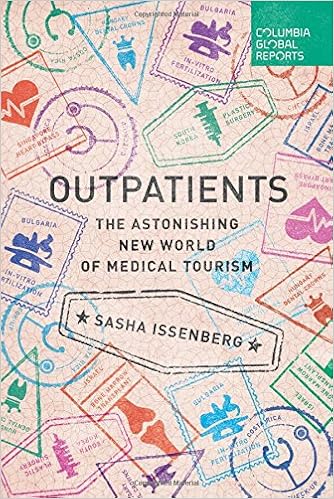
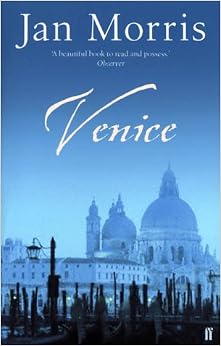
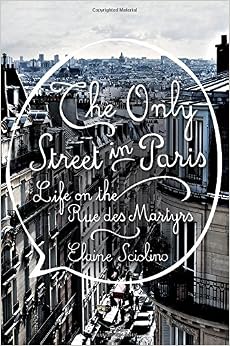

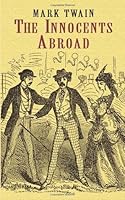
And to keep you thinking ahead, here's the list of the themes that are still to come during the rest of the year:
April: Religion & Spirituality (for Easter/Passover)
May: The Arts
June: Natural History/Environment/Health
July: Current Affairs
August: Science and Technology
September: Philosophy/History of Ideas
October: Politics/Economics & Business/Commentary
November: Essays
December: Quirky/Who Knew?
If you've got any more questions, just post them below, or shoot me a PM and I'll get back to you as soon as I can.
Yet another reminder: the goal is to serve as a low/no pressure "challenge". Hopefully, this thread and the idea of having a theme, will guide us in our reading and give us a place to check in and chat about how we're doing, what we liked or didn't like about the non-fiction books we chose to read. Perhaps we'll inspire each other, and (of course) end up delivering some book bullets! Of course, as I type these words, February still isn't over. I just finished my last January biography a few days ago, at the end of February. So please, keep reading at your own individual pace, and don't feel that you have to drop your February history reads and move on to start reading travel books on March 1. Perhaps some of them will make the leap. If not, keep chatting away over on that thread. (I'll still be there, too.) Then join the March thread with your travel books when you want. Or sit it out, and come back in April, if that's your choice. Whatever works for you.
Travel... Ah yes. In this case, I'm thinking that travel guides (Lonely Planet, Fodor's) would not work for this challenge. But if you wanted to read MFK Fisher's books that combine food writing and histories about the places they were written in, well, that's a kind of travel writing too -- it's about the destination, not just the place. Patrick Leigh Fermor wrote a great travel book about a monastery: hardly a book about the process of traveling, or even a destination that most of us could ever get to, but for him, clearly, it was part of a journey, both physical and philosophical. (Besides, he was a travel writer...)
To start with, and to help the rest of us out as we try to come up with our own ideas, tell us why you chose to read what you did, and what intrigues you about it -- was it the author, the type of story, the location? Do you have a personal connection to something in the tale? Then come back and keep us up to date. Should we read it too? Should we add it to our TBR lists/mountains?
I'll put together a list of what people plan to read here:


And to keep you thinking ahead, here's the list of the themes that are still to come during the rest of the year:
April: Religion & Spirituality (for Easter/Passover)
May: The Arts
June: Natural History/Environment/Health
July: Current Affairs
August: Science and Technology
September: Philosophy/History of Ideas
October: Politics/Economics & Business/Commentary
November: Essays
December: Quirky/Who Knew?
If you've got any more questions, just post them below, or shoot me a PM and I'll get back to you as soon as I can.
2ronincats
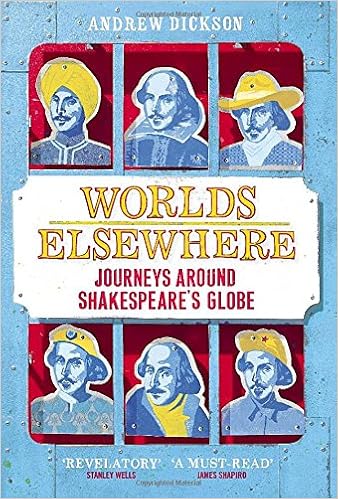
Ha! Here is the ER book I saved for March, Worlds Elsewhere: Journeys around Shakespeare's Globe by Andrew Dickson. And since this is an area in which I rarely read, I was glad to have it!
Ranging across four continents and four hundred years, Worlds Elsewhere is an eye-opening account of how Shakespeare went global.
Sounded fascinating to me when I read the description, described as both a cultural history and a literary travelogue, it bridges February and March's themes perfectly!
Ranging across four continents and four hundred years, Worlds Elsewhere is an eye-opening account of how Shakespeare went global.
Sounded fascinating to me when I read the description, described as both a cultural history and a literary travelogue, it bridges February and March's themes perfectly!
3Fourpawz2
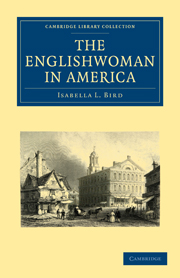
The Englishwoman in America by Isabella L. Bird is the Travel book that I have earmarked for March. I really liked her A Lady's Life in the Rocky Mountains when I read it a few years ago.
Will have to check my TBR books to see if I have anything else in the way of travel books....
Will have to check my TBR books to see if I have anything else in the way of travel books....
4streamsong
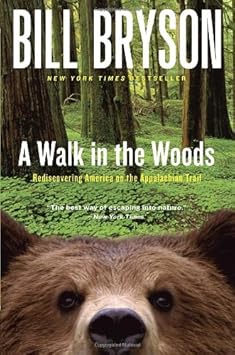
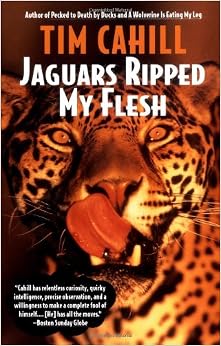
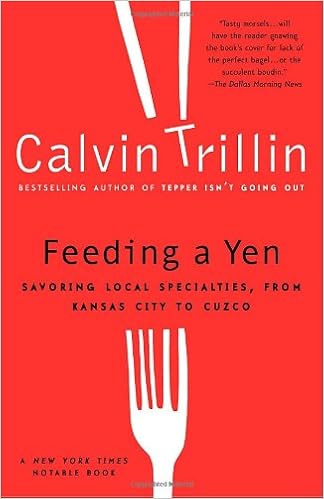
I have several on MT TBR, but the two calling my name are A Walk in the Woods and Jaguars Ripped My Flesh. Can anyone tell I am fed up with winter and ready to be outside?!
5jessibud2
Hmm, glancing again at the list, I see now that I could have (should have?) left my current read (Capturing the Light) for August. Oh well, it still fits history. Ok, for March, I had 4 books lined up but because I am currently listening to Bill Bryson's newest, I grabbed one of the other Bryson books on my shelf that I have not yet read so will add it to this list. I seriously doubt I will manage to read these 5 in March but will give it a shot. I am not a fast reader and am easily distracted by just about anything, but here goes:
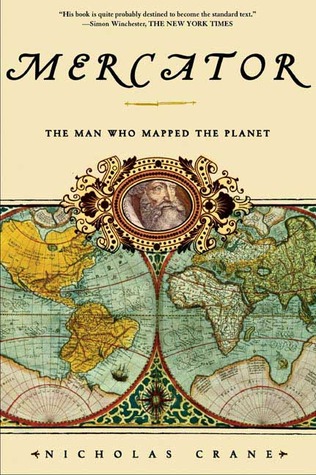
Mercator by Nicholas Crane
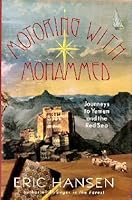
Motoring With Mohammed by Eric Hansen
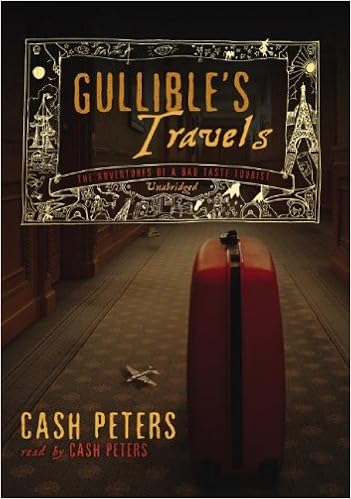
Gullible's Travels by Cash Peters (gotta love that title. Also, I see that the touchstone isn't matching the book I have. I will see if I can figure that out and fix it later)
A Woman Alone Travel Tales from around the Globe - edited by Faith Conlon (and others) - ditto touchstone
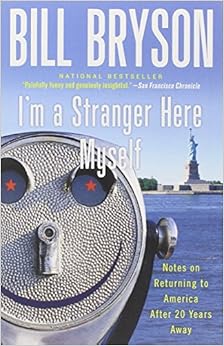
I'm a Stranger Here Myself - Bill Bryson
Mercator by Nicholas Crane
Motoring With Mohammed by Eric Hansen
Gullible's Travels by Cash Peters (gotta love that title. Also, I see that the touchstone isn't matching the book I have. I will see if I can figure that out and fix it later)
A Woman Alone Travel Tales from around the Globe - edited by Faith Conlon (and others) - ditto touchstone
I'm a Stranger Here Myself - Bill Bryson
6laytonwoman3rd
I'm deciding between Beyond the Sky and the Earth or one of Patrick Leigh Fermor's books...
7labwriter
>5 jessibud2: I'm also planning a Bill Bryson read for March--The Road to Little Dribbling.
Although come to think of it, this March travel challenge would be the perfect reason for a re-read of Robert Pirsig's Zen and the Art of Motorcycle Maintenance, one of my all-time favorites.
Although come to think of it, this March travel challenge would be the perfect reason for a re-read of Robert Pirsig's Zen and the Art of Motorcycle Maintenance, one of my all-time favorites.
8ursula
I think I'll be reading My Life on the Road by Gloria Steinem, which seems to have some traveling involved. :)
9katiekrug
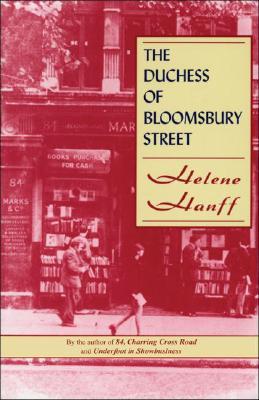
At the very least, I am planning to read The Duchess of Bloomsbury Street, Helene Hanff's memoir of finally visiting London following the correspondence in 84, Charing Cross Road.
I have several other books I'd love to get to, as well, but my commitments are flagging, so I'm trying to take it easy a bit :)
I have several other books I'd love to get to, as well, but my commitments are flagging, so I'm trying to take it easy a bit :)
11Oberon
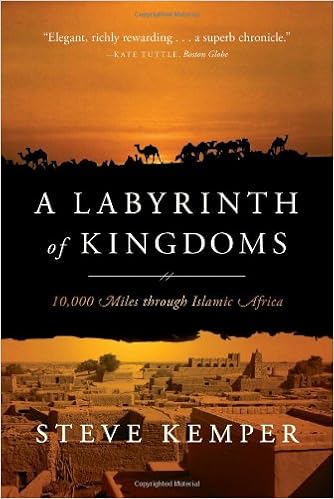
I am planning on reading A Labyrinth of Kingdoms by Steve Kemper. It is an account of Heinrich Barth's travels in North and Central Africa around 1850.
12rosalita
In my opinion, you can't go wrong with Bill Bryson, though I don't have any copies of his books I haven't read yet. Thanks to this thread I've now put The Road to Little Dribbling on hold at the library, though. :-)
I've got a few possibilities in mind for myself. I'm definitely going to read Feeding a Yen by Calvin Trillin. I just love Trillin's witty, conversational writing style. This book is subtitled Savoring Local Specialties from Kansas City to Cuzco and sounds very promising.
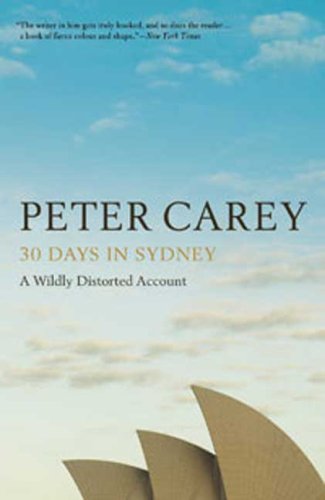
I also have a copy of 30 Days in Sydney by Peter Carey, which apparently is the author's account of his return to his home city after many years away.
I have a couple of books on hold at the library that would fit this category, I think. The Geography of Bliss by Eric Weiner, subtitled One Grump's Search for the Happiest Places in the World, and David Byrne (of Dire Straits fame)'s Bicycle Diaries, which is described as his account of viewing the world's greatest cities between the handlebars. Hopefully one or the other of those will come in before March is through.
I've got a few possibilities in mind for myself. I'm definitely going to read Feeding a Yen by Calvin Trillin. I just love Trillin's witty, conversational writing style. This book is subtitled Savoring Local Specialties from Kansas City to Cuzco and sounds very promising.
I also have a copy of 30 Days in Sydney by Peter Carey, which apparently is the author's account of his return to his home city after many years away.
I have a couple of books on hold at the library that would fit this category, I think. The Geography of Bliss by Eric Weiner, subtitled One Grump's Search for the Happiest Places in the World, and David Byrne (of Dire Straits fame)'s Bicycle Diaries, which is described as his account of viewing the world's greatest cities between the handlebars. Hopefully one or the other of those will come in before March is through.
13katiekrug
Julia, I have The Geography of Bliss on my short list, too :)
14jessibud2
>7 labwriter: - Road to Little Dribbling is the audiobook I am currently listening to. I am only on disc #2 (of 11, I think) so it may well carry me into March. I am loving it though am disappointed that he is not the narrator, as he is for all his other books that have been recorded. I don't know why he didn't do it this time
15jessibud2
>9 katiekrug: - 84, Charing Cross Road is one of my favourite books. It and its sequel, The Duchess of Bloomsbury Street together have been made into a film, just called 84, Charing Cross Road. It stars Anne Bancroft and Anthony Hopkins and is one of the best film adaptations I have ever seen. Perfect casting and true to the story. I am always hesitatant to see a movie of a book I liked, but this time, they got it right. Just saying
16rosalita
>13 katiekrug: Of course you do, KAK. Great minds think alike!
17katiekrug
>15 jessibud2: - I saw the film ages ago, when I was too young to appreciate it and hadn't read anything by Hanff. I recently bought a DVD of it, so I could watch it again, once I've finished TDoBS.
>16 rosalita: - Indeed!
>16 rosalita: - Indeed!
18fuzzi
>10 charl08: hahaha! That's a common issue here.
I have a lovely old book I am planning to read, Lighthearted Journey by Anne Bosworth Greene. It is about the author's trip to Europe in the late 1920s, accompanied by her daughter.
I have a lovely old book I am planning to read, Lighthearted Journey by Anne Bosworth Greene. It is about the author's trip to Europe in the late 1920s, accompanied by her daughter.
19kidzdoc
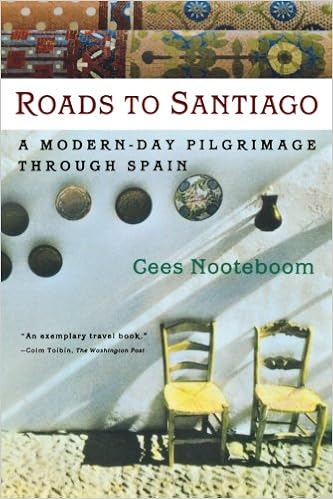
I plan to read Roads to Santiago by Cees Nooteboom, an account of the author's journey from Barcelona to Santiago de Compostela.
20Chatterbox
>2 ronincats: Roni, I love your idea -- the books and the plays travel, and so does the author, in quest of them!! I may even try to join you in this, although I'd be pushing my luck. I've got this on my Kindle...
>11 Oberon: I have wishlisted that one -- a book bullet already!
Incidentally -- I would imagine that a biography of a travel writer, or a renowned traveler, also would qualify for this. So if you want to read Artemis Cooper's bio of Paddy Leigh Fermor, or a bio of Gertrude Bell or Isabella Bird, this would be a good month!
My longlist is living up to its name -- it's long.
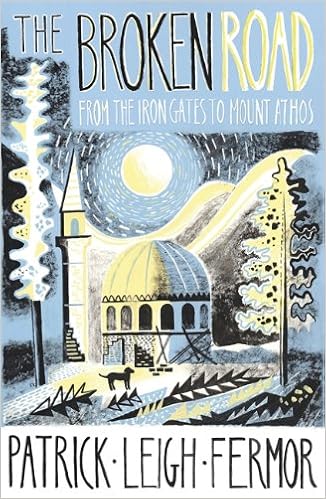
The Broken Road by Patrick Leigh Fermor -- the concluding volume of his epic journey walking from Holland to Istanbul in the 1930s, completed posthumously by his biographer.
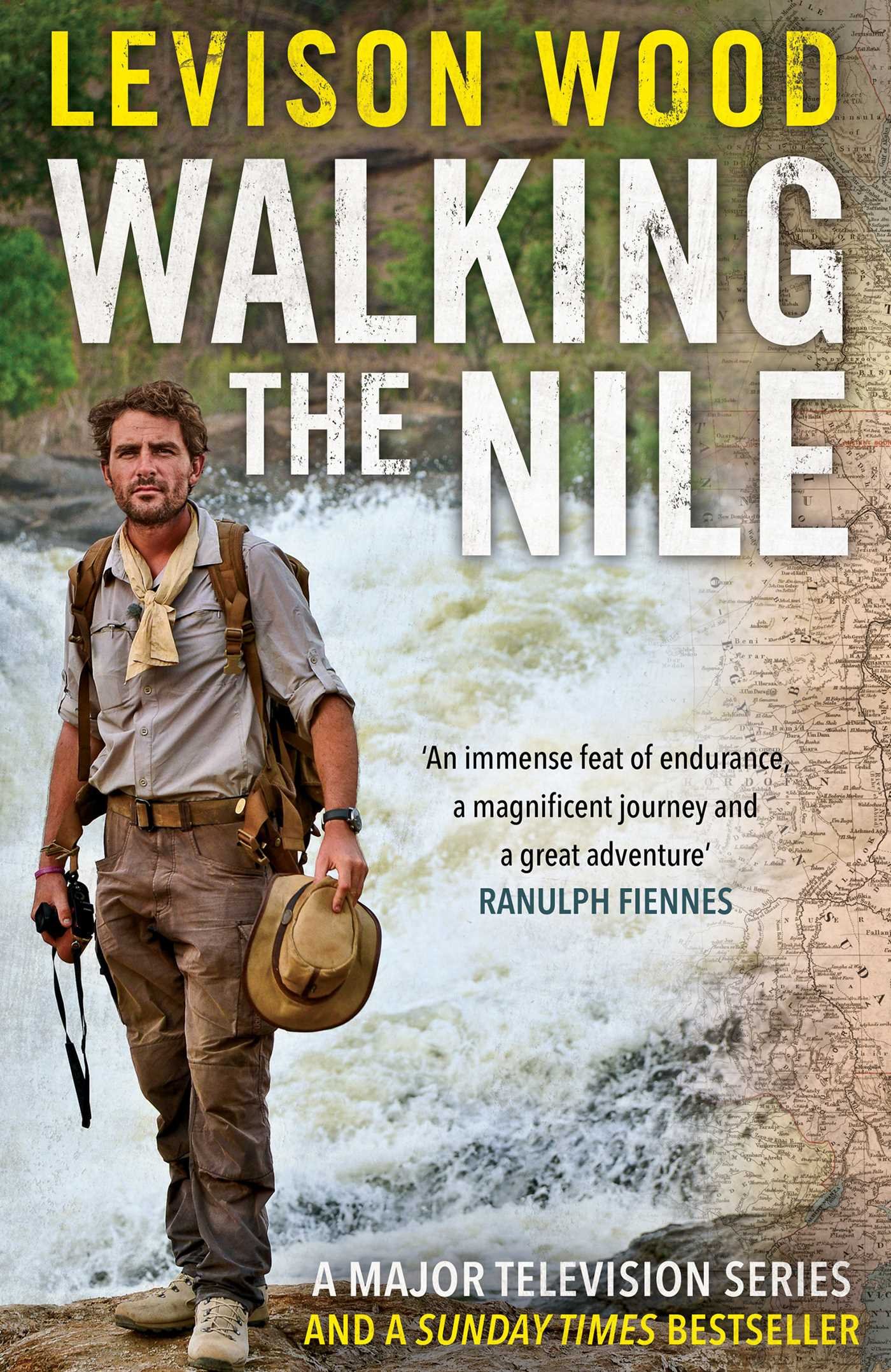
Walking the Nile by Levison Wood -- got a badly formatted copy from NetGalley, so this is a library book; a particularly arduous trek in Africa.
Deep South by Paul Theroux -- an ARC of his latest, that I got last year; I've been bluffing about having read it (his wife is a friend of mine) so I'd better get to it.
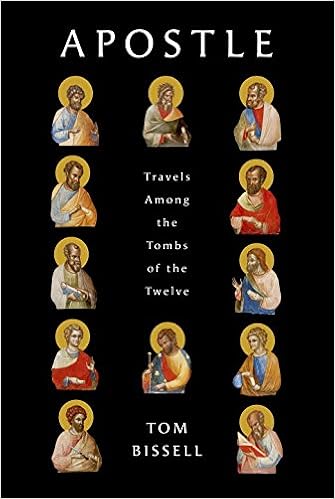
Apostle: Travels Among the Tombs of the Twelve by Tom Bissell -- it was a tossup as to whether I read this ARC this month or next (religion). It comes out in March, so I'll shoot for "travel", but it may spill over...
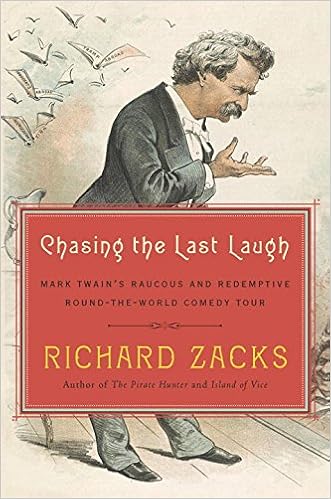
Chasing the Last Laugh by Richard Zacks -- It is Mark Twain who does on the road here, to restore his fortunes in the latter years of his life, in a comedy speaking tour. This book chronicles it.
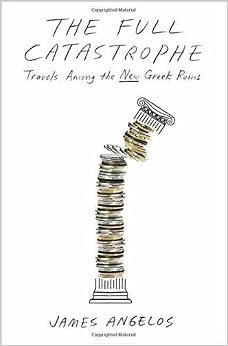
The Full Catastrophe: Travels Among the New Greek Ruins by James Angelos -- Life in post-economic collapse Greece. Relevant again/still with the refugee crisis putting new pressure on the country.
All Strangers Are Kin by Zora O'Neill -- the author spent time in four countries in the Middle East/N. Africa while studying Arabic, and this is her chronicle. ARC from ALA Midwinter, the publisher raved about it.
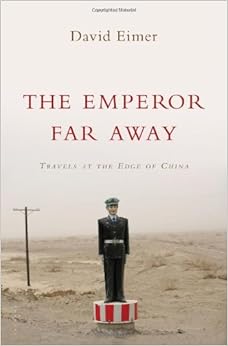
The Emperor Far Away by David Eimer -- this was nominated for/won awards last year for non-fiction writing about China. It's travel but also commentary.
>11 Oberon: I have wishlisted that one -- a book bullet already!
Incidentally -- I would imagine that a biography of a travel writer, or a renowned traveler, also would qualify for this. So if you want to read Artemis Cooper's bio of Paddy Leigh Fermor, or a bio of Gertrude Bell or Isabella Bird, this would be a good month!
My longlist is living up to its name -- it's long.
The Broken Road by Patrick Leigh Fermor -- the concluding volume of his epic journey walking from Holland to Istanbul in the 1930s, completed posthumously by his biographer.
Walking the Nile by Levison Wood -- got a badly formatted copy from NetGalley, so this is a library book; a particularly arduous trek in Africa.
Deep South by Paul Theroux -- an ARC of his latest, that I got last year; I've been bluffing about having read it (his wife is a friend of mine) so I'd better get to it.
Apostle: Travels Among the Tombs of the Twelve by Tom Bissell -- it was a tossup as to whether I read this ARC this month or next (religion). It comes out in March, so I'll shoot for "travel", but it may spill over...
Chasing the Last Laugh by Richard Zacks -- It is Mark Twain who does on the road here, to restore his fortunes in the latter years of his life, in a comedy speaking tour. This book chronicles it.
The Full Catastrophe: Travels Among the New Greek Ruins by James Angelos -- Life in post-economic collapse Greece. Relevant again/still with the refugee crisis putting new pressure on the country.
All Strangers Are Kin by Zora O'Neill -- the author spent time in four countries in the Middle East/N. Africa while studying Arabic, and this is her chronicle. ARC from ALA Midwinter, the publisher raved about it.
The Emperor Far Away by David Eimer -- this was nominated for/won awards last year for non-fiction writing about China. It's travel but also commentary.
21weird_O
Venice by Jan Morris is what I'm reading for March. I first became aware of this book years ago via a Guardian "top books" list. It languished on my own "books to read" list, until Paul Cranswick commented on Morris' 1957 book Coast to Coast and mentioned Venice. Nosed around the mercantile nets and acquired at eBay a Folio Society edition (2008) that arrived at my door on Tuesday (2/23) after a nearly three-week journey from Hawaii. USPS $4. A lovely book it is.


22rosalita
>20 Chatterbox: The cover of that Theroux book caught my eye in your opening post, Suzanne, and I wondered if it was new. I will look forward to your comments after you read it, as the description makes it sound right up my alley.
23jessibud2
>20 Chatterbox: - Your comment about literary travel reminds me of a book I read a few years ago, by Anna Quindlen called Imagined London. I enjoyed it but might have liked it better if I had read half of the books she referred to. I do love her writing, though
24Chatterbox
>21 weird_O: Wow, what a find! Beautiful book... I love her book about Trieste, incidentally. For anyone looking for a short and beautifully-written little book, that is one.
And while I'm tossing around book bullets, there is also a series called, I think, "the writer and the city." So, there is The Flaneur: A Stroll Through the Paradoxes of Paris by Edmund White (which is infinitely better than his longer book, Inside a Pearl. There are also Prague Pictures by John Banville and one I haven't read, but that I have on my shelves, Florence: A Delicate Case by David Leavitt. I think the Peter Carey book about Sydney may be part of the same series.
And while I'm tossing around book bullets, there is also a series called, I think, "the writer and the city." So, there is The Flaneur: A Stroll Through the Paradoxes of Paris by Edmund White (which is infinitely better than his longer book, Inside a Pearl. There are also Prague Pictures by John Banville and one I haven't read, but that I have on my shelves, Florence: A Delicate Case by David Leavitt. I think the Peter Carey book about Sydney may be part of the same series.
25katiekrug
>20 Chatterbox: - I just got word from the library that Deep South has come in for me. Hope to get to it...
26fuzzi
>20 Chatterbox: you mentioned Mark Twain...I have The Innocents Abroad on my TBR, would that qualify?
Another possible choice for someone could be On the Road With Charles Kuralt, an excellent read!
Another possible choice for someone could be On the Road With Charles Kuralt, an excellent read!
27Chatterbox
>26 fuzzi: Certainly!
28Helenliz
I'm trying to read off my TBR pile, so it will likely be Smollet's Travels through France & Italy or Cherry-Garrard's The Worst Journey in the world.
29thornton37814
I have started reading The Road to Little Dribbling, but it won't be finished until March because I'm reading other things that I'm trying to finish first. I've really only read the introduction and maybe a chapter. I will probably be next week before I pick it back up so it will be a March book.
30hazel1123
Ursula - Interesting choice - I'm struggling with finding a 'travel' book and this one is in my library. You may have relieved anxiety. However it goes I will be looking forward to hearing what you think of the book My Life on the Road. The other book I am thinking about is Keeping Company with Saint Ignatius: Walking the Camino de Santiago de Compostela. I've wanted to read about the Camino de Santiago for awhile so this may be the time.
Currently I am reading American Nations which is interesting but may take me awhile to finish. I can't quite figure out a way to put that one in a travel category.
Currently I am reading American Nations which is interesting but may take me awhile to finish. I can't quite figure out a way to put that one in a travel category.
31cbl_tn
I am planning to read Bury Me Standing: The Gypsies and Their Journey by Isabel Fonseca for the Category Challenge"s GeoCAT in March. I think it will fit here. If I have time I'll also read Pilgrimage to the End of the World, which could spill over into April's religion theme.
32benitastrnad
#12
My real life book discussion group read Bicycle Diaries few years ago and we really enjoyed it. It gave us lots of food for discussion especially the parts about the livability of many cities.
I also have Geography of Bliss and think I might pull it out. Mine is a recorded version and since I am about to finish my current recorded book it might be a good one for my next book. Thanks for the reminder and the book bullet.
#19
I read Roads to Santiago by Cees Nooteboom several years ago and enjoyed it. It gave me pilgrimage fever.
I also have Driving Over Lemons written by another rock and roll star. This one is about living in Spain that I think I will read.
My real life book discussion group read Bicycle Diaries few years ago and we really enjoyed it. It gave us lots of food for discussion especially the parts about the livability of many cities.
I also have Geography of Bliss and think I might pull it out. Mine is a recorded version and since I am about to finish my current recorded book it might be a good one for my next book. Thanks for the reminder and the book bullet.
#19
I read Roads to Santiago by Cees Nooteboom several years ago and enjoyed it. It gave me pilgrimage fever.
I also have Driving Over Lemons written by another rock and roll star. This one is about living in Spain that I think I will read.
33ursula
>30 hazel1123: I have some other travel-type books on hold at the library, but this one already arrived, so it'll be up first at least. I'd love to read about the Camino, but it will make me sad that I can't do it. I've wanted to ever since I heard about it but I don't know when or if it'll ever happen.
34mstrust
I have so many travel and travel writing books on the shelf. I'll have to look around and pick.
Anybody reading A Walk in the Woods for this challenge is going to have a good time.
Anybody reading A Walk in the Woods for this challenge is going to have a good time.
35benitastrnad
I started listening to Geography of Bliss today. I didn't realize that the author was an NPR correspondent. So far it is good.
36Familyhistorian
I started reading The Grand Tour: Around the World with the Queen of Mystery for another challenge but, as I won't finish it up in February, I am going to continue reading it for the nonfiction travel category. It is a fascinating look at the world in the 1920s but, as it is written in the form of Agatha Christie's letters home (these are the actual letters and photos of the tour), it is a bit slow going at times.
37The_Hibernator
If I have the free-time, I will try to read Meet Me in Atlantis. It seems like it might have a good deal of traveling involved.
38amanda4242
I finished Last Chance to See: In the Footsteps of Douglas Adams by Mark Carwardine tonight, a travel book that could have worked equally well for the June theme. I loved the original book and the TV series, so I decided to buy this one when I found a hardcover copy of it for under $5. While it didn't add much that wasn't in the series, Carwardine's style is pleasant and it's filled with beautiful color photos, so I consider it time and money well spent.
39karspeak
I hope to take a trip to Costa Rica next year, so I am reading Monkeys Are Made of Chocolate, a collection of essays about the wildlife of Costa Rica. So far it's quite good and very readable.
40labwriter

I'm listening to the audio version of Zen and the Art of Motorcycle Maintenance: An Inquiry into Values, by Robert M. Pirsig. This is about the 3rd time through this book for me, although I've read parts of it several times. It was first published in 1974. It's probably been about 20 years since I read the book, so I'm interested to see how I'll react to it now.
The book is a first-person account of a 17-day motorcycle trip from Minnesota to Northern California by the narrator and his 11-year-old son. Interwoven with the travelogue is a second plot detailing the life of a man the author calls Phaedrus. Interspersed within those two narratives are philosophical discourses which the narrator refers to as Chautauquas.
"Sometimes it's a little better to travel than to arrive."
41Chatterbox
>40 labwriter: Is that where that saying originates??!!
I've added Elaine Sciolino's The Only Street in Paris to my long list of books for this month, and may read it first, since it's due back at the library shortly.
I've added Elaine Sciolino's The Only Street in Paris to my long list of books for this month, and may read it first, since it's due back at the library shortly.
42Oberon
>39 karspeak: I have that on my shelf. Looking forward to your review.
43jessibud2
I'm still listening to Bill Bryson's The Road to Little Dribbling on audio in my car and I just started an older book of his, I'm a Stranger Here Myself. I do love Bryson's writing
44mstrust
I'll be reading Foreign Babes in Beijing for this month's challenge.
45muddy21
I'm reading All Over the Map by Laura Fraser, an inveterate and life-long traveler and travel writer who hits 40 and thinks she wants to settle down but can't (at the halfway point in the book, at least!) figure out how.
46nittnut
I'm struggling with choice a little. I've got a few travel books on my Kindle that I'd like to read, (Jerusalem: The Biography, Becoming Odyssa: Epic Adventures on the Appalachian Trail) and then Mamie went and reviewed City of Djinns and now I want to read that too. Sigh. Maybe all of them... Lol.
47charl08
I can't decide either! Fortunately I'm still reading challenge books from last month, so no immediate issue.
48labwriter
>41 Chatterbox: Hi Suzanne. Well, the quotation is from the book. If it isn't original with him, then it's at least a major theme within the book.
49rosalita
I've zipped right through Feeding a Yen by Calvin Trillin. It's quite short (about 125 pages) and consists of essays that examine the idea that certain foods can only be enjoyed in their native location, making them candidates for entry on the author's Register of Frustration and Deprivation. And so he travels to Spain to savor pimientos de Padrón or fried peppers, and to Nice in France to gorge himself on pan bagnat, which is essentially a tunafish sandwich. In South America he makes a careful comparison of the relative merits of the kinds of ceviche served in Ecuador vs. Peru. He waxes poetic over the cuisine of northern New Mexico and in particular the posole he fills up on whenever he's there. And of course no book about food written by a native of Kansas City would be complete without a look at the issue of barbecue.
I love Trillin's writing, which is warm and humorous, and I enjoyed the theme running through many of the chapters, in which he uses food to try to convince his grown daughter Abigail to move from San Francisco back to her native New York City. Recommended.
I love Trillin's writing, which is warm and humorous, and I enjoyed the theme running through many of the chapters, in which he uses food to try to convince his grown daughter Abigail to move from San Francisco back to her native New York City. Recommended.
50LizzieD
O.K. Instead of reading Travels in West Africa, which I had up in January and February, I read Roni's March pick Worlds Elsewhere. It's a super book! Since I finished it yesterday rather than Feb. as planned, I've mentioned it here. So it's back to Africa with Mary Kingsley. I haven't read much, but I have enjoyed that little bit. She was quite witty and self-deprecating, a combination that gets me every time.
51mdoris
>49 rosalita: Just had a peek at our library collection (there are lots of his books) and wondering if you have read any other Calvin Trillin books that you would recommend?
52rosalita
>51 mdoris: A lot of Trillin's books are compiled from pieces he wrote for The New Yorker, though there are also collections of his "deadline verse", current-events poetry that was originally published in The Nation (he used to appear on The Daily Show now and then and recite some of them).
If the food aspect of Feeding a Yen appeals to you, there are three other collections of his food writings: American Fried, Alice, Let's Eat, and Third Helpings.
Quite Enough of Calvin Trillin is a good collection of his essays on a variety of subjects. But perhaps my favorite of his writings are Family Man and About Alice, which are sweet, charming, funny stories about his wife and daughters. No scandals or dysfunction here — Trillin used to lament in print that his happy childhood and happy family life were not sufficiently dramatic enough to be good reading, but I disagree.
And he wrote at least one novel, which I have not yet read. It's called Tepper Isn't Going Out and is about a man in New York City who makes it his life's work to find parking spaces in Manhattan and just sit there in his car all day, reading a newspaper or doing crossword puzzles, feeding the meter when necessary. It sounds so completely odd and yet somehow exactly what I would expect from Trillin.
If the food aspect of Feeding a Yen appeals to you, there are three other collections of his food writings: American Fried, Alice, Let's Eat, and Third Helpings.
Quite Enough of Calvin Trillin is a good collection of his essays on a variety of subjects. But perhaps my favorite of his writings are Family Man and About Alice, which are sweet, charming, funny stories about his wife and daughters. No scandals or dysfunction here — Trillin used to lament in print that his happy childhood and happy family life were not sufficiently dramatic enough to be good reading, but I disagree.
And he wrote at least one novel, which I have not yet read. It's called Tepper Isn't Going Out and is about a man in New York City who makes it his life's work to find parking spaces in Manhattan and just sit there in his car all day, reading a newspaper or doing crossword puzzles, feeding the meter when necessary. It sounds so completely odd and yet somehow exactly what I would expect from Trillin.
53mdoris
>52 rosalita:, Thank you! I have read his pieces in the New Yorker and I love food writing so I've always meant to get his books from the library and so now they are on the "later" list! Maybe I should start with Feeding a Yen!
54rosalita
>53 mdoris: I'm glad I could help! I know all about "later" lists. I hope you enjoy them when you do get to them.
55benitastrnad
I am about half done with Geography of Bliss and am enjoying listening to it. There are some interesting "happy" places in the world and thanks to Eric Weiner for pointing them out.
56LovingLit
Ooooh, I gues I can join in on this thread as all I am reading at the moment is non fiction. A quick scan of my current reads reveals that Domestic Manners of the Americans fits the bill! She's a Brit, travelling in America, and both places are foreign to me.
I am half way in, and am generally dipping in and out, but am finding it amusing in how the author is so scathing of what she sees as brutish American manner of the 1830s!
I am half way in, and am generally dipping in and out, but am finding it amusing in how the author is so scathing of what she sees as brutish American manner of the 1830s!
57witchyrichy
I am on my annual trip to Florida and I like to read regional works. This year, I brought along The Armchair Birder Goes Coastal, a book I bought at Ding Darling Refuge two years ago. When I pulled it off the shelf, I found a fun bookmark with a photo of a roseate spoonbill taking off in flurry of water.
This is a birding book but also full of travel as author John Yow describes the towns and refuges where he goes to see the birds. And...in a bit of irony it may also be about bird travel as Yow describes the migration patterns.
Organized by seasons, Yow draws from a variety of sources to create four or five page portraits of a variety of birds, many of which I have seen on this trip. He reminds us that many of the species were almost hunted to extinction before the migratory bird act stopped hunting, egg and plumage collecting. He updates the status of the species as they are now challenged by coastal development.
I read it straight through but it would also be a boo to dive into as a companion to a birding trip.
This is a birding book but also full of travel as author John Yow describes the towns and refuges where he goes to see the birds. And...in a bit of irony it may also be about bird travel as Yow describes the migration patterns.
Organized by seasons, Yow draws from a variety of sources to create four or five page portraits of a variety of birds, many of which I have seen on this trip. He reminds us that many of the species were almost hunted to extinction before the migratory bird act stopped hunting, egg and plumage collecting. He updates the status of the species as they are now challenged by coastal development.
I read it straight through but it would also be a boo to dive into as a companion to a birding trip.
58jessibud2
>57 witchyrichy: - This book sounds like one I"d love! Thanks; I've made a note to my ever-growing tbr
59witchyrichy
>58 jessibud2: There is a first volume called The Armchair Birder that is on my tbr list. If you love birds, you'll love this book.
60jessibud2
>59 witchyrichy: - Thanks! Just added that one, too!
61labwriter
Wonderful list of books here. This will be such a great resource when I'm searching for "something" to read.
I'm really enjoying my March Travel read (actually listen)--Zen and the Art of Motorcycle Maintenance. I'm guessing this is my 3rd time through the entire book, but not for 30 years or so. The narrator is excellently matched to the text of the book. I'm very happy about that. The book is subtitled "An Inquiry Into Values," which he puts into two large categories: Classical and Romantic, two very different ways of looking at the world. IMO, the book not only holds up, but I'm happy to say that I get what he's saying in a way that I really didn't when I was in my 30s. I don't think that has so much to do with age, per se, as it does with my own experience.
I'm really enjoying my March Travel read (actually listen)--Zen and the Art of Motorcycle Maintenance. I'm guessing this is my 3rd time through the entire book, but not for 30 years or so. The narrator is excellently matched to the text of the book. I'm very happy about that. The book is subtitled "An Inquiry Into Values," which he puts into two large categories: Classical and Romantic, two very different ways of looking at the world. IMO, the book not only holds up, but I'm happy to say that I get what he's saying in a way that I really didn't when I was in my 30s. I don't think that has so much to do with age, per se, as it does with my own experience.
62mstrust
I'm about a third of the way through Foreign Babes in Beijing. The author is an American who went to China to work in public relations and ended up as an actress on a popular nighttime soap opera.
63AnneDC
So far I've been better at doing the non-fiction challenge than posting about it, but here are my plans for Travel in March (and why I chose them).
Moby-Duck: The True Story of 28,800 Bath Toys Lost at Sea and of the Beachcombers, Oceanographers, Environmentalists, and Fools, Including the Author, Who Went in Search of Them by Donovan Hohn. I was intermittently reading this at the end of 2015 and am about halfway into it--I purposely stopped reading when I learned of this challenge and decided to finish it in March.
Round Ireland with a Fridge by Tony Hawks, because it's on the shelf and because I always like to read about Ireland in March
A Time of Gifts by Patrick Leigh Fermor, also because it's on the shelf and part of my NYRB classic backlog
From the Holy Mountain by William Dalrymple because Dalrymple was the British Author Challenge author for February, and I didn't get to this then--it fits even better into travel than history, I'm thinking.
Here and Nowhere ElseNeither Here Nor There by Bill Bryson, because I need an audiobook and Bryson will amuse me.
Moby-Duck: The True Story of 28,800 Bath Toys Lost at Sea and of the Beachcombers, Oceanographers, Environmentalists, and Fools, Including the Author, Who Went in Search of Them by Donovan Hohn. I was intermittently reading this at the end of 2015 and am about halfway into it--I purposely stopped reading when I learned of this challenge and decided to finish it in March.
Round Ireland with a Fridge by Tony Hawks, because it's on the shelf and because I always like to read about Ireland in March
A Time of Gifts by Patrick Leigh Fermor, also because it's on the shelf and part of my NYRB classic backlog
From the Holy Mountain by William Dalrymple because Dalrymple was the British Author Challenge author for February, and I didn't get to this then--it fits even better into travel than history, I'm thinking.
64jessibud2
>63 AnneDC: - I have Moby Duck in my pile to read for this challenge, too though I hadn't placed it in March.
I was intrigued by the last one in your list as I love Bill Bryson and am, in fact, currently both reading a book by him (I'm a Stranger Here Myself) and listening to one on audio, as well (The Road to Little Dribbling). But that title, by him, was not familiar to me. When I clicked on it, though, it took me to a book by that title but by a different author.
It could just be the touchstones screwing up again, as I see it is doing right now, with the first Bryson book I just mentioned; that touchstone goes to a book by Ogden Nash, not Bryson. A bit annoying...
I was intrigued by the last one in your list as I love Bill Bryson and am, in fact, currently both reading a book by him (I'm a Stranger Here Myself) and listening to one on audio, as well (The Road to Little Dribbling). But that title, by him, was not familiar to me. When I clicked on it, though, it took me to a book by that title but by a different author.
It could just be the touchstones screwing up again, as I see it is doing right now, with the first Bryson book I just mentioned; that touchstone goes to a book by Ogden Nash, not Bryson. A bit annoying...
65AnneDC
>64 jessibud2: Nope, you are right, I typed in the wrong title and didn't even notice! What I meant to say was, Neither Here Not There which is the book in my Audible queue and is really Bryson. I see what you mean about the other touchstone, though.
Moby-Duck could fit into any number of categories (nature, environment, science) but since it's also a kind of travelogue I'm going to get back to it now.
Moby-Duck could fit into any number of categories (nature, environment, science) but since it's also a kind of travelogue I'm going to get back to it now.
66Smiler69
I think I'll join Katie with The Duchess of Bloomsbury Street this month, having absolutely adored 84CCR. Started reading Venice by Jan Morris last night, and I can tell I'm in for quite a treat, especially with my beautiful Folio edition. I loved From the Holy Mountain by William Dalrymple so much last month that I rushed to order two more of his books, In Xanadu and The Age of Kali. I also have City of Djinns on the shelves, and will see if I can fit one of those in. I've had Jack Kerouac's On the Road on the audio shelf for ages and ages, and must make room for that one too. I'd love to finally read Patrick Leigh Fermor, so will try to make time for A Time of Gifts; I had started listening to the audio version and the narration was more than fine, but quickly came to the conclusion that I would appreciate his writing much more on the page. I also have his A Time to Keep Silence and might opt for that one this month, if only because it is so short at just 96 pages in the NYRB edition.
>15 jessibud2: I saw the movie version of 84, Charing Cross Road and quite enjoyed it, though I hadn't read The Duchess of Bloomsbury Street and didn't realise the movie combined the two books.
>21 weird_O: I got the same edition as you Bill, only somehow managed to get it directly from the Folio Society last year as they had apparently found a few copies laying around in their storerooms.
>49 rosalita: >52 rosalita: Adding Feeding a Yen and Quite Enough of Calvin Trillin to the wishlist! Another author for me to discover and from your description he sounds like one I'll probably enjoy!
In fact, in the time it took me to compose this message, I've found a second-hand copy of the latter and will probably order it as the library doesn't have it on their listing.
I'm really enjoying this challenge Suzanne, as it's encouraging me to finally combine more non-fiction into my reading diet, something I've been wanting to do for ages but somehow was reticent to do, and now I'm coming to the conclusion that I can enjoy NF quite as much as I enjoy the best of what fiction has to offer.
>15 jessibud2: I saw the movie version of 84, Charing Cross Road and quite enjoyed it, though I hadn't read The Duchess of Bloomsbury Street and didn't realise the movie combined the two books.
>21 weird_O: I got the same edition as you Bill, only somehow managed to get it directly from the Folio Society last year as they had apparently found a few copies laying around in their storerooms.
>49 rosalita: >52 rosalita: Adding Feeding a Yen and Quite Enough of Calvin Trillin to the wishlist! Another author for me to discover and from your description he sounds like one I'll probably enjoy!
In fact, in the time it took me to compose this message, I've found a second-hand copy of the latter and will probably order it as the library doesn't have it on their listing.
I'm really enjoying this challenge Suzanne, as it's encouraging me to finally combine more non-fiction into my reading diet, something I've been wanting to do for ages but somehow was reticent to do, and now I'm coming to the conclusion that I can enjoy NF quite as much as I enjoy the best of what fiction has to offer.
67nittnut
After all that fussing about my list of books I wanted to read, my son handed me a book he's just finished. It's called An Island to Oneself. So I'm reading that. It's a memoir of Tom Neale's years living by himself on an atoll in the South Pacific, about 300 miles from anywhere. Pretty good so far.
68weird_O
Moby Duck was a fascinating read, to me. I read it several years ago. The range of topics and situations that Hohn dealt with filled me with admiration for his commitment to his quest.
I dwelt on the book-cover collage at the top of the thread, just taking in what all is being read this month. About three-quarters of them are books I'd like to read. The Innocents Abroad particularly poked me, since I went to a lot of trouble last year to acquire a hardcover edition of it because I really wanted to read it. Of course, I immediately was pulled in contrary directions, and I completely forgot about it. I don't know if I'll have time, but I'm going to fetch it from the stacks downstairs and set it out to remind me.
I dwelt on the book-cover collage at the top of the thread, just taking in what all is being read this month. About three-quarters of them are books I'd like to read. The Innocents Abroad particularly poked me, since I went to a lot of trouble last year to acquire a hardcover edition of it because I really wanted to read it. Of course, I immediately was pulled in contrary directions, and I completely forgot about it. I don't know if I'll have time, but I'm going to fetch it from the stacks downstairs and set it out to remind me.
69charl08
>68 weird_O: I want to read this too - sounds wonderful.
I'm counting a book I've been reading for a while, but have just finished, Reading Chekhov. This was a fascinating book by an author I enjoy a lot. If you haven't read any Janet Malcolm, I'd recommend her writing unequivocally. Here she uses a trip to Russia to introduce reflections upon Chekhov's writing, especially his short stories. The travel details are not glamorous: Yeltsin is still in power and she is guided by a series of older Russian women, some more willing to adapt to her requirements than others (in one case, the guide all but refuses to change the tour when Malcolm states she has no interest in the proposed visits and asks to go to a synagogue instead). The technology is poor and those sites that are dedicated to authors famous in the West (eg Akhmatova) don't worry about authenticity. The biographical details of Chekhov's life really interested me, and the literary criticism of his writing, with quotes from his work means I'm keen to read his short stories
I'm counting a book I've been reading for a while, but have just finished, Reading Chekhov. This was a fascinating book by an author I enjoy a lot. If you haven't read any Janet Malcolm, I'd recommend her writing unequivocally. Here she uses a trip to Russia to introduce reflections upon Chekhov's writing, especially his short stories. The travel details are not glamorous: Yeltsin is still in power and she is guided by a series of older Russian women, some more willing to adapt to her requirements than others (in one case, the guide all but refuses to change the tour when Malcolm states she has no interest in the proposed visits and asks to go to a synagogue instead). The technology is poor and those sites that are dedicated to authors famous in the West (eg Akhmatova) don't worry about authenticity. The biographical details of Chekhov's life really interested me, and the literary criticism of his writing, with quotes from his work means I'm keen to read his short stories
70Smiler69
>69 charl08: You've sold me on Reading Chekhov, Charlotte. I also have a wonderful Folio Society four-volume set of his collected stories, and perhaps that would give me a nudge to start reading them.
71Chatterbox
Hi folks, real life has intervened with my reading and this thread with a bang, but will get up to date with the list at the top at some point in the next few days. Have fun with the armchair travel reads!
72ccookie
On the shelf where my mother's favourite books are shelved sits Blue Highways: A Journey into America by William Least Heat-Moon. I pulled it out. Whether or not I get it read remains to be seen.
73fuzzi
>68 weird_O: I've got The Innocents Abroad on my TBR list for this challenge. Wanna share the read?
74weird_O
>73 fuzzi: "Share the Read"? What does that entail? Each of us reads half the chapters? :-)
I don't object, though I am not sure I'll be able to fit the book in this month.
I don't object, though I am not sure I'll be able to fit the book in this month.
75luvamystery65
>61 labwriter: Nice thoughts. I think I'll head over to Audible. Thanks.
76fuzzi
>74 weird_O: okay, make it a "shared read" then. Picky, picky... ;)
77thornton37814
Just finished The Road to Little Dribbling. It was a mediocre read for me.
78jessibud2
>77 thornton37814: - I am listening to it on audio and I have to agree with you. First and foremost for me, Bryson isn't the narrator. I think this is the first of his books he hasn't narrated. The guy who is reading is not great. He has weird pronunciations (he said "Anna Karina", for crying out loud!). Also, it is rather more grumpy than his usual stuff and far less funny. I am on disc #8 of 11 so I will finish but it's disappointing, for sure.
79charl08
I couldn't decide what to read so I've pulled The Songlines off the shelf, and am engrossed a couple of chapters in, in this account of his attempt to learn about Aboriginal travels across Australia.
But I also pulled down City of Djinns, which is a bit less weighty than White Mughals which I am still plodding through...
But I also pulled down City of Djinns, which is a bit less weighty than White Mughals which I am still plodding through...
80nittnut
I've finished An Island to Oneself. This bodes well for being able to get to some of the other books I listed earlier.
My son came in the other day and put this book in my hands. So I read it. It was published in 1966, so the story is an old one, but it is still compelling. Tom Neale dreamed of living alone on a desert island in the South Pacific. He planned and prepared, and he made it happen. The story is well written and interesting, and Neale manages not to spend much time navel gazing, which I appreciated. I wasn't inspired to find a desert island of my own to live on, but I wouldn't mind visiting one for a week or two in the Not hurricane season.
My son came in the other day and put this book in my hands. So I read it. It was published in 1966, so the story is an old one, but it is still compelling. Tom Neale dreamed of living alone on a desert island in the South Pacific. He planned and prepared, and he made it happen. The story is well written and interesting, and Neale manages not to spend much time navel gazing, which I appreciated. I wasn't inspired to find a desert island of my own to live on, but I wouldn't mind visiting one for a week or two in the Not hurricane season.
81charl08
I'm enjoying The Songlines but increasingly think that to call it a book just about Australia is to misrepresent it - he also incorporates his travels in Africa, Asia...
82Smiler69
I've just started listening to On the Road with Will Patton narrating. Should be a fun ride—I've been meaning to read this one ever since I was a teen.
83mdoris
>81 charl08: I really enjoyed Songlines, reading it a few years ago. I can't remember the order but I also read Tracks by Robyn Davidson, a really fabulous read along the same lines.
84LovingLit
>61 labwriter: I read that book Zen and the Art of Motorcycle Maintenance in my20s and had exactly zero idea what was going on :) Id say I'm due a reread.
>79 charl08: another one I'm die to reread? Songlines is also on David Boweis top 100 list, I think, so maybe I will get to it this yer.
>79 charl08: another one I'm die to reread? Songlines is also on David Boweis top 100 list, I think, so maybe I will get to it this yer.
85charl08
>84 LovingLit: I'm almost buying his argument that we'd all be happy if we reverted to nomadism and abandoned most of our possessions. This is OK except for the horrors of airports and where would I put my books?!
86labwriter
>84 LovingLit: Haha--me too, although I was intrigued enough with it to finish the book once and then pick it up again--and now again. I'm finding his philosophical discourses, his Chautauquas, somewhat heavy slogging, at least sometimes. And I'm being reminded that the "motorcycle maintenance" of the title isn't just a metaphor. What I really like about the book is the way he weaves in the character of Phaedrus. The first-time reader doesn't know what is going on with that, which is as it should be, since as the book progresses, the narrator admits his own confusion about Phaedrus and then begins to recount how he pieced together the character's identity. There's also a rather ominous thing going on with his 11-year-old son--maybe.
87GerrysBookshelf
I finished reading Walking the Gobi by Helen Thayer.
At age 63, Helen and her 74 year old husband Bill, walked 1600 miles across the Gobi Desert in Mongolia. This fascinating account describes Mongolian hospitality and culture, the influence of Communism and the changes since its collapse, the danger at border stations, how to survive 120 degree temperatures and sandstorms, and the personalities and antics of their camels - Tom and Jerry.
A wonderful travel story!
At age 63, Helen and her 74 year old husband Bill, walked 1600 miles across the Gobi Desert in Mongolia. This fascinating account describes Mongolian hospitality and culture, the influence of Communism and the changes since its collapse, the danger at border stations, how to survive 120 degree temperatures and sandstorms, and the personalities and antics of their camels - Tom and Jerry.
A wonderful travel story!
88countrylife
I finished Foreign Correspondence by Geraldine Brooks - 4 stars.
I love Geraldine Brooks’ historical fiction writing. This memoir is very interesting for seeing the girl who became the author. From her home life in Sydney, where she took up pen pals to broaden her world, to her uni years , then working at a local newspaper and striking out as a journalist and then foreign correspondent, where she got to see that wider world first hand. Getting married to a non-Aussie, her father’s declining health, then death, when she went home to sort things. Finding that her father kept her old pen pal correspondence, she determines to travel to seek each one of them out.
Those travels take her to Israel, where she had corresponded with an Arab and a Jew, France, England, and New Jersey, the home of her closest pen friend.
The interesting thing to me was Ms. Brooks’ introspection into her background and youthful feelings, and into those of her pen friends, remembering how they were, and what they became.
I love Geraldine Brooks’ historical fiction writing. This memoir is very interesting for seeing the girl who became the author. From her home life in Sydney, where she took up pen pals to broaden her world, to her uni years , then working at a local newspaper and striking out as a journalist and then foreign correspondent, where she got to see that wider world first hand. Getting married to a non-Aussie, her father’s declining health, then death, when she went home to sort things. Finding that her father kept her old pen pal correspondence, she determines to travel to seek each one of them out.
Those travels take her to Israel, where she had corresponded with an Arab and a Jew, France, England, and New Jersey, the home of her closest pen friend.
The interesting thing to me was Ms. Brooks’ introspection into her background and youthful feelings, and into those of her pen friends, remembering how they were, and what they became.
89jessibud2
>88 countrylife: - I read this one a few years ago and loved it too. I have read almost all her other books and really like her writing.
90cbl_tn
I read Pilgrimage to the End of the World: The Road to Santiago de Compostela that pilgrims have traveled since the Middle Ages. It's a short book, and it tries to do a lot. There's a brief section on pilgrimage in the Middle Ages, a section of reflections on the author's 2 1/2 month jouney, a section of photographs, and a section of tips for would-be pilgrims. Some of the advice is dated. The author repeatedly warns against taking books or other reading material because of the weight it would add to the pack. He also assumes travelers will carry a film-using camera, and he advises buying film along the way and mailing the used rolls home as you go. These days, travelers could have reading material and a camera on the same small device, and would benefit from information about keeping it charged along the way. Do today's pilgrims carry iPhones, and if so, has this changed the nature of the experience?
91karspeak
Hmm, maybe I am stretching it by including this book in the travel challenge? Costa Rica is famous for its ecotourism, so I thought a book about its wildlife might work.
Monkeys Are Made of Chocolate
This is an enjoyable collection of essays on the wildlife of Costa Rica. The author, Jack Ewing, moved from Colorado to Costa Rica in 1970 to work on a cattle ranch. Fascinated by the rainforest, he soon became a naturalist and environmentalist who played a key role in developing Costa Rica's biological corridors. He helped establish the Hacienda Baru National Wildlife Refuge, where he has lived since 1976. His essays read like you are being taken on a rainforest tour by a very likable and knowledgable wildlife guide. First- and second-hand stories are interwoven with Ewing's knowledge of the rainforest. Recommended if you plan to travel to Costa Rica, or if you have life science leanings.
Monkeys Are Made of Chocolate
This is an enjoyable collection of essays on the wildlife of Costa Rica. The author, Jack Ewing, moved from Colorado to Costa Rica in 1970 to work on a cattle ranch. Fascinated by the rainforest, he soon became a naturalist and environmentalist who played a key role in developing Costa Rica's biological corridors. He helped establish the Hacienda Baru National Wildlife Refuge, where he has lived since 1976. His essays read like you are being taken on a rainforest tour by a very likable and knowledgable wildlife guide. First- and second-hand stories are interwoven with Ewing's knowledge of the rainforest. Recommended if you plan to travel to Costa Rica, or if you have life science leanings.
92nittnut
>91 karspeak: Ooh. BB for me. :)
93karspeak
>92 nittnut: Excellent! I liked the book below, as well, in case you are looking for even more reading on tropical rainforests;).
Tropical Nature: Life and Death in the Rain Forests of Central and South America is a well-written book on the biology of the rainforest, with many interesting points to ponder if you're a life sciences geek like me. It's written for the layperson, but it was still heavier science reading than I was expecting.
Tropical Nature: Life and Death in the Rain Forests of Central and South America is a well-written book on the biology of the rainforest, with many interesting points to ponder if you're a life sciences geek like me. It's written for the layperson, but it was still heavier science reading than I was expecting.
94jessibud2
>91 karspeak: - Sounds like a book I'd love!
95labwriter
I finished listening to Zen and the Art of Motorcycle Maintenance, by Robert M. Pirsig. ZMM is, of course, only nominally a Travel book. Well, it is first person account about a 17-day journey on a motorcycle from Minnesota to northern California by an 11-year-old boy and his 40-year-old father, but it's also more than that. It's also a story about mental illness and the completely depressing way that the mentally ill were treated in the 1960s-1970s. In a lot of ways, this part of the story reminds me of Mark Vonnegut's memoir about his "trip" into insanity that happened around the same time--The Eden Express: A Memoir of Schizophrenia, published in 1975. Then there are the philosophical Chautauquas, which can be largely understood as a search for an understanding of what is meant by value (or "Quality," as the narrator calls it). Naturally it's easy to find plenty of articles and interviews of people debunking Pirsig's "inquiries," since the book has been around since 1974. I'm of neither camp--neither a ZMM "cult-like follower" as they are often sarcastically described by the bebunkers, nor a ZMM detractor, bent on taking apart the philosophy in the book brick by brick. As far as the philosophy is concerned, I simply enjoyed the ride. What I found particularly fascinating about the book this time around (it's about my 3rd complete read of this book) was the way Pirsig put the book together--a first-person account using a reliable?/unreliable? narrator.
I enjoyed the book a lot this time around, and I'll give it 5 stars, not because it's a perfect book, but because I still find the book challenging and worthwhile. I don't do enough rereading, and I hardly ever read a book three times. This book is a worthwhile exception.

I enjoyed the book a lot this time around, and I'll give it 5 stars, not because it's a perfect book, but because I still find the book challenging and worthwhile. I don't do enough rereading, and I hardly ever read a book three times. This book is a worthwhile exception.

96jessibud2
I finished Bill Bryson's *The Road to Little Dribbling*, in which he revisits his tour of England of his book *Notes From a Small Island*, of about 20 or so years ago.
The reviews I read of this newest book by Bill Bryson were not that great but as I am a huge fan of his, I was prepared to ignore them and love it anyhow. I was happy to find the audio version at the library but my first big disappointment was that it was not read by him. He has narrated every other book of his that I have listened to on audio and that has always been a major appeal for me. The narrator of this one, Nathan Osgood, has an alarmingly Bob Costas-like quality to his voice and for the purposes of this book, in my opinion, that was not a good thing. Osgood has a very sarcastic tone and has some issues with pronunciation and on-again/off-again accents, which I found rather annoying and distracting. Yes, this book was rather grumpier and less appealing than most of Bryson's other books, but I think I would have enjoyed it much more if Bryson himself had done the reading. I wonder why he didn't.
The reviews I read of this newest book by Bill Bryson were not that great but as I am a huge fan of his, I was prepared to ignore them and love it anyhow. I was happy to find the audio version at the library but my first big disappointment was that it was not read by him. He has narrated every other book of his that I have listened to on audio and that has always been a major appeal for me. The narrator of this one, Nathan Osgood, has an alarmingly Bob Costas-like quality to his voice and for the purposes of this book, in my opinion, that was not a good thing. Osgood has a very sarcastic tone and has some issues with pronunciation and on-again/off-again accents, which I found rather annoying and distracting. Yes, this book was rather grumpier and less appealing than most of Bryson's other books, but I think I would have enjoyed it much more if Bryson himself had done the reading. I wonder why he didn't.
97tymfos
I was thinking (not seriously) about combining the travel theme with the Spring Training baseball read when I stumbled on a copy of I Don't Care if we Never Get Back at Ollies for $3.99. It's about a 30-day road trip visiting 30 baseball parks. I couldn't resist.
98laytonwoman3rd
So, this may be stretching the concept a bit, but I read A Southerly Course which is, yes, a cookbook...and I'm counting it as my travel book for March, because it took me on a little culinary tour of the Mississippi Delta.
99labwriter
>98 laytonwoman3rd: I LOVE cookbooks like these.
>96 jessibud2: I have a audio copy of The Road to Little Dribbling, so keeping your comments in mind (since I've never read anything by Bryson), I'm going to go ahead and listen to it.
I'm also thinking of another reread, one from the early 1980s: Ambling and Scrambling on the Appalachian Trail, by James & Hertha Flack. When they were in their 60s, these two set out to walk the Appalachian Trail. They did it in sections over many weekends and short trips, but eventually they hiked the entire thing. Mr. lab & I have hiked pieces of the AT, but what really intrigues me about this book (and I imagine that now I'll read it much differently than I did 30-some years ago) is how this couple negotiated being together out on the trail 24x7. We've talked about hiking the Colorado Trail in much the same way--doing it in small 2-3 day pieces over however long a time it takes us to do it. It's sort of a dream that we both would like to turn into a goal.
I might read this one: Shades of Gray, Splashes of Color: A Thru-hike of the Colorado Trail, by Bill Cooke.
>96 jessibud2: I have a audio copy of The Road to Little Dribbling, so keeping your comments in mind (since I've never read anything by Bryson), I'm going to go ahead and listen to it.
I'm also thinking of another reread, one from the early 1980s: Ambling and Scrambling on the Appalachian Trail, by James & Hertha Flack. When they were in their 60s, these two set out to walk the Appalachian Trail. They did it in sections over many weekends and short trips, but eventually they hiked the entire thing. Mr. lab & I have hiked pieces of the AT, but what really intrigues me about this book (and I imagine that now I'll read it much differently than I did 30-some years ago) is how this couple negotiated being together out on the trail 24x7. We've talked about hiking the Colorado Trail in much the same way--doing it in small 2-3 day pieces over however long a time it takes us to do it. It's sort of a dream that we both would like to turn into a goal.
I might read this one: Shades of Gray, Splashes of Color: A Thru-hike of the Colorado Trail, by Bill Cooke.
100jessibud2
>99 labwriter: - You should try Bryson's A Walk in the Woods: Rediscovering America on the Appalachian Trail. I loved it (read by him. Since discovering that he read his own books on audio, I have always tried to read Bryson via that medium. I haven't seen the movie made from this particular book, even though I like the main actors. Once I have read a book and enjoyed it, I am often hesitant to see a film adaptation. I may yet see it, though. But if you are interested in the Appalachian, and find you like his humour, I"d recommend this one
101countrylife
I'm counting two more of the books I read this month for the travel challenge. Both by Erik Larson - Thunderstruck, the story of Marconi and his invention of wireless telegraphy, and his many travels back and forth across the Atlantic (first class) to try to make his invention work and testing its reaches; and Dead Wake, about the last crossing of the Lusitania.
102jessibud2
>101 countrylife: - I love Larson's writing and have read almost everything by him. Is the new one, Dead Wake as good as his others?
103brenpike
>101 countrylife: >102 jessibud2: More love for Larsen here :)
104nittnut
>93 karspeak: Yup. Sounds like something I'd like. Thanks! :)
I just finished Foreign Correspondence for the ANZAC challenge, and it occurred to me that it fit in travel as well. I really enjoyed it. It's an easy to read memoir and Geraldine Brooks never disappoints. So far. *grin*
I just finished Foreign Correspondence for the ANZAC challenge, and it occurred to me that it fit in travel as well. I really enjoyed it. It's an easy to read memoir and Geraldine Brooks never disappoints. So far. *grin*
105labwriter
>96 jessibud2: Osgood has a very sarcastic tone
Yes. I haven't read or listened to any other books by Bill Bryson. I just started this one, and I wonder if in my own head, reading it, I would hear such a sarcastic, snarky tone? I doubt it. He seems rather down on the whole island, which makes me wonder: who is the audience for this book?
Yes. I haven't read or listened to any other books by Bill Bryson. I just started this one, and I wonder if in my own head, reading it, I would hear such a sarcastic, snarky tone? I doubt it. He seems rather down on the whole island, which makes me wonder: who is the audience for this book?
106jessibud2
>105 labwriter: - I would suggest just about any other audiobook of his where he narrates. This one is likely to turn you off, I think, because of Osgood. Bryson himself has a very gentle, soft-spoken and self-deprecating manner. If you want a sample of him speaking, he is a link I found today to several of his interviews, speeches, etc. Pick any one and enjoy: https://www.youtube.com/watch?v=KK_jAMmEw5c
I especially enjoyed his audio versions of his book on Shakespeare, and the ones called At Home, and One Summer - America 1927. The touchstone for the last one does't seem to be working. Pretty much every book of his that he narrates, I have loved.
Apart from Osgood's voice, his mispronunciations and occasional disregard for punctuation drove me crazy. Bryson is nothing if not meticulous with this sort of detail and fact-checking. The one glaring example I can think of was one mention of Canada's longest-serving Prime Minister in the first part of the last century. In the particular passage, Bryson was talking about some meeting of heads of countries and he lists them this way: so and so, of such and such country. Well, William Lyon Mackenzie King does have a rather long name, admittedly, but the way Osgood read it, he said: William Lyon Mackenzie, King of Canada. You could hear the pause for the comma. I am quite sure Bryson knows that Canada has a Prime Minister, not a King and would NOT have read it that way. I wish I had made a note of which chapter it was so I could go to a store and find it in the book to check. I actually listened to it twice because I could not believe my ears. And that was just one example. I am probably just being anal but it just bothered me that Bryson didn't read this one and I felt Osgood did no justice to this book
I especially enjoyed his audio versions of his book on Shakespeare, and the ones called At Home, and One Summer - America 1927. The touchstone for the last one does't seem to be working. Pretty much every book of his that he narrates, I have loved.
Apart from Osgood's voice, his mispronunciations and occasional disregard for punctuation drove me crazy. Bryson is nothing if not meticulous with this sort of detail and fact-checking. The one glaring example I can think of was one mention of Canada's longest-serving Prime Minister in the first part of the last century. In the particular passage, Bryson was talking about some meeting of heads of countries and he lists them this way: so and so, of such and such country. Well, William Lyon Mackenzie King does have a rather long name, admittedly, but the way Osgood read it, he said: William Lyon Mackenzie, King of Canada. You could hear the pause for the comma. I am quite sure Bryson knows that Canada has a Prime Minister, not a King and would NOT have read it that way. I wish I had made a note of which chapter it was so I could go to a store and find it in the book to check. I actually listened to it twice because I could not believe my ears. And that was just one example. I am probably just being anal but it just bothered me that Bryson didn't read this one and I felt Osgood did no justice to this book
107Helenliz
>106 jessibud2: I'm not sure he's that much of a good reader. I've read a few Bryson books and liked the tone of his writing. But the one of his I listened too I just hated. Couldn't get on with the way he read at all. It was intonation, not accent or volume that annoyed me. I'd listen to more of Bryson's books, they are a good way to get through them, but I'd not listen to one narrated by him again.
I've started Travels through France and Italy by Tobias Smollet. So far he's made it to Bolougne. He is a grumpy chap, down on pretty much everyone, this could be fun.
I've started Travels through France and Italy by Tobias Smollet. So far he's made it to Bolougne. He is a grumpy chap, down on pretty much everyone, this could be fun.
108dragonaria
Drinking the Rain by Alix Kates Shulman
I was looking forward to reading one of Bill Bryson's books for this challenge, but it was delayed coming from the library, so I picked this one from my shelves to fill the time, but I think also qualifies for the Travel category in more than geographical terms. Alix's memoir travels in space from New York to Maine; in time from the 60's to the 90's; eco-n-ologically (economically/ecologically) from city dwelling-consumer to primitive-shack/nature-based living; socially from family-friend-community existence to solitude.
""Everything you've learned here," Margaret continues, "will go with you. And what you haven't yet learned you'll be able to discover somewhere else. That's what it means to be on your own path - your understanding will just keep deepening.""
It's really a wonderful book.
I was looking forward to reading one of Bill Bryson's books for this challenge, but it was delayed coming from the library, so I picked this one from my shelves to fill the time, but I think also qualifies for the Travel category in more than geographical terms. Alix's memoir travels in space from New York to Maine; in time from the 60's to the 90's; eco-n-ologically (economically/ecologically) from city dwelling-consumer to primitive-shack/nature-based living; socially from family-friend-community existence to solitude.
""Everything you've learned here," Margaret continues, "will go with you. And what you haven't yet learned you'll be able to discover somewhere else. That's what it means to be on your own path - your understanding will just keep deepening.""
It's really a wonderful book.
109streamsong
My review of A Walk in the Woods}
"Bill Bryson, captured by the romance of a long distance hike, determined to hike one of the granddaddy's of the US trail system: the Appalachian trail. This trail follows the Appalachian Mountain range in the eastern US stretching approximately 2200 miles from Georgia to Maine.
There is lots of good Bryson humor here and a good readable experience, especially if you are interested in the outdoors. There is a bit of history and a bit of natural history such as the dying of the hardwood forests in the Appalachia Mountains and the amazing number of species of plants and animals discovered there. These include the rarest of orchids and a mind boggling number of salamander species.
Although Bryson and his friend did an initial stretch of over 500 miles, later stretches were done in short increments of overnights and day hikes. So this book gives the flavor of both of these ways of doing the trail.
This has been on Planet TBR for several years now. After reading Wild: From Lost to Found on the Pacific Crest Trail by Cheryl Strayed last year, I thought it would be interesting to compare the two experiences.
Unlike Strayed’s experience with the Pacific Coast Trail, Bryson hiked only parts of the Appalachian Trail. He was a more seasoned hiker than Strayed, and definitely more aware of various dangers. Bryson also had a companion for most of his hiking – a definite safety factor that Strayed did not have. In addition, the AT goes through less remote country than the Pacific Coast Trail. In places, especially along the northern parts, the AT parallels roads through National Parks, giving hikers more chances to have human contact and rest and food in small towns. Unfortunately, that means more human contact which can limit the hiking experience as well as increases danger since the most dangerous thing out there are often other humans. Bryson details several murders along the trail.
This book is well worth reading. The two together have me pretty inspired to get out and go this summer."
Has anyone watched the film of A Walk in the Woods? I had planned to pass on it, but Robert Redford has enough outdoor chops that I think I may watch it after all.
"Bill Bryson, captured by the romance of a long distance hike, determined to hike one of the granddaddy's of the US trail system: the Appalachian trail. This trail follows the Appalachian Mountain range in the eastern US stretching approximately 2200 miles from Georgia to Maine.
There is lots of good Bryson humor here and a good readable experience, especially if you are interested in the outdoors. There is a bit of history and a bit of natural history such as the dying of the hardwood forests in the Appalachia Mountains and the amazing number of species of plants and animals discovered there. These include the rarest of orchids and a mind boggling number of salamander species.
Although Bryson and his friend did an initial stretch of over 500 miles, later stretches were done in short increments of overnights and day hikes. So this book gives the flavor of both of these ways of doing the trail.
This has been on Planet TBR for several years now. After reading Wild: From Lost to Found on the Pacific Crest Trail by Cheryl Strayed last year, I thought it would be interesting to compare the two experiences.
Unlike Strayed’s experience with the Pacific Coast Trail, Bryson hiked only parts of the Appalachian Trail. He was a more seasoned hiker than Strayed, and definitely more aware of various dangers. Bryson also had a companion for most of his hiking – a definite safety factor that Strayed did not have. In addition, the AT goes through less remote country than the Pacific Coast Trail. In places, especially along the northern parts, the AT parallels roads through National Parks, giving hikers more chances to have human contact and rest and food in small towns. Unfortunately, that means more human contact which can limit the hiking experience as well as increases danger since the most dangerous thing out there are often other humans. Bryson details several murders along the trail.
This book is well worth reading. The two together have me pretty inspired to get out and go this summer."
Has anyone watched the film of A Walk in the Woods? I had planned to pass on it, but Robert Redford has enough outdoor chops that I think I may watch it after all.
110dallenbaugh
I've read A Walk in the Woods and also seen the movie. The book was very good, very funny, but I didn't rate the movie very highly, maybe a C+ or B-. They made it more slapstick than anything else with some beautiful shots of the landscape interspersed. Yes, I did laugh a few times but I couldn't really recommend it. Maybe others had a different experience.
111jessibud2
>109 streamsong:, >110 dallenbaugh: - I also read and greatly enjoyed the book and although I am a fan of Redford, in general, I did not want to see the movie because I had a feeling it would disappoint me. So far, I have stuck to that and from the reviews I've heard and read, it was a good decision on my part...;-)
112tymfos
My comments on the book I Don't Care If We Never Get Back by Ben Blatt and Eric Brewster
A baseball stat nerd, Ben, talks his best friend, Eric, into a frenzied 30-day tour of all the 30 major-league ballparks. (Eric doesn't like baseball, but says he'll go to "see America" -- really, he's going to help his friend.)
The pronouns in this book made me a bit dizzy. The story is told by the two who made the trip. Joint activity is told with first-person plural pronouns ("we" did this together) but discussion of individual acts is done third-person ("Eric" drove, "he" got pulled over for speeding; "Ben" made a mistake; "he" was upset).
I can't help but think that Ben is either OCD or is on the autism spectrum somewhere, or darn close to it; his insistence on particular "rules" for the trip to "count" (being present for every inning of every game on the trip, for instance, or even that the trip was a failure if not done within 30 days) definitely showed an obsessive streak beyond the norm. Heck, the whole idea of this trip was pretty far beyond the norm. Frankly, it wasn't safe (too much driving, too fast, with too little sleep) and it really wasn't enjoyable. It turned Ben's beloved game of baseball into a chore (kind of like when I get too caught up in reading challenges and, as a result, don't enjoy my books; but with a lot more effort, inconvenience, expense, and risk).
This was a quick, easy read, with a chapter for each ballpark (and the trip to get there from the previous park). I liked some of the ballpark descriptions.
A baseball stat nerd, Ben, talks his best friend, Eric, into a frenzied 30-day tour of all the 30 major-league ballparks. (Eric doesn't like baseball, but says he'll go to "see America" -- really, he's going to help his friend.)
The pronouns in this book made me a bit dizzy. The story is told by the two who made the trip. Joint activity is told with first-person plural pronouns ("we" did this together) but discussion of individual acts is done third-person ("Eric" drove, "he" got pulled over for speeding; "Ben" made a mistake; "he" was upset).
I can't help but think that Ben is either OCD or is on the autism spectrum somewhere, or darn close to it; his insistence on particular "rules" for the trip to "count" (being present for every inning of every game on the trip, for instance, or even that the trip was a failure if not done within 30 days) definitely showed an obsessive streak beyond the norm. Heck, the whole idea of this trip was pretty far beyond the norm. Frankly, it wasn't safe (too much driving, too fast, with too little sleep) and it really wasn't enjoyable. It turned Ben's beloved game of baseball into a chore (kind of like when I get too caught up in reading challenges and, as a result, don't enjoy my books; but with a lot more effort, inconvenience, expense, and risk).
This was a quick, easy read, with a chapter for each ballpark (and the trip to get there from the previous park). I liked some of the ballpark descriptions.
113LoisB
I read From the Holy Mountain: A Journey among the Christians of the Middle East by William Dalrymple. The book started off well as it describes the author's journey through outposts of Christianity in Byzantium. The middle of the book dragged a bit, but the story picked up again in the last part of the book as he covered Jerusalem, Palestine, and Egypt. The book was published in 1998, so it left me wondering about the impact of current events on sots that he covered. All in all, a 3 star read.
114Familyhistorian
I had a hard time finding a book in my library that was a non-fiction book about travel to fit the category and I just realized that I read two! The one I actually read for the challenge is Agatha Christie: The Grand Tour: Around the World with the Queen of Mystery. This was an interesting look at travel and exotic places in 1922 which takes the travelers from England to South Africa, Australia, New Zealand, Hawaii and Canada.
The second book was Erik Larson's Thunderstruck which tells the story of the invention and rise of the wireless industry and the prominence of Marconi and how his device was used to capture Crippen. This capture played out at sea as Crippen and Ethel de Neve attempted to flee to Canada but were chased by a police inspector in a faster ship. All of this happened while Crippen was unaware that the vessel he was on was sending messages about him and people on both sides of the Atlantic were following news about the chase that was coming in by wireless.
The second book was Erik Larson's Thunderstruck which tells the story of the invention and rise of the wireless industry and the prominence of Marconi and how his device was used to capture Crippen. This capture played out at sea as Crippen and Ethel de Neve attempted to flee to Canada but were chased by a police inspector in a faster ship. All of this happened while Crippen was unaware that the vessel he was on was sending messages about him and people on both sides of the Atlantic were following news about the chase that was coming in by wireless.
115Familyhistorian
I just finished catching up with this thread. What an amazing variety of travel books we have all read! Lots of them sound intriguing too (oops, better not look too close or I might get hit with some BBs!)
116dallenbaugh
I just finished The Oregon Trail by Rinker Buck. Rinker captures the nature of the trail in its present form as he and his brother take a team of mules and a covered wagon along the 2,000 mile length of the trail. He contrasts their trip with how it appeared in the last half of the 1800s when an incredible number of covered wagons headed west into the unknown trying to reach either Oregon or the California gold fields. This book works as both a history selection and a travel book. Overall a fascinating read.
117rosalita
>116 dallenbaugh: Onto the wishlist with that one! Sounds quite interesting.
118benitastrnad
Geography of Bliss: One Grump's Search for the Happiest Places in the World by Eric Weiner. This work of non-fiction is part travelogue and part a report on social science research about happiness. The mix of the two makes for an entertaining and enlightening book. The author starts out exploring the concept of happiness and ends up visiting ten of the happiest places on earth and one of the unhappiest in order to find out what makes a place, and consequently, the people who live there, happy. I am not sure he found out what made them happy, as there didn't seem to be a common thread, but he did find out what made them unhappy. In a word, that was, money. While the author found out that it is true that money can't buy happiness, he also discovered that the lack of money can make people unhappy. The only exception was the country of Bhutan. In that country money, more, or not enough, doesn't seem to make much difference in the way people feel and think about their lives. All-in-all, this was a fascinating look at the concept of happiness and all the components of a place that make it a happy place to be and live. I listened to this book and found it a very well done production. The author serves as the narrator and since he was also a NPR reporter and had much experience with the recording process, he did an excellent job. This was one non-fiction recorded book that I enjoyed and would recommend to other listeners.
119Oberon

A Labyrinth of Kingdoms by Steve Kemper
A Labyrinth of Kingdoms tells the story of Heinrich Barth, one of the great European explorers of Africa who deserves to be ranked with Livingstone and Burton for the personal risks he undertook in gathering information in what was then terra incognito. For a variety of reasons, Barth has been largely left out of the narrative of the exploration of Africa. Kemper's book makes a compelling argument for his redemption.
Barth was a German who signed up with the English government to assist in exploration of northwestern Africa. The other European members of Barth's group quickly succumb to disease and hardship on their exploration but Barth persists, spending five years and traveling around 12,000 miles throughout western and central Africa. In the process, Barth takes the time and effort to learn a number of African languages and then uses his knowledge to carefully document the land, its people, their cultures and histories - all of which are unknown to Europe at the time.
Barth becomes the third European to reach Timbuktu and stays for nine months recording life in what had heretofore been a virtually mythical city. This is especially notable because the first European to reach Timbuktu is murdered almost immediately after leaving the city and the second takes virtually no notes about the trip to the point that he was disbelieved about returning to Europe.
Barth not only makes the dangerous trips but laboriously notes and maps the places he explores providing reams of information to scholars. Unfortunately for Barth's legacy, Barth's interest are scholarly and he fails to write the adventure filled narrative that more famous explorers like Livingstone write. Instead, he produces a 3,500 page, five volume account of his travels. Furthermore, Barth's interest and care in the Africans as people runs contrary to the colonial narrative that is beginning to take hold of a dark continent populated by savages and thus justifiably subjugated by Europeans. Finally, the fact that Barth is German but working for the British government makes him less popular.
Sadly, many of the cultures and people recorded by Barth were largely wiped out by European colonization. Barth's careful depictions of sophisticated Islamic cultures with extensive histories vanished before a fuller understanding was ever obtained.
Kemper's account of Barth is well written and enjoyable. By all accounts, Barth's own writings are not. As such, Kemper has done readers a service in making the story of Barth's extraordinary travels better know to the broader public.
120labwriter
The Road to Little Dribbling, by Bill Bryson, is my current audiobook. I was warned about this narrator. He's not Bryson, and I think he does a remarkably snarky job of reading this thing. Add to that, Bryson writes as a humorless crank in this book, and he's uninformed, as well. In Chapter 9 (I think I have something like 40 more chapters to go--good Lord!), he's extolling the virtues of the greenspace in England and comparing that to the crappy state of sprawl in the U.S. Sorry I can't quote directly because I'm listening. But he says something very close to: "The United States has no greenspace and never has." Well, that's just flat-out wrong.
The example he gives of the no-good American landscape is a driving trip he "frequently" makes from Denver International Airport to Vail, where he goes to visit his son. Nope, no greenspace. Twenty-five miles outside of Denver, he says, all you have is more Denver. I suggest that maybe he could once look at a map. Boulder, Colorado, a town 30 miles outside of Denver, and close enough on his way to Vail that he surely knows what I'm referring to here, is a town surrounded by 100,000 acres of what they call Open Space. This is land owned by Boulder County, which "actively works to conserve natural, cultural, and agricultural resources and provide public uses that reflect sound resource management and community values." In a word, greenspace.
It's one thing to be a know-it-all wise guy; it's entirely different to be an uninformed jerk.
The example he gives of the no-good American landscape is a driving trip he "frequently" makes from Denver International Airport to Vail, where he goes to visit his son. Nope, no greenspace. Twenty-five miles outside of Denver, he says, all you have is more Denver. I suggest that maybe he could once look at a map. Boulder, Colorado, a town 30 miles outside of Denver, and close enough on his way to Vail that he surely knows what I'm referring to here, is a town surrounded by 100,000 acres of what they call Open Space. This is land owned by Boulder County, which "actively works to conserve natural, cultural, and agricultural resources and provide public uses that reflect sound resource management and community values." In a word, greenspace.
It's one thing to be a know-it-all wise guy; it's entirely different to be an uninformed jerk.
121nittnut
>120 labwriter: I will be passing on that book for sure. I lived in Denver for 10 years and while the "green space" may not have been as Green as green space in Oregon or Vermont, There is a lot of beautiful, wild, open space to enjoy. Both in and out of Denver. Uninformed jerk indeed.
122ursula
>120 labwriter: What?! The airport is in the middle of a whole bunch of nothing. I don't know how one could miss all that nothing.
124charl08
I was trying to think what Bryson meant by green space and had to google it. I'd heard of green belt but not that. (Perhaps I shouldn't admit to this! )
125benitastrnad
I disagree with you guys about Denver. Denver is a classic example of urban ultra sprawl. It is spreading out like a spider web along the Interstate highway system. It stretches almost 100 miles from north of Boulder to Colorado Springs. Pueblo isn't even that far out of the urban sprawl. Some people might quibble and say that Boulder isn't Denver, but when I drive down I-25 I can't tell where Boulder ends and Denver (or whatever suburb is on the north side) begins.
The only place I know that is worse is St. Louis, MO. That city now stretches for 125 miles from Wentzville, MO to Belleville, Il. Not even the might Mississippi could stop that sprawl.
Another example if the 60 miles stretch from Omaha, NB to Lincoln, NB. Soon there will be no green space between those two cities along I-80.
I think it is a very strange and uniquely American problem. Our cities are very sprawled out with little green space. Of course, it is unfair to compare them to European cities where the density is intense. But they do have green space.
#122
At one time I would laugh about the Denver airport telling people it was half-way to Burlington. (which it is.) But now, I can see that the same thing will happen to it that happened to Kansas City International. KCI started out 40 miles from downtown K.C. Now it is solid city from the airport into K. C. and it is almost city all the way to St. Joe, MO. At least Lambert International is stuck inside St. Louis - for the time being. I hear there are plans afoot to move it 50 miles north of St. Louis. But I hope it fails like the replacement airport - Mid-America, that is located out at Belleville, IL. Even with the light rail system traveling out there, people have simply refused to use it.
The only place I know that is worse is St. Louis, MO. That city now stretches for 125 miles from Wentzville, MO to Belleville, Il. Not even the might Mississippi could stop that sprawl.
Another example if the 60 miles stretch from Omaha, NB to Lincoln, NB. Soon there will be no green space between those two cities along I-80.
I think it is a very strange and uniquely American problem. Our cities are very sprawled out with little green space. Of course, it is unfair to compare them to European cities where the density is intense. But they do have green space.
#122
At one time I would laugh about the Denver airport telling people it was half-way to Burlington. (which it is.) But now, I can see that the same thing will happen to it that happened to Kansas City International. KCI started out 40 miles from downtown K.C. Now it is solid city from the airport into K. C. and it is almost city all the way to St. Joe, MO. At least Lambert International is stuck inside St. Louis - for the time being. I hear there are plans afoot to move it 50 miles north of St. Louis. But I hope it fails like the replacement airport - Mid-America, that is located out at Belleville, IL. Even with the light rail system traveling out there, people have simply refused to use it.
126mcclar
I read On the Map: A Mind-Expanding Exploration of the Way the World Looks by Simon Garfield for this challenge. A surprisingly good read about the history of maps and how the world came to be drawn on paper the way it is. I thought this would be pretty dry book, but it really wasn't, it was interesting to learn about how maps were made throughout the centuries. Garfield goes on several tangents that connect maps to other topics, such as how a map helped to solve the source of the cholera outbreak in London in 1854, how GPS works and why the world will be serious trouble if it ever goes down, and how cartography is still alive and well in video games like Skyrim. I am also planning to finish Jungleland by Christopher S. Stewart this weekend, a bit more of a typical travel (adventure style) memoir. So far, I'm enjoying it.
127labwriter
>125 benitastrnad: I disagree with you guys about Denver. Denver is a classic example of urban ultra sprawl.
If you read my comment at >120 labwriter:, I don't think you'll find I was arguing that there is no urban sprawl in Denver. I was born there in 1952 and lived there until 1987. I've been going back there to visit family ever since. So I'm perfectly aware of what Denver has become, and I hate it. Fifty years ago, they were saying that "someday" the entire front range would be one solid urban sprawl. "They" were right.
However, surrounding Boulder is 100,000 acres of open space. Bill Bryson wrote that the U.S. has "no" greenspace. What Boulder has done shows that he is wrong. I'm sure there are too-numerous-to-count examples of other communities who have done things that are similar.
Under the rubric, "It's better to light one candle than to curse the darkness," here's an example of what Boulder has done with that acreage. This is a photo of the Sombrero Marsh, restored by Boulder Open Space and Mountain Parks (OSMP) from a former landfill site to a wetland filled with wildlife.
Denver (and its suburbs) may be classic urban sprawl, but if you know Denver at all, which maybe you don't, it's filled with large and small neighborhood parks. Denver has something like 85 miles of paved walking/bike trails that connect over 300 of these parks. Like Boulder's open space, these interconnected parks didn't just happen. They were the brainchild of 1920s City Planner (and very good friend and fellow-immigrant of my Dutch grandfather) Sacco DeBoer. Thanks to his vision, Denver has beautiful green spaces.
So I guess one can see merely sprawl and ugliness, or alternately it's possible to go to a more micro level and see possibilities. To that end, I highly recommend a book by Douglas W. Tallamy, Bringing Nature Home: How You Can Sustain Wildlife with Native Plants. I'm in the process (slowly, but it's happening) of replacing the turf grass and lava rock in my new-to-me home in Canon City, CO with native plants that will attract and sustain native pollinators. I'm not much of a joiner, but I can do my part in my own back yard--light one candle.
This is Cherry Creek Trail, which slices right through the heart of Denver. Thank you for your vision, Mr. DeBoer.

If you read my comment at >120 labwriter:, I don't think you'll find I was arguing that there is no urban sprawl in Denver. I was born there in 1952 and lived there until 1987. I've been going back there to visit family ever since. So I'm perfectly aware of what Denver has become, and I hate it. Fifty years ago, they were saying that "someday" the entire front range would be one solid urban sprawl. "They" were right.
However, surrounding Boulder is 100,000 acres of open space. Bill Bryson wrote that the U.S. has "no" greenspace. What Boulder has done shows that he is wrong. I'm sure there are too-numerous-to-count examples of other communities who have done things that are similar.
Under the rubric, "It's better to light one candle than to curse the darkness," here's an example of what Boulder has done with that acreage. This is a photo of the Sombrero Marsh, restored by Boulder Open Space and Mountain Parks (OSMP) from a former landfill site to a wetland filled with wildlife.

Denver (and its suburbs) may be classic urban sprawl, but if you know Denver at all, which maybe you don't, it's filled with large and small neighborhood parks. Denver has something like 85 miles of paved walking/bike trails that connect over 300 of these parks. Like Boulder's open space, these interconnected parks didn't just happen. They were the brainchild of 1920s City Planner (and very good friend and fellow-immigrant of my Dutch grandfather) Sacco DeBoer. Thanks to his vision, Denver has beautiful green spaces.
So I guess one can see merely sprawl and ugliness, or alternately it's possible to go to a more micro level and see possibilities. To that end, I highly recommend a book by Douglas W. Tallamy, Bringing Nature Home: How You Can Sustain Wildlife with Native Plants. I'm in the process (slowly, but it's happening) of replacing the turf grass and lava rock in my new-to-me home in Canon City, CO with native plants that will attract and sustain native pollinators. I'm not much of a joiner, but I can do my part in my own back yard--light one candle.
This is Cherry Creek Trail, which slices right through the heart of Denver. Thank you for your vision, Mr. DeBoer.

128karspeak
>127 labwriter: Good book rec, thanks!
129Chatterbox
Sorry to have been AWOL much of the month. Some family issues, and my bf has been dealing with a medical issue as well. Add that to a 4 a.m. start for work two days a week, unusually bad migraines, and March has been a nightmare. If we can get this thread up to 150 posts over the weekend, I'll create April's page (the theme is religion and spirituality) so that folks can start posting their books for that month.
130Chatterbox
I've read two books for this challenge, and may get to a third.
Walking the Nile by Levison Wood was a classic old-fashioned kind of yarn by the kind of writer who felt and sounded like the kind of guy who went out of fashion nearly a century ago -- a British adventurer who explores the erstwhile colonies and hires guides and porters. OK, he doesn't have them carry him, or ride on elephants while wearing topee hats, but the tone sometimes unconsciously sounds that way -- the Englishman doing a stupid thing like trying to walk the length of the Nile right through the middle of a war in South Sudan, getting a lot of the people he walks with into trouble (one of them dies of heat stroke) and not really always understanding the nuances of what he is seeing. Since he is writing this in the first person, for me to come away with that impression means that it must have been noteworthy... That said, the journey itself was interesting -- the places, especially in the Sudan. He did succeed in making me want to venture there, something I wouldn't have thought was possible. 3.75 stars.
The Only Street in Paris by Elaine Sciolino was a delightful if not very deep series of vignettes of the author's life on her street in Paris, the rue des Martyrs. I know the neighborhood somewhat, if not well, and Sciolino's memoir/look at Paris is several notches above the typical book of this kind (and much, much better than the book by Thad Carhart that I recently read, in which the author looked back at his time in Fontainebleau and revisited it.) I know Paris well, but still came away with new appreciation for a quartier that I know less well, and little tidbits of insight into Paris life that I didn't have before. Great for an armchair traveler or flâneur. 3.9 stars.
Walking the Nile by Levison Wood was a classic old-fashioned kind of yarn by the kind of writer who felt and sounded like the kind of guy who went out of fashion nearly a century ago -- a British adventurer who explores the erstwhile colonies and hires guides and porters. OK, he doesn't have them carry him, or ride on elephants while wearing topee hats, but the tone sometimes unconsciously sounds that way -- the Englishman doing a stupid thing like trying to walk the length of the Nile right through the middle of a war in South Sudan, getting a lot of the people he walks with into trouble (one of them dies of heat stroke) and not really always understanding the nuances of what he is seeing. Since he is writing this in the first person, for me to come away with that impression means that it must have been noteworthy... That said, the journey itself was interesting -- the places, especially in the Sudan. He did succeed in making me want to venture there, something I wouldn't have thought was possible. 3.75 stars.
The Only Street in Paris by Elaine Sciolino was a delightful if not very deep series of vignettes of the author's life on her street in Paris, the rue des Martyrs. I know the neighborhood somewhat, if not well, and Sciolino's memoir/look at Paris is several notches above the typical book of this kind (and much, much better than the book by Thad Carhart that I recently read, in which the author looked back at his time in Fontainebleau and revisited it.) I know Paris well, but still came away with new appreciation for a quartier that I know less well, and little tidbits of insight into Paris life that I didn't have before. Great for an armchair traveler or flâneur. 3.9 stars.
131nittnut
>127 labwriter: Love Cherry Creek trail. It is definitely a sprawling city, but I love all the pockets of green and the planned green in the midst of all that sprawl. It's really not fair to ignore that, is it?
132brenpike
>130 Chatterbox: I also read Walking the Nile and agree completely with your comments Suzanne. I was left with a lot of questions . . .
133charl08
I avoided Walking the Nile because of the impression of elements of the problems you listed. That that guy got heatstroke on a planned expedition in this day and age didn't sit well with me either.
I'm still looking to finish City of Djinns and The Songlines, both excellent so far.
I'm still looking to finish City of Djinns and The Songlines, both excellent so far.
134Helenliz
I'm half way through Travels through France and Italy and Mr Smollet remains as grumpy as ever. He's not all negative through, he goes into quite a lot of detail of the aqueduct at Nimes and does find things to admire, it's just that no letter passes without a grumble about something. I'm warming to him.
I also like that my edition has kept his original spellings. Maybe they were spelling mistakes, maybe they were common usage in the day. Risque for risk completely changes the sense of the sentence. I'm particularly fond of aukward, which is exactly how I want to spell awkward.
I still can't work out the money. He's using sols, livres and Loui'dors so far. And I thought pounds shillings and pence were convoluted...
I also like that my edition has kept his original spellings. Maybe they were spelling mistakes, maybe they were common usage in the day. Risque for risk completely changes the sense of the sentence. I'm particularly fond of aukward, which is exactly how I want to spell awkward.
I still can't work out the money. He's using sols, livres and Loui'dors so far. And I thought pounds shillings and pence were convoluted...
135katiekrug
I've begun The Duchess of Bloomsbury Street by Helene Hanff, her follow-up to 84 Charing Cross Road - in this she finally visits London and so far, it's a sweet book with a touch of humor. A nice read at the end of the day.
136labwriter
>135 katiekrug: Thanks for the mention of the Helene Hanff book. I haven't read that one yet. I think it was her 84 Charing Cross Road that got me started reading so many letter collections.
>130 Chatterbox: I will definitely check into The Only Street in Paris.
>130 Chatterbox: I will definitely check into The Only Street in Paris.
137jessibud2
>135 katiekrug:, >136 labwriter: - I'm sure I must have mentioned it before but when you've read both books, do seek out the movie. It is one of the best book-to-movie adaptations ever, in my opinion. Starring Anne Bancroft and Anthony Hopkins, perfectly cast and truly a delight. The movie combines both books
138labwriter
I believe I'm going to throw in the towel on the audio version of the Bryson book, The Road to Little Dribbling. His first book about Britain, Notes from a Small Island, is said to be "hilarious." Honestly, this Little Dribbling book hasn't evoked so much as a chuckle. He's unceasingly grumpy in this book: "In countless small ways the world around us grows gradually shittier. . . . I don't like it at all." That pretty much sums up the book, as far as I've read, and I wouldn't expect the rest to be any different. It's not that he's wrong about what he says--it's just that, who needs to be reminded of all that? It's not as though he offers any remedies. Maybe it's just that I'm of the same age he is, and I'm seeing too much of what feels like the same thing he's reporting.
I do have a niggling feeling, however, that I would like this book better without the narrator's relentlessly snarky tone in my head. Maybe one of these days I'll pick up a copy at the library and try again.
That means I need another travel book. I'll be back to report.
ETA: I've decided to listen to this thing for 6 more days and then give it the boot. I have my April challenge book chosen, so I'm looking forward to that.
I do have a niggling feeling, however, that I would like this book better without the narrator's relentlessly snarky tone in my head. Maybe one of these days I'll pick up a copy at the library and try again.
That means I need another travel book. I'll be back to report.
ETA: I've decided to listen to this thing for 6 more days and then give it the boot. I have my April challenge book chosen, so I'm looking forward to that.
139karspeak
Does anyone have any particular recs for Mexico that would fit this challenge? I'm interested in present day Mexico, particularly cultural variations among different regions, as well as regional cuisine.
140jessibud2
>139 karspeak: - I read a small book by the late Oliver Sacks, a few years ago called Oaxaca Journal. It was lovely. It chronicled a trip he made to an area of Mexico to seek out wildflowers, or some such thing. Not sure that would fit your specific criterion but it's the only Mexico-related book I've read that comes to mind.
141cbl_tn
>139 karspeak: Yucatan: Recipes from a Culinary Expedition is on my WL. It's won several awards.
142weird_O
Started Venice, which I ought to finish by the 31st. I gave thought to reading The Innocents Abroad (Twain) as well. I don't think I'll be able to do it in March, though I might start it and finish it in April.
ETA: Venice by Jan Morris, not anything by Will Shakespeare. Doesn't seem that you can edit the touchstones, so my addition here reverts to the Shakespeare touchstone. Damn!
ETA: Venice by Jan Morris, not anything by Will Shakespeare. Doesn't seem that you can edit the touchstones, so my addition here reverts to the Shakespeare touchstone. Damn!
143Helenliz
>142 weird_O: I wondered which "Venice" that might be. Touchstone takes you to the complete works of William Shakespeare! Whose version of Venice are you in?
144charl08
I would also like to read something about Mexico. I liked the sound of this one -
Visit to Don Otavio, by Sybille Bedford
"This account of a journey taken in the 1950s, rediscovered in the 1980s by Eland Press, encapsulates, for me, the essence of good travel writing."
(Recommended by Isabella Tree's book, Sliced Iguana: Travels in Mexico)
From 'My favourite travel book, by the world's greatest travel writers' http://gu.com/p/32vfd?
Visit to Don Otavio, by Sybille Bedford
"This account of a journey taken in the 1950s, rediscovered in the 1980s by Eland Press, encapsulates, for me, the essence of good travel writing."
(Recommended by Isabella Tree's book, Sliced Iguana: Travels in Mexico)
From 'My favourite travel book, by the world's greatest travel writers' http://gu.com/p/32vfd?
145labwriter
>145 labwriter: Re Mexico: Bandit Roads: Into the Lawless Heart of Mexico (this is the same as God's Middle Finger: Into the Lawless Heart of the Sierra Madre). The first is the UK version. I'm thinking this probably isn't what you're looking for, although I've heard that Richard Grant is a good writer. I want to read his American Nomads: Travels with Lost Conquistadors, Mountain Men, Cowboys, Indians, Hoboes, Truckers, and Bullriders.
146katiekrug
I've just finished the Hanff memoir and can recommend it as a nice follow-up and a pleasant way to while away an hour or two.
147labwriter
>138 labwriter: OK, I've changed my mind again about Bill Bryson's newest book, The Road to Little Dribbling. I had decided to chuck it; then I decided I might as well continue listening to it for the last few days in March. Going back to it, I realized why I left it in the first place: it's long, it's repetitive, and he's a crank rather than a humorist, at least in this book. Life is feeling too short to spend so much time with a book that gives me so little pleasure.
Instead I'm going to try a book by William Least Heat-Moon, Blue Highways: A Journey into America. This is a book about traveling the backroads of America. The book from Audible.com is narrated by Joe Barrett. He's the same person who narrated A Prayer for Owen Meany--all 26 hours and 53 minutes of it. He was an excellent narrator for that book. I think in a lot of ways what marred Bill Bryson's book for me was the snarky-toned narrator. Evidently Bryson normally narrates his books, but this time he did not.
Anyway, enough about Bryson. I have his book about hiking the Appalachian Trail, A Walk in the Woods, somewhere in a box in the basement. One of these days when those books are liberated I'll give that one a try.
Instead I'm going to try a book by William Least Heat-Moon, Blue Highways: A Journey into America. This is a book about traveling the backroads of America. The book from Audible.com is narrated by Joe Barrett. He's the same person who narrated A Prayer for Owen Meany--all 26 hours and 53 minutes of it. He was an excellent narrator for that book. I think in a lot of ways what marred Bill Bryson's book for me was the snarky-toned narrator. Evidently Bryson normally narrates his books, but this time he did not.
Anyway, enough about Bryson. I have his book about hiking the Appalachian Trail, A Walk in the Woods, somewhere in a box in the basement. One of these days when those books are liberated I'll give that one a try.
148ursula
>147 labwriter: I've always meant to get around to reading Blue Highways - it was a favorite of a friend of mine. It also seems like something I would enjoy.
...And I just looked and the library has a digital copy, so I'll be reading it shortly. :)
...And I just looked and the library has a digital copy, so I'll be reading it shortly. :)
149streamsong
The problem with this thread (and the other non-fiction threads so far) is that they add greatly to the books I really want to read, including some on my very own Planet TBR which I had forgotten.
150charl08
>147 labwriter: I'm a fan of A walk in the woods - I really can't imagine walking anywhere with a risk of bear attack.
(Is that the post target met?)
(Is that the post target met?)
151benitastrnad
#147
I read Blue Highways a few years ago and liked it. I don't know about a recorded version of the book but I thought the book was good. The author is a native of the Western Mid-west and it shows in his writing. I have also read Prairyerth by him. That one is about the Flint Hills in Kansas and want to read River Horse. In River Horse he travels across the country from east to west by boat.
I read Blue Highways a few years ago and liked it. I don't know about a recorded version of the book but I thought the book was good. The author is a native of the Western Mid-west and it shows in his writing. I have also read Prairyerth by him. That one is about the Flint Hills in Kansas and want to read River Horse. In River Horse he travels across the country from east to west by boat.
152mcclar
I finished Jungleland by Christopher S. Stewart yesterday. I was browsing through the TBRs on my bookshelf for book that fit this challenge, and found this one: a trip to Honduras to search for a lost city - sounds interesting! A side story from long-lost journals documenting a somewhat parallel trip by explorer (and later spy) Ted Morde in the early 1940s, even better! This book had promise. But while I never really got bored by the stories told, the book didn't live up to my expectations. The author, Chris Stewart (definitely in the middle of a mid-life crisis), leaves his wife and 4 year old daughter behind in order to go on this crazy modern-day treasure hunt to "test himself in the jungle" during the middle of a political uprising. The book was informative in a number of ways, but I don't ever get the feeling that he actually learned anything about himself during the trip, and so, in the end, I was as unfulfilled by the adventure as he (and his family) must have been.
153mdoris
>139 karspeak: MEXICO This may not be what you are after at all and it is fiction but so well reseached that it feels very informative. The author has written 2 non fiction books to high acclaim and this is his first fiction and I thought it was stunning. It's about contemporary Mexico but so much more. The Jaguar's Children by John Vaillant. To go along with it I am thinking of a book that I read from my daughter's shelves after she was studying in Spokane. Coyotes: A Journey Through the Secret World of America's Illegal Aliens by Ted Conover. It too is about illegal immigrants fleeing into the the U.S. That book is more a memoir as Conover shaddows the people and their routes back and forth and sees their conditions of employment. I thought both books were amazing.
154benitastrnad
I read Oaxaca Journal last year and thought it a great travel book. It is not an ordinary travel book in that Sack's is there to study ferns and the plant life. Along the way he also writes about the history and the food. The book is part of a series done by National Geographic called "Directions." The books are written by well-known authors who write about places they live or visit frequently. I have read several of the books in the series and hope to read more. I read Diane Johnson's book on Paris Into a Paris Quartier, Barcelona: The Great Enchantress by Robert Hughes, Southwestern Homelands by William Kitteridge, and my latest was Crete by Barry Unsworth. The books are short (200 pages) or less and they usually take on some aspect of a place that is not the usual travelogue fare.
155banjo123
I think that Bill Bryson can be an uneven writer. A Walk In the Woods is my favorite. But some of his other work fell flat on me.
156mdoris
>154 benitastrnad: Thank you, that was a treasure trove of info about "Directions" and I have looked them up at my library and there are at least six or seven of the books in that series there. I was always a bit perplexed about Oaxaca Journal as it is so unlike his other books and now the answer is solved! Great!
157karspeak
>140 jessibud2: >141 cbl_tn: >144 charl08: >145 labwriter: >153 mdoris: >154 benitastrnad: Thanks!! I will look into all of those. Two other books that popped up on my radar are Mexicans & Americans: Cracking the Culture Code and This Is Mexico: Tales of Culture and Other Complications.
158labwriter
I listen to audio books mainly when I'm working in the kitchen. I love to cook, so there's always a lot of cleanup work as well. In other words, I listen to books a lot of the time. The relief I experienced from leaving behind Bill Bryson's snarky narrator and finding Joe Barrett again, narrating another book is HUGE (he did one of my favorites--and the longest audio book I've listened to--A Prayer for Owen Meany, and he was brilliant). Along with the narrator, I also love the writing of Blue Highways by William Least Heat-Moon. He leaves from his home in Missouri and very quickly finds himself in the hollers of Kentucky and Tennessee. I lived in Lexington for awhile, and I've done a lot of research and traveling in northeast Tennessee, so I was fascinated by what he had to say about those places. It's a book so good that it will have me looking for a reason to be in the kitchen. What a relief! Sometimes it really is a good idea to leave a book behind.
159jessibud2
I have abandoned Gullible's Travels by Cash Peters. Despite the brilliant title, I found it boring and not even a little bit funny. Too many books to get to in my life to stick with a book that isn't holding my attention. Instead, I have returned to a bio/history book I began last month but hadn't finished (The Hare with Amber Eyes by Edmund de Waal). I am enjoying that one much more.
(touchstone for the Peters book is wrong)
(touchstone for the Peters book is wrong)
160benitastrnad
#156
I liked the "Directions" series so much that I took time and talked to the publishers (National Geographic) representative at the American Library Association Mid-Winter meeting in Boston last winter. I asked them to reinstate publication of the "Directions" series. The sales rep was very nice and told me that she had read the one on London and liked it. She would certainly pass on my request to the editors at National Geographic. I will hit them again in June at the next meeting of ALA, but it would help if those who have read some of the series would also make their wishes known to the publishers. If anybody is going to Book Expo America in Chicago this May take time to tell the publishers about the books and series that you like. They do listen.
#158
I had to laugh when I read your comment. I agree. I felt the same way about The Goldfinch. I just couldn't do it anymore. I haven't junked the book entirely, but I did put it back on the shelf. Perhaps some day I will pick it up and finish it, but I just can't do it now. I did like Blue Highways.
I liked the "Directions" series so much that I took time and talked to the publishers (National Geographic) representative at the American Library Association Mid-Winter meeting in Boston last winter. I asked them to reinstate publication of the "Directions" series. The sales rep was very nice and told me that she had read the one on London and liked it. She would certainly pass on my request to the editors at National Geographic. I will hit them again in June at the next meeting of ALA, but it would help if those who have read some of the series would also make their wishes known to the publishers. If anybody is going to Book Expo America in Chicago this May take time to tell the publishers about the books and series that you like. They do listen.
#158
I had to laugh when I read your comment. I agree. I felt the same way about The Goldfinch. I just couldn't do it anymore. I haven't junked the book entirely, but I did put it back on the shelf. Perhaps some day I will pick it up and finish it, but I just can't do it now. I did like Blue Highways.
161jessibud2
>158 labwriter: >160 benitastrnad: - I also listen to audiobooks a lot and generally, I love this medium. But quite honestly, a narrator can make it or break it. I have abandoned audiobooks after 10 minutes when a voice grates on my ears. There is one glaring example that I am thinking of and I just wish I could recall the title of the book to warn everyone off. I know it was the author who read it and believe me, an author can be a good writer and a TERRIBLE reader. If I think of it, I will come back and edit it in.
However, sometimes a reader is mesmerizing and a couple of outstanding examples that I can think of are Cutting for Stone, by Abraham Verghese read by Sunil Malhotra. The actor is a master of accent, and nuance and I can't imagine enjoying the paper version nearly as much if I had merely read it (and I am a HUGE Verghese fan). Also, there were 2 books by the author Sue Monk Kidd that I listened to, The Secret Life of Bees, read by Jemma Lamia, which positively captivated me, and another book by her called The Invention of Wings, read by both Jemma Lamia and Adepero Oduye, which had me virtually *seeing* this book played out before me.
Too many books, not enough time, to waste on bad writing or bad readers, I say!
(seems touchstones are not working at all, right now!)
However, sometimes a reader is mesmerizing and a couple of outstanding examples that I can think of are Cutting for Stone, by Abraham Verghese read by Sunil Malhotra. The actor is a master of accent, and nuance and I can't imagine enjoying the paper version nearly as much if I had merely read it (and I am a HUGE Verghese fan). Also, there were 2 books by the author Sue Monk Kidd that I listened to, The Secret Life of Bees, read by Jemma Lamia, which positively captivated me, and another book by her called The Invention of Wings, read by both Jemma Lamia and Adepero Oduye, which had me virtually *seeing* this book played out before me.
Too many books, not enough time, to waste on bad writing or bad readers, I say!
(seems touchstones are not working at all, right now!)
162labwriter
>161 jessibud2: You're right, the narrator of an audio book is a completely added dimension that can make or break the experience. I'm a huge fan of Verghese too, by the way.
163mdoris
More treasures here, I'm taking notes! I have never "listened "to a book and that obviously has to change SOON!
164charl08
I've been reading Songlines for so long I'd quite decided I'd finished it.
I hadn't. So I polished off the last couple of chapters today in the sunshine in between watering plants, which seemed appropriate as the author (Chatwin) described watching a woman write a dictionary by interviewing an elderly man about plants and seeds. From this Chatwin jumps to what naming means for us as humans: people name the plants around them, get their children to learn names for the natural world. Or at least they used to.

Communities in Australia are described as being lost, out of area, when they no longer know the names for the plants and seeds around them. His wider ideas - the possibility that we are all natural migrants, and bad things happen (conservatism!*) when people are too secure, to fixed to a particular place of plenty. In the mix are stories about Aboriginal art, elderly memories of the land and its meaning, and the odd people living in Australia's heartlands. He also digs up his memories of travel in West Africa and discussions with paleontologists about the evolution of the first people. All accompanied by wonderful quotes and references from Ibn Battura to Kirkegaard.
Solvitur ambulando. **
There are some beautiful adventures in binding the book here:
http://www.foliosociety.com/joesblog/wednesday-2-november-2011/
*of course I agree with this. Truly we just need to send our politicians on a long trip for all to be solved.
**It is solved by walking.
I love this cover with an example of beautiful Aboriginal art.

NB Probably worth noting some of the concerns about Chatwin's writing
I hadn't. So I polished off the last couple of chapters today in the sunshine in between watering plants, which seemed appropriate as the author (Chatwin) described watching a woman write a dictionary by interviewing an elderly man about plants and seeds. From this Chatwin jumps to what naming means for us as humans: people name the plants around them, get their children to learn names for the natural world. Or at least they used to.

Communities in Australia are described as being lost, out of area, when they no longer know the names for the plants and seeds around them. His wider ideas - the possibility that we are all natural migrants, and bad things happen (conservatism!*) when people are too secure, to fixed to a particular place of plenty. In the mix are stories about Aboriginal art, elderly memories of the land and its meaning, and the odd people living in Australia's heartlands. He also digs up his memories of travel in West Africa and discussions with paleontologists about the evolution of the first people. All accompanied by wonderful quotes and references from Ibn Battura to Kirkegaard.
Solvitur ambulando. **
There are some beautiful adventures in binding the book here:
http://www.foliosociety.com/joesblog/wednesday-2-november-2011/
*of course I agree with this. Truly we just need to send our politicians on a long trip for all to be solved.
**It is solved by walking.
I love this cover with an example of beautiful Aboriginal art.

NB Probably worth noting some of the concerns about Chatwin's writing
165cbl_tn
I thought I'd mention that April's free University of Chicago Press ebook is Pilgrimage to Dollywood: A Country Music Road Trip through Tennessee. It's part of UCP's Culture Trails series that includes a book I read in March for this challenge, Pilgrimage to the End of the World: The Road to Santiago de Compostela.
166Helenliz
I finished Travels through France and Italy by Tobias Smollett. He sets off from England in 1763 with the intention if vising the south of France for the good of his health.
This is a series of letters sent by Tobias Smollett as he takes a year or so away from England traveling on the continent. The letters are an interesting mixture of sights to see (he especially admires the roman remains of the south of France) and scenery to admire (or otherwise). He's also full of information on the local economy, the food produced, as well as how it is produced, he goes into quite some detail of how to produce olive oil, for example. He also provides details on how much it costs ti travel, to eat, to feed the family, what types of food are particularly good or bad for the area. However it is trials and tribulations with the local inns and hostelries where he comes into his own. A more curmudgeonly correspondent it would be hard to imagine. He does give praise where it is due, only that seems to be in only isolated instances.
I found myself warming to him, he wasn't being unremittingly negative, but had such lovely grumpy interludes.
This is a series of letters sent by Tobias Smollett as he takes a year or so away from England traveling on the continent. The letters are an interesting mixture of sights to see (he especially admires the roman remains of the south of France) and scenery to admire (or otherwise). He's also full of information on the local economy, the food produced, as well as how it is produced, he goes into quite some detail of how to produce olive oil, for example. He also provides details on how much it costs ti travel, to eat, to feed the family, what types of food are particularly good or bad for the area. However it is trials and tribulations with the local inns and hostelries where he comes into his own. A more curmudgeonly correspondent it would be hard to imagine. He does give praise where it is due, only that seems to be in only isolated instances.
I found myself warming to him, he wasn't being unremittingly negative, but had such lovely grumpy interludes.
167benitastrnad
#165
You hit me with a book bullet with Pilgrimage to Dollywood. In fact you hit me with five. I went into Alibris and ordered used copies of that entire series. I love books like those.
You hit me with a book bullet with Pilgrimage to Dollywood. In fact you hit me with five. I went into Alibris and ordered used copies of that entire series. I love books like those.
168cbl_tn
>167 benitastrnad: Glad I could "help"! I'll have to take a look at the other two books in that series.
ETA: All but The Appian Way have been free ebooks at some point, so that's the only one I'll have to track down!
ETA: All but The Appian Way have been free ebooks at some point, so that's the only one I'll have to track down!
169labwriter
I finally finished my travel book--27 or so hours of listening to this audio book, mainly when I was working in the kitchen. This is a copy of what I posted about the book on my own thread here at the 75.

Blue Highways: A Journey into America, by William Least Heat-Moon. Paperback published in 1999. 5 stars
I love this book and I love this country. That could be my review. The book is about William Least Heat-Moon's journey (aka William Trogdon) on the single-lane rural highways of America (small roads are marked in blue on the map, thus the title). This is a stop-the-world-I-want-to-get-off sort of book. William stops his life, at least for awhile, and travels 13,000 miles of American roads. His journey took place in 1977 when he was 38 years old, so the book is dated. I'm sure the kinds of places and people he describes in the book still exist in this country; I'm also sure they're even harder to find. Blue Highways is a beautiful book.
I loved this book so much that I bought a copy for my shelf. It will be one of those books I read over again when I reach a point where pretty much all I can do is sit and read. Before that happens, I would love to buy some sort of camper-thingy and take off on a few blue road trips of my own (with DH and whatever dog happens to be part of our lives at the time, of course).
The audio book was narrated by Joe Barrett, who is brilliant. He's the same person who narrated A Prayer for Owen Meany. Looking at the list of books he's narrated, I see that one of them is The Bonfire of the Vanities, by Tom Wolfe. I read the book years ago when it came out; because of Barrett, I'm tempted to listen to the audio book.

Blue Highways: A Journey into America, by William Least Heat-Moon. Paperback published in 1999. 5 stars
I love this book and I love this country. That could be my review. The book is about William Least Heat-Moon's journey (aka William Trogdon) on the single-lane rural highways of America (small roads are marked in blue on the map, thus the title). This is a stop-the-world-I-want-to-get-off sort of book. William stops his life, at least for awhile, and travels 13,000 miles of American roads. His journey took place in 1977 when he was 38 years old, so the book is dated. I'm sure the kinds of places and people he describes in the book still exist in this country; I'm also sure they're even harder to find. Blue Highways is a beautiful book.
I loved this book so much that I bought a copy for my shelf. It will be one of those books I read over again when I reach a point where pretty much all I can do is sit and read. Before that happens, I would love to buy some sort of camper-thingy and take off on a few blue road trips of my own (with DH and whatever dog happens to be part of our lives at the time, of course).
The audio book was narrated by Joe Barrett, who is brilliant. He's the same person who narrated A Prayer for Owen Meany. Looking at the list of books he's narrated, I see that one of them is The Bonfire of the Vanities, by Tom Wolfe. I read the book years ago when it came out; because of Barrett, I'm tempted to listen to the audio book.
170banjo123
Better late than never! I finished Allison Green's The Ghosts WHo Travel WIth Me: A literary Pilgrimage Through Brautigan's America I liked it pretty well.
171Chatterbox
Glad people are still having fun with their travel books; I've still got a stack of 'em that I plan to read...
172ronincats
I finally finished my travel book, Worlds Elsewhere: Journeys around Shakespeare's Globe by Andrew Dickson. I received this book through the Early Reviewer program. Basically, the author became interested in how Shakespeare became assimilated into other cultures than his native British one and traveled around the world to look at this. I learned a lot about German Shakespeare theater early on, Shakespeare in frontier days in the US, and his influence on Bollywood in India, the prisoners on Robben Island in South Africa, and in the Chinese centers of Beijing, Shanghai, and Hong Kong. None of this is necessary reading, and the writing is fairly pedestrian, but it is interesting in its own way.
173banjo123
>172 ronincats: That sounds fascinating! Too bad it wasn't better written.
174benitastrnad
I power read Imagined London: A Tour of the World's Greatest Fictional City by Anna Quindlen on the plane trip back from Bozeman, MT. It is one of the National Geographic Directions series that I like so well. This title did not disappoint me. It was about the literary side of London and covered literary connected sights from Daniel Defoe to Monica Ali. Like all the books in this series, it was a long essay - 170 pages, and that was a perfect length. It was long enough to explain what the author was doing and short enough that I could read it during 10 hours of flying time. Perfect.
I love travel books and read them throughout the year. I really liked Blue Highways and suggested it to my book group. The group found it an enjoyable travel book as well. Someday I want to read River Horse by the same author. Instead of traveling by car he travels across the U.S. from east to west by boat. I think it would be just as intriguing as was Blue Highways.
I love travel books and read them throughout the year. I really liked Blue Highways and suggested it to my book group. The group found it an enjoyable travel book as well. Someday I want to read River Horse by the same author. Instead of traveling by car he travels across the U.S. from east to west by boat. I think it would be just as intriguing as was Blue Highways.
175cbl_tn
Imagined London has been on my WL for a while. Sounds like I should give it a bump!
176benitastrnad
#175
It was worth the short time it took to read it. Of course, it being a literary based book, it only added several more titles to my TBR and Wishlist.
It was worth the short time it took to read it. Of course, it being a literary based book, it only added several more titles to my TBR and Wishlist.
This topic was continued by The 2016 Nonfiction Reading Challenge Part IV: Religion/Spirituality in April.

