The 2016 Nonfiction Reading Challenge Part II: History in February
This topic was continued by The 2016 Nonfiction Reading Challenge Part III: Travel in March.
Talk 75 Books Challenge for 2016
Join LibraryThing to post.
This topic is currently marked as "dormant"—the last message is more than 90 days old. You can revive it by posting a reply.
1Chatterbox
Since people are already starting to think about what they'll read in February, and to plan their reading (and request books from the library), and to give folks a chance to toss ideas around and maybe spur each other on, I thought I'd launch this a bit earlier than I had intended.
Again, this is intended as a low/no pressure "challenge" -- more to guide us in our reading and give us a place to check in and chat about how we're doing, what we liked or didn't like about the non-fiction books we chose to read, to inspire each other, and (of course) to deliver book bullets! With that in mind, if you WANT to start reading a history book in January, of course, feel free. That said, most of us will still be finishing up our reading of biographies and memoirs over here. Similarly, I expect/hope that that thread will stay active even after many of us starting reading our chosen non-fiction history tomes in February.
So, history... Again, (almost) anything goes. History clearly isn't something that happened last week, or perhaps even within the last decade or two, but you could certain read about the Vietnam War and call it history. I'll leave the definition up to you... It should (in spite of my love for historical fiction) be non-fiction. That is, after all, the point of this exercise... *grin* To start with, tell us why you chose to read what you did, and what intrigues you about it -- the author, the topic, the era, etc? Do you have a personal connection to something in the tale? Then come back and keep us up to date. Should we read it too? Should we add it to our TBR lists/mountains?
I'll put together a list of what people plan to read here:




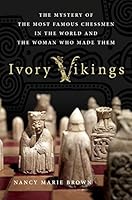
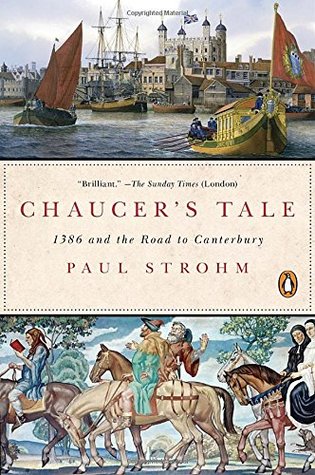


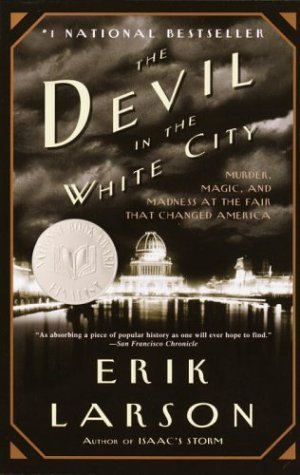




And to keep you thinking ahead, here's the list of the themes that are still to come during the rest of the year:
March: Travel
April: Religion & Spirituality (for Easter/Passover)
May: The Arts
June: Natural History/Environment/Health
July: Current Affairs
August: Science and Technology
September: Philosophy/History of Ideas
October: Politics/Economics & Business/Commentary
November: Essays
December: Quirky/Who Knew?
For more general details on the challenge, please hop back to the first post in the January thread. Or just shoot me a PM, and I'll answer as soon as I see it and can get to it.
Again, this is intended as a low/no pressure "challenge" -- more to guide us in our reading and give us a place to check in and chat about how we're doing, what we liked or didn't like about the non-fiction books we chose to read, to inspire each other, and (of course) to deliver book bullets! With that in mind, if you WANT to start reading a history book in January, of course, feel free. That said, most of us will still be finishing up our reading of biographies and memoirs over here. Similarly, I expect/hope that that thread will stay active even after many of us starting reading our chosen non-fiction history tomes in February.
So, history... Again, (almost) anything goes. History clearly isn't something that happened last week, or perhaps even within the last decade or two, but you could certain read about the Vietnam War and call it history. I'll leave the definition up to you... It should (in spite of my love for historical fiction) be non-fiction. That is, after all, the point of this exercise... *grin* To start with, tell us why you chose to read what you did, and what intrigues you about it -- the author, the topic, the era, etc? Do you have a personal connection to something in the tale? Then come back and keep us up to date. Should we read it too? Should we add it to our TBR lists/mountains?
I'll put together a list of what people plan to read here:


And to keep you thinking ahead, here's the list of the themes that are still to come during the rest of the year:
March: Travel
April: Religion & Spirituality (for Easter/Passover)
May: The Arts
June: Natural History/Environment/Health
July: Current Affairs
August: Science and Technology
September: Philosophy/History of Ideas
October: Politics/Economics & Business/Commentary
November: Essays
December: Quirky/Who Knew?
For more general details on the challenge, please hop back to the first post in the January thread. Or just shoot me a PM, and I'll answer as soon as I see it and can get to it.
2katiekrug
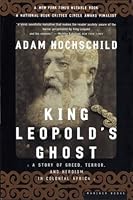
I'm reading the Penguin History of the World over the course of this year, so at the very least, I will read a portion of that in February. I would like to try to fit in King Leopold's Ghost because I've had it forever, and every time I shout my love for Heart of Darkness from the rooftops, I'm told by multiple people that I should read KLG as a companion...
3Oberon
>2 katiekrug: All those people shouting at you are right. Read King Leopold's Ghost.
4Oberon
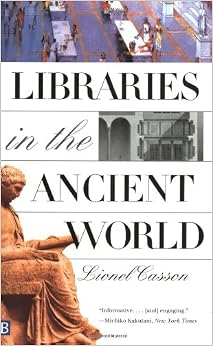
I am planning on reading Libraries in the Ancient World for my February book.
5ronincats
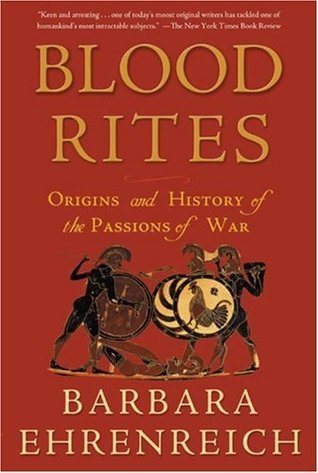
I am planning on reading Blood Rites: Origins and History of the Passions of War by Barbara Ehrenreich, which has been in my tbr pile for several years.
6Helenliz
I'm entirely undecided on this selection. I've got that many books that would fit, and keep changing my mind. I'll leave posting a decision until I've actually started a book!
7labwriter
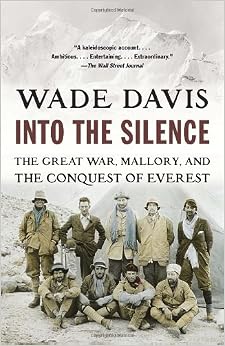
I'm going to be listening to the audible version of Into the Silence: The Great War, Mallory, and the Conquest of Everest, by Wade Davis. I think it's fascinating how Davis has put the Everest climb into a historical context--that the Everest expeditions were a way or a symbol through which a broken nation might find redemption and hope. This book has received rave reviews here at LT, so I have high hopes for it. The only other Everest-y thing I've read was Jon Krakauer's Into Thin Air: A Personal Account of the Mt. Everest Disaster. I found that one to be riveting as well as heartbreaking.
Wade Davis is a Canadian anthropologist, born in 1953. Another of his books would be great for the "Travel" topic in March: The Serpent & the Rainbow: A Harvard Scientist's Astonishing Journey into the Secret Society of Haitian Voodoo, Zombis and Magic.
Wade Davis is a Canadian anthropologist, born in 1953. Another of his books would be great for the "Travel" topic in March: The Serpent & the Rainbow: A Harvard Scientist's Astonishing Journey into the Secret Society of Haitian Voodoo, Zombis and Magic.
8karspeak
I will be reading Island of the Lost, which follows two separate ships' crews who are shipwrecked on the Auckland Islands, near New Zealand. The two crews are separated by a huge mountain range, so they are never aware of the other's existence. One crew fares terribly, and the other does pretty well. I'm curious to hear what made the difference. It almost sounds like a scientific experiment in being marooned on an inhospitable island!
9Crazymamie
I am going to be reading King Leopold's Ghost. I had already added it to my WL because Suz had mentioned it to Charlotte on the January thread. Also, like Katie, I loved Heart of Darkness. And now we have Erik's endorsement, so I am SOLD.
10avatiakh
I've been wanting to read The Ottoman Centuries by Lord Kinross for a few years now and it's one of the books I've lined up for this year.
11Smiler69
I had planned on reading From The Holy Mountain William Dalrymple, which I ordered especially for the BAC, and will fit nicely into this month's theme. As I'm reading War and Peace, I think Napoleon: A Life by Andrew Roberts might also be fitting. I've been wanting to read Cleopatra: A Life by Stacy Schiff for a very long time, so perhaps I'll tackle that one, and tempted to try to fit in Victoria: A Life by A.N. Wilson, but that might be a bit too many lives to try to fit into a single month...
12rosalita
Ah, this might be my favorite nonfiction category! So many possibilities, but I'm leaning toward The Thousand-Year Flood: The Ohio-Mississippi Disaster of 1937 by David Welky. I've spent most of my life living in close proximity to the Missisippi River and lived through two devastating and so-called thousand-year floods (1993 and 2008). It will be interesting to contrast the 1937 experience with the ones I lived through.
13torontoc
I'm going to read Ivory Vikings The Mystery of the Most Famous Chessman and the Woman Who Made Them by Nancy Marie Brown
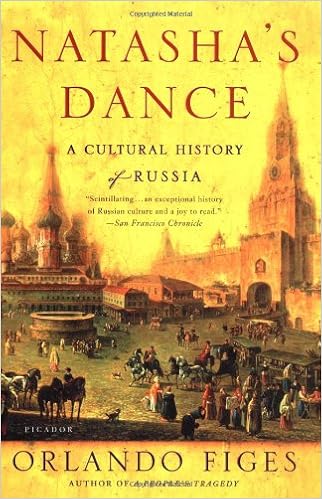
I might get to Natasha's Dance A Cultural History of Russia by Orlando Figes
I might get to Natasha's Dance A Cultural History of Russia by Orlando Figes
14Helenliz
I'm tempted by the viking chessmen. They are just the most amazing things to see in real life.
However, I will be reading The Warrior Queens and trying not to practice what I learn on my extraordinarily ineffective programme manager... I could quite see myself fastening scythes to the wheels of my chariot and running him down. Not sure it's a factory option from Ford, might need to be inventive with the superglue. >:-)
However, I will be reading The Warrior Queens and trying not to practice what I learn on my extraordinarily ineffective programme manager... I could quite see myself fastening scythes to the wheels of my chariot and running him down. Not sure it's a factory option from Ford, might need to be inventive with the superglue. >:-)
15katiekrug
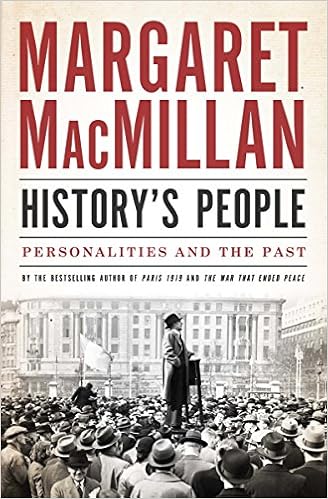
I just picked up an interesting looking book from the library - History's People by Margaret MacMillan. It was a random grab from the New Arrivals shelf and might be a good bridge between the January and February themes!
16Chatterbox
I'm looking at the following:
Two books of 20th century history (European):
Spain in Our Hearts by Adam Hochschild -- an ARC of the new book by this author, who is a fave of mine.
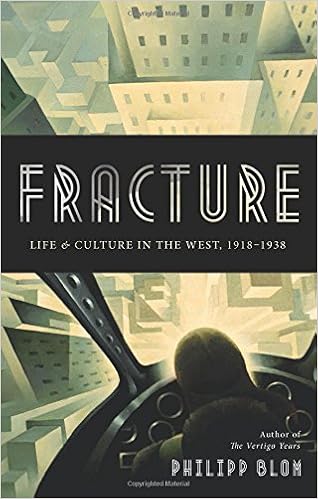
Fracture: Life and Culture in the West 1918-1938 by Philipp Blom, which is a follow on from The Vertigo Years, and will be a socio-political history of the interwar period in Europe.
Also, Mark Kurlansky's upcoming book about paper, and two books about late medieval/early Renaissance Europe: The Wars of the Roses: The Fall of the Plantagenets and the Rise of the Tudors by Dan Jones, which looks very readable, and Chaucer's Tale, about Chaucer, his era and the context in which he wrote his famous Canterbury Tales.
Since it's heavily Eurocentric, I may look for something to leaven this a bit.
Two books of 20th century history (European):
Spain in Our Hearts by Adam Hochschild -- an ARC of the new book by this author, who is a fave of mine.
Fracture: Life and Culture in the West 1918-1938 by Philipp Blom, which is a follow on from The Vertigo Years, and will be a socio-political history of the interwar period in Europe.
Also, Mark Kurlansky's upcoming book about paper, and two books about late medieval/early Renaissance Europe: The Wars of the Roses: The Fall of the Plantagenets and the Rise of the Tudors by Dan Jones, which looks very readable, and Chaucer's Tale, about Chaucer, his era and the context in which he wrote his famous Canterbury Tales.
Since it's heavily Eurocentric, I may look for something to leaven this a bit.
17cbl_tn
I plan to read Return of a King: The Battle for Afghanistan, 1839-42. William Dalrymple is a BAC author for February, and Afghanistan is one of the countries that fits the Category Challenge's GeoCAT in February. And it sounds interesting!
18Smiler69
>16 Chatterbox: Will perhaps join you for the Dan Jones book, which is on my listening tbr. Because you know... I don't feel right until I've properly overbooked myself every month.
19Fourpawz2
I just went to the TBR Non-Fiction pile and pulled The Devil in the White City off the top (as per book-choosing protocol) so I think I will go with it. Am happy because, though I've owned it for almost exactly 5 years, it is not the oldest book still to be read in this category, (thank you book re-organization project of autumn 2015) so it feels as if I am cheating a little bit. The White Mughals, which I am reading for the February BAC 2016, also fits, I believe, so it will be neat to have two books read for this category.
20jessibud2
>19 Fourpawz2: - Devil in the White City was excellent. Anything by Larson is excellent, in my opinion!
I am starting to line up some books for February. I like that history can cover a lot of territory; at least, I interpret it to be history in time, history of a place, or even history of a thing. I have a few books to fit in all those categories. Here are the first 4 I *think* I will choose, which of course may change at whim:
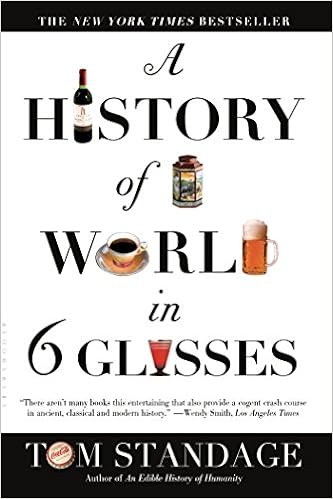
A History of the World in 6 Glasses by Tom Standage (I read another book of his, The Victorian Internet and really enjoyed that one so I am hopeful that his fine writing will carry on in this one).
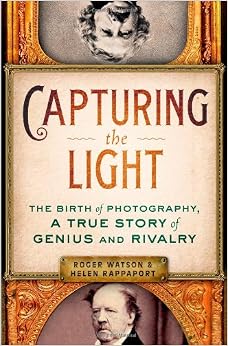
Capturing the Light subtitled: The Birth of Photography, A True Story of Genius and Rivalry, by Roger Watson and Helen Rappaport. I just finished another outstanding book by Rappaport this month, The Romanov Sisters so I was delighted when I realized that this one is coauthored by her, too.
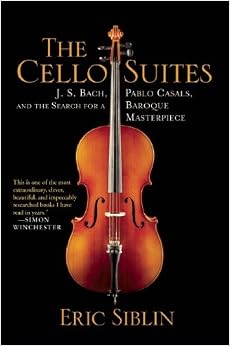
The Cello Suites by Eric Siblin. Subtitled J.S. Bach, Pablo Casals and the Search for a Baroque Masterpiece. On the back it is dubbed part biography, part music history, part literary mystery, and it is the winner of 5 Canadian literary awards. I lent it to a friend who is a musician and she loved it.
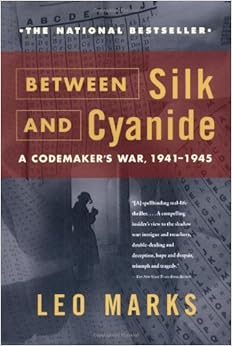
I have had Between Silk and Cyanide - A Codemaker's War 1941 - 1945, by Leo Marks (of Marks and Spencer fame) on my shelf for years. I think now is a good time for this one too.
I have quite a few other history books but I think I will start with four and see how far into February they take me.
I am starting to line up some books for February. I like that history can cover a lot of territory; at least, I interpret it to be history in time, history of a place, or even history of a thing. I have a few books to fit in all those categories. Here are the first 4 I *think* I will choose, which of course may change at whim:
A History of the World in 6 Glasses by Tom Standage (I read another book of his, The Victorian Internet and really enjoyed that one so I am hopeful that his fine writing will carry on in this one).
Capturing the Light subtitled: The Birth of Photography, A True Story of Genius and Rivalry, by Roger Watson and Helen Rappaport. I just finished another outstanding book by Rappaport this month, The Romanov Sisters so I was delighted when I realized that this one is coauthored by her, too.
The Cello Suites by Eric Siblin. Subtitled J.S. Bach, Pablo Casals and the Search for a Baroque Masterpiece. On the back it is dubbed part biography, part music history, part literary mystery, and it is the winner of 5 Canadian literary awards. I lent it to a friend who is a musician and she loved it.
I have had Between Silk and Cyanide - A Codemaker's War 1941 - 1945, by Leo Marks (of Marks and Spencer fame) on my shelf for years. I think now is a good time for this one too.
I have quite a few other history books but I think I will start with four and see how far into February they take me.
21EBT1002
Suz, thanks for starting the February thread for those of us who like to savor the experience of fantasizing about the 147 books we'll read in February! ;-)
For this month, I'm considering Devil in the White City or The Witches: Salem, 1692, both from my TBR pile.
Also, the enthusiastic comments have me considering trying to nab a copy of King Leopold's Ghost for a shared read.
For this month, I'm considering Devil in the White City or The Witches: Salem, 1692, both from my TBR pile.
Also, the enthusiastic comments have me considering trying to nab a copy of King Leopold's Ghost for a shared read.
22rosalita
>21 EBT1002: Oh, I forgot that I have The Witches on reserve at the library. If it comes in time, I'll read it with you!
Although, Devil in the White City is also very good so you can't go wrong with that one.
Although, Devil in the White City is also very good so you can't go wrong with that one.
23banjo123
I am hoping to read Embracing Defeat by John Dower, and if I can, Adam Hochschild's book about WWI.
I am glad to see all the Hochschild fans here. I read King Leopold's Ghost and thought it was excellent.
I am glad to see all the Hochschild fans here. I read King Leopold's Ghost and thought it was excellent.
24The_Hibernator
>22 rosalita: The Witches is a book I've been wanting to read, too.
25laytonwoman3rd
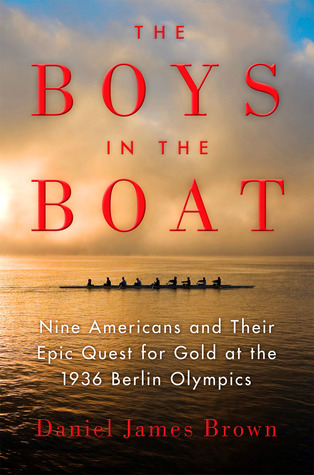
I have started listening to the audio book version of The Boys in the Boat, and as I don't spend nearly as much time in the car as I used to, this will definitely carry me into February. And if it doesn't, I'll just count it as another biography for January, because it is highly biographical of at least on of the "boys" of the title, and several other individuals as well. Brown is adept at narrative, and the reader was Edward Hermann, who simply excels at this kind of thing.
26The_Hibernator
I figured I'd throw this review in a little early since the thread's already up.

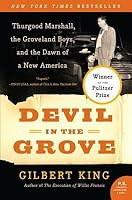
Devil in the Grove: Thurgood Marshall, The Groveland Boys, and the Dawn of a New America, by Gilbert King, narrated by Peter Francis James
In this 2013 winner of the Pulitzer Prize for General Nonfiction, Devil in the Grove is about Thurgood Marshall's ("Mr Civil Rights" and arguably one of the best lawyers of the 20th century) work to save three black men accused of gang raping a 17 year old girl.
Gilbert King did an amazing amount of research for this book including reading the FBI's Groveland case files and the NAACP's legal defense files - and this research really shone through. His prose was acerbic at times, and it flowed smoothly keeping my interest the whole way through. Devil in the Grove gave a lot of background information on Thurgood Marshall's life outside of the of the trial, thus bringing a personal light to the story. Gilbert also included stories about KKK activities against lawyers who defended black people accused of rape, which was terrifying and disgusting.
Overall, a fantastic book. Read it.


Devil in the Grove: Thurgood Marshall, The Groveland Boys, and the Dawn of a New America, by Gilbert King, narrated by Peter Francis James
In this 2013 winner of the Pulitzer Prize for General Nonfiction, Devil in the Grove is about Thurgood Marshall's ("Mr Civil Rights" and arguably one of the best lawyers of the 20th century) work to save three black men accused of gang raping a 17 year old girl.
Gilbert King did an amazing amount of research for this book including reading the FBI's Groveland case files and the NAACP's legal defense files - and this research really shone through. His prose was acerbic at times, and it flowed smoothly keeping my interest the whole way through. Devil in the Grove gave a lot of background information on Thurgood Marshall's life outside of the of the trial, thus bringing a personal light to the story. Gilbert also included stories about KKK activities against lawyers who defended black people accused of rape, which was terrifying and disgusting.
Overall, a fantastic book. Read it.
27rosalita
>26 The_Hibernator: Oh, I really liked that one, too!
28fuzzi
I found a book that not only fits this challenge, but that also qualifies for the ROOT (Read Our Own Tomes) challenge:
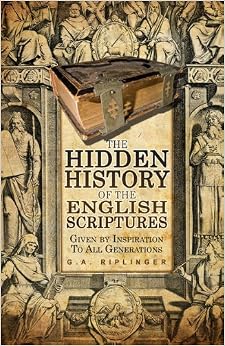
The Hidden History of the English Scriptures by G.A. Riplinger
I've read other books of hers, and am looking forward to reading this one as well.
The Hidden History of the English Scriptures by G.A. Riplinger
I've read other books of hers, and am looking forward to reading this one as well.
29Chatterbox
I think I'm going to have to start with Age of Wonder by Richard Holmes, since it deals with Mary Shelley, and the figures in a historical novel that I'll be reading soon, Stargazer's Sister, among others, as it explores a big historical theme. It's too good to pass up a chance to get a book off your shelf when it overlaps in such a serendipitous fashion with your other reading, esp. when it's a big TBR volume that has been staring at me reproachfully for some time now...
30Helenliz
>29 Chatterbox: I've got Age of Wonder on my shelf as well. You're right about them looking at you reproachfully. I do feel guilty for having them unread. I think I make it worse by not shelving books I've not read, so the sit in a pile by the study door. They loom (and occasionally topple over).
31Chatterbox
>30 Helenliz: The newly-acquired/recently-acquired unread books pile (mostly ARCs) in my household:

This doesn't include the Holmes book, which is on my Kindle. It does include (buried in the back) a copy of the Napoleon biography that someone else is reading, and the Hochschild book about the Spanish Civil War that I plan to read this coming month.
I should add, this is only part of it.

This doesn't include the Holmes book, which is on my Kindle. It does include (buried in the back) a copy of the Napoleon biography that someone else is reading, and the Hochschild book about the Spanish Civil War that I plan to read this coming month.
I should add, this is only part of it.
32brenpike
>31 Chatterbox: That's a great looking pile, Suzanne!
I see a Timothy Egan on top that appeals and you mentioned in an earlier post a new Adam Hochschild book. I will eagerly await their releases :)
I see a Timothy Egan on top that appeals and you mentioned in an earlier post a new Adam Hochschild book. I will eagerly await their releases :)
33Helenliz
>31 Chatterbox: OK, you probably win. >:-)
34Chatterbox
>32 brenpike: I nabbed both of those from the lovely Houghton Mifflin rep at ALA Midwinter in Boston earlier in January that I attended with Marianne, Caroline, Benita (and a bunch of LT folk manning their own booth). It was a bit like one of those TV shows where you're handed an empty shopping cart and someone shouts "go", and you have x minutes to stuff as much as you can into your cart. Only it's days, and books instead of groceries, and a certain amount of cajolery/diplomacy is required. (I think of it as book whispering...)
35brenpike
>34 Chatterbox: Too much fun. . . You made an impressive haul for sure!
36Chatterbox
>35 brenpike: Not all of it is ALA, but the front part of the stash. Add to that the books I bought in NYC, some ARCs from Amazon Vine, and random other stuff, and you have a teetering tower of shame...
37brenpike
>36 Chatterbox: I think we all have towers or shelves of shame!
38karspeak
I'm posting a bit early, as well. I recently finished Island of the Lost. This was a fun, well-written, and well-researched story of 2 ships that shipwrecked on the incredibly forbidding Auckland Islands in 1864. The first ship had 5 survivors, who banded together well and survived amidst horrendous circumstances. The second ship, which crashed a few months later on the opposite side of the island, had 19 survivors, but their numbers dwindled rapidly, and they fought frequently amongst themselves. Recommended if you like survival tales.
Apparently so many ships wrecked on those islands, that eventually emergency stores and cabins were placed there to help the survivors. This islands are now a nature preserve, with a very strict visitation policy (similar to the Galapagos).
Apparently so many ships wrecked on those islands, that eventually emergency stores and cabins were placed there to help the survivors. This islands are now a nature preserve, with a very strict visitation policy (similar to the Galapagos).
39weird_O
The Tycoons: How Andrew Carnegie, John D. Rockefeller, Jay, Gould, and J. P. Morgan Invented the American Supereconomy by Charles R. Morris is going to be my primary history read for February. If I get it and my other 6 challenges read, I read The Boys in the Boat, which my SIL lent me (unsolicited).
40mstrust
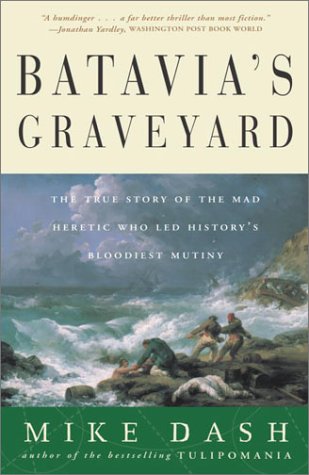
I'm picked out Batavia's Graveyard to read this month. It looks like shipwrecks are the thing for history month.
41ccookie
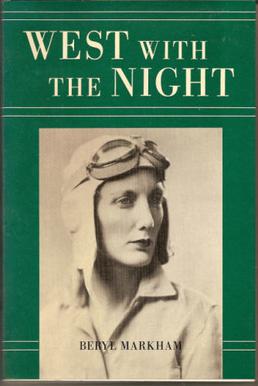
Since I have not even started West with the Night I will carry it over for Feb. If I have time, I would also like to look at An interrupted life : the diaries and letters of Etty Hillesum, 1941-43
42streamsong
I'm also bumping in one from last month: an LTER book The Most Wanted Man in China: My Journey From Scientist to Enemy of the State by and about physicist Fang Lizhi.
43Chatterbox
>38 karspeak: Amazing story, and kind of astonishing coda -- that emergency shipwreck supplies were put there proactively! The whole story sounds a bit like a psychology experiment with real human lab rats, studying some kind of human governance hypothesis. I may have to add this to my wish list at some point -- Oh dear...
I'm still reading a bio left over from January (about Vladimir Putin, so it really isn't history and thus doesn't make the jump to February easily), but I'll probably start listening to the audiobook of Age of Wonder by Richard Holmes tonight. I'll be moving back and forth between that and the printed book, but expect it will largely be an audio book for me -- my next audiobook "listen" after I wrap up the last 30 mins of my current novel. A bit later on, I'll turn to Spain in Our Hearts by Adam Hochschild; the title taken from a Neruda poem, I think. (thus, an extra reason for me to love it!)
I'm still reading a bio left over from January (about Vladimir Putin, so it really isn't history and thus doesn't make the jump to February easily), but I'll probably start listening to the audiobook of Age of Wonder by Richard Holmes tonight. I'll be moving back and forth between that and the printed book, but expect it will largely be an audio book for me -- my next audiobook "listen" after I wrap up the last 30 mins of my current novel. A bit later on, I'll turn to Spain in Our Hearts by Adam Hochschild; the title taken from a Neruda poem, I think. (thus, an extra reason for me to love it!)
44Chatterbox
I have started listening to Age of Wonder, and it's amazing; on track to be a five-star book. I'm already finding Joseph Banks to be a fascinating character, and wish I had been born 200 plus years earlier so that I could have met him! When asked why he hopped aboard a voyage to Labrador instead of going on the traditional Grand Tour, he replied that "any blockhead" could do the latter... He took his greyhounds with him on a scientific expedition to Tahiti with Captain Cook.
45witchyrichy
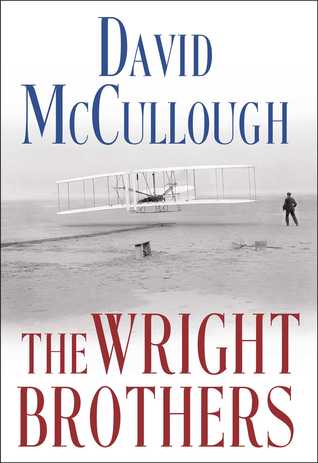
I am going to be reading The Wright Brothers by David McCullough. I bought a copy at Island Books in Corolla, North Carolina, when I was there last September. North Carolinians claim the brothers along with Ohioans.
I love McCullough's approach to writing history for non-historians. He knows how to balance story with details.
I love McCullough's approach to writing history for non-historians. He knows how to balance story with details.
46fuzzi
>45 witchyrichy: I've got a copy of John Adams by David McCullough, but it's a chunkster, and I've not yet attempted to read it. Let me know what you think of The Wright Brothers.
47charl08
Congo has arrived from the library. It is Massive, and may well last into March! I'm still reading Gandhi before India too, which is also taking me a while.
48benitastrnad
I am doubling up here and will try to read one of the William Dalrymple books for the BAC for this one and thereby kill two birds with one stone. I am not sure which Dalrymple book to read so got the following from the library From the Holy Mountain, City of Djinns, and Age of Kali. They may actually be more of a travelogue but maybe not. I can always pull Tulipomania off the shelf and read it. Or any one of a hundred other titles I have waiting for me.
49ronincats
Yesterday, I finished my next nonfiction book which is also a ROOT or Book Off The Shelf as well.

Book #10 Blood Rites: Origins and History of the Passions of War by Barbara Ehrenreich (241 pp.)
This was put on my wishlist by member joaquin, whom I've not seen around the last few years, and PaperBackSwap came through with a copy about two years ago.
This book is fascinating and deeply disturbing. Fascinating in the way she links our violent tendencies to man's evolution at some point from prey to predator and the resulting ambivalence of the species. Fascinating in the way she shows how war has shaped culture and how shifts in technology have shifted war have shifted culture. Disturbing in the realization that the logical reasons we apply to war are not really that valid and the underlying layers point to a war meme that is not in human control. Despite this book being almost 20 years old, these are not concepts I've seen in the mainstream consciousness, and yet they seem valid and powerful.

Book #10 Blood Rites: Origins and History of the Passions of War by Barbara Ehrenreich (241 pp.)
This was put on my wishlist by member joaquin, whom I've not seen around the last few years, and PaperBackSwap came through with a copy about two years ago.
This book is fascinating and deeply disturbing. Fascinating in the way she links our violent tendencies to man's evolution at some point from prey to predator and the resulting ambivalence of the species. Fascinating in the way she shows how war has shaped culture and how shifts in technology have shifted war have shifted culture. Disturbing in the realization that the logical reasons we apply to war are not really that valid and the underlying layers point to a war meme that is not in human control. Despite this book being almost 20 years old, these are not concepts I've seen in the mainstream consciousness, and yet they seem valid and powerful.
50hazel1123
I finally finished The Six Wives of Henry VIII The book was interesting. It is well researched and detail rich. I didn't find it dull. I also learned much that I hadn't known about Tudor England. The violence and brutality surrounding the Protestant reformation in Enland was a piece of history I had missed.
I am about half way through The Warmth of Other Suns. There is a lot of learning for me in this book as well.
I am about half way through The Warmth of Other Suns. There is a lot of learning for me in this book as well.
51torontoc
I finished the following-very interesting as I knew nothing of the history!
Ivory Vikings The Mystery of the Most Famous Chessmen in the World and the Woman Who Made Them by Nancy Marie Brown. The subtitle of this book is kind of misleading. The author does admit that her theory of who made the famous Lewis chessmen is based on a little bit of evidence and is not definitive. In her quest to promote the theory that the chessmen were originally made in Iceland, the author does provide the reader with a history of early Iceland, Vikings and the connections between many northern Scandinavian countries. That aspect I found very interesting as I had no idea of the depth of culture and civilization of Norway, the Hebrides, Greenland, Iceland and parts of present day Ireland and Scotland from the 800-1200 AD time period. The history of the kings, bishops and their battles does get complex with the betrayals and many killings. The role of women in the society of Iceland was an eye opener to me- the author's description of Margret the Adroit of Iceland and her accomplishments does make her a good candidate for the creator of the chess pieces. One of the problems of this book is the lack of photos of the places and object that she describes. Each main chapter does have a different photo of the chessmen but I needed more. Still a good introduction to the early history of the north Atlantic countries.
Ivory Vikings The Mystery of the Most Famous Chessmen in the World and the Woman Who Made Them by Nancy Marie Brown. The subtitle of this book is kind of misleading. The author does admit that her theory of who made the famous Lewis chessmen is based on a little bit of evidence and is not definitive. In her quest to promote the theory that the chessmen were originally made in Iceland, the author does provide the reader with a history of early Iceland, Vikings and the connections between many northern Scandinavian countries. That aspect I found very interesting as I had no idea of the depth of culture and civilization of Norway, the Hebrides, Greenland, Iceland and parts of present day Ireland and Scotland from the 800-1200 AD time period. The history of the kings, bishops and their battles does get complex with the betrayals and many killings. The role of women in the society of Iceland was an eye opener to me- the author's description of Margret the Adroit of Iceland and her accomplishments does make her a good candidate for the creator of the chess pieces. One of the problems of this book is the lack of photos of the places and object that she describes. Each main chapter does have a different photo of the chessmen but I needed more. Still a good introduction to the early history of the north Atlantic countries.
52benitastrnad
#49
If you enjoyed this book you might try Better Angels of Our Nature by Steven Pinker. It is more recent and would contain more up-to-date research in it, but it is a door stop of a book. Even so, I have it on my list of books that I want to read someday.
If you enjoyed this book you might try Better Angels of Our Nature by Steven Pinker. It is more recent and would contain more up-to-date research in it, but it is a door stop of a book. Even so, I have it on my list of books that I want to read someday.
53Chatterbox
>48 benitastrnad: I think that book could easily be defined as history, Benita, since Dalrymple's travels are in the footsteps of a Byzantine monk, and at each step of the way he is explicitly looking for the place's history. It's a brilliant book; one of my faves.
>50 hazel1123: Weir is a great narrator. I'm pondering getting her book about Margaret, the "forgotten" sister of Henry VIII, but think I'll do the library option with that.
>50 hazel1123: Weir is a great narrator. I'm pondering getting her book about Margaret, the "forgotten" sister of Henry VIII, but think I'll do the library option with that.
54hazel1123
I really enjoyed John Adams . The level of detail combined with good story telling made Adams and his family 'real' people that I cared about. I do enjoy McCullough's book and this one was one of the best.
55ronincats
>52 benitastrnad: Immediately went and looked at the description, but not sure I can buy his premise 4 years later with Syria and ISIL and the like. Still will keep on my wishlist.
56Chatterbox
>55 ronincats: It's still worth reading for the descriptions of the country/countries pre-ISIS; it was reading that book that convinced me to make two trips -- the first to eastern Turkey (1999) and the second to Syria and Jordan (summer of 2001). Very, very glad I went when I did.
57ronincats
>56 Chatterbox: Duly noted. I've read several of Pinker's books on language and cognition so I know the quality of his writing.
58Chatterbox
Oh, sorry, my bad -- thought you were referring to Dalrymple, not Pinker! :-/ *sheepish*
Too much thread reading, and book ideas zinging past me at all angles...
Too much thread reading, and book ideas zinging past me at all angles...
59ronincats
>58 Chatterbox: Nevermind, the Dalyrymple sounds more interesting anyway!
60jessibud2
Well, although I had lined up 4 books for this month's history challenge, I have been known to stray... After a long, aggravating meeting last night, I came home, and was tucked cozily into bed when I realized that I had left my current reading book downstairs in my bag. I felt too lazy to go get it so I picked up another book on my bedside table and began to read. It isn't one of my original 4, but, being Black history month, I had decided that I'd add this one. I've had it for a few years, and now is a good time. It is Hidden in Plain View - A Secret Story of Quilts and the Underground Railroad by Jacqueline L. Tobin and Raymond G. Dobard. Even though I can't sew to save my life, I have always had a real fascination for quilts and a deep interest in the underground railroad so this looks like it will be a good read.
61Fourpawz2
Finished The Devil in the White City the other day. Found it interesting, although transitioning between the World's Fair and its problems and eventual huge success and Mudgett, the serial killer was a little odd at times - almost as though Larson had two really great stories, but not enough of either to write one book about each one. And I had to take issue with the couple of times when he wrote about what some of victims were feeling or thinking - in particular, the final minutes of Anna Williams - when he had no way of knowing. But, that said, I thought he did a very good job. Learned lots of interesting things.
In 1893, my great-grandmother, Sylvia Lawrence, went to the Columbian Exposition - as it was always called in my family. After a year-long stay in Iowa visiting family members, she visited the fair with one or two of her female cousins - the highlight of her trip. She did not have much money and it gave me a chill or two thinking how easily she might have fallen into the clutches of Mudgett, the murderer, ending her days in his house of horrors.
Have moved on to White Mughals now, which I am also reading as my William Dalrymple selection for the BAC.
In 1893, my great-grandmother, Sylvia Lawrence, went to the Columbian Exposition - as it was always called in my family. After a year-long stay in Iowa visiting family members, she visited the fair with one or two of her female cousins - the highlight of her trip. She did not have much money and it gave me a chill or two thinking how easily she might have fallen into the clutches of Mudgett, the murderer, ending her days in his house of horrors.
Have moved on to White Mughals now, which I am also reading as my William Dalrymple selection for the BAC.
62benitastrnad
#61
I agree about the Devil in the White City. I also had some of the same feelings about his book Isaac's Storm. The book seemed manufactured to me - to much implied conflict when there probably isn't enough evidence to really make that argument stick. This makes Isaac's Storm seem artificial and contrived. I had the same reaction to Devil in the White CIty and haven't read another of his books since.
I agree about the Devil in the White City. I also had some of the same feelings about his book Isaac's Storm. The book seemed manufactured to me - to much implied conflict when there probably isn't enough evidence to really make that argument stick. This makes Isaac's Storm seem artificial and contrived. I had the same reaction to Devil in the White CIty and haven't read another of his books since.
63labwriter
>60 jessibud2: Apparently all it takes to become a "former" reader is to take up quilting. I quilted for 20 years and then took a 10-year hiatus. I'm back at it now to make a Double Wedding Ring quilt for my DIL-to-be. Consequently, my reading has gone to smash. Shelley, the book about quilts and the underground railroad sounds fascinating.
Thank goodness for audiobooks. While I don't listen to books while I quilt (at least not until I'm 100% happy with this block pattern), I do listen to them while working in the kitchen. I mentioned earlier that I was going to listen to Into the Silence by Wade Davis. I'm probably about 3/4 of the way through the book, and I'm finding it to be brilliant. Wade is exceptionally talented at setting the scene and characterization.
Thank goodness for audiobooks. While I don't listen to books while I quilt (at least not until I'm 100% happy with this block pattern), I do listen to them while working in the kitchen. I mentioned earlier that I was going to listen to Into the Silence by Wade Davis. I'm probably about 3/4 of the way through the book, and I'm finding it to be brilliant. Wade is exceptionally talented at setting the scene and characterization.
64dallenbaugh
>63 labwriter: Thanks for mentioning Into the Silence. I just ordered it from the library.
65labwriter
>64 dallenbaugh:. You're welcome, Donna. I might do the same and read this book after I listen to it--it would be worth it. I'm a better reader than listener, but I'm trying to train the listening part of my brain.
66kidzdoc
I didn't finish Stokely: A Life, the biography of the late US civil rights activist Stokely Carmichael last month. I think it should qualify here, as there is a substantial amount of coverage of the history of the Civil Rights Movement and the role of Carmichael and other well known activists in it.
67jessibud2
>63 labwriter: - LOL, Becky! I am in no danger of turning into a *former* reader, at least not because of quilting. I once tried a beginner's quilting class but found it stressful. I was still teaching at the time and the class was in the evening when I was tired. I retired this past year, though and am thinking of looking around for a daytime class. I have always wanted to be creative in that way. I do stained glass work (or did; last one was about 5 years ago) and I see some parallels between the art forms.
Anyhow, I am only just at the beginning of the book but it's good so far.
Anyhow, I am only just at the beginning of the book but it's good so far.
68Chatterbox
>66 kidzdoc: roll it on over, Darryl, or just keep reading it for a biography, whichever is your preference... (several of us are still reading biographies...)
Audiobooks and quilting -- I could support that combination! Dragged my bf to an exhibit at the Atlanta historical center in December in order to see a folk arts exhibit that included some great quilts. Enough to get me back on a quilting rush, when combined with having to deal with all the quilting fabrics that surfaced during my move and still haven't found a permanent home...
Audiobooks and quilting -- I could support that combination! Dragged my bf to an exhibit at the Atlanta historical center in December in order to see a folk arts exhibit that included some great quilts. Enough to get me back on a quilting rush, when combined with having to deal with all the quilting fabrics that surfaced during my move and still haven't found a permanent home...
69dragonaria
Still working on that crazy "understanding politics" thing, so I'm counting The Argument and Stealing America as my History reads.
On that note, I'd really like to find something positive about America's Democrat Party. Something current, or at least post Reagan. All suggestions welcomed! (please post them on my thread Den of Inquiries if you don't mind to keep from cluttering this one, unless you think others might be interested)
On that note, I'd really like to find something positive about America's Democrat Party. Something current, or at least post Reagan. All suggestions welcomed! (please post them on my thread Den of Inquiries if you don't mind to keep from cluttering this one, unless you think others might be interested)
70Helenliz
Copied form my thread:
Title: Warrior Queens
Author: Antonia Fraser
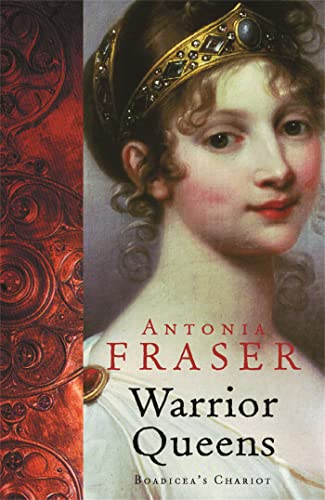
First published: 2002
Gender: Female
Author origin: UK
Original language: English
Source: My shelves
Why: Non-Fiction, TIOLI Challenge #18: Read a book with a four-corner-letter-word on page 20 or 16
Rating: ****
This is a thematic history, in this case looking at how women heads of state have lead their forces into war or battle. It starts with Boudicea, and looks at the ways these women have been viewed by their supporters and their enemies. There are some usual representations that seem to be forced on these women, not all of them at all representative of the truth. So there is a tendency to present a woman leader as either chaste or a virago, even when the facts don't fit either stereotype. The evolution of the myth around some of these women is also most interesting. Different ages have viewed Boudicea as rebel who sets off a bloody uprising through the patriotic establishment figure. Both of those can;t possible be the whole truth, the way she's viewed probably says more about the times making those judgements than it does about her in fact. The book comes to the present day with 3 female heads of state being discussed in democratic era, Golda Meyer, Indira Ghandi and Margaret Thatcher. It seems to me that these most recent lady leaders actually have a harder task than their predecessors, they are cast by men as only a women, but by women as being an honourary man because they've succeeded in a man's world. Not very details on each of the women discussed, but enough to put them into a social and cultural context. There are plenty of references and further reading if this did pique your interest.
Title: Warrior Queens
Author: Antonia Fraser
First published: 2002
Gender: Female
Author origin: UK
Original language: English
Source: My shelves
Why: Non-Fiction, TIOLI Challenge #18: Read a book with a four-corner-letter-word on page 20 or 16
Rating: ****
This is a thematic history, in this case looking at how women heads of state have lead their forces into war or battle. It starts with Boudicea, and looks at the ways these women have been viewed by their supporters and their enemies. There are some usual representations that seem to be forced on these women, not all of them at all representative of the truth. So there is a tendency to present a woman leader as either chaste or a virago, even when the facts don't fit either stereotype. The evolution of the myth around some of these women is also most interesting. Different ages have viewed Boudicea as rebel who sets off a bloody uprising through the patriotic establishment figure. Both of those can;t possible be the whole truth, the way she's viewed probably says more about the times making those judgements than it does about her in fact. The book comes to the present day with 3 female heads of state being discussed in democratic era, Golda Meyer, Indira Ghandi and Margaret Thatcher. It seems to me that these most recent lady leaders actually have a harder task than their predecessors, they are cast by men as only a women, but by women as being an honourary man because they've succeeded in a man's world. Not very details on each of the women discussed, but enough to put them into a social and cultural context. There are plenty of references and further reading if this did pique your interest.
71cbl_tn
I didn't finish the audio of The Richest Woman in America: Hetty Green in the Gilded Age by Janet Wallach by the end of January so it became a history read instead of a biography read. There apparently aren't all that many primary sources documenting Hetty's life. She didn't keep a diary or journal, and I guess there isn't a lot of personal correspondence. The author relied on contemporary newspaper accounts to supplement the sources she did have (such as court records from Hetty's lawsuits, etc.) and then padded the narrative with unnecessary details about the period. She also imagined Hetty doing things like brushing her skirts and smoothing her hair before walking out the door. It irritates me when nonfiction authors do that. The narrator didn't help things either. It's not a book I can recommend.
72jessibud2
>71 cbl_tn: - Interesting to hear your comments on this audiobook, Carrie. I tried that one, too, a few months ago and don't think I made it to disc #2. It just never engaged me at all and I think I am just spoiled for good narrators. A voice - irritating, dull or just awful - can turn me off even a good story. Once I am engaged by a voice -- especially one who can do nuances such as accents, and personalities, well -- I am hooked and even a mediocre story can be saved! I have a few choice favourites that I even look for, when selecting audiobooks.
73The_Hibernator

Genghis Khan and the Making of the Modern World, written by Jack Weatherford, narrated by Jonathan Davis
This book wasn't quite what I expected - I figured it would be about Genghis Khan's life, but it was actually just as much about how his legacy formed the modern world. Which, I must say, was a delightful surprise.
The first half of the book chronicled Genghis Khan's life, starting with a very interesting childhood. I loved how much detail was included about Genghis Khan's strong-willed mother. She was kidnapped from her first husband soon after their marriage, and was awarded to her captor, Genghis Khan's father. But she didn't just submit. She helped her first husband escape by letting herself be captured. Then, when Genghis Kahn's father suddenly died, the whole family was left to die by the rest of their group. But Genghis Kahn's mother had different plans. She kept the family alive against all odds. She was even willing to marry her step-son (only one year older than her own son) to make the family cohesive. But this is when Genghis Kahn's conquering spirit fired up - he didn't want his mother marrying his brother, because then his brother's place as head-of-household would be solidified. Instead, he encouraged his younger brother to shoot the elder. Interestingly, when he formed universal laws for his empire later in his life, such intra-family killings were outlawed.
After the incident with his brother, the narrative began to follow Genghis Khan rather than his parents. What I found interesting about this part of the book was that he was not portrayed as a conquering tyrant as he generally is in modern media. He was portrayed as cunning and wise. His laws were fair, reasonable, and well-thought-out. There was only very a little talk of battle strategy and history in this book. I had wished to have more of such information, but I can always read a different biography of Genghis Kahn. The purpose of Weatherford's book was not to chronicle a history of Genghis Khan's wars but to give a previously unseen glimpse into Genghis' private life, personality, and how his legacy changed the world.
One thing that I found particularly wise about Genghis Kahn was his realization that nepotism does not necessarily lead to the most devoted followers. Promoting one's family first was common among his people, so Genghis Kahn was breaking cultural norms when he promoted by loyalty first. And it was amazing what kind of loyalty he inspired. He must have been a very charismatic man.
The final part of the book was about Genghis Kahn's legacy. How his universal laws shaped the area even after they were neglected by his descendants. How his descendants spread around the world and made their own little kingdoms. How the trade routes he created became the major East-to-West connection for centuries - a connection that Columbus was trying to rebuild when he attempted to sail around the world to India.
Truly a fascinating read.
74muddy21
I'm about 2/3 through In Patagonia by Bruce Chatwin (published 1977). I started reading this in January, thinking it would fit into the Biography thread as a travel memoir, but I'm finding that it's much more about the history of Patagonia. I'm not as enamored of it as I thought I would be. It jumps around a lot, both geographically and in time which makes it rather disjointed. The chapters (or sections, more like) are very short (mostly 1-2 page) discussions about the region's history, beginning and ending with little preamble or reflection. It's not always easy to know whether it is historical information, or the author's experience, or a combination of both, until it is nearly finished.
The author had a slight childhood connection with Patagonia, as his grandmother's cousin had survived a shipwreck at the tip of Cape Horn and had settled there, working in a shipyard and sending home occasional stories and mementoes (including a patch of 'brontosaurus' skin) that fired the imagination of his unknown young relation. Later in life the author read and heard rumors that the Western outlaws Americans love to hate - Butch Cassidy, the Sundance Kid, and their companion, Etta Place - removed to Patagonia after their unfortunate careers in the US got them into too much hot water. The author doesn't actually share why or how it came to be that he planned his excursion but those two events seem to figure prominently.
Many of the snippets in the early part of the book relate to the author's attempts to follow the trails of these two 'myths', while later ones seem to focus more on looking for the untold sides of public events, at finding out how the tales of old have come down to the descendants of the sides that didn't hold the winning hand, or at least on whose side the balance of power fell short. So, I suppose we can think of the book as a Patagonian 'myth buster' of sorts. I am liking the book ok and there are interesting bits in it but I continue to hope there will be some reflection or discussion at the end of the book that will draw it together.
The author had a slight childhood connection with Patagonia, as his grandmother's cousin had survived a shipwreck at the tip of Cape Horn and had settled there, working in a shipyard and sending home occasional stories and mementoes (including a patch of 'brontosaurus' skin) that fired the imagination of his unknown young relation. Later in life the author read and heard rumors that the Western outlaws Americans love to hate - Butch Cassidy, the Sundance Kid, and their companion, Etta Place - removed to Patagonia after their unfortunate careers in the US got them into too much hot water. The author doesn't actually share why or how it came to be that he planned his excursion but those two events seem to figure prominently.
Many of the snippets in the early part of the book relate to the author's attempts to follow the trails of these two 'myths', while later ones seem to focus more on looking for the untold sides of public events, at finding out how the tales of old have come down to the descendants of the sides that didn't hold the winning hand, or at least on whose side the balance of power fell short. So, I suppose we can think of the book as a Patagonian 'myth buster' of sorts. I am liking the book ok and there are interesting bits in it but I continue to hope there will be some reflection or discussion at the end of the book that will draw it together.
75mstrust
>71 cbl_tn: If you're looking for another book on Hetty Green, I can recommend Hetty: The Genius and Madness of America's First Female Tycoon. I found it riveting, but I don't know if it comes in audio.
77Oberon

Libraries in the Ancient World by Lionel Casson
I picked this up at the bookstore at the New York Public Library as I thought it was particularly appropriate.
Casson traces the development of libraries from their earliest appearance up into the monastic period following the collapse of the Roman empire. It is interesting to understand just how much of ancient writing has been lost. Per Casson, very little comes out of either ancient Egypt or Mesopotamia despite the rise of writing in both cultures. Mesopotamian writing seems like it was primarily lists and accounts and not literature (though I am unclear how the Epic of Gilgamesh fits in here). Whereas Egypt, if it had literature as we think of it, it was records on papyrus and almost none of it survives. Thus, it is not until the ancient Greeks that we start to get histories, drama, and stories. Again, I was left wondering about China and whether there is much if anything of a written record from that time that survives there.
Of course the Library of Alexandria is covered and Casson discusses how little we know about its destruction. He also discusses at length how, outside of Alexandria, that it was the Romans who developed something much more akin to what we think of when we talk about libraries. It remains to be seen if science will develop to the point to allow us to read the contents of the private library that was found in Herculaneum. If so, there is hope that copies may still exists of a lot of Greek and Roman literature that is presently lost.
Libraries in the Ancient World is an interesting discussion of how libraries arose and also suggests that we should not take them for granted as we do because knowledge can be lost and has been lost before.
78cbl_tn
>77 Oberon: I learned a lot from that book when I read it a few years ago!
79nittnut
Finally popping in to say that I am determined to finish A Patriot's History of the United States this month. It requires 13 pages a day. So far so good. I am also reading The Fall of the Ottomans, which is pretty good reading so far.
Since I am also a fan of Heart of Darkness, it looks like I am adding King Leopold's Ghost to my TBR pile. :)
>73 The_Hibernator: Great review. I have that in my pile somewhere. I'll have to find it.
Since I am also a fan of Heart of Darkness, it looks like I am adding King Leopold's Ghost to my TBR pile. :)
>73 The_Hibernator: Great review. I have that in my pile somewhere. I'll have to find it.
82Crazymamie
>81 nittnut: yes, but Katie and me. *blinks* How can you possibly resist our charm?
83Chatterbox
>82 Crazymamie: *splutter* so glad have already read, and thus am immunized...
>77 Oberon: The Casson book is fascinating; read it when I embarked on my Aldus Manutius obsession.
>73 The_Hibernator: Another excellent one!! Can't remember when I picked that one up, just that it was on a whim when it was on one of those tables -- just published -- at the front of bookstores. Really, they are like pushers, those bookstores.
>75 mstrust: May have to take a look at that. In my free time...
Now at the halfway mark in Age of Wonder, and while Richard Holmes really isn't giving me a good sense of what he means by "romantic science" yet (or distinguishing it from what came before, other than by time period), the individual stories and the narrative overall are all excellent. It does read as a collection of stories about individuals whose lives overlapped at a particularly fruitful time for science, rather than as a coherent long-form narrative with a theory that links them, but perhaps that theory will emerge. Notwithstanding, the individual narratives are so compelling that I'm fascinated. People exploring the stars and the Niger -- what's not to like? Not to mention the art of ballooning.
>77 Oberon: The Casson book is fascinating; read it when I embarked on my Aldus Manutius obsession.
>73 The_Hibernator: Another excellent one!! Can't remember when I picked that one up, just that it was on a whim when it was on one of those tables -- just published -- at the front of bookstores. Really, they are like pushers, those bookstores.
>75 mstrust: May have to take a look at that. In my free time...
Now at the halfway mark in Age of Wonder, and while Richard Holmes really isn't giving me a good sense of what he means by "romantic science" yet (or distinguishing it from what came before, other than by time period), the individual stories and the narrative overall are all excellent. It does read as a collection of stories about individuals whose lives overlapped at a particularly fruitful time for science, rather than as a coherent long-form narrative with a theory that links them, but perhaps that theory will emerge. Notwithstanding, the individual narratives are so compelling that I'm fascinated. People exploring the stars and the Niger -- what's not to like? Not to mention the art of ballooning.

86Familyhistorian
I wasn't think about this challenge when I picked up The Long Road to Change: America's Revolution, 1750–1820 at the library. As part of my research I wanted a good overview of the American Revolution. I am familiar with this period of history but not that familiar with what happened in America at that time. This book definitely fit the bill analyzing the events leading up to, during and after the fighting was over. Now I have more clues to work with when piecing together the life of my revolutionary soldier from New York who ended up with a land grant in Canada West in 1797.
87labwriter
>86 Familyhistorian: Thanks for the post. This sounds like a good addition for my genealogy/history collection.
88katiekrug
>85 nittnut: - Yes!
89Crazymamie
>83 Chatterbox: Looks like you dodged a bullet, Suz.
>84 katiekrug: *grin* Yes!
>85 nittnut: Ha! Exactly.
>84 katiekrug: *grin* Yes!
>85 nittnut: Ha! Exactly.
90mcclar
I recently finished PT 109: An American Epic of War, Survival, and the Destiny of John F. Kennedy by William Doyle. The book focuses on JFK's experiences during the sinking of his PT boat in the Solomon Islands during World War II, and how that experience shaped the rest of his life and career as a politician. I am not much into politics, or the history of politicians (at least not ones born this century), but I do generally like tales of courage under fire, and I had no idea that JFK had been in the war prior to seeing this book out on Amazon, so I picked it up and ended up enjoying it.
91fuzzi
>90 mcclar: I have not read it, but I have heard that PT 109 by Robert Donovan is good. It might be a complementary read for you.
92nittnut
>89 Crazymamie: I can order King Leopold's Ghost for my kindle while sitting backward on a horse...
93Crazymamie
>92 nittnut: Ha! There's no getting out of it now, then, Jenn!
94mcclar
>91 fuzzi: fuzzi Thanks! I'll check that out.
95Chatterbox
Finally, finally, finally, Richard Holmes is making the connection between romanticism and science in Age of Wonder, and we're only halfway through the book. He's doing via Humphrey Davy, a chemist who was also a poet, and who had links to Coleridge and Southey, both of whom were far more interested in science that I realized (and not just in the consumption of opium...) Generally, the book still doesn't quite live up to its subtitle (the romantic generation discovering the terror/wonder of science) but more may come and what Holmes does showcase is very good. He has a knack for the telling detail in pulling together the biographies of disparate historical figures and using them to make broader points about an era and its characteristics. The background figures are just as interesting, eg Georgiana, Duchess of Devonshire. Amusingly, I've just finished reading a book about Sri Lanka (more of a travel yarn), Elephant Complex by John Gillette, in which Davy's brother appears in passing -- he apparently made it to Sri Lanka.
And the touchstones aren't working at all....
And the touchstones aren't working at all....
97avatiakh
I've just finished The Reckoning: How the Killing of One Man Changed the Fate of the Promised Land by Patrick Bishop. He backgrounds the Palestine Police during the 1930s and early 1940s and the parallel fortunes of Geoffrey Morton, the Assistant Superintendent at Jaffa Police Station and Avraham Stern, leader of the Stern gang. The book covers the controversy around Morton's shooting of Stern during his arrest. Over the years there were several court cases in England where Morton sued various publishers as books were published contesting his version of the events.
I was motivated to read this as I visited the Lehi (Beit Yair) Museum last year when I was in Israel, it's located in the actual building where Stern was arrested and shot. You walk through the tiny rooftop apartment where Stern lived in hiding, it's now dedicated to the life story of Stern and includes the original furnishings and some of his poems.
I was motivated to read this as I visited the Lehi (Beit Yair) Museum last year when I was in Israel, it's located in the actual building where Stern was arrested and shot. You walk through the tiny rooftop apartment where Stern lived in hiding, it's now dedicated to the life story of Stern and includes the original furnishings and some of his poems.
98ursula
I finished Operation Paperclip, which is about how the US brought over Nazi scientists immediately following WWII and what impact they had on our military and space programs. It's ugly stuff, the things that the government was willing (gladly) to overlook in order to have these people brought into the fold. In theory, it was to keep the Russians from getting them instead, but in practice they just really wanted to profit from their terrible work in the concentration camps. More comments on my thread if you're interested.
99avatiakh
>98 ursula: Operation Paperclip looks really interesting. I think (hazy memory) that the novel The Good German touched on this.
100witchyrichy
>46 fuzzi: I'm late on replying...got dug into The Wright Brothers as well as preparing for a talk about librarians and innovation so haven't been in LT lately. I LOVE John Adams. It IS a big book but David McCullough is such a wonderful writer with, as I said before, a good sense of how much detail vs. story is needed for someone who isn't studying history for a dissertation! Dive in, I encourage you.
I finished The Wright Brothers today and have posted two blog posts about the book at my mostly books blog:
Tinkering and Making With the Wright Brothers and The Importance of Keeping Good Records
I finished The Wright Brothers today and have posted two blog posts about the book at my mostly books blog:
Tinkering and Making With the Wright Brothers and The Importance of Keeping Good Records
101rosalita
I've finished my first history book of the month, The Thousand-Year Flood by David Welky. It recounts the devastating flood of 1937 in the Ohio and Mississippi river valleys, and is quite well done. I've posted my review on the book if anyone would like to read more.
102amanda4242
I just finished William Dalrymple's excellent City of Djinns. Part travel book, part history of Delhi, and part oral history of Partition, it's engaging reading--and it doubled for the BAC, too.
103benitastrnad
#98
And to think that the city of Huntsvlle, Alabama actuallly named its convention center after Werner Von Braun.
And to think that the city of Huntsvlle, Alabama actuallly named its convention center after Werner Von Braun.
104lkernagh
I have started reading Spies, Sadists and Sorcerers by Dominic Selwood which has the subtitle: The history you weren't taught in school. Seems like a good fit for the February Nonfiction month.
105ursula
>103 benitastrnad: Cape Canaveral still gives out an award named after one of these guys.
106fuzzi
>100 witchyrichy: I won't be reading John Adams this month, as I already have another chunkster ahead of it (Leviathan Wakes), but it's on the main TBR shelf. I'll get to it this year...I hope!
107labwriter
>106 fuzzi: I'll add my 2 cents' worth about the John Adams. It was a 5-star book for me. You won't regret giving it the time when you get around to it.
I listened to the audio version of Into the Silence: The Great War, Mallory, and the Conquest of Everest, by Wade Davis, narrated by Enn Reitel. With an audio book, the narrator can make or break a book, and Reitel was a good choice as narrator for this one. My only quibble is that he seemed to have a cold or something when he read the crucial last chapter, and it was somewhat distracting, listening to someone read who seemed to have some sort of sinus condition. That might be one of the oddest comments I've made about a book--ha. It was a bit difficult keeping track of the many characters in the book. I probably should have tried to find this book in the library so that I would have had the hard copy to refer to. I was able to follow along with the maps found in the book, since they are reproduced at Amazon.com; however I missed the comprehensive 50-page annotated bibliography that is found in the hard copy, as well as the 16 pages of photos. I'm trying to buy less books for my shelves by using my Kindle more and listening to audio books, but this book does seem to deserve a place on my 5-star shelf.
The book goes into great depth and detail, putting the first attempts of the British to conquer Everest between 1921 and 1924 into historical context, both from the British aspect and from the point of view of the people and governments of Tibet and Nepal. The first climbers were part of the generation of those who fought in WWI; the life-changing influence and trauma of the war on the climbers is one of the author's central themes.
For some, this book will be simply too detailed--some wag described it as a long, hard climb. I, on the other hand, found myself always ready to give whatever time I had to listening to the book. 5 stars
ETA Following along with the March Travel theme, I plan to read a book by Bill Bryson, travel writer and humorist: The Road to Little Dribbling: Adventures of an American in Britain. I would also like to read his account of attempting to hike the Appalachian Trail: A Walk in the Woods. I hear that one has been made into a perfectly stupid movie starring what's-his-name--Robert Redford. I've read several books about walking the AT and I've walked a good bit of it myself (lots of day hikes, several multiple-day hikes, but never even thought of becoming a through-hiker). We'll see. However, I don't mean to rush through to March, so I think I'll find another book that will fit the History theme for Feb. It will have to be another audio book, since I simply don't have the time to sit and read, except at night--and that time is reserved for fiction, for the most part.
I listened to the audio version of Into the Silence: The Great War, Mallory, and the Conquest of Everest, by Wade Davis, narrated by Enn Reitel. With an audio book, the narrator can make or break a book, and Reitel was a good choice as narrator for this one. My only quibble is that he seemed to have a cold or something when he read the crucial last chapter, and it was somewhat distracting, listening to someone read who seemed to have some sort of sinus condition. That might be one of the oddest comments I've made about a book--ha. It was a bit difficult keeping track of the many characters in the book. I probably should have tried to find this book in the library so that I would have had the hard copy to refer to. I was able to follow along with the maps found in the book, since they are reproduced at Amazon.com; however I missed the comprehensive 50-page annotated bibliography that is found in the hard copy, as well as the 16 pages of photos. I'm trying to buy less books for my shelves by using my Kindle more and listening to audio books, but this book does seem to deserve a place on my 5-star shelf.
The book goes into great depth and detail, putting the first attempts of the British to conquer Everest between 1921 and 1924 into historical context, both from the British aspect and from the point of view of the people and governments of Tibet and Nepal. The first climbers were part of the generation of those who fought in WWI; the life-changing influence and trauma of the war on the climbers is one of the author's central themes.
For some, this book will be simply too detailed--some wag described it as a long, hard climb. I, on the other hand, found myself always ready to give whatever time I had to listening to the book. 5 stars
ETA Following along with the March Travel theme, I plan to read a book by Bill Bryson, travel writer and humorist: The Road to Little Dribbling: Adventures of an American in Britain. I would also like to read his account of attempting to hike the Appalachian Trail: A Walk in the Woods. I hear that one has been made into a perfectly stupid movie starring what's-his-name--Robert Redford. I've read several books about walking the AT and I've walked a good bit of it myself (lots of day hikes, several multiple-day hikes, but never even thought of becoming a through-hiker). We'll see. However, I don't mean to rush through to March, so I think I'll find another book that will fit the History theme for Feb. It will have to be another audio book, since I simply don't have the time to sit and read, except at night--and that time is reserved for fiction, for the most part.
108jessibud2
>107 labwriter: - I haven't read that book but I agree 100% with your comments about narrators. I have abandoned audiobooks based solely on not liking the voice of the narrator. I am currently listening to a very long audiobook (25 discs, actual book is 732 pages!), not NF, but historical fiction with some actual real historical characters interspersed, called The Gilded Hour, by Sara Donati. It is a riveting story, and has many characters, and the narrator, Cassandra Campbell, is doing a wonderful job. Her ability to become the characters, through voice, nuance, is what keeps me listening. I actually went to the bookstore yesterday to look at the physical book, and stood there reading the last 6 pages of the book, which are the Author's Notes, all about how she researched the book. I love stuff like that.
109labwriter
>108 jessibud2: I couldn't agree more about narrators. I particularly dislike the kind who "overly perform." I once tried to listen to Roots by Alex Haley, a book I read a million years ago. I abandoned the audio book because the narrator was overly dramatic and driven by some sort of maddening agenda. I kept seeing multiple exclamation marks after every third or so sentence, based on the way he was reading it.
I think my next audio book for this February History challenge is going to be Destiny of the Republic: A Tale of Madness, Medicine and the Murder of a President, by Candice Millard. UNABRIDGED--ha. The book is about James A. Garfield, shot in the back four months after his inauguration as President. This is a book about political and also medical history. I love political history and know next to nothing about Garfield. Millard gets high marks for an earlier book, The River of Doubt: Theodore Roosevelt's Darkest Journey. Might be a good one for March.

I think my next audio book for this February History challenge is going to be Destiny of the Republic: A Tale of Madness, Medicine and the Murder of a President, by Candice Millard. UNABRIDGED--ha. The book is about James A. Garfield, shot in the back four months after his inauguration as President. This is a book about political and also medical history. I love political history and know next to nothing about Garfield. Millard gets high marks for an earlier book, The River of Doubt: Theodore Roosevelt's Darkest Journey. Might be a good one for March.

110jessibud2
>109 labwriter: - Can I go off on a little tangent for a moment? Your comment about exclamation marks made me think of another of my *Kidisms* (stories about the funny things my students used to say; I kept a notebook for years on them, before I retired).
One of my kids, E, was just on the cusp of beginning to read. I had also been teaching the basics of punctuation: capital letters, periods, exclamation marks, question marks, and when and how to use them. On that particular day, he was getting restless when others were still finishing up their art projects so I asked him to print everyone's name on separate pieces of paper, so I could place them on the wall in the hall, beneath each piece of work to be displayed. I let him do it in marker so he had to be extra careful when copying, not to make a mistake.
He did his own name first, of course. At the end, he placed an exclamation mark. When I asked him why and he said, "I want to read it loud!" I had originally explained that, when reading, an exclamation point indicated that you had to change your reading voice to show excitement or to read in a loud voice. I chuckled and he seemed quite pleased with himself. He proceeded to ask each student if they wanted their names loud and for each one who said yes, he added the exclamation mark at the end. Never mind that it was going to be on one small piece of paper, on the wall in the hall. I think this is just so funny! It amazes me what these kids retain!
One of my kids, E, was just on the cusp of beginning to read. I had also been teaching the basics of punctuation: capital letters, periods, exclamation marks, question marks, and when and how to use them. On that particular day, he was getting restless when others were still finishing up their art projects so I asked him to print everyone's name on separate pieces of paper, so I could place them on the wall in the hall, beneath each piece of work to be displayed. I let him do it in marker so he had to be extra careful when copying, not to make a mistake.
He did his own name first, of course. At the end, he placed an exclamation mark. When I asked him why and he said, "I want to read it loud!" I had originally explained that, when reading, an exclamation point indicated that you had to change your reading voice to show excitement or to read in a loud voice. I chuckled and he seemed quite pleased with himself. He proceeded to ask each student if they wanted their names loud and for each one who said yes, he added the exclamation mark at the end. Never mind that it was going to be on one small piece of paper, on the wall in the hall. I think this is just so funny! It amazes me what these kids retain!
111fuzzi
>110 jessibud2: love that story about "E". Kids are great.
112jessibud2
Well, with all good intentions, I set out the 4 books I wanted to read this month and began one of them. Then, promptly got sidetracked. Anyhow, being Black History month, I just finished Hidden in Plain View - A Secret Story of Quilts and the Underground Railroad by Jacqueline Tobin and Raymond G. Dobard (touchstones don't seem to be connecting - again - so this is the link: http://www.librarything.com/work/37282/book/126532411)
Even though I am not a quilter, I have always loved quilts. This book is co-written by Jacqueline Tobin, a white woman who is a teacher and a writer, and Raymond G. Dobard, an African American art history professor and an accomplished quilter, himself. The book is part personal quest, part cultural, social and historic study and part mystery. I will admit that the writing was a bit dense and dry at the beginning but once the interpretations and actual story began to unfold, the reading was easier.
In 1994,Jacqueline was visiting historic Charleston when she stopped at the famous Old Marketplace and was drawn to a stand selling beautiful quilts. She bought one and the vendor, an elderly African American woman, started to tell her a story about how quilts were used by slaves to communicate on the Underground Railroad. This was something Jacqueline had never heard before but several months passed before she began what was to become a long, and fascinating quest to learn about the secret codes of the quilts. With the help of many historian and quilters, she traced African cultural history, cultural memory, oral history and the stories of codes, spirituals, and secret societies both in Africa and in the USA. Mrs. Ozella McDaniel Williams, the woman who initially sold Jacqueline the quilt and started her on her journey, was a *griot*, an African term for a storyteller and keeper of cultural and heritage, usually passed down from generation to generation. Gradually, the quilt code patterns were revealed. The various patterns used in quilting, from the designs, to the colours, to the stitching, each represented a message, a direction or a directive, guiding the slaves in their attempts to escape slavery and make their way north to Canada and freedom. Since slaves in the 1800s were not legally allowed to learn to read or write, their songs, or spirituals also often contained coded messages, thus rendering songs and quilts - all *hidden in plain view* - a sort of audio-visual form of communication between them.
One particular example I found fascinating was that each *safe* station along the way had a code name. For example Detroit, Michigan was *Midnight*, and Dresden, Ontario (Canada) was *Dawn*. The coded message *from Midnight to Dawn* meant to travel from Detroit to Dresden. This was given as a sample of a specific coded message but it struck me particularly because I happen to also have another book by Jacqueline Tobin, published 8 years after Hidden in Plain View. Its title? From Midnight to Dawn - The Last Tracks of the Underground Railroad. Suddenly, that title took on a whole new meaning for me.
Hidden in Plain View has illustrations, photos, a glossary and a timeline, and is fascinating reading, giving new insight into a part of history we thought we knew but are still learning about.
And, perhaps this is coincidence, given that I am just reading this now, but just this past weekend, here in Toronto, another piece of the Underground Railroad story was revealed in an unexpected find during an excavation in our downtown core:
http://www.thestar.com/news/insight/2016/02/15/torontos-black-history-unearthed-...
Even though I am not a quilter, I have always loved quilts. This book is co-written by Jacqueline Tobin, a white woman who is a teacher and a writer, and Raymond G. Dobard, an African American art history professor and an accomplished quilter, himself. The book is part personal quest, part cultural, social and historic study and part mystery. I will admit that the writing was a bit dense and dry at the beginning but once the interpretations and actual story began to unfold, the reading was easier.
In 1994,Jacqueline was visiting historic Charleston when she stopped at the famous Old Marketplace and was drawn to a stand selling beautiful quilts. She bought one and the vendor, an elderly African American woman, started to tell her a story about how quilts were used by slaves to communicate on the Underground Railroad. This was something Jacqueline had never heard before but several months passed before she began what was to become a long, and fascinating quest to learn about the secret codes of the quilts. With the help of many historian and quilters, she traced African cultural history, cultural memory, oral history and the stories of codes, spirituals, and secret societies both in Africa and in the USA. Mrs. Ozella McDaniel Williams, the woman who initially sold Jacqueline the quilt and started her on her journey, was a *griot*, an African term for a storyteller and keeper of cultural and heritage, usually passed down from generation to generation. Gradually, the quilt code patterns were revealed. The various patterns used in quilting, from the designs, to the colours, to the stitching, each represented a message, a direction or a directive, guiding the slaves in their attempts to escape slavery and make their way north to Canada and freedom. Since slaves in the 1800s were not legally allowed to learn to read or write, their songs, or spirituals also often contained coded messages, thus rendering songs and quilts - all *hidden in plain view* - a sort of audio-visual form of communication between them.
One particular example I found fascinating was that each *safe* station along the way had a code name. For example Detroit, Michigan was *Midnight*, and Dresden, Ontario (Canada) was *Dawn*. The coded message *from Midnight to Dawn* meant to travel from Detroit to Dresden. This was given as a sample of a specific coded message but it struck me particularly because I happen to also have another book by Jacqueline Tobin, published 8 years after Hidden in Plain View. Its title? From Midnight to Dawn - The Last Tracks of the Underground Railroad. Suddenly, that title took on a whole new meaning for me.
Hidden in Plain View has illustrations, photos, a glossary and a timeline, and is fascinating reading, giving new insight into a part of history we thought we knew but are still learning about.
And, perhaps this is coincidence, given that I am just reading this now, but just this past weekend, here in Toronto, another piece of the Underground Railroad story was revealed in an unexpected find during an excavation in our downtown core:
http://www.thestar.com/news/insight/2016/02/15/torontos-black-history-unearthed-...
113nittnut
Argh. This challenge is so dangerous. I am seeing reviews and adding books to my piles like crazy.
I am still working my way through A Patriot's History of the United States and have about 130 pages left. I am also reading The Fall of the Ottomans, though I don't think I will finish it this month. I got sucked into a group read of King Leopold's Ghost, which is fantastic so far.
I am still working my way through A Patriot's History of the United States and have about 130 pages left. I am also reading The Fall of the Ottomans, though I don't think I will finish it this month. I got sucked into a group read of King Leopold's Ghost, which is fantastic so far.
114fuzzi
>112 jessibud2: the link isn't working...
115jessibud2
>114 fuzzi: - try it now
116labwriter
>110 jessibud2: Great story!
117hazel1123
Thank you for the review of Hidden in Plain View: A Secret Story of Quilts and the Underground Railroad. I am so tempted to break my 2016 rule and add to my TBR list. (The "rule" goes something like read the books you have and don't keep adding new. This is should apply equally to books I own and library books. Oh well, things don't always work out.) I recently learned that one of my ancestors was a rather notable founder and worker in the Underground Railroad - coming from Canada and working his entire adult life assisting slaves on a journey to freedom. Since I've always enjoyed putting the personal in my reading the quilt book is tempting. I have moved Bound for Canaan: the war for the soul of America closer of to the top of that long TBR list.
118hazel1123
I did finish The Warmth of Other Suns for the history read this month. I'm quite sure it will be one of top reads for 2016. I'm rather surprised at how much I like it. It's a long book where the author chronicled the lives of three families who participated in the Great Migration of African Americans leaving the fear and humiliation in Jim Crow south for the "freedom" of the North. The book is interesting - unfortunately I was shocked at how little I knew about the pain (evil?) of Jim Crow. More than that though it is about bravery and people that made very difficult choices in response to what they knew about themselves and their lives. Parts of the book are incredibly sad but other parts are absolutely joyful. I highly recommend the book.
119fuzzi
>115 jessibud2: fascinating! I love "old stuff", probably partly because when I was a child, we lived in a house built circa 1811. Ahh.
120charl08
>118 hazel1123: Adding this to the wishlist, as this is not the first great review of the book I've read The Warmth of other Suns.
>112 jessibud2: I've not read Hidden in Plain View, but might be interesting to have a look at the counter arguments re quilts and the underground railroad. The idea that quilts were used in this way is a controversial proposition (wikipedia summarises some of the literature https://en.m.wikipedia.org/wiki/Quilts_of_the_Underground_Railroad )
I'm embracing the flexibility of definition of subjects (!) and counting my latest read as 'history', although it also mixes travel, politics and biography. Posting my review of Finding George Orwell in Burma again here.
Finding George Orwell in Burma was a fascinating read, not least because I read a more recently published book on the pro-democracy movement last year, and this one was very good at links between the junta and the colonial regime Orwell policed.

At the beginning I was a bit sceptical (I can't be the only person to sigh when someone announces at the start of their book the great significance of the thing they are about to argue, for lo, no one has spotted it before). She argues for the key significance of Orwell's time in Burma in shaping his fiction. I think she made the case that it was important - and described a failed state and how people cope with the reality of dictatorship day to day. I just don't think that you can say this was the only important experience, given his family, his schooling, his time in Spain. That said, completely admired her work travelling followed by state informers and police, managing to convince people to speak (and equally, to talk about the times she failed to convince people to risk speaking about their lives).
I particularly liked her George Orwell book club, and the discussion of literary allegories for the Burmese state, starting with Animal Farm (but perhaps most bizarrely, including the Lion King).
Thanks Mamie for the great recommendation.
>112 jessibud2: I've not read Hidden in Plain View, but might be interesting to have a look at the counter arguments re quilts and the underground railroad. The idea that quilts were used in this way is a controversial proposition (wikipedia summarises some of the literature https://en.m.wikipedia.org/wiki/Quilts_of_the_Underground_Railroad )
I'm embracing the flexibility of definition of subjects (!) and counting my latest read as 'history', although it also mixes travel, politics and biography. Posting my review of Finding George Orwell in Burma again here.
Finding George Orwell in Burma was a fascinating read, not least because I read a more recently published book on the pro-democracy movement last year, and this one was very good at links between the junta and the colonial regime Orwell policed.

At the beginning I was a bit sceptical (I can't be the only person to sigh when someone announces at the start of their book the great significance of the thing they are about to argue, for lo, no one has spotted it before). She argues for the key significance of Orwell's time in Burma in shaping his fiction. I think she made the case that it was important - and described a failed state and how people cope with the reality of dictatorship day to day. I just don't think that you can say this was the only important experience, given his family, his schooling, his time in Spain. That said, completely admired her work travelling followed by state informers and police, managing to convince people to speak (and equally, to talk about the times she failed to convince people to risk speaking about their lives).
I particularly liked her George Orwell book club, and the discussion of literary allegories for the Burmese state, starting with Animal Farm (but perhaps most bizarrely, including the Lion King).
Thanks Mamie for the great recommendation.
121jessibud2
>120 charl08: - I was quite interested, reading this book, but was a bit surprised when I read some of the other, not so positive reviews of it. I hadn't realized it was so controversial. The authors made it very clear, in my opinion, that there was, of necessity, a lot of conjecture since it was obviously impossible to actually interview the original quiltmakers. They (the authors) certainly did a lot of research before writing the book and if it is flawed, well, I still found it interesting.
122benitastrnad
#120
I read Finding George Orwell in Burma a few years ago and really liked it. The author did a great job of finding stories that she could tell in a place where everybody keeps silent - and yet doesn't. It was well worth the time it took to read it.
I read Finding George Orwell in Burma a few years ago and really liked it. The author did a great job of finding stories that she could tell in a place where everybody keeps silent - and yet doesn't. It was well worth the time it took to read it.
123Chatterbox
I loved Finding George Orwell in Burma and having been recommending it to people right and left ever since, including a friend of mine who we were cat sitting for last month while she was in Burma... Alas, her second book wasn't quite as good. The other Burma book I loved was From the Land of Green Ghosts by Pascal Khoo Thwe.
I finished Age of Wonder by Richard Holmes, which was excellent when viewed as a collection of profiles of the scientific personalities of the late 18th and very early 19th centuries, and their worth; and very good when looked at as an analysis of the linkage between romanticism and science. Full review (of sorts) is over on my thread. I'm close to finishing Dan Jones' book about the War of the Roses, which is excellent and immensely readable -- it does a very good job of taking an extremely complex subject and making it understandable. Jones isn't much of a taker of sides in this battle, either: is disdainful of Henry VI's lack of leadership skills in an era where these were vital, and scornful of Richard of York's arrogance; and clearly views Richard III as a usurper. (Haven't got to his theories about who killed those missing princes yet...)
Still plodding along in the Putin bio for the January biography challenge!
I finished Age of Wonder by Richard Holmes, which was excellent when viewed as a collection of profiles of the scientific personalities of the late 18th and very early 19th centuries, and their worth; and very good when looked at as an analysis of the linkage between romanticism and science. Full review (of sorts) is over on my thread. I'm close to finishing Dan Jones' book about the War of the Roses, which is excellent and immensely readable -- it does a very good job of taking an extremely complex subject and making it understandable. Jones isn't much of a taker of sides in this battle, either: is disdainful of Henry VI's lack of leadership skills in an era where these were vital, and scornful of Richard of York's arrogance; and clearly views Richard III as a usurper. (Haven't got to his theories about who killed those missing princes yet...)
Still plodding along in the Putin bio for the January biography challenge!
124laytonwoman3rd
>120 charl08: I wasn't so taken with Hidden in Plain View either...I thought the fact that so much of the "data" was anecdotal at best, and speculative at worst, hurt the argument a lot, and as I recall the writing was dry. It is certainly a fascinating subject, and I wish someone would do a less academic job of writing about it.
I've finished The Boys in the Boat, and enjoyed it immensely. My thoughts on my thread.
I've finished The Boys in the Boat, and enjoyed it immensely. My thoughts on my thread.
125Chatterbox
>123 Chatterbox: Ha, let me update my own comments on the Jones history of the Wars of the Roses. He has some VERY harsh words for Richard III's usurpation of the throne, which, he says, was a signed that "anything goes" in terms of absurdity in the battle for the crown. He reluctantly acknowledges that Richard may have been a good monarch in things that didn't impinge in his own claim on the crown, but where that was concerned, he ran roughshod over everything, violently taking the law into his own hands. I suspect Jones' sympathies lie with the Lancastrians, really -- he clearly had no liking for Richard of York, even when forced to admit he was an effective ruler -- although he did seem sympathetic to Edward IV when he was forging alliances with the Woodvilles, whom he described as former Lancastrians. He is extremely spot on, however, in pointing out the absurdity of Henry Tudor -- the future Henry VII -- laying claim to the throne by right of birth. His claim was almost non-existent; tissue thin -- and tainted by bastardy, to boot. (Oh, and he thinks Richard ordered the murder of the princes in the tower...)
OK, finishing that up, and reading more of the Putin bio.
Meanwhile -- I'll be setting up the travel thread for March somewhere toward the middle of the week -- look for an announcement here and start thinking about what you might want to read for that! I'm lining up the third volume of Patrick Leigh Fermor's epic trek from the Hook of Holland to Istanbul, completed posthumously by his biographer. And maybe Theroux's Deep South.
OK, finishing that up, and reading more of the Putin bio.
Meanwhile -- I'll be setting up the travel thread for March somewhere toward the middle of the week -- look for an announcement here and start thinking about what you might want to read for that! I'm lining up the third volume of Patrick Leigh Fermor's epic trek from the Hook of Holland to Istanbul, completed posthumously by his biographer. And maybe Theroux's Deep South.
126benitastrnad
Ouuuuuuu! Theroux's Deep South. Can't wait to read that one, but it has a long waiting list at the library.
127fuzzi
>123 Chatterbox: >125 Chatterbox: for an accurate yet less disdainful history of Richard III and The War of the Roses, I would highly recommend The Sunne in Splendour by Sharon Kay Penman.
128Chatterbox
>127 fuzzi: Oh, yes, I read that eons ago -- the late 1980s, I think, just when she was writing her Welsh novels. It's good, if a bit "yea, forsoothly" in prose style. (one of her stylistic tics is to introduce the verb "do" in dialogue constantly, perhaps to make it sound archaic -- eg "You do make me feel so angry!") I'd say it's accurate as to the facts, but bends over backwards to be nice to Richard, making him out to be a very sensitive kinda guy, which he probably wasn't. I wouldn't recommend Penman as a history, actually -- it's definitely fiction, even if the facts are all there. She really does have a definite POV in favor of the Yorkists. (There are other novelists with tilts in favor of the Lancastrians, although fewer of them these days, in the wake of Josephine Tey, and The Daughter of Time. And besides, nobody likes Henry VII, so...) I'd recommend Alison Weir for the narrow period; the strength of Jones' book is that he covers a period almost a century long, from Henry V's marriage to the deaths of the last "white rose" candidates for the throne in the reign of Henry VIII. So the battles themselves were scattered across a period of 25 years, and really only intensively fought in a total of eight years , but he looks at causes and consequences, which I like.
I think I'll move on to Philipp Blom's book about the interwar years next... Or else A Wicked Company by the same author, about Enlightenment thinkers. Hmmm.
I think I'll move on to Philipp Blom's book about the interwar years next... Or else A Wicked Company by the same author, about Enlightenment thinkers. Hmmm.
129Crazymamie
Suz, thanks so much for that recommendation of From the Land of Green Ghosts - adding it to my list. I really LOVED Finding George Orwell in Burma.
130benitastrnad
#127
I have enjoyed many of the Penman books, but they are historical fiction. I also like the Philippa Gregory books - The Cousins War series - but they are also fiction, so be aware that they have a definite point-of-view.
It is interesting to me that the sympathies for both the Lancaster's and York's has not really gone away from the English and continues to manifest itself today. Also the recent discovery of the household diary of a member of the nobility (I can't recall the name of the author right now) and of the body of Richard III has brought new evidence to the historical discussion of this war that is going to change the historical record. This might tilt what we think about that period in one direction or the other that is different than the previous thinking.
#128
Interesting that you think Josephine Tey's book had that much influence. It is, after all, fiction.
I have enjoyed many of the Penman books, but they are historical fiction. I also like the Philippa Gregory books - The Cousins War series - but they are also fiction, so be aware that they have a definite point-of-view.
It is interesting to me that the sympathies for both the Lancaster's and York's has not really gone away from the English and continues to manifest itself today. Also the recent discovery of the household diary of a member of the nobility (I can't recall the name of the author right now) and of the body of Richard III has brought new evidence to the historical discussion of this war that is going to change the historical record. This might tilt what we think about that period in one direction or the other that is different than the previous thinking.
#128
Interesting that you think Josephine Tey's book had that much influence. It is, after all, fiction.
131Chatterbox
>130 benitastrnad: You can see the impact of the discovery of Richard's body in the Jones book -- he discusses scoliosis, and probably the impact that it had on his life (likely serious pain) and also is able to detail precisely the wounds that killed him at Bosworth. I think what I liked and appreciated about the book is the way Jones was able to hone in on the failures of judgment by various monarchs and other players, starting with the collapse of royal authority under Henry VI and leading to actions by the Yorkists (including Edward's marriage to Elizabeth Woodville and Richard's usurpation) that the increasingly fragile system couldn't accommodate.
Josephine Tey's novel really began to get people who had been brought up thinking of Richard III as the nasty evil king who murdered his nephews to reconsider that view. Certainly, the widely sympathetic view in which he was held by the time he was reburied just recently was NOT the view when I was a little girl being taught history in the late 1960s/early 1970s in London! There wasn't even a question mark over whether or not he murdered his nephews: it was stated as fact in my history book. Then later (the 1980s, I think) there was a mock trial staged by the BBC, which ended in either an acquittal or a not-proven verdict (can't recall which) -- the whole thing done based on modern rules of evidence, etc. I don't know whether that would have happened had it not been for Tey's book. It was published in 1951, and was a big success. In its wake, an old organization (founded in the 20s) dedicated to trying to rehabilitate Richard was revived and renamed the Richard III Society, and it became very successful and grow in numbers and influence in the historical debate. A noted historian of that era, Paul Murray Kendall, got the funding to complete and publish a scholarly biography of Richard that was very favorable to him (it's still the standard bio) that came out in 1955 or 1956, I think. And all that started the ball rolling. But it was Tey's novel -- the readable, accessible version of the pro-Richard arguments -- that got the ball rolling and remains the gateway drug for many Ricardians, I think.
Josephine Tey's novel really began to get people who had been brought up thinking of Richard III as the nasty evil king who murdered his nephews to reconsider that view. Certainly, the widely sympathetic view in which he was held by the time he was reburied just recently was NOT the view when I was a little girl being taught history in the late 1960s/early 1970s in London! There wasn't even a question mark over whether or not he murdered his nephews: it was stated as fact in my history book. Then later (the 1980s, I think) there was a mock trial staged by the BBC, which ended in either an acquittal or a not-proven verdict (can't recall which) -- the whole thing done based on modern rules of evidence, etc. I don't know whether that would have happened had it not been for Tey's book. It was published in 1951, and was a big success. In its wake, an old organization (founded in the 20s) dedicated to trying to rehabilitate Richard was revived and renamed the Richard III Society, and it became very successful and grow in numbers and influence in the historical debate. A noted historian of that era, Paul Murray Kendall, got the funding to complete and publish a scholarly biography of Richard that was very favorable to him (it's still the standard bio) that came out in 1955 or 1956, I think. And all that started the ball rolling. But it was Tey's novel -- the readable, accessible version of the pro-Richard arguments -- that got the ball rolling and remains the gateway drug for many Ricardians, I think.
132nittnut
Nearly finished with the US History tome, and I find that reading through the entire thing comprehensively gives me a better view of the strengths and weaknesses of the different presidencies, as well as a better understanding of the cyclical nature of politics in the US. More after I finish the last 65 pages.
King Leopold continues to ravage the Congo.
The Fall of the Ottomans is paused. They will fall eventually, but I may have to renew that one and carry on into March.
King Leopold continues to ravage the Congo.
The Fall of the Ottomans is paused. They will fall eventually, but I may have to renew that one and carry on into March.
133fuzzi
I finished The Hidden History of the English Scriptures, a seventy page summary of the author's huge In Awe of Thy Word. There was a lot of "behind-the-scenes" information, which I found fascinating. One thing I learned was that the translators for the King James Bible did not always choose the "easiest" English word, but utilized both assonance and alliteration in the Biblical verses, to assist people in memorization.
I'll eventually try reading her chunkster version, but this for now was a nice read.
I'll eventually try reading her chunkster version, but this for now was a nice read.
134Chatterbox
>133 fuzzi: Did you read God's Secretaries by Adam Nicolson, about the making of the King James Bible? If not, give it a try -- a very readable book that combines history and and a glimpse of scriptural scholarship.
135fuzzi
>134 Chatterbox: I have that on my TBR list, thanks!
The more I read about the men who were involved in the making of the King James Bible, the more I am amazed. Their scholarship is incredible, and yet they were very humble about what they were doing.
And isn't it a miracle that a COMMITTEE was able to do such a fantastic job? :D
The more I read about the men who were involved in the making of the King James Bible, the more I am amazed. Their scholarship is incredible, and yet they were very humble about what they were doing.
And isn't it a miracle that a COMMITTEE was able to do such a fantastic job? :D
136Chatterbox
>135 fuzzi: Well, that sounds like one to read in April, perchance??
Meanwhile, just a public service announcement: I'll have the March thread up by tomorrow night. So if you want, you can start thinking about what travel books you feel like reading to chase away the last dreary days of winter (if you're in the northern hemisphere) or welcome autumn if you're down under...
Meanwhile, just a public service announcement: I'll have the March thread up by tomorrow night. So if you want, you can start thinking about what travel books you feel like reading to chase away the last dreary days of winter (if you're in the northern hemisphere) or welcome autumn if you're down under...
137fuzzi
>136 Chatterbox: I already had one picked out: Lighthearted Journey, about a mother and daughter's trip to Europe in the late 1920s.
138streamsong
I've finished the book I had planned - my LTER copy of The Most Wanted Man in China: My Journey from Scientist to Enemy of the State by Fang Lizhi.
Fang was a physicist who joined a precursor to the Communist Party in the 40's. However, his questioning mind and dedication to scientific principals to arrive at truth landed him in trouble as China struggled through the Great Leap Forward and the Cultural Revolution. His ideas were especially popular with students, and although Fang was neither an organizer nor present at Tiananmen Square , he ended up taking much of the blame for it, forcing Fang and his wife to take refuge in the US Embassy in Beijing for more than 13 months.
This is an amazing look at this period of China's recent history. It's my first 4.5 star read of the year.
Fang was a physicist who joined a precursor to the Communist Party in the 40's. However, his questioning mind and dedication to scientific principals to arrive at truth landed him in trouble as China struggled through the Great Leap Forward and the Cultural Revolution. His ideas were especially popular with students, and although Fang was neither an organizer nor present at Tiananmen Square , he ended up taking much of the blame for it, forcing Fang and his wife to take refuge in the US Embassy in Beijing for more than 13 months.
This is an amazing look at this period of China's recent history. It's my first 4.5 star read of the year.
139Chatterbox
Whoops, I just realized that we need at least 150 posts in order to make this link easily from the current thread. So I'll wait another day or so and hope we can get up to that.
140brenpike
>139 Chatterbox: Does this help?
141Familyhistorian
>139 Chatterbox: I was wondering where the new thread was. That explains it. I already posted one book for the history challenge but I am working on another one that fits the category (I have a think for history so read it a lot.) I'm currently reading Before Scotland: The Story of Scotland Before History. I hope to have it finished before the end of February.
143Chatterbox
>140 brenpike: Thank you, it does! I suppose we didn't feel as chatty about history books as we did about biographies!
144karspeak
I am a quarter of the way through Batavia's Graveyard: The True Story of the Mad Heretic Who Led History's Bloodiest Mutiny. The sense of impending doom and atrocities is growing...
145Fourpawz2
I might have 1776 finished by the end of this month. Obviously it is well thought of, but to me it seems a bit thin. I might not be keeping this book in my library.
146streamsong
I also read Hellhound on His Trail by Hampton Sides this month. It was about James Earl Ray and the manhunt for him following the assassination of Dr. Martin Luther King, Jr.
Overall, this was interesting – but James Earl Ray is not a compelling figure. Instead this book made me feel rather sad, both for this misinformed, sad sack of a bad guy and how easily he was able to deprive the world of a person who still had so much to offer to make it a better place.
Overall, this was interesting – but James Earl Ray is not a compelling figure. Instead this book made me feel rather sad, both for this misinformed, sad sack of a bad guy and how easily he was able to deprive the world of a person who still had so much to offer to make it a better place.
147Chatterbox
>145 Fourpawz2: That was my takeaway, too. I enjoyed it, and it was informative, but if you know the history, well, it's good, but once you've read it, OK, that's that.
I have three books at various stages:
Chaucer's Tale by Paul Strohm is about a key year in the life of the English writer (1386); it's a relatively short book and may prove quite interesting.
Fracture by Philipp Blom is about the interwar years in Europe, and takes up where The Vertigo Years left off; I've been trying it on audiobook, but don't like the narrator so may switch to reading it instead. If I do, I may well not finish it this month, as I'm also in the early stages of reading...
Spain in Our Hearts by Adam Hochschild, which I'd like to finish this weekend. It's the ARC of his new book, about Americans who fought in the Spanish civil war.
I should (time and work permitting) be able to finish two of these, now that I have finally finished the pesky Putin biography. Which was excellent, but nearly 500 pages and VERY dense pages, at that...
I have three books at various stages:
Chaucer's Tale by Paul Strohm is about a key year in the life of the English writer (1386); it's a relatively short book and may prove quite interesting.
Fracture by Philipp Blom is about the interwar years in Europe, and takes up where The Vertigo Years left off; I've been trying it on audiobook, but don't like the narrator so may switch to reading it instead. If I do, I may well not finish it this month, as I'm also in the early stages of reading...
Spain in Our Hearts by Adam Hochschild, which I'd like to finish this weekend. It's the ARC of his new book, about Americans who fought in the Spanish civil war.
I should (time and work permitting) be able to finish two of these, now that I have finally finished the pesky Putin biography. Which was excellent, but nearly 500 pages and VERY dense pages, at that...
148nittnut
I've finished A Patriot's History of the United States. This book is unapologetic in its conservative interpretation of history and provides an excellent counterpoint to the Progressive leaning histories that have been taught in schools for thirty years or more. It is well researched and interesting to read. One benefit of reading a 900 page history from the discovery of the continent through to 2004 is that it becomes easier to understand the cyclical nature of American politics and how it affects everything from our economy to foreign policy. Five stars.
149dragonaria
>148 nittnut: I've been eyeing that one, thank you for your thoughts! *scampers off to add to reading list*
150Familyhistorian
>145 Fourpawz2: I had heard good things about 1776 but I wasn't too sure about it. Have you read any other books about the American Revolution that you liked better?
151charl08
This is a good reminder that I need to get on with my William Dalrymple read before the end of the month. It is fascinating, just been distracted by shiny new books. I picked up a copy of The way of Herodotus recently so will probably try and complete that for March. Although I also fancy catching up with Bill Bryson.
152Fourpawz2
>150 Familyhistorian: - I really liked Thomas J. Fleming's 1776, Year of Illusions, Meg. It's been some time since I've read it, but it has always stuck in my mind. It is a book that has definitely made the cut for remaining in my permanent library. I think I would like to dig it out and read it again soon so that I can compare it with the McCullough work.
153jessibud2
re Bill Bryson. I am a huge fan and especially, of his audiobooks because he narrates them. I was thrilled not to have to wait very long for his newest, The Road to Little Dribbling. However, though I am enjoying it (despite some not very good reviews), I was very disappointed to discover that Bryson is NOT the narrator of this audiobook! I wonder why. The reader is ok, but he is not Bryson. He has some speech quirks, too, such as the word *escalator*, I could swear he kept saying *escUlator*. Other than that, though, it is making me laugh, as all Bryson's books do
154countrylife
I shan't be around internet to post it then, but I expect to finish by the end of the month A History of the World in 100 Objects by Neil MacGregor, of The British Museum. So far - 5 stars.
155Chatterbox
You should now see the continuation of the the thread... March's travel page is now alive and ready for you to log your plans and ideas! (thanks to all who got us above 150 posts!)
156jessibud2
Can I still post history readings in this thread or would you prefer us to just move over to the new thread altogether?
I should finish up Capturing the Light this afternoon and will post my review later on. I am also hoping (and expecting) to be able to finish A History of the World in 6 Glasses before February ends. I doubt I'll manage more than these 2 for what remains of this month
I should finish up Capturing the Light this afternoon and will post my review later on. I am also hoping (and expecting) to be able to finish A History of the World in 6 Glasses before February ends. I doubt I'll manage more than these 2 for what remains of this month
157laytonwoman3rd
>156 jessibud2: I think history readings should continue to be posted in this thread, because they'll be easier to follow.
158jessibud2
>157 laytonwoman3rd: - Ok, thanks
159Familyhistorian
>152 Fourpawz2: Thanks Charlotte, I'm new to books on the American Revolution and looking for good ones. I'll track that one down.
160Chatterbox
>156 jessibud2:, absolutely, please keep the history chatter alive and going here. I see no reason to automatically cut this off on Feb 29, either. As long as people are reading their history books, let's assume we can come back and discuss them. Even if that happens to be in April...
Whenever you feel ready to start thinking about reading a travel book, hop on over to the March thread. Or if you don't -- skip it, and join us in April, when we'll be moving on to books with some kind of religious/spiritual angle (anything from atheism to philosophical takes on the role of religion in life, to spiritual readings...) I'll post a link to that thread here, too, when the time comes, so that no one misses it.
Whenever you feel ready to start thinking about reading a travel book, hop on over to the March thread. Or if you don't -- skip it, and join us in April, when we'll be moving on to books with some kind of religious/spiritual angle (anything from atheism to philosophical takes on the role of religion in life, to spiritual readings...) I'll post a link to that thread here, too, when the time comes, so that no one misses it.
161labwriter
I just finished listening to Destiny of the Republic: A Tale of Medicine, Madness and the Murder of a President, by Candice Millard. This is the story of the short presidency and death of James Garfield. It's not a biography of Garfield, but instead is an account of American life and politics at the time of the Garfield presidency. This is a story from American history that I knew nothing about. According to the account in Millard's book, Garfield was an intelligent and a good man, and our country was definitely the poorer because his life was cut short. He took office as the 20th President in March of 1881 and was assassinated later that same year.
One thing I found particularly interesting in this book was the description of the Garfield's presidential campaign and election--so different from what goes on today that it doesn't seem like the same country.
The book was almost as much about the assassin, Charles Guiteau, as it was about Garfield. I could have done with less detail about him.
The medical history was fascinating. Poor Garfield took something like 80 days to die from the bullet wound in his back. Millard makes the point that he probably would have survived the wound if they had done nothing--if they had simply left him alone. What the doctors did to the man was harrowing.
An enjoyable read. 4 stars
162amanda4242
I finished A History of Ireland in 100 Objects by Fintan O'Toole last night and enjoyed it. Due to its broad scope--about 7000 years are covered--it naturally doesn't give a deep look into any period, but it's a good place to start for people who, like me, know little about Irish history.
163nittnut
I finished King Leopold's Ghost. Thanks to Mamie and Katie for the warbling - it was a very good read.
Adam Hochschild has written a book that clearly illustrates the reasons Heart of Darkness is such a compelling and disturbing book. Touted by King Leopold as a state created to help fight the evils of slavery, in reality the Belgian Congo was built on slave labor. The inhabitants of the area were thought of as having no value outside the labor they could provide as long as they were alive. They weren't even treated as well as one might treat animals on a farm. Animals were at least fed and cared for well enough that they could continue working. Most amazing was the length of time King Leopold was able to contain the truth of what he was doing. Sadly, when it's far away from home and affects people that you think of as less human, it's easy to ignore. This history is well written and well researched, including Hochschild's own admission that much of the story is still unknown - few of the actual victims had the opportunity to bear witness to their own lives. Five Stars.
Adam Hochschild has written a book that clearly illustrates the reasons Heart of Darkness is such a compelling and disturbing book. Touted by King Leopold as a state created to help fight the evils of slavery, in reality the Belgian Congo was built on slave labor. The inhabitants of the area were thought of as having no value outside the labor they could provide as long as they were alive. They weren't even treated as well as one might treat animals on a farm. Animals were at least fed and cared for well enough that they could continue working. Most amazing was the length of time King Leopold was able to contain the truth of what he was doing. Sadly, when it's far away from home and affects people that you think of as less human, it's easy to ignore. This history is well written and well researched, including Hochschild's own admission that much of the story is still unknown - few of the actual victims had the opportunity to bear witness to their own lives. Five Stars.
164mstrust
I finished Batavia's Graveyard for this month's read. Horrifying. The ship's junior accountant turned out to be a 17th Century Charles Manson, able to talk the crew into doing anything.
>144 karspeak: Atrocities is right. The multiple murders stack up daily.
>144 karspeak: Atrocities is right. The multiple murders stack up daily.
165Chatterbox
>163 nittnut: That was such a brilliant book; Hochschild is so skilled at taking history and making it vivid and immediate. I always appreciate it most, though, when he's writing about lesser known topics, like the Congo, which should be much better known. Although his look at WW1, when he chose to examine resistance to the war instead of going down the well-trodden paths, was equally illuminating. People like he, and Timothy Egan, and Tony Horwitz, and Nathaniel Philbrick, are wonderful historians/storytellers, and it's that combination that is so excellent.
166amanda4242
I just finished Spies, Sadists and Sorcerers: The history you weren't taught in school by Dominic Selwood, an ER win that fit this challenge.
I usually like books that debunk the great history myths, but I was disappointed by Selwood's book for several reasons. First, I did learn most of what he covered in school; the facts of history and the movie version may have gotten a bit jumbled in my mind, but I do remember learning that the Romans were a brutal people, Richard the Lionheart was a crappy king, Henry VIII broke with Rome because the Pope wouldn't grant him a divorce, and Columbus never made it to the future United States. I'm sure some people didn't learn any of these things and that many more have entirely forgotten them, but most of his topics are pretty well known.
I also have to point out that some of the things he says are a little dodgy: in Chapter 8 he describes Henry II as "cruel and venal" and then in Chapter 12 says that after coming to the throne after a 20 year civil war "Henry II healed the country's wounds with dedication and skill." He lists syphilis as one of the diseases brought to the Americas by the Europeans, but there is pretty conclusive evidence that it was there long before Columbus showed up; he attributes the phrase "war is hell" to Donald Rumsfeld when it is generally attributed to the American Civil War General William Tecumseh Sherman; and he gives the impression that the indigenous peoples of the Americas were all kind and peace-loving--certainly many tribes weren't bellicose and most of them didn't practice human sacrifice (and even the ones that were and did didn't deserve to be victims of genocide), but Selwood shouldn't be perpetuating myths in a book that's claiming to debunk them.
So, while I appreciate that Selwood taught me about Noor Inayat Khan and presented actual facts in the case of Lord Elgin and the Parthenon, I cannot recommend this book.
I usually like books that debunk the great history myths, but I was disappointed by Selwood's book for several reasons. First, I did learn most of what he covered in school; the facts of history and the movie version may have gotten a bit jumbled in my mind, but I do remember learning that the Romans were a brutal people, Richard the Lionheart was a crappy king, Henry VIII broke with Rome because the Pope wouldn't grant him a divorce, and Columbus never made it to the future United States. I'm sure some people didn't learn any of these things and that many more have entirely forgotten them, but most of his topics are pretty well known.
I also have to point out that some of the things he says are a little dodgy: in Chapter 8 he describes Henry II as "cruel and venal" and then in Chapter 12 says that after coming to the throne after a 20 year civil war "Henry II healed the country's wounds with dedication and skill." He lists syphilis as one of the diseases brought to the Americas by the Europeans, but there is pretty conclusive evidence that it was there long before Columbus showed up; he attributes the phrase "war is hell" to Donald Rumsfeld when it is generally attributed to the American Civil War General William Tecumseh Sherman; and he gives the impression that the indigenous peoples of the Americas were all kind and peace-loving--certainly many tribes weren't bellicose and most of them didn't practice human sacrifice (and even the ones that were and did didn't deserve to be victims of genocide), but Selwood shouldn't be perpetuating myths in a book that's claiming to debunk them.
So, while I appreciate that Selwood taught me about Noor Inayat Khan and presented actual facts in the case of Lord Elgin and the Parthenon, I cannot recommend this book.
167Chatterbox
Finished reading Chaucer's Tale: 1386 and the Road to Canterbury by Paul Strohm. It's less about Chaucer's works or literary talents than it is a look at the historical context of his life and specifically his place in the society and the political wrangles that would intensify in the late 1380s and end up giving him an opportunity to pen The Canterbury Tales. Slow going at first, but worth sticking with it, as Strohm makes some interesting points about the evolution of the concept of the author in England during the late 14th century, and how rapidly his works would become famous posthumously.
>166 amanda4242: Wow, yes, I can see your point about that. All of those facts (or many of 'em) did feature in my education too (whether we remember 'em or not is another matter, of course!) And not all indigenous tribes were universally peace loving. I've just been reminded of that in reading about the Iroquois and the Huron -- their wars (which the French, admittedly, helped to aggravate) involved human sacrifices and vivisection. It was sanctioned by their religion, and knowing how to die well was the highest mark of honor among the tribes, and we probably shouldn't be applying our standards to them in any event -- and certainly shouldn't have subjected them to genocide!!) -- but kind and gentle and universally peaceful would not be the phrases that spring to mind in thinking of those inhabitants of what the new arrivals referred to as New France.
>166 amanda4242: Wow, yes, I can see your point about that. All of those facts (or many of 'em) did feature in my education too (whether we remember 'em or not is another matter, of course!) And not all indigenous tribes were universally peace loving. I've just been reminded of that in reading about the Iroquois and the Huron -- their wars (which the French, admittedly, helped to aggravate) involved human sacrifices and vivisection. It was sanctioned by their religion, and knowing how to die well was the highest mark of honor among the tribes, and we probably shouldn't be applying our standards to them in any event -- and certainly shouldn't have subjected them to genocide!!) -- but kind and gentle and universally peaceful would not be the phrases that spring to mind in thinking of those inhabitants of what the new arrivals referred to as New France.
168karspeak
I finished Batavia's Graveyard. This is a gruesome account of the shipwreck of the Batavia, a Dutch East Indian ship that crashed off the coast of Australia in 1629. The captain and a few others sailed off in a longboat for help. Meanwhile, the second-in-command, Jeronimus Cornelisz, stayed with the other survivors on a desolate group of islands. He turned out to be a psychopath, and in the following weeks his followers brutally murdered at least 160 people, including women and children. Ugh. Learning about sailing and the Dutch East India Company in the 1600s was interesting, but the story itself was just sad and disturbing.
>164 mstrust: "17th Century Charles Manson" is a perfect description. Ugh.
>164 mstrust: "17th Century Charles Manson" is a perfect description. Ugh.
169jessibud2
I have abandoned A History of the World in 6 Glasses as it just wasn't holding my interest. I should know better than to think I could get through 4 books in a month. I am just not a fast reader. As it is, I just finished one of the 4 I had wanted to read., and I posted my review for Capturing the Light. I did enjoy that one!
170mcclar
I finished both of the following books in the last week. I had lined them up for February, but hadn't gotten to them. Both highly recommended.
The Wright Brothers by David McCullough. A well written (the Audible version is narrated by the author, who actually does a good job) biography of the Wright family, their first flight at Kitty Hawk, and the subsequent travels and development of the airplane. It turns out I knew very little about this history, and really enjoyed the book.
The Hiding Place by Corrie Ten Boom. A 50 year old spinster watchmaker and her family become instrumental in hiding Jews in Nazi-occupied Holland. Upon discovery, she spends time in jail (where her father dies), and in a concentration camp (where her sister dies). I was inspired by the way this simple woman and her family leveraged their faith in God and His goodness to enable such bravery and to not let in to despair, even in the most horrible conditions in the most evil times. Corrie Ten Boom survives the concentration camp (due to a clerical error, no less!) and spends the rest of her life spreading the message of faith, peace, and forgiveness. What a remarkable woman.
The Wright Brothers by David McCullough. A well written (the Audible version is narrated by the author, who actually does a good job) biography of the Wright family, their first flight at Kitty Hawk, and the subsequent travels and development of the airplane. It turns out I knew very little about this history, and really enjoyed the book.
The Hiding Place by Corrie Ten Boom. A 50 year old spinster watchmaker and her family become instrumental in hiding Jews in Nazi-occupied Holland. Upon discovery, she spends time in jail (where her father dies), and in a concentration camp (where her sister dies). I was inspired by the way this simple woman and her family leveraged their faith in God and His goodness to enable such bravery and to not let in to despair, even in the most horrible conditions in the most evil times. Corrie Ten Boom survives the concentration camp (due to a clerical error, no less!) and spends the rest of her life spreading the message of faith, peace, and forgiveness. What a remarkable woman.
171jessibud2
A History of the World in 6 Glasses by Tom Standage. This was an odd read for me. I actually abandoned it for awhile but in the end I did go back to it and read most of it, so I have decided to count it even though, as a rule, I only count books I have completed. I had read another book by Tom Standage a few years ago, The Victorian Internet and really enjoyed that one a lot so maybe I just had high expectations for this one. The first 2 sections, Beer and Wine, were interesting but not riveting. I am not a drinker of alcohol (basically, it puts me to sleep though I also mostly don't like the taste) so beyond the actual history aspects, these sections just didn't hold my attention all that much. I don't drink spirits either so I skipped that section altogether. Same for coffee. I left the book for awhile and began a couple of others but did go back to read the sections on Coca Cola and Tea. I expect that most people might enjoy this book more than I did, overall. So why, you are asking, did I pick this one up at all? I think I chose it mostly because of the author rather than the subject matter!
172tymfos
I just finished the book that I had intended for January Biography, but I think it relates to history well enough that I can include it here. (I can't believe that, history nut that I am, I didn't get a book read specifically for this thread!)
Nobody Knows: The Forgotten Story of One of the Most Influential Figures in American Music by Craig Von Buseck
This is a biography of Harry T. Burleigh, one of the first African Americans to manage to overcome late 19th/ early 20th century American bigotry sufficiently to be recognized in traditional artistic/musical circles. He eventually sang for US Presidents and Kings and Queens in Europe. His story is one of serious talent and remarkable determination. He changed the world of American music by bringing the Spirituals, those marvelous songs passed down from those in slavery, into the mainstream of American musical consciousness. Dvorak's New World Symphony was largely the result of exposure to the Spirituals when Burleigh was a student and Dvorak was head of the American Conservatory.
This book was worthwhile because of the subject matter, but I really didn't care for how it was written. There was too much jumping around to get the family background story, especially in the first half of the book. The second half was more linear, but I felt the author took too many artistic liberties in the way he wrote this biography. I can't believe that all the dialogue in quotations could have been documented as what was actually said at the time by the parties involved. This partly explains why my planned January book was finished in March.
With it's exploration of Burleigh's maternal grandfather's experiences as a slave, his father's experiences as a free black in the North before and during the Civil War (including efforts on the Underground Railroad) and Burleigh's own role in music history, I think it's not stretching the challenge to much to include it here.
Nobody Knows: The Forgotten Story of One of the Most Influential Figures in American Music by Craig Von Buseck
This is a biography of Harry T. Burleigh, one of the first African Americans to manage to overcome late 19th/ early 20th century American bigotry sufficiently to be recognized in traditional artistic/musical circles. He eventually sang for US Presidents and Kings and Queens in Europe. His story is one of serious talent and remarkable determination. He changed the world of American music by bringing the Spirituals, those marvelous songs passed down from those in slavery, into the mainstream of American musical consciousness. Dvorak's New World Symphony was largely the result of exposure to the Spirituals when Burleigh was a student and Dvorak was head of the American Conservatory.
This book was worthwhile because of the subject matter, but I really didn't care for how it was written. There was too much jumping around to get the family background story, especially in the first half of the book. The second half was more linear, but I felt the author took too many artistic liberties in the way he wrote this biography. I can't believe that all the dialogue in quotations could have been documented as what was actually said at the time by the parties involved. This partly explains why my planned January book was finished in March.
With it's exploration of Burleigh's maternal grandfather's experiences as a slave, his father's experiences as a free black in the North before and during the Civil War (including efforts on the Underground Railroad) and Burleigh's own role in music history, I think it's not stretching the challenge to much to include it here.
173jessibud2
I am currently listening to the audiobook of Pacific written and read by Simon Winchester (why is the touchstone leading to a Lois Lowry book called The Giver? What's up with touchstones lately?
I am on disc#3 and he is only on the second chapter. Pretty horrific yet fascinating stuff, what humans will do, *because they can*. Speaking about how the history of atomic bomb tests and explosions were done in the Pacific and how those affected not only the peoples of the islands in that area but the world, as a whole. I have always loved Winchester can make history come alive and tell a really good story, at the same time
I am on disc#3 and he is only on the second chapter. Pretty horrific yet fascinating stuff, what humans will do, *because they can*. Speaking about how the history of atomic bomb tests and explosions were done in the Pacific and how those affected not only the peoples of the islands in that area but the world, as a whole. I have always loved Winchester can make history come alive and tell a really good story, at the same time
174LoisB
I don't think I ever recorded it here, but I did read Shadow of the Silk Road for this challengein February!
175benitastrnad
I finally finished Eden's Outcasts: The Story of Louis May Alcott and Her Father by John Matteson. As biographies go it was OK, but I wonder why it won a Pulitzer Prize. It had to be one of the driest most academic biographies that I have read in years. I did learn a great deal about the Transcendentalists and the Concord circle of authors. I found that part of the book to be fascinating. I learned a great deal about the Alcott family and so the book was not a total wipeout. However, it was not what I expected, or wanted, it to be - a great book about a fascinating woman and her family.
176amanda4242
I finished Fraser's truly awful Warrior Queens today. She jumps back and forth between time periods constantly, keeps trying to relate every woman she writes about to Boudica and her legend, is in love with her own lame terminology, and dedicates a lot of ink to speculation. I can't even say that I trust her research since in chapter 14 she calls Pocahontas "a member of the Sioux tribe": I don't have words enough to say how wrong this statement is.*
Avoid this one at all costs.
*Seriously, it's like saying Eleanor of Aquitaine was Polish.
Avoid this one at all costs.
*Seriously, it's like saying Eleanor of Aquitaine was Polish.
177amanda4242
Tonight I finished T. E. Lawrence's Seven Pillars of Wisdom, a book I've started reading half a dozen times before without making it to the end. It's very long, and can be tedious at times, but then there will be a thrilling scene of setting explosives while the enemy is near or a painfully beautiful description of the desert.
Lawrence's account of the revolt in the desert should not be taken as the definitive--or even reliable--history of the conflict, but he never intended it to be. As he writes in the introductory chapter: "In these pages the history is not of the Arab movement, but of me in it. It is a narrative of daily life, mean happenings, little people. Here are no lessons for the world, no disclosures to shock peoples. It is filled with trivial things, partly that no one mistake for history the bones from which some day a man may make history, and partly for the pleasure it gave me to recall the fellowship of the revolt." It is the romanticized, deeply personal truth of one man.
Throughout the book, Lawrence comes off as a very complicated person: self-aggrandizing and self-deprecating; highly intelligent, but inexperienced; romantic, but often clear-sighted and cynical. By the end, I found myself even more fascinated by this quixotic figure who found himself torn between conflicting loyalties.
I shall leave off with one of my favorite passages:
Later I was sitting alone in my room, working and thinking out as firm
a way as the turbulent memories of the day allowed, when the Muedhdhins
began to send their call of last prayer through the moist night over
the illuminations of the feasting city. One, with a ringing voice of
special sweetness, cried into my window from a near mosque. I found
myself involuntarily distinguishing his words: "God alone is great: I
testify there are no gods, but God: and Mohammed his Prophet. Come to
prayer: come to security. God alone is great: there is no god--but God.'
At the close he dropped his voice two tones, almost to speaking level,
and softly added: 'And He is very good to us this day, O people of
Damascus.' The clamour hushed, as everyone seemed to obey the call to
prayer on this their first night of perfect freedom. While my fancy, in
the overwhelming pause, showed me my loneliness and lack of reason in
their movement: since only for me, of all the hearers, was the event
sorrowful and the phrase meaningless. (Chapter CXX)
Lawrence's account of the revolt in the desert should not be taken as the definitive--or even reliable--history of the conflict, but he never intended it to be. As he writes in the introductory chapter: "In these pages the history is not of the Arab movement, but of me in it. It is a narrative of daily life, mean happenings, little people. Here are no lessons for the world, no disclosures to shock peoples. It is filled with trivial things, partly that no one mistake for history the bones from which some day a man may make history, and partly for the pleasure it gave me to recall the fellowship of the revolt." It is the romanticized, deeply personal truth of one man.
Throughout the book, Lawrence comes off as a very complicated person: self-aggrandizing and self-deprecating; highly intelligent, but inexperienced; romantic, but often clear-sighted and cynical. By the end, I found myself even more fascinated by this quixotic figure who found himself torn between conflicting loyalties.
I shall leave off with one of my favorite passages:
Later I was sitting alone in my room, working and thinking out as firm
a way as the turbulent memories of the day allowed, when the Muedhdhins
began to send their call of last prayer through the moist night over
the illuminations of the feasting city. One, with a ringing voice of
special sweetness, cried into my window from a near mosque. I found
myself involuntarily distinguishing his words: "God alone is great: I
testify there are no gods, but God: and Mohammed his Prophet. Come to
prayer: come to security. God alone is great: there is no god--but God.'
At the close he dropped his voice two tones, almost to speaking level,
and softly added: 'And He is very good to us this day, O people of
Damascus.' The clamour hushed, as everyone seemed to obey the call to
prayer on this their first night of perfect freedom. While my fancy, in
the overwhelming pause, showed me my loneliness and lack of reason in
their movement: since only for me, of all the hearers, was the event
sorrowful and the phrase meaningless. (Chapter CXX)
178benitastrnad
#177
WOW! That was certainly moving and sadly prescient passage since he was in Damascus when he heard that call to prayer.
WOW! That was certainly moving and sadly prescient passage since he was in Damascus when he heard that call to prayer.
179amanda4242
>178 benitastrnad: There were a number of passages that had an ominous tinge of foreshadowing.
180Chatterbox
>177 amanda4242: It sounds as if for all his self-aggrandizing, he also had a lot of honesty about himself and what he was doing. My late ex-bf was a big fan of his, but never managed to persuade me to read this, though I did visit the area around Wadi Rum, and the sunset there sticks in my mind as one of the most perfectly tranquil moments of my life, ever.
>176 amanda4242: Oh. my. god. Well, I read the book when it first came out, and didn't pick up on the Pocahontas bit. I was much more interested in Fraser's broad theory (this was the time of Margaret Thatcher, after all, and still in the early days of feminism, when women were still dreaming of becoming CEOs), so it was that, rather than the granular stuff that intrigued me. I think my favorite book of hers was one that was equally scattered, focusing on women's lives in the 17th century. It's probably one of her least-known though, precisely because it is about women, and didn't have a provocative thesis. Until then, she had written single person bios, like her mother, and I think this 17th century general history was a sales flop. So possibly the publishers pushed her to be more provocative? Not to excuse it, but...
>176 amanda4242: Oh. my. god. Well, I read the book when it first came out, and didn't pick up on the Pocahontas bit. I was much more interested in Fraser's broad theory (this was the time of Margaret Thatcher, after all, and still in the early days of feminism, when women were still dreaming of becoming CEOs), so it was that, rather than the granular stuff that intrigued me. I think my favorite book of hers was one that was equally scattered, focusing on women's lives in the 17th century. It's probably one of her least-known though, precisely because it is about women, and didn't have a provocative thesis. Until then, she had written single person bios, like her mother, and I think this 17th century general history was a sales flop. So possibly the publishers pushed her to be more provocative? Not to excuse it, but...
This topic was continued by The 2016 Nonfiction Reading Challenge Part III: Travel in March.

