(Continued from) To Fellow Bernie Sanders' Supporters: It's Time to Think Strategically
This is a continuation of the topic To Fellow Bernie Sanders' Supporters: It's Time to Think Strategically.
Talk Pro and Con
Join LibraryThing to post.
This topic is currently marked as "dormant"—the last message is more than 90 days old. You can revive it by posting a reply.
1proximity1
This is the continuation of the thread :
"To Fellow Bernie Sanders' Supporters: It's Time to Think Strategically"
To return to the previous part, click on the linking arrow-icon above.
The previous part's last posted comment (*) is the following :
>268
... " And he's proven if you have the right message that can connect with a lot of people that you can get by without big donors, lobbyists and corporations"...
You miss the point. Surely these things had already been "proven" again and again by candidacies such as those of Gene McCarthy, George Wallace, Fred Harris, John B. Anderson, Ralph Nader and many others you've probably never even heard of. Sanders' effort "proved" nothing we didn't already know except that, despite his surprisingly strong showing, even so mild a challenger such as he was can still being easily thwarted, and poses no serious threat to the entrenched corruption that characterizes this fraud upon democratic government.
In the same way and for the same reasons, Clinton's nomination "proves" nothing which we didn't already know: ever since the Constitution enshrined women's rights to seek and hold public office, the question of the right and the possibility of a woman being elected
was settled in the affirmative; the established powers could have chosen to promote and nominate a female presidential candidate any time they so desired.
That they have now done so represents nothing in any "breakthrough" for "women" or anyone else. It is instead an act of con-artistry of the grandest proportions--sold as and accepted naively by millions as proof of the wonderful qualities of our political system, e.g. this patent nonsense:
No, "America" didn't do that. A tiny and powerful oligarchic rule put a woman there--a woman selected by them for her complete reliablitiy to behave according to that oligarchy's wishes, just as Obama has done --and imposed her on the rest of us whether we like or want it or not.
What's demonstrated is in fact the firm political control which this unrepresentative oligarchy exercises. It can install a woman candidate even against the popular will of the majority--shutting out and shutting down Sanders' bid with a presidential candidate described as the party's least popular in living memory.
RE:
..."and he has pushed Clinton and her campaign at least for the time being out of many of her entrenched centrist positions and towards the left."
This is yet more wishful thinking. Again, Clinton has done nothing other than what we already knew she was quite ready and willing to do: lie openly in order to gain a political advantage. She hasn't in the least changed her real intentions. She's merely given that deliberately false impression. For such a practiced and accomplished liar, this represents nothing new or remarkable.
---------
(*) with subsequent additions here below :
"Women See a Female President Lifting Them All" : In interviews, women across the country said they believed that a female presidency could be a force in their own lives.
"To Fellow Bernie Sanders' Supporters: It's Time to Think Strategically"
To return to the previous part, click on the linking arrow-icon above.
The previous part's last posted comment (*) is the following :
>268
... " And he's proven if you have the right message that can connect with a lot of people that you can get by without big donors, lobbyists and corporations"...
You miss the point. Surely these things had already been "proven" again and again by candidacies such as those of Gene McCarthy, George Wallace, Fred Harris, John B. Anderson, Ralph Nader and many others you've probably never even heard of. Sanders' effort "proved" nothing we didn't already know except that, despite his surprisingly strong showing, even so mild a challenger such as he was can still being easily thwarted, and poses no serious threat to the entrenched corruption that characterizes this fraud upon democratic government.
In the same way and for the same reasons, Clinton's nomination "proves" nothing which we didn't already know: ever since the Constitution enshrined women's rights to seek and hold public office, the question of the right and the possibility of a woman being elected
was settled in the affirmative; the established powers could have chosen to promote and nominate a female presidential candidate any time they so desired.
That they have now done so represents nothing in any "breakthrough" for "women" or anyone else. It is instead an act of con-artistry of the grandest proportions--sold as and accepted naively by millions as proof of the wonderful qualities of our political system, e.g. this patent nonsense:
(Huffington Post ) POLITICS | "America Has Finally Put A Woman At The Top Of The Ticket --
It’s about damn time" 07/28/2016 11:05 pm ET
No, "America" didn't do that. A tiny and powerful oligarchic rule put a woman there--a woman selected by them for her complete reliablitiy to behave according to that oligarchy's wishes, just as Obama has done --and imposed her on the rest of us whether we like or want it or not.
What's demonstrated is in fact the firm political control which this unrepresentative oligarchy exercises. It can install a woman candidate even against the popular will of the majority--shutting out and shutting down Sanders' bid with a presidential candidate described as the party's least popular in living memory.
RE:
..."and he has pushed Clinton and her campaign at least for the time being out of many of her entrenched centrist positions and towards the left."
This is yet more wishful thinking. Again, Clinton has done nothing other than what we already knew she was quite ready and willing to do: lie openly in order to gain a political advantage. She hasn't in the least changed her real intentions. She's merely given that deliberately false impression. For such a practiced and accomplished liar, this represents nothing new or remarkable.
---------
(*) with subsequent additions here below :
"Women See a Female President Lifting Them All" : In interviews, women across the country said they believed that a female presidency could be a force in their own lives.
By JODI KANTOR
JULY 28, 2016
The president would know what it is like to be pregnant. Top military leaders would answer to a female boss, when there has never even been a woman on the Joint Chiefs of Staff. Workplaces and home life could be transformed through expanded parental leave and pay equity. Or nothing could change. The symbolism would be supernova-level. The backlash could be withering.
On Thursday night, 240 years into an unbroken chain of all-male leadership, Hillary Clinton accepted the Democratic nomination for president. The country may be one hard-fought election away from a woman in charge, making a question that has always been abstract more concrete: How could having a woman as president alter the experience of being an American woman?
“Women will get fair wages,” said Tammy Keith, 53, a caseworker who lives in East New York, Brooklyn, and estimated that she has been paid about $20,000 less than her male counterparts over the last 14 years.
The more boldly Mrs. Clinton acted, the more empowered women would feel, said Marqui Wilcher, 25, a supervisor at a Pittsburgh call center and a single mother. “Don’t go in there and cower down,” she said, as if speaking to the nominee.
2davidgn
As I was saying...
Open Letter to Bernie Sanders from Former Campaign Staffers
http://www.counterpunch.org/2016/07/29/run-bernie-run-open-letter-to-bernie-sand...
=======
Edited to remove a link that's really irrelevant, upon reflection
Open Letter to Bernie Sanders from Former Campaign Staffers
http://www.counterpunch.org/2016/07/29/run-bernie-run-open-letter-to-bernie-sand...
=======
Edited to remove a link that's really irrelevant, upon reflection
3davidgn
Also: DNC Day 4 -- video from inside the hall from California delegates detailing apparent measures to prevent Bernie supporters from entering their sections stadium-wide, and to replace them with uncredentialed seat-fillers in advance of the coronation speech. There are no end of eyewitness reports in circulation to similar effect. Insofar as it was meant to demonstrate party unity, this was a Potemkin convention.
https://www.facebook.com/edenmcfadden9/videos/10153603623782077/
1.5 million grassroots views on this video. 1.5 million very angry grassroots views.
ETA: Yes, this is petty stuff, but sometimes it takes exposure to the abject pettiness of these machinations to make the bigger picture sink in. Really, it's the little things. (During Panetta's speech, "No more wars" = no more lights. Then the liberal neo-cons started chanting “USA, USA, USA!" in reply to drown out the dovishness. I guess Cleveland rubbed off?)
https://www.facebook.com/edenmcfadden9/videos/10153603623782077/
1.5 million grassroots views on this video. 1.5 million very angry grassroots views.
ETA: Yes, this is petty stuff, but sometimes it takes exposure to the abject pettiness of these machinations to make the bigger picture sink in. Really, it's the little things. (During Panetta's speech, "No more wars" = no more lights. Then the liberal neo-cons started chanting “USA, USA, USA!" in reply to drown out the dovishness. I guess Cleveland rubbed off?)
4proximity1
Davidgn's recommended "The "Imperative of Revolt,"
article ( here ) by Chris Hedges--in which he interviews both Sheldon Wolin and John Ralston Saul-- is quite good.
I know that the word "revolt" is scary and intimidating to almost everyone living a conventional and comfortable middle-class life. It is quite understandable that they should think, "I can't revolt! I have a mortgage! a job! a wife (or a husband) and kids!"
Still and all, these people could and really should read and try to understand the important points in the article. The first step is to do this simple thing. The better understanding which that alone would help bring would also help prepare people to change things.
article ( here ) by Chris Hedges--in which he interviews both Sheldon Wolin and John Ralston Saul-- is quite good.
I know that the word "revolt" is scary and intimidating to almost everyone living a conventional and comfortable middle-class life. It is quite understandable that they should think, "I can't revolt! I have a mortgage! a job! a wife (or a husband) and kids!"
Still and all, these people could and really should read and try to understand the important points in the article. The first step is to do this simple thing. The better understanding which that alone would help bring would also help prepare people to change things.
5prosfilaes
>4 proximity1: I know that the word "revolt" is scary and intimidating to almost everyone living a conventional and comfortable middle-class life. It is quite understandable that they should think, "I can't revolt! I have a mortgage! a job! a wife (or a husband) and kids!"
Shortly before Saddam Hussein was deposed, National Geographic printed an article where they interviewed some Iraqis. A middle-class couple who ran a store in Baghdad knew that Hussein wasn't a good person, but were scared about what would happened in a post-Hussein world. I'm curious what a follow-up with them would say?
Some of the middle-class in Tsarish Russia decided to revolt. Those that picked the time when the revolt was ripe often got murdered by the new regime.
In the history of revolts, one also remembers the name Spartacus. 120,000 slaves died in his revolt to basically no end.
But yeah, someone living a middle class life in the middle of a country with ostentatiously democratic systems the equal of few should revolt. Because that's worked so well for the middle class and revolters before.
Shortly before Saddam Hussein was deposed, National Geographic printed an article where they interviewed some Iraqis. A middle-class couple who ran a store in Baghdad knew that Hussein wasn't a good person, but were scared about what would happened in a post-Hussein world. I'm curious what a follow-up with them would say?
Some of the middle-class in Tsarish Russia decided to revolt. Those that picked the time when the revolt was ripe often got murdered by the new regime.
In the history of revolts, one also remembers the name Spartacus. 120,000 slaves died in his revolt to basically no end.
But yeah, someone living a middle class life in the middle of a country with ostentatiously democratic systems the equal of few should revolt. Because that's worked so well for the middle class and revolters before.
6davidgn
>5 prosfilaes: You seem to have a rather impoverished imagination as to what "revolt" might mean in the present context. Perhaps actually reading the article might help. I'll leave it at that.
7proximity1
You've mentioned ( >5 prosfilaes: ) the National Geographic magazine's interview with a Baghdad shop-owning couple followed byTsarist Russian middle-class people who misjudged the timing of pre-revolutionary events and, finally, slave deaths in the Spartacus uprising, all, I suppose, to “remind us” that judging events in revolutionary times is risky and, further, to 'be careful what you wish for.'
Now, I-- I've been looking over these blue-prints--they're drawn from “How to build your own democratic society in your spare time using only easily-available matierials from around your house and the part-time help of friends” --and it's very clear from these drawings and the accompanying notes that the ground foundations are to be laid down first, followed by the ground floor with its interior walls' and doorways' framing. Nothing concerning work on the upper floors is supposed to be started before these prior stages have been completed. I don't know where you did your architectural & construction studies but, according to what I was taught, you don't start upper floor building before the first floor work is done.
Some forty percent1 (at this point) of the U.S. voting-public actually think that electing Hillary Clinton to the presidency is a good plan. That woud suggest to me that there is still considerable (stage-one) work to be done to convince Americans of the very serious political dysfunction in which they live, to convince them of a simple fact which ought to be obvious to them but is not: we have nothing even remotely resembling a working democratically responsive political order. Instead, we live in a thoroughly corrupt oligarchic system which is a very elaborate and so far successful con-operation.
Before we ever come to the proper time to consider the how, where, when of “revolt,” there is a great deal of work to do in convincing people of the “why” and the importance of the need for an overturning reform of this rotten system.
But those who'd just as soon see us lose our way in the process might think it a good idea to skip the proper order of things and start discussing the the upper-floor work and its complicated details instead of attending to ground-floor concerns first.
Before we worry about the what of a “revolt” and the when and where and who, we should focus on an essential fact: our present system is a sham which has forfeited its former legitimacy. What, if anything, we do about this fact is a different and related but separate question. Our priority tasks are help people come to a clear(er) understanding of the system's basic and irreparable lack of legitimacy.
In the process, we should certainly discuss much of our own history and some of that of others; we should discuss power relations among groups and the distribution of wealth and power in society. We should discuss all kinds of things directly and essentially related to an understanding of the system's loss of legitimacy but we should not be working on the upstairs floors before the ground floor is put down.
Any sincerely interested person, participating here in good faith, would, when informed of his having skipped over essentials to focus prematurely on many other detailed matters which are relevant only when we can better see how people have come to understand the system's lack of legitimacy, then relent and allow the discussion to refocus on first-things-first—unless, that is, his point and pupose is to frustrate that very discussion in the first place.
-------
1: this refers to polled respondents who declare themselves as eligible voters in the preliminary process of qualifying to take part in the poll. It does not mean approx. 40% of the actually likely ( based on their having voted in the last presidential election) voters.
--------------
/////////////////////////////////
\\\\\\\\\\\\\\\\\\\\\\\\\\\\\\\\\
(addendum)
From juancole.com: "What the U.S. Invasion Felt Like to Iraqis"
(excerpt)
Now, I-- I've been looking over these blue-prints--they're drawn from “How to build your own democratic society in your spare time using only easily-available matierials from around your house and the part-time help of friends” --and it's very clear from these drawings and the accompanying notes that the ground foundations are to be laid down first, followed by the ground floor with its interior walls' and doorways' framing. Nothing concerning work on the upper floors is supposed to be started before these prior stages have been completed. I don't know where you did your architectural & construction studies but, according to what I was taught, you don't start upper floor building before the first floor work is done.
Some forty percent1 (at this point) of the U.S. voting-public actually think that electing Hillary Clinton to the presidency is a good plan. That woud suggest to me that there is still considerable (stage-one) work to be done to convince Americans of the very serious political dysfunction in which they live, to convince them of a simple fact which ought to be obvious to them but is not: we have nothing even remotely resembling a working democratically responsive political order. Instead, we live in a thoroughly corrupt oligarchic system which is a very elaborate and so far successful con-operation.
Before we ever come to the proper time to consider the how, where, when of “revolt,” there is a great deal of work to do in convincing people of the “why” and the importance of the need for an overturning reform of this rotten system.
But those who'd just as soon see us lose our way in the process might think it a good idea to skip the proper order of things and start discussing the the upper-floor work and its complicated details instead of attending to ground-floor concerns first.
Before we worry about the what of a “revolt” and the when and where and who, we should focus on an essential fact: our present system is a sham which has forfeited its former legitimacy. What, if anything, we do about this fact is a different and related but separate question. Our priority tasks are help people come to a clear(er) understanding of the system's basic and irreparable lack of legitimacy.
In the process, we should certainly discuss much of our own history and some of that of others; we should discuss power relations among groups and the distribution of wealth and power in society. We should discuss all kinds of things directly and essentially related to an understanding of the system's loss of legitimacy but we should not be working on the upstairs floors before the ground floor is put down.
Any sincerely interested person, participating here in good faith, would, when informed of his having skipped over essentials to focus prematurely on many other detailed matters which are relevant only when we can better see how people have come to understand the system's lack of legitimacy, then relent and allow the discussion to refocus on first-things-first—unless, that is, his point and pupose is to frustrate that very discussion in the first place.
-------
1: this refers to polled respondents who declare themselves as eligible voters in the preliminary process of qualifying to take part in the poll. It does not mean approx. 40% of the actually likely ( based on their having voted in the last presidential election) voters.
--------------
/////////////////////////////////
\\\\\\\\\\\\\\\\\\\\\\\\\\\\\\\\\
(addendum)
From juancole.com: "What the U.S. Invasion Felt Like to Iraqis"
(excerpt)
(Kukis)
By Juan Cole | Mar. 14, 2013 |
Journalist Mark Kukis (Time magazine correspondent in Iraq 2006-2009) writes in a guest piece for Informed Comment
"Iraqis have a phrase they use to describe the U.S. invasion and early occupation. They call it “the collapse,” and in conversation the term is understood to mean the time covering the fall of Saddam Hussein to roughly the outbreak of mass sectarian violence in 2006. Defining how Iraqis felt about the collapse is difficult, because the experience set loose so many conflicting emotions. Anger mingled with joy. Relief came with dread. Hopefulness flowed with rage. I have listened to dozens of recollections from Iraqis about this period. I was a correspondent for Time magazine in Iraq from 2006 to 2009. During that time I collected nearly one hundred oral history interviews from Iraqis in the hope of creating an historical account of the saga told entirely through their eyes. My interviews always started with the same question. Please tell me a little about your life before the invasion, I would say, and how it has changed during the war." ...
...
Azhar Abdul-Karim Abdul-Wahab, who was a professor of political science at Baghdad University.
"Baghdad University:
Baghdad fell on a Tuesday I think. I went driving around our neighborhood, Karada, with my husband a day or two after that just to have a look around. The looters were everywhere. I saw women and children pushing trolleys full of things out of an old intelligence office. At the national theater, they were loading a garbage truck with the seats from inside, and streams of people were coming out carrying all kinds of props. I saw plastic models of the planets bopping down the streets in the arms of thieves. They took everything you can imagine taking from a theater. Everything.
I used to talk a lot with my colleagues in the days before the war about what would happen if the Americans invaded. Most of us wanted a change from Saddam Hussein, even if it meant having foreign troops destroy the republic. It’s not easy, you know, to swallow the idea of a foreign army coming to your country. Not even for us under Saddam Hussein who wanted to see him go. But a lot of us felt that change needed to come, no matter how. What we did not know was whether that change would be for better or for worse."
Adel Rasheed Majeed, a carpenter and lifelong Baghdad resident:
"I remember the first time I saw American soldiers. We were in a car on our way back to Baghdad from Kut shortly after the invasion. We had left Baghdad to stay with my wife’s relatives in the south during the bombardment. We were there for about a month before deciding to return to Baghdad. As we neared Baghdad I first caught sight of American troops manning a checkpoint overlooking a bridge going into the city. They were just checking cars and standing watch as soldiers do. I grew very angry seeing them there. It’s not easy to see a foreign army in your country, you know. I remember I was smoking a cigarette, and I crushed out the lit end with my fingertips as I watched those troops. I could hardly feel the pain because I was so angry looking on these occupiers.
Hussain Al-Awadie, who was a retired Iraqi army general living in a quiet Baghdad neighborhood near the airport at the time of the invasion:
"Shortly after capturing the airport, American troops moved into our area. Overnight they suddenly appeared. They were everywhere with all kinds of vehicles all of a sudden one day. It was a real shock how quickly they just swarmed us. Things were tense at first. If you wanted to go out you had to wave a white cloth over your head… Gradually things eased up, and there was a period of calm before American troops started facing a lot of attacks in our area and elsewhere. In the afternoons sometimes in those days the Americans would walk around the neighborhood and browse the shops and eat food from the street stands. They were very friendly toward everyone and seemed quite relaxed. They would play with the kids and sometimes have their medics look sick children over. Some in the neighborhood would try to talk to the soldiers, and they were all so very kind and polite. For me, watching the American soldiers there on the streets of my neighborhood brought such a strange feeling. Looking at them I would wonder what the future held. I could not see. And even though I knew the old army would fall from the very start, I still could not help but wonder, looking at these troops right there in front of me, how it all had come to this."
(c) 2016 All Rights Reserved: Informed Comment
8proximity1
I recommend the following reading related to the topics discussed in this thread :
by John Ralston Saul :
Voltaire's Bastards: The Dictatorship of Reason in the West
The Collapse of Globalism: And the Reinvention of the World
The Unconscious Civilization
By Sheldon Wolin :
Democracy Incorporated: Managed Democracy and the Specter of Inverted Totalitarianism
By Janine R. Wedel:
Unaccountable: How Elite Power Brokers Corrupt our Finances, Freedom, and Security
Shadow Elite: How the World's New Power Brokers Undermine Democracy, Government, and the Free Market
By C. Wright Mills:
Power, politics, and people; the collected essays of C. Wright Mills
The Power Elite
By Neil Postman :
Technopoly: The Surrender of Culture to Technology
by John Ralston Saul :
Voltaire's Bastards: The Dictatorship of Reason in the West
The Collapse of Globalism: And the Reinvention of the World
The Unconscious Civilization
By Sheldon Wolin :
Democracy Incorporated: Managed Democracy and the Specter of Inverted Totalitarianism
By Janine R. Wedel:
Unaccountable: How Elite Power Brokers Corrupt our Finances, Freedom, and Security
Shadow Elite: How the World's New Power Brokers Undermine Democracy, Government, and the Free Market
By C. Wright Mills:
Power, politics, and people; the collected essays of C. Wright Mills
The Power Elite
By Neil Postman :
Technopoly: The Surrender of Culture to Technology
9RickHarsch
> 8 Power, politics, and people; the collected essays of C. Wright Mills...I second that, but think it preferable to read his classic The Power Elite
11RickHarsch
>8 proximity1: and >10 davidgn: Try to consider that it is unlikely anyone is going to read three shelves of books on your suggestion. I mean, especially you, proximity1, as your language is without grace--tending to alienate those who have similar beliefs. Perhaps you should start a thread promoting yourself as educator that could convince us you are a cranky professor well worth paying attention to rather than a poster whose posts tend toward arrogance and rudeness, with a topping of holier than thou.
12proximity1
Broadly speaking, there are two ways in which the political elite can respond to growing levels of widespread public distrust in and alienation from these elites' corrupt self-serving rule.
The first of the two consists of their tightening their grip and clamping down on critics and criticism, ratcheting up the severity of the measures they employ in social and political surveillance and control of individuals, groups and institutions, leaving less and less place for freedom of thought and action.
Such is the exclusive way in which, so far, they have responded everywhere (note Greece as the leading example) so far and, by doing so, they've assured that a truly vicious cycle of repressive measures answered by stiffened popular resentment and resistance is fed and reinforced.
Only the alternative response--which they've completely eschewed--affords them (and those of us caught in the middle of this) a practical avenue to avoiding an ever-worsening division and destructive degradation of the formerly weakly-and-fault-ridden operations of some semi-democratic institutions.
That alternative response, the second of the two possible ways, is to do the opposite and take deliberate measures to rehabilitate the democratic order they've perverted and corrupted to serve their selfish purposes. This would entail their making very serious concessions in favor of a just and open operation of political affairs. It would require real insight and wisdom from them--it would require something they've shown very little evidence of possessing: enlightened self-interest.
Because elites see their place coming under increased scrutiny and questioning--hardly thanks to anything their subservient mainstream press has done--they've become nervous and frightened at the idea that they might have to eventually face a serious challenge to their illegitimate system and their part in directing and perpetuating it.
Their fear-driven resort to tightening their efforts in control is of course stupid because this resort is self-defeating. As a policy, it has been mockingly summarized by the phrase, "The beatings shall continue until morale improves."
These "beatings" are still mainly figurative and virtual for the more fortunate members of ordinary society but they are already quite literal for the much less fortunate among us. The direction of things is that this set of circumstances shall very seriously worsen as more and more of those who've so far been spared, relatively speaking, of course, shall come in for much more directly applied harsher treatment.
13proximity1
(continued from >12 proximity1:)
¤¤¤ There are people up and down the social hierarchy whose informal support is an indispensable part of what sustains the political order. None of these people are counted among the political elite--not even those at the upper end. Many of them have very little interest in daily political affairs and a large number are completely indifferent to politics. They passively accept whatever the political order brings, adjusting to its changing requirements and ever ready with excusing rationalizations for their submission.
They have never lent any sustained attention to politics and, if they think of politics at all, it's as a drama which is vain and unworthy of their time or one they regard themselves as unqualified to take an interest in, seeing it as the preserve of specialists.
They neither vote nor feel that they are under any moral obligation to take an interest in the political life of their town, city, state or nation. For them, moral issues are largely confined to their personal affairs and rarely occur to them as a feature of society's political life. These people do not notice that they've been relieved of their civil liberties because it has never occurred to them to use them.
Thus, they've never come to even the minimum in an adult democratic political consciousness since they don't conceive of democratic politics as existing outside the realm of specialists' theoretical speculations.
Were their political consciousness to wake and manifest itself in some positive manner, they could constitute a significant factor in democratic political life.
¤¤¤ These apolitical people--whatever their place in the social hierarchy--are not to be confused with another type which, though similarly lacking in political influence, is never the less routinely interested in political life in some manner. It's a regular oart of their consciousness.
They, too, are found in range up and down the social hierarchy but one which does not take in the upper ranks but ends just beneath those.
They think about and discuss political issues and their controversies but they do not take part in any direct and personal way ib them--outside of casting a ballot in elections--except ss topics of reflection and discussion.
They have a spontaneous interest in politics and might or might not feel some moral obligation to take an interest in it. Either way, their lack of influence in political life is not in itself an impediment to their sustained interest.
¤¤¤ There are people up and down the social hierarchy whose informal support is an indispensable part of what sustains the political order. None of these people are counted among the political elite--not even those at the upper end. Many of them have very little interest in daily political affairs and a large number are completely indifferent to politics. They passively accept whatever the political order brings, adjusting to its changing requirements and ever ready with excusing rationalizations for their submission.
They have never lent any sustained attention to politics and, if they think of politics at all, it's as a drama which is vain and unworthy of their time or one they regard themselves as unqualified to take an interest in, seeing it as the preserve of specialists.
They neither vote nor feel that they are under any moral obligation to take an interest in the political life of their town, city, state or nation. For them, moral issues are largely confined to their personal affairs and rarely occur to them as a feature of society's political life. These people do not notice that they've been relieved of their civil liberties because it has never occurred to them to use them.
Thus, they've never come to even the minimum in an adult democratic political consciousness since they don't conceive of democratic politics as existing outside the realm of specialists' theoretical speculations.
Were their political consciousness to wake and manifest itself in some positive manner, they could constitute a significant factor in democratic political life.
¤¤¤ These apolitical people--whatever their place in the social hierarchy--are not to be confused with another type which, though similarly lacking in political influence, is never the less routinely interested in political life in some manner. It's a regular oart of their consciousness.
They, too, are found in range up and down the social hierarchy but one which does not take in the upper ranks but ends just beneath those.
They think about and discuss political issues and their controversies but they do not take part in any direct and personal way ib them--outside of casting a ballot in elections--except ss topics of reflection and discussion.
They have a spontaneous interest in politics and might or might not feel some moral obligation to take an interest in it. Either way, their lack of influence in political life is not in itself an impediment to their sustained interest.
14proximity1
Rarely has the word "doldrum" been so apt a term for this feeling of post-Party-convention-partum. The mercury is high and Orion's dog is yelping loudly and persistently as the very dismal facts of our political dysfunction settle hard upon us and remain.
We are becalmed. There is not a flutter's-worth of wind and all around us is the still and insipid sea of Trump and Clinton--these twin lesser-of-two-evil seas that we came to by separate acts of the most impoverished consensus; they mock us now softly for our stubbornly-held stupidity.
We already know that by whatever compass-point we seek a route away, we shall find ourselves arrive with our mocking choices still with us. It is ugly and gloomy to contemplate and, with no breeze to break the monotony, even our most reliable forms of make-believe and distraction fail to lift this torpor.
15RickHarsch
>14 proximity1: Nice post.
16prosfilaes
>6 davidgn: You seem to have a rather impoverished imagination as to what "revolt" might mean in the present context.
Thank you for being an honorable man and revealing that information. I have called the FBI and informed then that Chris Hedges has biological, nuclear, and chemical weapons prepared for attacks on various US cities.
If "revolt" is scary and intimidating, perhaps because it's because its normal, clear meaning is scary and intimidating.
Thank you for being an honorable man and revealing that information. I have called the FBI and informed then that Chris Hedges has biological, nuclear, and chemical weapons prepared for attacks on various US cities.
If "revolt" is scary and intimidating, perhaps because it's because its normal, clear meaning is scary and intimidating.
17proximity1
(Interactive) GRAPHIC :
Only 9% of America Chose Trump and Clinton as the Nominees /
While Donald J. Trump or Hillary Clinton will represent the entire country, the Americans who selected them are a small part of it.
Reporting by By ALICIA PARLAPIANO and ADAM PEARCE
AUG. 1, 2016
I'll be referring in this and subsequent posts to statistics cited in this interactive story at the New York Times' website so let's get some figures1 down on cyber-paper :
approx. total general population of the U.S. : 324m
minus those ineligible to vote by reason of their being under-age, non-citizens or felons. : -103m
Now we subtract those eligible voters who for whatever reason do not vote in either the primary races or the general election : - 88m
Next we subtract those who eligible voters who sit out the primary races--effectively leaving this key decision to other voters : -73m
We're left with the remainder who voted in the 2016 primaries in one or another form : about 60m voters.
Half of these (~30m) voted for either Clinton or Trump. The other ~30m voted for another primary candidate.
Thus, those eligible adults who could have voted in the primaries but instead didn't vote figure almost three times (2.683) the number of those who did vote.
----------
1Sources: U.S. Census Bureau (population estimates); Federal Election Commission (2012 general election turnout); Dave Leip’s Atlas of U.S. Presidential Elections (2016 primary turnout and candidate vote totals); The Sentencing Project (ineligible felon estimates); Pew Research Center
18proximity1
“Yes, I think the Republican nominee is unfit to serve as president,..." ...”the fact that he doesn’t appear to have basic knowledge around critical issues in Europe, in the Middle East, in Asia means that he’s woefully unprepared to do this job.”
--Barack Obama, Tuesday, 2 August, Washington, D.C. (joint press conference with Singapore’s prime minister, Lee Hsien Loong, at the White House.)
"For a long time now, red-state America has been losing the culture wars, steadily, and sometimes quickly. Its people are in a defensive crouch. And, because the losers are seen as defenders of the indefensible, those on the winning side tend to view them with scorn and smugness." ... "...We are divided these days, badly so, and along more and more lines. Obama has not changed that." ...
Thomas A. Frank, 2 August, 2016 Vanity Fair : "Why Clinton Can't Shake Trump"
It's important to understand how Trump and the Clintons are different and how they are similar.
The deep partisan division of the national body politic is the fruit of a very lop-sided social and cultural divide between a privileged minority overclass and a much larger and growing underclass, both created by the same forces: the high-technology-driven supposed and alleged imperatives of globalised finance and investment banking.
Men and women of all races, religions, ethnicities and almost all income-brackets are found on both sides of this divide --but in nothing like equal numbers.
These forces were already underway before the First World war but they got a boost following that war and another after the Second World-war. Then, the 1960s and 70s saw another much greater acceleration which continues today.
The members of the fortunate overclass share a faith in a certain idea of technological progress. Many of them invest their whole lives in this idea and, even if they were not born to wealth, they can, if they possess the right aptitudes and the right attitudes, become wealthy by serving it faithfully--so they do with only rare exceptions.
We are all hostage to these supposed and alleged imperatives of technology-driven global finance. But the rewards and punishments which flow from them are meted out to serve and to spare the privileged elite and disserve and punish the those who don't fit the favored profiles.
While Trump is not a conventional Republican, he is a solidly pro-"Establishment" political figure. He's simply not pro-'existing-"Democ-Republi-crat"--Washington-Establishment-(since 1980).' He's an Establishment "maverick," critical of much about both parties. When he says that he wants to "Make America Great Again" he is not referring to anything particularly to do with, by or for the U.S. government--though he wants to run it; it's not his ambition to make the government great or to find within it the stuff of America's greatness. He's referring instead to American culture and social norms as he sees these and thinks they ought to be. Not all of that is necessarily a bad thing, either.
Oddly enough, while Trump--even as a billionaire businessman-- is now the main-party political-outsider in the race, the person with changes in mind, Hillary Clinton is every bit the epitome of the conventional, false and usually stubbornly wrong Washington political Establishment figure. In a country fully fed up with the status quo, she is the very embodiment of it. She stands for "more of the same" to the nth degree in perpetuity.
20proximity1
The American Interest :
JOURNALISM & THE DNC HACKS |
The Soul-Sick Leadership Elite in America by WALTER RUSSELL MEAD | The New York Times digs into the DNC email dump / Posted: Aug 1, 2016 11:58 AM
Unfortunately, the "balance" of what "mostly" goes on is much, much more serious than just stroking rich-people's egos for dollars.
What also goes on is all that those dollars are raised to pay for : the routine and methodical corruption of the electoral processes--above all long before any ordinary voters get their puny opportunities to weigh in; that electoral corruption is then followed by the complete and continuous corruption of the legislative (the law-making) processes. Those, too, are paid-for by the money that comes from wealthy elite.
This time, in the recently-concluded primary races where everything which really counted was determined, that meant systematically sabotaging and deliberately perverting the procedures of fair-play to give undue advantages to the Clinton campaign and thereby assure the preordained outcome: Sanders sidelined and Clinton nominated.
That's the far more serious import of these e-mails--and it's why their revelation struck terror into the crooked hearts of the people who sent and received them before, that is, the mainstream press did its work of massaging away the scandalous significance of the events--which has "worked a charm."
JOURNALISM & THE DNC HACKS |
The Soul-Sick Leadership Elite in America by WALTER RUSSELL MEAD | The New York Times digs into the DNC email dump / Posted: Aug 1, 2016 11:58 AM
••• "Too bad that we now have to depend on leaks from Putin moles to know what’s going on in our country, but the donor stroking industry revealed in these emails is anything but secret. Thousands of prominent people are involved, either as strokers or strokees. Many of these people are extremely well known to journalists at major newspapers, and not a few of them are married to journalists.
"Yet here is the NYT treating these leaked emails as a window into an unknown world. The unwillingness of the press to delve into the Vanity Fair at the heart of modern progressive politics (there is no such reluctance to peer into the mysteries of Republican finance) is a real problem.
"Actually, what the hack tells us about the money and politics nexus is better than some fear. Most of what goes on is that there are a number of wealthy people in this country with outsize egos but not much common sense. These people are willing to fork over hundreds of thousands of dollars to political campaigns if politicians and staff will pretend to take them seriously, even for a few minutes at a time." •••
Unfortunately, the "balance" of what "mostly" goes on is much, much more serious than just stroking rich-people's egos for dollars.
What also goes on is all that those dollars are raised to pay for : the routine and methodical corruption of the electoral processes--above all long before any ordinary voters get their puny opportunities to weigh in; that electoral corruption is then followed by the complete and continuous corruption of the legislative (the law-making) processes. Those, too, are paid-for by the money that comes from wealthy elite.
This time, in the recently-concluded primary races where everything which really counted was determined, that meant systematically sabotaging and deliberately perverting the procedures of fair-play to give undue advantages to the Clinton campaign and thereby assure the preordained outcome: Sanders sidelined and Clinton nominated.
That's the far more serious import of these e-mails--and it's why their revelation struck terror into the crooked hearts of the people who sent and received them before, that is, the mainstream press did its work of massaging away the scandalous significance of the events--which has "worked a charm."
21proximity1
(continued from >18 proximity1:)
"It's important to understand how Trump and the Clintons are different and how they are similar." ...
Both Donald Trump and Hillary Clinton* are pure pro-Establishment Insiders. But they belong to different species as creatures of the cult of wealth and power. While each very much needs and wants his and her own wealth and power, they are otherwise very different kinds of personalities and don't really have much else in common. It would be surprising and interesting for example, if, after serving as president of the United States, Donald Trump became the friendly associate of former presidents George W. Bush, Bill Clinton and the soon-to-be former president, Barack Obama in anything even remotely like the way all three of them are friends1. They all get along very well with each other--so well that they are all very united in firm opposition to Trump's candidacy.
We've practically exhausted the important similarities. On to differences.
Trump is personally very insecure and compensates for this by his bullying act and his shield-like use of wealth and the authority he exercises over those who work under his direction. He projects a toughness which, while not merely a fragile cover, does never the less serve to hide his insecurity about his innate worthiness.
Clinton, by contrast, is interiorly much more self-assured. In fact she's self-assured to a fault. But, while she can be just as mean, nasty and hard as Trump, these traits in her are more fragile than in Trump, to whom they apparently come with less effort and strain. Briefly, it seems to me that being a hard-ass is more wearing and wearying to Clinton. For Trump it requires little effort.
Clinton is helplessly given over to political correctness--for better and for worse. She's a blind fool for its pull and its political usefulness which she is anything but above using shamelessly.
Trump despises political-correctness as a social plague.
Clinton is deferntial to wealth in an almost automatic way. She's rarely unimpressed by it.2 Trump is less impressed and not automatically.
Clinton is devoted body and soul to the tecnologic-political order and to those who hold important places in it without being, herself, anyone's idea of a techno-wizard. Rather than protect and defend the Constitution from all enemies, foreign or domestic, she'd protect the technocracy from them--never mind the cost to civil liberties; and in that vein, she'd throw Edward Snowden under the jail.
Trump uses and admires technology as a tool and for what it enables him to do. But he's not a cult-worshiper of technology nor devoted to sustaining and promoting a technocracy politically and culturally. There are, for him, actually some principles which outweigh the values of technology in their importance. This is one of their most important differences.
Clinton is a thorough-going central-government statist and culturally cosmopolitan. Trump is at best a skeptical statist and a nativist rather than a cosmopolitan in cultural matters. Clinton takes more pride in New York's being the seat of the United Nations headquarters while Trump takes more pride in its being the home of Trump Towers and Yankee stadium3.
Clinton can hardly imagine a world which is not owned by wealth and operated by a privileged elite, highly trained at prestigious universities and other institutions by people who, upon certification, are full of an unwarranted self-confidence and full of themselves.
Trump can imagine it.
As counter-intuitve as it is, comparing and contrasting these two, Trump is slightly more "Robin Hood" than "Robber-Baron" while not being either one to any great extent. And Clinton is the converse: slightly more "Robber-Baron" than "Robin Hood".
-------
* Typically, and with rare (noted) exceptions, reference to Hillary Clinton should be understood to apply as much to husband Bill.
1: Bill Clinton perhaps has more natural affinity with George W. Bush than with Obama.
2 : http://www.nytimes.com/2016/09/04/us/politics/hillary-clinton-fundraising.html?r...
3 : 1 East 161st Street
Bronx, New York
22JGL53
Is it me or is trump some kind of a nut?
Hillary is just evil, just like many politicians, only more so.
We can survive evil. Probably.
But insanity - in a POTUS? - I prefer not to risk that.
End of fucking debate.
(unless someone here wishes to defend insanity.)
Hillary is just evil, just like many politicians, only more so.
We can survive evil. Probably.
But insanity - in a POTUS? - I prefer not to risk that.
End of fucking debate.
(unless someone here wishes to defend insanity.)
23RickHarsch
I do, in fact, defend defined insanity...quite often.
in this case, however, I see a demagogue, just a demagogue, that which the US system ought to prevent arriving at the top position of power.
in this case, however, I see a demagogue, just a demagogue, that which the US system ought to prevent arriving at the top position of power.
24Michael_Welch
Sanders pushed the Democrats and Hillary Clinton "to the left" in domestic policies and what becomes of that really depends most on whether the Democrats reclaim the house as well as the senate: presidents don't "pass laws"; they require a congress to do that!
Most Americans forget that part of the constitution and so think voting every TWO years isn't necessary. SO -- they got the situation they have now!
Ironically for Sanders folks -- as per LBJ in '64 -- Hillary's foreign policies are likely to be more "aggressive" than Obama's. (MAYBE even more so than Trump's would be!)
But then you can't "have everything" eh...
Most Americans forget that part of the constitution and so think voting every TWO years isn't necessary. SO -- they got the situation they have now!
Ironically for Sanders folks -- as per LBJ in '64 -- Hillary's foreign policies are likely to be more "aggressive" than Obama's. (MAYBE even more so than Trump's would be!)
But then you can't "have everything" eh...
25proximity1
(continued from >18 proximity1: & >21 proximity1: )
Americans (of the United States) --and, by the way, many Britons, too, who are too young to remember the war of 1939-1945-- have grown up in a culture in which they have never been encouraged to take themselves seriously politically--never been encouraged as adults to regard themselves seriously as members of a democratic body politic.
Instead, practically everything about their culture encourages them to do the opposite--to treat politics as entirely optional and, above all, rather than to see it as their own proper concern, to regard it as a domain best left to a cadre of elite and supposedly trained and exceptionally-talented specialists.
And this, largely, is what they do.
That conception is often held in a mentally compartmentalized way that allows it to rest in some rear, little-visited, part of consciousness because, at length, it is so accepted as being according to nature --as "second nature."
Thus it can cohabit other paradoxical opinions which should be felt to clash with it--such as the observation that our political order is a disgrace of injustice and corruption rather than a well-managed affair of these highly-trained and competent experts.
So it is that some of those still-relatively-young veterans of current wars who experienced dreadfully severe combat, returning to the civilian life of U.S. culture, are struck--many of them for the first time in their lives--with the juvenile and superficial character of their society. After surviving life-or-death battle, such a culture-shock can leave them in a state of psychic vertigo, disoriented and, before long profoundly alienated and depressed.
Their experiences of witnessing suffering and death have left them unable to reintegrate the society they left as very different people. The society hasn't changed, they have. To cope with the unbearable, some turn to drugs. When these aren't enough to provide a sanctuary, some kill themselves.
Society carries on in its sleep-walking manner, lost in a daze of stupid, trivial and infantile nonsense that supplies the ordering regularity to people's daily lives. Fortunes and careers are made and lost in ways that the combat-veterans can now recognize as vain and idiotic. Some of the brightest people leaving their graduate studies go on to write computer code for highly-realistic video-game graphics. Others go into devising algorithms for high-speed programed automated investment trading.
Barack Obama is soon to close the book on two terms--eight years--as president of the United States. His tenure is already viewed by many Americans as not just a break from previous poor government but as genuine progress.
Not once in all that time has he made the slightest effort to challenge Americans to take themselves and their roles seriously as political actors. Certainly, it's true, he has spoken to school-children scores of times--no doubt he has tried to inspire children from the elementary grades through university first-degrees. But he has not tried even once, let alone persistently, to raise the standard of the general public's attitudes towards its own political self-awareness and seriousness respecting its civic responsabilities to itself--and individuals to each other.
Nothing. --in eight years.
Meanwhile, the world about us has gone up in flames while the political class busied itself catering to the whims of self-indulgent mega-millionaires and billionaires.
While millions have risked their lives fleeing war zones , the wealth-gap has widened enormously. The financial-markets crash of 2007/8, which this orgy of oligarchic irresponsibility produced, ruined the life prospects of millions of ordinary people. Presidents Bush and Obama made it their priorities to salvage the corrupt system rather than subject it to the severe reform measures it deserved. They effectively rewarded the very people who wrecked the worldwide economy in the pursuit of the satisfaction of their own greed.
When criticized by the rare individuals who have understood the astounding irresponsibility of Obama's policies, Obama and apologists for him have dismissed these critics as malcontents; he had the incredible nerve to accuse them of immaturity! That he could do this and actually get away with it is a testament to how very lost and how very juvenile and lazy we have become as a society. That the president and Mrs. Obama could stand before the television cameras at the Democratic party's national convention and declare that America is already "pretty great" and the greatest nation in the world, for them to smugly call for four more years in the candidacy of Hillary Clinton, and for her to presume to style herself as the heroine in whom the frightened public ought to seek rescue from Donald Trump's candidacy and, above all, that she should imagine that presenting herself as the embodiment of prudence and tested-and-proven experience and continuity are her strong selling-points --in our present circumstances--all of that ought to shock and outrage our political sensibilities.
But we don't possess those political sensibilities.
The self-congratulatory political elite have reacted in mock horror at the prospect of Donald Trump becoming president--even though they ensured this phony electoral "choice" by their own rule-bending-and-breaking shenanigans which foreclosed any fair shot at the nomination by Senator Bernie Sanders.
This political elite encourage the general voting public to blame Trump for being himself--vain, conceited, ignorant of even the not-so-fine points of technocratic skills common to professional political wonks--rather than blaming them, the political elite, for the fact that by their scandalous ineptitude, they've left desperate voters no alternative but Trump as a means to break the stranglehold which technocrats have on hands-on political practice at the behest of their wealthy masters.
It does not surprise me in the least that some significant number of battle-hardened war veterans should, upon witnessing these circumstances, go into a bedroom, close the door, take up a firearm and shoot themselves with it.
Taking One's self seriously politically--Continued
Without a due sense of seriousness about one's self and one's political role as a citizen, it is difficult to see why or how one would take on one's self the work of offering some effective resistance to the systematic corruption of the electoral and legislative processes and a complete undermining of the democratic order. For any effective resistance practically presupposes such a sense of the seriousness of the matter. It is an integral part of being politically awake and recognizing that only a coordinated effort can ever hope to be effective against such a sophisticated and entrenched system of wealth-backed and wealth-serving power.
Instead of this, the typical response is a resignation to defeat accepted in advance of any struggle—that is, a simple capitulation to the status quo. The odds are so heavy that the temptation to take this view is quite powerful.
Thus, without someone calling upon us to rise to the challenge—the work which should be a very important, indeed of the first importance of any president's work—there is little reason to expect that people are going to be roused to it. Certainly, any progressively-minded president would see this as among his most important duties after those the Constitution itself places him under.
If people don't possess a proper sense of seriousness toward their political lives, then they ought to be awakened to one, called upon to, challenged to, rise to assuming that sense of seriousness. That is a priority objective because everything else depends on establishing it.
If, for example, you are comfortably in the middle-class or, even more, anywhere above that, you could reflect on the fact that your fellow citizens who are poorer and much less advantaged that you typically always find themselves having to make common-cause with your partisan political preferences. These poorer people are always last in line, always finding themselves politically the odd man out. Those who vote generally split their vote between Democrats and Republicans rather evenly. The greater part who don't vote at all thereby give their support by default to the dominant political forces—the wealthy elite. So, wherever you, as a middle-class or upper-class voter find yourself along the political spectrum, lower-class voters are lending their support to your candidate in nearly any election.
For once, you could do what they cannot and choose deliberately to make common cause with the candidates who would do most to resist the usual systematic repression of these more disadvantaged. In this election, that would require your opposing the elites' hand-picked and overwhelmingly favored candidate, Hillary Rodham Clinton, fausse liberal, and voting for the best—best, because only--alternative to her with any realistic chance of being elected, the poor second but still better-than-Hillary choice, of Donald Trump, whose election, unlike any other challenger's, would be recognizable as a challenge to the status quo.
Clearly, most of you won't possess that much political sophistication to see it this way. But, really, it is much more in your power to meet your poorer fellow citizens half-way—they who are having a far tougher time of it than you in the middle and upper-middle classes.
This is part of the insight that comes of your finding the seriousness which you ought to bring to your political life.
Unless you and many others with you begin to find this sense, we are all going to remain stalled right where we are, hostage to a corrupt system the directors of which cynically use and abuse us with breathtaking arrogance that comes from their having virtually all the cards in their hands and knowing that there is no one ready and able to effectively challenge them.
Americans (of the United States) --and, by the way, many Britons, too, who are too young to remember the war of 1939-1945-- have grown up in a culture in which they have never been encouraged to take themselves seriously politically--never been encouraged as adults to regard themselves seriously as members of a democratic body politic.
Instead, practically everything about their culture encourages them to do the opposite--to treat politics as entirely optional and, above all, rather than to see it as their own proper concern, to regard it as a domain best left to a cadre of elite and supposedly trained and exceptionally-talented specialists.
And this, largely, is what they do.
That conception is often held in a mentally compartmentalized way that allows it to rest in some rear, little-visited, part of consciousness because, at length, it is so accepted as being according to nature --as "second nature."
Thus it can cohabit other paradoxical opinions which should be felt to clash with it--such as the observation that our political order is a disgrace of injustice and corruption rather than a well-managed affair of these highly-trained and competent experts.
So it is that some of those still-relatively-young veterans of current wars who experienced dreadfully severe combat, returning to the civilian life of U.S. culture, are struck--many of them for the first time in their lives--with the juvenile and superficial character of their society. After surviving life-or-death battle, such a culture-shock can leave them in a state of psychic vertigo, disoriented and, before long profoundly alienated and depressed.
Their experiences of witnessing suffering and death have left them unable to reintegrate the society they left as very different people. The society hasn't changed, they have. To cope with the unbearable, some turn to drugs. When these aren't enough to provide a sanctuary, some kill themselves.
Society carries on in its sleep-walking manner, lost in a daze of stupid, trivial and infantile nonsense that supplies the ordering regularity to people's daily lives. Fortunes and careers are made and lost in ways that the combat-veterans can now recognize as vain and idiotic. Some of the brightest people leaving their graduate studies go on to write computer code for highly-realistic video-game graphics. Others go into devising algorithms for high-speed programed automated investment trading.
Barack Obama is soon to close the book on two terms--eight years--as president of the United States. His tenure is already viewed by many Americans as not just a break from previous poor government but as genuine progress.
Not once in all that time has he made the slightest effort to challenge Americans to take themselves and their roles seriously as political actors. Certainly, it's true, he has spoken to school-children scores of times--no doubt he has tried to inspire children from the elementary grades through university first-degrees. But he has not tried even once, let alone persistently, to raise the standard of the general public's attitudes towards its own political self-awareness and seriousness respecting its civic responsabilities to itself--and individuals to each other.
Nothing. --in eight years.
Meanwhile, the world about us has gone up in flames while the political class busied itself catering to the whims of self-indulgent mega-millionaires and billionaires.
While millions have risked their lives fleeing war zones , the wealth-gap has widened enormously. The financial-markets crash of 2007/8, which this orgy of oligarchic irresponsibility produced, ruined the life prospects of millions of ordinary people. Presidents Bush and Obama made it their priorities to salvage the corrupt system rather than subject it to the severe reform measures it deserved. They effectively rewarded the very people who wrecked the worldwide economy in the pursuit of the satisfaction of their own greed.
When criticized by the rare individuals who have understood the astounding irresponsibility of Obama's policies, Obama and apologists for him have dismissed these critics as malcontents; he had the incredible nerve to accuse them of immaturity! That he could do this and actually get away with it is a testament to how very lost and how very juvenile and lazy we have become as a society. That the president and Mrs. Obama could stand before the television cameras at the Democratic party's national convention and declare that America is already "pretty great" and the greatest nation in the world, for them to smugly call for four more years in the candidacy of Hillary Clinton, and for her to presume to style herself as the heroine in whom the frightened public ought to seek rescue from Donald Trump's candidacy and, above all, that she should imagine that presenting herself as the embodiment of prudence and tested-and-proven experience and continuity are her strong selling-points --in our present circumstances--all of that ought to shock and outrage our political sensibilities.
But we don't possess those political sensibilities.
The self-congratulatory political elite have reacted in mock horror at the prospect of Donald Trump becoming president--even though they ensured this phony electoral "choice" by their own rule-bending-and-breaking shenanigans which foreclosed any fair shot at the nomination by Senator Bernie Sanders.
This political elite encourage the general voting public to blame Trump for being himself--vain, conceited, ignorant of even the not-so-fine points of technocratic skills common to professional political wonks--rather than blaming them, the political elite, for the fact that by their scandalous ineptitude, they've left desperate voters no alternative but Trump as a means to break the stranglehold which technocrats have on hands-on political practice at the behest of their wealthy masters.
It does not surprise me in the least that some significant number of battle-hardened war veterans should, upon witnessing these circumstances, go into a bedroom, close the door, take up a firearm and shoot themselves with it.
Taking One's self seriously politically--Continued
Without a due sense of seriousness about one's self and one's political role as a citizen, it is difficult to see why or how one would take on one's self the work of offering some effective resistance to the systematic corruption of the electoral and legislative processes and a complete undermining of the democratic order. For any effective resistance practically presupposes such a sense of the seriousness of the matter. It is an integral part of being politically awake and recognizing that only a coordinated effort can ever hope to be effective against such a sophisticated and entrenched system of wealth-backed and wealth-serving power.
Instead of this, the typical response is a resignation to defeat accepted in advance of any struggle—that is, a simple capitulation to the status quo. The odds are so heavy that the temptation to take this view is quite powerful.
Thus, without someone calling upon us to rise to the challenge—the work which should be a very important, indeed of the first importance of any president's work—there is little reason to expect that people are going to be roused to it. Certainly, any progressively-minded president would see this as among his most important duties after those the Constitution itself places him under.
If people don't possess a proper sense of seriousness toward their political lives, then they ought to be awakened to one, called upon to, challenged to, rise to assuming that sense of seriousness. That is a priority objective because everything else depends on establishing it.
If, for example, you are comfortably in the middle-class or, even more, anywhere above that, you could reflect on the fact that your fellow citizens who are poorer and much less advantaged that you typically always find themselves having to make common-cause with your partisan political preferences. These poorer people are always last in line, always finding themselves politically the odd man out. Those who vote generally split their vote between Democrats and Republicans rather evenly. The greater part who don't vote at all thereby give their support by default to the dominant political forces—the wealthy elite. So, wherever you, as a middle-class or upper-class voter find yourself along the political spectrum, lower-class voters are lending their support to your candidate in nearly any election.
For once, you could do what they cannot and choose deliberately to make common cause with the candidates who would do most to resist the usual systematic repression of these more disadvantaged. In this election, that would require your opposing the elites' hand-picked and overwhelmingly favored candidate, Hillary Rodham Clinton, fausse liberal, and voting for the best—best, because only--alternative to her with any realistic chance of being elected, the poor second but still better-than-Hillary choice, of Donald Trump, whose election, unlike any other challenger's, would be recognizable as a challenge to the status quo.
Clearly, most of you won't possess that much political sophistication to see it this way. But, really, it is much more in your power to meet your poorer fellow citizens half-way—they who are having a far tougher time of it than you in the middle and upper-middle classes.
This is part of the insight that comes of your finding the seriousness which you ought to bring to your political life.
Unless you and many others with you begin to find this sense, we are all going to remain stalled right where we are, hostage to a corrupt system the directors of which cynically use and abuse us with breathtaking arrogance that comes from their having virtually all the cards in their hands and knowing that there is no one ready and able to effectively challenge them.
26proximity1
Hillary Clinton: a letter to America Via Off-Guardian.org
by
Philip Roddis , August 3, 2016 (From steelcityscribblings.uk )
"I’ve seen numerous FB posts by liberal American friends saying it’s vital to back Hillary. It isn’t, and I’ve Facebooked several times to say so. Usually my comments are ignored but I keep at it because these are good people I’ve had a deep connection with, though our worldviews are now far apart, and because the question is vital. The other day I Facebooked a link to my previous post, and had this from someone I’m fond of.
' Easy for you to say, Phil. You don't have to live with Trump--is that what you wish for the world? I might also venture that you are woefully taken in by a load of negative press that has been going on for years! '
"I replied …
"My dear friend
"Here’s my detailed reply on the question of HRC as the ‘lesser evil’. You say I’m “taken in by negative press” on her. Er, no. That’s an assumption on your part, and an inaccurate one. You do not already know what informs my views on this, and it’s unfair of you to suppose otherwise.
"I claim moral right to critique HRC as one affected by her policies. I also claim intellectual right. While no expert, I’ve read Hard Choices and, more to the point, studied her record. I dare say I’ve spent more time on this than most Americans; that’s how important it is. My concerns are her neoliberal proximity to big capital, like Exxon-Mobil, whose support is always conditional on payback, and her hawkish imperialism. The latter affects me more directly so in this reply to you I’ll focus on that. Note though that the case for saying both Clintons are venal is strong. Did you see the Clinton Cash film linked from that previous post? It can’t be dismissed as ‘negative press’ when it makes specific accusations which are either true or false. If false, why no libel suit? While there are few smoking guns here, circumstantial evidence of financial wrongdoing by and for the pair is damning. Circumstantial evidence is not inferior evidence: it just needs to be looked at with extra care. A good analogy is insider trading: here too there are seldom smoking guns but offenders are successfully prosecuted where contingent facts point beyond reasonable doubt to their guilt.
"So too with the Clintons, who in truth cannot be separated on many things, such as their Nigeria dealings and links with Frank Giustra, not least the Kazakh uranium connection as reported in the New Yorker. These and other examples are far from exhaustive; just what prosecutors call specimen charges." ...
27proximity1
To those who have read the thread's comments and still say, "I still don't see it. What's so wrong with re-electing the Clintons? They seem like good, well-intentioned people. Am I missing something?"
Yes. You are missing something. You don't recognize the real consequences of 'Bill & Hillary World.'
These are examples of some of them
Try doing some connecting-the-dots.
---------------
Ed Rogers, Washington Post :
... ...
..."GDP growth for the second quarter of 2016 was a mere 1.2 percent, meaning that “economic growth is now tracking at a 1 percent rate” this year and “an annual average rate of 2.1 percent growth since the end of the recession, the weakest pace of any expansion since at least 1949.”
From 2009 to 2011, according to Census Bureau data, more firms went out of business than were started, and since 2011, the number of start-ups has only barely surpassed the number of businesses that have closed.
"For the first time in 130 years, adults ages 18 to 34 were found to be “more likely to be living in their parents’ home than they were to be living with a spouse or partner in their own household.” And 32.1 percent of adults in this age group lived with their parents in 2014, compared with 20 percent in 1960.
This month, the labor force participation rate was 62.8 percent — the same rate it was in March 1978, the year economic malaise was born. The stunningly low labor force participation rate has kept the unemployment rate artificially low under President Obama, but when you look behind the curtain, it reveals there are millions of Americans who “just can’t get jobs or have given up looking for employment.”
"93 percent of counties in the United States still have not fully recovered from the recession when factoring in job creation, the unemployment rate, GDP and median home prices in each county across the country. And, almost 16 percent of counties had actually not recovered in any of those four categories.
"This isn’t just your father’s 1970s-era Carter-esque malaise — this is modern, turbocharged, malignant malaise that the Democrats obviously can’t fix. Let’s face it. A month or two of very average job creation does not undo the damage caused by Obama’s failed economic policies. As I wrote this week, Clinton’s embrace of all things Obama is forcing her to maintain a steady stream of discredited happy talk on the economy, which only generates more cynicism about her and more doubts about her ability to change anything about the economy. Her insistence on pretending that the economic outlook is rosy only drives up her negatives and plays to the stereotype that she is habitually dishonest with the American people. If she continues to try to perpetuate the illusion that the economy is doing well, it will be impossible for her to adopt any real economic solutions. In fact, it’s a prescription for all of our problems to get worse."
---------------------------
Kyle Chayka, The Verge & The Guardian :
Interiors Opinion
"Same old, same old. How the hipster aesthetic is taking over the world"
by Kyle Chayka
Industrial furniture, stripped floors and Edison bulbs: why must we aspire to such bland monotony?
Sunday 7 August 2016 00.05 BST
Go to Shoreditch Grind, near a roundabout in the middle of London’s hipster district. It’s a coffee shop with rough-hewn wooden tables, plentiful sunlight from wide windows, and austere pendant lighting. Then head to Takk in Manchester. It’s a coffee shop with a big glass storefront, reclaimed wood furniture, and hanging Edison bulbs. Compare the two: You might not even know you’re in different spaces.
It’s no accident that these places look similar. Though they’re not part of a chain and don’t have their interior design directed by a single corporate overlord, these coffee shops have a way of mimicking the same tired style, a hipster reduction obsessed with a superficial sense of history and the remnants of industrial machinery that once occupied the neighbourhoods they take over. And it’s not just London and Manchester – this style is spreading across the world, from Bangkok to Beijing, Seoul to San Francisco.
It’s not just coffee shops, either. Everywhere you go, seemingly hip, unique spaces have a way of looking the same, whether it’s bars or restaurants, fashion boutiques or shared office spaces. A coffee roaster resembles a WeWork office space. How can all that homogeneity possibly be cool?
In an essay for the American tech website The Verge, I called this style “AirSpace”. It’s marked by an easily recognisable mix of symbols – like reclaimed wood, Edison bulbs, and refurbished industrial lighting – that’s meant to provide familiar, comforting surroundings for a wealthy, mobile elite, who want to feel like they’re visiting somewhere “authentic” while they travel, but who actually just crave more of the same: more rustic interiors and sans-serif logos and splashes of cliche accent colours on rugs and walls.
Hence the replicability: if a hip creative travels to Berlin or Tallinn, they seek out a place that looks like AirSpace, perhaps recommending it on Foursquare or posting a photo of it to Instagram to gain the approval of culturally savvy friends. Gradually, an entire AirSpace geography grows, in which you can travel all the way around the world and never leave it.
You can hop from cookie-cutter bar to office space to apartment building, and be surrounded by those same AirSpace tropes I described above. You’ll be guaranteed fast internet, strong coffee, and a comfortable chair from which to do your telecommuting. What you won’t get is anything interesting or actually unique.
There are several causes of AirSpace. The first is that mobility is increasing: more people move more quickly around the world than ever before, mostly passing through the same urban hotspots (London, New York, Los Angeles, Hong Kong), and carrying their sense of style with them. It’s globalisation, but intensified, made more accessible to a wider economic spectrum of people, more of the time. Mobility is not just for the rich anymore: working remotely is increasingly common; you can take a sabbatical to work from Bali and not miss a beat.
Taste is also becoming globalised, as more people around the world share their aesthetic aspirations on the same massive social media platforms, whether it’s Facebook, Instagram, Pinterest, or Foursquare, with their hundreds of millions or billions of users. As algorithms shape which content we consume on our feeds, we all learn to desire the same things, which often happens to involve austere interiors, reclaimed wood, and Edison bulbs, like a metastasised real-life version of Kinfolk magazine or Monocle.
Startups are also growing to provide these experiences of sameness as a product, predicated on the fact that we now prefer consuming ready-made generic spaces to creating new ones of our own. We’ve been infantilised. The companies use technology to foster a sense of easy placelessness; Roam, for example, is an international chain of co-living and working spaces that offers the same lifestyle (and same furniture) in Madrid, Miami, and Ubud, and residents can live anywhere for £1,500 per month. WeWork’s WeLive branch creates wan dormitories for mobile tech workers, each with its own raw-wood furniture and mandated techno-kitsch interior decorating.
But the king of AirSpace is Airbnb. The platform enables users to travel seamlessly between places, staying in locals’ apartments. Its slogan is “you can belong anywhere”. But all Airbnbs have a way of looking like AirSpace, too – consultants who work with Airbnb hosts as well as the company’s own architects told me that a certain sameness is spreading, as users come to demand convenience and frictionlessness in lieu of meaningful engagement with a different place. Heading to yet another copycat coffee shop with your laptop isn’t “local”. Why go anywhere if it just ends up looking the same as whatever global city you started from?
It’s not just boring aesthetics, however. AirSpace creates a division between those who belong in the slick, interchangeable places and those who don’t. The platforms that enable this geography are themselves biased: a Harvard Business School study showed that Airbnb hosts are less likely to accept guests with stereotypically African-American names.
There’s also the economic divide: access to AirSpace is expensive, whether it’s a £3 cortado or the rent on a WeLive or Roam apartment. If you can’t afford it, you are shut out.
AirSpace is convenient, yes. It helps its occupants feel comfortable wherever they are, settled in amid recognisable reminders that they are relevant, interesting, mobile, and global. You can change places within it with a single click, the same anonymous seamlessness of an airport lounge but distributed everywhere, behind the facades of local buildings that don’t look like hotels, but act like them.
Yet the discontent of this phenomenon is a creeping anxiety. Is everywhere really starting to look just the same? Glance around and you might be surprised.
The next time you pick out a cafe or bar based on Yelp recommendations or Foursquare tips, or check into an Airbnb, each system driven by an audience of similar people, check if you see reclaimed wood furniture, industrial lighting, or a certain faux-Scandinavian minimalism. Welcome to AirSpace. It will be very hard to leave.
© 2016 Guardian News and Media Limited or its affiliated companies. All rights reserved.
Yes. You are missing something. You don't recognize the real consequences of 'Bill & Hillary World.'
These are examples of some of them
Try doing some connecting-the-dots.
---------------
Ed Rogers, Washington Post :
... ...
..."GDP growth for the second quarter of 2016 was a mere 1.2 percent, meaning that “economic growth is now tracking at a 1 percent rate” this year and “an annual average rate of 2.1 percent growth since the end of the recession, the weakest pace of any expansion since at least 1949.”
From 2009 to 2011, according to Census Bureau data, more firms went out of business than were started, and since 2011, the number of start-ups has only barely surpassed the number of businesses that have closed.
"For the first time in 130 years, adults ages 18 to 34 were found to be “more likely to be living in their parents’ home than they were to be living with a spouse or partner in their own household.” And 32.1 percent of adults in this age group lived with their parents in 2014, compared with 20 percent in 1960.
This month, the labor force participation rate was 62.8 percent — the same rate it was in March 1978, the year economic malaise was born. The stunningly low labor force participation rate has kept the unemployment rate artificially low under President Obama, but when you look behind the curtain, it reveals there are millions of Americans who “just can’t get jobs or have given up looking for employment.”
"93 percent of counties in the United States still have not fully recovered from the recession when factoring in job creation, the unemployment rate, GDP and median home prices in each county across the country. And, almost 16 percent of counties had actually not recovered in any of those four categories.
"This isn’t just your father’s 1970s-era Carter-esque malaise — this is modern, turbocharged, malignant malaise that the Democrats obviously can’t fix. Let’s face it. A month or two of very average job creation does not undo the damage caused by Obama’s failed economic policies. As I wrote this week, Clinton’s embrace of all things Obama is forcing her to maintain a steady stream of discredited happy talk on the economy, which only generates more cynicism about her and more doubts about her ability to change anything about the economy. Her insistence on pretending that the economic outlook is rosy only drives up her negatives and plays to the stereotype that she is habitually dishonest with the American people. If she continues to try to perpetuate the illusion that the economy is doing well, it will be impossible for her to adopt any real economic solutions. In fact, it’s a prescription for all of our problems to get worse."
---------------------------
Kyle Chayka, The Verge & The Guardian :
Interiors Opinion
"Same old, same old. How the hipster aesthetic is taking over the world"
by Kyle Chayka
Industrial furniture, stripped floors and Edison bulbs: why must we aspire to such bland monotony?
Sunday 7 August 2016 00.05 BST
Go to Shoreditch Grind, near a roundabout in the middle of London’s hipster district. It’s a coffee shop with rough-hewn wooden tables, plentiful sunlight from wide windows, and austere pendant lighting. Then head to Takk in Manchester. It’s a coffee shop with a big glass storefront, reclaimed wood furniture, and hanging Edison bulbs. Compare the two: You might not even know you’re in different spaces.
It’s no accident that these places look similar. Though they’re not part of a chain and don’t have their interior design directed by a single corporate overlord, these coffee shops have a way of mimicking the same tired style, a hipster reduction obsessed with a superficial sense of history and the remnants of industrial machinery that once occupied the neighbourhoods they take over. And it’s not just London and Manchester – this style is spreading across the world, from Bangkok to Beijing, Seoul to San Francisco.
It’s not just coffee shops, either. Everywhere you go, seemingly hip, unique spaces have a way of looking the same, whether it’s bars or restaurants, fashion boutiques or shared office spaces. A coffee roaster resembles a WeWork office space. How can all that homogeneity possibly be cool?
In an essay for the American tech website The Verge, I called this style “AirSpace”. It’s marked by an easily recognisable mix of symbols – like reclaimed wood, Edison bulbs, and refurbished industrial lighting – that’s meant to provide familiar, comforting surroundings for a wealthy, mobile elite, who want to feel like they’re visiting somewhere “authentic” while they travel, but who actually just crave more of the same: more rustic interiors and sans-serif logos and splashes of cliche accent colours on rugs and walls.
Hence the replicability: if a hip creative travels to Berlin or Tallinn, they seek out a place that looks like AirSpace, perhaps recommending it on Foursquare or posting a photo of it to Instagram to gain the approval of culturally savvy friends. Gradually, an entire AirSpace geography grows, in which you can travel all the way around the world and never leave it.
You can hop from cookie-cutter bar to office space to apartment building, and be surrounded by those same AirSpace tropes I described above. You’ll be guaranteed fast internet, strong coffee, and a comfortable chair from which to do your telecommuting. What you won’t get is anything interesting or actually unique.
There are several causes of AirSpace. The first is that mobility is increasing: more people move more quickly around the world than ever before, mostly passing through the same urban hotspots (London, New York, Los Angeles, Hong Kong), and carrying their sense of style with them. It’s globalisation, but intensified, made more accessible to a wider economic spectrum of people, more of the time. Mobility is not just for the rich anymore: working remotely is increasingly common; you can take a sabbatical to work from Bali and not miss a beat.
Taste is also becoming globalised, as more people around the world share their aesthetic aspirations on the same massive social media platforms, whether it’s Facebook, Instagram, Pinterest, or Foursquare, with their hundreds of millions or billions of users. As algorithms shape which content we consume on our feeds, we all learn to desire the same things, which often happens to involve austere interiors, reclaimed wood, and Edison bulbs, like a metastasised real-life version of Kinfolk magazine or Monocle.
Startups are also growing to provide these experiences of sameness as a product, predicated on the fact that we now prefer consuming ready-made generic spaces to creating new ones of our own. We’ve been infantilised. The companies use technology to foster a sense of easy placelessness; Roam, for example, is an international chain of co-living and working spaces that offers the same lifestyle (and same furniture) in Madrid, Miami, and Ubud, and residents can live anywhere for £1,500 per month. WeWork’s WeLive branch creates wan dormitories for mobile tech workers, each with its own raw-wood furniture and mandated techno-kitsch interior decorating.
But the king of AirSpace is Airbnb. The platform enables users to travel seamlessly between places, staying in locals’ apartments. Its slogan is “you can belong anywhere”. But all Airbnbs have a way of looking like AirSpace, too – consultants who work with Airbnb hosts as well as the company’s own architects told me that a certain sameness is spreading, as users come to demand convenience and frictionlessness in lieu of meaningful engagement with a different place. Heading to yet another copycat coffee shop with your laptop isn’t “local”. Why go anywhere if it just ends up looking the same as whatever global city you started from?
It’s not just boring aesthetics, however. AirSpace creates a division between those who belong in the slick, interchangeable places and those who don’t. The platforms that enable this geography are themselves biased: a Harvard Business School study showed that Airbnb hosts are less likely to accept guests with stereotypically African-American names.
There’s also the economic divide: access to AirSpace is expensive, whether it’s a £3 cortado or the rent on a WeLive or Roam apartment. If you can’t afford it, you are shut out.
AirSpace is convenient, yes. It helps its occupants feel comfortable wherever they are, settled in amid recognisable reminders that they are relevant, interesting, mobile, and global. You can change places within it with a single click, the same anonymous seamlessness of an airport lounge but distributed everywhere, behind the facades of local buildings that don’t look like hotels, but act like them.
Yet the discontent of this phenomenon is a creeping anxiety. Is everywhere really starting to look just the same? Glance around and you might be surprised.
The next time you pick out a cafe or bar based on Yelp recommendations or Foursquare tips, or check into an Airbnb, each system driven by an audience of similar people, check if you see reclaimed wood furniture, industrial lighting, or a certain faux-Scandinavian minimalism. Welcome to AirSpace. It will be very hard to leave.
© 2016 Guardian News and Media Limited or its affiliated companies. All rights reserved.
28proximity1
( continued from >27 proximity1:) :
----------
Further reading :
from The National Post |
Rex Murphy: "On big things and small, Barack Obama and Hillary Clinton seem more alike each day" (Friday, 5 August, 2016
... "Today, money and access to it not only disproportionately determine who is likely to win re-election, but who runs for office in the first place. In fact, our campaign finance system of super PACs and 'dark money' groups is far more destructive to a healthy democracy than I ever expected. Rather than learning from the mistakes and excesses of the 1970s, Washington and its political system raced in the opposite direction: In the 2014 midterm elections, campaigns and outside groups spent more than $3.77 billion, according to the Center for Responsive Politics. Each party spent more than $1.7 billion to gain control of each chamber in Congress."
Real Clear Politics | "The Unlearned Lessons of Watergate" by Jim Gerlach | Sunday, 7 August, 2016
(excerpt)
"While most citizens believe that their federal legislators should go to Washington to legislate on the important issues of the day, they are appalled when they learn the number of hours legislators actually spend fundraising rather than legislating.
"Simply put, it is time for bipartisan, legislative action that benefits average Americans — not the special interests — to become the norm in Washington again, and the first step to a functioning government is relieving the stranglehold money has over how we elect our leaders. A recent Issue One/Ipsos poll shows 81 percent of Democrats and 79 percent of Republicans would support their members of Congress working across the aisle to fix the issue. That same poll found 65 percent of Americans believe elected officials pay much more attention to deep-pocketed donors than regular voters. Meanwhile, millennials surveyed by the Harvard Institute of Politics said money’s corrosive impact on our government was a top five issue affecting their vote this November.
"All of this points to one distressing fact: Americans assume elected officials are “bought” by those who contribute to them. This feeling breeds cynicism and explains why Congress has been saddled with consistent disapproval ratings in at least the high-60 percent range since 2009, according to Gallup. When coupled with the present lack of bipartisan progress on a host of important policy issues — like combating the spreading Zika virus — that cynicism only breeds more distrust and “anti-establishment” fervor in both parties. While a great majority of rank-and-file elected officials are not “bought” by their donors, the perception is otherwise and that sentiment continues to erode Americans’ support for their system of government.
"If Washington wants to increase Americans’ level of trust in both the electoral and legislative processes, members of Congress need to unite behind comprehensive, bipartisan legislation. We need to make the donor-lawmaker pipeline more transparent to the public and empower more small donors to increase their participation in our political system. We should ensure no foreign money influences our elections and we should significantly limit the ability of well-funded super PACs to impact races.
"Two great legislative efforts are already underway in the House. Reps. Derek Kilmer (D-Wash.) and Jim Renacci (R-Ohio) wish to empower the Federal Election Commission to once again be the country’s election watchdog and enforce the frequently ignored campaign finance rules we have on the books. In addition, Rep. Richard Hanna (R-N.Y.) joined Renacci to introduce a bill that would protect our elections from foreign sway." ... ...
Jim Gerlach was U.S. representative for Pennsylvania's 6th Congressional District from 2003 to 2015. He is a member of the ReFormers Caucus of Issue One, a nonprofit dedicated to reducing the influence of money in politics.
----------
Further reading :
from The National Post |
Rex Murphy: "On big things and small, Barack Obama and Hillary Clinton seem more alike each day" (Friday, 5 August, 2016
29proximity1
Related to and following from points in posts above :
>17 proximity1:
>18 proximity1:
>21 proximity1:
>25 proximity1:
>28 proximity1:
doi : 10.1017/S1537592714001595
Journal homepage
On-line Archive
Journal's Wikipedia page
This paper cited in "The U.S. Is an Oligarchy, Not a Democracy, Says Scientific Study" by Eric Zeusse (14 April, 2014) at CommonDreams.org
and at Off-guardian.org (6 August, 2016) : " America's Oligarchs Support Clinton Almost Unanimously" by Eric Zeusse
----------------------
>17 proximity1:
>18 proximity1:
>21 proximity1:
>25 proximity1:
>28 proximity1:
a study published in the journal Perspectives on Politics, Volume 12, Number 3, September 2014, (c) American Political Science Association 2014. (pp. 564-581)
"The central point that emerges from our paper is that economic elites and organized groups representing business interests have substantial independent impacts on U.S. government policy, while mass-based interest groups and average citizens have little or no independent influence."
--------
(paper's authors' abstract):
" Each of four theoretical traditions in the study of American politics--which can be characterized as theories of Majoritarian Electoral Democracy, Economic Elite Domination, and two types of interest-group pluralism, Majoritarian Pluralism and Biased Pluralism--offers different predictions about which sets of actors have how much influence over public policy: average citizens; economic elites; and organized interest-groups, mass-based or business-oriented.
"A great deal of research speaks to the policy influence of one or another set of actors, but until recently it has not been possible to test these contrasting theoretical predictions against each other within a single statistical model. We report on an effort to do so, using a unique data set that includes measures of key variables for 1,779 policy issues. Multivariate analysis indicates that economic elites and organized groups representing business interests have substantial independent impacts on U.S. government policy, while mass-based interest groups and average citizens have little or no independent influence."
"Testing Theories of American Politics" by Martin Gilens and Benjamin I. Page
doi : 10.1017/S1537592714001595
Journal homepage
On-line Archive
Journal's Wikipedia page
This paper cited in "The U.S. Is an Oligarchy, Not a Democracy, Says Scientific Study" by Eric Zeusse (14 April, 2014) at CommonDreams.org
A study, to appear in the Fall 2014 issue of the academic journal Perspectives on Politics, finds that the U.S. is no democracy, but instead an oligarchy, meaning profoundly corrupt, so that the answer to the study’s opening question, 'Who governs? Who really rules?' in this country, is:
'Despite the seemingly strong empirical support in previous studies for theories of majoritarian democracy, our analyses suggest that majorities of the American public actually have little influence over the policies our government adopts. Americans do enjoy many features central to democratic governance, such as regular elections, freedom of speech and association, and a widespread (if still contested) franchise. But, ...' and then they go on to say, it's not true, and that, 'America's claims to being a democratic society are seriously threatened' by the findings in this, the first-ever comprehensive scientific study of the subject, which shows that there is instead 'the nearly total failure of 'median voter' and other Majoritarian Electoral Democracy theories of America. When the preferences of economic elites and the stands of organized interest groups are controlled for, the preferences of the average American appear to have only a minuscule, near-zero, statistically non-significant impact upon public policy.'
"To put it short: The United States is no democracy, but actually an oligarchy."
and at Off-guardian.org (6 August, 2016) : " America's Oligarchs Support Clinton Almost Unanimously" by Eric Zeusse
"The results are already in, even before the official campaign-finance final figures will become available after the election.
"Though a large percentage of the people funding the campaign advertising will never be made public — due to recent Supreme Court decisions allowing “dark money” — data already exist on the final product of the campaigns (including both the above-board and the dark money), which is the booked advertising time for each of the two candidates at the start of their campaigns. (Similar proportions of donations go also to get-out-the-vote and other campaign-activities; so, these booked-advertising figures correlate rather well with across-the-board funding of the two campaigns.)
"Advertising rates — the charges per second of air-time — get higher and higher the later and closer to Election Day the time is booked; so, any candidate who books late is really starved for funds and has little chance of winning; any candidate who does the booking early is getting a big break from the networks and from certain other media. This discount, for early booking, magnifies even further the cash-advantage of the candidate whom the oligarchs prefer.
"However, normally, both Parties’ nominees have their own billionaires backing them (Republican billionaires backing the Republican nominee, and Democratic billionaires backing the Democratic nominee), and so there’s a real contest, they both have a chance; but not this time: Look at the figures, and you can see that, this time around, virtually all of the oligarchs are backing only one candidate: they have united around Clinton.
"On August 2nd, Carrie Dann at NBC headlined, 'Clinton, Allies Have Reserved $98 Million in Ads', and she opened: 'Hillary Clinton and her allies are poised for a TV ad blitz of nearly $100 million dollars, compared to less than $1 million currently reserved on the airwaves by backers of Donald Trump.' That’s a wipe-out of Trump, by the oligarchs.
"The detailed total on ads that have already been aired was: 'Through last week, Team Clinton had aired a total of $68 million in ads, while Team Trump had spent roughly $6 million.' The totals booked going forward are even more skewed in Clinton’s favor: $98 million for Clinton, $817,000 for Trump. (In other words: Trump’s ratio is even worse now, than it was leading up to the two Conventions.)
"Going forward, it’s like a hundred-to-one advantage, Clinton over Trump.
"Perhaps the reason why this is so, is: Clinton has already spoken privately with the heads of these companies (the companies owned by the oligarchs) and with their lobbyists, and she coordinates her campaign with their propaganda-operations. So: her messages are also their messages. (But what she has told them behind closed doors goes even beyond that, into her proposing new federal subsidies for their businesses.)" ... ...
----------------------
30proximity1
In light of the dismal facts concerning this corrupt oligarchic rule, bickering over whether Trump or Clinton is the worse presidential candidate misses the key point in a way that passengers aboard Titanic, arguing at dinner--after the ship has collided with an iceberg--about their priorities once they've arrived in New York, misses the point.
If you really believe you had something significant to do with Hillary Clinton's winding up as the Democratic party's presidential nominee, then you may be as mentally unfit to cast a ballot as is Trump, according to the view of many, to assume office as president of the United States--unless, that is, you in fact belong to the tiny elite who actually did determine Hillary Clinton's nomination even before the first primary ballots were cast. In that case, you know who you are, what you're doing and why you're doing it. And you know that it has nothing to do with real democratic principles just as some knew that, whatever might be in store for those passengers in steerage, they were going to be in one of the too-few lifeboats.
If you want to see Hillary Clinton elected, don't worry: you might as well not waste your time going to the polls. She'll be elected whether you turn out to vote or not. Your vote isn't going to change a thing.
When you wake up on Wednesday morning, November 9th, you'll still be living in an oligarchic duopoly which presents, as a sham front, democratic rule; and Hillary Clinton shall be the president-elect.
If you aren't one the tiny handful of elite, you'll be making do with the usual table-scraps from those who are among the elite--taking whatever you can get and trying to make the best of it.
Well? You've had lot's of practice in this and you're going to have some more.
It's highly likely that you really don't care much anyway or that you either don't know about or understand these matters even if you were to care about them slightly. The sham democracy relieves you of efforts you'd be obliged to make in a real one.
If you really believe you had something significant to do with Hillary Clinton's winding up as the Democratic party's presidential nominee, then you may be as mentally unfit to cast a ballot as is Trump, according to the view of many, to assume office as president of the United States--unless, that is, you in fact belong to the tiny elite who actually did determine Hillary Clinton's nomination even before the first primary ballots were cast. In that case, you know who you are, what you're doing and why you're doing it. And you know that it has nothing to do with real democratic principles just as some knew that, whatever might be in store for those passengers in steerage, they were going to be in one of the too-few lifeboats.
If you want to see Hillary Clinton elected, don't worry: you might as well not waste your time going to the polls. She'll be elected whether you turn out to vote or not. Your vote isn't going to change a thing.
When you wake up on Wednesday morning, November 9th, you'll still be living in an oligarchic duopoly which presents, as a sham front, democratic rule; and Hillary Clinton shall be the president-elect.
If you aren't one the tiny handful of elite, you'll be making do with the usual table-scraps from those who are among the elite--taking whatever you can get and trying to make the best of it.
Well? You've had lot's of practice in this and you're going to have some more.
It's highly likely that you really don't care much anyway or that you either don't know about or understand these matters even if you were to care about them slightly. The sham democracy relieves you of efforts you'd be obliged to make in a real one.
31RickHarsch
>30 proximity1: and most of what comes before: I haven't read a word, but for the sake of my own humanity I must suggest that before you continue your monograph you check to see if you have a reader, unless this is just an exercise of some sort or you intend to use this elsewhere.
A friend,
Rick
A friend,
Rick
33proximity1
"Elitism Won't Defeat Trumpism"
By E.J. Dionne | August 08, 2016
The fact that Hillary Clinton occasionally mouths some passing words of empathy for the plight of those her own class's deliberate policies have left behind and excluded from the chance to share in the advantages she enjoys does not at all demonstrate "that Clinton's campaign is clearly aware of the fury,"....
...That "she regularly declares that 'creating good-paying jobs and raising incomes is the defining challenge of our times,'" is, by itself, worthless empty words offered instead of action. If Hillary Clinton was going to do anything other than pay hypocritical lip-service to these people who are rightly fed up with being taken for granted, we'd have already seen something like it from the Obama administration. We haven't. And there'll be similarly nothing at all except empty promises from Clinton.
"Her endorsement of progressive economic proposals reflects an attempt not simply to draw in Bernie Sanders' supporters, but also to speak to at least some of Trump's sympathizers."
The real trouble is that this opinion-article is itself all that people in need of real substance are going to get. An empty gesture, a nod, devoid of anything practically useful--this is all that Dionne or Clinton are interested in doing for those left behind. A fucking newspaper opinion piece saying "we know you're hurting, we understand you have it bad. Here--here's a newspaper article to help you feel better."
That's not fucking good enough.
By E.J. Dionne | August 08, 2016
WASHINGTON --
"Anyone with confidence in the American people (and I have quite a lot of it) had to believe that Donald Trump's unpreparedness, instability and just plain meanness would catch up with him eventually. This, as the polls show, is what happened over the last week or so. Simply by revealing who he really is, Trump sent millions of voters fleeing him in disgust.
"But understanding what still attracts many voters to Trump is important, not only to those who want to prevent Trump from staging a comeback but also to anyone who wants to make our democracy thrive in the long run. Those of us who are horrified by Trump's hideous lack of empathy need empathy ourselves.
"It's certainly true that Trump appeals to outright racists and nativists. He is, first and foremost, the product of a Republican Party that has exploited extremism since President Obama took office. GOP leaders should be called to account whenever they try to prettify Trump by ignoring his assaults on Mexican-Americans and Muslims or a checkered business record that belies his pretensions of being a friend to the working class.
"Nonetheless, to ignore the real pain experienced by Trump voters is an even bigger mistake. As a practical matter, we will not ease the divisions in our country his candidacy has underscored if we do not deal with the legitimate grievances of his supporters. As a moral matter, writing off Trump voters as unenlightened and backward-looking is to engage in the very same kind of bigoted behavior that we condemn in other spheres.
"Let's begin by disentangling the causes of both Trumpism and the related rise of far-right parties in Europe.
"In a timely paper that will be presented at next month's American Political Science Association meeting, "Trump, Brexit, and the Rise of Populism," Ronald F. Inglehart of the University of Michigan and Pippa Norris of Harvard's Kennedy School of Government argue that while there is undeniably an economic element in the ascendancy of the extreme right in the West, the key cause is "an angry and resentful counter-revolutionary backlash" to cultural changes since the 1970s.
"They highlight the role of 'anti-immigrant attitudes, mistrust of global and national governance,' as well as 'support for authoritarian values.' Voters for the European far right look like Trump backers: 'the older generation, men, the less educated, the religious, and ethnic majorities.'
"So, yes, the new right-wing populism may not be primarily about inequality. But Inglehart and Norris are careful to note that 'structural changes in the workforce' and globalized markets may 'heighten economic insecurity' and sharpen the negative reaction of cultural traditionalists.
"And on the ground, says Rep. Elizabeth Esty, D-Conn., the sense of 'disrespect' felt by 'people who have lost work to new machines, technology and, in some cases, globalization' is palpable. This is what links cultural unease to economic distress. Esty, whose district includes ailing industrial cities such as Waterbury and New Britain, has been warning Democrats for months about Trump's appeal to displaced workers.
" 'I do not disrespect the people who support him,' Esty said of Trump. 'I find him loathsome, but what he has tapped into is real.'
"Fred Yang, a Democratic pollster, pointed to NBC News/Wall Street Journal surveys showing that voters who say the Great Recession is still having an impact on them are more likely than other voters to support Trump.
"And Eric Hauser, strategic adviser at the AFL-CIO, said that both parties need to face the obvious: that 'there is a lot of rage in this country.'
" 'People have been angry for more than a generation about their difficulty in moving ahead despite their best efforts,' he said. Noting that most policy proposals on behalf of workers are too timid, he added: 'There has been too much acceptance on the part of elites, including Democrats, that a little bit of trying is good enough.'
"Hillary Clinton's campaign is clearly aware of the fury, and she regularly declares that 'creating good-paying jobs and raising incomes is the defining challenge of our times.' Her endorsement of progressive economic proposals reflects an attempt not simply to draw in Bernie Sanders' supporters, but also to speak to at least some of Trump's sympathizers.
"If the country is lucky, Trump will continue to do an excellent job of defeating himself. His racism and sexism are leading non-white voters and women to form a durable front of opposition. But his voters should not be demeaned or ignored, and his rise should shatter the complacency of the comfortable."
(c) 2016, Washington Post Writers Group
©2016 RealClearPolitics |
The fact that Hillary Clinton occasionally mouths some passing words of empathy for the plight of those her own class's deliberate policies have left behind and excluded from the chance to share in the advantages she enjoys does not at all demonstrate "that Clinton's campaign is clearly aware of the fury,"....
...That "she regularly declares that 'creating good-paying jobs and raising incomes is the defining challenge of our times,'" is, by itself, worthless empty words offered instead of action. If Hillary Clinton was going to do anything other than pay hypocritical lip-service to these people who are rightly fed up with being taken for granted, we'd have already seen something like it from the Obama administration. We haven't. And there'll be similarly nothing at all except empty promises from Clinton.
"Her endorsement of progressive economic proposals reflects an attempt not simply to draw in Bernie Sanders' supporters, but also to speak to at least some of Trump's sympathizers."
The real trouble is that this opinion-article is itself all that people in need of real substance are going to get. An empty gesture, a nod, devoid of anything practically useful--this is all that Dionne or Clinton are interested in doing for those left behind. A fucking newspaper opinion piece saying "we know you're hurting, we understand you have it bad. Here--here's a newspaper article to help you feel better."
That's not fucking good enough.
34jjwilson61
tl;dr. Seriously, if you want to foster a conversation, a firehose of information is not a good way.
35RickHarsch
>34 jjwilson61: Sorry, that train doesn't stop at your station.
36proximity1
Hillary's Neoliberals Victor Davis Hanson | 11 August, 2016
(Excerpt)
Paragraph #3 (or its variant, #4,) above, is the scenario I worry is most likely. It would be the vindication of those who want business/politics-as-usual and would spell continuing and still-largely-unrecognised-disaster for the U.S.
Paragraph #5 --a squeak-by or, of course, anything even larger in a Trump victory--is what I'd like to see because, as the author states, it could mean "the neoliberalscertainly will (might as I hope) be orphaned for good. As apostates, they will not be welcomed back as neoconservatives by the Republican winners, nor will they be seen by Democrats as converts having any further political value,"; which I see as the best possible outcome from an overall dismal and despicable set of circumstances.
(Excerpt)
••• "Will the old neoconservatives/new neoliberals who support Clinton instead of Trump ever come back to the Republican Party after the election?
"It depends on three unknowns.
"If Trump loses big, the neoliberals will remind Republican Trumpers that they had warned them about their populist folly. The neolibs will seek to expunge populists and to rebuild a defeated Republican Party in their own image as an improved version of the conservative establishment represented by the likes of Mitt Romney and Jeb Bush.
"They may re-emerge as old Republican neoconservatives who will promote unfettered free trade, democracy-building abroad and "comprehensive immigration reform" while downplaying social issues.
"If Trump squeaks by, then the neoliberals certainly will be orphaned for good. As apostates, they will not be welcomed back as neoconservatives by the Republican winners, nor will they be seen by Democrats as converts having any further political value.
"But if Trump loses by a point or two, the neoliberals will likely stay with the winning Clinton team. They will claim some credit for helping her just get over the top -- even as they are blamed by irate Trumpers as traitors for sabotaging what otherwise could have been a winning new Republican strategy.
"'Apart from opportunistic careerism, the subtext to this realignment is a larger issue of culture, education and class. A mostly urban, highly educated and high-income globalized elite often shares more cultural and political affinities with their counterparts on the other side of the aisle than they do with the lower-middle and working classes of their own parties.
"Just as Hillary Clinton may feel more comfortable with the old neoconservatives, Trump supporters have little in common with either Clintonites or neocons." •••
(emphasis added)
(C) 2016 TRIBUNE CONTENT AGENCY, LLC.
Victor Davis Hanson is a classicist and historian at the Hoover Institution, Stanford University. His latest book is The Savior Generals from BloomsburyBooks. You can reach him by e-mailing author@victorhanson.com.
Paragraph #3 (or its variant, #4,) above, is the scenario I worry is most likely. It would be the vindication of those who want business/politics-as-usual and would spell continuing and still-largely-unrecognised-disaster for the U.S.
Paragraph #5 --a squeak-by or, of course, anything even larger in a Trump victory--is what I'd like to see because, as the author states, it could mean "the neoliberals
37proximity1
(continued from
>17 proximity1:
>18 proximity1:
>21 proximity1:
>25 proximity1:
>28 proximity1:
& >36 proximity1:
When people deplore the deficiencies of democracy, I know what they have in mind. Democracy's virtues and strengths can be sapped, rendered practically null simply by a sufficient degradation in the quality of the body politic—by ensureing things are so degraded that there prevails a generally poor or virtually non-existent sensibility on the part of the general adult public for the importance of democratic forms and principles and a readiness to defend them against the dangers of their being attacked and undermined. Those dangers are always present. We are living in such a time of severe and prolonged irresponsibility, a failure to meet even the minimum in civic care and attention which democracy's survival demands. You shall not hear Barack Obama observe these things, comment on them publicly, warn people of the facts about their precarious political conditions. Instead, he'll stupidly and dishonestly talk up how things are “pretty great” now in the United States.
But we ought to know and bear in mind that this is not a democracy. Our system is not even “a little bit” democratic and the failures of public responsibility which are evident all around us cannot be laid and the democracy's door—since we don't have one of those.
We have a fully-functioning, thoroughly corrupt oligarchic order which, even in its efforts to preserve the superficial dress and trappings of a democratic political order, is slipping badly it that particular.
Still, the press is so degraded as a tribune of the people, so thoroughly won-over by the corrupt power elite, that the public aren't faithfully informed enough to be really well aware of how badly the oligarchic order is slipping in its maintaining a false democratic façade.
To that, add a very poor level of political sophistication on the part of the general public which, typically, is simply not very interested in trying to keep up politically. The fact is that the elite have such thorough control and such powerful tools at their disposal that the rest of us are completely outclassed by the imbalance of power.
The ability to conceive, design, create and present a false picture of reality and to make it operate in the minds of many millions of people—all that is still largely in tact.
Age-old tactics of divide-and-conquer/(rule) are still marvelously effective and so, of course, they are used routinely. People are easy to manipulate by playing on their fears; they are brimming with them and the elite know extremely well how to abuse them to achieve just the results they desire.
While we stand by doing little or nothing about it, our civil liberties have been systematically, methodically undermined, dismantled, rendered null and void, dead letters on the pages of our founding documents of law.
The right to be secure in your person and papers—that right is now gone.
The right to assemble and petition for a redress of grievances is now so restricted as to be practically useless. Periodic attempts flare up and are humored for a while before they're snuffed out (“Occupy____”).
Free speech is being shut down in favor of those who'd prefer to have everyone submit to ever-sterner lessons in sensitivity-training—as though bigotry, racism, greed, selfishness, rule-fixing and insider-favoritism were unknown among women and “people of color,” as though these were the sole province of White Anglo-saxon protestant men and their sons. Really! How precious are our contemporary commonly-accepted stupidities!
Other vital rights are under more or less direct attack:
the right of habeas corpus-- once a bed-rock foundation of our criminal law. (Torture springs from its infringement)
the right to a prompt and open trial at which one is guaranteed the right to face and examine one's accusers. (torture springs from its infringement)
the right to remain silent and to refuse to be forced to be a witness against one's self at trial.
(torture depends entirely on its infringement. When this right is understood and defended, torture is impossible because it is not permitted at all.)
Those rights are gone and they are not coming back without a determined struggle to get them back. And that shall be met with fierce resistance even if much of the resistance goes on behind the scenes rather than out in the open where we might observe it.
Things are now in such a debased state that people actually fear the thing we most need: the prospect that democratic power might actually return—a lot of so-called good citizens fear what the great mass of people might do if given a chance to actually intervene in their own political affairs and decisively influence the outcome of some issue. Many who imagine themselves as fine, upstanding and respectable members of polite society will not speak up in earnest defense of democratic practice because they now fear what it could produce in these circumstances. They don't trust the judgement of their fellow citizens and they are not prepared to allow them the opportunity to make a mistake—something without which democratic practice is useless and pointless. And for that, they ought to be ashamed of themselves instead of being, on the contrary so full of themselves. They ought to be finding and making common-cause with the much larger part of society which is suffering far worse conditions that they currently know—though those are on track to catch up and overtake them, too. That's another of their fears and they spend energy in the denial of the danger even as the worry persists. But they do not do this one vital act of solidarity which could open the way to so many related break-through possibilities since it would be a direct opposition to the otherwise so effective tactic of divide-and-rule.
Instead, they'd rather trust a tecnocratic elite who have amply demonstrated their gross moral short-comings and often don't even demonstrate much of any technical proficiency in simply carrying out ordinary daily governmental functions. The skills of the technocratic class are greatly overrated in part because they are so pleased to rate and grade themselves.
From the point of view of certain parts of the dominant elite, the technocrats are doing a fair job of forestalling what they don't want to see occur and at the same time, delivering more than a little of what they do want from a responsive political system which operates almost exclusively at their behest.
>17 proximity1:
>18 proximity1:
>21 proximity1:
>25 proximity1:
>28 proximity1:
& >36 proximity1:
When people deplore the deficiencies of democracy, I know what they have in mind. Democracy's virtues and strengths can be sapped, rendered practically null simply by a sufficient degradation in the quality of the body politic—by ensureing things are so degraded that there prevails a generally poor or virtually non-existent sensibility on the part of the general adult public for the importance of democratic forms and principles and a readiness to defend them against the dangers of their being attacked and undermined. Those dangers are always present. We are living in such a time of severe and prolonged irresponsibility, a failure to meet even the minimum in civic care and attention which democracy's survival demands. You shall not hear Barack Obama observe these things, comment on them publicly, warn people of the facts about their precarious political conditions. Instead, he'll stupidly and dishonestly talk up how things are “pretty great” now in the United States.
But we ought to know and bear in mind that this is not a democracy. Our system is not even “a little bit” democratic and the failures of public responsibility which are evident all around us cannot be laid and the democracy's door—since we don't have one of those.
We have a fully-functioning, thoroughly corrupt oligarchic order which, even in its efforts to preserve the superficial dress and trappings of a democratic political order, is slipping badly it that particular.
Still, the press is so degraded as a tribune of the people, so thoroughly won-over by the corrupt power elite, that the public aren't faithfully informed enough to be really well aware of how badly the oligarchic order is slipping in its maintaining a false democratic façade.
To that, add a very poor level of political sophistication on the part of the general public which, typically, is simply not very interested in trying to keep up politically. The fact is that the elite have such thorough control and such powerful tools at their disposal that the rest of us are completely outclassed by the imbalance of power.
The ability to conceive, design, create and present a false picture of reality and to make it operate in the minds of many millions of people—all that is still largely in tact.
Age-old tactics of divide-and-conquer/(rule) are still marvelously effective and so, of course, they are used routinely. People are easy to manipulate by playing on their fears; they are brimming with them and the elite know extremely well how to abuse them to achieve just the results they desire.
While we stand by doing little or nothing about it, our civil liberties have been systematically, methodically undermined, dismantled, rendered null and void, dead letters on the pages of our founding documents of law.
The right to be secure in your person and papers—that right is now gone.
The right to assemble and petition for a redress of grievances is now so restricted as to be practically useless. Periodic attempts flare up and are humored for a while before they're snuffed out (“Occupy____”).
Free speech is being shut down in favor of those who'd prefer to have everyone submit to ever-sterner lessons in sensitivity-training—as though bigotry, racism, greed, selfishness, rule-fixing and insider-favoritism were unknown among women and “people of color,” as though these were the sole province of White Anglo-saxon protestant men and their sons. Really! How precious are our contemporary commonly-accepted stupidities!
Other vital rights are under more or less direct attack:
the right of habeas corpus-- once a bed-rock foundation of our criminal law. (Torture springs from its infringement)
the right to a prompt and open trial at which one is guaranteed the right to face and examine one's accusers. (torture springs from its infringement)
the right to remain silent and to refuse to be forced to be a witness against one's self at trial.
(torture depends entirely on its infringement. When this right is understood and defended, torture is impossible because it is not permitted at all.)
Those rights are gone and they are not coming back without a determined struggle to get them back. And that shall be met with fierce resistance even if much of the resistance goes on behind the scenes rather than out in the open where we might observe it.
Things are now in such a debased state that people actually fear the thing we most need: the prospect that democratic power might actually return—a lot of so-called good citizens fear what the great mass of people might do if given a chance to actually intervene in their own political affairs and decisively influence the outcome of some issue. Many who imagine themselves as fine, upstanding and respectable members of polite society will not speak up in earnest defense of democratic practice because they now fear what it could produce in these circumstances. They don't trust the judgement of their fellow citizens and they are not prepared to allow them the opportunity to make a mistake—something without which democratic practice is useless and pointless. And for that, they ought to be ashamed of themselves instead of being, on the contrary so full of themselves. They ought to be finding and making common-cause with the much larger part of society which is suffering far worse conditions that they currently know—though those are on track to catch up and overtake them, too. That's another of their fears and they spend energy in the denial of the danger even as the worry persists. But they do not do this one vital act of solidarity which could open the way to so many related break-through possibilities since it would be a direct opposition to the otherwise so effective tactic of divide-and-rule.
Instead, they'd rather trust a tecnocratic elite who have amply demonstrated their gross moral short-comings and often don't even demonstrate much of any technical proficiency in simply carrying out ordinary daily governmental functions. The skills of the technocratic class are greatly overrated in part because they are so pleased to rate and grade themselves.
From the point of view of certain parts of the dominant elite, the technocrats are doing a fair job of forestalling what they don't want to see occur and at the same time, delivering more than a little of what they do want from a responsive political system which operates almost exclusively at their behest.
38proximity1
... "True progressives, as opposed to the Vichy Left, recognize that the Clintons only helped these inequities along. They recognize that, both in the 1990s and now, the Clintons do not and have never represented them. They believe the most powerful move they can take to foster change is to withhold their support."
"Some of them also have very reasoned arguments for Trump. Hillary is a known evil. Trump is unknown. They'd rather bet on the unknown, since it will also send a big message to Team Dem that they can no longer abuse progressives." ...
"Yet the Clinton campaign is in such denial about this that it has become vitriolic in its verbal and tactical attacks on Sanders and his supporters—rather than recognizing that the stunning success of his campaign is proof of their abject policy failures. The message is clear: The Clintons believe, as Bill himself put it, that the true progressives have nowhere to go." ...
"The Sanders voters in Naked Capitalism’s active commentariat also explicitly reject lesser-evilism, the cudgel that has previously kept true lefties somewhat in line."
-----------
from:
Naked Capitalism's "Yves Smith" (Susan Webber) writing in an opinion article published at : Politico.com
" lesser-evilism" --
I have yet to see anyone here offer even the first effort at any respectable case for continuing to worship at the altar of this patently bankrupt idea, "lesser-evilism." I don't think any respectable case can be made for it but I'd be interested in seeing it if there is one.
There is nothing of strategic value in it. Rather, it's defended, I believe, mainly by one of two types: those who are fatalists and can think of nothing more effective than to resign themselves to this "fate" and those who are in fact content with the status quo given us by following it.
But as a strategy it's a busted flush.
After you elect Hillary and Bill Clinton, then what? Then nothing. You wait and find yourself right back in the same situation four or eight years later when there is no good reason to expect that you'll be offered anything better.
39RickHarsch
tinued...
40JGL53
> 38 "After you elect Hillary and Bill Clinton, then what? Then nothing. You wait and find yourself right back in the same situation four or eight years later when there is no good reason to expect that you'll be offered anything better."
Yes, that would seem to be the expectation. With the exception that corruption in government will get even more out of hand with the Clintons being Queen and King of the mountain.
But I think the majority of people fear trump - or will fear trump - so much that they will choose the Clintons as the lesser of evils.
But we shall see.
I will bet on the Clintons at this point though - quite heavily.
Because - at this point I don't think anyone - including trump himself - can really know or envision to where crazy man trump's Mr. Bizarro World act will eventually lead us all.
HRC only has to continue to appear fairly sane to win out by elimination.
But we shall see. I think in about another month we can begin to see the light at the end of the tunnel.
Yes, that would seem to be the expectation. With the exception that corruption in government will get even more out of hand with the Clintons being Queen and King of the mountain.
But I think the majority of people fear trump - or will fear trump - so much that they will choose the Clintons as the lesser of evils.
But we shall see.
I will bet on the Clintons at this point though - quite heavily.
Because - at this point I don't think anyone - including trump himself - can really know or envision to where crazy man trump's Mr. Bizarro World act will eventually lead us all.
HRC only has to continue to appear fairly sane to win out by elimination.
But we shall see. I think in about another month we can begin to see the light at the end of the tunnel.
41RickHarsch
The joke here, told me last night was: Clinton and Trump are both in a plane that crashes. Who survives? The US.
42davidgn
>41 RickHarsch: Yep.
43proximity1
(Reuters.com) | Commentary: Dispatch from deep in the heart of Trump Country by Justin Gest *
... Historic ties to the labor movement had fostered a persistent legacy of Democratic voting in Youngstown. With no factories left to unionize, however, voters’ relationship with the Democratic Party has been tenuous for decades. Democratic policies appeal less and less to Youngstown’s protectionist and socially conservative population.
Yet the party continued to win there thanks to an aversion to well-heeled Republicans — an image the GOP has reinforced by nominating wealthy presidential candidates and maintaining an anemic local party infrastructure.
Trump offers a different direction — for which many Youngstown voters have yearned.
The steel barons, union bosses, politicians and organized crime interests who have long controlled Youngstown did little to prevent its dramatic collapse. No national party, the voters saw, stepped in to help since the first steel mill suddenly shut its doors one Monday, Sept. 19, 1977. Ever since, neither major party has meaningfully taken up the post-industrial, white working-class cause.
“The thing I like about Trump is that both sides hate him,” said a builder I met in Youngstown. “I guess I want things back to the way they were. And in his odd, crude way, he makes sense. I know he’s not a woman-hater, and he’s not going to reverse what liberalism has done for us the last 40 years. He just wants to get our country stabilized and back on track. … I know it’s never going to be like the way it was. But we need to concentrate on this country. We’re lowering our standards more than we’re raising standards in Third World countries. We can’t worry about other people’s problems.”
Isolationism and distrust pervades Youngstown and factory towns like it across the Rust Belt. In the Ohio primary, Trump won 29 of the 32 Ohio counties that the state designates as “geographically isolated and economically depressed.”
------------
*
Justin Gest is an assistant professor of public policy at George Mason University’s Schar School of Policy and Government. His new book, The New Minority: White Working Class Politics in an Age of Immigration and Inequality , will be out this month.
Justin Gest
The New Minority: White Working Class Politics in an Age of Immigration and Inequality
---------------------------
ETA (05/09/2016) :
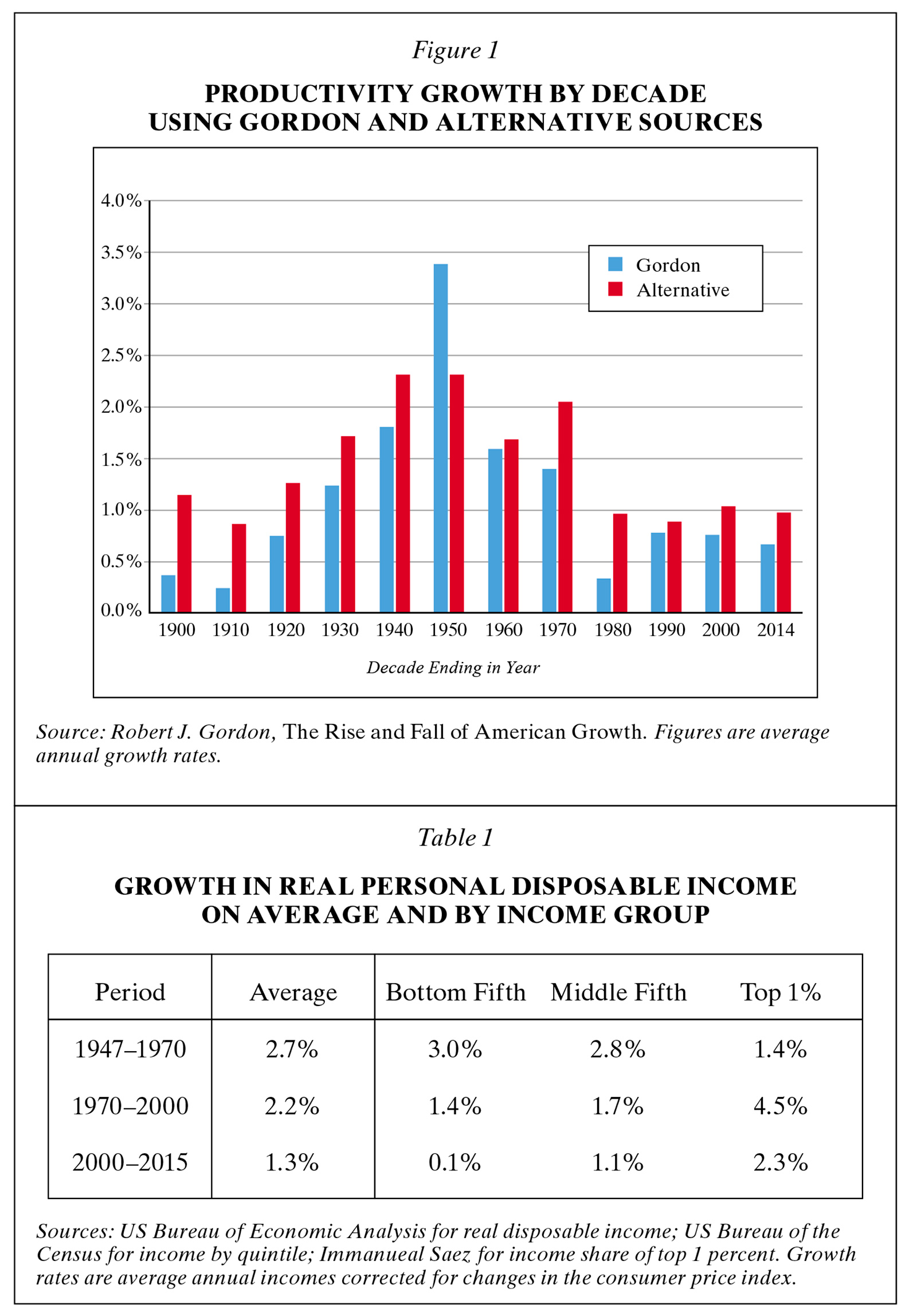
http://www.nybooks.com/wp-content/uploads/2016/07/nordhaus_Figure1_Table1.jpg
44JGL53
> 41
I have wished HRC and trump both into the cornfield many, many times now - and still, nothing.
Guess I am not a witch.
I have wished HRC and trump both into the cornfield many, many times now - and still, nothing.
Guess I am not a witch.
46theoria
Mr Sanders effort to unseat Democrats who opposed his candidacy is not going well. Ms Wasserman Schultz won her primary contest over her Sanders-supported opponent by 14 points.
47proximity1
"The Rise of the 'Crazy buts...' " : "Donald Trump is crazy, but ..." | How badly do voters want change? by Ron Fournier, 14 September, 2015 in The Atlantic magazine
"I spent most of the summer with Crazy Buts.
"From Detroit, where my family lives, to northern Michigan, where my family vacations, I heard Republicans, independents, and even Democrats begin sentences this way: "Donald Trump is crazy, but..."
"Crazy, but he's a winner, and I'm tired of America losing."
"Crazy, but he can't be worse than what we got."
"Crazy, but he's punishing the establishment."
"Crazy, but he's driving the media nuts."
"Crazy, but he says what I can't say."
Most don't mean “crazy” in a clinical sense. “Crazy as in crass,” a landscaper from rural Michigan told me in mid-July. “I’m not sure he has the temperament to be president, but I like how he’s messing with your minds in Washington. Crazy like a crash-test dummy.”
Crazy successful. Trump defied political conventions and conventional wisdom all summer, seizing support of one-third of registered Republicans and GOP-leaning independents in today's Washington Post/ABC News poll. Combined with retired neurosurgeon Ben Carson's 20 percent, two political outsiders are favored by a majority of GOP voters.
That's astonishing—to anybody who hasn't been paying attention.
For more than a generation, the public's trust in social institutions has steadily declined, as virtually every foundation of American life—churches, charities, schools, police, courts, small businesses, big businesses, the medial system, and the media—failed to adapt to immense economic and technological change, a phenomena I wrote about in a 2012 essay called "In Nothing We Trust." The trend is most pronounced in politics and government: Less than a quarter of Americans trust government in Washington always or most of the time; the Democratic and Republican parties' approval ratings are less than 40 percent; and only 14 percent of Americans think well of Congress. Those are all-time lows."
••• •••
48proximity1
Because I assume that there are now many people who are averse to reading more than a "Twitter" 's-worth of text, I begin here with the gist of an argument's elements (in the five numbered points below, the key being numbers four and five) stripped of rhetorical flourishes--though this summary is still, and by necessity, beyond the concision required in a Twitter comment. Some things cannot be boiled down to 140 characters --and that very fact bears on my points here below.
1) Our political order is an oligarchy, and not the democratic thing it is presented as being.
2) Though this is neither a recent development nor any great surprise to those paying attention, the ruling oligarchy is not static in its operation: it evolves and adapts its tactics and strategies in recognition of changing social and technological features of contemporary events.
3) The control it exercises is both overwhelming and enduring precisely because it is adaptive in its operation. Over the course of decades, and despite inevitable changes in its key members, it has gradually gained an increased and ever-refined control. Its exclusion of any non-elite's ( i. e. general public's) interfering participation in political life has become so complete that the oligarchy's unchallenged primacy has itself produced some unintended (negative) consequences. Among them is the central focus of my commentary, a result which has followed directly and indirectly from the oligarchy's having established so thorough a domination that it has meant alienation of ordinary people from public (political, civic) life--part of the oligarchy's design and intention.
4) Briefly, that alienation--both a reasonable and a predictable reaction to being shut out of any meaningful part in their society's political life--has crippled, stunted and, finally, ruined a general public's capacity for public political discourse at all. That has had various consequences both positive and negative from an oligarch's point of view. It has, on one hand, afforded an even fuller monopolization of political partisan processes and, on the other hand, produced, all by itself, anger, confusion and exacerbated social conflict by the breakdown in public discourse and with it a lost capacity to Identify, explain, discuss and mediate the sources of social friction and conflict. These in turn have created a social discontent and instability which has come to at last disturb the oligarchy's smooth exercise of political control.
5) There remain, however, the durable effects of a failure to be able to hold any effective public political discourse and that is a primary obstacle to needed reform as well as a powerful engine of popular discontent. (Obviously, the incapacity cannot be quickly or easily remedied; nor are oligarchs naturally inclined to want to see it remedied.
Of course, it would be absurd to imagine that I am suggesting that if, somehow, we were to recover our capacity for effective public political discourse, the problems which plague us today or in the future would quickly cede to solutions. We shall always have political problems to confront. However, if we could effectively discuss them, the context in which our problems are set would be changed and at least some new prospects which now we can hardly dare dream of would become conceivable. In addition, our ability to hold such a meaningful discourse would mean that we should suddenly have the first and most essential part of the potential for a new role in our own political affairs. The discussion would become one which was no longer—as it is today—the exclusive province of the elite. Instead, as it is, we lack the common language and experience and mutual understanding which such a discourse requires. Without these, we're facing others in a divisive shouting match where, the more we say, the farther apart we grow. That is a blessing to the oligarchy's continued dominance.) Whether and, if so, just how to, respond to the relatively recent popular discontent (seen in growing appeal of populist politics) is the topic of divided opinion within the oligarchy.
For those of the vanishing book-length-reading population, a longer, detailed version is to follow.
1) Our political order is an oligarchy, and not the democratic thing it is presented as being.
2) Though this is neither a recent development nor any great surprise to those paying attention, the ruling oligarchy is not static in its operation: it evolves and adapts its tactics and strategies in recognition of changing social and technological features of contemporary events.
3) The control it exercises is both overwhelming and enduring precisely because it is adaptive in its operation. Over the course of decades, and despite inevitable changes in its key members, it has gradually gained an increased and ever-refined control. Its exclusion of any non-elite's ( i. e. general public's) interfering participation in political life has become so complete that the oligarchy's unchallenged primacy has itself produced some unintended (negative) consequences. Among them is the central focus of my commentary, a result which has followed directly and indirectly from the oligarchy's having established so thorough a domination that it has meant alienation of ordinary people from public (political, civic) life--part of the oligarchy's design and intention.
4) Briefly, that alienation--both a reasonable and a predictable reaction to being shut out of any meaningful part in their society's political life--has crippled, stunted and, finally, ruined a general public's capacity for public political discourse at all. That has had various consequences both positive and negative from an oligarch's point of view. It has, on one hand, afforded an even fuller monopolization of political partisan processes and, on the other hand, produced, all by itself, anger, confusion and exacerbated social conflict by the breakdown in public discourse and with it a lost capacity to Identify, explain, discuss and mediate the sources of social friction and conflict. These in turn have created a social discontent and instability which has come to at last disturb the oligarchy's smooth exercise of political control.
5) There remain, however, the durable effects of a failure to be able to hold any effective public political discourse and that is a primary obstacle to needed reform as well as a powerful engine of popular discontent. (Obviously, the incapacity cannot be quickly or easily remedied; nor are oligarchs naturally inclined to want to see it remedied.
Of course, it would be absurd to imagine that I am suggesting that if, somehow, we were to recover our capacity for effective public political discourse, the problems which plague us today or in the future would quickly cede to solutions. We shall always have political problems to confront. However, if we could effectively discuss them, the context in which our problems are set would be changed and at least some new prospects which now we can hardly dare dream of would become conceivable. In addition, our ability to hold such a meaningful discourse would mean that we should suddenly have the first and most essential part of the potential for a new role in our own political affairs. The discussion would become one which was no longer—as it is today—the exclusive province of the elite. Instead, as it is, we lack the common language and experience and mutual understanding which such a discourse requires. Without these, we're facing others in a divisive shouting match where, the more we say, the farther apart we grow. That is a blessing to the oligarchy's continued dominance.) Whether and, if so, just how to, respond to the relatively recent popular discontent (seen in growing appeal of populist politics) is the topic of divided opinion within the oligarchy.
For those of the vanishing book-length-reading population, a longer, detailed version is to follow.
49JGL53
"Let's blow this mother completely up and then later, as we sort through the rubble, figure out then what we might want to do to have a some sort of a country." - That used to be yippy Jerry Rubin's mantra - so now we have millions of right-wing airheads - who would have hated Rubin and all other such 'commies' - touting the same exact drivel? Christ, what a country! - Not to mention all the crazed dispensationalist low-brow christians who can't wait for the beast with seven heads and 10 horns or whatever to rise from the sea and fuck all the heathens and infidels in their asses while the "saved" are caught up in the air to rise to some ultimate pink cloud of heavenly bliss of their fevered fucktarded imaginations. But I digress.
Certainly there is a possibility in the land of the narcissists - the baby-boomer generation - that "President-elect trump" will become an actual reality on Nov. 8 - the ultimate horrible horrible - times infinite shitocity.
We shall see.
In any case we will living on a whole new landscape just 6 weeks from now - after all the debates. Will trump weasel out of all or some of the debates? If he debates then who will kick whose ass? HRC is engaging in heavy debate prep, as every candidate did since debates started with Kennedy/Nixon.
trump is doing nothing but learning about which will be the best mendacities, perfidies, distortions and crazed sloganeering to offer up, just to see what if anything sticks. He is going by the seat of his narcissistic pants with no actual debate prep. How can we expect that to work for him?
By late October we will have HRC so far out front the election will be essentially over - OR trump will still be within striking distance and everyone who hates shitholes like him will be silently shitting their pants until election day. - One scenario or the other.
Meanwhile, in the most important election on Nov. 8, the latest polls show 60 per cent of California voters favor pot legalization.
Fuck moving to Canada. If the legalizing pot initiative passes I'm moving to S. California and opening up a pastry shop.
Certainly there is a possibility in the land of the narcissists - the baby-boomer generation - that "President-elect trump" will become an actual reality on Nov. 8 - the ultimate horrible horrible - times infinite shitocity.
We shall see.
In any case we will living on a whole new landscape just 6 weeks from now - after all the debates. Will trump weasel out of all or some of the debates? If he debates then who will kick whose ass? HRC is engaging in heavy debate prep, as every candidate did since debates started with Kennedy/Nixon.
trump is doing nothing but learning about which will be the best mendacities, perfidies, distortions and crazed sloganeering to offer up, just to see what if anything sticks. He is going by the seat of his narcissistic pants with no actual debate prep. How can we expect that to work for him?
By late October we will have HRC so far out front the election will be essentially over - OR trump will still be within striking distance and everyone who hates shitholes like him will be silently shitting their pants until election day. - One scenario or the other.
Meanwhile, in the most important election on Nov. 8, the latest polls show 60 per cent of California voters favor pot legalization.
Fuck moving to Canada. If the legalizing pot initiative passes I'm moving to S. California and opening up a pastry shop.
50proximity1
(essay)
"New Class War : What America’s ruling elite fears about the 2016 election"
By DANIEL MCCARTHY • September 7, 2016
Definitely worth reading --
The "New" in "new class war" is, for me, overplayed. In addition, what's being described is--as the author himself recognises--much more an intra- rather than inter- "class war." But that insight is really the whole point and holds much of the value of this analysis.
It is not entirely correct in my opinion but it's by far one if the best analyses I have seen so far of what is really going on in the present electoral contest.
From The American Conservative , (Daniel McCarthy is its editor.)
New Class War : What America’s ruling elite fears about the 2016 election | By DANIEL MCCARTHY • September 7, 2016
"New Class War : What America’s ruling elite fears about the 2016 election"
By DANIEL MCCARTHY • September 7, 2016
Definitely worth reading --
The "New" in "new class war" is, for me, overplayed. In addition, what's being described is--as the author himself recognises--much more an intra- rather than inter- "class war." But that insight is really the whole point and holds much of the value of this analysis.
It is not entirely correct in my opinion but it's by far one if the best analyses I have seen so far of what is really going on in the present electoral contest.
From The American Conservative , (Daniel McCarthy is its editor.)
New Class War : What America’s ruling elite fears about the 2016 election | By DANIEL MCCARTHY • September 7, 2016
51proximity1
Continued from >48 proximity1: :
and directly relevant to the article referenced at >50 proximity1:
-------
Our capacity to communicate publicly has disintegrated. I mean that in a literal as well as a figurative sense. It is of course not something confined to this site. Far from it. But this site, like so much else, is rich in illustrations of the causes and effects which are at the root of the matter.
Nathan Heller, a reporter for The New Yorker, has written about the topic and has some interesting observations.1
As Heller sees it, many of us (the fortunate (?)) have become used to living in a world (esp. on-line) where our experience and our public attention is filtered and focused in a way that insulates us from a more commonly-shared understanding of each other.
Where formerly this tendency to insularity was a rather rare predeliction, it is now the way a great many people live whether they know or choose to think about it or not.
If public communication has broken down, has become a lost art, that's in part because we've dispensed with so many of the habits which, through practice, facilitated it; so many have stopped practicing it and now find that they aren't capable of it. That is in part because the opportunities for it have shrunk and, in shrinking, atrophied, so that a vicious circle has combined both shrinking opportunities and withdrawal from them.
Rather than expend the efforts required, we've withdrawn into our private existence which is tailored2 to whatever our particular habits suggest (rightly or wrongly) to the algorithms which support the software which in tracks each move we make when we are using a computer-networked technology.3
We see this again and again (as Heller's article recounts) as numerous variations on the same theme.
Our political order is now suffering from repercussions of a process of which, previously, had served elite oligarchic interests by keeping the public out of a role in public affairs which might have threatened the elites' complete dominance of them.
A frustrated public, unwelcome in any meaningful part in public politics, turned from it and lost the habit of dealing in matters which called for the practice of public commnucation and all that goes with that: the appreciation of commonly shared language and meanings, the capacity to hear and listen to conflicting views, the capacity to see not only one's own perspective but those of others, the patience to engage in an extended effort--one which often required reading and correctly interpreting a reasoned argument and the effort to adequately respond with coherent reasoned arguments of one's own.
A society in which a very large part of its adults --many millions of people in our case-- live much of their lives in largely insulated and highly individualised experiences does not, for all its superficial similarities, produce a public with a broadly shared and communicable social awareness and understanding of itself.
Public life itself depends upon a broadly shared capacity for public communication. It is not enough to know of this solely by way of abstract explanations--it must be experienced through direct personal practice to be properly known and understood.
-----
1
2 : Hillary Clinton's 'Invisible Guiding Hand' - POLITICO Magazine
3 (See Cathy O'Neil, "Weapons of Math Destruction." / and Book Review: Scientific American ... / Her blog: https://www.mathbabe.org )
...For those of the vanishing book-length-reading population, the longer, detailed version follows.
and directly relevant to the article referenced at >50 proximity1:
-------
Our capacity to communicate publicly has disintegrated. I mean that in a literal as well as a figurative sense. It is of course not something confined to this site. Far from it. But this site, like so much else, is rich in illustrations of the causes and effects which are at the root of the matter.
Nathan Heller, a reporter for The New Yorker, has written about the topic and has some interesting observations.1
As Heller sees it, many of us (the fortunate (?)) have become used to living in a world (esp. on-line) where our experience and our public attention is filtered and focused in a way that insulates us from a more commonly-shared understanding of each other.
Where formerly this tendency to insularity was a rather rare predeliction, it is now the way a great many people live whether they know or choose to think about it or not.
If public communication has broken down, has become a lost art, that's in part because we've dispensed with so many of the habits which, through practice, facilitated it; so many have stopped practicing it and now find that they aren't capable of it. That is in part because the opportunities for it have shrunk and, in shrinking, atrophied, so that a vicious circle has combined both shrinking opportunities and withdrawal from them.
Rather than expend the efforts required, we've withdrawn into our private existence which is tailored2 to whatever our particular habits suggest (rightly or wrongly) to the algorithms which support the software which in tracks each move we make when we are using a computer-networked technology.3
We see this again and again (as Heller's article recounts) as numerous variations on the same theme.
Our political order is now suffering from repercussions of a process of which, previously, had served elite oligarchic interests by keeping the public out of a role in public affairs which might have threatened the elites' complete dominance of them.
A frustrated public, unwelcome in any meaningful part in public politics, turned from it and lost the habit of dealing in matters which called for the practice of public commnucation and all that goes with that: the appreciation of commonly shared language and meanings, the capacity to hear and listen to conflicting views, the capacity to see not only one's own perspective but those of others, the patience to engage in an extended effort--one which often required reading and correctly interpreting a reasoned argument and the effort to adequately respond with coherent reasoned arguments of one's own.
A society in which a very large part of its adults --many millions of people in our case-- live much of their lives in largely insulated and highly individualised experiences does not, for all its superficial similarities, produce a public with a broadly shared and communicable social awareness and understanding of itself.
Public life itself depends upon a broadly shared capacity for public communication. It is not enough to know of this solely by way of abstract explanations--it must be experienced through direct personal practice to be properly known and understood.
-----
1
CULTURAL COMMENT |
"TRUMP, THE UNIVERSITY OF CHICAGO, AND THE COLLAPSE OF PUBLIC LANGUAGE " |
By Nathan Heller | SEPTEMBER 1, 2016
A while back, I went to San Francisco to report a piece about some protests happening in town. The conflict, as narrated in the local papers, puzzled me. Although it supposedly centered on private buses for tech workers, the concerns had a more broadly political air. This was not surprising—San Francisco is the capital of broad politics—but I couldn’t see where ideological disputes actually arose. Protesters painted themselves as grass-roots liberals, speaking up for poor, creative, or countercultural outsiders. The techies involved also considered themselves grass-roots liberals, creating apps to fight the Man, effect philanthropic efficacy, and support the same outsiders.
I stayed in the Bay Area awhile, interviewed forty or fifty people, watched protests, attended tech events and community meetings, and flew to New York City to tear out my hair. Writing long articles always involves muscle strain, but the parturition of this piece (which ran in the summer of 2014) was excruciating, because the material seemed to lack any conceptual edges. The ferment had been billed in the press as a “culture war.” And yet the two sides of the conflict—in terms of beliefs, ideological lineage, and language—were almost entirely the same.
I worked over my notebooks like a Rubik’s cube for days and weeks, trying to understand where the lines of dispute and interest arose. When some clarity came, I found myself looking past these post-hippie preoccupations. Today that article is nearer my heart than most, because of what it forced me to confront: a new relationship among language, identity, and public process, and a way that they were nullifying one another across public life.
In that piece and some previous Bay Area reporting, I pointed out a generational trend toward privatization in both a literal and an abstract sense. We had entered an era of the mainstream bespoke, it seemed to me: a time when technology helped individualize personal experience. It had become normal to scroll through an algorithmically curated feed while listening to our own music in a busy café. Social media made public self-definition instant and easy: I am X; I am Y. Personal meaning thrived. During the spring when I reported in San Francisco, Burger King switched its slogan from “Have it your way” to “Be your way”—a broadening from condiment preference to ontology which, as the chain told it, reflected a turn toward “self-expression” and a belief that “it’s our differences that make us individuals instead of robots.” No freethinker could disagree.
I began to wonder, though, about the effects of this individualization on public language and, as a result, political life. The trouble in San Francisco, I realized, wasn’t that the warring tribes followed different doctrines. It was that they followed the same doctrine, abstractly stated, but had less and less of a way to gather and work from the abstract into the specific. Everyone was operating as a good San Francisco liberal, struggling against the establishment, outside the system, for the people. Ironically, this meant there was less and less system left, no common terms by which the whole community could move ahead. Public language, as I put it in the piece, was coming unmoored from public process. I wondered what the future would bring if the rhetoric of our best ideals kept moving in this direction—if people of a single political identity couldn’t agree on the real sense of the words that, they were certain, gave voice to their values.
••• •••
My work elsewhere has made me think that this isn’t just an Oberlin, or liberal, thing. Self-defining language has grown easy to pass around but hard to translate into social results. “Diversity,” we know, is crucial. Yet the word means disparate things to a housing activist, a tech executive, and an admissions dean, and they end up talking past one another. Most of us agree, admirably, that we are feminists, like Beyoncé, but we struggle to have Beyoncé-sized conversations on the subject, because our ideas of what, specifically, that declaration means are often irreconcilable—and the public road to sorting it out is rocky, full of jagged disputes and tricky questions to be smoothed out. Many of us quietly give up: our self-description becomes our identity, and our community is the people who appear to understand our language, more or less, the way we do. When we communicate across society, it’s at the level of rhetorical belief—“taking a stand”—more than in detail. Privacy is something we support. We should fight Big Money. Black lives really do matter, a lot. It can be hard to find one another amid such abstracted ideals, but at least we know that, wherever we are, we’re working under the same stars.
Another leap in time. It’s summer now—the present. Media people are dizzy from the way that Donald Trump is using language. On August 9th, he famously insists that President Obama is “the founder of isis.” (Eh?) On August 24th, he dismisses Hillary Clinton as “a bigot” by virtue of having ineffectual policies. The Trump campaign, since its inception, has traded in counterfactual hyperbole, praeteritio (“a lot of people say . . . I won’t say”), and dubious innuendo. But using words as if they have no definition marks a shift.
Trump does not demur when it’s suggested that abstract nouns such as “bigot” and “founder” have meanings he’s transgressed. (“He’s their Most Valuable Player,” Trump said, of Obama, by way of clarification, three days after his isis remarks. “He was the founder.”) Oddly, though, the outlandish words seem not to obscure his message. When he makes his isis-founder remark, there are immediate cheers. Those people catch the specific, politically valenced meaning of the Trumponym “founder,” even if it baffles all the rest of us.
This way of dealing with the language has intensified. When newscasters quote Trump’s statements back to his representatives, they reply, “That’s not what Mr. Trump is saying”; his words aren’t held to convey a fixed message. This obscurity comes to a head when Trump experiences his self-described “softening” on immigration, only to have his surrogates insist that there has been no change. “He hasn’t changed his position on immigration,” Katrina Pierson, a spokesperson, says on CNN. “He’s changed the words that he is saying.”
To know what Trump means, despite the words that he is saying, you have to understand—or think you understand—the message before he opens his mouth. That way of interpreting language is unassailable because it allows no persuasion, only self-revelation: the words don’t convey information but, like candles and jasmine perfume, serve as aesthetic trappings, prompts that may lead listeners to locate certain passionate moods in themselves. That not everybody across a population finds candles and jasmine perfume romantic—that some people prefer the kinetics of the disco, say—becomes an unsolvable problem. One solution is to defer to the beliefs of people of a single mind. Within a population, this is only practical if no two groups’ beliefs are ever at odds.
In a climate where common language is not held accountable to common meaning, “taking a stand” becomes a mostly theatrical exercise. Trump, the candidate, is all about “taking a stand,” announcing values and setting trajectories. That little seems to be backed by fixed meaning or process isn’t, as some observers claim, a quirk of his campaign. Believing oneself to stand for inexpressible values of American greatness is not actually very different from believing oneself to stand for inexpressible values of American counterculture, or populism, or freedom. Trumpism is successful because it leverages a disconnect among language, meaning, and process that’s deep-set in our national life. He can say anything these days—because the rest of us can, too.
It is hard to talk about politics and language without mentioning George Orwell. I will say only that the problem I’m describing is not new as much as cyclical, and that, in grim moods, I’m disheartened that so many of us can be made to read a piece of writing and remain unalert to its lessons. Orwell wrote “Politics and the English Language” at a time of political upheaval and confusion. (It was the end of the Second World War.) His point was that, especially at such moments, imprecision and easy idiom in public language carry political stakes. ••• •••
2 : Hillary Clinton's 'Invisible Guiding Hand' - POLITICO Magazine
3 (See Cathy O'Neil, "Weapons of Math Destruction." / and Book Review: Scientific American ... / Her blog: https://www.mathbabe.org )
52jjwilson61
>50 proximity1: New Class War : What America’s ruling elite fears about the 2016 election | By DANIEL MCCARTHY • September 7, 2016
Interesting, but it seems to be claiming at the end that Sanders and Trump are both representative of the old managerial class and I just don't see how that fits Sanders.
Interesting, but it seems to be claiming at the end that Sanders and Trump are both representative of the old managerial class and I just don't see how that fits Sanders.
53proximity1
>52 jjwilson61:
The excerpts below are key to McCarthy's view. For me, he's too taken with James Burnham's arguments. But Burnham, the prototype of the neo-conservative (1930s-40s) suits McCarthy's own conservative outlooks. I subscribe to Wright Mills' critique of Burnham's thesis so I largely skip over McCarthy's focus on Burnham's "New managerial class." Your own understandable confusion as to how Sanders fits this schema is a good example of why, for me, McCarthy's focus on Burnham's work can obscure the clearest view of relations as they are now (though, as C. Wright Mills' critique of Burnham showed, his arguments weren't all that valid even then, when they first appeared).
Actually, the ways in which and the extent to which Sanders could be shown to have some rather strong affinities for the old managerial class (styles) is an interesting issue in itself. But rather than take that up here, the brief answer, I think, is to recognise that Trump and Sanders are only "united" in certain of the things they oppose, not what they favor--I.e. "represent"-- but those united oppositions are quite important ones, so important that this "new managerial class" wants to thwart Trump every bit as much as it wants to thwart Sanders.
The fact that so many Americans apparently do not appreciate this situation is exactly what makes McCarthy's essay so valuable.
-------------
1 : Unless I misunderstand his meaning here, this is perhaps McCarthy's biggest error in his analysis. First, Sanders' being--as a life-long socialist--"in line with" Democratic party orthodoxy on immigration or not is, really, neither here nor there!
McCarthy here seems to have momentarily lost the narrative of his own keen insights. The Clinton/Obama cabal's beating up on Sanders for alleged lapses in his sensitivity to matters concerning immigration, race, or any of a host of others is sheer theatrics of the basest and most hypocritical kind on their part. Neither the Clintons nor the Obamas have or would really "go to the mat" in defense of so-called Black interests--certainly not if their doing so required their compromising in any significant way their pursuit of their own political self-interests. In truth, except as a useful wedge, they don't really give a damn about the plight of Black Americans as a group. And the heart-breaking truth is that only a relative handful of American Blacks are politically-astute enough to grasp that fact. They (i.e. Clintons and Obamas) do, however, find this posturing a marvelously effective means by which to shut down any latent appeal --and there is enormous and well-founded appeal --for Black voters in Sanders' positions.
So, as far as Sanders' not having been spared "from being attacked by Clinton backers for having an insufficiently nonwhite base of support" goes, the whole point is to see--as McCarthy usually does in this essay--that this is merely a convenient and effective device by which to derail Sanders' campaign. Nothing, therefore, could have made that fundamental reality any different. The race/immigration card was played falsely and hypocritically by Obama/Clinton not because it was valid but rather because their all-important data analytics indicated that Blacks in large numbers would fall for such crap.
------------
ETA (09/09/2016 04:20 )
It's truly pathetic that the political Left in the U.S. is so utterly absent that we find ourselves facing the spectacle of a Donald Trump as the sole electorally-'serious' critic/challenger to the staus quo. (Jill Stein is polling at around 3% to (recently) 4% --a high-mark for her in this race; Gary Johnson drew a blank when asked about Aleppo. If he were otherwise a very impressive candidate, that gaffe should not be such a big deal. The trouble is, rather, that he's so manifestly a lightweight that this gaffe reinforces an already poor presentation. It doesn't so much create a negative impression of his candidacy as confirm one. )
Now, with Sanders out of the running, we actually have to depend on Trump to raise to public attention and discussion matters that no regular member of any party can get onto to public-speaking-agenda. And to do this, he's obliged by a hostile national press to state things in a sensational manner that obliges this press to pay attention--and that, he's prepared to do, unlike others. The whole situation is pathetic.
The excerpts below are key to McCarthy's view. For me, he's too taken with James Burnham's arguments. But Burnham, the prototype of the neo-conservative (1930s-40s) suits McCarthy's own conservative outlooks. I subscribe to Wright Mills' critique of Burnham's thesis so I largely skip over McCarthy's focus on Burnham's "New managerial class." Your own understandable confusion as to how Sanders fits this schema is a good example of why, for me, McCarthy's focus on Burnham's work can obscure the clearest view of relations as they are now (though, as C. Wright Mills' critique of Burnham showed, his arguments weren't all that valid even then, when they first appeared).
"For a moment Trump seemed to have created a new style of politics, one that threatened to mobilize working-class voters against the establishment in both parties."
... "there’s another side to the Trump phenomenon that is less about Trump or his voters than about the elites they are against. Resistance to the bipartisan establishment keeps growing, and even if Trump loses to Clinton in a landslide, he has carried the rebellion further than ever before by winning a major party’s nomination."
... "What do these insurgents have in common? All have called into question the interventionist consensus in foreign policy. All have opposed large-scale free-trade agreements. (The libertarian Paul favors unilateral free trade: by his lights, treaties like NAFTA and the Trans-Pacific Partnership are not free trade at all but international regulatory pacts.) And while no one would mistake Ralph Nader’s or Ron Paul’s views on immigration for Pat Buchanan’s or Donald Trump’s, Nader and Paul have registered their own dissents from the approach to immigration that prevails in Washington."
"Sanders has been more in line with his party’s orthodoxy on that issue. But that didn’t save him from being attacked by Clinton backers for having an insufficiently nonwhite base of support."1
"The insurgents clearly do not represent a single class: they appeal to eclectic interests and groups. The foe they have all faced down, however—the bipartisan establishment—does resemble a class in its striking unity of outlook and interest.
Actually, the ways in which and the extent to which Sanders could be shown to have some rather strong affinities for the old managerial class (styles) is an interesting issue in itself. But rather than take that up here, the brief answer, I think, is to recognise that Trump and Sanders are only "united" in certain of the things they oppose, not what they favor--I.e. "represent"-- but those united oppositions are quite important ones, so important that this "new managerial class" wants to thwart Trump every bit as much as it wants to thwart Sanders.
The fact that so many Americans apparently do not appreciate this situation is exactly what makes McCarthy's essay so valuable.
-------------
1 : Unless I misunderstand his meaning here, this is perhaps McCarthy's biggest error in his analysis. First, Sanders' being--as a life-long socialist--"in line with" Democratic party orthodoxy on immigration or not is, really, neither here nor there!
McCarthy here seems to have momentarily lost the narrative of his own keen insights. The Clinton/Obama cabal's beating up on Sanders for alleged lapses in his sensitivity to matters concerning immigration, race, or any of a host of others is sheer theatrics of the basest and most hypocritical kind on their part. Neither the Clintons nor the Obamas have or would really "go to the mat" in defense of so-called Black interests--certainly not if their doing so required their compromising in any significant way their pursuit of their own political self-interests. In truth, except as a useful wedge, they don't really give a damn about the plight of Black Americans as a group. And the heart-breaking truth is that only a relative handful of American Blacks are politically-astute enough to grasp that fact. They (i.e. Clintons and Obamas) do, however, find this posturing a marvelously effective means by which to shut down any latent appeal --and there is enormous and well-founded appeal --for Black voters in Sanders' positions.
So, as far as Sanders' not having been spared "from being attacked by Clinton backers for having an insufficiently nonwhite base of support" goes, the whole point is to see--as McCarthy usually does in this essay--that this is merely a convenient and effective device by which to derail Sanders' campaign. Nothing, therefore, could have made that fundamental reality any different. The race/immigration card was played falsely and hypocritically by Obama/Clinton not because it was valid but rather because their all-important data analytics indicated that Blacks in large numbers would fall for such crap.
------------
ETA (09/09/2016 04:20 )
It's truly pathetic that the political Left in the U.S. is so utterly absent that we find ourselves facing the spectacle of a Donald Trump as the sole electorally-'serious' critic/challenger to the staus quo. (Jill Stein is polling at around 3% to (recently) 4% --a high-mark for her in this race; Gary Johnson drew a blank when asked about Aleppo. If he were otherwise a very impressive candidate, that gaffe should not be such a big deal. The trouble is, rather, that he's so manifestly a lightweight that this gaffe reinforces an already poor presentation. It doesn't so much create a negative impression of his candidacy as confirm one. )
Now, with Sanders out of the running, we actually have to depend on Trump to raise to public attention and discussion matters that no regular member of any party can get onto to public-speaking-agenda. And to do this, he's obliged by a hostile national press to state things in a sensational manner that obliges this press to pay attention--and that, he's prepared to do, unlike others. The whole situation is pathetic.
54proximity1
Here's the Real Lesson in Hillary's Health Scare by
Pascal-Emmanuel Gobry | (The Week)
(emphasis added)
----------
No. Really, she's not-- not a member of "the progressive Left." She's actually anything but that, as her campaign has amply demonstrated by getting Senator Bernie Sanders out of her way by hook or by crook.
Sanders was a very mild but, even so, respectable, representative of what can be called "the progressive left."
But, next to getting Hillary elected, or, failing that, finding a way to keep Trump within safe bounds, it's the oligarchy's --and its mainstream news-medium mouthpieces' --second-most-cherished fraud: that eveyone go on idioticly accepting this nonsense without question.
That's a YUGE PROBLEM for the rest of us. It's among the very worst prospects of the Clintons' getting themselves re-elected.
And they are not "the liberal media," either--another fraud upon plain common sense. They are, rather, the oligarchy'mouthpiece.
Pascal-Emmanuel Gobry | (The Week)
...
"So why did so many journalists scoff at questions over Hillary's health, likening them to Area 51-style conspiracy theories? In many cases, because many liberal members of the liberal media want Hillary to win. She's a member of the progressive left.
(emphasis added)
----------
No. Really, she's not-- not a member of "the progressive Left." She's actually anything but that, as her campaign has amply demonstrated by getting Senator Bernie Sanders out of her way by hook or by crook.
Sanders was a very mild but, even so, respectable, representative of what can be called "the progressive left."
But, next to getting Hillary elected, or, failing that, finding a way to keep Trump within safe bounds, it's the oligarchy's --and its mainstream news-medium mouthpieces' --second-most-cherished fraud: that eveyone go on idioticly accepting this nonsense without question.
That's a YUGE PROBLEM for the rest of us. It's among the very worst prospects of the Clintons' getting themselves re-elected.
And they are not "the liberal media," either--another fraud upon plain common sense. They are, rather, the oligarchy'mouthpiece.
55proximity1
We're going to get an electoral disaster In November either way: so, better that the announced disaster is Trump instead of Clinton.
-----
Yes. Let's not kid ourselves: if he's elected, we have every good reason to expect that in the vast majority of instances over the course of his term in office, Trump shall prove to be almost as bad or just as bad as the Clintons should have been if they'd been elected. There's no point in pretending otherwise.
Trump shall make one after another embarrassing blunder and many, unlike Obama's prostrating himself before the Saudi monarch upon their first meeting, will have real serious consequences.
Trump's blundering shall do us harm. But he'll do this out of his ignorance and stupidity, rather than by a purely venal design. He won't do anything to intentionally harm the nation; like Obama, he'll do serious harm unintentionally because he's just not that bright.
In a different manner than the Clintons, Trump shall also serve and defend his friends and cronies among the extremely wealthy while very often giving those who are poor or politically relatively powerless, the "shaft."
But, as we should by now be quite aware, the Clintons' wealthy cronyism is even worse than Trump's.
Trump will serve his crony friends while he largely ignores the progressive left (if we may refer to such a thing existing in the U.S.)--with perhaps a notable exception where he may align himself with their interest in preventing these disasters, the so-called "free-trade" agreements --which have nothing to do with free trade and everything to do with coercive trade terms for everyone except the oligarchy's fortunate elite class--men and women, blacks and whites, asians and latinos, gay, straight, bi-sexuals, and others-- all these same group's members who aren't financially in the upper ranks are going to mainly be disserved by the trade deals.
But, unlike Trump, instead of serving her cronies and largely ignoring and bypassing the progressive Left, the Clintons shall--as Obama has done--metaphorically speaking-- murder the progressive Left with malign intent that is nothing like their attitude toward the mainstream political political right-wing--those, mainly Republicans, who also look upon Trump with unfeigned horror.
Trump's many blunders are going to produce something of the sort of disaster which so many have been so frantically describing and predicting. And such are, quite frankly, the only way Americans (U.S.) can learn anything today--that is, when they don't also simply fail to learn even when disasters are upon them. Really hard experience teaches us this--or, rather, it typically teaches us nothing but on rare occasions we somehow learn temporarily but, again, only when the lesson comes via a disaster.
The disasters we predict shall, other factors being equal, do us rather less harm than those which befall us without our having had any inkling of them.
The Clintons, just because they are the hand-picked darlings of the oligarchy, embody the disasters for which--this is the point: those in power are least prepared or of which they are least aware. Because they are so like-minded and, thus, see their own faults and failings least well.
Unlike the idiocies which Trump produces, we--that is, those of us who don't belong to the elect, the lucky and greatly privileged elite--we--should expect that the Clintons' disasters are characterized by their quality of blind-siding those in places of power.
Think : think of the exquisite stupidity of the highly complicated financial market "securities" of mass destruction which laid low the world's economy while the supposed financial wizards looked on in stunned wonder at what they quickly denied that they had wrought--and then immediately sought relief and rescue from and at the expense of those who had the least to do with their unexpected disaster.
That is the kind of disaster which the Clintons' election promises us-- things we are not expecting or are flat out denying with near-unanimity could ever even happen.
World War III? That's what we expect Trump to produce. Inour, in their "wisdom," the world's Very Important People are united in telling us that we can best assure ourselves that "the nuclear codes" are safe by keeping them out of Trump's reach.
If Trump is elected, we'll be watching and expecting him to touch off WW III. If the Clintons are elected, we're going to all sleep soundly in the confidence that, whatever else happens, we shall NOT be awakened by WWW III.
What, for example, better, surer, proof---it's axiomatic!--- could there possibly be?when, to look toward the White House and find there a Black man--Americans' first Black president---well of course Black lives matter!
Re-elect Hillary Clinton? America's (U.S.) first female president of the United States?
What could go wrong?
Only things which we're least expecting.
-----
Yes. Let's not kid ourselves: if he's elected, we have every good reason to expect that in the vast majority of instances over the course of his term in office, Trump shall prove to be almost as bad or just as bad as the Clintons should have been if they'd been elected. There's no point in pretending otherwise.
Trump shall make one after another embarrassing blunder and many, unlike Obama's prostrating himself before the Saudi monarch upon their first meeting, will have real serious consequences.
Trump's blundering shall do us harm. But he'll do this out of his ignorance and stupidity, rather than by a purely venal design. He won't do anything to intentionally harm the nation; like Obama, he'll do serious harm unintentionally because he's just not that bright.
In a different manner than the Clintons, Trump shall also serve and defend his friends and cronies among the extremely wealthy while very often giving those who are poor or politically relatively powerless, the "shaft."
But, as we should by now be quite aware, the Clintons' wealthy cronyism is even worse than Trump's.
Trump will serve his crony friends while he largely ignores the progressive left (if we may refer to such a thing existing in the U.S.)--with perhaps a notable exception where he may align himself with their interest in preventing these disasters, the so-called "free-trade" agreements --which have nothing to do with free trade and everything to do with coercive trade terms for everyone except the oligarchy's fortunate elite class--men and women, blacks and whites, asians and latinos, gay, straight, bi-sexuals, and others-- all these same group's members who aren't financially in the upper ranks are going to mainly be disserved by the trade deals.
But, unlike Trump, instead of serving her cronies and largely ignoring and bypassing the progressive Left, the Clintons shall--as Obama has done--metaphorically speaking-- murder the progressive Left with malign intent that is nothing like their attitude toward the mainstream political political right-wing--those, mainly Republicans, who also look upon Trump with unfeigned horror.
Trump's many blunders are going to produce something of the sort of disaster which so many have been so frantically describing and predicting. And such are, quite frankly, the only way Americans (U.S.) can learn anything today--that is, when they don't also simply fail to learn even when disasters are upon them. Really hard experience teaches us this--or, rather, it typically teaches us nothing but on rare occasions we somehow learn temporarily but, again, only when the lesson comes via a disaster.
The disasters we predict shall, other factors being equal, do us rather less harm than those which befall us without our having had any inkling of them.
The Clintons, just because they are the hand-picked darlings of the oligarchy, embody the disasters for which--this is the point: those in power are least prepared or of which they are least aware. Because they are so like-minded and, thus, see their own faults and failings least well.
Unlike the idiocies which Trump produces, we--that is, those of us who don't belong to the elect, the lucky and greatly privileged elite--we--should expect that the Clintons' disasters are characterized by their quality of blind-siding those in places of power.
Think : think of the exquisite stupidity of the highly complicated financial market "securities" of mass destruction which laid low the world's economy while the supposed financial wizards looked on in stunned wonder at what they quickly denied that they had wrought--and then immediately sought relief and rescue from and at the expense of those who had the least to do with their unexpected disaster.
That is the kind of disaster which the Clintons' election promises us-- things we are not expecting or are flat out denying with near-unanimity could ever even happen.
World War III? That's what we expect Trump to produce. In
If Trump is elected, we'll be watching and expecting him to touch off WW III. If the Clintons are elected, we're going to all sleep soundly in the confidence that, whatever else happens, we shall NOT be awakened by WWW III.
What, for example, better, surer, proof---it's axiomatic!--- could there possibly be?when, to look toward the White House and find there a Black man--Americans' first Black president---well of course Black lives matter!
Re-elect Hillary Clinton? America's (U.S.) first female president of the United States?
What could go wrong?
Only things which we're least expecting.
56JGL53
Electing trump POTUS would be the equivalent of electing a combination of magic eight ball and a fucking demon from hell.
Those who believe in a god better pray to that motherfucker that we will dodge the end of civilization as we know it. i.e., the election of a reality show host as our POTUS.
Those who believe in a god better pray to that motherfucker that we will dodge the end of civilization as we know it. i.e., the election of a reality show host as our POTUS.
57proximity1
"Electing trump POTUS would be the equivalent of electing a combination of magic eight ball and a fucking demon from hell."
We've already had that. Well, not exactly in a single individual but practically the same thing-- "W" (43) Bush being the magic Eight-ball, he brought the demons from Hell in as Vice-pres. and appointees--Cheney, Wolfowitz, Perle, Rice, Hadley, Yoo, and on and on.
Technically, Trump is from Queens. But he did later move to Manhattan--which is about as close to Hell as many people are ever going to get--or to want to get. Or as close to Heaven, depending on their tastes and bank-balances.
You'd leave the system which routinely produces the very horrors you point out undisturbed because you are part of those I describe as incapable of learning even when the lessons come as disasters.
There is nothing other than blind hubris and prejudice to support the assertion that Trump is certain to be much worse than Hillary and Bill Clinton back in the White House.
For racism and blatant sexism, it is really hard to top HRC. For dishonesty she is in no way Trump's apprentice. And as for those who own her--not because they're part of the legions of high-finance who've bought her via their lavish campaign donations like she was department-store goods but, rather through having pilfered her unsecured computer-files and now hold an extortionist's dream-cache of stuff she'd dread seeing revealed--or simply shared secretly with others--about these we can only guess.
Talk about "demons from Hell" or about electing someone who's carrying them in her baggage!
Your concern would be cute if it weren't so ridiculously misdirected.
We've already had that. Well, not exactly in a single individual but practically the same thing-- "W" (43) Bush being the magic Eight-ball, he brought the demons from Hell in as Vice-pres. and appointees--Cheney, Wolfowitz, Perle, Rice, Hadley, Yoo, and on and on.
Technically, Trump is from Queens. But he did later move to Manhattan--which is about as close to Hell as many people are ever going to get--or to want to get. Or as close to Heaven, depending on their tastes and bank-balances.
You'd leave the system which routinely produces the very horrors you point out undisturbed because you are part of those I describe as incapable of learning even when the lessons come as disasters.
There is nothing other than blind hubris and prejudice to support the assertion that Trump is certain to be much worse than Hillary and Bill Clinton back in the White House.
For racism and blatant sexism, it is really hard to top HRC. For dishonesty she is in no way Trump's apprentice. And as for those who own her--not because they're part of the legions of high-finance who've bought her via their lavish campaign donations like she was department-store goods but, rather through having pilfered her unsecured computer-files and now hold an extortionist's dream-cache of stuff she'd dread seeing revealed--or simply shared secretly with others--about these we can only guess.
Talk about "demons from Hell" or about electing someone who's carrying them in her baggage!
Your concern would be cute if it weren't so ridiculously misdirected.
58JGL53
> 57
If you do not understand what an absolutely unacceptable candidate for President donald trump is then that would make you an ignoramus and pretty much a fool.
If instead you do know precisely what trump is but you nevertheless approve of him then that would make you a scumbag just like your hero trump.
Which is it?
- - - Here's 176 reasons to reject the candidacy of d. trump for his over-the-top unrelenting scumbaggery over the years. I think this is the short list:
https://www.youtube.com/watch?v=bQueaSlvjCw
If you do not understand what an absolutely unacceptable candidate for President donald trump is then that would make you an ignoramus and pretty much a fool.
If instead you do know precisely what trump is but you nevertheless approve of him then that would make you a scumbag just like your hero trump.
Which is it?
- - - Here's 176 reasons to reject the candidacy of d. trump for his over-the-top unrelenting scumbaggery over the years. I think this is the short list:
https://www.youtube.com/watch?v=bQueaSlvjCw
59proximity1
Edited: Today (15/09/2016) , 12:00pm
--------------
>58 JGL53:
Trump is certainly no hero in my opinion. However, he is--or, worse, the Clintons are--what the nation gets for failing to have nominated the one worthy candidate in the race--Bernie Sanders--who, even at that, is a good deal more pro-establishment than I'd wish him to be. Look at the guy!
Like you, he leaps to the wildly prejudiced conclusion that Trump's many character-faults are bound to make him a catastrophe as president. Well, yes, he might be. But, again, the Clintons have a long record and it's far worse than anything business man Trump has done when his traits are placed in the Executive branch setting. Very frankly, Sanders is too dim-witted to understand this.
Many point out that Trump won't like the burdens and responsibilities of the job of president and I agree with them. He'll be stymied at every turn. But a complete idiot he is not. Neither, for all his arrogance, does he very seriously and literally regard himself as above the law. The Clintons definitely do. And who can blame them for concluding that? It seems that for all practical purposes they actually are above the law; good students of Shakespeare understand why it is very dangerous to allow this type of person to hold executive power.
Yes: we'd suffer under Trump. But we brought this state of affairs on ourselves by failing to remain vigilant and protect our political democratic institutions from the corruption which has now destroyed them.
By backing the Clintons, you are signing on for more of the same worsening situation--and that is supremely blind or stupid in the face of the evidence before us.
We're now treading thin-air--out over the chasm into which we're bound to drop at any moment. Every major bulwark of civilized society has been debauched: the judiciary and, with it, all agencies of official authority are now held in contempt as guardians of a corrupt system. The educational system is not respected for, it, too, has joined the corrupt--or rather, it is similarly a product of the corrupt system. Law, medicine, journalism, finance, the sciences, and, leading them all, business practices--all stand in deplored disrepute as part of a general moral collapse.
With respectable courts, legislatures, executives, print and broadcast press no longer in the service of honest, just practices, our democratic principles are now easily swept aside. And there is now nothing left from which we can arrange a working civil order worthy of respect. The prerequisites for this must now be reconstituted.
Otherwise, the next steps for us are straight into an even deeper and more abject and open official thuggery.
To suppose that the Clintons represent some respite from this or, that, in attempting to remedy it, we have a straight and smooth road from here to salvation--one without serious struggle and hardships at every step-- is also wildly foolish and naive.
A society cannot recover without pain and sacrifice what ours, over generations of moral decrepitude, has squandered.
Trump is merely the current "price," the current going rate for our learning-by-disaster. We can try to put things off but in doing so, the price to be paid shall only increase.
One of our currently very stubborn "blind-spots" consists of complacency about the leisure with which we can address these matters. I fault many political experts with this apparent complacency because rather than exhibiting any sense of urgency at all, they seem to assume that we enjoy an unlimited amount of time in which to work through the most daunting issues of societal stability and durability. I think the complacency rests on a naive assumption that, absent some momentous exogenous disturbance, the socio-political staus quo goes on indefinitely.
I welcome the startlingly bizarre 2016 presidential election process as evidence of the folly of such an assumption. Looking back, it ought to be obvious that things remaining as they are indefinitely is not a good bet. Surprising changes come again and again because we fail to expect things we trust to be stable to become spontaneously unstable and difficult or impossible to predict.
Your own question--"which is it to be?" is staring you in the face.
You can run to the Clintons but you cannot hide in them.
I'm scum? First Heal thyself!--then minister to others.
----------
Keith Olbermann? I watched all I could bear of his signature style of unctuous sanctimony before hitting the "back" key. I reckon I heard some sixty of the 176 so-called "reasons"--and, as I see it, nearly all are facile distortions of facts which, viewed in context, are little or nothing like what Olbermann presents them to indicate.
Hillary Clinton and many defending her campaign--Keith Olbermann, like so many others in the press , among them--would have us believe that the facts show that Donald Trump's faults include xenophobia--because he wants stricter supervision before certain foreigners are granted an entry Visa; and, misogyny--because some of those he has criticized are women, he's branded as a hating women in general. Repeat this "logic" for "people of color" generally as well as for most or all people certified by the dogmas of political correctness as victims of the White, Anglo-saxon male-dominated order: women, "LGBTs," etc. irrespective of their individual circumstances.
Though it happens that, among the "LGBT" "communities," among "people of color" and among women, there are a certain number of people who are bigots of one kind or another-- people who are prejudiced against the opposite sex, against LGBTs, against "races" or nationalities other than that with which they identify, none of this is taken into account. Though it happens that people in general are subject to these faults, cutting across all ages beyond those of infants, across both sexes and all "sexual orientations," across all social strata, walks of life and income brackets, we're really only to be concerned with that part which makes up Trump's supporters. Hillary's and Bill's racism and sexism get a pass--they can even use these to play one group against another in their virtue-signalling trolling for votes and monied-donors.
Mr. Olbermann is a cartoonish, Capt. Crunch-cereal-like version of something he'd like to imagine himself as being. The genuine example, of which Olbermann is not even a pale shadow, is to be seen in the broadcast commentaries of Eric Sevareid.
--------------
>58 JGL53:
Trump is certainly no hero in my opinion. However, he is--or, worse, the Clintons are--what the nation gets for failing to have nominated the one worthy candidate in the race--Bernie Sanders--who, even at that, is a good deal more pro-establishment than I'd wish him to be. Look at the guy!
Like you, he leaps to the wildly prejudiced conclusion that Trump's many character-faults are bound to make him a catastrophe as president. Well, yes, he might be. But, again, the Clintons have a long record and it's far worse than anything business man Trump has done when his traits are placed in the Executive branch setting. Very frankly, Sanders is too dim-witted to understand this.
Many point out that Trump won't like the burdens and responsibilities of the job of president and I agree with them. He'll be stymied at every turn. But a complete idiot he is not. Neither, for all his arrogance, does he very seriously and literally regard himself as above the law. The Clintons definitely do. And who can blame them for concluding that? It seems that for all practical purposes they actually are above the law; good students of Shakespeare understand why it is very dangerous to allow this type of person to hold executive power.
Yes: we'd suffer under Trump. But we brought this state of affairs on ourselves by failing to remain vigilant and protect our political democratic institutions from the corruption which has now destroyed them.
By backing the Clintons, you are signing on for more of the same worsening situation--and that is supremely blind or stupid in the face of the evidence before us.
We're now treading thin-air--out over the chasm into which we're bound to drop at any moment. Every major bulwark of civilized society has been debauched: the judiciary and, with it, all agencies of official authority are now held in contempt as guardians of a corrupt system. The educational system is not respected for, it, too, has joined the corrupt--or rather, it is similarly a product of the corrupt system. Law, medicine, journalism, finance, the sciences, and, leading them all, business practices--all stand in deplored disrepute as part of a general moral collapse.
With respectable courts, legislatures, executives, print and broadcast press no longer in the service of honest, just practices, our democratic principles are now easily swept aside. And there is now nothing left from which we can arrange a working civil order worthy of respect. The prerequisites for this must now be reconstituted.
Otherwise, the next steps for us are straight into an even deeper and more abject and open official thuggery.
To suppose that the Clintons represent some respite from this or, that, in attempting to remedy it, we have a straight and smooth road from here to salvation--one without serious struggle and hardships at every step-- is also wildly foolish and naive.
A society cannot recover without pain and sacrifice what ours, over generations of moral decrepitude, has squandered.
Trump is merely the current "price," the current going rate for our learning-by-disaster. We can try to put things off but in doing so, the price to be paid shall only increase.
One of our currently very stubborn "blind-spots" consists of complacency about the leisure with which we can address these matters. I fault many political experts with this apparent complacency because rather than exhibiting any sense of urgency at all, they seem to assume that we enjoy an unlimited amount of time in which to work through the most daunting issues of societal stability and durability. I think the complacency rests on a naive assumption that, absent some momentous exogenous disturbance, the socio-political staus quo goes on indefinitely.
I welcome the startlingly bizarre 2016 presidential election process as evidence of the folly of such an assumption. Looking back, it ought to be obvious that things remaining as they are indefinitely is not a good bet. Surprising changes come again and again because we fail to expect things we trust to be stable to become spontaneously unstable and difficult or impossible to predict.
Your own question--"which is it to be?" is staring you in the face.
You can run to the Clintons but you cannot hide in them.
I'm scum? First Heal thyself!--then minister to others.
----------
Keith Olbermann? I watched all I could bear of his signature style of unctuous sanctimony before hitting the "back" key. I reckon I heard some sixty of the 176 so-called "reasons"--and, as I see it, nearly all are facile distortions of facts which, viewed in context, are little or nothing like what Olbermann presents them to indicate.
Hillary Clinton and many defending her campaign--Keith Olbermann, like so many others in the press , among them--would have us believe that the facts show that Donald Trump's faults include xenophobia--because he wants stricter supervision before certain foreigners are granted an entry Visa; and, misogyny--because some of those he has criticized are women, he's branded as a hating women in general. Repeat this "logic" for "people of color" generally as well as for most or all people certified by the dogmas of political correctness as victims of the White, Anglo-saxon male-dominated order: women, "LGBTs," etc. irrespective of their individual circumstances.
Though it happens that, among the "LGBT" "communities," among "people of color" and among women, there are a certain number of people who are bigots of one kind or another-- people who are prejudiced against the opposite sex, against LGBTs, against "races" or nationalities other than that with which they identify, none of this is taken into account. Though it happens that people in general are subject to these faults, cutting across all ages beyond those of infants, across both sexes and all "sexual orientations," across all social strata, walks of life and income brackets, we're really only to be concerned with that part which makes up Trump's supporters. Hillary's and Bill's racism and sexism get a pass--they can even use these to play one group against another in their virtue-signalling trolling for votes and monied-donors.
Mr. Olbermann is a cartoonish, Capt. Crunch-cereal-like version of something he'd like to imagine himself as being. The genuine example, of which Olbermann is not even a pale shadow, is to be seen in the broadcast commentaries of Eric Sevareid.
60RickHarsch
>58 JGL53: Olbermann is brilliant at what he does. Never mind the man behind the curtain of a thread that is still apparently about the necessary strategic thinking Sanders supporters need to do.
61JGL53
> 60
Interestingly and ironically, Olbermann has produced some of the most devastating rants against HRC and WJC in the past. But lesser of evils - of course, it is all we have in the end.
Though I will not vote for Hillary either (as previously and redundantly explained I don't think she needs my individual vote to win my state's three electoral votes) I am guessing and hoping HRC will win by some combination of voters, including those who really dislike her. I hear that 80 or 85 per cent of the supporters of Sanders in the primaries are now going to bite the bullet and vote for her to stop trump. Well, I hope they do.
This election is very hard to predict with any confidence now - I suspect we will need to go through all the debates to then see a clear picture. In the debates if HRC does not come out smelling like a rose compared to trump smelling like the stuff that makes roses grow - then I just don't know.
We have already suffered through - and survived - the reign of a complete clown as President (dubya) but if trump is elected we will then have an insane clown as commander-in-chief - a sui generis situation for sure. I can see no happy scenario eventuating from that dystopian science fiction tomorrow.
If HRC can get 270 electoral votes then that will do it. Can she get her shit together to do even that? If she doesn't then millions will curse her name until the day they die - not for getting away with murdering Vince Foster or whatever, but for gross incompetency in allowing the U.S. of A. to descend into a bottomless toilet of shitocracy - i.e., rule by the King Shithead, elected by the mindless shithead masses.
(Jesus the Christ - Hello? - where are you, motherfucker, now that we really need you?)
Interestingly and ironically, Olbermann has produced some of the most devastating rants against HRC and WJC in the past. But lesser of evils - of course, it is all we have in the end.
Though I will not vote for Hillary either (as previously and redundantly explained I don't think she needs my individual vote to win my state's three electoral votes) I am guessing and hoping HRC will win by some combination of voters, including those who really dislike her. I hear that 80 or 85 per cent of the supporters of Sanders in the primaries are now going to bite the bullet and vote for her to stop trump. Well, I hope they do.
This election is very hard to predict with any confidence now - I suspect we will need to go through all the debates to then see a clear picture. In the debates if HRC does not come out smelling like a rose compared to trump smelling like the stuff that makes roses grow - then I just don't know.
We have already suffered through - and survived - the reign of a complete clown as President (dubya) but if trump is elected we will then have an insane clown as commander-in-chief - a sui generis situation for sure. I can see no happy scenario eventuating from that dystopian science fiction tomorrow.
If HRC can get 270 electoral votes then that will do it. Can she get her shit together to do even that? If she doesn't then millions will curse her name until the day they die - not for getting away with murdering Vince Foster or whatever, but for gross incompetency in allowing the U.S. of A. to descend into a bottomless toilet of shitocracy - i.e., rule by the King Shithead, elected by the mindless shithead masses.
(Jesus the Christ - Hello? - where are you, motherfucker, now that we really need you?)
62RickHarsch
>60 RickHarsch: I ain't Jesus H but I bring you the good news that after these long long weeks of summer the last of the pro-Bernie, Hillary hating, therefore vote Trumps are down to a few deranged fanatics. It's a sad fact that the future of anyone depends on preventing Trump from gaining political power, that the result of the electoral process did not bring about a sane debate between Clinton and Sanders for first place...but the deplorables are probably indeed close to half and that half is half of very little when it comes down to it.
63theoria
>62 RickHarsch: Les déplorables are in a sad state.
64RickHarsch
Kansas?
65proximity1
"Objects in mirror may be closer than they appear"

66proximity1
FYI : The French translate Hillary Clinton's "basket of deplorables" by the phrase "panier des pitoyables."
e.g. L'Express :
"Le panier des pitoyables"
"Pour généraliser, en gros, vous pouvez placer la moitié des partisans de Trump dans ce que j'appelle le panier des pitoyables", avait lancé l'ancienne chef de la diplomatie américaine sous les applaudissements de ....
67proximity1
Some insight into Hillary Clinton :
-------------------
I don't doubt that Bill and Hillary Clinton went to Washington, D.C. full of high hopes and ambitions to do good things. Nor do I doubt that the reception from people who were trained, experienced and well-paid to thwart every good and generous plan of the Clintons shocked the Clintons and left them--or, more especially, Hillary--deeply hurt and disillusioned.
I don't even blame her for the deep resentment she has harbored ever since.
But the thing is, besides marking her, the experiences also changed her--just as the author says, she became hardened and embittered and now simply cannot trust people. I understand that. However, in such circumstances, she's bound to find holding public office--esp. this one--an experience which is simply further soul-killing because, rather than taking the cut-throat world of high-stakes politics for what it is and accepting and understanding that doing battle in it is a thankless job in which one's friends care no more than one's enemies--and going on a fighting openly and honestly without expecting thanks or recognition--she's instead driven by ambition now just to wield power for its own sake and tobl use the experience and contacts to peddle influence.
In all that, she's buried her old idealist self and remade herself into the distrusting over-protectionist she is today.
Her mentality is now heavily influenced by paranoid and vindictive tendencies.
If one cannot swim with immoral sharks and fight against them without becoming one out of one's own natural instincts for self-preservation, then this is not the life or the office she ought to be pursuing.
Once jaded in that way, she'd do both herself, her family, friends and the nation more good by renouncing political office and doing other work.
Yes, politics does need idealistic fighters who can fight for the powerless and do it without naive expectations of fairness or gratitude from others. Therefore, if such a fight only hardens one into then nearest thing to one's adversaries, then it's pointless and self-defeating to persist in it.
What's required is a Zen-like purposeful drive which sees the false, the phony, the double-dealing and the inherently base aspects as givens and, unlike Obama, is not debased or discouraged by them but instead fights on with neither fear of defeat or failure nor assurance of success.
(Politico Magazine)
What’s Really Ailing Hillary
"A long time ago, Clinton was far more transparent, emotional and open than she is today. Then the media began slamming her—and didn’t stop."
By Todd S. Purdham | September 16, 2016
...
"Clinton would arguably never again sound so open, so vulnerable, so searching, so full of hope. Slowly, inexorably over the years, she has grown a harder and harder shell until, like Marley’s ghost, she now wears the chain she’s forged in life, link by link and yard by yard. The effects of that armor plating are obvious. A desire for privacy has congealed into a demand for secrecy. Candor is dangerous; artifice is safe. Full disclosure is for suckers; hunkering down is the only way to win. Above all, too much honesty about yourself brings you only more grief." ...
..."nowadays, almost no one outside Clinton’s innermost circle ever sees the tender side that loyal aides and friends insist is such a palpable part of her personality, but I can attest that it is there." ...
...
"One of Clinton’s oldest friends and most loyal advisers told me at the Democratic Convention in Philadelphia that she was so distrustful, so certain that her enemies would be out to undo her if she’s elected, that she would probably run the most secretive White House in presidential history." ...
..." Such intense self-discipline has taken its toll. In 1996, just after she became the first first lady in history to be subpoenaed by a grand jury, Clinton was asked by The Boston Globe whether she thought her tenure “a failure,” and she answered with typical sangfroid, and then, when the reporter left the room, burst into tears.
The former Clinton adviser David Gergen, in his memoir of work for four presidents, recalls a similar burst of emotion when he called Clinton to try to buck her up in early 1994, just weeks after she had rebuffed his strong urging to turn over Whitewater-related documents to The Washington Post. “As we talked,” Gergen writes, “she started crying. 'You can tell your friends at the Post that we’ve learned our lesson. We came here to do good things, and we just didn’t understand so many things about this town. It’s been so hard.' ”
With each passing year—and crisis—the shell she developed grew harder, to the point that few people expected tears ever to come again. So when Clinton shows any emotion these days it amounts to a major news story, as happened in New Hampshire in 2008 when a female voter managed to breach the shell with a simple question, “How do you do it?” and Clinton teared up. The headlines were dramatic, and sometimes unsparing. “Can Hillary Cry Her Way Back to the White House?” Maureen Dowd asked in the New York Times.
Indeed, another longtime Clinton aide suggests that the former first lady’s long-standing propensity to stonewall and dissemble when challenged stems from her disappointment that anyone would doubt the purity of her motives. “I think it relates to her unfailing belief in her own moral compass and surprise, even after all this time, that anyone would question it,” this aide says.
It’s now beyond dispute that Clinton’s reticence has hurt her in this campaign. She has issued rafts of position papers on almost every issue, but her failure to articulate a single bold theme or overarching message (like the “politics of meaning”) has left her with a platform that reads like “One from Column A and Two from Column B.” Her reluctance to engage in public introspection undercuts what should be a natural advantage over Donald Trump, perhaps the least introspective presidential nominee in history. And her initial refusal to let even most of the key aides charged with running her campaign—and shaping her strategy—know that she was being treated for pneumonia lent credence to suggestions by Trump and Internet conspiracy theorists that she must have something to hide.
It’s not clear that Clinton’s inner circle these days is populated by anyone willing to talk tough to her. Her closest aide, Huma Abedin, is dealing with her own role in the email investigation (and the fallout from her separation from her husband, Anthony Weiner), as is her longtime counselor Cheryl Mills. Clinton’s decision to keep campaign aides in the dark about her diagnosis suggests not only that she believed she could power through her illness, but that she didn’t want to hear advice to the contrary."
-------------------
I don't doubt that Bill and Hillary Clinton went to Washington, D.C. full of high hopes and ambitions to do good things. Nor do I doubt that the reception from people who were trained, experienced and well-paid to thwart every good and generous plan of the Clintons shocked the Clintons and left them--or, more especially, Hillary--deeply hurt and disillusioned.
I don't even blame her for the deep resentment she has harbored ever since.
But the thing is, besides marking her, the experiences also changed her--just as the author says, she became hardened and embittered and now simply cannot trust people. I understand that. However, in such circumstances, she's bound to find holding public office--esp. this one--an experience which is simply further soul-killing because, rather than taking the cut-throat world of high-stakes politics for what it is and accepting and understanding that doing battle in it is a thankless job in which one's friends care no more than one's enemies--and going on a fighting openly and honestly without expecting thanks or recognition--she's instead driven by ambition now just to wield power for its own sake and tobl use the experience and contacts to peddle influence.
In all that, she's buried her old idealist self and remade herself into the distrusting over-protectionist she is today.
Her mentality is now heavily influenced by paranoid and vindictive tendencies.
If one cannot swim with immoral sharks and fight against them without becoming one out of one's own natural instincts for self-preservation, then this is not the life or the office she ought to be pursuing.
Once jaded in that way, she'd do both herself, her family, friends and the nation more good by renouncing political office and doing other work.
Yes, politics does need idealistic fighters who can fight for the powerless and do it without naive expectations of fairness or gratitude from others. Therefore, if such a fight only hardens one into then nearest thing to one's adversaries, then it's pointless and self-defeating to persist in it.
What's required is a Zen-like purposeful drive which sees the false, the phony, the double-dealing and the inherently base aspects as givens and, unlike Obama, is not debased or discouraged by them but instead fights on with neither fear of defeat or failure nor assurance of success.
68JGL53
> 67
HRC is a shitty person and no doubt will be a shitty President.
As opposed to the republican nominee - an insane clown who no doubt would be an insane clown President.
Yes, we knew all this already.
Thanks for wasting everyone's time and boring the shit out of everyone - one more time.
HRC is a shitty person and no doubt will be a shitty President.
As opposed to the republican nominee - an insane clown who no doubt would be an insane clown President.
Yes, we knew all this already.
Thanks for wasting everyone's time and boring the shit out of everyone - one more time.
69RickHarsch
>68 JGL53: I'm not bored--I skipped it.
70proximity1
Clinton Air War Fails to Sink Trump (The Hill, Washington, D.C. ) | 21 September 2016 06:00 AM EDT | by Niall Stanage
“She’s not up more because she’s disliked and distrusted,” said GOP consultant Rick Wilson, who is working with independent presidential candidate Evan McMullin. “With any other candidate than {Clinton}, Trump would be down by 25 percent.”
71proximity1
Real Clear Politics Election 2016
President
Election 2016
Wednesday 21 September
RCP Poll Average
Clinton 45.0 | Trump 43.9 (Clinton +1.1)
Trending Down
4-Way RCP Average
Clinton 40.9 | Trump 40.0 | (Clinton +0.9)
Trending Down
Favorability Ratings
(Clinton) -13.1 (Trump)-18.7 |
Clinton +5.6
---------------------
-----------------
As I posted back on 11 June :
Months ago people warned that Clinton would not run convincingly against Trump. Those warnings were scoffed at, ridiculed as nonsense by people who could not imagine Clinton failing to win by a crushing landslide.
President
Election 2016
Wednesday 21 September
RCP Poll Average
Clinton 45.0 | Trump 43.9 (Clinton +1.1)
Trending Down
4-Way RCP Average
Clinton 40.9 | Trump 40.0 | (Clinton +0.9)
Trending Down
Favorability Ratings
(Clinton) -13.1 (Trump)-18.7 |
Clinton +5.6
---------------------
Clinton air war fails to sink Trump (The Hill, Washington, D.C.) | 21 September 2016 06:00 AM EDT | by Niall Stanage
"Hillary Clinton’s campaign and its allies are outspending their Republican counterparts by a factor of about five to one, according to a new analysis released Tuesday.
"But the former secretary of State has failed to put away Donald Trump, and many anxious Democrats are baffled as to why the race remains so close.
••• ........ •••
" 'She’s not up more because she’s disliked and distrusted,' said GOP consultant Rick Wilson, who is working with independent presidential candidate Evan McMullin. 'With any other candidate than {Clinton}, Trump would be down by 25 percent.' "
-----------------
As I posted back on 11 June :
If the flaws in their assumptions, premises and conclusions don't leap out at you, then you're among the people to whom I refer as failing to reason effectively about important political matters.
"Asked whether she would vote for Clinton now it appeared all but certain Sanders would not be on the ticket, Diana Galbraith, a 39-year-old graduate student from Georgetown University was blunt: 'I have to. Number one: I am Democrat, and number two: Trump can’t win or else I have to move to Canada,' she explained.
"Galbraith remained concerned however that not all Sanders supporters would be as willing to compromise. 'I do think Trump could win, he has enough cross-appeal, there are Democrats who could vote for him,' she added.
"Others at the rally, which campaign aides said may well be the last if Sanders formally drops out after the Washington DC primary on Tuesday, were more defiant.
" 'I am going to write in Bernie. Whether or not he’s on the ticket, he’s getting my vote,' said Chelsea Denman, a 27-year-old who works in the legal profession in Washington. 'He’s gotten a movement going that’s not dying down anytime soon. He needs to continue on to the convention. He needs to keep himself out there and talk about the issues.'”
"Asked why she was so opposed to Clinton, Denman replied as many do: 'I don’t think she’s genuine. I think she says what she thinks she needs to be said to get elected. I don’t trust her. I think it’s unfortunate that as a woman I can’t trust potentially the first woman president.' ”
"Conscious of this continuing trust gap among young progressives, the Clinton campaign flirted with perhaps the ultimate response this week by meeting with Elizabeth Warren, the popular Massachusetts senator, for what many assumed were talks about making her a possible running mate.
"In contrast to other rumoured candidates, such as Virginia senator Tim Kaine or Cory Booker of New Jersey, sharing a ticket with Warren was once considered an unthinkable lurch to the left by Clinton that is likely to appease many Sanders loyalists.
“ 'I would love Warren, but I just don’t think Hillary is going to appoint her,' said Galbraith."
Trump and Clinton on Quest to Woo Sanders Fans and Uneasy Republicans
Months ago people warned that Clinton would not run convincingly against Trump. Those warnings were scoffed at, ridiculed as nonsense by people who could not imagine Clinton failing to win by a crushing landslide.
72jjwilson61
>71 proximity1: Months ago people warned that Clinton would not run convincingly against Trump.
That nebulous reference to "people" makes you sound like Trump at one of his rallys. My recollection is throughout this campaign pundits have commented on Clinton's very high negatives and that she was very lucky to be matched with the only Republican candidate with higher negatives. I suspect that some of those on the left side who aren't supporting Clinton now will change their minds as the election approaches and the prospect of President Trump looms large and scary.
That nebulous reference to "people" makes you sound like Trump at one of his rallys. My recollection is throughout this campaign pundits have commented on Clinton's very high negatives and that she was very lucky to be matched with the only Republican candidate with higher negatives. I suspect that some of those on the left side who aren't supporting Clinton now will change their minds as the election approaches and the prospect of President Trump looms large and scary.
73proximity1
>72 jjwilson61:
"My recollection is throughout this campaign pundits have commented on Clinton's very high negatives and that she was very lucky to be matched with the only Republican candidate with higher negatives."
It seems to have not occurred to you that Trump's supposed "higher negatives" relative to those of Clinton are 1) only a mistaken impression due to pundits' and the general public's ignorance of the grounds for Clinton's negatives being revised significantly upward and, 2) that, the mere fact that many pundits and others in the general public don't have another very different view of which of the two candidates' negatives ought to be seen as higher doesn't mean that there aren't numerous people much closer to and much better informed about good grounds for seeing Clinton's "negatives" higher than Trump's yet who, though quite aware of them, are saying nothing openly of what they know about those grounds for a revision of the negatives because of a variety of rather disreputable motives.
"I suspect that some of those on the left side who aren't supporting Clinton now will change their minds as the election approaches and the prospect of President Trump looms large and scary."
I suspect you suspect wrongly and that the final results will be close to what we now see--barring something utterly spectacular happening during the so-called debates.
Months ago I warned that Clinton would not run convincingly against Trump.
"My recollection is throughout this campaign pundits have commented on Clinton's very high negatives and that she was very lucky to be matched with the only Republican candidate with higher negatives."
It seems to have not occurred to you that Trump's supposed "higher negatives" relative to those of Clinton are 1) only a mistaken impression due to pundits' and the general public's ignorance of the grounds for Clinton's negatives being revised significantly upward and, 2) that, the mere fact that many pundits and others in the general public don't have another very different view of which of the two candidates' negatives ought to be seen as higher doesn't mean that there aren't numerous people much closer to and much better informed about good grounds for seeing Clinton's "negatives" higher than Trump's yet who, though quite aware of them, are saying nothing openly of what they know about those grounds for a revision of the negatives because of a variety of rather disreputable motives.
"I suspect that some of those on the left side who aren't supporting Clinton now will change their minds as the election approaches and the prospect of President Trump looms large and scary."
I suspect you suspect wrongly and that the final results will be close to what we now see--barring something utterly spectacular happening during the so-called debates.
Months ago I warned that Clinton would not run convincingly against Trump.
74proximity1
(National Review) What Would Democrats Do If They Had to Cope with a President Trump? | by DAN MCLAUGHLIN | September 20, 2016 04:00 AM | An internal civil war, more Alan Grayson–style candidates, escalating PC hysteria, a lust for revenge . . .
----- "The chances of Donald Trump becoming the 45th president of the United States remain vanishingly small, but given that almost no votes have actually been cast yet and the polls are in a tightening phase, it’s an interesting exercise to consider what a Trump presidency would look like. Much of the discussion has centered around what dangers Trump might present to the nation, the political system, racial and ethnic minorities, or Republicans and conservatives. But what would it mean to the Democrats? For them, the answer is probably a galvanizing political moment, but it would also signify a lot of lost opportunities and much acrimonious bloodletting.
"First would come the recriminations; Jim Geraghty, in “The Fallout (Non-Nuclear) from a Donald Trump Victory,” has outlined some of the probable carnage. On paper, a Hillary–Trump election matchup should be an electoral dream for Democrats. Hillary is, for all her flaws, the party’s undoubted first choice; ever since 2012, many Democrats have been confident that her name recognition, gender, fundraising machine, and experience would translate into a campaign that could beat even the strongest of Republicans on their best day. The party establishment lined up behind her early and would probably have done so even if another of the party’s biggest names had jumped into the race. Joe Biden is too old and too straight-white-male, and he has lost too badly in prior presidential runs. Michelle Obama is too untested in political campaigns. Elizabeth Warren is too inexperienced and radical. Nobody else is more than a blip with the voters. It had to be Hillary. Even now, as badly as Hillary has played with the voters so far, a majority of Democrats would still choose her if asked to re-run the primaries (although a significant minority still Feels the Bern)."
...
Imagine the best candidate in your party losing to the weakest candidate in the other party, after years of telling yourself that your party had unlocked the demographic code to a permanent majority. This gives you the sense of how badly the Democrats would be unglued by losing to Trump. The sheer panic emanating from liberal and Democratic commentators over the past week is only a preview.
...
There is, if course, a whole lot of stupid hooey in this article and I've left most of it out of this excerpt. Trump is certainly not "the weakest" of Republican candidates. All those he beat in the primaries had the same chance he did and he beat them because he understood things they didn't. Nor is Hillary "the best candidate" in the Democratic party. She took the nomination from a good deal-better-candidate and, of course, used a good deal of cheating and deception to do that.
We can say, rather, that she was the party ruling junta's-- that is, Democratic Leadership Council's-- one and only idea and, thus, they sought to impose Clinton as inevitable; they succeeded mainly thanks to many Black voters' un- or ill-considered support ( which the DLC & Clinton rightly counted on receiving).
I think that the author is also very eager to weave into this stupid narrative a key point of view on which the political right-wing --there's no Left-wing and thus for the very lack of one --harps ceaselessly: the portrayal of the Clintons, the Obamas and virtually all other elected Democrats as "leftists" or by terms much more shrill.
Among the members of the beleaguered middle class there definitely are real--or at least sincerely believed as real--ideologically-based cultural conflicts and division over social and political matters. (For example, take any well-known issue described as a "hot-button"1 issue.) Just how much, if any, these same conflicts seriously separate the wealthy ruling oligarchy's members is much harder to know or judge from outside it.
Are there, for example, more or fewer self-identified as Left-leaning among the elite oligarchs who cynically use and incite political correctness as a manipulative device to foster vicious divisions than there are of the self-identified Right-leaning cohort? In general, we simply don't know the answer to this.
Whatever the actual case may be, those of us outside this elite are trapped between two similarly deluded idiotic visions. One, exemplified here this way, referring to Trump as
{the GOP had to go outside the party to recruit an} aging Hillary Clinton donor from a deep-blue state, a man who had no political experience, a long record of left-wing views, a penchant for conspiracy theories, a disastrous personal life, a messy business career, a truckload of racist baggage, and an appalling habit of toadying to Vladimir Putin."
and another, no less preposterous,
•••
... "Before Obama’s comments, 53 percent of whites approved of his job performance, according to the Pew Research Center. After, this slipped to 46 percent. Forty-five percent of whites surveyed disapproved of how Obama handled the situation. Gallup polling, likewise, shows a significant decline in white support for Obama, beginning in this period. In fact, Obama would never be as popular with white voters as he was just before the Gates affair. On the eve of Gates’ arrest, according to Gallup, 51 percent of whites approved of Obama. Afterward, that fell to 46 percent. Today, just 40 percent of whites approve of the president, even as his overall job approval pushes past 50 percent.
"Now, these polls were compounded by external conditions. The economy was still struggling from the shock of the Great Recession, the president’s health care bill was sharply divisive, and the public was fatigued by battles in Congress between the Democratic majority and an implacable Republican minority. But the picture is clear: When Obama spoke out about Gates, white Americans began to tune him out.
"You can attribute some of this to the fact that Obama stood on the other side of a police officer, and for white Americans, police are among the most trusted of all groups in society." ... •••( Slate.com |
SEPT. 21 2016 5:44 PM
The Professor, the Cop, and the President :
After the “beer summit,” the fallacy of a post-racial America was over—and white citizens never thought of Barack Obama the same way again. By Jamelle Bouie )
while some of the oligarchy's most politically-astute use (in particular) race and other hot-button issues to divide us and play us for the political nit-wits that so many among us are in fact. I don't doubt for a moment Jamelle Bouie's sincerity. I'm sure he believes he's addressing a serious and important political issue with the desire to correct an error in understanding and help heal a wound. But that doesn't alter his simply not understanding what the hell he's talking about.
The political elite are simply much, much smarter than the rest of us as a group. They know what they want, how to get it and how to keep it. And, with this knowledge and experience and their vastly superior organization and material resources, they know how to manipulate and enlist many among the middle class and the poor to unwittingly help them achieve their ends.
-----
1:
:.." politicized issues include global warming, curing autism, separation of church and state, same-sex marriage, elimination of poverty, war, gun control, welfare, capital punishment, and embryonic stem cell research." (WikipediA® "Politicized Issue")
75RickHarsch
>73 proximity1: 'Months ago I warned that Clinton would not run convincingly against Trump.' Right, I'm still not convinced she's running against Trump.

