The 2019 Nonfiction Challenge Part II: Science & Technology; Innovation & Innovators in February
This is a continuation of the topic The 2019 Nonfiction Challenge Part I: Prizewinners (and Nominees!) in January.
This topic was continued by The 2019 Nonfiction Challenge Part III: True Crime (and Justice) in March.
Talk 75 Books Challenge for 2019
Join LibraryThing to post.
This topic is currently marked as "dormant"—the last message is more than 90 days old. You can revive it by posting a reply.
1Chatterbox
Are you all ready for another fun-filled month of non-fiction books? Now that we've finished reading across-genres with the prize-winners category, it's time to turn to a genre-specific one. Go to your bookshelves and TBR lists and hunt out those books about scientific breakthroughs, about great discoveries and innovations and the people responsible for them; about their consequences (intended or unintended...) Throw in a book or two about government policies in this area, and how they have helped or hampered scientific developments (does anyone want to read about Los Alamos and the development of nuclear weapons prior to and during World War II? Here's your chance... But please focus as much on the scientific challenges as on (say) nuclear espionage. But if you're into spies and snooping, there's always the story of (wowza) cybersecurity. Or its flip side, how vulnerable we are to completely losing our privacy thanks to all those technical innovations! Go back to Archimedes if you want; take it into futuristic territory if you choose. Just keep it focused on the theme, and on NON-FICTION!
If you have any questions, as always, post them below or send me a PM. Sometimes the PM may be faster as if I'm traveling or it's later in the month I won't be on here every day, necessarily, and I wouldn't want anyone to feel that their concerns are being overlooked (when really, I'm just busy...)
Happy to see you all back here, and enjoy your February choices!!
If you have any questions, as always, post them below or send me a PM. Sometimes the PM may be faster as if I'm traveling or it's later in the month I won't be on here every day, necessarily, and I wouldn't want anyone to feel that their concerns are being overlooked (when really, I'm just busy...)
Happy to see you all back here, and enjoy your February choices!!
2Chatterbox
What we're reading:




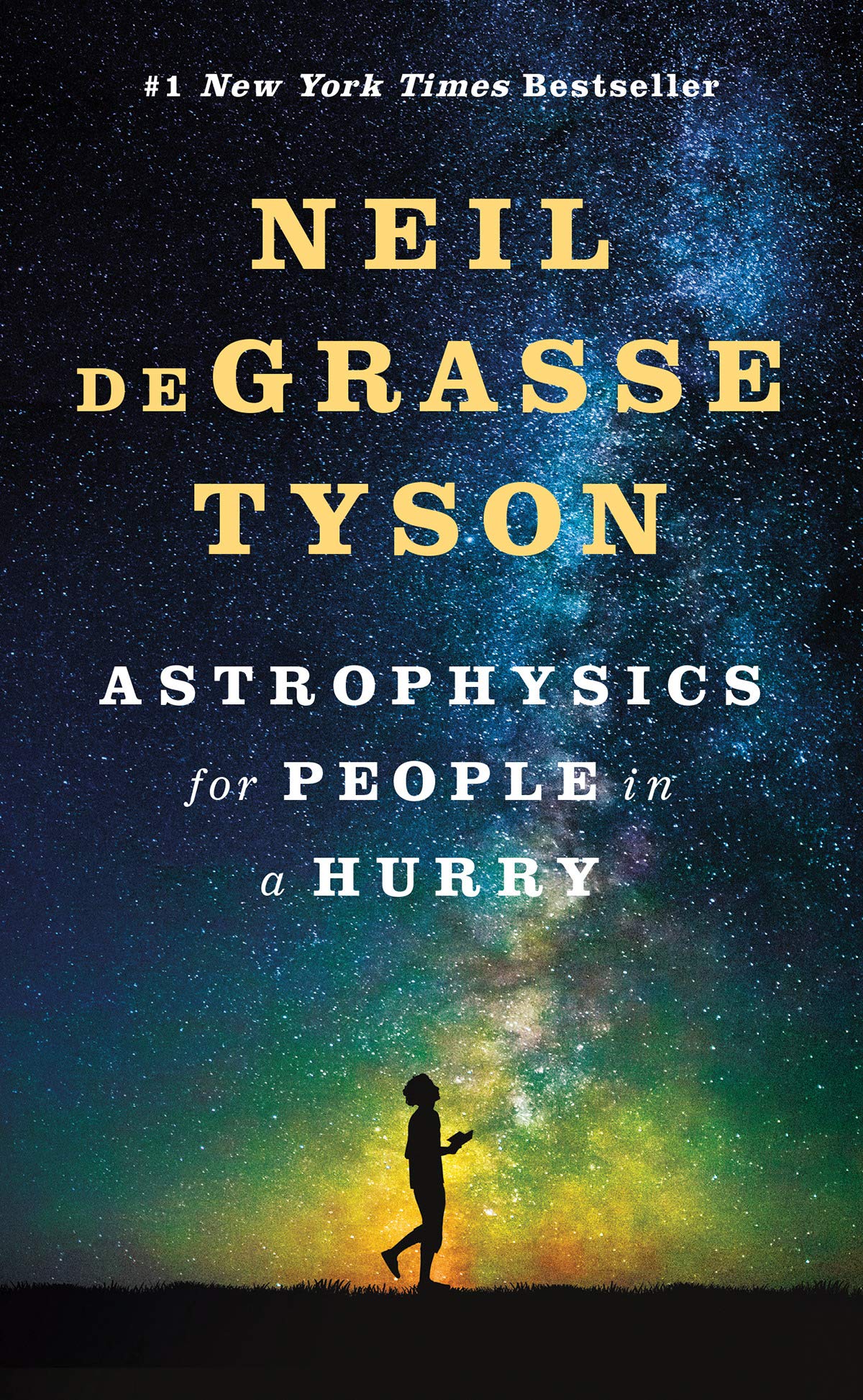
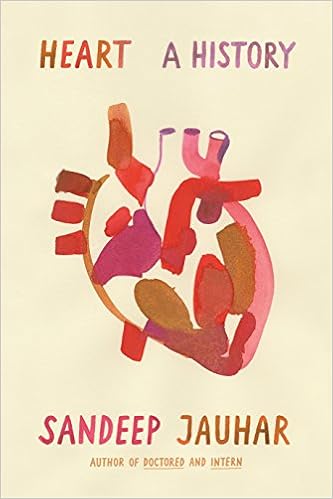
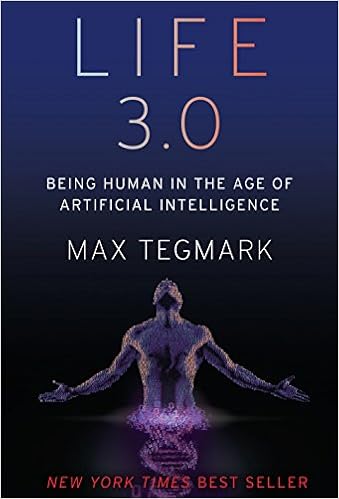
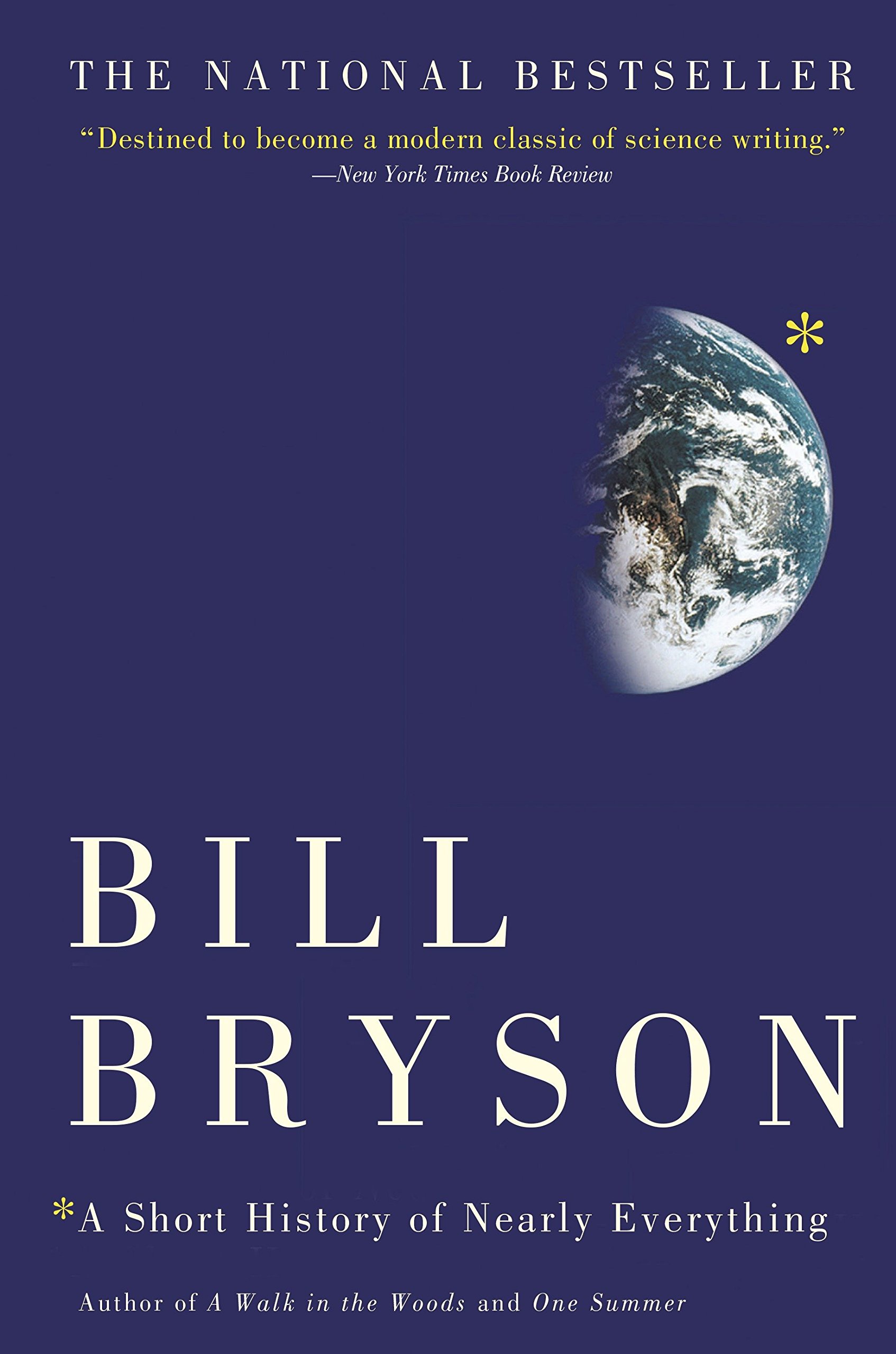






3Chatterbox
The year to come:
Here is what you can look forward to for the rest of the year!
March: True Crime, Misdemeanors and Justice, Past and Present Day: Wanna read about Nixon and Watergate? Or the poisons scandal of Louis XIV's court in 17th century France? The development of criminology? Books like The Suspicions of Mr. Whicher or David Grann's Killers of the Flower Moon all count. Or a bio of Thurgood Marshall, or others who worked or still work to correct injustices.
April: Comfort Reads: Whatever topic makes you feel warm & fuzzy inside. Animals? Cooking? What brings you joy? Music? Long walks? This could cross a number of more traditional challenge categories, and maybe will give us insight into each other...
May: History. In this case, my cutoff date is 1950. A bit arbitrary, but after the end of World War II and after the Berlin Airlift, the birth of the Marshall Plan and the start of the Cold War.
June: The Pictures Have It! Any book that relies on pictures to tell the story, from an illustrated graphic text, to a book of photographs, to an art catalog.
July: Biography & First Person Yarns
(Hopefully, self-explanatory!!)
*August: Raw Materials: Animal, Vegetable, Mineral
So, read a book that starts with animals, vegetables or minerals at its heart. You could read about the human animal -- medical science, how we die. How farm animals are treated. You could read about how we eat and cook (animal & vegetable.) You could read about how the world's natural resources are being developed -- or exploited (the oil industry?) and their impact on the environment (mineral AND vegetable.)
*September: Books by Journalists
As suggested by a member of this group! On ANY topic -- just check to be sure that the author is a journalist -- employed by a paper, writing freelance, past or present.
*October: Other Worlds: From Spiritual to Fantastical
Want to read about heaven (Christian version, Muslim version, etc.) and how to get there? Or reincarnation, Buddhist style? Or simply fantastical other world? (There's a new book either just out or coming soon that is a history of the science fiction novelists who really helped pioneer the genre in the mid-20th century, for instance.) If you find a book that writes about how the future will look -- plagues, environmental catastrophe, the impact of robotics -- that would fit, too. Think "other worlds" that aren't like the one we inhabit and take for granted. I'd even accept dramatically different variants on reality, like living through the Holocaust, under Pol Pot in Cambodia, or in a war zone or as a refugee or illegal immigrant.
November: Creators and Creativity
We've done this one before. Anyone who creates stuff -- preferably arts, since there's an earlier category dedicated to scientific and technological innovation. Dance; music; writing; painting; photography, etc. etc. The act of creation; controversies that ensue; collectors of art, patrons of art, what does creativity mean? (I think Nicholas Delbanco has written on this), etc.
December: I’ve Always Been Curious About…
A wide open category, pretty much. Your favorite category isn't here? Well, find a way to squeeze a book about it into December. Bummed that there isn't a category about the great outdoors? Well, read a book, and say you've always been curious about hiking the Pacific Coast trail, for instance. Or sailing. As long as you can complete the sentence with the topic of the book, you're good to go.
*a new topic for the 2019 edition of this challenge.
Here is what you can look forward to for the rest of the year!
March: True Crime, Misdemeanors and Justice, Past and Present Day: Wanna read about Nixon and Watergate? Or the poisons scandal of Louis XIV's court in 17th century France? The development of criminology? Books like The Suspicions of Mr. Whicher or David Grann's Killers of the Flower Moon all count. Or a bio of Thurgood Marshall, or others who worked or still work to correct injustices.
April: Comfort Reads: Whatever topic makes you feel warm & fuzzy inside. Animals? Cooking? What brings you joy? Music? Long walks? This could cross a number of more traditional challenge categories, and maybe will give us insight into each other...
May: History. In this case, my cutoff date is 1950. A bit arbitrary, but after the end of World War II and after the Berlin Airlift, the birth of the Marshall Plan and the start of the Cold War.
June: The Pictures Have It! Any book that relies on pictures to tell the story, from an illustrated graphic text, to a book of photographs, to an art catalog.
July: Biography & First Person Yarns
(Hopefully, self-explanatory!!)
*August: Raw Materials: Animal, Vegetable, Mineral
So, read a book that starts with animals, vegetables or minerals at its heart. You could read about the human animal -- medical science, how we die. How farm animals are treated. You could read about how we eat and cook (animal & vegetable.) You could read about how the world's natural resources are being developed -- or exploited (the oil industry?) and their impact on the environment (mineral AND vegetable.)
*September: Books by Journalists
As suggested by a member of this group! On ANY topic -- just check to be sure that the author is a journalist -- employed by a paper, writing freelance, past or present.
*October: Other Worlds: From Spiritual to Fantastical
Want to read about heaven (Christian version, Muslim version, etc.) and how to get there? Or reincarnation, Buddhist style? Or simply fantastical other world? (There's a new book either just out or coming soon that is a history of the science fiction novelists who really helped pioneer the genre in the mid-20th century, for instance.) If you find a book that writes about how the future will look -- plagues, environmental catastrophe, the impact of robotics -- that would fit, too. Think "other worlds" that aren't like the one we inhabit and take for granted. I'd even accept dramatically different variants on reality, like living through the Holocaust, under Pol Pot in Cambodia, or in a war zone or as a refugee or illegal immigrant.
November: Creators and Creativity
We've done this one before. Anyone who creates stuff -- preferably arts, since there's an earlier category dedicated to scientific and technological innovation. Dance; music; writing; painting; photography, etc. etc. The act of creation; controversies that ensue; collectors of art, patrons of art, what does creativity mean? (I think Nicholas Delbanco has written on this), etc.
December: I’ve Always Been Curious About…
A wide open category, pretty much. Your favorite category isn't here? Well, find a way to squeeze a book about it into December. Bummed that there isn't a category about the great outdoors? Well, read a book, and say you've always been curious about hiking the Pacific Coast trail, for instance. Or sailing. As long as you can complete the sentence with the topic of the book, you're good to go.
*a new topic for the 2019 edition of this challenge.
4Chatterbox
Some ideas for books that you might find interesting for this month's challenge
A large number of Simon Winchester's books, ranging from Krakatoa, which is a great look at geology, one of his passions, to the new The Perfectionists: How Precision Engineers Created the Modern World.
Ticker: The Quest to Create an Artificial Heart by Mimi Swartz
Inferior: How Science Got Women Wrong-and the New Research That's Rewriting the Story by Angela Saini
Making the Monster: The Science Behind Mary Shelley's Frankenstein by Kathryn Harkup
Astrophysics for People in a Hurry by Neil deGrasse Tyson
Neurotribes: The Legacy of Autism and the Future of Neurodiversity by Steve Silberman
Ada's Algorithm: How Lord Byron's Daughter Ada Lovelace Launched the Digital Age by James Essinger
Chasing Venus: The Race to Measure the Heavens by Andrea Wulf
Longitude by Dava Sobel (also her bio of Galileo and his struggles, Galileo's Daughter and several other of her books, including her tome on Copernicus.)
The Genetic Strand: Exploring a Family History Through DNA by Edward Ball
The Case against Perfection: Ethics in the Age of Genetic Engineering by Michael Sandel
Packing for Mars by Mary Roach (and many other of her books)
The Ghost Map by Steven Johnson (how clever scientifically-minded folks in Victorian London figured out the origins/causes of cholera by mapping an epidemic...)
Seeing in the Dark : How Amateur Astronomers Are Discovering the Wonders of the Universe by Timothy Ferris
The Book Nobody Read: Chasing the Revolutions of Nicolaus Copernicus by Owen Gingerich
Bring Back the King: The New Science of De-extinction by Helen Pilcher
The Lunar Men: Five Friends Whose Curiosity Changed the World by Jenny Uglow
The Age of Wonder: How the Romantic Generation Discovered the Beauty and Terror of Science by Richard Holmes
To Explain the World: The Discovery of Modern Science by Steven Weinberg
The Innovators: How a Group of Hackers, Geniuses, and Geeks Created the Digital Revolution by Walter Isaacson
Dark Territory: The Secret History of Cyber War by Fred Kaplan
Dragnet Nation: A Quest for Privacy, Security, and Freedom in a World of Relentless Surveillance by Julia Angwin
Zucked: Waking Up to the Facebook Catastrophe by Roger McNamee (publication date Feb 5)
The Net Delusion: The Dark Side of Internet Freedom by Evgeny Morozov
The Silicon Boys by David A. Kaplan
Walter Isaacson's bio of Steve Jobs
Why Things Bite Back: Technology and the Revenge of Unintended Consequences by Edward Tenner
Losing the Signal: The Untold Story Behind the Extraordinary Rise and Spectacular Fall of BlackBerry by Jacquie McNish
Bad Blood: Secrets and Lies in a Silicon Valley Startup by John Carreyrou
DarkMarket: Cyberthieves, Cybercops and You by Misha Glenny
Free Market Madness: Why Human Nature is at Odds with Economics--and Why it Matters by Peter Ubel
The Gene by Siddharta Mukherjee
Bring Back the King: The New Science of De-extinction by Helen Pilcher
The Clockwork Universe: Isaac Newton, the Royal Society, and the Birth of the Modern World by Edward Dolnick
Reinventing Knowledge: From Alexandria to the Internet by Ian McNeely
Chopin's Piano: In Search of the Instrument that Transformed Music by Paul Kildea (because innovation can be applied to musical instruments, remember!!)
Videocracy: How YouTube Is Changing the World . . . with Double Rainbows, Singing Foxes, and Other Trends We Can’t Stop Watching by Kevin Allocca
The Art of Language Invention: From Horse-Lords to Dark Elves, The Words Behind World-Building by David Peterson
How We Got to Now: Six Innovations That Made the Modern World by Steven Johnson
The Inventor and the Tycoon: A Gilded Age Murder and the Birth of Moving Pictures by Edward Ball
Future Perfect: The Case For Progress In A Networked Age by Steven Johnson
Map of a Nation: A Biography Of The Ordnance Survey by Rachel Hewitt
The geography of genius : a search for the world's most creative places from ancient Athens to Silicon Valley by Eric Weiner
The Fellowship: Gilbert, Bacon, Harvey, Wren, Newton and the Story of a Scientific Revolution by John Gribbin
The Dawn of Innovation: The First American Industrial Revolution by Charles R. Morris
Turing's Cathedral: The Origins of the Digital Universe by George Dyson
The Most Powerful Idea in the World: A Story of Steam, Industry and Invention by William Rosen
The Industrial Revolutionaries: The Making of the Modern World 1776-1914 by
Army of None: Autonomous Weapons and the Future of War by Paul Scharre
Money Changes Everything: How Finance Made Civilization Possible by William Goetzmann
Empires of Light by Jill Jonnes (about Edison, etc.)
Fifty Inventions That Shaped the Modern Economy by Tim Harford
Don't forget biographies! Marie Curie. Tesla (the man) and Elon Musk (the guy who created Tesla cars and built a giant company.) You can innovate a business model, too...
Biographies of Newton, of Alan Turing, of folks who stared into microscopes to understand how plants behave or the human body works.
A large number of Simon Winchester's books, ranging from Krakatoa, which is a great look at geology, one of his passions, to the new The Perfectionists: How Precision Engineers Created the Modern World.
Ticker: The Quest to Create an Artificial Heart by Mimi Swartz
Inferior: How Science Got Women Wrong-and the New Research That's Rewriting the Story by Angela Saini
Making the Monster: The Science Behind Mary Shelley's Frankenstein by Kathryn Harkup
Astrophysics for People in a Hurry by Neil deGrasse Tyson
Neurotribes: The Legacy of Autism and the Future of Neurodiversity by Steve Silberman
Ada's Algorithm: How Lord Byron's Daughter Ada Lovelace Launched the Digital Age by James Essinger
Chasing Venus: The Race to Measure the Heavens by Andrea Wulf
Longitude by Dava Sobel (also her bio of Galileo and his struggles, Galileo's Daughter and several other of her books, including her tome on Copernicus.)
The Genetic Strand: Exploring a Family History Through DNA by Edward Ball
The Case against Perfection: Ethics in the Age of Genetic Engineering by Michael Sandel
Packing for Mars by Mary Roach (and many other of her books)
The Ghost Map by Steven Johnson (how clever scientifically-minded folks in Victorian London figured out the origins/causes of cholera by mapping an epidemic...)
Seeing in the Dark : How Amateur Astronomers Are Discovering the Wonders of the Universe by Timothy Ferris
The Book Nobody Read: Chasing the Revolutions of Nicolaus Copernicus by Owen Gingerich
Bring Back the King: The New Science of De-extinction by Helen Pilcher
The Lunar Men: Five Friends Whose Curiosity Changed the World by Jenny Uglow
The Age of Wonder: How the Romantic Generation Discovered the Beauty and Terror of Science by Richard Holmes
To Explain the World: The Discovery of Modern Science by Steven Weinberg
The Innovators: How a Group of Hackers, Geniuses, and Geeks Created the Digital Revolution by Walter Isaacson
Dark Territory: The Secret History of Cyber War by Fred Kaplan
Dragnet Nation: A Quest for Privacy, Security, and Freedom in a World of Relentless Surveillance by Julia Angwin
Zucked: Waking Up to the Facebook Catastrophe by Roger McNamee (publication date Feb 5)
The Net Delusion: The Dark Side of Internet Freedom by Evgeny Morozov
The Silicon Boys by David A. Kaplan
Walter Isaacson's bio of Steve Jobs
Why Things Bite Back: Technology and the Revenge of Unintended Consequences by Edward Tenner
Losing the Signal: The Untold Story Behind the Extraordinary Rise and Spectacular Fall of BlackBerry by Jacquie McNish
Bad Blood: Secrets and Lies in a Silicon Valley Startup by John Carreyrou
DarkMarket: Cyberthieves, Cybercops and You by Misha Glenny
Free Market Madness: Why Human Nature is at Odds with Economics--and Why it Matters by Peter Ubel
The Gene by Siddharta Mukherjee
Bring Back the King: The New Science of De-extinction by Helen Pilcher
The Clockwork Universe: Isaac Newton, the Royal Society, and the Birth of the Modern World by Edward Dolnick
Reinventing Knowledge: From Alexandria to the Internet by Ian McNeely
Chopin's Piano: In Search of the Instrument that Transformed Music by Paul Kildea (because innovation can be applied to musical instruments, remember!!)
Videocracy: How YouTube Is Changing the World . . . with Double Rainbows, Singing Foxes, and Other Trends We Can’t Stop Watching by Kevin Allocca
The Art of Language Invention: From Horse-Lords to Dark Elves, The Words Behind World-Building by David Peterson
How We Got to Now: Six Innovations That Made the Modern World by Steven Johnson
The Inventor and the Tycoon: A Gilded Age Murder and the Birth of Moving Pictures by Edward Ball
Future Perfect: The Case For Progress In A Networked Age by Steven Johnson
Map of a Nation: A Biography Of The Ordnance Survey by Rachel Hewitt
The geography of genius : a search for the world's most creative places from ancient Athens to Silicon Valley by Eric Weiner
The Fellowship: Gilbert, Bacon, Harvey, Wren, Newton and the Story of a Scientific Revolution by John Gribbin
The Dawn of Innovation: The First American Industrial Revolution by Charles R. Morris
Turing's Cathedral: The Origins of the Digital Universe by George Dyson
The Most Powerful Idea in the World: A Story of Steam, Industry and Invention by William Rosen
The Industrial Revolutionaries: The Making of the Modern World 1776-1914 by
Army of None: Autonomous Weapons and the Future of War by Paul Scharre
Money Changes Everything: How Finance Made Civilization Possible by William Goetzmann
Empires of Light by Jill Jonnes (about Edison, etc.)
Fifty Inventions That Shaped the Modern Economy by Tim Harford
Don't forget biographies! Marie Curie. Tesla (the man) and Elon Musk (the guy who created Tesla cars and built a giant company.) You can innovate a business model, too...
Biographies of Newton, of Alan Turing, of folks who stared into microscopes to understand how plants behave or the human body works.
5Chatterbox
Some novels to read alongside the non-fiction you're reading here
*Please note that while it's fun to read some novels alongside the non-fiction books we're here to read and chat about, I'd respectfully request that you keep any discussion of them or any reviews to your own threads. What brings us here is the focus on non-fiction, and I don't want the focus to gradually shift. Thanks for understanding! If anyone else wants to set up a parallel thread devoted to related novels each month, where people could meet and chat -- if you all think there's a demand for that as well -- please feel free to do that. It's not something I've got the bandwidth to undertake at this time, and IMHO it might just be too much.
That said, here are the ideas!
Louisa Hall has written some interesting fiction on new technology ideas. Her latest is Trinity, about the Los Alamos project; before that, she had written Speak, about artificial intelligence and communication.
I suppose for a lot of folks, science fiction will fill this category, or even novels with robots.
There is The Wanderers by Meg Howrey, in which astronauts are on a mission to Mars, or Chris Brookmyre's mystery novel set on a space station, Places in the Darkness. You can go even further down the speculative rabbit hole here.
There are historical novels about scientifically-minded people, too.
The Last Days of Night by Graham Moore is about the battle over who would develop and control electric lighting, with Thomas Edison as a main character, and Tesla as the nutty scientist.
Transatlantic by Colum McCann covers the development of wireless, and it's a beautiful literary novel.
The Other Einstein by Marie Benedict -- the POV of a physicist who married a genius innovator
Enchantress of Numbers by Jennifer Chiaverini -- Ada Byron Lovelace is getting a lot more attention these days, and this is an OK biographical novel.
The Overstory by Richard Powers might be an interesting one here, given that it revolves around discoveries that trees communicate with each other.
The Terranauts by T.C. Boyle -- science demands extreme commitments...
State of Wonder by Ann Patchett -- the main character is a scientist exploring...
Unsheltered by Barbara Kingsolver -- looking back in time over a house's history to its former owner, a scientist. I may read this one.
*Please note that while it's fun to read some novels alongside the non-fiction books we're here to read and chat about, I'd respectfully request that you keep any discussion of them or any reviews to your own threads. What brings us here is the focus on non-fiction, and I don't want the focus to gradually shift. Thanks for understanding! If anyone else wants to set up a parallel thread devoted to related novels each month, where people could meet and chat -- if you all think there's a demand for that as well -- please feel free to do that. It's not something I've got the bandwidth to undertake at this time, and IMHO it might just be too much.
That said, here are the ideas!
Louisa Hall has written some interesting fiction on new technology ideas. Her latest is Trinity, about the Los Alamos project; before that, she had written Speak, about artificial intelligence and communication.
I suppose for a lot of folks, science fiction will fill this category, or even novels with robots.
There is The Wanderers by Meg Howrey, in which astronauts are on a mission to Mars, or Chris Brookmyre's mystery novel set on a space station, Places in the Darkness. You can go even further down the speculative rabbit hole here.
There are historical novels about scientifically-minded people, too.
The Last Days of Night by Graham Moore is about the battle over who would develop and control electric lighting, with Thomas Edison as a main character, and Tesla as the nutty scientist.
Transatlantic by Colum McCann covers the development of wireless, and it's a beautiful literary novel.
The Other Einstein by Marie Benedict -- the POV of a physicist who married a genius innovator
Enchantress of Numbers by Jennifer Chiaverini -- Ada Byron Lovelace is getting a lot more attention these days, and this is an OK biographical novel.
The Overstory by Richard Powers might be an interesting one here, given that it revolves around discoveries that trees communicate with each other.
The Terranauts by T.C. Boyle -- science demands extreme commitments...
State of Wonder by Ann Patchett -- the main character is a scientist exploring...
Unsheltered by Barbara Kingsolver -- looking back in time over a house's history to its former owner, a scientist. I may read this one.
6ronincats
Well, of the ones you list above, I have copies of Neurotribes, Longitude, and The Gene. Longitude is by far the one that has been longest in my tbr pile, as well as being the shortest AND being on my Kindle, so that's probably what I'll go with.
Just to mention, I really enjoyed The Ghost Map when I read it some years ago.
ETA Screw that choice. Although my Kindle did not show it being read, I got it from the library and read it last May. It will be either The Gene or Neurotribes.
Just to mention, I really enjoyed The Ghost Map when I read it some years ago.
ETA Screw that choice. Although my Kindle did not show it being read, I got it from the library and read it last May. It will be either The Gene or Neurotribes.
7LizzieD
Just today I turned to The Horse, the Wheel, and Language: How Bronze-Age Riders from the Eurasian Steppes Shaped the Modern World on my Kindle. I think it fits the challenge, and, always the optimist, I'm going to give it a spin.
8Chatterbox
>7 LizzieD: That sounds absolutely fascinating, and I can't wait to hear what you think of it. And where would we be without optimism???
>6 ronincats: I really, really hate discovering that I have read a book -- and apparently have no memory of doing so. I prefer to believe that it's the book's fault and has NOTHING to do with my memory or my age.
>6 ronincats: I really, really hate discovering that I have read a book -- and apparently have no memory of doing so. I prefer to believe that it's the book's fault and has NOTHING to do with my memory or my age.
9Familyhistorian
I pulled The Epigenetics Revolution: How Modern Biology Is Rewriting Our Understanding of Genetics, Disease, and Inheritance off the shelf for February. That should fit, I think.
10Chatterbox
>9 Familyhistorian: Most definitely it will fit, and yet another intriguing title!!
11SandDune
>9 Familyhistorian: I have that Epigenetics book too and might read that. Or the Neutotribes one which I also have somewhere. Or maybe both ...
12alcottacre
Since biographies are allowed, I am going to read Dr. Mutter's Marvels, which I have heard good things about.
13Crazymamie
I have Packing for Mars out from the library, so I'm going with that one.
14jessibud2
Just to add to your suggestions for Simon Winchester. His 2 books about the OED, The Professor and the Madman and The Meaning of Everything are both fascinating. And I can also vouch for Isaacson's book about Jobs.
Real life has intruded on my reading this month and I am not yet finished my January selection of The Massey Murder (though if I wait long enough, I can use that title for March, lol). However, if I can manage it, I would like to read another of Charlotte Gray's books for this month, Reluctant Genius, about Alexander Graham Bell. I do like Gray's writing.
Real life has intruded on my reading this month and I am not yet finished my January selection of The Massey Murder (though if I wait long enough, I can use that title for March, lol). However, if I can manage it, I would like to read another of Charlotte Gray's books for this month, Reluctant Genius, about Alexander Graham Bell. I do like Gray's writing.
15katiekrug
I just saw that Simon Winchester's book The Men Who United the States is on sale for Kindle (US) for $2.99.
The blurb: In this New York Times bestseller, the author of The Professor and the Madman reveals how explorers and innovators of all kinds forged a united American nation. “Vivid, valuable… An extraordinary, propulsive tale” (The Wall Street Journal).
The blurb: In this New York Times bestseller, the author of The Professor and the Madman reveals how explorers and innovators of all kinds forged a united American nation. “Vivid, valuable… An extraordinary, propulsive tale” (The Wall Street Journal).
16streamsong
I'll be listening to Astrophysics for People in a Hurry.
I also need to read last month's PBS/NYT's book club selection, Heart: A History by Sandeep Jauhar.
I also need to read last month's PBS/NYT's book club selection, Heart: A History by Sandeep Jauhar.
17countrylife
I'll be reading a book I borrowed from my son's shelf: Bill Bryson's A Short History of Nearly Everything. There are several BBs in this thread that I'd love to work in, should time be in my favor for a change.
Of other books mentioned - I also loved Ghost Map, The Professor and the Madman, and The Perfectionists.
Of other books mentioned - I also loved Ghost Map, The Professor and the Madman, and The Perfectionists.
18Caroline_McElwee
I'm going to read Life 3.0 by Max Tegmark.
This disappearing photos thing LT is suffering from is frustrating,
This disappearing photos thing LT is suffering from is frustrating,
19m.belljackson
>5 Chatterbox:
Hey - I added the fiction MEADOWLAND review to the NF one to be sure we got to 150.
For this month, there's DRINKING WATER by James Salzman and HEY THERE, EARTH DWELLER by MARC ter HORST.
Related fiction would be EYE OF THE WHALE and (brief mention in desert) THE GOLDFINCH.
Hey - I added the fiction MEADOWLAND review to the NF one to be sure we got to 150.
For this month, there's DRINKING WATER by James Salzman and HEY THERE, EARTH DWELLER by MARC ter HORST.
Related fiction would be EYE OF THE WHALE and (brief mention in desert) THE GOLDFINCH.
20Familyhistorian
>11 SandDune: The epigentic book was sitting beside my computer so I read the introduction, Rhian. Sounds very interesting so far.
21Chatterbox
Some more great books here! I think I need to hone my ducking tactics to avoid being peppered with book bullets...
Pls let me know if I missed anything you plan to read. I know some folks are mentioning books that they enjoyed or otherwise drawing attention to specific titles for reasons other than that they plan to read them, but I don't want to miss out on anything due to some assumption on my part.
>19 m.belljackson: Thanks for the additional fiction suggestions. I understand why to append a review, and appreciate the thought (phew, I was SO grateful I didn't have to nudge people across that threshold for January...) but the risk is we'll get caught up discussing a novel (for instance, if I read and really liked Unsheltered by Barbara Kingsolver, which some here have read and others haven't. In a perfect world, it would be great to keep these references to "hey, finished a novel linked to this that I LOVED, and you can find the review on my thread." In the same way that some of us will pop in with non-fiction news that isn't related to the month's theme as things unfold.
Moving on... I think one of my favorite books by Simon Winchester was The Map that Changed the World. It was an amazing look at a branch of science that he clearly loves but doesn't get a lot of broader attention -- geology -- and a great narrative of science and history. He has a knack for dealing well with earth science-type topics -- his books about the two major oceans, for instance.
Pls let me know if I missed anything you plan to read. I know some folks are mentioning books that they enjoyed or otherwise drawing attention to specific titles for reasons other than that they plan to read them, but I don't want to miss out on anything due to some assumption on my part.
>19 m.belljackson: Thanks for the additional fiction suggestions. I understand why to append a review, and appreciate the thought (phew, I was SO grateful I didn't have to nudge people across that threshold for January...) but the risk is we'll get caught up discussing a novel (for instance, if I read and really liked Unsheltered by Barbara Kingsolver, which some here have read and others haven't. In a perfect world, it would be great to keep these references to "hey, finished a novel linked to this that I LOVED, and you can find the review on my thread." In the same way that some of us will pop in with non-fiction news that isn't related to the month's theme as things unfold.
Moving on... I think one of my favorite books by Simon Winchester was The Map that Changed the World. It was an amazing look at a branch of science that he clearly loves but doesn't get a lot of broader attention -- geology -- and a great narrative of science and history. He has a knack for dealing well with earth science-type topics -- his books about the two major oceans, for instance.
22SuziQoregon
I'm going to listen to Apollo 8 by Jeffrey Kluger
23Familyhistorian
>21 Chatterbox: I am currently reading Krakatoa and the only previous Winchester that I read was A Crack at the Edge of the World. He delves into geology and plate tectonics in both books and clearly loves the subject. Krakatoa is very interesting and a bit less uncomfortable for me than the other book as I live close to the fault system he writes about in the one about the 1906 earthquake.
25quondame
I'm going for Die Erfindung der Hose, at least the English portion in the back - The Invention of Pants, mostly a discussion of a 5300 year old pair of pants found on a mummy.
26Chatterbox
>25 quondame: That may win the prize for best title, and quirkiest subject!
27Jackie_K
I'm not sure if my choice is entirely suitable, but it was the closest thing I could find to hand (I'm trying to meet the challenge using books already on my TBR rather than buying new ones). It's Tim Peake's Ask an Astronaut - he's the British astronaut who spent 6 months on the ISS in 2016, and this book covers not only the training and trivia about life on board, but also the scientific experiments he was involved in and discussion of the science and technology behind the space station. He was very active while on board (and since coming back to Earth) encouraging science in schools and generally making it more exciting and accessible to the general public in the UK.
28charl08
I think I'm going to try and read one from my shelf: Lunar Men, about a group of early scientists, as I really liked another book the author wrote, The Pinecone.
29alcottacre
Wow, there are a ton of good suggestions on this thread! I just wish I had access to all of them.
30SandDune
>27 Jackie_K: the British astronaut who spent 6 months on the ISS in 2016 A friend of mine has worked very closely with Tim Peake on his science education work.
31Jackie_K
>30 SandDune: Oh how cool! I love how he's made science so accessible.
32Matke
Ok. I have The Men Who United the States, so that’s on tap for this month.
What about The Man Who Loved China, Suzanne? It seems to fit the bill in that there’s lots s of info about Chinese inventions and innovations, but I’m not quite sure.
As an aside, I can highly recommend Dr. Mutter’s Marvels; if ever a man was a needed innovator, he was. Also recommend The Professor and the Madman, a marvelous if very sad book.
What about The Man Who Loved China, Suzanne? It seems to fit the bill in that there’s lots s of info about Chinese inventions and innovations, but I’m not quite sure.
As an aside, I can highly recommend Dr. Mutter’s Marvels; if ever a man was a needed innovator, he was. Also recommend The Professor and the Madman, a marvelous if very sad book.
33benitastrnad
I will be reading/listening to two books on science this month.
1. Merchants of Doubt: How A Handful of Scientists Obscured the Truth on Issues From Tobacco Smoke to Global Warming by Naomi Oreskes and Eric M. Conway
2. Astronaut Wives Club: A True Story by Lily Koppel
I also might get to Searching For Stars on an Island in Maine by Alan Lightman.
I loved the book I read last year for this challenge topic. It was Seeing in the Dark by Timothy Ferris. It was such a wonderful journey into the world of the night sky that it renewed my love of reading about science.
1. Merchants of Doubt: How A Handful of Scientists Obscured the Truth on Issues From Tobacco Smoke to Global Warming by Naomi Oreskes and Eric M. Conway
2. Astronaut Wives Club: A True Story by Lily Koppel
I also might get to Searching For Stars on an Island in Maine by Alan Lightman.
I loved the book I read last year for this challenge topic. It was Seeing in the Dark by Timothy Ferris. It was such a wonderful journey into the world of the night sky that it renewed my love of reading about science.
34Chatterbox
>32 Matke: Well, the subtitle says that it is about a scientist, so I would say that it fits, for that reason alone! :-) (It's so nice when queries are that easy and satisfying to answer...)
Will update images after I meet the next work deadline tonight.
Will update images after I meet the next work deadline tonight.
35benitastrnad
For those of you who are adding pictures into threads and postings, I wanted to let you know that I spoke with both Tim Spaulding and Loreanne Nasir about the problems with adding pictures into thread posts. They said that there is lots going on with that. One of the problems is that web sites are trying to stop hot linking. Hot linking is when you post a picture directly from the web site to another web site. Some companies like Amazon don't care, but others do. (Like Disney) As a result many sites are writing code to prevent, or slow down, the uploading of pictures to anywhere. (Do we see doom for Pinterest?) It is sometimes hard to keep up with the code changes, but now that LT is aware that there is a problem they are working on it.
Tim and Loreanne asked that if people have problems they post to the Bug Report thread. That is found in the Librarything Group. Or e-mail Loreanne. Here is her e-mail address.
Loranne Nasir
Make use of this e-mail address as Loranne's job is troubleshooting technical problems.
Tim and Loreanne asked that if people have problems they post to the Bug Report thread. That is found in the Librarything Group. Or e-mail Loreanne. Here is her e-mail address.
Loranne Nasir
Make use of this e-mail address as Loranne's job is troubleshooting technical problems.
36alcottacre
>32 Matke: I second the recommendation of The Professor and the Madman, Gail. I thought it was very good. I am a big Simon Winchester fan, having read several of his books.
37cbl_tn
I will try to read The Disappearing Spoon from my own shelves, and maybe listen to The Dorito Effect.
38cbl_tn
>28 charl08: I will be anxious to hear your thoughts about this one. I recently watched an episode of The Art Detectives on Acorn TV (which I think aired in the UK as Britain's Lost Masterpieces) about Joseph Wright of Derby, whose art was closely associated with the Lunar Society. It was my favorite episode of the 3 series.
39raidergirl3
>37 cbl_tn: I was very impressed with The Dorito Effect!
40mdoris
>37 cbl_tn:, >39 raidergirl3: Yes, we were greatly impressed too with The Dorito Effect. We still refer to it regularly as to how our tastebuds are manipulated with chemicals by the big food companies.
41m.belljackson
Chatterbox - see >19 m.belljackson: for more covers.
42Chatterbox
>41 m.belljackson: Sorry, it wasn't clear to me that those were books that you planned to read, as opposed to reading suggestions generally! Shall add them later tonight or tomorrow, when I next add them...
43benitastrnad
Wow! There is lots of stuff in this months reading lists. I am listening to Astronaut Wives Club and the narration is fine. This isn't heavy duty science. It is more about the families. Perhaps more social history than science, but it is interesting how "managed" by NASA the lives of the first astronaut families were.
44nittnut
I can highly recommend The Gene. Fascinating stuff and Mukherjee manages to make it very readable.
I am still finishing my book from January, but I think I will read Astrophysics for People in a Hurry with Mr. E, because he's interested, and it's probably about the right size book for my life right now.
I am still finishing my book from January, but I think I will read Astrophysics for People in a Hurry with Mr. E, because he's interested, and it's probably about the right size book for my life right now.
45Chatterbox
>43 benitastrnad: That kinda doesn't surprise me, given the era and the importance of the "space race" to American society at the time. Everyone wanted squeaky clean families, didn't they? And that was in the time when the FBI made all their agents dress in dark suits and ties and white shirts!
46fuzzi
>35 benitastrnad: as I understand it, hotlinking eats up the host's bandwidth. I upload my photos to LT, for the most part.
I try to use uploaded covers, as the Amazon covers often disappear a few days after linking.
I try to use uploaded covers, as the Amazon covers often disappear a few days after linking.
47Chatterbox
>46 fuzzi: I don't think I've had any problems viewing these images, even though I am pulling them from hotlinks. (I'm not going to upload them to my profile and then post... it's enough of a slog as it is... And sometimes using LT covers from the LT page simply doesn't work well. I find Amazon & Goodreads are the best options.) I am wondering whether one's own browser has something to do with it? I went back to covers I put up two years ago, and they are still there/visible. Hmmm....
48cbl_tn
>46 fuzzi: >47 Chatterbox: I can see these images on my laptop (Chrome/Windows 10) but only the first one shows up on my iPad.
49Chatterbox
>48 cbl_tn: More techno-weirdness... And that does make me wonder whether it's got something to do with the device, browser, etc. I can see them on both my Apple laptop and my Dell desktop, accessing LT via Chrome on both but Windows 8 on the desktop and some version of ios I assume on the Mac.
50cbl_tn
>49 Chatterbox: Can only see the first cover in Safari and Chrome on the iPad, but I can see all of the cover images in Firefox on the iPad.
51Chatterbox
Curiouser and curiouser... said Alice to LT.
52GerrysBookshelf
I plan on reading Who We Are and How We Got Here: Ancient DNA and the New Science of the Human Past by David Reich.
For those of you with e-readers, both Kindle and Nook have a sale today on science related books including: Darwin Comes to Town, The Military Science of Star Wars, Dark Matter and the Dinosaurs, The Breakthrough about immunotherapy, A Crack in Creation about gene editing, AIQ about artificial intelligence, The Sixth Extinction, Chasing New Horizons and more.
For those of you with e-readers, both Kindle and Nook have a sale today on science related books including: Darwin Comes to Town, The Military Science of Star Wars, Dark Matter and the Dinosaurs, The Breakthrough about immunotherapy, A Crack in Creation about gene editing, AIQ about artificial intelligence, The Sixth Extinction, Chasing New Horizons and more.
53benitastrnad
#49 & #50
Loranne said that the browser is part of the problem. I am not sure which one or ones are causing the problem, but the browser is part of it. The hot links is also part of it. Some of the image producers are getting really picky about use of their images and are running programs to delete them. I am not sure which companies are doing it, but Tim said that Amazon doesn’t care about the book covers begin pulled into LT. I do think that LT is trying to get members to upload and then link, but I am not going to do that. Takes too much time.
LT folks were really surprised how annoying users ground the complicated way of uploading pictures to be. (That is why it is important to let them know when you are having problems.) Tim said that this would definitely have to go to the top of the queue of work that his programmers need to do. It may get better soon. In the meantime - if you are having trouble put in a bug report. Or better yet - email Loranne. Here is the e-mail address
Loranne@librything.com
Loranne said that the browser is part of the problem. I am not sure which one or ones are causing the problem, but the browser is part of it. The hot links is also part of it. Some of the image producers are getting really picky about use of their images and are running programs to delete them. I am not sure which companies are doing it, but Tim said that Amazon doesn’t care about the book covers begin pulled into LT. I do think that LT is trying to get members to upload and then link, but I am not going to do that. Takes too much time.
LT folks were really surprised how annoying users ground the complicated way of uploading pictures to be. (That is why it is important to let them know when you are having problems.) Tim said that this would definitely have to go to the top of the queue of work that his programmers need to do. It may get better soon. In the meantime - if you are having trouble put in a bug report. Or better yet - email Loranne. Here is the e-mail address
Loranne@librything.com
54Caroline_McElwee
I do tend to upload and link. It has been harder to link to existing locations I've found.
55thornton37814
I'm convinced part of the issue is with "https" versus "http" in the image URLs. I've noticed most of the ones not displaying are https. I've right-clicked on the broken image and told it to open in another browser and gotten a privacy error. Then when I change the https to http, it displays. I'm using Chrome so it is one of the browsers with the issue.
56Chatterbox
Well, I use Chrome and don't seem to have this problem (at least on this page) except on a few other folks' pages. I think it has tended to be personal photos? In any event, going forward, I'll make every effort to make an image from Amazon or Goodreads (which I do anyway), and if I can't, then to use an http and not a https link.
I think what surprises me is that people seem to be having this issue NOW, repeatedly, whereas I can't remember a cluster of folks experiencing the same glitch consistently for a week or more in the past. At least, not based on comments re the covers posted in this thread... (and my methodology has remained the same as long as I have been doing this...)
I think what surprises me is that people seem to be having this issue NOW, repeatedly, whereas I can't remember a cluster of folks experiencing the same glitch consistently for a week or more in the past. At least, not based on comments re the covers posted in this thread... (and my methodology has remained the same as long as I have been doing this...)
57benitastrnad
I think that the problem is that many of the companies with images are regularly running programs to eliminate the hotlinks. That breaks the link and voila! a blank square. Tim said that linking to Amazon or Goodreads is different because they don't care if you use their image. At least not yet. They have not gone to the https links. However, Amazon has upped its rental rates for space on their servers, so ultimately the "cloud" storage on which Librarything depends may cost more. Tim says that Amazon will go to https links in the future - but not yet. And LT is working on finding a fix. As I said, Tim and Loranne were surprised about the number of people having this problem and how annoyed they are about it.
The image thing is troubling. What does this mean for Pinterest and other file sharing sites? People need to get paid for their images, and companies do as well. (That's capitalism.) As always copyright rears its head.
The image thing is troubling. What does this mean for Pinterest and other file sharing sites? People need to get paid for their images, and companies do as well. (That's capitalism.) As always copyright rears its head.
58cbl_tn
>55 thornton37814: Not having a problem with Chrome on a Windows 10 laptop at home, but I do have the problem with Chrome on my Windows 7 workstation at work.
>57 benitastrnad: I spent a couple of days in December cleaning up mixed content errors on my library's Springshare sites (LibGuides and LibAnswers) since they'll be forcing all pages to load via https by the end of March. I was told that http book covers pulled from Syndetics will not be a problem, but that http images from Amazon are currently a problem.
ETA: I can see the book covers in this thread in Chrome on Windows 7 as long as I make sure I load the thread via https.
>57 benitastrnad: I spent a couple of days in December cleaning up mixed content errors on my library's Springshare sites (LibGuides and LibAnswers) since they'll be forcing all pages to load via https by the end of March. I was told that http book covers pulled from Syndetics will not be a problem, but that http images from Amazon are currently a problem.
ETA: I can see the book covers in this thread in Chrome on Windows 7 as long as I make sure I load the thread via https.
59Jackie_K
I've just finished Ask An Astronaut which is a collection of all the various questions the British astronaut Tim Peake was asked about his mission, and it covers everything from astronaut recruitment, to training, to living on the ISS, and returning to Earth. It includes the obvious question of course (ie, how do you go to the toilet on the ISS?), but even though it is presented in a very accessible and readable way, the main thing that I have been left with having read this is the sheer amazing amount of scientific knowledge that has gone into building, running and maintaining life on the ISS (and space exploration in general). A very good (and not too taxing) read. 4/5.
60charl08
>59 Jackie_K: I've wondered about buying this as a gift for older children - do you think it's accessible enough for that sort of reader to dip into?
61Jackie_K
>60 charl08: Yes, I think so, it would work for high school-age children I would have thought. Some of the science might be a bit much for the younger high school-age kids, but overall I don't think that would matter. A lot of the questions came from schoolchildren initially!
62thornton37814
>58 cbl_tn: Mine is Windows 10. Strange. This thread is less problematic for me than others though.
63benitastrnad
#58
I had problems with all of my blog posts for the library because of the http and https problem. Our tech department couldn't figure out the answer and said that it was a Syndetics problem. I took care of that because as I told our tech department "I know people at Syndetics." I e-mailed Loranne and Tim, and they sent me the answer to the problem. I forwarded it to my tech department and now I have pictures in my blogs again. I was linking the blog post to the library catalog and all the library thumbnails come from Syndetics. It is nice to know people and rest assured - Tim cares about LT.
I had problems with all of my blog posts for the library because of the http and https problem. Our tech department couldn't figure out the answer and said that it was a Syndetics problem. I took care of that because as I told our tech department "I know people at Syndetics." I e-mailed Loranne and Tim, and they sent me the answer to the problem. I forwarded it to my tech department and now I have pictures in my blogs again. I was linking the blog post to the library catalog and all the library thumbnails come from Syndetics. It is nice to know people and rest assured - Tim cares about LT.
64LizzieD
I can't comment on tech problems. Even if I had a problem, I couldn't complain.
Instead, I'll just say that I'm really enjoying my entry for Feb., The Horse, the Wheel, and Language. I sort of think a person has to be a language nerd to enjoy it, but here's an extra bonus:
Sheep were first raised for food for 1,000 or so years (I'm remembering 4,000, but that sounds too long to me). It was not until they got into colder climates that sheep's wool became long enough for them to be bred for length so that the wool could be spun. For a long time they just felted the sheepy undercoats, but eventually began to spin and weave. This is important for Proto-Indo-European because PIE has roots for woven wool. They can use this as a suggestion of PIE's earliest date because scientists compare the age of sheep bones where found..... More bones of older sheep indicates that they were allowed to age for their wool rather than be slaughtered young for food. Therefore, PIE was a language by at least 4,000 BCE because this is the time when old bones appeared.
I have to say that I love this stuff.
Instead, I'll just say that I'm really enjoying my entry for Feb., The Horse, the Wheel, and Language. I sort of think a person has to be a language nerd to enjoy it, but here's an extra bonus:
Sheep were first raised for food for 1,000 or so years (I'm remembering 4,000, but that sounds too long to me). It was not until they got into colder climates that sheep's wool became long enough for them to be bred for length so that the wool could be spun. For a long time they just felted the sheepy undercoats, but eventually began to spin and weave. This is important for Proto-Indo-European because PIE has roots for woven wool. They can use this as a suggestion of PIE's earliest date because scientists compare the age of sheep bones where found..... More bones of older sheep indicates that they were allowed to age for their wool rather than be slaughtered young for food. Therefore, PIE was a language by at least 4,000 BCE because this is the time when old bones appeared.
I have to say that I love this stuff.
65quondame
>64 LizzieD: Cool. I'm a fiber geek so the later use of sheep for wool isn't news to me, but I love when technology is properly seen to include everything people make, including rope, baskets and clothing.
66alcottacre
I think that the book I am currently reading, The Big Ones, would qualify for this challenge. It is about historical earthquakes and what scientists through the years have learned about the nature of earthquakes and how technology has evolved to try and combat the effects.
67banjo123
So does any book on science work, or does it need to be on science/technology? I have A Primate's Memoir on tap.
68quondame
>66 alcottacre: One of our neighbors studied earthquakes and always seemed to move into an area just before big ones, Tehachpi, Denali for instance. He named his daughter Denali. The goat he (temporarily) tethered on his front lawn was named Madame Gnu, and he chiseled E=mc² in the petroglyphs north of the base.
69drneutron
I’m finishing up Newton and the Counterfeiter, dealing mainly with Newton’s stint as Warden of the Mint for Britain and his battling the destabilizing effect of commodity market manipulation and counterfeit coin trade on the currency. His innovations in coinage and banking play heavily in the story.
70benitastrnad
I made a weekend trip to Birmingham and so listened to the rest of Astronaut Wives Club by Lily Koppel. I enjoyed listening to this work of nonfiction and thought that the narrator did a good job. It was the perfect book for listening to on the daily commute because it didn't demand my thinking attention while reading. By that I mean that it is what I call history lite.
This was social history of the Mercury, Gemini, and Apollo space programs told from the point-of-view of the wives. I did not realize how managed the lives of the families were until reading this book. Everyone knows about the management of the astronauts, but the NASA management of the families is something that is not talked about as much. This book changes that and tells part of hidden women's history.
Even though I think that books like this are important I found the coverage of the lives and topics relevant to this topic to be uneven.
This was social history of the Mercury, Gemini, and Apollo space programs told from the point-of-view of the wives. I did not realize how managed the lives of the families were until reading this book. Everyone knows about the management of the astronauts, but the NASA management of the families is something that is not talked about as much. This book changes that and tells part of hidden women's history.
Even though I think that books like this are important I found the coverage of the lives and topics relevant to this topic to be uneven.
71Chatterbox
>67 banjo123: Absolutely, go for it.
Sorry to have been AWOL. McKesson keeps delivering spoiled doses of my new migraine drug, Aimovig, to me, meaning it's now been seven weeks since my last dose, and my migraines are back in full force. The good news is that clearly, the drug is helpful? The second attempt at a replacement will arrive on Tuesday. Sigh.
Sorry to have been AWOL. McKesson keeps delivering spoiled doses of my new migraine drug, Aimovig, to me, meaning it's now been seven weeks since my last dose, and my migraines are back in full force. The good news is that clearly, the drug is helpful? The second attempt at a replacement will arrive on Tuesday. Sigh.
72jessibud2
>71 Chatterbox: - Oh, I have been reading about this drug. I will be asking my doctor about it next time I go. Have you actually had any you have tried yet or is this something that is a problem? How do you know it's spoiled, or is that something the pharmacy is discovering before it reaches you? A concern, for sure. I currently take Zomig (which sounds like it might be in the same drug family but maybe not, I really don't know)
73Chatterbox
>72 jessibud2: It arrives in a refrigerated container with icepacks around it, and a little temperature indicator card. If that shows red or pink, it's supposedly been overheated and shouldn't be taken.
Zomig isn't the same thing. Aimovig is the first to be approved in an entirely new range of anti-migraine drugs known as CGRP inhibitors. CGRP is a kind of amino acid (oversimplifying) that researchers determined can actually TRIGGER migraines. When they finally discovered why -- that it gets into the trigeminovascular system, located outside the blood-brain barrier, and affects the blood vessels to trigger the release of compounds into the trigeminal nerve, etc. When researchers discovered that migraines begin in the brain stem and that the way the trigeminal nerve is structured/functions facilitates them from developing, and made the link to CGRP, they started work on developing medications that would inhibit production of CGRP altogether. Hence, Aimovig. There are some others in late-stage trials that have yet to be approved, but it's a completely new thing, working in a radically different way. None of this is perfectly understood yet, but it's getting better. And it's a whole lot better than any other medication I've tried in terms of effectiveness and side effects (of which I've had none.) But it's pricey (right now I'm on a special program to make it feasible to take, financially -- if I had to pay, I would be out of luck) and now I see, it's also a wee bit unstable. Hmm.
Definitely ask your doc about it if you have more than a certain amount of migraine days/month and other drugs aren't working well for you. Those are the criteria, as it is costly and not a first-line treatment. For me, after 40 years, it's kind of a last-ditch thing.
Zomig isn't the same thing. Aimovig is the first to be approved in an entirely new range of anti-migraine drugs known as CGRP inhibitors. CGRP is a kind of amino acid (oversimplifying) that researchers determined can actually TRIGGER migraines. When they finally discovered why -- that it gets into the trigeminovascular system, located outside the blood-brain barrier, and affects the blood vessels to trigger the release of compounds into the trigeminal nerve, etc. When researchers discovered that migraines begin in the brain stem and that the way the trigeminal nerve is structured/functions facilitates them from developing, and made the link to CGRP, they started work on developing medications that would inhibit production of CGRP altogether. Hence, Aimovig. There are some others in late-stage trials that have yet to be approved, but it's a completely new thing, working in a radically different way. None of this is perfectly understood yet, but it's getting better. And it's a whole lot better than any other medication I've tried in terms of effectiveness and side effects (of which I've had none.) But it's pricey (right now I'm on a special program to make it feasible to take, financially -- if I had to pay, I would be out of luck) and now I see, it's also a wee bit unstable. Hmm.
Definitely ask your doc about it if you have more than a certain amount of migraine days/month and other drugs aren't working well for you. Those are the criteria, as it is costly and not a first-line treatment. For me, after 40 years, it's kind of a last-ditch thing.
74jessibud2
>73 Chatterbox: - Thanks for that explanation. Actually, my Zomig works fairly well for me, most of the time. I can sometimes go weeks without a migraine but other times I can have one that lasts days without relief (I am currently on day 3 as we speak). Thankfully, not as often as some people I know (you might be one!). I have a friend, though, who would definitely be interested. She currently takes … ack, I am blanking on the name of her drug at the moment but she isn't allowed to take them too often. I can take up to 4 Zomig a day but have never taken more than 2. I can also take something called Ketorolac - I can take one of those right after a Zomig and it really helps. That, and an ice pack over my eyes and forehead, lying down in a dark room and/or a hot shower with the stream beating down on the back of my head and neck. And sips of Coca-Cola.
Whatever works!
Whatever works!
75cbl_tn
>71 Chatterbox: I'm so sorry to hear about the delivery issues. I can't begin to imagine how frustrating it must be to have the medication you need in hand but in an unusable condition. Fingers crossed that the next delivery arrives in good shape.
I think I'm going to change my planned read for this month to The Family Tree Guide to DNA Testing and Genetic Genealogy.
I think I'm going to change my planned read for this month to The Family Tree Guide to DNA Testing and Genetic Genealogy.
76Chatterbox
The next delivery arrived this morning, in good shape, and I have taken it!! Fingers and toes crossed...
>74 jessibud2: Yes, thank heavens for ice packs. Although one of the resident felines, Sir Fergus the Fat, has decided that my gel ice packs contain Greenie treats. Why, I don't know. So he attacks any that I leave lying around and disembowels them, leaving me, him and all kinds of furniture items covered in blue goo. Sigh.
I have finished my first read for this challenge, Zucked by Roger McNamee. The author is a friend and longtime source of mine, as well as an early investor in Facebook. And he's a technology junkie, who always has been fascinated by the evolution of the Internet and the various businesses that it has enabled to exist. But in early 2016, he began to realize that the quest by Facebook to build a business without "friction" and to maximize revenues, via the use of data harvesting and marketing, conflicted with all kinds of democratic fundamentals, not to mention FB's own statements of principles with respect to "users" -- a phrase McNamee takes issue with. And while he is one of the privileged handful to have had easy access to Zuckerberg and Sheryl Sandberg (he was an early mentor of Zuckerberg's), that access dried up the second he became critical or questioning of the business model. Which is when he got very curious indeed about how the technology really was being applied, the underlying algorithms, and the way that screen-based technologies, Google, FB, Twitter, etc. have developed technologies to monetize us, sometimes without our knowledge and in ways we don't even fully understand. When that monetization also involves manipulation, well, that crosses all kinds of barriers... Clearly, Roger wrote this rapidly, and there is repetition of key arguments throughout; stylistically, it's imperfect. But it's a Silicon Valley insider's view of what has gone wrong, which makes these insights particularly valuable (it's a great book to have read, as I did, only a few weeks after Weapons of Math Destruction, which also tackles the question of the misuse of quantitative models in myriad ways, from lending to prison sentencing.) I'm giving it 4.35 stars. Before you walk away from Facebook in disgust -- read it. And the issues it explores will explain why one of the presidential candidates among the Democrats who most interests me so far is Amy Klobuchar, for whom data protection and Internet privacy are big issues (along with climate change and other more predictable Democratic platform elements...)
>74 jessibud2: Yes, thank heavens for ice packs. Although one of the resident felines, Sir Fergus the Fat, has decided that my gel ice packs contain Greenie treats. Why, I don't know. So he attacks any that I leave lying around and disembowels them, leaving me, him and all kinds of furniture items covered in blue goo. Sigh.
I have finished my first read for this challenge, Zucked by Roger McNamee. The author is a friend and longtime source of mine, as well as an early investor in Facebook. And he's a technology junkie, who always has been fascinated by the evolution of the Internet and the various businesses that it has enabled to exist. But in early 2016, he began to realize that the quest by Facebook to build a business without "friction" and to maximize revenues, via the use of data harvesting and marketing, conflicted with all kinds of democratic fundamentals, not to mention FB's own statements of principles with respect to "users" -- a phrase McNamee takes issue with. And while he is one of the privileged handful to have had easy access to Zuckerberg and Sheryl Sandberg (he was an early mentor of Zuckerberg's), that access dried up the second he became critical or questioning of the business model. Which is when he got very curious indeed about how the technology really was being applied, the underlying algorithms, and the way that screen-based technologies, Google, FB, Twitter, etc. have developed technologies to monetize us, sometimes without our knowledge and in ways we don't even fully understand. When that monetization also involves manipulation, well, that crosses all kinds of barriers... Clearly, Roger wrote this rapidly, and there is repetition of key arguments throughout; stylistically, it's imperfect. But it's a Silicon Valley insider's view of what has gone wrong, which makes these insights particularly valuable (it's a great book to have read, as I did, only a few weeks after Weapons of Math Destruction, which also tackles the question of the misuse of quantitative models in myriad ways, from lending to prison sentencing.) I'm giving it 4.35 stars. Before you walk away from Facebook in disgust -- read it. And the issues it explores will explain why one of the presidential candidates among the Democrats who most interests me so far is Amy Klobuchar, for whom data protection and Internet privacy are big issues (along with climate change and other more predictable Democratic platform elements...)
77Chatterbox
So, I'm wrestling with what to read next. I picked up a copy of The Sixth Extinction by Elizabeth Kolbert -- Kindle sale price! -- with part of a very nice Amazon gift certificate that I got for my birthday, and I also would like to wrestle with The Clockwork Universe by Edward Dolnick, about Isaac Newton, which takes the form of an audiobook. About Newton, I've only read Newton and the Counterfeiter, which I found a bit plodding and also a bit "heavy", but have heard good things about Dolnick's book in terms of accessibility. Since so much of modern science seems to flow from Newton's discoveries.... Then, shall have to read the Carreyrou book before month's end (it must go back to the Athenaeum's library.) That's more of a story about how a group of people tried to develop new technologies and settled for trying to convince people that they HAD developed new technologies and scientific methodologies. Which is intriguing, as I think it speaks to our obsession with the "new new thing" and the difficulty in getting to a point where you understand complex technology.
78raidergirl3
>77 Chatterbox: Since so much of modern science seems to flow from Newton's discoveries.... nearly everything! (HS physics teacher and big fan of Newton)
Bad Blood was so good! in a very horrific way
Bad Blood was so good! in a very horrific way
79katiekrug
For what it's worth, I thought The Sixth Extinction was excellent. Fascinating, insightful and accessible.
80alcottacre
>68 quondame: I love the name of the goat, ha! I think studying earthquakes would be a fascinating field of study.
81Chatterbox
>79 katiekrug: Thanks for the nudge!!
>78 raidergirl3: I confess I'm slightly intimidated by Newton, never having even taken a physics course. These days, I think, they offer physics and other science courses for people who aren't scientific by inclination -- like science for liberal arts types. I probably would have had fun in those...
>78 raidergirl3: I confess I'm slightly intimidated by Newton, never having even taken a physics course. These days, I think, they offer physics and other science courses for people who aren't scientific by inclination -- like science for liberal arts types. I probably would have had fun in those...
82drneutron
>78 raidergirl3:, >81 Chatterbox: Well, Newton fans should check out Newton and the Counterfeiter. One of his challenges later in life was chasing counterfeiters as Warden of the Mint - and he was surprisingly good at it!
83Chatterbox
>82 drneutron: Yes, I read that, waaaay back in 2010 or 2011. The subject was enjoying but I found the writing ponderous, if I recall correctly. Overall, it didn't have the impact I thought it might. But still -- Newton fighting counterfeiting?!?! It was a big problem back then, however (and a capital crime), with people literally "clipping" coins. One good argument in favor of paper currency...
84benitastrnad
I finished reading Merchants of Doubt: How a Handful of Scientists Obscured the Truth on Issues From Tobacco Smoke to Global Warming by Naomi Oreskes and all I have to say - Wow! The scientific community and the rest of us had better take lessons from the tobacco industry on how to create, spread, and perpetuate fake news.
I chose this book to read for this challenge because I am one of those citizens of the world who is incensed by the fact that our democracy is under attack from our own people as well as outside governments, and with the election of 2016 I wondered where this virulent hatred of experts and academics came from. I started a small themed reading of my own, and this title was one of the books I had on that list.
This book was an eye opener. It is true that a small group of scientists influenced public policy over a period of 50 years. The same three names pop up over and over whenever questions are raised about the accuracy of the science that has to do with a select number of topics. The topics are tobacco and second-hand smoke, acid rain, nuclear winter, air pollution, and global warming. I am not one to believe in conspiracy theories, but this might make me a believer. These same three scientists spent 50 years on various boards and held various political appointments where they used their scientific credentials to cast doubt on other scientists work as well as on the scientists themselves. They and the companies that they worked for, as well as several conservative think tanks, are responsible for much of the "doubt" that has been cast on the veracity of scientific fact. The fact is that there was and is no "doubt" about the science that tobacco and second-hand smoke cause lung cancer. There never was and the tobacco companies knew that. There is no "doubt" about acid rain causing changes to the plants and animals in the path of the chemicals carried downstream winds cause all sorts of diseases and mutations because it is changing our water supply. The science about nuclear winter was sound, and personal attacks on Carl Sagan couldn't change that, and in fact is now the accepted theory for why the dinosaurs died out. The science about global warming and the ozone layer is sound. Always has been. Even from the beginning. Modern software programs are only proving the conclusions arrived at through sound science about global warming done as far back as the 1950's.
The book is not written by scientists. It is written by two historians. Their specialty is the history of science.
This is a scary book. It is not easy to read. It is not easy narrative non-fiction. The author warns the reader that in order to protect themselves they had to footnote everything. Indeed, almost every sentence in parts of the book carries a footnote with it. If you want easy to read narrative non-fiction this book is not for you. If you want the facts this book presents them. They will probably scare you enough to make you not trust anything you read anywhere.
I think this is an important book for those of us in Academe. It validates the scientific method and peer review. It does not let the media get away unscathed. In fact, the author's believe that the lack of education of journalists covering scientific matters and the lack of cooperation between political and scientific journalists results in a grave misunderstanding of science and scientific research. The fact that three scientists held undue sway over the space where science and public policy intersect is troubling. That they did so for more than fifty years without the scientific community calling them on their conduct is gross negligence. For that Academe is to blame.
I chose this book to read for this challenge because I am one of those citizens of the world who is incensed by the fact that our democracy is under attack from our own people as well as outside governments, and with the election of 2016 I wondered where this virulent hatred of experts and academics came from. I started a small themed reading of my own, and this title was one of the books I had on that list.
This book was an eye opener. It is true that a small group of scientists influenced public policy over a period of 50 years. The same three names pop up over and over whenever questions are raised about the accuracy of the science that has to do with a select number of topics. The topics are tobacco and second-hand smoke, acid rain, nuclear winter, air pollution, and global warming. I am not one to believe in conspiracy theories, but this might make me a believer. These same three scientists spent 50 years on various boards and held various political appointments where they used their scientific credentials to cast doubt on other scientists work as well as on the scientists themselves. They and the companies that they worked for, as well as several conservative think tanks, are responsible for much of the "doubt" that has been cast on the veracity of scientific fact. The fact is that there was and is no "doubt" about the science that tobacco and second-hand smoke cause lung cancer. There never was and the tobacco companies knew that. There is no "doubt" about acid rain causing changes to the plants and animals in the path of the chemicals carried downstream winds cause all sorts of diseases and mutations because it is changing our water supply. The science about nuclear winter was sound, and personal attacks on Carl Sagan couldn't change that, and in fact is now the accepted theory for why the dinosaurs died out. The science about global warming and the ozone layer is sound. Always has been. Even from the beginning. Modern software programs are only proving the conclusions arrived at through sound science about global warming done as far back as the 1950's.
The book is not written by scientists. It is written by two historians. Their specialty is the history of science.
This is a scary book. It is not easy to read. It is not easy narrative non-fiction. The author warns the reader that in order to protect themselves they had to footnote everything. Indeed, almost every sentence in parts of the book carries a footnote with it. If you want easy to read narrative non-fiction this book is not for you. If you want the facts this book presents them. They will probably scare you enough to make you not trust anything you read anywhere.
I think this is an important book for those of us in Academe. It validates the scientific method and peer review. It does not let the media get away unscathed. In fact, the author's believe that the lack of education of journalists covering scientific matters and the lack of cooperation between political and scientific journalists results in a grave misunderstanding of science and scientific research. The fact that three scientists held undue sway over the space where science and public policy intersect is troubling. That they did so for more than fifty years without the scientific community calling them on their conduct is gross negligence. For that Academe is to blame.
85raidergirl3
>82 drneutron: I'm sure I read a fictional account of Newton fighting the counterfeiters, working at the Tower of London. It must be Dark Matter but I don't have it listed here on LT, so probably a long time ago. But now I'm wondering if I actually read it or maybe just read about it, and think I have?
>81 Chatterbox: Many years ago, our grade eleven physics was taught as a Conceptual Physics course, so, very little math or calculations. This was based on a textbook by Paul Hewitt, and I'm sure there are videos on youtube of Hewitt's lectures. He does such a great job explaining basic concepts that I still show some of his videos to my classes. There is nothing fancy - just him up lecturing and explaining.
>81 Chatterbox: Many years ago, our grade eleven physics was taught as a Conceptual Physics course, so, very little math or calculations. This was based on a textbook by Paul Hewitt, and I'm sure there are videos on youtube of Hewitt's lectures. He does such a great job explaining basic concepts that I still show some of his videos to my classes. There is nothing fancy - just him up lecturing and explaining.
87drneutron
>85 raidergirl3: Dark Matter is on my wishlist!
89RBeffa
I'm reading a book by Simon Winchester, A Crack in the Edge of the World: America and the Great California Earthquake of 1906. I'm not terribly far into it but I am enjoying it a lot. So far it is only nominally about the 1906 earthquake. What this seems to really be about is the birth of modern geology in the late 60's and early 70's as well as a lot more. I was surprised and pleased to find about a 7 page sequence on Eldridgge Moores. When I was in college at UC Davis in the early 70's I took a geology course on what was then a new theory, plate tectonics, and it was given by James Valentine and Eldridge Moores. It turned out to be one of the best classes I ever took. Both men were excellent teachers and it was exciting. Moores has since become a giant in the field. He just died a few months ago and I was saddened when I read that.
90Chatterbox
Started reading the Elizabeth Kolbert book, The Sixth Extinction, last night and it's grabbed my attention in a chilling way. Gulp. Who knew that I would find Panamanian frogs and their fate so compelling??
91katiekrug
>90 Chatterbox: - Such a good book.
92SuziQoregon
I'm loving listening to Apollo 8.
The other night on my way home from work I was at the part where the ship went behind the moon and out of communication for the first time. I hadn't realized that they also had to make a crucial burn maneuver at that same time. Even though I obviously knew all had went well I was still tense and hearing the story from the viewpoint of mission control. I sat in my driveway and continued listening until I got to the point where they were back in communication with mission control so I could relax. I'm already telling The Hubster that this is his next audiobook and I won't take no for an answer.
The other night on my way home from work I was at the part where the ship went behind the moon and out of communication for the first time. I hadn't realized that they also had to make a crucial burn maneuver at that same time. Even though I obviously knew all had went well I was still tense and hearing the story from the viewpoint of mission control. I sat in my driveway and continued listening until I got to the point where they were back in communication with mission control so I could relax. I'm already telling The Hubster that this is his next audiobook and I won't take no for an answer.
93streamsong
I finished listening to Astrophysics for People in a Hurry authored and read by Neil deGrasse Tyson. I loved it. He does a great job making the hard-to-comprehend comprehendible. And, it's a very short book, if someone is still looking for a book for this challenge. ;)
However, I think I need a hard copy of this book for my library instead of the audio. I may have understood concepts while listening, but I'm not sure how long I will remember them. It also would have been nice to have been able to flip backward and review previous sections. Usually I like audios for books that I might otherwise bog down within; for this one I think a hard copy would have been better.
However, I think I need a hard copy of this book for my library instead of the audio. I may have understood concepts while listening, but I'm not sure how long I will remember them. It also would have been nice to have been able to flip backward and review previous sections. Usually I like audios for books that I might otherwise bog down within; for this one I think a hard copy would have been better.
94SuziQoregon
>93 streamsong: I totally agree about that book. I loved listening to it but immediately checked out the ebook from the library so I could review things I had heard.
95benitastrnad
#92
I read Rocket Men by Robert Kurson last year and liked it. (Actually I listened to it.) Like you I found the story interesting and was surprised by the drama in the story. So many things that could have gone wrong and didn't. That was why I was interested in reading Astronaut Wives Club. I wanted a little more information about these people. I would like to read more about the mission control guys as well. People like Chris Craft, etc.
I read Rocket Men by Robert Kurson last year and liked it. (Actually I listened to it.) Like you I found the story interesting and was surprised by the drama in the story. So many things that could have gone wrong and didn't. That was why I was interested in reading Astronaut Wives Club. I wanted a little more information about these people. I would like to read more about the mission control guys as well. People like Chris Craft, etc.
96SuziQoregon
>95 benitastrnad: So do I. I do have another audiobook that I have and plan to read A Man on the Moon: The Voyages of the Apollo Astronauts by Michael Chaikin. It's obviously broader scoped than Apollo 8 but I'm looking forward to it. I read another book by Robert Kurson years ago and liked it. I might see about getting Rocket Men. I foresee a binge of space related books in my future.
97Matke
>85 raidergirl3: It’s depressing but necessary, I think, to read books like this one. Like you, I tend to pooh-pooh conspiracies, but the more I read about how science has been subverted and submerged, and how intellectuals in general have been mocked and despised, the less sure I am about the good intentions of others, and of our government as a whole.
98Matke
That should be >84 benitastrnad: above.
99raidergirl3
>98 Matke: lol, it took me a minute to see this message as I was trying to figure out what >97 Matke: was about. All cleared up!
100charl08
I'm reading about the flu epidemic in 1918 in Pale Rider. I read Sjón's novel last year about the catastrophic effects of the flu on Iceland (there is a really creepy scene in a cinema where someone starts coughing: uh oh). Good to get some understanding of how that fitted the wider picture.
101Chatterbox
>100 charl08: Wow, yes, the flu pandemic -- that's a chilling story! I read a few books about that a little while back, including one about how new exhumations of bodies from the permafrost helped scientists understand new stuff about the disease itself, which unusually claimed a significant number of victims from healthy, active young and middle-aged people, rather than the usual groups to suffer, the very young and very old.
102Chatterbox
So, I finished The Sixth Extinction by Elizabeth Kolbert, and it's both immensely readable and fascinating. And completely chilling. We tend to think a lot more about how the concept of evolution came to be scientifically accepted, but I never really spent much time ruminating on when people finally understood that there had been animals that had gone extinct, and what that implied/suggested -- turns out that it was about midway through the 19th century, as fossil hunting became more mainstream and exploration proved that nope, there were only mastodon bones and not any live mastodons left to be found anywhere out there... The main story probably isn't a surprising one: the impact of our single obnoxious species on so many others, wiping them out either directly (overfishing, hunting for feathers or poaching for rhino horns or trophies) or indirectly (global warming, where we're probably killing all kinds of species we don't even know about, from amphibians to insects. There may be an upside here, in that every previous mass extinction event has been followed by an resurgence of species diversity, whether caused by changes in climate patterns or an asteroid strike, but (a) we won't be here to see it and (b) it will take millions upon millions of years. And who knows whether this time will break that pattern because we don't leave enough seeds behind for new multicellular organisms to take root and thrive? VERY provocative. I found a new appreciation for bats, on top of it all... 5 stars....
103Chatterbox
And a gentle reminder. You'll note that I just broke my comments here into three separate posts -- because with the end of the month approaching, to ensure a seamless transition to the March thread for everyone who has starred this thread and not force them to go find it and star it again, we need 151 posts by Wednesday or thereabouts. We did amazingly well last month, but haven't been quite as chatty this month.
104Chatterbox
And just to give us an extra push: I think I'm going to pick up the David Sanger book, which just came into the Athenaeum, and see if I can finish it by month's end. It's The Perfect Weapon and deals with the role of technology and cybersecurity in war and national defense. But I may not make it, because I'm suddenly awash in Very Good Books.
105charl08
>101 Chatterbox: Yup, the elderly academic digging up mass graves in Alaska features here too.
As someone who has studied "global" history I am particularly impressed by how Spinney makes this story international in an accessible way: from Iceland to Alaska, Nigeria to Fiji. Although I would like more Africa, I'm sure there are other books I could be reading just on that.
As someone who has studied "global" history I am particularly impressed by how Spinney makes this story international in an accessible way: from Iceland to Alaska, Nigeria to Fiji. Although I would like more Africa, I'm sure there are other books I could be reading just on that.
106charl08
>102 Chatterbox: Does she mention the seed bank projects (e.g. in the UK, Kew)? Or is the theory that they'll all be destroyed in **insert apocalyptic event here**?
107charl08
I'm not sure about next month's reading re true crime. (>3 Chatterbox:) I just read Murder by the Book, which looked at the impact of reading about criminals in the 1830s and 40s - and a popular / notorious murder case that was supposedly influenced by that. Another bonus: it's not terribly long!
108Jackie_K
I'm not sure if I can do next month either, but here's one more towards 151! I'm trying to read already-owned books for my challenges, and as I'm a total wimp crime is an area I tend to avoid, in both fiction and non-fiction!
109charl08
>108 Jackie_K: Oh, sorry! I meant I was after suggestions. I had a quick google and am quite tempted by The Poisoner's Handbook. (Although, I do prefer the historical true crime ones. I'm not sure I'd be rushing to read I'll be Gone in the Dark, for example - a bit too close to now to be possible, and therefore terrifying).
110streamsong
>94 SuziQoregon: Precisely! I'll definitely be looking for a used print copy of Astrophysics for People in a Hurry.
111streamsong
I'm also contemplating what to read next month. I'm leaning towards Bad Blood: Secrets and Lies in a Silicon Valley Startup, which would also work for the present month of science innovations.
I'm not in the mood for gore.
I'm not in the mood for gore.
112jessibud2
>108 Jackie_K: - You have spoken for me, too. I don't enjoy violence as entertainment, not in movies or tv, either. That said, I did read The Massey Murder last month as it was a prize winner and in truth, was only marginally about the actual crime and much more about the trial, the law, history, and that is much more to where my interests lie.
Next month I will probably just finish up the book I am currently reading for this month as there is no way I will finish it before February is done.
Next month I will probably just finish up the book I am currently reading for this month as there is no way I will finish it before February is done.
113Caroline_McElwee
I think I'm going to have to do this month's theme, next month, as I'm running out of time harrumph.
114raidergirl3
>111 streamsong: Bad Blood was my read for January as a prize winning book, could be this month- although there was no actual innovation, just a conwoman. Definitely next month!
I’m hoping to get to Run Hide Repeat by Pauline Dakim. I’ve heard her on CBC radio talk about her strange childhood.
I’m hoping to get to Run Hide Repeat by Pauline Dakim. I’ve heard her on CBC radio talk about her strange childhood.
115quondame
Die Erfindung der Hose 

The history of pants really describes the find in Western China of the amazingly preserved 3000 year old mummy's clothing, and detailed the re-creation of same. Great Pictures, the English is cursory, but adequate. With a couple of lacuna almost enough to recreate the item - more detail of measurements and waistband detail should be included.
And, the full glory of the pants:


The history of pants really describes the find in Western China of the amazingly preserved 3000 year old mummy's clothing, and detailed the re-creation of same. Great Pictures, the English is cursory, but adequate. With a couple of lacuna almost enough to recreate the item - more detail of measurements and waistband detail should be included.
And, the full glory of the pants:

116Chatterbox
For those wary about true crime -- remember, it can also extend to justice. So big court cases, like that book about Thurgood Marshall's early career, Devil in the Grove, would count. Or you could read about human rights crimes, and punishments, such as the attempts to locate and bring to justice war criminals across the decades since 1945 (Nuremberg trials, Pol Pot -- Nic Dunlop wrote a good book about locating one of the key Khmer Rouge people -- and later on, those involved in what happened in the former Yugoslavia.) You don't need to pick up a true book detailing the true crimes of some serial killer or other... You could even tackle something about white collar crime, like insider trading or fraud or espionage. Want to read a biography of Kim Philby? Ben Macintyre wrote a great one...
117Matke
>102 Chatterbox: Wow, that one sounds fascinating! I love reading about fossil finds and the like, and how those finds can lead to some fairly strange conclusions. Even though this book might be a bit of a downer, still...
118Matke
On the other hand, my first read for this month, The Man Who Loved China, is pretty disappointing. It’s mostly a work of the more fulsome hagiography type: Winchester simply fawns over this man, Joseph Needham.
It’s true that Needham was a brilliant polymath. And it’s true that he began and pushed along and followed through with a huge 24-volume history of scientific developments in China. But...Needham was an avowed and convinced socialist, very nearly a true Communist. And that’s fine, of course. But nowhere in this book does Winchester point out the irony of a committed socialist living a life a extremely high privilege—almost unbelievable privilege, in fact.
The author, while fudging a bit because he’s so very reluctant to admit the Needham might possibly have feet of clay,does discuss Needham’s gullible acceptance of staged examples of the United States’ use of biological warfare in North Korea. The Russians later openly admitted that the whole thing was fabricated, and yet it took this brilliant scientist in.
And there wasn’t a whole lot about science, either.
Really, it’s too bad, since Winchester’s books about the Krakatoa volcano, the San Francisco earthquake, and the Oxford English Dictionary were outstanding.
I hope the next one, also by Winchester, is better.
It’s true that Needham was a brilliant polymath. And it’s true that he began and pushed along and followed through with a huge 24-volume history of scientific developments in China. But...Needham was an avowed and convinced socialist, very nearly a true Communist. And that’s fine, of course. But nowhere in this book does Winchester point out the irony of a committed socialist living a life a extremely high privilege—almost unbelievable privilege, in fact.
The author, while fudging a bit because he’s so very reluctant to admit the Needham might possibly have feet of clay,does discuss Needham’s gullible acceptance of staged examples of the United States’ use of biological warfare in North Korea. The Russians later openly admitted that the whole thing was fabricated, and yet it took this brilliant scientist in.
And there wasn’t a whole lot about science, either.
Really, it’s too bad, since Winchester’s books about the Krakatoa volcano, the San Francisco earthquake, and the Oxford English Dictionary were outstanding.
I hope the next one, also by Winchester, is better.
119SuziQoregon
For next month I'm finally going to listen to Midnight in the Garden of Good and Evil. It's been on my TBR list for AGES and it works for both this challenge and another one I'm doing this year.
120Jackie_K
>116 Chatterbox: Thank you for the clarification! I think the only book I can think of that I have on the TBR stacks which might fit for March is The Boy Who Could Change the World: The Writings of Aaron Swartz - he's the 'hacktivist' who illegally made loads of academic journals free to access and was arrested and threatened with 35 years in prison, but then committed suicide at the age of 26. I'm not sure how much of that case is covered in this book though.
121Chatterbox
>120 Jackie_K: Well, if he is writing about knowing that society deems something to be criminal, and deciding that it shouldn't be, and thus trying to undermine that "law", that would work. If he's really just writing about his philosophy about freedom of information, that's slightly different. For instance, I would say that reading something about Snowden would fit this, given that he clearly understood he was breaking a law, but thought that the law was less important than revealing the information. Plus, any book about him would definitely address the legal jeopardy he found himself in. I'll let you decide once you start reading -- let us know!
122Chatterbox
Not sure whether Bad Blood by John Carreyrou or the David Sanger book will get read this month, but both would probably still fit in next month, ironically. The former book deals with technology that wasn't what its creators pretended, and thus fits into the idea of corporate fraud (true crime!!) while the latter addresses cyber-espionage (definitely criminal...)
123fuzzi
Here's my attempt to push us over 150...
My main objective this year is to read and/or discard books that have been on my shelves for more than a year, unread, as part of the ROOT challenge.
I checked out the books in my library that qualified as ROOTs, but wasn't able to find anything for this month's read, so I'm hoping I can get back into the swing in March.
My choice next month is an ebook that has been on my iPad for years, In the Presence of My Enemies, about the kidnapping of a missionary couple in the Philippines. It certainly is true, and a crime, so I think it should fit.
My main objective this year is to read and/or discard books that have been on my shelves for more than a year, unread, as part of the ROOT challenge.
I checked out the books in my library that qualified as ROOTs, but wasn't able to find anything for this month's read, so I'm hoping I can get back into the swing in March.
My choice next month is an ebook that has been on my iPad for years, In the Presence of My Enemies, about the kidnapping of a missionary couple in the Philippines. It certainly is true, and a crime, so I think it should fit.
124Jackie_K
>121 Chatterbox: Thank you! I'll start reading it, and work out if it's suitable or not as I go!
125raidergirl3
I finished Force of Nature: The Frontier Genius of Ernest Rutherford by Richard Reeves which I’ve had for many years on my shelf.
I teach HS physics and was a Chen major in university so I knew Rutherford from the Bohr-Rutherford model of the atom but I didn’t know about him. He moved from Nee Zealand to attend school in England at Cavendish labs. He was considered the experimental physicist to Einstein’s theoretical, and they were both as influential to physics in the early 1900s as anyone.
Just imagining the excitement as the subatomic particles were identified and how much they all figured out made this a great read. Rutherford supported women like Lise Mietner and Marie Curie (his actual rival in studying radioactivity) and mentored nearly every famous name from that era. Geiger, Bohr, Langevin, are just the ones off the top of my head. Rutherford came off very good with no real warts, so I’m not sure if he really was so wonderful and energetic, or if the book is leaving out stuff.
If I ever visit McGill university in Montreal I’d love to go see the preserved lab from Rutherford’s time in Canada.
I teach HS physics and was a Chen major in university so I knew Rutherford from the Bohr-Rutherford model of the atom but I didn’t know about him. He moved from Nee Zealand to attend school in England at Cavendish labs. He was considered the experimental physicist to Einstein’s theoretical, and they were both as influential to physics in the early 1900s as anyone.
Just imagining the excitement as the subatomic particles were identified and how much they all figured out made this a great read. Rutherford supported women like Lise Mietner and Marie Curie (his actual rival in studying radioactivity) and mentored nearly every famous name from that era. Geiger, Bohr, Langevin, are just the ones off the top of my head. Rutherford came off very good with no real warts, so I’m not sure if he really was so wonderful and energetic, or if the book is leaving out stuff.
If I ever visit McGill university in Montreal I’d love to go see the preserved lab from Rutherford’s time in Canada.
126Chatterbox
>123 fuzzi: That definitely would fit!
127Chatterbox
>123 fuzzi: That also reminds me of a kind of offbeat true crime story -- the disappearance of Michael Rockefeller in Papua New Guinea, and his possible murder by local tribes who still practiced cannibalism. Most recently written about in Savage Harvest by Carl Hoffman.
128katiekrug
I might try to squeeze in a read for this challenge next month. I just read a good review of Say Nothing in the New York Times - it's about the kidnapping of a woman in Northern Ireland during the Troubles. The review was by Sebastian Barry, the Irish novelist.
129EllaTim
I have been too busy this month to do much reading. Find this month's subject much more appealing than next month's. The epigenetics book, or one by Simon Winchester. Lots of alternatives. But I'm a wimp and don't like reading about crime.
130Chatterbox
>128 katiekrug: I just finished reading that one, by Patrick Radden Keefe. It combines the story of the kidnapping with the story of a woman in the IRA, Dolours Price, and it's not until about midway through that you begin to understand just why, which was a bit of a flaw, given that it's billed as a story about A crime, rather than the crimes committed during the troubles. More of an issue with the book's marketing than with the troubles...
131Chatterbox
>129 EllaTim: Sorry you don't feel engaged by that, but hopefully if you think about it widely -- crime AND justice, not just violent crime but white collar crime or human rights issues, etc. -- you will be able to come up with something you'd like to read. It's a new category, and one I threw in at the suggestion of other readers in the group. We'll see how participation goes. I think many categories have the same dynamics for some of us: it's just that each of us have a different response to different categories, so...
132benitastrnad
#129
One of the books I plan on reading for next months challenge is about crimes surrounding art. I am also thinking about reading something about crimes against nature, such as Orchid Thief: A True Story of Beauty and Obsession by Susan Orlean. This is a hot topic now and I think I have lots of books on my shelves that will fit either category.
One of the books I plan on reading for next months challenge is about crimes surrounding art. I am also thinking about reading something about crimes against nature, such as Orchid Thief: A True Story of Beauty and Obsession by Susan Orlean. This is a hot topic now and I think I have lots of books on my shelves that will fit either category.
133charl08
>128 katiekrug:
>130 Chatterbox:
This sounds good, and I've requested it from my library but there are 7 people ahead of me, so probably won't get to it in March!
>130 Chatterbox:
This sounds good, and I've requested it from my library but there are 7 people ahead of me, so probably won't get to it in March!
134Chatterbox
>132 benitastrnad: Art crimes -- art theft, like the Isabella Stewart Gardener Museum heist -- would be another great example.
135fuzzi
>126 Chatterbox: thanks!
I'm trying to select most of my reads from my ROOT list, so I'm glad that one fits.
::nudging the thread towards 150::
I'm trying to select most of my reads from my ROOT list, so I'm glad that one fits.
::nudging the thread towards 150::
136fuzzi
I am going to make a recommendation here: Helter Skelter by Vincent Bugliosi.
The first part is about the murders, the second part is about the investigative work and trial.
I read it twice, though the second time I did skip the first part. Funny thing, the first time I read this book I was pregnant with my daughter, who turned out just fine.
It's engaging, involving, and not too graphic.
The first part is about the murders, the second part is about the investigative work and trial.
I read it twice, though the second time I did skip the first part. Funny thing, the first time I read this book I was pregnant with my daughter, who turned out just fine.
It's engaging, involving, and not too graphic.
137Caroline_McElwee
Well I'm hoping to get this month's and next month's into next month. That is the plan. It could succeed, it could fail.
I'm noting some of the interesting reads this month.
I'm noting some of the interesting reads this month.
138Caroline_McElwee
>136 fuzzi: Glad your daughter survived unscathed fuzzi.
139Chatterbox
>136 fuzzi: I remember reading that one, and another by Bugliosi, about two ill-assorted couples who both end up on what each think will be an isolated Pacific atoll, And the Sea Will Tell. In fact, if I recall correctly, it was quite a good read...
140LizzieD
There's no way I will finish The Horse, the Wheel and Language this month, but I will finish it. I devoured the first half of the book that deals with language. Now I'm in a section that describes site after Eastern European archaeological site with unpronounceable names and burials, middens, pottery, etc. I'm trying to skim, but even that gets old pretty quickly.
141Familyhistorian
>109 charl08: I really enjoyed The Poisoner's Handbook when I read it, Charlotte.
142Familyhistorian
For this month's challenge:
The Epigenetics Revolution fit the challenge because it was about science. It was a bit more scientific than I was expecting including diagrams like in a biology or chemistry book so it took me a while to read. I'm sure a lot of it went over my head but I now have a better knowledge about how epigentics leds to the expression or repression of the particular traits that a gene is responsible for. I think I'll have to read more books on the subject before I can really grasp how it works and be able to explain it.
The Epigenetics Revolution fit the challenge because it was about science. It was a bit more scientific than I was expecting including diagrams like in a biology or chemistry book so it took me a while to read. I'm sure a lot of it went over my head but I now have a better knowledge about how epigentics leds to the expression or repression of the particular traits that a gene is responsible for. I think I'll have to read more books on the subject before I can really grasp how it works and be able to explain it.
143Familyhistorian
Of course, I forgot what the theme for March was so I checked and it is True Crime. I love reading about True Crime - I'm not sure what that says about me but I have lots of it on the shelf. Maybe I will read Eve Lazarus' Murder by Milkshake which I picked up late last year after being at a presentation which featured Eve talking about her book. Then again an even more recently acquired book is Who Killed Tom Thomson and I really want to read it.
144Caroline_McElwee
It is ages since I read True Crime Meg, but I remember 10 Rillington Place was both horrifying and fascinating.
I will probably go for a book on women and justice: Helena Kennedy's Book Eve Was Shamed. I read Eve was Framed years ago, and it was very good.
I will probably go for a book on women and justice: Helena Kennedy's Book Eve Was Shamed. I read Eve was Framed years ago, and it was very good.
145Caroline_McElwee
Trying to help nudge it to 152 for the next thread...
146Caroline_McElwee
>102 Chatterbox: I'm definitely adding this to my wish list Suz. I stay every year at Lyme Regis, on the Jurassic coast, where lots of the fossil hunting in the 19th century occurred. And it is still easy to find fossils now. Maybe you read the fictionalised biography of Mary Anning, Remarkable Creatures which is set there.
147Chatterbox
Just a few more posts to go! I have a very busy day, but if need be, I'll set the new thread up on the bus back to Providence late in the day...
148jessibud2
>143 Familyhistorian: - I have really wanted to read Who Killed Tom Thomson Maybe if my library has a copy, I will go with that. I could count my January read (The Massey Murder for the March read but that somehow seems like cheating.
149Chatterbox
>140 LizzieD: When I set up this challenge, my hope was that some of these threads would stay alive past the end of individual months as people kept chatting about books that they had started and that took longer to finish than a single month, or simply to chat about books they started reading about that theme later on in the year. If someone wants to read nothing but February-themed books for the rest of 2019, I would think that was great (and hope that someone else would be joining them!!) for instance...
150charl08
>144 Caroline_McElwee: Oh, I want to read that one too! This is going to be a busy month.
151Chatterbox
>150 charl08: Aren't they all busy months?!?!
152Chatterbox
OK, new thread is up!!
153benitastrnad
I have posted on these monthly threads after the month has changed over. I like the idea of keeping them alive longer than a month. That is one reason why having the thread trail is a very nice feature of Librarything. You can go back and forth using the links at the top. Sometimes it takes longer than a month to get something read but I still want to let people know that I did read it, so I keep the star on the thread until the end of the next month. That way I know when somebody finishes something and posts it.
154nittnut
I finished my book yesterday. So proud of myself. Lol
I read Astrophysics for People in a Hurry and really enjoyed it. I can't pretend I understood everything, but it was very readable. I read some of the chapters with Mr. E, and he was highly entertained. In fact, a couple of times he got a huge kick out of something and had to explain it to me...
I read Astrophysics for People in a Hurry and really enjoyed it. I can't pretend I understood everything, but it was very readable. I read some of the chapters with Mr. E, and he was highly entertained. In fact, a couple of times he got a huge kick out of something and had to explain it to me...
155banjo123
Finally finished my book for this month! The Primate's Memoir by Robert Sapolsky. Good overall, butI was a bit disappointed that it wasn't more science-y. The book is about the author's time studying baboons in Kenya. His focus was on the impact of an individuals place in the social structure and physical health and stress hormones. This is a topic I am interested in, as I work in community mental health, and we really see how traumas impact physical health and can take years off of a person's life. I was hoping that this book would add to my knowledge of the topic, but it's really more a memoir of his day to day life in Africa, both studying baboons and in various travels.
This topic was continued by The 2019 Nonfiction Challenge Part III: True Crime (and Justice) in March.

