Kathy's (kac522) 2025 Challenges from My Shelves
Talk 2025 Category Challenge
Join LibraryThing to post.
1kac522

"Sunday Afternoon", 1919
Marie-Francois Firmin-Girard (French, 1838-1021)
Welcome to My 2025 Challenges: "Back to My Shelves"
I'm Kathy and I spend many a Sunday (and the rest of the days, too) reading and re-reading mostly classics and early 20th century titles, with a few cozy and nonfiction books in between.
My main goal this year is to read books off my shelves, both new and old. I'll be participating in RandomKIT and the ROOTS Challenge, but otherwise I'm scaling back my participation in LT Challenges and concentrating on the books that are right in front of me.
I've set up 5 goals of 25 books each ("25 in 2025") this year to keep me on track, although the numbers aren't that important--it's the actual reading that counts. In past years I've "double-counted" where books fit in more than one category, but this year I'm assigning each book to one, and only one, category.
I have a thread in the 75ers Group:
https://www.librarything.com/topic/367014#8712321
I'll be counting my "Roots" (books owned before 2025):

Your comments are always welcome and let's share our love of reading here.
2kac522
Challenge I. 25 books from my ongoing "Complete the Author" Challenge
I have been slowly making my way through the major novels of these favorite authors. I've listed 2 possible reads for each author this year, and hope to read at least 25 books from this list in 2025. (This category may include some library books, as I don't own all of these titles).
Elizabeth Bowen
The Hotel
Friends and Relations

Willa Cather
The Song of the Lark
Shadows on the Rock

Agatha Christie
✔️Remembered Death
✔️The Hollow, 1946
✔️Cards on the Table, 1936; a re-read
✔️And Then There Were None, 1939; a re-read on audiobook, read by Dan Stevens
✔️The Labors of Hercules, 1947; short stories with Poirot
✔️Crooked House, 1948

George Eliot
Felix Holt, the Radical
Romola

Elizabeth Gaskell
✔️Wives and Daughters
The Moorland Cottage and Other Stories
A Dark Night's Work and Other Stories
Right at Last and Other Tales

Thomas Hardy
✔️Under the Greenwood Tree (1872); re-read
✔️A Pair of Blue Eyes (1873); re-read
✔️Far From the Madding Crowd (1874); a re-read from 1980s
✔️The Hand of Ethelberta (1876)
✔️The Return of the Native (1878); re-read from 1985
✔️The Trumpet-Major (1880)

Winifred Holtby
Mandoa, Mandoa
South Riding

D. E. Stevenson
✔️1. Charlotte Fairlie
✔️2. Amberwell, 1955, completed Sep 2025
✔️3. Summerhills, 1956, completed Nov 2025

COMPLETED: Elizabeth Taylor
✔️1. The Soul of Kindness, 1964
✔️2. The Devastating Boys (stories), 1972
✔️3. You'll enjoy it when you get there : the selected stories of Elizabeth Taylor, (2014)
✔️4. The Wedding Group, 1968
✔️5. Blaming, 1976

Anthony Trollope
✔️ 1. Phineas Redux (1873); re-read on audiobook, read by Simon Vance
✔️ 2. Is He Popenjoy? (1878)
✔️ 3. The Prime Minister, 1876; re-read on audiobook, read by Simon Vance
✔️ 4. The Duke's Children, 1880; re-read on audiobook, read by Simon Vance
✔️ 5. Dr. Wortle's School, 1881
The American Senator

Elizabeth von Arnim
The Benefactress
Vera

Edith Wharton
✔️1. The Glimpses of the Moon
The House of Mirth (re-read)

Dorothy Whipple
✔️ 1. They Knew Mr Knight (1934)
✔️ 2. The Priory (1939)

COMPLETED: E. H. Young
✔️1. Chatterton Square
I have been slowly making my way through the major novels of these favorite authors. I've listed 2 possible reads for each author this year, and hope to read at least 25 books from this list in 2025. (This category may include some library books, as I don't own all of these titles).
Elizabeth Bowen
The Hotel
Friends and Relations

Willa Cather
The Song of the Lark
Shadows on the Rock

Agatha Christie
✔️Remembered Death
✔️The Hollow, 1946
✔️Cards on the Table, 1936; a re-read
✔️And Then There Were None, 1939; a re-read on audiobook, read by Dan Stevens
✔️The Labors of Hercules, 1947; short stories with Poirot
✔️Crooked House, 1948

George Eliot
Felix Holt, the Radical
Romola

Elizabeth Gaskell
✔️Wives and Daughters
The Moorland Cottage and Other Stories
A Dark Night's Work and Other Stories
Right at Last and Other Tales

Thomas Hardy
✔️Under the Greenwood Tree (1872); re-read
✔️A Pair of Blue Eyes (1873); re-read
✔️Far From the Madding Crowd (1874); a re-read from 1980s
✔️The Hand of Ethelberta (1876)
✔️The Return of the Native (1878); re-read from 1985
✔️The Trumpet-Major (1880)

Winifred Holtby
Mandoa, Mandoa
South Riding

D. E. Stevenson
✔️1. Charlotte Fairlie
✔️2. Amberwell, 1955, completed Sep 2025
✔️3. Summerhills, 1956, completed Nov 2025

COMPLETED: Elizabeth Taylor
✔️1. The Soul of Kindness, 1964
✔️2. The Devastating Boys (stories), 1972
✔️3. You'll enjoy it when you get there : the selected stories of Elizabeth Taylor, (2014)
✔️4. The Wedding Group, 1968
✔️5. Blaming, 1976

Anthony Trollope
✔️ 1. Phineas Redux (1873); re-read on audiobook, read by Simon Vance
✔️ 2. Is He Popenjoy? (1878)
✔️ 3. The Prime Minister, 1876; re-read on audiobook, read by Simon Vance
✔️ 4. The Duke's Children, 1880; re-read on audiobook, read by Simon Vance
✔️ 5. Dr. Wortle's School, 1881
The American Senator

Elizabeth von Arnim
The Benefactress
Vera

Edith Wharton
✔️1. The Glimpses of the Moon
The House of Mirth (re-read)

Dorothy Whipple
✔️ 1. They Knew Mr Knight (1934)
✔️ 2. The Priory (1939)

COMPLETED: E. H. Young
✔️1. Chatterton Square
3kac522


Challenge II. 25 books from My Virago and Persephone Collections
I have 40+ Virago (V) and Persephone (P) unread titles on my shelves. I hope to read at least 25 this year.
P 1. Lady Rose and Mrs Memmary, Ruby Ferguson (1937)
P 2. William - an Englishman, Cecily Hamilton (1919)
P 3. The Village, Marghanita Laski (1952)
V 4. Civil to Strangers, Barbara Pym (1987); a re-read from 2014
V 5. A Wreath for the Enemy, Pamela Frankau (1954)
V 6. Life and Death of Harriett Frean, May Sinclair (1922)
V 7. Red Pottage, Mary Cholmondeley (1899)
4kac522


a few of the books I purchased in 2024
Challenge III. 25 NEW books from My Shelves (purchased in 2024 or 2025)
Last year I found that reading my newly purchased books was very successful and I want to continue that in 2025.
1. Rhododendron Pie, Margery Sharp (1930); acquired 2024
2. Green for Danger, Christianna Brand (1944); acquired 2024
3. A Shropshire Lad, A. E. Housman (1896); acquired 2025
4. A Happy Prince and Other Stories, Oscar Wilde (1888-1892); acquired 2025
5. O, the Brave Music, Dorothy Evelyn Smith (1943); acquired 2024
6. The Dreaming Child and Other Stories, Isak Dinesen (orig publ 1942); acquired 2024
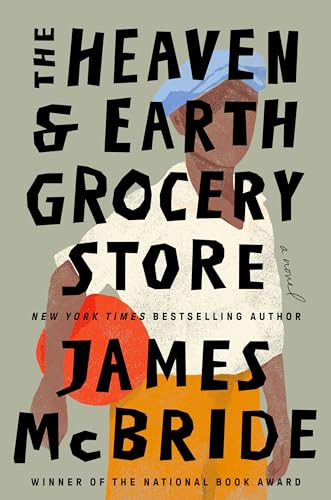
7. The Heaven and Earth Grocery Store, James McBride (2023); acquired 2024
8. The Curate in Charge, Margaret Oliphant (1875); ebook download 2024
9. The Portobello Road and Other Stories, Muriel Spark (1985 collection)
10. The Europeans, Henry James (1878); acquired 2025
11. In the Steps of Jane Austen, Anne-Marie Edwards (1985); nonfiction; travel walks; acquired 2024
12. The Mystery of the Burnt Cottage, Enid Blyton (1943); children's fiction; acquired 2024
13. The Country Diary of an Edwardian Lady, Edith Holden (1906--facsimile published 1977); nonfiction; diary; acquired 2024
14. Arrest the Bishop?, Winifred Peck (1949); acquired 2024
15. Founding Brothers, Joseph J. Ellis (2001); acquired 2024
16. Hannah Coulter, Wendell Berry (2004); acquired 2025
17. The Christmas Hirelings, Mary Elizabeth Braddon (1895); plus 3 stories; ebook download 2024
18. Nothing Venture, Patricia Wentworth (1932); acquired 2024
19. Remarkably Bright Creatures, Shelby Van Pelt (2022); acquired 2025
20. All Things Bright and Beautiful, James Herriot (1974); acquired 2024
21. Aunt Dimity's Death, Nancy Atherton (1992); acquired 2025
22. Mr. Selfridge in Chicago: Marshall Field's, the Windy City & the Making of a Merchant Prince, Gayle Soucek (2015); acquired 2024
23. New York Revisited, Henry James (1906); acquired 2025
24. Business as Usual, Jane Oliver & Ann Stafford (1933); acquired 2025
25. Heaven's My Destination, Thornton Wilder (1934); acquired 2025
26. The French Revolution: A Very Short Introduction, William Doyle (2020); acquired 2025
27. The Prime of Miss Jean Brodie, Muriel Spark (1961); acquired 2025
28. The Library Window, Margaret Oliphant (1896), short story with additional background material; acquired 2025
29. The Black Tulip, Alexandre Dumas (1850); translated by Robin Buss; acquired 2025
30. The Children of the New Forest, Frederick Marryat (1847); acquired 2024
31. A Woman of No Importance, Oscar Wilde (1893); acquired 2025
32. Atlantic: Great Sea Battles, Heroic Discoveries, Titanic Storms, and a Vast Ocean of a Million Stories, Simon Winchester (2010); on audiobook read by the author; acquired 2025
33. Nazarin, Benito Perez Galdos (1895); fiction; acquired 2025
34. The Annotated Sense and Sensibility, Jane Austen (1811); acquired 2025
35. Small Things Like These, Claire Keegan (2021); fiction; acquired 2025, a re-read originally from the library; gifted to Pat 26 Dec 2025
5kac522


some of the oldest books on my TBR
Challenge IV. 25 "Old" books from My Shelves (purchased 2023 and before)
Probably my most difficult goal--somehow those old books get lost in the shuffle.
1. Selected Stories (Signet Classical Books), Anton Chekhov (collected 1960, originally written 1880s); Root from before 2009
2. Peony, Pearl S. Buck (1948); Root from 2016
3. When the Emperor Was Divine, Julie Otsuka (2002); Root from 2022
4. The Old Country: Collected Stories of Sholom Aleichem, collected and translated in 1946 by Frances & Julius Butwin; Root from before 2011
5. Anne of the Island, L. M. Montgomery (1915); Root from 2023
6. The Mirror Maker, Primo Levi, translated from the Italian by Raymond Rosenthal (1989); Root from 2019
7. The Sorrows of Young Werther, J. W. von Goethe (1875); translated from the German by David Constantine; Root from 2021
8. Evelina, Fanny Burney (1778); Root from 2018
9. The Life of Mendelssohn, Peter Mercer-Taylor (2000); Root from 2014
10. Three Men in a Boat: To Say Nothing of the Dog, Jerome K. Jerome (1889); Root from 2017
11. Sherlock Holmes: The Complete Novels and Stories Volume I, A Conan Doyle; (1887, 1891, 1892, 1903); Root from 2023
12. The True Deceiver, Tove Jansson (1982); translated from the Swedish by Thomas Teal; Root from 2022
13. An Old Woman's Reflections, Peig Sayers (1939 in Gaelic); this 1962 English translation by Seamus Ennis; Root from 2023
14. A Song of Sixpence, A. J. Cronin (1964); Root from 2017
15. A Merry Christmas and Other Christmas Stories, L. M. Alcott (2014); Root from 2016
6kac522
Challenge V. Everything Else!
Library books (LB), re-reads (RR) and other miscellaneous (OM) reading not from my TBR shelves
LB 1. The Conditions of Unconditional Love, Alexander McCall Smith (2024)
RR 2. Oliver Twist, Charles Dickens (1838); a re-read on audiobook, narrated by Simon Vance
LB 3. World of Wonders: In Praise of Fireflies, Whale Sharks, and Other Astonishments, Aimee Nezhukumatathil (2020)
LB 4. Why We Read: On Bookworms, Libraries and Just one More Page before Lights Out, Shannon Reed (2024), essays
LB 5. Henrietta's War, Joyce Dennys (1985); fiction--humor, epistolary
LB 6. Blues in Stereo, Langston Hughes (2024); poetry, curated by Danez Smith
LB 7. Miss Plum and Miss Penny, Dorothy Evelyn Smith (1959); fiction
RR 8. No Fond Return of Love, Barbara Pym (1961); fiction; re-read from 2013
LB 9. A Fine Romance: Falling in Love with the English Countryside, Susan Branch (2013)
LB 10. Never No More, Maura Laverty (1942); fiction
RR 11. All Creatures Great and Small, James Herriot (1972); on audiobook; re-read from 2024
LB 12. Cluny Brown, Margery Sharp (1944); fiction
LB 13. The Truth About Immigration, Zeke Hernandez (2024); nonfiction
LB 14. Blue Remembered Hills, Rosemary Sutcliff (1983); memoir
LB 15. The Spoils of Poynton, Henry James (1896); fiction
LB 16. Captains Courageous, Rudyard Kipling (1897); fiction
LB 17. Henrietta Sees It Through: More News from the Home Front 1942-1945, Joyce Dennys (1986); fiction--humor, epistolary
LB 18. The Corner Shop, Elizabeth Cadell (1966); fiction
LB 19. Clear, Carys Davies (2024); fiction
RR 20. Howards End, E. M. Forster (1910); Root from 2020
RR 21. His Excellency, George Washington, Joseph J. Ellis (2004); re-read from 2021; Root from before 2011
LB 22. The Best of Clarence Day, Clarence Day (1948); humor
LB 23. Hidden Libraries: The World's Most Unusual Book Depositories, D C Helmuth (2025); nonfiction, libraries
LB 24. Anne of Windy Poplars, L. M. Montgomery (1936); fiction
LB DNF Frost in May, Antonia White (1933); fiction; VMC
LB 25. The Red Notebook, Antoine Laurain; translated from the French by Emily Boyce & Jane Aitken (2014), fiction.
LB, RR 26. The Fortnight in September, R. C. Sherriff (1931); fiction
LB 27. The Canterville Ghost, Oscar Wilde (1891), short story
LB 28. Brave Companions: Portraits in History, David McCullough (1992); essays
RR 29. Jane Eyre, Charlotte Bronte (1847); on audiobook with notes from Norton Critical Edition
LB 30. Greengates, R. C. Sherriff (1936); fiction
LB 31. The Two Gentlemen of Verona, William Shakespeare (1623); drama
LB 32. Anne's House of Dreams, L. M. Montgomery (1917); fiction
RR 33. A Christmas Carol, Charles Dickens (1842); on audiobook read by Jim Dale
RR 34. Christmas at Thompson Hall, Anthony Trollope (2014, earliest 1866, latest 1882); stories;
Challenge VI. Jane Austen at 250
December 16, 2025 marks the 250th anniversary of the birth of Jane Austen. I've been mulling over this for awhile, and I think I'm just going to read as much Austen-related material as possible throughout the year. Except for one library book, all of these possibilities are currently on my shelves.
Novels
I've read them all multiple times so I will scatter re-reads throughout the year. I did read S&S last year and Emma in 2023, so they will be my lowest priorities:
✔️Sense and Sensibility
✔️Pride and Prejudice, audiobook re-read, July
✔️Mansfield Park, audiobook re-read, May
Emma
✔️Persuasion; audiobook re-read, January
✔️Northanger Abbey: Norton Critical Edition; listened to the audiobook and read the 200+ pages of critical material in the Norton Critical Edition; January
Shorter works:
✔️Lady Susan; audiobook re-read, January
✔️The history of England by a partial, prejudiced & ignorant historian from the Juvenilia
Jane Austen's Letters, edited by Deidre Le Faye
About Jane Austen and her time:
✔️The Making of Jane Austen, Devoney Looser (library book); March
✔️In the Steps of Jane Austen, Anne-Marie Edwards; April
✔️Jane Austen's Bookshelf : a rare book collector's quest to find the women writers who shaped a legend, Rebecca Romney (2025); library book; June
✔️So You Think You Know Jane Austen?, Sutherland and Le Faye; a quiz book of the 6 novels with questions & answers
✔️Memoir of Jane Austen, James Austen-Leigh (1870); October
Jane Austen at Home, Lucy Worsley
Jane Austen, Tony Tanner
What Matters in Jane Austen, John Mullan (a re-read)
The Genius of Jane Austen, Paula Byrne
Jane Austen: A Family Record, W. Austen-Leigh and Deirdre Le Faye
Works that influenced Jane Austen:
✔️"Lovers' Vows", Elizabeth Inchbald (1798), a play, referred to in Mansfield Park
✔️Evelina, Fanny Burney (1778); an author Jane Austen read and admired, and mentioned in Northanger Abbey
✔️The Female Quixote, Charlotte Lennox (1752), on audiobook, read by Juliet Stevenson; a book Jane Austen read several times and influenced Northanger Abbey
Film/TV
✔️Pride and Prejudice, 1940, starring Laurence Olivier and Greer Garson
✔️Sense and Sensibility, 2008 (BBC TV series), starring Hattie Morahan, David Morrissey, Charity Wakefield and Dan Stevens
✔️The Life and Works of Jane Austen The Great Courses, Devoney Looser (2021); 24 lectures on DVD, library DVD
✔️Pride and Prejudice 1995 TV mini series, starring Colin Firth and Jennifer Ehle
✔️Persuasion, 1995 film starring Amanda Root and Ciaran Hinds
and anything else that crosses my path this year. I know I won't get to all of these, but I'll make a good effort to read as much as I can.
!!New Challenge!!: Thomas Hardy Readalong--June 2025 through July 2026, hosted by Jen the Librarian on YT
Thomas Hardy wrote 14 novels; previously I've read 8. I'm going to follow along and try to read all 14.
Jun 25: Desperate Remedies--skipped for now, may come back to re-read this
✔️Jul 25: Under the Greenwood Tree, RR on audiobook, read by Simon Vance
✔️Aug 25: A Pair of Blue Eyes, RR
✔️Sep 25: Far From the Madding Crowd, RR
✔️Oct 25: The Hand of Ethelberta
✔️Nov 25: The Return of the Native, RR
✔️Dec 25: The Trumpet Major
Jan 26: A Laodicean
Feb 26: Two on a Tower
Mar 26: The Mayor of Casterbridge, RR
Apr 26: The Woodlanders
May 26: Tess of the d'Urbervilles, RR
Jun 26: The Well-Beloved
Jul 26: Jude the Obscure, RR
Library books (LB), re-reads (RR) and other miscellaneous (OM) reading not from my TBR shelves
LB 1. The Conditions of Unconditional Love, Alexander McCall Smith (2024)
RR 2. Oliver Twist, Charles Dickens (1838); a re-read on audiobook, narrated by Simon Vance
LB 3. World of Wonders: In Praise of Fireflies, Whale Sharks, and Other Astonishments, Aimee Nezhukumatathil (2020)
LB 4. Why We Read: On Bookworms, Libraries and Just one More Page before Lights Out, Shannon Reed (2024), essays
LB 5. Henrietta's War, Joyce Dennys (1985); fiction--humor, epistolary
LB 6. Blues in Stereo, Langston Hughes (2024); poetry, curated by Danez Smith
LB 7. Miss Plum and Miss Penny, Dorothy Evelyn Smith (1959); fiction
RR 8. No Fond Return of Love, Barbara Pym (1961); fiction; re-read from 2013
LB 9. A Fine Romance: Falling in Love with the English Countryside, Susan Branch (2013)
LB 10. Never No More, Maura Laverty (1942); fiction
RR 11. All Creatures Great and Small, James Herriot (1972); on audiobook; re-read from 2024
LB 12. Cluny Brown, Margery Sharp (1944); fiction
LB 13. The Truth About Immigration, Zeke Hernandez (2024); nonfiction
LB 14. Blue Remembered Hills, Rosemary Sutcliff (1983); memoir
LB 15. The Spoils of Poynton, Henry James (1896); fiction
LB 16. Captains Courageous, Rudyard Kipling (1897); fiction
LB 17. Henrietta Sees It Through: More News from the Home Front 1942-1945, Joyce Dennys (1986); fiction--humor, epistolary
LB 18. The Corner Shop, Elizabeth Cadell (1966); fiction
LB 19. Clear, Carys Davies (2024); fiction
RR 20. Howards End, E. M. Forster (1910); Root from 2020
RR 21. His Excellency, George Washington, Joseph J. Ellis (2004); re-read from 2021; Root from before 2011
LB 22. The Best of Clarence Day, Clarence Day (1948); humor
LB 23. Hidden Libraries: The World's Most Unusual Book Depositories, D C Helmuth (2025); nonfiction, libraries
LB 24. Anne of Windy Poplars, L. M. Montgomery (1936); fiction
LB DNF Frost in May, Antonia White (1933); fiction; VMC
LB 25. The Red Notebook, Antoine Laurain; translated from the French by Emily Boyce & Jane Aitken (2014), fiction.
LB, RR 26. The Fortnight in September, R. C. Sherriff (1931); fiction
LB 27. The Canterville Ghost, Oscar Wilde (1891), short story
LB 28. Brave Companions: Portraits in History, David McCullough (1992); essays
RR 29. Jane Eyre, Charlotte Bronte (1847); on audiobook with notes from Norton Critical Edition
LB 30. Greengates, R. C. Sherriff (1936); fiction
LB 31. The Two Gentlemen of Verona, William Shakespeare (1623); drama
LB 32. Anne's House of Dreams, L. M. Montgomery (1917); fiction
RR 33. A Christmas Carol, Charles Dickens (1842); on audiobook read by Jim Dale
RR 34. Christmas at Thompson Hall, Anthony Trollope (2014, earliest 1866, latest 1882); stories;
Challenge VI. Jane Austen at 250
December 16, 2025 marks the 250th anniversary of the birth of Jane Austen. I've been mulling over this for awhile, and I think I'm just going to read as much Austen-related material as possible throughout the year. Except for one library book, all of these possibilities are currently on my shelves.
Novels
I've read them all multiple times so I will scatter re-reads throughout the year. I did read S&S last year and Emma in 2023, so they will be my lowest priorities:
✔️Sense and Sensibility
✔️Pride and Prejudice, audiobook re-read, July
✔️Mansfield Park, audiobook re-read, May
Emma
✔️Persuasion; audiobook re-read, January
✔️Northanger Abbey: Norton Critical Edition; listened to the audiobook and read the 200+ pages of critical material in the Norton Critical Edition; January
Shorter works:
✔️Lady Susan; audiobook re-read, January
✔️The history of England by a partial, prejudiced & ignorant historian from the Juvenilia
Jane Austen's Letters, edited by Deidre Le Faye
About Jane Austen and her time:
✔️The Making of Jane Austen, Devoney Looser (library book); March
✔️In the Steps of Jane Austen, Anne-Marie Edwards; April
✔️Jane Austen's Bookshelf : a rare book collector's quest to find the women writers who shaped a legend, Rebecca Romney (2025); library book; June
✔️So You Think You Know Jane Austen?, Sutherland and Le Faye; a quiz book of the 6 novels with questions & answers
✔️Memoir of Jane Austen, James Austen-Leigh (1870); October
Jane Austen at Home, Lucy Worsley
Jane Austen, Tony Tanner
What Matters in Jane Austen, John Mullan (a re-read)
The Genius of Jane Austen, Paula Byrne
Jane Austen: A Family Record, W. Austen-Leigh and Deirdre Le Faye
Works that influenced Jane Austen:
✔️"Lovers' Vows", Elizabeth Inchbald (1798), a play, referred to in Mansfield Park
✔️Evelina, Fanny Burney (1778); an author Jane Austen read and admired, and mentioned in Northanger Abbey
✔️The Female Quixote, Charlotte Lennox (1752), on audiobook, read by Juliet Stevenson; a book Jane Austen read several times and influenced Northanger Abbey
Film/TV
✔️Pride and Prejudice, 1940, starring Laurence Olivier and Greer Garson
✔️Sense and Sensibility, 2008 (BBC TV series), starring Hattie Morahan, David Morrissey, Charity Wakefield and Dan Stevens
✔️The Life and Works of Jane Austen The Great Courses, Devoney Looser (2021); 24 lectures on DVD, library DVD
✔️Pride and Prejudice 1995 TV mini series, starring Colin Firth and Jennifer Ehle
✔️Persuasion, 1995 film starring Amanda Root and Ciaran Hinds
and anything else that crosses my path this year. I know I won't get to all of these, but I'll make a good effort to read as much as I can.
!!New Challenge!!: Thomas Hardy Readalong--June 2025 through July 2026, hosted by Jen the Librarian on YT
Thomas Hardy wrote 14 novels; previously I've read 8. I'm going to follow along and try to read all 14.
Jun 25: Desperate Remedies--skipped for now, may come back to re-read this
✔️Jul 25: Under the Greenwood Tree, RR on audiobook, read by Simon Vance
✔️Aug 25: A Pair of Blue Eyes, RR
✔️Sep 25: Far From the Madding Crowd, RR
✔️Oct 25: The Hand of Ethelberta
✔️Nov 25: The Return of the Native, RR
✔️Dec 25: The Trumpet Major
Jan 26: A Laodicean
Feb 26: Two on a Tower
Mar 26: The Mayor of Casterbridge, RR
Apr 26: The Woodlanders
May 26: Tess of the d'Urbervilles, RR
Jun 26: The Well-Beloved
Jul 26: Jude the Obscure, RR
7kac522
2024 Highlights and Final Stats
In general I feel like I had a good reading year. Some highlights, in order read:
Fiction Highlights:
The Blush and Other Stories, Elizabeth Taylor (1958)
A Particular Place, Mary Hocking (1989)
Man and Wife, Wilkie Collins (1870)
All Creatures Great and Small, James Herriot (1972)
Fanny Herself, Edna Ferber (1917)
Nonfiction Highlights:
Chasing Bright Medusas: A Life of Willa Cather, Benjamin Taylor (2023)
Funny Things: A comic Strip Biography of Charles M. Schulz, Luca Debus and Francesco Matteuzzi (2023)
Jane Austen's Wardrobe, Hilary Davidson (2023)
Composers Who Changed History, DK Publishing (2024)
Most Rewarding Re-reads
A Tale of Two Cities, Charles Dickens (1859)
Washington Square, Henry James (1881)
Mrs Palfrey at the Claremont, Elizabeth Taylor (1971)
They Came Like Swallows, William Maxwell (1937)
Father, Elizabeth von Arnim (1931)
The Annotated Anne of Green Gables, ed. Doody, Jones & Barry (1997); Anne was a re-read, but the fantastic annotations and additional materials were new to me.
Pleasant Surprises--books that exceeded my expectations
A Journal of the Plague Year, Daniel Defoe (1722)
A Day of Pleasure, Isaac Bashevis Singer (1969)
and the best new-to-me author of 2024 was:
Dorothy Whipple (British, 1893-1966).
I read three of her books this year and adored them all:
Young Anne (1927)
High Wages (1930)
Greenbanks (1932)
and I intend to read all of her published works in 2025. Her writing is just a pleasure; it's hard to stop turning pages, even when the plot seems slight.
And finally...
Some final stats:
Books read: 122
Fiction: 87 (71%)
Nonfiction: 28 (23%)
Other (plays, poetry, etc.): 6%
Re-reads: 32 (26%)
Library books: 31 (25%)
Audiobooks: 16 (13%)
Female authors: 62 (51%)
Male authors: 57 (47%)
Multiple authors: 3 (2%)
By century publication date:
Prior to the 19th century: 4 (2%)
19th century: 37 (30%)
20th century: 58 (48%)
21st century: 23 (20%)
In translation: 6 (5%)
In general I feel like I had a good reading year. Some highlights, in order read:
Fiction Highlights:
The Blush and Other Stories, Elizabeth Taylor (1958)
A Particular Place, Mary Hocking (1989)
Man and Wife, Wilkie Collins (1870)
All Creatures Great and Small, James Herriot (1972)
Fanny Herself, Edna Ferber (1917)
Nonfiction Highlights:
Chasing Bright Medusas: A Life of Willa Cather, Benjamin Taylor (2023)
Funny Things: A comic Strip Biography of Charles M. Schulz, Luca Debus and Francesco Matteuzzi (2023)
Jane Austen's Wardrobe, Hilary Davidson (2023)
Composers Who Changed History, DK Publishing (2024)
Most Rewarding Re-reads
A Tale of Two Cities, Charles Dickens (1859)
Washington Square, Henry James (1881)
Mrs Palfrey at the Claremont, Elizabeth Taylor (1971)
They Came Like Swallows, William Maxwell (1937)
Father, Elizabeth von Arnim (1931)
The Annotated Anne of Green Gables, ed. Doody, Jones & Barry (1997); Anne was a re-read, but the fantastic annotations and additional materials were new to me.
Pleasant Surprises--books that exceeded my expectations
A Journal of the Plague Year, Daniel Defoe (1722)
A Day of Pleasure, Isaac Bashevis Singer (1969)
and the best new-to-me author of 2024 was:
Dorothy Whipple (British, 1893-1966).
I read three of her books this year and adored them all:
Young Anne (1927)
High Wages (1930)
Greenbanks (1932)
and I intend to read all of her published works in 2025. Her writing is just a pleasure; it's hard to stop turning pages, even when the plot seems slight.
And finally...
Some final stats:
Books read: 122
Fiction: 87 (71%)
Nonfiction: 28 (23%)
Other (plays, poetry, etc.): 6%
Re-reads: 32 (26%)
Library books: 31 (25%)
Audiobooks: 16 (13%)
Female authors: 62 (51%)
Male authors: 57 (47%)
Multiple authors: 3 (2%)
By century publication date:
Prior to the 19th century: 4 (2%)
19th century: 37 (30%)
20th century: 58 (48%)
21st century: 23 (20%)
In translation: 6 (5%)
8VivienneR
Excellent plan! I particularly admire your "complete the author" challenge. Happy reading in 2025.
9MissBrangwen
I love your setup and am looking forward to following along!
12kac522
>8 VivienneR: Thanks! I feel that, except for Trollope, I left some of my authors behind last year. I've put it first on my list of challenges.
>9 MissBrangwen: Thank you--the KISS method--Keep It Simple, Stupid 😉 If it gets too complicated, it just falls apart for me.
>10 dudes22: Welcome! Glad to have you along! I'm hoping to make a lot of space on my shelves this year.
>11 Charon07: Thanks for stopping by. I plan to enjoy AND make some progress on my very large TBR.
>9 MissBrangwen: Thank you--the KISS method--Keep It Simple, Stupid 😉 If it gets too complicated, it just falls apart for me.
>10 dudes22: Welcome! Glad to have you along! I'm hoping to make a lot of space on my shelves this year.
>11 Charon07: Thanks for stopping by. I plan to enjoy AND make some progress on my very large TBR.
13christina_reads
Looks like you had a great reading year in 2024 -- wishing you the same for 2025!
14DeltaQueen50
Interesting plans, looking forward to following along in 2025.
15kac522
>13 christina_reads: Thank you and the same to you!
>14 DeltaQueen50: Thanks for stopping by. In some ways I think my plans are so, so boring, but I hope they help me accomplish what I really need to do, which is to get lots of books off my shelves and out of the house. I don't want to be tempted by challenges to stray from my shelves, by either more library books OR buying more books.
>14 DeltaQueen50: Thanks for stopping by. In some ways I think my plans are so, so boring, but I hope they help me accomplish what I really need to do, which is to get lots of books off my shelves and out of the house. I don't want to be tempted by challenges to stray from my shelves, by either more library books OR buying more books.
16lowelibrary
Happy New Year and good luck with your reading.
17kac522
>16 lowelibrary: Thanks, and best to you in the New Reading Year.
18thornton37814
Hope you have a great year of reading!
19beebeereads
Looking forward to following along again. Have a great reading year.
21kac522
January plans:
I have 3 books I definitely will be reading in January, and all the rest are mere possibilities....
Currently Reading
1. Oliver Twist, Charles Dickens, a re-read on audiobook for my RL Book Club (also MyChallenge #5)
2. Felix Holt, the Radical, George Eliot, for MyChallenge #1
My other for sure read is:
3. The Count of Monte Cristo, A. Dumas, a group read with Mark; (also MyChallenge #4)
Anything else I read will be dependent on whether there's any reading time left after these 3.
The Waiting List (sorted by MyChallenge):
#1 My Authors
The Hotel, Elizabeth Bowen
#2 Virago
Mary Olivier: A Life, May Sinclair
Chatterton Square, E. H. Young
#3 New Books--acquired 2024
O, The Brave Music, D. E. Smith
Rhododendron Pie, Margery Sharp
Green for Danger, Christianna Brand
In the Steps of Jane Austen, Anne-Marie Edwards (nonfiction)
No Fond Return of Love, Barbara Pym
#4 Old books
Evelina, Fanny Burney
#5 Library books and re-reads
The Conditions of Unconditional Love, Alexander McCall Smith (library book)
World of Wonders, Aimee Nezhukumatathil (library book, nonfiction)
I have 3 books I definitely will be reading in January, and all the rest are mere possibilities....
Currently Reading
1. Oliver Twist, Charles Dickens, a re-read on audiobook for my RL Book Club (also MyChallenge #5)
2. Felix Holt, the Radical, George Eliot, for MyChallenge #1
My other for sure read is:
3. The Count of Monte Cristo, A. Dumas, a group read with Mark; (also MyChallenge #4)
Anything else I read will be dependent on whether there's any reading time left after these 3.
The Waiting List (sorted by MyChallenge):
#1 My Authors
The Hotel, Elizabeth Bowen
#2 Virago
Mary Olivier: A Life, May Sinclair
Chatterton Square, E. H. Young
#3 New Books--acquired 2024
O, The Brave Music, D. E. Smith
Rhododendron Pie, Margery Sharp
Green for Danger, Christianna Brand
In the Steps of Jane Austen, Anne-Marie Edwards (nonfiction)
No Fond Return of Love, Barbara Pym
#4 Old books
Evelina, Fanny Burney
#5 Library books and re-reads
The Conditions of Unconditional Love, Alexander McCall Smith (library book)
World of Wonders, Aimee Nezhukumatathil (library book, nonfiction)
22charl08
I'm late, but wishing you happy new year and plenty of good reads in 2025. I am also trying to read from my shelves - wish me luck!
23kac522
>22 charl08: Thanks--yep, books off the shelves, with the occasional library book (which I'm reading now--not a good way to start the year, but oh well!).
24susanj67
Happy new reading year, Kathy! I'll be following along. Like you, I really want to try and read more of my own things, and say no to endless library reserves.
25kac522
>24 susanj67: Thanks, Susan. I've been in more of an organizing mood than a reading mood these last couple of weeks. But I'm about half-way through my audiobook re-read of Oliver Twist and there are a lot of "twists" that I had forgotten, so I'm making a little progress.
26NinieB
Happy new year and thread, Kathy. Your plan seems perfect for you. I'm looking forward to discussing classics with you this year!
27Tess_W
Good luck in your 2025 reading. I'm impressed with your complete the author cat. I should attempt that! Oh wait, I have and I didn't read even one book last year!
28kac522
>26 NinieB: Thanks, Ninie! I hope this plan gets some books outa here...
>27 Tess_W: HA! I did OK on this for some authors, and completely dropped the ball on others. I have to spread the love more evenly if I want to make real progress....
>27 Tess_W: HA! I did OK on this for some authors, and completely dropped the ball on others. I have to spread the love more evenly if I want to make real progress....
29atozgrl
Happy New Year, Kathy! I'm looking forward to see how you do with your goals this year, since mine are similar. I definitely need to spend more time on reading books already on my shelves, rather than picking up new ones based on LT challenges. I don't want to give up the challenges completely, but I do need to scale back this year.
Good luck with your goals!
Good luck with your goals!
30atozgrl
>4 kac522: I also meant to say that The Heaven and Earth Grocery Store was my top read from last year. I hope you have a chance to get to it this year.
I also read Founding Brothers last year and that was also a top read for me. And I love all the Herriot books. Your "new" books look like a good group to choose from.
I also read Founding Brothers last year and that was also a top read for me. And I love all the Herriot books. Your "new" books look like a good group to choose from.
31kac522
>29 atozgrl: I'm failing fast...I'm already re-reading a book (Oliver Twist) for my book club and reading a library book (McCall Smith), so NO books off my shelves yet....
>30 atozgrl: Oh yes, I remember your glowing review of McBride's book. I plan to read it in February, when the LT Monthly Authors Group is reading McBride: https://www.librarything.com/topic/366717#8704315
The only other book of his that I read was his memoir The Color of Water.
I definitely plan to get to Founding Brothers (I've read a couple of his books before).
Last month I bought a slightly older UK set (used) of the Herriot books, because I love the covers:


I still need to get the last one...but isn't it cool how these covers side by side make one large collage? I didn't notice that until I put them together here!
>30 atozgrl: Oh yes, I remember your glowing review of McBride's book. I plan to read it in February, when the LT Monthly Authors Group is reading McBride: https://www.librarything.com/topic/366717#8704315
The only other book of his that I read was his memoir The Color of Water.
I definitely plan to get to Founding Brothers (I've read a couple of his books before).
Last month I bought a slightly older UK set (used) of the Herriot books, because I love the covers:


I still need to get the last one...but isn't it cool how these covers side by side make one large collage? I didn't notice that until I put them together here!
32MissBrangwen
>31 kac522: How beautiful! That looks magical.
33rabbitprincess
>31 kac522: Oooh that is a beautiful collection of covers!
34charl08
>31 kac522: Lovely covers! The first two especially do a good job of conveying rural Yorkshire.
35atozgrl
>31 kac522: Wow, that is striking! How clever of the publisher. And how lucky for you to have found that set. I wonder if I could locate them somewhere. I would gladly replace my mass market paperbacks for this set.
36kac522
>32 MissBrangwen: Isn't that amazing? I just pulled out the physical books and laid them side-to-side and it has the same effect, although a couple of the books are thicker than the others, so it's not as smooth an effect.
>33 rabbitprincess: Yes, aren't they? I saw them online somewhere (I think a youtuber showed them) and I decided those were the editions for me! They don't make them anymore--the current UK versions are tied to the current TV series.
>34 charl08: What I love is how they go through the seasons of Yorkshire. And if you notice on the middle book, there's a tiny plane flying overhead, probably because that's the book during the War (haven't read that one yet).
>33 rabbitprincess: Yes, aren't they? I saw them online somewhere (I think a youtuber showed them) and I decided those were the editions for me! They don't make them anymore--the current UK versions are tied to the current TV series.
>34 charl08: What I love is how they go through the seasons of Yorkshire. And if you notice on the middle book, there's a tiny plane flying overhead, probably because that's the book during the War (haven't read that one yet).
37thornton37814
>30 atozgrl: The Heaven and Earth Grocery Store was also my top 2024 read.
38kac522
>37 thornton37814: I'm really looking forward to it; his writing worked really well in his memoir, which is the only other book of his that I have read.
39atozgrl
Kathy, you might have missed me up at >35 atozgrl:. I wouldn't say anything about it, except that I'm curious as to where you got the Herriot set.
40kac522
>39 atozgrl: Oh, sorry--I did miss you! I bought them at Worldofbooks: https://www.worldofbooks.com/
They sell used books. I believe they are based in the UK, so they have a lot of UK editions & titles (perfect for me, of course, as I'm a big British classics reader), but I believe they have a US warehouse with many of their most popular titles. This order, however, took a bit longer than usual because these specific editions came directly from the UK. But they didn't charge extra for that and US website is in USD.
The books themselves generally come in decent condition. I ordered the first 4 Herriot books and they all came in excellent condition; two of them the spines aren't even broken; one appears to be a withdrawn library book (from Kent!), but it is in very good condition. The biggest problem I've found is that if they send too many books in one package, the package invariably comes damaged. They just don't package well enough for more than 2 books. So I would just caution to only order 2, at most 3 books at a time, especially if they're going to make the trip from the UK.
RANT: They are not as cheap as amazon, but I've given up on Bezos&co. I've never used amazon much, but now I refuse to buy from him after he squelched the Washington Post's endorsement of Kamala Harris. END OF RANT.
They sell used books. I believe they are based in the UK, so they have a lot of UK editions & titles (perfect for me, of course, as I'm a big British classics reader), but I believe they have a US warehouse with many of their most popular titles. This order, however, took a bit longer than usual because these specific editions came directly from the UK. But they didn't charge extra for that and US website is in USD.
The books themselves generally come in decent condition. I ordered the first 4 Herriot books and they all came in excellent condition; two of them the spines aren't even broken; one appears to be a withdrawn library book (from Kent!), but it is in very good condition. The biggest problem I've found is that if they send too many books in one package, the package invariably comes damaged. They just don't package well enough for more than 2 books. So I would just caution to only order 2, at most 3 books at a time, especially if they're going to make the trip from the UK.
RANT: They are not as cheap as amazon, but I've given up on Bezos&co. I've never used amazon much, but now I refuse to buy from him after he squelched the Washington Post's endorsement of Kamala Harris. END OF RANT.
41atozgrl
>40 kac522: Oh, interesting. I'll go take a look at their website.
I actually got a book from them last year. I ordered Run Silent, Run Deep from Amazon when my library didn't have it, but it came from World of Books. When the shipping took so long, I wondered if they were based in the UK.
I actually have not read the 5th Herriot book yet. I've got a paperback set of the first four books. I'm going to have to remedy that!
I don't blame you for your feelings about Amazon. I know there are lots of people that avoided them even before what Bezos did. There are plenty of reasons to dislike Amazon. However, they are convenient for me, so I will probably continue to use them, at least for now.
I actually got a book from them last year. I ordered Run Silent, Run Deep from Amazon when my library didn't have it, but it came from World of Books. When the shipping took so long, I wondered if they were based in the UK.
I actually have not read the 5th Herriot book yet. I've got a paperback set of the first four books. I'm going to have to remedy that!
I don't blame you for your feelings about Amazon. I know there are lots of people that avoided them even before what Bezos did. There are plenty of reasons to dislike Amazon. However, they are convenient for me, so I will probably continue to use them, at least for now.
42kac522
>41 atozgrl: Amazon is convenient for me when I want to get stuff for my son & his family, as they live in England. I can go onto Amazon.co.uk and use a US credit card/billing address and have it shipped to them from the UK without paying international shipping. This year, however, I asked the kids for UK alternatives for ordering gifts, and I was able to get gift cards from several places using my US credit card/billing address. So I think more UK sites are starting to offer that option, so I can avoid amazon.
43MissWatson
Great to see you’re here again, I am anxiously waiting for book bullets from you!
44kac522
>43 MissWatson: Thanks, Birgit...not much happening now as I'm spending January with The Count of Monte Cristo. Once finished, it should open a lot of shelf space 😉
45MissWatson
>44 kac522: Yes, that’s a long journey.
46kac522
Jane Austen at 250 -- an added Challenge!
December 16, 2025 marks the 250th anniversary of the birth of Jane Austen. I've been mulling over this for awhile, and I think I'm just going to read as much Austen-related material as possible throughout 2025. Except for one library book, all of these possibilities are currently on my shelves.
Novels
I've read them all multiple times so I will scatter re-reads throughout the year. I did read S&S last year and Emma in 2023, so they will be my lowest priorities:
Sense and Sensibility
Pride and Prejudice
Mansfield Park--a priority--it's been awhile since I've re-read this one
Emma
Persuasion
Northanger Abbey
Shorter works:
Lady Susan
"A History of England" from the Juvenilia
Jane Austen's Letters, edited by Deirde Le Faye
About Jane Austen:
The Making of Jane Austen, Devoney Looser (library book)
In the Steps of Jane Austen, Anne-Marie Edwards
Jane Austen at Home, Lucy Worsley--read about half, but paused last summer. Time to pick it up again.
Jane Austen, Tony Tanner
What Matters in Jane Austen, John Mullan (a re-read)
The Genius of Jane Austen, Paula Byrne
Jane Austen: A Family Record, W. Austen-Leigh and Deirdre Le Faye
and anything else JA-related that crosses my path this year. I know I won't get to all of these, but I'll make a good effort to read as much as I can. I've added it to my challenges in >6 kac522:.
December 16, 2025 marks the 250th anniversary of the birth of Jane Austen. I've been mulling over this for awhile, and I think I'm just going to read as much Austen-related material as possible throughout 2025. Except for one library book, all of these possibilities are currently on my shelves.
Novels
I've read them all multiple times so I will scatter re-reads throughout the year. I did read S&S last year and Emma in 2023, so they will be my lowest priorities:
Sense and Sensibility
Pride and Prejudice
Mansfield Park--a priority--it's been awhile since I've re-read this one
Emma
Persuasion
Northanger Abbey
Shorter works:
Lady Susan
"A History of England" from the Juvenilia
Jane Austen's Letters, edited by Deirde Le Faye
About Jane Austen:
The Making of Jane Austen, Devoney Looser (library book)
In the Steps of Jane Austen, Anne-Marie Edwards
Jane Austen at Home, Lucy Worsley--read about half, but paused last summer. Time to pick it up again.
Jane Austen, Tony Tanner
What Matters in Jane Austen, John Mullan (a re-read)
The Genius of Jane Austen, Paula Byrne
Jane Austen: A Family Record, W. Austen-Leigh and Deirdre Le Faye
and anything else JA-related that crosses my path this year. I know I won't get to all of these, but I'll make a good effort to read as much as I can. I've added it to my challenges in >6 kac522:.
47MissWatson
>46 kac522: That’s an ambitious project! I was tempted to do something similar for Thomas Mann’s 150th birthday this year, but frankly, his novels are just too big. I may dip into his novellas...and then go to Jane for comfort reading.
48christina_reads
>46 kac522: Love this project! I'm tempted to join you...it's been a while since I reread Austen. I really liked the Paula Byrne book -- and I also have her The Real Jane Austen: A Life in Small Things on my TBR.
49kac522
>47 MissWatson: I have all of her novels on audio, so listening to them in the car over the year will be easy. The non-fiction will take more discipline.
I have never read anything by Thomas Mann, so I will be watching your reviews for a rec of a shorter work.
I have never read anything by Thomas Mann, so I will be watching your reviews for a rec of a shorter work.
50kac522
>48 christina_reads: Welcome! I don't have any set time tables or anything; I'm going to pick them up as the mood strikes. Right now I'm listening to Persuasion to start off.
I read The Real Jane Austen: A Life in Small Things, and it was pretty good--very detailed. I've heard that The Genius of Jane Austen is thought-provoking, looking at Austen in new ways.
I think my favorite book about Austen, which includes her life and works, is Jane Austen: The World of Her Novels by Deirdre Le Faye. For a shorter book, it was thorough and a pleasure to read.
I read The Real Jane Austen: A Life in Small Things, and it was pretty good--very detailed. I've heard that The Genius of Jane Austen is thought-provoking, looking at Austen in new ways.
I think my favorite book about Austen, which includes her life and works, is Jane Austen: The World of Her Novels by Deirdre Le Faye. For a shorter book, it was thorough and a pleasure to read.
51christina_reads
>50 kac522: I can't remember if I've read the Le Faye book or not, but I know I own it!
52Tess_W
>31 kac522: I plan on getting to the first one this year. Don't know if I told you before, but I roomed briefly with James Herriot's granddaughter in college.
53kac522
>52 Tess_W: That's very cool. I enjoyed the first book much more than I expected to. There's a lot of gentle humor in the book. I'm saving the rest of the books for times between more difficult books or when I need a low-key read.
54pamelad
Popped in to read your Rhododendron Pie review, which isn't here yet! I loved Rhododendron Pie and everything else I've read by Margery Sharp except The Stone of Chastity. The only written-for-adults books of hers I have left to read are In Pious Memory and Sun in Scorpio.
55kac522
>54 pamelad: I really loved Rhododendron Pie and I know I need to read it again to understand all its subtleties. I loved her writing style; it was such a refreshing change from The Count of Monte Cristo, which I stopped reading about half-way. Unfortunately my library system has only a few of her adult books (Cluny Brown and a few others), so I may need to expand my search to read more.
56kac522
Long overdue because of internet issues, here is a quick re-cap of my January reading:






1. The Conditions of Unconditional Love, Alexander McCall Smith (2024)
Newest entry in the Isabel Dalhousie series. This time I found the philosophical meanderings a little annoying, but only a little. It could have had more Edinburgh in it for me. But always so, so much kindness makes it worthwhile every time.
2. Oliver Twist, Charles Dickens (1838); audiobook re-read, narrated by Simon Vance
It's Dickens, so I mostly enjoy it, but I had forgotten how terribly violent this story is, and how confusing all the parts are. All the reveals in the very last chapters feel contrived. I wish they had been revealed more slowly throughout the story. There are very few humorous bits of relief.
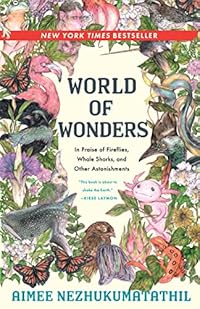
3. World of Wonders: In Praise of Fireflies, Whale Sharks, and Other Astonishments, Aimee Nezhukumatathil (2020)
A series of essays by poet Aimee Nezhukumatathil that explore various aspects of nature and her own life. She describes each natural element in beautiful language and seamlessly slides into some aspect of her life: her youth, her college years, her thin legs (compared to the flamingo), etc. Some of these essays were very powerful, particularly the peacock, touch-me-nots, flamingo and firefly; and some were just OK. Not long (about 160 pages) and well worth the time to read and reflect on the illustrations by Fumi Mini Nakamura.
4. Rhododendron Pie, Margery Sharp (1930)
Ann Laventie is the untalented and youngest child in a family of snobby, Bohemian artists. She has grown up admiring her more talented siblings and father and absorbing her family's disdain for conventions and plebeian society. But Ann has a different temperament; she likes people and as she goes out into the world she discovers a different way of looking at others and most importantly her family. In subtle ways Sharp has us consider the artist/intellectual vs. the everyday worker. All this is done in an off-hand, irreverent and yet surprisingly affectionate style. I really enjoyed this little novel, and I will keep it around to read again, as I suspect that I will get more out of it a second time.
5. Persuasion, Jane Austen (1817); re-read, audiobook read by Juliet Stevenson
and
6. Lady Susan, Jane Austen (1871); re-read, audiobook read by var. readers
Kicking off my celebration of the 250th anniversary year of Jane Austen's birth, I listened to these on audiobook--have no idea how many times I've read these comfort books throughout my lifetime. Persuasion was Austen's last, and most melancholy novel, and Lady Susan was one of her first completed works as a young adult; it's in epistolary format, very funny and wasn't published until 1871, many years after her death.
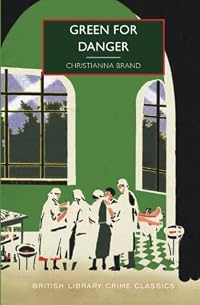
7. Green for Danger, Christianna Brand (1944)
Set during WWII in a Kent hospital, this focuses on 3 doctors and 4 nurses who are present when a man injured during an air raid dies in the operating room. This is a tense and claustrophobic mystery with a genuine feel for life in a hospital during the Blitz.
8. A Shropshire Lad, A. E. Housman (1896), poem cycle
Classic poem which I only knew by name. Finished in one evening and only one section did I recognize: "When I was one-and-twenty..." There is a lot of thoughts of friends who have been lost, so it's easy to see how the cycle of verses became popular during and after WWI.
9. The Happy Prince and Other Stories, Penguin 60s, Oscar Wilde (1888-1892)
This collection contains 4 stories from 1888-1892: The Happy Prince, The Young King, The Devoted Friend and The Model Millionaire. They all read like delightful moral fairy tales, where we know who is being good and who is being bad. A statue is crying because it sees so many people in need in his city and befriends a Swallow to help alleviate the suffering. A young man about to be crowned king eschews jewels and crowns to be among the people. A rich selfish Miller takes advantage of a poor gardener. And a beggar is discovered to be not as he seems.
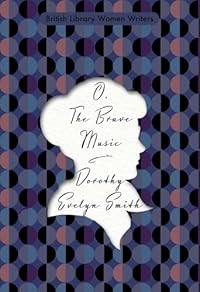
10. O, the Brave Music, Dorothy Evelyn Smith (1943)
Told in first person from the vantage point of middle-age, Ruan Ashley remembers her young girlhood in pre-WWI Yorkshire. She slowly realizes her distance from her minister father, free-spirit mother and aspiring sister, and eventually finds her own friends and loves on the moors. The descriptive passages sometimes felt forced, but the story and dialogue felt true.
I also had 2 DNFs this month. I read both books to the half-way point, so I feel I gave them a good chance:
The Count of Monte Cristo, Alexander Dumas (1844)--made it to page 750 (of 1400+), but I had to give up--I realized it was not for me. I was finding myself skimming a lot and not really invested in the story or characters. Revenge, especially now, is not my cuppa. It doesn't matter if it's good-guy or bad-guy revenge, since the bad-guys *see* themselves as good-guys, which justifies their revengeful actions, as we're witnessing today. Revenge is revenge, and leads to a never-ending cycle. I also found myself missing any sort of relatable and well-drawn female character and after 750 pages I hadn't found one. I know this is a beloved classic for many, but it only made me angry.
The Country Ahead of Us, the Country Behind, David Guterson (1989); short stories
Many years ago I read Guterson's Snow Falling on Cedars and loved it. But of the 10 stories in this collection, I read 5 stories and skimmed a 6th. They seemed to be all from the point of view of a teen-aged boy and I just didn't connect. The only story that felt more universal was the story about two brothers, the older one just returned from Vietnam, which was very short, but powerful.


1. The Conditions of Unconditional Love, Alexander McCall Smith (2024)
Newest entry in the Isabel Dalhousie series. This time I found the philosophical meanderings a little annoying, but only a little. It could have had more Edinburgh in it for me. But always so, so much kindness makes it worthwhile every time.
2. Oliver Twist, Charles Dickens (1838); audiobook re-read, narrated by Simon Vance
It's Dickens, so I mostly enjoy it, but I had forgotten how terribly violent this story is, and how confusing all the parts are. All the reveals in the very last chapters feel contrived. I wish they had been revealed more slowly throughout the story. There are very few humorous bits of relief.
3. World of Wonders: In Praise of Fireflies, Whale Sharks, and Other Astonishments, Aimee Nezhukumatathil (2020)
A series of essays by poet Aimee Nezhukumatathil that explore various aspects of nature and her own life. She describes each natural element in beautiful language and seamlessly slides into some aspect of her life: her youth, her college years, her thin legs (compared to the flamingo), etc. Some of these essays were very powerful, particularly the peacock, touch-me-nots, flamingo and firefly; and some were just OK. Not long (about 160 pages) and well worth the time to read and reflect on the illustrations by Fumi Mini Nakamura.
4. Rhododendron Pie, Margery Sharp (1930)
Ann Laventie is the untalented and youngest child in a family of snobby, Bohemian artists. She has grown up admiring her more talented siblings and father and absorbing her family's disdain for conventions and plebeian society. But Ann has a different temperament; she likes people and as she goes out into the world she discovers a different way of looking at others and most importantly her family. In subtle ways Sharp has us consider the artist/intellectual vs. the everyday worker. All this is done in an off-hand, irreverent and yet surprisingly affectionate style. I really enjoyed this little novel, and I will keep it around to read again, as I suspect that I will get more out of it a second time.
5. Persuasion, Jane Austen (1817); re-read, audiobook read by Juliet Stevenson
and
6. Lady Susan, Jane Austen (1871); re-read, audiobook read by var. readers
Kicking off my celebration of the 250th anniversary year of Jane Austen's birth, I listened to these on audiobook--have no idea how many times I've read these comfort books throughout my lifetime. Persuasion was Austen's last, and most melancholy novel, and Lady Susan was one of her first completed works as a young adult; it's in epistolary format, very funny and wasn't published until 1871, many years after her death.
7. Green for Danger, Christianna Brand (1944)
Set during WWII in a Kent hospital, this focuses on 3 doctors and 4 nurses who are present when a man injured during an air raid dies in the operating room. This is a tense and claustrophobic mystery with a genuine feel for life in a hospital during the Blitz.
8. A Shropshire Lad, A. E. Housman (1896), poem cycle
Classic poem which I only knew by name. Finished in one evening and only one section did I recognize: "When I was one-and-twenty..." There is a lot of thoughts of friends who have been lost, so it's easy to see how the cycle of verses became popular during and after WWI.
9. The Happy Prince and Other Stories, Penguin 60s, Oscar Wilde (1888-1892)
This collection contains 4 stories from 1888-1892: The Happy Prince, The Young King, The Devoted Friend and The Model Millionaire. They all read like delightful moral fairy tales, where we know who is being good and who is being bad. A statue is crying because it sees so many people in need in his city and befriends a Swallow to help alleviate the suffering. A young man about to be crowned king eschews jewels and crowns to be among the people. A rich selfish Miller takes advantage of a poor gardener. And a beggar is discovered to be not as he seems.
10. O, the Brave Music, Dorothy Evelyn Smith (1943)
Told in first person from the vantage point of middle-age, Ruan Ashley remembers her young girlhood in pre-WWI Yorkshire. She slowly realizes her distance from her minister father, free-spirit mother and aspiring sister, and eventually finds her own friends and loves on the moors. The descriptive passages sometimes felt forced, but the story and dialogue felt true.
I also had 2 DNFs this month. I read both books to the half-way point, so I feel I gave them a good chance:
The Count of Monte Cristo, Alexander Dumas (1844)--made it to page 750 (of 1400+), but I had to give up--I realized it was not for me. I was finding myself skimming a lot and not really invested in the story or characters. Revenge, especially now, is not my cuppa. It doesn't matter if it's good-guy or bad-guy revenge, since the bad-guys *see* themselves as good-guys, which justifies their revengeful actions, as we're witnessing today. Revenge is revenge, and leads to a never-ending cycle. I also found myself missing any sort of relatable and well-drawn female character and after 750 pages I hadn't found one. I know this is a beloved classic for many, but it only made me angry.
The Country Ahead of Us, the Country Behind, David Guterson (1989); short stories
Many years ago I read Guterson's Snow Falling on Cedars and loved it. But of the 10 stories in this collection, I read 5 stories and skimmed a 6th. They seemed to be all from the point of view of a teen-aged boy and I just didn't connect. The only story that felt more universal was the story about two brothers, the older one just returned from Vietnam, which was very short, but powerful.
57kac522

"Pink and Rose", before 1917
William Morris, Morris & Co
Wallpaper design, Brooklyn Museum, New York
Image for February 2025 from "2025 Calendar William Morris Arts & Crafts Designs", Pomegranate Communications, Inc
February's Pile of Possibilities
Way too many books on the pile as usual, so let's get right into it:
Currently Reading:
The Making of Jane Austen, Devoney Looser (2017), nonfiction, for my JA 250th reading
Civil to Strangers, Barbara Pym (1987 post), stories for the Virago monthly challenge
Completed:
✔️Why We Read: On Bookworms, Libraries and Just one More Page before Lights Out, Shannon Reed (2024), essays (BB from Shelley)
✔️Chatterton Square, E. H. Young (1947), fiction
✔️The Dreaming Child and Other Stories, Karen Blixen (1942), stories for Paul's European Tour
✔️Henrietta's War, Joyce Dennys (1985) fiction
✔️Blues in Stereo, Langston Hughes (2024), poetry
✔️Phineas Redux, Anthony Trollope (1874), fiction re-read on audiobook
✔️Glimpses of the Moon, Edith Wharton (1922), fiction, for my RL book club
✔️The Heaven and Earth Grocery Store, James McBride (2023), LT Monthly Author for February
✔️No Fond Return of Love, Barbara Pym (1961) fiction re-read
✔️Miss Plum and Miss Penny, Dorothy Evelyn Smith (1959) fiction
✔️Northanger Abbey: Norton Critical Edition (1817)
Priorities
Is He Popenjoy?, Anthony Trollope (1878), fiction for my Trollope complete the author challenge
Virginia, Ellen Glasgow (1913), fiction, from my Virago shelf
Possibilities from my shelves
Nothing Venture, Patricia Wentworth (1932), Golden Age mystery
Mary Barton, Elizabeth Gaskell (1848), fiction re-read
The Red and the Green, Iris Murdoch (1965) historical fiction
The Hotel, Elizabeth Bowen (1927) fiction
They Knew Mr Knight, Dorothy Whipple (1934) fiction
and maybe these library books....
Spillover, David Quammen (2012) nonfiction: the science of animal infections and pandemics
The Truth About Immigration: Why Successful Societies Welcome Newcomers, Zeke Hernandez (2024) nonfiction
58MissBrangwen
I hope your internet issues are fully resolved! As always, I loved your recap and reading about your plans. And thank you for sharing "Pink and Rose" - how beautiful.
59NinieB
>56 kac522: Rhododendron Pie sounds great! I just the other day picked up The Nutmeg Tree.
I enjoyed those fairy tales by Oscar Wilde, but I think I liked his more realistic style short stories more.
What a shame that The Count of Monte Cristo didn't work for you in so many different ways. I know that feeling of reading the words but not connecting with them.
>57 kac522: It's funny, Mary Barton and No Fond Return of Love are both on my February list as well. Not sure I'll get to them though.
I enjoyed those fairy tales by Oscar Wilde, but I think I liked his more realistic style short stories more.
What a shame that The Count of Monte Cristo didn't work for you in so many different ways. I know that feeling of reading the words but not connecting with them.
>57 kac522: It's funny, Mary Barton and No Fond Return of Love are both on my February list as well. Not sure I'll get to them though.
60kac522
>58 MissBrangwen: Thanks, yes, internet is restored. Apparently someone was digging where they weren't supposed to, which caused our outage. I just love William Morris designs and I plan to feature a different one each month from my 2025 calendar.
>59 NinieB: I have to keep my eye out for more Margery Sharp--my library has a few titles (Cluny Brown, The Rescuers) but not The Nutmeg Tree. I won't spoil the meaning of the title of Rhododendron Pie, but once you've read it, it explains the book in a nutshell.
I do feel like a gave The Count a fair chance and it seemed like a waste to spend any more time with it when there is so much more I'd rather be reading--like Mary Barton and No Fond Return of Love--both re-reads, and both I want to get to again. There might not be time for them this month, but I'll get to them in the near future.
>59 NinieB: I have to keep my eye out for more Margery Sharp--my library has a few titles (Cluny Brown, The Rescuers) but not The Nutmeg Tree. I won't spoil the meaning of the title of Rhododendron Pie, but once you've read it, it explains the book in a nutshell.
I do feel like a gave The Count a fair chance and it seemed like a waste to spend any more time with it when there is so much more I'd rather be reading--like Mary Barton and No Fond Return of Love--both re-reads, and both I want to get to again. There might not be time for them this month, but I'll get to them in the near future.
61kac522
I've been reading Devoney Looser's The Making of Jane Austen and she spends an entire chapter on the background & history to the 1940 film of Pride and Prejudice, starring Laurence Olivier and Greer Garson. Which inspired me to order the film from the library and was able to pick it up yesterday for Valentine's Day.
I don't think I'd seen the full movie before. It certainly was entertaining. The costumes were all wrong (more Gone With the Wind than Regency) and the ending with Lady Catherine left me scratching my head, but otherwise it was OK. Could have done without the weeping Lizzie scenes, too.
And a nice piece last night on the PBS Newshour about the 250th anniversary of Jane Austen's birth:
https://www.pbs.org/newshour/show/jane-austen-fans-honor-british-novelists-legac...
Other recent library picks are:
Blue Remembered Hills, Rosemary Sutcliff's memoir of her early years
Brave Companions, David McCullough, portraits of lesser known American historical figures
Blues in Stereo: Early Works of Langston Hughes, early poems, some previously published only in periodicals, others from the Langston Hughes archives and curated for this edition by Danez Smith
Born a Crime, Trevor Noah memoir
The last two I found on my library's display of books for Black History month; I also plan to read James McBride's The Heaven and Earth Grocery Store.
I don't think I'd seen the full movie before. It certainly was entertaining. The costumes were all wrong (more Gone With the Wind than Regency) and the ending with Lady Catherine left me scratching my head, but otherwise it was OK. Could have done without the weeping Lizzie scenes, too.
And a nice piece last night on the PBS Newshour about the 250th anniversary of Jane Austen's birth:
https://www.pbs.org/newshour/show/jane-austen-fans-honor-british-novelists-legac...
Other recent library picks are:
Blue Remembered Hills, Rosemary Sutcliff's memoir of her early years
Brave Companions, David McCullough, portraits of lesser known American historical figures
Blues in Stereo: Early Works of Langston Hughes, early poems, some previously published only in periodicals, others from the Langston Hughes archives and curated for this edition by Danez Smith
Born a Crime, Trevor Noah memoir
The last two I found on my library's display of books for Black History month; I also plan to read James McBride's The Heaven and Earth Grocery Store.
62threadnsong
Hello Kathy! I've been missing your lovely posts on your thread, and adding my kudos to your William Morris pick. He has such an incredible eye for detail, and I well remember needlepoint pieces featuring his designs. Not that I ever attempted any, but I did admire them in catalogs and the like.
I've own and have read both Born a Crime and Heaven and Earth Grocery Store and I'll be interested in reading your reviews of them.
And kudos to you for working to clean out your TBR shelves with all of your KISS listings. Simplicity is the key to organizing!
I've own and have read both Born a Crime and Heaven and Earth Grocery Store and I'll be interested in reading your reviews of them.
And kudos to you for working to clean out your TBR shelves with all of your KISS listings. Simplicity is the key to organizing!
63kac522
>62 threadnsong: I love William Morris; I could look at his designs forever. To start off the New Year I worked on a Shakespeare jigsaw puzzle and then on this William Morris jigsaw puzzle--it's kind a conglomerate of 5 or 6 of his designs:

Right now I've piled up too many library books! So far this year I've read about 15 from the TBR and I've only purchased 11, so at least I'm ahead of the game...plus got rid of about 60 others that I know I won't read. But it's a never-ending battle....
Haven't read Trevor Noah yet (another library book--sigh) but did finish Heaven & Earth--found some parts outstanding, but on the whole it was good, but not great for me. I think I read so many old books that it's a bit of a shock to read fiction from the 21st century.
Currently reading The Glimpses of the Moon by Edith Wharton (1922) and listening to Northanger Abbey read by Juliet Stevenson, while reading the critical material in the Norton Critical Edition (almost as many pages of critical material as there is of the novel!)

Right now I've piled up too many library books! So far this year I've read about 15 from the TBR and I've only purchased 11, so at least I'm ahead of the game...plus got rid of about 60 others that I know I won't read. But it's a never-ending battle....
Haven't read Trevor Noah yet (another library book--sigh) but did finish Heaven & Earth--found some parts outstanding, but on the whole it was good, but not great for me. I think I read so many old books that it's a bit of a shock to read fiction from the 21st century.
Currently reading The Glimpses of the Moon by Edith Wharton (1922) and listening to Northanger Abbey read by Juliet Stevenson, while reading the critical material in the Norton Critical Edition (almost as many pages of critical material as there is of the novel!)
64christina_reads
>63 kac522: I really liked The Glimpses of the Moon!
65kac522
>64 christina_reads: I'm almost done...50 more pages or so. So many spot-on observations of marriage. I sometimes confuse the various couples (not the main couple), but in the long run that doesn't seem to matter. I'll reserve judgement, but I'm not sure I really like the two main characters all that much, but Wharton is convincing me that they're worth my empathy and maybe my sympathy, too.
66kac522
Summaries of my February reading:




11. Why We Read: On Bookworms, Libraries, and Just One More Page Before Lights Out, Shannon Reed (2024); nonfiction, books about books
Series of (mostly) humorous essays about the author's life + reading. This was mostly OK; I picked it up because Shelley (thanks, Shelley!) quoted the chapter about Lincoln in the Bardo, and I wanted more perspective on that book (which I have not read yet). Some of her reflections on teaching books were interesting, especially the essay on teaching Jane Eyre. I think these are essays I'd enjoy reading occasionally, like in a magazine or online monthly, but read together in one collection felt somewhat repetitive.
12. The Dreaming Child and Other Stories, Isak Dinesen (Karen Blixen); (orig publ 1942); 3 short stories
A "Penguin 60s" mini-paperback that contains 3 stories from Blixen's Winter Tales: "The Dreaming Child", "The Sailor-boy's Tale" and "Peter and Rosa." All 3 are melancholy fantasy tales, featuring young people caught up in their own imagined worlds. Beautifully written and ethereal; read for Paul's Great European Tour Challenge.
13. Chatterton Square, E. H. Young (1947); fiction
Set in the months prior to England entering WWII, this is the story of two families, the Blacketts and Frasers, who live next door to each other. Mrs Fraser is raising her children alone and the Blacketts appear to have cracks forming in their marriage. The families couldn't be more different and yet ties begin to develop between some of the children.
This took half the book for me to get into it. Reads slowly and is dense. Most of the characters are unlikable. Some dialogue (especially between Rosamund Fraser and her friend Miss Spanner) was extremely ugly and mean...I didn't understand why that had to be. Yet it has much to say about marriage and about the coming of WWII. This book felt jarring and pointed toward the less desirable characters. I have been reading E. H. Young's books published by Virago, and this is the last of her novels for me to read. Perhaps it will be better on a re-read, but it is very different from her other books, which have a more gentle humor toward imperfect characters.
14. Henrietta's War, Joyce Dennys (1985; originally published serially 1939-1942); fiction--epistolary
During WWII Joyce Dennys had a regular column in the periodical Sketch, in which she reflected on life on the homefront. Dennys re-discovered them in the 1980s and republished them in 2 volumes. These columns were fictional letters to a friend in the service from Henrietta, who relayed news and happenings in their Devonshire village. These were funny and entertaining and yet they did not gloss over the fact of the real fear of being bombed. I plan to read the sequel Henrietta Sees it Through, with her "letters" from 1942-1945.
15. Blues in Stereo: The Early Works of Langston Hughes, Langston Hughes (2024; orig publ 1921-1927); poetry, curated by Danez Smith
Poet Danez Smith has collected early works (1921-1927) of Langston Hughes. Most were published in periodicals and a few were from the Langston Hughes Archive at Yale; all have never been published in book/collection form. I can't comment on the poetry, because it's just not my thing, but what I did notice is how you can feel in many of these early works the rhythm of song and jazz. Probably best for a Hughes "completist", since these are all works that have been out of print (or never published) for a century.
16. Miss Plum and Miss Penny, Dorothy Evelyn Smith (1959); fiction
Miss Alison Penny is in her forties and leads a simple life with her older live-in housekeeper Ada in a small Yorkshire village. When the twenty-something Miss Victoria Plum enters her life, Miss Penny's well-ordered life is thrown into confusion. This had some humor, a few memorable characters and some insights into village life. I picked up this title because last month I read Smith's O, the Brave Music, which I enjoyed. Miss Plum and Miss Penny was a nice diversion, but I won't go out of my way to seek much else by D. E. Smith. I think Miss Read does a better job of village life with a gentler touch.
17. Phineas Redux, Anthony Trollope (1873); re-read on audiobook, read by Simon Vance
Continuing the story from Phineas Finn, our hero returns to London and Parliament after the sudden death of his wife in Dublin. I enjoyed this more on the second reading, mostly because of the audiobook narration. Vance as narrator gives Phineas more character and I had more sympathy for Phineas in this narrated portrayal than I found on the printed page. Again the political commentary (how to navigate loyalty to one's party vs. personal moral values) had a lot of meaning at this point (2025). I was still frustrated with Phineas, but I had much more compassion for him. I thought Madame Marie Goesler was well done here, and I think this is the first book where Trollope begins to fill in the marriage of Lady Glencora and Plantagenet much more than in previous books. Next up is The Prime Minister.
18. The Heaven and Earth Grocery Store, James McBride (2023); fiction
This novel, set in the 1930s, is about a run-down area of Pottstown, PA, that is home to Jews and African-Americans. The plot involves a discovered skeleton, a theater owner, a deaf boy, an evil doctor, an imprisonment, an escape plot, a murder, and the interactions between the two communities. I refer you to the description here on LT to get a better sense of the book.
Overall, I enjoyed this book, but it didn't completely work for me. On the negative side, I didn't always follow what was happening, who the side characters were and some side plots left me scratching my head. By the end I felt claustrophobic, like I was caught in a room with too many people and too many plots and couldn't find my way out. I was glad when it ended, to be honest.
But there's a lot of positive: the portrayals of the Jewish and African-American communities were real and honest and you could feel the love that McBride put into these characters. Characters with disabilities are important players in this book, and McBride's masterful handling of them made the book for me. In particular, the struggles to communicate between two institutionalized boys is unforgettable.
I don't read a lot of 21st century fiction these days. I loved McBride's The Color of Water, so this newest book of his was a wild ride for me, but I'm not sorry I read it. In the Acknowledgements, McBride credits Sy Friend, a man who took a chance on a teen-aged McBride, as the inspiration for this book and the decades of work that Mr Friend did with kids. I hope some day McBride writes Mr Friend's real story; I'd read that in a heartbeat.
19. The Glimpses of the Moon, Edith Wharton (1922); fiction
Set during the years before WWI, Nick and Susy, with no money or steady income, are on the edges of high society. Knowing that they both must marry money to keep up their lifestyles, they decide to marry each other for a year, spending that time sponging off of their wealthy friends. They agree that if either one meets the "right sort" (i.e., with money), they'll freely divorce to allow their partner to marry money. Wharton spends the book throwing daggers at the rich and selfish, and probing the fine line Nick and Susy must walk between accommodating their rich friends and their own moral standards. This is funny and entertaining at times, but also a sad commentary on marriage, society and money. Not the best Wharton I've read, but a worthwhile read.
20. No Fond Return of Love, Barbara Pym (1961); fiction; re-read from 2013
A delightful re-read. Dulcie Mainwaring, a 30-something indexer, is recovering from the break-up of a long-time engagement. Into her life come Viola Dace (a fellow indexer), Laurel (Dulcie's niece, just entering the working world) and Aylwin Forbes, a handsome middle-aged scholar. Intrigued by the scholar, Dulcie sets out on a snooping mission to find out all she can about him, through city directories, phone books, cemeteries and more. Pym's observations of these characters and several others are spot-on, and made me smile on almost every page. The other delightful parts of the book are when Pym spends a page or so musing and observing seemingly unimportant characters, like fellow train travelers or people passed on the street. A great deal of fun, with a clever nod to Austen's Mansfield Park at the end.
21. Northanger Abbey: Norton Critical Edition, Jane Austen (1817); fiction; a re-read for my year-long Jane Austen reading; read critical material and listened to the audiobook read by Juliet Stevenson
Every time I re-read Northanger Abbey it goes up in my estimation, and this reading was no exception. It was helped by Stevenson's fantastic narration on audiobook, which I supplemented with the nearly 200 pages of critical material in this Norton Critical Edition. Austen makes so many astute comments on novels, novel writers and novel readers, and the critical materials brought many of the more obscure elements into focus.


11. Why We Read: On Bookworms, Libraries, and Just One More Page Before Lights Out, Shannon Reed (2024); nonfiction, books about books
Series of (mostly) humorous essays about the author's life + reading. This was mostly OK; I picked it up because Shelley (thanks, Shelley!) quoted the chapter about Lincoln in the Bardo, and I wanted more perspective on that book (which I have not read yet). Some of her reflections on teaching books were interesting, especially the essay on teaching Jane Eyre. I think these are essays I'd enjoy reading occasionally, like in a magazine or online monthly, but read together in one collection felt somewhat repetitive.
12. The Dreaming Child and Other Stories, Isak Dinesen (Karen Blixen); (orig publ 1942); 3 short stories
A "Penguin 60s" mini-paperback that contains 3 stories from Blixen's Winter Tales: "The Dreaming Child", "The Sailor-boy's Tale" and "Peter and Rosa." All 3 are melancholy fantasy tales, featuring young people caught up in their own imagined worlds. Beautifully written and ethereal; read for Paul's Great European Tour Challenge.
13. Chatterton Square, E. H. Young (1947); fiction
Set in the months prior to England entering WWII, this is the story of two families, the Blacketts and Frasers, who live next door to each other. Mrs Fraser is raising her children alone and the Blacketts appear to have cracks forming in their marriage. The families couldn't be more different and yet ties begin to develop between some of the children.
This took half the book for me to get into it. Reads slowly and is dense. Most of the characters are unlikable. Some dialogue (especially between Rosamund Fraser and her friend Miss Spanner) was extremely ugly and mean...I didn't understand why that had to be. Yet it has much to say about marriage and about the coming of WWII. This book felt jarring and pointed toward the less desirable characters. I have been reading E. H. Young's books published by Virago, and this is the last of her novels for me to read. Perhaps it will be better on a re-read, but it is very different from her other books, which have a more gentle humor toward imperfect characters.
14. Henrietta's War, Joyce Dennys (1985; originally published serially 1939-1942); fiction--epistolary
During WWII Joyce Dennys had a regular column in the periodical Sketch, in which she reflected on life on the homefront. Dennys re-discovered them in the 1980s and republished them in 2 volumes. These columns were fictional letters to a friend in the service from Henrietta, who relayed news and happenings in their Devonshire village. These were funny and entertaining and yet they did not gloss over the fact of the real fear of being bombed. I plan to read the sequel Henrietta Sees it Through, with her "letters" from 1942-1945.
15. Blues in Stereo: The Early Works of Langston Hughes, Langston Hughes (2024; orig publ 1921-1927); poetry, curated by Danez Smith
Poet Danez Smith has collected early works (1921-1927) of Langston Hughes. Most were published in periodicals and a few were from the Langston Hughes Archive at Yale; all have never been published in book/collection form. I can't comment on the poetry, because it's just not my thing, but what I did notice is how you can feel in many of these early works the rhythm of song and jazz. Probably best for a Hughes "completist", since these are all works that have been out of print (or never published) for a century.
16. Miss Plum and Miss Penny, Dorothy Evelyn Smith (1959); fiction
Miss Alison Penny is in her forties and leads a simple life with her older live-in housekeeper Ada in a small Yorkshire village. When the twenty-something Miss Victoria Plum enters her life, Miss Penny's well-ordered life is thrown into confusion. This had some humor, a few memorable characters and some insights into village life. I picked up this title because last month I read Smith's O, the Brave Music, which I enjoyed. Miss Plum and Miss Penny was a nice diversion, but I won't go out of my way to seek much else by D. E. Smith. I think Miss Read does a better job of village life with a gentler touch.
17. Phineas Redux, Anthony Trollope (1873); re-read on audiobook, read by Simon Vance
Continuing the story from Phineas Finn, our hero returns to London and Parliament after the sudden death of his wife in Dublin. I enjoyed this more on the second reading, mostly because of the audiobook narration. Vance as narrator gives Phineas more character and I had more sympathy for Phineas in this narrated portrayal than I found on the printed page. Again the political commentary (how to navigate loyalty to one's party vs. personal moral values) had a lot of meaning at this point (2025). I was still frustrated with Phineas, but I had much more compassion for him. I thought Madame Marie Goesler was well done here, and I think this is the first book where Trollope begins to fill in the marriage of Lady Glencora and Plantagenet much more than in previous books. Next up is The Prime Minister.
18. The Heaven and Earth Grocery Store, James McBride (2023); fiction
This novel, set in the 1930s, is about a run-down area of Pottstown, PA, that is home to Jews and African-Americans. The plot involves a discovered skeleton, a theater owner, a deaf boy, an evil doctor, an imprisonment, an escape plot, a murder, and the interactions between the two communities. I refer you to the description here on LT to get a better sense of the book.
Overall, I enjoyed this book, but it didn't completely work for me. On the negative side, I didn't always follow what was happening, who the side characters were and some side plots left me scratching my head. By the end I felt claustrophobic, like I was caught in a room with too many people and too many plots and couldn't find my way out. I was glad when it ended, to be honest.
But there's a lot of positive: the portrayals of the Jewish and African-American communities were real and honest and you could feel the love that McBride put into these characters. Characters with disabilities are important players in this book, and McBride's masterful handling of them made the book for me. In particular, the struggles to communicate between two institutionalized boys is unforgettable.
I don't read a lot of 21st century fiction these days. I loved McBride's The Color of Water, so this newest book of his was a wild ride for me, but I'm not sorry I read it. In the Acknowledgements, McBride credits Sy Friend, a man who took a chance on a teen-aged McBride, as the inspiration for this book and the decades of work that Mr Friend did with kids. I hope some day McBride writes Mr Friend's real story; I'd read that in a heartbeat.
19. The Glimpses of the Moon, Edith Wharton (1922); fiction
Set during the years before WWI, Nick and Susy, with no money or steady income, are on the edges of high society. Knowing that they both must marry money to keep up their lifestyles, they decide to marry each other for a year, spending that time sponging off of their wealthy friends. They agree that if either one meets the "right sort" (i.e., with money), they'll freely divorce to allow their partner to marry money. Wharton spends the book throwing daggers at the rich and selfish, and probing the fine line Nick and Susy must walk between accommodating their rich friends and their own moral standards. This is funny and entertaining at times, but also a sad commentary on marriage, society and money. Not the best Wharton I've read, but a worthwhile read.
20. No Fond Return of Love, Barbara Pym (1961); fiction; re-read from 2013
A delightful re-read. Dulcie Mainwaring, a 30-something indexer, is recovering from the break-up of a long-time engagement. Into her life come Viola Dace (a fellow indexer), Laurel (Dulcie's niece, just entering the working world) and Aylwin Forbes, a handsome middle-aged scholar. Intrigued by the scholar, Dulcie sets out on a snooping mission to find out all she can about him, through city directories, phone books, cemeteries and more. Pym's observations of these characters and several others are spot-on, and made me smile on almost every page. The other delightful parts of the book are when Pym spends a page or so musing and observing seemingly unimportant characters, like fellow train travelers or people passed on the street. A great deal of fun, with a clever nod to Austen's Mansfield Park at the end.
21. Northanger Abbey: Norton Critical Edition, Jane Austen (1817); fiction; a re-read for my year-long Jane Austen reading; read critical material and listened to the audiobook read by Juliet Stevenson
Every time I re-read Northanger Abbey it goes up in my estimation, and this reading was no exception. It was helped by Stevenson's fantastic narration on audiobook, which I supplemented with the nearly 200 pages of critical material in this Norton Critical Edition. Austen makes so many astute comments on novels, novel writers and novel readers, and the critical materials brought many of the more obscure elements into focus.
67kac522

Persian, before 1917
William Morris, Morris & Co
Wallpaper design, Brooklyn Museum, New York
Image for March 2025 from "2025 Calendar William Morris Arts & Crafts Designs", Pomegranate Communications, Inc
March Reading Possibilities
As always, the pile's too high, but let's start here:
Currently Reading
two library books:
--The Making of Jane Austen, Devoney Looser -- for my 2025 Jane Austen reading
--A Fine Romance: Falling in Love with the English Countryside, Susan Branch -- for RandomKIT "Wishes" theme
Priorities for March
--Anton Chekhov Selected Stories and The Old Country: Collected stories of Sholom Aleichem, for Paul's European Tour--Warsaw Pact countries
--Remembered Death, Agatha Christie
--Imagining Characters, A. S. Byatt & Ignes Sodre--conversations about women writers
--Peony, Pearl S. Buck -- for March Monthly Author challenge
--This is Happiness, Niall Williams -- Irish readathon
--All Creatures Great & Small, James Herriot--for my RL book club--a re-read on audiobook read by Nicholas Ralph
The "as time allows" pile:
--In the Steps of Jane Austen, Anne-Marie Edwards
--Is He Popenjoy?, Anthony Trollope
--The Prime Minister, Anthony Trollope, on audiobook
--Blue Remembered Hills, Rosemary Sutcliff, memoir
--Virginia, Ellen Glasgow, from my Virago collection
--Under the Net, Iris Murdoch
--Mary Barton, Elizabeth Gaskell, a re-read
--An Atomic Romance, Bobbie Ann Mason, from my very long-time TBR shelf
--Lady Rose and Mrs Memmary, Ruby Ferguson, from my Persephone collection
--Nothing Venture, Patricia Wentworth
--Anna of the Five Towns, Arnold Bennett--late Victorian author I've been meaning to try
68NinieB
>66 kac522: Looks like you had a good reading month! I think I will read Northanger Abbey this year. Technically it would be a reread, but I only read it once long, long ago.
>67 kac522: Devoney Looser's Sister Novelists, about the Porter sisters, is supposed to be really good so that bodes well for The Making of Jane Austen. And I am also likely to read All Creatures Great and Small this month.
>67 kac522: Devoney Looser's Sister Novelists, about the Porter sisters, is supposed to be really good so that bodes well for The Making of Jane Austen. And I am also likely to read All Creatures Great and Small this month.
69threadnsong
>63 kac522: I think I read so many old books that it's a bit of a shock to read fiction from the 21st century. I can certainly see that. I find the writing style completely different, as are the historical touch points.
70dudes22
We were visiting friends last month and I picked up The Heaven and Earth Grocery Store from the shelves at the library in their retirement community. It got a lot of buzz and there's still a long line at my library. But I only read a little bit - I thought it would take more concentration than I
had time for.
>67 kac522: - Love this picture - what a great design this would be for fabric.
had time for.
>67 kac522: - Love this picture - what a great design this would be for fabric.
71kac522
>68 NinieB: I read NA many years ago, too, but didn't appreciate it until I had actually read some of the 18th c. fiction mentioned in the book: Ann Radcliffe's The Italian and Fanny Burney's Camilla and The Wanderer. Once I understood all the tropes and conventions of the gothic novel, it was so much fun to see how Austen poked fun and turned them upside-down, while still defending novels and novel writers. The critical material in the Norton edition I have has helped a lot, too.
I had heard about Sister Novelists but had realized it was by the same author. Looser also did a series of Jane Austen lectures as part of the "Great Courses", and my library system has the DVD set, which I plan to order in a month or two.
And I just ordered the audiobook of All Creatures, narrated by Nicholas Ralph, the actor who plays James Herriot in the current series.
I had heard about Sister Novelists but had realized it was by the same author. Looser also did a series of Jane Austen lectures as part of the "Great Courses", and my library system has the DVD set, which I plan to order in a month or two.
And I just ordered the audiobook of All Creatures, narrated by Nicholas Ralph, the actor who plays James Herriot in the current series.
72kac522
>69 threadnsong:, >70 dudes22: There was some outstanding writing in parts, but by the end it just felt fractured. I think that's on purpose, but it didn't work for me. Plus a few violent scenes that I just don't want to read any more...the evening news has plenty of this, so I don't need it in my fiction.
>70 dudes22: If you liked this, check out Caroline's pictures after visiting "William Morris and Art of the Islamic World" at the William Morris House and Gallery:
https://www.librarything.com/topic/366928#8777406
>70 dudes22: If you liked this, check out Caroline's pictures after visiting "William Morris and Art of the Islamic World" at the William Morris House and Gallery:
https://www.librarything.com/topic/366928#8777406
73NinieB
>71 kac522: I read Camilla a few years ago as well as The Mysteries of Udolpho something like 15 years ago, so those should help. Also I've got the Oxford of NA which I hope will have good notes.
The audio by the actor should be fun!
The audio by the actor should be fun!
74kac522
>73 NinieB: You sound well prepared for NA. I haven't read Udolfo yet or Burney's Evelina. On the massive TBR.
Yes, I'm looking forward to the All Creatures audio; Nicholas Ralph has a lovely Scots accent. Apparently James Herriot (Alf Wight) was born in England but the family moved to Glasgow when he was a baby, and he was raised there. So he did have a true Scots accent, even though his parents did not. Last night our PBS station aired an All Creatures "behind the scenes" fundraising show, and the 2 living children of Alf Wight were interviewed in the special, which was very interesting. They commented that Nicholas Ralph's voice was somewhat similar to their father's. And they were invited to be in the church during the filming of James & Helen's wedding scene! I wonder what that was like--watching two people playing your parents get married.
Yes, I'm looking forward to the All Creatures audio; Nicholas Ralph has a lovely Scots accent. Apparently James Herriot (Alf Wight) was born in England but the family moved to Glasgow when he was a baby, and he was raised there. So he did have a true Scots accent, even though his parents did not. Last night our PBS station aired an All Creatures "behind the scenes" fundraising show, and the 2 living children of Alf Wight were interviewed in the special, which was very interesting. They commented that Nicholas Ralph's voice was somewhat similar to their father's. And they were invited to be in the church during the filming of James & Helen's wedding scene! I wonder what that was like--watching two people playing your parents get married.
75kac522
March is moving on and I've got some time, so I thought I would do a mid-month wrap-up, as the end of the month will be busy.
March Reading, Part I

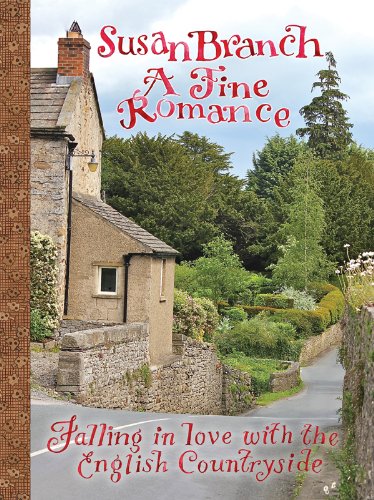


22. Remembered Death, Agatha Christie (1944); (also known as Sparkling Cyanide), mystery
A woman dies at her own birthday dinner party, apparently of suicide. A year later on the same date, another party at the same place with the same guests may reveal how she really died.
Colonel Race and Inspector Kemp are called in to investigate. I liked the way Christie organized this one--just enough characters and background to keep it interesting, but not too many to make it confusing. My suspicion of the villain was confirmed, but twists revealed at the end showed it was not for the reasons I suspected.
23. A Fine Romance: Falling in Love with the English Countryside, Susan Branch (2013); travel memoir
A lovely scrapbook-type memoir of the author's trip to England in 2012. All handwritten and hand-decorated, this follows the author & her husband's anniversary trip, from the Queen Mary II to various locations in England and home again. Inserted are pictures from the trip through Kent, the Peak District, the Lake District, the Yorkshire Dales, the Cotswolds and more. Places visited include Wordsworth's home, Virginia Woolf's home, William Morris's home, Beatrix Potter's Hilltop Farm and Jane Austen's home, plus gardens, gardens and more gardens. Like any good scrapbook, the highlights are emphasized and we don't hear about any lowlights. A lovely book to dip in occasionally for happy memories or travel dreaming.
24. Is He Popenjoy?, Anthony Trollope (1878); fiction
Not the best Trollope, but still kept me interested and immersed. The plot centers around the marriage of Mary Lovelace, a pleasant clergyman's daughter, and Lord George Brotherton, a 2nd son who is serious but not settled to any profession. Lord George's older brother, the Marquis, is the heir to the estate and living in Italy, but there is a question about the legitimacy of the Marquis' marriage and his only child (is the heir, the baby Lord Popenjoy really Lord Popenjoy?). Added to this basic inheritance plot are various discussions of class and marital fidelity. There's a side plot about the rising women's movement where Trollope is clearly on the wrong side of history concerning women's rights, so that was disappointing.
25. Lady Rose and Mrs Memmary, Ruby Ferguson (1937); fiction
A charming, short novel centered around an old but deteriorating great Scottish estate, Keepsfield, now advertised "To Let." On a lark a couple and their friend decide to "view" the house and are shown the house by Mrs Memmary, the caretaker. Lady Rose is the owner but she is "on the continent." As the visitors go through the home, Helen, the wife of the couple, prods Mrs Memmary with questions about Lady Rose's life and loves.
As they move from room to room, each chapter starts with Helen questioning Mrs Memmary about Lady Rose, and then switches to a third person narration of Lady Rose's story, from childhood to adulthood. Along the way there's lots of love of Scotland and Scottish history, and the entire book has a fable-like quality to it. A very memorable short tale, with a bit of a bittersweet twist at the end.
26. Never No More, Maura Laverty (1942); fiction
Inspired by a book of Irish country recipes, Maura Laverty's novel is loosely based on her own teen-age years and the cooking she loved. The novel begins in 1920 in a small country village in County Kildare. When the father of the Scully family dies, Delia Scully, 14, is allowed to remain with her beloved Gran, while her mother and 8 siblings move to the city. The novel covers Delia's teen-aged years, interweaving Gran's amazing country meals with Delia's school life, the village life and its many eccentric characters.
This novel has a lot of love and a lot of life in it. There are way too many stories and characters to keep completely straight at all times (just like any good Irish gathering), but the bond between Delia and her Gran is what makes this a delight to read.
March Reading, Part I


22. Remembered Death, Agatha Christie (1944); (also known as Sparkling Cyanide), mystery
A woman dies at her own birthday dinner party, apparently of suicide. A year later on the same date, another party at the same place with the same guests may reveal how she really died.
Colonel Race and Inspector Kemp are called in to investigate. I liked the way Christie organized this one--just enough characters and background to keep it interesting, but not too many to make it confusing. My suspicion of the villain was confirmed, but twists revealed at the end showed it was not for the reasons I suspected.
23. A Fine Romance: Falling in Love with the English Countryside, Susan Branch (2013); travel memoir
A lovely scrapbook-type memoir of the author's trip to England in 2012. All handwritten and hand-decorated, this follows the author & her husband's anniversary trip, from the Queen Mary II to various locations in England and home again. Inserted are pictures from the trip through Kent, the Peak District, the Lake District, the Yorkshire Dales, the Cotswolds and more. Places visited include Wordsworth's home, Virginia Woolf's home, William Morris's home, Beatrix Potter's Hilltop Farm and Jane Austen's home, plus gardens, gardens and more gardens. Like any good scrapbook, the highlights are emphasized and we don't hear about any lowlights. A lovely book to dip in occasionally for happy memories or travel dreaming.
24. Is He Popenjoy?, Anthony Trollope (1878); fiction
Not the best Trollope, but still kept me interested and immersed. The plot centers around the marriage of Mary Lovelace, a pleasant clergyman's daughter, and Lord George Brotherton, a 2nd son who is serious but not settled to any profession. Lord George's older brother, the Marquis, is the heir to the estate and living in Italy, but there is a question about the legitimacy of the Marquis' marriage and his only child (is the heir, the baby Lord Popenjoy really Lord Popenjoy?). Added to this basic inheritance plot are various discussions of class and marital fidelity. There's a side plot about the rising women's movement where Trollope is clearly on the wrong side of history concerning women's rights, so that was disappointing.
25. Lady Rose and Mrs Memmary, Ruby Ferguson (1937); fiction
A charming, short novel centered around an old but deteriorating great Scottish estate, Keepsfield, now advertised "To Let." On a lark a couple and their friend decide to "view" the house and are shown the house by Mrs Memmary, the caretaker. Lady Rose is the owner but she is "on the continent." As the visitors go through the home, Helen, the wife of the couple, prods Mrs Memmary with questions about Lady Rose's life and loves.
As they move from room to room, each chapter starts with Helen questioning Mrs Memmary about Lady Rose, and then switches to a third person narration of Lady Rose's story, from childhood to adulthood. Along the way there's lots of love of Scotland and Scottish history, and the entire book has a fable-like quality to it. A very memorable short tale, with a bit of a bittersweet twist at the end.
26. Never No More, Maura Laverty (1942); fiction
Inspired by a book of Irish country recipes, Maura Laverty's novel is loosely based on her own teen-age years and the cooking she loved. The novel begins in 1920 in a small country village in County Kildare. When the father of the Scully family dies, Delia Scully, 14, is allowed to remain with her beloved Gran, while her mother and 8 siblings move to the city. The novel covers Delia's teen-aged years, interweaving Gran's amazing country meals with Delia's school life, the village life and its many eccentric characters.
This novel has a lot of love and a lot of life in it. There are way too many stories and characters to keep completely straight at all times (just like any good Irish gathering), but the bond between Delia and her Gran is what makes this a delight to read.
76kac522
Currently Reading to complete the month
--The Making of Jane Austen, Devoney Looser -- for my 2025 Jane Austen reading
--All Creatures Great & Small, James Herriot--for my RL book club--a re-read on audiobook read by Nicholas Ralph
--Anton Chekhov Selected Stories and The Old Country: Collected stories of Sholom Aleichem, for Paul's European Tour--Warsaw
Pact countries
--Peony, Pearl S. Buck -- for March Monthly Author challenge
as time permits...
--This is Happiness, Niall Williams -- Irish readathon
--Blue Remembered Hills, Rosemary Sutcliff, memoir
--Under the Net, Iris Murdoch
--An Atomic Romance, Bobbie Ann Mason, from my very long-time TBR shelf
--Anna of the Five Towns, Arnold Bennett--late Victorian author I've been meaning to try
--The Prime Minister, Anthony Trollope, on audiobook
--The Making of Jane Austen, Devoney Looser -- for my 2025 Jane Austen reading
--All Creatures Great & Small, James Herriot--for my RL book club--a re-read on audiobook read by Nicholas Ralph
--Anton Chekhov Selected Stories and The Old Country: Collected stories of Sholom Aleichem, for Paul's European Tour--Warsaw
Pact countries
--Peony, Pearl S. Buck -- for March Monthly Author challenge
as time permits...
--This is Happiness, Niall Williams -- Irish readathon
--Blue Remembered Hills, Rosemary Sutcliff, memoir
--Under the Net, Iris Murdoch
--An Atomic Romance, Bobbie Ann Mason, from my very long-time TBR shelf
--Anna of the Five Towns, Arnold Bennett--late Victorian author I've been meaning to try
--The Prime Minister, Anthony Trollope, on audiobook
77NinieB
>75 kac522: Sounds like you're in the midst of an excellent reading month! Thanks for explaining that unusual Trollope title, Is He Popenjoy?!
78kac522
>77 NinieB: Thanks--they were all, in different ways, comforting books. Lady Rose and Mrs Memmary was particularly good in that it was short (under 250 pages) but was so atmospheric and fairy-tale like with an interesting twist at the end. I wasn't expecting to enjoy it so much. One of those books where now that you know the ending, you want to read it all over again and catch what you missed the first time through.
79threadnsong
>78 kac522: now that you know the ending, you want to read it all over again I just love books like that. Or if there is such language in the book that you want to re-read it to glide into the narration and pick up pieces of the plot you may have lost the first time through.
Good luck with the rest of your March reading!
Good luck with the rest of your March reading!
80kac522
>79 threadnsong: Yes, this one has a surprising revelation at the end & I do want to re-read it with that in mind. Not as tricky as Poirot, but I'd still like to see if there were any hints I missed.
81kac522
A few good reads in the last half of the month, ending with a problematic one:
March Reading, Part II

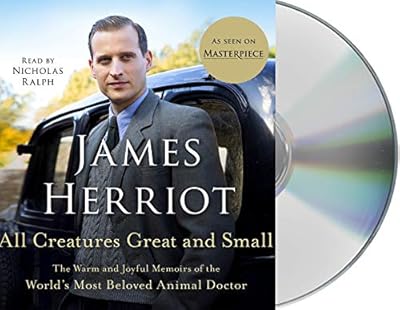


27. The Making of Jane Austen, Devoney Looser (2017); nonfiction analysis of Austen in culture; ; nonfiction analysis of Austen in culture
This book takes a look at aspects of Austen in popular culture and scholarly study from the 19th century through the first half of the 20th century. Looser explores how the popular culture and scholars perceived Austen through the various illustrations of her works in the 19th century, dramatizations around the turn of the century, films in the early 20th century, the suffragist movement and how Austen was portrayed in school curriculums.
I found most interesting her in-depth look at Hugh Thomson's illustrations and how they portrayed Austen and the novels to readers in the late 19th century, and how perception carries on even today. Another chapter shows how both sides of the women's suffrage movement (both for AND against) used Austen as an example. And there is a detailed chapter on the complete history (from initial concept to final production) of the 1940 Pride and Prejudice movie, starring Laurence Olivier and Greer Garson, and how the lasting effects of the choices made in that movie influenced the popular view of Austen and her characters until the 1990s.
Some details seemed to go off on tangents for me, and I tended to skim these. But overall it's an interesting book, presenting historical perceptions of Austen and her novels in popular and scholarly culture that aren't normally covered in books about Austen.
28. All Creatures Great and Small, James Herriot (1972); fictionalized memoir; on audiobook, read by Nicholas Ralph; a re-read
This was a re-read for me; I read it last year, and decided to re-read on audio for my RL book club discussion in March. For whatever reason, I had forgotten (or merged together) many of the stories, and the narration on audio brought back all the details and made it alive for me. Nicholas Ralph (who plays James Herriot in the current series), did an excellent job, particularly with dialogue. And it generated a lot of good discussion in our book club, which was a relief, since it was my recommendation.
29. The Curate in Charge, Margaret Oliphant (1875); fiction; on ebook, downloaded from Project Gutenberg
Rev. Cecil St. John, in his 60s and twice widowed, has been the curate in the country parish of Brentburn for 20 years. The current rector, Rev. Chester, has been living in Italy for health reasons, and he pays Mr St. John (the "curate-in-charge") a meager salary of £200 a year to run the parish. From his first marriage Mr St. John has two daughters who have been away in boarding school; from his 2nd wife he has twin toddler sons. When Mr St. John's 2nd wife dies, the teen-aged daughters, Cicely and Mab, return from school to assist their father in running the house and caring for the toddlers. Cicely takes on the bulk of the responsibilities, while Mab works on her art in hopes of being able to make a living from it.
When the rector in Italy suddenly dies, Mr St. John is not considered for the rector position and a much younger Oxford man, Mr Mildmay, is chosen as the new rector. Mr St. John, without any independent income, must find a new position at age 65, the family must seek a new place to live, and this crisis is the thrust of the rest of the novel.
Margaret Oliphant is best known for her Carlingford series, which was inspired by Trollope's Barsetshire books. I've read the Carlingford books--some I enjoyed quite a bit (The Perpetual Curate) and some were just OK. Oliphant is a master of the domestic situation: she describes the furniture, the cooking, the lighting, the clothing--even the rugs and carpets, as well as the servants and the minute details of a household. In this book she focuses on the 3 main characters: Mr St. John, Cicely and Mr Mildmay, and how each one responds to the crisis at hand. Cicely in particular is well done, as she takes over the household, attempting to advise her unworldly father and to determine where the family should go. Oliphant generally has a strong woman in every novel, and Cicely shines here. Also examined is the way church politics and social class influence how church positions are awarded. Like almost all of Oliphant's novels, the ending is a slightly ambiguous one, letting the reader decide what will happen next.
I really enjoyed this one, and if you enjoy Trollope, I think you'll enjoy The Curate in Charge.
30. Selected Stories (Signet Classical Books), Anton Chekhov (collected 1960; originally published 1880s); short stories translated from Russian by Ann Dunnigan
I read 14 stories from this Chekhov collection of 20 stories, most originally published in the 1880s. These were quite short and often seemed bitter; his characters have a "why me?" attitude: life is unfair to them or that Fate intervenes in their happiness. Since I have two other volumes of Chekhov stories, I skipped those in my other collections.
31. Peony, Pearl S. Buck (1948); historical fiction
Set in the mid-19th century in the city of Kaifeng, which had been a center for Jews since about the 10th century, this historical novel follows Peony, a Chinese bondmaid of the prominent Jewish family of Ezra ben Israel. We follow the story mostly through her eyes. We also follow the family of the local Rabbi, who is now blind, and his children, Leah and Aaron. The heart of the story begins when David, son of Ezra, is torn between marrying two women: Leah, the Rabbi's daughter and a favorite of David's mother; and Kueilan, the Chinese daughter of his father's business partner.
I did not warm to the character of Peony. She is loyal and dutiful to David and eventually in love with him, but she also lies and creates distrust between David and others in order to stay close to him. Even though by the end of the novel she seems to "redeem" herself, it did not change my opinion of her.
What didn't sit right with me was Buck's emphasis on assimilation and the inevitable dying out of Jews in China, and by implication, in the world. There is a marked distinction in the story between Jews who are part Chinese (Ezra and David) and those who are full Jews (David's mother, the Rabbi and his 2 children). It felt to me like the full Jews were all portrayed in a negative light: David's mother is obstinate and overbearing; the Rabbi is blind (literally & figuratively) and his congregation is dying out; the Rabbi's son Aaron is a ne'er-do-well, with no interest in continuing his father's work; and while the Rabbi's daughter, Leah, is good and her father's caretaker, Buck gives her a tragic ending. By contrast all of the Chinese Jews (of both Jewish & Chinese heritage) are portrayed as more rational, better adjusted to society and will endure.
By the end of the book, David no longer practices his faith: the Torah and even prayers for the dead have been forgotten and the community's synagogue is abandoned, ransacked and crumbling. In the end, it's clear that Buck wants us to think that by remaining separated from others because of their religion, Jews will create animosity toward themselves, will eventually intermarry and will die out.
I find this vision curious, since the book was published in 1948, the year of the founding of the State of Israel. My thoughts on Israel are quite conflicted, but certainly in 1948, on the immediate heels of the Holocaust, it was clear that Jews from all over the world needed a "safe haven", a place where all Jews could go freely and practice their faith without fear of persecution. I ended the book wondering how the novel was received by Jews when it came out, and what was Buck's objective with this story in light of events at the time of its publication.
March Reading, Part II


27. The Making of Jane Austen, Devoney Looser (2017); nonfiction analysis of Austen in culture; ; nonfiction analysis of Austen in culture
This book takes a look at aspects of Austen in popular culture and scholarly study from the 19th century through the first half of the 20th century. Looser explores how the popular culture and scholars perceived Austen through the various illustrations of her works in the 19th century, dramatizations around the turn of the century, films in the early 20th century, the suffragist movement and how Austen was portrayed in school curriculums.
I found most interesting her in-depth look at Hugh Thomson's illustrations and how they portrayed Austen and the novels to readers in the late 19th century, and how perception carries on even today. Another chapter shows how both sides of the women's suffrage movement (both for AND against) used Austen as an example. And there is a detailed chapter on the complete history (from initial concept to final production) of the 1940 Pride and Prejudice movie, starring Laurence Olivier and Greer Garson, and how the lasting effects of the choices made in that movie influenced the popular view of Austen and her characters until the 1990s.
Some details seemed to go off on tangents for me, and I tended to skim these. But overall it's an interesting book, presenting historical perceptions of Austen and her novels in popular and scholarly culture that aren't normally covered in books about Austen.
28. All Creatures Great and Small, James Herriot (1972); fictionalized memoir; on audiobook, read by Nicholas Ralph; a re-read
This was a re-read for me; I read it last year, and decided to re-read on audio for my RL book club discussion in March. For whatever reason, I had forgotten (or merged together) many of the stories, and the narration on audio brought back all the details and made it alive for me. Nicholas Ralph (who plays James Herriot in the current series), did an excellent job, particularly with dialogue. And it generated a lot of good discussion in our book club, which was a relief, since it was my recommendation.
29. The Curate in Charge, Margaret Oliphant (1875); fiction; on ebook, downloaded from Project Gutenberg
Rev. Cecil St. John, in his 60s and twice widowed, has been the curate in the country parish of Brentburn for 20 years. The current rector, Rev. Chester, has been living in Italy for health reasons, and he pays Mr St. John (the "curate-in-charge") a meager salary of £200 a year to run the parish. From his first marriage Mr St. John has two daughters who have been away in boarding school; from his 2nd wife he has twin toddler sons. When Mr St. John's 2nd wife dies, the teen-aged daughters, Cicely and Mab, return from school to assist their father in running the house and caring for the toddlers. Cicely takes on the bulk of the responsibilities, while Mab works on her art in hopes of being able to make a living from it.
When the rector in Italy suddenly dies, Mr St. John is not considered for the rector position and a much younger Oxford man, Mr Mildmay, is chosen as the new rector. Mr St. John, without any independent income, must find a new position at age 65, the family must seek a new place to live, and this crisis is the thrust of the rest of the novel.
Margaret Oliphant is best known for her Carlingford series, which was inspired by Trollope's Barsetshire books. I've read the Carlingford books--some I enjoyed quite a bit (The Perpetual Curate) and some were just OK. Oliphant is a master of the domestic situation: she describes the furniture, the cooking, the lighting, the clothing--even the rugs and carpets, as well as the servants and the minute details of a household. In this book she focuses on the 3 main characters: Mr St. John, Cicely and Mr Mildmay, and how each one responds to the crisis at hand. Cicely in particular is well done, as she takes over the household, attempting to advise her unworldly father and to determine where the family should go. Oliphant generally has a strong woman in every novel, and Cicely shines here. Also examined is the way church politics and social class influence how church positions are awarded. Like almost all of Oliphant's novels, the ending is a slightly ambiguous one, letting the reader decide what will happen next.
I really enjoyed this one, and if you enjoy Trollope, I think you'll enjoy The Curate in Charge.
30. Selected Stories (Signet Classical Books), Anton Chekhov (collected 1960; originally published 1880s); short stories translated from Russian by Ann Dunnigan
I read 14 stories from this Chekhov collection of 20 stories, most originally published in the 1880s. These were quite short and often seemed bitter; his characters have a "why me?" attitude: life is unfair to them or that Fate intervenes in their happiness. Since I have two other volumes of Chekhov stories, I skipped those in my other collections.
31. Peony, Pearl S. Buck (1948); historical fiction
Set in the mid-19th century in the city of Kaifeng, which had been a center for Jews since about the 10th century, this historical novel follows Peony, a Chinese bondmaid of the prominent Jewish family of Ezra ben Israel. We follow the story mostly through her eyes. We also follow the family of the local Rabbi, who is now blind, and his children, Leah and Aaron. The heart of the story begins when David, son of Ezra, is torn between marrying two women: Leah, the Rabbi's daughter and a favorite of David's mother; and Kueilan, the Chinese daughter of his father's business partner.
I did not warm to the character of Peony. She is loyal and dutiful to David and eventually in love with him, but she also lies and creates distrust between David and others in order to stay close to him. Even though by the end of the novel she seems to "redeem" herself, it did not change my opinion of her.
What didn't sit right with me was Buck's emphasis on assimilation and the inevitable dying out of Jews in China, and by implication, in the world. There is a marked distinction in the story between Jews who are part Chinese (Ezra and David) and those who are full Jews (David's mother, the Rabbi and his 2 children). It felt to me like the full Jews were all portrayed in a negative light: David's mother is obstinate and overbearing; the Rabbi is blind (literally & figuratively) and his congregation is dying out; the Rabbi's son Aaron is a ne'er-do-well, with no interest in continuing his father's work; and while the Rabbi's daughter, Leah, is good and her father's caretaker, Buck gives her a tragic ending. By contrast all of the Chinese Jews (of both Jewish & Chinese heritage) are portrayed as more rational, better adjusted to society and will endure.
By the end of the book, David no longer practices his faith: the Torah and even prayers for the dead have been forgotten and the community's synagogue is abandoned, ransacked and crumbling. In the end, it's clear that Buck wants us to think that by remaining separated from others because of their religion, Jews will create animosity toward themselves, will eventually intermarry and will die out.
I find this vision curious, since the book was published in 1948, the year of the founding of the State of Israel. My thoughts on Israel are quite conflicted, but certainly in 1948, on the immediate heels of the Holocaust, it was clear that Jews from all over the world needed a "safe haven", a place where all Jews could go freely and practice their faith without fear of persecution. I ended the book wondering how the novel was received by Jews when it came out, and what was Buck's objective with this story in light of events at the time of its publication.
82kac522

"Bower"
William Morris (1834-1896)
Morris & Co. Wallpaper design, circa 1877
Brooklyn Museum, New York
Image for April 2025 from "2025 Calendar William Morris Arts & Crafts Designs", Pomegranate Communications, Inc
April Reading Possibilities
Completed
✔️The Portobello Road and Other Stories, Muriel Spark (CoverCAT: roads)
✔️The Europeans, Henry James, April's Monthly Author
✔️The Hollow, Agatha Christie
Currently Reading:
In the Steps of Jane Austen, Anne-Marie Edwards, for my 2025 JA challenge
The Truth About Immigration: Why Successful Societies Welcome Newcomers, Zeke Hernandez
The Prime Minister, Anthony Trollope, on audiobook, read by Simon Vance
Cluny Brown, Margery Sharp (ColourCAT: Brown)
Priorities:
The Forest Unseen: A Year's Watch in Nature, David George Haskell
An Atomic Romance, Bobbie Ann Mason--been on the TBR way too long
The Appointment, Herta Muller, for Paul's European Tour (Romania)
The Hundred Secret Sense, Amy Tan (ColourCAT: Brown)
As Time Allows:
Blue Remembered Hills, Rosemary Sutcliff, memoir
William: An Englishman, Cicely Hamilton (Persephone collection)
What Maisie Knew, Henry James
A Small Boy and Others, Henry James, memoir
They Knew Mr Knight, Dorothy Whipple (Persephone collection)
Good Behaviour, Molly Keane (Virago collection)
The Light Years, Elizabeth Jane Howard
The Hotel Elizabeth Bowen
The Prime of Miss Jean Brodie
83kac522
April Reading:


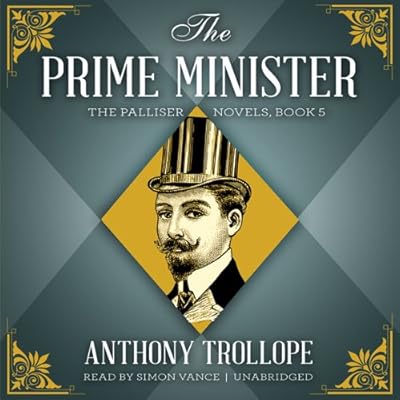


32. The Portobello Road and Other Stories, Muriel Spark, collected 1985, original publication dates not given; short stories
This collection contains 4 stories: "The Portobello Road", "Bang-Bang You're Dead", "The Seraph and the Zambesi", and "The Dragon." The first 3 stories are either set in or have references to Southern Africa. "The Portobello Road" was my favorite: a woman's ghost haunts the man who killed her, which was quirky and with a bit of wit. The others were just OK.
33. The Europeans, Henry James (1878); fiction
Baroness Eugenia Munster is about to have her marriage annulled for political reasons, so she and her brother Felix Young, a happy-go-lucky and sometime artist, decide to visit their American cousins in Boston with an eye to securing an eligible (i.e., wealthy) match for the Baroness. Although their parents were Americans, Felix & Eugenia were born and raised in Europe and have lived in various locations. Their American cousins, Mr Wentworth and his 3 children, Gertrude, Charlotte and Clifford, are true New England Puritans. The novel explores the different value systems of the two families, both positive and negative.
I found the beginning narratives of the book rather a slog, but as more of the story unfolds and dialogue takes over, I found the novel more accessible. Sometimes the dialogue felt a bit cryptic, and I wonder if this would have worked better as a play, where the actors could give more meaning to some of the lines. Overall, not bad, but not exactly memorable.
34. The Hollow, Agatha Christie (1946); mystery
Lady Angkatell is having a luncheon with her extended family and a special guest, her detective neighbor Mr Poirot is invited. When he arrives, of course, he sees a woman with a gun hovering over a dead man's bleeding body at the side of the pool.
Christie spends a good deal of time fleshing out all the characters. their backstory, their motives. There's not a lot of detective work here, but lots of musings over the psychological portrait of each character. Suffice it to say that, as always, I was fooled. Still an interesting character study.
35. Cluny Brown, Margery Sharp (1944); fiction
It is 1938 London and Cluny Brown, about 20, "doesn't know her place." She's an orphan, raised by her uncle, a plumber. In exasperation her uncle sends her out to service to a grand family in Devon, and the story carries on from there. I thought the story was delightful, until the last 20 pages, when the ending made no sense to me whatsoever. Fun, but be prepared to scratch your head when it's done. I think I enjoyed Sharp's Rhododendron Pie a bit more than this one.
36. In the Steps of Jane Austen, Anne-Marie Edwards (1985); nonfiction, travel walks
This book is organized into 15 walks around places where Jane Austen lived or visited. Edwards starts off with introducing the place and its relation to JA, often quoting right from her letters. Then she gives a meticulous description of the "walk", and the highlights along the way. Each walk has a map and gives the length in miles and difficulty. Since it was published 40 years ago, I'm sure some things have changed, but still an interesting journey. My only minor disappointment was that the photos in the book were all black & white; color would have been more enticing, I think.
37. The Soul of Kindness, Elizabeth Taylor (1964); fiction, Virago collection
Flora feels that she is the soul of kindness, and mostly her mother, husband, best friend, and neighbors try to think so, too. Flora does mean well in an Emma Woodhouse sort of way, but fails to see where her kindness is really interference.
Besides Flora, Taylor gives us full-fledged portraits of about 7 more characters. The writing is stellar, as always with Taylor. There isn't a lot of plot, and usually I can deal with that, but this novel didn't seem to go anywhere and it lacked something for me.
❤️❤️38. William - An Englishman, Cecily Hamilton (1919); fiction, Persephone collection
It's hard to summarize this short (226 pages) book without giving away a lot of spoilers. It was my shortest, but most thought-provoking read of the month.
In pre-WWI London, William, an average young office clerk, has been ruled by his mother his entire life. When she dies and leaves him a small income, he decides he needs to do more with his life. A friend introduces him to a progressive group fighting for Trade Union rights. Here he meets Griselda, an ardent suffragette, and the two get married in late July, 1914. In the midst of their progressive causes, they have paid little attention to the world events that are brewing in Europe, and opt for an extended August (1914) honeymoon in a remote cabin in Belgium. They are confused by the constant "thunder" in the distance, and learn too late that they are, in fact, in the path of an advancing German army. They are taken prisoner and the 2nd half of the book goes on from there.
This book asks more questions than it answers: what is the value of smaller causes if the larger ones remain unresolved? Are they still relevant to one's life? What does it mean to be part of a war effort--is it good or bad? How does one continue with life after observing the horrors of war? And finally what is the value of one person's life--how can one individual make a difference against tremendous forces out of one's control? Hamilton doesn't answer any of these question, but makes us turn them over and over. This novel is the first book published by Persephone and it is a short, but unforgettable one. Added to my "must re-read" list to fully appreciate it.
❤️39. When the Emperor Was Divine, Julie Otsuka (2002); fiction
Beginning in Spring 1942, this is the story of a Japanese family from Berkeley, California who have just been told they are to be "relocated." The first chapter is from the point of view of the mother as she dutifully packs up the house and gets the children ("the boy" and "the girl"--we are never given names for the main family) ready for the trip to destinations unknown. The father was taken away in the night soon after December 7, 1941, and they have only received sporadic postcards from him, mostly redacted. The second chapter is from the point of view of the daughter as they travel by train to a desert in Utah. The third chapter is from the son's point of view and description of life in their hot, dusty, desert camp with little to no privacy. The fourth chapter is told from the children's perspective ("we") when they return to their ransacked family home after the war. And the last chapter is told by the father.
This is a short but poignant and powerful novel. The nameless family represents all families and the inhuman treatment they received. The details of the abuses, the camp life and the scorn and indifference of their neighbors is all told with crystal precision of details of the barracks and internment life. So apropos for our times, especially as it shows how we have not learned from our shameful history.
❤️40. The Prime Minister, Anthony Trollope (1876); audiobook, read by Simon Vance; fiction; re-read from 2016
This is the 5th book in the Palliser series following the political career of Plantagenet Palliser (now Duke of Omnium) as he becomes the reluctant Prime Minister of a coalition government. Along with this story we follow the Duke's marriage with Lady Glencora (now Duchess) as they navigate their political and social position. Parallel to this older marriage is the story of the young marriage of Emily Wharton, daughter of a wealthy lawyer, and Ferdinand Lopez, a man of unknown origin and finances.
Most of the political thread was not above my head, but not necessarily compelling. The two marriages really make the story, with all the stubbornness and miscommunication and heartache that Trollope can bring to relationships. I ended up liking this much better than on my first reading 10 years ago; I think the audio interpretations by the narrator, Simon Vance--especially of the characters' dialogues--helped to improve my feelings about the book.
41. They Knew Mr Knight, Dorothy Whipple (1934); fiction; Persephone collection
When middle-class factory manager Thomas Blake meets wealthy financier Mr Lawrence Knight on the train, it is the beginning of a long journey of change, both good and not so good, for the Blake family. Most of the book is told from the point of view of Celia, wife of Thomas, who is skeptical of the wealthy Mr Knight, but still supports her husband. The 3 children have various reactions to the changes in their family life.
This book is about taking risks, about class, about marriage, about expectations between parents and children, and much more. It didn't grab me as quickly as the 3 previous books I've read by Whipple, but it has a staying power in its observations of family life. Not everyone or everything ends up well, but it still has hope in the end.
42. The Mystery of the Burnt Cottage: The First Adventure of the Five Find-Outers and Dog, Enid Blyton (1943); children's fiction
I picked up this book on a whim, only because I'd never read any Enid Blyton, either as a child or as an adult. This is the first in the series, and followed typical mystery-solving protocol (searching for clues, interviewing possible suspects and witnesses), with the 5 children acting together to solve the mystery of an apparent act of arson. I was a little put off in the beginning by some rather mean treatment of one character, but that smooths out by the end. I probably won't be reading any more in the series, but I can see how middle-grade kids would gobble these up.


32. The Portobello Road and Other Stories, Muriel Spark, collected 1985, original publication dates not given; short stories
This collection contains 4 stories: "The Portobello Road", "Bang-Bang You're Dead", "The Seraph and the Zambesi", and "The Dragon." The first 3 stories are either set in or have references to Southern Africa. "The Portobello Road" was my favorite: a woman's ghost haunts the man who killed her, which was quirky and with a bit of wit. The others were just OK.
33. The Europeans, Henry James (1878); fiction
Baroness Eugenia Munster is about to have her marriage annulled for political reasons, so she and her brother Felix Young, a happy-go-lucky and sometime artist, decide to visit their American cousins in Boston with an eye to securing an eligible (i.e., wealthy) match for the Baroness. Although their parents were Americans, Felix & Eugenia were born and raised in Europe and have lived in various locations. Their American cousins, Mr Wentworth and his 3 children, Gertrude, Charlotte and Clifford, are true New England Puritans. The novel explores the different value systems of the two families, both positive and negative.
I found the beginning narratives of the book rather a slog, but as more of the story unfolds and dialogue takes over, I found the novel more accessible. Sometimes the dialogue felt a bit cryptic, and I wonder if this would have worked better as a play, where the actors could give more meaning to some of the lines. Overall, not bad, but not exactly memorable.
34. The Hollow, Agatha Christie (1946); mystery
Lady Angkatell is having a luncheon with her extended family and a special guest, her detective neighbor Mr Poirot is invited. When he arrives, of course, he sees a woman with a gun hovering over a dead man's bleeding body at the side of the pool.
Christie spends a good deal of time fleshing out all the characters. their backstory, their motives. There's not a lot of detective work here, but lots of musings over the psychological portrait of each character. Suffice it to say that, as always, I was fooled. Still an interesting character study.
35. Cluny Brown, Margery Sharp (1944); fiction
It is 1938 London and Cluny Brown, about 20, "doesn't know her place." She's an orphan, raised by her uncle, a plumber. In exasperation her uncle sends her out to service to a grand family in Devon, and the story carries on from there. I thought the story was delightful, until the last 20 pages, when the ending made no sense to me whatsoever. Fun, but be prepared to scratch your head when it's done. I think I enjoyed Sharp's Rhododendron Pie a bit more than this one.
36. In the Steps of Jane Austen, Anne-Marie Edwards (1985); nonfiction, travel walks
This book is organized into 15 walks around places where Jane Austen lived or visited. Edwards starts off with introducing the place and its relation to JA, often quoting right from her letters. Then she gives a meticulous description of the "walk", and the highlights along the way. Each walk has a map and gives the length in miles and difficulty. Since it was published 40 years ago, I'm sure some things have changed, but still an interesting journey. My only minor disappointment was that the photos in the book were all black & white; color would have been more enticing, I think.
37. The Soul of Kindness, Elizabeth Taylor (1964); fiction, Virago collection
Flora feels that she is the soul of kindness, and mostly her mother, husband, best friend, and neighbors try to think so, too. Flora does mean well in an Emma Woodhouse sort of way, but fails to see where her kindness is really interference.
Besides Flora, Taylor gives us full-fledged portraits of about 7 more characters. The writing is stellar, as always with Taylor. There isn't a lot of plot, and usually I can deal with that, but this novel didn't seem to go anywhere and it lacked something for me.
❤️❤️38. William - An Englishman, Cecily Hamilton (1919); fiction, Persephone collection
It's hard to summarize this short (226 pages) book without giving away a lot of spoilers. It was my shortest, but most thought-provoking read of the month.
In pre-WWI London, William, an average young office clerk, has been ruled by his mother his entire life. When she dies and leaves him a small income, he decides he needs to do more with his life. A friend introduces him to a progressive group fighting for Trade Union rights. Here he meets Griselda, an ardent suffragette, and the two get married in late July, 1914. In the midst of their progressive causes, they have paid little attention to the world events that are brewing in Europe, and opt for an extended August (1914) honeymoon in a remote cabin in Belgium. They are confused by the constant "thunder" in the distance, and learn too late that they are, in fact, in the path of an advancing German army. They are taken prisoner and the 2nd half of the book goes on from there.
This book asks more questions than it answers: what is the value of smaller causes if the larger ones remain unresolved? Are they still relevant to one's life? What does it mean to be part of a war effort--is it good or bad? How does one continue with life after observing the horrors of war? And finally what is the value of one person's life--how can one individual make a difference against tremendous forces out of one's control? Hamilton doesn't answer any of these question, but makes us turn them over and over. This novel is the first book published by Persephone and it is a short, but unforgettable one. Added to my "must re-read" list to fully appreciate it.
❤️39. When the Emperor Was Divine, Julie Otsuka (2002); fiction
Beginning in Spring 1942, this is the story of a Japanese family from Berkeley, California who have just been told they are to be "relocated." The first chapter is from the point of view of the mother as she dutifully packs up the house and gets the children ("the boy" and "the girl"--we are never given names for the main family) ready for the trip to destinations unknown. The father was taken away in the night soon after December 7, 1941, and they have only received sporadic postcards from him, mostly redacted. The second chapter is from the point of view of the daughter as they travel by train to a desert in Utah. The third chapter is from the son's point of view and description of life in their hot, dusty, desert camp with little to no privacy. The fourth chapter is told from the children's perspective ("we") when they return to their ransacked family home after the war. And the last chapter is told by the father.
This is a short but poignant and powerful novel. The nameless family represents all families and the inhuman treatment they received. The details of the abuses, the camp life and the scorn and indifference of their neighbors is all told with crystal precision of details of the barracks and internment life. So apropos for our times, especially as it shows how we have not learned from our shameful history.
❤️40. The Prime Minister, Anthony Trollope (1876); audiobook, read by Simon Vance; fiction; re-read from 2016
This is the 5th book in the Palliser series following the political career of Plantagenet Palliser (now Duke of Omnium) as he becomes the reluctant Prime Minister of a coalition government. Along with this story we follow the Duke's marriage with Lady Glencora (now Duchess) as they navigate their political and social position. Parallel to this older marriage is the story of the young marriage of Emily Wharton, daughter of a wealthy lawyer, and Ferdinand Lopez, a man of unknown origin and finances.
Most of the political thread was not above my head, but not necessarily compelling. The two marriages really make the story, with all the stubbornness and miscommunication and heartache that Trollope can bring to relationships. I ended up liking this much better than on my first reading 10 years ago; I think the audio interpretations by the narrator, Simon Vance--especially of the characters' dialogues--helped to improve my feelings about the book.
41. They Knew Mr Knight, Dorothy Whipple (1934); fiction; Persephone collection
When middle-class factory manager Thomas Blake meets wealthy financier Mr Lawrence Knight on the train, it is the beginning of a long journey of change, both good and not so good, for the Blake family. Most of the book is told from the point of view of Celia, wife of Thomas, who is skeptical of the wealthy Mr Knight, but still supports her husband. The 3 children have various reactions to the changes in their family life.
This book is about taking risks, about class, about marriage, about expectations between parents and children, and much more. It didn't grab me as quickly as the 3 previous books I've read by Whipple, but it has a staying power in its observations of family life. Not everyone or everything ends up well, but it still has hope in the end.
42. The Mystery of the Burnt Cottage: The First Adventure of the Five Find-Outers and Dog, Enid Blyton (1943); children's fiction
I picked up this book on a whim, only because I'd never read any Enid Blyton, either as a child or as an adult. This is the first in the series, and followed typical mystery-solving protocol (searching for clues, interviewing possible suspects and witnesses), with the 5 children acting together to solve the mystery of an apparent act of arson. I was a little put off in the beginning by some rather mean treatment of one character, but that smooths out by the end. I probably won't be reading any more in the series, but I can see how middle-grade kids would gobble these up.
84kac522

"Garden"
John Henry Dearle (English, 1860-1932)
Wallpaper design for Morris & Co.
Brooklyn Museum, New York
Image for May 2025 from "2025 Calendar William Morris Arts & Crafts Designs", Pomegranate Communications, Inc
May Reading Possibilities:
These are in the pile right now, but anything (and everything) can change. I also have a couple of holds I've requested from the library--if they come in, they'll be a priority.
Currently Reading:
The Truth About Immigration: Why successful Societies Welcome Newcomers, Zeke Hernandez (2024), nonfiction
A Small Boy and Others, Henry James (1913), memoir, April monthly author
Mansfield Park, Jane Austen (1814); on audiobook, read by Juliet Stevenson, for my 2025 JA Challenge
Priorities:
Captains Courageous, Rudyard Kipling for my RL book club
Founding Brothers, Joseph Ellis OR Polio: An American Story, David Oshinsky, for AAC May challenge (Pulitzer winners in history)
The Old Country: Collected Stories of Sholom Aleichem, translated from the Yiddish; short stories for Paul's European tour
What Maisie Knew OR The Spoils of Poynton, Henry James (April monthly author)
The Devastating Boys (short stories) AND The Wedding Group (novel), Elizabeth Taylor (May monthly author)
"Arrest the Bishop?", Winifred Peck, for May RandomKIT: title with punctuation
Possibilities (by time or by whim!)
Blue Remembered Hills, Rosemary Sutcliff, memoir
An Old Woman's Reflections: The life of a Blasket Island Storyteller, Peig Sayers, memoir, translated from the Irish
The Eternal Husband, Fyodor Dostoevsky
Anne of the Island, L. M. Montgomery
Good Behaviour, Molly Keane, Virago title
Dangerous Ages, Rose Macaulay
The Dictionary of Lost Words, Pip Williams
Library Holds:
A Wilder Shore: The Romantic Odyssey of Fanny and Robert Louis Stevenson, Camille Peri, biography
Charlotte Fairlie, D. E. Stevenson
Lorna Doone, R. D. Blackmore
Onto the Lusty Month of May reading........
85NinieB
>83 kac522: Nice reviews as always!
On The Hollow, I know Christie adapted it as a play, and I think she left out Poirot. This was never one of my favorites, I think partly because I didn't read it when I was first gobbling up Christies as a pre-teen.
On William--An Englishman, it sounds like I have something good to look forward to whenever I get to it.
On The Prime Minister, for some reason I thought Emily's name was Inez. No idea why! I didn't like this one so much the first time I read it; good to know that it improves on re-reading (even if your audiobook helped).
>84 kac522: What a lovely image. Both the colors and the design itself are perfect!
On The Hollow, I know Christie adapted it as a play, and I think she left out Poirot. This was never one of my favorites, I think partly because I didn't read it when I was first gobbling up Christies as a pre-teen.
On William--An Englishman, it sounds like I have something good to look forward to whenever I get to it.
On The Prime Minister, for some reason I thought Emily's name was Inez. No idea why! I didn't like this one so much the first time I read it; good to know that it improves on re-reading (even if your audiobook helped).
>84 kac522: What a lovely image. Both the colors and the design itself are perfect!
86kac522
>85 NinieB: Thank you for stopping by, Ninie!
William--An Englishman is so thought-provoking. I saw some reviews in which the readers were puzzled by the way it seems like the author shifts point of view. Hamilton herself was a suffragette who had been involved in some pre-WWI gatherings described in the book, and was also in France during the war doing ambulance service, which I think explains her different points of view.
The marriage of Emily & Lopez gets very wearying after a while. I think knowing how it would end made it seem a bit less tedious on a re-read. And I paid attention more to the nuances of Plantagenet & Lady Glencora's marriage, since I know what happens in the last book.
I love William Morris designs and I love the Morris calendar I have from Pomegranate. The calendar is large and it just gives me a good feeling every time I look at it. Every month is gorgeous.
William--An Englishman is so thought-provoking. I saw some reviews in which the readers were puzzled by the way it seems like the author shifts point of view. Hamilton herself was a suffragette who had been involved in some pre-WWI gatherings described in the book, and was also in France during the war doing ambulance service, which I think explains her different points of view.
The marriage of Emily & Lopez gets very wearying after a while. I think knowing how it would end made it seem a bit less tedious on a re-read. And I paid attention more to the nuances of Plantagenet & Lady Glencora's marriage, since I know what happens in the last book.
I love William Morris designs and I love the Morris calendar I have from Pomegranate. The calendar is large and it just gives me a good feeling every time I look at it. Every month is gorgeous.
87MissBrangwen
>84 kac522: I'm looking forward to your review of the Peig Sayers book if you get to it. In 2022 I visited the Museum of Literature in Dublin and they had an exhibition about the storytelling traditions on the Blasket Islands. It was fascinating.
88japaul22
>83 kac522: I also really loved William - an Englishman and found it very thought-provoking.
Always love your reviews!
Always love your reviews!
89kac522
>87 MissBrangwen: I picked up the Peig Sayers book on a whim at a library sale--it looked interesting. I was going to put it aside this month, but now you've rekindled my interest. It's pretty short, so I'm going to try to read it soon.
>88 japaul22: Thanks, Jennifer. I'm still thinking about that book, while other books have faded. And while I was reading it, I kept stopping to tell my husband what was happening. For such a short book, it can generate a lot of discussion, I think.
>88 japaul22: Thanks, Jennifer. I'm still thinking about that book, while other books have faded. And while I was reading it, I kept stopping to tell my husband what was happening. For such a short book, it can generate a lot of discussion, I think.
90threadnsong
>82 kac522: and >84 kac522: Thank you for sharing these William Morris pieces! I am always agog at his artistic abilities and how he showcases patterns without them becoming too repetitive. I remember seeing needlepoint tapestries based on his work and always wished for the time to be able to create them.
And will be interested to read your reviews for May, especially the Virago and more "classic" authors.
And will be interested to read your reviews for May, especially the Virago and more "classic" authors.
91kac522
>90 threadnsong: Yes, I love William Morris designs. Every year I buy a William Morris calendar from Pomegranate. It's on a wall in my bedroom, so that when I'm brooding about something in bed, I can focus on the lovely design and immediately feel better.
In May I read one Virago book--Devastating Boys (short stories) by Elizabeth Taylor and one Persephone The Village by Marghanita Laski. Also a Kipling, a Trollope, a re-read of Mansfield Park, and Anne of the Island from the Anne of Green Gables series. I never read the whole series (although I read the first book multiple times), so I'm slowly making my way through the series. I should have my May reviews up in a couple of days.
In May I read one Virago book--Devastating Boys (short stories) by Elizabeth Taylor and one Persephone The Village by Marghanita Laski. Also a Kipling, a Trollope, a re-read of Mansfield Park, and Anne of the Island from the Anne of Green Gables series. I never read the whole series (although I read the first book multiple times), so I'm slowly making my way through the series. I should have my May reviews up in a couple of days.
92kac522
I read 14 books in May, the most in a month so far this year. A few gems among mostly pleasant reads:



❤️43. The Country Diary of an Edwardian Lady, Edith Holden (1906--this facsimile published 1977); nonfiction; diary and drawings
A beautiful, comforting book which I read month by month from June 2024 through May 2025. Holden's watercolors are exquisite and her knowledge of plants, flowers and birds is absolutely amazing. Each month starts with sayings and poetry appropriate to the season and followed by diary entries of her observations of nature during her walks and travels. It's been a wonderful year, starting each month with Holden's drawings and observations.
44. The Truth About Immigration: Why Successful Societies Welcome Newcomers, Zeke Hernandez (2024); nonfiction
I first heard Zeke Hernandez talking about his book on the Freakonomics radio podcast. Hernandez, an economics professor at the Wharton School in Pennsylvania, provides facts, figures and numerous studies to show how immigrants are a plus to our society throughout our history. I couldn't possibly list all of his data points, but essentially immigrants are in general successful and by the 2nd generation have economically equaled or surpassed those persons born here. Hernandez is an immigrant from Uruguay who is now a U.S. citizen and he has a unique and positive perspective on economics and immigration.
45. Charlotte Fairlie, D. E. Stevenson (1954); fiction
Charlotte Fairlie is a young head mistress of a girls' school. Although she is doing well, she finds the managing of teachers and board members (let alone students) to make her job stressful and not as rewarding as she would like. When she takes an interest in a troubled student, she begins to look at her life in new ways.
This is a typical D. E. Stevenson that has a quieter plot, decent love story and lots of lovely descriptions of a Scottish island. Stevenson adds a special real current event, Queen Elizabeth II's coronation, to the story, which I enjoyed. This was a good novel, not spectacular, not bad. One thing about Stevenson's novels is that she always has at least one or 2 characters that are just outright bad, with no redeeming qualities, and this gets on my nerves. I wish there was more nuance with the bad characters, as there is with the characters we love.
46. The Village, Marghanita Laski (1952); fiction
I decided to read this Persephone book on the 80th anniversary of VE day, because the book's story starts on May 8, 1945--VE Day. Two women from opposites sides of a village (by geography, by wealth and most importantly, by class) decide for one last time to perform their regular volunteer overnight shift at the Red Cross bomb shelter, as they have been doing throughout the war. Even though now there is no probable threat since the European war is over, they set out the tea things and biscuits and sit down for a chat to pass away the hours. They talk about their husbands, their children, other villagers and other types of small talk to pass the time. At the end of the evening they realize that they will never have this same sort of relationship again and part almost as strangers. The rest of the book explores the two families separately and the interactions between the daughter of one and the son of the other, and how the war has made the barriers between the families seem artificial and wrong.
The first few chapters drew me in, especially the beginning scene in the bomb shelter. But as the novel moves on, the author almost knocks us over the head with the vulgarities of class. The mother of the wealthy family, in particular, is shown as a very disagreeable, prejudiced person. The story mostly follows her meek but obedient daughter, and how her mother's attitudes have left the daughter friendless and alone.
Except for the beginning (and ending) the entire book was uncomfortable and I thought could have been done is some other way, without creating such an ogre. I really loved Laski's Little Boy Lost, so I was disappointed in The Village. It was an exploration of class without complexity or empathy or nuance.
47. Blue Remembered Hills, Rosemary Sutcliff (1983); memoir
I've never read any of Rosemary Sutcliff's books, but somewhere (?) I read or heard a review of her memoir, which sounded interesting. Sutcliff contracted Still's disease, now known as juvenile arthritis, as a toddler and had limited mobility for the rest of her life. Although this disability is never hidden, this is not a book of misery or blame or regrets. It's a wonderful memoir of Sutcliff childhood and young adult years, up to about age 30. Her father was in the Navy and the family moved often; her mother was sometimes difficult, possibly manic-depressive. There are engaging descriptions of people, places and nature; hospital stays and outings; governesses and schools. I'm amazed at all that she could recollect of her young years. This was a heart-warming story of a woman who thrived amidst setbacks and disabilities.
48. The Spoils of Poynton, Henry James (1896); fiction
This is a short novel focusing on only 3 characters. Mrs Gereth is a widow who has spent her life collecting beautiful and rare furniture, art and objects for her country home, Poynton. Under the terms of her husband's will, both Poynton and all the objects in it belong to her son, Owen. Owen is about to be married and now wants to take over Poynton for his bride's sake. Mrs Gereth befriends Fleda Vetch, a young woman, who has similar tastes and appreciation of Mrs Gereth's home. The story revolves around the struggle over the contents of the home, but it's more about the power struggle between mother, son and Fleda, as she tries to be the intermediary between the two.
Overall this is an intriguing story: how our "things" become our life. James relentlessly pursues the psychological battles of the three. All this is interesting, but sometimes his wordiness just left me skimming sentences rather than reading them over and over again. This is one of his shorter novels and the dialogue was quite perceptive at times, and more accessible than the prose.
49. Arrest the Bishop?, Winifred Peck (1949); mystery
It's late 1920 and Bishop Broome is about to ordain 6 new priests. They have been invited, as well as several other clerical men, to stay at the Palace, his home with his wife and younger daughter. When the elder daughter (soon to be divorced) and the thoroughly despised Rev Thomas Ulder show up unannounced, the Palace starts to get crowded and tense. For Rev. Ulder needs money to flee to America and he claims to have enough evidence to blackmail several people in the house. When he's found dead in his bed the next morning, Dick Marlin, one of those to be ordained and a WWI ex-intelligence officer, gets on the case and assists the local Constable.
I was a bit confused with all the characters at first, but once the mystery took off, it was easier to follow. Peck has a light, wry touch and as the daughter of a bishop, has a unique view of the clergy--respectful, but playful. This was a fun mystery to follow and an interesting look at ecclesiastic personalities.

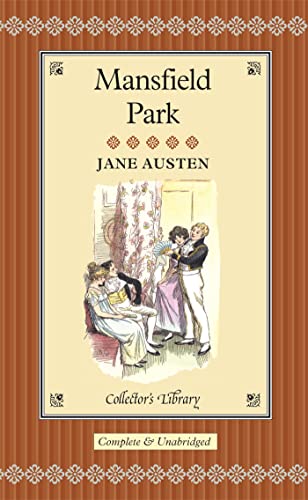


50. Captains Courageous, Rudyard Kipling (1897); fiction
Set in the early 1890s, a bratty and spoiled teen-aged son of a railroad tycoon falls off an ocean liner in the Atlantic. Picked up by a working fisherman's ship, he must mend his ways and adapt to a working vessel.
This wasn't a bad story, but there was so much sailing lingo and dialect that the reading experience was a chore. Kipling did much research about the American fishing industry before writing this story to be accurate in its telling. When the ship gets back to shore, the last few chapters (now in regular English), Kipling shows a respect for the fishing community and the losses and hardships of the families left behind. This is a story that might be more accessible on audio and I may re-read it sometime that way.
51. The Old Country: Collected Stories of Sholom Aleichem, collected and translated from the Yiddish in 1946 by Frances & Julius Butwin; short stories
Sholom Aleichem is best known for his "Tevye" stories, which are the basis for "Fiddler on the Roof." Most of these stories were centered around the village of Kasrilevka, including a few Tevye stories. The stories were often a bit philosophical, sometimes whimsical and not unhappy. The characters tend to either blame someone else for their misfortunes, or more commonly, shrug their shoulders and accept life as it is. Some of the last stories of the book were the most entertaining. I particularly enjoyed "Hannukah Money", "You Mustn't Weep--It's Yom-Tev" and "Dreyfus in Kasrilevka." This last story is about how the townspeople in Kasrilevka react to the ongoing trial of Captain Dreyfus as they hear through the one man in the town who receives a newspaper from the outside world.
The translators were born in Eastern Europe who immigrated to the United States. The translations were very readable, capturing the humor and pathos of the stories. The authors included a preface with an explanation of their process to translate highly idiomatic Yiddish into English.
❤️52. Mansfield Park, Jane Austen (1814), on audiobook, read by Juliet Stevenson; fiction; re-read
I've read Mansfield Park many times and this re-read was very enjoyable. This is the story of young Fanny Price who leaves her over-crowded Portsmouth home to live with her wealthy uncle and aunt on their estate in Mansfield Park. It's a story about finding what home and family really mean, and Fanny is one of my favorite Austen characters.
53. The Devastating Boys and Other Stories, Elizabeth Taylor (1972); short stories
This was Elizabeth Taylor's last collection of short stories. As always Taylor can zero-in on emotions and relationships in very spare wording. The stories that stood out for me were:
"The Devastating Boys" is about a middle-aged country couple who decide to host two poor boys of color from London for two weeks in August. The story covers the two weeks and is told from the wife's point of view.
"Tall Boy" is a snapshot of several days in the life of a recent West Indian immigrant living alone & working in London, and attempting to connect with this very different life.
"Sisters" is about a woman who is visited by a journalist trying to dig up stories about the woman's deceased sister, a writer.
"The Fly-Paper" brilliant tense story that leads up to a creepy, scary ending.
54. Henrietta Sees It Through: More News from the Home Front 1942-1945, Joyce Dennys (1986); humor, epistolary
This is a continuation of Henrietta's War, which I read a few months ago. During WWII Joyce Dennys had a regular column in the periodical Sketch. These columns were fictional letters from Henrietta to a friend in the service, relaying news and happenings in their Devonshire village. These were funny and entertaining and yet they did not gloss over the fact of the real fear of being bombed. Dennys re-discovered them in the 1980s and republished them in 2 volumes. This second book covers the years 1942-1945 and were just as delightful as the first volume.
❤️55. Founding Brothers, Joseph J. Ellis (2001); nonfiction--American history
American historian Joseph Ellis examines 7 of the "founding fathers": Aaron Burr, Alexander Hamilton, Benjamin Franklin, George Washington, John Adams, Thomas Jefferson and James Madison. He brings their personalities, convictions and conflicts into focus by concentrating on 6 events: the Burr/Hamilton duel; the slavery debate (Madison & Franklin); the compromise for a new capital (Jefferson, Madison and Hamilton); Washington's Farewell Address; Adams' presidency; and the tempestuous relationship between Adams and Jefferson.
This was a short book, organized into 6 essays that shed light on the personalities, passions and grievances of the revolutionary generation. It was extremely readable and I finished the book being amazed at how well these disparate men founded our country. A lot packed into 248 pages and gives one hope that maybe this country can still be saved.
56. Anne of the Island, L. M. Montgomery (1915); fiction; re-read
I eventually want to read the entire Anne of Green Gables series. This is the 3rd book, which I read 35 years ago and remembered nothing. It covers Anne's time in college, living in a boardinghouse during the school year and coming home to Avonlea in the summer. I liked this better than Anne of Avonlea, which seemed rather flat to me. In Anne of the Island Anne shows maturity and introspection. The only thing that disappointed me is that we get so little of Marilla in this book and even less of young Dora, a twin staying with Marilla, who is a mere shadow figure. Both Mrs Rachel and Dora's brother Davy get lots of dialogue and print time. I wish Montgomery had given more space to the shyer, quieter characters.


❤️43. The Country Diary of an Edwardian Lady, Edith Holden (1906--this facsimile published 1977); nonfiction; diary and drawings
A beautiful, comforting book which I read month by month from June 2024 through May 2025. Holden's watercolors are exquisite and her knowledge of plants, flowers and birds is absolutely amazing. Each month starts with sayings and poetry appropriate to the season and followed by diary entries of her observations of nature during her walks and travels. It's been a wonderful year, starting each month with Holden's drawings and observations.
44. The Truth About Immigration: Why Successful Societies Welcome Newcomers, Zeke Hernandez (2024); nonfiction
I first heard Zeke Hernandez talking about his book on the Freakonomics radio podcast. Hernandez, an economics professor at the Wharton School in Pennsylvania, provides facts, figures and numerous studies to show how immigrants are a plus to our society throughout our history. I couldn't possibly list all of his data points, but essentially immigrants are in general successful and by the 2nd generation have economically equaled or surpassed those persons born here. Hernandez is an immigrant from Uruguay who is now a U.S. citizen and he has a unique and positive perspective on economics and immigration.
45. Charlotte Fairlie, D. E. Stevenson (1954); fiction
Charlotte Fairlie is a young head mistress of a girls' school. Although she is doing well, she finds the managing of teachers and board members (let alone students) to make her job stressful and not as rewarding as she would like. When she takes an interest in a troubled student, she begins to look at her life in new ways.
This is a typical D. E. Stevenson that has a quieter plot, decent love story and lots of lovely descriptions of a Scottish island. Stevenson adds a special real current event, Queen Elizabeth II's coronation, to the story, which I enjoyed. This was a good novel, not spectacular, not bad. One thing about Stevenson's novels is that she always has at least one or 2 characters that are just outright bad, with no redeeming qualities, and this gets on my nerves. I wish there was more nuance with the bad characters, as there is with the characters we love.
46. The Village, Marghanita Laski (1952); fiction
I decided to read this Persephone book on the 80th anniversary of VE day, because the book's story starts on May 8, 1945--VE Day. Two women from opposites sides of a village (by geography, by wealth and most importantly, by class) decide for one last time to perform their regular volunteer overnight shift at the Red Cross bomb shelter, as they have been doing throughout the war. Even though now there is no probable threat since the European war is over, they set out the tea things and biscuits and sit down for a chat to pass away the hours. They talk about their husbands, their children, other villagers and other types of small talk to pass the time. At the end of the evening they realize that they will never have this same sort of relationship again and part almost as strangers. The rest of the book explores the two families separately and the interactions between the daughter of one and the son of the other, and how the war has made the barriers between the families seem artificial and wrong.
The first few chapters drew me in, especially the beginning scene in the bomb shelter. But as the novel moves on, the author almost knocks us over the head with the vulgarities of class. The mother of the wealthy family, in particular, is shown as a very disagreeable, prejudiced person. The story mostly follows her meek but obedient daughter, and how her mother's attitudes have left the daughter friendless and alone.
Except for the beginning (and ending) the entire book was uncomfortable and I thought could have been done is some other way, without creating such an ogre. I really loved Laski's Little Boy Lost, so I was disappointed in The Village. It was an exploration of class without complexity or empathy or nuance.
47. Blue Remembered Hills, Rosemary Sutcliff (1983); memoir
I've never read any of Rosemary Sutcliff's books, but somewhere (?) I read or heard a review of her memoir, which sounded interesting. Sutcliff contracted Still's disease, now known as juvenile arthritis, as a toddler and had limited mobility for the rest of her life. Although this disability is never hidden, this is not a book of misery or blame or regrets. It's a wonderful memoir of Sutcliff childhood and young adult years, up to about age 30. Her father was in the Navy and the family moved often; her mother was sometimes difficult, possibly manic-depressive. There are engaging descriptions of people, places and nature; hospital stays and outings; governesses and schools. I'm amazed at all that she could recollect of her young years. This was a heart-warming story of a woman who thrived amidst setbacks and disabilities.
48. The Spoils of Poynton, Henry James (1896); fiction
This is a short novel focusing on only 3 characters. Mrs Gereth is a widow who has spent her life collecting beautiful and rare furniture, art and objects for her country home, Poynton. Under the terms of her husband's will, both Poynton and all the objects in it belong to her son, Owen. Owen is about to be married and now wants to take over Poynton for his bride's sake. Mrs Gereth befriends Fleda Vetch, a young woman, who has similar tastes and appreciation of Mrs Gereth's home. The story revolves around the struggle over the contents of the home, but it's more about the power struggle between mother, son and Fleda, as she tries to be the intermediary between the two.
Overall this is an intriguing story: how our "things" become our life. James relentlessly pursues the psychological battles of the three. All this is interesting, but sometimes his wordiness just left me skimming sentences rather than reading them over and over again. This is one of his shorter novels and the dialogue was quite perceptive at times, and more accessible than the prose.
49. Arrest the Bishop?, Winifred Peck (1949); mystery
It's late 1920 and Bishop Broome is about to ordain 6 new priests. They have been invited, as well as several other clerical men, to stay at the Palace, his home with his wife and younger daughter. When the elder daughter (soon to be divorced) and the thoroughly despised Rev Thomas Ulder show up unannounced, the Palace starts to get crowded and tense. For Rev. Ulder needs money to flee to America and he claims to have enough evidence to blackmail several people in the house. When he's found dead in his bed the next morning, Dick Marlin, one of those to be ordained and a WWI ex-intelligence officer, gets on the case and assists the local Constable.
I was a bit confused with all the characters at first, but once the mystery took off, it was easier to follow. Peck has a light, wry touch and as the daughter of a bishop, has a unique view of the clergy--respectful, but playful. This was a fun mystery to follow and an interesting look at ecclesiastic personalities.


50. Captains Courageous, Rudyard Kipling (1897); fiction
Set in the early 1890s, a bratty and spoiled teen-aged son of a railroad tycoon falls off an ocean liner in the Atlantic. Picked up by a working fisherman's ship, he must mend his ways and adapt to a working vessel.
This wasn't a bad story, but there was so much sailing lingo and dialect that the reading experience was a chore. Kipling did much research about the American fishing industry before writing this story to be accurate in its telling. When the ship gets back to shore, the last few chapters (now in regular English), Kipling shows a respect for the fishing community and the losses and hardships of the families left behind. This is a story that might be more accessible on audio and I may re-read it sometime that way.
51. The Old Country: Collected Stories of Sholom Aleichem, collected and translated from the Yiddish in 1946 by Frances & Julius Butwin; short stories
Sholom Aleichem is best known for his "Tevye" stories, which are the basis for "Fiddler on the Roof." Most of these stories were centered around the village of Kasrilevka, including a few Tevye stories. The stories were often a bit philosophical, sometimes whimsical and not unhappy. The characters tend to either blame someone else for their misfortunes, or more commonly, shrug their shoulders and accept life as it is. Some of the last stories of the book were the most entertaining. I particularly enjoyed "Hannukah Money", "You Mustn't Weep--It's Yom-Tev" and "Dreyfus in Kasrilevka." This last story is about how the townspeople in Kasrilevka react to the ongoing trial of Captain Dreyfus as they hear through the one man in the town who receives a newspaper from the outside world.
The translators were born in Eastern Europe who immigrated to the United States. The translations were very readable, capturing the humor and pathos of the stories. The authors included a preface with an explanation of their process to translate highly idiomatic Yiddish into English.
❤️52. Mansfield Park, Jane Austen (1814), on audiobook, read by Juliet Stevenson; fiction; re-read
I've read Mansfield Park many times and this re-read was very enjoyable. This is the story of young Fanny Price who leaves her over-crowded Portsmouth home to live with her wealthy uncle and aunt on their estate in Mansfield Park. It's a story about finding what home and family really mean, and Fanny is one of my favorite Austen characters.
53. The Devastating Boys and Other Stories, Elizabeth Taylor (1972); short stories
This was Elizabeth Taylor's last collection of short stories. As always Taylor can zero-in on emotions and relationships in very spare wording. The stories that stood out for me were:
"The Devastating Boys" is about a middle-aged country couple who decide to host two poor boys of color from London for two weeks in August. The story covers the two weeks and is told from the wife's point of view.
"Tall Boy" is a snapshot of several days in the life of a recent West Indian immigrant living alone & working in London, and attempting to connect with this very different life.
"Sisters" is about a woman who is visited by a journalist trying to dig up stories about the woman's deceased sister, a writer.
"The Fly-Paper" brilliant tense story that leads up to a creepy, scary ending.
54. Henrietta Sees It Through: More News from the Home Front 1942-1945, Joyce Dennys (1986); humor, epistolary
This is a continuation of Henrietta's War, which I read a few months ago. During WWII Joyce Dennys had a regular column in the periodical Sketch. These columns were fictional letters from Henrietta to a friend in the service, relaying news and happenings in their Devonshire village. These were funny and entertaining and yet they did not gloss over the fact of the real fear of being bombed. Dennys re-discovered them in the 1980s and republished them in 2 volumes. This second book covers the years 1942-1945 and were just as delightful as the first volume.
❤️55. Founding Brothers, Joseph J. Ellis (2001); nonfiction--American history
American historian Joseph Ellis examines 7 of the "founding fathers": Aaron Burr, Alexander Hamilton, Benjamin Franklin, George Washington, John Adams, Thomas Jefferson and James Madison. He brings their personalities, convictions and conflicts into focus by concentrating on 6 events: the Burr/Hamilton duel; the slavery debate (Madison & Franklin); the compromise for a new capital (Jefferson, Madison and Hamilton); Washington's Farewell Address; Adams' presidency; and the tempestuous relationship between Adams and Jefferson.
This was a short book, organized into 6 essays that shed light on the personalities, passions and grievances of the revolutionary generation. It was extremely readable and I finished the book being amazed at how well these disparate men founded our country. A lot packed into 248 pages and gives one hope that maybe this country can still be saved.
56. Anne of the Island, L. M. Montgomery (1915); fiction; re-read
I eventually want to read the entire Anne of Green Gables series. This is the 3rd book, which I read 35 years ago and remembered nothing. It covers Anne's time in college, living in a boardinghouse during the school year and coming home to Avonlea in the summer. I liked this better than Anne of Avonlea, which seemed rather flat to me. In Anne of the Island Anne shows maturity and introspection. The only thing that disappointed me is that we get so little of Marilla in this book and even less of young Dora, a twin staying with Marilla, who is a mere shadow figure. Both Mrs Rachel and Dora's brother Davy get lots of dialogue and print time. I wish Montgomery had given more space to the shyer, quieter characters.
93kac522

"Harebell", Wallpaper design, before 1917
John Henry Dearle (English 1860-1932) for Morris & Co.
Brooklyn Museum, NY
from Pomegranate Calendar, William Morris, June 2025
Completed so far
The Corner Shop, Elizabeth Cadell (1966); library book
Wives and Daughters, Elizabeth Gaskell
Currently reading
The Mirror Maker: Stories and Essays, Primo Levi, for Paul's European Tour
Jane Austen's Bookshelf, Rebecca Romney, library book
The Duke's Children, Anthony Trollope, re-read on audiobook (last book in the Palliser series)
Possible June reading:
Priorities:
Life with Father, Clarence Day, included in The Best of Clarence Day, library book, for my RL book club
Hannah Coulter, Wendell Berry
The Female Quixote, Charlotte Lennox
Howards End, E. M. Forster, a re-read
There is a Tide, Agatha Christie
The Wedding Group, Elizabeth Taylor (left over from May)
...and as time permits...:
At Mrs Lippincote's, Elizabeth Taylor, re-read
The Children of the New Forest, Captain Marryat
Our Spoons Came from Woolworths, Barbara Comyns
Juneteenth, Ralph Ellison
Aspects of the Novel, E. M. Forster, nonfiction re-read
A Wilder Shore: The Romantic Odyssey of Fanny and Robert Louis Stevenson, Camille Peri, library book
Clear, Carys Davies, library book
94NinieB
>92 kac522: Too bad about The Village. I'm still going to read it though, as it's on my shelf.
The characters in Arrest the Bishop? are so confusing! I particularly liked Peck's style.
I devoured the Anne books, at least the first 6, over and over again when I was a pre-teen, so I know the plots backwards and forwards. I agree Anne of Avonlea is a bit flat, and I always really liked Anne of the Island. Anne of Windy Poplars, the next one in story order, has some very amusing bits in it.
>93 kac522: I was able to get Jane Austen's Bookshelf from the library! Now I just need to find time to read it.
The characters in Arrest the Bishop? are so confusing! I particularly liked Peck's style.
I devoured the Anne books, at least the first 6, over and over again when I was a pre-teen, so I know the plots backwards and forwards. I agree Anne of Avonlea is a bit flat, and I always really liked Anne of the Island. Anne of Windy Poplars, the next one in story order, has some very amusing bits in it.
>93 kac522: I was able to get Jane Austen's Bookshelf from the library! Now I just need to find time to read it.
95kac522
>94 NinieB: The beginning of The Village was just brilliant; expanded just a little, it would have made an excellent short story. But the negativity wore me down by the end of the book.
Right, I couldn't get those characters straight (I even made out a list, but I was still confused!), but I kept reading because of her wit.
I've read Anne of Green Gables multiple times, but the 2nd & 3rd books now just twice. And haven't read any of the others. I plan to slowly make my way to the end of the series. They are a nice break between other books and your comment has me looking forward to Anne of Windy Poplars.
I've started Jane Austen's Bookshelf. She approaches the authors through her rare book knowledge and experience. Of the 7 authors in the book, I've read 5. I've heard of Hannah More but never read her. Hester Lynch Thrale Piozzi is a completely new name to me, so am interested to find out about her. I've got to get going on it, though, because there's a LONG list of people waiting for the book....
And I'm 200+ pages into Wives and Daughters. It's the only Gaskell novel I haven't read and I've been afraid to read it for fear I wouldn't love it! So far, it's wonderful....
Right, I couldn't get those characters straight (I even made out a list, but I was still confused!), but I kept reading because of her wit.
I've read Anne of Green Gables multiple times, but the 2nd & 3rd books now just twice. And haven't read any of the others. I plan to slowly make my way to the end of the series. They are a nice break between other books and your comment has me looking forward to Anne of Windy Poplars.
I've started Jane Austen's Bookshelf. She approaches the authors through her rare book knowledge and experience. Of the 7 authors in the book, I've read 5. I've heard of Hannah More but never read her. Hester Lynch Thrale Piozzi is a completely new name to me, so am interested to find out about her. I've got to get going on it, though, because there's a LONG list of people waiting for the book....
And I'm 200+ pages into Wives and Daughters. It's the only Gaskell novel I haven't read and I've been afraid to read it for fear I wouldn't love it! So far, it's wonderful....
96NinieB
>95 kac522: If all goes according to plan I will read Wives and Daughters in December. I started reading North and South last night. I read it once before, but I don't remember much.
97kac522
>96 NinieB: Have you read W&D before? or seen the BBC TV series? This is my first reading of the book and I haven't watched the series yet, but I have a copy of the DVD that I bought at a library sale--now just waiting for me to read the book!
And have you seen the North & South TV series with Richard Armitage? In my opinion it's one of the best screen adaptations of any novel (except perhaps the 1995 P&P). Even though some things from N&S are changed (especially the beginning & ending), I feel like the screen adaptation brings out the main themes of the book so well. In fact, after I read the book, I thought the book was just OK, but then watched the adaptation and loved it. So I went back and read the book again and it meant so much more to me after watching the adaptation. Now it is truly one of my all-time favorite novels.
And have you seen the North & South TV series with Richard Armitage? In my opinion it's one of the best screen adaptations of any novel (except perhaps the 1995 P&P). Even though some things from N&S are changed (especially the beginning & ending), I feel like the screen adaptation brings out the main themes of the book so well. In fact, after I read the book, I thought the book was just OK, but then watched the adaptation and loved it. So I went back and read the book again and it meant so much more to me after watching the adaptation. Now it is truly one of my all-time favorite novels.
98NinieB
>97 kac522: I have neither seen the TV series nor read Wives and Daughters, and I haven't seen the Tv series of North and South either. I meant to do a bunch of series watching back in April when I noticed Prime had several of them but never got to it. I'll have to see if I can talk my husband into some costume dramas.
99kac522
>98 NinieB: I hope you can. I have my own copy of N&S (my sister gave me the DVD for my birthday one year). My husband usually leaves the room for these adaptations, but he actually watched N&S with me because of the scenes with Brendan Coyle (as the labor leader Higgins) and the scenes with workers and strikes. It's got a very industrial feel to it, and there are a few scenes with some violence that are not in the book, but are probably very true to actual factories & strikes of the time period. And it's got a great musical score.
100threadnsong
>92 kac522: What a great May reading you had! I never really knew what Captains Courageous was about, and having read Two Years Before the Mast I can understand how the nautical terms can be a bit much. I told DH that the next road trip we take, we are listening to this one. Founding Brothers sounds like a great read as well. They were only human, after all, and how they came together to create what we have is something to celebrate.
>97 kac522: Loved the series and was not sure I would. I liked Richard Armitage and what he brought to the character, and >99 kac522: yes, the strikes and the industrial feel were top-notch when seen on the screen in this production.
>97 kac522: Loved the series and was not sure I would. I liked Richard Armitage and what he brought to the character, and >99 kac522: yes, the strikes and the industrial feel were top-notch when seen on the screen in this production.
101kac522
>100 threadnsong: Thank you! I did get a lot of reading done. I hope the audiobook of Captains Courageous makes the dialect come across more easily than on the printed page. This was for my book club, and everyone had trouble with it. But the basic story is good and the last few chapters were the best for me.
I love that N&S series--it is my go-to comfort watch (along with the 1995 Pride & Prejudice). All the acting is so fantastic--besides Coyle & Armitage, I love Sinead Cusack as Mrs Thornton; Lesley Manville as Mrs. Hale; Tim Pigott-Smith as Mr. Hale; Anna Maxwell Martin as Bessie Higgins; Daniela Denby-Ashe as Margaret is very good, although I've never seen her in anything else. I love Jo Joyner as Fanny Thornton and Pauline Quirke as their servant Dixon--they both add such a comic touch! And the filming is awesome (they filmed in a real factory that is now a working museum) and the music is great. And the ending (different from the book) is so wonderful, even though I like the book's ending, too.
Gush, gush, gush...I could go on and on and on, so I'll stop now....

I love that N&S series--it is my go-to comfort watch (along with the 1995 Pride & Prejudice). All the acting is so fantastic--besides Coyle & Armitage, I love Sinead Cusack as Mrs Thornton; Lesley Manville as Mrs. Hale; Tim Pigott-Smith as Mr. Hale; Anna Maxwell Martin as Bessie Higgins; Daniela Denby-Ashe as Margaret is very good, although I've never seen her in anything else. I love Jo Joyner as Fanny Thornton and Pauline Quirke as their servant Dixon--they both add such a comic touch! And the filming is awesome (they filmed in a real factory that is now a working museum) and the music is great. And the ending (different from the book) is so wonderful, even though I like the book's ending, too.
Gush, gush, gush...I could go on and on and on, so I'll stop now....

102kac522
Mid-Year Check-in on my Challenges:
Most good, a couple need attention:
😊I. My Authors (>2 kac522:): completed 12 out of 25
😧II. Virago & Persephone (>3 kac522:): completed 3 out of 25
😊III. New books (>4 kac522:): completed 16 out of 25
😧IV. Old books (>5 kac522:): completed 6 out of 25
😊V. Everything else (>6 kac522:): completed 20 out of 25
😊VI. Jane Austen at 250 (>6 kac522:): completed 10 books/DVDs--no set goal, but making good progress
Clearly, I need to work on my Virago/Persephone collections (hope All Virago/All August will help with that). AND the books that have been hanging around for years....
Most good, a couple need attention:
😊I. My Authors (>2 kac522:): completed 12 out of 25
😧II. Virago & Persephone (>3 kac522:): completed 3 out of 25
😊III. New books (>4 kac522:): completed 16 out of 25
😧IV. Old books (>5 kac522:): completed 6 out of 25
😊V. Everything else (>6 kac522:): completed 20 out of 25
😊VI. Jane Austen at 250 (>6 kac522:): completed 10 books/DVDs--no set goal, but making good progress
Clearly, I need to work on my Virago/Persephone collections (hope All Virago/All August will help with that). AND the books that have been hanging around for years....
103kac522
Highlights for the first half of 2025:
Although so far I have read much more fiction than nonfiction, there were more outstanding nonfiction works:
Nonfiction highlights:
World of Wonders: In Praise of Fireflies, Whale Sharks, and Other Astonishments, Aimee Nezhukumatathil (2020)
The Making of Jane Austen, Devoney Looser (2017)
The Country Diary of an Edwardian Lady, Edith Holden (1906--this facsimile published 1977)
The Truth About Immigration: Why Successful Societies Welcome Newcomers, Zeke Hernandez (2024)
Founding Brothers, Joseph J. Ellis (2001)
Jane Austen's bookshelf : a rare book collector's quest to find the women writers who shaped a legend, Rebecca Romney (2025)
Fiction highlights:
Lady Rose and Mrs Memmary, Ruby Ferguson (1937)
William - An Englishman, Cecily Hamilton (1919)
Wives and Daughters, Elizabeth Gaskell (1866)
Re-read highlights:
No Fond Return of Love, Barbara Pym (1961)
All Creatures Great and Small, James Herriot (1972), on audio, read by Nicholas Ralph
Anne of the Island, L. M. Montgomery (1915)
Howards End, E. M. Forster (1910)
Phineas Redux and The Prime Minister, Anthony Trollope, on audio, read by Simon Vance
and finally re-reads for my "Jane Austen at 250" year-long project:
Persuasion, Northanger Abbey, Lady Susan, and Mansfield Park, on audio
Some Mid-Year Stats:
63 books read
77% fiction
19% nonfiction
42 books from my TBR (includes 5 DNFs where I read at least 50% of the book)
19 from the library
6 books bought & read in 2025
8 audiobooks
1 ebook
3 books in translation (Russian, Italian, Yiddish)
25% published in the 19th century
54% published in the 20th century
21% published in the 21st century
The ever-expanding TBR shelf:
55 books acquired
146 books donated
June wrap-up In Progress (maybe tomorrow??)
Although so far I have read much more fiction than nonfiction, there were more outstanding nonfiction works:
Nonfiction highlights:
World of Wonders: In Praise of Fireflies, Whale Sharks, and Other Astonishments, Aimee Nezhukumatathil (2020)
The Making of Jane Austen, Devoney Looser (2017)
The Country Diary of an Edwardian Lady, Edith Holden (1906--this facsimile published 1977)
The Truth About Immigration: Why Successful Societies Welcome Newcomers, Zeke Hernandez (2024)
Founding Brothers, Joseph J. Ellis (2001)
Jane Austen's bookshelf : a rare book collector's quest to find the women writers who shaped a legend, Rebecca Romney (2025)
Fiction highlights:
Lady Rose and Mrs Memmary, Ruby Ferguson (1937)
William - An Englishman, Cecily Hamilton (1919)
Wives and Daughters, Elizabeth Gaskell (1866)
Re-read highlights:
No Fond Return of Love, Barbara Pym (1961)
All Creatures Great and Small, James Herriot (1972), on audio, read by Nicholas Ralph
Anne of the Island, L. M. Montgomery (1915)
Howards End, E. M. Forster (1910)
Phineas Redux and The Prime Minister, Anthony Trollope, on audio, read by Simon Vance
and finally re-reads for my "Jane Austen at 250" year-long project:
Persuasion, Northanger Abbey, Lady Susan, and Mansfield Park, on audio
Some Mid-Year Stats:
63 books read
77% fiction
19% nonfiction
42 books from my TBR (includes 5 DNFs where I read at least 50% of the book)
19 from the library
6 books bought & read in 2025
8 audiobooks
1 ebook
3 books in translation (Russian, Italian, Yiddish)
25% published in the 19th century
54% published in the 20th century
21% published in the 21st century
The ever-expanding TBR shelf:
55 books acquired
146 books donated
June wrap-up In Progress (maybe tomorrow??)
104threadnsong
Congratulations on a good mid-year progress, and much success for the second half of this year.
105kac522
>104 threadnsong: Thank you! I wish I had read more memorable fiction, though. But there's plenty on the shelves to keep me busy....
106kac522
June Reading
A slower reading month....


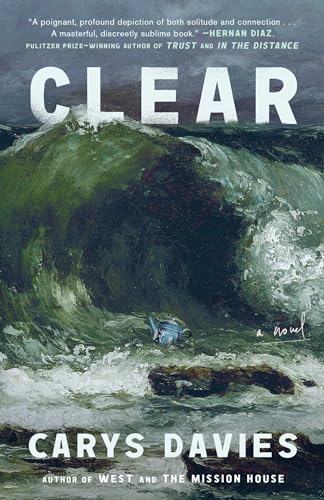
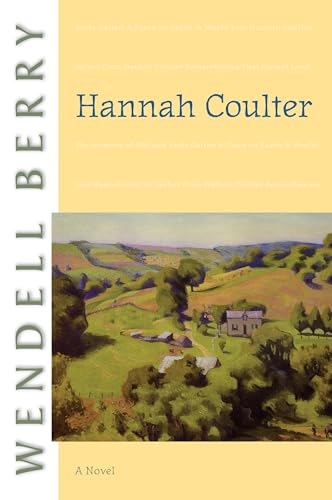

57. The Corner Shop, Elizabeth Cadell (1967); fiction
A quick and easy read: a little humor, a little mystery and a little romance, all wrapped in some bursts of clever dialogue and partially set in Paris.
❤️58. Wives and Daughters, Elizabeth Gaskell (1865); fiction
This was the last major novel of Gaskell I had not yet read. Molly Gibson, devoted to her widowed father, learns to accept her new stepmother and stepsister. An amazing study of various characters, small town life and its gossips, and a look at an age of change (the 1830's) in England. It definitely deserves a re-read to absorb all the themes. In some ways, Molly and her situation reminded me of Fanny in Mansfield Park, although Molly always has her father to support her.
This was very good, but her North and South still takes first place in my heart.
59. The Mirror Maker, Primo Levi (1990), translated from the Italian by Raymond Rosenthal; stories and essays
This is a slim volume (under 200 pages), with about half short stories and half essays. Levi (1919-1987) was an Italian Jew trained as a chemist. During WWII he was an anti-fascist and was sent to Auschwitz. His most famous writings are The Periodic Table and If Not Now, When?.
My favorite stories involved a Journalist interviewing (in order) a Gull, a Mole, a Giraffe, a Spider, a E. Coli bacterium, and a Queen Ant. These were very funny: each "interviewee" bragged about their special abilities, especially where they exceeded humans. The essays ranged widely in topic: from chemistry, translating Kafka, gossip, poetry, to memories of the camps. Overall I enjoyed the essays more than the stories.
❤️60. Jane Austen's bookshelf : A Rare Book Collector's Quest To Find the Women Writers Who Shaped a Legend, Rebecca Romney (2025); nonfiction, books about authors and Jane Austen
This was a highly anticipated book by Jane Austen fans for 2025, and in my opinion, it lives up to the hype. It's an interesting mix of biography of 8 women writers that influenced Austen, their place in the "canon" of literature, threaded together with the rare book business and Romney's own curiosity about these women. The authors profiled are: Charlotte Smith (Emmeline), Charlotte Lennox (The Female Quixote), Anne Radcliffe (The Mysteries of Udolpho), Maria Edgeworth (Castle Rackrent, The Absentee, Belinda), Hannah More, Fanny Burney (Evelina), Elizabeth Inchbald (Lovers Vows) and Hester Lynch Thrale Piozzi.
Sometimes I get annoyed when supposed nonfiction is more memoir (me, me, me) than about the subject, but I think Romney has a good balance here; her own journey usually illustrates a point she's trying to make about the author and her legacy. Well worth reading if you're interested in Jane Austen, "lost" women writers of the 18th century or the rare book business.
61. Clear,Carys Davies (2025); historical fiction
This is a short novel (185 pages) about a poor Scottish minister during the 1840s Scottish "Clearances" who takes on a job to evict the last known man on a remote island in the Shetlands. The two form an unlikely connection as the pair navigate language and customs. The story alternates points of view from the minister, from his wife on the mainland and from the hermit. The setting is haunting and the writing is evocative and tense. The abrupt ending, however, seemed unrealistic to me:a 21st century ending rather than a realistic 19th century outcome.
62. Hannah Coulter, Wendell Berry (2004); fiction
Hannah Coulter, in her seventies, looks back on her long life on a rural Kentucky farm from the Depression years to the Millennium. She gives us the good and the not so good in the same even tone; she acknowledges that we all carry grief around with us, but we persevere. She laments her children's choices, who have decided not to stay on the farm, but for the most part have moved far away, and she blames education (specifically college) for luring young people away.
This book is part of the Port William Membership series and it is a good overview of the series as a whole. However, I wasn't sure if Hannah's view of the lure of college and the abandonment of the farm didn't also represent Berry's own point of view. I probably will not continue with the series.
❤️63. Howards End, E. M. Forster (1910); fiction; re-read
The blurb on the back of my Vintage edition summarizes it the best:
"Only connect," Forster's key aphorism, informs this novel about an English country house, Howards End, and its influence on the lives of the wealthy and materialistic Wilcoxes; the cultured, idealistic Schlegel sisters; and the poor bank clerk Leonard Bast.
I loved it again, and found more to ponder: class, wealth, social responsibility, personal responsibility, a life of ideals and ideas vs. making a living, etc., etc. I also read "Boyhood Recollection of Rooksnest". Rooksnest, owned by a Mr Howard, was the Forster's family home in Hertfordshire when Forster was a boy, and he modeled the country house Howards End after it. This recollection was written by Forster at age 15, and is his first known written work to survive.
A slower reading month....


57. The Corner Shop, Elizabeth Cadell (1967); fiction
A quick and easy read: a little humor, a little mystery and a little romance, all wrapped in some bursts of clever dialogue and partially set in Paris.
❤️58. Wives and Daughters, Elizabeth Gaskell (1865); fiction
This was the last major novel of Gaskell I had not yet read. Molly Gibson, devoted to her widowed father, learns to accept her new stepmother and stepsister. An amazing study of various characters, small town life and its gossips, and a look at an age of change (the 1830's) in England. It definitely deserves a re-read to absorb all the themes. In some ways, Molly and her situation reminded me of Fanny in Mansfield Park, although Molly always has her father to support her.
This was very good, but her North and South still takes first place in my heart.
59. The Mirror Maker, Primo Levi (1990), translated from the Italian by Raymond Rosenthal; stories and essays
This is a slim volume (under 200 pages), with about half short stories and half essays. Levi (1919-1987) was an Italian Jew trained as a chemist. During WWII he was an anti-fascist and was sent to Auschwitz. His most famous writings are The Periodic Table and If Not Now, When?.
My favorite stories involved a Journalist interviewing (in order) a Gull, a Mole, a Giraffe, a Spider, a E. Coli bacterium, and a Queen Ant. These were very funny: each "interviewee" bragged about their special abilities, especially where they exceeded humans. The essays ranged widely in topic: from chemistry, translating Kafka, gossip, poetry, to memories of the camps. Overall I enjoyed the essays more than the stories.
❤️60. Jane Austen's bookshelf : A Rare Book Collector's Quest To Find the Women Writers Who Shaped a Legend, Rebecca Romney (2025); nonfiction, books about authors and Jane Austen
This was a highly anticipated book by Jane Austen fans for 2025, and in my opinion, it lives up to the hype. It's an interesting mix of biography of 8 women writers that influenced Austen, their place in the "canon" of literature, threaded together with the rare book business and Romney's own curiosity about these women. The authors profiled are: Charlotte Smith (Emmeline), Charlotte Lennox (The Female Quixote), Anne Radcliffe (The Mysteries of Udolpho), Maria Edgeworth (Castle Rackrent, The Absentee, Belinda), Hannah More, Fanny Burney (Evelina), Elizabeth Inchbald (Lovers Vows) and Hester Lynch Thrale Piozzi.
Sometimes I get annoyed when supposed nonfiction is more memoir (me, me, me) than about the subject, but I think Romney has a good balance here; her own journey usually illustrates a point she's trying to make about the author and her legacy. Well worth reading if you're interested in Jane Austen, "lost" women writers of the 18th century or the rare book business.
61. Clear,Carys Davies (2025); historical fiction
This is a short novel (185 pages) about a poor Scottish minister during the 1840s Scottish "Clearances" who takes on a job to evict the last known man on a remote island in the Shetlands. The two form an unlikely connection as the pair navigate language and customs. The story alternates points of view from the minister, from his wife on the mainland and from the hermit. The setting is haunting and the writing is evocative and tense. The abrupt ending, however, seemed unrealistic to me:
62. Hannah Coulter, Wendell Berry (2004); fiction
Hannah Coulter, in her seventies, looks back on her long life on a rural Kentucky farm from the Depression years to the Millennium. She gives us the good and the not so good in the same even tone; she acknowledges that we all carry grief around with us, but we persevere. She laments her children's choices, who have decided not to stay on the farm, but for the most part have moved far away, and she blames education (specifically college) for luring young people away.
This book is part of the Port William Membership series and it is a good overview of the series as a whole. However, I wasn't sure if Hannah's view of the lure of college and the abandonment of the farm didn't also represent Berry's own point of view. I probably will not continue with the series.
❤️63. Howards End, E. M. Forster (1910); fiction; re-read
The blurb on the back of my Vintage edition summarizes it the best:
"Only connect," Forster's key aphorism, informs this novel about an English country house, Howards End, and its influence on the lives of the wealthy and materialistic Wilcoxes; the cultured, idealistic Schlegel sisters; and the poor bank clerk Leonard Bast.
I loved it again, and found more to ponder: class, wealth, social responsibility, personal responsibility, a life of ideals and ideas vs. making a living, etc., etc. I also read "Boyhood Recollection of Rooksnest". Rooksnest, owned by a Mr Howard, was the Forster's family home in Hertfordshire when Forster was a boy, and he modeled the country house Howards End after it. This recollection was written by Forster at age 15, and is his first known written work to survive.
107kac522

Orchard, before 1917
Wallpaper design by John Henry Dearle, English (1860-1932)
for Morris & Co., London
from Brooklyn Museum, NY
July image: 2025 William Morris Calendar from pomegranate.com
July Reading Possibilities
I'll never read all of these books in July----just sayin'---but they're on the pile of possibilities anyway....
First and foremost--Jane Austen July possible reads:
Pride and Prejudice, an umpteenth re-read, on audio, read by Juliet Stevenson
✔️The History of England by a partial, prejudiced & ignorant historian, from Jane's juvenilia
What Matters in Jane Austen?, John Mullan, literary criticism, a re-read
✔️Evelina, Fanny Burney, an author Austen admired
Jane Austen at Home, Lucy Worsley, biography
Jane Austen, Tony Tanner, literary criticism
and I'll watch a few JA movie/TV series adaptations
Currently reading:
Pride and Prejudice, an umpteenth re-read, on audio, read by Juliet Stevenson
The Best of Clarence Day, Clarence Day
The Female Quixote, Charlotte Lennox, a work Jane Austen enjoyed and may have modeled for Northanger Abbey
His Excellency, George Washington, Joseph J. Ellis, for my RL book club
Other reading:
The French Revolution: A Very Short Introduction, William Doyle for Reading through Time--18th century
The Life of Mendelssohn, P J Mercer-Taylor for Reading through Time--composers
Under the Greenwood Tree, Thomas Hardy, a re-read for Hardy Readalong with Jen the Librarian (YT)
...very low possibilities...
At Mrs Lippincote's, Elizabeth Taylor, a re-read
A Wilder Shore: the Romantic Odyssey of Fanny and Robert Louis Stevenson, Camille Peri, biography
There is a Tide, Agatha Christie
I Contain Multitudes, Ed Yong
Brave Companions, David McCulloch
Completed
The Next Day: Transitions, Change and Moving Forward, Melinda French Gates
The Duke's Children, Trollope, a re-read on audiobook
The Sorrows of Young Werther, Goethe for Paul's European Tour
The Christmas Hirelings and other stories, Mary Elizabeth Braddon for Monthly Authors group
The History of England by a partial, prejudiced & ignorant historian, from Jane's juvenilia
Evelina, Fanny Burney
108japaul22
I just bought Jane Austen's Bookshelf, so I'm glad to see you enjoyed it.
109charl08
Another fan of Jane Austen's bookshelf here. It did a good job of highlighting just how many writers inspired Austen. I had good intentions about picking up some of the books she discusses but no actual reading yet.
110kac522
>108 japaul22: Yes, Jennifer, I think she got the right mix of biography, history and her own story. I had known of most of them only because of the group reads we did with Liz. There were still a few surprises. Hope you enjoy it.
>109 charl08: Thanks for stopping by, Charlotte. I've read something from most of them, but really only because of group reads done here on LT. Still there are a few books I want to read but haven't read yet: The Mysteries of Udolpho by Ann Radcliffe; Evelina by Fanny Burney (which I plan to read this month) and The Female Quixote by Charlotte Lennox, which I started in June, but have paused half-way. It's OK, and can be funny in parts, but it's getting repetitive. Austen loved it, though, so I plan to push through, either this month or next.
>109 charl08: Thanks for stopping by, Charlotte. I've read something from most of them, but really only because of group reads done here on LT. Still there are a few books I want to read but haven't read yet: The Mysteries of Udolpho by Ann Radcliffe; Evelina by Fanny Burney (which I plan to read this month) and The Female Quixote by Charlotte Lennox, which I started in June, but have paused half-way. It's OK, and can be funny in parts, but it's getting repetitive. Austen loved it, though, so I plan to push through, either this month or next.
111kac522
July Reading, Part I
Not sure how I did it, but I read 14(!) books in July....here's the first half:

64. The Next Day: Transitions, Change, and Moving Forward, Melinda French Gates (2025); nonfiction, memoir
Memoir by the famous philanthropist, about various points in her life where she made important decisions, with her point being that the real work starts "the next day" after you've made the decision. OK. I wanted to learn more about her without a tell-all type memoir and this filled the bill.

❤️65. The Duke's Children, Anthony Trollope (1880); fiction; re-read on audiobook read by Simon Vance
This was a re-read on audiobook. I've given it 5 stars for the Duke's relationship with his children, the two romance stories and the political commentary. But the racing subplot was boring and by the end I hated Lady Mabel Grex with all my heart.
The audiobook experience wasn't completely successful. There are 2 versions of The Duke's Children. As originally published in 1880, Trollope had to cut about 25% of his manuscript to appease his publisher. This was the standard version until 2016, when scholars painstakingly reviewed the original manuscript and restored all the cuts. The full book is well worth the time reading. However, I started listening to the recent David Shaw Parker narration of the complete version, but halfway through I decided I couldn't stand it--he was just TOO slow, and his character voices and emphases didn't ring true for me. I then began listening to the original "cut" version (pre-2016) narrated by Simon Vance (my favorite narrator) around Chapter 40. So the reading was much, much cleaner (and at a better pace), but of course it was missing the 2016 restored material. Sorry for the long diatribe, but it just reinforced my feeling that a sub-par reader can ruin a great book. Maybe one day someone else will record the full version.

66. The Sorrows of Young Werther, J. W. von Goethe (1774); translated from the German by David Constantine; fiction
Obsessive love with lots of Sturm und Drang. At least it's short. I read a review that imagined that Marianne Dashwood (from Sense and Sensibility) would have loved this book. Exactly.
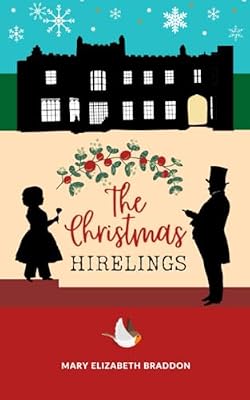
❤️67. The Christmas Hirelings, Mary Elizabeth Braddon (1895); fiction, on ebook; this edition from Google books includes this novel plus 3 additional stories
The Christmas Hirelings (1894) is set on a great manor, Penlyon Place, in Cornwall, the home of Sir John, a widower. Of his two daughters, one died childless and the other made an imprudent marriage which Sir John disapproved and they are now estranged. Sir John is a bit of a bah-humbug sort when it comes to Christmas, but each holiday his amiable and kind friend, Mr Tom Danby, spends the holidays with Sir John. This Christmas Mr Danby suggests that what Penlyon Place needs to brighten the season is children, so he proposes a plan: he will find some well-deserving and well-behaved but needy children to brighten Penlyon Place. He suggests Sir John reimburse the family for 100 pounds. When Mr Danby shows up with 3 children all under 10 years of age, Penlyon Place and Sir John are turned upside-down.
This is a sentimental, predictable and good-hearted story, so different from the other Braddon works I've read, and I enjoyed it. It's a book I could easily make an annual Christmas read.
This 1895 edition, which I downloaded from Google books, also includes the stories "One Fatal Moment" (1889), "The Ghost's Name" (1891) and "Stapylton's Plot (1887)." All 3 short stories are typical Braddon mystery/sensational fare, with a suspicious death in each story, and with an interesting twist at the end in each.

❤️68. The History of England by a Partial, Prejudiced & Ignorant Historian, Jane Austen (1791); this 1999 edition with illustrations by J. L. Carr; juvenilia
Part of Austen's juvenilia, this is very irreverent and funny.
This edition was published by Quince Tree Press, which was run by J. L. Carr (author of A Month in the Country). Carr also drew the illustrations, based on originals from Cassandra Austen.

69. Evelina, Fanny Burney (1778); fiction
This was Burney's first (and shortest) novel and for me the most entertaining. The book is written in epistolary form as letters Evelina writes to her guardian, Mr. Villars. Evelina is an orphan who has been raised by Mr Villars in a quiet, retired country town. The book begins as Evelina, in her late teens, has been allowed to visit friends of her guardian and late mother on her own, in her first entrance into "society." The letters detail her innocence and naivete in social customs and her brush with people of various ranks of society. She gets into scrapes, is affronted by various men, and eventually finds love and discovers the truth of her own history.
I've read all 4 of Burney's novels now, and this was clearly the most entertaining and funniest of them all. It moved rapidly and explored issues of class and women's place in society. Although the letter format was clumsy at times, I think it helped move the story along. I'm glad I read it.

❤️70. The Life and Works of Jane Austen The Great Courses, Devoney Looser (2021); 24 lectures on DVD; nonfiction
These 24 half-hour lectures are presented on DVD by Devoney Looser. I read Looser's The Making of Jane Austen earlier this year and enjoyed it. The lectures are good and cover Austen's biography, the Regency period in general, her main novels plus some of the minor and incomplete works, and ends with Austen's place in literature and popular culture. This was the first time I finally got some of Austen's relatives a little clearer in my head. I really appreciated an entire lecture on Lady Susan, one of my favorites, which is so often over-looked in most books about Austen's works.
My only disappointment is that the DVD presentation is fairly dull: Looser stands and presents each lecture, with an occasional still shot of a book illustration or other picture applicable to the content. I believe this is on audio and would work perfectly fine that way--the video didn't add much for me. However the content is what I enjoyed and is definitely worth pursuing all t
Not sure how I did it, but I read 14(!) books in July....here's the first half:

64. The Next Day: Transitions, Change, and Moving Forward, Melinda French Gates (2025); nonfiction, memoir
Memoir by the famous philanthropist, about various points in her life where she made important decisions, with her point being that the real work starts "the next day" after you've made the decision. OK. I wanted to learn more about her without a tell-all type memoir and this filled the bill.

❤️65. The Duke's Children, Anthony Trollope (1880); fiction; re-read on audiobook read by Simon Vance
This was a re-read on audiobook. I've given it 5 stars for the Duke's relationship with his children, the two romance stories and the political commentary. But the racing subplot was boring and by the end I hated Lady Mabel Grex with all my heart.
The audiobook experience wasn't completely successful. There are 2 versions of The Duke's Children. As originally published in 1880, Trollope had to cut about 25% of his manuscript to appease his publisher. This was the standard version until 2016, when scholars painstakingly reviewed the original manuscript and restored all the cuts. The full book is well worth the time reading. However, I started listening to the recent David Shaw Parker narration of the complete version, but halfway through I decided I couldn't stand it--he was just TOO slow, and his character voices and emphases didn't ring true for me. I then began listening to the original "cut" version (pre-2016) narrated by Simon Vance (my favorite narrator) around Chapter 40. So the reading was much, much cleaner (and at a better pace), but of course it was missing the 2016 restored material. Sorry for the long diatribe, but it just reinforced my feeling that a sub-par reader can ruin a great book. Maybe one day someone else will record the full version.

66. The Sorrows of Young Werther, J. W. von Goethe (1774); translated from the German by David Constantine; fiction
Obsessive love with lots of Sturm und Drang. At least it's short. I read a review that imagined that Marianne Dashwood (from Sense and Sensibility) would have loved this book. Exactly.
❤️67. The Christmas Hirelings, Mary Elizabeth Braddon (1895); fiction, on ebook; this edition from Google books includes this novel plus 3 additional stories
The Christmas Hirelings (1894) is set on a great manor, Penlyon Place, in Cornwall, the home of Sir John, a widower. Of his two daughters, one died childless and the other made an imprudent marriage which Sir John disapproved and they are now estranged. Sir John is a bit of a bah-humbug sort when it comes to Christmas, but each holiday his amiable and kind friend, Mr Tom Danby, spends the holidays with Sir John. This Christmas Mr Danby suggests that what Penlyon Place needs to brighten the season is children, so he proposes a plan: he will find some well-deserving and well-behaved but needy children to brighten Penlyon Place. He suggests Sir John reimburse the family for 100 pounds. When Mr Danby shows up with 3 children all under 10 years of age, Penlyon Place and Sir John are turned upside-down.
This is a sentimental, predictable and good-hearted story, so different from the other Braddon works I've read, and I enjoyed it. It's a book I could easily make an annual Christmas read.
This 1895 edition, which I downloaded from Google books, also includes the stories "One Fatal Moment" (1889), "The Ghost's Name" (1891) and "Stapylton's Plot (1887)." All 3 short stories are typical Braddon mystery/sensational fare, with a suspicious death in each story, and with an interesting twist at the end in each.

❤️68. The History of England by a Partial, Prejudiced & Ignorant Historian, Jane Austen (1791); this 1999 edition with illustrations by J. L. Carr; juvenilia
Part of Austen's juvenilia, this is very irreverent and funny.
This edition was published by Quince Tree Press, which was run by J. L. Carr (author of A Month in the Country). Carr also drew the illustrations, based on originals from Cassandra Austen.

69. Evelina, Fanny Burney (1778); fiction
This was Burney's first (and shortest) novel and for me the most entertaining. The book is written in epistolary form as letters Evelina writes to her guardian, Mr. Villars. Evelina is an orphan who has been raised by Mr Villars in a quiet, retired country town. The book begins as Evelina, in her late teens, has been allowed to visit friends of her guardian and late mother on her own, in her first entrance into "society." The letters detail her innocence and naivete in social customs and her brush with people of various ranks of society. She gets into scrapes, is affronted by various men, and eventually finds love and discovers the truth of her own history.
I've read all 4 of Burney's novels now, and this was clearly the most entertaining and funniest of them all. It moved rapidly and explored issues of class and women's place in society. Although the letter format was clumsy at times, I think it helped move the story along. I'm glad I read it.

❤️70. The Life and Works of Jane Austen The Great Courses, Devoney Looser (2021); 24 lectures on DVD; nonfiction
These 24 half-hour lectures are presented on DVD by Devoney Looser. I read Looser's The Making of Jane Austen earlier this year and enjoyed it. The lectures are good and cover Austen's biography, the Regency period in general, her main novels plus some of the minor and incomplete works, and ends with Austen's place in literature and popular culture. This was the first time I finally got some of Austen's relatives a little clearer in my head. I really appreciated an entire lecture on Lady Susan, one of my favorites, which is so often over-looked in most books about Austen's works.
My only disappointment is that the DVD presentation is fairly dull: Looser stands and presents each lecture, with an occasional still shot of a book illustration or other picture applicable to the content. I believe this is on audio and would work perfectly fine that way--the video didn't add much for me. However the content is what I enjoyed and is definitely worth pursuing all t
112kac522
July Reading, Part II

❤️71. Pride and Prejudice, Jane Austen (1813); a re-read on audiobook read by Juliet Stevenson
A many times re-read, this month for Jane Austen July and my year-long Austen project.

72. His Excellency George Washington, Joseph J. Ellis (2004); biography; a re-read from 2021
This was a re-read for my RL book club. This is a concise volume on Washington's life, work and legacy, without getting into a lot of details, which Ellis notes has been done many times over. Ellis sets up the purpose of his book in the preface:
"It seemed to me that Benjamin Franklin was wiser than Washington; Alexander Hamilton was more brilliant; John Adams was better read; Thomas Jefferson was more intellectually sophisticated; James Madison was more politically astute. Yet each and all of these prominent figures acknowledged that Washington was their unquestioned superior....Why was that?"
Suffice to say that Ellis does an excellent job in under 300 pages answering this question. On this re-read I noticed how dense the writing was, but how Ellis keeps circling back to how each event and decision in Washington's life was an aspect of his developing character and personality. On this read I was only disappointed that the full "Farewell Address" wasn't printed as an appendix to the book.

73. The Best of Clarence Day, Clarence Day (1948); humor
This volume includes Day's titles "Life With Father," "God & My Father," "Life with Mother," "This Simian World" and "Thoughts without Words." The first three titles comprise short essays, originally published in magazines in the 1920s and 1930s, on his memories of growing up in NYC in the 1880s and 1890s. Most were funny and a interesting look at the times and attitudes. I did not get on with This Simian World--it seemed repetitive and not all that interesting to me--and the Thoughts without words were OK.
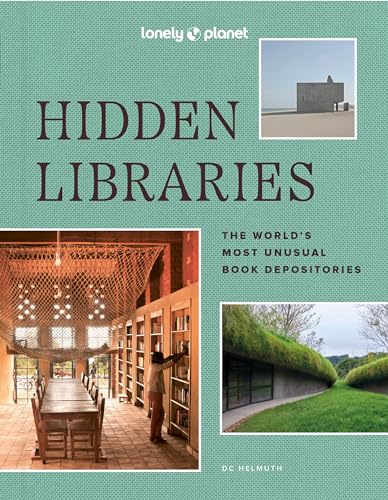
❤️74. Hidden Libraries: The World's Most Unusual Book Depositories, D C Helmuth (2025); libraries
This over-sized book profiles unusual libraries throughout the world with text and photos. Some of the libraries profiled include 2 Little Free Libraries (one at the South Pole and one constructed into a tree stump); a mobile library that looks like a tank called "Weapon of Mass Instruction"; vending libraries in China; the Haskell Library which is half in Vermont and half in Quebec; a few "In Memoriam" libraries that no longer exist; several with "secret" locations and many more. I picked this up at the library on the "new books" shelf and so glad I did--fascinating.

❤️75. Under the Greenwood Tree, Thomas Hardy (1872); fiction; a re-read on audiobook read by Simon Vance;
I've started participating in a Thomas Hardy read-along, led by Jen the Librarian on youtube. WAY back in the 1980s I read Hardy's best-known novels. I'm curious to re-read them after all these years and also read those titles that are new to me. We'll be reading all of Hardy's 14 novels in publication order. It started in June 2025 and continues through July 2026. Here's her announcement video:
https://www.youtube.com/watch?v=FVRuE8hjBFI&t=148s
I skipped June's selection, (Desperate Remedies), which I've read, but may return to it at the end of the readalong in 2026. I started participating with the July 2025 selection Under the Greenwood Tree, which I've also read before.
Set in the 1840s, this is an affectionate look at the rural past with an acknowledgement of inevitable change. I love the rural narratives more than the love story. I especially enjoyed the dance scene--I don't think I've read a dance scene more detailed and exuberant. Our "heroine", Fancy Day, kind of annoys me, or maybe Hardy's attitude toward her--in fact, I don't think there's a decent female in the entire story except maybe Mrs. Dewy.
Once again, narrator Simon Vance's dialect during the parts with dialog made the book a 5-star read for me. I read the Intro and Appendix ("Rural Painting of the Dutch School") of this OUP edition and both of these opened up all kinds of thoughts that pulled things together for me.
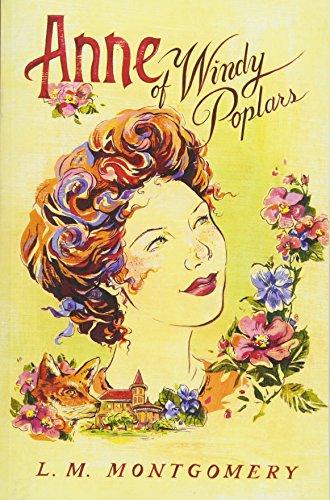
76. Anne of Windy Poplars, L. M. Montgomery (1936); fiction
I'm slowly making my way through the entire Anne of Green Gables series. Prior to this, I'd only read the first couple of books.
In this fourth book (chronologically), Anne is teaching high school in Summerside, where she boards with two elder ladies and their housekeeper. The book is structured with narrative sections interspersed with Anne's letters to Gilbert, who is in medical school. The time frame covers 3 years while Gilbert is finishing his education.
I found some of the interactions between Anne and others OK (like little Elizabeth, who is a miniature Anne), but there are stretches where Anne is just too good, too perfect and "rescues" people, basically from themselves. And we get very little of her day-to-day school time. I see that this book (listed as book #4 chronologically) was written in 1936 (and Anne of Ingleside in 1939), well after the other books. I wonder if that accounts for how I feel about the book.

77. The Life of Mendelssohn, Peter Mercer-Taylor (2000); biography
In a little over 200 pages, the author does an excellent job of narrating Mendelssohn's family background, his life, his relationship with his family, his major compositions and achievements in his brief life of 38 years. It was accessible and liberally sprinkled with excerpts from his many letters. I was unaware of how young he was when he first became an important musical name in Germany and England. I was impressed with his scholarship to uncover older compositions, not only of J. S. Bach which I knew, but of other early music composers and championing contemporaries, like Beethoven. In his many positions and programmatic duties as a conductor, he was instrumental in developing the German "canon" of composers. He was one of the first conductors to use a baton.
Somewhat confusing were all of Mendelssohn's friends and colleagues, some mentioned only in passing. Less well covered was his married life and children; missing was a chronology of his life and a list of his major compositions. A good basic intro to the performer, conductor and composer, but left me wanting more.

❤️71. Pride and Prejudice, Jane Austen (1813); a re-read on audiobook read by Juliet Stevenson
A many times re-read, this month for Jane Austen July and my year-long Austen project.

72. His Excellency George Washington, Joseph J. Ellis (2004); biography; a re-read from 2021
This was a re-read for my RL book club. This is a concise volume on Washington's life, work and legacy, without getting into a lot of details, which Ellis notes has been done many times over. Ellis sets up the purpose of his book in the preface:
"It seemed to me that Benjamin Franklin was wiser than Washington; Alexander Hamilton was more brilliant; John Adams was better read; Thomas Jefferson was more intellectually sophisticated; James Madison was more politically astute. Yet each and all of these prominent figures acknowledged that Washington was their unquestioned superior....Why was that?"
Suffice to say that Ellis does an excellent job in under 300 pages answering this question. On this re-read I noticed how dense the writing was, but how Ellis keeps circling back to how each event and decision in Washington's life was an aspect of his developing character and personality. On this read I was only disappointed that the full "Farewell Address" wasn't printed as an appendix to the book.

73. The Best of Clarence Day, Clarence Day (1948); humor
This volume includes Day's titles "Life With Father," "God & My Father," "Life with Mother," "This Simian World" and "Thoughts without Words." The first three titles comprise short essays, originally published in magazines in the 1920s and 1930s, on his memories of growing up in NYC in the 1880s and 1890s. Most were funny and a interesting look at the times and attitudes. I did not get on with This Simian World--it seemed repetitive and not all that interesting to me--and the Thoughts without words were OK.
❤️74. Hidden Libraries: The World's Most Unusual Book Depositories, D C Helmuth (2025); libraries
This over-sized book profiles unusual libraries throughout the world with text and photos. Some of the libraries profiled include 2 Little Free Libraries (one at the South Pole and one constructed into a tree stump); a mobile library that looks like a tank called "Weapon of Mass Instruction"; vending libraries in China; the Haskell Library which is half in Vermont and half in Quebec; a few "In Memoriam" libraries that no longer exist; several with "secret" locations and many more. I picked this up at the library on the "new books" shelf and so glad I did--fascinating.

❤️75. Under the Greenwood Tree, Thomas Hardy (1872); fiction; a re-read on audiobook read by Simon Vance;
I've started participating in a Thomas Hardy read-along, led by Jen the Librarian on youtube. WAY back in the 1980s I read Hardy's best-known novels. I'm curious to re-read them after all these years and also read those titles that are new to me. We'll be reading all of Hardy's 14 novels in publication order. It started in June 2025 and continues through July 2026. Here's her announcement video:
https://www.youtube.com/watch?v=FVRuE8hjBFI&t=148s
I skipped June's selection, (Desperate Remedies), which I've read, but may return to it at the end of the readalong in 2026. I started participating with the July 2025 selection Under the Greenwood Tree, which I've also read before.
Set in the 1840s, this is an affectionate look at the rural past with an acknowledgement of inevitable change. I love the rural narratives more than the love story. I especially enjoyed the dance scene--I don't think I've read a dance scene more detailed and exuberant. Our "heroine", Fancy Day, kind of annoys me, or maybe Hardy's attitude toward her--in fact, I don't think there's a decent female in the entire story except maybe Mrs. Dewy.
Once again, narrator Simon Vance's dialect during the parts with dialog made the book a 5-star read for me. I read the Intro and Appendix ("Rural Painting of the Dutch School") of this OUP edition and both of these opened up all kinds of thoughts that pulled things together for me.
76. Anne of Windy Poplars, L. M. Montgomery (1936); fiction
I'm slowly making my way through the entire Anne of Green Gables series. Prior to this, I'd only read the first couple of books.
In this fourth book (chronologically), Anne is teaching high school in Summerside, where she boards with two elder ladies and their housekeeper. The book is structured with narrative sections interspersed with Anne's letters to Gilbert, who is in medical school. The time frame covers 3 years while Gilbert is finishing his education.
I found some of the interactions between Anne and others OK (like little Elizabeth, who is a miniature Anne), but there are stretches where Anne is just too good, too perfect and "rescues" people, basically from themselves. And we get very little of her day-to-day school time. I see that this book (listed as book #4 chronologically) was written in 1936 (and Anne of Ingleside in 1939), well after the other books. I wonder if that accounts for how I feel about the book.

77. The Life of Mendelssohn, Peter Mercer-Taylor (2000); biography
In a little over 200 pages, the author does an excellent job of narrating Mendelssohn's family background, his life, his relationship with his family, his major compositions and achievements in his brief life of 38 years. It was accessible and liberally sprinkled with excerpts from his many letters. I was unaware of how young he was when he first became an important musical name in Germany and England. I was impressed with his scholarship to uncover older compositions, not only of J. S. Bach which I knew, but of other early music composers and championing contemporaries, like Beethoven. In his many positions and programmatic duties as a conductor, he was instrumental in developing the German "canon" of composers. He was one of the first conductors to use a baton.
Somewhat confusing were all of Mendelssohn's friends and colleagues, some mentioned only in passing. Less well covered was his married life and children; missing was a chronology of his life and a list of his major compositions. A good basic intro to the performer, conductor and composer, but left me wanting more.
113kac522

Artichoke, before 1917
John Henry Dearle (English, 1860-1932)
Wallpaper design for Morris & Co
Brooklyn Museum, NY
August image: William Morris 2025 Calendar from pomegranate.com
August Reading Possibilities
Another impossible pile of possibilities:
Completed
✔️So You Think You Know Jane Austen?, John Sutherland and Deirdre Le Faye, for my Jane Austen @250 project
✔️Cards on the Table, Agatha Christie, a re-read for August Reading through Time
✔️Civil to Strangers by Barbara Pym, for Virago August
✔️Nothing Venture, Patricia Wentworth, for Color Challenge (gray)
✔️A Pair of Blue Eyes, Thomas Hardy, for the Hardy readalong, on audiobook
✔️You'll Enjoy it When you Get There: The stories of Elizabeth Taylor, for Virago August
✔️Remarkably Bright Creatures, Shelby Van Pelt, for my RL book club
✔️The Wedding Group, Elizabeth Taylor
✔️A Wreath for the Enemy, Pamela Frankau
Currently Reading:
All Things Bright and Beautiful, James Herriot, for Big Book Summer
Three Men in a Boat, Jerome K. Jerome (a re-read)
The Priory, Dorothy Whipple (Persephone)
All Virago/All August (join us here: https://www.librarything.com/topic/372740#8910503)
Virago possibilities:
Fenny, Lettice Cooper
Company Parade, Storm Jameson
Mandoa, Mandoa!, Winifred Holtby
Good Behaviour, Molly Keane
Family History, Vita Sackville-West
and lastly,
one or more of these miscellaneous books may be chosen, if time permits (maybe if another week or two is added to August?):
Miss Pym Disposes, Josephine Tey
Brave Companions, David McCullough
Summer, Edith Wharton
DNF
Frost in May, Antonia White
Never Let Me Go, Kazuo Ishiguro
Guess I better get started...if you see one you'd recommend, please holler!
114japaul22
What a great month of reading! I'll be interested to follow your Hardy reading - I've only read a few of the more popular ones.
I know you're already a Dorothy Whipple fan, but I loved The Priory and definitely recommend!
I know you're already a Dorothy Whipple fan, but I loved The Priory and definitely recommend!
115kac522
>114 japaul22: I think you would enjoy Under the Greenwood Tree. It's definitely not his best, but it is pleasant and probably the least "miserable" of Hardy's books. The beginning circumstance that drives the story is a new vicar in this very rural village has decided that the local group of musicians (mostly strings, I think), who have been playing the hymns each Sunday for generations, are to be replaced by the "modern" organ. Eventually the story ends up being a sort of romance about one young man of the "choir" (as the musicians are called) and the new young woman who will be playing the organ. It's sort of a parallel story of the ancient ways being replaced by the modern.
There are small scenes about the instruments, who plays them, how they tune them, etc. Hardy's father and grandfather were prominent musicians in his church growing up, so it's not surprising that this book has a lot of bits about music, as well as architecture, which was Hardy's own profession. Plus it's his shortest novel (about 200 pages), so it's a good way to ease back into the Hardy mindset.
I've got to make The Priory a priority....😉
There are small scenes about the instruments, who plays them, how they tune them, etc. Hardy's father and grandfather were prominent musicians in his church growing up, so it's not surprising that this book has a lot of bits about music, as well as architecture, which was Hardy's own profession. Plus it's his shortest novel (about 200 pages), so it's a good way to ease back into the Hardy mindset.
I've got to make The Priory a priority....😉
116japaul22
>115 kac522: interesting! That does sound like a Hardy novel I would enjoy.
117threadnsong
Your review of The Life of Mendelssohn reminds me that I bought a book a few months ago about the life of Mozart, told from the POV of the events that were happening in Europe during his lifetime. I do love Mendelssohn's work; the crashing of the waves in "Fingal's Cave" is very evocative in the way he presents it musically.
118kac522
>117 threadnsong: I thought it was a good short biography and I particularly liked the letter excerpts. He really concentrates on Mendelssohn's scholarship, which is a legacy we often forget. I have a bio of Fanny Mendelssohn by Francoise Tillard, but it's much longer so I haven't attacked that one yet--I hope it has some letters. She seems so forgotten in history.
The only biographies I've read of Mozart are two books by H. C. Robbins Landon: 1791: Mozart's Last Year, which was phenomenal and Mozart: the Golden Years. It's been over 35 years since I read them, but they remain in my memory as so good.
The only biographies I've read of Mozart are two books by H. C. Robbins Landon: 1791: Mozart's Last Year, which was phenomenal and Mozart: the Golden Years. It's been over 35 years since I read them, but they remain in my memory as so good.
119kac522
August reviews will be up in a few days.
Until then, here's my plan for September Reading.

Indian, red and black, circa 1870
possibly George Gilbery Scott (1839-1897, English) for Morris & co.
Wallpaper design
Brooklyn Museum, NY
September image: William Morris 2025 Calendar from pomegranate.com
In September I'm repeating a "clear-out" challenge that I did last September 2024 and was fairly successful. I ending up reading 16 books that month and many of them I was able to move out of the house.
Hoping for a successful repeat, I'm reading as many "short" books as possible this month. For me, a "short" book is anything that's about 250 pages or less--there may be a few that creep in a little over 250, but that's OK. I hope I can match (or maybe even exceed) last year's total.
There will be one exception to this: that's the book I will be reading for the Thomas Hardy readalong, which this month is Far From the Madding Crowd (389 pages).
I've already finished one book:
Three Men In a Boat, Jerome K. Jerome (1889); 211 pages, a re-read.
And I'm currently reading:
Brave Companions, David McCullough (1991); nonfiction essays; 232 pages
The Red Notebook, Antoine Laurain (2014); fiction; 159 pages
I have more than 30 other books picked out, and I'll choose from these what I'll be reading, depending on my mood.
Besides the Hardy, there are a few that are "for sure" reads because they meet other challenges:
Heaven's My Destination, Thornton Wilder (1934); fiction; 186 pages for my RL book club
The French Revolution: A Very Short Introduction by William Doyle (2019); 113 pages for Reading thru Time Quarterly 18th Cent
An Old Woman's Reflections, Peig Sayers (1939); memoir; 131 pages for Reading thru Time Monthly--Islands
The True Deceiver, Tove Jansson (1982); fiction; 181 pages for CoverCAT
Pictures from Italy, Charles Dickens (1846); nonfiction; 187 pages for Paul's European Tour
The Giant Pile of Short Possibilities for September:
Poetry and Nonfiction Shorts:
The Best of Robert Service, poetry; 212p
Levels of Life, Julian Barnes, memoir & fiction, 128p
A Song of Sixpence, A J Cronin, memoir, 224p
New York Revisited, Henry James, memoir, 93p
Emma Lazarus Rediscovered, Eve Merriam, biography, 159p
Mr Selfridge in Chicago, Gayle Soucek, biography, 113p
Lincoln and Chicago, Toman & Frutig, history, 135p
The Schlemiel as Modern Hero, Ruth R. Wisse, literature, 124p
Fiction Shorts:
Aunt Dimity's Death, Nancy Atherton, 244p
The Hotel, Elizabeth Bowen, 199p
The Labors of Hercules, Agatha Christie, 263p
Happy All the Time, Laurie Colwin, 214p
Our Spoons Came From Woolworth's, Barbara Comyns, 196p
Loving, Henry Green, 209p
The Beast in the Jungle, Henry James, 47p
The Violins of Saint-Jacques, Patrick Leigh Fermor, 139p
So Long, See You Tomorrow, William Maxwell, 135p
An Unsuitable Attachment, Barbara Pym, 256p
The Edwardians, Vita Sackville-West, 222p
Life and Death of Harriett Frean, May Sinclair, 184p (with big font!)
The Prime of Miss Jean Brodie, Muriel Spark, 137p
At Mrs Lippincote's, Elizabeth Taylor, 215p
Blaming, Elizabeth Taylor, 190p
Miss Pym Disposes, Josephine Tey, 235p
Tea with Mr Rochester, Frances Towers, 162p
Hunt the Slipper, Violet Trefusis, 180p
Summer, Edith Wharton, 216p
I'm listing all of these so I won't GIVE UP!!
If you have any favorites or recommendations, please holler!
Until then, here's my plan for September Reading.

Indian, red and black, circa 1870
possibly George Gilbery Scott (1839-1897, English) for Morris & co.
Wallpaper design
Brooklyn Museum, NY
September image: William Morris 2025 Calendar from pomegranate.com
In September I'm repeating a "clear-out" challenge that I did last September 2024 and was fairly successful. I ending up reading 16 books that month and many of them I was able to move out of the house.
Hoping for a successful repeat, I'm reading as many "short" books as possible this month. For me, a "short" book is anything that's about 250 pages or less--there may be a few that creep in a little over 250, but that's OK. I hope I can match (or maybe even exceed) last year's total.
There will be one exception to this: that's the book I will be reading for the Thomas Hardy readalong, which this month is Far From the Madding Crowd (389 pages).
I've already finished one book:
Three Men In a Boat, Jerome K. Jerome (1889); 211 pages, a re-read.
And I'm currently reading:
Brave Companions, David McCullough (1991); nonfiction essays; 232 pages
The Red Notebook, Antoine Laurain (2014); fiction; 159 pages
I have more than 30 other books picked out, and I'll choose from these what I'll be reading, depending on my mood.
Besides the Hardy, there are a few that are "for sure" reads because they meet other challenges:
Heaven's My Destination, Thornton Wilder (1934); fiction; 186 pages for my RL book club
The French Revolution: A Very Short Introduction by William Doyle (2019); 113 pages for Reading thru Time Quarterly 18th Cent
An Old Woman's Reflections, Peig Sayers (1939); memoir; 131 pages for Reading thru Time Monthly--Islands
The True Deceiver, Tove Jansson (1982); fiction; 181 pages for CoverCAT
Pictures from Italy, Charles Dickens (1846); nonfiction; 187 pages for Paul's European Tour
The Giant Pile of Short Possibilities for September:
Poetry and Nonfiction Shorts:
The Best of Robert Service, poetry; 212p
Levels of Life, Julian Barnes, memoir & fiction, 128p
A Song of Sixpence, A J Cronin, memoir, 224p
New York Revisited, Henry James, memoir, 93p
Emma Lazarus Rediscovered, Eve Merriam, biography, 159p
Mr Selfridge in Chicago, Gayle Soucek, biography, 113p
Lincoln and Chicago, Toman & Frutig, history, 135p
The Schlemiel as Modern Hero, Ruth R. Wisse, literature, 124p
Fiction Shorts:
Aunt Dimity's Death, Nancy Atherton, 244p
The Hotel, Elizabeth Bowen, 199p
The Labors of Hercules, Agatha Christie, 263p
Happy All the Time, Laurie Colwin, 214p
Our Spoons Came From Woolworth's, Barbara Comyns, 196p
Loving, Henry Green, 209p
The Beast in the Jungle, Henry James, 47p
The Violins of Saint-Jacques, Patrick Leigh Fermor, 139p
So Long, See You Tomorrow, William Maxwell, 135p
An Unsuitable Attachment, Barbara Pym, 256p
The Edwardians, Vita Sackville-West, 222p
Life and Death of Harriett Frean, May Sinclair, 184p (with big font!)
The Prime of Miss Jean Brodie, Muriel Spark, 137p
At Mrs Lippincote's, Elizabeth Taylor, 215p
Blaming, Elizabeth Taylor, 190p
Miss Pym Disposes, Josephine Tey, 235p
Tea with Mr Rochester, Frances Towers, 162p
Hunt the Slipper, Violet Trefusis, 180p
Summer, Edith Wharton, 216p
I'm listing all of these so I won't GIVE UP!!
If you have any favorites or recommendations, please holler!
120charl08
No recommendations to make, only to wish you well with your September challenge.
Hidden Libraries sounds wonderful, I am wondering if my own library might be able to source a copy.
Hidden Libraries sounds wonderful, I am wondering if my own library might be able to source a copy.
121kac522
>120 charl08: Thanks for stopping by. It's a beautiful book, with wonderful pictures & text. It would definitely be a worthwhile addition to any library's collection. Even the librarian who checked out the book for me started browsing the pages--it was new to her, too!
122kac522
Several re-reads (4!) in August; here are some thoughts on my reading--a mixed bag, with a strong finish:


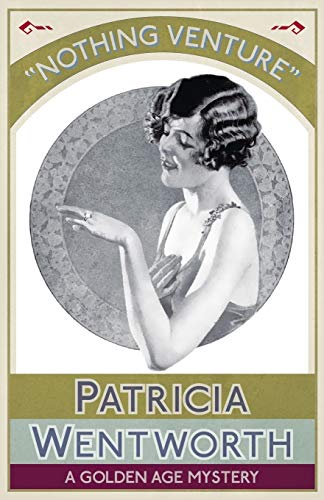


❤️78. So You Think You Know Jane Austen?: A Literary Quizbook, John Sutherland and Deirdre Le Faye (2005); literary quizzes & analysis; a re-read for my JA at 250 project.
Fun. Questions with answers (of increasing difficulty) on Austen's 6 main novels. Like the first time I read this, I didn't agree with some of the answers, especially the harder ones that speculate, but it certainly made you think about the text.
❤️79. Cards on the Table, Agatha Christie (1936); mystery; re-read
Four "detective" types are invited to a bridge party where four "murderers" have been invited as well. I read this years ago before I had a firm concept of the four sleuths: Poirot, Colonel Race, Inspector Battle and Ariadne Oliver. Mrs Oliver is a great character; so glad I re-read this.
80. Civil to Strangers, Barbara Pym (1987); novellas & short stories; re-read
These novellas and short stories were collected and published after Pym's death. On this reading I think I enjoyed most the title story "Civil to Strangers", plus "Home Front" (although unfinished & perhaps too many characters) and the transcript of a radio interview Pym did with the BBC in 1978. The other stories, especially the "spy" story, were less satisfying.
81. Nothing Venture, Patricia Wentworth (1932); mystery
Mystery/romance about a marriage of convenience in which the newly married groom's life appears to be in jeopardy. This was a page-turner filled with thrills, but suffered from the heroine having prophetic dreams and lots of unexplained intuition. One or two instances in a mystery is OK, but this book took the concept overboard, IMHO.
❤️82. A Pair of Blue Eyes, Thomas Hardy (1873); fiction; re-read on audiobook read by Anna Bentinck; for Hardy readalong
Hardy's third published novel set in rural Cornwall concerns a widowed parson's daughter, Elfride Swancourt, and her two suitors: a young architect and a famous literary man. The love triangle story goes on from there, exploring class, sexuality and secrets. Hardy based the story of Stephen and Elfride on his own experience with his first wife, Emma. This is a masterful character study of these two men, although Elfride's portrayal felt superficial, albeit sympathetic. Sad, powerful, but not quite as tragic as Hardy's later novels.
This was a re-read on audiobook, and there is something about listening to Hardy on audiobook that brings out the poignancy as well as the humor of the tale. I could not stop listening.
83. You'll enjoy it when you get there : the selected stories of Elizabeth Taylor (2014); stories selected and intro by Margaret Drabble
This NYRB collection, selected and introduced by Margaret Drabble, takes some stories from each of Taylor's short story collections, originally published between 1954 and 1995. I have been reading this collection off and on this year. For me Taylor really shines in the short story format; she can focus on one or two characters to produce a precise and insightful study. I think my favorites were "The Blush", "The Devastating Boys", "Summer Schools", "Girl Reading" (probably the most positive of all the stories), "In the Sun", and "Sisters."
84. Remarkably Bright Creatures, Shelby Van Pelt (2022); fiction; for my RL book club
Widower Tova is a night shift cleaner in a small town aquarium, where she befriends an octopus, who seems to have superhuman intellectual powers. The book is told from the alternating points of view of Tova, the octopus, and a young man named Cameron. I liked Tova's portrayal, which felt full-fledged and true. Cameron was annoying and the octopus Marcellus was unnecessary; for me it would have been better without his unbelievable antics. If this weren't for book club, I would have stopped reading about page 40--just not for me. I'll give the author credit for making each narrative particular to the character, but I felt manipulated into a tear-jerker.
85. The Wedding Group, Elizabeth Taylor (1968); fiction; from my Virago collection
Cressy, 19, leaves her insular artsy/religious community in the country run by her grandfather to take a job in the village at an antique store. There she meets David, a journalist some years her elder, who lives with his over-protective mother Midge. These three characters dominate this novel in a tangled web of neediness and manipulation. I found Taylor's writing superb as always, but the characters were hard to like and therefore I felt unsatisfied in the end.
86. A Wreath for the Enemy, Pamela Frankau (1954); fiction; from my Virago collection
A complicated book, beautifully written, with an unusual structure. The book is told in 3 sections. The first section is narrated by Penelope, 14, whose bohemian and unconventional family runs a small hotel on the French Riviera. This summer she meets the Bradleys, a family of four, that seem to do everything together and epitomize the perfect family that she longs for. Penelope befriends the 2 children, Don and Eva, but their parents are strict and disapproving of Penelope's casual upbringing. The second section, several years later, is narrated by Don, now at boarding school, who befriends an older disabled man and helps to take care of his horses. Don is desperately trying to shake-off his family's strict ways. The last section is two years later, with parts narrated by Penelope and 2 other characters. In this last section, all the strands of plots and characters converge in a web reminiscent of Dickens.
I found the first 2 sections so good, but the last section seemed contrived and unsatisfying, which left me disappointed.
❤️87. The Priory, Dorothy Whipple (1939); fiction, from my Persephone collection
Saunby, once an ancient priory, is now the crumbling estate of Major Marwood, a middle-aged widowed gentleman, who has mismanaged this place and the household help for years. Now in the mid-1930s (the "Great Slump"), the Major, severely in debt, decides he needs a wife to manage his household and his two daughters, Christine and Penelope. Enter Anthea, a 30-something shy spinster who marries the Major, and attempts (and often fails) at these tasks. The story rotates from Anthea to the daughters to the servants. Eventually Anthea has a baby and the two daughters quickly get married and leave the household, leaving it in the hands of the baby's no-nonsense Nurse Pye. Various members become estranged with each other, but in the end all comes mostly right, just as it appears that a second Great War (the book was published in 1939) has been averted.
Whipple has an easy, flowing style that grabs me immediately and has me turning pages. There are quite a few characters here, but they all are rounded and interesting and not perfect, but all have redeeming qualities. In particular, Whipple focuses on the marriages: the Major & Anthea, Christine's and Penelope's, as well as relationships among several servants. This is the 5th book I've read by Whipple, and I've enjoyed them all--there is an overall positive vibe to her books, without being sappy or sentimental. And her writing just takes me in--hook, line and sinker.
❤️88. All Things Bright and Beautiful, James Herriot (1974); memoir
The second book in Herriot's "All Creatures" series is as wonderful as the first. This book concentrates on the animals and their owners than with the inhabitants of Skeldale House, although Helen makes a few appearances. Still fascinating, particularly all the various treatments that he tries and comparisons of the old ways with the new. The book ends Helen is pregnant and James is on his way to London to sign up for the RAF, as war is on the horizon.


❤️78. So You Think You Know Jane Austen?: A Literary Quizbook, John Sutherland and Deirdre Le Faye (2005); literary quizzes & analysis; a re-read for my JA at 250 project.
Fun. Questions with answers (of increasing difficulty) on Austen's 6 main novels. Like the first time I read this, I didn't agree with some of the answers, especially the harder ones that speculate, but it certainly made you think about the text.
❤️79. Cards on the Table, Agatha Christie (1936); mystery; re-read
Four "detective" types are invited to a bridge party where four "murderers" have been invited as well. I read this years ago before I had a firm concept of the four sleuths: Poirot, Colonel Race, Inspector Battle and Ariadne Oliver. Mrs Oliver is a great character; so glad I re-read this.
80. Civil to Strangers, Barbara Pym (1987); novellas & short stories; re-read
These novellas and short stories were collected and published after Pym's death. On this reading I think I enjoyed most the title story "Civil to Strangers", plus "Home Front" (although unfinished & perhaps too many characters) and the transcript of a radio interview Pym did with the BBC in 1978. The other stories, especially the "spy" story, were less satisfying.
81. Nothing Venture, Patricia Wentworth (1932); mystery
Mystery/romance about a marriage of convenience in which the newly married groom's life appears to be in jeopardy. This was a page-turner filled with thrills, but suffered from the heroine having prophetic dreams and lots of unexplained intuition. One or two instances in a mystery is OK, but this book took the concept overboard, IMHO.
❤️82. A Pair of Blue Eyes, Thomas Hardy (1873); fiction; re-read on audiobook read by Anna Bentinck; for Hardy readalong
Hardy's third published novel set in rural Cornwall concerns a widowed parson's daughter, Elfride Swancourt, and her two suitors: a young architect and a famous literary man. The love triangle story goes on from there, exploring class, sexuality and secrets. Hardy based the story of Stephen and Elfride on his own experience with his first wife, Emma. This is a masterful character study of these two men, although Elfride's portrayal felt superficial, albeit sympathetic. Sad, powerful, but not quite as tragic as Hardy's later novels.
This was a re-read on audiobook, and there is something about listening to Hardy on audiobook that brings out the poignancy as well as the humor of the tale. I could not stop listening.
83. You'll enjoy it when you get there : the selected stories of Elizabeth Taylor (2014); stories selected and intro by Margaret Drabble
This NYRB collection, selected and introduced by Margaret Drabble, takes some stories from each of Taylor's short story collections, originally published between 1954 and 1995. I have been reading this collection off and on this year. For me Taylor really shines in the short story format; she can focus on one or two characters to produce a precise and insightful study. I think my favorites were "The Blush", "The Devastating Boys", "Summer Schools", "Girl Reading" (probably the most positive of all the stories), "In the Sun", and "Sisters."
84. Remarkably Bright Creatures, Shelby Van Pelt (2022); fiction; for my RL book club
Widower Tova is a night shift cleaner in a small town aquarium, where she befriends an octopus, who seems to have superhuman intellectual powers. The book is told from the alternating points of view of Tova, the octopus, and a young man named Cameron. I liked Tova's portrayal, which felt full-fledged and true. Cameron was annoying and the octopus Marcellus was unnecessary; for me it would have been better without his unbelievable antics. If this weren't for book club, I would have stopped reading about page 40--just not for me. I'll give the author credit for making each narrative particular to the character, but I felt manipulated into a tear-jerker.
85. The Wedding Group, Elizabeth Taylor (1968); fiction; from my Virago collection
Cressy, 19, leaves her insular artsy/religious community in the country run by her grandfather to take a job in the village at an antique store. There she meets David, a journalist some years her elder, who lives with his over-protective mother Midge. These three characters dominate this novel in a tangled web of neediness and manipulation. I found Taylor's writing superb as always, but the characters were hard to like and therefore I felt unsatisfied in the end.
86. A Wreath for the Enemy, Pamela Frankau (1954); fiction; from my Virago collection
A complicated book, beautifully written, with an unusual structure. The book is told in 3 sections. The first section is narrated by Penelope, 14, whose bohemian and unconventional family runs a small hotel on the French Riviera. This summer she meets the Bradleys, a family of four, that seem to do everything together and epitomize the perfect family that she longs for. Penelope befriends the 2 children, Don and Eva, but their parents are strict and disapproving of Penelope's casual upbringing. The second section, several years later, is narrated by Don, now at boarding school, who befriends an older disabled man and helps to take care of his horses. Don is desperately trying to shake-off his family's strict ways. The last section is two years later, with parts narrated by Penelope and 2 other characters. In this last section, all the strands of plots and characters converge in a web reminiscent of Dickens.
I found the first 2 sections so good, but the last section seemed contrived and unsatisfying, which left me disappointed.
❤️87. The Priory, Dorothy Whipple (1939); fiction, from my Persephone collection
Saunby, once an ancient priory, is now the crumbling estate of Major Marwood, a middle-aged widowed gentleman, who has mismanaged this place and the household help for years. Now in the mid-1930s (the "Great Slump"), the Major, severely in debt, decides he needs a wife to manage his household and his two daughters, Christine and Penelope. Enter Anthea, a 30-something shy spinster who marries the Major, and attempts (and often fails) at these tasks. The story rotates from Anthea to the daughters to the servants. Eventually Anthea has a baby and the two daughters quickly get married and leave the household, leaving it in the hands of the baby's no-nonsense Nurse Pye. Various members become estranged with each other, but in the end all comes mostly right, just as it appears that a second Great War (the book was published in 1939) has been averted.
Whipple has an easy, flowing style that grabs me immediately and has me turning pages. There are quite a few characters here, but they all are rounded and interesting and not perfect, but all have redeeming qualities. In particular, Whipple focuses on the marriages: the Major & Anthea, Christine's and Penelope's, as well as relationships among several servants. This is the 5th book I've read by Whipple, and I've enjoyed them all--there is an overall positive vibe to her books, without being sappy or sentimental. And her writing just takes me in--hook, line and sinker.
❤️88. All Things Bright and Beautiful, James Herriot (1974); memoir
The second book in Herriot's "All Creatures" series is as wonderful as the first. This book concentrates on the animals and their owners than with the inhabitants of Skeldale House, although Helen makes a few appearances. Still fascinating, particularly all the various treatments that he tries and comparisons of the old ways with the new. The book ends Helen is pregnant and James is on his way to London to sign up for the RAF, as war is on the horizon.
123threadnsong
>119 kac522: Much success with your September reading!
124kac522
>123 threadnsong: Thanks!--So far, so good: 2 finished, 2 DNF'd and 2 more started, with about 1/3 in. Plus I'm about 25% through the audio of The Female Quixote by Charlotte Lennox (one of the authors featured in Jane Austen's Bookshelf). Most of these I think are going to be donated once done (or DNF'd), so definitely a clear-out. Which is a good thing 'cause I'm gonna need the shelf space, since I just received 8 books in the mail this week, and two very important library book sales coming up in the next 2 weeks!
125kac522
Halfway through September reading:
It's already the middle of September and I've finished 10 books in my personal "clear-out" challenge. I figured it would be a good time to get them written up:


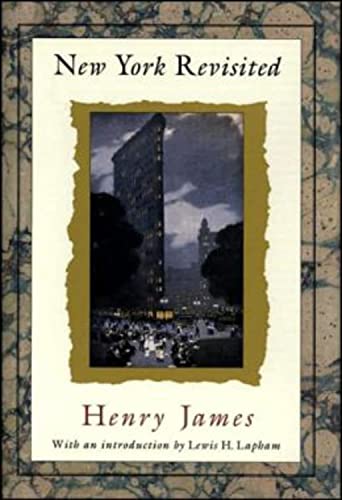


❤️89. Three men in a boat : to say nothing of the dog, Jerome K. Jerome (1889); humor
"J" and his 2 friends and the dog take a 2 week boat ride on the Thames, with misadventures and side stories along the way. A re-read, and still as fun as ever. I am amazed at how much of the humor is relevant for a book written in 1889!
❤️90. Sherlock Holmes: The Complete Novels and Stories Volume 1, Arthur Conan Doyle (1887, 1891, 1892, 1903); mystery, on audiobook, read by Simon Vance.
I've been listening on and off to this collection since last October. Volume 1 (25 CDs) includes:
A Study in Scarlet
The Sign of Four
Adventures of Sherlock Holmes
Memoirs of Sherlock Holmes
The Return of Sherlock Holmes
I'm a little late to the party with Sherlock. I had read a few of the stories as a teenager, but that was a life-time ago. I started listening from the beginning back in October 2024, and finally finished Volume 1. It makes great listening in-between other longer books and each story is easy to listen to, without requiring a lot of prior knowledge.
I soon plan to start Volume 2 (another 25 CDs), which includes all the rest of the Sherlock tales. May not finish it for another year, but that's OK--enjoying the ride.
91. The Red Notebook, Antoine Laurain (2014); translated from the French by Emily Boyce and Jane Aitken; fiction
Woman gets mugged and knocked out; man finds her purse and uses clues to trace who it belongs to. Charming, but not really my kind of book. Set in Paris and lots of (living) author name-dropping. There was a certain amount of a stalking feel to the book that was unsettling.
Bugged me: heroine is Laure; hero is Laurent; author is Laurain. And heroine has a red notebook in her purse; hero's bookshop is Le Cahier Rouge (The Red Notebook). Either too cute or the author's laughing at us.
92. Aunt Dimity's Death, Nancy Atherton (1992); mystery
Lori, in her 30s, is in between jobs and in debt and is recovering from a broken marriage and her mother's death. Her life is up-ended when she discovers she is the beneficiary of a will, under certain conditions and tasks that she must perform. This is a cozy, sweet mystery for those in need of an easy read. It does have paranormal visitations, which, unfortunately, did not do much for me. Perhaps I've spent too much time with Sherlock Holmes lately to appreciate it. But if comforting is what you're craving, and other- worldly interference isn't a problem for you, Aunt Dimity will fit the bill.
93. Mr. Selfridge in Chicago: Marshall Field's, the Windy City & the Making of a Merchant Prince, Gayle Soucek (2015); biography
Biography of Harry Selfridge, his rags to riches to rags story--from Wisconsin birth to Chicago to London death. The book puts its focus on the years before London, with some interesting bits of Chicago history, particularly Selfridge's impact on Marshall Field's. Lots of good photographs. However, the author had NO notes or bibliography documenting her sources. Yet she reports many times that Harry Selfridge's stories were often fabricated or exaggerated; that he even used various dates for his birth date. And yet, for example, the author claims he was born in 1856, without telling us how she documented this. She also tends to wander off-topic, particularly in Chicago where she spends time detailing business transactions that don't seem to relate to Selfridge directly. A disappointment.
94. New York Revisited, Henry James (1906); memoir
In 1904-5 Henry James revisited America after living in Europe for almost 30 years. This volume, New York Revisited, was first published in Harper's in 1906 and later included in his full work The American Scene. Here James goes back to the city of his birth overwhelmed by the skyscrapers, the commerce they represent and constant bustling of the city. He finds old small churches dwarfed by new buildings; revisits his Washington Square neighborhood, mostly intact, only to find his birthplace and adjacent homes replaced by a skyscraper. He watches the incessant humanity as it arrives at Ellis Island.
Not exactly enjoyable; I wish I could wrap my head around more of James's prose, which often eludes me.
95. The True Deceiver, Tove Jansson (1982); translated from the Swedish by Thomas Teal; fiction
Set in the dark winter in a small Nordic village on the sea, we follow Katria and Mats, sister and brother, and their relationship with an older member of the village, Anna. The setting is important: unrelentless snow, days with little light and extreme cold are emphasized. And the coldness seeps into the characters, who seem aloof and distrustful of others.
I could not get into or understand this story; much is left unsaid. It was too distant, with most of the characters out for their own self-interest. It was a disappointment, since I loved Jansson's The Summer Book.
❤️96. Life and Death of Harriett Frean, May Sinclair (1922); fiction; from my Virago collection
In this novel we follow the life of Harriett Frean, born in the early years of the Victorian era until her death, nearly 70 years later. As a young woman, Harriett makes a difficult choice, but feels it is the right and moral choice. It will follow her for the rest of her days, even as she feels virtuous in her self-denial.
This is a short but intense book in which we are inside Harriett's thoughts and feelings, and see her life from her perspective. May Sinclair coined the term "stream of consciousness" and although there is only a small amount of that feeling at the beginning and the end of Harriett's life, the novel doesn't stray from Harriett's view of her world. Every word and thought is important and deliberate here, and already I know I need to re-read this to appreciate all that Sinclair was doing.
97. An Old Woman's Reflections: The Life of a Blasket Island Storyteller, Peig Sayers (1939 in Gaelic);English translation from the Gaelic by Seamus Ennis, 1962
Peig Sayers (1873-1958) was a revered storyteller from the Great Blasket Island, a small island off the coast of County Kerry, Ireland. "Big Peig" learned storytelling in the original Gaelic from her father and grandfather. Her son Michael wrote down the stories and they were edited and published in Gaelic in 1939. This 1962 edition, the first English translation, was translated by Seamus Ennis, which I found sometimes clumsy, but still readable.
The stories are told in first person as she remembers her childhood, as well as stories told to her by her father and grandfather. Many of these deal with village rivalries, jealousies and superstitions; there are also quite a few sea stories. Some of the most interesting bits were at the end, where she recounts how the Island got the news of the 1916 Rebellion and her trip to the mainland in the 1930s to experience her first ride in a "motor-car." By the end of her life-time, only a handful of people remained on the Island, and today it is completely uninhabited, which makes the survival of these tales even more remarkable.
❤️98. Business as Usual, Jane Oliver & Ann Stafford (1933); fiction
This was delightful! It's 1931 and during the year that her fiancé is establishing his medical practice in Edinburgh, Hilary Fane is determined to get a job and support herself. She manages to land an entry-level job at Everyman's Department Store (a thinly disguised Selfridge's). The story is told through Hilary's letters back home, to her fiancé and Interdepartmental Memos (remember those?). Eventually Hilary is promoted to the store's circulating library department as the year comes to a close.
I totally enjoyed the details of working life in the 1930s--work place rules, dress, co-workers, supervisors, etc., particularly after reading the book about Harry Selfridge. And a reminder that the world of work has certainly changed, but perhaps not all that we think.
Summary through September 15:
10 books read: 1 library book, 6 donated and 3 I'm keeping to re-read.
Hoping to read at least 6 more in the latter part of the month, although I do have one larger book: Far from the Madding Crowd by Thomas Hardy, that I hope doesn't sidetrack the others.
It's already the middle of September and I've finished 10 books in my personal "clear-out" challenge. I figured it would be a good time to get them written up:


❤️89. Three men in a boat : to say nothing of the dog, Jerome K. Jerome (1889); humor
"J" and his 2 friends and the dog take a 2 week boat ride on the Thames, with misadventures and side stories along the way. A re-read, and still as fun as ever. I am amazed at how much of the humor is relevant for a book written in 1889!
❤️90. Sherlock Holmes: The Complete Novels and Stories Volume 1, Arthur Conan Doyle (1887, 1891, 1892, 1903); mystery, on audiobook, read by Simon Vance.
I've been listening on and off to this collection since last October. Volume 1 (25 CDs) includes:
A Study in Scarlet
The Sign of Four
Adventures of Sherlock Holmes
Memoirs of Sherlock Holmes
The Return of Sherlock Holmes
I'm a little late to the party with Sherlock. I had read a few of the stories as a teenager, but that was a life-time ago. I started listening from the beginning back in October 2024, and finally finished Volume 1. It makes great listening in-between other longer books and each story is easy to listen to, without requiring a lot of prior knowledge.
I soon plan to start Volume 2 (another 25 CDs), which includes all the rest of the Sherlock tales. May not finish it for another year, but that's OK--enjoying the ride.
91. The Red Notebook, Antoine Laurain (2014); translated from the French by Emily Boyce and Jane Aitken; fiction
Woman gets mugged and knocked out; man finds her purse and uses clues to trace who it belongs to. Charming, but not really my kind of book. Set in Paris and lots of (living) author name-dropping. There was a certain amount of a stalking feel to the book that was unsettling.
Bugged me: heroine is Laure; hero is Laurent; author is Laurain. And heroine has a red notebook in her purse; hero's bookshop is Le Cahier Rouge (The Red Notebook). Either too cute or the author's laughing at us.
92. Aunt Dimity's Death, Nancy Atherton (1992); mystery
Lori, in her 30s, is in between jobs and in debt and is recovering from a broken marriage and her mother's death. Her life is up-ended when she discovers she is the beneficiary of a will, under certain conditions and tasks that she must perform. This is a cozy, sweet mystery for those in need of an easy read. It does have paranormal visitations, which, unfortunately, did not do much for me. Perhaps I've spent too much time with Sherlock Holmes lately to appreciate it. But if comforting is what you're craving, and other- worldly interference isn't a problem for you, Aunt Dimity will fit the bill.
93. Mr. Selfridge in Chicago: Marshall Field's, the Windy City & the Making of a Merchant Prince, Gayle Soucek (2015); biography
Biography of Harry Selfridge, his rags to riches to rags story--from Wisconsin birth to Chicago to London death. The book puts its focus on the years before London, with some interesting bits of Chicago history, particularly Selfridge's impact on Marshall Field's. Lots of good photographs. However, the author had NO notes or bibliography documenting her sources. Yet she reports many times that Harry Selfridge's stories were often fabricated or exaggerated; that he even used various dates for his birth date. And yet, for example, the author claims he was born in 1856, without telling us how she documented this. She also tends to wander off-topic, particularly in Chicago where she spends time detailing business transactions that don't seem to relate to Selfridge directly. A disappointment.
94. New York Revisited, Henry James (1906); memoir
In 1904-5 Henry James revisited America after living in Europe for almost 30 years. This volume, New York Revisited, was first published in Harper's in 1906 and later included in his full work The American Scene. Here James goes back to the city of his birth overwhelmed by the skyscrapers, the commerce they represent and constant bustling of the city. He finds old small churches dwarfed by new buildings; revisits his Washington Square neighborhood, mostly intact, only to find his birthplace and adjacent homes replaced by a skyscraper. He watches the incessant humanity as it arrives at Ellis Island.
Not exactly enjoyable; I wish I could wrap my head around more of James's prose, which often eludes me.
95. The True Deceiver, Tove Jansson (1982); translated from the Swedish by Thomas Teal; fiction
Set in the dark winter in a small Nordic village on the sea, we follow Katria and Mats, sister and brother, and their relationship with an older member of the village, Anna. The setting is important: unrelentless snow, days with little light and extreme cold are emphasized. And the coldness seeps into the characters, who seem aloof and distrustful of others.
I could not get into or understand this story; much is left unsaid. It was too distant, with most of the characters out for their own self-interest. It was a disappointment, since I loved Jansson's The Summer Book.
❤️96. Life and Death of Harriett Frean, May Sinclair (1922); fiction; from my Virago collection
In this novel we follow the life of Harriett Frean, born in the early years of the Victorian era until her death, nearly 70 years later. As a young woman, Harriett makes a difficult choice, but feels it is the right and moral choice. It will follow her for the rest of her days, even as she feels virtuous in her self-denial.
This is a short but intense book in which we are inside Harriett's thoughts and feelings, and see her life from her perspective. May Sinclair coined the term "stream of consciousness" and although there is only a small amount of that feeling at the beginning and the end of Harriett's life, the novel doesn't stray from Harriett's view of her world. Every word and thought is important and deliberate here, and already I know I need to re-read this to appreciate all that Sinclair was doing.
97. An Old Woman's Reflections: The Life of a Blasket Island Storyteller, Peig Sayers (1939 in Gaelic);English translation from the Gaelic by Seamus Ennis, 1962
Peig Sayers (1873-1958) was a revered storyteller from the Great Blasket Island, a small island off the coast of County Kerry, Ireland. "Big Peig" learned storytelling in the original Gaelic from her father and grandfather. Her son Michael wrote down the stories and they were edited and published in Gaelic in 1939. This 1962 edition, the first English translation, was translated by Seamus Ennis, which I found sometimes clumsy, but still readable.
The stories are told in first person as she remembers her childhood, as well as stories told to her by her father and grandfather. Many of these deal with village rivalries, jealousies and superstitions; there are also quite a few sea stories. Some of the most interesting bits were at the end, where she recounts how the Island got the news of the 1916 Rebellion and her trip to the mainland in the 1930s to experience her first ride in a "motor-car." By the end of her life-time, only a handful of people remained on the Island, and today it is completely uninhabited, which makes the survival of these tales even more remarkable.
❤️98. Business as Usual, Jane Oliver & Ann Stafford (1933); fiction
This was delightful! It's 1931 and during the year that her fiancé is establishing his medical practice in Edinburgh, Hilary Fane is determined to get a job and support herself. She manages to land an entry-level job at Everyman's Department Store (a thinly disguised Selfridge's). The story is told through Hilary's letters back home, to her fiancé and Interdepartmental Memos (remember those?). Eventually Hilary is promoted to the store's circulating library department as the year comes to a close.
I totally enjoyed the details of working life in the 1930s--work place rules, dress, co-workers, supervisors, etc., particularly after reading the book about Harry Selfridge. And a reminder that the world of work has certainly changed, but perhaps not all that we think.
Summary through September 15:
10 books read: 1 library book, 6 donated and 3 I'm keeping to re-read.
Hoping to read at least 6 more in the latter part of the month, although I do have one larger book: Far from the Madding Crowd by Thomas Hardy, that I hope doesn't sidetrack the others.
126susanj67
Hello Kathy! You are very busy with the books :-) I keep seeing BookTubers raving about Remarkably Bright Creatures, but I think I'm more likely to share your view. I haven't seen it at the library and won't rush to reserve it.
127kac522
>126 susanj67: Hi Susan, thanks for stopping by. Except for the portrayal of Tova in Remarkably Bright Creatures, there were times when I wanted to throw the book across the room. I think if the octopus had just made astute observations on humans, I could go with it. But when it started opening doors and becoming part of the "action", I had a hard time with it.
128kac522

Myrtle, before 1917
Wallpaper design
William Morris (English 1834-1896)
Brooklyn Museum, NY
October, William Morris 2025 Calendar from pomegranate.com
October Reading Plans
As I have for the last few years, I'll be reading Victorian literature for the Victober (Victorian October) Challenge hosted on booktube. This year there are 10 challenges; some of my choices meet several challenges.
Here are the 10 challenges with my possible reads:
I. A book with friendship:
✔️Red Pottage, Mary Cholmondeley
✔️Dr. Wortle's School, Anthony Trollope (1881)
II. Not a novel (play, poem, short story nonfiction):
✔️The Library Window, Margaret Oliphant (1896), short story
✔️The Canterville Ghost, Oscar Wilde (1891), short story
Currently reading: A Memoir of Jane Austen, James Austen-Leigh (biography)
Pictures from Italy, Charles Dickens (nonfiction)
III. Change in class status:
✔️Red Pottage, Mary Cholmondeley
✔️The Hand of Ethelberta, Thomas Hardy
IV. British Empire spotting:
We are to find instances of the Empire in our reading; I know the British Empire (the West Indies) is important in Jane Eyre, but I'll also be on the lookout in my other books.
✔️Red Pottage, Mary Cholmondeley
V. Underrated woman writer:
✔️The Library Window, Margaret Oliphant (1896), short story
✔️Red Pottage, Mary Cholmondeley (1899)
Jessie Phillips, Mrs. Fanny Trollope
The Trail of the Serpent, Mary Elizabeth Braddon
VI. Education:
✔️Dr. Wortle's School, Anthony Trollope (1881)
VII. Set in a different era:
✔️Jane Eyre, Charlotte Bronte
Children of the New Forest, Captain Marryat
VIII. Use a color wheel for cover color--I spun black for my cover color:
✔️Dr. Wortle's School, Anthony Trollope (1881)
✔️The Hand of Ethelberta, Thomas Hardy has a lot of black on the cover
IX. Fantasy (I'm expanding this to include ghost stories):
✔️The Library Window, Margaret Oliphant (1896), short story
✔️The Canterville Ghost, Oscar Wilde (1891), short story
X. Connection to Jane Austen:
Currently reading: A Memoir of Jane Austen, James Austen-Leigh (biography)
I believe this comes up with 9 full books and 2 short stories, so I'm hoping I can finish them all. Except for re-reading Jane Eyre, all of these books are new to me.
In addition to this Victober reading, I also have these planned:
✔️And Then There Were None, Agatha Christie (a re-read, for my RL book club)
Currently reading: The Black Tulip, A. Dumas, for Paul's European Tour and LT Monthly Author group
129NinieB
>128 kac522: Well, your plans look excellent! I have not read most of these, other than Red Pottage (which I think you saw my review for) and The Canterville Ghost, which is a quick, very fun read. And I've read And Then There Were None.
130kac522
>129 NinieB: Thanks, Ninie--Red Pottage is the book I'm most looking forward to, along with The Hand of Ethelberta, which is supposed to be a comedy!? Who knew Thomas Hardy wrote a comedy!! If there's any book that I might not get to, it's The Trail of the Serpent, which is very long, but I should be able to manage everything else. I've having some minor surgery mid-month and won't be able to drive for a couple of weeks, so I'll be stuck at home--perfect time for reading.
Is your surgery still on track for next month?
Is your surgery still on track for next month?
131NinieB
Yes! Sounds like we will be the surgery twins!
I really like Braddon, so if I were reading your list, I would probably prioritize it.
I really like Braddon, so if I were reading your list, I would probably prioritize it.
132kac522
>131 NinieB: Oh, I love Braddon too, but I do want to get the others read, and this one is over 400 pages. I may read it over December-January, when I tend to hunker down with chunksters.
133threadnsong
>125 kac522: I remember the latter part of the title, "to say nothing of the dog" from early on in my reading consciousness. Maybe it was a book on my parents' shelves when I was growing up? Thank you for this review and glad that its humor has withstood the test of time.
134kac522
>131 NinieB: I am lucky that I'll be able to read. Do you have any audiobooks lined up for next month?
135kac522
>133 threadnsong: Yes, it was a pleasant surprise to actually laugh out loud several times. I did find the book dragged a bit toward the end, but it was mostly delightful. It makes a great read between heavier books.
136NinieB
>132 kac522: Yes, a chunkster for the holidays sounds great.
>134 kac522: I haven't really thought that far ahead; work is keeping me so busy right now that I'm just trying to keep up with the day job!
>134 kac522: I haven't really thought that far ahead; work is keeping me so busy right now that I'm just trying to keep up with the day job!
137christina_reads
>133 threadnsong: Three Men in a Boat is great! You may also be thinking of Connie Willis's To Say Nothing of the Dog, which is a delightful time travel romp and one of my all-time favorite books.
138kac522
>137 christina_reads: Yep, it's amazing how Jerome's humor is still fresh today. I'll need to check out the Willis book--thanks.
139kac522
September "clear-out" reading: The Second Half
Finally, my reading for the last half of September:


99. Heaven's My Destination, Thornton Wilder (1934); fiction
This novel follows George Brush, a recent college graduate and now traveling text-book salesman during the Great Depression. George is a Christian, a sincere pacifist, a believer in Gandhi, and a bit of a socialist. As he travels across the country he believes he is doing good by talking and "helping" the people he meets, but invariably things go wrong and he generally ends up alienating people rather than "converting" them. Over time he begins to question his own principles, in a coming-of-age sort of way.
I found this interesting and thought-provoking, but not exactly compelling or satisfying. It is said that Wilder was influenced by Don Quixote, which he had read several times, in various languages and was teaching at the time. It caused a bit of a stir, as some felt religion was being mocked. I didn't get that impression, but I think I would need to re-read it to let all of Wilder's themes sink in.
100. The Female Quixote, Charlotte Lennox (1752); fiction; on audiobook, read by Juliet Stevenson
Lady Arabella has led a sheltered and protected life due to her widowed father. Her only solace has been the 17th century French novels of romances and adventures of the ancients, especially those of Madeleine de Scudéry, which are filled with unbelievable tales of love and chivalry. After her father dies, Lady Arabella begins to encounter real-life persons and can only compare them to the stories she has read, causing her to be an oddity. Her cousin Mr Glanville is the only one who seems to have any understanding of her nature and soon falls in love with her, but Lady Arabella doesn't make life easy for him.
I had a hard time with the print version--every noun capitalized, every name italicized and NO quote marks. I was only able to finish this because I switched to the audiobook read by Juliet Stevenson. This was another book influenced by Don Quixote. Overall the book is funny in parts, but went on too long for me. I understand why Jane Austen enjoyed this and why it is important, but I won't be reading it again.
❤️101. A Song of Sixpence, A. J. Cronin (19644); fiction
This has been sitting on my shelf for at least 8 years. For whatever reason, I've always looked past it, but for my "clear-out" challenge this month it was "do-or-die"--either I read it now or get rid of it. And after just a few pages, I loved it!
It's basically a coming of age story of Laurence Carroll, born around the turn of the last century, who is the only son of an Irish Catholic father and Scottish Presbyterian mother. Told in first person, it read like a memoir, with his memories of the challenges he faced in his small Scottish village. It starts when he's about 4 or 5, and ends at about age 16. It's funny, honest, warm; we feel for Laurence as he struggles to fit in.
I believe his story is continued in A Pocketful of Rye, and I plan to find a copy SOON.
102. Amberwell, D. E. Stevenson (1955); fiction; library book
The Ayrton family have been owners of the Amberton estate in Scotland for generations. We follow William Ayrton, his wife & five children from the early 1930s into the post WWII years. We watch as the family deals with keeping up the estate, the sons going to war, daughters getting married.
D. E. Stevenson can tell a good story and her love of Scotland always shines through in her books. There's even a bit in this book about Bell Rock, the lighthouse built by Stevenson's g-grandfather Robert Stevenson. I do find that Stevenson purposely gives us characters that feel static: either good/sympathetic or bad/unsympathetic. Sometimes the lack of character development and nuance leaves me disappointed in her books, but in this novel the story and the "character" of Amberwell estate made the book enjoyable enough that I was less bothered by the flat characters.
❤️103. Far from the Madding Crowd, Thomas Hardy (1875); fiction
My records say I read this in the 1980s when I read 4 or 5 Hardy books in a row. I remember virtually nothing about that reading, so this was like a new book to me. The story concerns Bathsheba Everdene who has inherited a farm and the three men who vie for her hand: Gabriel Oak, a former farmer and now a shepherd on Bathsheba's farm; Mr Boldwood, a neighboring gentleman farmer; and Sgt. Francis Troy, a dashing soldier. The story follows Bathsheba as she attempts to manage her farm and employees while navigating relationships with these 3 men.
This is such a wonderful novel where Hardy explores the limitations put on women and the expectations that society, especially men, have of women. There are evocative descriptions of the land and rural people, along with vivid scenes of the hardships of the farming life. I am so glad I am participating in this Hardy readalong to read all of his novels in publication order.
104. The French Revolution: A Very Short Introduction, William Doyle (2020); nonfiction, history;
Lots of concepts, not necessarily presented in chronological order. It did not give the sense of exactly what happened when. The last part of the book about the Revolution's legacy into the 21st century, was a little more interesting. I will keep it solely for the timeline of events at the back of the book.
105. The Prime of Miss Jean Brodie, Muriel Spark (1961); fiction
The story begins with a group of 6 girls in the early 1930s. Since the age of 10 they have attended the same Edinburgh school and have been considered by the rest of the school as "Miss Brodie's set." Miss Brodie is a quirky teacher, who believes she knows better than the school what young girls need to know, and she selects these girls as those who she especially deems worthy of her instruction. As the girls go through school, they have different teachers, but they remain attached to Miss Brodie. Eventually, however, one of the girls will betray Miss Brodie, a hint we get early on in the novel.
Normally I have a hard time with stories that jump forward and backward in time, but as I acclimated to Spark's writing style, I had no trouble following the action. The story is mostly told from the viewpoint of one girl, Sandy. There is a lot to ponder here: young girls and their need for a sense of belonging; Miss Brodie's need of adoration; how Miss Brodie "labels" each girl (the one famous for math, the one famous for her vowels, the one famous for sex, the one famous for her intuition, the athletic one, the stupid one) and how the girls accept these labels. The heart of the novel is Miss Brodie's emotional and psychological hold on the girls and how as they get older and move on, they each finally break away. It's a fascinating little novel (137 pages), but it's not one I would say I loved.
❤️106. The Fortnight in September, R. C. Sherriff (1931); fiction; re-read; library book
This is a simple story about the Stevens family (Mr, Mrs, Mary, Dick and Ernie) on their annual September trip to the English seaside circa 1930. The book begins the day before the trip in their modest London home and ends a fortnight (and a day) later on the afternoon as they are leaving the seaside for home. There is delightful detail of the packing, train ride, arrival, and boarding house where they stay every year, with its worn furniture and lumpy beds. In the story, each member of the family has a tiny "moment of discovery." Although there isn't much plot per se, Sherriff's style and good humor kept me reading. We can tell he enjoyed the characters he created.
Overall it is a gentle, heart-warming story of an average, mostly happy family in a bygone era, without being saccharine or sentimental. I'm so glad I re-read it right now.
Final tally of my personal September "clear-out":
I began with 20 books, most of them around 200 pages:
•18 read + 2 DNFs (not recorded here--they just weren't for me)
Of the 18 books I completed:
•13 books from my shelves
•3 library books
•2 audiobooks
•I donated 11 books (9 read and 2 DNFs).
•I'm keeping 4 books.
•The shortest book was 93 pages; the longest was 389 pages; average # of pages per book = 210.
•For the first time I tracked pages read in a month: 3,776 pages in September, averaging 125 pages per day.
This was fun--generally I average between 8 and 10 books a month, so reading mostly shorter books and finishing 18 felt like a good accomplishment.
Finally, my reading for the last half of September:


99. Heaven's My Destination, Thornton Wilder (1934); fiction
This novel follows George Brush, a recent college graduate and now traveling text-book salesman during the Great Depression. George is a Christian, a sincere pacifist, a believer in Gandhi, and a bit of a socialist. As he travels across the country he believes he is doing good by talking and "helping" the people he meets, but invariably things go wrong and he generally ends up alienating people rather than "converting" them. Over time he begins to question his own principles, in a coming-of-age sort of way.
I found this interesting and thought-provoking, but not exactly compelling or satisfying. It is said that Wilder was influenced by Don Quixote, which he had read several times, in various languages and was teaching at the time. It caused a bit of a stir, as some felt religion was being mocked. I didn't get that impression, but I think I would need to re-read it to let all of Wilder's themes sink in.
100. The Female Quixote, Charlotte Lennox (1752); fiction; on audiobook, read by Juliet Stevenson
Lady Arabella has led a sheltered and protected life due to her widowed father. Her only solace has been the 17th century French novels of romances and adventures of the ancients, especially those of Madeleine de Scudéry, which are filled with unbelievable tales of love and chivalry. After her father dies, Lady Arabella begins to encounter real-life persons and can only compare them to the stories she has read, causing her to be an oddity. Her cousin Mr Glanville is the only one who seems to have any understanding of her nature and soon falls in love with her, but Lady Arabella doesn't make life easy for him.
I had a hard time with the print version--every noun capitalized, every name italicized and NO quote marks. I was only able to finish this because I switched to the audiobook read by Juliet Stevenson. This was another book influenced by Don Quixote. Overall the book is funny in parts, but went on too long for me. I understand why Jane Austen enjoyed this and why it is important, but I won't be reading it again.
❤️101. A Song of Sixpence, A. J. Cronin (19644); fiction
This has been sitting on my shelf for at least 8 years. For whatever reason, I've always looked past it, but for my "clear-out" challenge this month it was "do-or-die"--either I read it now or get rid of it. And after just a few pages, I loved it!
It's basically a coming of age story of Laurence Carroll, born around the turn of the last century, who is the only son of an Irish Catholic father and Scottish Presbyterian mother. Told in first person, it read like a memoir, with his memories of the challenges he faced in his small Scottish village. It starts when he's about 4 or 5, and ends at about age 16. It's funny, honest, warm; we feel for Laurence as he struggles to fit in.
I believe his story is continued in A Pocketful of Rye, and I plan to find a copy SOON.
102. Amberwell, D. E. Stevenson (1955); fiction; library book
The Ayrton family have been owners of the Amberton estate in Scotland for generations. We follow William Ayrton, his wife & five children from the early 1930s into the post WWII years. We watch as the family deals with keeping up the estate, the sons going to war, daughters getting married.
D. E. Stevenson can tell a good story and her love of Scotland always shines through in her books. There's even a bit in this book about Bell Rock, the lighthouse built by Stevenson's g-grandfather Robert Stevenson. I do find that Stevenson purposely gives us characters that feel static: either good/sympathetic or bad/unsympathetic. Sometimes the lack of character development and nuance leaves me disappointed in her books, but in this novel the story and the "character" of Amberwell estate made the book enjoyable enough that I was less bothered by the flat characters.
❤️103. Far from the Madding Crowd, Thomas Hardy (1875); fiction
My records say I read this in the 1980s when I read 4 or 5 Hardy books in a row. I remember virtually nothing about that reading, so this was like a new book to me. The story concerns Bathsheba Everdene who has inherited a farm and the three men who vie for her hand: Gabriel Oak, a former farmer and now a shepherd on Bathsheba's farm; Mr Boldwood, a neighboring gentleman farmer; and Sgt. Francis Troy, a dashing soldier. The story follows Bathsheba as she attempts to manage her farm and employees while navigating relationships with these 3 men.
This is such a wonderful novel where Hardy explores the limitations put on women and the expectations that society, especially men, have of women. There are evocative descriptions of the land and rural people, along with vivid scenes of the hardships of the farming life. I am so glad I am participating in this Hardy readalong to read all of his novels in publication order.
104. The French Revolution: A Very Short Introduction, William Doyle (2020); nonfiction, history;
Lots of concepts, not necessarily presented in chronological order. It did not give the sense of exactly what happened when. The last part of the book about the Revolution's legacy into the 21st century, was a little more interesting. I will keep it solely for the timeline of events at the back of the book.
105. The Prime of Miss Jean Brodie, Muriel Spark (1961); fiction
The story begins with a group of 6 girls in the early 1930s. Since the age of 10 they have attended the same Edinburgh school and have been considered by the rest of the school as "Miss Brodie's set." Miss Brodie is a quirky teacher, who believes she knows better than the school what young girls need to know, and she selects these girls as those who she especially deems worthy of her instruction. As the girls go through school, they have different teachers, but they remain attached to Miss Brodie. Eventually, however, one of the girls will betray Miss Brodie, a hint we get early on in the novel.
Normally I have a hard time with stories that jump forward and backward in time, but as I acclimated to Spark's writing style, I had no trouble following the action. The story is mostly told from the viewpoint of one girl, Sandy. There is a lot to ponder here: young girls and their need for a sense of belonging; Miss Brodie's need of adoration; how Miss Brodie "labels" each girl (the one famous for math, the one famous for her vowels, the one famous for sex, the one famous for her intuition, the athletic one, the stupid one) and how the girls accept these labels. The heart of the novel is Miss Brodie's emotional and psychological hold on the girls and how as they get older and move on, they each finally break away. It's a fascinating little novel (137 pages), but it's not one I would say I loved.
❤️106. The Fortnight in September, R. C. Sherriff (1931); fiction; re-read; library book
This is a simple story about the Stevens family (Mr, Mrs, Mary, Dick and Ernie) on their annual September trip to the English seaside circa 1930. The book begins the day before the trip in their modest London home and ends a fortnight (and a day) later on the afternoon as they are leaving the seaside for home. There is delightful detail of the packing, train ride, arrival, and boarding house where they stay every year, with its worn furniture and lumpy beds. In the story, each member of the family has a tiny "moment of discovery." Although there isn't much plot per se, Sherriff's style and good humor kept me reading. We can tell he enjoyed the characters he created.
Overall it is a gentle, heart-warming story of an average, mostly happy family in a bygone era, without being saccharine or sentimental. I'm so glad I re-read it right now.
Final tally of my personal September "clear-out":
I began with 20 books, most of them around 200 pages:
•18 read + 2 DNFs (not recorded here--they just weren't for me)
Of the 18 books I completed:
•13 books from my shelves
•3 library books
•2 audiobooks
•I donated 11 books (9 read and 2 DNFs).
•I'm keeping 4 books.
•The shortest book was 93 pages; the longest was 389 pages; average # of pages per book = 210.
•For the first time I tracked pages read in a month: 3,776 pages in September, averaging 125 pages per day.
This was fun--generally I average between 8 and 10 books a month, so reading mostly shorter books and finishing 18 felt like a good accomplishment.
140MissWatson
>139 kac522: I’m glad to hear you liked the RC Sherriff book: I have seen it prominently displayed in many bookstores around here, apparently it’s been rediscovered. On my neverending list it goes.
141kac522
>140 MissWatson: Yes, it's a true comfort read. I need to get my own copy for future re-reading.
142threadnsong
>139 kac522: I saw the movie "The Prime of Miss Jean Brodie" decades ago, and your review brought back all the feelings I associated with that viewing. It was at a friend's house and we rented the video (ah, those were the days!).
143kac522
>142 threadnsong: I've never seen the movie. After reading the book, I'm not sure I want to. But I read several reviews by people who read the book AFTER watching the movie who said they could only picture Maggie Smith as Miss Brodie. I know it's considered one of her finest screen performances.
144kac522

Chrysanthemum, 1877
William Morris (English, 1834-1896) for Morris & Co.
Brooklyn Museum, New York
November 2025 William Morris Wall Calendar, pomegranate.com
November Reading Plans
One done, and lots of possibilities (per usual):
Completed:
✔️Greengates, R. C. Sherriff (1936), mostly good, went a bit south for me at the end
Currently Reading:
Atlantic: Great Sea Battles, Heroic Discoveries, Titanic Storms, and a Vast Ocean of a Million Stories, Simon Winchester, audiobook read by the author
Braiding Sweetgrass: Indigenous Wisdom, Scientific Knowledge and the Teachings of Plants, Robin Wall Kimmerer
Summerhills, D. E. Stevenson
Priority Books:
The Return of the Native, Thomas Hardy--November's book for the Hardy readalong
Nazarin, Benito Perez Galdos, for Paul's European Tour Challenge
Blaming, Elizabeth Taylor--finish my reading of all Taylor's novels
Two Gentlemen of Verona, Shakespeare, for my RL Book Club
An Atomic Romance, Bobbie Ann Mason, from my very old TBR, meets ColorCAT and CoverCAT challenges
Possibilities
The Labors of Hercules, Agatha Christie--moving along in my Christie reading
The Hotel, Elizabeth Bowen, long-time TBR
Rough-Hewn, Dorothy Canfield Fisher, want to get this done and out of here
South Riding, Winifred Holtby, my Holtby reading
All Things Wise and Wonderful, James Herriot, the next in the series
The Trail of the Serpent, Mary Elizabeth Braddon--Victorian book that I didn't get to in October
Bleak House, Charles Dickens, audiobook re-read
Hope to have my October reading wrap-up soon.
145NinieB
>144 kac522: I'll eagerly await just about all your reviews/comments on the books you're planning for November! Many are on my shelf, waiting patiently.
146kac522
>145 NinieB: I still need to write up my comments for October's books, but I'm having such a good time reading from November's pile....
147kac522
October (mostly Victorian) reading
Late again, oh well. I'm enjoying my November reading, but I'm taking a break to wrap up my Victober (Victorian October) books, plus a few others.
Overall, I had a great month of reading. I re-read 2 of my absolute favorites books, found a new favorite (and short!) Trollope novel, and had a pleasant surprise with a novel by Dumas. Only 1 of the Victorian books was a disappointment, so I consider the month a success!
⭐ = Victorian read for the Victober reading challenge

⭐❤️107. The Canterville Ghost, Oscar Wilde (1891); short story
An American family moves to England and purchases the Canterville Chase estate, despite being warned by the prior owner that the place is haunted by the ghost of a ruthless killer. The Americans laugh off the ghost story, but when strange things start happening, the family doesn't take it sitting down. A very funny & enjoyable story.

⭐❤️108. The Library Window, Margaret Oliphant (1896); short story
This is one of Oliphant's last published works. The narrator, a young girl staying with an elderly aunt, is recovering from an unnamed illness. She spends her time reading in the drawing room window seat and often gazes upon a library window across the street. This window, in normal light appears to be painted over or blocked, but each evening around twilight she sees a desk and eventually a man in the window. These visions disappear, however, when the light fades, and only return every evening around twilight. It is eerie--is the narrator seeing something real or is she having visions?

❤️109. Brave Companions: Portraits in History, David McCullough(1992); essays on history, on audiobook, read by the author
This is an eclectic and enjoyable collection of 17 essays written by McCullough between the 1960s and the 1980s for various magazines. They cover a wide range of topics. My favorites were "The Unexpected Mrs. Stowe" (about Harriet Beecher Stowe); "The Treasure from the Carpentry Shop" (about the discovery of the original plans of the Brooklyn Bridge); "Cross the Blue Mountain" (about author Conrad Richter); "South of Kankakee" (about traveling with photographer David Plowden in Central Illinois) and "Simon Willard's Clock" (an address to Congress in 1989). I ended up listening to this on audio, which was read by McCullough, making it even more special.

⭐110. Red Pottage, Mary Cholmondeley (1899); fiction
This novel tells the story of Hester and Rachel, friends since girlhood and now in their late twenties. The book begins with recent life changes for each: Hester, an orphan who has been raised in London by an aunt, must now live with her brother, a conservative clergyman in a small village, where Hester feels stifled. Rachel, also an orphan, who has been scraping by as a typist and living in dismal lodgings in the East End of London, suddenly comes into a fortune. She must learn how to navigate "society." The book examines how they each handle their new situations and people, while remaining true to themselves.
Most people who've read this book have loved it, but overall I struggled with it and found it disappointing. I had a hard time with the writing style of the author; I had to force myself to pick it up and read. Written at the very end of the Victorian Era and considered a "New Woman" book, it does examine the ways women were confined to strict conventions, but I became frustrated when both women have hysterical fits and faintings when disasters happen to them.

⭐❤️111. Dr. Wortle's School, Anthony Trollope (1881); fiction
This is a shorter work by Trollope and very accessible. Dr Wortle runs a boys school and Mr Peacocke is his assistant schoolmaster. Early on it becomes clear that there is a question about the legitimacy of Mr Peacocke's marriage to his American wife. The rest of the book is how Dr Wortle handles this possible scandal, both for himself, his school and his good friend Mr Peacocke. I enjoyed this book quite a bit, and loved the way Trollope takes an ethical question and looks at all the various facets and sides to the story. If you've been meaning to try Trollope but were imitated by his long works, this is a good place to start.

⭐112. The Hand of Ethelberta, Thomas Hardy (1876); fiction
This is the story of Ethelberta, who has risen from her working class background of ten children to become the wife of a wealthy young man. When the story begins, Ethelberta is recently widowed and is living with her mother-in-law. Ethelberta begins to consider how she can help to support her large family by becoming a celebrated poetess. Along the way, she meets several suitors who vie for her "hand", but she must keep her humble background a secret.
There is a lot to say for the strength and determination of Ethelberta as portrayed by Hardy, but sometimes it's hard to consider her sympathetic, as she plays one suitor against another. I can't say I loved this novel, but I didn't hate it either.
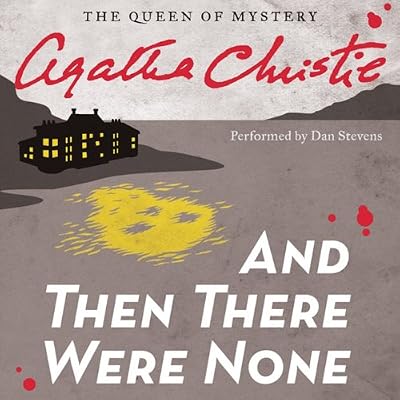
❤️113. And Then There Were None, Agatha Christie (1939); mystery, a re-read on audiobook
This was a re-read for my RL book club--it's the classic Christie mystery in which 12 people are summoned to an island off the Devon coast, where indiscretions of their past lives are heard over a loud speaker for all to hear. One of them dies, and then another, and it becomes clear they have all been brought here for a purpose. This is my absolute favorite Christie novel and this time I listened to it on audiobook read by Dan Stevens, who did an excellent narration.

⭐❤️❤️114. Jane Eyre, Charlotte Bronte (1847); fiction; re-read on audiobook
My favorite Victorian novel of all time and a many times re-read; it was so comforting to return to this again. This time I noticed the richness of Bronte's writing and Jane's utter determination to be independent. After listening to the audiobook, I read the extra material contained in the Norton Critical Edition. I particularly enjoyed the essay by Adrienne Rich and an essay discussing the two film adaptations with Orson Welles (1943) and George C. Scott (1970). The author pointed out how these 2 films make Rochester the main character, rather than Jane. More recent adaptations give Jane more agency.

⭐❤️115. Memoir of Jane Austen, James Austen-Leigh (1870); memoir
A very partial and loving portrayal of Jane Austen by her nephew, with lots of quotes from her letters to and from family members and famous people. I rather liked this little book, even if now just about everything in it has been quoted or referred to by modern biographers. It also includes the original ending of Persuasion that Austen re-wrote and some bits from her last incomplete novel Sanditon.

❤️116. The Black Tulip, Alexandre Dumas (1850); translated from the French by Robin Buss; historical fiction
This is a short and engaging historical fiction tale of a Dutch tulip grower in the mid-17th century amid real political uprisings in Holland. The story begins with the real events of the mob deaths of the DeWitt brothers in 1672, accused of being traitors to the Prince, William of Orange. The story quickly shifts to the fictional hero, Cornelius van Baerle, a wealthy doctor and avid tulip grower, who, amidst the tulip mania of the 17th century, takes up the challenge to grow a perfect black tulip for a major prize. His envious neighbor, who fails in the quest for the black tulip, embarks on a revenge plan, alerting authorities to circumstantial evidence that implicates Cornelius in the DeWitt brothers traitorous plot. Cornelius is imprisoned and there he falls in love with Rosa, the jailer's daughter, who helps him to cultivate his black tulip in secrecy. The rest of the plot revolves around this quest.
This was a surprise--I really enjoyed this little tale, which has adventure, romance, revenge and a quest for the perfect tulip. It almost felt like a fairy tale in a way. Dumas, however, has more than just romance here: Rosa questions whether Cornelius loves his tulip more than he loves her, implying what type of person elevates his Art over his human relationships? Dumas also compares beautiful scenes and objects to famous works of art throughout the book. It was a delightful reading experience and the translation by Robin Buss was smooth and accessible. I had a hard time with The Count of Monte Cristo, which seemed all revenge to me. This little novel (234 pages) was a good mix of romance, adventure and revenge that felt just right.

⭐117. The Children of the New Forest, Frederick Marryat (1847); children's historical fiction
One of the first adventure novels geared toward children, the story is set during the English Civil Wars in the mid-17th century. Four children (2 boys and 2 girls) are left orphans after their father, a Royalist and supporter of King Charles I, is killed by Oliver Cromwell's Parliamentarians. When rumors surface that Cromwell's men are coming to burn their home, the children are whisked into a simple cottage in the New Forest by their father's loyal and elderly friend forester Jacob Armitage. Here they take on new identities as Jacob's grandchildren and Jacob teaches them to be self-sufficient in the forest, learning hunting, farming, milking, raising chickens, sewing, cooking, and bartering in the nearby market town. When Jacob dies, the children are on their own, and the story focuses mostly on the two eldest, Edward and Humphrey.
This was mostly an exciting tale. It did slow down some in the first half, especially with long and repeated descriptions of trapping and killing animals for food and trade. As the eldest boy Edward gets older, the story focuses mostly on him and his restlessness to make himself useful to the Royalist cause, without revealing his identity, and here the story's pace picks up. I found the historical aspect of the Civil Wars well done for the most part, as characters discuss the pros and cons of each side, although it's fairly clear that the novel is written from the Royalist viewpoint. The two boys' characters are well established, but the girls (as in most tales like these) are flat and mostly not on the page. Overall I enjoyed this novel and found it a good introduction to this part of English history (especially with the end notes provided by the Oxford edition).

⭐❤️118. A Woman of No Importance, Oscar Wilde (1893); drama
The play opens at a country house where a large group has gathered for a dinner party. One guest, Mrs Arbuthnot, is startled to encounter, Lord Illingworth, the man who fathered her child 20 years ago, but refused to marry her and who she has not seen since. The play continues from there, as the two argue over the fate of the son, whose existence was unknown to Lord Illingworth all these years. There are many characters in this play, which is a bit confusing on the page and the dialogue includes many lines with double meanings, sometimes witty, sometimes decidedly sharp in its criticism of English society and attitudes about gender. This is a play that rather blew me away and I need to re-read it and hope that I can find a screen version to view.
Late again, oh well. I'm enjoying my November reading, but I'm taking a break to wrap up my Victober (Victorian October) books, plus a few others.
Overall, I had a great month of reading. I re-read 2 of my absolute favorites books, found a new favorite (and short!) Trollope novel, and had a pleasant surprise with a novel by Dumas. Only 1 of the Victorian books was a disappointment, so I consider the month a success!
⭐ = Victorian read for the Victober reading challenge

⭐❤️107. The Canterville Ghost, Oscar Wilde (1891); short story
An American family moves to England and purchases the Canterville Chase estate, despite being warned by the prior owner that the place is haunted by the ghost of a ruthless killer. The Americans laugh off the ghost story, but when strange things start happening, the family doesn't take it sitting down. A very funny & enjoyable story.

⭐❤️108. The Library Window, Margaret Oliphant (1896); short story
This is one of Oliphant's last published works. The narrator, a young girl staying with an elderly aunt, is recovering from an unnamed illness. She spends her time reading in the drawing room window seat and often gazes upon a library window across the street. This window, in normal light appears to be painted over or blocked, but each evening around twilight she sees a desk and eventually a man in the window. These visions disappear, however, when the light fades, and only return every evening around twilight. It is eerie--is the narrator seeing something real or is she having visions?

❤️109. Brave Companions: Portraits in History, David McCullough(1992); essays on history, on audiobook, read by the author
This is an eclectic and enjoyable collection of 17 essays written by McCullough between the 1960s and the 1980s for various magazines. They cover a wide range of topics. My favorites were "The Unexpected Mrs. Stowe" (about Harriet Beecher Stowe); "The Treasure from the Carpentry Shop" (about the discovery of the original plans of the Brooklyn Bridge); "Cross the Blue Mountain" (about author Conrad Richter); "South of Kankakee" (about traveling with photographer David Plowden in Central Illinois) and "Simon Willard's Clock" (an address to Congress in 1989). I ended up listening to this on audio, which was read by McCullough, making it even more special.

⭐110. Red Pottage, Mary Cholmondeley (1899); fiction
This novel tells the story of Hester and Rachel, friends since girlhood and now in their late twenties. The book begins with recent life changes for each: Hester, an orphan who has been raised in London by an aunt, must now live with her brother, a conservative clergyman in a small village, where Hester feels stifled. Rachel, also an orphan, who has been scraping by as a typist and living in dismal lodgings in the East End of London, suddenly comes into a fortune. She must learn how to navigate "society." The book examines how they each handle their new situations and people, while remaining true to themselves.
Most people who've read this book have loved it, but overall I struggled with it and found it disappointing. I had a hard time with the writing style of the author; I had to force myself to pick it up and read. Written at the very end of the Victorian Era and considered a "New Woman" book, it does examine the ways women were confined to strict conventions, but I became frustrated when both women have hysterical fits and faintings when disasters happen to them.

⭐❤️111. Dr. Wortle's School, Anthony Trollope (1881); fiction
This is a shorter work by Trollope and very accessible. Dr Wortle runs a boys school and Mr Peacocke is his assistant schoolmaster. Early on it becomes clear that there is a question about the legitimacy of Mr Peacocke's marriage to his American wife. The rest of the book is how Dr Wortle handles this possible scandal, both for himself, his school and his good friend Mr Peacocke. I enjoyed this book quite a bit, and loved the way Trollope takes an ethical question and looks at all the various facets and sides to the story. If you've been meaning to try Trollope but were imitated by his long works, this is a good place to start.

⭐112. The Hand of Ethelberta, Thomas Hardy (1876); fiction
This is the story of Ethelberta, who has risen from her working class background of ten children to become the wife of a wealthy young man. When the story begins, Ethelberta is recently widowed and is living with her mother-in-law. Ethelberta begins to consider how she can help to support her large family by becoming a celebrated poetess. Along the way, she meets several suitors who vie for her "hand", but she must keep her humble background a secret.
There is a lot to say for the strength and determination of Ethelberta as portrayed by Hardy, but sometimes it's hard to consider her sympathetic, as she plays one suitor against another. I can't say I loved this novel, but I didn't hate it either.
❤️113. And Then There Were None, Agatha Christie (1939); mystery, a re-read on audiobook
This was a re-read for my RL book club--it's the classic Christie mystery in which 12 people are summoned to an island off the Devon coast, where indiscretions of their past lives are heard over a loud speaker for all to hear. One of them dies, and then another, and it becomes clear they have all been brought here for a purpose. This is my absolute favorite Christie novel and this time I listened to it on audiobook read by Dan Stevens, who did an excellent narration.

⭐❤️❤️114. Jane Eyre, Charlotte Bronte (1847); fiction; re-read on audiobook
My favorite Victorian novel of all time and a many times re-read; it was so comforting to return to this again. This time I noticed the richness of Bronte's writing and Jane's utter determination to be independent. After listening to the audiobook, I read the extra material contained in the Norton Critical Edition. I particularly enjoyed the essay by Adrienne Rich and an essay discussing the two film adaptations with Orson Welles (1943) and George C. Scott (1970). The author pointed out how these 2 films make Rochester the main character, rather than Jane. More recent adaptations give Jane more agency.

⭐❤️115. Memoir of Jane Austen, James Austen-Leigh (1870); memoir
A very partial and loving portrayal of Jane Austen by her nephew, with lots of quotes from her letters to and from family members and famous people. I rather liked this little book, even if now just about everything in it has been quoted or referred to by modern biographers. It also includes the original ending of Persuasion that Austen re-wrote and some bits from her last incomplete novel Sanditon.

❤️116. The Black Tulip, Alexandre Dumas (1850); translated from the French by Robin Buss; historical fiction
This is a short and engaging historical fiction tale of a Dutch tulip grower in the mid-17th century amid real political uprisings in Holland. The story begins with the real events of the mob deaths of the DeWitt brothers in 1672, accused of being traitors to the Prince, William of Orange. The story quickly shifts to the fictional hero, Cornelius van Baerle, a wealthy doctor and avid tulip grower, who, amidst the tulip mania of the 17th century, takes up the challenge to grow a perfect black tulip for a major prize. His envious neighbor, who fails in the quest for the black tulip, embarks on a revenge plan, alerting authorities to circumstantial evidence that implicates Cornelius in the DeWitt brothers traitorous plot. Cornelius is imprisoned and there he falls in love with Rosa, the jailer's daughter, who helps him to cultivate his black tulip in secrecy. The rest of the plot revolves around this quest.
This was a surprise--I really enjoyed this little tale, which has adventure, romance, revenge and a quest for the perfect tulip. It almost felt like a fairy tale in a way. Dumas, however, has more than just romance here: Rosa questions whether Cornelius loves his tulip more than he loves her, implying what type of person elevates his Art over his human relationships? Dumas also compares beautiful scenes and objects to famous works of art throughout the book. It was a delightful reading experience and the translation by Robin Buss was smooth and accessible. I had a hard time with The Count of Monte Cristo, which seemed all revenge to me. This little novel (234 pages) was a good mix of romance, adventure and revenge that felt just right.

⭐117. The Children of the New Forest, Frederick Marryat (1847); children's historical fiction
One of the first adventure novels geared toward children, the story is set during the English Civil Wars in the mid-17th century. Four children (2 boys and 2 girls) are left orphans after their father, a Royalist and supporter of King Charles I, is killed by Oliver Cromwell's Parliamentarians. When rumors surface that Cromwell's men are coming to burn their home, the children are whisked into a simple cottage in the New Forest by their father's loyal and elderly friend forester Jacob Armitage. Here they take on new identities as Jacob's grandchildren and Jacob teaches them to be self-sufficient in the forest, learning hunting, farming, milking, raising chickens, sewing, cooking, and bartering in the nearby market town. When Jacob dies, the children are on their own, and the story focuses mostly on the two eldest, Edward and Humphrey.
This was mostly an exciting tale. It did slow down some in the first half, especially with long and repeated descriptions of trapping and killing animals for food and trade. As the eldest boy Edward gets older, the story focuses mostly on him and his restlessness to make himself useful to the Royalist cause, without revealing his identity, and here the story's pace picks up. I found the historical aspect of the Civil Wars well done for the most part, as characters discuss the pros and cons of each side, although it's fairly clear that the novel is written from the Royalist viewpoint. The two boys' characters are well established, but the girls (as in most tales like these) are flat and mostly not on the page. Overall I enjoyed this novel and found it a good introduction to this part of English history (especially with the end notes provided by the Oxford edition).

⭐❤️118. A Woman of No Importance, Oscar Wilde (1893); drama
The play opens at a country house where a large group has gathered for a dinner party. One guest, Mrs Arbuthnot, is startled to encounter, Lord Illingworth, the man who fathered her child 20 years ago, but refused to marry her and who she has not seen since. The play continues from there, as the two argue over the fate of the son, whose existence was unknown to Lord Illingworth all these years. There are many characters in this play, which is a bit confusing on the page and the dialogue includes many lines with double meanings, sometimes witty, sometimes decidedly sharp in its criticism of English society and attitudes about gender. This is a play that rather blew me away and I need to re-read it and hope that I can find a screen version to view.
148NinieB
>147 kac522: What a great reading month you had! I read The Canterville Ghost a couple of years ago, and it is a riot. Based on that story, at least, Wilde's humor has not dated, unlike so many others. I would like to read The Library Window, since what I've read of Oliphant has been so worth the time. And I'll get to Dr. Wortle's School one of these days. Glad to see you liked both.
On Red Pottage, I too found the writing style difficult and the beginning was slow too, but I was sucked in by the plot. I didn't even notice the fainting women. Just par for the Victorian course, New Woman or not.
I'm not sure if I would rank And Then There Were None at number 1 for Christie, mainly because I love a couple of others that are very strong, but it's definitely top 5. And Jane Eyre is of course incomparable.
Your last item reminds me that Wilde's humor in The Importance of Being Earnest is also on fire, beginning with the title and ending on the last line. If you haven't read it, you really should.
On Red Pottage, I too found the writing style difficult and the beginning was slow too, but I was sucked in by the plot. I didn't even notice the fainting women. Just par for the Victorian course, New Woman or not.
I'm not sure if I would rank And Then There Were None at number 1 for Christie, mainly because I love a couple of others that are very strong, but it's definitely top 5. And Jane Eyre is of course incomparable.
Your last item reminds me that Wilde's humor in The Importance of Being Earnest is also on fire, beginning with the title and ending on the last line. If you haven't read it, you really should.
149atozgrl
>147 kac522: >148 NinieB: I highly agree on The Importance of Being Earnest. It's hilarious. I've seen a couple of filmed performances of the play, although I haven't read it. It sounds like I need to look into The Canterville Ghost.
I read And Then There Were None just a few years back and really didn't care for it. My parents loved Agatha Christie, as do most people it seems, but I wonder if I'm the oddball who doesn't much care for her. I really do need to read more of her works.
I read And Then There Were None just a few years back and really didn't care for it. My parents loved Agatha Christie, as do most people it seems, but I wonder if I'm the oddball who doesn't much care for her. I really do need to read more of her works.
150kac522
>148 NinieB: Thanks, Ninie, yes it was a pretty good reading month! I'm only sorry I didn't get to The Trail of the Serpent, but I hope to by year's end.
I still am not sure why Red Pottage didn't work for me--I really had to force myself to read it. It seemed like a lot of whining and fainting. Rachel and Hester could have used a pep talk from Jane Eyre. Or even Ethelberta. 😉
And yes I've read (and watched) "Earnest" several times and it is hysterical. A Woman of No Importance is witty but I wouldn't call it "funny". In fact, it almost borders on melodrama towards the end if overdone. It has a memorable last line related to the title, too.
I'm currently reading The Return of the Native and it is so good, but the reading is slower for me than the books I've read so far in this Hardy readalong. I read it some 40 years ago but it's like a whole new book, as I don't remember a thing, except their names.
I still am not sure why Red Pottage didn't work for me--I really had to force myself to read it. It seemed like a lot of whining and fainting. Rachel and Hester could have used a pep talk from Jane Eyre. Or even Ethelberta. 😉
And yes I've read (and watched) "Earnest" several times and it is hysterical. A Woman of No Importance is witty but I wouldn't call it "funny". In fact, it almost borders on melodrama towards the end if overdone. It has a memorable last line related to the title, too.
I'm currently reading The Return of the Native and it is so good, but the reading is slower for me than the books I've read so far in this Hardy readalong. I read it some 40 years ago but it's like a whole new book, as I don't remember a thing, except their names.
151kac522
>149 atozgrl: Irene, have you seen the filmed version of "Earnest" with Colin Firth? I love that one, but I'm sure it's hard to make a "bad" version with that script.
I'm not a big mystery reader at all--Agatha Christie and Sherlock Holmes are about it, even though I've tried others. So I can see how you wouldn't get on with a particular author. Since Poirot is in many of her stories, you have to tolerate him and his gray cells. I find her short stories can be good. Try "Witness for the Prosecution"-- the original story is different from the movie. Or one of her books with Tommy & Tuppence; they're fun in a 1930s screwball comedy kind of way.
I'm not a big mystery reader at all--Agatha Christie and Sherlock Holmes are about it, even though I've tried others. So I can see how you wouldn't get on with a particular author. Since Poirot is in many of her stories, you have to tolerate him and his gray cells. I find her short stories can be good. Try "Witness for the Prosecution"-- the original story is different from the movie. Or one of her books with Tommy & Tuppence; they're fun in a 1930s screwball comedy kind of way.
152MissWatson
>147 kac522: Nice reviews, Kathy! I must make time for Mrs Oliphant again, I so enjoy her books and stories.
153NinieB
>149 atozgrl: I would call And Then There Were None atypical of Christie. I like Poirot, where Christie is at her most "clever"--Murder on the Orient Express and Death on the Nile are two special favorites. Many prefer Miss Marple, with the frequent English village settings and her more psychological emphasis; A Murder Is Announced is probably the best. Kathy's suggestions in >151 kac522: are good, too.
154kac522
>152 MissWatson: Yes, this was surprisingly psychological and it worked well. I'm finding that I enjoy her later works more than earlier ones. "The Mystery of Mrs Blencarrow" and "Queen Eleanor and Fair Rosamund" are two novellas that I really enjoyed; they are re-published in one volume by Persephone. I also enjoyed The Curate in Charge, which I downloaded from (I think) Project Gutenberg. Of the Carlingford books, my favorite is The Perpetual Curate. A lot of people like Hester, which I thought was interesting, but I didn't love it.
155kac522
>149 atozgrl:, >153 NinieB: Thanks, Ninie, good suggestions. I'm still making my way through Christie, pretty much in publication order. I'm only up to 1947, so I haven't read A Murder is Announced yet.
156atozgrl
>151 kac522: I don't believe that I saw the version of "Earnest" with Colin Firth. IIRC, I've seen at least two, and both were filmed stage productions. I'll have to hunt the Colin Firth one up; I loved him in P&P.
>151 kac522: >153 NinieB: I will have to check out your suggestions. I've got an omnibus with a bunch of Christie's stories; I need to check and see which ones are included.
>151 kac522: >153 NinieB: I will have to check out your suggestions. I've got an omnibus with a bunch of Christie's stories; I need to check and see which ones are included.
157kac522
November Reading Wrap-Up:
A lot of good solid books this month, although I can't say that any of these would be considered the best of the year.

119. Greengates, R. C. Sherriff (1936); fiction
The novel opens at the retirement party of Mr Tom Baldwin, where he has worked for many years, and where he has a handful of close friends. We move quickly into his adjusting to new day-to-day habits which are driving his wife crazy, upsetting her daily routines that she has had for these last 30 years. One day they decide to go on a long walk in a rural area that they used to visit when they were first married. They come upon an area that is now begin developed with new homes. At first they are shocked, but then on a lark they decide to tour one of the model homes, and it doesn't take long for them to be awed by all the modern conveniences they lack in their old house.
The remainder of the novel is about the Baldwins going through the process of buying & selling & moving, which sounds rather boring, but Sherriff makes these mundane activities seem important. Sherriff has an ability to keep us interested and the characters relatable, despite the ordinariness of their lives. I enjoyed this book for the most part, although I felt the last couple of chapters about starting a "club" in the new development felt unpleasant and snobbish. This was not as enjoyable for me as his The Fortnight in September, but it still had some interesting aspects of retired life and starting a new life that made it worthwhile.

120. Summerhills, D. E. Stevenson (1955); fiction
This is a continuation of the story of the Ayrton family from the previous book Amberwell. It focuses more on Roger, the eldest son and now owner of the Amberwell estate, who returns home on leave from his military service with an idea of setting up a boys' school. As the school goes from idea to reality, we are re-acquainted with the family and some new characters are added and minor ones are flushed out. Roger finds a kindred spirit, his sister Nell continues to run the house and raise Roger's son Stephen, and Anne, the estranged younger sister, is still housekeeping for the vicar Mr Orme while recovering from her disastrous marriage. Siblings Connie & Tom are only briefly mentioned in this book, and Mrs Ayrton, the children's mother, is a shadow of her former self.
I thought that this novel had a lot of plot, a lot of romance, and the usual Stevenson despicable characters: in this book, both women. Overall it was a quick read, but not particularly memorable.

❤️121. The Return of the Native, Thomas Hardy (1878); fiction
I read this novel back in the 1980s, but I remembered absolutely nothing about it except the names of some of the characters. The story is basically a love "square" (maybe even a pentagon?) in which two outsiders and three natives of Egdon Heath are entangled. The heath itself is a major character, if you will, in this story, as it is key to several plot points. Two marriages between (clearly) the wrong people lead to the outcomes that drive the plot of the story. As always Hardy explores class, rural vs. urban and the life of a woman who feels constricted by society's rules.
The novel was slow at first: very dense, filled with descriptions of the heath: in heat, in rain, in snow, in wind; with animals, snakes, birds and many insects (especially moths), all of which I enjoyed, but could only read in short bits. About the halfway point, when the two marriages show signs of trouble, I became fully engrossed in the story and read the second half, almost without stopping. I can't say I loved any of the characters, but Hardy gave me enough empathy for most of them to keep me engaged until the end.

❤️122. The Labors of Hercules, Agatha Christie (1947); short stories
A series of 12 Poirot short stories with allusions to the 12 Labors of Hercules. I enjoyed them--I like the short story format with Poirot.

123. The Two Gentlemen of Verona, William Shakespeare (first published 1623); drama
Thought to be one of Shakespeare's earliest plays, this had some funny punny moments, especially at the beginning. This was mostly fun, but not particularly thought-provoking. The abrupt ending left me scratching my head.

124. Atlantic: Great Sea Battles, Heroic Discoveries, Titanic Storms, and a Vast Ocean of a Million Stories, Simon Winchester (2010); nonfiction on audioboook, read by the author
This is a sprawling history of the Atlantic Ocean, starting from its geological formations, to the first human interactions, to first voyages, to modern commerce and wars, and finally man's neglect and polluting of the ocean. Mostly it works, although like any Winchester book, it goes off on various paths which sometimes work, but sometimes don't. Some of the last bits on climate change I assume are dated (published in 2010) and it would be interesting if Winchester would publish an update to the book, including current trends and thought.
I listened to this on audio read by Winchester, who is an excellent reader and made the content come alive. I think if I had read it in print, I probably would have given up at some point. In the end I'm glad I stuck with it.

125. Nazarin, Benito Perez Galdos (1895), translated from the Spanish by Jo Labanyi; fiction
I read this for Paul's "Grand European Tour" Challenge. The book was one I picked up at a library sale--I had no idea of the author or title, but it looked interesting and fit in with November's challenge to read an author from the Iberian peninsula. Benito Perez Galdos (1843-1920) was born in the Canary Islands and lived most of his life in Madrid. He was a great admirer of Tolstoy.
Nazarin (1895) is the story of a humble priest, Don Nazario, from Madrid who is determined to take Christ’s gospel literally. He leads through example: he lives the life preached by the gospels, the life of meekness, poverty, non-resistance to evil and keeps to the truth at all costs. He has no possessions and begs only for food that he absolutely needs. As he sets out from Madrid to live out his principles, along the way two women of dubious character decided to change their ways, and they follow him on his path. Early on the narrator asks: “The locals generally regard him as a saint, but others think him a fool. Which version is correct?” Thus he encounters on his journey those who admire him, but also those who taunt him and dismiss him at best, and physical abuse at worst.
The edition I read had excellent notes, pointing out how Perez Galdos cleverly weaves the parallels between the priest’s journey and Christ’s journey, as well as the priest’s journey and Don Quixote’s journey to seek the ideals of chivalry. The priest meets and discusses his ideals with many people along the way, bringing out various concepts of capitalism, socialism and Christian thought prevalent during the late 19th century. There’s a lot packed in this little book (190 pages), but I don’t think I could have navigated it successfully without the editor’s excellent notes in this Oxford World’s Classics edition. This was an interesting and thought-provoking read, although I can't say I loved it. It would probably make for great discussions in the classroom.

126. Blaming, Elizabeth Taylor (1976, post.); fiction
Married couple Nick and Amy are on a Mediterranean cruise while Nick is recovering from surgery. During the holiday they meet a young American author, Martha, who attaches herself to the couple which does not entirely please Amy. When Nick dies suddenly on holiday, Martha comes to Amy's rescue, but when the women return to England, Amy is not interested in keeping up the friendship. And yet, Amy knows she owes Martha for her help in a crisis.
This had excellent writing, but unlikable characters. Amy has complaints and little patience from the first page of the novel and Martha seems to be about whenever she's not wanted. There are perceptive observations on grief and guilt. Written when Taylor knew she was dying and published after her death, this is quite a melancholy book. Not one I would want to re-visit.
With this book, I have read all of Elizabeth Taylor's novels and most of her short stories.

127. Crooked House, Agatha Christie (1949); mystery
There are no particular detectives in this one, although Scotland Yard is called in. Told in the first person by a friend of the family, the patriarch is poisoned and, of course, this had loads of characters with possible motives that took some time to sort out. Near the end I was ready for it to be solved; we only learn the truth via letters in the last few pages.
A lot of good solid books this month, although I can't say that any of these would be considered the best of the year.

119. Greengates, R. C. Sherriff (1936); fiction
The novel opens at the retirement party of Mr Tom Baldwin, where he has worked for many years, and where he has a handful of close friends. We move quickly into his adjusting to new day-to-day habits which are driving his wife crazy, upsetting her daily routines that she has had for these last 30 years. One day they decide to go on a long walk in a rural area that they used to visit when they were first married. They come upon an area that is now begin developed with new homes. At first they are shocked, but then on a lark they decide to tour one of the model homes, and it doesn't take long for them to be awed by all the modern conveniences they lack in their old house.
The remainder of the novel is about the Baldwins going through the process of buying & selling & moving, which sounds rather boring, but Sherriff makes these mundane activities seem important. Sherriff has an ability to keep us interested and the characters relatable, despite the ordinariness of their lives. I enjoyed this book for the most part, although I felt the last couple of chapters about starting a "club" in the new development felt unpleasant and snobbish. This was not as enjoyable for me as his The Fortnight in September, but it still had some interesting aspects of retired life and starting a new life that made it worthwhile.

120. Summerhills, D. E. Stevenson (1955); fiction
This is a continuation of the story of the Ayrton family from the previous book Amberwell. It focuses more on Roger, the eldest son and now owner of the Amberwell estate, who returns home on leave from his military service with an idea of setting up a boys' school. As the school goes from idea to reality, we are re-acquainted with the family and some new characters are added and minor ones are flushed out. Roger finds a kindred spirit, his sister Nell continues to run the house and raise Roger's son Stephen, and Anne, the estranged younger sister, is still housekeeping for the vicar Mr Orme while recovering from her disastrous marriage. Siblings Connie & Tom are only briefly mentioned in this book, and Mrs Ayrton, the children's mother, is a shadow of her former self.
I thought that this novel had a lot of plot, a lot of romance, and the usual Stevenson despicable characters: in this book, both women. Overall it was a quick read, but not particularly memorable.

❤️121. The Return of the Native, Thomas Hardy (1878); fiction
I read this novel back in the 1980s, but I remembered absolutely nothing about it except the names of some of the characters. The story is basically a love "square" (maybe even a pentagon?) in which two outsiders and three natives of Egdon Heath are entangled. The heath itself is a major character, if you will, in this story, as it is key to several plot points. Two marriages between (clearly) the wrong people lead to the outcomes that drive the plot of the story. As always Hardy explores class, rural vs. urban and the life of a woman who feels constricted by society's rules.
The novel was slow at first: very dense, filled with descriptions of the heath: in heat, in rain, in snow, in wind; with animals, snakes, birds and many insects (especially moths), all of which I enjoyed, but could only read in short bits. About the halfway point, when the two marriages show signs of trouble, I became fully engrossed in the story and read the second half, almost without stopping. I can't say I loved any of the characters, but Hardy gave me enough empathy for most of them to keep me engaged until the end.

❤️122. The Labors of Hercules, Agatha Christie (1947); short stories
A series of 12 Poirot short stories with allusions to the 12 Labors of Hercules. I enjoyed them--I like the short story format with Poirot.

123. The Two Gentlemen of Verona, William Shakespeare (first published 1623); drama
Thought to be one of Shakespeare's earliest plays, this had some funny punny moments, especially at the beginning. This was mostly fun, but not particularly thought-provoking. The abrupt ending left me scratching my head.

124. Atlantic: Great Sea Battles, Heroic Discoveries, Titanic Storms, and a Vast Ocean of a Million Stories, Simon Winchester (2010); nonfiction on audioboook, read by the author
This is a sprawling history of the Atlantic Ocean, starting from its geological formations, to the first human interactions, to first voyages, to modern commerce and wars, and finally man's neglect and polluting of the ocean. Mostly it works, although like any Winchester book, it goes off on various paths which sometimes work, but sometimes don't. Some of the last bits on climate change I assume are dated (published in 2010) and it would be interesting if Winchester would publish an update to the book, including current trends and thought.
I listened to this on audio read by Winchester, who is an excellent reader and made the content come alive. I think if I had read it in print, I probably would have given up at some point. In the end I'm glad I stuck with it.

125. Nazarin, Benito Perez Galdos (1895), translated from the Spanish by Jo Labanyi; fiction
I read this for Paul's "Grand European Tour" Challenge. The book was one I picked up at a library sale--I had no idea of the author or title, but it looked interesting and fit in with November's challenge to read an author from the Iberian peninsula. Benito Perez Galdos (1843-1920) was born in the Canary Islands and lived most of his life in Madrid. He was a great admirer of Tolstoy.
Nazarin (1895) is the story of a humble priest, Don Nazario, from Madrid who is determined to take Christ’s gospel literally. He leads through example: he lives the life preached by the gospels, the life of meekness, poverty, non-resistance to evil and keeps to the truth at all costs. He has no possessions and begs only for food that he absolutely needs. As he sets out from Madrid to live out his principles, along the way two women of dubious character decided to change their ways, and they follow him on his path. Early on the narrator asks: “The locals generally regard him as a saint, but others think him a fool. Which version is correct?” Thus he encounters on his journey those who admire him, but also those who taunt him and dismiss him at best, and physical abuse at worst.
The edition I read had excellent notes, pointing out how Perez Galdos cleverly weaves the parallels between the priest’s journey and Christ’s journey, as well as the priest’s journey and Don Quixote’s journey to seek the ideals of chivalry. The priest meets and discusses his ideals with many people along the way, bringing out various concepts of capitalism, socialism and Christian thought prevalent during the late 19th century. There’s a lot packed in this little book (190 pages), but I don’t think I could have navigated it successfully without the editor’s excellent notes in this Oxford World’s Classics edition. This was an interesting and thought-provoking read, although I can't say I loved it. It would probably make for great discussions in the classroom.

126. Blaming, Elizabeth Taylor (1976, post.); fiction
Married couple Nick and Amy are on a Mediterranean cruise while Nick is recovering from surgery. During the holiday they meet a young American author, Martha, who attaches herself to the couple which does not entirely please Amy. When Nick dies suddenly on holiday, Martha comes to Amy's rescue, but when the women return to England, Amy is not interested in keeping up the friendship. And yet, Amy knows she owes Martha for her help in a crisis.
This had excellent writing, but unlikable characters. Amy has complaints and little patience from the first page of the novel and Martha seems to be about whenever she's not wanted. There are perceptive observations on grief and guilt. Written when Taylor knew she was dying and published after her death, this is quite a melancholy book. Not one I would want to re-visit.
With this book, I have read all of Elizabeth Taylor's novels and most of her short stories.

127. Crooked House, Agatha Christie (1949); mystery
There are no particular detectives in this one, although Scotland Yard is called in. Told in the first person by a friend of the family, the patriarch is poisoned and, of course, this had loads of characters with possible motives that took some time to sort out. Near the end I was ready for it to be solved; we only learn the truth via letters in the last few pages.
158kac522

Daisy, 1864
Wallpaper design
William Morris (English, 1834-1896)
Pomegranate 2025 William Morris Calendar: December; www.pomegranate.com
December's Massive Pile of Possibilities--when will I learn???
Completed
Anne's House of Dreams, L. M. Montgomery (1917), for ColorCat (purple on the cover)
Currently Reading:
December 16 is the 250th anniversary of Jane Austen's birth so I'm re-reading:


The Annotated Sense and Sensibility, Jane Austen, annotated by David M Shapard--reading the notes while listening to the audiobook
and hope to get to: What Matters in Jane Austen?, John Mullan, a re-read
Other books on the go:


The Tobacconist, Robert Seethaler--for Paul's Grand European Tour
Braiding Sweetgrass, Robin Wall Kimmerer
Priorities:


The Trumpet-Major, Thomas Hardy, December's book in the Hardy readalong
The Heart Goes Last, Margaret Atwood--for RandomKIT--titles with beginning & ending words ("Last")
Silent Night, Mary Higgins Clark, for my RL book club
Tea with Mr Rochester, Frances Towers--short stories, from my Persephone collection
Holiday reading possibilities--mostly re-reads--hope to get to a few:


A Christmas Carol, Charles Dickens, on audio read by Jim Dale--I try to read this every year
Small Things Like These, Claire Keegan, re-read set during Christmas
Christmas at Thompson Hall, Anthony Trollope, a re-read
A Merry Christmas and Other Christmas Stories, Louis May Alcott
Thrush Green and Winter at Thrush Green, Miss Read
Other possibilities--maybe one or two of these:


South Riding, Winifred Holtby
The House of Mirth, Edith Wharton (a re-read)
All Things Wise and Wonderful, James Herriot
The Edwardians, Vita Sackville-West
Rough-Hewn, Dorothy Canfield
159threadnsong
>158 kac522: Oh, I feel your pain! Let's hope we never learn and can continue to enjoy the possibilities. I look forward to reading your reviews of the books you are able to read in this marvelous stack.
>157 kac522: I read Return of the Native ages ago; I found it so very difficult to read because of the great sadness that permeates it. You are right about the landscape being a character in its own right.
>157 kac522: I read Return of the Native ages ago; I found it so very difficult to read because of the great sadness that permeates it. You are right about the landscape being a character in its own right.
160MissBrangwen
Hi Kathy, I finally made it around to your thread again! I thoroughly enjoyed your reviews and took several BBs.
I received And Then There Were None for Christmas by my in-laws, it's a Christie I haven't read so far. I'm really looking forward to it!
I received And Then There Were None for Christmas by my in-laws, it's a Christie I haven't read so far. I'm really looking forward to it!
161kac522
>159 threadnsong: Happy holidays!--thanks for visiting. Well, I finished about half of what I set out to read--DNF'd a couple and read the Hardy and most of the Christmas stuff, so it wasn't too bad. NEXT YEAR I'm determined to be have a more realistic TBR.
I read the most famous of Hardy's novels (about half) in the 1970s & 1980s, and remembered very little of them except the sadness. I'm enjoying this chronological read even with the sadness because I'm putting it in perspective (and prepared for it). I finished The Trumpet-Major (one that's new to me) and although the ending is not happy, it's not tragic. Sort of "missed opportunities," let's say. What I enjoyed most about it was the historical fiction portrayal of the Napoleonic era in southwest England, which Hardy did so well.
>160 MissBrangwen: Mirjam, And Then There Were None is my favorite Christie. It has the most sustained suspense of all of her novels. Once you've finished it, there's an excellent BBC series adaptation from a few years ago starring Anna Maxwell-Martin, Charles Dance and Aidan Turner, to name a few of the big names in it.
I read the most famous of Hardy's novels (about half) in the 1970s & 1980s, and remembered very little of them except the sadness. I'm enjoying this chronological read even with the sadness because I'm putting it in perspective (and prepared for it). I finished The Trumpet-Major (one that's new to me) and although the ending is not happy, it's not tragic. Sort of "missed opportunities," let's say. What I enjoyed most about it was the historical fiction portrayal of the Napoleonic era in southwest England, which Hardy did so well.
>160 MissBrangwen: Mirjam, And Then There Were None is my favorite Christie. It has the most sustained suspense of all of her novels. Once you've finished it, there's an excellent BBC series adaptation from a few years ago starring Anna Maxwell-Martin, Charles Dance and Aidan Turner, to name a few of the big names in it.
162kac522
December was a slow reading month for me: a few holiday re-reads and only 2 books more than 200 pages. My mind seemed to be elsewhere and mostly interested in comfort reading. Here's a quick recap:


❤️128. Anne's House of Dreams, L. M. Montgomery (1917); fiction
In the 5th book in the series, Anne & Gilbert move into their first home together, as Gilbert starts his practice as a doctor. Although isolated from the main town, Anne & Gilbert make a few friends, and have both sad and happy times.
Except for a strange twist to part of the plot near the end, I liked this installment in the Anne series. There are just a few main characters, and we get to know them fairly well, although I would have liked to learn more about Gilbert and his practice. Anne is empathetic but doesn't feel the need to fix everybody's problems, as in book #4 Anne of Windy Poplars. In this book, there's a lot of thoughtful conversations and lovely nature writing. And it was special because I read it over L. M. Montgomery's birthday, November 30.
129. A Merry Christmas: And Other Christmas Stories, Louisa May Alcott (1875); short stories
Over-sweet Christmas tales are combined with Alcott's moral tone of doing good. The last story was not quite so bad ("Mrs. Podgers' Teapot"), which had a regular plotline combined with the moral one. Still I do love the holiday cover.
130. The Annotated Sense and Sensibility, Jane Austen (1811), annotations by David M. Shapard; fiction
In these Shapard annotated editions there is a page of annotations following every page of text, so it doubles the pages of reading (in this case, a total of 700 pages). The explanations are good, especially about social protocol of the era. However I think it would be way too much information for someone reading the novel for the first time. Although Shapard doesn't have spoilers per se, he often makes allusions to what will happen later in the story.
There are very helpful maps of southwest England and London, showing important places in the story. One of the most useful chars is a chronology of events in the book, so you get an idea of when things happen. The main action of S&S, for example, takes place over the course of a year, from one autumn to the next autumn, starting with the Dashwoods leaving Norland and ending with Elinor & Edward's marriage. I don't think I would have figured this out on my own without a lot of effort, and I've read S&S many times. So this timeframe was very helpful for me as a many times re-reader.
❤️131. The Trumpet-Major, Thomas Hardy (1880); fiction
A unique novel for Hardy, this historical fiction novel is set during the Napoleonic war era: a seaside town near Weymouth is on watch for Napoleon's army to land. The heroine, Anne Garland, has 3 suitors: John, a steadfast soldier; his brother Bob, a sweet but unreliable sailor; and the nasty Festus Derriman, a rogue. The romance plot is rather lame, particularly because Anne, otherwise intelligent and practical, is frustratingly blind to recognize the man who truly loves her. The historical context was well done and Hardy shows some rare bits of humor and lightness. He apparently did extensive research and personal interviews to get the details of the era and events correct, which includes a scene of a King George III having a short chat with a town local.
After finishing I read the introduction and one comment made by the editor was interesting: that Hardy may have purposefully made the personal love story rather boring and unsatisfying, so as not to over-shadow the tense and dramatic larger events of the times. Given this viewpoint, I think it was a successful novel, although not a typical Hardy novel, as it contains minimal personal misery.
❤️132. Small Things Like These, Claire Keegan (2021), short fiction; a re-read
A small Christmas story of tremendous impact where every word matters. This is my 3rd or 4th re-read.
❤️133. A Christmas Carol, Charles Dickens (1843); on audiobook read by Jim Dale; fiction
A many times Christmas re-read.
❤️134. Christmas at Thompson Hall : and Other Christmas stories, Anthony Trollope (2014); a selection of holiday short stories from the 1860s, 1870s & 1880s, a re-read.
Five delightful short stories centering around Christmas time that I have read several times. No politics, just the usual Trollope relationship misunderstandings.
One story was different: "Two Generals", which was written in 1863 and is set in Civil War Kentucky. Two sons end up becoming generals on opposing sides of the war. Not only is the material very different for Trollope, the language seemed different too. I did a bit of research and learned a little about "Two Generals": it may have been influenced by Trollope meeting Senator John Crittenden of Kentucky in 1863, who confided he concerns about his two sones: one a general in the Union Army and the other a general in the Confederate Army. Although Trollope changes the names and creates a fabricated story, the premise certainly is from his meeting with the Senator.


❤️128. Anne's House of Dreams, L. M. Montgomery (1917); fiction
In the 5th book in the series, Anne & Gilbert move into their first home together, as Gilbert starts his practice as a doctor. Although isolated from the main town, Anne & Gilbert make a few friends, and have both sad and happy times.
Except for a strange twist to part of the plot near the end, I liked this installment in the Anne series. There are just a few main characters, and we get to know them fairly well, although I would have liked to learn more about Gilbert and his practice. Anne is empathetic but doesn't feel the need to fix everybody's problems, as in book #4 Anne of Windy Poplars. In this book, there's a lot of thoughtful conversations and lovely nature writing. And it was special because I read it over L. M. Montgomery's birthday, November 30.
129. A Merry Christmas: And Other Christmas Stories, Louisa May Alcott (1875); short stories
Over-sweet Christmas tales are combined with Alcott's moral tone of doing good. The last story was not quite so bad ("Mrs. Podgers' Teapot"), which had a regular plotline combined with the moral one. Still I do love the holiday cover.
130. The Annotated Sense and Sensibility, Jane Austen (1811), annotations by David M. Shapard; fiction
In these Shapard annotated editions there is a page of annotations following every page of text, so it doubles the pages of reading (in this case, a total of 700 pages). The explanations are good, especially about social protocol of the era. However I think it would be way too much information for someone reading the novel for the first time. Although Shapard doesn't have spoilers per se, he often makes allusions to what will happen later in the story.
There are very helpful maps of southwest England and London, showing important places in the story. One of the most useful chars is a chronology of events in the book, so you get an idea of when things happen. The main action of S&S, for example, takes place over the course of a year, from one autumn to the next autumn, starting with the Dashwoods leaving Norland and ending with Elinor & Edward's marriage. I don't think I would have figured this out on my own without a lot of effort, and I've read S&S many times. So this timeframe was very helpful for me as a many times re-reader.
❤️131. The Trumpet-Major, Thomas Hardy (1880); fiction
A unique novel for Hardy, this historical fiction novel is set during the Napoleonic war era: a seaside town near Weymouth is on watch for Napoleon's army to land. The heroine, Anne Garland, has 3 suitors: John, a steadfast soldier; his brother Bob, a sweet but unreliable sailor; and the nasty Festus Derriman, a rogue. The romance plot is rather lame, particularly because Anne, otherwise intelligent and practical, is frustratingly blind to recognize the man who truly loves her. The historical context was well done and Hardy shows some rare bits of humor and lightness. He apparently did extensive research and personal interviews to get the details of the era and events correct, which includes a scene of a King George III having a short chat with a town local.
After finishing I read the introduction and one comment made by the editor was interesting: that Hardy may have purposefully made the personal love story rather boring and unsatisfying, so as not to over-shadow the tense and dramatic larger events of the times. Given this viewpoint, I think it was a successful novel, although not a typical Hardy novel, as it contains minimal personal misery.
❤️132. Small Things Like These, Claire Keegan (2021), short fiction; a re-read
A small Christmas story of tremendous impact where every word matters. This is my 3rd or 4th re-read.
❤️133. A Christmas Carol, Charles Dickens (1843); on audiobook read by Jim Dale; fiction
A many times Christmas re-read.
❤️134. Christmas at Thompson Hall : and Other Christmas stories, Anthony Trollope (2014); a selection of holiday short stories from the 1860s, 1870s & 1880s, a re-read.
Five delightful short stories centering around Christmas time that I have read several times. No politics, just the usual Trollope relationship misunderstandings.
One story was different: "Two Generals", which was written in 1863 and is set in Civil War Kentucky. Two sons end up becoming generals on opposing sides of the war. Not only is the material very different for Trollope, the language seemed different too. I did a bit of research and learned a little about "Two Generals": it may have been influenced by Trollope meeting Senator John Crittenden of Kentucky in 1863, who confided he concerns about his two sones: one a general in the Union Army and the other a general in the Confederate Army. Although Trollope changes the names and creates a fabricated story, the premise certainly is from his meeting with the Senator.
163kac522
2025 Highlights
Despite a lackluster ending to the year, overall I had a great reading year. I had some long-term projects and am fairly pleased with my reading.
📚Jane Austen--see Challenge VI above (>6 kac522:): For the 250th anniversary of Jane Austen's birth, I read (or re-read) the following in 2025:
Novels:
✔️Sense and Sensibility, audiobook re-read and reading the 350+ pages of annotations of David M. Shapard
✔️Pride and Prejudice, audiobook re-read
✔️Mansfield Park, audiobook re-read
✔️Persuasion; audiobook re-read
✔️Northanger Abbey: Norton Critical Edition; listened to the audiobook and read the 200+ pages of critical material in this edition
Shorter works:
✔️Lady Susan; audiobook re-read, January
✔️The history of England by a partial, prejudiced & ignorant historian from the Juvenilia
Nonfiction: about Jane Austen and her time:
✔️The Making of Jane Austen, Devoney Looser; Jane Austen in popular culture
✔️In the Steps of Jane Austen, Anne-Marie Edwards; her biography through the places she lived
✔️Jane Austen's Bookshelf : a rare book collector's quest to find the women writers who shaped a legend, Rebecca Romney (2025); part memoir/biography/look at the rare book business through the 6 women writers who influenced Austen
✔️So You Think You Know Jane Austen?, Sutherland and Le Faye; a quiz book of the 6 novels with questions & answers
✔️Memoir of Jane Austen, James Austen-Leigh (1870); the first biography of Austen written by her nephew
Works that influenced Jane Austen:
✔️"Lovers' Vows", Elizabeth Inchbald (1798), a play, referred to in Mansfield Park
✔️Evelina, Fanny Burney (1778); an author Jane Austen read and admired, and mentioned in Northanger Abbey
✔️The Female Quixote, Charlotte Lennox (1752), on audiobook, read by Juliet Stevenson; a book Jane Austen read several times and influenced Northanger Abbey
✔️Finally, I watched half a dozen film adaptations of Austen's works.
📚Other long-term goals:
✔️I've kept up with the Thomas Hardy chronological read of his 14 novels, reading 6 this year and hope to read the remaining next year, starting with A Laodicean in January 2026
✔️And I finished my reading of all of the major works of Elizabeth Gaskell, Elizabeth Taylor and E. H. Young.
Overall here are the highlights from my 2025 reading:
Fiction Highlights:
William: an Englishman, Cicely Hamilton, a Persphone reprint
The Life and Death of Harriet Frean, May Sinclair, A Virago reprint
Dr Wortle's School, Anthony Trollope
The Christmas Hirelings, Mary Elizabeth Braddon
Wives and Daughters, Elizabeth Gaskell
Business as Usual, Jane Oliver and Ann Stafford
Rhododendron Pie, Margery Sharp
Two spooky stories: "The Canterville Ghost", Oscar Wilde and "The Library Window", Margaret Oliphant
Nonfiction Highlights:
The Country Diary of an Edwardian Lady, Edith Holden, a naturalist's diary from 1906
Brave Companions, David McCullough, essays
Jane Austen's Bookshelf :a rare book collector's quest to find the women writers who shaped a legend, Rebecca Romney
The Truth About Immigration, Zeke Hernandez
The Life of Mendelssohn, Peter Mercer-Taylor
World of Wonders, Aimee Nezhukumatathil
Most Rewarding Re-reads
Thomas Hardy: Under the Greenwood Tree, A Pair of Blue Eyes, Far from the Madding Crowd, The Return of the Native
Howards End, E. M Forster
No Fond Return of Love, Barbara Pym
Pleasant Surprises--books that exceeded my expectations
A Song of Sixpence, A. J. Cronin
The Black Tulip, Alexandre Dumas
The Trumpet-Major, Thomas Hardy
Despite a lackluster ending to the year, overall I had a great reading year. I had some long-term projects and am fairly pleased with my reading.
📚Jane Austen--see Challenge VI above (>6 kac522:): For the 250th anniversary of Jane Austen's birth, I read (or re-read) the following in 2025:
Novels:
✔️Sense and Sensibility, audiobook re-read and reading the 350+ pages of annotations of David M. Shapard
✔️Pride and Prejudice, audiobook re-read
✔️Mansfield Park, audiobook re-read
✔️Persuasion; audiobook re-read
✔️Northanger Abbey: Norton Critical Edition; listened to the audiobook and read the 200+ pages of critical material in this edition
Shorter works:
✔️Lady Susan; audiobook re-read, January
✔️The history of England by a partial, prejudiced & ignorant historian from the Juvenilia
Nonfiction: about Jane Austen and her time:
✔️The Making of Jane Austen, Devoney Looser; Jane Austen in popular culture
✔️In the Steps of Jane Austen, Anne-Marie Edwards; her biography through the places she lived
✔️Jane Austen's Bookshelf : a rare book collector's quest to find the women writers who shaped a legend, Rebecca Romney (2025); part memoir/biography/look at the rare book business through the 6 women writers who influenced Austen
✔️So You Think You Know Jane Austen?, Sutherland and Le Faye; a quiz book of the 6 novels with questions & answers
✔️Memoir of Jane Austen, James Austen-Leigh (1870); the first biography of Austen written by her nephew
Works that influenced Jane Austen:
✔️"Lovers' Vows", Elizabeth Inchbald (1798), a play, referred to in Mansfield Park
✔️Evelina, Fanny Burney (1778); an author Jane Austen read and admired, and mentioned in Northanger Abbey
✔️The Female Quixote, Charlotte Lennox (1752), on audiobook, read by Juliet Stevenson; a book Jane Austen read several times and influenced Northanger Abbey
✔️Finally, I watched half a dozen film adaptations of Austen's works.
📚Other long-term goals:
✔️I've kept up with the Thomas Hardy chronological read of his 14 novels, reading 6 this year and hope to read the remaining next year, starting with A Laodicean in January 2026
✔️And I finished my reading of all of the major works of Elizabeth Gaskell, Elizabeth Taylor and E. H. Young.
Overall here are the highlights from my 2025 reading:
Fiction Highlights:
William: an Englishman, Cicely Hamilton, a Persphone reprint
The Life and Death of Harriet Frean, May Sinclair, A Virago reprint
Dr Wortle's School, Anthony Trollope
The Christmas Hirelings, Mary Elizabeth Braddon
Wives and Daughters, Elizabeth Gaskell
Business as Usual, Jane Oliver and Ann Stafford
Rhododendron Pie, Margery Sharp
Two spooky stories: "The Canterville Ghost", Oscar Wilde and "The Library Window", Margaret Oliphant
Nonfiction Highlights:
The Country Diary of an Edwardian Lady, Edith Holden, a naturalist's diary from 1906
Brave Companions, David McCullough, essays
Jane Austen's Bookshelf :a rare book collector's quest to find the women writers who shaped a legend, Rebecca Romney
The Truth About Immigration, Zeke Hernandez
The Life of Mendelssohn, Peter Mercer-Taylor
World of Wonders, Aimee Nezhukumatathil
Most Rewarding Re-reads
Thomas Hardy: Under the Greenwood Tree, A Pair of Blue Eyes, Far from the Madding Crowd, The Return of the Native
Howards End, E. M Forster
No Fond Return of Love, Barbara Pym
Pleasant Surprises--books that exceeded my expectations
A Song of Sixpence, A. J. Cronin
The Black Tulip, Alexandre Dumas
The Trumpet-Major, Thomas Hardy
164kac522
Some Final 2025 Stats:
Books read: 134
Fiction: 103 (77%)
Nonfiction: 26 (19%)
Other (plays, poetry, etc.): 5 (3%)
Re-reads: 30 (22%)
Library books: 36 (27%)
Audiobooks: 17 (13%)
Female authors: 79 (60%)
Male authors: 53 (40%)
By century publication date:
Prior to the 19th century: 5 (4%)
19th century: 40 (30%)
20th century: 62 (46%)
21st century: 27 (20%)
In translation: 9 (6%)
Books read: 134
Fiction: 103 (77%)
Nonfiction: 26 (19%)
Other (plays, poetry, etc.): 5 (3%)
Re-reads: 30 (22%)
Library books: 36 (27%)
Audiobooks: 17 (13%)
Female authors: 79 (60%)
Male authors: 53 (40%)
By century publication date:
Prior to the 19th century: 5 (4%)
19th century: 40 (30%)
20th century: 62 (46%)
21st century: 27 (20%)
In translation: 9 (6%)
165kac522
Final Check-in on my 2025 Challenges:
✔️I. My Authors (>2 kac522:): completed 30 out of 25
😧II. Virago & Persephone (>3 kac522:): completed 7 out of 25
✔️III. New books (>4 kac522:): completed 35 out of 25
😧IV. Old books (>5 kac522:): completed 15 out of 25
✔️V. Everything else (>6 kac522:): completed 34 out of 25
✔️VI. Jane Austen at 250 (>6 kac522:): completed 20 books/DVDs--no set goal, but I felt I did well here.
My 2026 thread is here:
https://www.librarything.com/topic/377305#9059883
Thank you to everyone who stopped by and shared comments and thoughts.
See you next year!
✔️I. My Authors (>2 kac522:): completed 30 out of 25
😧II. Virago & Persephone (>3 kac522:): completed 7 out of 25
✔️III. New books (>4 kac522:): completed 35 out of 25
😧IV. Old books (>5 kac522:): completed 15 out of 25
✔️V. Everything else (>6 kac522:): completed 34 out of 25
✔️VI. Jane Austen at 250 (>6 kac522:): completed 20 books/DVDs--no set goal, but I felt I did well here.
My 2026 thread is here:
https://www.librarything.com/topic/377305#9059883
Thank you to everyone who stopped by and shared comments and thoughts.
See you next year!

