
On This Page
Description
Fiction. Literature. Remembrance of Things Past is one of the monuments of 20th-century literature. Neville Jason's unabridged recording of the work runs to 150 hours. The Guermantes Way is the third of seven volumes. The narrator penetrates the inner sanctum of Paris high society and falls in love with the fascinating Duchesse de Guermantes. Proust describes vividly the struggles for political, social and sexual supremacy played out beneath a veneer of elegant manners. He also finds himself show more pursued by the predatory Baron de Charlus. Based on the translation by C. K. Scott Moncrieff. show lessTags
Recommendations




































Member Recommendations

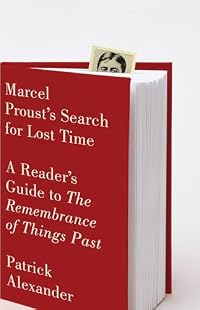
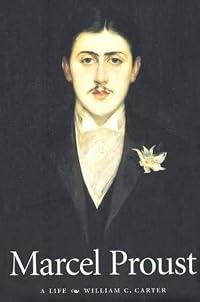
Cecrow A different, earlier look at the Fauborge Saint-Germain.
Member Reviews
Como dije antes: En absoluta mentira que en este tomo no pasa nada. El tema, claro, es que los momentos de intensidad están algonodados por una enorme plétora de reuniones sociales infumables, con personas infumables que conversan de cuestiones totalmente infumables. Y eso está bien. Está bien porque este es el tomo del mundo de las apariencias. El momento donde la adolescencia debe ir recesecándose para abrir paso al don de mentir, caretear y operar. Donde ser del todo honesto o sincero es un error garrafal, en especial cuando se mueve uno en ámbitos en los que cada paso en falso se castiga con el oprobio en off y una mácula venenosa.
Pero en este libro pasa de todo, y todo lo que pasa, termina en desilusión. Algo muere después show more de cada reconocimiento. El beso a Albertina mata la ilusión de su piel. El antisemitismo de Oriana mata la idealización de Marcel sobre su persona. "El mundo de Guermantes" no es el mundo del arte, sinod e los artistas. Esos que no deberíamos conocer para no restar puntos a su obra. Un ámbito de snobs y de envidiosos. De puñales por la espalda, de anécdotas inventadas para desprestigiar al otro.
El mundo de Guermantes arranca con un Marcel fascinado con la música en el teatro, revienta sus ilusiones (no en forma trágica, sino al sumar al protagonista a ese mundo de frivolidad), transita por el deceso imprevisto de su abuela, la mayor conexión que tenía con la infancia y termina con la muerte de Swann, una suerte de último héroe idealizado.
Nota aparte: Me resultó inquietantemente parecido a los capítulos de Rayuela en los que conversan de escritores (entre ellos Proust) mientras el bebé la queda. Debo estar descubriendo la pólvora, pero ¿supondré que esto Cortázar lo hizo adrede? show less
Pero en este libro pasa de todo, y todo lo que pasa, termina en desilusión. Algo muere después show more de cada reconocimiento. El beso a Albertina mata la ilusión de su piel. El antisemitismo de Oriana mata la idealización de Marcel sobre su persona. "El mundo de Guermantes" no es el mundo del arte, sinod e los artistas. Esos que no deberíamos conocer para no restar puntos a su obra. Un ámbito de snobs y de envidiosos. De puñales por la espalda, de anécdotas inventadas para desprestigiar al otro.
El mundo de Guermantes arranca con un Marcel fascinado con la música en el teatro, revienta sus ilusiones (no en forma trágica, sino al sumar al protagonista a ese mundo de frivolidad), transita por el deceso imprevisto de su abuela, la mayor conexión que tenía con la infancia y termina con la muerte de Swann, una suerte de último héroe idealizado.
Nota aparte: Me resultó inquietantemente parecido a los capítulos de Rayuela en los que conversan de escritores (entre ellos Proust) mientras el bebé la queda. Debo estar descubriendo la pólvora, pero ¿supondré que esto Cortázar lo hizo adrede? show less
In the same sense as a writer's writer, a comedian's comedian, etc., Proust's unnamed narrator is a daydreamer's daydreamer. His diligent categorization of minutiae goes beyond the surface detail of simple occurrence or observation, plumbing the depths of that instant in time or a passing turn of phrase, turning the everyday into the epic. This is particularly in keeping with the third volume's theme which explores his desire to enter society, symbolized by his joining the Guermantes' salon. The narrator justifies his longing, arguing that achieving the highest social standing should surround him with a correspondingly elevated degree of intelligence and originality that he wants to maximize his exposure to, but there's a hole in his show more theory. Just as with prior anticipations, he imagines it will be like diving into the deep waters of Plato's land of ideals but finds himself in the kiddie pool.
I was much more conscious this time of how the narrator lays claim to perfect knowledge. Frequently he is reading minds, relating the very thoughts of others. While the story is always told in first person, there are things only an omniscient narrator could know, such as what Rachel is actually plotting or will do when the narrator is not around, and the way that he relates two separate conversations line for line in a drawing room, happening simultaneously and at opposite room ends that he could not possibly both be following. The narrator's commentary on those conversations is also flawless. He is either the most adept and insightful person in the room even at his young and inexperienced age, or we must allow he is able to combine perfect memory with carefully studied retrospection. This first person omniscient perspective makes it difficult, if not impossible, to judge or assess the narrator as a character. I do not know if he is admiring or poking fun at society, if he is being objective or being judgmental of women, etc. Consequently, I can't even say whether I like him or empathize with him. I choose to trust him as being faithful to what he is depicting, and that's as far as it goes. To the extent that he does exist as a character, I'm not entirely convinced of the means by which he gets access to this highest echelon of society. He seems a bit surprised himself, so perhaps that will emerge later.
There's not as many observations this time on the nature of memory that hit home with me; although I've had the same experience of some sound or event happening as I'm recalling something unrelated, followed by having that become a trigger to recall the same unrelated thing on another occasion. Some other observations he makes which seem deeply insightful could be taken as critiques of fiction under a thin veneer. When he observes that old loves do not actually disappear from one's life forever but tend to crop back up, that's observant of life; or it's a critique of how many novels quietly shuffle an unwanted character offstage and conveniently never feel the need to reintroduce him/her again. Where the narrator's romances are concerned, they continue to be a haunting reflection of my own experiences in a way that is almost maddening. I have to believe he is just that good, that he can write in such a way to make anyone feel it relates to whatever their own story may be.
Proust can be funny, as when Oriane speaks of her cousin: "I always ask myself, when she comes here, whether the moment may not have arrived at which her intelligence is going to dawn, which makes me a little nervous always." (Only to be surpassed later by her brother-in-law: "You offer your hindquarters a Directory fireside chair as a Louis XIV bergere. One of these days you'll be mistaking Mme de Villeparisis' lap for the lavatory, and goodness knows what you'll do in it.") Proust can also be exasperating. As the Guermantes are sitting down to dinner and are about to engage in conversation, the narrator chooses this moment to dive into a sixty page digression about their general treatment of guests and whatnot. It might be the longest dinner party every recorded in fiction. The ending is sharp: the joke with the envelope, and then the prioritization of a social event - or the shoes to be worn to one - over the death or dying of friends. This strange ordering of values was itself about to die off, and none too soon. show less
I was much more conscious this time of how the narrator lays claim to perfect knowledge. Frequently he is reading minds, relating the very thoughts of others. While the story is always told in first person, there are things only an omniscient narrator could know, such as what Rachel is actually plotting or will do when the narrator is not around, and the way that he relates two separate conversations line for line in a drawing room, happening simultaneously and at opposite room ends that he could not possibly both be following. The narrator's commentary on those conversations is also flawless. He is either the most adept and insightful person in the room even at his young and inexperienced age, or we must allow he is able to combine perfect memory with carefully studied retrospection. This first person omniscient perspective makes it difficult, if not impossible, to judge or assess the narrator as a character. I do not know if he is admiring or poking fun at society, if he is being objective or being judgmental of women, etc. Consequently, I can't even say whether I like him or empathize with him. I choose to trust him as being faithful to what he is depicting, and that's as far as it goes. To the extent that he does exist as a character, I'm not entirely convinced of the means by which he gets access to this highest echelon of society. He seems a bit surprised himself, so perhaps that will emerge later.
There's not as many observations this time on the nature of memory that hit home with me; although I've had the same experience of some sound or event happening as I'm recalling something unrelated, followed by having that become a trigger to recall the same unrelated thing on another occasion. Some other observations he makes which seem deeply insightful could be taken as critiques of fiction under a thin veneer. When he observes that old loves do not actually disappear from one's life forever but tend to crop back up, that's observant of life; or it's a critique of how many novels quietly shuffle an unwanted character offstage and conveniently never feel the need to reintroduce him/her again. Where the narrator's romances are concerned, they continue to be a haunting reflection of my own experiences in a way that is almost maddening. I have to believe he is just that good, that he can write in such a way to make anyone feel it relates to whatever their own story may be.
Proust can be funny, as when Oriane speaks of her cousin: "I always ask myself, when she comes here, whether the moment may not have arrived at which her intelligence is going to dawn, which makes me a little nervous always." (Only to be surpassed later by her brother-in-law: "You offer your hindquarters a Directory fireside chair as a Louis XIV bergere. One of these days you'll be mistaking Mme de Villeparisis' lap for the lavatory, and goodness knows what you'll do in it.") Proust can also be exasperating. As the Guermantes are sitting down to dinner and are about to engage in conversation, the narrator chooses this moment to dive into a sixty page digression about their general treatment of guests and whatnot. It might be the longest dinner party every recorded in fiction. The ending is sharp: the joke with the envelope, and then the prioritization of a social event - or the shoes to be worn to one - over the death or dying of friends. This strange ordering of values was itself about to die off, and none too soon. show less
As Proust's narrator grows up his narrative becomes drier and less whimsical. There is a larger focus on French society and the titles within it. We move beyond intimate portraits of individuals, but Proust is careful to let his narrator grow through the people he meets and the obsessions he develops. TI was struck by the genius of lines well delivered. For example, "Perhaps another winter would level her with the dust" (p 275). In the end I found myself asking, how do you cope with a love that is held only by the games one plays? Is this a form of emotional hostage-taking? What will become of one so enamored with another?
In volume 3 of In Search of Lost Time, the narrator goes back to Paris where he finds a new woman to obsess over, the Duchesse of Guermantes. The narrator follows her on her morning walks, hoping to be noticed and invited to a dinner at her home. He does have a connection with her; his friend Robert Saint Loup is her nephew. Saint Loup is stationed at Doncieres with the army and the narrator goes down to meet up with him. There is a great section with the narrator interacting with the soldiers.
Back in Paris, there are two long set pieces at parties that sort of build on and contrast with each other. The first is at Mme Villeparisis's house and the second is at the Duchesse of Guermantes (finally!!). In the middle there is a long show more section on the death of the narrator's grandmother. The dinner party at Mme Villeparisis's is pretty entertaining to read - lots of familiar characters and a few new, talk of the Dreyfus affair, and an appearance by the highly intriguing Baron de Charlus at the end. The section at the Duchess's home was pretty boring, but it occurred to me that that was sort of the point - the fascinating-from-afar Duchesse of Guermantes is in reality quite boring and predictable (though still striking in her presence). I like how Proust chooses ordinary objects to create a thread through the novel. Some of these recur through all of the volumes (so far), like the hawthorn bush, and some are present in one section only (like the hats at the parties or the Elstir works of art). Some seem to have some deep significance and I think that some really are just memory triggers. It's a neat effect.
I'm really enjoying this book. This volume was very character-driven which was a little easier to read than some of the dreamier diversions in the previous two volumes and it was a nice change. I'm still very much seeing the work as a whole and not as separate volumes. I kind of want to go right on to the next volume, but as I have some other reading plans in July, I think I'll stick with my schedule and wait til August. show less
Back in Paris, there are two long set pieces at parties that sort of build on and contrast with each other. The first is at Mme Villeparisis's house and the second is at the Duchesse of Guermantes (finally!!). In the middle there is a long show more section on the death of the narrator's grandmother. The dinner party at Mme Villeparisis's is pretty entertaining to read - lots of familiar characters and a few new, talk of the Dreyfus affair, and an appearance by the highly intriguing Baron de Charlus at the end. The section at the Duchess's home was pretty boring, but it occurred to me that that was sort of the point - the fascinating-from-afar Duchesse of Guermantes is in reality quite boring and predictable (though still striking in her presence). I like how Proust chooses ordinary objects to create a thread through the novel. Some of these recur through all of the volumes (so far), like the hawthorn bush, and some are present in one section only (like the hats at the parties or the Elstir works of art). Some seem to have some deep significance and I think that some really are just memory triggers. It's a neat effect.
I'm really enjoying this book. This volume was very character-driven which was a little easier to read than some of the dreamier diversions in the previous two volumes and it was a nice change. I'm still very much seeing the work as a whole and not as separate volumes. I kind of want to go right on to the next volume, but as I have some other reading plans in July, I think I'll stick with my schedule and wait til August. show less
Neste terceiro volume de Em busca do tempo perdido, Marcel Proust substitui seus amores passados pelo fascínio pela duquesa de Guermantes, dama da alta aristocracia francesa, linda, culta, esnobe. Mais velha do que o jovem admirador, ela o ignora nos "encontros" tramados por ele nas ruas de Paris.
Boa parte da narrativa, porém, é ambientada nos suntuosos salões da elite parisiense, disputado por aristocratas de toda a Europa. Proust consegue ser aceito nas recepções da duquesa, que vive um casamento fracassado mas não perde a pose no ambiente fútil de seus chás e jantares.
Fofocas, intrigas, bastidores do mundo dos teatros e das cortesãs, maneira elegante de chamar as prostitutas, como hoje se fala em garota de programa. Nada show more escapa ao autor, atento ao rococó dos olhares e gestos, à arrogância, inveja e despeito que permeava as relações nas grandes recepções.
O autor dedica uma página e meia à descrição do gestual quase ritualístico para os Guermantes apenas cumprimentarem alguém. Havia como que uma coreografia de maneiras afetadas para cada "subgrupo" da família, que envolvia passos, olhares e gestos de diferentes variações de esnobismo.
Proust elogia trajes e se fascina com algumas situações, mas não passa o tempo todo deslumbrado. E sabe ser bem maldoso e ferino nos comentários, como quando compara a presença e trajes da duquesa com a senhora de Cambremer "com um penacho de carro fúnebre verticalmente erguido nos cabelos". E tem suas tiradas de humor, como ao falar do marquês de Palancy, que parecia estar "dormindo, nadando, pondo um ovo ou simplesmente respirando".
A leitura de O caminho de Guermantes fluiu melhor para mim do que nos dois primeiros livros, possivelmente por estar mais habituado ao estilo de Proust e vários dos personagens já serem conhecidos. As notas de rodapé da edição da Editora Globo ajudam a contextualizar pessoas reais citadas pelo autor, ou aquelas que lhe serviram de referência. Há frequentes alusões a memórias de escritores e aristocratas do passado, citações e referências a textos literários, principalmente Victor Hugo. E um bom espaço dedicado à discussão sobre o caso Dreyfus, célebre episódio de acusação de traição e uma onda anti-semita na França. A tradução é de Mario Quintana.
Além de dissecar alma e exterior dos personagens, Proust põe sua sensibilidade e capacidade descritiva a serviço de obras de arte - principalmente pinturas - que surgem ao longo de O caminho de Guermantes. Suas observações acerca de um quadro equivalem a uma aula sobre arte. Curioso também como o tempo passa, a tecnologia oferece novas alternativas, mas os hábitos não mudam. Na referência a uma pintura, o autor fala como o personagem fica feliz apenas porque jantou com alguém cujo antepassado foi retratado em quadro.
Há momentos tocantes, como a doença da avó do autor, uma de suas pessoas mais queridas. Ela também dá ensejo para Proust falar sobre uma novidade, o telefone. A tentativa de conversar com a avó pelo aparelho, um canal ainda precário, não é nada fácil, mas a descrição da nova tecnologia é poética.
Se gostei de O caminho de Guermantes? Muito. Ainda não cheguei à metade de Em busca do tempo perdido, mas já deu para sentir porque os leitores se deixam fascinar pela obra de Marcel Proust. show less
Boa parte da narrativa, porém, é ambientada nos suntuosos salões da elite parisiense, disputado por aristocratas de toda a Europa. Proust consegue ser aceito nas recepções da duquesa, que vive um casamento fracassado mas não perde a pose no ambiente fútil de seus chás e jantares.
Fofocas, intrigas, bastidores do mundo dos teatros e das cortesãs, maneira elegante de chamar as prostitutas, como hoje se fala em garota de programa. Nada show more escapa ao autor, atento ao rococó dos olhares e gestos, à arrogância, inveja e despeito que permeava as relações nas grandes recepções.
O autor dedica uma página e meia à descrição do gestual quase ritualístico para os Guermantes apenas cumprimentarem alguém. Havia como que uma coreografia de maneiras afetadas para cada "subgrupo" da família, que envolvia passos, olhares e gestos de diferentes variações de esnobismo.
Proust elogia trajes e se fascina com algumas situações, mas não passa o tempo todo deslumbrado. E sabe ser bem maldoso e ferino nos comentários, como quando compara a presença e trajes da duquesa com a senhora de Cambremer "com um penacho de carro fúnebre verticalmente erguido nos cabelos". E tem suas tiradas de humor, como ao falar do marquês de Palancy, que parecia estar "dormindo, nadando, pondo um ovo ou simplesmente respirando".
A leitura de O caminho de Guermantes fluiu melhor para mim do que nos dois primeiros livros, possivelmente por estar mais habituado ao estilo de Proust e vários dos personagens já serem conhecidos. As notas de rodapé da edição da Editora Globo ajudam a contextualizar pessoas reais citadas pelo autor, ou aquelas que lhe serviram de referência. Há frequentes alusões a memórias de escritores e aristocratas do passado, citações e referências a textos literários, principalmente Victor Hugo. E um bom espaço dedicado à discussão sobre o caso Dreyfus, célebre episódio de acusação de traição e uma onda anti-semita na França. A tradução é de Mario Quintana.
Além de dissecar alma e exterior dos personagens, Proust põe sua sensibilidade e capacidade descritiva a serviço de obras de arte - principalmente pinturas - que surgem ao longo de O caminho de Guermantes. Suas observações acerca de um quadro equivalem a uma aula sobre arte. Curioso também como o tempo passa, a tecnologia oferece novas alternativas, mas os hábitos não mudam. Na referência a uma pintura, o autor fala como o personagem fica feliz apenas porque jantou com alguém cujo antepassado foi retratado em quadro.
Há momentos tocantes, como a doença da avó do autor, uma de suas pessoas mais queridas. Ela também dá ensejo para Proust falar sobre uma novidade, o telefone. A tentativa de conversar com a avó pelo aparelho, um canal ainda precário, não é nada fácil, mas a descrição da nova tecnologia é poética.
Se gostei de O caminho de Guermantes? Muito. Ainda não cheguei à metade de Em busca do tempo perdido, mas já deu para sentir porque os leitores se deixam fascinar pela obra de Marcel Proust. show less
The twittering of the birds at daybreak sounded insipid to Francoise.
With this exquisite opening, Marcel Proust plunges us into the third volume of seven, Le Côté de Guermantes (The Guermantes Way), which seems to be the only one of the seven books that is consistently titled across all English translations. (My reviews of the first two books can be found here and here. The third volume of the book charts the early-twentysomething narrator as he makes his way further into the twisted depths of French society, and navigates a more complex world than that of his somewhat sheltered life previously seen at Combray and Balbec. The first two novels charted the narrator's childhood and adolescence, his first love, his first show more falling-out-of-love, his many anxieties, his desire to be a writer, and the agonisingly slow drift toward gaining a realistic sense of the world. The third novel seems primarily interested in two areas: the shattering of the narrator's illusions, and the superficial barriers that stand between humans in a society and their dreams. Yet, like the quote above, I occasionally wonder if the novel hasn't turned too far outward from the narrator at times, to the extent where his presence in some scenes barely justifies them.
Those years of my earliest childhood are no longer a part of myself; they are external to me; I can learn nothing of them save...from the accounts given me by other people.
One could perhaps divide the novel up into several parts, the first being the analysis of a new life at the Hotel de Guermantes. As we've seen in the previous volumes, the narrator has always defined places by their names, and the discovery that reality and image don't always match up is the first sign that his adult life will be one of disappointment (even if much of the disappointment seems to stem from his own neuroses!). As you'd expect, this new location allows for a number of appealing character sketches, from the class-consciousness of the 19th century theatre to a series of ultimately futile walks the narrator takes hoping to run into his latest crush, the (much-older) Duchess, and - most delightfully, as ever - that old faithful, Francoise. My favourite description of her still rings true today for the Francoises of the world: she'll never trust a doctor as long as she lives, but she'll believe any quack in the newspaper who claims to have the "ultimate cure". I must admit, I keep forgetting that the narrator is now in his twenties. A character with no job and a naive obsession with the aristocracy seems so juvenile in our modern age, that I have to remind myself every 100 pages that the narrator isn't still 12 years old! It speaks volumes about Marcel Proust's own childhood that the narrator's parents never pressure him to find employment, nor does he seem particularly concerned about his future. In fact, that's the key difference between Guermantes and the previous novels: the narrator spends two-thirds of the book happy.
If we were expected to love all the people we find attractive, life would be pretty ghastly, wouldn't it? - Rachel
Perhaps this contentment is a sign of the narrator reaching a certain age. With access to liquor, freedom of the reins, and women, he's forgetting his self obligation to write and find a place in the world. This superficial happiness is writ large in the design of the book, alternating passages of personal drama with lengthy social experiences that the narrator often finds stimulating but ultimately mediocre. Next, we're off to Doncieres, where Saint-Loup is stationed. It's here that the book starts to become a bit of a slog, with the narrator's obsession with the Duchess (that has seemingly blossomed into a romantic crush) occasioning multi-page discussions on the nature of sleep among other equally enlightening essays. Fin-de-siècle Paris is divided by talk of war, by crumbling notions of class, and by the lightning-rod Dreyfus Affair that assembles armies along lines of class and ethnicity, not to mention expecting people to actually take a stand on the morality of their country's policies, a problem we are still facing today. Many of these issues being now unknown to almost everyone of my generation, and discussed in such detail yet - often - without mentioning the specifics (since the book's original intended audience would have been well aware), the Doncieres sequence and its successor at Mme de Villeparisis' self-titled "salon" are perhaps the hardest treks yet for the Proustian newcomer.
Our imagination ... like a barrel-organ out of order, which always plays some other tune than that shown on its card.
Of course, that's not to say these sections aren't full of delightful lines and deep character analysis. Saint-Loup's sexuality certainly comes in for some serious questioning, and the nature of platonic male friendship is well examined, as are those "third-tier" social groups at Mme de Villeparisis', with further cameos by well-known characters from the previous volumes, including Bloch, Legrandin, and the famed Odette de Crecy (hey, remember when she was all we could talk about?). The sense of this work as one giant tapestry is now becoming clear; it's fascinating to think how the books must have seemed to the contemporary Parisian, being published every couple of years and seeming, surely, much more free-form. Amongst all of this are brief trips into little worlds, such as the vicious wannabe actresses who attend shows just to shout unpleasant things at the up-and-coming star on the stage and ruin her career, or the return of the haughty prostitute Rachel (When-from-the-Lord) who perhaps signifies the narrator's descent into Sodom and Gomorrah, and who seems to be largely using poor Saint-Loup, but whom we also learn will one day become justifiably famous in her own right! The complexity of life in a society comes across well, although at the same time some of the morsels of plots (for example, Saint-Loup's potential engagement to a Mlle d'Ambresac) scamper by, leaving us only aware that they are seeds of something presumably larger in a later volume. If there's one problem with this novel, it's that - for the first time - things are really starting to feel like they're part of a larger whole. It's a worry that all serialised TV shows have to face at some point: learning to write both for the series and for the moment.
Why naturally, Madame, one cannot have... every form of mental derangement.
The most powerful and amusing section of the novel is at its centre, the illness of the narrator's grandmother. Not only does it open with a truly marvelous paean to the telephone, but the section features all of Proust's greatest strengths. There's a tremendous amount of satire in the gallery of grotesques who pass through as medical examiners, there are social mores picked apart when all strata of society pay their respects on the very ill old lady, and fantastic character analysis, particularly in the moments when - after his grandmother's stroke - the narrator is faced with an array of complicated social cues. Getting her home safely and in a dignified manner is paramount, but at the same time, he is learning to prioritise others over his own petty needs of the day, and he is also incredibly self-conscious about seeming to be caring without actually treating her like a child. It is a microcosmic view of the delicate balance life becomes as we gradually extend more connections out into the world. On top of this, the grand intermingling of the sublime and the ridiculous, as they stop at a public lavatory for his grandmother to be sick, while the narrator chats with the lavatory-keeper, a scruffy woman who rules the place with an iron fist. Trying to politely ignore the fact that your sick grandmother has been in the toilet for half an hour wouldn't feel out of place on Curb Your Enthusiasm. This sequence also perhaps provides us with a bunch of interesting historical information of the time. Grandmother's sisters send their condolences, but never does it seem that they are being petty; it's just that they are likely very old themselves, and the carriage ride would be inefficient, impractical, and possibly just result in more funerals.
Before I go on, I must echo something I said in the last review. I appreciate these attractive, well-typed Vintage editions, I really do. At the same time, there are endless cultural references and cultural implications that can barely, if at all, be appreciated by members of my generation. Footnotes are always a balance between providing "too much" and "too little", and I realise this is not a university annotated edition. Volume 6 of the Vintage editions contains the Guide to Proust which includes most of the necessary references and thematic catalogues, so please seek that out. Still, it is very confusing. For instance, as an opera buff, I can appreciate the cheeky satire of someone who claims to love Wagner, but unwittingly describes only the parts that are most accessible; or simply to know the names of Strauss, Auber, etc. For none of these passages to be annotated or at least briefly clarified in the footnotes makes embarking on the journey a challenge nevertheless, more than 90 years after the novel was first published. I try to read things from the point of view of someone less educated than myself, and I see only a murky morass of confusion.
The truth has no need to be uttered to be made apparent.
Anyhow, the second half of the novel is harder to read no matter which way you slice it. Much of the good stuff is parceled out to presumably be picked up again in Volume IV. That creep Charlus keeps trying to hit on the oblivious narrator (at one point taking a drunken cab-boy home for what I can only assume is not milk and cookies); Saint-Loup keeps proving his friendship in decidedly adorable ways; Albertine, now older and more actively flirtatious, tries to get back into the narrator's life but chooses the worst time; and threats of war bite at the edges of French society. The narrator himself remains perhaps a little too oblivious, both to Albertine's feelings and to Charlus'... ways, but I'm trying not to read it from a purely 2015 perspective, so perhaps this is more acceptable for action taking place in around 1895. The narrator genuinely seems to think that he has some kind of Socratic mentor relationship with the older man. As for Albertine, well, despite the narrator spending countless hours pondering women, he doesn't really have a grasp of what a relationship is like just yet. (The most heartbreaking line in the novel is when the narrator speaks briefly of Mme de Stermaria, a minor but momentary figure in his heart: It was not she that I loved, but it might well have been. Just perfectly upsetting!)
The set-piece of the book, however, is that which everyone talks about when discussing The Guermantes Way, a social dinner at the home of the Duchess de Guermantes. Amongst the endless battering of social commentary, the narrator begins to properly see through many of these allegedly highly-valuable people. Many of them have horrible tastes, either because they choose what they believe is the most acceptable thing to like, or because they believe themselves to be tastemakers and in fact they're already 30 years behind the curve. Adorably, the narrator begins to suspect they're being daffy for his sake, because they can't discuss real things with a strange young man at the table - surely it can't just be because they are actually daffy! If there's one part of the Search thus far that could use some editing, it is surely this. By the time the narrator is detailing the minutest differences between the Guermantes and their lesser relatives, one wonders how much more of French society we can possibly imbibe. It's perfectly clear that Proust is showing us this superficiality precisely to make that point: the Duchess makes an (admittedly mildly amusing) pun about "Teaser Augustus" that has everyone in stitches for days, and it's becoming clear the narrator is never going to discover his creative muse, nor his sense of an individual personality, until he can see through these empty lives. At the same time, one begins to wonder if even the great novelist's senses for lengthy sentences may have been wrong on occasion.
Our social existence, like an artist's studio, is filled with abandoned sketches...
Of course, who am I to disparage Marcel Proust in any way? The Guermantes Way is still stuffed full of everything that makes him such a rich and rewarding writer. His acute psychological descriptions, from the Princess down to the lavatory keeper, never cease to fascinate. I particularly enjoy his description of hearing from a noblewoman about what is happening in her life during a "visit", comparing it to a letter by Pliny: it's not really addressed to you, it has been written merely for show. He describes the old-fashioned speech of Mme de Guermantes as resisting the "composite patchwork of modern speech". The book is deliciously written from Proust's haunting description of the fog on the night before the ill-fated date with Mme de Stermaria to the mocking of those literary coteries "where everyone has the same way of pronouncing, enunciating and, thus, of thinking". (There are TV programs and books that could learn from this lesson today.)
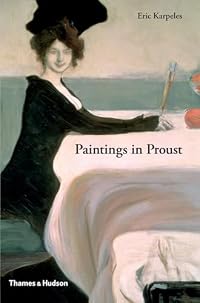
Before I finish, I should briefly plug the wonderful book Paintings in Proust: A Visual Companion to In Search of Lost Time, which contains reproductions of almost all the art mentioned in the Search, an invaluable resource to help the reader interpret the references and world of the narrator's Paris.
The novel ends with a particularly strong sequence that is deeply reminiscent of the earlier novels in its pointful (and pointed) atmosphere and analysis. After escaping from the Belle Epoque dinner, and briefly displaying his manly arrogance for a very-turned-on-but-twisted Charlus, the narrator finds himself visiting the Duc and Duchess. They are a fascinating couple, not perhaps as psychologically nuanced as Odette and Swann, but perhaps more likable. Nevertheless, the arrival of Swann brings some bad news which the pair treat with a cruel politeness. It really is the ultimate indicator of the barbarism of "polite society" and so perfectly depicted by Proust. It feels as if every page of The Guermantes Way has been leading up to the point where the narrator is able to witness a conversation between three people, accurately gauge each individual's part in it, and emerge with a much more graphic understanding of how society plays a role in that conversation, and how each person fails to properly "get" the others.
Did I love the book? Perhaps not love. But its tremendous descriptions of an entire society captured my heart and my imagination, and make me particularly eager to follow on to Sodom and Gomorrah. The whole book, with its analysis of this culture, reminded me of the concept of elegant decay and, while much is left unexplained at this juncture, it is clear that everything is intentional. Proust's endless, cascading sentences are of a whole with his fragmented character portraits. Like the young narrator himself, delicate but brilliant. While this book wasn't always easy to get through, it was buoyed by the strength of the Search overall, and the knowledge that we are now halfway through the series, and all of the pieces of the puzzle of the narrator's life are coming into view. Onward and upward!
You'll bury us all! - Duc de Guermantes show less
With this exquisite opening, Marcel Proust plunges us into the third volume of seven, Le Côté de Guermantes (The Guermantes Way), which seems to be the only one of the seven books that is consistently titled across all English translations. (My reviews of the first two books can be found here and here. The third volume of the book charts the early-twentysomething narrator as he makes his way further into the twisted depths of French society, and navigates a more complex world than that of his somewhat sheltered life previously seen at Combray and Balbec. The first two novels charted the narrator's childhood and adolescence, his first love, his first show more falling-out-of-love, his many anxieties, his desire to be a writer, and the agonisingly slow drift toward gaining a realistic sense of the world. The third novel seems primarily interested in two areas: the shattering of the narrator's illusions, and the superficial barriers that stand between humans in a society and their dreams. Yet, like the quote above, I occasionally wonder if the novel hasn't turned too far outward from the narrator at times, to the extent where his presence in some scenes barely justifies them.
Those years of my earliest childhood are no longer a part of myself; they are external to me; I can learn nothing of them save...from the accounts given me by other people.
One could perhaps divide the novel up into several parts, the first being the analysis of a new life at the Hotel de Guermantes. As we've seen in the previous volumes, the narrator has always defined places by their names, and the discovery that reality and image don't always match up is the first sign that his adult life will be one of disappointment (even if much of the disappointment seems to stem from his own neuroses!). As you'd expect, this new location allows for a number of appealing character sketches, from the class-consciousness of the 19th century theatre to a series of ultimately futile walks the narrator takes hoping to run into his latest crush, the (much-older) Duchess, and - most delightfully, as ever - that old faithful, Francoise. My favourite description of her still rings true today for the Francoises of the world: she'll never trust a doctor as long as she lives, but she'll believe any quack in the newspaper who claims to have the "ultimate cure". I must admit, I keep forgetting that the narrator is now in his twenties. A character with no job and a naive obsession with the aristocracy seems so juvenile in our modern age, that I have to remind myself every 100 pages that the narrator isn't still 12 years old! It speaks volumes about Marcel Proust's own childhood that the narrator's parents never pressure him to find employment, nor does he seem particularly concerned about his future. In fact, that's the key difference between Guermantes and the previous novels: the narrator spends two-thirds of the book happy.
If we were expected to love all the people we find attractive, life would be pretty ghastly, wouldn't it? - Rachel
Perhaps this contentment is a sign of the narrator reaching a certain age. With access to liquor, freedom of the reins, and women, he's forgetting his self obligation to write and find a place in the world. This superficial happiness is writ large in the design of the book, alternating passages of personal drama with lengthy social experiences that the narrator often finds stimulating but ultimately mediocre. Next, we're off to Doncieres, where Saint-Loup is stationed. It's here that the book starts to become a bit of a slog, with the narrator's obsession with the Duchess (that has seemingly blossomed into a romantic crush) occasioning multi-page discussions on the nature of sleep among other equally enlightening essays. Fin-de-siècle Paris is divided by talk of war, by crumbling notions of class, and by the lightning-rod Dreyfus Affair that assembles armies along lines of class and ethnicity, not to mention expecting people to actually take a stand on the morality of their country's policies, a problem we are still facing today. Many of these issues being now unknown to almost everyone of my generation, and discussed in such detail yet - often - without mentioning the specifics (since the book's original intended audience would have been well aware), the Doncieres sequence and its successor at Mme de Villeparisis' self-titled "salon" are perhaps the hardest treks yet for the Proustian newcomer.
Our imagination ... like a barrel-organ out of order, which always plays some other tune than that shown on its card.
Of course, that's not to say these sections aren't full of delightful lines and deep character analysis. Saint-Loup's sexuality certainly comes in for some serious questioning, and the nature of platonic male friendship is well examined, as are those "third-tier" social groups at Mme de Villeparisis', with further cameos by well-known characters from the previous volumes, including Bloch, Legrandin, and the famed Odette de Crecy (hey, remember when she was all we could talk about?). The sense of this work as one giant tapestry is now becoming clear; it's fascinating to think how the books must have seemed to the contemporary Parisian, being published every couple of years and seeming, surely, much more free-form. Amongst all of this are brief trips into little worlds, such as the vicious wannabe actresses who attend shows just to shout unpleasant things at the up-and-coming star on the stage and ruin her career, or the return of the haughty prostitute Rachel (When-from-the-Lord) who perhaps signifies the narrator's descent into Sodom and Gomorrah, and who seems to be largely using poor Saint-Loup, but whom we also learn will one day become justifiably famous in her own right! The complexity of life in a society comes across well, although at the same time some of the morsels of plots (for example, Saint-Loup's potential engagement to a Mlle d'Ambresac) scamper by, leaving us only aware that they are seeds of something presumably larger in a later volume. If there's one problem with this novel, it's that - for the first time - things are really starting to feel like they're part of a larger whole. It's a worry that all serialised TV shows have to face at some point: learning to write both for the series and for the moment.
Why naturally, Madame, one cannot have... every form of mental derangement.
The most powerful and amusing section of the novel is at its centre, the illness of the narrator's grandmother. Not only does it open with a truly marvelous paean to the telephone, but the section features all of Proust's greatest strengths. There's a tremendous amount of satire in the gallery of grotesques who pass through as medical examiners, there are social mores picked apart when all strata of society pay their respects on the very ill old lady, and fantastic character analysis, particularly in the moments when - after his grandmother's stroke - the narrator is faced with an array of complicated social cues. Getting her home safely and in a dignified manner is paramount, but at the same time, he is learning to prioritise others over his own petty needs of the day, and he is also incredibly self-conscious about seeming to be caring without actually treating her like a child. It is a microcosmic view of the delicate balance life becomes as we gradually extend more connections out into the world. On top of this, the grand intermingling of the sublime and the ridiculous, as they stop at a public lavatory for his grandmother to be sick, while the narrator chats with the lavatory-keeper, a scruffy woman who rules the place with an iron fist. Trying to politely ignore the fact that your sick grandmother has been in the toilet for half an hour wouldn't feel out of place on Curb Your Enthusiasm. This sequence also perhaps provides us with a bunch of interesting historical information of the time. Grandmother's sisters send their condolences, but never does it seem that they are being petty; it's just that they are likely very old themselves, and the carriage ride would be inefficient, impractical, and possibly just result in more funerals.
Before I go on, I must echo something I said in the last review. I appreciate these attractive, well-typed Vintage editions, I really do. At the same time, there are endless cultural references and cultural implications that can barely, if at all, be appreciated by members of my generation. Footnotes are always a balance between providing "too much" and "too little", and I realise this is not a university annotated edition. Volume 6 of the Vintage editions contains the Guide to Proust which includes most of the necessary references and thematic catalogues, so please seek that out. Still, it is very confusing. For instance, as an opera buff, I can appreciate the cheeky satire of someone who claims to love Wagner, but unwittingly describes only the parts that are most accessible; or simply to know the names of Strauss, Auber, etc. For none of these passages to be annotated or at least briefly clarified in the footnotes makes embarking on the journey a challenge nevertheless, more than 90 years after the novel was first published. I try to read things from the point of view of someone less educated than myself, and I see only a murky morass of confusion.
The truth has no need to be uttered to be made apparent.
Anyhow, the second half of the novel is harder to read no matter which way you slice it. Much of the good stuff is parceled out to presumably be picked up again in Volume IV. That creep Charlus keeps trying to hit on the oblivious narrator (at one point taking a drunken cab-boy home for what I can only assume is not milk and cookies); Saint-Loup keeps proving his friendship in decidedly adorable ways; Albertine, now older and more actively flirtatious, tries to get back into the narrator's life but chooses the worst time; and threats of war bite at the edges of French society. The narrator himself remains perhaps a little too oblivious, both to Albertine's feelings and to Charlus'... ways, but I'm trying not to read it from a purely 2015 perspective, so perhaps this is more acceptable for action taking place in around 1895. The narrator genuinely seems to think that he has some kind of Socratic mentor relationship with the older man. As for Albertine, well, despite the narrator spending countless hours pondering women, he doesn't really have a grasp of what a relationship is like just yet. (The most heartbreaking line in the novel is when the narrator speaks briefly of Mme de Stermaria, a minor but momentary figure in his heart: It was not she that I loved, but it might well have been. Just perfectly upsetting!)
The set-piece of the book, however, is that which everyone talks about when discussing The Guermantes Way, a social dinner at the home of the Duchess de Guermantes. Amongst the endless battering of social commentary, the narrator begins to properly see through many of these allegedly highly-valuable people. Many of them have horrible tastes, either because they choose what they believe is the most acceptable thing to like, or because they believe themselves to be tastemakers and in fact they're already 30 years behind the curve. Adorably, the narrator begins to suspect they're being daffy for his sake, because they can't discuss real things with a strange young man at the table - surely it can't just be because they are actually daffy! If there's one part of the Search thus far that could use some editing, it is surely this. By the time the narrator is detailing the minutest differences between the Guermantes and their lesser relatives, one wonders how much more of French society we can possibly imbibe. It's perfectly clear that Proust is showing us this superficiality precisely to make that point: the Duchess makes an (admittedly mildly amusing) pun about "Teaser Augustus" that has everyone in stitches for days, and it's becoming clear the narrator is never going to discover his creative muse, nor his sense of an individual personality, until he can see through these empty lives. At the same time, one begins to wonder if even the great novelist's senses for lengthy sentences may have been wrong on occasion.
Our social existence, like an artist's studio, is filled with abandoned sketches...
Of course, who am I to disparage Marcel Proust in any way? The Guermantes Way is still stuffed full of everything that makes him such a rich and rewarding writer. His acute psychological descriptions, from the Princess down to the lavatory keeper, never cease to fascinate. I particularly enjoy his description of hearing from a noblewoman about what is happening in her life during a "visit", comparing it to a letter by Pliny: it's not really addressed to you, it has been written merely for show. He describes the old-fashioned speech of Mme de Guermantes as resisting the "composite patchwork of modern speech". The book is deliciously written from Proust's haunting description of the fog on the night before the ill-fated date with Mme de Stermaria to the mocking of those literary coteries "where everyone has the same way of pronouncing, enunciating and, thus, of thinking". (There are TV programs and books that could learn from this lesson today.)
Before I finish, I should briefly plug the wonderful book Paintings in Proust: A Visual Companion to In Search of Lost Time, which contains reproductions of almost all the art mentioned in the Search, an invaluable resource to help the reader interpret the references and world of the narrator's Paris.
The novel ends with a particularly strong sequence that is deeply reminiscent of the earlier novels in its pointful (and pointed) atmosphere and analysis. After escaping from the Belle Epoque dinner, and briefly displaying his manly arrogance for a very-turned-on-but-twisted Charlus, the narrator finds himself visiting the Duc and Duchess. They are a fascinating couple, not perhaps as psychologically nuanced as Odette and Swann, but perhaps more likable. Nevertheless, the arrival of Swann brings some bad news which the pair treat with a cruel politeness. It really is the ultimate indicator of the barbarism of "polite society" and so perfectly depicted by Proust. It feels as if every page of The Guermantes Way has been leading up to the point where the narrator is able to witness a conversation between three people, accurately gauge each individual's part in it, and emerge with a much more graphic understanding of how society plays a role in that conversation, and how each person fails to properly "get" the others.
Did I love the book? Perhaps not love. But its tremendous descriptions of an entire society captured my heart and my imagination, and make me particularly eager to follow on to Sodom and Gomorrah. The whole book, with its analysis of this culture, reminded me of the concept of elegant decay and, while much is left unexplained at this juncture, it is clear that everything is intentional. Proust's endless, cascading sentences are of a whole with his fragmented character portraits. Like the young narrator himself, delicate but brilliant. While this book wasn't always easy to get through, it was buoyed by the strength of the Search overall, and the knowledge that we are now halfway through the series, and all of the pieces of the puzzle of the narrator's life are coming into view. Onward and upward!
You'll bury us all! - Duc de Guermantes show less
What a combination of beautiful scenes, near slapstick comedy, sharp social and political insight and too often endlessly boring accounts of upper class conversations. The section describing his grandmother's death is incredibly moving, the most lovely writing in the three volumes I've read so far. His detailed descriptions of the salon is worthy of any ethnographer using the participant observation method of research. In fact, while I was working my way through the famous dinner at the Guermantes' I kept thinking of Proust as a sociologist as opposed to novelist, though the two professions are quite complementary so maybe he can wear both hats. After a bit of a well-earned break I will most definitely be forging on to volume 4.
Members
- Recently Added By
Lists

1001 Books You Must Read Before You Die
1,448 works; 1,132 members

Top-Rated Books on LibraryThing
272 works; 117 members

In and About the 1920s
181 works; 31 members
Folio Society
831 works; 53 members

Top Five Books of 2016
795 works; 228 members

F. Scott Fitzgerald's 22 Essential Books (1936)
22 works; 3 members
1920s
141 works; 6 members

Books Read in 2020
4,379 works; 124 members

2021
26 works; 1 member

Mustich's 1000 Books to Read Before You Die: A Life Changing List
1,001 works; 18 members
Le Monde - Les 100 livres du siècle
121 works; 25 members
Talk Discussions
Past Discussions
In Search of Lost Time - Volume 3: The Guermante's Way in 1001 Books to read before you die (May 2014)
***Group Read: The Guermantes Way in 75 Books Challenge for 2011 (February 2011)
Author Information

867+ Works 47,772 Members
Proust is one of the seminal figures in modern literature, matched only in stature by Joyce, Woolf, Mann and Kafka. By the last decade of the 19th century, the charming and ambitious Proust, born into a wealthy bourgeois family, was already a famous Paris socialite who attended the most fashionable salons of the day. The death of his parents in show more the early years of the 20th century, coupled with his own increasingly ill health, made of Proust a recluse who confined himself to his cork-lined bedroom on the Boulevard Haussmann. There he concentrated on the composition of his great masterpiece, Remembrance of Things Past (1913-27). In recent years, it was discovered that he had already prepared a first draft of the work in the 1890s in Jean Santeuil, which was only published posthumously in 1952. Remembrance of Things Past resists summary. Seeming at turns to be fiction, autobiography, and essay, Remembrance is a vast meditation on the relationship between time, memory, and art. In it the narrator, who bears the same first name as the author, attempts to reconstruct his life from early childhood to middle age. In the process, he surveys French society at the turn of the century and describes the eventual decline of the aristocracy in the face of the rising middle class. The process of reconstruction of Marcel's past life is made possible by the psychological device of involuntary memory; according to this theory, all of our past lies hidden within us only to be rediscovered and brought to the surface by some unexpected sense perception. In the final volume of the work, the narrator, who has succeeded in recapturing his past, resolves to preserve it through the Work of Art, his novel. He died of pneumonia and a pulmonary abscess in 1922. He was buried in the Père Lachaise Cemetery in Paris. (Bowker Author Biography) show less
Some Editions
Awards and Honors
Series

Belongs to Publisher Series
Work Relationships
Is contained in
Has as a commentary on the text
Has as a student's study guide
Common Knowledge
- Canonical title*
- De kant van Guermantes; O caminho de Guermantes; Em Busca Do Tempo Perdido - V. 3; En busca del tiempo perdido. Tomo III
- Original title
- Â la recherche du temps perdu, 1.Le Côté de Guermantes
- Alternate titles*
- Op zoek naar de verloren tijd. 3. De kant van Guermantes
- Original publication date
- 1921
- People/Characters
- Marcel, The Narrator; Marcel's Mother; Marcel's Father; Marcel's Grandmother; Marcel's Grandfather; Françoise (show all 60); Basin de Guermantes (Duc de Guermantes); Oriane de Guermantes (Duchesse de Guermantes); Baron de Charlus (Palamè | de de Guermantes); Aimé; Albertine Simonet; Alix de Stermaria; M. de Norpois; Mme. de Norpois; Charles Morel (Charlie); Charles Swann; Professor Cottard; Dr. Dieulafoy; Dr. du Boulbon; Duc de Châtellerault; General Monserfeuil; M. Bergotte; Albert Bloch; Solomon Bloch; M. de Bréauté; M. d'Argencourt; M. de Beausergent; M. de Beautreillis; M. de Grouchy; M. de Palancy; M. Jupien; M. Legrandin; M. Pierre; M. Vallenères; Mme. Léontine Cottard; Mme. de Brissac; Mme. de Cambremer; Mme. de Grouchy; Mme. de Marsantes; Mme. de Plassac; Mme. de Tresmes; Mme. de Varambon; Mme. de Villeparisis; Mme. d'Egremont; Mme. Sazerat; Odette Swann (de Cré | cy); Poillein; Prince d'Agrigente; Prince de Borodino; Prince de Foix; Prince von Faffenheim; Princesse d'Epinay; Princesse de Guermantes; Princesse de Parme; Princesse de Silistrie; Professor E.; Rachel; Robert de Saint-Loup; Victor; Turkish Ambassadress
- Important places
- Paris, France; Doncières, Grand-Est, France; Combray, Normandy, France
- Important events
- Dreyfus Affair
- Epigraph
- Hay una nota del traductor, Carlos Manzano, que dice así:
Dedico este trabajo a la memoria de los grandes estilistas clásico-barrocos contemporáneos -Henry James, André Breton, Giorgio Bassani, Evelyn Vaugh, E.M.Ci... (show all)oran y Malcolm Lowry, con la traducción de cuyas obras llevo muchos años deleitándome. - Dedication
- A León Daudet
Al autor de Le Voyage de Shakespeare, Le Partage de l'enfant, L'Astre Noir, Fantômes et vivants, Le Monde des images y de tantas obras maestras.
Al amigo incomparable en prueba agradecimiento y admiraciÃ... (show all)³n. - First words
- The twittering of the birds at daybreak sounded insipid to Françoise.
El piar matinal de los pájaros parecía insípido a Francoise. - Last words
- (Click to show. Warning: May contain spoilers.)"Y usted no se deje impresionar por esas tonterías de los médicos, ¡qué caramba! Son unos asnos.Está usted como el Pont-Neuf. ¡Nos enterrará usted a todos!"
- Original language
- French
*Some information comes from Common Knowledge in other languages. Click "Edit" for more information.
Classifications
Statistics
- Members
- 3,153
- Popularity
- 5,486
- Reviews
- 45
- Rating
- (4.30)
- Languages
- 20 — Catalan, Czech, Danish, Dutch, English, Finnish, French, German, Greek, Hungarian, Italian, Lithuanian, Norwegian (Bokmål), Polish, Portuguese, Romanian, Russian, Spanish, Swedish, Turkish
- Media
- Paper, Audiobook, Ebook
- ISBNs
- 115
- ASINs
- 58