On This Page
Description
Father Goriot is one of French novelist Honore de Balzac's most important pieces of writing. Three lives intertwine in Paris: an old man, a criminal and a law student. The novel evokes an unstable period in France, when many were desperate to climb the social ladder into the upper classes, and it questions social institutions such as marriage. The city is an important presence in this work. Balzac was both praised and censured for his realistic portrayal of city life..
Tags
Recommendations

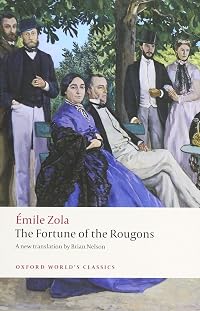

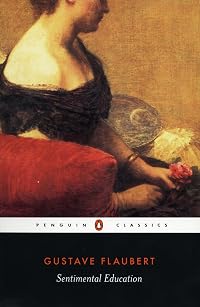
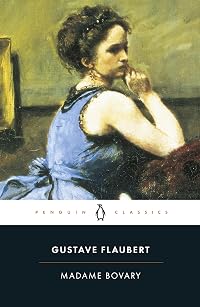

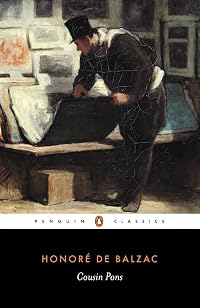
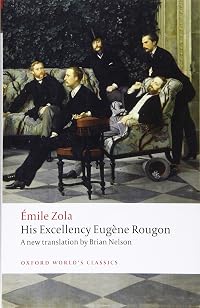
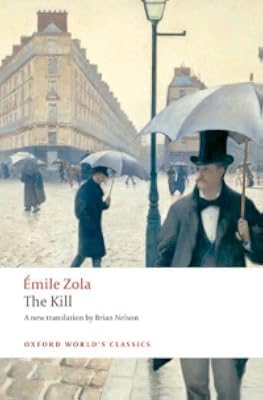

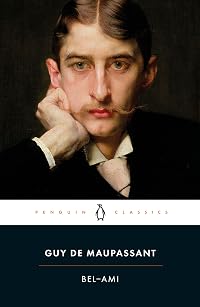
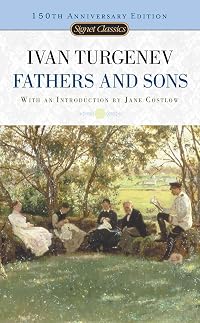

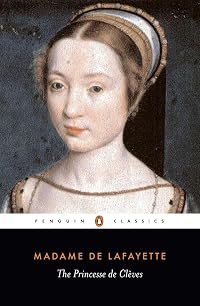
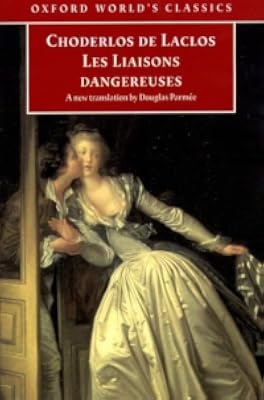




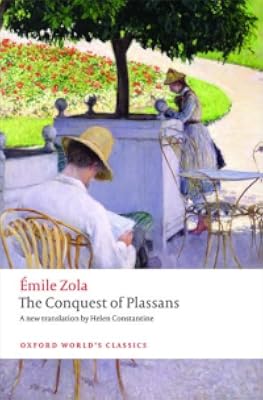
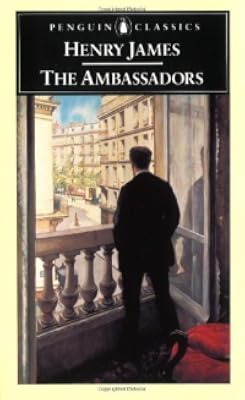







Member Recommendations


Cecrow A different look at the Fauborge Saint-Germain.
LeoRapier One of Balzac's last novels is often considered a companion piece to Cousin Bette.
Sylak More wicked females preying on foolish and easily dominated men.

susanbooks Both novels focus on community voices and tensions and revel in dissecting the pettiness of the serious drama and the seriousness of the petty drama.
Member Reviews
Just about the only thing I remembered from last time I read this, in my teens, was that Goriot was in the vermicelli business. It's odd how that sort of unimportant detail sticks in your mind!
In a way, this is the standard French novel plot, i.e. young man from the provinces comes to Paris and meets sophisticated older woman, but with two very particular twists: Goriot, the retired businessman who has sacrificed everything to launch his daughters into society and now finds himself treated like King Lear, and the elusive Vautrin, a self-made man of a different sort altogether. The very compact story makes a nice change from the long-windedness of 19th century English novelists with three volumes to fill, and so does Balzac's healthy show more cynicism: a story doesn't necessarily have to end with everyone neatly married off, and it's perfectly possible for someone to attend a sentimental deathbed scene without becoming a reformed character as a result. show less
In a way, this is the standard French novel plot, i.e. young man from the provinces comes to Paris and meets sophisticated older woman, but with two very particular twists: Goriot, the retired businessman who has sacrificed everything to launch his daughters into society and now finds himself treated like King Lear, and the elusive Vautrin, a self-made man of a different sort altogether. The very compact story makes a nice change from the long-windedness of 19th century English novelists with three volumes to fill, and so does Balzac's healthy show more cynicism: a story doesn't necessarily have to end with everyone neatly married off, and it's perfectly possible for someone to attend a sentimental deathbed scene without becoming a reformed character as a result. show less
Anyone who grew up loving Shel Silverstein's "The Giving Tree" is going to adore Pere Goriot, who drives himself into penury in support of his daughters' lavish lifestyle. But this is not Goriot's story; it belongs to the youth Eugene Rastignac's more selfish ambitions. Vautrin unleashes a poisonous speech about morality and virtue in the second chapter that I think might summarize Putin's personal philosophy these days. It justifies the taking of everything within one's grasp, and of extending that grasp as far as possible. Contrasted with this stance is Eugene's friend Bianchon, who states an opposing view in such simple, clear terms that I laughed aloud; he is Alexander's sword to Vautrin's Gordian knot (and aptly references that as show more he speaks.) Eugene is the man in the middle who honors Goriot once he understands his sacrifice, but whether he will take him as a model for himself or as a model victim remains to be seen. Foreshadowing indicates he will rise high in society - but at what price? On the strength of this one novel, Balzac has already established a place with me ahead of most other classic French authors including Hugo, Zola and Dumas; only Flaubert can contend with him until Proust comes along. I had no intention of reading more by him, but I need to reconsider. show less
In retrospect, choosing to read this on the weekend of Father's Day was a hilariously ironic decision. The titular 'Old Goriot' is a poor old man living in a realistically squalid boarding house. (I swear rented accommodation in the 21st century still recalls that of the 19th.) He has brought himself to penury by spoiling his two daughters, who have married rich, successful men. Neither daughter is happy, however, and neither appreciates their father's sacrifices. Indeed, they only visit him to try and wheedle more money. I was impressed that neither was a caricature, though, and their terrible behaviour was shown to be symptomatic of society's warped priorities.
Much of the narrative looks at this tragic situation from the point of view show more of Eugène de Rastignac, a law student neighbour of Goriot. Rastignac's story and his connection with Goriot demonstrate the terrible interplay between money, ambition, and ruthlessness. The novel starts relatively slowly, setting the scene and introducing the reader to the residents of the boarding house and their foibles. This investment in scene-setting pays off towards the end, when events build to a terrible climax involving most of the cast. I find myself using theatrical terms when describing the novel, as it had a definite play-like quality. This is by no means a criticism, as I found the novel powerful and very moving, especially at the end. In part I think it's the style of writing and emphasis on dialogue that gives a theatrical feel, I would say naturalistic but for the odd soliloquy. Also, the limited number of locations - events take place either in the boarding house itself or the drawing rooms and ballrooms of wealthy women.
Balzac appears deeply cynical about Parisian society in its callousness and disregard for the past. The lesson powerfully rammed home by the end of the novel is that money and greed poison human relationships; the more money and the closer the relationship, the worse the outcome. I can't remember reading a more effective depiction of this in fiction. The message remains just as important today as 1834. show less
Much of the narrative looks at this tragic situation from the point of view show more of Eugène de Rastignac, a law student neighbour of Goriot. Rastignac's story and his connection with Goriot demonstrate the terrible interplay between money, ambition, and ruthlessness. The novel starts relatively slowly, setting the scene and introducing the reader to the residents of the boarding house and their foibles. This investment in scene-setting pays off towards the end, when events build to a terrible climax involving most of the cast. I find myself using theatrical terms when describing the novel, as it had a definite play-like quality. This is by no means a criticism, as I found the novel powerful and very moving, especially at the end. In part I think it's the style of writing and emphasis on dialogue that gives a theatrical feel, I would say naturalistic but for the odd soliloquy. Also, the limited number of locations - events take place either in the boarding house itself or the drawing rooms and ballrooms of wealthy women.
Balzac appears deeply cynical about Parisian society in its callousness and disregard for the past. The lesson powerfully rammed home by the end of the novel is that money and greed poison human relationships; the more money and the closer the relationship, the worse the outcome. I can't remember reading a more effective depiction of this in fiction. The message remains just as important today as 1834. show less
A really simple plot, but rendered through such an atmosphere, such cruelty, such violence, that it's all nearly suffocating. Here's the portrait of a merciless society, 'un océan de boue' ('a ocean of mud') where the cynicism and selfishness of some only equal the hypocrisy and meanness of others.
The main characters, two detestable, shameless and spoiled rotten sisters, this poor Goriot whose fatherly devotion is pathetic, the young Rastignac making here his whole moral education, and, even, a dashing Vautrin (to name but a few!) are all absolutely unforgettable. The writing style itself is stupendous; with magnificent descriptions, rich in multiple and poetical ideas.
'Do you know how a man makes his way here? By brilliant genius or show more by skilful corruption. You must either cut your way through these masses of men like a cannon ball, or steal among them like a plague.'
It all reads in one go! show less
The main characters, two detestable, shameless and spoiled rotten sisters, this poor Goriot whose fatherly devotion is pathetic, the young Rastignac making here his whole moral education, and, even, a dashing Vautrin (to name but a few!) are all absolutely unforgettable. The writing style itself is stupendous; with magnificent descriptions, rich in multiple and poetical ideas.
'Do you know how a man makes his way here? By brilliant genius or show more by skilful corruption. You must either cut your way through these masses of men like a cannon ball, or steal among them like a plague.'
It all reads in one go! show less
Age is a spoilt milk and not a fine wine in Balzac’s Old Goriot. A tale that tells that of a doting father, it is this same perpetual, immense paternal affection that drives away his daughters and throws him further down the monstrous shadows of tragedy. His outrageously spoiled and corrupt daughters who are disgustingly enchanted by materialism are tragedies of their own right. There is no love but love of money in their hearts and minds, their marriages and familial relations, akin to souls readily auctioned to the devil for the glory of wealth; and where love is ever sometimes concerned there is always a motivation to feed these immoral affairs in bank notes in the gritty streets of Paris. As if this isn't devastating or show more frustrating enough, we are hold hostage by the four walls of Madame Vauquer's boarding house where malicious boarders reside. Gossips waft and bounce in its perimeters until the latter part surprises as an unexpected and sudden mysterious crime unfolds. In this regard, Old Goriot may feel a little jagged as it touches a variety of genres.
A father's riches-to-rags story juxtaposed brilliantly by the naïve and social climber Eugène de Rastignac's immense desire to be part of the elite their narratives warily meet when their blind sacrifices turn out for nil. A kind of parasitic manipulation runs through their somehow strangely fond exchanges. This novel is heartless until its flinching struggle with mortality and hatred. This novel is heartless until the end if not for a curse of ambition. Balzac is tolerably melodramatic with a surprising knack for profound frills on the side. And no hesitation is spared by his pen in this written cursive of downfalls. show less
A father's riches-to-rags story juxtaposed brilliantly by the naïve and social climber Eugène de Rastignac's immense desire to be part of the elite their narratives warily meet when their blind sacrifices turn out for nil. A kind of parasitic manipulation runs through their somehow strangely fond exchanges. This novel is heartless until its flinching struggle with mortality and hatred. This novel is heartless until the end if not for a curse of ambition. Balzac is tolerably melodramatic with a surprising knack for profound frills on the side. And no hesitation is spared by his pen in this written cursive of downfalls. show less
I am a style snob, but every now and then I find myself reading something that's, how can I put this?, not so finely crafted, and not really caring. This was one of those occasions. There's not much need for me to go into depth here: "Goriot" is a great novel of modernity, with great characters, great literary echoes, and a perfect understanding of what life is like--what it is still like. There are seventeenth century journalists who would regard the narrator as clumsy, yes. The characters are ludicrous caricatures, and thus perfectly realistic. The plot is a clanking, lumbering, unstoppable tank that rolls over your objections and petty questions ("do we really need the first 20 pages? what happens to Victorine? could you be a little show more more melodramatic?"), grinding you into paste beneath its tracks, and then, once it's rolled past you on to its next hapless victim-lover, leaves you begging for more. show less
I had Old Goriot recommended as a place to start with Honore de Balzac, and it worked well. It's set in post-Napoleonic Paris, and at various times made me think both of King Lear and Charles Dickens. There is a strong cynical view of upper vs. lower classes in it. Old Goriot had become wealthy via his vermicelli (!) business, and was able to set up his two daughters in marriages to aristocratic gentlemen. To help finance them, he lives modestly in a boarding house. The book begins with what for me was a dense and lengthy foundation-setting involving the boarding house's inhabitants, but once that was done the novel became much more engaging.
The other central character is law student Eugene Ratsignac, a largely pure-hearted young man show more who wants to make his way in Parisian society. He has little money, which normally would make such advancement impossible, but he has an aristocratic family connection that gets him some initial footing on that social ladder. A cousin is willing to help him, and soon he makes a powerful romantic ally.
Old Goriot lives for the happiness of his daughters, and they take every advantage of his generosity with little demonstration of paternal affection. Their husbands don't want him around, and he lives for brief glimpses of his daughters. Eugene comes to appreciate Goriot's sacrifice, and the nobility of his soul.
Turns out that Dickens was indeed influenced by Balzac, and there's even a Magwitch-type character in Old Goriot, the ex-convict Vauterin, except his aims are self-benefit rather than recompense. Vauterin tests Eugene's honesty, and Goriot's treatment by his daughters and their husbands, among other things, opens Eugene's eyes to the often vicious nature of Parisian high society. In this book and others Balzac apparently broke from a more romantic tradition and provided a realism that readers hadn't seen before. Old Goriot provides a vivid and unflattering picture of Paris in that era, as two more noble spirits try to negotiate their way through it. show less
The other central character is law student Eugene Ratsignac, a largely pure-hearted young man show more who wants to make his way in Parisian society. He has little money, which normally would make such advancement impossible, but he has an aristocratic family connection that gets him some initial footing on that social ladder. A cousin is willing to help him, and soon he makes a powerful romantic ally.
Old Goriot lives for the happiness of his daughters, and they take every advantage of his generosity with little demonstration of paternal affection. Their husbands don't want him around, and he lives for brief glimpses of his daughters. Eugene comes to appreciate Goriot's sacrifice, and the nobility of his soul.
Turns out that Dickens was indeed influenced by Balzac, and there's even a Magwitch-type character in Old Goriot, the ex-convict Vauterin, except his aims are self-benefit rather than recompense. Vauterin tests Eugene's honesty, and Goriot's treatment by his daughters and their husbands, among other things, opens Eugene's eyes to the often vicious nature of Parisian high society. In this book and others Balzac apparently broke from a more romantic tradition and provided a realism that readers hadn't seen before. Old Goriot provides a vivid and unflattering picture of Paris in that era, as two more noble spirits try to negotiate their way through it. show less
Members
- Recently Added By
Lists

1001 Books You Must Read Before You Die
1,448 works; 1,137 members

The Guardian's 1000 Novels Everyone Must Read
1,005 works; 552 members
501 Must-Read Books
529 works; 72 members

1898 C.K. Shorter List of Best 100 Novels
100 works; 34 members

Best of French Literature
138 works; 27 members

Favourite 19th century fiction
257 works; 62 members

Literature About Social Class
134 works; 19 members

The 100 Best Books of All Time by Norwegian Book Club (World Library)
104 works; 23 members
The Top Ten: Writers Pick Their Favorite Books
240 works; 33 members

French Books
102 works; 15 members
Philip Ward's Lifetime Reading Plan
592 works; 22 members

Western World's Greatest Books - Project Gutenberg
295 works; 15 members
Books I've Read More Than Once
602 works; 49 members

Unread books
1,063 works; 84 members
Blue Pyramid 1,276 Best Books of All Time
1,248 works; 32 members

W. S. Maugham's Reading Suggestions for Spiritual Enrichment: Continental
19 works; 3 members
LibraryThingers' 1001 Books You Must Read Before You Die
442 works; 29 members

the old and the restless
62 works; 14 members

A Novel Cure
742 works; 23 members

Books You Read During High School (For School)
301 works; 52 members
Best Domestic Fiction
77 works; 6 members

Books You Bought in 2013
35 works; 3 members
Lamont's Hundred Best Novels (1947)
100 works; 4 members
Paris, City of Lights
103 works; 17 members

W. Somerset Maugham's "Ten Best Novels of the World"
10 works; 4 members

CCE 1000 Good Books List
1,033 works; 12 members

100
56 works; 1 member

The 150 Greatest Novels of All Time
150 works; 6 members

Recommended Reading : 600 Classics Reviewed, Editors of Salem Press, 2015
634 works; 6 members

DigitalDreamDoor top 300
300 works; 4 members

My wishlist
89 works; 1 member

la comédie humaine
47 works; 1 member

New Lifetime Reading Plan by Fadiman and Major
225 works; 5 members

Mustich's 1000 Books to Read Before You Die: A Life Changing List
1,001 works; 20 members

.
396 works; 1 member

My TBR
371 works; 3 members

AP Lit
363 works; 6 members

Greatest Books, allegedly
484 works; 9 members
How to Read a Book's Recommended Reading List
309 works; 10 members

Mind Expanding Books by hackerkid
581 works; 8 members

Bibliografia essenziale
86 works; 2 members

Books I Own But Haven't Read
144 works; 2 members

Books mentioned in Julian Symons’ Bloody Murder
438 works; 6 members

French Fiction of the 18th and 19th Centuries in English Translation
169 works; 3 members
Trinity College Booklist (1951): Class Nine, Foreign Literatures
161 works; 3 members
Harold Bloom - The Western Canon: C. The Democratic Age
336 works; 15 members

100 knjiga
100 works; 1 member
Talk Discussions
Past Discussions
Balzac: Père Goriot in Author Theme Reads (March 2013)
Pere Goriot by Honore De Balzac - Second half & Final Impressions in Group Reads - Literature (February 2009)
Pere Goriot by Honore De Balzac - First half of the book in Group Reads - Literature (January 2009)
Group Read: Pere Goriot by Honore De Balzac - who's in? in Group Reads - Literature (January 2009)
Author Information

2,357+ Works 44,229 Members
Born on May 20, 1799, Honore de Balzac is considered one of the greatest French writers of all time. Balzac studied in Paris and worked as a law clerk while pursuing an unsuccessful career as an author. He soon accumulated enormous debts that haunted him most of his life. A prolific writer, Balzac would often write for 14 to-16 hours at a time. show more His writing is marked by realistic portrayals of ordinary, but exaggerated characters and intricate detail. In 1834, Balzac began organizing his works into a collection called The Human Comedy, an attempt to group his novels to present a complete social history of France. Characters in this project reappeared throughout various volumes, which ultimately consisted of approximately 90 works. Some of his works include Cesar Birotteau, Le Cousin Pons, Seraphita, and Le Cousine Bette. Balzac wed his lifelong love, Eveline Hanska in March 1850 although he was gravely ill at the time. Balzac died in August of that year. (Bowker Author Biography) show less
Some Editions
Awards and Honors
Awards
Notable Lists
Daniel S. Burt's Novel 100 (036 – 36)
Series


Belongs to Publisher Series
Doubleday Dolphin (C18)
Limited Editions Club (S:18.05)
Amstelboeken (92-93)
Hviezdoslavova knižnica (109)
Oscar Classici [Mondadori] (69; 510)
GF Flammarion (1299)
Everyman's Library (170)
Penguin Classics (L017)
Reclams Universal-Bibliothek (2268)
Gallimard, Folio (8-784-3226)
Work Relationships
Is contained in
La Comédie humaine, Tome 1 : Le père Goriot ; Le colonel Chabert : Et autres scènes de la vie privée by Honoré de Balzac
LA COMEDIE HUMAINE tome 8 : Le père Goriot - Gobseck- la fille aux yeux d'or - le contrat de mariage- Melmoth réconcilié by Honoré de Balzac
The Masterworks Program: Joseph Andrews/The Red and the Black/Pere Goriot/Great Expectations by Floyd Zulli
The Human Comedy, Vol. 2: Eugénia Grandet, The Illustrious Gaudissart, The Selim Shawl, Père Goriot, Cesar Birotteau, The Madness of Facino Cane by Honoré de Balzac
Has the adaptation
Is abridged in
Has as a reference guide/companion
Has as a study
Has as a student's study guide
Has as a teacher's guide
Common Knowledge
- Canonical title
- Old Goriot
- Original title
- Le Père Goriot
- Alternate titles
- Papà Goriot; Father Goriot
- Original publication date
- 1835; 1834-1835 (serial form) (serial form)
- People/Characters
- Eugene de Rastignac; Vautrin
- Important places
- Paris, France
- Related movies
- Pere Goriot (1968 | IMDb)
- Epigraph
- "All is true." Shakespeare
- Dedication
- To the great and illustrious Geoffroy Saint-Hilaire as a tribute of admiration for his labors and his genius.
AU GRAND ET ILLUSTRE GEOFFREY SAINT-HILAIRE
Comme un témoinage d'admiration de ses travaux et de son génie.
De Balzac - First words
- Madame Vauquer (nee De Conflans) is an elderly person who for the past forty years has kept a lodging house in the Rue Neuve-Sainte-Genevieve, in the district that lies between the Latin Quarter and the Faubourg Saint-... (show all)Marcel.
Madame Vauquer, née de Conflans, est une vieille femme qui, depuis quarante ans, tient à Paris une pension bourgeoise établie rue Neuve-Sainte-Geneviève, entre le quartier latin et le faubourg Saint-Marceau.
Madam Vauquer, formerly Mademoiselle de Conflans, is now an old woman. - Last words
- (Click to show. Warning: May contain spoilers.)And by way of throwing down the glove to society, Rastignac went to dine with Madame de Nucingen.
(Click to show. Warning: May contain spoilers.)Et pour premier acte du défi qu'il portait à la Société, Rastignac alla dîner chez madame de Nucingen.
(Click to show. Warning: May contain spoilers.)And, as the first move in the challenge he was flinging at society, he went back to dine with Madame de Nucingen. - Original language
- French
Classifications
Statistics
- Members
- 6,925
- Popularity
- 1,728
- Reviews
- 120
- Rating
- (3.82)
- Languages
- 28 — Albanian, Catalan, Chinese, Czech, Danish, Dutch, English, Estonian, Finnish, French, German, Greek, Hebrew, Hungarian, Italian, Japanese, Lithuanian, Norwegian (Bokmål), Norwegian, Polish, Portuguese, Romanian, Russian, Serbian, Croatian, Spanish, Swedish, Turkish
- Media
- Paper, Audiobook, Ebook
- ISBNs
- 468
- ASINs
- 263