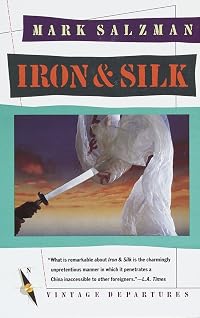
Iron and Silk
by Mark Salzman
On This Page
Description
This anecdotal record of a young man's encounter with the Chinese and their way of life offers unique insights to readers. Salzman had majored in Chinese literature at Yale, and his first job after graduation in 1982 was teaching English to students and teachers at Hunan Medical College in Changsha. He met this considerable challenge with sensitivity, humor, and imagination, and was quickly regarded with respect and affection. Salzman had studied martial arts since he was 13, and he show more continued his practice in Changsha, where one of China's foremost experts, Pan Qingfu, accepted him as a pupil. Readers will become aware of the many styles of the sport, and, incidentally, the real meaning of kung fu.'' The personalities encountered range from Salzman's students and teachers to calligraphers, peasants, fishermen, and bureaucrats. Each fascinating episode illuminates the way to a deeper understanding of Chinese culture and character. show lessTags
Recommendations
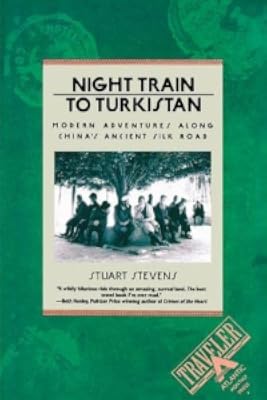

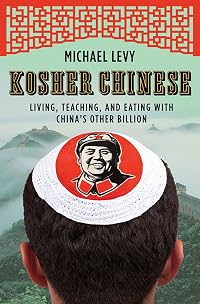
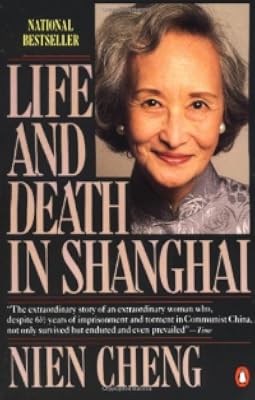
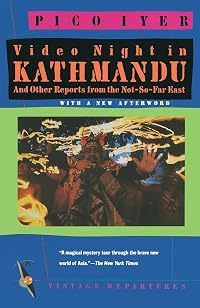









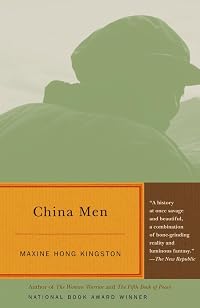
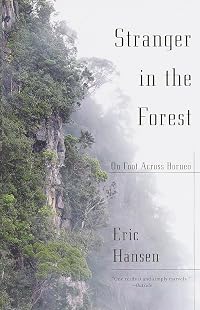
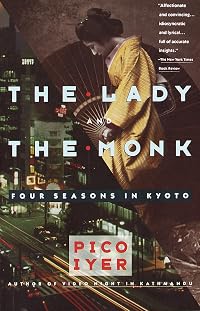
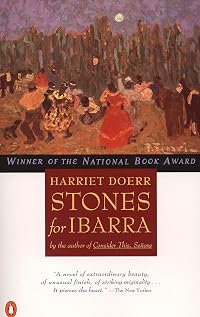
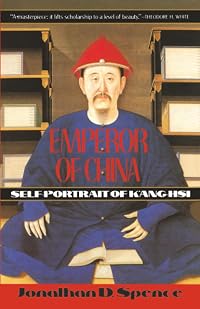

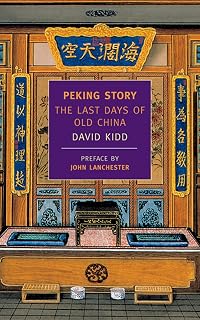
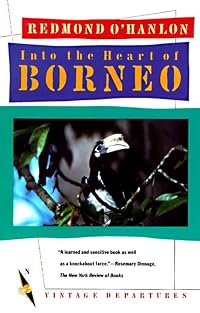
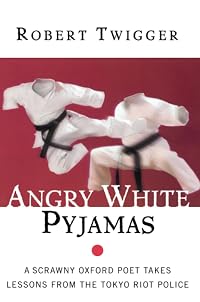
Member Recommendations
SqueakyChu Memoir of an American teaching English in China

Member Reviews
Funny. You would not expect a memoir about a cello playing martial arts master in China for the purpose of teaching English to medical students a funny book and yet it is. It is very funny and eye opening. Salzman's adventures are, truth be told, a string of essays laced with tongue-in-cheek wit and culture. You cannot help but laugh out loud at some of his exploits as he tries to make his way through Chinese bureaucracy and customs. Take for example, his attempt to receive a package containing medication for athlete's foot. It's so maddening you almost think he's making the whole thing up. But then you remember, in South Central China, there is a regulation for everything real or otherwise.
(The author of this memoir is having trouble getting on a train, that eventually will allow him to depart China for New York, because of paperwork and obstinate bureaucrats, and then comes across a policeman he is acquainted with who decides to help him).
"He eventually suggested that I give a short martial arts demonstration there in the train station - 'Wouldn't that be fun?' He asked the people sitting on the long wooden benches in the station to make room for a performance . . . I warmed up for a few minutes, took off my shoes and began a routine. Somewhere in mid-air my pants split wide open, from the base of the zipper to the belt line in back. A crowd of giggling old ladies rushed forward with needles and thread ready, followed by show more an equal number of old men with incurable illnesses who believed that I must have learned traditional medicine as part of my martial arts training, convincing the officials to let me through without further delay. The policeman helped me get on the train, then sat with me until it began to move. He hopped off, wished me well, then saluted as the train left the station."
Mark Salzman, the author of Iron and Silk, is an English teacher sent in the mid-1980s to teach for two years in Changsha, located in South Central China. It has more than a million people and is the capital of Hunan Province, located near Mao Tse Tung's birthplace. He is able to speak Mandarin fluently and Cantonese well, and it becomes apparent that he has an engaging personality that, coupled with the novelty of his being a white westerner, causes many of the Chinese he meets to go out of their way to help him. Needless to say, the environment is wildly different from what he has known. He is thrust into those differences immediately, as his assigned driver slingshots their van into the heavy traffic: "He swerved and braked violently to avoid pedestrians who darted into the road without looking, swarms of bicyclists who rode in the middle of the street, trucks, jeeps and huge buses that careened as if driven by madmen, and long carts piled sometimes ten feet high with construction materials, furniture, or tubs of human excrement {for fertilizer}, which were pulled by men dressed in rags, the veins of their necks and calves bulging from the strain." When he asks the driver, Comrade Hu, why everyone is continuously honking, the deadpan answer is, "Traffic Safety."
This compact book is a remarkable memoir of Salzman's two year stay. Because he is curious and always open to friendship and adventure, he ends up finding himself in a number of unusual situations that allow the reader glimpses of what life in this part of the world is really like. He is befriended by a family of river fisherman who convince him to sleep over, and are fascinated by his singing of a Simon and Garfunkel song, but, as is tradition, use his cello playing as background music for chatting with one another. He is fortunate to have his new Chinese friends connect him to a number of martial arts teachers who take him far beyond his western training, most notably Pan, who Salzman recognized "immediately as one of the evil characters in {the famous martial arts movie} Shaolin Temple", who had choreographed and directed the martial arts scenes in that movie. Pan, known as "Iron Fist", had never taken on a private student, but saw something in Salzman after putting him on the spot for a demonstration at an elite martial arts academy. Their relationship is fascinating, and threads through a good part of the book.
What is most striking is the generosity of the locals - the river fishermen feed and entertain him, and leave a basket with a huge fish on his doorstep. His mentor waits under a tree when he returns from a trip. "This was your first trip to China. How shameful it would be if no one greeted you when you came home." Others treat him like royalty in their home, or coach him in calligraphy and the mores of Chinese life. His class enjoys the intellectual freedom he encourages, to the point where one group of students presents a vampire skit that horrifies the local maintainer of order. The culture clash is wonderfully absurd at times. A man he meets at a boring seminar (who blames him for making the mistake of listening) becomes a friend and borrows books in the unmet hope that he might find one to translate and publish in China. All of the western books are unsuitable for one reason or another. One causes him to say, "in my whole life, I have never read or even imagined something so unsuitable." He then asks, "May I keep it?"
The understated humor, the colorful cultural exchanges, the contrast between the frustrating bureaucratic procedures making the simplest things difficult to accomplish and the warm generosity of those who help him, make this a fast and exceptional read. Many thanks to Caro and Mark for recommending it. show less
"He eventually suggested that I give a short martial arts demonstration there in the train station - 'Wouldn't that be fun?' He asked the people sitting on the long wooden benches in the station to make room for a performance . . . I warmed up for a few minutes, took off my shoes and began a routine. Somewhere in mid-air my pants split wide open, from the base of the zipper to the belt line in back. A crowd of giggling old ladies rushed forward with needles and thread ready, followed by show more an equal number of old men with incurable illnesses who believed that I must have learned traditional medicine as part of my martial arts training, convincing the officials to let me through without further delay. The policeman helped me get on the train, then sat with me until it began to move. He hopped off, wished me well, then saluted as the train left the station."
Mark Salzman, the author of Iron and Silk, is an English teacher sent in the mid-1980s to teach for two years in Changsha, located in South Central China. It has more than a million people and is the capital of Hunan Province, located near Mao Tse Tung's birthplace. He is able to speak Mandarin fluently and Cantonese well, and it becomes apparent that he has an engaging personality that, coupled with the novelty of his being a white westerner, causes many of the Chinese he meets to go out of their way to help him. Needless to say, the environment is wildly different from what he has known. He is thrust into those differences immediately, as his assigned driver slingshots their van into the heavy traffic: "He swerved and braked violently to avoid pedestrians who darted into the road without looking, swarms of bicyclists who rode in the middle of the street, trucks, jeeps and huge buses that careened as if driven by madmen, and long carts piled sometimes ten feet high with construction materials, furniture, or tubs of human excrement {for fertilizer}, which were pulled by men dressed in rags, the veins of their necks and calves bulging from the strain." When he asks the driver, Comrade Hu, why everyone is continuously honking, the deadpan answer is, "Traffic Safety."
This compact book is a remarkable memoir of Salzman's two year stay. Because he is curious and always open to friendship and adventure, he ends up finding himself in a number of unusual situations that allow the reader glimpses of what life in this part of the world is really like. He is befriended by a family of river fisherman who convince him to sleep over, and are fascinated by his singing of a Simon and Garfunkel song, but, as is tradition, use his cello playing as background music for chatting with one another. He is fortunate to have his new Chinese friends connect him to a number of martial arts teachers who take him far beyond his western training, most notably Pan, who Salzman recognized "immediately as one of the evil characters in {the famous martial arts movie} Shaolin Temple", who had choreographed and directed the martial arts scenes in that movie. Pan, known as "Iron Fist", had never taken on a private student, but saw something in Salzman after putting him on the spot for a demonstration at an elite martial arts academy. Their relationship is fascinating, and threads through a good part of the book.
What is most striking is the generosity of the locals - the river fishermen feed and entertain him, and leave a basket with a huge fish on his doorstep. His mentor waits under a tree when he returns from a trip. "This was your first trip to China. How shameful it would be if no one greeted you when you came home." Others treat him like royalty in their home, or coach him in calligraphy and the mores of Chinese life. His class enjoys the intellectual freedom he encourages, to the point where one group of students presents a vampire skit that horrifies the local maintainer of order. The culture clash is wonderfully absurd at times. A man he meets at a boring seminar (who blames him for making the mistake of listening) becomes a friend and borrows books in the unmet hope that he might find one to translate and publish in China. All of the western books are unsuitable for one reason or another. One causes him to say, "in my whole life, I have never read or even imagined something so unsuitable." He then asks, "May I keep it?"
The understated humor, the colorful cultural exchanges, the contrast between the frustrating bureaucratic procedures making the simplest things difficult to accomplish and the warm generosity of those who help him, make this a fast and exceptional read. Many thanks to Caro and Mark for recommending it. show less
From the back cover: The much-acclaimed adventures of a young martial arts master in China “take the form of a series of lightly sketched-in episodes; almost without exception, they produce the gulp of feeling you might get from an unusually fine short story, and they reverberate long after you have put them down.” (The New York Times)
My thoughts:
Salzman had been interested in China since the age of thirteen, when he’d first seen the television movie Kung Fu. He had studied kung fu, Chinese art and calligraphy. At Yale he majored in Chinese Literature. He wasn’t particularly interested in going to China, but he did need a job once he graduated and he was “fluent in Mandarin and nearly so in Cantonese,” so he applied for and show more was accepted by the Yale-China Association to teach English at Hunan Medical College in Changsha from August 1982 to July 1984. This is a memoir of his experiences while in China.
The book is told in a series of vignettes, and divided into sections. It begins with two episodes that bookend his tenure – arriving and leaving China. The rest of the memoir is roughly in chronological order (I think). Salzman is an astute observer and writes in a clear yet atmospheric way about his experiences. The various people he meets – professors, bureaucrats, fishermen, students – come to life as he describes their clothing, customs, habits, living conditions and demeanor. Much of the book focuses on his own efforts to expand his knowledge of martial arts, calligraphy and Chinese (Mandarin, Cantonese and the local dialect). I was a little disappointed to not have more information about the classes he taught and the students he encountered, though there are a few scenes about those experiences.
The area of China Salzman lived in is still not often visited by Westerners. In the early 1980s few Chinese had themselves traveled beyond their own villages, let alone to other countries. Most of the people he encountered had never seen a Westerner before, and many were stunned to silence on first seeing him. I’ve visited China a few times; my husband was in international business and traveled more extensively in the country than I have. Reading this memoir gave me a glimpse of China that I do not know. It’s an interesting book, though I cannot help but wonder how accurate the portrayal is today, given the Chinese government’s efforts to modernize. show less
My thoughts:
Salzman had been interested in China since the age of thirteen, when he’d first seen the television movie Kung Fu. He had studied kung fu, Chinese art and calligraphy. At Yale he majored in Chinese Literature. He wasn’t particularly interested in going to China, but he did need a job once he graduated and he was “fluent in Mandarin and nearly so in Cantonese,” so he applied for and show more was accepted by the Yale-China Association to teach English at Hunan Medical College in Changsha from August 1982 to July 1984. This is a memoir of his experiences while in China.
The book is told in a series of vignettes, and divided into sections. It begins with two episodes that bookend his tenure – arriving and leaving China. The rest of the memoir is roughly in chronological order (I think). Salzman is an astute observer and writes in a clear yet atmospheric way about his experiences. The various people he meets – professors, bureaucrats, fishermen, students – come to life as he describes their clothing, customs, habits, living conditions and demeanor. Much of the book focuses on his own efforts to expand his knowledge of martial arts, calligraphy and Chinese (Mandarin, Cantonese and the local dialect). I was a little disappointed to not have more information about the classes he taught and the students he encountered, though there are a few scenes about those experiences.
The area of China Salzman lived in is still not often visited by Westerners. In the early 1980s few Chinese had themselves traveled beyond their own villages, let alone to other countries. Most of the people he encountered had never seen a Westerner before, and many were stunned to silence on first seeing him. I’ve visited China a few times; my husband was in international business and traveled more extensively in the country than I have. Reading this memoir gave me a glimpse of China that I do not know. It’s an interesting book, though I cannot help but wonder how accurate the portrayal is today, given the Chinese government’s efforts to modernize. show less
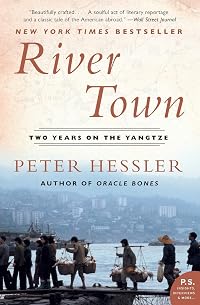
This is an easy to read account of Salzman's two years teaching in China. It was the 1980s, so his perspective on China (and the Chinese perspective on him) is different from that of Peter Hessler's in [b:River Town: Two Years on the Yangtze|94053|River Town Two Years on the Yangtze (P.S.)|Peter Hessler|http://photo.goodreads.com/books/1171271609s/94053.jpg|1441686] in the next decade.
Salzman's encounters are charming and depict rural China very positively. One wonders when he found time to teach and prep his lessons, to say nothing of grading, between his various martial arts trainings, calligraphy lessons, and bouts of travel with fishing families. In all, a comparatively benign introduction to living and working in another country.
Salzman's encounters are charming and depict rural China very positively. One wonders when he found time to teach and prep his lessons, to say nothing of grading, between his various martial arts trainings, calligraphy lessons, and bouts of travel with fishing families. In all, a comparatively benign introduction to living and working in another country.
Salzman became infatuated with Chinese culture, after watching the television series “Kung Fu”, at age thirteen. He received college degrees from Yale, in both Chinese language and Chinese literature.
In the early 80s, he lands a job, in Changsha, China, teaching English to students and teachers at Hunan Medical College. This wonderful memoir, covers his time there. He studies martial arts & calligraphy, with various instructors, which is all fascinating but in these beautiful episodic tales, his deep love for the people and their culture, is what really shines through. It’s funny, warm and touching. I cannot recommend it higher.
In the early 80s, he lands a job, in Changsha, China, teaching English to students and teachers at Hunan Medical College. This wonderful memoir, covers his time there. He studies martial arts & calligraphy, with various instructors, which is all fascinating but in these beautiful episodic tales, his deep love for the people and their culture, is what really shines through. It’s funny, warm and touching. I cannot recommend it higher.
After graduating from Yale in1982, with a degree in Chinese language and literature, Mark Salzman spent two years teaching English at the Hunan Medical College. This book is a reflection of that time in a series of vignettes that enables the reader to develop an appreciation for the little, everyday activities that he encountered in his daily interactions with the Chinese people.
The book is delightful in its revelations of how Chinese society works or did in the 1980s. In addition to being a teacher, Salzman’s love of martial arts gets a real boost when one of China’s most respected wushu masters, Pan, agrees to give him lessons in exchange for English lessons. Their interaction provides for many of the book’s more engaging show more moments.
There were more humorous quotes than it would be convenient to mention. His dealings with all the forms of Chinese bureaucracy are priceless. Here are a couple, purged from the passages about the author’s initial introduction to his new home, Changsha:
”I had heard that everything in China was spotlessly clean. Instead, dishwater and refuse were thrown casually out of windows, rats the size of squirrels could be seen flattened out all over the roads, spittle and mucus lay everywhere, and the dust and aswh from coal-burning stoves, heaters and factories mixed with dirt and rain to stain the entire city an unpleasant grayish-brown. The smell of nightsoil, left in shallow outhouse troughs for easy collection, wafted through the streets and competed with the unbelievable din of automobile horns to offend the senses.” (Page 10)
And:
”Comrade Hu led me into the house and pointed to my room. A four foot seven, sturdy-looking peasant woman in her late fifties sat inside. As soon as I came into view, she jumped straight up and ran at me, greeting me in Changsha dialect so loudly I thought her voice would knock me down. ‘This is Comrade Yang,’ Comrade Hu told me. ‘Everyone calls her Old Yang. Her name means sheep. She cleans the house and boils the water. If you need anything, let her know.’ Old Sheep laughed in shrieks and ran to pick up my bags. The largest of them, my cello case, stood as tall as she, but she insisted on leaning it against her back and carrying it into the room.” (Page 11)
I enjoyed this look at China in the eighties and I especially liked getting to know the Chinese people who came across, on the whole, as a kind, humble, and naïve people who displayed a politeness that was quite charming to behold. show less
The book is delightful in its revelations of how Chinese society works or did in the 1980s. In addition to being a teacher, Salzman’s love of martial arts gets a real boost when one of China’s most respected wushu masters, Pan, agrees to give him lessons in exchange for English lessons. Their interaction provides for many of the book’s more engaging show more moments.
There were more humorous quotes than it would be convenient to mention. His dealings with all the forms of Chinese bureaucracy are priceless. Here are a couple, purged from the passages about the author’s initial introduction to his new home, Changsha:
”I had heard that everything in China was spotlessly clean. Instead, dishwater and refuse were thrown casually out of windows, rats the size of squirrels could be seen flattened out all over the roads, spittle and mucus lay everywhere, and the dust and aswh from coal-burning stoves, heaters and factories mixed with dirt and rain to stain the entire city an unpleasant grayish-brown. The smell of nightsoil, left in shallow outhouse troughs for easy collection, wafted through the streets and competed with the unbelievable din of automobile horns to offend the senses.” (Page 10)
And:
”Comrade Hu led me into the house and pointed to my room. A four foot seven, sturdy-looking peasant woman in her late fifties sat inside. As soon as I came into view, she jumped straight up and ran at me, greeting me in Changsha dialect so loudly I thought her voice would knock me down. ‘This is Comrade Yang,’ Comrade Hu told me. ‘Everyone calls her Old Yang. Her name means sheep. She cleans the house and boils the water. If you need anything, let her know.’ Old Sheep laughed in shrieks and ran to pick up my bags. The largest of them, my cello case, stood as tall as she, but she insisted on leaning it against her back and carrying it into the room.” (Page 11)
I enjoyed this look at China in the eighties and I especially liked getting to know the Chinese people who came across, on the whole, as a kind, humble, and naïve people who displayed a politeness that was quite charming to behold. show less
When I was in high school, Mark Salzman came to speak to members of the National Honors Society (his father worked in development for my school). I was not a member of the National Honors Society (long story - still bitter), but my English teacher had been at our talk and said he was "wonderful," and that we should all go down and crash the NHS meeting instead of having English teacher.I remember entering the library as Salzman was telling an animated story about astronauts that involved him walking across the top of a table. I enjoyed his stories and his positivie attitude about embracing life, so I got a copy of his memoir Iron & Silk. It soon became one of my favorite books and for many years I read each new Salzman book as it came show more out. Since I'm trying revisit books on my list of Favorite Books of All Time, I figured it was due for a reread.Mark Salzman grew up in suburban Connecticut and at a young age was drawn to kung fu (more properly termed "wushu") and from there a more general interest in Chinese culture and language. Earning a degree in Chinese studies from Yale, Salzman travelled to China in the early 1980s to work as an English teacher for two years at Changsha Medical University. This was at a time when China had been shut off from the United States for decades, so Salzman was among the first Americans to get a taste of everyday life in China.Much of the book is about the cultural exchange among Salzman and his students and the other faculty. There are many humorous stories of the differences of expectations in a classroom setting and the different understandings of history from Chinese and Western backgrounds. Salzman becomes something of a local celebrity for being a tall, blond man who can speak fluent Chinese. Some of the warmest parts of this book involved a fisherman Salzman meets who is amazed by the foreigner in his midst and basically welcomes him into the family.Salzman also takes the opportunity to study his own interests including learning Chinese dialects and calligraphy. The core of the book, though, focuses on the martial arts, as Salzman receives instruction from two different wushu masters whose different styles are the metaphor in the title of the book, iron and silk. The "iron" teacher was Pan Qingfu, a legendary grandmaster who starred in Shaolin Temple, China's first blockbuster film released in 1982.Rereading this as an adult, I'm more aware of the gravity of the stories Salzman's acquaintances tell of World War II and the Cultural Revolution. I also notice when Salzman's biases creep in. But by in large, this is still the same charming, humorous, and inspiring book I remember reading as a teenager, albeit now it seems more of a relic of the 1980s than current. I remember also seeing a movie adaptation of this book that somehow included a romance that doesn't exist in the books, and wasn't very good, even though Salzman and Pan Qingfu. So read the book, ignore the movie. show less
Members
- Recently Added By
Lists

The China Project Book List
100 works; 2 members
Author Information

13+ Works 4,621 Members
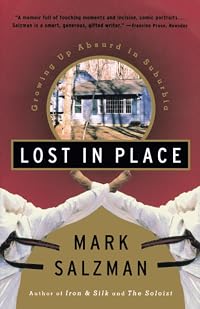
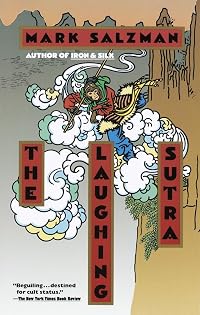
Mark Salzman is the author of Iron & Silk, an account of his two years in China; Lost in Place, a memoir; and the novels The Laughing Sutra, The Soloist, and Lying Awake. He lives in Los Angeles with his wife and their daughter
Awards and Honors
Series
Belongs to Publisher Series
Work Relationships
Has the adaptation
Common Knowledge
- Original publication date
- 1988
- Important places
- China
- Related movies
- Iron & Silk (1990 | IMDb)
Classifications
Statistics
- Members
- 1,030
- Popularity
- 25,229
- Reviews
- 22
- Rating
- (3.92)
- Languages
- 6 — Dutch, English, Finnish, French, German, Italian
- Media
- Paper, Audiobook, Ebook
- ISBNs
- 24
- ASINs
- 4