On This Page
Description
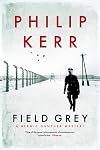
It's 1954 and Bernie finds himself flown back to Berlin to work for the French or hang for murder. Bernie's job is simple: to meet and greet POWs returning from Germany and snag one Edgard de Boudel, a French war criminal and member of the French SS. But Bernie's past as a German POW in Russia is about to catch up with him -- in a way he could never have foreseen.Tags
Recommendations






































Member Reviews
It is the early 1950s and former policeman and SS officer Bernie Gunther is hiding away in Cuba. Sensing that he is about to fall foul of the law he sets sail for Haiti but on the way there is picked up by the US Navy and imprisoned as a war criminal. Whilst in custody he is engaged by French intelligence to work for them in the hunt for Nazis who are being repatriated from POW camps. In the course of his operation Bernie encounters characters from his past who threaten his safety.
This was by far the darkest of the Bernie Gunther novels with action spread across the 1930s with the rise of the Nazis and the 1940s including atrocities on the Eastern front and events immediately following the end of WW2. This was an outstanding thriller, show more brilliantly crafted and exciting. The action moved along quickly and hopped from Cuba to New York, to France, Berlin, Poland, the Russian front and the Soviet POW camps. But by heck, it was harrowing too. One of those books that you feel you haven't necessarily enjoyed but have been transfixed by. As with Gunther's previous outings, Kerr interweaves the story with history and introduces real (nasty) individuals and events into the fictional account. For a thriller writer having so many real life psychopaths on hand is
quite a gift and Kerr utilises this cast with great skill. They are a part of the story and drivers of the action without this looking like a contrived device. show less
This was by far the darkest of the Bernie Gunther novels with action spread across the 1930s with the rise of the Nazis and the 1940s including atrocities on the Eastern front and events immediately following the end of WW2. This was an outstanding thriller, show more brilliantly crafted and exciting. The action moved along quickly and hopped from Cuba to New York, to France, Berlin, Poland, the Russian front and the Soviet POW camps. But by heck, it was harrowing too. One of those books that you feel you haven't necessarily enjoyed but have been transfixed by. As with Gunther's previous outings, Kerr interweaves the story with history and introduces real (nasty) individuals and events into the fictional account. For a thriller writer having so many real life psychopaths on hand is
quite a gift and Kerr utilises this cast with great skill. They are a part of the story and drivers of the action without this looking like a contrived device. show less
Field Gray is the seventh novel in Phillip Kerr's series based on Bernie Gunther a one time Berlin police detective who manages to get caught up in intrigues that have little or nothing to do with his own initiative. He is a victim of his own competence and lack of ideological commitment. He is put into play by just about every secret service on both sides of World War II and the Cold War. Only through the use of his experience and wits is he able to avoid the fate of all pawns in the chess game of espionage.
As is Kerr's usual modus operandi the action in Field Gray is global in scope and the story is told in a series of back and forth episodes dated from 1931 to 1954. The point of departure is an event that occurred in Berlin in 1931 show more when Gunther happens upon a group of S.A. stormtroopers about to beat the hell out of or worse to a young German Communist name of Erich Mielke. Mielke survives this encounter and goes on to lead a "colorful" life including the murder of two Berlin police officers shortly after his rescue by Bernie and eventually ending up as the head of state security in the late, unlamented German Democratic Republic.
Along the way Bernie is dragooned into unwilling service by Reinhard Heydrich, gets a taste of occupied Paris in June of 1940, is dispatched to the Russian front in 1941, enjoys what should have been an end of life experience mining uranium as a POW under Soviet auspices, being kidnapped by the CIA, seconded to the French secret service and getting a taste of a French concentration camp, and a stay in Hitler's former cell in Landsberg prison under American auspices.
Betrayal is a theme that predominates in Field Gray and Bernie proves to be not immune. The plot is somewhat thick and there are a few rabbits pulled out of the hat to get the hero and the reader to the denouement, but they are plausible enough so that you don't feel like you have been played for a sucker, which is more than can be said for a lot of the characters.
As an aside one of the terms I encountered in this 2010 work was "anti fa", as in anti-fascist, which in this case refers to the reeducation program for German prisoners who were persuaded of the advantages of going to work for the Soviet MVD rather than endure their unhappy fate as Soviet POWs. I suspect that the founders of Antifa in our time were likely to include at least one fan of Philip Kerr's novels.
One particular passage is worth quoting at some length. In describing what happened to the enforcement of crime in Berlin after the police became incorporated into the State Security Police by the Nazis, Bernie relates the following.
"Most of the crime was politicized, but men carried on murdering their wives and professional criminals went about their business as normal. I conducted several investigations during that period, but in reality the Nazis cared very little about reducing crime in the usual time-honored way and most police could hardly be bothered to do what police do. This was because the Nazis preferred to "reduce" crime by declaring annual amnesties, which meant that most crimes never went to court at all. All the Nazis cared about was being able to say that the crime figures were down. In fact, crime - real crime - actually increased under the Nazis: Theft, murder, juvenile delinquency - it all got worse. So I carried on as normal at the Alex. I made arrests, prepared a case, handed the papers over to the Ministry of Justice, and in time the case was struck down, or dropped, and the accused walked free."
Far be it from me to indulge in the reductio ad Hitlerum, but it kind of rings a bell, does it not? show less
As is Kerr's usual modus operandi the action in Field Gray is global in scope and the story is told in a series of back and forth episodes dated from 1931 to 1954. The point of departure is an event that occurred in Berlin in 1931 show more when Gunther happens upon a group of S.A. stormtroopers about to beat the hell out of or worse to a young German Communist name of Erich Mielke. Mielke survives this encounter and goes on to lead a "colorful" life including the murder of two Berlin police officers shortly after his rescue by Bernie and eventually ending up as the head of state security in the late, unlamented German Democratic Republic.
Along the way Bernie is dragooned into unwilling service by Reinhard Heydrich, gets a taste of occupied Paris in June of 1940, is dispatched to the Russian front in 1941, enjoys what should have been an end of life experience mining uranium as a POW under Soviet auspices, being kidnapped by the CIA, seconded to the French secret service and getting a taste of a French concentration camp, and a stay in Hitler's former cell in Landsberg prison under American auspices.
Betrayal is a theme that predominates in Field Gray and Bernie proves to be not immune. The plot is somewhat thick and there are a few rabbits pulled out of the hat to get the hero and the reader to the denouement, but they are plausible enough so that you don't feel like you have been played for a sucker, which is more than can be said for a lot of the characters.
As an aside one of the terms I encountered in this 2010 work was "anti fa", as in anti-fascist, which in this case refers to the reeducation program for German prisoners who were persuaded of the advantages of going to work for the Soviet MVD rather than endure their unhappy fate as Soviet POWs. I suspect that the founders of Antifa in our time were likely to include at least one fan of Philip Kerr's novels.
One particular passage is worth quoting at some length. In describing what happened to the enforcement of crime in Berlin after the police became incorporated into the State Security Police by the Nazis, Bernie relates the following.
"Most of the crime was politicized, but men carried on murdering their wives and professional criminals went about their business as normal. I conducted several investigations during that period, but in reality the Nazis cared very little about reducing crime in the usual time-honored way and most police could hardly be bothered to do what police do. This was because the Nazis preferred to "reduce" crime by declaring annual amnesties, which meant that most crimes never went to court at all. All the Nazis cared about was being able to say that the crime figures were down. In fact, crime - real crime - actually increased under the Nazis: Theft, murder, juvenile delinquency - it all got worse. So I carried on as normal at the Alex. I made arrests, prepared a case, handed the papers over to the Ministry of Justice, and in time the case was struck down, or dropped, and the accused walked free."
Far be it from me to indulge in the reductio ad Hitlerum, but it kind of rings a bell, does it not? show less
First off, I should say that this is the only book by Kerr that I have read, so I can't evaluate it as part of his work or of the Gunther series (which I have heard a lot of good things about). That said, it is not a book I can recommend to anyone but uncritical enthusiasts of the hard-boiled cop genre. It has a distinct feel of the umpteenth book in a series being dragged out because the series is commercially successful rather than because the author needed to write it.
There are a great many books, both fiction and nonfiction, about the hell that was WWII and its immediate aftermath, and they tend to be pretty grim (I've been immersed in the period recently). This book is grim enough, but it's a surface grimness; the prison camps and show more death squads don't come across as very different than the routine beatings and shootings that are par for the course for your basic hard-boiled cop. It's all just more grist for the protagonist's loathing of himself and the world, which is no more profound than any other literary cop's. It's a formula, and a well-worn one; Kerr seems to have taken a bunch of phrases from Chandler and Hammett, tossed them in a blender, and sprinkled them over his generic hero and plot, neither of which I could take seriously. (And everybody in the book talks the same rote cynical banter, which makes them hard to tell apart.)
I lost faith in the protagonist as a German on page 12, when he compared a beard to "the color and texture of an old baseball mitt." Sure, that's definitely a comparison that would occur to a German born in the 1890s. (Of course, on page 74 he has an American say "A regular Jakob Grimm, this guy." And on page 364 the protagonist refers to "West Germany's FIFA World Cup team"; no human being other than a sportscaster has ever uttered the phrase "FIFA World Cup.") On page 206 he says "The curious thing was I'd really never thought about Hitler" -- in 1954! And the idea that he would be so unaware of what was happening to the Jews -- in the middle of WWII! -- is ludicrous. But that's part and parcel of the author's attempt to position him as a good guy in a situation where there were no good guys. On page 61 he tells his commanding officer in Minsk, SS-Standartenführer Mundt, "I don't much like waging war on women" and claims to adhere to the Geneva Convention; anyone who thinks this is a plausible bit of dialog is, well, a bit simple.
The errors of fact and history are depressing as well. On pages 76-77, Kerr seems to be under the impression that the Germans got to Moscow in 1941, which of course they didn't (the Battle of Moscow was where the Soviets started turning the tide and pushing the Germans back). On page 235 he writes of brutal MVD officers (by the way, the NKVD wasn't renamed the MVD until 1946, another lapse) "only the strongest of us were permitted to survive, as if Prince Kropotkin had been in charge" -- Kropotkin, that most gentle of men, who deplored both violence and being in charge! On page 295 he writes about an "MBC" which presumably should be MVS (МВС would be the Cyrillic initials of "Министерство военных сил" = Ministry of Military Forces), but I can find no information about such an organization (searching in Russian). And that leads me to the mistakes in Russian, which seem to be inevitable in books by non-Russians but are still discouraging: on page 63 he has a "Joshua Pronicheva" (Pronicheva is a woman's name), on pages 64-65 he refers repeatedly to the "Svislock" River (should be Svisloch), and on page 236 he tries to show off with a whole slew of Russian terms tossed into the narrative for no good reason and explained in a footnote -- except they're badly misspelled ("voinapleni" should be voyennoplennye, "klopkis" should be klopy, and "kate" should be khata, to take the worst cases), and klopy are not lice but bedbugs, a distinction very familiar to both Russians in general and anyone who has spent time in trenches or prisons (lice are vshi in Russian).
In short, if you want factual information about the period, you could check out some of the sources listed in the Author's Note at the back (if you're interested in the Eastern Front, I highly recommend Overy's Russia's War); if you want a novel about the period that truly digs into the psychic trauma it created, try Victor Serge's Unforgiving Years; and if you want some good old-fashioned hard-boiled action, read Hammett and Chandler and get it fresh from the oven, not warmed over. show less
There are a great many books, both fiction and nonfiction, about the hell that was WWII and its immediate aftermath, and they tend to be pretty grim (I've been immersed in the period recently). This book is grim enough, but it's a surface grimness; the prison camps and show more death squads don't come across as very different than the routine beatings and shootings that are par for the course for your basic hard-boiled cop. It's all just more grist for the protagonist's loathing of himself and the world, which is no more profound than any other literary cop's. It's a formula, and a well-worn one; Kerr seems to have taken a bunch of phrases from Chandler and Hammett, tossed them in a blender, and sprinkled them over his generic hero and plot, neither of which I could take seriously. (And everybody in the book talks the same rote cynical banter, which makes them hard to tell apart.)
I lost faith in the protagonist as a German on page 12, when he compared a beard to "the color and texture of an old baseball mitt." Sure, that's definitely a comparison that would occur to a German born in the 1890s. (Of course, on page 74 he has an American say "A regular Jakob Grimm, this guy." And on page 364 the protagonist refers to "West Germany's FIFA World Cup team"; no human being other than a sportscaster has ever uttered the phrase "FIFA World Cup.") On page 206 he says "The curious thing was I'd really never thought about Hitler" -- in 1954! And the idea that he would be so unaware of what was happening to the Jews -- in the middle of WWII! -- is ludicrous. But that's part and parcel of the author's attempt to position him as a good guy in a situation where there were no good guys. On page 61 he tells his commanding officer in Minsk, SS-Standartenführer Mundt, "I don't much like waging war on women" and claims to adhere to the Geneva Convention; anyone who thinks this is a plausible bit of dialog is, well, a bit simple.
The errors of fact and history are depressing as well. On pages 76-77, Kerr seems to be under the impression that the Germans got to Moscow in 1941, which of course they didn't (the Battle of Moscow was where the Soviets started turning the tide and pushing the Germans back). On page 235 he writes of brutal MVD officers (by the way, the NKVD wasn't renamed the MVD until 1946, another lapse) "only the strongest of us were permitted to survive, as if Prince Kropotkin had been in charge" -- Kropotkin, that most gentle of men, who deplored both violence and being in charge! On page 295 he writes about an "MBC" which presumably should be MVS (МВС would be the Cyrillic initials of "Министерство военных сил" = Ministry of Military Forces), but I can find no information about such an organization (searching in Russian). And that leads me to the mistakes in Russian, which seem to be inevitable in books by non-Russians but are still discouraging: on page 63 he has a "Joshua Pronicheva" (Pronicheva is a woman's name), on pages 64-65 he refers repeatedly to the "Svislock" River (should be Svisloch), and on page 236 he tries to show off with a whole slew of Russian terms tossed into the narrative for no good reason and explained in a footnote -- except they're badly misspelled ("voinapleni" should be voyennoplennye, "klopkis" should be klopy, and "kate" should be khata, to take the worst cases), and klopy are not lice but bedbugs, a distinction very familiar to both Russians in general and anyone who has spent time in trenches or prisons (lice are vshi in Russian).
In short, if you want factual information about the period, you could check out some of the sources listed in the Author's Note at the back (if you're interested in the Eastern Front, I highly recommend Overy's Russia's War); if you want a novel about the period that truly digs into the psychic trauma it created, try Victor Serge's Unforgiving Years; and if you want some good old-fashioned hard-boiled action, read Hammett and Chandler and get it fresh from the oven, not warmed over. show less
 This review was written for LibraryThing Early Reviewers.
I was very disappointed with this book. I am a great fan of Alan Furst and John Le Carré. I also enjoy novels in a continuing series, which allow a reader to follow characters over a longer period than a single novel permits. I was excited that I had found a series by a writer I had not read before, who promised a style similar to writers I enjoy.
While many books from a series are better if the reader is familiar with the prior books in the series, I don't think I would have liked this book any better had it been the first one. The story starts off with witty dialog that seemed promising for the first dozen pages. After the next dozen pages, I was bored with the main character. Because I received the book for free as an early reviewer, show more I continued reading for 50 pages to see if I might find the story tolerable. The more I read the less I liked the book.
I read many novels, and some are better than others. Once I have read more than a dozen pages of a book, I almost always finish it. If a book seems promising, I am willing to give writers time to get a story going and introduce their characters. Some books I consider a waste of my time to have finished (e.g. The Host by Stephenie Meyer), but I compulsively must finished a book once I have gotten into the story. If a writer can get me to read 20 pages, I will almost always finish the book, even when I don't like the story a great deal. In the past decade, this is the only book I can recall having quit reading after getting through 50 pages. Once I've begun reading and been introduced to the characters, I have a compulsion that I must know how the story ends. In the case of Phillip Kerr's main character, Bernie Gunter, the more I read, the less I cared what happened to him. I was reading the book while listening to the morning news reports of the death of Osama bin Laden. After my wife asked me what I thought of bin Laden having been buried at sea, I realized I didn't care how bin Laden's carcass was disposed of, and I didn't care what happened to the main character in the book I was reading.
While Kerr can write witty dialog, his characters are boring stereotypes. Upon encountering Bernie Gunter, all male characters have the irrepressible urge to beat him up, and female characters cannot resist having sex with him. While I did not share the female characters interest in Gunter, I did understand the male characters' reactions, as Gunter is an unlikeable character. It is not a good sign if the reader is hoping someone will kill the main character in the first chapter. The first 50 pages of this novel should be used in writing textbooks to illustrate on how to write insufferable cardboard stereotyped characters.
If you have an urge to read a book by Phillip Kerr, read a great book by Alan Furst instead. show less
While many books from a series are better if the reader is familiar with the prior books in the series, I don't think I would have liked this book any better had it been the first one. The story starts off with witty dialog that seemed promising for the first dozen pages. After the next dozen pages, I was bored with the main character. Because I received the book for free as an early reviewer, show more I continued reading for 50 pages to see if I might find the story tolerable. The more I read the less I liked the book.
I read many novels, and some are better than others. Once I have read more than a dozen pages of a book, I almost always finish it. If a book seems promising, I am willing to give writers time to get a story going and introduce their characters. Some books I consider a waste of my time to have finished (e.g. The Host by Stephenie Meyer), but I compulsively must finished a book once I have gotten into the story. If a writer can get me to read 20 pages, I will almost always finish the book, even when I don't like the story a great deal. In the past decade, this is the only book I can recall having quit reading after getting through 50 pages. Once I've begun reading and been introduced to the characters, I have a compulsion that I must know how the story ends. In the case of Phillip Kerr's main character, Bernie Gunter, the more I read, the less I cared what happened to him. I was reading the book while listening to the morning news reports of the death of Osama bin Laden. After my wife asked me what I thought of bin Laden having been buried at sea, I realized I didn't care how bin Laden's carcass was disposed of, and I didn't care what happened to the main character in the book I was reading.
While Kerr can write witty dialog, his characters are boring stereotypes. Upon encountering Bernie Gunter, all male characters have the irrepressible urge to beat him up, and female characters cannot resist having sex with him. While I did not share the female characters interest in Gunter, I did understand the male characters' reactions, as Gunter is an unlikeable character. It is not a good sign if the reader is hoping someone will kill the main character in the first chapter. The first 50 pages of this novel should be used in writing textbooks to illustrate on how to write insufferable cardboard stereotyped characters.
If you have an urge to read a book by Phillip Kerr, read a great book by Alan Furst instead. show less
This review was written for LibraryThing Early Reviewers.I love Bernie Gunther as a character-- sharp, witty, dry, take-no-prisoners (in spite of the fact he is often taken prisoner himself!). He's a man who has been compelled to make hard decisions-- such as being forced into the SS during WWII-- and finds that he has to live with the consequences. There is plenty of a "gray" area here: Gunther is a good man who was forced into a bad situation, and he finds himself, in 1954, being interrogated by people who see things very much in black and white (NB: there is a very good author's note at the end, with suggestions for further reading, that will lead you into seeing more of these gray areas).
Bernie's tale starts out well enough-- though the context could be a bit better fleshed out-- in show more Havana, but things quickly fall apart, and he's a prisoner of the Americans in no time flat. He finds himself being interrogated (and his wry responses to his interrogators are classics of hardboiled fiction) for war crimes, but we learn through flashbacks that his war history, which included time in Soviet prison camp, was anything but devout and blind servitude to Hitler's cause. Some readers may find the flashbacks jarring; personally, I didn't: for me, they kept the narrative moving along as I eagerly switched between past and future to find out what came next in each individual story, but not everyone may have the same reaction.
If you're looking for a conventional mystery here-- a "whodunit"-- you're not going to find it. This novel is much more about who's playing who to what end. And you can go positively cross-eyed at times trying to keep all that straight. Bernie plays all his cards close to his chest, and he's not showing the reader his hand, either, until the final reveal. If you're looking for brooding, atmospheric, hardboiled, noir fiction, then you've come to the right place. There's not going to be a bad guy revealed in the end (if, in fact, there are any good guys to be had by contrast), but there's going to be some fine storytelling and suspense along the way. It's cerebral and a complex exploration of rocky territory.
Much of your reaction to this book will have to do with your expectations. If you're looking for a lovable hero who's pure as driven snow and is going to use his little gray (pardon the continuing pun) cells to crack a case, then this novel isn't for you. If you're looking for a walk on the dark side, in a fragmented narrative, with an equally fragmented narrator, then settle down and get comfortable: you're in for a treat. show less
Bernie's tale starts out well enough-- though the context could be a bit better fleshed out-- in show more Havana, but things quickly fall apart, and he's a prisoner of the Americans in no time flat. He finds himself being interrogated (and his wry responses to his interrogators are classics of hardboiled fiction) for war crimes, but we learn through flashbacks that his war history, which included time in Soviet prison camp, was anything but devout and blind servitude to Hitler's cause. Some readers may find the flashbacks jarring; personally, I didn't: for me, they kept the narrative moving along as I eagerly switched between past and future to find out what came next in each individual story, but not everyone may have the same reaction.
If you're looking for a conventional mystery here-- a "whodunit"-- you're not going to find it. This novel is much more about who's playing who to what end. And you can go positively cross-eyed at times trying to keep all that straight. Bernie plays all his cards close to his chest, and he's not showing the reader his hand, either, until the final reveal. If you're looking for brooding, atmospheric, hardboiled, noir fiction, then you've come to the right place. There's not going to be a bad guy revealed in the end (if, in fact, there are any good guys to be had by contrast), but there's going to be some fine storytelling and suspense along the way. It's cerebral and a complex exploration of rocky territory.
Much of your reaction to this book will have to do with your expectations. If you're looking for a lovable hero who's pure as driven snow and is going to use his little gray (pardon the continuing pun) cells to crack a case, then this novel isn't for you. If you're looking for a walk on the dark side, in a fragmented narrative, with an equally fragmented narrator, then settle down and get comfortable: you're in for a treat. show less
This review was written for LibraryThing Early Reviewers.Hard to not like Philip Kerr's private detective Bernie Gunther. Personality wise I don't think it's a big reach to Nesbo's Harry Hole. This new book of Kerr's though does a lot to flesh out Gunther as an intriguing character. Of the other Gunther books that I've read--they're pretty much straight forward as far as crime thriller plots almost entirely set in Berlin. Here we have a reluctant Gunther being shanghaied into the Waffen SS during WWII and the action takes him into Paris, the Eastern front and later as a prisoner of war in Soviet concentration camps. Gunther is not happy about any of this and not very proud of some of the things he's compelled to do.
After his escape from the Russian gulag system which is abetted by a criminal show more he'd once saved who is now the head of the East German Stasi--he becomes the plaything of various Secret Services particularly the CIA--who are intent on kidnapping this East German figure. Not that it works out very well for them.
In any case it's an entertaining and very perceptive read. Kerr does his homework and is very skilled in creating an atmosphere of a time and place--that is quite cinematic. I wonder why some of his work hasn't been filmed. Excellent dialogue, excellent on plot. Gunther's irrascible nature again reminding me of Harry Hole. Very much recommended. show less
After his escape from the Russian gulag system which is abetted by a criminal show more he'd once saved who is now the head of the East German Stasi--he becomes the plaything of various Secret Services particularly the CIA--who are intent on kidnapping this East German figure. Not that it works out very well for them.
In any case it's an entertaining and very perceptive read. Kerr does his homework and is very skilled in creating an atmosphere of a time and place--that is quite cinematic. I wonder why some of his work hasn't been filmed. Excellent dialogue, excellent on plot. Gunther's irrascible nature again reminding me of Harry Hole. Very much recommended. show less
This review was written for LibraryThing Early Reviewers.Goodness. Quite the whirlwind and just started. From Havana to 1954 US prisons in Guantanamo, NYC, and then US occupied Germany, Landsberg prison, as Bernie recounts his history during the war. Really interesting and extraordinary. Especially to already know so much about the period. Coincidentally, I've been reading, slowly, Hans Litten's story in "Crossing Hitler: The Man Who Put the Nazis on the Witness Stand," by Benjamin Carter Hett. The infamous Eden Dance Palace incident (for which a young lawyer, Litten, put Hitler on trial) was just mentioned in Kerr.
Finished. After the above, camps and prisons and torture in France and the USSR, and back to Bernie's US/GDR/USSR/??? handlers. Swinging between the 40s and 50s. Intrigue. Deceit! show more Incredible. show less
Finished. After the above, camps and prisons and torture in France and the USSR, and back to Bernie's US/GDR/USSR/??? handlers. Swinging between the 40s and 50s. Intrigue. Deceit! show more Incredible. show less
Members
- Recently Added By
Published Reviews
ThingScore 75
The great strength of the novel is Kerr’s overpowering portrait of the war’s horrors. Its perhaps inevitable weakness is that we sometimes lose our way amid the avalanche of carnage, suffering and duplicity. The glue holding it all together is Bernie himself, our battered, defiant German Everyman...Bernie’s a-plague-on-all-your-houses mind-set leads to the novel’s truly shocking show more ending, one that left me with no idea what lies ahead for him, only the devout hope that his story will continue. show less
added by mysterymax
While some might quibble over occasional long sequences of dialogue that would be better served with tags, Kerr writes Gunther as he should be—world-weary, sardonic and as independent as an introspective man might be as he ricochets between murderous criminals, hell-bent Nazis or revenge-minded communists.
added by Shortride
Lists

Best Historical Fiction
620 works; 261 members

Top Five Books of 2018
802 works; 264 members

Best Five Books of 2018
5 works; 1 member

Books Read in 2020
4,379 works; 124 members

Books Read in 2021
5,361 works; 114 members
Author Information

45+ Works 19,438 Members
Awards and Honors
Awards
Series

Work Relationships
Is contained in
Common Knowledge
- Canonical title
- Field Grey
- Original title
- Field Grey
- Alternate titles
- Field Gray
- Original publication date
- 2010
- People/Characters
- Bernie Gunther; Erich Mielke; Reinhard Heydrich (Reynhard Heydrich); Graham Greene; Conrad Adenauer; Renata Matter (show all 8); Arthur Nebe; Edgar de Boudel
- Important places
- Havana, Cuba; New York, New York, USA; Landsberg, Saxony-Anhalt, Germany; Minsk, Belarus; Paris, France; Kaliningrad, Kaliningrad, Russia (as Königsberg, Prussia) (show all 8); Johannesgeorgenstadt, Saxony, Germany; Krasno-Armeesk, Ukraine
- Important events
- World War II (1939 | 1945); World War II, Eastern Front (1941-06-22 | 1945-05-05)
- Epigraph
- I don't like Ike (Graham Greene, The Quiet American)
- Dedication
- For Allan Scott
- First words
- 'That Englishman with Ernestina,' she said, looking down at the luxuriously appointed public room. 'He reminds me of you, Senor Hausner.'
- Last words
- (Click to show. Warning: May contain spoilers.)As it happens these are the only kind of funeral flowers I really like.
- Original language
- English
Classifications
Statistics
- Members
- 915
- Popularity
- 29,205
- Reviews
- 55
- Rating
- (3.85)
- Languages
- 8 — Catalan, Danish, Dutch, English, French, German, Italian, Spanish
- Media
- Paper, Audiobook, Ebook
- ISBNs
- 34
- ASINs
- 16