On This Page
Description
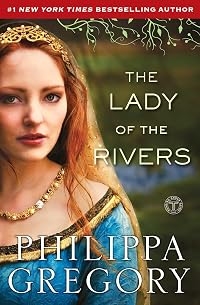
When the death of Joan of Arc shows her the dangers faced by strong women, Jacquetta, a psychic descendant of a river goddess, studies alchemy and becomes the secret wife of Richard Woodville before returning to the court of Henry VI.Tags
Recommendations

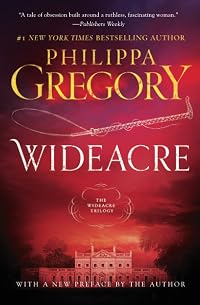
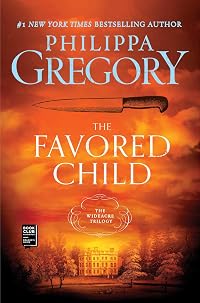
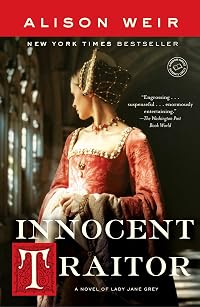
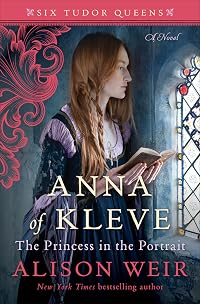


Member Recommendations
Member Reviews
The Lady of the Rivers is the best written, though the most fanciful, of the Cousins' War series. The character of Jacquetta of Bedford, so often obscured by history, is made memorable here. Her personal life was really quite romantic, and highly unusual for a woman of her time. Though the author embellishes Jacquetta's story with legends of mystical river deities and stories about witchcraft, it's still a fairly accurate portrayal of this fascinating person and her family. Jacquetta usually is portrayed as an old crone at the time her daughter Elizabeth meets King Edward, but this novel helps you understand that she was only in her late 40s -- still a relatively young and active woman.
I do not know a great deal about the Wars of the Roses, but this book inspired to look further into that history. I enjoyed the accuracy of the historical parts of the book and thought the fiction portions were skillfully interwoven. I also liked the way alchemy and herblore were included in the narrative. Those additions gave me a good sense of the superstition and (sometimes) lack of knowledge that prevailed during this time. The role of women was very different then, but also very diverse, as is indicated by the few rights of women interspersed with women holding positions of power. I'm planning on continuing through the series.
The Lady of the Rivers is the third in The Cousins' War series by Philippa Gregory, following on from The White Queen and The Red Queen; although chronologically it can be read first.
The Lady of the Rivers begins in France in 1430 and is about the life of Jacquetta of Luxembourg. The White Queen is the story of Elizabeth Woodville, (who meets and marries King Edward IV) while in The Lady of the Rivers we learn all about Elizabeth's mother, Jacquetta.
After being widowed by the Duke of Bedford, Jacquetta becomes a very close friend of Margaret of Anjou, King Henry VI's Queen.
The novel contains all of the intrigue, danger, alliances, betrayals, sieges and power for the throne that thrilled readers (and myself) in The White Queen, at the show more same time chronicling the life of a fascinating woman in history. During her lifetime, Jacquetta gave birth to 14 children (amazing that she survived), outranked every other lady at court (apart from her friend the Queen) changed allegiances from the House of Lancaster to the House of York, was trialled for witchcraft and later saw her daughter become Queen. In the novel she is portrayed as being loyal to Margaret of Anjou and a devoted and loving wife to her second husband, Richard.
The magic and gift of foresight learned and inherited from Jacquetta's Great Aunt play a small role in the novel yet provide a wonderful backstory to the magic in The White Queen. (It was one of my favourite aspects of the novel, and really sets it apart from any other historical novel covering the War of the Roses).
My only wish when reading any novel by Philippa Gregory is that I could retain (and later recall) 100% of the historical information imparted along the way. The White Queen was made into a successful and TV series, and I also hope her other novels in the Cousins' War make their way onto the big screen as well.
I thoroughly enjoyed this entertaining and engaging novel and was instantly caught up in this most fascinating period in our history all over again. The next in the series is The Kingmaker's Daughter and I can't wait to read it. show less
The Lady of the Rivers begins in France in 1430 and is about the life of Jacquetta of Luxembourg. The White Queen is the story of Elizabeth Woodville, (who meets and marries King Edward IV) while in The Lady of the Rivers we learn all about Elizabeth's mother, Jacquetta.
After being widowed by the Duke of Bedford, Jacquetta becomes a very close friend of Margaret of Anjou, King Henry VI's Queen.
The novel contains all of the intrigue, danger, alliances, betrayals, sieges and power for the throne that thrilled readers (and myself) in The White Queen, at the show more same time chronicling the life of a fascinating woman in history. During her lifetime, Jacquetta gave birth to 14 children (amazing that she survived), outranked every other lady at court (apart from her friend the Queen) changed allegiances from the House of Lancaster to the House of York, was trialled for witchcraft and later saw her daughter become Queen. In the novel she is portrayed as being loyal to Margaret of Anjou and a devoted and loving wife to her second husband, Richard.
The magic and gift of foresight learned and inherited from Jacquetta's Great Aunt play a small role in the novel yet provide a wonderful backstory to the magic in The White Queen. (It was one of my favourite aspects of the novel, and really sets it apart from any other historical novel covering the War of the Roses).
My only wish when reading any novel by Philippa Gregory is that I could retain (and later recall) 100% of the historical information imparted along the way. The White Queen was made into a successful and TV series, and I also hope her other novels in the Cousins' War make their way onto the big screen as well.
I thoroughly enjoyed this entertaining and engaging novel and was instantly caught up in this most fascinating period in our history all over again. The next in the series is The Kingmaker's Daughter and I can't wait to read it. show less
For those historical fiction lovers who prefer their historical fiction to be accurate, Philippa Gregory is probably not the author to read. Her flair for the dramatic and focus on the story rather than on the history tends to make historical accuracy somewhat flexible in any of her novels. However, as fans already know, her more fanciful wanderings tend to be the more engaging aspects of any of her novels. This is especially true of her latest, The Lady of the Rivers, wherein the main character is a real-life historical figure who was charged twice for being a witch during an age where witchcraft was punishable by death.
As the prequel to her Cousins' War series, The Lady of the Rivers gives voice to Elizabeth Woodville's mother, show more Jacquetta. Royalty in her own right, she rejects her royal favor and marries the steward of her deceased first husband. As one of the few members of the royal family to marry for love, this makes her a woman of immense interest. Ms. Gregory adds to this interest by infusing her Jacquetta with magical ability. Everything she suggests can be explained by chance, but the mere suggestion of mystical powers as an acknowledgement to her family's heritage - they consider themselves as descendants of Melusina, a mythical goddess of water - adds a level of intrigue and danger. Gregory is very effective in emphasizing this danger with her opening sequence of Joan of Arc's trial and subsequent execution by fire, all of which Jacquetta witnesses firsthand.
As far as Ms. Gregory's canon goes, The Lady of the Rivers is a very quick and entertaining read, albeit one of her more fictionalized stories with its focus on magic and mythology. It is also one of the more politely political novels she has written, which is saying something about an author who prides herself on writing about strong-minded and independent women. Her heroines have always subtly advocated women's rights. In The Lady of the Rivers, Ms. Gregory's thoughts on the machinations of men against women is vocal and difficult to ignore. Her indignity at treatment of women by men throughout history gives readers yet another reason to enjoy this charming novel.
Even though some might argue that yet another novel about the Tudors and their predecessors is not necessary, Ms. Gregory's strength lies in her ability to create a very clear and distinct voice for each of her heroines. While the fine points may be historically questionable, a reader does get a good picture of life during the confusion leading up to and during the War of the Roses, and her historical figures all but come back to life. Each character is distinct, and Ms. Gregory is effective at getting into the mindset of each heroine so that the reader can understand more of the political intrigue and very confusing intertwining of royal relations. Because Jacquetta's experiences allow the reader to understand how the War of the Roses started, The Lady of the Rivers is a welcome addition to her Cousins' War series, and fans of Gregory's will rejoice to know that her latest is a very strong entry to her lengthy body of work.
Acknowledgements: Thank you to NetGalley and Justina Batchelor from Simon & Schuster for my e-galley! show less
As the prequel to her Cousins' War series, The Lady of the Rivers gives voice to Elizabeth Woodville's mother, show more Jacquetta. Royalty in her own right, she rejects her royal favor and marries the steward of her deceased first husband. As one of the few members of the royal family to marry for love, this makes her a woman of immense interest. Ms. Gregory adds to this interest by infusing her Jacquetta with magical ability. Everything she suggests can be explained by chance, but the mere suggestion of mystical powers as an acknowledgement to her family's heritage - they consider themselves as descendants of Melusina, a mythical goddess of water - adds a level of intrigue and danger. Gregory is very effective in emphasizing this danger with her opening sequence of Joan of Arc's trial and subsequent execution by fire, all of which Jacquetta witnesses firsthand.
As far as Ms. Gregory's canon goes, The Lady of the Rivers is a very quick and entertaining read, albeit one of her more fictionalized stories with its focus on magic and mythology. It is also one of the more politely political novels she has written, which is saying something about an author who prides herself on writing about strong-minded and independent women. Her heroines have always subtly advocated women's rights. In The Lady of the Rivers, Ms. Gregory's thoughts on the machinations of men against women is vocal and difficult to ignore. Her indignity at treatment of women by men throughout history gives readers yet another reason to enjoy this charming novel.
Even though some might argue that yet another novel about the Tudors and their predecessors is not necessary, Ms. Gregory's strength lies in her ability to create a very clear and distinct voice for each of her heroines. While the fine points may be historically questionable, a reader does get a good picture of life during the confusion leading up to and during the War of the Roses, and her historical figures all but come back to life. Each character is distinct, and Ms. Gregory is effective at getting into the mindset of each heroine so that the reader can understand more of the political intrigue and very confusing intertwining of royal relations. Because Jacquetta's experiences allow the reader to understand how the War of the Roses started, The Lady of the Rivers is a welcome addition to her Cousins' War series, and fans of Gregory's will rejoice to know that her latest is a very strong entry to her lengthy body of work.
Acknowledgements: Thank you to NetGalley and Justina Batchelor from Simon & Schuster for my e-galley! show less
First read: October 2012
Re-read: July-August 2023
Rating: 5/5 stars; best of 2023
I have read the majority of Philippa Gregory's Plantagenet and Tudor novels in publication order and now I am attempting to re-read them all in chronological order and including the books that I previously missed for whatever reasons when they first came out.
So the whole saga begins with The Lady of the Rivers and the story of Elizabeth Woodville's mother, Jacquetta. I have always liked the way that Gregory takes previously unexplored or overlooked female historical figures that are close to the action in the royal courts and brings them to public attention, and Jacquetta was fascinating to read about. She married for love after her first husband died and show more had to pay a large fine for marrying below her station. She and her husband Richard had fourteen children together and she was a close confidant of Margaret of Anjou, Queen of England.
There was a mystical/wise woman side of the story, which I loved. The hysteria surrounding witches was just beginning to rear its head in Europe and Jacquetta and her female companions had to be careful when practicing traditional herbalism or reading cards for fear of being burned as witches - a fate Jacquetta saw happen to Joan of Arc.
I don't know enough about the real historical events to criticise Gregory's version of Jacquetta's life, mid-1400s England and France, and the early Plantagenet court. I can only say that I found the 500+ page novel highly entertaining and readable! show less
Re-read: July-August 2023
Rating: 5/5 stars; best of 2023
I have read the majority of Philippa Gregory's Plantagenet and Tudor novels in publication order and now I am attempting to re-read them all in chronological order and including the books that I previously missed for whatever reasons when they first came out.
So the whole saga begins with The Lady of the Rivers and the story of Elizabeth Woodville's mother, Jacquetta. I have always liked the way that Gregory takes previously unexplored or overlooked female historical figures that are close to the action in the royal courts and brings them to public attention, and Jacquetta was fascinating to read about. She married for love after her first husband died and show more had to pay a large fine for marrying below her station. She and her husband Richard had fourteen children together and she was a close confidant of Margaret of Anjou, Queen of England.
There was a mystical/wise woman side of the story, which I loved. The hysteria surrounding witches was just beginning to rear its head in Europe and Jacquetta and her female companions had to be careful when practicing traditional herbalism or reading cards for fear of being burned as witches - a fate Jacquetta saw happen to Joan of Arc.
I don't know enough about the real historical events to criticise Gregory's version of Jacquetta's life, mid-1400s England and France, and the early Plantagenet court. I can only say that I found the 500+ page novel highly entertaining and readable! show less
Hands down, Philippa Gregory is my favorite English historical novelist. She brings the era she is exploring to life and always tells the story from such a personal point of view that you feel you are, or at least know, the main character. I also love that she takes historical women who have been literally overlooked by historians and brings their stories, their stuggles, into the light.
The Lady of the Rivers is Jacquetta Woodville, lady-in-waiting to Margaret of Anjou, who becomes the Queen of England in 1445. Jacquetta is a fascinating person, wise and true and regal. She is a direct descendant of Melusina, the water goddess of legend, and this lineage gives her some powers that separate her from the everyday people around her. This show more aspect of the story is handled beautifully and without anything that makes it seem preposterous or unrealistic.
If there is anything more interesting or captivating (and sometimes more confusing) than the British royal house during the Wars of the Roses and the Tudor eras, I do not know what it would be. These times are gold in Gregory’s hands. Like some of her characters, she practices alchemy, she spins gold from paper pages.
I am gradually working my way through her canon, and having read them completely out of order, I keep wanting to begin at the beginning and read them chronologically. If God grants me the time, I will not grudge starting over. They are well-worth a second read. show less
The Lady of the Rivers is Jacquetta Woodville, lady-in-waiting to Margaret of Anjou, who becomes the Queen of England in 1445. Jacquetta is a fascinating person, wise and true and regal. She is a direct descendant of Melusina, the water goddess of legend, and this lineage gives her some powers that separate her from the everyday people around her. This show more aspect of the story is handled beautifully and without anything that makes it seem preposterous or unrealistic.
If there is anything more interesting or captivating (and sometimes more confusing) than the British royal house during the Wars of the Roses and the Tudor eras, I do not know what it would be. These times are gold in Gregory’s hands. Like some of her characters, she practices alchemy, she spins gold from paper pages.
I am gradually working my way through her canon, and having read them completely out of order, I keep wanting to begin at the beginning and read them chronologically. If God grants me the time, I will not grudge starting over. They are well-worth a second read. show less
The Lady of the Rivers is the story of Jacquetta St. Pol, a young woman from a wealthy family. She came to England from Luxembourg when she married the English Duke of Bedford. It was an arranged marriage. Her family wanted her to have wealth, title, and influence, but the Duke wanted something unusual. Jacquetta's family claimed they were descended from the water deity Melusina. He wanted to use her power to learn about his rivals and enemies.
Jacquetta is much younger than her husband and is widowed at age nineteen. Her husband's last request of his wife demonstrates that he thought of her as a possession rather than as someone he could respect and confide in. Perhaps from a need for respect or from love or desire, but Jacquetta's show more second marriage is the opposite of her first.
I love the way Philippa Gregory maintained historical accuracy, but also managed to weave Jacquetta's mystic abilities into the story. Here is an excerpt from a conversation where her great-aunt is explaining the sight she seems to have inherited:
“You have to listen,” she says softly. “Listen to the silence, watch for nothing. And be on your guard. Melusina is a shape-shifter; like quicksilver, she can flow from one thing to another. You may see her anywhere; she is like water. Or you may see only your own reflection in the surface of a stream though you are straining your eyes to see into the green depths for her.”
I also love the way Jacquetta's character is constantly drawn between the goals of power and duty vs. the desire for family and safety. Her two marriages demonstrate this, but this goes on throughout the book as both Jacquetta and Richard, her second husband, must take sides in the power struggles of the times.
Steve Lindahl – author of Motherless Soul, White Horse Regressions, Hopatcong Vision Quest, and Under a Warped Cross. show less
Jacquetta is much younger than her husband and is widowed at age nineteen. Her husband's last request of his wife demonstrates that he thought of her as a possession rather than as someone he could respect and confide in. Perhaps from a need for respect or from love or desire, but Jacquetta's show more second marriage is the opposite of her first.
I love the way Philippa Gregory maintained historical accuracy, but also managed to weave Jacquetta's mystic abilities into the story. Here is an excerpt from a conversation where her great-aunt is explaining the sight she seems to have inherited:
“You have to listen,” she says softly. “Listen to the silence, watch for nothing. And be on your guard. Melusina is a shape-shifter; like quicksilver, she can flow from one thing to another. You may see her anywhere; she is like water. Or you may see only your own reflection in the surface of a stream though you are straining your eyes to see into the green depths for her.”
I also love the way Jacquetta's character is constantly drawn between the goals of power and duty vs. the desire for family and safety. Her two marriages demonstrate this, but this goes on throughout the book as both Jacquetta and Richard, her second husband, must take sides in the power struggles of the times.
Steve Lindahl – author of Motherless Soul, White Horse Regressions, Hopatcong Vision Quest, and Under a Warped Cross. show less
Members
- Recently Added By
Lists

al.vick-series
381 works; 2 members

Books Read in 2024
4,727 works; 128 members
Author Information

129+ Works 86,617 Members
Philippa Gregory was born in Nairobi, Kenya on January 9, 1954. She received a B.A. in history at Sussex University in 1982 and a Ph.D. in 18th-century literature from the University of Edinburgh in 1984. She has taught at numerous universities and was made a fellow of Kingston University in 1994. Her historical novels include: Wideacre, The show more Queen's Fool, The Virgin's Lover, The Constant Princess, The Boleyn Inheritance, The Other Queen, The White Queen, The Red Queen, The Lady of the Rivers and The White Princess. She has also written several contemporary fiction works including Perfectly Correct, The Little House and Zelda's Cut. She adapted her novel A Respectable Trade, about the slave trade in England, into a four-part series for BBC television. Her script won an award from the Committee for Racial Equality. She won the Feminist Book Fortnight Award in 1990 and the Romantic Novelist of the Year Award in 2002. Her book, The Other Boleyn Girl, won the Parker Romantic Novel of the Year award and was adapted into a major feature film in 2008 starring Natalie Portman and Scarlett Johansson. The White Queen was adapted into an original cable series on the Starz nertwork in 2013 starring Max Irons and Rebecca Ferguson. Her title The Kings Curse made the New York Times bestseller list in 2014. Her title, The Taming of the Queen, made the New York Times bestseller list in 2015. Her latest bestseller is Three Sisters, Three Queens. Gregory also writes children's books, is a regular contributor to newspapers and magazines, a frequent broadcaster for radio and television, and runs a small charity that builds wells in schoolyards in Gambia. (Bowker Author Biography) show less
Some Editions
Awards and Honors
Distinctions
Series


Work Relationships
Is contained in
Philippa Gregory Cousins' War Series Box set: Includes White Queen, Red Queen, Lady of the Rivers, and Kingmaker's Daughter by Philippa Gregory
Philippa Gregory's The Cousins' War 3-Book Boxed Set: The Red Queen, The White Queen, and The Lady of the Rivers by Philippa Gregory
Common Knowledge
- Canonical title
- The Lady of the Rivers
- Original title
- The Lady of the Rivers
- Original publication date
- 2011-09-15
- People/Characters
- Jacquetta of Bedford; Richard Woodville, 1st Earl Rivers; Margaret of Anjou; Henry VI, King of England; Elizabeth Woodville, Queen Consort of England; John, Duke of Bedford (show all 12); Joan of Arc; Jehanne, demoiselle of Luxembourg; Eleanor Cobham, Duchess of Gloucester; Anthony Woodville, Earl Rivers; Edward, Prince of Wales, son of Henry VI; Jean II of Luxembourg, Count of Ligny
- Important places
- England, UK
- Important events
- Wars of the Roses
- Related movies
- The White Queen (2013 | IMDb)
- Dedication
- For Victoria
- First words
- She sits, this odd trophy of war, as neat as an obedient child, on a small stool in the corner of her cell.
- Last words
- (Click to show. Warning: May contain spoilers.)Can such a thing be?
Classifications
Statistics
- Members
- 3,080
- Popularity
- 5,735
- Reviews
- 106
- Rating
- (3.83)
- Languages
- 10 — Danish, Dutch, English, Finnish, German, Hungarian, Italian, Portuguese, Croatian, Swedish
- Media
- Paper, Audiobook, Ebook
- ISBNs
- 47
- ASINs
- 9