On This Page
Description
Three English boys, shipwrecked on a deserted island, create an idyllic society despite typhoons, wild hogs, and hostile visitors. Then evil pirates kidnap one of the youths whose adventures continue among the South Sea Islands.Tags
Recommendations





















Member Recommendations
SmithSJ01 The Coral Island was a source of inspiration for Lord of the Flies, Golding wanted to give a more realistic account.
51
themulhern Two takes on the the theme of shipwrecked boys; one Victorian and one contemporary.
Member Reviews
It's necessary to remember this book was published in 1858: _24 years before_ "Treasure Island." Public executions were still carried out in England and slavery was still legal in the US. Calling out issues of racism and imperialism here are a factor of presentism in the mind of the reader, even if the cannibalism and missionary zeal are exaggerated for dramatic effect. So, then.
So much of Ballantyne's narrative concerns the three central characters' observations, rationalizations, and accommodations of their new surroundings and circumstances that I could not help but make an intuitive leap; this book is not only the first major "boy's adventure" for Victorian literature, but is THE archetype of YA SFF published today. The bulk of this show more book reads like a standard YA portal fantasy or SF crashlanded-on-a-strange-planet novel the likes of which Andre Norton or (gasp) Robert Heinlein might have written, only in decidedly florid nineteenth-century prose. It's worth reading if only to see that, but then the 3 teens are likeable, the story breezy and exciting, and it's really neat to see how Pacific Islands were such an alien world to English readers at the time that such details were dazzling.
On the downside, there is a projected optimism that strains belief: things work out too well too often. I can see how & why Golding spun this same story into "The Lord of the Flies" a century later (whoopee, Cold War cynicism). Also, the Christian proselytizing is too thick in the last act to be carried by the narrative, and the narrative itself fizzles at the end rather than arrives anywhere. I wonder if he anticipated writing a sequel? show less
So much of Ballantyne's narrative concerns the three central characters' observations, rationalizations, and accommodations of their new surroundings and circumstances that I could not help but make an intuitive leap; this book is not only the first major "boy's adventure" for Victorian literature, but is THE archetype of YA SFF published today. The bulk of this show more book reads like a standard YA portal fantasy or SF crashlanded-on-a-strange-planet novel the likes of which Andre Norton or (gasp) Robert Heinlein might have written, only in decidedly florid nineteenth-century prose. It's worth reading if only to see that, but then the 3 teens are likeable, the story breezy and exciting, and it's really neat to see how Pacific Islands were such an alien world to English readers at the time that such details were dazzling.
On the downside, there is a projected optimism that strains belief: things work out too well too often. I can see how & why Golding spun this same story into "The Lord of the Flies" a century later (whoopee, Cold War cynicism). Also, the Christian proselytizing is too thick in the last act to be carried by the narrative, and the narrative itself fizzles at the end rather than arrives anywhere. I wonder if he anticipated writing a sequel? show less
This is very much of its time! It was first published in 1858 and it's hard for me to realise how difficult it was for people at that time to know much about the rest of the world, or even the rest of their country, when I'm used to instant news and information via TV and internet. The first half of the story seemed to be for information - to teach boys and girls about foreign parts and, although unrealistic, made it sound a delightful adventure to be shipwrecked on a south sea island! The second half, when the pirates were encountered, while probably an exciting read for children of that time, displayed the Imperialism and inherent racism of much of the Victorian era.
Written 100 years before The Lord of the Flies, The Coral Island couldn't be more different than its literary descendant. I don't really know how to rate this 'classic' children's book (given its built-in racism, pro-colonialism, and missionizing agenda) but it certainly deepens my appreciation of Golding's masterpiece.
A very successful adventure classic of the Victorian era. It's what today we would call YA fiction, a story about three teenage boys who are shipwrecked on a South Pacific desert island.
I remember reading this as a boy and loving it. Rereading it as an adult, I was surprised by how much religious content it has, much more than I remembered.
Anyway, the language is a bit old-fashioned, but it was a very readable bestseller in its time and it's still quite readable now. The story has two parts: in the first part the boys are alone in their island, and in the second part they have contact with the natives. It's the first part that I love, with its idyllic tale of adventure, exploration and survival in a beautiful environment. This is no show more Lord of the Flies. The boys are civilized and good friends, and they do well in the bountiful desert island.
The second half of the book feels more aged, with religious references and the natives being portrayed as cannibalistic savages without any regard for our modern political correctness. Not that the depiction is completely inaccurate, since the natives of those islands were by all accounts rather savage, but it is exaggerated here in a sensationalist and condescending Victorian manner, at least in the way natives became perfectly pleasant and civilized whenever they were converted to Christianity.
In any case, the action is fast and there's no room for boredom. It's a ripping yarn. It's easy to see how it captured the imaginations of generations of young readers. I enjoyed the adventures, but what makes it worth reading nowadays is the blissful first half when the boys are stranded in their private paradise. show less
I remember reading this as a boy and loving it. Rereading it as an adult, I was surprised by how much religious content it has, much more than I remembered.
Anyway, the language is a bit old-fashioned, but it was a very readable bestseller in its time and it's still quite readable now. The story has two parts: in the first part the boys are alone in their island, and in the second part they have contact with the natives. It's the first part that I love, with its idyllic tale of adventure, exploration and survival in a beautiful environment. This is no show more Lord of the Flies. The boys are civilized and good friends, and they do well in the bountiful desert island.
The second half of the book feels more aged, with religious references and the natives being portrayed as cannibalistic savages without any regard for our modern political correctness. Not that the depiction is completely inaccurate, since the natives of those islands were by all accounts rather savage, but it is exaggerated here in a sensationalist and condescending Victorian manner, at least in the way natives became perfectly pleasant and civilized whenever they were converted to Christianity.
In any case, the action is fast and there's no room for boredom. It's a ripping yarn. It's easy to see how it captured the imaginations of generations of young readers. I enjoyed the adventures, but what makes it worth reading nowadays is the blissful first half when the boys are stranded in their private paradise. show less
The earlier parts of this book are fun. Like his successor Robert Louis Stephenson, Ballantyne was very good at vivid descriptions of ocean, waves, islands, storms, vegetation, etc. The second half of the book is very different from the first; in the first, the boys are all alone on the island and cooperate with the utmost cheer in making a safe and comfortable life for themselves in spite of danger from animals and weather, in the second, they must cope with the outside world in the form of natives, pirates, and missionaries. Then they go home.
The whole book has an extremely simple and untheological Christian message: Christianity is good, belief is good and will help you. There are no fine questions of theology on which our hero, show more Ralph, must exercise his mind. This makes the book very different from the Narnia books, which are drenched in theological metaphor.
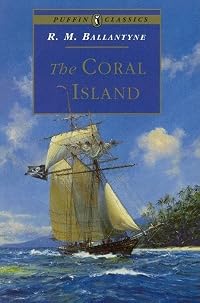
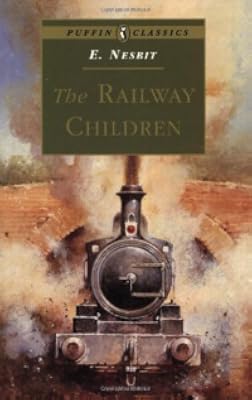
Some of the cover images are misleading; Jack, the eldest of the boys, is already 18 when they are shipwrecked, well-grown and strong. Only Peterkin, at 12 or 13, could be expected to look boyish. Nonetheless, much of the cover art makes all three look roughly 10 years old.
I listened on audio, the narration, by Jim Hodges, from a publishing house for Christian audiobooks, was unpracticed. show less
The whole book has an extremely simple and untheological Christian message: Christianity is good, belief is good and will help you. There are no fine questions of theology on which our hero, show more Ralph, must exercise his mind. This makes the book very different from the Narnia books, which are drenched in theological metaphor.
Some of the cover images are misleading; Jack, the eldest of the boys, is already 18 when they are shipwrecked, well-grown and strong. Only Peterkin, at 12 or 13, could be expected to look boyish. Nonetheless, much of the cover art makes all three look roughly 10 years old.
I listened on audio, the narration, by Jim Hodges, from a publishing house for Christian audiobooks, was unpracticed. show less
I came to this book via researching Lord of the Flies by William Golding (which I will be rereading shortly). Golding wrote his book as a counterpoint to Ballantyne's The Coral Island so, having never read it, I thought I'd give it a go before reading Lord of the Flies. The Coral Island is about three boys who are precariously shipwrecked on an island in the south Pacific Ocean. It is told by Ralph Rover, one of the boys, in first-person as an adult, reminiscing about his time stranded in the South Pacific. The book is steeped in Christian morality and is somewhat hindered by the narrator and author's limited worldview. The first 60% of the book is about the boys' time on the pristine island and they encounter few dangers except for a show more shark that happens into their favorite swimming bay. When the boys encounter cannibals that land on their island, then Ralph is kidnapped by pirates soon after, the plot finally revs up, at the behest of losing the presence of two of the boys since they remained on the island. Ultimately, the novel is bogged down by the Christian moralizing, where as the pirates and cannibals are the salacious counterpoint to the Christian crusaders that convert the heathen cannibals and offer an assist to the boys when they needed it most. I found this novel to be more of a historical document than a fun read. Although the relationship between the boys was sweet and realistic, the rest of the book left little to be desired in this modern reader.
I'm looking forward to rereading Lord of the Flies and see how Golding used his novel to respond to Ballantyne's The Coral Island. show less
I'm looking forward to rereading Lord of the Flies and see how Golding used his novel to respond to Ballantyne's The Coral Island. show less
Shipwrecks and Pirates and Cannibals, Oh My!
Young Adult adventure novel from 1857 set in the South Seas is a tad overwritten for today's reader but still a good yarn nonetheless. Natural history descriptions are surprisingly accurate given when it was written. Recommended for preteen boys whose mothers don't mind gruesome descriptions of cannibalistic practices.
Young Adult adventure novel from 1857 set in the South Seas is a tad overwritten for today's reader but still a good yarn nonetheless. Natural history descriptions are surprisingly accurate given when it was written. Recommended for preteen boys whose mothers don't mind gruesome descriptions of cannibalistic practices.
Members
- Recently Added By
Lists

Favorite Childhood Books
1,646 works; 514 members

Robinsonade Novels
55 works; 4 members
1001 Children's Books You Must Read Before You Grow Up
774 works; 101 members

Books mentioned in The Diary of a Provincial Lady
59 works; 4 members

Young and dangerous!
8 works; 1 member

Books Read in 2021
5,361 works; 114 members

Books Read in 2023
5,547 works; 145 members

Before Austen Comes Aesop
318 works; 9 members

Survival, islands -- children's/young adult fiction
123 works; 7 members

Survival, shipwrecks -- children's/young adult fiction
104 works; 4 members
Author Information

132+ Works 4,192 Members
Awards and Honors
Series

Belongs to Publisher Series
Work Relationships
Is contained in
Is abridged in
Has as a commentary on the text
Common Knowledge
- Canonical title*
- La isla de coral
- Original title
- The Coral Island
- Original publication date
- 1857
- People/Characters
- Ralph Rover; Jack Martin; Peterkin Gay; Bloody Bill; Romata; Tararo (show all 7); Avatea
- Important places
- Coral Island; Penguin Island; Emo; Mango Island
- First words
- Roving has always been, and still is, my ruling passion, the joy of my heart, the very sunshine of my existence.
- Quotations
- I was surrounded on all sides by human beings of the most dreadful character, to whom the shedding of blood was mere pastime. On shore were the natives, whose practices were so horrible that I could not think of them without... (show all) shuddering. On board were none but pirates of the blackest dye, who, although not cannibals, were foul murderers, and more blameworthy even than the savages, inasmuch as they knew better.
We had no difficulty now in managing our sails, for Jack was heavy and powerful, while Peterkin was active as a kitten. Still, however, we were a very insufficient crew for such a vessel, and if any one had proposed to us to... (show all) make such a voyage in it before we had been forced to go through so many hardships from necessity, we would have turned away with pity from the individual making such proposal as from a madman. I pondered this a good deal, and at last concluded that men do not know how much they are capable of doing till they try, and that we should never give way to despair in any undertaking, however difficult it may seem:—always supposing, however, that our cause is a good one, and that we can ask the divine blessing on it. - Last words
- (Click to show. Warning: May contain spoilers.)That night, as we sat on the taffrail gazing out upon the wide sea and up into the starry firmament, a thrill of joy, strangely mixed with sadness, passed through our hearts; for we were at length “homeward bound” and were gradually leaving far behind us the beautiful, bright-green coral islands of the Pacific Ocean.
- Publisher's editor*
- Espasa-Calpe, S.A.
- Original language*
- Inglés
*Some information comes from Common Knowledge in other languages. Click "Edit" for more information.
Classifications
Statistics
- Members
- 1,468
- Popularity
- 15,875
- Reviews
- 33
- Rating
- (3.38)
- Languages
- 10 — Dutch, English, Finnish, French, Greek, Norwegian (Bokmål), Portuguese, Spanish, Swedish, Turkish
- Media
- Paper, Audiobook, Ebook
- ISBNs
- 153
- UPCs
- 2
- ASINs
- 77