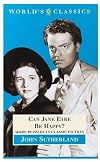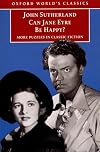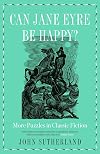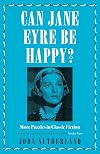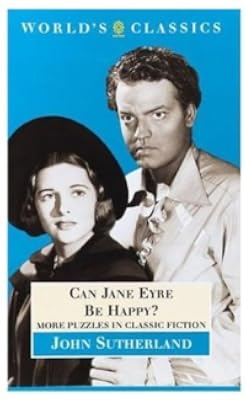
Can Jane Eyre Be Happy? More Puzzles in Classic Fiction
by John Sutherland
Puzzles in Classic Fiction (2)
On This Page
Description
The exciting sequel to the enormously successful Is Heathcliff A Murderer?, John Sutherland's latest collection of literary puzzles, Can Jane Eyre Be Happy? turns up unexpected and brain-teasing aspects of the range of canonical British and American fiction represented in the World's Classics list. With bold imaginative speculation he investigates thirty-four literary conundrums, ranging from Daniel Defoe to Virginia Woolf. Covering issues well beyond the strict confines of Victorian show more fiction, Sutherland explores the questions readers often ask but critics rarely discuss: Why does Robinson Crusoe find only one footprint? How does Magwitch swim to shore with a great iron on his leg? Where does Fanny Hill keep her contraceptives? Whose side is Hawkeye on? And how does Clarissa Dalloway get home so quickly? As in its universally well received predecessor, the questions and answers in Can Jane Eyre Be Happy? are ingenious and convincing, and return the reader with new respect to the great novels they celebrate. show lessTags
Recommendations






















Member Recommendations


Member Reviews
In this book, a follow-up to his Is Heathcliff a Murderer?, Sutherland seeks to answer questions that most of us have never asked. Some are unanswerable, except by reaching for that old chestnut, "even Homer nods"! But, for others, he actually comes up with reasonable (or not wildly unreasonable) explanations. And it's rather fun getting there.
Have you ever wondered what is in Heathcliff's will? Or what the Prynnes were doing in Boston? Neither have I. Nevertheless, I enjoyed Sutherland's attempts to answer these and other literary conundrums. He has a fine sense of humor, taking none of this too seriously. His disquisition on the question, "What is Elfride's rope made of?" (Thomas Hardy's A Pair of Blue Eyes, had me in stitches. It's show more not even necessary to have read the books (does anyone, not a college English major, actually read Ford Maddox Ford's The Good Soldier these days), you'll find plenty of diversion, anyway. show less
Have you ever wondered what is in Heathcliff's will? Or what the Prynnes were doing in Boston? Neither have I. Nevertheless, I enjoyed Sutherland's attempts to answer these and other literary conundrums. He has a fine sense of humor, taking none of this too seriously. His disquisition on the question, "What is Elfride's rope made of?" (Thomas Hardy's A Pair of Blue Eyes, had me in stitches. It's show more not even necessary to have read the books (does anyone, not a college English major, actually read Ford Maddox Ford's The Good Soldier these days), you'll find plenty of diversion, anyway. show less
Sutherland is an expert in Victorian literature, and has a ability to write about it in a way that is educational without being pompous, stuffy, or academic. In fact, I wish I would have had his examples of essays before I started on my university career. Anyway, I've enjoyed them now. This is a collection of 32 essays on conundrums you may or may not have noticed while reading the classics. He extends his time period on either side of 19th century, and finishes with an excellent essay on Mrs Dalloway titled "Clarissa's Invisible Taxi."
including:
Where does Fanny Hill keep her contraceptives? (Memoirs of a Woman of Pleasure)
How many pianos has Amelia Sedley? (Vanity Fair)
Is Black Beauty gelded? (Black Beauty)
What cure for the madwoman in the attic? (The Yellow Wallpaper)
Wanted deaf-and-dumb dog feeder (The Hound of the Baskervilles)
After the publication of his earlier book, "Is Heathcliff a Murderer?" (which I haven't read), the author was inundated with letters from readers eager to tell him their thoughts about the puzzles he had included and suggest other mysteries for him to investigate, so he had plenty of material for a second book. I've read about a third of the books featured, but the author makes it interesting even for those books that I hadn't read.
Where does Fanny Hill keep her contraceptives? (Memoirs of a Woman of Pleasure)
How many pianos has Amelia Sedley? (Vanity Fair)
Is Black Beauty gelded? (Black Beauty)
What cure for the madwoman in the attic? (The Yellow Wallpaper)
Wanted deaf-and-dumb dog feeder (The Hound of the Baskervilles)
After the publication of his earlier book, "Is Heathcliff a Murderer?" (which I haven't read), the author was inundated with letters from readers eager to tell him their thoughts about the puzzles he had included and suggest other mysteries for him to investigate, so he had plenty of material for a second book. I've read about a third of the books featured, but the author makes it interesting even for those books that I hadn't read.
An enjoyable read even when you haven't actually read some of the classics that are the source of these puzzles.
Ratings
Members
- Recently Added By
Author Information

133+ Works 5,096 Members
John Sutherland was born on October 9, 1938. After graduating from the University of Leicester in 1964, he began his academic career as an assistant lecturer in Edinburgh. He specializes in Victorian fiction, 20th century literature, and the history of publishing. He is Lord Northcliffe Professor Emeritus of Modern English Literature at University show more College, London and is currently teaching at the California Institute of Technology. He writes for The Guardian and is a well-known literary reviewer. He is the author of more than 20 books including Stephen Spender: The Authorized Biography, How to Read a Novel: A User's Guide, The Boy Who Loved Books, Curiosities of Literature, 50 Literature Ideas You Really Need to Know, Lives of the Novelists: A History of Fiction in 294 Lives, and Magic Moments: Life-Changing Encounters with Books, Film, Music. He is also the co-author, with Stephen Fender, of Love, Sex, Death and Words: Tales from a Year in Literature. (Bowker Author Biography) show less
Series

Belongs to Publisher Series
Work Relationships
Is contained in
Is a commentary on the text of
Emma by Jane Austen
Common Knowledge
- Canonical title
- Can Jane Eyre Be Happy? More Puzzles in Classic Fiction
- Original publication date
- 1997
- People/Characters
- Jane Eyre
- First words
- J. Donald Crowley is amusingly exasperated about Defoe's many narrative delinquencies in Robinson Crusoe.
Classifications
Statistics
- Members
- 348
- Popularity
- 90,832
- Reviews
- 4
- Rating
- (3.65)
- Languages
- English
- Media
- Paper, Ebook
- ISBNs
- 6
- ASINs
- 1