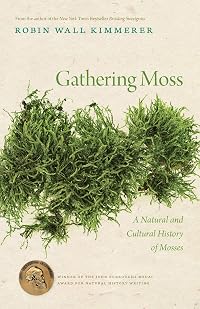
Gathering Moss: A Natural and Cultural History of Mosses
by Robin Wall Kimmerer
On This Page
Description
Living at the limits of our ordinary perception, mosses are a common but largely unnoticed element of the natural world. Gathering moss is a mix of science and personal reflection that invites readers to explore and learn from the elegantly simple lives of mosses. In this series of linked personal essays, Robin Kimmerer leads general readers and scientists alike to an understanding of how mosses live and how their lives are intertwined with the lives of countless other beings. Kimmerer show more explains the biology of mosses clearly and artfully, while at the same time reflecting on what these fascinating organisms have to teach us. Drawing on her experiences as a scientist, a mother, and a Native American, Kimmerer explains the stories of mosses in scientific terms as well as in the framework of indigenous ways of knowing. In her book, the natural history and cultural relationships of mosses become a powerful metaphor for ways of living in the world. show lessTags
Recommendations
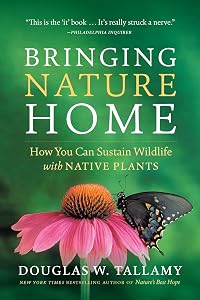
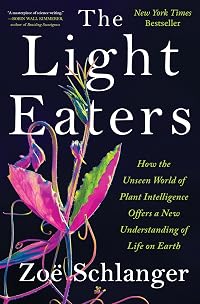
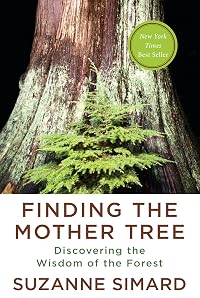
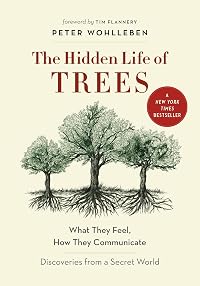
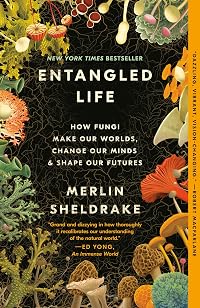
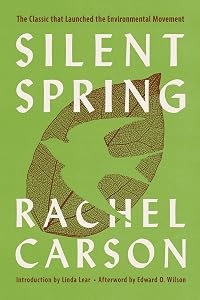
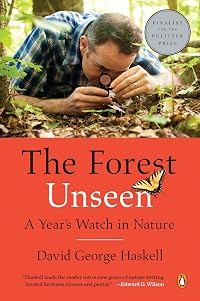
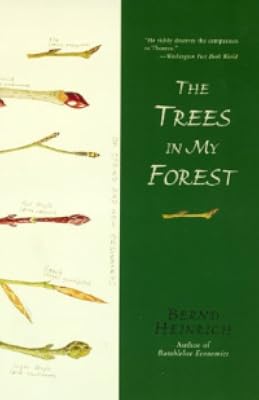

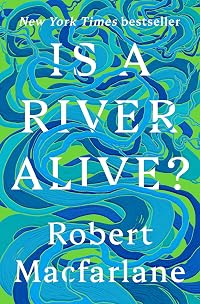
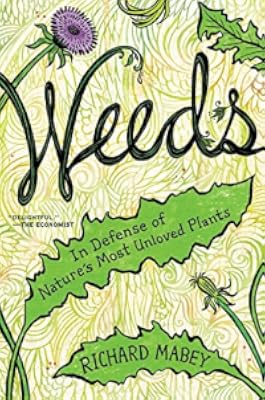

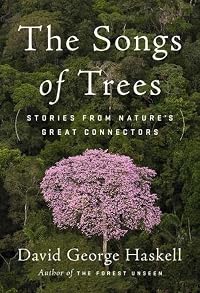
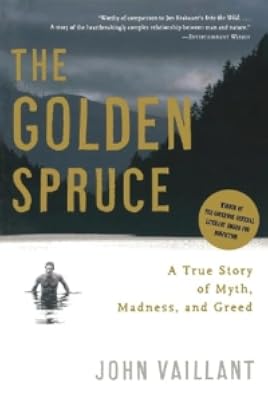
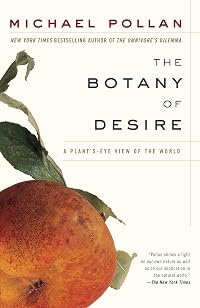
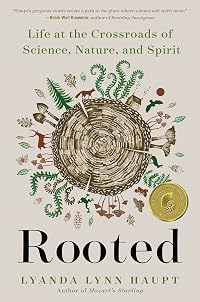
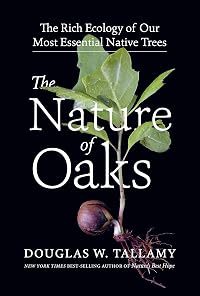
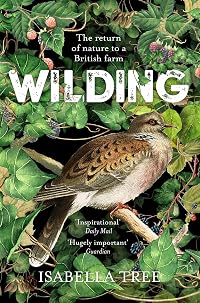
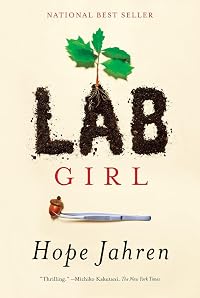
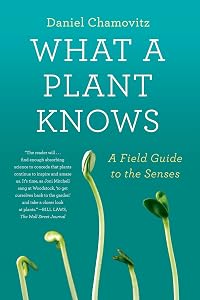
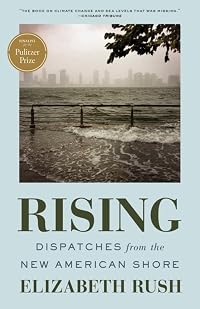
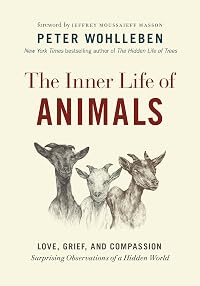
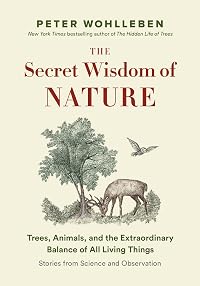
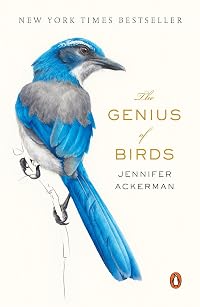

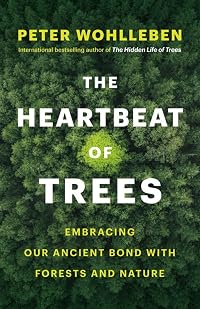
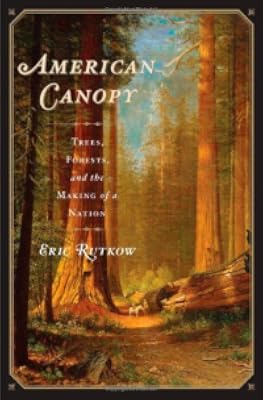
Member Recommendations

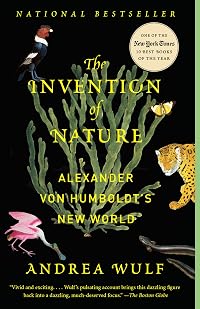
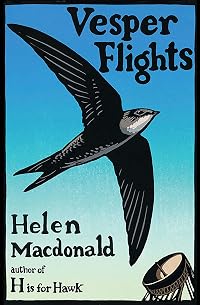
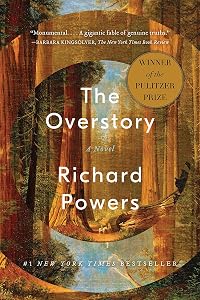
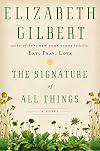
juniperSun both show women engaged in natural science, written in a very personal style, through their activities.
aprille I'd lay dollars to donuts this book was a source for a couple of the scenes in the book. Robin Wall Kimmerer is thanked in the acknowledgments.
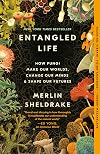
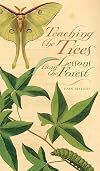
juniperSun both by aware, literate, scientists & professors combining personal experiences with nature study.
Member Reviews
Every bit as good as everyone says. Weaves the Western scientific knowledge of mosses with the Indigenous ways of knowing into a rich tapestry. A lovely balance of new facts to digest and an enjoyable narrative to frame them for easy consumption. I enjoyed following along on the field experiments and the trial-and-error approaches to learning more about these species. Some moments were funny (Splachnum, the moss found only in bogs, on white-tailed deer droppings, which have lain on the peat for four weeks, in July), some were infuriating (the Owner!), and others transcendant.
I got this book as a Christmas gift (because my name is “Moss” of course!), and I wasn’t sure whether it would turn out to be a funny gift or a great read, or maybe both. I’m kind of surprised it really did hit both targets. Robin Wall Kimmerer is a very good writer.
Moss doesn’t really sound that interesting, on the face of it. it can be decorative, or it can be kind of a plant pest. I’ve had it on my lawn, my driveway, my roof, . . . And I admit I’ve tried to kill it in unwanted places. Now I’ve got real respect for mosses!
As Kimmerer explains, moss is “the simplest of plants,” “the most primitive of land plants,” the first plant to make its way out of the water and make a prosperous living for itself on dry show more land. Full respect for that.
What makes mosses distinctive, again in Kimmerer’s own words, is what they lack — “They lack flowers, fruits, and seeds and have no roots. They have no vascular system, no xylem and phloem to conduct water internally.” In their simplicity, though, they also have advantages. They don’t need soil to root in, they aren’t vulnerable to winds, and they have flexible and adaptable reproductive strategies to both thrive in place and expand into new locations. The survival strategies of the most primitive plants and animals are always impressive. I gain in respect for their longevity, compared to our own, whenever I learn about them.
Beyond the subject matter, it’s engrossing just to listen to the passion of someone who loves something that not many people even pay attention to. And her passion is contagious — I’m noticing the mosses growing in my yard and neighborhood with a much more informed and appreciative eye.
A different but really intriguing aspect of Kimmerer’s writing is her respect for different ways of investigating nature. She is a scientist, but she also respects native traditions (she speaks often of her own Potawatomi ancestry), of art as a way of knowing, and of the value of subjective experience as well as the objective stance of traditional western science.
With respect to native traditions, she writes, “In traditional indigenous communities, learning takes a form very different from that in the American public education system. Children learn by watching, by listening, and by experience. . . . The scientific method I was taught in school is like asking a direct question, disrespectfully demanding knowledge rather than waiting for it to be revealed. From [the moss species] Tetraphis, I began to understand how to learn differently, to let the mosses tell their story, rather than wring it from them.”
Repeatedly, she changes perspectives and pursues new methods, as when, puzzled by the reproductive patterns of the Tetraphis pellucida mosses, she says, “. . . I needed to try and see like a moss and not like a human.” Adopting a first person perspective, via a kind of empathic imagination, is not the ideal of objective science. But Kimmerer finds ways to weave unorthodox methods into her scientific training in complementary ways.
Gathering Moss was Kimmerer’s first book. It makes me itch to read her second book — Braiding Sweetgrass: Indigenous Wisdom, Scientific Knowledge and the Teachings of Plants. That one promises to expand on the theme of a variety of ways of investigating and understanding nature that she demonstrates here. show less
Moss doesn’t really sound that interesting, on the face of it. it can be decorative, or it can be kind of a plant pest. I’ve had it on my lawn, my driveway, my roof, . . . And I admit I’ve tried to kill it in unwanted places. Now I’ve got real respect for mosses!
As Kimmerer explains, moss is “the simplest of plants,” “the most primitive of land plants,” the first plant to make its way out of the water and make a prosperous living for itself on dry show more land. Full respect for that.
What makes mosses distinctive, again in Kimmerer’s own words, is what they lack — “They lack flowers, fruits, and seeds and have no roots. They have no vascular system, no xylem and phloem to conduct water internally.” In their simplicity, though, they also have advantages. They don’t need soil to root in, they aren’t vulnerable to winds, and they have flexible and adaptable reproductive strategies to both thrive in place and expand into new locations. The survival strategies of the most primitive plants and animals are always impressive. I gain in respect for their longevity, compared to our own, whenever I learn about them.
Beyond the subject matter, it’s engrossing just to listen to the passion of someone who loves something that not many people even pay attention to. And her passion is contagious — I’m noticing the mosses growing in my yard and neighborhood with a much more informed and appreciative eye.
A different but really intriguing aspect of Kimmerer’s writing is her respect for different ways of investigating nature. She is a scientist, but she also respects native traditions (she speaks often of her own Potawatomi ancestry), of art as a way of knowing, and of the value of subjective experience as well as the objective stance of traditional western science.
With respect to native traditions, she writes, “In traditional indigenous communities, learning takes a form very different from that in the American public education system. Children learn by watching, by listening, and by experience. . . . The scientific method I was taught in school is like asking a direct question, disrespectfully demanding knowledge rather than waiting for it to be revealed. From [the moss species] Tetraphis, I began to understand how to learn differently, to let the mosses tell their story, rather than wring it from them.”
Repeatedly, she changes perspectives and pursues new methods, as when, puzzled by the reproductive patterns of the Tetraphis pellucida mosses, she says, “. . . I needed to try and see like a moss and not like a human.” Adopting a first person perspective, via a kind of empathic imagination, is not the ideal of objective science. But Kimmerer finds ways to weave unorthodox methods into her scientific training in complementary ways.
Gathering Moss was Kimmerer’s first book. It makes me itch to read her second book — Braiding Sweetgrass: Indigenous Wisdom, Scientific Knowledge and the Teachings of Plants. That one promises to expand on the theme of a variety of ways of investigating and understanding nature that she demonstrates here. show less
I wish I knew what I could say to convince everyone I know to read Robin Wall Kimmerer. This book about moss is so beautiful that it brought tears to my eyes several times. She writes in such a uniquely beautiful way that is thought provoking and deeply informative and poetic all at once.
Cannot stress enough... read this woman's books.
Cannot stress enough... read this woman's books.
Lots of fascinating information about moss, which is particularly relevant to those of us who live in the mossy Pacific Northwest! This book definitely gives me a deep appreciation of how fascinating mosses can be, and the important role they play in our soggy temperate rain forest. Kimmerer doesn't just write about moss, though: she writes about how her own personal journeys have influenced how she thinks about moss. Her Native American perspective does not separate science from the rest of life the way Western thought does, and this book is infused with a sense of wonder about mosses as a case study in what it means to be alive for humans and plants alike.
Who would have thought that moss could be so engrossing and fascinating? Having recently developed an interest in botany, I got particularly attracted to plants we take for granted... and yet that have a lot to teach us! Robin Wall Kimmerer delivers here a very short book, but packed with so much information that it will completely change your outlook on such seemingly insignificant organisms. Where to start?
With more than 22,000 different known species so far, moss are not only captivating for their weird biology (e.g. as non-vascular plants able to reproduce by spores as much as by cloning...) but, also, for being stunning ecosystems hosting up to several thousands (!) of micro-organisms. More, they may have been the first plant to show more colonise lands; which would make them key transitional species between primitive aquatic life and the complex terrestrial forms surrounding us! As it is, then, that's quite remarkable enough. But that's not it.
As the author reminds, from their astounding abilities to absorb huge amount of water to their insulating properties, moss have also been playing a key role in our societies both past and present. Was it a good thing? Is it a good thing? Sadly indeed, as always with books dealing with nature, ecological concerns must also be raised. When it comes to moss, such concerns range from our reliance on peat and the impact of stealing it in the wild to serve decorative purposes to the consequences of deforestation in matters of species diversification and natural disturbances. Should we worry?
All in all, if you think that moss don't seem like much then this book will be a welcome outlook that will change the way you see such plants. It is about nature. It is about bryology. It is, also, about us and our future. A fascinating read! show less
With more than 22,000 different known species so far, moss are not only captivating for their weird biology (e.g. as non-vascular plants able to reproduce by spores as much as by cloning...) but, also, for being stunning ecosystems hosting up to several thousands (!) of micro-organisms. More, they may have been the first plant to show more colonise lands; which would make them key transitional species between primitive aquatic life and the complex terrestrial forms surrounding us! As it is, then, that's quite remarkable enough. But that's not it.
As the author reminds, from their astounding abilities to absorb huge amount of water to their insulating properties, moss have also been playing a key role in our societies both past and present. Was it a good thing? Is it a good thing? Sadly indeed, as always with books dealing with nature, ecological concerns must also be raised. When it comes to moss, such concerns range from our reliance on peat and the impact of stealing it in the wild to serve decorative purposes to the consequences of deforestation in matters of species diversification and natural disturbances. Should we worry?
All in all, if you think that moss don't seem like much then this book will be a welcome outlook that will change the way you see such plants. It is about nature. It is about bryology. It is, also, about us and our future. A fascinating read! show less
Gathering Moss: A Natural and Cultural History of Mosses by Robin Wall Kimmerer changed the way I see moss. Before I started reading Gathering Moss, I jokingly told my husband that by the time I finished the book I would probably never let him clear the moss from our yard again. Turns out it was no joke. Kimmerer examines, explains, and describes mosses in a way that had me increasingly appreciating the role they play in our ecosystems. I felt like Kimmerer took me into the forest, the bog, and the river with her as she researched myriad mosses. The microecosystems living within the moss fascinated me while the resiliency of the mosses gave me hope. Kimmerer also shines a very bright light on the destructiveness of people and how that show more destructiveness is sometimes wrapped up in what are expressed as good intentions. Gathering Moss brought me to a place of appreciation for the mosses on my trees, in my yard, and on my porch by making Kimmerer's research feel relevant to my life. show less
If I hadn’t already read Braiding Sweetgrass, I would have never thought that a book on mosses would be so engaging. They’re like triple unpopular, cuz people already don’t care that much about nature, and then plant people are a minority because zoology is more charismatic, and then mosses (bryophytology??) have way less fans than trees or grasses or stuff you can eat. So even though I’m a hardcore plant person, mosses are definitely a gap for me! But as I always say, it’s good to read about stuff you don’t know because if you only read things you’re familiar with there’s no point except for confirmation bias!
Anyway, I think that Robin Wall Kimmerer has a definite formula figured out. Gathering Moss, like Braiding show more Sweetgrass, is just a bunch of thematically-linked essays. Each one starts with a specific ecological case study and then is elegantly linked to some philosophical lesson. And it always surprises me! This book was a lot shorter than Braiding Sweetgrass but covered a lot of the same ground… stuff about the Tragedy of the Commons, or how to pay attention in nature, or the tensions between science and tradition. I want to highlight one of the last essays in the book (as with Braiding Sweetgrass this was sort of weird to read all in one go, and the order the essays were in was questionable, so I definitely think I will revisit them all as standalone pieces. But this one definitely should have been the closer because of how it just left me agape). “The Owner” is one of the saddest “short stories” I’ve ever read, and it’s not even fictional, but a biographical essay. That being said, it hit all the beats of a well written story with what can only be described as a heart-wrenching “plot twist” which I won’t spoil. Even if you don’t read the rest of this book, I would 100% recommend seeking it out for “The Owner” alone. show less
Anyway, I think that Robin Wall Kimmerer has a definite formula figured out. Gathering Moss, like Braiding show more Sweetgrass, is just a bunch of thematically-linked essays. Each one starts with a specific ecological case study and then is elegantly linked to some philosophical lesson. And it always surprises me! This book was a lot shorter than Braiding Sweetgrass but covered a lot of the same ground… stuff about the Tragedy of the Commons, or how to pay attention in nature, or the tensions between science and tradition. I want to highlight one of the last essays in the book (as with Braiding Sweetgrass this was sort of weird to read all in one go, and the order the essays were in was questionable, so I definitely think I will revisit them all as standalone pieces. But this one definitely should have been the closer because of how it just left me agape). “The Owner” is one of the saddest “short stories” I’ve ever read, and it’s not even fictional, but a biographical essay. That being said, it hit all the beats of a well written story with what can only be described as a heart-wrenching “plot twist” which I won’t spoil. Even if you don’t read the rest of this book, I would 100% recommend seeking it out for “The Owner” alone. show less
Members
- Recently Added By
Lists

Recommended Nature Writing
346 works; 180 members

To Read - Non Fiction
46 works; 4 members

Habitat Hero books
37 works; 1 member
Author Information

22+ Works 10,440 Members
Robin Wall Kimmerer is a mother, scientist, decorated professor, and enrolled member of the Citizen Potawatomi Nation. Her first book, Garhering Moss, was awarded the John Burroughs Medal for outstanding nature writing. Her writings haw appeared in Orion, O Magazine, and numerous scientific journals. She lives in Fablus, New York, where she is show more SUNY Distinguished Teaching Professor of Environmental Biology, and the founder and director of the Center for Native Peoples and the Environment. show less
Some Editions
Awards and Honors
Awards
Work Relationships
Is contained in
Common Knowledge
- Canonical title
- Gathering Moss: A Natural and Cultural History of Mosses
- Original publication date
- 2003
- Important places
- Kickapoo River
- Dedication
- For my family
- First words
- Preface: Seeing the world through Moss-colored Glasses
My first conscious memory of "science" (or was it religion?) comes from my kindergarten class, which met in the old Grange Hall. We all ran to press our noses to the... (show all) frosty windows when the first intoxicating flakes of snow began to fall. Miss Hopkins was too wise a teacher to try and hold back the excitement of five-year olds on the occasion of the first snow, and out we went. In boots and mittens, we gathered around her in the soft swirl of white. From the deep pocket of her coat she took a magnifying glass.
Barefoot, I've walked this path by night for nearly twenty years, most of my life it seems, the earth pressing up against the arch of my foot. More often than not, I leave my flashlight behind, to let the path carry me home ... (show all)through the Adriondack darkness. My feet touching the ground are like fingers on the piano, playing from memory an old sweet song, of pine needles and sand. - Last words
- (Click to show. Warning: May contain spoilers.)In return for such a gift, the only sane response is to glitter in reply.
- Original language
- English
Classifications
- Genres
- Science & Nature, Nonfiction, General Nonfiction
- DDC/MDS
- 588.2 — Natural sciences & mathematics Plants (Botany) Bryophyta Musci
- LCC
- QK537 .K56 — Science Botany Botany Cryptogams
- BISAC
Statistics
- Members
- 1,476
- Popularity
- 15,817
- Reviews
- 37
- Rating
- (4.29)
- Languages
- Chinese, English, German, Spanish
- Media
- Paper, Audiobook, Ebook
- ISBNs
- 18
- ASINs
- 8