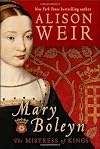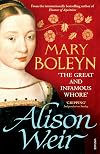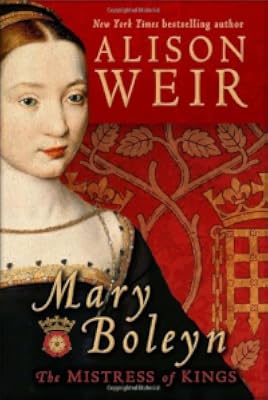
Mary Boleyn: The Mistress of Kings
by Alison Weir
On This Page
Description
Presents a historical profile of Henry VIII's mistress and the sister of Anne Boleyn, examining her affair with Francis I of France, rise and fall in the Tudor court, and obscure later years after she married for love.Tags
Recommendations
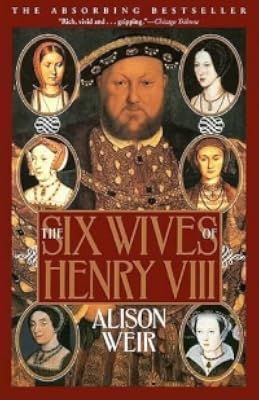
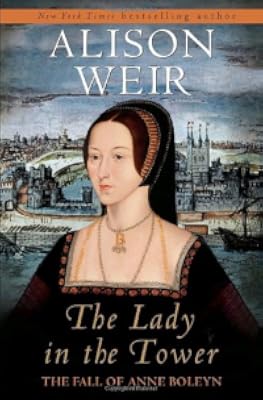
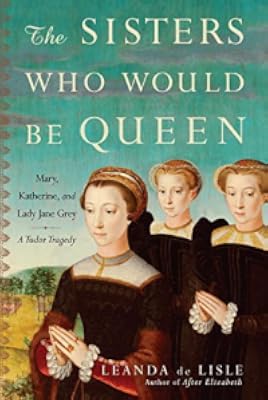
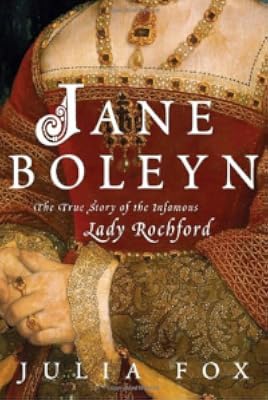


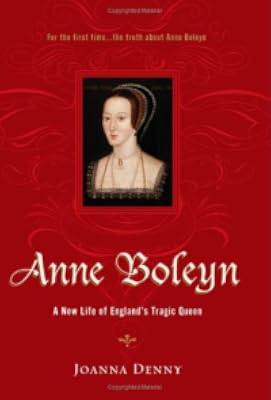

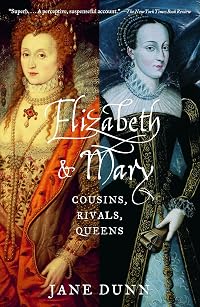
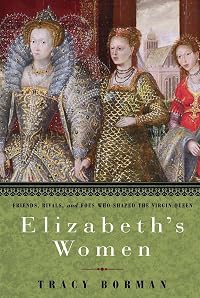
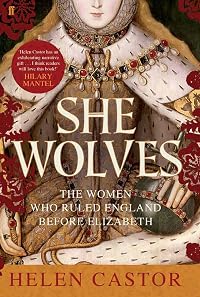
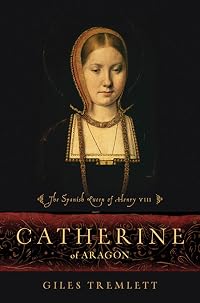
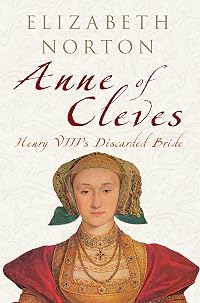
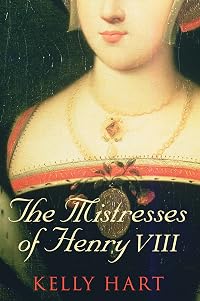
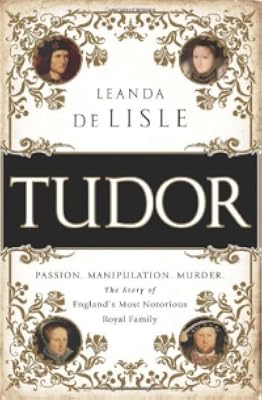



Member Recommendations
PuddinTame Robert Carey, hero of the swashbuckling series of mysteries by P. F. Chisholm, was grandson of Mary Boleyn
Member Reviews
3.5 stars
This is a nonfiction “biography” of Mary Boleyn. Mary lived during the first half of the 16th century, and was most likely a mistress to Henry VIII before he divorced his first wife, Kathrine of Aragon, and married Mary’s sister, Anne Boleyn.
There really isn’t a whole lot known about Mary, so the author took a lot of sources, both primary and secondary, and analyzed them to figure out what she could of Mary’s life. I expected this. She did also explain why she thought some of the sources were (likely) correct or not. So there is still much speculation, but the author did want to correct some obvious things that people think about Mary due to recent popular movies and tv shows (that, yes, I also enjoyed!).
I did learn show more a little bit, too: apparently, the likely affair between Henry and Mary was the same in the minds of people at the time, with regard to not allowing Henry and Anne to marry, as Henry marrying Katherine (his brother’s widow), which is what Henry used to annul his first marriage – it was considered incest, and shouldn’t have allowed him to marry Anne. But no one (at least who was willing to outwardly oppose Henry and Anne’s marriage) knew about it to bring it up.
This is, of course, a bit of a longer read, not in terms of pages, but it’s nonfiction, so a little more dense. But, still interesting! show less
This is a nonfiction “biography” of Mary Boleyn. Mary lived during the first half of the 16th century, and was most likely a mistress to Henry VIII before he divorced his first wife, Kathrine of Aragon, and married Mary’s sister, Anne Boleyn.
There really isn’t a whole lot known about Mary, so the author took a lot of sources, both primary and secondary, and analyzed them to figure out what she could of Mary’s life. I expected this. She did also explain why she thought some of the sources were (likely) correct or not. So there is still much speculation, but the author did want to correct some obvious things that people think about Mary due to recent popular movies and tv shows (that, yes, I also enjoyed!).
I did learn show more a little bit, too: apparently, the likely affair between Henry and Mary was the same in the minds of people at the time, with regard to not allowing Henry and Anne to marry, as Henry marrying Katherine (his brother’s widow), which is what Henry used to annul his first marriage – it was considered incest, and shouldn’t have allowed him to marry Anne. But no one (at least who was willing to outwardly oppose Henry and Anne’s marriage) knew about it to bring it up.
This is, of course, a bit of a longer read, not in terms of pages, but it’s nonfiction, so a little more dense. But, still interesting! show less
This is a very well researched book into the life of Mary Boleyn, who is far from being the well known easy sexpot or the sacrificial victim of her father’s ambition she is so often portrayed being. She may have briefly been the mistress of the king of France. If so, no one talked about it much, and far from being pleased by it, her father was furious & possibly sent her off to live with distant relatives for a few years to learn better behavior. Weir shows that he also didn’t benefit by her being Henry’s mistress, an affair that was so shrouded in secrecy at the time it only became known well after he began pursuing a divorce from Katherine. Mary’s father is no more likeable from Weir’s perspective but he isn’t an orge show more building a career on the backs of his children either.
She shows, with some detail, that Mary’s daughter was probably Henry’s and that Mary’s first husband Will Carey was not some nobody foisted off on her to cover for her affair with Henry, as has so often been said, but actually quite a fine catch & they were married well before the affair began. Weir redeems Mary’s character with plenty of well footnoted facts & follows her life from start to finish, as well as debunking some myths about who Henry’s illegitimate children are, his ‘prudishness’ and whether or not he had syphilis.
You need to have a decent grounding in Tudor history for this book. There are assumptions of knowledge regarding various historic events and personalities that are part of Mary’s story.
I really liked this one. Weir’s style is engaging & easy to read. show less
She shows, with some detail, that Mary’s daughter was probably Henry’s and that Mary’s first husband Will Carey was not some nobody foisted off on her to cover for her affair with Henry, as has so often been said, but actually quite a fine catch & they were married well before the affair began. Weir redeems Mary’s character with plenty of well footnoted facts & follows her life from start to finish, as well as debunking some myths about who Henry’s illegitimate children are, his ‘prudishness’ and whether or not he had syphilis.
You need to have a decent grounding in Tudor history for this book. There are assumptions of knowledge regarding various historic events and personalities that are part of Mary’s story.
I really liked this one. Weir’s style is engaging & easy to read. show less
 This review was written for LibraryThing Early Reviewers.
Like Alison Weir's other works, this is a well written and closely argued examination of the life of its subject that provides about the best account of that life that we are ever likely to have, given that we know comparatively little that is hard fact about Mary Boleyn's life compared to that of her far more famous sister. That said, there is also much about Anne we don't know, and there are differing views about which sister was the elder and in which years they were born, views which Weir analyses carefully to come into what seems to be the likeliest conclusion that Mary was the elder and that they were born around the turn of the 15th/16th centuries. Mary's reputation as encapsulated in the subtitle here is based on her having had show more a brief affair with the French King Francois I (a notorious philanderer) and her later being a mistress of Henry VIII (surprisingly perhaps to some readers, not quite as much so); but these affairs were by no means so significant and long-lasting as is sometimes supposed, were not generally known about at the time, and likely not entered into willingly. Mary was twice married. Her first marriage was to William Carey, by whom she had two children; her daughter Katherine may have been the King's, whereas her son Henry almost certainly wasn't, contrary to screen depictions, including in The Other Boleyn Girl. The evidence for the paternity of these children is also painstakingly examined to arrive at those conclusions. After a period of widowhood following Carey's death in the sweating sickness epidemic of 1528, Mary then married for love a much younger man, William Stafford. Her story therefore ends relatively happily with some nine years of happy marriage before peacefully dying in 1543 in her mid 40s (a not unreasonable life span for a woman at that time), certainly compared to her sister Anne and her brother George, both of course executed back in 1536. So she was really the "most happy" sibling, more deserving of that epithet than Anne. One of the most shocking aspects of the siblings' stories is in some ways is the ruthlessness of their father Thomas Boleyn who "showed himself willing to participate in the destruction of two of his children in order to protect himself and salvage his own position and career". All in all, a fascinating look at a life just outside King Henry's charmed circle. show less
Anyone with a passing knowledge of British history knows about Anne Boleyn, her marriage to Henry VIII and subsequent execution (not to mention her brilliant daughter Elizabeth I), but fewer have heard of her elder sister Mary. And no wonder: Mary Boleyn was less colourful than Anne, but managed to get into a lot of trouble by first, having a brief affair with Francois I of France when she was probably a teenager and then having a longer affair with Henry VIII himself, during his first marriage (to Katherine of Aragon) and before he began courting Anne. These affairs were very discreet and were also covered up, particularly the latter one, especially because Henry’s argument for divorcing Katherine was that she had previously been the show more wife of his older brother, which in those times meant his marriage to her was incestuous. Well, clearly if that was true, then Henry’s affair with Mary rendered his later marriage to Anne equally incestuous, and that was something he definitely didn’t want to be known publicly. Alison Weir is a first-rate historian, and she uses extensive primary sources to document exactly what happened to Mary, in addition to debunking various incorrect assertions about her (for example, that Mary was the younger daughter rather than the elder). The time of Henry’s reign was a tumultuous and fascinating one, but Weir manages to keep everything lucid and clear. It’s been a while since I’ve read any history, but this book makes me want to return to that subject again and again; recommended. show less
Anne Boleyn and Henry VIII had a love affair that catalyzed a political and religious revolution in England. But years before they married, Henry had an affair--no one knows for how long, or how serious--with Anne's sister Mary. After writing numerous books about Henry VIII and his wives, Weir has set out to delve into the history of Mary Boleyn.
The problem is, there isn't much history to delve into. We have two letters by her, and some information about her travels during young adulthood. But we don't know what she looked like (no portrait has been authenticated, and the portraits associated with her have a very low probability of actually being her), or what color hair she had, or when she was born, or if she was older or younger than show more Anne, or when she left France, or what her feelings were about any of the men in her life, or who fathered some of her children, or how many children she had, or anything at all, really. And that's my issue with this book. Weir has clearly put in due diligence to discover everything she can find about Mary, but there just doesn't seem to be much known. And so instead the majority of this book is taken up with either mocking other scholars' theories about Mary (and rightfully so--the fanciful, downright prurient language they use to describe this woman they know nothing about, whose sex life is a near complete mystery to everyone, is shockingly unprofessional) or making up her own theories.
I've been impressed with Weir's scholarship and careful weighing of fact vs possibilities before, but I think she goes a bit overboard into fiction here. She theorizes all sorts of things, based on very little evidence indeed. One of Mary's children named one of her children "William," and from this Weir concludes that William Stafford was a good step-father to the Mary's children and that they loved him. What the heck? William is a perfectly ordinary, very common name! Or Weir uses the royal imagery in a poem by Sir Philip Sidney (when he was courting Katherine Carey, Mary's eldest child) as proof that Katherine was secretly Henry VIII's bastard daughter. Again, that's very flimsy indeed! By the end of the "biography," I was very frustrated with Weir. I think she did her reputation more harm than good with this book. show less
The problem is, there isn't much history to delve into. We have two letters by her, and some information about her travels during young adulthood. But we don't know what she looked like (no portrait has been authenticated, and the portraits associated with her have a very low probability of actually being her), or what color hair she had, or when she was born, or if she was older or younger than show more Anne, or when she left France, or what her feelings were about any of the men in her life, or who fathered some of her children, or how many children she had, or anything at all, really. And that's my issue with this book. Weir has clearly put in due diligence to discover everything she can find about Mary, but there just doesn't seem to be much known. And so instead the majority of this book is taken up with either mocking other scholars' theories about Mary (and rightfully so--the fanciful, downright prurient language they use to describe this woman they know nothing about, whose sex life is a near complete mystery to everyone, is shockingly unprofessional) or making up her own theories.
I've been impressed with Weir's scholarship and careful weighing of fact vs possibilities before, but I think she goes a bit overboard into fiction here. She theorizes all sorts of things, based on very little evidence indeed. One of Mary's children named one of her children "William," and from this Weir concludes that William Stafford was a good step-father to the Mary's children and that they loved him. What the heck? William is a perfectly ordinary, very common name! Or Weir uses the royal imagery in a poem by Sir Philip Sidney (when he was courting Katherine Carey, Mary's eldest child) as proof that Katherine was secretly Henry VIII's bastard daughter. Again, that's very flimsy indeed! By the end of the "biography," I was very frustrated with Weir. I think she did her reputation more harm than good with this book. show less
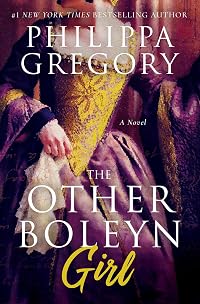
Alison Weir has done a good job cobbling together the little evidence there is of Mary Boleyn's life. I enjoyed her thorough investigation and the opportunities she gives the reader to formulate your own opinion of the subject. Having read the disastrous The Other Boleyn Girl, which I found to be a romance retelling the scandalous gossip told by detractors of Anne Boleyn, I much appreciate Weir's clean telling of the facts as they are and the conjectures suggested by contemporary sources. This is not a rollicking romantic summer read, but a serious study of a woman who had far more impact than most realize.
In a word: DULL. When a 400-page biography starts out by telling you that very little factual information is known about its subject, I guess you should know what to expect: a lot of repetition (to the point of irritation), endless debunking of what others have stated as fact, and vague speculations about what "may have" happened, been thought, or been felt. The result was a real bore. The writing is flat and, again, repetitive, not only in details but in phrasing, and the chronology is fractured. There is so little focus as she jumps between persons peripherally related to May's story that at times I even forgot that I was supposedly reading a biography of Mary Boleyn. I kept thinking that Weir was finally running out of Tudor-era show more women to write about.
A number of readers have defended Weir's tedious style, claiming that it is simply because the book is not fiction but rather "academic." As an academic specializing in Tudor England, I can attest to the fact that an academic book can indeed be an exciting read--as have been several of Weir's previous biographies.
I'm giving the book 1.5 stars on the basis of her research but was sorely tempted to downgrade the score to only one. After reading the other reviews posted here, I'm surprised that so many readers, after making many valid criticisms of the book or stating outright that it was boring, still gave it three or four stars, resulting in an overall rating of 3.69. Since most had received LTER copies, perhaps they thought that giving the book a score below three would affect their chances of getting future ARCs? show less
A number of readers have defended Weir's tedious style, claiming that it is simply because the book is not fiction but rather "academic." As an academic specializing in Tudor England, I can attest to the fact that an academic book can indeed be an exciting read--as have been several of Weir's previous biographies.
I'm giving the book 1.5 stars on the basis of her research but was sorely tempted to downgrade the score to only one. After reading the other reviews posted here, I'm surprised that so many readers, after making many valid criticisms of the book or stating outright that it was boring, still gave it three or four stars, resulting in an overall rating of 3.69. Since most had received LTER copies, perhaps they thought that giving the book a score below three would affect their chances of getting future ARCs? show less
Members
- Recently Added By
Lists

KayStJ's to-read list
1,616 works; 11 members
Talk Discussions
Past Discussions
Mary Boleyn: The Mistress of Kings by Alison Weir (August 2011 batch) in Reviews of Early Reviewers Books (January 2012)
Author Information

75+ Works 37,471 Members
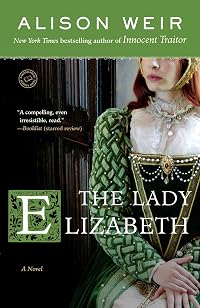
Alison Weir was born in London, England on July 8, 1951. She received training to be a teacher with a concentration in history from the North Western Polytechnic. Before becoming a full-time writer, she worked as a civil servant and ran her own school for children with learning difficulties from 1991 to 1997. Her first book, Britain's Royal show more Families, was published in 1989. Her other books include The Six Wives of Henry VIII; Children of England; Eleanor of Aquitaine; Henry VIII: King and Court; Mary, Queen of Scots; and Isabella. Her first novel, Innocent Traitor, was published in 2006. Her other novels include The Lady Elizabeth, The Lady in the Tower: The Fall of Anne Boleyn, The Captive Queen, A Dangerous Inheritance, and Katherine of Aragon, the True Queen. (Bowker Author Biography) show less
Common Knowledge
- Canonical title
- Mary Boleyn: The Mistress of Kings
- Alternate titles
- Mary Boleyn: The Great and Infamous Whore
- Original publication date
- 2011-10-04
- People/Characters
- Mary Boleyn; Henry VIII, King of England; François I, King of France; Anne Boleyn; Elizabeth Blount; George Boleyn (show all 21); Thomas Boleyn, 1st Earl of Wiltshire and 1st Earl of Ormond, 1st Viscount Rochford; Henry Carey, 1st Baron Hunsdon; Katherine Carey, Lady Knollys; William Carey; Claude of France, Queen Consort of France and Duchess of Brittany (1499-1524); Thomas Cromwell, 1st Earl of Essex; Elizabeth I, Queen of England; Elizabeth Howard, Countess of Wiltshire and Ormond; Catherine of Aragon; Mary I, Queen of England; Jane Boleyn; Edward Stafford, 3rd Duke of Buckingham; Sir William Stafford; Mary Tudor, Queen of France; Thomas Wolsey
- Important places
- London, England, UK; France; England, UK; Greenwich Palace, London, England, UK; Hever Castle, Kent, England, UK; Tower of London, London, England, UK
- Dedication
- This book is gratefully dedicated to
my editor, Anthony Whittome,
to mark his retirement - First words
- Introduction
Mary Boleyn has gone down in history as a "great and infamous whore."
Chapter 1
Blickling Hall, one of England's greatest Jacobean showpiece mansions, lies not two miles northwest of Aylsham in Norfolk. - Last words
- (Click to show. Warning: May contain spoilers.)And of all the three Boleyn siblings, she alone lived into middle age and died in her bed.
- Publisher's editor
- Whittome, Anthony; Porter, Susanna
Classifications
- Genres
- History, Nonfiction, Biography & Memoir, General Nonfiction
- DDC/MDS
- 942.05 — History & geography History of Europe England and Wales England 1485-1603, Tudors
- LCC
- DA335 .B66 .W54 — History of Europe, Asia, Africa and Oceania Great Britain History of Great Britain England History By period Modern, 1485- Tudors, 1485-1603
- BISAC
Statistics
- Members
- 813
- Popularity
- 33,994
- Reviews
- 53
- Rating
- (3.59)
- Languages
- English
- Media
- Paper, Audiobook, Ebook
- ISBNs
- 21
- ASINs
- 8