On This Page
Description
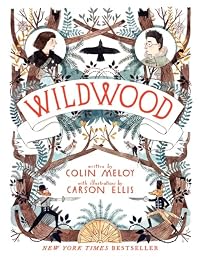
When her baby brother is kidnapped by crows, seventh-grader Prue McKeel ventures into the forbidden Impassable Wilderness--a dangerous and magical forest in the middle of Portland, Oregon--and soon finds herself involved in a war among the various inhabitants.Tags
Recommendations
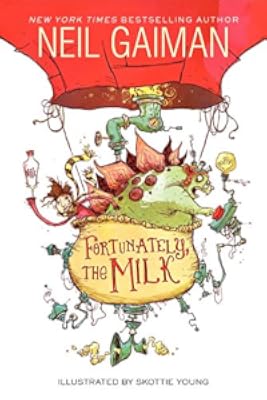
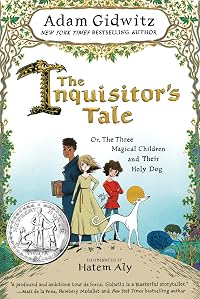
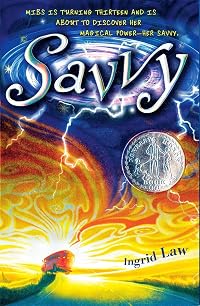
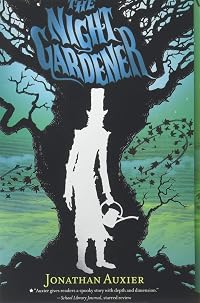


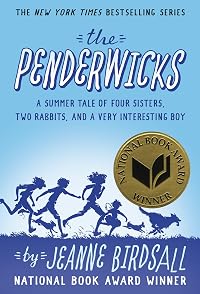
Member Recommendations
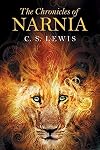
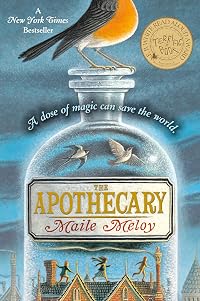
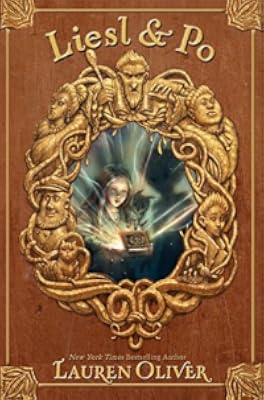
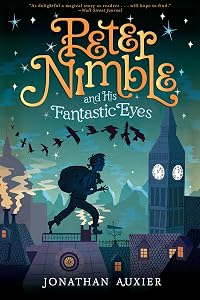
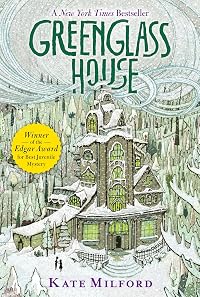
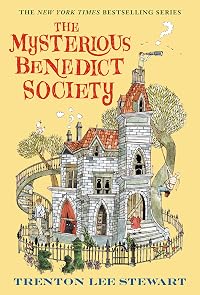
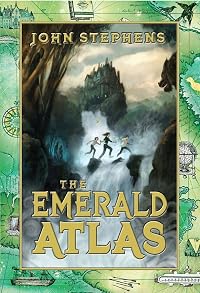
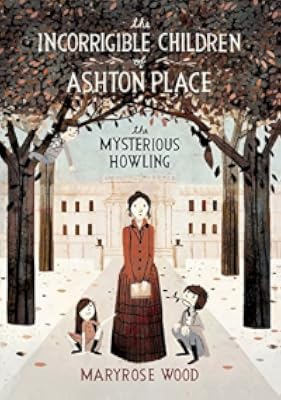
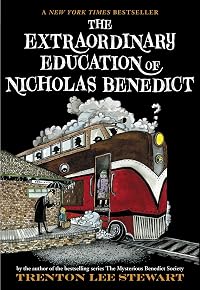
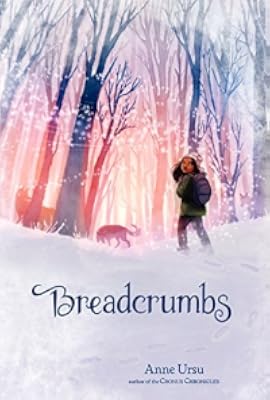
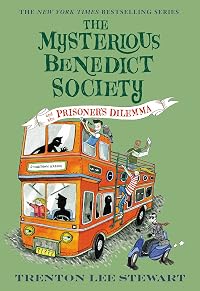
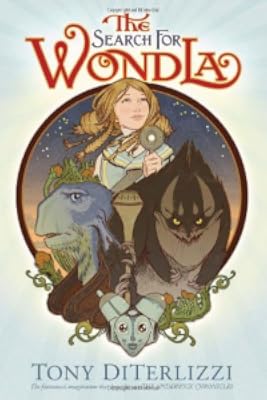
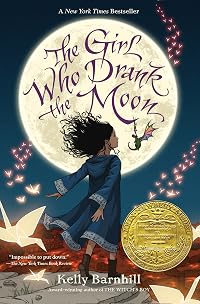
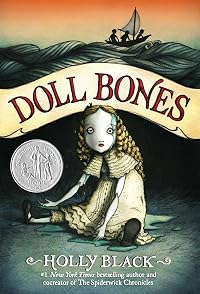
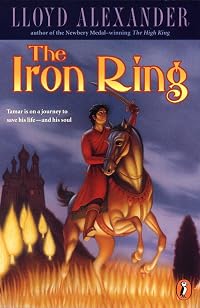
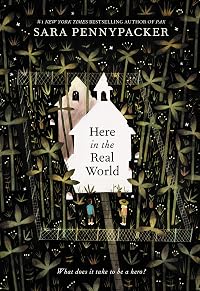
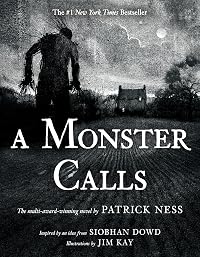
cdcottam1 Both works are beautifully mystical and fantastical! Wildwood has many of the fantastical themes of Narnia without the blatantly religious undertones while still containing good moral lessons.
51

Member Reviews
Vitriolic Diatribe Alert!
Wildwood, by Colin Meloy, is a middle grade fantasy about Prue McKeel, whose baby brother Mac is abducted by crows and brought into the Impassable Wilderness (called the Wildwood, by locals) and its problems. The Wildwood is a series of loosely aligned townships that are in danger from the nefarious Dowager Governess. I was first attracted to Wildwood because of Meloy’s work with The Decemberists, an alternative rock band with intelligent, storytelling songs which speak of such things as ventricles being rent apart and ghosts wandering along parapets. I wanted to see how Meloy, clearly a creative and imaginative fellow, dealt with incorporating the fantastical into his novel.
Unfortunately, I
The story begins with Mac being kidnapped by crows. What a fantastic way to begin a book! But after that first paragraph we are dropped into a seven page flashback of needless information of what happened earlier that day.
Well and truly my biggest complaint about the book are the unrealistic scenes and absurd character decisions.
On more than a few occasions, Meloy set out to build tension in a scene, but the scenes are so poorly handled that they did little more than frustrate me as a reader. In one scene, Prue is hiding in a lidded kindling hamper with a few pieces of newspaper on top of her head, which she has actually pulled from underneath herself. She does this while surrounded by soldiers. A soldier reaches in and grabs the top paper and is distracted by the headline. This is simply ridiculous. There are so many problems with this scene it’s preposterous:
• It would be very difficult, nearly impossible, to pull the papers out from underneath herself within the confines of the hamper.
• Never mind doing it while escaping detection from the soldiers surrounding her.
• While there are anywhere from 5-10 soldiers searching this one room, she’s peeking out from the hamper! The soldiers would most certainly see her.
• When the soldier pulls off the lid to the hamper, there is simply no way that one would mistake a few sheets of newspaper on top of a person for a stack of newspapers. The shadowing is very different and the paper rests flat not convexly.
At least two other scenes come across this poorly, once when Prue is hiding out in a wooden box being smuggled out of the city, and another when Curtis, another main character, is leaping from a cage to escape from not only imprisonment, but the laws of physics.
There are also consistent and persistent decisions on the parts of characters that either don’t ring true, or are simply stupid.
When Prue tells her parents that she’s going to go rescue her baby brother, her father tries to stop her by saying: “Don’t do this, Prue,” said her father. His voice was weak, tired. “We can by happy, the three of us” (338). What father is going write off his baby son and allow his daughter to go off and attempt a rescue? It’s an infuriating violation of what nearly any father would say.
Another example is when Prue announces her arrival in the Wildwood by ringing a bell that she know will alert the vastly more powerful antagonist, the Dowager Governess. The Dowager Governess, upon hearing the bell, responds “Stupid, stupid girl” (354). I couldn’t agree more. Would Frodo have made it to the Cracks of Mount Doom if he’d sounded a siren at his arrival in Mordor? I think not.
In another instance, the Bandit King is simply left behind, alive and without a guard, after being tortured by the antagonist, the Dowager Governess (because she had to go off and sacrifice a baby). This villainess is obviously not someone with qualms about murder and had no reason to leave the Bandit King, a potential threat, alive. Meloy tries to handle this by having the character say: “They weren’t done with me, I don’t think, before they just left me there, hanging like a possum” (369). The author might as well have written, “I’m still alive because the author can’t think of a better way to keep me alive.”
As for the lack of empathy for the main characters, there isn’t a single quote that can succinctly summarize this, more it’s a lack of proper character building in the beginning to win us over to the protagonist’s plight. Little time is spent getting to know any of the characters because all of the time is spent keeping the characters busy. Though scenes should do double time (i.e. character building and advancing plot), in Wildwood this isn’t the case.
I also had some smaller issues in the form of what I feel is poor writing, such as “was Penny’s answer” (139), instead of Penny answered, as well as the use of anachronistic words that character’s simply wouldn’t know, like the Bandit King saying “You’re more of a tactical-ops man” (410).
In addition, and perhaps it’s a personal preference, I feel that at the beginning of a new chapter or white space, setting should be firmly established, and a number of times that isn’t the case. As in this example of an introduction after a white space: “The room was plain and simple” (135). Room? What room? Where the heck are we and what character are we going to be following now?
Overall, Wildwood was a disappointing read. I feel that Meloy is more a sprinter (wonderful song lyrics) than a marathoner (atrocious novel). The book was by no means completely devoid of redeeming qualities: the art was fantastic, the premise and world were imaginative and the overarching plot was engaging, even if it was poorly handled. For what I was reading it for, however, which was incorporating fantastic elements, it was a failure and, at the risk of being caustic, it was also a failure as a story.
All that having been said, this is a first novel and I'm sure that Meloy will improve as he builds his library.
A young girl is out for a stroll with her baby b rother when she witnesses him ‘napped by a murder of crows and carried away into the Wildwood – an impassible and possibly magical forest adjacent to her hometown of Portland. So, she decides to pass into the impassible wilderness to rescue him, and is unwillingly accompanied by a boy her age who wants to be her friend. They quickly get separated once in the Wildwood and each have their own adventures while hunting for the tot.
I think if I could have read this as a kid I would have adored it, as I was obsessed with All Things Narnia, and this book is clearly *heavily* influenced by Lewis’ Chronicles. But as an adult, it’s hard not to be distracted by just how much Meloy has show more borrowed from Lewis. But, if you know any middle graders who are bananas for Narnia, I’d definitely recommend recommending this one to them. show less
I think if I could have read this as a kid I would have adored it, as I was obsessed with All Things Narnia, and this book is clearly *heavily* influenced by Lewis’ Chronicles. But as an adult, it’s hard not to be distracted by just how much Meloy has show more borrowed from Lewis. But, if you know any middle graders who are bananas for Narnia, I’d definitely recommend recommending this one to them. show less
I feel compelled to write a review, because this book didn't seem *bad* per se, just in desperate need of an editor.
The book started out strong. The writing is clever, the premise, setting and world-building are intriguing. Prue is no cookie-cutter female main character-- she's reckless, irreverent, brave and even, at times, ruthless.
But this book has big problems. Despite Meloy's creativity, clichés and stereotypes reign supreme. Curtis and his interaction with the (very obviously evil) queen bear a striking resemblence to Edmund from C. S. Lewis' books, including the element of being really annoying to read about. Furthermore, the dual perspective just served to make the story tedious and wrung every possibility of surprise out of show more the plot.
I have a few other gripes with this book, chief among them being the use of the "friendly stalker" trope, ie a male character ignores the clearly, forcefully stated boundaries of a female character, but then later the male and female characters become best buddies (and/or romantically involved). You might argue that this is realistic because the prevelence of this trope in books and movies has taught otherwise nice boys that it's okay to follow a girl even if she attempts to get rid of you by throwing rocks at you (after asking nicely several times), but that makes it no less irritating to read about.
If you do read this book I recommend skipping all sections written from Curtis' perspective. It will preserve a little of the excitment and mystery of the story, and Prue's storyline is much more interesting anyway. show less
The book started out strong. The writing is clever, the premise, setting and world-building are intriguing. Prue is no cookie-cutter female main character-- she's reckless, irreverent, brave and even, at times, ruthless.
But this book has big problems. Despite Meloy's creativity, clichés and stereotypes reign supreme. Curtis and his interaction with the (very obviously evil) queen bear a striking resemblence to Edmund from C. S. Lewis' books, including the element of being really annoying to read about. Furthermore, the dual perspective just served to make the story tedious and wrung every possibility of surprise out of show more the plot.
I have a few other gripes with this book, chief among them being the use of the "friendly stalker" trope, ie a male character ignores the clearly, forcefully stated boundaries of a female character, but then later the male and female characters become best buddies (and/or romantically involved). You might argue that this is realistic because the prevelence of this trope in books and movies has taught otherwise nice boys that it's okay to follow a girl even if she attempts to get rid of you by throwing rocks at you (after asking nicely several times), but that makes it no less irritating to read about.
If you do read this book I recommend skipping all sections written from Curtis' perspective. It will preserve a little of the excitment and mystery of the story, and Prue's storyline is much more interesting anyway. show less
Bought this for my niece and then I started reading it myself, go figure.
Enjoyable. Loved the illustrations, and the storyline moved along. But this read more like a very familiar mashup of some of my favorite childhood stories rather than its own standout. As I was reading, I was thinking of Witch and the Wardrobe (without the symbolism), Robin Hood, Brer Rabbit and so on.
Reasons this book is easily spotted as a hipster-magnet, or at least a book born of two hipsters:
1) It's set in Portland.
2) The main character, Prue, is a preteen, but she knows how to change her own bicycle wheel. Psssshhh.
3) The language is often too large for the subject
4) The adjective I'd use to describe the book = whimsical
I feel bad writing it, but when I show more think of this book, "cute" comes to mind. Probably not the best compliment. I don't think this would have made it without the illustrations by Meloy's wife, Carson Ellis. Well done, Ellis. If I was OK with defacing books (which sadly, I'm not), I would tear out a few of the plates and frame them.
PS. Did anyone else notice all of the typos? I could definately tell where the publisher was skimping on costs. Yikes. show less
Enjoyable. Loved the illustrations, and the storyline moved along. But this read more like a very familiar mashup of some of my favorite childhood stories rather than its own standout. As I was reading, I was thinking of Witch and the Wardrobe (without the symbolism), Robin Hood, Brer Rabbit and so on.
Reasons this book is easily spotted as a hipster-magnet, or at least a book born of two hipsters:
1) It's set in Portland.
2) The main character, Prue, is a preteen, but she knows how to change her own bicycle wheel. Psssshhh.
3) The language is often too large for the subject
4) The adjective I'd use to describe the book = whimsical
I feel bad writing it, but when I show more think of this book, "cute" comes to mind. Probably not the best compliment. I don't think this would have made it without the illustrations by Meloy's wife, Carson Ellis. Well done, Ellis. If I was OK with defacing books (which sadly, I'm not), I would tear out a few of the plates and frame them.
PS. Did anyone else notice all of the typos? I could definately tell where the publisher was skimping on costs. Yikes. show less
This book is a beast. How else can you describe a children’s book that clocks in at 541 pages? I’m not usually one to attempt a book this long. I’ve got too many books waiting to be read and can’t afford to be hindered by a beast. But…I couldn’t resist the outstanding cover art and the lure of talking animals.
The book opens with a line that immediately took me prisoner. I'm a sucker for the opening line. “How five crows managed to lift a twenty-pound baby boy into the air was beyond Prue, but that certainly was the least of her worries.” Within seconds I knew I would be a slave to this book for the next 5 or so hours.
Prue lives in Portland, Oregon, across the river from what Portlanders call the Impassible Wilderness. show more No one knows much about the Impassible Wilderness. Anyone who goes in comes back a babbling idiot. Prue is forbidden to go there. However, the day her brother is kidnapped by birds, she has no choice but to break her promise, because that’s exactly where the birds take him.
As Prue enters the forest, her classmate, Curtis, sneaks up on her and insists that he go with her. She relents, and together they enter a realm where animals talk and coexist with humans. But the Wood Kingdom is in the midst of a royal upheaval. The exiled dowager governess wants to regain her power. To do so she is building a coyote army, but what she really needs is control of the ivy. For that she needs the blood of an outsider infant. Not a nice lady.
Curtis is immediately captured by the governess' coyote army. Prue travels all over the kingdom in search of someone who can help her get her brother back. There's a useless regent-governor, helpful birds, fighting bandits, and an all-knowing mystic. There's conniving, strategizing, and heroism. But...the length is a beast. And that's the book's weak point.
Colin Meloy would have saved himself some time, had fewer negative reviews, and sold more books if he had just condensed this thing down by 200 pages. I’m not a publisher, but it seems like Economics 101. The plot, the language, and the characters are well done, but there are many scenes that could be considerably shortened. The worst of it is the last 150 pages. The battle between the dowager governess and the Wood inhabitants is grueling. Far too much unnecessary detail. There should have been an editor taming this thing.
It's still a good story. I came away happy, feeling like my time was well spent. As for kids, it's only going to get a glance from kids who like animal fantasy and are willing to read a long book. show less
The book opens with a line that immediately took me prisoner. I'm a sucker for the opening line. “How five crows managed to lift a twenty-pound baby boy into the air was beyond Prue, but that certainly was the least of her worries.” Within seconds I knew I would be a slave to this book for the next 5 or so hours.
Prue lives in Portland, Oregon, across the river from what Portlanders call the Impassible Wilderness. show more No one knows much about the Impassible Wilderness. Anyone who goes in comes back a babbling idiot. Prue is forbidden to go there. However, the day her brother is kidnapped by birds, she has no choice but to break her promise, because that’s exactly where the birds take him.
As Prue enters the forest, her classmate, Curtis, sneaks up on her and insists that he go with her. She relents, and together they enter a realm where animals talk and coexist with humans. But the Wood Kingdom is in the midst of a royal upheaval. The exiled dowager governess wants to regain her power. To do so she is building a coyote army, but what she really needs is control of the ivy. For that she needs the blood of an outsider infant. Not a nice lady.
Curtis is immediately captured by the governess' coyote army. Prue travels all over the kingdom in search of someone who can help her get her brother back. There's a useless regent-governor, helpful birds, fighting bandits, and an all-knowing mystic. There's conniving, strategizing, and heroism. But...the length is a beast. And that's the book's weak point.
Colin Meloy would have saved himself some time, had fewer negative reviews, and sold more books if he had just condensed this thing down by 200 pages. I’m not a publisher, but it seems like Economics 101. The plot, the language, and the characters are well done, but there are many scenes that could be considerably shortened. The worst of it is the last 150 pages. The battle between the dowager governess and the Wood inhabitants is grueling. Far too much unnecessary detail. There should have been an editor taming this thing.
It's still a good story. I came away happy, feeling like my time was well spent. As for kids, it's only going to get a glance from kids who like animal fantasy and are willing to read a long book. show less
I found the first few chapters to be very off-putting. The main character, Prue, who is only 11 or 12, comes off as an insufferable hipster and a rather irresponsible babysitter for her infant brother (not that her equally insufferable, hipster parents seem to notice or care). Also, Meloy is prone to wordiness and over-synonymization (which isn't a real word, but if it was Meloy would probably use it). Once the crows kidnap said baby brother and Prue goes off to find him, the story picks up pace.
In the book's version of Portland, all of Forest Park and south to Washington Park, is known as The Impassable Wilderness. (I found it particularly amusing that the Pittock mansion was the government building for South Wood.) What the Outsiders show more (folks like you and me...and the insufferable hipsters) call I.W. is known as Wildwood to the inhabitants, who include humans and talking animals, most of whom seem to be stuck in about the mid-19th century in terms of technology (although there are many inconsistencies to this general rule). Of course, the various factions (including a corrupt/inefficient human government, a coalition of birds, a recently organized army of coyotes, a pack of Gaelic bandits, and a multispecies hippie commune) are battling in various ways, and Prue and her classmate/stalker Curtis find themselves thrown into the midst of the conflict.
Overall, Wildwood is an interesting story, although it recycles many of the conventions from other books of the same genre. The Dowager Governess and Curtis reminded me of Narnia's White Witch and Edmund, for example. The characters aren't very well developed, so it's hard to sympathize with them at times. Some middle grade students might be turned off by the pacing and vocabulary.
As this is the first book in a trilogy, I suppose there are meant to be some loose ends left. The one I would really like to see wrapped up is how Curtis is a "half-breed." This is mentioned in passing and vaguely explained away as him having "odd relatives," which didn't satisfy me. However, since the second installation is just as long as this one, described as much darker, and ends in a cliff-hanger, I don't think I'll be reading it any time soon...if ever.
Update: Listened to the 15 hour (!!!!) audiobook (mostly on two car trips to Portland), excellently narrated by Amanda Plummer, with my husband & kiddos. The hubs really liked it. (He's kind of an insufferable hipster like that.) 12 y.o. loved it and wants to listen to the rest of the series. 10 y.o. agreed with my opinion that it borrows a lot from other fantasy books and that the pacing is inconsistent ("Some parts were really boring and the battle scenes were repetitive"). I'm going to upgrade my rating to 4, because half my family liked it so much and because listening to it was more enjoyable. show less
In the book's version of Portland, all of Forest Park and south to Washington Park, is known as The Impassable Wilderness. (I found it particularly amusing that the Pittock mansion was the government building for South Wood.) What the Outsiders show more (folks like you and me...and the insufferable hipsters) call I.W. is known as Wildwood to the inhabitants, who include humans and talking animals, most of whom seem to be stuck in about the mid-19th century in terms of technology (although there are many inconsistencies to this general rule). Of course, the various factions (including a corrupt/inefficient human government, a coalition of birds, a recently organized army of coyotes, a pack of Gaelic bandits, and a multispecies hippie commune) are battling in various ways, and Prue and her classmate/stalker Curtis find themselves thrown into the midst of the conflict.
Overall, Wildwood is an interesting story, although it recycles many of the conventions from other books of the same genre. The Dowager Governess and Curtis reminded me of Narnia's White Witch and Edmund, for example. The characters aren't very well developed, so it's hard to sympathize with them at times. Some middle grade students might be turned off by the pacing and vocabulary.
As this is the first book in a trilogy, I suppose there are meant to be some loose ends left. The one I would really like to see wrapped up is
Update: Listened to the 15 hour (!!!!) audiobook (mostly on two car trips to Portland), excellently narrated by Amanda Plummer, with my husband & kiddos. The hubs really liked it. (He's kind of an insufferable hipster like that.) 12 y.o. loved it and wants to listen to the rest of the series. 10 y.o. agreed with my opinion that it borrows a lot from other fantasy books and that the pacing is inconsistent ("Some parts were really boring and the battle scenes were repetitive"). I'm going to upgrade my rating to 4, because half my family liked it so much and because listening to it was more enjoyable. show less
Originally reviewed here
In the vein of Chronicles Of Narnia comes Wildwood by Colin Meloy, illustrated by Carson Ellis (The Mysterious Benedict Society), a tale in which Prue’s baby brother Mac is abducted by a murder of crows and taken to the Impassable Wilderness, otherwise known as Wildwood. Joining Prue in her quest to save Mac is Curtis, a classmate who doesn’t quite fit in. Wildwood, like Narnia, is a vibrant world fit to bursting with an intriguing sociology and diverse residents. However, Wildwood does stand well on it’s own two feet.
I loved the language of Wildwood. Colin Meloy’s debut is absolutely a book for readers and people who love vocabulary. It does use some advanced language, however, I felt the language was no show more more difficult than Narnia, The Phantom Tollbooth, or The Girl Who Circumnavigated Fairyland In A Ship Of Her Own Making. Meloy treats young readers with trust and intelligence. This is not a book that has been dumbed down for it’s audience. There are context clues for the vocabulary as well. I really enjoyed Meloy’s style because it did remind me of the sort of fantasy I loved as a child.
Inside of Wildwood are lovely illustrations by Carson Ellis. The pen and ink drawings help to bring the story to life. It’s absolutely a treat to see as well. I think my favorite were the drawings of the coyotes and the bandits. Ellis is definitely an illustrator on my watch list.
Yet, a story needs more than pretty pictures and words to stand on it’s own. Friends, Wildwood is totally an epic story. The scope is big, yet I think there are enough pages to cover the discontent and rival factions of Wildwood as well as Prue’s quest and Curtis’s self-discovery. I think Meloy does a wonderful job of framing the story. Further, the backdrop of the Impassable Wilderness/Wildwood itself is well done. Actual world building takes place, and as a reader I do have a sense of the geography of the Wildwood. You see, Wildwood has it’s own different types of governments. There’s bureaucracy, town halls, tyranny, anarchy, and monarchy in the different segments of the forest. It’s brilliant. I would say this might as well be a book of bigger ideas on politics, but I am not the analytical type and would rather leave that up to more inclined minds, however, I could see this book having a bit of a fun use in a government/citizenship studies class.
From my grown up perspective, Wildwood totally has adult appeal. It hearkens back to that grand tradition of hero journey books that I grew up with. Books that treated you with respect, that make you think. It’s absolutely worth the amount of time it takes to read Colin Meloy’s 560 pages if you want middle grade that isn’t trite or unintelligent. show less
In the vein of Chronicles Of Narnia comes Wildwood by Colin Meloy, illustrated by Carson Ellis (The Mysterious Benedict Society), a tale in which Prue’s baby brother Mac is abducted by a murder of crows and taken to the Impassable Wilderness, otherwise known as Wildwood. Joining Prue in her quest to save Mac is Curtis, a classmate who doesn’t quite fit in. Wildwood, like Narnia, is a vibrant world fit to bursting with an intriguing sociology and diverse residents. However, Wildwood does stand well on it’s own two feet.
I loved the language of Wildwood. Colin Meloy’s debut is absolutely a book for readers and people who love vocabulary. It does use some advanced language, however, I felt the language was no show more more difficult than Narnia, The Phantom Tollbooth, or The Girl Who Circumnavigated Fairyland In A Ship Of Her Own Making. Meloy treats young readers with trust and intelligence. This is not a book that has been dumbed down for it’s audience. There are context clues for the vocabulary as well. I really enjoyed Meloy’s style because it did remind me of the sort of fantasy I loved as a child.
Inside of Wildwood are lovely illustrations by Carson Ellis. The pen and ink drawings help to bring the story to life. It’s absolutely a treat to see as well. I think my favorite were the drawings of the coyotes and the bandits. Ellis is definitely an illustrator on my watch list.
Yet, a story needs more than pretty pictures and words to stand on it’s own. Friends, Wildwood is totally an epic story. The scope is big, yet I think there are enough pages to cover the discontent and rival factions of Wildwood as well as Prue’s quest and Curtis’s self-discovery. I think Meloy does a wonderful job of framing the story. Further, the backdrop of the Impassable Wilderness/Wildwood itself is well done. Actual world building takes place, and as a reader I do have a sense of the geography of the Wildwood. You see, Wildwood has it’s own different types of governments. There’s bureaucracy, town halls, tyranny, anarchy, and monarchy in the different segments of the forest. It’s brilliant. I would say this might as well be a book of bigger ideas on politics, but I am not the analytical type and would rather leave that up to more inclined minds, however, I could see this book having a bit of a fun use in a government/citizenship studies class.
From my grown up perspective, Wildwood totally has adult appeal. It hearkens back to that grand tradition of hero journey books that I grew up with. Books that treated you with respect, that make you think. It’s absolutely worth the amount of time it takes to read Colin Meloy’s 560 pages if you want middle grade that isn’t trite or unintelligent. show less
Members
- Recently Added By
Published Reviews
ThingScore 75
Folding elements of real-life Portland into the story, Meloy lovingly describes the jungles to the north and the cobbled streets and elegant tree houses of the more civilized south. The result is a richly satisfying weave of reality and fantasy.
added by DieFledermaus
Lists

Unshelved Book Clubs
579 works; 5 members

Books Read in 2019
4,052 works; 110 members

Books Read in 2016
4,666 works; 199 members

Reading Glasses Podcast
410 works; 3 members

AR Level 6 in cloudLibrary
77 works; 1 member

Books Read in 2025
4,128 works; 98 members
Author Information

15 Works 5,475 Members
Colin Meloy was born in Helena, Montana on October 5, 1974. He graduated from the creative writing program at the University of Montana in Missoula in 1998. He became the singer and songwriter for the band the Decemberists. In 2004, he wrote a 100-page book on The Replacements' third album, Let It Be. He is also the author of the children's series show more The Wildwood Chronicles, which is illustrated by his wife Carson Ellis. (Bowker Author Biography) show less
All Editions
Some Editions
Awards and Honors
Awards
Distinctions
Series

Work Relationships
Is contained in
Common Knowledge
- Canonical title
- Wildwood
- Original title
- Wildwood
- Original publication date
- 2011
- Important places
- Portland, Oregon, USA
- Dedication
- For Hank, of course
- First words
- How five crows managed to lift a twenty-pound baby boy into the air was beyond Prue, but that was certainly the least of her worries.
- Quotations
- "My dear Prue, we are the inheritors of a wonderful world, a beautiful world, full of life and mystery, goodness and pain. But likewise are we children of an indifferent universe. We break our own hearts imposing our moral or... (show all)der on what is, by nature, a wide web of chaos. it is a hopeless task."
- Last words
- (Click to show. Warning: May contain spoilers.)"Into the deep woods . . ."
- Blurbers
- Snicket, Lemony; Stewart, Trenton Lee; Foer, Jonathan Safran; Chabon, Michael
- Original language
- English
Classifications
Statistics
- Members
- 3,048
- Popularity
- 5,813
- Reviews
- 117
- Rating
- (3.51)
- Languages
- 12 — Catalan, Chinese, Dutch, English, Finnish, French, German, Greek, Italian, Polish, Portuguese, Spanish
- Media
- Paper, Audiobook, Ebook
- ISBNs
- 33
- ASINs
- 9